The former boss of carmaker Nissan, Carlos Ghosn, should receive compensation from Japan because his detention there lacked legal grounds and ran counter to fair trial rules, a panel of UN human rights experts has found."The deprivation of liberty of Carlos Ghosn from 19 November 2018 to 5 March 2019 and from 4 to 25 April 2019 ... was arbitrary," the UN Working Group on Arbitrary Detention said in a report that was published on Monday in Geneva.Ghosn, who once led the Renault-Nissan-Mitsubishi Motors alliance, was arrested in November 2018 and has been charged with breach of trust and falsify...
The developers of a coronavirus vaccine in Britain on Monday claimed success after mass testing, as the United States announced plans to give jabs to 20 million people before the end of the year to combat surging infections.
AstraZeneca and Oxford University said their drug had proved on average 70 percent effective at stopping the virus after trying it on 23,000 people, days after tests of two other drugs suggested they had more than 90 percent effectiveness.
The bright news on vaccines comes as Europe and the Americas battle rising caseloads that are pushing health systems to the brink, forcing governments to issue stay at home orders and close businesses even as the crucial Christmas period approaches.
Canada's biggest city Toronto will become the latest area to shut down later on Monday, as officials ban private indoor gatherings and limit the size of weddings and funerals -- similar to measures already in place in France and other European countries.
"We can't risk overwhelming our hospitals," said Doug Ford, premier of Ontario province, earlier this week.
At the other end of the confinement cycle, Australia's second-largest city Melbourne continued to emerge from a gruelling four-month lockdown with authorities lifting a ban on travel across state borders.
"When I went across the border I beeped the horn, 'Yahoo!'," said Melbourne resident Margaret Forster after being allowed to drive from Victoria into New South Wales for the first time since June.
The virus has killed almost 1.4 million people worldwide since emerging in China late last year.
'Immediate impact' -
The latest vaccine results are particularly important as the Oxford drug can be transported easily at normal refrigerator temperatures -- unlike some of the other candidates, which need extremely cold storage.
AstraZeneca chief executive Pascal Soriot said despite the vaccine's lower effectiveness compared with the other candidate drugs, it would still be highly effective and would have an "immediate impact".
The firm said it planned to develop up to three billion doses of the vaccine in 2021 if it passes the remaining regulatory hurdles.
Two other leading candidates -- one by Pfizer and German partner BioNTech and another by US firm Moderna -- reported 95 percent effectiveness in trials.
The European Union said it could approve vaccines for use by the end of the year, following a statement from US officials that a vaccination programme could be started as soon as next month.
"Our plan is to be able to ship vaccines to the immunization sites within 24 hours of approval," said Moncef Slaoui, head of the vaccine effort in the US, still the world's worst-hit nation with more than 12 million infections and 255,000 deaths.
The government's vaccine advisers will meet on December 10 to discuss approval.
Slaoui estimated that 20 million people across the US could be vaccinated in December, with 30 million per month after that.
But other experts stressed that Americans must continue to take precautions as many headed to airports to travel for this week's Thanksgiving holiday.
'Preparing for the worst'
Chinese officials were also facing a renewed threat, with a small outbreak at Shanghai's largest international airport.
All employees at the airport will now have to undergo testing after the cluster was linked to cargo handlers.
China has largely succeeded at tamping down its outbreak thanks to harsh lockdowns and rigorous test and trace programmes.
The country has also rolled out an experimental vaccine but its effectiveness is unclear.
Britain is still attempting to frame a clear policy after failing to develop a tracing app and even a top government adviser could not heed confinement orders.
Prime Minister Boris Johnson's latest plan is to roll out mass testing to the hardest-hit areas, hoping to make enough inroads to be able to relax social restrictions in time for Christmas.
Britain and the rest of Europe are facing up to the fact that the vaccines, even if they are approved, will not come online fast enough to deal with the current upsurge in cases.
Andreas Plemmenos, boss of a hospital near the Greek capital Athens, told AFP the latest wave of cases had arrived faster than expected.
"At the beginning, we only had three or four cases in this ward, but now it is full," he said of his dedicated 24-bed Covid-19 ward, which now has 10 new beds.
Dozens of companies, from biotech start-ups to Big Pharma, are racing to develop a safe and effective coronavirus vaccine, both to meet urgent medical need and for the potential payday.
Positive results from final stage trials of several vaccine candidates have raised hopes that there is light at the end of the tunnel in the quest to curb a pandemic that has already killed nearly 1.4 million people worldwide:
- How many in the pipeline? -
The World Health Organization (WHO) has identified 48 "candidate vaccines" at the stage of clinical trials in humans by mid-November, up from 11 in mid-June.
Eleven of them are at the most advanced "Phase 3" stage, in which a vaccine's effectiveness is tested on a large scale, generally on tens of thousands of people across several continents.
A European project led by the University of Oxford and AstraZeneca on Monday said an interim analysis of its phase 3 trials showed their vaccine had an average 70 percent efficacy in trials involved 23,000 people.
The statement said the drug showed a 62 percent efficacy when people were given two full doses, but this rose to 90 percent in those given only a half dose initially followed by a full dose.
It said the vaccine could be stored, transported and handled "at normal refrigerated conditions" for at least six months and announced plans to develop up to three billion doses in 2021, if it passes the remaining regulatory hurdles.
The announcement comes after a US-German collaboration between Pfizer and BioNTech reported early in November that phase 3 trials for its mRNA vaccine showed 90 percent efficacy in preventing Covid-19 symptoms and did not produce adverse side effects among thousands of volunteers.
It has since announced further trial results showing the vaccine works 95 percent of the time.
"Efficacy was consistent across age, gender, race and ethnicity demographics," the company said.
Pfizer is currently seeking Emergency Use Authorization from the US Food and Drug Administration (FDA) and expects to roll out 1.3 billion doses by the end of next year.
Also this month, US biotech firm Moderna said its vaccine also showed almost 95 percent efficacy.
Moderna plans to submit applications for emergency approval in the US and around the world within weeks, and says it expects to have approximately 20 million doses ready to ship in the US by the end of the year.
The company is on track to manufacture between 500 million to a billion doses globally in 2021, it said.
In addition, several state-run Chinese labs are also thought to have produced among the more promising candidate vaccines.
Russia, meanwhile, has already registered two Covid-19 vaccines, even before clinical trials were completed.
- What kind of vaccines? -
Some methods for making a vaccine are tried-and-tested, while others remain experimental.
Inactivated traditional vaccines use a virus germ that has been killed, while others use a weakened or "attenuated" strain.
These vaccines work when the body treats the deactivated pathogen as if it were a real threat, producing antibodies to kill it without endangering the patient with full infection.
So-called "sub-unit" vaccines contain a fragment of the virus or bacteria they are derived from to produce a similar immune response.
"Viral vector" varieties deliver fragments of viral DNA into cells, often hitching a lift off of other virus molecules.
For example, a measles virus modified with a coronavirus protein -- the apparatus SARS-CoV-2 uses to latch on to human cells -- can by deployed to provide immunity to Covid-19.
Both Pfizer's and Moderna's vaccines are based on cutting-edge technology that uses synthetic versions of molecules called messenger RNA to hack into human cells, and effectively turn them into vaccine-making factories.
- Safety first -
Trials of two candidate vaccines -- made by Johnson & Johnson and Eli Lilly -- were "paused" recently over safety concerns.
But that is not necessarily bad news, said Stephen Evans, a professor of pharmacoepidemiology at the London School of Hygiene and Tropical Medicine.
"The fact that trials are paused should indicate that there should be confidence that the whole process of monitoring the safety of trial participants is working well," he said.
Recent cases in which recovered Covid patients were infected a second time with a new strain also raise the question of how long vaccines might last.
In October, the US FDA said it would need to see two months of follow-up data after vaccination before giving emergency authorisation for any vaccine use.
"What is different for Covid-19 vaccines is that speed of development and potential approval is much faster due to the public health emergency," noted the European Medicines Agency (EMA).
But even that pressing need cannot overcome the rules.
"Before approval, all vaccines in the European Union are evaluated against the same high standards as any other medicine," the EMA said in a statement.
Israeli Prime Minister Benjamin Netanyahu secretly visited Saudi Arabia on Sunday and met Crown Prince Mohammed bin Salman (MBS) and visiting US Secretary of State Mike Pompeo there, a member of Netanyahu’s Likud party confirmed Monday.
Israeli Education Minister Yoav Gallant on Monday confirmed national media reports of a clandestine meeting between the Israeli prime minister and Saudi crown prince, the first known encounter between top-level officials from both countries.
"The very fact the meeting happened, and was outed publicly, even if half-officially right now, is a matter of great importance," Gallant told Army Radio when asked about Sunday's visit.
Saudi officials have not confirmed Israeli media reports of the meeting, which occurred during Pompeo’s visit to the oil-rich Gulf kingdom and staunch Iran foe.
Earlier Monday, Israel’s Kan public radio and ArmyRadio reported that Netanyahu and the head of the Mossad spy agency Yossi Cohen "flew yesterday to Saudi Arabia, and met Pompeo and MBS in the city of Neom", referring to Prince Mohammed's initials.
Multiple other Israeli media outlets reported similar information on Monday morning.
Avi Scharf of Israel's Haaretz newspaper published aviation tracking data showing that a business jet had made a brief trip from Tel Aviv to Neom, on Saudi Arabia's Red Sea coast, where Bin Salman and Pompeo had a scheduled meeting on Sunday.
A Gulfstream IV private jet took off just after 1740 GMT from Ben-Gurion International Airport near Tel Aviv, according to data from website FlightRadar24.com. The flight traveled south along the eastern edge of the Sinai Peninsula before turning toward Neom and landing just after 1830 GMT, according to the data. The flight took off from Neom around 2150 GMT and followed the same route back to Tel Aviv.
Pompeo traveled with an American press pool on his trip throughout the Mideast, but left them at the Neom airport when he went into his visit with the crown prince.
Officially, there are no ties between Israel and Saudi Arabia
Pompeo has tried to coax the Gulf powerhouse to follow its neighbours, the United Arab Emirates and Bahrain, in establishing formal relations with Israel — a rapprochement built largely on shared concerns about Iran.
Riyadh has so far declined to normalise ties with Israel, saying Palestinian statehood goals should be addressed first.
But the Saudis have allowed Israeli airliners to overfly their territory to newly available Gulf destinations and to Asia.
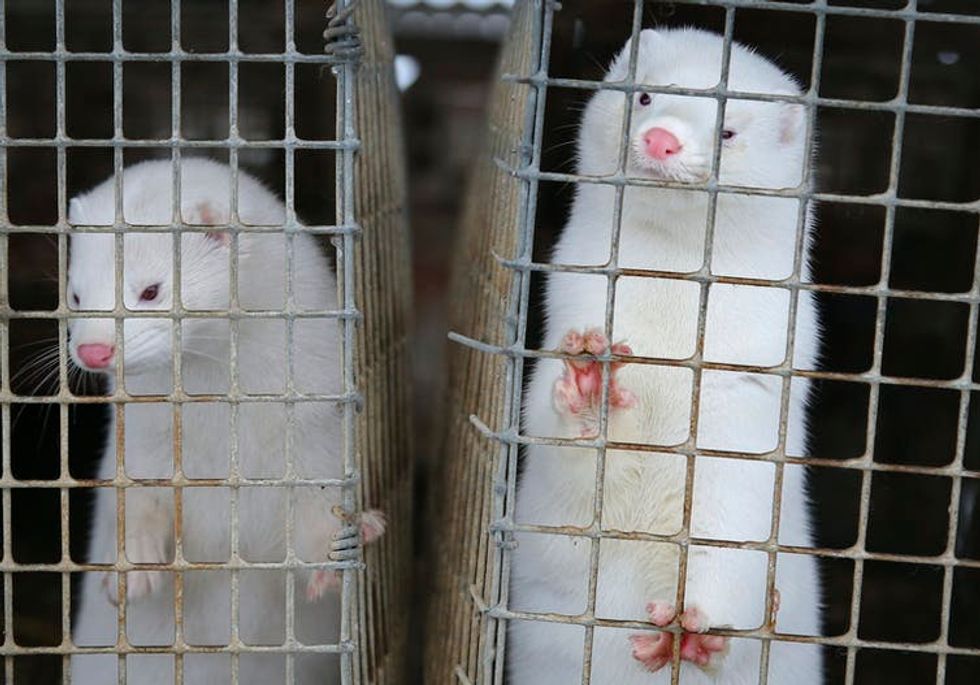
The importance of commercially raised animals in the COVID-19 pandemic has received much attention in the past few weeks, when a new variant of SARS-CoV-2 was detected in farmed mink. Unfortunately, mink tend to be relatively susceptible to respiratory infections, and these can readily spread through mink farms due to high-density housing.
Data from from the Netherlands earlier in the pandemic have revealed that mink can be readily infected with SARS-CoV-2 and then pass the virus to humans. In Denmark, 214 people people have been infected by a variant of SARS-CoV-2 that is presumed to have mutated in Danish mink. Over 200 mink farms had tested positive for SARS-CoV-2, and at least five different mink variants of the virus have been detected so far.
These events initiated a mass culling of farmed mink in that country (although this was limited due to legal issues), and cast a spotlight on the disturbing scenario of human-to-mink-to-human transmission of SARS-CoV-2, with potential for the virus to change in mink prior to re-infecting people.
Mink are semi-aquatic mammals that are relatively susceptible to respiratory infections, which can spread through mink farms, like this one in Belarus, due to high-density housing.
(AP Photo/Sergei Grits, File)
Specifically, this latest occurrence unveils the possibility that mink can serve as an alternate host to promote mutations of SARS-CoV-2, which can be passed back to humans and other animals, both domestic and wild and potentially placing the wild mustelid (minks, ferrets and related species) population at risk.
Bridging human and animal health
We are researchers in the fields of virology, immunology and pathology. Our research programs bridge human and animal health and study the transmission of viruses, immune responses to viruses, how viruses cause diseases, and developing strategies such as vaccines to prevent infectious diseases. The recent news linking mink to the current pandemic highlights the importance of research at the interface of animal and human health.
Since the start of the COVID-19 pandemic, the world has learned much about virology, as well as the concept of One Health. At the core of One Health is the idea that human and animal health are intertwined in a shared environment, and that we need to broaden our perspectives beyond human health alone.
Indeed, animals have been at the centre of this pandemic from the beginning. Overwhelming evidence suggests that this coronavirus (SARS-CoV-2), which causes COVID-19, originated from bats. There is debate about whether an intermediate animal host might have harboured additional changes to SARS-CoV-2 to produce the current virus that spreads efficiently person to person. The leading candidate for this is a scaly anteater known as a pangolin.
The pangolin, a scaly anteater, may have been an intermediate host for the SARS-CoV-2 virus.
(AP Photo/Themba Hadebe)
What is known for sure is that changes to coronaviruses can occur over time due to inherent and purposeful errors in these viruses’ ability to copy their genetic codes. This allows a virus to make small changes over time and is an efficient way for them to adapt to new environments.
Changes in the spike protein
One of the recently identified Danish mink strains is particularly concerning because changes in the genome occurred in what is called the virus’s spike protein, which it uses to enter human cells. These changes have been detected in 12 human cases related to this particular mink variant. Fortunately, this change does not seem to correlate with worse clinical outcomes, based on a small number of cases.
The spike protein is also the primary target of natural and vaccine-induced immune responses to the virus. In theory, if SARS-CoV-2 mutates too much, the immunity derived from the parental virus, acquired either by natural infection or vaccination, could become less effective against the new strain.
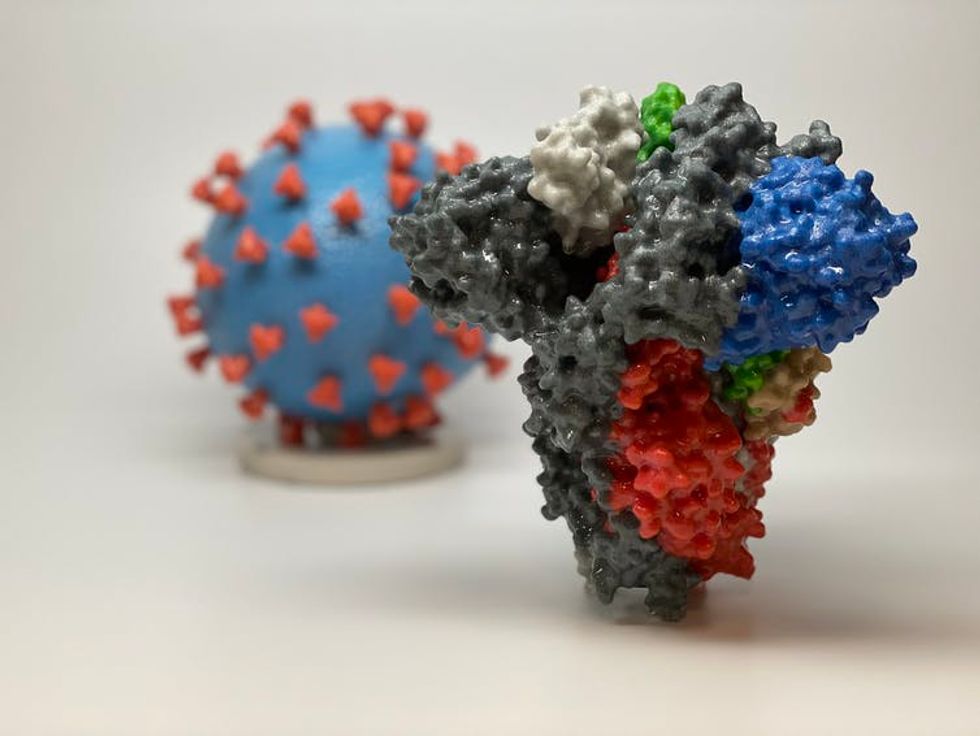
3D print of a spike protein of SARS-CoV-2, the virus that causes COVID-19, in front of a 3D print of a SARS-CoV-2 virus particle. Spike proteins cover the surface of the virus and enable it to enter and infect human cells.
The good news is that, so far, there’s no evidence that the mink-derived SARS-CoV-2 mutant can bypass natural or vaccine-induced immunity. Fortunately, our immune systems are designed to generate antibodies against multiple parts of the spike protein. This means that if only a small part of the spike protein is mutated, antibodies against other parts of the protein should still confer at least some protection.
‘Plug-and-play’ vaccine technology
The fact that SARS-CoV-2 can change highlights the need for vaccines that not only induce protective antibodies but that can also elicit robust T cell responses, which is the other major mechanism by which our immune systems can kill viruses. Like antibodies, T cells will target multiple parts of viral proteins, thereby increasing the chance of maintaining immunity against non-mutated regions of the proteins.
It might also be important to consider making vaccines that target more than one of the proteins from SARS-CoV-2. It’s very difficult for a virus to make major changes to multiple proteins without compromising its fitness.
The other issue that the mink SARS-CoV-2 brings to the forefront of the vaccine development effort is the need for vaccines that are “plug-and-play.” These are vaccine technologies where the viral protein the vaccine is designed to target can be readily swapped with a different version of the viral protein.
Once approved by health regulators as being safe and efficacious against a highly pathogenic coronavirus, such technologies could, in theory, be rapidly modified to target emerging mutant viruses; akin to the annual flu vaccine that gets modified every year to target emerging influenza virus variants.
Addressing threats and managing health
With mink being confirmed only recently as a possible reservoir for SARS-CoV-2, more research is urgently needed to inform rationally based decisions to cull millions of these animals. Even if mass cullings continue, it is unlikely that mink farms will be completely phased out at the global level in the near future. So the question becomes how do we manage the potential threat to human health of SARS-CoV-2 in mink over the long term?
First, enhanced biosecurity measures should be implemented on mink farms.
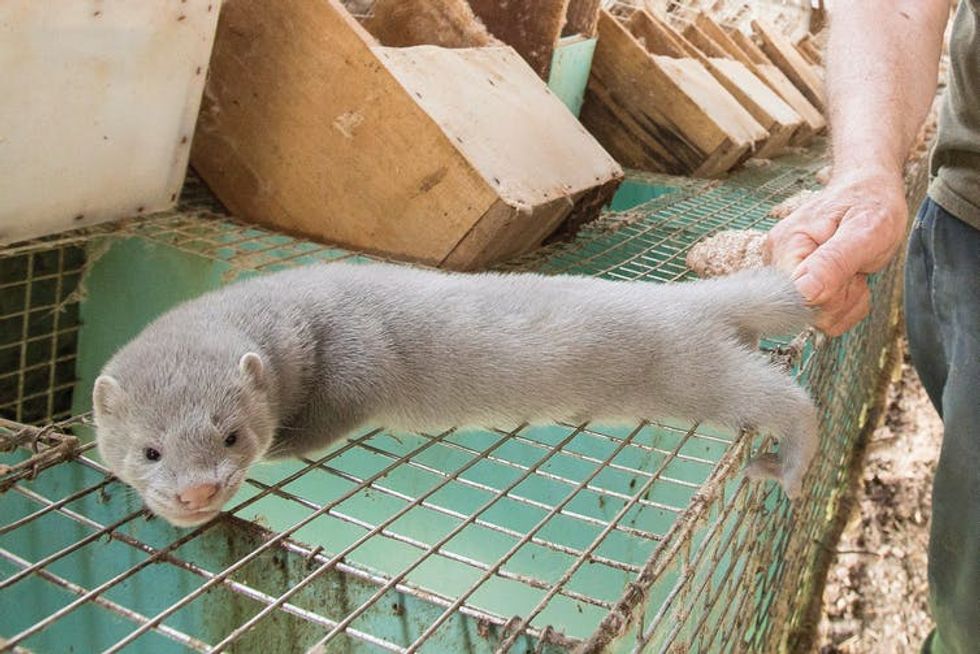
Farmed mink, like this one from an Ontario fur farm, should be screened for coronaviruses.
THE CANADIAN PRESS/ Geoff Robins
Second, screening of farmed mink for coronaviruses should be added to the surveillance programs of animal health regulatory agencies, with this information made available to human health regulators.
Third, consideration could be given to tailoring COVID-19 vaccines for animal reservoirs, which would now include farmed mink. These recommendations would not only reduce the potential spread of coronaviruses from mink to humans, it would simultaneously address SARS-CoV-2-related health issues for mink. Indeed, mink can develop COVID-19 after becoming infected with SARS-CoV-2 and it can sometimes be severe and lethal, with no effective current treatment.
Unless future evidence suggests otherwise, it may be best to stay the course with current vaccine development programs with the goal of getting multiple technological platforms approved for use in humans. Then these platforms can be readily modified, akin to the annual influenza vaccine, to target emerging mutant viruses, if warranted.
Simultaneously, public health agencies with any interest in promoting human health should expand their visions to include the health and surveillance of domestic animals and wildlife at the point where human and veterinary medicine interface.
In the case of SARS-CoV-2, humans are currently the largest reservoir of the virus on Earth, and the threat of spillover from human hosts to farmed animals and wildlife species is now made evident. This is an opportune time to take stock in our relationships with animals and the natural world and take action to ensure health for all and this biosphere we share.
Former prime minister Kevin Rudd’s record-breaking petition calling for a royal commission into Australian media ownership has once again put this issue in the spotlight. It has gained more than 500,000 signatures and led to a Senate inquiry into media diversity.
Rudd has described News Corp as a “cancer on democracy”, while fellow former Prime Minister Malcolm Turnbull has labelled it “pure propaganda,” and slammed its “campaign on climate denial”. Labor’s Julia Gillard, has also made similar claims.
However, these discussions fail to consider how the Murdoch press is particularly hostile towards women politicians.
How does the Murdoch press represent women?
While studying media representations of women in politics, I’ve noticed a stark difference in Murdoch press coverage of men and women leaders.
There is a difference in the way male and female leaders are represented in News Corp papers.
Lukas Coch/AAP
My research, recently published in Feminist Media Studies, compared Australian media portrayals of Gillard’s prime ministerial rise with that of Helen Clark’s in New Zealand. Both leaders experienced a sexist focus on their gender, appearance and personal lives. But it was far more frequent and intense for Gillard.
My research suggests two key explanations for this contrast: the different political contexts they operated in, and the dominating influence of the Murdoch press in Australia versus its absence in New Zealand.
Yet this has notably gendered ramifications. Murdoch’s conservative morality, traditionalist values, and opposition to left-wing movements appear constantly in his newspapers, making them uniquely hostile to women.
Gillard did not simply threaten the political status quo as Australia’s first woman prime minister. As an unmarried, child-free, atheist woman from the left of the ALP, she also threatened Murdoch’s conservative ideology. His newspaper therefore portrayed Gillard in a highly gendered — even misogynistic — manner intended to undermine her. This was evident in the criticisms of her fashion choices, such as a headline condemning her “technicolour screamcoat” in The Daily Telegraph.
Things have not changed since Gillard’s days
Though it’s been ten years since Gillard became prime minister, not much has changed. News Corp papers continue to attack women in politics, especially if they are from the left.
Queensland Labor Premier Annastacia Palaszczuk is another seasoned veteran of News Corps’ sexist coverage. This includes the Sunshine Coast Daily’s 2019 front page image, which featured Palaszczuk in crosshairs with the headline, “Anna, you’re next”.
More recently, The Courier Mail labelled her dealings with Liberal NSW Premier Gladys Berejiklian over border closures, “schoolgirl behaviour”.
Even Liberal women aren’t immune from sexist coverage. Julie Bishop, the Coalition’s former foreign affairs minister, was likened to the power-hungry “Lady Macbeth” by The Australian for her 2018 leadership tilt. She was also ridiculed by the same paper for calling out the Liberal party’s sexist bullying culture.
Berejiklian has also endured sexist reportage, particularly during the recent scandal over her relationship with disgraced former NSW MP Daryl Maguire. One Daily Telegraph article waxed lyrical about her supposed “wedding fantasy”, a “feminine albeit old-fashioned thing to do” which, they argued, might have kept a workaholic like Berejiiklian “sane”.
However, the News Corp’s partisan bias towards the Coalition is also evident in these stories. Rather than holding Berejiklian to account, the Murdoch press largely ran sympathetic stories about the premier’s behaviour. This starkly contrasts with the onslaught of sexist coverage Gillard received during the AWU affair, which haunted her for the rest of her term in office.
International leaders also under attack
Australian women aren’t the only targets. The globally popular New Zealand Prime Minister Jacinda Ardern has frequently borne the brunt of biased News Corp coverage.
In the lead up to the 2020 New Zealand election, columnist Greg Sheridan argued Ardern doesn’t live up to the hype, claiming in The Australian,
part of the international Jacindamania comes from the fact she is a young left-wing woman who gave birth in office and took maternity leave.
Sheridan also labelled her government’s COVID-19 response and progressive style of politics as “inherently authoritarian” that also “enjoys bossing people around”.
When Ardern won the election in a historic landslide, The Australian responded with a piece describing her as “grossly incompetent” and “the worst person to lead New Zealand through this economic turbulence”.
Notably, the clear bias here drew criticism from the New Zealand press.
It is clear the Murdoch press has a “woman problem”.
This poses a real obstacle for women in politics, especially those who oppose Murdoch’s conservative ideology. But it also broadcasts a message about women’s roles and place in society more generally — that no matter how privileged or powerful a woman might be, it’s nearly impossible to escape sexist commentary and the objectifying male gaze.
This is why it is so essential to hold the Murdoch press to account in a specifically gendered light.
Ontario’s Progressive Conservative government has come to be defined by two things: its hesitant responses to the emerging second wave of COVID-19 and its relentlessly pro-business approach to virtually all other matters.
The situation invites the question of whether the government’s stumbling reluctance to impose more restrictive measures to head off the growing numbers of COVID-19 infections, as recommended by medical experts from across the province, is a product of its pro-business orientation.
On the COVID-19 front, recent days have been defined by some deeply disturbing trends: record daily rates of new infections; an already fatal reappearance of the virus in long-term care facilities; and projections of uncontrolled infection rates exceeding 6,500 cases per day, which will overwhelm hospital and intensive care unit capacity. Although the news of potentially effective vaccines is encouraging, their widespread availability seems many months off.
The provincial government’s responses to the situation have been surprisingly feeble. The province was actually moving in the direction of easing restrictions, particularly around public gathering spaces like restaurants, bars, gyms and places of worship, despite warnings that these could be key points of transmission.
It was then revealed that the province had ignored the advice of its own public health agency in terms of the infection rates needed to trigger further restrictions. The recommended thresholds for restrictions were reportedly increased by a factor of four relative to the advice received by the province from its own public health agency.
Taking the fall?
The imposition of further restrictions has been left in the hands of local medical officers of health despite the limited legal authority available to them. The province, it seemed, was prepared to let them take the political fall for the imposition of potentially unpopular restrictions.
The catastrophic projections released on Nov. 13 brought a partial turnaround by the province in terms of the thresholds for additional restrictions. But the government’s approach is still falling well short of what health authorities and experts are saying is needed to prevent disaster.
As if to add insult to injury, Ontario is poised to pass legislation that would effectively grant long-term care home owners and operators immunity from liability for the more than 1,800 resident deaths that occurred in their facilities during the first COVID-19 wave.
There is strong evidence that a significant portion of those fatalities were the result of neglect and poor care, rather than COVID-19 itself.
The province has extensive authority over public health matters, as well as a range of other legal and policy tools at its disposal to combat the virus. And on the surface, the government has consistently expressed concern and distress over the impacts of COVID-19 on its victims. Yet it had to be pushed into partial action by the recent outcry from the media and health experts over its failing responses.
Pro-business arguments
Why?
The answer may lie with Ford’s stance on issues beyond the pandemic. The essential feature of the Ford government has been its striking responsiveness to any argument presented to it from pro-business advocates and framed in terms of economic development.
The government’s record on the environment in this context is well-known: the shredding of Ontario’s climate change strategy; the elimination of the independent office of the environmental commissioner; the weakening or elimination of regulations on endangered species, forestry and toxic chemicals; and the evisceration of longstanding rules on industrial water pollution and environmental assessment.
Most striking of these tendencies has been the government’s willingness to acquiesce to the demands presented to it by the land development industry. Planning rules intended to curb urban sprawl in the Greater Toronto Area have been gutted.
The province has made unprecedented moves to reach deep into local municipal plans on behalf of development interests to eliminate constraints and permit ever greater development in areas like midtown Toronto that are already subject to intensive development pressures.
Ministerial zoning orders have been used with unprecedented frequency to override municipal and provincial rules on specific sites, most recently permitting a warehouse development in an environmentally significant wetland on Pickering’s Lake Ontario shoreline.
Provisions buried in the government’s November 2020 budget bill would undermine the role of local conservation authorities in controlling development for lands that are at risk of flooding and other hazards — significant considerations in the age of climate change — as well as for wetlands and shorelines.
Early morning fishermen take advantage of warm weather on Pigeon Lake near Bobcaygeon, Ont., on Nov. 7, 2020.
THE CANADIAN PRESS/Fred Thornhill
Sympathetic to business owners
The same unapologetic pro-business orientation seems to lie at the heart of the government’s response to the COVID-19 crisis.
The government has seemed particularly sympathetic to the pleas of small business owners, such as restaurants, bars and gyms, that would be affected by further shutdowns, despite the potentially significant roles these types of facilities could play in the spread of COVID-19.
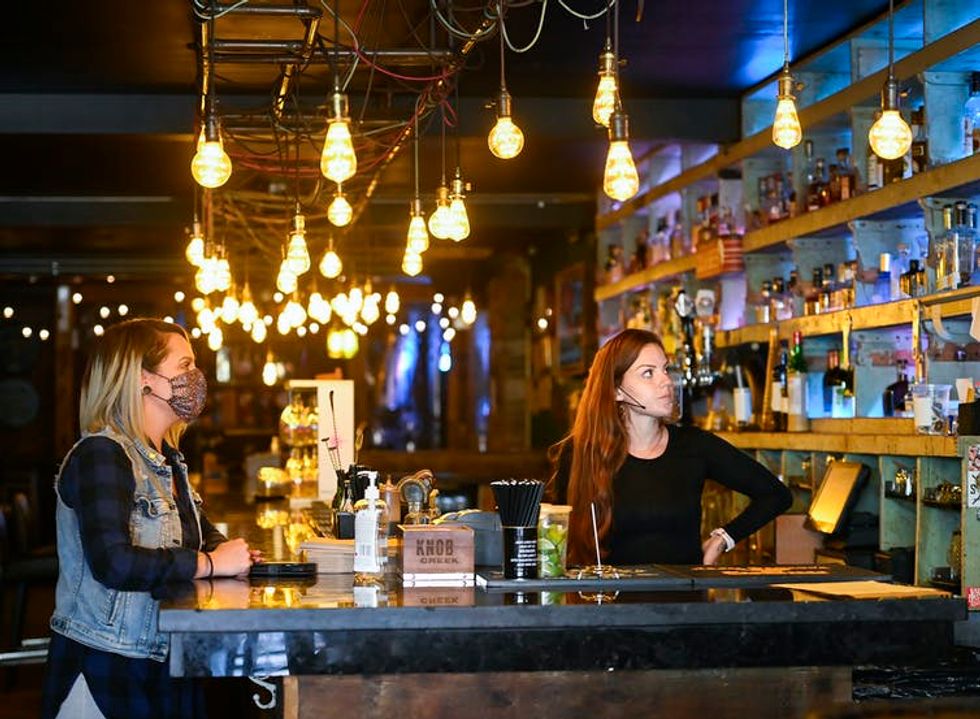
A bartender and restaurant manager watch the news on television in the Port Credit neighbourhood of Mississauga, Ont., on Oct. 9, 2020.
THE CANADIAN PRESS/Nathan Denette
That’s profoundly short-sighted, laying the groundwork for disastrous runaway outbreaks like those occurring in the United States. Those types of outbreaks may only be able to be controlled, if at all, through the types of draconian and long-term lockdowns seen in places like Melbourne, Australia. The impact would be far more damaging to businesses than additional short-term restrictions.
A more effective and balanced approach would recognize the need for far greater restrictions in the short term, while working with the federal government to provide support to affected employees and helping businesses move their operations to take-out, delivery, curbside pickup and online services wherever possible.
Events in the U.S. and Europe are demonstrating just how bad a second COVID-19 wave could be. If the Ford government acts decisively, it may still be able to avoid the same fate, but time is running out quickly.
Former French president Nicolas Sarkozy is due to face trial in Paris on Monday on accusations of corruption and influence-peddling.In 2014 he is said to have tried to obtain investigative secrets from a senior lawyer at the Court of Cassation through his lawyer.Sarkozy's long-time lawyer Thierry Herzog is also on trial. If the charges are proven, the two could face up to 10 years in prison.The Paris trial, which is to last until December 10, is considered unprecedented in modern French history.It would be the first time a president has appeared in court facing such serious accusations.In 2011...
The United States has long championed democracy around the world, pushing persistently, if not always consistently, for leaders to give up power when they lose.
President Donald Trump is now establishing a new American model -- refusing to concede, making unsubstantiated claims of fraud and seeking the intervention of courts and political allies in hopes of reversing his defeat to Joe Biden.
Political figures and experts interviewed in several countries fear that Trump's blueprint will be eagerly embraced in fragile democracies, especially in Africa, letting strongmen point to the world's most powerful nation in justifying their attempts to cling to office.
"Donald Trump's refusal to concede reinforces the view of our leaders in Africa that elections should be done in a way so that they don't lose," said Mahamat Ahmat Alhabo, secretary general of the opposition Party for Freedoms and Development in Chad.
Eldred Masunungure, a political scientist at the University of Zimbabwe, said that Trump was singing "sweet music to autocratic rulers."
"It's tragic. We are used to that in Africa but when it happens in the US we get shocked because it's happening in a centuries-old democracy," Masunungure said.
"It's a dirty lesson our leaders will take advantage of and cite even in the long-term future when they lose and don't want to concede defeat."
Garry Kasparov, the Russian chess legend and outspoken critic of President Vladimir Putin, said that Trump's assault on the democratic process will result in "many similar attacks in future elections, in the US and elsewhere."
"Democracy discredited, Putin's dream," he wrote on Twitter.
Changing discourse on elections
Thomas Carothers, an expert on democracy promotion, noted that nations such as Russia, China and Egypt hardly needed tips from Trump on how to oppose competitive elections.
But he said the effect could be more palpable in problematic democracies as leaders see how Trump can brazenly claim victory and find some support, despite Biden winning nearly six million more votes and edging Trump out 306-232 in the state-by-state Electoral College that determines US elections.
"They see the power of that approach, that even a society as educated and sophisticated in certain ways as the United States can fall victim to that kind of big lie," said Carothers, senior vice president for studies at the Carnegie Endowment for International Studies in Washington.
He drew a parallel to Trump's denunciations of "fake news," a term now cited around the world by governments that want to muzzle the media.
Carothers said nations where Trump's election challenges could provide a model include India, the world's largest democracy which has long had robust votes but where right-wing Prime Minister Narendra Modi has been taking aim at civil society.
Carothers said there could similarly be an effect in Mexico, where President Andres Manuel Lopez Obrador, a leftist populist, claimed fraud in two previous losing bids for office and remains one of the few world leaders, along with Putin, who has not congratulated Biden.
More indirectly, right-wing leaders in European nations such as Hungary and Poland could lose a source of inspiration in the White House.
Since the US vote, the State Department has congratulated winners of several elections elsewhere including Moldova, whose Russian-backed president quickly conceded.
Secretary of State Mike Pompeo, asked at a combative news conference if Trump was hindering democracy efforts, called the question "ridiculous" and said that the United States takes time in examining all elections to see if they "reflected the will of the people."
Or is the system working?
US elections have often been messy, most notoriously in 2000 when the Supreme Court let stand that George W. Bush won Florida by 537 votes, handing him the White House over Al Gore.
In 1960, Republicans alleged irregularities in John F. Kennedy's victory but candidate Richard Nixon did not advocate a recount, later writing that he could "think of no worse example for nations abroad" than suggestions that the White House "could be stolen by thievery at the ballot box."
Piers Pigou, an expert on Southern Africa at the International Crisis Group, said that US democracy "has not been held up as an example of best practice" but said Trump could have a ripple effect in a region where many countries do not have clear procedures for transitions of power.
But several observers said that Trump's challenge could send an opposite message -- that, despite all the power at his disposal, he is still expected to leave office on January 20.
"Democracies' strength is their institutions," said Jean Gaspard Ntoutoume Ayi, a member of the National Union opposition party in Gabon, where one family has run the presidency for a half-century.
"Unlike in African countries, American institutions will know how to impose the will of the American people on Trump's craziness."
A man has died after being bitten by a shark at a beach popular with tourists on Australia's northwest coast.
The man's death marks the eighth fatal shark attack in Australian waters this year.
On Sunday, police were called to a Cable Beach in the morning after reports of the attack -- when the man was pulled from the water and given medical treatment but later succumbed to his injuries.
"Police can confirm that tragically the man has died," Western Australia police said in a statement.
Shark attacks are rare on Cable Beach, a 22-kilometre (13-mile) stretch of pristine white sand next to the town of Broome.
But authorities are generally forced to close the beach once or twice a year when deadly saltwater crocodiles are spotted nearby.
There have been at least 22 shark maulings this year, according to the Taronga Conservation Society Australia government agency.
G20 leaders will pledge to "spare no effort" in ensuring the equitable distribution of coronavirus vaccines worldwide and reaffirm support for debt-laden poor countries, according to a draft communique seen by AFP Sunday.
The leaders also struck a unified tone on supporting "multilateral" trade as well as the global fight against climate change, but the closing document lacks firm details on many of the issues dominating the virtual summit hosted by Riyadh.
The two-day gathering that began Saturday comes as international efforts intensify for a large-scale rollout of coronavirus vaccines after a breakthrough in trials, and as EU and other leaders call for G20 nations to plug a $4.5-billion funding shortfall.
G20 leaders will pledge to "spare no effort" in ensuring the equitable distribution of coronavirus vaccines worldwide. This picture shows nurses helping a Covid-19 patient at an Athens hospital
"We have mobilised resources to address the immediate financing needs in global health to support the research, development, manufacturing and distribution of safe and effective Covid-19 diagnostics, therapeutics and vaccines," the draft document said.
"We will spare no effort to ensure their affordable and equitable access for all people, consistent with members' commitments to incentivise innovation."
The communique offered no details on how the effort will be funded.
There could be changes in the final version of the document, which will be released later Sunday by the Saudi hosts.
In a comment echoed by other world leaders, French President Emmanuel Macron said Saturday the coronavirus crisis was "a test for the G20", stressing there "will be no effective response to the pandemic unless it is a global response".
On trade, the club of the world's richest nations also emphasised that supporting a multilateral system "is now as important as ever"
G20 nations have contributed more than $21 billion to combat the pandemic, which has infected 56 million people globally and left 1.3 million dead, and injected $11 trillion to "safeguard" the virus-battered world economy, summit organisers said.
But the group's leaders face mounting pressure to help stave off possible credit defaults across developing nations.
G20 nations have extended a debt service suspension initiative (DSSI) for developing countries until June next year, but UN Secretary-General Antonio Guterres has pushed for a commitment to extend it until the end of 2021.
The draft communique, however, did not offer a firm commitment.
G20 finance ministers will examine the recommendation when the IMF and World Bank meet next spring "if the economic and financial situation requires" an extension by another six months, it said.
- Closing ranks on climate -
European Commission President Ursula von der Leyen said she expected "new momentum from the new US administration" on climate change and a reversal of Trump's withdrawal from the Paris climate accord
On trade, the club of the world's richest nations also emphasised that supporting a multilateral system "is now as important as ever".
"We strive to realise the goal of a free, fair, inclusive, non-discriminatory, transparent, predictable, and stable trade and investment environment, and to keep our markets open," the communique said.
Ahead of the summit, European Commission President Ursula von der Leyen said she hoped the US will adopt a more multilateralist stance under the incoming administration of Joe Biden.
US President Donald Trump's robust "America first" trade policy has rankled world leaders.
Von der Leyen also added that she expected consensus and a "new momentum from the new US administration" on climate change, and a reversal of Trump's withdrawal from the Paris climate accord.
Differences within the G20 group surfaced at last year's summit in the Japanese city of Osaka as the United States demanded the insertion of a separate paragraph on issues such as environmental protection.
But under the Saudi chairmanship, G20 leaders projected a unified stance, with the draft communique reiterating support for tackling "pressing" environmental challenges.
Prime Minister Justin Trudeau said on Friday that Canada's hospital system could be overwhelmed by a possible quadrupling of new Covid-19 cases by year end as its biggest city Toronto prepared to impose a lockdown.
Trudeau implored Canadians to stay home as much as possible as a second wave of the novel coronavirus rips across the country, forcing several of the 10 provinces to reimpose curbs on movement and businesses. Cases continue to spike in Canada and authorities complain some people are being more careless about taking precautions.
"A normal Christmas is quite frankly right out of the question," Trudeau said. Earlier, Chief Public Health Officer Theresa Tam said in the worst case scenario, a spike to 60,000 daily cases, would occur if people became more sociable. Even if current restrictions on gatherings are maintained, new daily cases will jump to over 20,000 by December 31 compared with less than 5,000 now.
"Cases across the country are spiking massively ... we're really at risk of seeing case loads go up and hospitals get overwhelmed," said a clearly upset Trudeau.
He dismissed the idea of Ottawa invoking emergency powers to reintroduce the kind of widespread national shutdown that provinces imposed earlier in the year, saying, "I'm not looking to bring in a federal hammer to try and do things."
Toronto lockdown
However, Ontario Premier Doug Ford announced on Friday that Toronto – Canada's most populous city and the heart of the financial system – as well as the nearby region of Peel would enter into lockdown on Monday.
"The situation is extremely serious and further action is required to avoid the worst case scenario," Ford said at a press briefing.
The lockdown, whose restrictions include a ban on indoor private gatherings, will last at least 28 days and violators can be fined CAN$750 (€483).
Outside gatherings will be limited to 10 people, as will religious services, funerals and weddings.
Hair salons and other personal care locations as well as gyms and casinos will be closed.
Schools will remain open, but restaurants and non-essential stores will only be open for pickup and delivery.
"We can't risk overwhelming our hospitals," said Ford, with Canada's most populous province having just passed 100,000 coronavirus infections.
Officials predict that by November 30 the total Canadian death toll could be between 11,870 and 12,120, with the total cases between 366,500 and 378,600. Canada has recorded a total of 315,751 cases and 11,265 deaths so far.
Separately on Friday, a federal official said Canada expects to receive six million doses of Pfizer and Moderna's Covid-19 vaccines by March 31, 2021, though when the shots can be used will depend on regulatory approval.
Iain Stewart, president of the Public Health Agency of Canada, told a parliamentary committee that because the vaccines were new, manufacturers need to scale up to meet the overall demand.
"All countries are interested in the very first vaccines, and the companies are trying to distribute out to multiple countries at the same time, so the amounts start out small and then they build over the course of the coming year," he said.
Friday marks 75 years since the beginning of the Nuremberg Trials, a judicial marathon that held Nazi officers to account for the atrocities of World War II and paved the way for future war criminals to be tried under international law.Germany commemorated the anniversary with an event in the Bavarian city of Nuremberg, in which President Frank-Walter Steinmeier gave a speech."The main war crimes trial in Nuremberg was a revolution. It not only wrote legal history, it wrote world history," Steinmeier said, according to a transcript of his speech made available ahead of the event.The event was ...