Hong Kong's leader said Sunday that coronavirus was spreading out of control in the city as she announced a record daily high of more than 100 cases and ordered new social distancing measures.
The finance hub was one of the first places to be struck by the virus when it emerged from central China.
But the city had impressive success in tackling the disease, all but ending local transmissions by late June.
However, in the last two weeks, cases have begun to spike once more and doctors fear it is spreading undetected in the densely packed territory of 7.5 million people.
On Sunday, chief executive Carrie Lam said more than 500 infections had been confirmed in the last fortnight, bringing the city's total tally to 1,788 cases with 12 fatalities.
More than 100 were confirmed on Sunday alone, a record daily high for the finance hub.
"I think the situation is really critical and there is no sign the situation is being brought under control," chief executive Carrie Lam told reporters.
Lam announced new social distancing measures last week, shuttering many businesses including bars, gyms and nightclubs, and ordering everyone to wear masks on public transport.
Restaurants were ordered to only offer takeout services in the evenings.
On Sunday, Lam announced new measures including plans to make it compulsory to wear masks inside any public indoor venue -- and a new order for non-essential civil servants to work for home.
As hospital wards fill up, officials are also scrambling to build a further 2,000 isolation rooms on barren land near the city's Disneyland resort to monitor and treat those who test positive, she added.
Hong Kong was already mired in recession when the pandemic hit thanks to the US-China trade war and months of political unrest last year.
The new partial lockdown has compounded the economic misery.
On Sunday, Lam called for landlords to look at lowering rents.
She said further social distancing measures would be rolled out if the daily infection rate did not ease in coming days.
An EU summit to agree a huge coronavirus economic rescue package could collapse without a deal, German Chancellor Angela Merkel warned on Sunday, as bickering leaders began a third day of talks.
The 27 leaders have argued for two days over the scale and rules for the package, with the Netherlands leading a band of "frugal" allies in demanding lower budgets and tougher conditions for handouts.
Arriving for what she said was probably the "decisive" day of the extraordinary summit, Merkel said there were still many divisions among the leaders.
"I still can't say whether a solution will be found," she said. "There is a lot of good will... but it may also be that no result will be achieved today."
The veteran German leader joined French President Emmanuel Macron and the summit host, European Council President Charles Michel, to prepare a new offer to break the logjam after Dutch Prime Minister Mark Rutte and his "Frugal Five" allies blocked a deal.
The Dutch want member states to have a say over national bailouts to ensure countries carry out labour market reforms, while Austria, Finland, Denmark and Sweden want to see the up to 750-billion-euro package of loans and subsidies cut down.
The "frugals" have resisted the pleas of Germany and France, traditionally the bloc's most powerful members, to agree a plan to lift the countries hardest hit by the pandemic -- most notably Spain and Italy.
Macron urged leaders to "take responsibility" as Europe grapples with a severe recession caused by the virus and its lockdowns, saying a deal could still be found.
"But these compromises cannot be made at the cost of European ambition," he warned.
"Not out of principle but because we are facing an unprecedented health, economic and social crisis, because our countries need it and European unity needs it."
Michel was forced to work through the night to draw up a compromise that could be satisfactory to all when the leaders reconvened in a plenary session at noon (1000 GMT) on Sunday.
A French diplomatic source said Macron and Merkel refused pressure by Rutte and his allies to cut the grants in the scheme to below 400 billion euros ($460 billion).
- 'It's complicated' -
Leaders are trying to approve a plan that could quickly send EU cash to countries hit the hardest by coronavirus, most notably Spain and Italy.
The Netherlands refused earlier versions of Michel's plan because they gave away too much cash as grants, instead of lending it as loans.
Rutte is also wary about the plan's governance and insists that national governments get a veto on the spending plans of governments receiving cash from the Brussels package.
Underlying his concern is the reputation of Spain and Italy for lax public spending in the minds of voters in northern Europe, and Rutte wants them to reform their labour and pensions rules.
"We're in a stalemate, it's very complicated, more complicated than expected," Italian Prime Minister Giuseppe Conte said.
In a concession to Rutte's demands, Michel proposed a "super emergency brake" that gives any country a three-day window to trigger a review by all member states of another's spending plans.
- Right of veto -
On Saturday, Michel proposed keeping the total recovery budget at 750 million euros but shifting the balance from grants -- down from 500 million in an earlier version to 450 million -- to loans, which rise from 250 million to 300 million, according to a document seen by AFP.
To further entice the "frugals" Michel promised to hike the rebates they get on their EU contributions.
Austria welcomed this but said it did not go far enough.
But the frugals are not the only problem. What EU officials call the "Rule of Law" issue will also be a stumbling block.
Hungary's Prime Minister Viktor Orban -- backed by Poland and now Slovenia -- could yet veto any attempt to tie budget funds to states upholding European legal standards.
And the rescue package is in addition to the planned seven-year EU budget -- worth more than one trillion euros -- that the leaders must also discuss.
Here, countries will defend traditional targets of EU spending, such as farming to France and development projects in eastern Europe, that others would like to see go to fighting climate change or technology.
Israeli police fired water cannons to disperse anti-government protests attended by thousands on Saturday, as public anger mounts over the handling of the coronavirus crisis.
Demonstrators gathered outside Prime Minister Benjamin Netanyahu's residence in Jerusalem and at a park in Tel Aviv, voicing frustration over the government's response to a growing epidemic that has taken a devastating economic toll.
Police spokesman Micky Rosenfeld said officers had allowed demonstrations to take place but took action against unauthorised "disturbances," including road blockages.
Rosenfeld said protesters in Tel Aviv sprayed pepper spray at police, leading to multiple arrests.
With Israel recording more than 1,000 new coronavirus infections a day in recent weeks, the government on Friday announced a broad range of new restrictions.
Shops, markets and other public venues have closed on weekends, while restaurants have been restricted to take away and delivery.
Netanyahu has admitted he reopened the economy too soon through late April and early May, when Israel, a country of about 9 million people, had reduced its daily caseload to a trickle.
In an apparent bid to quell public anger, Netanyahu this week announced plans to send cash to all Israelis -- a measure criticised by some experts who said the economy needed targeted assistance, not a nationwide payout.
While some protesters voiced frustration over the reimposed restrictions, others have blasted the government for failing to improve testing capacity ahead of the second transmission wave.
According to a July 12 poll by the Israel Democracy Institute think tank, only 29.5 percent of the public supported Netanyahu's coronavirus management.
That figure was 57.5 percent at the beginning of April.
Beyond the pandemic, some protesters demanded Netanyahu's resignation over corruption charges filed against the veteran right-wing premier.
Netanyahu denies wrongdoing, but has been indicted for accepting improper gifts and seeking to trade favours with media moguls in exchange for positive coverage.
The trial continues in Jerusalem on Sunday, although Netanyahu is not expected to appear in court.
A feverish Raphael suffering from "a coronavirus-like disease" died after failing to tell his doctors he had been secretly visiting lovers on freezing cold nights, leading them to wrongly prescribe bloodletting, a new study claims.
Popular myth has the Renaissance painter succumb to syphilis in 1520 after wooing one too many ladies, though experts widely agree that he died of an infection.
Laid low by a raging fever, the prolific painter, designer and architect, was tended to by "the best doctors in Rome, sent to him by the pope" who feared losing the invaluable artist, medical historian Michele Augusto Riva told AFP.
But according to Italian painter Giorgio Vasari and his 1550 masterpiece on the lives of painters, Raphael failed to tell the physicians of his "frequent night outings in the cold" to visit lovers.
"It was much, much colder in March in that period, and it's very likely he caught pneumonia," Riva said.
The doctors diagnosed a fever caused by an "excess of humours", or blood, and let his blood -- either through incisions or leeches -- which fatally weakened him.
The artist, a child prodigy and part of a trinity of Renaissance greats along with Michelangelo and Leonardo da Vinci, died aged only 37.
Raphael was sent off with high honors at a grand funeral at the Vatican, and his remains rest in Rome's Pantheon. A red rose graces his grave all the year round.
- 'His own mistake' -
"In that period, doctors were aware of the dangers of bloodletting in the treatment of infectious diseases, but were acting on misinformation," said Riva, who co-authored the study with three fellow researchers from the University of Milano Bicocca.
"A medical mistake, and his own mistake in not faithfully recounting his history, contributed to Raphael's death," he said.
The researchers had been preparing the short study, which was published this week in the Internal and Emergency Medicine journal, before COVID-19 gripped northern Italy in late February.
As practicing doctors, they then had to put it on hold when they found themselves on the frontline of the crisis, caring for medical staff who had caught the virus in intensive care units.
"From what we know, Raphael died of a pulmonary illness very similar to the coronavirus we've seen now," he said.
Contemporary accounts of his death reveal the painter's disease "lasted 15 days; Raphael was composed enough to put his affairs in order, confess his sins, and receive the last rites," the study says.
It said it was an acute disease, characterized by high and continuous fever.
"A recent sexually transmitted infection -- such as gonorrhea and syphilis -- could not explain the incubation period.
"An acute manifestation of viral hepatitis could not be considered without jaundice and other signs of liver failure. No epidemics of typhus or plague were reported in the city of Rome at that time," it added.
Despite his premature death, Raphael produced a vast ouevre of seminal work, much of it at the Vatican, whose museums include several rooms filled with his frescoes.
Completed by Raphael's students after his death, they remain some of the Vatican's most popular rooms.
Tensions are mounting by the day between the United States and China, leading to talk of a new Cold War. Experts see important historical differences -- but believe the two powers are entering dangerous territory.
US President Donald Trump's administration has increasingly gone global against China, pushing other nations to reject its strings-attached aid and telecom titan Huawei, and siding unreservedly with Beijing's rivals in the dispute-rife South China Sea.
Trump has made China a major campaign issue as he heads into the November election, but the relationship looks unlikely to change in more than tone if he loses to Joe Biden, who has accused the president of not being tough enough.
Stephen Walt, a professor of international affairs at Harvard University, said the world's two largest economic powers were engaged in a long-term competition over "incompatible strategic visions," including China's desire to dominate Asia.
China sees Trump as a "weak and error-prone leader" and likely believes the "disastrous" US response to the coronavirus pandemic presented opportunities to press its advantage, he said.
"It resembles the US-Soviet 'Cold War' in certain respects, but it is not yet as dangerous as that earlier rivalry," Walt said.
"One key difference is that the two states are still closely connected economically, although that relationship is now under considerable strain."
US Secretary of State Mike Pompeo, who is taking stern warnings about Beijing around the world, did not reject the Cold War comparison in a recent radio interview.
He also noted that the United States was never as economically intertwined with the Soviet Union --and said the West therefore needed to separate from China, especially its technology, which Washington fears will be used for espionage.
- Chance of 'hot war' -
Oriana Skylar Mastro, an assistant professor at Georgetown University and resident scholar at the American Enterprise Institute, said it was dangerous to speak of a Cold War with China.
"The situation with China is nothing like the Cold War," she said.
"On the positive side, we have extensive engagement. On the negative, there is a real possibility of a hot war between the two sides to a degree that never existed with the Soviet Union."
She said that using a Cold War lens leads to ineffective responses, including Washington incorrectly seeing Beijing as an ideological threat.
Mastro said that China had plenty of options to alleviate US concerns, such as pulling back weapons systems in the South China Sea.
"But Beijing won't do this because it fundamentally misunderstands the drivers of US policy. It thinks the US is responding to its own decline in power -- that no matter how Beijing acts, the US will lash out," she said.
"So there is no impetus to try to moderate its ambitions and how it attempts to achieve them. This is a mistake. And China's failure to do so, to try to assure the US, could lead us into a war."
- Sharp hardening -
In a shift from a few years ago, US businesses, stung by what they see as rampant theft of intellectual property, are rarely asking for de-escalation.
David Stilwell, the top State Department official for East Asia, said he learned as US defense attache in Beijing that China responded to "demonstrable and tangible action."
"Personally I was of that school that you could work with these folks. But my epiphany came 10 years ago when I went to Beijing," he told a recent think tank event.
The United States has also pressed China over its clampdown in Hong Kong and mass incarceration of Uighur Muslims, each time triggering retaliatory measures by Beijing.
Trump has still voiced hope of preserving a trade deal with China, which promised before the coronavirus pandemic to ramp up purchases of US goods.
Shi Yinhong, a professor of international relations at Renmin University in Beijing, said both sides knew China would no longer be able to carry out the agreement in full.
Shi said he expects relations will keep deteriorating.
"The old Cold War was a very fierce confrontation and competition between two great powers, driven by ideology and strategy," Shi said.
In the case of the United States and China, the two powers are selectively but rapidly "decoupling" from each other, he said.
"Using this definition, it can be said that China and the United States have begun to enter a new Cold War."
French authorities opened a criminal investigation into a major fire that broke out in the cathedral in the western French city of Nantes on Saturday. The blaze blew out stained glass windows and destroyed the grand organ in the 15th-century building.
Prosecutor Pierre Sennes told reporters three fires had been started at the site and authorities were treating the incident as a criminal act. He gave no other details.
Dozens of firefighters brought the fire under control after several hours. Smoke was still coming out of the Gothic structure after massive flames earlier engulfed the inside.
The Nantes blaze comes just over a year after a major fire at the Notre-Dame Cathedral in Paris, which destroyed its roof and main spire.
Local fire chief Laurent Ferlay told reporters 104 firefighters were still at the site to ensure the blaze was completely under control.
The fire had broken out behind the grand organ, which was completely destroyed, he said. Stained glass windows at the front of the cathedral were blown out.
However, the damage was not as bad as initially feared.
"We are not in a Notre-Dame de Paris scenario. The roof has not been touched," Ferlay said.
It was not the first time fire has damaged the cathedral.
It was partly destroyed during World War Two in 1944 after Allied bombings. In 1972 a fire completely ravaged its roof. It was finally rebuilt 13 years later with a concrete structure replacing the ancient wooden roof.
"The fire of 1972 is in our minds, but at this stage the situation is not comparable," Nantes Mayor Johanna Rolland told reporters.
Cecile Renaud, who works in a bakery facing the cathedral and alerted the fire services early on Saturday, told BFM TV she had seen huge flames inside the building.
"It was a huge shock. It's extremely sad."
In 2015, a fire that appeared to have been caused by renovation work destroyed most of the roof of another church in Nantes, the Saint-Donatien Basilica.
An incident in Canada that was captured on video shows a man giving a Nazi salute and threatening to "decapitate" an Asian woman who turned down his advances, The Philippine Daily Enquirer reports.
Rylee Dodd, 28, was arrested by Edmonton Police over the incident that took place last week.
Patricia Anne Medrano posted on Facebook that on July 6, Dodd launched into racist tirade after she refused to give him her phone number.
“Since I don’t want to give my number, he keep on insisting to give his number to me,” Medrano said.
“I just told my brothers to ignore him ... but he is really being disrespectful and saying racial slurs like ‘Go back to your country!’, ‘This is Canada, not Wuhan. You spread the virus,’” she continued.
Dodd can be heard yelling in the video, "I’ll kill you. I’ll f*cking decapitate you.” “Filipino little b****.” “Get the f*ck out of Canada."
A spokesperson from the Edmonton Police says Dodd is charged with "uttering threats and assault in relation to this incident."
“Our Hate Crime & Violent Extremism Unit is also aware and are looking into this," the spokesperson added.
Tokyo 2020 organisers said Friday they have secured all the venues needed to hold the Olympics next summer, clearing a major hurdle to hosting the event postponed over the coronavirus.
Refunds for ticket holders unable to attend the rescheduled games will begin in late 2020, they added.
Tokyo 2020 reported the progress during an online meeting with the International Olympic Committee, confirming that the delayed Games will use all the venues originally booked for the event.
The 2021 event schedule will also be largely the same as the original, except for small changes made for logistical reasons, said Hidemasa Nakamura, Tokyo 2020 games delivery officer.
"There is still work to be done. But we have arrived at a major milestone," Nakamura told a briefing in Tokyo ahead of the IOC meeting.
With the schedule set, athletes can now begin to prepare in earnest for the delayed Games, due to open on July 23, 2021, said Koji Murofushi, Tokyo 2020 sports director.
"Now athletes aiming to take part in the Tokyo Olympics can set concrete goals to work toward," he said.
The Games' unprecedented delay has caused major logistical headaches and the final price tag for the postponement remains unclear.
Nakamura said organisers were continuing to discuss where to slash costs, adding that changes to "the opening and closing ceremonies are also on the table".
Among the myriad additional costs yet to be tallied will be compensation for businesses that have had their reservations at Olympic venues cancelled to make way for rescheduled events.
Queen Elizabeth knighted Captain Tom Moore on Friday, recognizing the100-year-old for lifting Britain's spirits during the gloom of the coronavirus pandemic by raising millions of pounds for health workers.
The World War Two veteran raised a record 33 million pounds ($41 million) by walking 100 laps of his garden with the aid of a walking frame in April in the run-up to his landmark birthday.
At an open-air investiture at Windsor Castle, the 94-year-old queen smiled as she dubbed Moore on both shoulders with her knighting sword, which previously belonged to her father, George VI.
Moore, in a dark suit, stood holding onto a wheeled walking frame.
"Thank you very much," Moore told the queen. "Wonderful," the queen said, before greeting Moore's family. "What an amazing amount of money you have raised."
The Yorkshireman became a symbol of British endurance in the face of the adversity of the coronavirus crisis and cheered many with his promise that "the sun will shine again".
"I could never have imagined this would happen to me," Moore said in a message posted on Twitter before received the ancient accolade.
"It is such a huge honor and I am very much looking forward to meeting Her Majesty The Queen. It is going to be the most special of days for me."
Moore, who served in India, Burma and Sumatra during World War Two, quipped earlier this year that having a knighthood would be funny because he would be Sir Thomas Moore - a reference to the Tudor statesman Sir Thomas More.
The monarch has been sheltering at Windsor Castle, the oldest permanently inhabited castle in the world, since March.
Other investitures have been postponed because of the coronavirus and Moore's knighthood was one of the first official duties the queen has carried out since the coronavirus lockdown.
Prince Andrew's eldest daughter Princess Beatrice married her businessman fiance on Friday in a private ceremony, after postponing the wedding because of the coronavirus outbreak.
Beatrice, 31, had been due to marry Italian property developer Edoardo Mapelli Mozzi, 37, at St James's Palace in central London on May 29.
But the nuptials were on hold and no rescheduled date was given.
Buckingham Palace confirmed the couple tied the knot in an unannounced ceremony in front of her grandmother, Queen Elizabeth II, and a small number of guests.
"The private wedding ceremony of Princess Beatrice and Mr Edoardo Mapelli Mozzi took place at 11:00 am (1000 GMT) on Friday 17th July, at the Royal Chapel of All Saints at Royal Lodge, Windsor," the royal family said in a statement.
"The small ceremony was attended by the Queen, the Duke of Edinburgh (Prince Philip) and close family. The wedding took place in accordance with all relevant government guidelines."
The queen, 94, and her 99-year-old husband have been self-isolating at the castle west of London because their age puts them in a high-risk category for coronavirus.
Beatrice and her sister Eugenie, 30, are the daughters of Andrew and his ex-wife Sarah Ferguson. Both attended the ceremony, as did the groom's parents, reports said.
Andrew stepped back from frontline royal duties last year after he caused outrage in a television interview by defending his friendship with Jeffrey Epstein.
Epstein, a millionaire US financier, was found dead in prison last year as he awaited trial on sex trafficking charges.
Andrew, 60, has denied claims that he had sex with a 17-year-old girl trafficked by Epstein.
US investigators are keen to speak to the prince about his links to Epstein, after the arrest of British socialite Ghislaine Maxwell on sex trafficking charges.
The portrayal of Jesus as a white, European man has come under renewed scrutiny during this period of introspection over the legacy of racism in society.
As protesters called for the removal of Confederate statues in the U.S., activist Shaun King went further, suggesting that murals and artwork depicting “white Jesus” should “come down.”
As a European Renaissance art historian, I study the evolving image of Jesus Christ from A.D. 1350 to 1600. Some of the best-known depictions of Christ, from Leonardo da Vinci’s “Last Supper” to Michelangelo’s “Last Judgment” in the Sistine Chapel, were produced during this period.
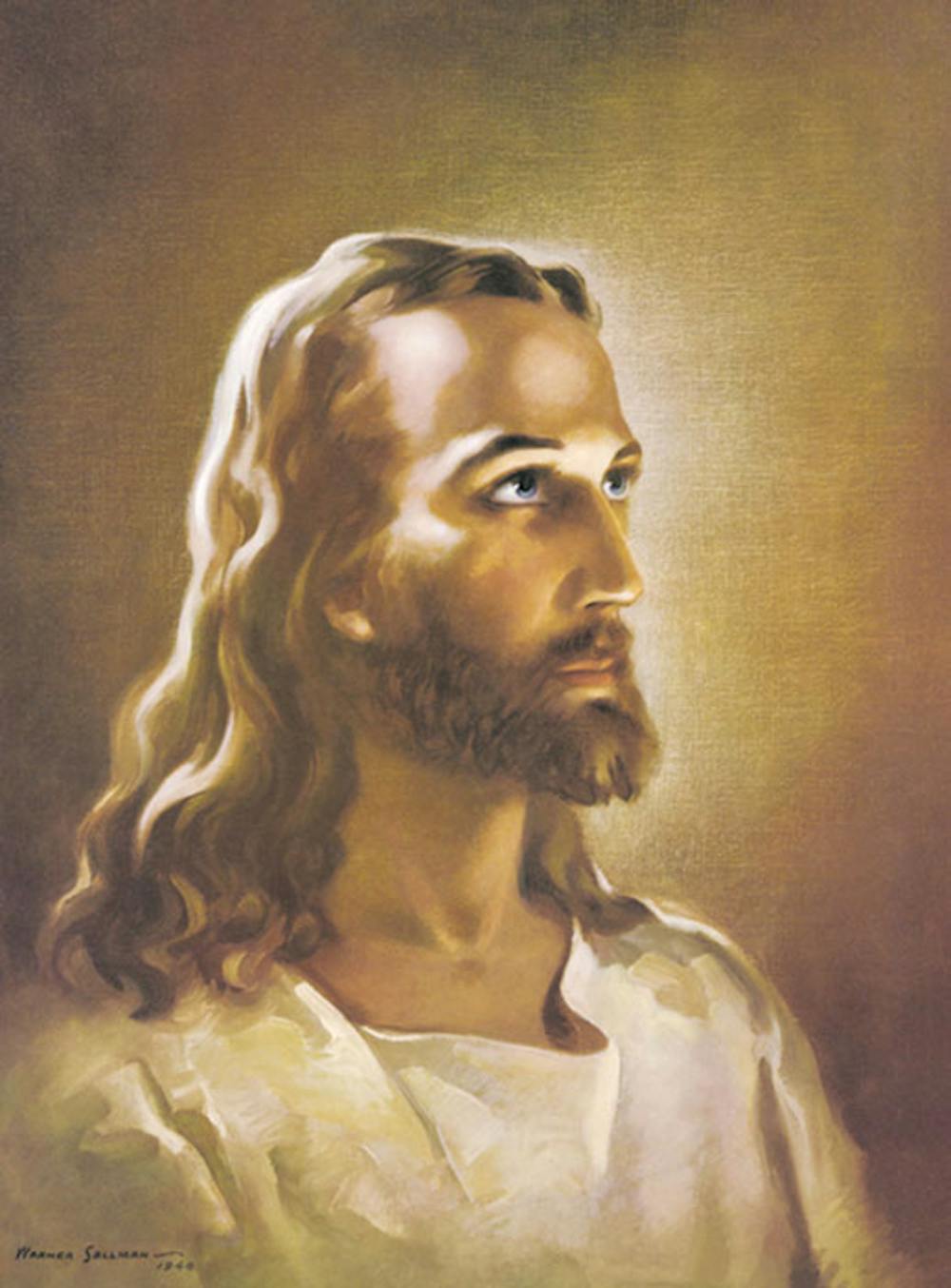
But the all-time most-reproduced image of Jesus comes from another period. It is Warner Sallman’s light-eyed, light-haired “Head of Christ” from 1940. Sallman, a former commercial artist who created art for advertising campaigns, successfully marketed this picture worldwide.
Sallman’s ‘Head of Christ’
Through Sallman’s partnerships with two Christian publishing companies, one Protestant and one Catholic, the Head of Christ came to be included on everything from prayer cards to stained glass, faux oil paintings, calendars, hymnals and night lights.
Sallman’s painting culminates a long tradition of white Europeans creating and disseminating pictures of Christ made in their own image.
In search of the holy face
The historical Jesus likely had the brown eyes and skin of other first-century Jews from Galilee, a region in biblical Israel. But no one knows exactly what Jesus looked like. There are no known images of Jesus from his lifetime, and while the Old Testament Kings Saul and David are explicitly called tall and handsome in the Bible, there is little indication of Jesus’ appearance in the Old or New Testaments.
Even these texts are contradictory: The Old Testament prophet Isaiah reads that the coming savior “had no beauty or majesty,” while the Book of Psalms claims he was “fairer than the children of men,” the word “fair” referring to physical beauty.
The earliest images of Jesus Christ emerged in the first through third centuries A.D., amidst concerns about idolatry. They were less about capturing the actual appearance of Christ than about clarifying his role as a ruler or as a savior.
To clearly indicate these roles, early Christian artists often relied on syncretism, meaning they combined visual formats from other cultures.
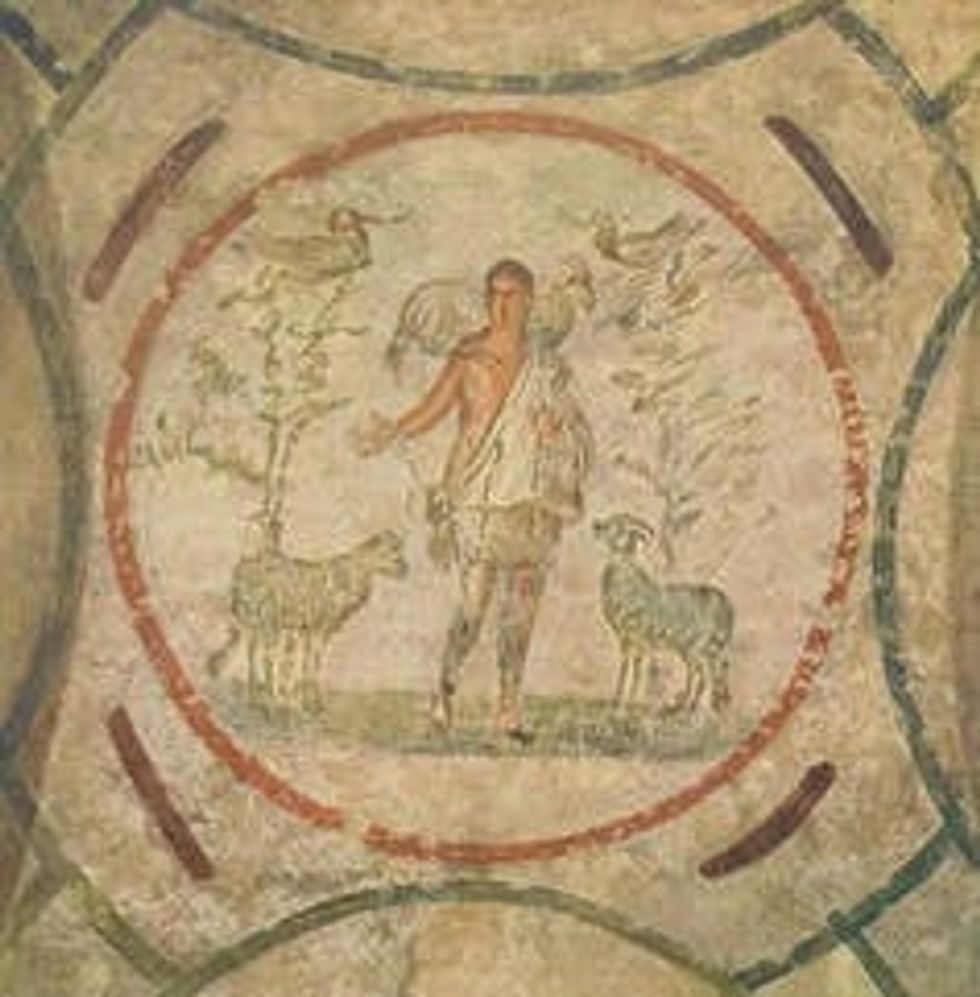
Probably the most popular syncretic image is Christ as the Good Shepherd, a beardless, youthful figure based on pagan representations of Orpheus, Hermes and Apollo.
In other common depictions, Christ wears the toga or other attributes of the emperor. The theologian Richard Viladesau argues that the mature bearded Christ, with long hair in the “Syrian” style, combines characteristics of the Greek god Zeus and the Old Testament figure Samson, among others.
Christ as self-portraitist
The first portraits of Christ, in the sense of authoritative likenesses, were believed to be self-portraits: the miraculous “image not made by human hands,” or acheiropoietos.
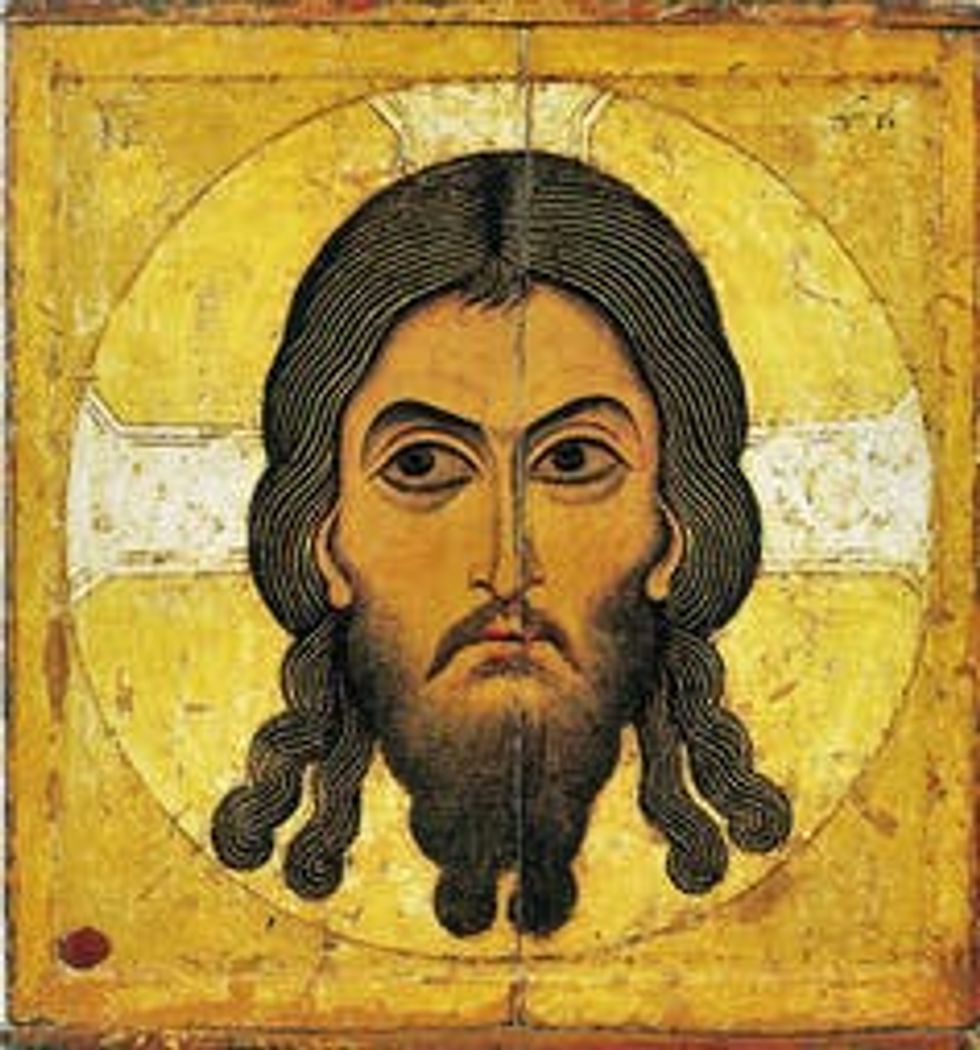
This belief originated in the seventh century A.D., based on a legend that Christ healed King Abgar of Edessa in modern-day Urfa, Turkey, through a miraculous image of his face, now known as the Mandylion.
A similar legend adopted by Western Christianity between the 11th and 14th centuries recounts how, before his death by crucifixion, Christ left an impression of his face on the veil of Saint Veronica, an image known as the volto santo, or “Holy Face.”
These two images, along with other similar relics, have formed the basis of iconic traditions about the “true image” of Christ.
From the perspective of art history, these artifacts reinforced an already standardized image of a bearded Christ with shoulder-length, dark hair.
In the Renaissance, European artists began to combine the icon and the portrait, making Christ in their own likeness. This happened for a variety of reasons, from identifying with the human suffering of Christ to commenting on one’s own creative power.
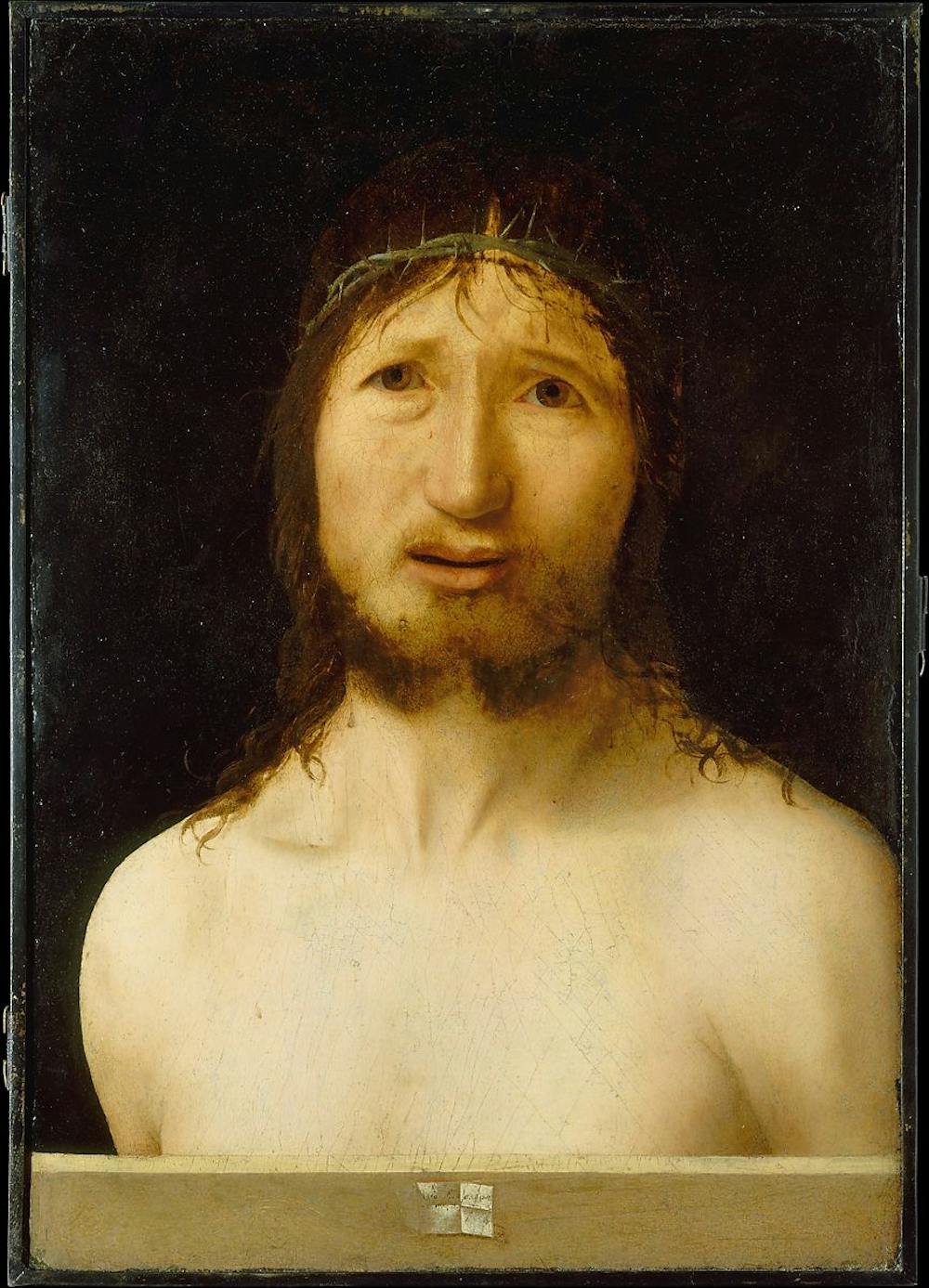
The 15th-century Sicilian painter Antonello da Messina, for example, painted small pictures of the suffering Christ formatted exactly like his portraits of regular people, with the subject positioned between a fictive parapet and a plain black background and signed “Antonello da Messina painted me.”
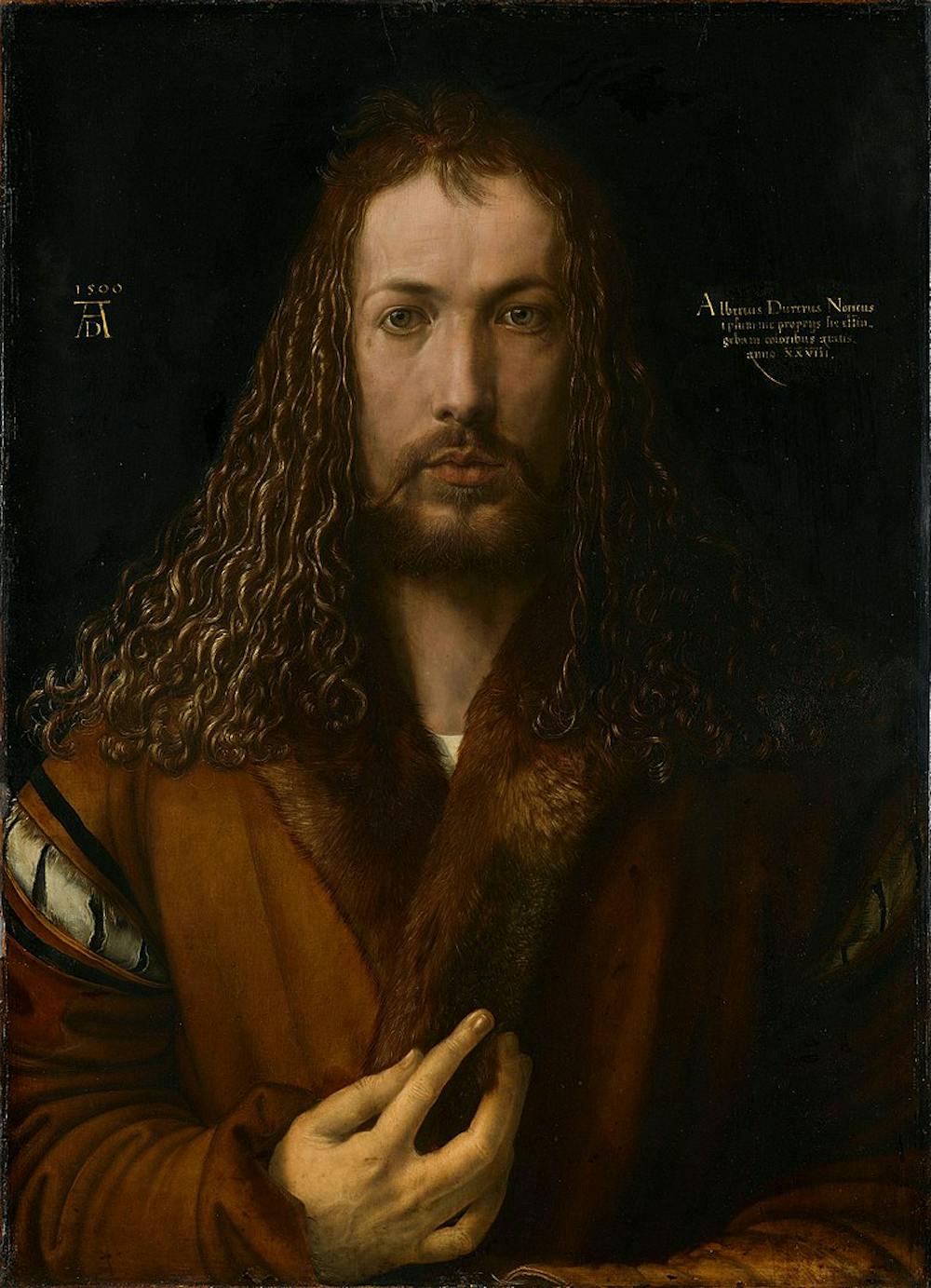
The 16th-century German artist Albrecht Dürer blurred the line between the holy face and his own image in a famous self-portrait of 1500. In this, he posed frontally like an icon, with his beard and luxuriant shoulder-length hair recalling Christ’s. The “AD” monogram could stand equally for “Albrecht Dürer” or “Anno Domini” – “in the year of our Lord.”
In whose image?
This phenomenon was not restricted to Europe: There are 16th- and 17th-century pictures of Jesus with, for example, Ethiopian and Indian features.
In Europe, however, the image of a light-skinned European Christ began to influence other parts of the world through European trade and colonization.
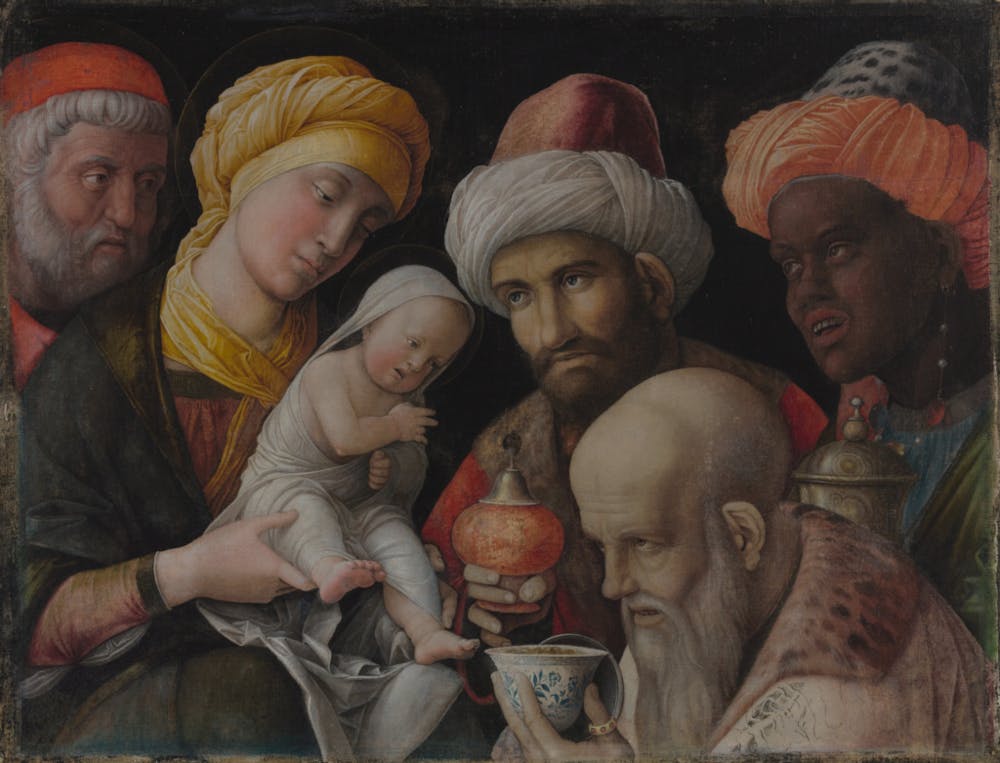
The Italian painter Andrea Mantegna’s “Adoration of the Magi” from A.D. 1505 features three distinct magi, who, according to one contemporary tradition, came from Africa, the Middle East and Asia. They present expensive objects of porcelain, agate and brass that would have been prized imports from China and the Persian and Ottoman empires.
But Jesus’ light skin and blues eyes suggest that he is not Middle Eastern but European-born. And the faux-Hebrew script embroidered on Mary’s cuffs and hemline belie a complicated relationship to the Judaism of the Holy Family.
In Mantegna’s Italy, anti-Semitic myths were already prevalent among the majority Christian population, with Jewish people often segregated to their own quarters of major cities.
Artists tried to distance Jesus and his parents from their Jewishness. Even seemingly small attributes like pierced ears – earrings were associated with Jewish women, their removal with a conversion to Christianity – could represent a transition toward the Christianity represented by Jesus.
Much later, anti-Semitic forces in Europe including the Nazis would attempt to divorce Jesus totally from his Judaism in favor of an Aryan stereotype.
White Jesus abroad
As Europeans colonized increasingly farther-flung lands, they brought a European Jesus with them. Jesuit missionaries established painting schools that taught new converts Christian art in a European mode.
A small altarpiece made in the school of Giovanni Niccolò, the Italian Jesuit who founded the “Seminary of Painters” in Kumamoto, Japan, around 1590, combines a traditional Japanese gilt and mother-of-pearl shrine with a painting of a distinctly white, European Madonna and Child.
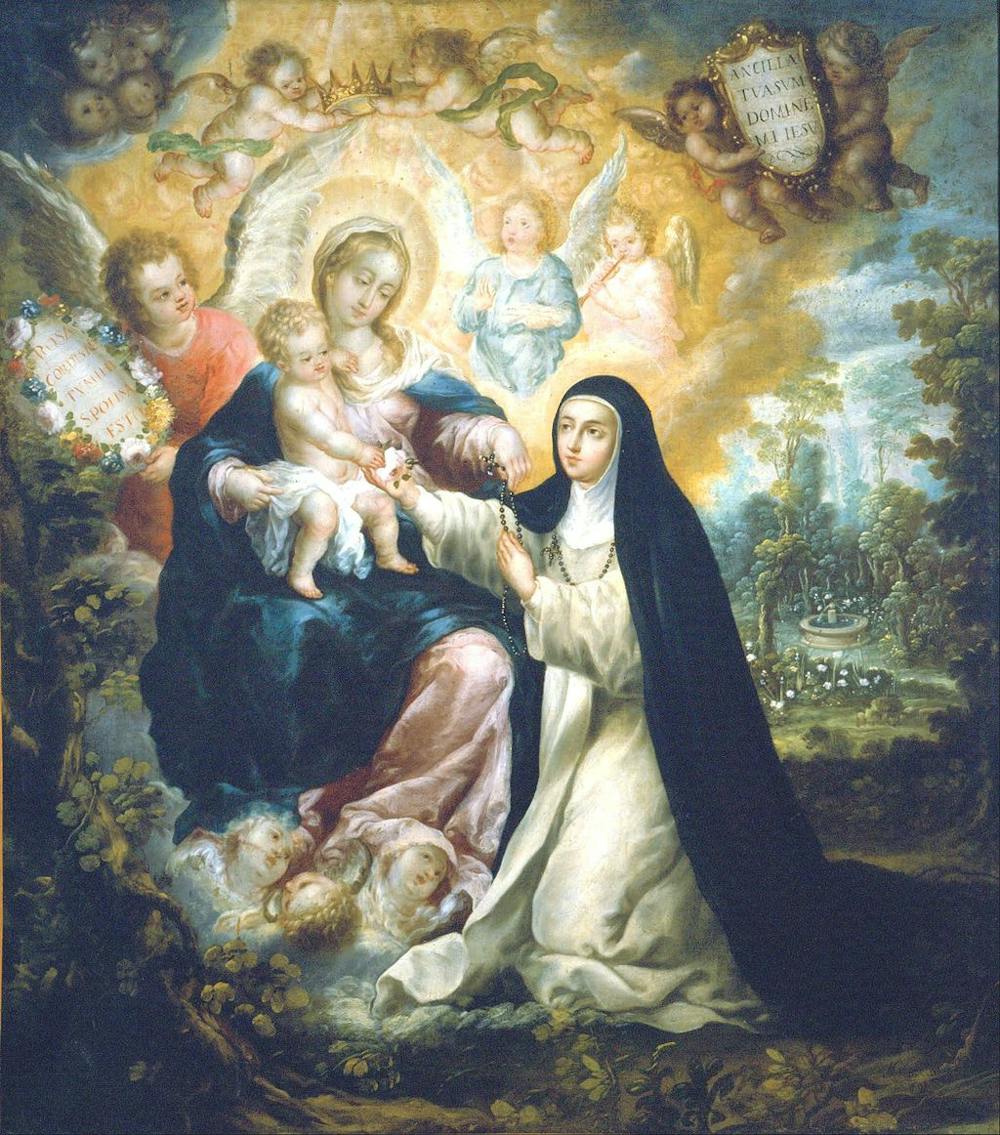
Nicolas Correa’s ‘The Mystic Betrothal of Saint Rose of Lima.’
In colonial Latin America – called “New Spain” by European colonists – images of a white Jesus reinforced a caste system where white, Christian Europeans occupied the top tier, while those with darker skin from perceived intermixing with native populations ranked considerably lower.
Artist Nicolas Correa’s 1695 painting of Saint Rose of Lima, the first Catholic saint born in “New Spain,” shows her metaphorical marriage to a blond, light-skinned Christ.
In a multiracial but unequal America, there was a disproportionate representation of a white Jesus in the media. It wasn’t only Warner Sallman’s Head of Christ that was depicted widely; a large proportion of actors who have played Jesus on television and film have been white with blue eyes.
Pictures of Jesus historically have served many purposes, from symbolically presenting his power to depicting his actual likeness. But representation matters, and viewers need to understand the complicated history of the images of Christ they consume.
Russian police on Friday carried out a new raid on the offices of main opposition leader Alexei Navalny as Kremlin critics accuse authorities of ramping up efforts to quash dissent.
Alexander Golovach, a lawyer working for Navalny's Anti-Corruption Fund (FBK), posted a video on social media of policemen arriving at their offices in southern Moscow.
Navalny, who was questioned by investigators Friday, said he had been banned from leaving the capital as part of a new criminal case against him.
The 44-year-old said authorities want to prevent him from traveling across the country to promote a tactical voting strategy to oppose loyalists of President Vladimir Putin ahead of regional elections in September.
Last year pro-Kremlin candidates suffered losses in Moscow city polls, and Navalny has called on his supporters to use the same tactic to oust members of the increasingly unpopular ruling party United Russia in September.
Navalny said he was being questioned by investigators as part of a new probe for suspected slander over comments the opposition politician made on social media.
In June, the Investigative Committee, which probes major cases, said Navalny is suspected of defaming a World War II veteran.
His close ally Leonid Volkov suggested the raid might be linked to the new case. Navalny's spokeswoman Kira Yarmysh did not immediately comment.
Members of Russian's law enforcement have repeatedly raided Navalny's offices, and the opposition politician has personally been the target of multiple criminal probes.
He was barred from challenging Putin in 2018's presidential election.
Kremlin critics have accused Russian authorities of ramping up repression against opponents after Putin oversaw a constitutional vote last month that allows him to potentially remain in power until 2036.
On Friday, Navalny's ally and up-and-coming opposition politician Lyubov Sobol accused the Kremlin of tightening the screws on critics.
"Putin's approval ratings have crashed, the economy is in doldrums, thousands-strong protests in the regions," said Sobol, referring to anti-Kremlin rallies in the far-eastern region of Khabarovsk.
"What to do? Come search the FBK for the umpteenth time!" she wrote on Twitter.
Navalny says the seven-day vote on the changes to the constitution was not properly observed by monitors and set a record for falsified ballots.
This week Moscow police detained nearly 150 people who marched in the city centre against the constitutional reforms.
The Confederate flag can be seen flying in Ireland, Germany, Brazil and beyond. Sometimes, the red-white-and-blue-crossed flag is seemingly displayed as kitsch, a kind of Americana. Other times, its display conveys a political meaning more reflective of the flag’s origins in the slave-holding, Southern American republic.
Wherever the Confederacy crops up, controversy usually follows. My academic research as a cultural geographer traces how Confederate iconography gets stitched into the cultural fabric of places thousands of miles from the United States.
Irish ‘rebels’
In the city of Cork, Ireland, fans of the local hurling and soccer teams have long flown the Confederate flag, which is sometimes called the “rebel flag,” from the stands. Both teams are called “The Rebels,” and their team colors match those of the Confederate flag.
But the Red Hand Defenders, a right-wing paramilitary organization in Ireland, still brandishes the Confederate flag because of its potent political symbolism.
The Protestant hardliner group emerged in the Ulster region in 1998 to oppose Northern Ireland’s possible secession from the United Kingdom and reunification with Ireland. To thwart this “home rule” campaign, the Red Hand Defenders executed a series of deadly bombings and in 1999 killed the Catholic human rights lawyer Rosemary Nelson.
Ireland’s connection with the Confederacy dates back to the Civil War. Many of the Confederate generals whose statues dot the U.S. South, including Stonewall Jackson and Robert E. Lee, were Scots-Irish. Their families came from Ulster, which includes parts of both Ireland and Northern Ireland.
“The Confederate attempt to secede from the union is put in parallel with loyalist resistance to Home Rule,” it explains.
Brazil’s Confederate roots
Like Ireland, Brazil has an ancestral connection to the American Confederacy.
After the Civil War ended slavery in the United States, some 8,000 to 10,000 Confederate soldiers left the vanquished South and migrated to Brazil. There, farmland was cheap and slavery was still legal. Historical research suggests that as many as 50 Confederate families purchased over 500 enslaved Black people in Brazil.
Confederate iconography sold on miniature flags, buttons and mousepads at the 2019 ‘Festa Confederada.’
Jordan Brasher
White supremacy in Germany
For Neo-Nazis in Germany, the white supremacy embedded in Confederate iconography is useful. It’s a stand-in for the Nazi swastika, which has been banned in Germany since the Holocaust. And during Civil War reenactments in Germany, Germans who side with the South are often acting out “Nazi fantasies of racial superiority,” Wolfgang Hochbruck, professor of American Studies at the University of Freiburg, told The Atlantic in 2011.
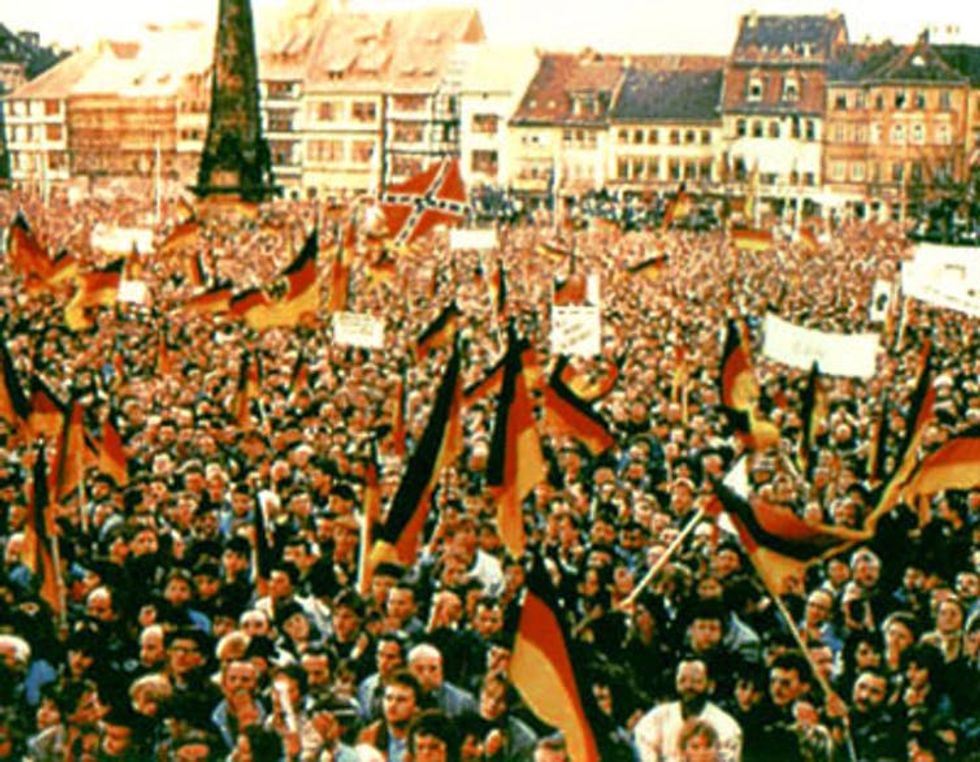
In those situations, the Germans flying the Confederate flag clearly understand its historic origins and meaning. That’s not always the case. A Confederate flag spontaneously appeared in the crowd at the fall of the Berlin Wall in 1989, for example.
There, it may have been understood as a symbol of anti-communism. A recent study shows that German schools, like many in the United States, teach the Civil War as primarily a battle over Southern states’ desire to remain “free” from federal interference – not over their desire to preserve slavery.
Historians have debunked this “states rights” theory of the conflict. But many in Germany may still view the flag as a symbol of freedom or independence.
Sometimes, people in Germany and elsewhere seem to see the Confederate flag as simply part of American culture. The Confederate iconography spotted at a country music festival in Geiselwind in 2007, for example, was probably seen as kitsch.
Confederate flag among German flags as the Berlin Wall crumbled in 1989.
public domain
Culture wars
Though Confederate iconography takes on different meanings in other countries, research shows it often crops up along those countries’ own political fractures, religious conflicts and racial divides. Flying it tends to inflame simmering social tensions, reopen old wounds and spur debates about history like those underway in the United States.
That’s up 19 percentage points since 2017, when modern blood was shed over the 19th-century Confederacy. Charlottesville has forced people everywhere to contend with both the historic reality of the American South and, increasingly, its surprisingly worldwide 21st-century legacy.