Teen climate activist Greta Thunberg had made it half-way from Sweden to Chile by boat, train and electric car when next month's UN climate summit was unexpectedly scrapped.
But as a new venue was announced Friday for the gathering called COP25 -- this time in Spain -- the 16-year-old didn't bat an eyelid: she simply asked for a lift back across the Atlantic.
"As #COP25 has officially been moved from Santiago to Madrid I'll need some help," Thunberg tweeted from Los Angeles. "It turns out I've traveled half around the world, the wrong way:)"
"Now I need to find a way to cross the Atlantic in November... If anyone could help me find transport I would be so grateful," said the teen, who refuses to fly because of the carbon emissions involved.
Thunberg's highly publicized journey has so far involved crossing on a zero-emission sailboat from the coast of England to New York, traveling overland through North America by train and in an electric car borrowed from Arnold Schwarzenegger.
She was one of around 25,000 delegates expected in Santiago for the United Nations climate summit, until Chile pulled out as host this week due to deadly anti-government protests.
The United Nations announced Friday that COP 25 will finally take place in Madrid, on the original scheduled dates of December 2-13.
The Swedish teen activist Thunberg rose to prominence last year after she started spending her Fridays outside Sweden's parliament, holding a sign reading "School strike for climate."
Students across the world began emulating her campaign, leading to organized school walkouts and the rise of the "Fridays for Future" movement which targets government action on climate change.
Russia's Supreme Court on Friday issued a ruling to wind up the operations of a respected rights group, sparking outrage amid an increasing crackdown on campaigners and the opposition.
The group, For Human Rights, vowed to appeal the ruling, which is the latest in a series of legal actions by the authorities in recent years seen as steadily ramping up pressure on rights campaigners.
It comes after the government in February added For Human Rights to a register of "foreign agents," a label given to organizations seen as political that implies they receive funding from overseas.
The group, which investigates rights abuses, said it had a month to file an appeal against the Supreme Court ruling.
"We will appeal the ruling and also go to the European Court of Human Rights," said the group's chief Lev Ponomaryov, one of the country's most prominent activists.
"The movement itself will continue to live and work," he told AFP.
For Human Rights, founded in 1997, is one of Russia's oldest rights groups with a mission to promote the rule of law and civil society. It is made up of a number of regional and local rights organizations.
Ponomaryov, 78, is a former physics professor who rose to prominence as an activist in the late 1980s and served in Russia's first post-Soviet parliament.
In recent years, he has been a vocal opponent of President Vladimir Putin's government.
The Russian justice ministry had accused his group of multiple violations including failing to always use the "foreign agent" tag on its publications.
The group argued in court that these were not sufficient grounds for liquidation.
"This is a historic trial. This is being done for the first time, the largest rights organisation in Russia is being liquidated. I'm sure there's huge interest in the country and in the world in this trial," Ponomaryov told the court.
- 'They have lost it' -
The legal decision to close down the group prompted outraged responses from opponents of the Kremlin.
"The authorities have lost it!" wrote Kremlin critic and former oligarch Mikhail Khodorkovsky on Twitter.
"It's time for the elite to realise that there is only one person who still has rights," opposition politician Dmitry Gudkov added, referring to Putin.
For Human Rights has faced an onslaught of legal action and the justice ministry has sought to close it down for months.
In December last year Ponomaryov spent more than two weeks in jail for urging people to take part in an unsanctioned rally in Moscow.
Earlier this month Russia declared opposition leader Alexei Navalny's Anti-Corruption Foundation (FBK) a "foreign agent", tightening the screws on the group.
The tag, reminiscent of the Soviet-era crackdown on dissidents, obliges them to submit documents every three months outlining their finances.
The measure comes as Russian officials accuse the West of trying to undermine the country, characterising internal criticism as the work of spies and traitors.
Last month Putin removed several opposition figures from his human rights council, an advisory body that has spoken out against abuses but has been losing influence in recent years.
In March, a court in Chechnya sentenced Oyub Titiyev, who ran the Chechen office of Memorial rights group, one of Russia's oldest, to four years in jail for drugs offences in a trial that drew condemnation from international groups. Titiyev, 62, was released on parole in June.
Women's groups and legal experts demanded Friday that Spain's laws be changed after five men accused of gang-raping an unconscious 14-year-old girl were convicted on a lesser charge of sexual abuse.
A Barcelona court on Thursday ruled out the more serious charge of sexual assault -- the legal equivalent of rape in Spain -- on the grounds that the victim was in an "unconscious state" from drugs and alcohol and the accused had not used "any type of violence or intimidation" in the attack.
The five men were handed between 10 and 12 years in prison. A conviction for sexual assault would have carried jail sentences of between 15 and 20 years.
Two other defendants were acquitted of involvement in the attack which took place in October 2016 at a party at an abandoned factory in the town of Manresa in the northeastern region of Catalonia.
"The problem is not the verdict, it's the criminal code" which states that intimidation or violence must be proven for a person to be convicted of rape, said Montserrat Comas of the progressive Judges for Democracy association in Catalonia.
Spain's laws must be changed to define rape as all sex without consent, as is the case in most other European nations and as required by Istanbul Convention, an international treaty on preventing and combating violence against women which Madrid ratified in 2014, she told news radio Cadena Ser.
"The facts are especially horrendous because we are talking about a 14-year-old minor," Comas said.
The case has been likened to the so-called "Wolf Pack" gang rape of a young woman in Pamplona in July 2016 during the northern city's famed bull-running festival which also sparked outrage.
In 2018, five Spanish men were first sentenced to nine years in prison for sexual abuse in that case, leading to widespread protests and calls for a review of Spain's rape laws.
In June the Supreme Court increased their sentences to 15 years each by requalifying the charges as sexual assault.
Following the initial Pamplona verdict, Spain's Socialist government announced plans to reform the criminal code to stipulate that a woman must give her explicit consent for sex but so far no changes have been made.
Marisa Soleto, head of the Women's Foundation pro-equality group, said in a tweet that the ruling in the Manresa case "was further proof of the need to change the law".
And Altamira Gonzalo of the women jurists' group Themis said she felt "much shame and powerlessness" over the verdict.
A controversial law that would allow Russia to cut internet traffic from international servers came into force Friday, prompting fears from rights activists of online isolation.
The law, which President Vladimir Putin signed in May, requires Russian internet providers to install technical devices provided by the authorities to enable centralised control of traffic.
They will also filter content to prevent access to banned websites.
Supporters of the legislation say the aim is to ensure Russian sites keep working if they are unable to connect to international servers or in the case of a threat from abroad such as cyber attacks.
But rights activists say it is another censorship bid following previous efforts in Russia to block services such as the LinkedIn social media site and the Telegram messenger service.
Human Rights Watch warned that the law means the "Russian government will gain even greater control over freedom of speech and information online".
- 'Directly censor content' -
The internet is the country's main forum for political debate and opposing voices as well as coordinating opposition demonstrations.
"Now the government can directly censor content or even turn Russia's internet into a closed system without telling the public what they are doing or why," said HRW's deputy Europe and Central Asian editor Rachel Denber.
The bill prompted thousands of people to join street protests in Moscow and other cities in March, with some comparing it to China's Great Firewall, which heavily restricts internet access.
The Kremlin has insisted it has no desire to isolate Russian internet users.
"No one is suggesting cutting the internet," spokesman Dmitry Peskov has said, accusing protesters of suffering from "delusions."
The bill's authors say the aim is to protect the country's websites from external threats and ensure the functioning of the internet is "safe and stable."
In the event of "threats to the stability, security and integrity" of the internet in Russia, the authorities can establish centralised control by the state telecommunications watchdog.
Internet providers have to take part in annual drills to test the technical devices needed for this.
These devices have not yet been installed by internet providers, however, and are currently being tested, the RBK business daily reported.
One of the law's authors, nationalist lawmaker Andrei Lugovoi, is a key suspect in the 2006 murder of Kremlin critic Alexander Litvinenko in Britain.
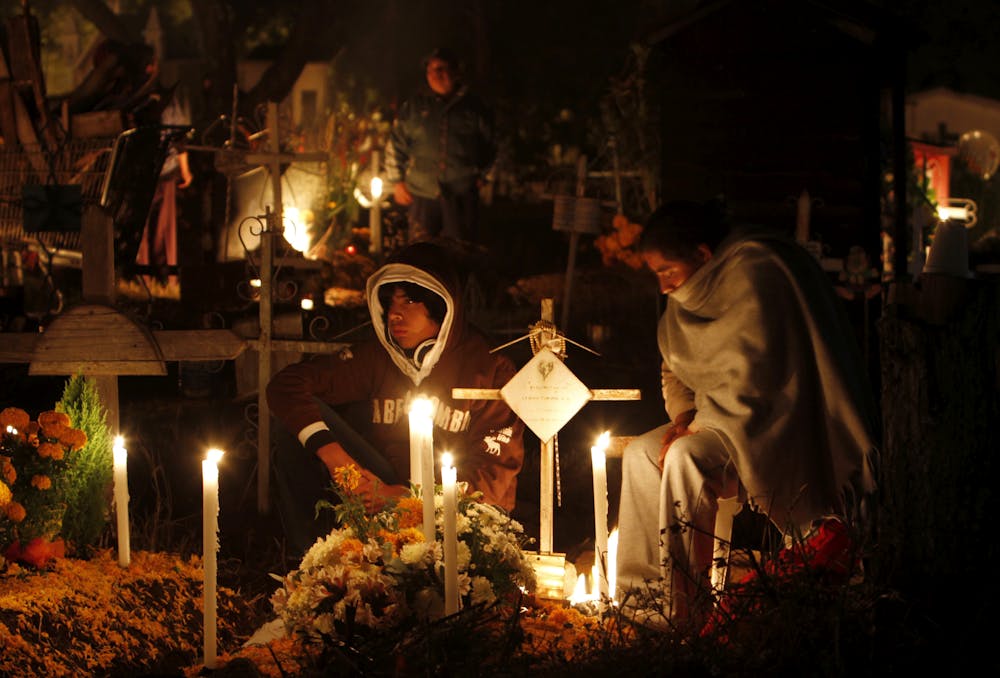
Day of the Dead might sound like a solemn affair, but Mexico’s famous holiday is actually a lively commemoration of the departed.
The nationwide festivities, which include a massive parade in Mexico City, typically begin the night of Oct. 31 with families sitting vigil at grave sites. Mexican tradition holds that on Nov. 1 and 2, the dead awaken to reconnect and celebrate with their living family and friends.
Given the timing, it may be tempting to equate Day of the Dead with Halloween, a ghost-themed U.S. holiday. But the two holidays express fundamentally different beliefs.
When the Spanish arrived in central Mexico 500 years ago, the region had millions of indigenous inhabitants. The conquistadores largely characterized them as Aztecs because, at the time, they were united under the expansive Aztec empire.
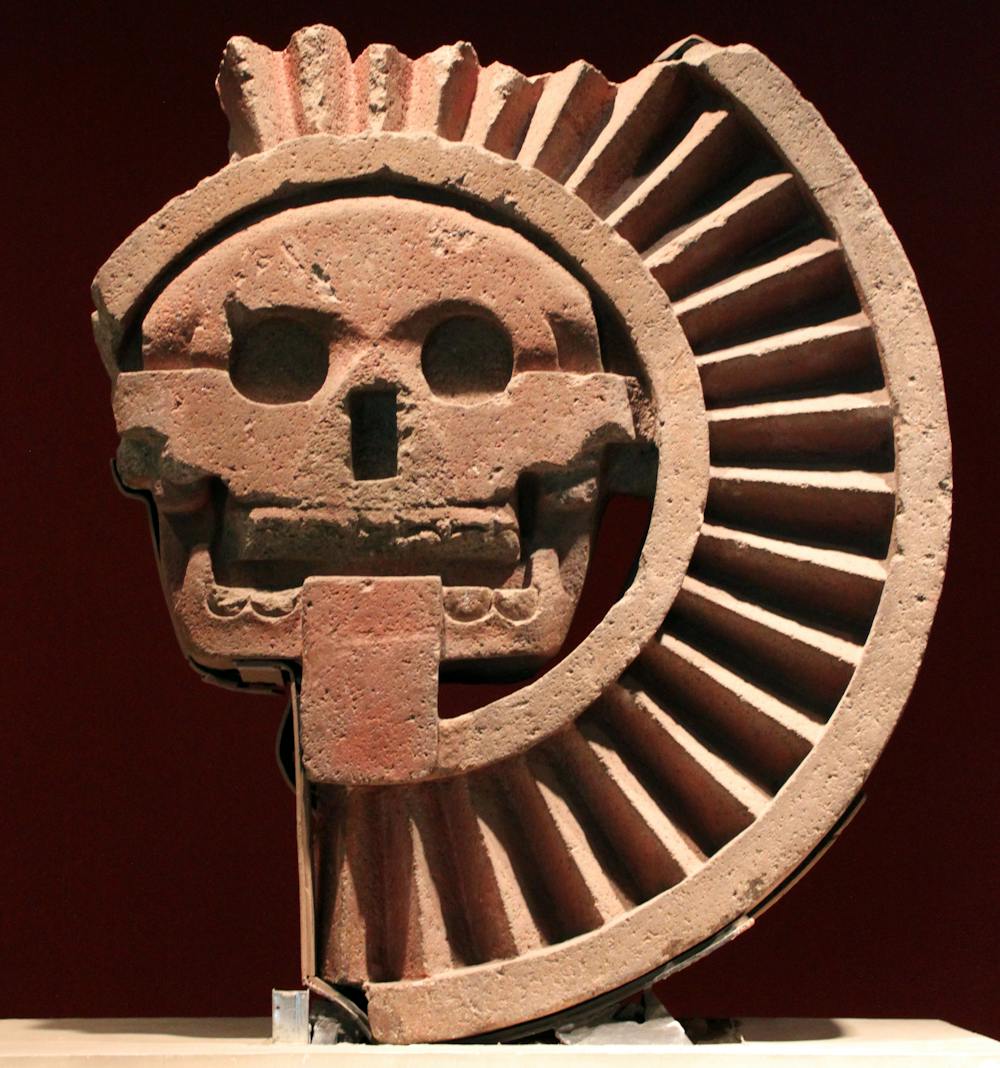
In any case, by the time the Spanish conquistadors invaded in 1519, the Aztecs recognized a wide pantheon of gods, which included a goddess of death and the underworld named Mictecacihuatl. She was celebrated throughout the entire ninth month of the Aztec calendar, a 20-day month that corresponded roughly to late July and early August.
Mictecacihuatl’s underworld husband, Mictlantecuhtli, was also depicted in skeletal form.
Aztec mythology tells that Mictecacihuatl was sacrificed as a baby and magically grew to adulthood in the underworld, where she married. With her husband, she presided over the underworld.
Mictecacihuatl – who is often depicted with flayed skin and a gaping, skeletal jaw – was linked to both death and resurrection. According to one myth, Mictecacihuatl and her husband collected bones so that they might be returned to the land of the living and restored by the gods.
The Aztecs appeased these fearsome underworld gods by burying their dead with food and precious objects.
But indigenous people in Mexico, as across the Americas, resisted Spanish efforts to eradicate their culture. Instead, they often blended their own religious and cultural practices with those imposed on them by the Spanish.
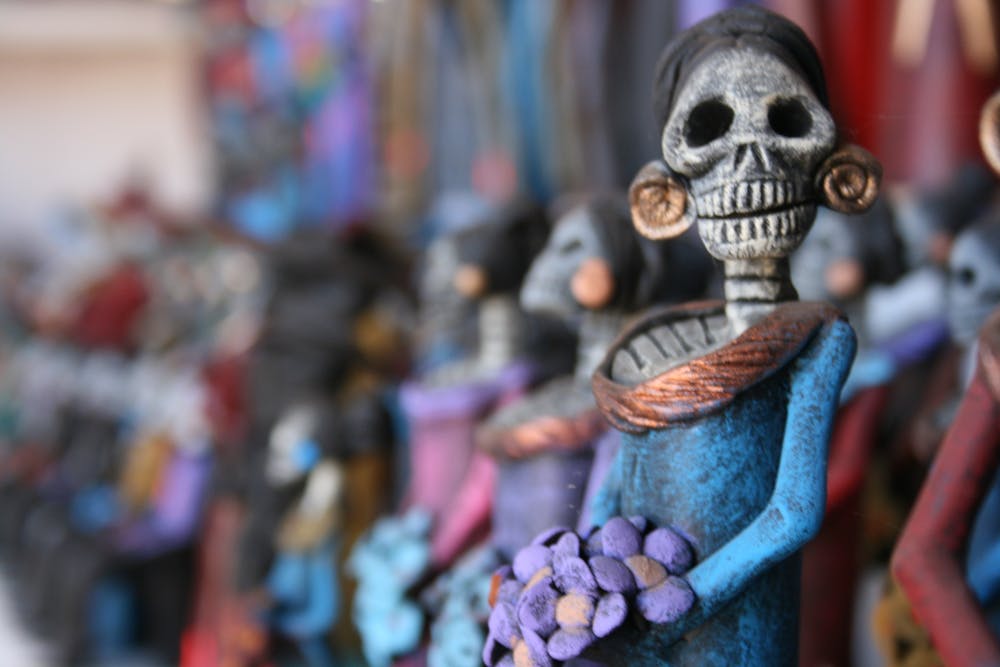
A calavera – Day of the Dead skeleton – all dressed up for that afterlife party.
Perhaps the best-known symbol of the ethnic and cultural mixing that defines modern Mexico is La Virgen de Guadalupe, a uniquely Mexican Virgin Mary.
Many Mexican Catholics believe that in 1531 the Virgin appeared to Juan Diego, an indigenous Mexican farmer, and in his native language of Nahuatl told him to build a shrine to her. Today the Basilica of Our Lady of Guadalupe in Mexico City is among the world’s most visited holy sites.
Day of the Dead is almost certainly a similar case of blended cultures.
Spanish conquerors faced difficulty in convincing native peoples to give up their rituals honoring death goddess Mictecihuatl. The compromise was to move these indigenous festivities from late July to early November to correspond with Allhallowtide – the three-day Christian observance of All Saints’ Eve, All Saints’ Day and All Souls’ Day.
With this move, the holiday was nominally connected to Catholicism. But many practices and beliefs associated with the worship of the dead remained deeply indigenous.
Día de los Muertos today
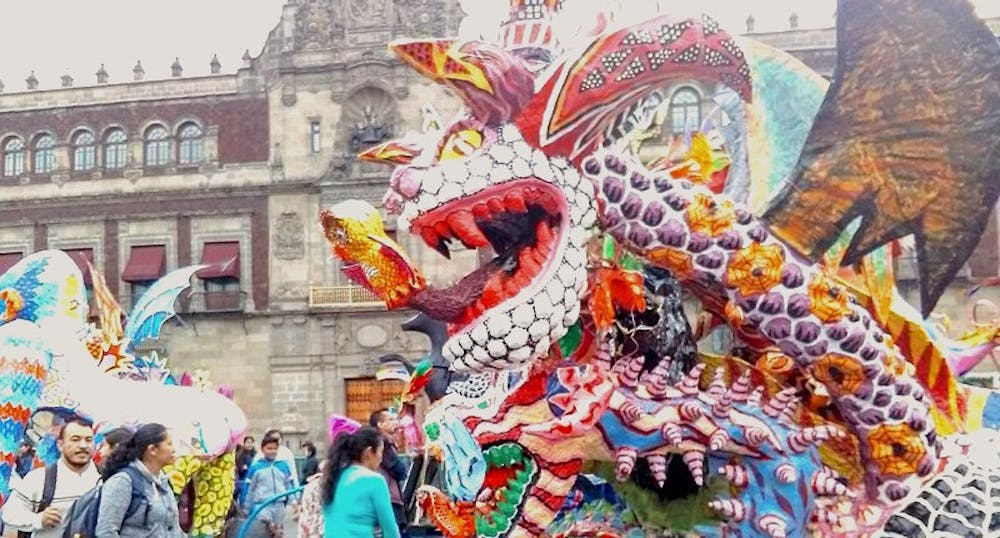
Contemporary Day of the Dead rituals were featured prominently in the 2017 Disney/Pixar film “Coco.” These include homemade sugar skulls, decorated home altars, the fantastical spirit animals called alebrijes and images of convivial calaveras – skeletons – enjoying the afterlife in their finest regalia.
The use of Mexican marigolds to adorn altars and graves on Day of the Dead probably has indigenous origins. Called cempasúchil by the Aztecs, the vibrant Mexican marigold grows during the fall. According to myth, the sweet smell of these flowers awaken the dead.
Mexico City’s annual Day of the Dead parade features floats of alebrijes, or spirit animals.
The elaborately decorated shrines to deceased loved ones, which usually contain offerings for the dead, may also have pre-Hispanic origins. Many indigenous peoples across Mesoamerica had altars in their houses or patios. These were used to perform household rituals, worship gods and communicate with ancestors.
The bones, skulls and skeletons that are so iconic of Day of the Dead are fundamentally indigenous, too. Many Aztecs gods were depicted as skeletal. Other deities wore bones as clothing or jewelry.
The Aztecs, who engaged in ritual human sacrifice, even used human bones to make musical instruments. The Aztec capital city of Tenochtitlan had a large bone rack, called a tzompantli, that stored thousands of human skulls.
The Islamic State jihadist group confirmed the death of its leader Abu Bakr al-Baghdadi in a statement Thursday and named his replacement as Abu Ibrahim al-Hashimi al-Quraishi.
"We mourn you... commander of the faithful," said Abu Hamza al-Quraishi -- presented as the jihadist group's new spokesman -- in an audio statement.
Baghdadi, who led IS since 2014 and was the world's most wanted man, was killed in a US special forces raid in Syria's northwestern province of Idlib on Sunday.
The group also confirmed the killing in another raid the following day of the group's previous spokesman Abu Hassan al-Muhajir.
The statement said the jihadist group's legislative and consultative body convened after the 48-year-old Iraqi-born jihadist chief's death.
AFP / Janis LATVELS Abu Bakr al-Baghdadi
"The Islamic State shura council convened immediately after confirming the martyrdom of Sheikh Abu Bakr al-Baghdadi, and the elders of the holy warriors agreed" on a replacement, said the seven-minute message.
Little is known about Hashimi, whose name was seldom mentioned as a possible successor the multiple times that Baghdadi was reported killed in recent years.
"We don't know much about him except that he is the leading judge of IS and he heads the Sharia (Islamic law) committee," said Hisham al-Hashemi, an Iraqi expert on IS.
The IS spokesman also issued a stark warning to the United States, whose President Donald Trump announced Baghdadi's death in a televised address from the White House.
- 'Crazy old man' -
"He died after running into a dead-end tunnel, whimpering and crying and screaming all the way," Trump said on Sunday, adding that Baghdadi "died like a dog".
US Department of Defense/AFP / Jose ROMERO This still image from video released by the US Department of Defense on Wednesday, 2019, shows smoke rising from the compound of IS leader Abu Bakr al-Baghdadi in Syria after it was destroyed in the US raid on October 26, 2019.
In the new audio message, the new IS spokesman described Trump as "a crazy old man" and warned the US that the group's supporters would avenge Baghdadi's death.
"Do not rejoice America," he warned, "the new chosen one will make you forget the horror you have beholden... and make the achievements of the Baghdadi days taste sweet".
The spokesman also referred to an earlier call by Baghdadi for the thousands of IS fighters held in Syrian and Iraqi prisons to be freed.
Syrian Kurdish forces run prisons in northeastern Syria where they say around 12,000 IS suspects are held.
Most of those prisoners are Iraqi and Syrian but the detainees also include more than 2,000 foreigners who hail from more than 50 different countries.
With aerial and logistical assistance from an international coalition led by the US, Iraqi and Syrian forces have wrested back all the territory lost to IS in 2014.
Fighters from the newly-formed IS group that year swept through much of the Sunni heartland in Iraq and Syria to declare a "caliphate" that further expanded to reach roughly the size of Great Britain.
Years of battles led to the elimination in 2019 of IS' self-declared territorial "caliphate", ending an unprecedented experiment in jihadist statehood which saw a well-organised administration mint its own currency, produce school textbooks and levy taxes.
But while that entity collapsed in March in the remote eastern Syrian village of Baghouz, the organisation went underground and reverted to well-honed guerrilla tactics that continue to do damage.
A recent Turkish invasion targeting the Kurdish forces that had fought against IS in Baghouz has wrought havoc in northeastern Syria, whose geopolitical map is being redrawn.
Observers have warned that the power vacuum and confusion may create an opportunity for IS to rebuild and make fresh territorial gains.
IS has a very horizontal structure, analysts say, and the impact of a decapitation strike may be more symbolic than operational, leaving the group's global jihadist brand and efficiency as an insurgency largely intact.
Using Russia-based servers and promoted by powerful groups linked to China's ruling Communist Party, a sophisticated anonymous website is targeting Hong Kong pro-democracy figures -- and there is almost no way to stop it.
From high-profile activists to journalists and lawmakers, about 200 people seen as supporting Hong Kong's protest movement have been "doxxed" -- had their personal details posted online -- by the site, HK Leaks, since it emerged in August.
"I received hundreds of threatening calls," a female reporter at Apple Daily, a pro-democracy newspaper, told AFP.
"They would call me a bitch, and a prostitute, and tell me to watch out or they would kill me."
Disclosing certain personal details, including phone numbers, without consent is illegal in Hong Kong.
Privacy Commissioner Stephen Wong said on September 17 he had ordered HK Leaks to take down all posts.
But the site remains online: on its front page, a photo of black-clad protesters with a Chinese-language banner saying: "We want to know who these people are and why they are messing up Hong Kong!"
Personal details -- names, home addresses, personal telephone numbers -- of hundreds of people are posted alongside details of their "misdeeds".
More than two million people follow Facebook pages that have shared HK Leaks posts, according to data from social media monitoring platform CrowdTangle.
And the site itself has received more than 175,000 unique page views, according to SiteWorthTraffic.
"I felt really helpless when I realised the site couldn't be blocked," said the reporter, who suspended her telephone number in a bid to escape the abuse.
Apple Daily obtained a court order in a bid to prevent further doxxing attacks, but her personal details remain on HK Leaks.
-- 'Bulletproof' site --
The problem, experts say, is that HK Leaks is a sophisticated operation specifically designed to evade prosecution.
It is registered anonymously on a Russian server, uses so-called bulletproof anonymous hosting -- also favoured by controversial white supremacist-linked sites such as 8chan -- and has shifted domain three times since August alone.
In early August, the site was live as hkleaks.org, before migrating to hkleaks.ru which became defunct late October, replaced by three other similar domain names, with the same content on each, according to an AFP investigation.
AFP / Nicolas ASFOURI The protests, which began in June, have turned increasingly violent with street battles between young people and police
Its listed contact email is registered on Yandex, a Russian internet services company.
"This site seems to be really well set up to reveal as little as possible and it doesn't use lots of external services, like buttons, statistics trackers, various scripts that would leak information," said Maarten Schenk, co-founder of the fact-check site Lead Stories.
It would require a court order to get the domain registrar to hand over any details, Schenk said, warning that the people behind HK Leaks could have paid in bitcoin and be untraceable anyway.
"Whoever is running this site is good at what they do," he told AFP.
HK Leaks uses DDOS-Guard, a Russia-based hosting provider, and "the IP address that is shown for the website is not that of the website itself but of the DDOS-Guard company," cybersecurity expert Brian Honan told AFP.
The site is also registered under the name of a DDOS-Guard employee, which is "part of the device which enables owners of websites to hide their identity," he added.
- 'Hideous' people -
Some pro-democracy protesters have also doxxed Hong Kong's police, which last week obtained a court injunction giving them further protections against personal details being leaked.
Hong Kong's Privacy Commissioner for Personal Data has logged around 2,000 cases of doxxing -- roughly half affecting police -- since protests began in June, according to a spokesman for his office, Stephen Kai.
However the doxxing of police has been in a less co-ordinated fashion and without any specific or sophisticated website.
Meanwhile, HK Leaks has been promoted by groups linked to China's Communist Party.
These include the Chinese Communist Youth League, which has promoted the doxxing site on their official Weibo accounts.
"Netizens have produced a website called HK Leaks... These hideous people have been categorised according to surname. Let's remove their masks, take action!" a September 18 post on one of the league's account says.
The state-run broadcaster, CCTV, posted the same message on its official Weibo account, where it received more than 75,000 likes.
AFP / Nicolas ASFOURI Hong Kong's protesters are demanding the right to elect their leaders
The nationalist Global Times newspaper, a Communist Party mouthpiece, posted a similar message on its Weibo account, and added a hashtag #listofunmaskedHongKongmob which has been viewed more than 230 million times.
HK Leaks has also been promoted by a network of Twitter bot accounts identified by AFP -- some created shortly before the website was set up in August 2019, others old, idle accounts that were revived around the same time.
Many of the tweets used emoji in their hashtags or were strategically edited to avoid being flagged -- behaviours also seen on accounts removed by Twitter this summer for involvement in a coordinated state-backed disinformation campaign.
Some doxxing victims have accused mainland Chinese authorities of involvement.
One pro-democracy protester told AFP he gave a "fake address I've never given to anyone" to Chinese police during a five-hour grilling at the border when returning to Hong Kong after a business trip in mainland China in August.
"The same fake address shows up on HK Leaks," he said.
British Prime Minister Boris Johnson's office has defended his Brexit deal with the EU, after US President Donald Trump warned it would make it impossible for the two nations to strike a future trade agreement.
The president, whose impeachment in the US has moved a stage closer following a key vote in Congress, waded into the British election campaign on Thursday to criticise Johnson's divorce terms with the European bloc.
"This deal... you can't do it, you can't trade. We can't make a trade deal with the UK," he said.
But a Downing Street spokesman later said the deal would allow the UK to strike "our own free trade deals around the world from which every part of the UK will benefit".
Trump's comments appear at odds with his previous pledge in September that he was working closely with Johnson to strike a "magnificent trade deal" once Britain left the EU.
The US president also launched a stinging attack on the country's main opposition leader Jeremy Corbyn and urged Johnson to unite with eurosceptic hardliner Nigel Farage, a key figure in the 2016 referendum on European Union membership.
"Corbyn would be so bad for your country," Trump told Farage during a phone interview broadcast on his talkshow on British radio station LBC.
AFP / Sabrina BLANCHARD Brexit timeline, October 2019
"He'd take you in such a bad way. He'd take you into such bad places."
"I'd like to see you and Boris get together... I think it'd be a great thing," Trump added.
Farage, whose new Brexit Party is campaigning for Britain to leave the EU without any deal in place, has urged Johnson to form an electoral alliance but has so far been rebuffed.
He is due to launch his party's election campaign on Friday.
- 'Trump trying to interfere' -
Within minutes of the interview airing, Corbyn shot back on Twitter that "Trump is trying to interfere in Britain's election to get his friend Boris Johnson elected".
Johnson agreed new divorce terms with the bloc's leaders earlier this month, ahead of the country's scheduled departure on Thursday.
But he was unable to push the plan through parliament and instead opted to hold a snap pre-Christmas election, blaming his Labour rivals for the latest Brexit delay and promising to now take the country out by a new January 31 deadline.
"If you vote for us and we get our programme through, which we will... we can be out, at the absolute latest, by January next year," Johnson said during a campaign stop Thursday at a hospital.
POOL/AFP/File / Aaron Chown Johnson risks a backlash over his unkept "do or die" promise to deliver Brexit on October 31
The Conservative leader is riding high in opinion polls going into the December 12 vote that will be Britain's third in four years.
But he risks a backlash over his unkept "do or die" promise to deliver Brexit on October 31 -- and has again set himself up for another potential fall by promising to meet the next deadline.
Pro-EU campaigners and business executives have breathed a sigh of relief that Britain avoided a Halloween Brexit nightmare that could have seen it crash out of the EU after 46 years without a plan.
China warned Friday it would not tolerate any challenge to Hong Kong's governing system, as it laid out plans to boost patriotism in the city and change how its leader is chosen or removed after months of pro-democracy protests.
Beijing also said it would brook no foreign interference in Hong Kong affairs as it discussed the unrest in the semi-autonomous city at a major, four-day meeting of the Communist Party chaired by President Xi Jinping, according to a senior party cadre.
The central government in Beijing has so far voiced its confidence in Hong Kong chief executive Carrie Lam and the city police to put a lid on the increasingly violent protests.
But all eyes have been on whether the party leadership will assert more control over the situation if the demonstrations spin out of control.
The former British colony has been rocked by months of protests with citizens lampooning the city's pro-Beijing leaders and erosion of basic rights.
Shen Chunyao, director of the Hong Kong, Macau and Basic Law Commission, said party leaders at the meeting in Beijing agreed to "further improve the central government's system of governance over the region" and maintain its "long-term prosperity and stability."
China, he added, would "never tolerate any act" that aims to split the country or endanger national security.
Elements of the People's Armed Police were deployed over the summer in Shenzhen, the city bordering Hong Kong, fuelling speculation that Beijing might be prepared to intervene if necessary.
The paramilitary group was seen conducting drills with assault rifles fitted with bayonets at a sports stadium in Shenzhen on Thursday.
- 'Lip service' -
Hong Kong's chief executive is not directly elected, a source of major friction and a headache for the leaders themselves because they have no popular mandate.
Currently the city's leader is chosen by a 1,200-strong committee that is stacked with Beijing loyalists.
Lam, who now boasts record low approval ratings, became leader in 2016 after securing 777 votes from that committee.
Shen said the party leaders discussed ways "to improve the mechanism of appointing and removing the chief executive and key officials of the Special Administrative Region by the central government."
AFP / GREG BAKER Shen Chunyao, director of the Hong Kong, Macau and Basic Law Commission, said China would "never tolerate any act" that aims to split the country
The legal system of the city will also be improved to "safeguard national security," he said, without providing more details.
Veteran pro-democracy lawmaker Claudia Mo said Beijing's comments about improving the way the city's leader is chosen is mere "lip service".
"Hong Kong people have been let down all too often on that issue so I think we can just ignore that 'improvement'," she told AFP.
"We're asking for one man, one vote, minus Beijing's interference."
Political analyst Willy Lam said the comments indicated Beijing was determined to exert "tighter control" over Hong Kong in the future.
"It's to make sure the next chief executive carries out Beijing's orders more effectively that Carrie Lam has done," he told AFP.
"It has nothing to do with democracy."
Shen said China's communist leaders want "patriots to form the main body" of those selected to govern both Hong Kong and Macau.
Beijing Wednesday expressed "approval and support" for the disqualification of Hong Kong democracy activist Joshua Wong from upcoming local elections.
Wong, one of the most prominent figures in the otherwise leaderless pro-democracy movement, accused the Hong Kong government of "political screening" after an election officer ruled his nomination for the November poll invalid.
- Strengthening 'Patriotism' -
Lecturer Leung Kai-chi, of the Chinese University of Hong Kong, said changes or improvements would not help unless coupled with an increase in public trust.
"Isn't the current disaster in Hong Kong the best proof?" Leung said.
"It will be self-deceiving if the improvements do not address the recognition issue but merely reiterate the qualifications of the one chosen by the authorities."
The party elite decided this week to step up patriotic education as a way to curb youth-led protests.
Hong Kong officials and teenagers should learn about the constitution, Shen said.
The party also wants to "strengthen the national consciousness and patriotism of Hong Kong and Macau compatriots through the education of history and Chinese culture," he said.
Beijing had previously tried to beef up patriotic education in 2012, resulting in a huge backlash from Hong Kong students.
"Hong Kongers will not take this issue lying down," said Mo, referring to new moves to add Communist Party propaganda to the curriculum.
Former Ambassador to Russia Michael McFaul on Thursday blasted President Donald Trump’s foreign policy for the pattern of furthering the political interests of Russian Federation President Vladimir Putin.
McFaul was interviewed about the latest testimony in the impeachment inquiry on MSNBC’s “Deadline: White House” by host Nicolle Wallace.
“What does that mean where on multiple occasions people in the foreign policy world go upstairs to the counsel’s office?” Wallace asked.
“It means they are worried that there is criminal, illegal, wrongful behavior,” McFaul replied. “That’s what it sounds like to me reading what has described in these testimonials.”
“But Lieutenant Colonel Vindman, he is somebody I served with, in Moscow. For him to do that — remember people are forgetting that, you are trained to obey and be part of the chain of command, two decades in the U.S. military — to go outside of that and to say, ‘Hey, I think there is something wrong here,’ It’d have to be something pretty bad. And that’s what it seemed like what happened here.“
”Can I then ask you a broader question? This isn’t just a scandal about a call with anyone. This is a scandal about a call with an American ally being deprived military aid to protect themselves against Russia,” Wallace noted. “How do you see this scandal fitting into larger questions about Donald Trump and his relationship with Russia?”
“I still want to know why, after all these years, he just goes out of his way to defend Vladimir Putin, appease him, do whatever he wants,” McFaul replied.
“And now this phone call undermines Mr. Zelensky withholding military assistance. Man, that is music to Putin’s ears. I just think it’s very damaging to our relationship with Ukraine, and of course that means that’s very good for Vladimir Putin,” he explained.
“And I also want to underscore, just to be clear, it wasn’t just one phone call. That is what we’ve really learned over the last several weeks. This was a multiple-month operation to try to use the public office of the president for his private interests and do nothing to defend Ukraine,” McFaul added.
Hong Kong slid into recession for the first time in a decade in the third quarter, weighed down by increasingly violent anti-government protests and the protracted U.S.-China trade war.
Five months of protests have battered the Chinese-ruled city's retail and tourism sector, and there is no sign of the demonstrations abating. Police tightened security on Thursday ahead of more potential clashes.
The city's economy shrank 3.2% in July-September from the preceding period, contracting for a second straight quarter and meeting the technical definition of a recession, according to preliminary government data on Thursday.
From a year earlier, gross domestic product (GDP) contracted 2.9%. The readings were the weakest for the Asian financial hub since the global financial crisis in 2008/2009.
The government also revised down second-quarter GDP data to show growth of 0.4% year-on-year, from a preliminary estimate of 0.6% and a later reading of 0.5%. Quarter-on-quarter was revised down to -0.5%, versus a preliminary forecast of -0.3% and a later reading of -0.4%.
"Domestic demand worsened significantly," the government said in a statement.
"As the weakening economic conditions dampened consumer sentiment and large-scale demonstrations cause severe disruptions to the retail, catering and other consumer-related sectors, private consumption expenditure recorded its first year-on-year decline in more than 10 years."
The government said that with no sign of protests abating, private consumption and investment sentiment would continue to be affected.
Some Hong Kong businesses have asked employees to take unpaid leave as tourists steer clear of sometimes violent running battles between protesters and police in key shopping areas and malls.
Capital Economics said in a research note that while GDP would probably continue to contract in the fourth quarter, the pace of contraction should ease barring a further escalation in the demonstrations.
"Any recovery will be constrained by weak business investment, however, as the city’s political crisis has done lasting damage to its reputation as a stable and autonomous financial hub," it said in a note to clients.
The protests and escalating violence have plunged the former British colony into its biggest political crisis in decades and unnerved many in the business and financial communities.
Protesters are angry at what they see as Beijing’s increasing interference in the Chinese-ruled city. China denies meddling and has accused foreign governments, including the United States and Britain, of stirring up trouble.
The city's leader Carrie Lam warned on Tuesday that full-year growth could contract.
Almost all growth engines in the Asian financial hub stalled over the summer as shops shut to avoid clashes between riot police and protesters, while the Sino-U.S. trade warintensified. Hong Kong is one of the world's most popular tourism destinations and a bustling container port.
Retail sales fell the most on record year-on-year in August, while tourist arrivals dropped the most since Severe Acute Respiratory Syndrome (SARS) struck Hong Kong in 2003.
Last week, the government announced relief measures of HK$2—billion ($255—million) to support the economy, particularly in its transport, tourism and retail industries, and more is expected. It has also urged landlords to cut rents for struggling businesses.
But there is no guarantee Beijing will come to Hong Kong's rescue as it has done during previous downturns, at times relaxing mainland visitor restrictions to boost tourism.
"There is no liquidity bail-out for Hong Kong, ever. This is it. It's not coming back," said Andy Xie, a Shanghai-based independent economist formerly at Morgan Stanley.
My political science research with my students shows that presidents do enjoy a short-term poll boost after foreign policy raids and capital city captures.
However, that’s often followed by a long-term decline.
My students and I considered 12 cases to determine whether presidents benefit at the polls from conducting raids involving the capture of a leader, seizure of a capital city or an attempt to rescue hostages, and how long that support can be expected to last.
We looked at polls conducted by the Gallup Polling Presidential Job Approval Center, calculating an average of three presidential approval polls taken before the foreign policy event, and the mean of the first three polls issued after the case.
We also analyzed polls taken by the end of the year, or six months later if the raid took place near the end of the year, to see how presidents fared long after the event.
Our results show that in 75% of cases, the U.S. president received a boost in the polls shortly after a foreign policy raid or capital capture.
But the jump is short lived. In 83% of cases, presidential approval declined over the next several months. In seven cases, it fell by more than five percentage points from the initial poll boost.
That credit may have been misplaced. Our evidence shows that Obama’s approval ratings had declined to 45% by December of 2011.
Thus, if history is any guide, I expect that Trump may have higher approval ratings in the coming days but shouldn’t count on better polls over the next several months.
The Pentagon released video and photos on Wednesday of the US special forces raid that resulted in the death of Islamic State group leader Abu Bakr al-Baghdadi.
Among the images released by the Defense Department was grainy black-and-white footage of US troops approaching on foot the high-walled compound in northwestern Syria where Baghdadi was holed up.
The Pentagon also released video of airstrikes on a group of unknown fighters on the ground who opened fire on the helicopters that ferried US forces in for the assault on Baghdadi's compound in Syria's Idlib province.
Before and after pictures of the isolated compound were also released.
The compound was razed by US munitions after the raid, leaving it looking like "a parking lot with large potholes," said Marine Corps General Kenneth McKenzie, commander of US Central Command.
McKenzie, speaking to reporters at the Pentagon, also provided several new details about Sunday's raid.
He said that two children were killed -- and not three as President Donald Trump previously said -- when Baghdadi blew himself up with a suicide vest in a tunnel as he tried to escape US troops.
He said the children appeared to be under 12 years old.
McKenzie was asked about Trump's claim that Baghdadi had fled into the tunnel "crying and whimpering."
US Department of Defense/AFP / HO This image released by the US Department of Defense shows before (L) and after (R) pictures of the compound in Syria where Islamic State group leader Abu Bakr al-Baghdadi died in a US raid
"About Baghdadi's last moments, I could tell you this," he said. "He crawled into a hole with two small children and blew himself up while his people stayed on the ground."
Baghdadi "may have fired from his hole in his last moments," he added.
McKenzie said that in addition to Baghdadi and the two children, four women and one man were killed at the compound.
He said the women had acted in a "threatening manner" and were wearing suicide vests.
- Buried at sea -
An unknown number of nearby fighters were also killed when they opened fire on US helicopters, McKenzie said.
US Department of Defense/AFP / Jose ROMERO This still image from a video released by the US Department of Defense shows smoke rising from the compound of Islamic State group leader Abu Bakr al-Baghdadi in Syria after it was destroyed by US forces
Video released by the Pentagon showed airstrikes on a group that appeared to consist of up to a dozen or so people on the ground.
McKenzie declined to provide any further details about the two men captured in the raid, but said that a "substantial" amount of electronics and documents had been recovered from the compound.
He said Baghdadi had been identified through comparison with his DNA, which had been on file since his 2004 detention in an Iraqi prison.
He said Baghdadi's remains had been flown back to the staging base for the raid for identification.
Baghdadi was then buried at sea within 24 hours of his death "in accordance with the laws of armed conflict," McKenzie said.
He also provided details about the dog that pursued Baghdadi into the tunnel.
He said it was a four-year veteran of 50 combat missions and had been injured by exposed live cables in the tunnel, but has returned to duty.
McKenzie said that despite Baghdadi's death, IS remains "dangerous."
"We're under no illusions that it will go away just because we killed Baghdadi," he said. "It will remain."





 AFP / Janis LATVELS
  US Department of Defense/AFP / Jose ROMERO
  AFP / Nicolas ASFOURI
  AFP / Nicolas ASFOURI
  AFP / Sabrina BLANCHARD
  POOL/AFP/File / Aaron Chown
  AFP / GREG BAKER
 US Department of Defense/AFP / HO
  US Department of Defense/AFP / Jose ROMERO

