Canadian Prime Minister Justin Trudeau said on Monday he had discussed U.S. steel and aluminum tariffs with President Donald Trump over the weekend and that he hoped to reach a resolution on the matter by the G20 summit in Argentina.
“I absolutely brought up the issue of steel and aluminum tariffs,” Trudeau told a news conference in Paris on Monday.
Trump and Trudeau spoke to one another on the sidelines of the Paris Peace Forum.
The leaders’ summit takes place on Nov 30 and Dec 1.
His Marilyn Monroe paintings and oversize soup cans are cultural icons, but in an exhibition opening Monday, New York's Whitney Museum hopes to paint a new, more complex picture of Andy Warhol.
These days, few dare to tackle the king of pop art: he has already been the subject of hundreds of exhibitions and retrospectives.
But under the guidance of chief curator Donna De Salvo -- who worked with Warhol before his death in 1987 -- the modern and contemporary art museum is doing just that.
De Salvo believes America's last Warhol retrospective -- in 1989 at New York's Museum of Modern Art -- "changed much of our thinking about Warhol but also left much unanswered."
Now the Whitney, located on the banks of the Hudson River in the city's Meatpacking District, hopes to seduce both experts and newcomers -- "no easy task," according to director Adam Weinberg.
From Campbell soups to Coca-Cola, Andrew Warhola -- to use his birth name -- played with the icons of his time, while tirelessly documenting his own life and work, to the point of becoming a brand himself.
AFP/File / Thomas URBAIN'Campbell's Soup Cans' (1962) by Andy Warhol at a preview of "Andy Warhol -- From A to B and Back Again" at New York's Whitney Museum
Spanning three floors, "Andy Warhol -- From A to B and Back Again" will present the silver-haired artist's career as a whole, from his early advertising illustrations to his abstract explorations.
And although the exhibition shows off his love of vibrant, repetitive screen printing, it also presents Warhol as far from a one-trick pony.
Even if that style was key to his success, his films, collaboration with graffiti prodigy Jean-Michel Basquiat, and his journey into the abstract -- such as his epic 1978 series "Shadows" -- all act as proof otherwise.
It's a multidimensional experience of a multidimensional artist: a designer, painter, photographer, videographer, producer and magazine editor -- not to mention curator of his own exhibitions.
- Distinctly political -
A significant part of the exhibition -- which boasts over 300 works, from 100 institutions and collectors -- is dedicated entirely to video, a medium Warhol used to create documentaries, experimental films and even commercials.
AFP/File / Thomas URBAINAndy Warhol self-portrait at a preview of "Andy Warhol -- From A to B and Back Again" at New York's Whitney Museum
It portrays a Warhol in constant creative motion, hungry for experience -- and reminds visitors that behind his aesthetics is a distinctly political artist.
"The themes that preoccupied Warhol -- mass media, celebrity culture, entertainment and politics -- these shape our life even more directly than they did during his lifetime, making his work not only more prescient but more relevant," Weinberg said.
At the center of it all are concepts of power and representation: a reflection built on Warhol's experiences in advertising during the 1950s.
"Warhol is especially an artist of our time and I would argue even perhaps for all time, especially in this selfie generation where everybody is the star of their own photograph and movie," Weinberg said.
He sees the overarching message as one of "a more complex and arguably more powerful Warhol than previously understood."
After the exhibit closes in New York on March 31, it will head in May to San Francisco, and then to Chicago from October 2019 to January 2020.
President Donald Trump has boasted that North Korea is "no longer a Nuclear Threat" after he reached an agreement with Kim Jong-un -- but new satellite imagery shows the country's missile program is moving forward.
New commercial satellite images show 16 hidden bases that contradict Trump's claim that his diplomatic efforts led to the elimination of a nuclear and missile program that North Korea warned could reach the United States, reported the New York Times.
North Korea has halted missile flight tests, which haven't taken place in nearly a year, but American intelligence officials say production has continued for nuclear material, new weapons and missiles that can be launched from secret bases.
The Pentagon had hoped to track those mobile missiles with smaller, inexpensive satellites, but that early warning system -- begun by the Obama administration -- has stalled through a series of budget and bureaucratic disputes under the Trump administration.
The secret ballistic missile bases were identified by the Beyond Parallel program, led by North Korea expert Victor Cha, at the Center for Strategic and International Studies, a Washington think tank.
“It’s not like these bases have been frozen,” Cha said. “Work is continuing. What everybody is worried about is that Trump is going to accept a bad deal — they give us a single test site and dismantle a few other things, and in return they get a peace agreement (to formally end the Korean War."
Trump has said he and Kim "fell in love" during their June 12 summit in Singapore, and that softening of relations has allowed North Korea to bypass sanctions and resume trade with Russia and China.
The State Department issued a statement that suggests the U.S. believes the sites must be dismantled.
“President Trump has made clear that should Chairman Kim follow through on his commitments, including complete denuclearization and the elimination of ballistic missile programs, a much brighter future lies ahead for North Korea and its people," a spokesman said.
Cave paintings in remote mountains in Borneo have been dated to at least 40,000 years ago – much earlier than first thought – according to a study published today in Nature.
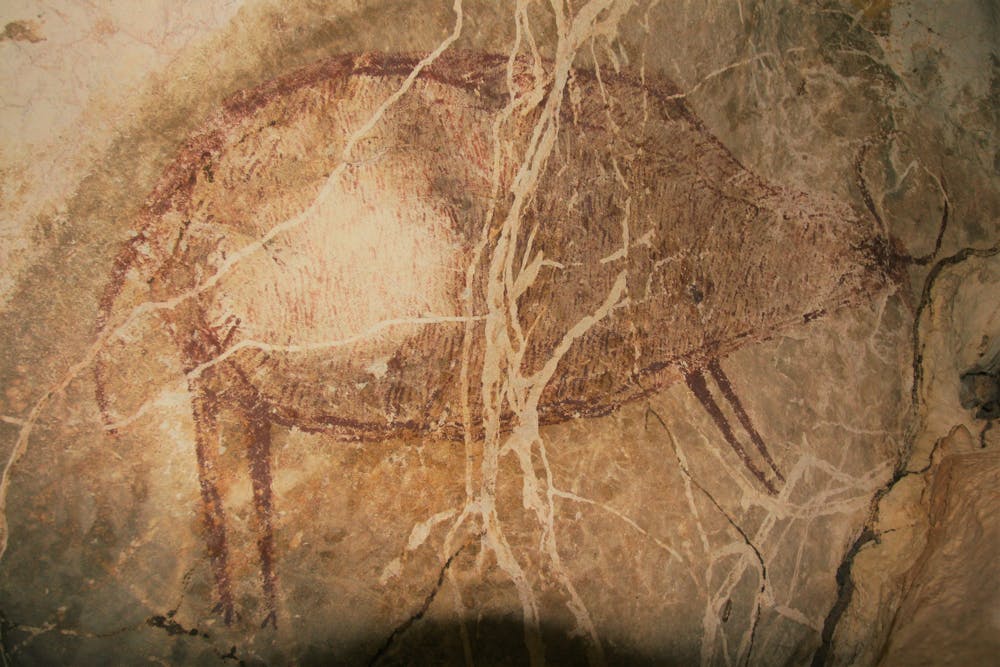
These artworks include a painting of what seems to be a local species of wild cattle, which makes it the world’s oldest example of figurative art – that is, an image that looks like the thing it is intended to represent.
This discovery adds to the mounting view that the first cave art traditions did not arise in Europe, as long believed.
Remote rock art
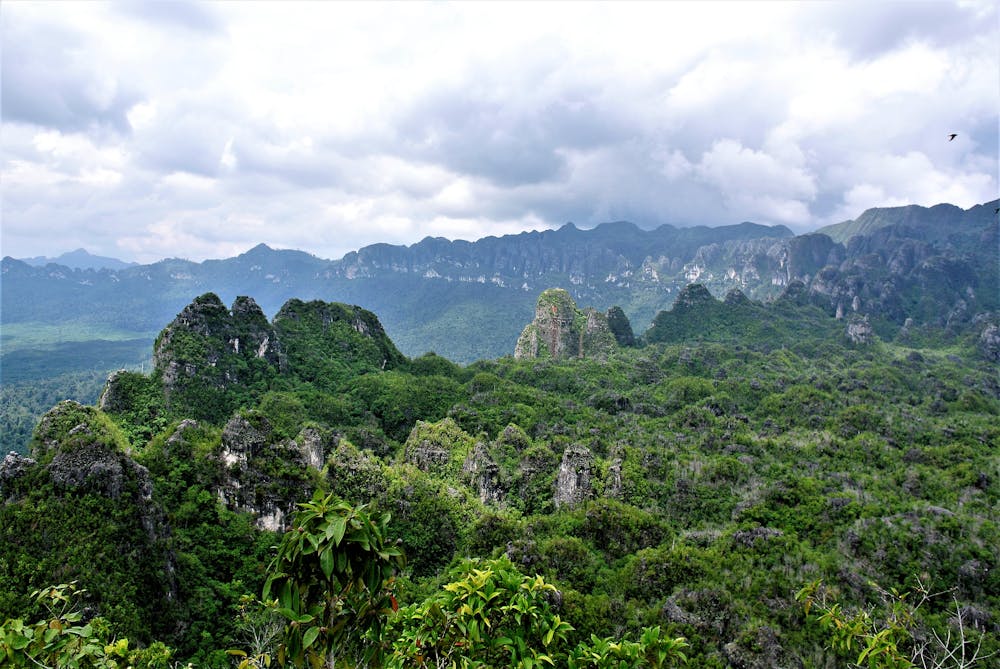
In the 1990s, Indonesian and French archaeologists trekked into the remote interior mountains of East Kalimantan, an Indonesian province of Borneo.
Limestone mountains in East Kalimantan, Borneo.
Pindi Setiawan, Author provided
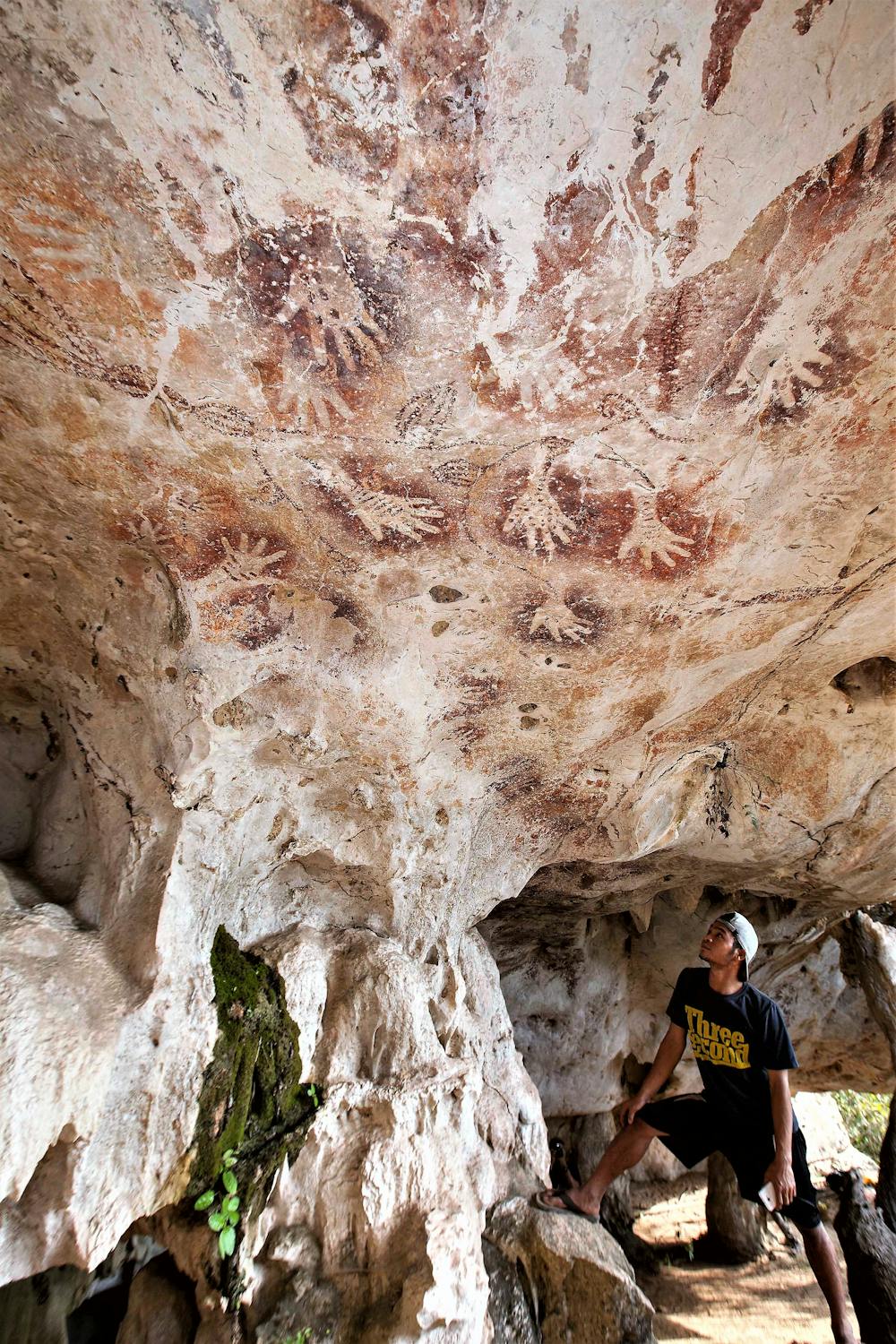
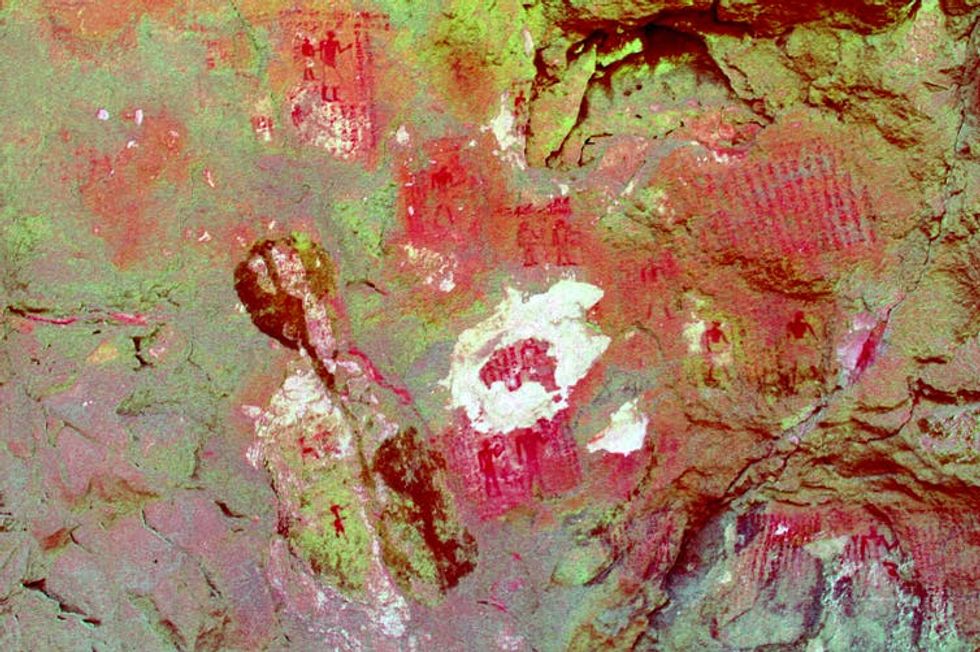
In limestone caves perched atop forbidding, densely forested peaks, the team discovered a vast trove of prehistoric artworks, including thousands of hand stencils (negative outlines of human hands) and rarer paintings of animals.
Strikingly, apart from the paintings themselves, the team found little other evidence for human occupation in the caves. It seemed as though people had made long and dangerous climbs to these clifftop caves mostly to create art.
Liang Banteng, a cave art site in East Kalimantan.
Pindi Setiawan, Author provided
The team proposed that the prehistoric artworks can be divided into at least two chronologically distinct phases of art production.
The first phase is characterised by hand stencils and large figurative paintings of animals that are reddish-orange in colour.
A rock painting of a banteng, a type of wild cattle from Borneo.
Pindi Setiawan, Author provided
Hand stencils also characterise the later phase, but these stencils (and associated images) tend to be dark purple (“mulberry”) in colour. During this phase the artists also painted tattoo-like designs on the wrists, palms, and fingers of some stencils – in some instances, hand stencils were interlinked by motifs resembling tree branches or vines.
Mulberry-coloured hand stencils at Liang Téwét in East Kalimantan. Some hand stencils have internal decorations and are interlinked by tree-like motifs.
Pindi Setiawan, Author provided
Finally, the artists began to portray human figures in their art (see top image).
This amazing discovery raised a host of questions. How old was the cave art? Who created it and why?
In the early 2000s the French-Indonesian team dated part of a cave drapery formation that had grown over the top of a hand stencil.
The quality of the sample they dated was not ideal, but their results implied an age of at least 10,000 years for the underlying artwork.
New dates for old art
We now believe the Borneo artworks are far older than previously thought, according to research we conducted with colleagues from the National Research Center for Archaeology (ARKENAS) in Jakarta and other Indonesian scientists.
In our paper, we report uranium-series dates obtained from calcium carbonate samples collected in association with cave art from six East Kalimantan sites. This provides the first reliable estimates for the approximate time of rock art production.
(a, top): Location of Borneo. The dated rock art is in the Sangkulirang-Mangkalihat Peninsula (SMP). (b, bottom): Rock art sites with dated cave art.
Map source: Shuttle Radar Topography Mission (SRTM) 1 Arc-Second Global by NASA/NGS/USGS; GEBCO_2014 Grid, version 20150318, (gebco.net). Base maps generated using ArcGIS by M. Kottermair and A. Jalandoni. Figure design and formatting: Adam Brumm, Author provided
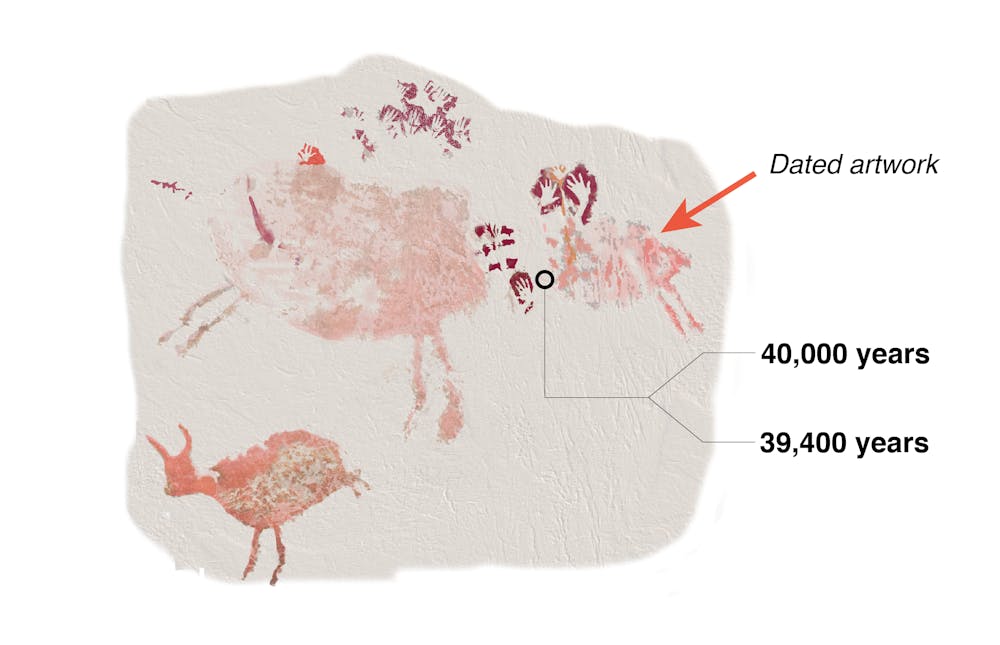
The oldest cave art image is a large reddish-orange painting of an animal, similar to the wild banteng still found in the jungles of Borneo. This has a minimum age of 40,000 years.
As far as we can ascertain it is the earliest dated figurative artwork on Earth.
Dated rock art from Lubang Jeriji Saléh. Two samples collected from atop a figurative animal painting yielded minimum uranium-series ages of 40,000 and 39,400 years ago. The dated artwork is deteriorated, but we interpret it as a figurative representation of a Bornean banteng.
Pindi Setiawan, Author provided
The reddish-orange hand stencil art was shown to be similar in age, suggesting that the first rock art style appeared between about 52,000 and 40,000 years ago.
The oldest mulberry paintings, including decorated hand stencils, date to about 21,000-20,000 years ago. A mulberry human figure was created at least 13,600 years ago.
Our dating implies that a major change took place about 20,000 years ago within Borneo’s rock art culture. This was during the Last Glacial Maximum (LGM), a time when the ice sheets were at their greatest extent and the global ice age climate was at its most extreme.
Perhaps life in this harsh world stimulated new forms of cultural innovation.
Or perhaps the East Kalimantan mountains became a refuge for people fleeing environmental changes wrought by the LGM, boosting population sizes and instigating social pressures that sparked new forms of intergroup communication, including art.
In 2014 we revealed that similar rock art appeared in the Maros caves of Sulawesi around 40,000 years ago.
Sulawesi is adjacent to Borneo and has never been connected to the nearby Eurasian continent. This large island is a vital stepping-stone between Asia and Australia.
Our latest discovery suggests that rock art spread from Borneo into Sulawesi and other new worlds beyond Eurasia, perhaps arriving with the first people to colonise Australia.
Two areas of Palaeolithic cave art innovation
The ice age region of France and Spain has long been seen as the global centre of cave art development owing to the stunning animal paintings known from this area.
But while Borneo is the planet’s third-largest island, for most of the ice age it was connected by lower sea levels to the vast continental region of Eurasia – Borneo and Europe were opposite extremities of this landmass.
So it now seems that two early cave art provinces existed at a similar time in remote corners of Palaeolithic Eurasia: one in Indonesia, and one in Europe.
A recent study suggests Neanderthals were making rock art in Spain 65,000 years ago, but there is good reason to question this claim.
It is of course possible that the first modern human rock art arose in Africa and was introduced to Eurasia by later migrations of our species.
Alternatively, Indonesia and Europe may have been separate areas of innovation where ice age rock art emerged independently - if so, it is possible the very earliest cave paintings may one day be found in Southeast Asia rather than Europe.
Adhi Agus Oktaviana, a researcher in archaeology and rock art from ARKENAS, contributed to this article.
The World Health Organization warned Monday that antibiotics consumption is dangerously high in some countries while a shortage in others is spurring risky misuse, driving the emergence of deadly superbug infections.
In a first, the United Nations health agency said it had collated data on antibiotic use across large parts of the world and had found huge differences in consumption.
The report, based on 2015 data from 65 countries and regions, showed a significant difference in consumption rates from as low as around four so-called defined daily doses (DDD) per 1,000 inhabitants per day in Burundi to more than 64 in Mongolia.
"The large difference in antibiotic use worldwide indicates that some countries are probably overusing antibiotics while other countries may not have sufficient access to these life-saving medicines," WHO warned in a statement.
Discovered in the 1920s, antibiotics have saved tens of millions of lives by defeating bacterial diseases such as pneumonia, tuberculosis and meningitis.
But over the decades, bacteria have learned to fight back, building resistance to the same drugs that once reliably vanquished them.
The WHO has repeatedly warned the world is running out of effective antibiotics, and last year urged governments and big pharma to create a new generation of drugs to fight ultra-resistant supergerms.
"Overuse and misuse of antibiotics are the leading causes of antimicrobial resistance," Suzanne Hill, head of WHO's essential medicines unit, said in a statement.
"Without effective antibiotics and other antimicrobials, we will lose our ability to treat common infections like pneumonia," she warned.
- 'Urgent action' -
Bacteria can become resistant when patients use antibiotics they do not need, or do not finish a course of treatment, giving the half-defeated bug a chance to recover and build immunity.
Hill insisted that the findings "confirm the need to take urgent action, such as enforcing prescription-only policies, to reduce unnecessary use of antibiotics."
While overuse of antibiotics is worrying, WHO said low numbers were also of concern.
"Resistance can occur when people cannot afford a full course of treatment or only have access to substandard or falsified medicines," it said.
WHO's report showed large differences in antibiotic consumption even within regions.
In Europe, which provided the most complete data for the report, the average antibiotic consumption was nearly 18 DDD per 1,000 inhabitants per day.
But within the region, Turkey, which ranked the highest at over 38 DDD, showed nearly five times higher consumption than the lowest consumer-country Azerbaijan, which counted fewer than eight DDD.
WHO acknowledged the picture of how antibiotics are used around the world remains far from complete.
Monday's overview, for instance, includes only four countries in Africa, three in the Middle East and six in the Asia-Pacific region.
Notably missing from the chart are the United States, China and India.
WHO stressed that many countries face major challenges in collecting reliable data, including lack of funds and trained staff.
Since 2016, the UN agency has been supporting data collection in 57 low- and middle-income countries in a bid to set up a standardised system for monitoring antibiotic use.
"Reliable data on antibiotic consumption is essential to help countries to raise awareness of appropriate antimicrobial use," WHO said.
As we commemorate the centenary of the Armistice, it is appropriate that we pay tribute to the thousands of largely forgotten people who formed a significant social and political coalition at the time of the first world war: those who fought against conscription, and against the war, including a significant number of conscientious objectors.
Military registration and training for all Australian men aged 18 to 60 was compulsory from 1911. But there was no provision in Australian law that required men to enlist for active service overseas. Signing up for such service was voluntary, and with the promise of a short war, there was no difficulty for recruitment officers finding their men.
Australia was not meeting its recruitment target. Only about a third of eligible men were volunteering.
Labor Prime Minister Billy Hughes determined that the only way to increase enlistment numbers was to impose conscription. He decided to hold a plebiscite (sometimes referred to as the “conscription referendum”) to carry out what he saw as his obligation to the Empire, and to do so with the consent of the Australian people.
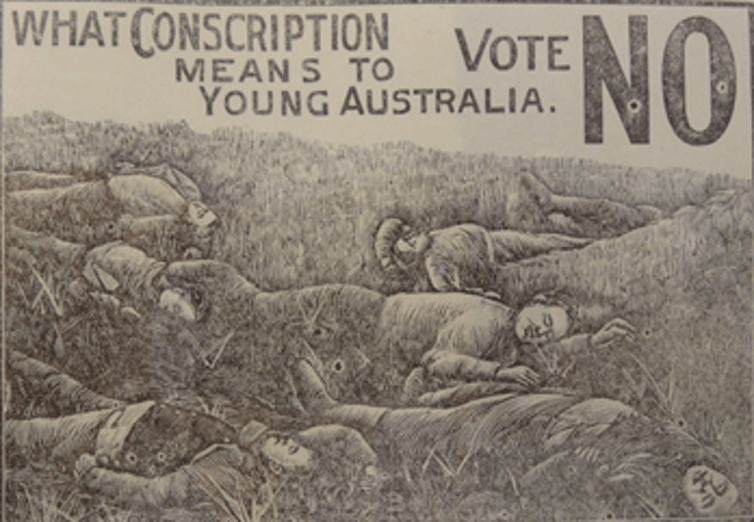
But there were many vociferous voices from the trade union movement, the Labor Party and an active women’s coalition campaigning for a “no” vote. Religious adherents, too, found themselves well represented in the “no” campaign, with many Catholics, Quakers, Christadelphians, Adventists and Jehovah’s Witnesses in the forefront of the pacifist movement.
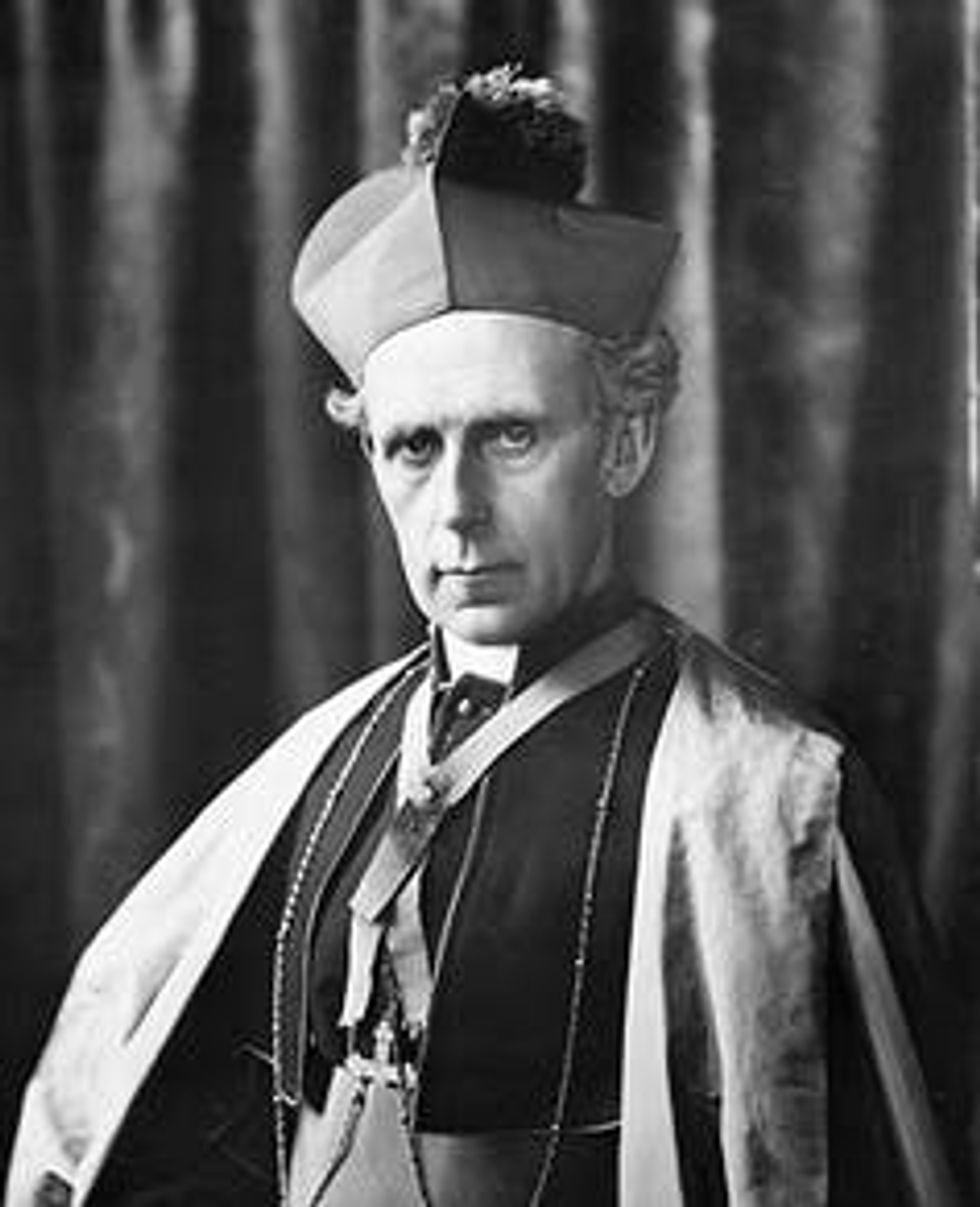
Archbishop Daniel Mannix.
National Museum of Australia
Archbishop Daniel Mannix was a leader in the Catholic Church in Melbourne. He took a strong stand against conscription, adding that the war was “just an ordinary trade war” driven by trade jealousy. Conscription, he maintained, would simply reinforce “class versus class” social injustices.
Remember, too, that the British had, in April 1916, put down with force the Easter Rising in Ireland. Almost 2,000 Irish were sent to internment camps. Most of the leaders of the Rising were executed in May 1916. Mannix was Irish-born.
Margaret Thorp, a Quaker, was another strong voice in opposition to the war, and critical of the support for the war by the mainstream churches. A member of the Anti-Military Service League, she later joined others to inaugurate a branch of the Women’s Peace Army in Australia and, later, a branch of the Sisterhood of International Peace that supported the international No-Conscription Fellowship.
On October 28, 1916, Prime Minister Hughes put the conscription ballot to the vote. It was defeated by a margin of 3%.
The following year, Britain sought a sixth Australian division for active service. Australia had to provide 7,000 men per month to meet this request. But voluntary recruitment continued to lag behind requirements. On December 20, 1917, Hughes put a second conscription ballot to the people. It, too, was defeated, this time by a larger margin (7%). The war continued to the Armistice with volunteers only.
By the end of the war, over 215,000 Australians had been killed, wounded or gassed. Only one out of every three Australian men who were sent abroad arrived home physically unscathed.
An anti-conscription poster.
Parliament of Australia
During the 20th century, Australian law developed a variety of positions on conscientious objection. Such status today relies on an applicant meeting the requirements of the Defence Act 1903 as amended in 1939. Conscientious objectors need not have deeply held religious beliefs. But they must be able to ground their objection in moral beliefs, and be able to articulate them.
People who were not able to be officially recognised as conscientious objectors in Australia during the first world war were prosecuted when they failed to register. While historical records are impossible to collate accurately on this subject, some 27,749 prosecutions had been launched across the country by June 30, 1915. Stories of the tragic social consequences for these men, and for conscientious objectors, are legion. Objectors particularly were often maligned as cowards and self-seekers. But the historical records illustrate that theirs was not an easy path. They did not lack courage. In many respects, the choices made by conscientious objectors required a greater determination and certainty of belief than was needed by the men who enlisted voluntarily.
There is a permanent memorial for conscientious objectors in Tavistock Square, London, and one is planned for Edinburgh, Scotland. There is a tribute at the National World War I Museum and Memorial in Kansas City for the pacifists Joseph and Michael Hofer, who died in Leavenworth Prison in 1918 while incarcerated for refusing military service.
It is regrettable that Australia has no public memorial to our forebears who campaigned against compulsory military service, and the war itself, for reasons of conscience and faith. As we commemorate the centenary of the Armistice, there is no better time to remedy that oversight.
We just ran the first ever pre-registered scientific study on the microdosing of psychedelics and found some very promising results.
We compared people who microdose — that is, who take a psychedelic substance such as LSD (lysergic acid diethylamide) or “magic” mushrooms (psilocybin) in very small quantities — with those who don’t, and found that microdosers had healthier scores on key mental health and well-being measures.
No matter the substance, microdosing implies a dose so low that the individual experiences only subtle changes, not hallucinations. People are not “tripping” on a microdose; they just go about their regular day, whether that means studying at school, going to work or taking care of the kids at home.
Microdosers score higher on ‘wisdom,’ meaning the ability to consider multiple perspectives, be in tune with their emotions and feel a sense of connection.
(Shutterstock)
There has been no published science on whether microdosing works, but despite this, microdosing for self-enhancement and mental health has hit the media.
For example, a 2016 article in Wired magazine described young professionals in San Francisco and Silicon Valley microdosing to enhance their creativity and focus, and to gain a competitive advantage.
No experimental study has evaluated psychedelic microdosing, and neither did we.
Randomized placebo-controlled trials are needed to talk definitively about the effects of microdosing. In the meantime, we investigated the experiences of people who already microdose.
Our survey investigated the relationship between microdosing psychedelics and mental health. We recruited participants online, especially from Reddit’s microdosing community.
We asked our study participants about their microdosing patterns by having them fill in some questionnaires. As firm believers in Open Science, we have openly shared all our materials and you can find them here. Our findings are soon to be published in Psychopharmacology and you can access the preprint here.
They were also more creative and open. If wisdom is tricky, creativity is even more so. In this case, creativity meant finding unusual uses for regular household objects: A brick and a knife. Microdosers came up with more useful, unusual and unique uses for these objects. This is a well-validated measure of divergent thinking, though certainly not the be-all and end-all of creativity.
Microdosing could involve the placebo effect. We need randomized placebo-controlled trials to test its safety and efficacy.
Microdosers endorsed less of these unhealthy beliefs. Likewise, high negative emotionality means a higher likelihood of having a mental health disorder, and microdosers had lower negative emotionality.
An exciting future for clinical science
Our results are promising. As promising as they seem, we don’t know whether microdosing actually caused any of these differences.
Maybe people with better mental health were more likely to experiment with microdosing, or perhaps there is some unknown cause that made people both more likely to microdose and to be creative.
At this point, we simply don’t know what caused the differences between the groups — just that these differences existed. We need to run controlled lab studies to actually find out.
Our preliminary work also shows that people report downsides to microdosing. For example, some people found microdosing increased anxiety and mood-instability; increased aches, pains and gastrointestinal distress were also relatively common.
The most common drawback was that microdosing is illegal. Did we forget to mention that? Yes, psychedelics are totally illegal!
LSD and psilocybin were made illegal in the 1971 UN Convention on Psychotropic Substances and remain so today. The exact laws differ depending on where you live, and using analogue substances can sometimes be a legal grey area but, for the most part, microdosing makes you a criminal.
What we need now are controlled lab experiments — randomized placebo-controlled trials of psychedelic microdosing to test safety and efficacy. Microdosing research, alongside full-dose psychedelics, promises an exciting future for clinical science and the study of human flourishing.
I grew up believing in the forward trajectory of progress in science and medicine – that human health would continue to improve as it had for hundreds of years. As I progressed through my own career in health sciences, I continued to be optimistic.
Now I have serious doubts.
Science is still working well, but deadly obstacles are blocking the way between research and progress in the field where I work: Antibiotics.
This week (Nov. 12-18) is World Antibiotic Awareness Week. We need to talk about this threat. We need to develop models of public-private co-operation — to incentivize, fund and invest in antibiotic drug discovery and development.
Penicillin led to complacency
Here’s the problem: about 75 years ago, science brought penicillin into public use, opening a new era in infectious disease control, much as sanitation had done before that. Infectious diseases such as pneumonia and strep, which had commonly been fatal even in my grandparents’ day, were tamed — at least for a time.
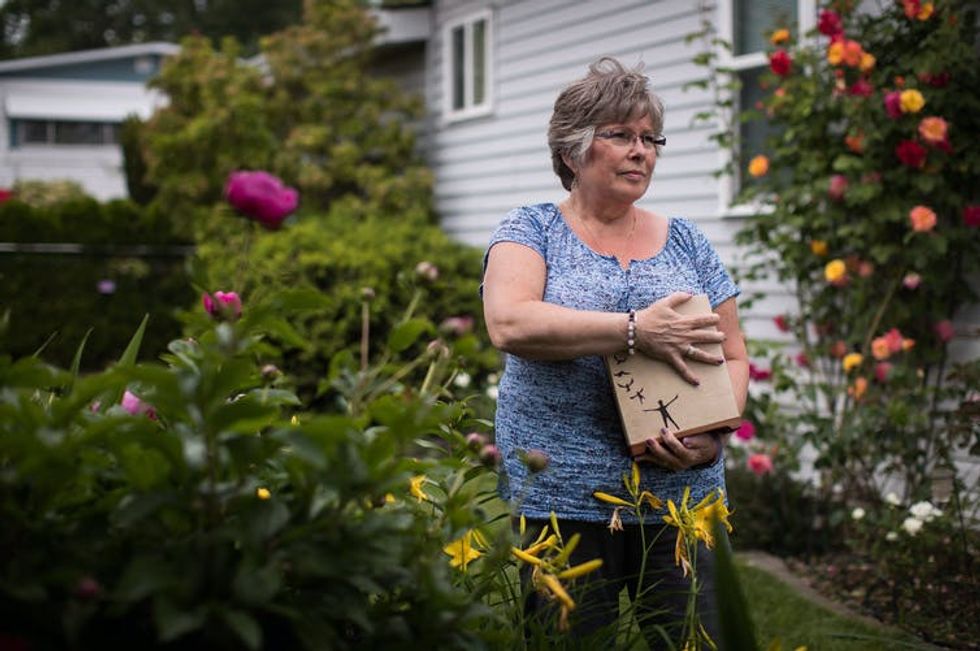
Wendy Gould holds the cremated remains of her late husband George Gould at her home, in Aldergrove, B.C., in May 2018. George contracted a drug-resistant infection in a Vancouver hospital and died in an isolation unit at age 58.
(THE CANADIAN PRESS/Darryl Dyck)
In the generations that followed, life expectancy leapt by 25 years and infectious disease tumbled from its No. 1 one spot among all causes of human death, where it had consistently ranked higher than bullets and bombs — even during the World Wars.
With cheap, abundant and effective antibiotics at hand, people in the developed world became complacent about controlling infection.
But this whole time, while we have been living our better, longer lives, infectious diseases have been working on a comeback, and today they are pounding at the door. In fact, they are already breaking down the door.
Market will not meet demand
In a fast-forward example of Darwinian adaptation through natural selection, bacteria and other microbes are evolving to survive antibiotics. They will continue to adapt and they will succeed unless humanity builds new layers of defence in the form of new antibiotics and other creative approaches.
The troubling part is that we know what we have to do to create new antibiotic therapies, and though the work is undeniably hard, there already exist some promising new alternatives to older drugs, and more are in the pipeline.
Unfortunately, they are not yet available on the commercial market, and they may never get there unless something changes to make them viable — not as drugs, but as commodities.
The critical impediment to producing new antibiotics turns out to be our own economic model, which trusts the market to meet the demand. The invisible hand, as philosopher and economist Adam Smith called it, is not working here, and what’s at risk is all of the progress that antibiotics has made possible.
Sounds counter-intuitive, doesn’t it? It turns out that spending hundreds of millions to create, test and market a new drug is a bad risk unless the drug can earn back the investment within the 20 years before its patent expires.
That’s hard to do when you’re trying to recover the cost one 10-day prescription at a time. And when you’re prescribing the new drug only for infections that can’t be resolved with cheap, traditional antibiotics, which still work in many cases.
The only way it would make business sense to create new antibiotics would be to make them astronomically expensive, in the range of rare cancer drugs, and who would pay for that?
Many argue that we should look at antibiotics the same way we look at fire departments. As individuals, we may never need them, but we are all willing to share the cost, because we expect them to be there.
A public model seems to make sense, but who will take the political risk?
Hospitals under threat
Without intervention — where the public, through their governments around the world, cooperates with the private sector to help incentivize, fund and invest in antibiotic drug discovery and development — the end of effective antibiotics will be frightening.
It will happen gradually, but it will certainly happen. The first stages are already here in the form of multi-antibiotic-resistant infections that threaten the basic function of hospitals.
Next, we’ll see common procedures like dental hygiene appointments and joint replacement surgeries cancelled permanently due to the risk of infection.
People of all ages will begin to die again from illnesses that we have become used to treating with $10 or $20 worth of pills. Those who don’t die will be sick more often and for much longer, driving up the cost of care.
Life expectancy could fall back to where it was in the early 1900s, and the golden era of antibiotics would prove to have been but a brief, happy blip in history.
It doesn’t have to be this way. Lets turn our awareness into action.
Food critic William Sitwell has resigned as editor of Waitrose’s in-house magazine following a row over his astonishingly hostile response to a freelance journalist who proposed a series of articles on veganism.
A statement from the food retailer said that John Brown Media – which produces the Waitrose & Partners Food Magazine – had announced Sitwell would step down as editor of Waitrose & Partners Food magazine with immediate effect. The statement added:
In the light of William’s recent email remarks, we’ve told John Brown Media that we believe this is the right and proper move - we will be working with them to appoint a new editor for the magazine. We have had a relationship with William for almost 20 years and are grateful for his contribution to our business over that time.
The row erupted after freelance journalist Selene Nelson pitched a series on “plant-based recipes” to the magazine, given the rise in popularity of vegan products in recent years. Waitrose, like many UK supermarkets, has recently expanded its vegan product range and, as Sitwell’s own article in The Times in January 2018 noted – in less than welcoming terms – the number of vegan cookbooks available has also grown considerably.
So Nelson’s proposal seemed pitch-perfect. Sitwell’s response, however, was decidedly off-key:
How about a series on killing vegans, one by one. Ways to trap them? How to interrogate them properly? Expose their hypocrisy? Force-feed them meat? Make them eat steak and drink red wine?
As veganism is ever more routinely encountered in daily life, hackneyed media stereotypes of vegans no longer resonate as they once did. Anti-vegan media hostility isn’t anything new. Sociological research published in 2011 documented how UK newspapers discredit veganism through ridicule, with vegans variously stereotyped as angry, militant, self-denying, sentimental, faddy, or joyless. As more people try veganism, meet vegans and encounter vegan-friendly products and practices in daily life, the more tone deaf these stereotypes sound.
Sitwell’s vitriol contrasts markedly with the polite restraint of Nelson’s rejoinder, in which she ironically expressed interest “in exploring why just the mention of veganism seems to make some people so hostile”. The exchange is arguably emblematic of the contemporary plague of entitled anger that toxifies public discourse whenever entitlement is challenged, however politely.
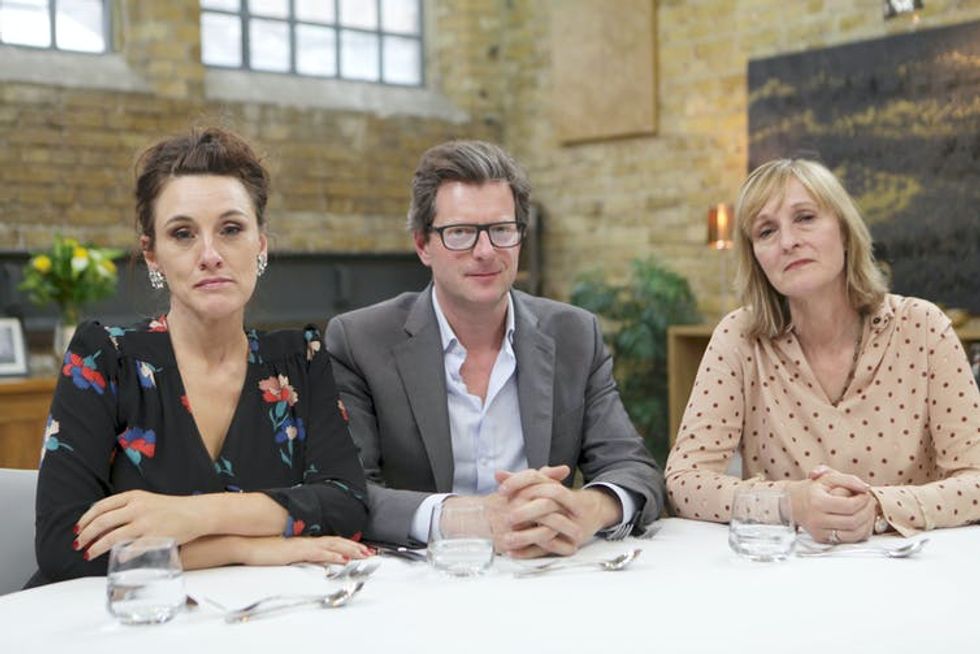
William Sitwell (c) and his fellow judges Grace Dent (l) and Tracey Macleod (r) on Masterchef the Professionals.
BBC/Shine TV Ltd
Guilty conscience?
One aspect of threatened entitlement in a non-vegan society is the presumed right to consume the bodies of other animals. In that context, research has suggested that vegans prompt defensiveness among non-vegans by implying a failure to act on a moral issue. Unresolved guilt plays out along a continuum ranging from framing one’s non-vegan practices as “moderate” (“I don’t eat much meat”) to anger and hostility towards vegans (rhetorically shooting the messenger, the way Sitwell appears to have done). The range, style and tone of these defensive responses are wearyingly familiar to vegans.
Food practices are socially powerful markers of social and cultural identity, making actual or implied criticism of them personally and hurtfully felt. Meat-eating in particular has been closely implicated in the construction of masculine identity. Challenging the dominance of non-vegan practices threatens those social and cultural identities that are most closely dependent upon them.
Poor taste
Criticism of Sitwell’s email led to the wheeling out of a stereotype of vegan humourlessness. We have written elsewhere about how humour is used in popular culture to retrench oppressive power relations. Framing the expression of oppressive power relations as “humour” attempts to insulate it against critique, but we should remain alert to the potency and power dynamics of such “jokes”.
Sitwell’s own initial apology denied the ethical basis of veganism itself: “I love and respect people of all appetites, be they vegan, vegetarian or meat eaters – which I show week in week out through my writing, editing and broadcasting.” Veganism here is reduced to a taste preference, or consumer disposition – just one dietary option among several – rather than an ethical imperative directed towards eliminating the human exploitation of other animals.
In his initial response, Sitwell says his previous “good behaviour” is evidence that this recent episode is not representative of his attitude and he apologises for offence taken by others, rather than his offensive action. But in doing this, he refuses to take responsibility for his own behaviour. Moreover, it provides a textbook example of a victim-blaming non-apology, in this case by using yet another anti-vegan stereotype – over-sensitivity: “I apologise profusely to anyone who has been offended or upset by this.” Vegans (the unspecified “anyone”) are implicitly primed to take offence, while Sitwell’s own actions are rhetorically positioned as intrinsically innocent (as “innocent” as a “joke”).
The joke has cost Sitwell his editing job. But his outburst has at least opened up the opportunity for some more honest discussion about why veganism, like many other progressive social movements, stimulates such aggressive responses.
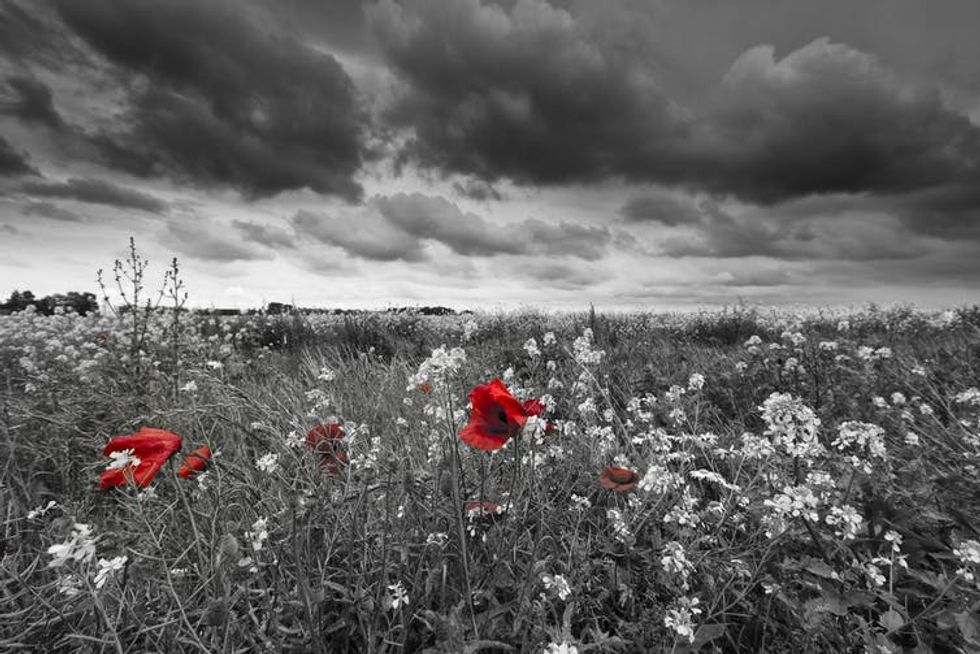
The annual argument over the politics of the red poppy is well and truly underway. LBC host James O’Brien recently declared that supporters of the far-right have no business wearing the national symbol of remembrance, because they had effectively “switched sides” and become one with the very forces against which Britain battled during the 20th century.
From a very different stance, Manchester United footballer Nemanja Matic has movingly explained why he won’t wear the poppy during this weekend’s derby match against City (it reminds him of the NATO bombing of the former Yugoslavia when he was growing up there in the 1990s). And elsewhere, pundits and the public are debating – as they do every year – the fine details of poppy etiquette: who should wear it, who can’t wear it, and for how long prior to Remembrance Sunday should it be worn.
Understanding the origins of the poppy certainly helps. It started in the immediate aftermath of World War I, when an American woman – Moina Michael – persuaded the newly formed American Legion to adopt the poppy as its symbol of remembrance. She had been inspired by the famous poem of Canadian soldier John McCrae, In Flanders Fields:
In Flanders fields the poppies blow / Between the crosses, row on row…
As historian Adrian Gregory has explained, her idea was for the artificial poppies to be manufactured in France “by women, for the benefit of children”.
In 1921, the British Legion was invited to participate and in 1922 – in order to provide employment for disabled veterans – manufacturing of the poppy shifted from France to Britain and the beneficiaries of the sales were now ex-servicemen in need. The poppy appeal became firmly joined to the charitable fund for ex-servicemen established by the former commander-in-chief of the British forces, Earl Haig.
So in many respects, the origins of the poppy appeal are praiseworthy. Yet “praiseworthy” is not the same as “non-political” – and the origins of the poppy appeal in Britain clearly lie with an organisation (the British Legion) and an individual (Earl Haig) who were committed to remembering the Great War in a certain way – as something horrific, yet necessary; terrible, yet worthy.
As such, the origins of the poppy are linked to some of the other symbols of remembrance produced by “official” culture in the post-1918 period: the Cenotaph, the grave of the Unknown Warrior and the cemeteries established overseas by the Imperial War Graves Commission (now the Commonwealth War Graves Commission). The sincere (and well meant) statements of the British Legion notwithstanding, there has always been a political side to the poppy.
Poppies for peace
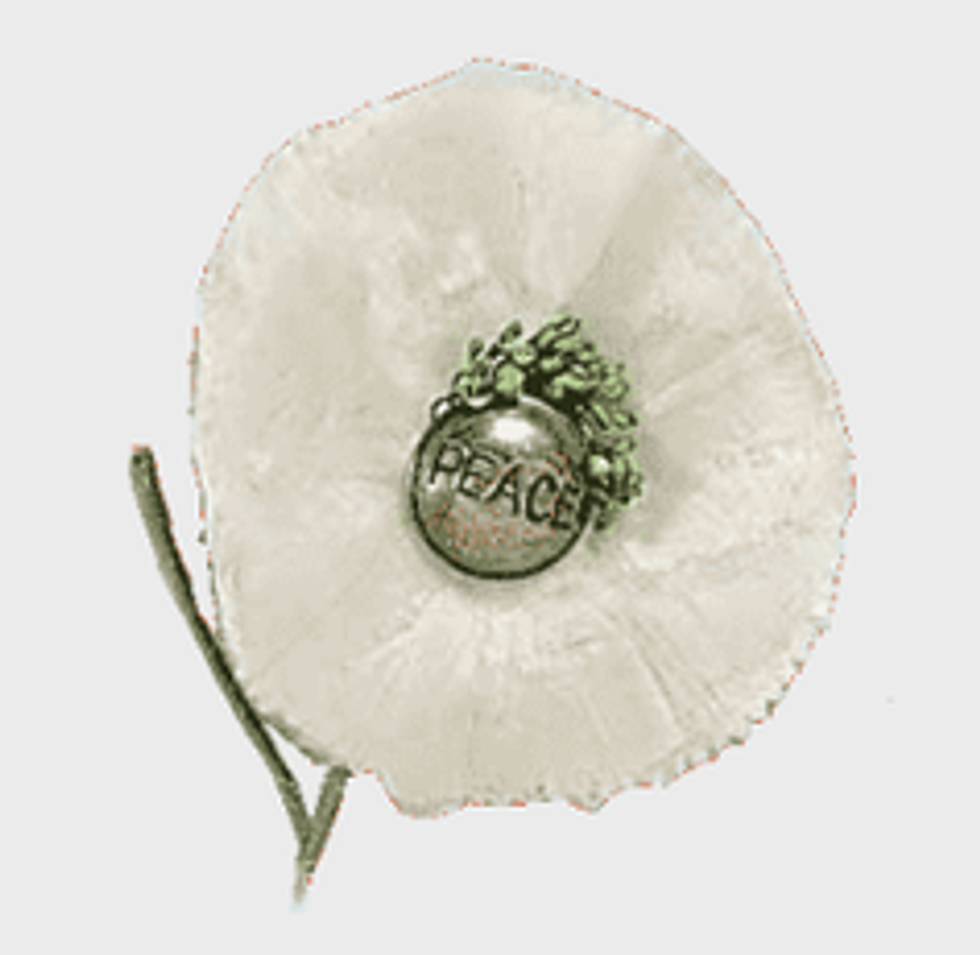
It is this detail that led some to question the red poppy back in the 1930s. In 1933, as governments in Western Europe began to rearm and remilitarise, the Co-operative Women’s Guild started selling white poppies as a symbol of peace. In 1936, the white poppy was then adopted by the Peace Pledge Union (PPU) which still sells it today.
By the 1930s, white poppies became popular as a statement against increasing militarisation in Europe.
Peace Pledge Union
For the PPU, conscious of the rising tensions of the 1930s, the red poppy had lost touch with its origins as a symbol of solemn remembrance. Instead, the PPU feared that the poppy had become compromised by resurgent nationalism. So they offered the white poppy in response – to wear it was to identify oneself as a pacifist willing to contest the increasingly disturbing political developments of the years before the outbreak of World War II.
Bearing this long history in mind, what are the key issues as people discuss and decide whether or not to wear the red poppy this Armistice Day, the centennial of the war’s end?
First, to buy and wear the red poppy is to associate oneself with almost a century of war remembrance, activity which has always been (and remains) “political”. No society can remember its wars and mourn its dead without ascribing to the violence and victims a meaning. The symbols a society duly produces – including the red poppy – carry an implicit “politics”.
Understood in these terms, the fact that some choose on principle not to wear the red poppy is entirely reasonable. To do so is not to insult the dead, but to question the purpose for which it is often said they died. I am profoundly sympathetic to such a sentiment and will quite happily defend the right of people not to wear the British Legion’s poppy (or indeed the right to wear the white poppy in its stead).
For those who declare that such acts are unacceptable, I would simply say that if – as countries such as Britain reasonably claim – the wars of the 20th century were fought to defend certain rights and liberties, then part of this was surely the right to dissent, the right to disagree, the right to follow the dictates of one’s conscience.
But it is also for this very reason that I will wear the red poppy this Sunday. Not as a mindless expression of nationalist chauvinism, nor in order to simply make acceptable the carnage and catastrophe of 20th-century war. Rather, like so many others, I will wear the British Legion’s poppy as a means to remember those who, on behalf of this nation, have gone to war and not returned.
All poppies are an act of remembrance.
Bas Meelker via Shutterstock
I will wear it to remember all those – soldier and civilian, men and women, adults and children – who have been killed, maimed, traumatised by conflict. And I will wear it because to do so is precisely to engage in a political act while at the same time humbly acknowledging the absolute right of others to do differently, according to their conscience and their politics.
Dissent and respectful disagreement are surely the hallmark of a healthy democracy and so, regardless of what you choose to do this Armistice, regardless of whether or not you choose to wear the red poppy, we must all be prepared to accept – and respect – that others might think and act differently.
More Armistice articles, written by academic experts:
Pneumonia will kill nearly 11 million children under five by 2030, experts warned Monday on a global day aimed at raising awareness of the biggest infectious killer of infants worldwide.
While in the developed world the severe lung infection mainly affects the elderly, in developing nations it is children who bear the brunt, with hundreds of thousands dying each year from the easily preventable disease.
More than 880,000 children -- mainly aged less than two years old -- died from pneumonia in 2016 alone.
A new analysis conducted by Johns Hopkins University and the aid group Save the Children using forecasts based on current trends showed more than 10,800,000 under-fives would succumb to the disease by the end of the next decade.
Furthermore, a handful of countries are set to carry the highest burdens, with 1.7 million children set to die in Nigeria and India, 700,000 in Pakistan and 635,000 in the Democratic Republic of Congo.
Yet there is some good news.
The study, published on World Pneumonia Day, found that scaling up existing vaccination coverage, coupled with cheap antibiotics and ensuring good nutrition for children could save a total of 4.1 million lives.
Pneumonia, an inflammatory infection of the lungs that may be contracted via viral or bacteria infection, is treatable if caught early enough and the patient's immune system isn't compromised.
But worldwide it hits young children who are often weak through malnutrition, killing more infants each year than malaria, diarrhoea and measles combined.
"It beggars belief that close to a million children are dying every year from a disease that we have the knowledge and resources to defeat," said Save the Children CEO Kevin Watkins.
"There are no pink ribbons, global summits or marches for pneumonia. But anyone who cares about justice for children and their access to essential healthcare, this forgotten killer should be the defining cause of our age."
Watkins' group, which operates health programmes in some of the countries worst hit by the disease, called for prices of major existing pneumonia vaccines to be lowered "dramatically".
2030 is the target date for the United Nations Sustainable Development Goals, which includes a pledge to "end preventable child deaths" by the end of the next decade.
Russian President Vladimir Putin said he had a brief but good conversation with US leader Donald Trump at World War I centenary events in Paris, Russian media reported.
When journalists asked Putin whether he managed to speak to Trump on Sunday, he said: "Yes," Russian state news agency RIA Novosti reported. Asked how it went, Putin said: "Well."
He did not provide further details, but the French presidency said the pair had a wide-ranging discussion during lunch after the commemoration.
Host and French President Emmanuel Macron was there and German Chancellor Angela Merkel took part in some of the exchanges, the presidency said.
Subjects discussed included the situation in the Middle East, notably Syria, Iran and Saudi Arabia, and North Korea.
White House spokeswoman Sarah Sanders said Trump had sat with world leaders including Putin, Macron and Merkel at lunch and the group had held "very good and productive discussions".
"The leaders discussed a variety of issues, including the INF (nuclear treaty), Syria, trade, the situation in Saudi Arabia, sanctions, Afghanistan, China, and North Korea," she said.
Expectations have been growing for a new Trump-Putin meeting as tensions pile up over the Cold War-era Intermediate-Range Nuclear Forces Treaty (INF) and US sanctions against Moscow.
Last month Trump sparked concerns globally when he said he would ditch the INF pact, as Putin warned that abandoning the treaty would unleash a new arms race and put Europe in danger.
Around 70 world leaders travelled to the French capital to mark the centenary of the 1918 Armistice on Sunday.
Arriving last for the event, Putin made for his US counterpart to shake his hand before giving him a thumbs-up sign, while smiling.
Speaking in an interview with the Kremlin-backed channel RT France earlier in the day, Putin confirmed the pair did not want to steal French President Emmanuel Macron's thunder.
"We agreed not to violate the host's work schedule, we will not organise any meetings here at their request," he said.
Kremlin spokesman Dmitry Peskov said Putin and Trump had agreed to hold a more detailed discussion on the sidelines of the G20 summit in Argentina at the end of the month.
The Kremlin said earlier that the prospect of a full meeting between the US and Russian presidents had prompted huge international media interest, leading to concern from the French organisers this could overshadow the commemorations.
What began as an expedition to record the inscriptions of ancient Egyptian quarry workers produced a remarkable discovery about the Great Pyramid at Giza. My colleagues and I in the Anglo-French joint archaeological mission to the ancient quarry site of Hatnub recently revealed the existence of a well-preserved haulage ramp dating to the time of the Great Pyramid, roughly 4,500 years ago.
We think this could significantly change the theories about how the workers who built the monument were able to transport such large blocks of stone to great heights. It could even provide evidence that pulleys were invented hundreds of years earlier than previously documented.
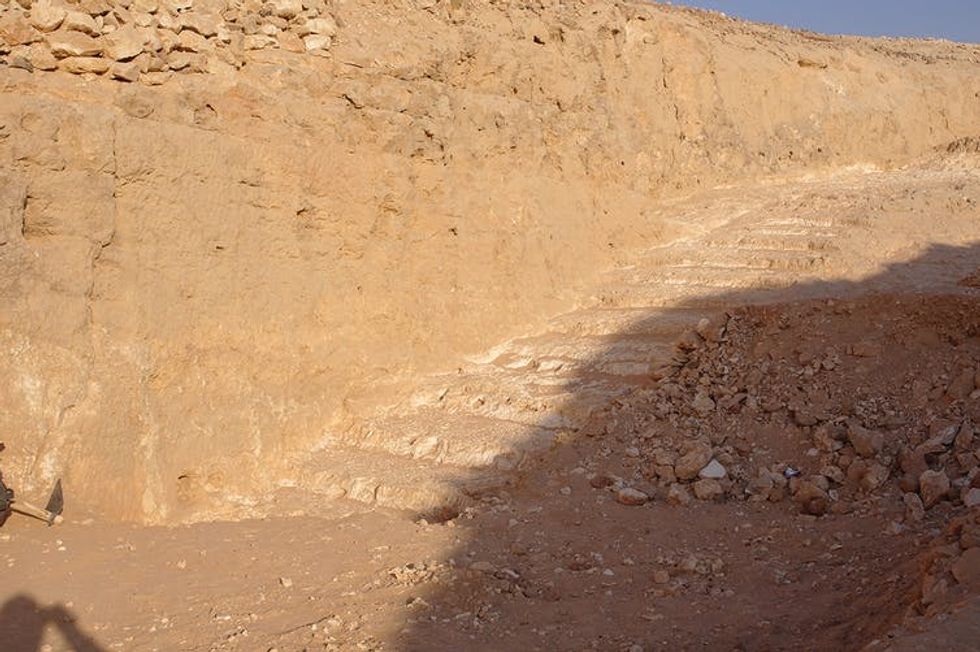
The rock-cut ramp is flanked by two flights of rock-cut stairs, into which are cut post holes that would originally have held wooden posts, now long perished. The pattern of post holes is well enough preserved that we can begin to reconstruct a pulley system that would have been used to lift large blocks of alabaster out of the open-cast quarry.
The ancient ramp.
Roland Enmarch, Author provided
While some quarrymen would have been stationed above the blocks, hauling them upwards directly, others would have stood below the blocks, pulling downwards. Their ropes would have been lashed round the post holes and attached to the alabaster blocks, so that both groups were exerting force to pull the blocks up out of the quarry.
This stone haulage system makes efficient use of the limited available space on the ramp, and it is reasonable to speculate that this same pulley technology would also have been used in the construction of the Great Pyramid. While pulley systems are well known from Greek civilisation in the first millennium BC, the evidence from Hatnub pushes their use much further back in time, as it pre-dates the Greek evidence by some 2,000 years.
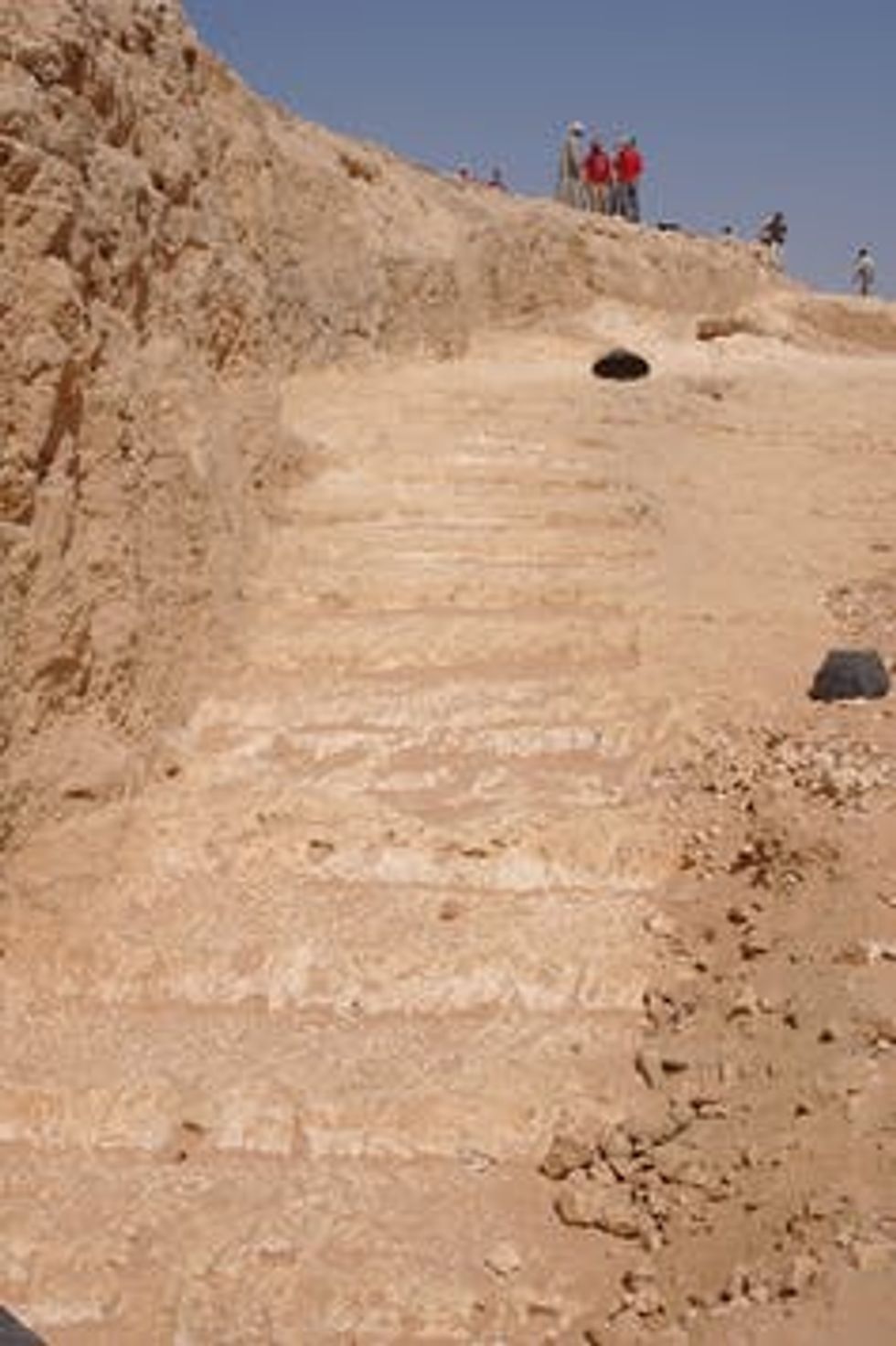
Steep incline.
Roland Enmarch, Author provided
The Hatnub haulage ramp is also much steeper than most previous reconstructions of Egyptian haulage ramps. This is significant because one of the long-standing objections to the theory that the Great Pyramid was build using a single large ramp was the enormous volume of such a ramp (which would have had a greater volume than the Great Pyramid itself). With a much steeper gradient, the length and volume of such a haulage ramp would be much smaller, suggesting that this old theory needs to be re-evaluated more seriously.
Many other theories have previously been proposed for how the Great Pyramid was constructed. For example, a ramp might have coiled around the sides of the pyramid. There are also many suggestions involving levers and similar mechanisms. (And, of course, there are always those lacking in imagination who cannot accept a human explanation, and instead groundlessly evoke aliens or Atlanteans). The merit of our recent discoveries is that they give us solid archaeological evidence we can use to test previous theories.
Ancient graffiti
These discoveries have emerged from the work of the University of Liverpool’s joint expedition with the French Institute for Oriental Archaeology in Cairo to Hatnub, which is some 20km from the Nile in the eastern desert of Middle Egypt. This quarry was the most prestigious ancient source of Egyptian alabaster, the milky white banded translucent stone that was used by the Egyptians to make vessels, statues, and architectural items.
Our original aim was purely to record the surviving inscriptions left by quarrymen 4,500 to 4,000 years ago. I began my career studying Egyptian poetry, but it turns out quarrymen could on occasion get quite poetic when writing their graffiti in the quarry. And so I now study these texts, written in a cursive version of the Egyptian script known as hieratic.
We have so far identified more than 100 previously unrecorded texts, offering a wealth of information about the organisation and logistics of the expeditions that came to the quarry to extract alabaster. They mention royal patronage, the hundreds (and, on occasion, thousands) of expedition personnel, the numbers of blocks mined, and the time taken to ferry them to their ultimate destinations.
Stone inscriptions.
Roland Enmarch, Author provided
Some of the inscriptions take a more long-term point of view, and seek to convince future visitors to the quarry that their predecessors were good people, and deserve to be treated with respect (and offerings) after their death. In the 21st century, we are accustomed to talk of “posting” to “walls”. But at Hatnub we have an actual Bronze Age wall whose texts speak across the years, and create a solidarity among those who came to work in the quarry, generation after generation.
More recently we have expanded our work (and our team) to record the wider archaeological features of the extremely well-preserved Bronze Age industrial landscape around the quarry. We are collecting and analysing the stone tools that litter the site, offering insights into the process of extracting blocks from the bedrock. Through experimental archaeology we are learning just how rapidly alabaster needed to be worked before it dried and hardened after extraction.
We are also studying the ancient road connecting the quarry to the Nile Valley, which is flanked by hundreds of simple dry-stone shelters used by workmen for accommodation and stoneworking. We have simple dry-stone religious cairns and other structures of possible ritual function. The recent clearance of debris from the haulage ramp leading out of the quarry has been part of our study of this wider context.
Our ultimate goal is to study all aspects of stone extraction and transport at Hatnub, integrating the rich textual and archaeological evidence to provide a more holistic understanding of quarrying in ancient Egypt. Few sites offer the range and diversity of evidence that survives at Hatnub. We have many years of work ahead of us; the potential for further exciting discoveries is huge.




 AFP/File / Thomas URBAIN
 AFP/File / Thomas URBAIN