


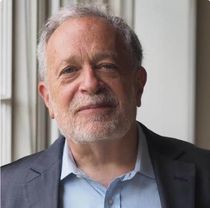

One of my most inspiring professors at Yale Law School when I went there in the early 1970s was Burke Marshall.
Before joining the faculty, Marshall had served as the Justice Department’s Assistant Attorney General for Civil Rights under Attorney General Robert F. Kennedy (the real Robert F. Kennedy). Marshall made the Civil Rights Division the crown jewel of the Justice Department, staffed with some of the most talented and dedicated lawyers in America.
At Yale, Marshall taught a class on civil rights. (Also in that class were Bill Clinton, Hillary Rodham, who’d become Hillary Clinton, and Clarence Thomas, who’d become Clarence Thomas.)
I recall Marshall telling us how he had persuaded Kennedy and his brother, President John F. Kennedy, to enforce a federal court order requiring the University of Mississippi to admit James Meredith, the first Black student at Ole Miss.
When Mississippi Governor Ross Barnett blocked Meredith’s enrollment, Marshall urged the Kennedy brothers to dispatch a fleet of U.S. marshals, Border Patrol agents, and federalized National Guard troops, to Oxford, Mississippi, under the authority of the Insurrection Act of 1807. Violent riots erupted, resulting in two deaths and injuries to over 100 marshals, but on Oct. 1, 1962, Meredith was successfully enrolled.
Marshall thought the best way to protect the civil rights of Americans was not through the 14th Amendment, which would give states too many legal options to avoid extending civil rights to Black people. He urged instead that civil rights be premised on the federal government’s constitutional power to regulate interstate commerce. This became the basis for the Civil Rights Act of 1964, which prohibited discrimination in public facilities, government, housing, and employment.
II
About the same time Burke Marshall was teaching Bill, Hillary, Clarence, and me about civil rights, the Justice Department filed a lawsuit against the Trump Management company, its 27-year-old president, Donald, and its chairman, Donald’s father, Fred.
The department alleged that Trump Management quoted different rental terms and conditions to prospective tenants based on their race and made false “no vacancy” statements to Black people who were seeking to rent. According to documents filed in federal court, Trump employees had secretly marked the applications of Black people with codes, such as “C” for “colored.” They then directed Black people away from buildings with mostly white tenants and steered them toward properties with many Black tenants.
Representing the Trumps was Roy Cohn — a New York attorney known for ruthless bullying, profane braggadocio, opportunistic bigotry, and outright lies (remind you of anyone?). Cohn filed a countersuit against the government for $100 million, asserting that the Justice Department’s charges were “irresponsible and baseless.”
In 1975, Trump settled the charges out of court, asserting he was satisfied that the agreement did not “compel the Trump organization to accept persons on welfare as tenants unless as qualified as any other tenant.” Three years later, when the Trump Organization was in court for violating terms of the settlement, Cohn called the charges “nothing more than a rehash of complaints by a couple of planted malcontents.” Donald Trump denied the charges.
III
Today, the Civil Rights Division of the Justice Department is headed by Harmeet Dhillon. Dhillon’s most noted effort to date has been accusing American universities of discriminating against white applicants and of abetting antisemitism by allowing their students to protest Israel’s rampage in Gaza.
But Dhillon’s Civil Rights Division has been conspicuously silent about the killings of Renee Good and Alex Pretti, notwithstanding videos taken by bystanders showing both killings to be cold-blooded murders. It used to be that police killings routinely triggered some sort of federal investigation. No longer.
Dhillon hasn’t ignored the ICE protests entirely, however. She has pursued charges against journalist Don Lemon, the former CNN anchor, for covering an ICE protest that moved into a church in St. Paul. Dhillon accuses Lemon of violating a federal law that prohibits the use of force or intimidation to prevent access to places of worship or reproductive health services.
In a post on social media, Dhillon told Lemon that he was “on notice” and that the First Amendment doesn’t protect his “pseudo journalism of disrupting a prayer service.” In a podcast interview with conservative influencer Benny Johnson, Dhillon elaborated:
“Don Lemon himself has come out and said he knew exactly what was going to happen inside that facility. He went into the facility, and then he began — quote, unquote — ‘committing journalism,’ as if that’s sort of a shield from being a part, an embedded part, of a criminal conspiracy. It isn’t.”
The federal courts aren’t having any of this crap. A federal magistrate judge refused Dhillon’s request to issue charges against Lemon, the Justice Department appealed, and on Jan. 23 a federal appellate court declined to order the judge to sign arrest warrants for Lemon and his producer.
When Dhillon asked an appeals court to force Judge Patrick Schiltz, chief judge of the Minnesota federal district court (a Reagan appointee), to issue arrest warrants for Lemon and others who participated in the protest, Schiltz condemned the Justice Department for overheating the situation, calling its demands “frivolous.” He added that he had consulted with all his colleagues and chief judges in other states in the same circuit and that none could recall anything like the Department’s approach.
On Thursday night in Los Angeles, however, Lemon was arrested. He was due in court on Friday.
Meanwhile, the Department is obstructing any state or local investigation into the killings of Good and Pretti.
Let me be clear about what’s going on here. Instead of defending the civil rights of Americans, the Justice Department is covering up the murders of Americans by agents of the federal government — Americans who were exercising their constitutional rights.
In another perversion of the nation’s civil rights laws, Trump Attorney General Pam Bondi has asked Minnesota Governor Tim Walz for access to the state’s voter rolls “to confirm that Minnesota’s voter registration practices comply with federal law as authorized by the Civil Rights Act of 1960. Fulfilling this common sense request will better guarantee free and fair elections and boost confidence in the rule of law.”
Rubbish. Bondi’s move is part of the Trump regime’s attempt to get their hands on voter rolls across the country, to interfere with midterm voting.
Last month, a group of more than 200 former employees of the Justice Department signed an open letter decrying the “destruction” of the Civil Rights Division under Trump. The letter states that Trump has turned the division’s primary mission of defending civil rights “upside down,” and goes on to say:
“Every election brought changes, but the fundamental mission of our work remained the same. That’s why most of us planned to stay at the Division following the 2024 election. But after witnessing this Administration destroy much of our work, we made the heartbreaking decision to leave — along with hundreds of colleagues, including about 75 percent of attorneys. Now, we must sound the alarm about the near destruction of DOJ’s once-revered crown jewel.”
Trump, Dhillon, and Bondi do not believe in civil rights. They’ve treated efforts to address racial inequalities as forms of discrimination against white people.
Now, with the murders of Good and Pretti, they’ve gone a step further — treating the protests of Americans against the federal government’s attacks on civil rights, and even journalistic accounts of such protests, as dangerous forms of insurrection.
IV
What can be done? Some Democratic governors and state and local officials are trying to hold the federal government’s murderers accountable.
On Thursday, Minneapolis Mayor Jacob Frey, speaking to the United States Conference of Mayors, urged his counterparts to take a firm stand against Trump’s immigration enforcement, warning that “if we do not speak up, if we do not step up, it will be your city that is next.” His comments were received with raucous applause.
It’s not unheard of for state prosecutors to go after federal officials. Research by Alicia Bannon of State Court Report and the Brennan Center cites a 2001 ruling by the Ninth Circuit that allowed an Idaho prosecutor to indict an FBI agent who’d shot an unarmed woman during the Ruby Ridge raid.
In 1906, the Supreme Court allowed Pennsylvania to prosecute two soldiers for killing a civilian accused of stealing from a federal arsenal. The court reasoned that if witness’s testimony that the civilian had already been captured when soldiers opened fire were true, “it could not reasonably be claimed that the fatal shot was fired in the performance of a duty imposed by the federal law.”
Meanwhile, Illinois Governor JB Pritzker has signed into law a bill that enables state residents to sue murderous ICE agents. A similar bill has just been passed by the California State Senate and sent to the Assembly.
Even some local prosecutors, distrustful of the Justice Department, are stepping up. On Thursday, Mary Moriarty, attorney for Hennepin County (where the Twin Cities are located), charged Anthony J. Kazmierczak with making threats of violence and fifth-degree assault in connection with an attack on Rep. Ilhan Omar (D-MN) at an event on Tuesday.
Although Kazmierczak is also facing a federal criminal case in that incident, Moriarty pointedly noted that a conviction in state court was “not subject to presidential pardon, now or in the future,” and that although her office had historically worked with federal officials, “that partnership has been damaged by political decisions coming from this administration.”
V
Under the Trump regime, America has diverged sharply from the days when Burke Marshall persuaded Attorney General Robert F. Kennedy to use federal troops to force Mississippi to admit a Black student.
Rather than the federal government forcing state and local governments to recognize the civil rights of Black Americans, today it’s up to state and local governments to force the federal government to recognize the constitutional rights of all Americans.
It is the solemn duty of us all to restore and protect those rights from a federal government that is trampling on them.
- Robert Reich is an emeritus professor of public policy at Berkeley and former secretary of labor. His writings can be found at https://robertreich.substack.com/. His new memoir, Coming Up Short, can be found wherever you buy books. You can also support local bookstores nationally by ordering the book at bookshop.org
