Just before Air Force Two was to be wheels up to Iowa one of Vice President Mike Pence's aides tested positive for coronavirus. Several staffers were forced to exit the plane, which was taking Pence, a Trump Cabinet member, and two GOP Senators to the Hawkeye State.
The positive test comes just two days after President Donald Trump's personal valet tested positive for the virus that causes COVID-19. Another Pence staffer tested positive back in late March.
Also on board are Iowa Republican Senators Chuck Grassley and Joni Ernst, and Secretary of Agriculture Sonny Perdue. It is not known is everyone aboard the flight was tested.
President Trump is now being tested daily for coronavirus after becoming "lava level mad" that his valet was COVID-19+, accusing his staff of not doing all they can to protect him from the virus.
Bloomberg News' Jennifer Jacobs broke today's news:
The U.S. unemployment rate hit 14.7% in April, the highest rate since the Great Depression, as 20.5 million jobs vanished in the worst monthly loss on record. The figures are stark evidence of the damage the coronavirus has done to a now-shattered economy.
The losses, reported by the Labor Department Friday, reflect what has become a severe recession caused by sudden business shutdowns in nearly every industry. Nearly all the job growth achieved during the 11-year recovery from the Great Recession has now been lost in one month.
The report indicated that the vast majority of April's job losses — roughly 90% — are considered temporary, a result of businesses that were forced to suddenly close but hope to reopen and recall their laid-off workers. Whether most of those workers can return to their jobs anytime soon, though, will be determined by how well policymakers, businesses and the public manage their response to the public health crisis.
The collapse of the job market has occurred with stunning speed. As recently as February, the unemployment rate was a five-decade low of 3.5%, and employers had added jobs for a record 113 months. In March, the unemployment rate was just 4.4%
The jump in the unemployment rate didn't capture the full devastation wrought by the business shutdowns. The Labor Department said its survey-takers erroneously classified millions of Americans as employed in April even though their employers have closed down. These people should have been classified as on temporary layoff and therefore unemployed. If they had been counted correctly, the unemployment rate would have been nearly 20%, the government said.
President Donald Trump, who faces the prospect of high unemployment rates through the November elections, said the figures were “no surprise."
“What I can do is I’ll bring it back,” Trump said. "Those jobs will all be back, and they’ll be back very soon. And next year we’ll have a phenomenal year."
But economists increasingly worry that it will take years to recover all the jobs lost. The nonpartisan Congressional Budget Office expects the jobless rate to be 9.5% by the end of 2021.
Racial minorities and lower-income workers suffered the most from the economic shutdown. Job losses were especially severe for Latinos, whose unemployment rate leapt up to 18.9% from 6% in March.
In addition to the millions of newly unemployed, 5.1 million others had their hours reduced in April. That trend, too, means less income and less spending, perpetuating the economic downturn. A measure of what’s called underemployment — which counts the unemployed plus full-time workers who were reduced to part-time work — reached 22.8%, a record high.
Though some businesses are beginning to reopen in certain states, factories, hotels, restaurants, resorts, sporting venues, movie theaters and many small businesses are still largely shuttered. As companies have laid off tens of millions, lives have been upended across the country.
One of the newly unemployed, Sara Barnard, 24, of St. Louis, has lost three jobs: A floor manager at a pub and restaurant, a bartender at a small downtown tavern and as an occasional stand-up comedian. Her main job was at McGurk’s, an Irish pub and restaurant near downtown that closed days before St. Patrick’s Day. She had worked there continually since high school.
McGurk’s tried selling food curbside, Barnard said, but it was costing more to keep the place open than the money that was coming in. Around that time, the bar where she worked closed, and comedy jobs ended when social distancing requirements forced clubs to close.
McGurk’s is a St. Louis landmark, and Barnard expects it to rebound quickly once it reopens. She just doesn’t know when.
Job losses and pay cuts are ranging across the world. Unemployment in the 19-country eurozone is expected to surpass 10% in coming months as more people are laid off. That figure is expected to remain lower than the U.S. unemployment rate. But it doesn’t count many people who either are furloughed or whose hours are cut but who receive most of their wages from government assistance.
In France, about half the private-sector workforce is on a government paid-leave program whereby they receive up to 84% of their net salary. In Germany, 3 million workers are supported in a similar system, with the government paying up to 60% of their net pay.
In the five weeks covered by the U.S. jobs report for April, 26.5 million people applied for unemployment benefits.
The job loss reported Friday was a smaller figure because the two are measured differently: The government calculates job losses by surveying businesses and households. It’s a net figure that also counts the hiring that some companies, like Amazon and many grocery stores, have done. By contrast, total jobless claims are a measure of just the layoff side of the equation.
The government’s report noted that many people who lost jobs in April but didn’t look for another one weren’t even counted in the unemployment rate. They are captured in a separate index: The proportion of all working-age adults who are employed. This figure is now just 51.3%, the lowest proportion on record.
For the United States, a key question is where the job market goes from here. Applications for unemployment aid, while high, have declined for five straight weeks, a sign that the worst of the layoffs has passed. Still, few economists expect a rapid turnaround.
A paper by economists at the San Francisco Federal Reserve estimates that under an optimistic scenario that assumes shutdowns are lifted quickly, the unemployment rate could fall back to about 4% by mid-2021.
But if shutdowns recur and hiring revives more slowly, the jobless rate could remain in double-digits until the end of 2021, the San Francisco Fed economists predict.
Raj Chetty, a Harvard economist, is tracking real-time data on the economy, including consumer spending, small business hiring and job postings. Chetty noted the economy’s health will hinge on when the viral outbreak has subsided enough that most Americans will feel comfortable returning to restaurants, bars, movie theaters and shops.
The data suggests that many small businesses are holding on in the hope that spending and the economy will rebound soon, he said. Small business payrolls have fallen sharply but have leveled off in recent weeks. And job postings haven’t dropped nearly as much as total jobs have. But it’s unclear how much longer those trends will persist.
“There’s only so long you can hold out,” Chetty said.
Late night host Jimmy Kimmel recently mocked Mike Pence, in charge of the President’s Coronavirus Task Force, after the vice president was caught on a hot mic asking if he could carry empty boxes of personal protective equipment (PPE) off a van and into the front door of a nursing home “for the cameras.”
“Here he is, with no mask on, wheeling boxes of PPEs into a health care center, and doing his best to lift them,” Kimmel said, narrating the video. “What a hero.”
“And since it was going so well, and also because he didn’t realize he had a mic on, Magic Mike decided to keep it going.”
Someone tells Pence, “Those are empty sir.”
“Well, can I carry the empty ones, just for the camera?” Pence asks.
Watch:
Kimmel, however, faced a backlash from critics who accused the comedian of making it appear as if Pence had only delivered empty boxes of protective equipment.
A spokesman for Pence tweeted: "This is absolute garbage spread by @JimmyKimmel. Pence is clearly joking about empty boxes & if Kimmel showed the full clip from CSPAN, not the one he selectively edited, you see and hear it."
"If we can bail out large corporations, we can make sure that everyone in this country has enough income to pay for the basic necessities of life."
Sens. Kamala Harris, Bernie Sanders, and Ed Markey introduced legislation Friday that would provide most U.S. households with $2,000 monthly payments per person for the duration of the Covid-19 crisis, a proposal that comes as Democratic and Republican leaders continue to resist sending additional cash directly to people even as corporations get trillions in no-strings-attached bailout funds.
"During this unprecedented crisis, Congress has a responsibility to make sure that every working-class household in America receives a $2,000 emergency payment a month for each family member," said Sanders (I-Vt.). "If we can bail out large corporations, we can make sure that everyone in this country has enough income to pay for the basic necessities of life."
"Providing recurring monthly payments is the most direct and efficient mechanism for delivering economic relief to those most vulnerable in this crisis, particularly low-income families, immigrant communities, and our gig and service workers."
—Sen. Ed Markey
The bill, titled the Monthly Economic Crisis Support Act (pdf), would send $2,000 in direct payments to adults who earn less than $120,000 a year. The bill would send $4,000 per month to married couples who file taxes jointly and an additional $2,000 for children and dependents up to three.
Payments would be retroactive back to March and continue until three months after the Health and Human Services secretary declares that the Covid-19 public health emergency has ended. The bill explicitly bars debt collectors from seizing the rebates and "ensures the homeless and foster youth receive payments," according to a one-page summary (pdf) released by Harris' office.
"Providing recurring monthly payments is the most direct and efficient mechanism for delivering economic relief to those most vulnerable in this crisis, particularly low-income families, immigrant communities, and our gig and service workers," Markey (D-Mass.) said in a statement.
The trio of senators unveiled their proposal in the wake of Labor Department figures showing that a record 20.5 million people lost their jobs in April and the U.S. unemployment rate soared to 14.7%, the highest level since the Great Depression.
Harris said the new legislation is an attempt to remedy congressional failure to do "nearly enough to meet the needs of this historic crisis."
The CARES Act, which President Donald Trump signed into law in late March, authorized one-time $1,200 cash payments to most U.S. households, excluding millions of immigrants and their spouses, dependent college students, and others.
"The one-time $1,200 check that many Americans recently received is not nearly enough to pay the rent, put food on the table, and make ends meet," said Sanders.
It's not clear whether the new proposal will gain any traction in ongoing talks over the next coronavirus stimulus package, despite the popularity of recurring cash payments among U.S. voters. Trump and Republican members of Congress have signaled opposition to any additional direct payments.
"Alongside other important programs, cash payments give families an income floor so that no American is one missed paycheck away from living on the street."
—Natalie Foster, Economic Security Project"Well people in hell want ice water too," Sen. John Kennedy (R-La.) said when asked about calls for another round of stimulus checks.
"House Speaker Nancy Pelosi (D-Calif.) said last week that Congress needs to figure out the best way to distribute money, musing that 'perhaps' a 'guaranteed income' for people would be worth considering," HuffPost reported. "But a spokesperson for Pelosi said she had in mind something more like the Paycheck Guarantee Act from Rep. Pramila Jayapal (D-Wash.), which would grant money to employers to pay wages and prevent layoffs—not pay people directly."
In a statement endorsing the proposal from Harris, Sanders, and Markey, Economic Security Project co-chair Natalie Foster said that "as Congress considers the next relief package, $2000 monthly payments must be part of the equation."
"Alongside other important programs, cash payments give families an income floor so that no American is one missed paycheck away from living on the street," said Foster.
An Ohio Republican misleadingly cited the surgeon general to discourage his supporters from wearing face masks to prevent the spread of the coronavirus.
In a Facebook post spotted by Ohio Capital Journal reporter Tyler Buchanan, State Rep. Nino Vitale (R-Urbana) claimed surgeon general Jerome Adams had cautioned that face coverings increased the risk from viral infection.
"Wearing one can "actually increase your risk" of getting the disease, says American Anesthesiologist and a vice admiral in the U.S. Public Health Service," Vitale posted.
"There was a study in 2015 looking at medical students. And medical students wearing surgical masks touch their faces on average 23 times. We know a major way that you can get respiratory diseases like coronavirus is by touching a surface and then touching your face."
"Masks also can give the wearer a 'false sense of security,'" he added.
In fact, the surgeon general has said that masks pose a risk if worn improperly, which he said many non-medical personnel do.
"You can increase your risk of getting it by wearing a mask if you are not a health care provider," Adams said in early March.
The Centers for Disease Control has recommended cloth masks since early April in public settings where other social distancing measures are difficult to maintain, such as grocery stores and pharmacies.
You can't stop an outbreak from happening, but you can stop it from becoming a catastrophe. In the New York Times this Friday, Timothy Egan writes that the U.S. failed that test and now we're trapped in a "full-blown disaster, in lockdown with a narcissist for a president."
"A country that turned out eight combat aircraft every hour at the peak of World War II could not even produce enough 75-cent masks or simple cotton nasal swabs for testing in this pandemic," Egan writes. "A country that showed the world how to defeat polio now promotes quack remedies involving household disinfectants from the presidential podium."
When it comes to getting the country back on track with a national testing program, Egan contends that Trump has basically "surrendered." Now, most the world has lost confidence in America's leadership and it will take some time before we get it back.
"America has a failed federal government, laughed at and pitied the world over," Egan writes.
But, America is not a failed state. "It will be saved by its scientists and doctors, its hospitals and universities, its nimble and creative companies, and leaders in the statehouses who act more decisively than the family of frauds in the White House," Egan writes.
The coronavirus pandemic had cleared smog from China's skies for months, but air pollution has returned with a vengeance as factories rush to ramp up output after going idle during the outbreak.
Levels of toxic pollutants including nitrogen dioxide and tiny particles known as PM2.5 were all higher in April compared with the same period last year, data released by GreenpeaceChina on Friday showed.
"What is interesting is how rapidly the emissions have rebounded after the sharp fall seen in the first three months of the year," Li Shuo, a climate and energy expert at Greenpeace China, told AFP.
"This may be an early sign that the positive trends seen during the epidemic period might be quickly reversed."
Levels of PM2.5 across China fell by more than 18 percent between January 20 and April 4 amid city-wide lockdowns and strict travel restrictions, according to the environment ministry.
Satellite images released earlier by NASA and the European Space Agency showed that nitrogen dioxide emissions in major Chinese cities in central and eastern China -– where most chemical, steel and cement plants are located -- were down by 30 percent in the first two months of the year.
But the level of PM2.5 particles in a cubic meter of air in April was 33.93, a slight increase from 33.2 in the same period last year.
The level of nitrogen dioxide in a cubic meter of air in April was 25.4 compared with 24.6 in the same month last year.
Both pollutants are toxic by-products of burning coal, oil and gas and can cause asthma, heart diseases and can even weaken the immune system, making people more susceptible to contracting other illnesses.
Exposure to chronic air pollution has shortened China's average life expectancy by more than four years, according to the World Health Organization.
An uptick in industrial production and adverse weather patterns have worsened air pollution in April, Li said.
Electricity production was up 1.2 percent in April. China relies on coal for most of its energy, he said.
- Illegal emissions -
Local governments were also turning a blind eye towards factories flouting emissions standards as they rushed to increase production.
The environment ministry said Friday that local officials in the coastal province of Fujian –- a textile and electronics equipment manufacturing hub -– have failed to take "strict and correct" measures to curb illegal emissions and even accepted bribes from companies.
Some heavy polluters have also been faking emissions data submitted to the government's online monitoring system over the last two months, the ministry said in a separate statement Friday.
In March, a packaging materials company in Shandong province was fined one million yuan ($141,000) for emitting 12 times more sulphur dioxide than what was earlier reported.
A company in the eastern city of Wenzhou that was helping the local government collect online emissions data had "tampered with the figures more than 100 times between March 24 and April 9", the ministry said.
- Polluting stimulus -
Environmentalists are worried that a stimulus to kick-start the ailing economy, which shrank 6.8 percent in the first quarter, would worsen air pollution woes.
After the 2008 financial crisis, Beijing launched a four trillion yuan ($567.6 billion) stimulus package that included massive infrastructure investment.
In the years that followed, air pollution rose to record highs and sparked a public backlash.
China has refrained from an all-out stimulus this time around, and has pushed for investments in high-tech sectors such as 5G telecom networks, smart manufacturing, data centers and electric vehicles.
But in early March, Chinese regulators approved 7.9 gigawatts of new coal-fired power plants -- more than the approved projects in the entire year of 2019, Li said.
"Depending on how the economic situation unfolds, the government may still retrieve its old playbook and invest in traditional infrastructure projects that took a toll on the environment," Li said.
The CDC and medical experts say anyone who comes in contact with someone testing positive for the virus that causes COVID-19 should self-quarantine for 14 days.
President Trump has rejected mask-wearing and social distancing, saying he is tested weekly for coronavirus. After he was told his valet was coronavirus-positive, he was furious.
"After learning that one of his valets was infected, Trump became 'lava level mad' at his staff and said he doesn't feel it is doing all it can to protect him, according to a person close to the White House," NBC News reported.
"So we test once a week. Now we're going to go testing once a day," Trump told reporters Thursday. "But even when you test once a day, somebody could — something happens where they catch something."
Unsteady cellphone footage follows a jogger – an apparently young, black man – as he approaches and attempts to run around a white pickup truck parked in the middle of a suburban road. Moments later he lies dead on the ground.
The killing of Ahmaud Arbery took place on Feb. 23, after the 25-year-old was confronted by Gregory McMichael, a 64-year-old former police officer and investigator for the Brunswick, Georgia district attorney’s office, and his 34-year-old son, Travis. It took 10 weeks to gain widespread attention with the circulation of video footage on social media, prompting revulsion and calls for justice.
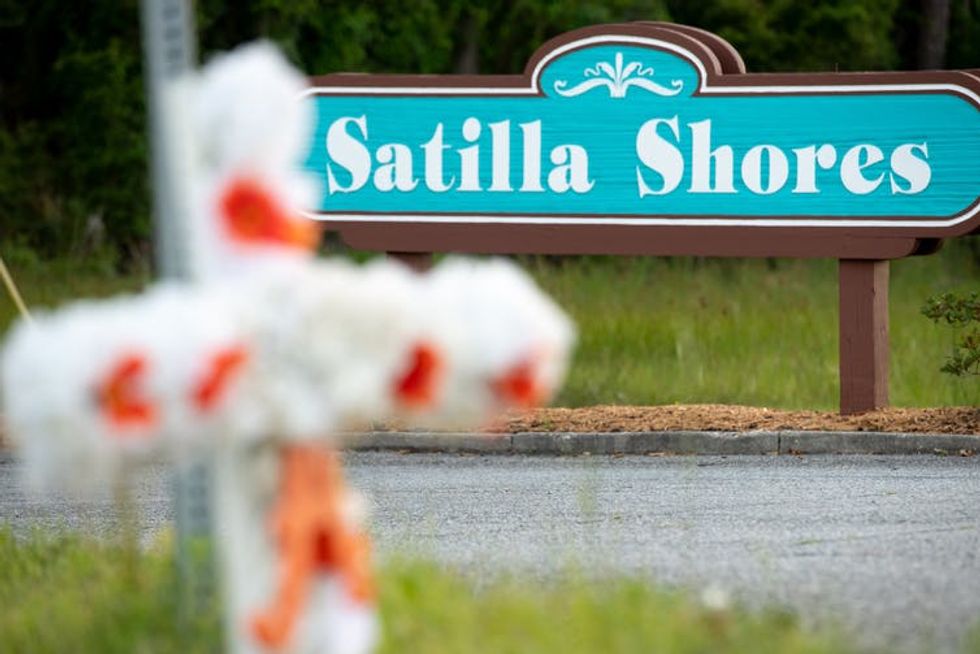
But there is a separate question that needs to be asked: Why do these incidents seem to occur in certain types of neighborhoods? Satilla Shores, where Arbery was killed by the McMichaels, is predominately white and suburban. It evokes memories of the killings of Trayvon Martin, Jonathan Ferrell, Renisha McBride and Tamir Rice.
As a sociologist and public health scholar, I have studied physical activity and how it varies by race and social class. I know that the exact behaviors that are encouraged to extend life for all are the exact ones that can end the life of men like Ahmaud – in short, jogging while black can be deadly.
In 2017, I published a study on physical activity – focusing on where and how people exercise, and breaking this down by race and gender. I surveyed nearly 500 middle-class black and white professionals around the United States. The research also included in-depth interviews, focus groups and observations of public spaces in cities with varying racial and class compositions including Oakland and Rancho Cucamonga, California; Brentwood, Tennessee; Bowie, Maryland; and Forest Park, Ohio.
I found that race and place significantly inform where people engage in physical activity: White men, white women and black women living in predominately white areas were significantly more likely to engage in physical activity in their neighborhoods. Black men living in predominately white neighborhoods, however, were far less likely to engage in physical activity in the areas surrounding their own homes.
Good neighbors?
Black men I interviewed who had jogged in white neighborhoods where they lived reported incidents of the police being called on them, neighbors scurrying to the other side of the street as they approached, receiving disgruntled looks and seeing the shutting of screen doors as they passed. Similar experiences have been documented in public places like stores, restaurants and coffee shops.
A memorial left at the site where Ahmaud Arbery was shot dead on a quiet suburban road.
Black men are often criminalized in public spaces – that means they are perceived as potential threats and predators. Consequently, their blackness is weaponized. Moreover, black men’s physical bodies are viewed as potential weapons that could invoke bodily harm, even when they are not holding anything in their hands or attacking. In fact, black people are 3.5 times more likely than white people to be killed by police in situations where they are not attacking nor have a weapon.
Some black men attempt to make themselves less threatening. When it comes to jogging in white neighborhoods, some of the black men I spoke to wore alumnus T-shirts, carried I.D., waved and smiled at neighbors, and ran in well-lit, populated areas.
This is hardly surprising. Black men do this at work by thinking consciously about their attire, tone and pitch of voice, and behavioral mannerisms. Even during the COVID-19 pandemic, many black men are going to great lengths to reduce criminalization by staying in the house, wearing colorful masks and even forgoing masks altogether.
Sociologists call it a signaling process. Black men call it survival.
An irony in the case of Ahmaud Arbery is that it has set in motion a campaign that could see more black men putting on their running shoes. The #IRunWithMaud social media campaign is encouraging people to jog 2.23 miles – a reference to the date on which Arbery was killed.
Editor’s note: This story was updated on May 7 following the arrests of Gregory McMichael and Travis McMichael.
When the novel coronavirus roared into the U.S., mental health took a back seat to physical health. The number one priority was making sure hospitals wouldn’t be overwhelmed and that as many lives as possible could be saved.
Schools closed, remote work became the norm, restaurants shuttered and getting together with friends was no longer possible. The news cycle spun with story after story highlighting the ever-increasing number of cases and deaths, while unemployment soared to levels not seen since the Great Depression.
Any one of these shifts could be expected to cause an increase in mental health issues. Put together, they created a a perfect storm for a crisis.
Experts speculated as much, and polls showed that many people seemed to intuitively grasp the mental toll of the pandemic. However, data on mental health metrics was scant; we didn’t know the magnitude of any changes in mental health issues, nor did we understand which groups of people were suffering more than others.
So I decided to collect data on mental health during the pandemic and compare it to data from before all of this happened. The differences were even worse than I anticipated.
A generational divide
On April 27, I surveyed 2,032 U.S. adults using a standard measure of mental distress that asks, for example, how often a respondent felt sad or nervous in the last month. I compared the responses with a sample of 19,330 demographically similar people in a 2018 government-sponsored survey of U.S. adults that asked the same questions.
Clearly, the pandemic has had a devastating effect on mental health.
Yet some people are suffering more than others. Younger adults ages 18 to 44 – mostly iGen and millennials – have borne the brunt of the mental health effects. They’ve experienced a tenfold increase in serious mental distress compared with 2018. Meanwhile, adults 60 and older had the smallest increases in serious mental health issues.
The other group in distress won’t be a surprise to parents: those with children under 18 at home. With schools and daycares closed during the pandemic, many parents are trying to do the near-impossible by working and supervising their children at the same time. Sports, scouting, music classes, camps and virtually every other activity parents rely on to keep their kids occupied have been canceled. Even parks were closed for weeks.
This trend didn’t occur just because people with children at home are younger. Even among 18- to 44-year-olds, those with children at home showed larger increases in mental distress than those without kids.
In 2018, parents were actually less likely to be experiencing mental distress than those without children. But by the end of April 2020, parents were more likely to be in distress than their childless peers.
Where do we go from here?
The findings of this study are preliminary. The 2020 and 2018 samples, though very similar in age, gender, race and region, came from different sources and thus might differ in other ways.
However, there are also other indications that mental health is suffering during the pandemic. For example, calls to mental health hotlines appear to have surged.
This doesn’t necessarily mean we should open up the economy to preserve mental health. The resulting spike in illness and death from COVID-19 could be even worse for mental health, and workers required to return to their jobs may rightly worry about catching the virus.
It does mean policymakers need to be prepared for a potentially unprecedented number of Americans needing mental health services. Just as hospitals risked running out of ventilators during a surge of COVID-19 patients, the mental health care system might be quickly overwhelmed.
The survey also shows just how widespread the impact of the pandemic has been, and just how many people are suffering. If you have been feeling sad about everything that’s been lost – and nervous about the uncertainty of what comes next – you are not alone.
I, like many Americans, miss the pre-pandemic world of hugging family and friends, going to work and having dinner at a restaurant. A protective vaccine for SARS-Cov2 is likely to be the most effective public health tool to get back to that world.
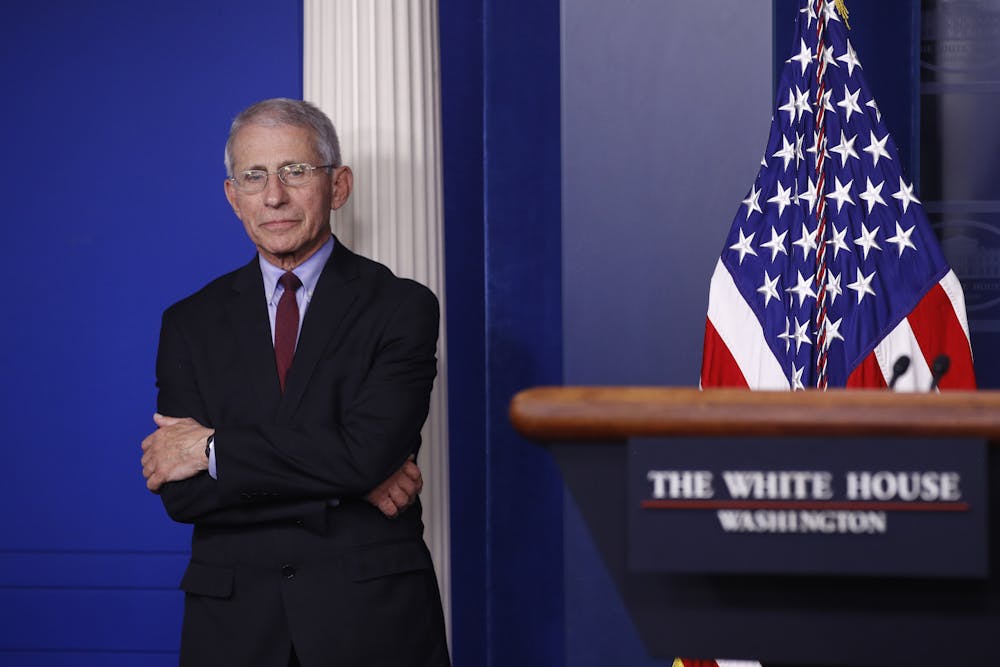
Anthony Fauci, director of the National Institute of Allergy and Infectious Diseases, cautiously estimates that a vaccine could be available in 12 to 18 months.
Traditional vaccine development is a long and complicated process. Only about 6% of vaccine candidates are eventually approved for public use, and the process takes 10.7 years, on average.
Anthony Fauci is estimating a coronavirus vaccine will be developed faster than any other vaccine in history.
But these are not traditional times. Researchers around the world are innovating the process of vaccine development in real time to develop a vaccine as fast as possible. So how close are we to a vaccine?
A step-by-step process
Vaccines prevent disease by boosting a person’s natural immune response against a microbe that they have not encountered before. There are a number of different types of vaccines in development for SARS-CoV-2 and they fall into three broad categories: traditional killed-virus vaccines, protein-based vaccines and gene-based vaccines. No matter the type, every single vaccine candidate must go through the same vetting process before it can be put into use.
Once researchers have developed a potential candidate, they begin the first step of testing in laboratories, called preclinical studies. Scientists use laboratory animals to examine if the candidate vaccine induces an immune response to the virus and to check whether the vaccine causes any obvious medical problems.
Once a vaccine is proven safe in animals, researchers begin human testing. This is where the federal Food and Drug Administration begins to regulate the process.
Phase 1 studies test for safety and proof-of-concept. Researchers give a small number of human volunteers the vaccine. Then they look for medical problems and see if it induces some sort of immune response.
In Phase 2 studies, researchers give the vaccine to hundreds of volunteers to determine the optimal vaccine composition, dose and vaccination schedule.
The final step before a vaccine is approved by the FDA for broad use is a Phase 3 trial. These involve thousands of volunteers and provide data on how good the vaccine is at preventing infection. These large trials will also uncover rarer side effects or health issues that may not show up in the smaller trials.
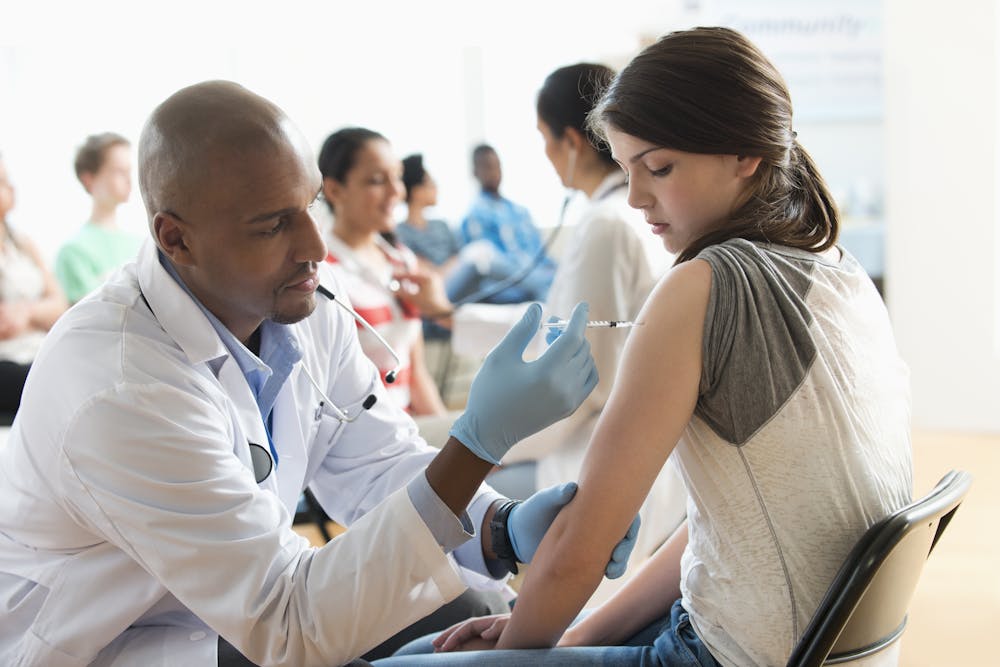
Some side effects are rare, so testing must be thorough before a vaccine is approved.
If in any of these phases a vaccine candidate appears to be ineffective or cause harm to people, the researchers must start over with a new candidate.
After a vaccine candidate successfully completes these clinical trials, a medical regulatory panel in the FDA looks at the evidence, and if the vaccine is effective and safe, approves it for general use. Experts estimate that the whole process costs between US$1 billion and $5 billion.
But approval is not the only hurdle. As has been demonstrated by the severe lack of coronavirus testing, easy and fast production of a test or vaccine is as critical as having one that works.
Both clinical efficacy and ease of production must be considered when asking how long until a vaccine is ready.
Current promising candidates
As of April 30, 2020, there were eight vaccine candidates currently in Phase 1 (or joint Phase 1/Phase 2) clinical trials and 94 vaccines candidates in preclinical studies.
The final three vaccines in Phase 1 or 2 trials, and the only two in the U.S., are gene-based vaccines. To me, these seem like the most promising.
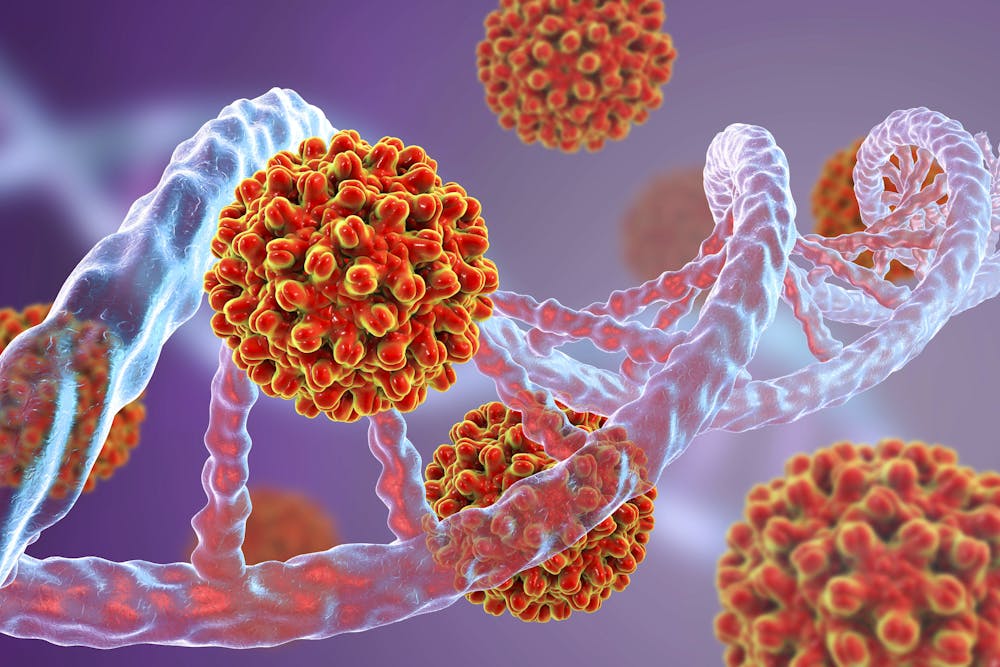
Gene-based vaccines contain a gene or part of a gene from the virus that causes COVID-19, but not the virus itself. When a person is injected with one of these vaccines, their own cells read the injected gene and make a protein that is a part of the coronavirus. This one protein isn’t dangerous by itself, but it should trigger an immune response that would lead to immunity from the coronavirus.
No gene-based vaccines have ever been approved for human use, but DNA vaccines are used on animals, and a few were in clinical trials for the Zika virus.
In the past, researchers have struggled to develop DNA vaccines that produce strong immune responses, but new techniques look promising. RNA vaccines tend to be more effective in animal studies but have also required innovations before human use. It may be that the time of gene-based vaccines has arrived.
Another benefit of gene-based vaccines is that manufacturers would likely be able to produce large amounts much faster than traditional vaccines. DNA and RNA vaccines would also be more shelf–stable than conventional vaccines since they don’t use ingredients like cell components or chicken eggs. This would make distribution, especially to rural areas, easier.
Still a long road to implementation
The three gene-based vaccines and the five other candidates face many challenges before you or I will be vaccinated. The fact that they are in Phase 1 and 2 trials is encouraging, but the very point of clinical trials is to reveal any problems with a vaccine candidate.
And there are a lot of potential problems. The preclinical results in laboratory animals might not translate well to people. The level of immune protection might be low. And people may react adversely when injected with the vaccine.
Any coronavirus vaccine could also produce a dangerous reaction called immune enhancement, where the vaccine actually worsens the symptoms of a coronavirus infection. This is rare, but has happened with past vaccine candidates for dengue fever and other viruses.
So, how long before we have a vaccine against the COVID-19 virus?
No vaccines have made it through Phase 1 or Phase 2 trials yet, and Phase 3 trials generally take between one and four years. If researchers get lucky and one of these first vaccines is both safe and effective, we are still at least a year away from knowing that. At that point manufacturers would need to start producing and distributing the vaccine at a massive scale.
It is unclear what percent of the population would need to be vaccinated against SARS-CoV-2, but in general, you need to immunize between 80% and 95% of the population to have effective herd immunity. Depending on what the virus does in the coming months, that might not be necessary, but if it is, that’s 260-300 million people in the U.S. alone.
Researchers are doing everything they can to develop a vaccine as fast as possible while still making sure it is effective and safe. Manufacturers can help by preparing flexible systems that could be ready to produce whichever candidate gets across the finish line first.
If everything goes well, Fauci’s 12- to 18-month prediction may be right. If so, it will be thanks to the tireless work of scientists, the support of international organizations and manufacturers all innovating and working together to fight this virus.
The Research Brief is a short take about interesting academic work.
The big idea
Since 2014, the Dornsife Center for Economic and Social Research, located at the University of Southern California, has been tracking trends in health economic well-being, attitudes and behaviors through a nationwide survey for its Understanding America Study, asking the same individuals questions over time.
The nationally representative survey is now assessing how COVID-19 is affecting U.S. families. This includes their health, economic status and, for the first time, educational experiences. With two other education researchers Amie Rapaport and Marshall Garland, we analyzed the educational experience data that have recently been added to the study.
What we did
We worked with the broader Understanding America Study team to ask Americans about the effects the pandemic is having on students and their families.
About 1,450 families with children answered these questions between April 1 and April 15.
We found that nearly all – about 85% – of families with at least one child between kindergarten and their senior year of high school have internet access and a computer they can use for distance learning while school buildings are shuttered.
However, we found large disparities in technology access based on family income. Among the 20% of American households who make US$25,000 or less a year, just 63% of schoolchildren have access to a computer and the internet. In comparison, essentially all students from the most affluent families – those whose parents make $150,000 annually or more – do.
To be sure, that doesn’t mean a third of poor kids are being locked out of getting an online education. Many of those students are also using tablets and smartphones to participate in educational activities. However, the types of educational activities a student can easily engage in with a computer and wireless internet –such as writing long essays – are broader than the types possible on a tablet or an even smaller screen and with just a cellular connection.
These inequities can leave low-income families scrambling for wireless access. Some of the limited options available can include include working from a car parked outside a local library or a McDonald’s parking lot.
Why it matters
There’s a big gap between how much access rich and poor children have to technology. This is known as the “digital divide.”
Many of the world’s 1.8 billion Muslims are experiencing the holy month of Ramadan differently this year – disrupted by social distancing amid the COVID-19 pandemic.
Ramadan, which began on April 24, is the ninth month on the Islamic lunar calendar during which Muslims are required to fast from food, drink and sexual activity from dawn to dusk.
It is also a time for Muslims to renew their faith and remind themselves of the best that they can be by performing acts of compassion. For many Muslims, Ramadan is centered around helping the poor.
As a scholar of Muslim philanthropy, I have watched as people and institutions have adapted practices to accommodate social distancing rules. I have also observed how the crisis has exposed the vulnerability of Muslim nonprofits.
Muslims tend to give their “zakat” – obligatory annual charitable payments – during Ramadan. In the U.S., this has traditionally meant fundraising “iftars” – the evening meal to break daily Ramadan fasts – or congregational fundraising at community prayers or volunteering.
Social distancing has made it hard to keep up this tradition.
Anti-poverty efforts
According to a 2018 survey of Muslim philanthropic practices by the Institute of Social Policy and Understanding, U.S. Muslims make efforts to alleviate poverty in America a high priority when giving to Muslim charities. In fact, the poll found it was the second-most important focus of philanthropy after supporting their places of worship. Education and international relief rounded out their top four priorities.
When it comes to giving to non-Muslim charities, Muslims likewise spent more on groups that deal with poverty within the United States than other countries.
Similarly, a recent survey of British Muslims found that younger U.K. Muslims are passionate about reducing domestic inequality and poverty and that they are focusing on efforts within their own borders rather than Muslims in other countries.
The economic downturn caused by the coronavirus will have inevitably pushed many families – Muslim and non-Muslim alike – into poverty. Even before the crisis, more than a third of Muslim Americans were below the poverty line – a higher proportion than that of the general population.
Direct aid
Despite the challenges brought about by social distancing, Muslims organizations have still found ways to channel money to those in need. In the United States, the Islamic Society of North America has, for example, helped establish a National Muslim COVID-19 Taskforce.
Local community organizations have come together to develop their own Muslim COVID-19 task forces in places like Indianapolis and Chicago.
Some congregations are providing iftar food for those in need through drive-thru services because the traditional community meals are all canceled. Some congregations and organizations like ICNA Relief are dropping off at homes and apartment buildings.
These local efforts are supported by national networks.
The Community Collaboration Initiative, established by the Muslim Philanthropy Initiative at the Lilly Family School of Philanthropy, where I am employed,“ has brought together 26 Muslim American nonprofits to find ways to collaborate.
While other Muslim relief organizations have increased domestic effort to distribute food and aid directly to people’s homes.
Emergency funding
Meanwhile guidance from religious bodies like the Association of Muslim Jurists of America and the Fiqh Council of North America has meant that struggling Muslim families and businesses can apply for federal funds. They ruled that it was permissible to apply for loans under the government’s CARES Act despite the funds being subject to interest – which is forbidden under Islamic law.
I’ve already heard from a number of Muslim nonprofits that they are facing deep financial challenges as a result of the coronavirus crisis.
Muslim Americans represent around 1% of the U.S. population and trend younger and poorer. This may explain why Muslim American nonprofits are vulnerable during times of economic hardship and may benefit from greater support from outside foundations and philanthropists.
Muslims in the U.S. have shown their resourcefulness in finding new ways of giving during the coronavirus-hit Ramadan. Many of the faith’s nonprofits may need to do likewise to keep afloat during the hard economic times to come.