A worker at a meat-packing plant in Indiana is none too happy with President Donald Trump's order that he stay at work during the COVID-19 pandemic.
The Indianapolis Star reports that Gary Harris, a 20-year veteran at the Tyson Foods meat plant in Logansport, Indiana, is daring the president to put his own health on the line and help them process meat to keep food on American families' tables.
“If he does that I think they should bring the president down here and have him work shoulder-to-shoulder and join the fun,” said Harris.
Harris explained that more than 100 employees at the Logansport plant have already tested positive for COVID-19, which has created severe stress and anxiety among his fellow workers.
“God help the people on the line,” he said. “Everyone is scared and worried, no one knows who has it and who doesn’t because the company won’t say."
Tyson temporarily shut down the Logansport plant over the weekend, and both the company and United Food and Commercial Workers Local 700 have said that the plant needs to remain shut down until it is safe to return.
"The reality is that these workers are putting their lives on the line every day to keep our country fed during this deadly outbreak," UFCW International President Marc Perrone this week. "To protect America’s food supply, America’s meatpacking workers must be protected."
On April 10, Apple and Google announced a coronavirus exposure notification system that will be built into their smartphone operating systems, iOS and Android. The system uses the ubiquitous Bluetooth short-range wireless communication technology.
There are dozens of apps being developed around the world that alert people if they’ve been exposed to a person who has tested positive for COVID-19. Many of them also report the identities of the exposed people to public health authorities, which has raised privacy concerns. Several other exposure notification projects, including PACT, BlueTrace and the Covid Watch project, take a similar privacy-protecting approach to Apple’s and Google’s initiative.
So how will the Apple-Google exposure notification system work? As researcherswho study security and privacy of wireless communication, we have examined the companies’ plan and have assessed its effectiveness and privacy implications.
Recently, a study found that contact tracing can be effective in containing diseases such as COVID-19, if large parts of the population participate. Exposure notification schemes like the Apple-Google system aren’t true contact tracing systems because they don’t allow public health authorities to identify people who have been exposed to infected individuals. But digital exposure notification systems have a big advantage: They can be used by millions of people and rapidly warn those who have been exposed to quarantine themselves.
Bluetooth beacons
Because Bluetooth is supported on billions of devices, it seems like an obvious choice of technology for these systems. The protocol used for this is Bluetooth Low Energy, or Bluetooth LE for short. This variant is optimized for energy-efficient communication between small devices, which makes it a popular protocol for smartphones and wearables such as smartwatches.
Bluetooth allows phones that are near each other to communicate. Phones that have been near each other for long enough can approximate potential viral transmission.
Bluetooth LE communicates in two main ways. Two devices can communicate over the data channel with each other, such as a smartwatch synchronizing with a phone. Devices can also broadcast useful information to nearby devices over the advertising channel. For example, some devices regularly announce their presence to facilitate automatic connection.
To build an exposure notification app using Bluetooth LE, developers could assign everyone a permanent ID and make every phone broadcast it on an advertising channel. Then, they could build an app that receives the IDs so every phone would be able to keep a record of close encounters with other phones. But that would be a clear violation of privacy. Broadcasting any personally identifiable information via Bluetooth LE is a bad idea, because messages can be read by anyone in range.
Anonymous exchanges
To get around this problem, every phone broadcasts a long random number, which is changed frequently. Other devices receive these numbers and store them if they were sent from close proximity. By using long, unique, random numbers, no personal information is sent via Bluetooth LE.
Apple and Google follow this principle in their specification, but add some cryptography. First, every phone generates a unique tracing key that is kept confidentially on the phone. Every day, the tracing key generates a new daily tracing key. Though the tracing key could be used to identify the phone, the daily tracing key can’t be used to figure out the phone’s permanent tracing key. Then, every 10 to 20 minutes, the daily tracing key generates a new rolling proximity identifier, which looks just like a long random number. This is what gets broadcast to other devices via the Bluetooth advertising channel.
When someone tests positive for COVID-19, they can disclose a list of their daily tracing keys, usually from the previous 14 days. Everyone else’s phones use the disclosed keys to recreate the infected person’s rolling proximity identifiers. The phones then compare the COVID-19-positive identifiers with their own records of the identifiers they received from nearby phones. A match reveals a potential exposure to the virus, but it doesn’t identify the patient.
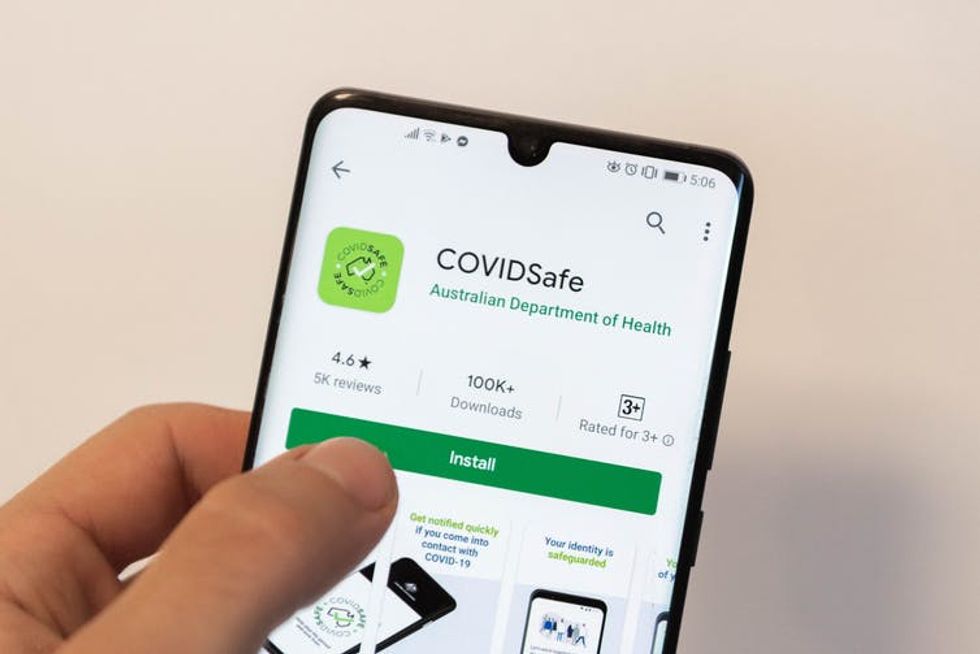
The Australian government’s COVIDSafe app warns about close encounters with people who are COVID-19-positive, but unlike the Apple-Google system, COVIDSafe reports the contacts to public health authorities.
Most of the competing proposals use a similar approach. The principal difference is that Apple’s and Google’s operating system updates reach far more phones automatically than a single app can. Additionally, by proposing a cross-platform standard, Apple and Google allow existing apps to piggyback and use a common, compatible communication approach that could work across many apps.
No plan is perfect
The Apple-Google exposure notification system is very secure, but it’s no guarantee of either accuracy or privacy. The system could produce a large number of false positives because being within Bluetooth range of an infected person doesn’t necessarily mean the virus has been transmitted. And even if an app records only very strong signals as a proxy for close contact, it cannot know whether there was a wall, a window or a floor between the phones.
However unlikely, there are ways governments or hackers could track or identify people using the system. Bluetooth LE devices use an advertising address when broadcasting on an advertising channel. Though these addresses can be randomized to protect the identity of the sender, we demonstrated last year that it is theoretically possible to track devices for extended periods of time if the advertising message and advertising address are not changed in sync. To Apple’s and Google’s credit, they call for these to be changed synchronously.
But even if the advertising address and a coronavirus app’s rolling identifier are changed in sync, it may still be possible to track someone’s phone. If there isn’t a sufficiently large number of other devices nearby that also change their advertising addresses and rolling identifiers in sync – a process known as mixing – someone could still track individual devices. For example, if there is a single phone in a room, someone could keep track of it because it’s the only phone that could be broadcasting the random identifiers.
Another potential attack involves logging additional information along with the rolling identifiers. Even though the protocol does not send personal information or location data, receiving apps could record when and where they received keys from other phones. If this was done on a large scale – such as an app that systematically collects this extra information – it could be used to identify and track individuals. For example, if a supermarket recorded the exact date and time of incoming rolling proximity identifiers at its checkout lanes and combined that data with credit card swipes, store staff would have a reasonable chance of identifying which customers were COVID-19 positive.
And because Bluetooth LE advertising beacons use plain-text messages, it’s possible to send faked messages. This could be used to troll others by repeating known COVID-19-positive rolling proximity identifiers to many people, resulting in deliberate false positives.
Nevertheless, the Apple-Google system could be the key to alerting thousands of people who have been exposed to the coronavirus while protecting their identities, unlike contact tracing apps that report identifying information to central government or corporate databases.
Blood tests that check for exposure to the coronavirus are starting to come online, and preliminary findings suggest that many people have been infected without knowing it. Even people who do eventually experience the common symptoms of COVID-19 don’t start coughing and spiking fevers the moment they’re infected.
How common is it for people to contract and fight off viruses without knowing it?
In general, having an infection without any symptoms is common. Perhaps the most infamous example was Typhoid Mary, who spread typhoid fever to other people without having any symptoms herself in the early 1900s.
My colleagues and I have found that many infections are fought off by the body without the person even knowing it. For example, when we carefully followed children for infection by the parasite Cryptosporidia, one of the major causes of diarrhea, almost half of those with infections showed no symptoms at all.
For the most part, symptoms are actually a side effect of fighting off an infection. It takes a little time for the immune system to rally that defense, so some cases are more aptly considered presymptomatic rather than asymptomatic.
How can someone spread coronavirus if they aren’t coughing and sneezing?
Everyone is on guard against the droplets that spray out from a coronavirus patient’s cough or sneeze. They’re a big reason public health officials have suggested everyone should wear masks.
But the virus also spreads through normal exhalations that can carry tiny droplets containing the virus. A regular breath may spread the virus several feet or more.
Spread could also come from fomites – surfaces, such as a doorknob or a grocery cart handle, that are contaminated with the coronavirus by an infected person’s touch.
What’s known about how contagious an asymptomatic person might be?
No matter what, if you’ve been exposed to someone with COVID-19, you should self-quarantine for the entire 14-day incubation period. Even if you feel fine, you’re still at risk of spreading the coronavirus to others.
Most recently it has been shown that high levels of the virus are present in respiratory secretions during the “presymptomatic” period that can last days to more than a week prior to the fever and cough characteristic of COVID-19. This ability of the virus to be transmitted by people without symptoms is a major reason for the pandemic.
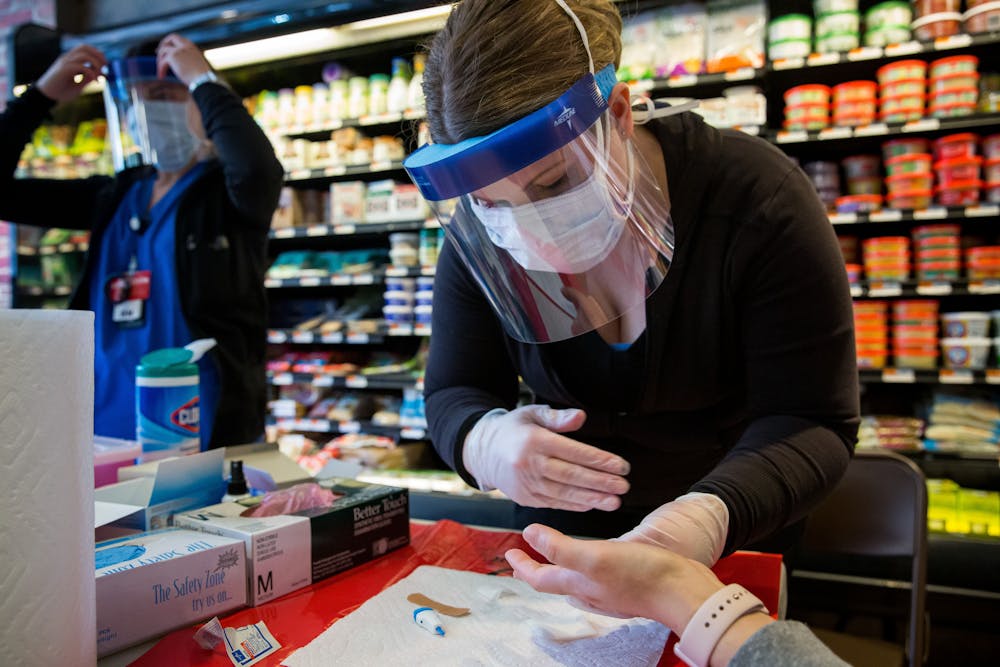
To find out what percentage of people have anti-coronavirus antibodies in their blood, health departments are starting to sample the public, as at this grocery store in New York.
After an asymptomatic infection, would someone still have antibodies against SARS-CoV-2 in their blood?
Most people are developing antibodies after recovery from COVID-19, likely even those without symptoms. It is a reasonable assumption, from what scientists know about other coronaviruses, that those antibodies will offer some measure of protection from reinfection. But nothing is known for sure yet.
Recent serosurveys in New York City that check people’s blood for antibodies against SARS-CoV-2 indicate that as many as one in five residents may have been previously infected with COVID-19. Their immune systems had fought off the coronavirus, whether they’d known they were infected or not – and many apparently didn’t.
How widespread is asymptomatic COVID-19 infection?
No one knows for sure, and for the moment lots of the evidence is anecdotal.
For a small example, consider the nursing home in Washington where many residents became infected. Twenty-three tested positive. Ten of them were already sick. Ten more eventually developed symptoms. But three people who tested positive never came down with the illness.
When doctors tested 397 people staying at a homeless shelter in Boston, 36% came up positive for COVID-19 – and none of them had complained of any symptoms.
The antibody serosurveys getting underway in differentparts ofthe country add further evidence that a good number – possibly anywhere from around 10% to 40% – of those infected might not experience symptoms.
Asymptomatic SARS-CoV-2 infection appears to be common – and will continue to complicate efforts to get the pandemic under control.
"Fox & Friends" co-host Ainsley Earhardt appeared annoyed after co-host Brian Kilmeade snidely tried to downplay the risk her sick mother faced from COVID-19.
During a segment about California closing down its beaches to prevent further outbreaks, Earhardt said that she sympathized with Gov. Gavin Newsom, who had to make a tough public health decision aimed at saving lives.
"The beach was open and people could make their decisions -- the problem is, though, they started seeing more people go to the hospitals after that weekend," she said. "The governors have to make tough decisions because they don't want a relapse in all this, that wouldn't make them look good. Their residents would be dying!"
Earhardt then made her plea personal by mentioning that her own mother would be very vulnerable to the disease were she to contract it.
"My mom is very sick," she said. "And as much as I want to go out, I still want everyone to play by the rules, because when I finally do get to go home to visit her..."
"But is your mom going to the beach?" Kilmeade interrupted, in an attempt to play down her fears.
"No, but Brian... eventually she's going to be around family again," Earhardt tersely replied. "I understand both sides, I really do, I just don't want a resurgence of this!"
As one union leader put it: "The Covid pandemic is having a huge, devastating, dire impact on postal revenue."
With the Senate set to return to Washington, D.C. next week and uncertainty over when the House will also reconvene, calls continued to mount Wednesday for Congress to provide significant relief to the U.S. Postal Service, the popular federal agency that is struggling financially in the midst of the coronavirus pandemic.
In a Wednesday morning interview on Democracy Now!, American Postal Workers Union (APWU) president Mark Dimondstein discussed how the public health crisis has impacted USPS operations, both in terms of revenue and workers. According to the union leader, at least 45 mail clerks and carriers have died from Covid-19.
While Dimondstein noted that a 2006 congressional mandate requiring the agency to fund retirees' health benefits for several decades has hamstrung the agency, he focused his comments on the current crisis, warning that "the Covid pandemic is having a huge, devastating, dire impact on postal revenue."
Watch:
As Dimondstein explained:
There's no taxpayer dollars that goes into the post office. It runs strictly on the revenue of postal and postal products. And that revenue has to be able to be enough to carry out the mission of what we call the universal service mandate—every address, every person, no matter who we are and where we live, a great small-d democratic right, getting mail, packages, six days a week now, sometimes seven.
And what's happened in this pandemic, and its economic devastation throughout the entire country and world—but what's happened specifically to the Postal Service is the mail has precipitously dropped off. ...The Postal Service will actually run out of money, whether it's this summer, whether it's early fall. The revenue just isn't there, strictly based on Covid.
So, what we've asked—and it's not just the "we" of the postal unions. The postal Board of Governors, which sets policy, which is a majority-Republican board right now, has unanimously asked for robust relief, not a bailout—this is for the people of the country; this doesn't go into any shareholders, any CEOs—but to make up that lost revenue, so the post office can weather this crisis and still, at the same time, serve the people of the country, both in ordinary times and in this time of crisis. So, it's serious. It's real. And again, it's very focused on the Covid pandemic economic impact.
The union leader took aim at President Donald Trump, who on Friday declared that "the Postal Service is a joke," and threatened to block all pandemic-related federal aid unless USPS quadruples its rates for package deliveries. Critics warn doing so could drive business away from the Postal Service and push companies to pass on price increases to customers.
"For a president of the United States to tell the people of this country and the postal workers who are on the frontlines that the postal workers, that the post office, is a joke—something that belongs to everybody in this country, it belongs to the people—that is the absolute insult of insults," Dimondstein told Democracy Now!
Dimondstein added that there are ways that the Postal Service could expand in the future, such as banking and copying services, but "in order to get there, we have to make sure that we have a public Postal Service. And that now is really up for grabs, because, clearly, we have an administration that would like to... sell the public Postal Service off to private corporations, privatize it."
As national radio commentator and author Jim Hightower explained in an op-ed forCreators Wednesday:
The U.S. mail service... is enormously popular and an essential part of our nation's economic and social infrastructure, so Trump can't just blatantly choke off its survival funds. Instead, he's taking the agency hostage, offering to provide a $10 billion "loan" from the Treasury Department—contingent on the public entity agreeing to his draconian demands that it raise postal prices, gut postal unions and cut postal services.
Trump's provisos are postal poison pills, for they would destroy the agency's morale and service, undermine popular support, and clear the political path for profiteering corporations to seize, privatize, and plunder this public treasure.
Sen. Bernie Sanders (I-Vt.), who last week hosted a virtual town hall with the leaders of the nation's top postal unions to discuss how to save USPS, reiterated his demand to provide support to the agency in a tweet Wednesday morning:
Sanders shared a Washington Postcolumn by Katrina vanden Heuvel of The Nation. In the column Tuesday, vanden Heuvel argued that "the USPS is the quintessential American institution" and members of Congress "must stand up to the White House and deliver the relief the Postal Service needs—not only to survive but also to thrive."
"As Americans across the country are following stay-at-home directives, they are relying on the USPS to deliver their prescription drugs, food, and other essentials," she noted. "Tax refunds and stimulus checks arrive through the mail. So do absentee ballots—this year's presidential election may indeed depend on the Postal Service to facilitate voting by mail."
"As civil rights leaders caution against efforts that would require voters to pay for postage when mailing in ballots, the USPS has restated its previous policy to deliver every ballot, even those with insufficient postage," vanden Heuvel added. "Can you imagine UPS or FedEx doing the same?"
On Democracy Now! Wednesday, Dimondstein noted that "the post office is the most trusted federal agency" and made the case that voting by mail—which is gaining popularity amid the public health crisis—is the best way to secure the 2020 election.
"This pandemic has brought home that if we're going to have true access to the ballot box—or more access to the ballot box, because we really don't have true access now—vote-by-mail is definitely the way to go," he said. "It was before. Now it's very, very clear. And postal workers are ready to continue to serve the people of this country in all sorts of ways, including that defense of our democratic right to vote."
There will be 11,000 fewer deaths in European countries under coronavirus lockdown due to a sharp drop in fossil fuel pollution during April, according to research released Friday.
Measures to halt the spread of coronavirus have slowed the region's economies to a crawl, with coal-generated power falling by nearly 40 percent, and oil consumption by a third.
"This will result in 11,000 avoided deaths from air pollution," said lead author Lauri Myllyvirta, senior analyst at the Centre for Research on Energy and Clean Air (CREA).
Globally, oil use has declined by about the same amount, with drops in coal consumption varying by region.
An unintended boon of shuttered factories and empty roads has been more breathable air.
Levels of nitrogen dioxide (NO2) and small particle pollution known as PM2.5 -- both toxic by-products burning coal, oil and gas -- fell 37 and 10 percent, respectively, according to the findings.
"The impacts are the same or bigger in many other parts of the world," Myllyvirta told AFP. "So we are looking at an even larger number of avoided deaths."
In China, for example, NO2 and PM2.5 levels declined by a 25 and 40 percent during the most stringent period of lockdown, with an even sharper fall in Hubei Province, where the global pandemic began.
Air pollution shortens lives worldwide by nearly three years on average, and causes 8.8 million premature deaths annually, according to a study last month.
The World Health Organization (WHO) calculates 4.2 million deaths, but has underestimated the impact on cardiovascular disease, recent research has shown.
Worst-hit is Asia, where average lifespan is cut 4.1 years in China, 3.9 years in India, and 3.8 years in Pakistan.
In Europe, life expectancy is shortened by eight months.
"Our analysis highlights tremendous benefits for public health and quality of life that could be achieved by rapidly reducing fossil fuels in a sustained and sustainable way," Myllyvirta said.
- Pollution and COVID-19 -
The happenstance evidence that less air pollution saves lives should guide governments deciding on how to reboot their economies, noted Maria Neira, the WHO's director for Environmental and Social Determinants of Health.
"When we eventually take off our face masks, we want to keep breathing clean air," she said, commenting on the findings.
AFP/File / WANG ZHAOCompared to other causes of premature death, air pollution worldwide kills 19 times more people each year than malaria
"If we truly care about the health of our communities, countries and global commons, we must find ways of powering the planet with out relying on fossil fuels."
Compared to other causes of premature death, air pollution worldwide kills 19 times more people each year than malaria, nine times more than HIV/AIDS, and three times more than alcohol.
Another study comparing more than 3,000 US counties, meanwhile, found that PM 2.5 pollution is directly linked with higher COVID-19 death rates.
One extra micron per cubic metre corresponded to a 15 percent jump in COVID-19 mortality, researchers at the Harvard University T.H. Chan School of Public Health reported earlier this month.
The results "suggest that long-term exposure to air pollution increases vulnerability to experiencing the most severe Covid-19 outcomes," they wrote.
PM 2.5 particles penetrate deep into the lungs and enter the bloodstream, causing cardiovascular respiratory problems.
In 2013, the WHO classified it as a cancer-causing agent.
In India's Uttar Pradesh -- home to 200 million -- small particle pollution by itself slashes life expectancy by 8.5 years, while in China's Hebei Province (population 74 million) the shortfall is nearly six years, according to the Air Quality Life Index, developed by researchers at the Energy Policy Institute of Chicago.
All but two percent of China's cities exceeded WHO guidelines for PM2.5 levels, while 53 percent exceeded less stringent national safety limits.
The UN says PM2.5 density should not top 25 microgrammes per cubic metre (25 mcg/m3) of air in any 24-hour period. China has set the bar at 35 mcg/m3.
The new analysis from CREA matches weather conditions and changes in emissions to data on the damages to health linked to exposure to air pollution.
A day without a new coronavirus case in South Korea and a potential breakthrough in the hunt for a better treatment spurred optimism on Thursday, but catastrophic European figures underlined how much damage the epidemic has already done the global economy.
World financial markets picked up a little on the news on the medical and public health fronts, but deaths continued to mount across much of the world and some of the biggest economies are facing perhaps the most severe recession of the modern era.
Thursday brought stark official figures from Europe, where the locked-down EU economy was estimated to have shrunk by 3.5 percent in the first quarter, Germany's jobless total soared to 2.6 million in April from 2.3 million the month before and France confirmed that it had officially plunged into recession.
The European Union's commissioner for the economy, Paolo Gentiloni, dubbed the situation "an economic shock without precedent in modern times" and official agency Eurostat said the first quarter contraction in the bloc's output was the most severe since its statistical series began in 1995.
Germany "will experience the worst recession in the history of the federal republic" -- founded in 1949 four years after World War II left the continent shattered and divided -- Economy Minister Peter Altmaier warned, predicting that Europe's biggest economy would shrink by a record 6.3 percent.
Aggressive test and trace
The novel coronavirus strain that emerged in China in December has now killed more than 224,000 people and spread to 193 countries and territories. Reporting standards vary across jurisdictions, but more than 3.1 million cases have been recorded and testing rates are increasing.
Markets nevertheless climbed cautiously higher on Thursday -- buoyed by news from Asia, where some of the formerly worst-hit countries have begun to reopen their economies and rebuild everyday life, and the United States, where scientists reported hopeful results in trials for an anti-viral drug.
For the first time since the new COVID-19 disease was detected there in mid-February, South Korea -- which for a period had the world's second-largest outbreak -- reported zero new infections, suggesting its aggressive test-and-trace strategy is having results.
"This is the strength of South Korea and its people," President Moon Jae-in said as he announced the milestone.
South Korea's death toll is around 250 -- vastly lower than that of Italy, Britain, Spain and France, which have each recorded at least 24,000 fatalities, and the United States, which tops the table with a third of global deaths.
Spain may be past the worst of the crisis, however, and is among the European countries planning a staged return to normal economic and social life next month. It recorded 268 deaths on Thursday, the lowest daily toll since March 20.
But in Russia, coronavirus cases surged past 100,000 on Thursday and officials warned that infections had not yet peaked as they extended lockdown measures.
Stuck in cramped flats and struggling with fears of the coronavirus and its economic impact, many Russians are worried about the return of an old demon.
"When I found myself alone at home, the first thought I had was 'ah, it's a good time to get drunk'," says Tatyana, a recovering alcoholic on lockdown in Moscow.
Iran is also still suffering a serious outbreak. The number of deaths in the country officially passed 6,000 on Thursday.
'Clear-cut, significant effect' -
Meanwhile, in the first evidence of successful treatment, a US clinical trial of the drug remdesivir showed that patients recovered about 30 percent faster than those on a placebo.
"The data shows that remdesivir has a clear-cut, significant, positive effect in diminishing the time to recovery," said Anthony Fauci, the top epidemiologist in the United States.
The drug failed in trials against the Ebola virus, and a smaller study, released last week by the WHO, found limited effects among patients in the central Chinese city of Wuhan, the disease's original epicentre.
Fauci likened remdesivir to the first retrovirals that worked, albeit with modest success, against HIV in the 1980s, but it is a treatment not a vaccine.
Other labs around the world are searching for a vaccine, and some have reported potential progress, but success could be months or years away and experts warn that only a vaccine will will allow the full removal of restrictions that this year put half of humanity under some form of lockdown.
The US announced Wednesday that economic output collapsed 4.8 percent in the first quarter -- ending more than a decade of expansion. Federal Reserve chairman Jerome Powell warned worse was to come, and economic activity will likely drop "at an unprecedented rate" in the second quarter.
The International Labour Organization said half the global workforce -- around 1.6 billion people -- are in "immediate danger of having their livelihoods destroyed".
Correctional officers, health care staff and detainees describe how COVID-19 spread through Cook County Jail in Chicago as the sheriff came under fire for his handling of the crisis. “You’re working in a petri dish,” one staffer said.
ProPublica Illinois is a nonprofit newsroom that investigates abuses of power. Sign up to get weekly updates about our work.
The Cook County Jail in Chicago is one of the largest in the country. Sprawling across 96 acres on the Southwest Side, the facility houses more than 4,000 people, most awaiting trial. Its cramped living conditions made it a perfect petri dish for COVID-19.
Today, the jail is home to one of the largest known outbreaks in the country and has been a flashpoint in the national debate over how to contain the virus in correctional facilities. More than 9,400 cases have emerged in prisons across the U.S., according to an analysis by The Marshall Project. In the Cook County Jail, nearly 500 detainees and more than 300 correctional officers have tested positive. Seven people have died: six inmates and one guard.
Sheriff Tom Dart is now under fire for his oversight of the jail in the era of coronavirus. In a federal lawsuit, civil rights attorneys have blamed him for failing to curtail what they have called a “rapidly escalating public health disaster,” and the judge in that case has ordered Dart to improve sanitation, to expand social distancing and to report back on his progress.
Dart has repeatedly defended his handling of the health crisis. While citing unique challenges — like weighing if a detainee might use hygiene supplies as a weapon, asone allegedly did this month by using soap inside a sock in an attack — he has maintained that his office has “been in front of this pandemic every step of the way,” from screening new admissions for the virus to supplying staff and detainees with hand sanitizer to educating detainees about social distancing.
But people who live and work inside the jail say otherwise.
WBEZ and ProPublica interviewed a dozen correctional officers, health care staff and inmates about how authorities responded to the crisis. They described a lack of personal protective equipment, inadequate testing and a spillover to community hospitals, as confusion and terror spread along with the virus. Taken together, their accounts offer potential lessons for other institutions that are now facing their own outbreaks.
Dart declined an interview, but his office responded to a list of questions. Below are people’s stories in their own words, edited for length and clarity. Some staff and detainees spoke to us on the condition that we not publish their names, because they were concerned about repercussions.
David Evans III, Correctional Officer and Chief Union Steward
David Evans III (Manuel Martinez/WBEZ)
I would say it was toward the end of February that I started getting phone calls from staff members saying: “I’m feeling sick, I’m feeling weak. My partners are going through the same problems, they’re coughing.” At first, people kind of shrugged it off as the flu or something like that. Then, once the pandemic hit, we knew at that point there was a problem.
Staff say the sheriff warned employees with COVID-19 symptoms to stay home. In a statement, the sheriff’s office said it began medical screenings of employees who returned to work after an absence on March 19. On March 22, the sheriff’s office announced that a Cook County correctional officer tested positive for COVID-19. The next day, two detainees also tested positive.
Keanna Ford, Former Detainee
We all heard it on the news. I was in the medical part of the jail because I was pregnant. And a lot of women were taking high blood pressure medicine or diabetes medicine. I remember the conversation clear as day. We said, “We need to get up out of here before we die.” We were scared. Some of us was crying.
Everybody got a bed and it’s close to each other, it’s just like a dorm room. We were all making sure our hands are clean. Make sure we talked about it. “How you doing? How are you feeling? Are you breathing OK?”
By me being pregnant, one of the guards told me they was praying for me to get out: “You are carrying another body inside of you.” I’m just praying that they can let the elderly people up out of there.
Keanna Ford (Manuel Martinez/WBEZ)
Detainee A
Just by word of mouth you hear: “Hey, this guy just has to go to the hospital. These inmates over here are all quarantined.”
We all just looked at each other like, “Let me get 6 feet away from you guys.” Because at that time we had no protection. It’s a really scary situation.
Correctional Officer A
We all pretty much resigned ourselves to the fact that we were going to get some form of COVID-19. I mean, for some people, it’s scary. For other people, it’s just resignation.
Across the country, hospitals, nursing homes, jails and prisons are scrambling for supplies to fight COVID-19. Dart reassured the public that he had begun preparing in January and his office was taking actions to keep people in the jail safe.
But multiple staff members and detainees say that while the sheriff’s office sometimes supplied some soap, hand sanitizer and cleaning supplies, availability was limited.
Dart addressed the issue in a March press conference. By that point, there were 38 detainees and nine staff members who had tested positive. The sheriff’s remarks are excerpted below.
Tom Dart, Sheriff
I’ve had this thing come up now three times about soap. And I’ve told people: Please, I have a really complicated job. My staff does as well. Either stop lying, which you’re doing, or if you’re aware of somebody who does not have soap — unless your idea of fun is to make sure that person gets sick — I would suggest you’d give me the name of that person so I can get them some soap.
This is not going to end tomorrow or the following day, it’s just not going to happen. That’s wishful crazy thinking, and so thoughtful people put plans together, long-term plans. And that’s what we’ve done here.
Correctional Officer A
That’s all a joke. I had to fight to get gloves. I had to call in favors from other areas of the jail to get the basic surgical masks. We were on our own.
At one point PPE equipment was available. But it was locked up in an administrator’s office, and we’re getting yelled at by supervisors. “Why don’t we have it?”
“Well, I don’t have access to his office. Why are you yelling at me?”
And then it still took an additional two days to pass it out. Some of the equipment is so old, the bands were rotted.
Cook County Jail. (Manuel Martinez/WBEZ)
On March 28, less than a week after the first reported cases of COVID-19 in the jail, the numbers soared: A total of 89 detainees and 12 sheriff’s office employees had tested positive.
Evans
My phone doesn’t stop ringing. These officers call me all night with concerns. And I want to talk to everyone. There will be times when I’m talking until 3 o’clock in the morning.
I saw officers that did not have masks. I saw officers that were confused on what was disinfectant and what was hand sanitizer. There’s no system set in place, where on a consistent basis that everybody is being given these things every day.
In court filings, the sheriff said he worked to obtain PPE and in light of national shortages “explored unconventional methods” of getting supplies, such as donations. The sheriff’s office also said in a statement that it provided a hotline number for staff to contact if they are having any issues with PPE.
Correctional Officer A
There was no onsite testing for employees at that point, so I went proactively to get it done elsewhere. Like, I had better do it just to be on the safe side. A week and a half later they called: “You’ve got it.” And I was like, “Great, so I’ve been walking around for a week and a half.” I was already working double shifts at the time.
I felt really guilty. I had a mild case. I walked around, possibly infecting the people I’m trying to protect.
Every decision I make there comes down to one thing: What is going to screw us the least? Because we’re all getting screwed. Like no matter what we do, we’re going to get screwed somehow.
The sheriff’s office said starting March 28 it took the temperature of employees entering and exiting the jail and sent away anyone who showed symptoms.
By March 31, there were 4,767 people in the facility — about 800 fewer than at thebeginning of the month. To help reduce the jail’s population, Cook County prosecutors, defense attorneys and judges had expeditedbond hearings, resulting in the release of scores of people who were accused of crimes but still waiting to go to trial. Dart said he assisted by helping identify detainees who would be “suitable for release.”
But, because most other court functions had been shut down, trials and hearings were delayed.
Detainee A
I’m supposed to go to court for a new sentencing hearing. And God willing, I’ll be getting time served. But instead of going to court and being let out, now I’m stuck here and it’s really messing with my mental health.
It’s hard for me to sleep. I’ve been putting in request after request to see my mental health care professional. Prior to this whole crisis, you can drop a medical slip for anything and they would call you and treat you. But now it’s like we’re just left to fend for ourselves. It’s really, really frightening.
They just recently started handing out face masks. But that’s only when the COs decide to. They want you to jump through hoops just to get basic things to protect yourself.
What do I do? I wrote a letter to my family. I told them I love them and if I should pass, I hope God can forgive me for all my sins.
County officials say they continued to provide mental health services throughout the pandemic.
The sheriff’s office said it created a team on April 2 to ensure PPE was being used properly.
The first COVID-19-positive person detained at Cook County Jail died on April 5. Jeffrey Pendleton was 59 and in jail on gun and drug charges. Pendleton had a $50,000 bond, which, in Cook County, means he would have had to pay $5,000 to go home while he awaited trial.
Vidal Martinez, Detainee
It made us want to break out of here, because they are letting us die. And knowing that that individual had never been proven guilty, that’s even worse.
It’s disturbing when we look outside the window and we see ambulances coming out of the county jail because it makes it feel like, “OK, when is it gonna be my turn?”
On April 6, two weeks after the first correctional officer tested positive, the sheriff made testing available to staff on-site. Cermak, a medical treatment facility for the jail, also obtained newly developed rapid test kits.
Within days, the number of known cases among detainees tripled, to more than 300 people. Two people had died.
The virus was also rapidly spreading among the staff, with 174 correctional officers testing positive. The sheriff was opening up unused parts of the jail to make room for social distancing and quarantining, which required more staff. Correctional officers say staff were forced to work 16-hour days.
Evans
These officers are being chewed up, spit out. The mandated work, the 16-hour days. You know, it’s a lot for anybody. Their immune systems are breaking down.
The sheriff’s office told WBEZ and ProPublica the mandated overtime was necessary “to provide a safe and secure facility.” The office also reassigned 328 sheriff’s deputies who usually work in the courts to come and staff the jail.
Cook County Jail (Manuel Martinez/WBEZ)
One employee received notice that he would be going to Division 6, which staff members say was ground zero for the virus.
Sheriff’s Staffer A
When I got the email, I was home. I looked at my phone, I was like: “You gotta be kidding me. You’re sending me into the hotbed where all the infected are.” I tried to keep it from the wife. But she knew something was wrong. I wasn’t talking. I was livid. I contemplated quitting.
I’ve seen what this virus can do. I saw a co-worker from the jail, who I’m talking to one day, and the next thing I know, he’s calling me saying, “Hey, man, I got oxygen flowing.” And he shows me a video of himself. He’s a mellow guy, and to see the look in his face — this wasn’t the same person. I don’t want to be overly dramatic, but he looked like he was scared to death.
Despite all the talk about appreciating health care workers, one California nurse caring for the sickest patients felt she needed more support.
I cannot go over to the jail and bring this virus back to my children. So now when I come home, I throw all my clothes in the washing machine, I take a shower in the basement and I sleep in my basement. My son comes to the top of the stairs and I’m at the bottom of stairs talking to him, wearing a mask.
Health care staff also felt the strain.
The Cook County Health System hired additional nurses through a staffing firm to go to the jail. But inmates were also being sent to outside hospitals, including Cook County’s Stroger Hospital, where Elizabeth Lalasz works.
Elizabeth Lalasz, Nurse
My unit has turned into a COVID-only unit for the inmates at Cook County Jail. It’s quite stunning.
We have limits on the numbers of critical care beds and limits on the human beings who can take care of them.
Nurses have actually been the primary people taking care of everything because of the lack of PPE. We pick up the garbage, we are giving respiratory treatments — things that other workers within the hospital would normally be doing.
My union, [National Nurses United], is demanding a decarceration of all nonviolent offenders from the Cook County Jail. It’s really about decreasing the numbers of people who actually contract this virus and come into the hospital.
Elizabeth Lalasz speaks at a rally outside the Cook County Jail on April 10. (Manuel Martinez/WBEZ)
In their lawsuit against Dart, civil rights lawyers maintain that people who work and live inside the facility are in danger. In early April, they asked a federal judge to force the county to immediately release medically vulnerable detainees. The judge did not grant them that request, but did order the sheriff to improve sanitation.
Plaintiffs said some detainees were receiving masks and soap. However, they added, they lacked cleaning supplies for their cells, and testing was inadequate.
Martinez
We have several elderly people here. They don’t have energy and their chest hurts. And staff only take their temperature and they tell them, “OK, since you don’t have a fever, nothing’s wrong with you.”
Regardless of the pandemic, we only clean our cells once a week. They give us some really small sized soaps, once a week. … It’s not enough.
You have to go to commissary and you have to get your cleaning supplies yourself. So if you don’t have any money, there’s nothing that you can really do. I mop myself with my own rags. I buy towels.
Multiple detainees who spoke with WBEZ and ProPublica expressed similar concerns about cleaning their cells.
The sheriff’s office said that detainees are provided with “ample” cleaning supplies to keep their living areas clean, and they are supervised by staff while cleaning their cells daily.
County officials said testing for the coronavirus has been informed by guidance from the Centers for Disease Control and Prevention and driven primarily by the availability of tests.
On April 19, the first correctional officer testing positive for the coronavirus, Sheila Rivera, 47, died.
Sheriff’s Staffer A
This is not like working in a jail like it was before. This is what I tell myself: You’re working in a petri dish. Be very, very, very, very mindful of it.
You don’t want to get too close to people, so you don’t want to have to physically restrain or detain anyone. You learn to de-escalate things a lot faster. When you tell people, “Hey man, you can’t stand in the doorway. Go back inside,” and they want to stand in there anyway, normally it would be: immediately grab a person, put them against the wall and handcuff them. Now it’s more: “Why are you standing in the doorway? What’s going on with you?”
You’re more pressed to really find out what’s going on. And you find some of them just want attention because they don’t have anybody to talk to at home. They’ll tell you: “I haven’t talked to my girl in a month. I have kids at home I haven’t seen.”
OK, I can understand it. I can really relate with you on that one. Because I’m sleeping in the basement right now.
Shannon Heffernan is a criminal justice reporter for WBEZ. She’s also reported on mental health, poverty, labor and climate change. Email Heffernan atsheffernan@wbez.org and follow her on Twitter at @shannon_h.
President Donald Trump on Thursday threw cold water on conservatives who have been advocating that the United States follow Sweden's lead in not having any official lockdown to contain the COVID-19 pandemic.
"Despite reports to the contrary, Sweden is paying heavily for its decision not to lockdown," the president wrote. "As of today, 2462 people have died there, a much higher number than the neighboring countries of Norway (207), Finland (206) or Denmark (443). The United States made the correct decision!"
While it was jarring to see the president using accurate information to contradict a narrative being peddled by many of his own supporters, it appears that the president may have been inspired to write this tweet after watching one of his most hated media outlets.
Media Matters researcher Matt Gertz notes that Trump's tweet came less than an hour after CNN aired a report about COVID-19 death tolls in Sweden that featured the exact same numbers touted by Trump in his tweet.
Although the president relies heavily on Fox News for his information, he does channel surf from time to time to see what's being said on CNN and MSNBC, even though he regularly rails against both networks.
MIAMI — Two months ago, Jorge Rivero thought he knew everything to know about running a funeral home.But despite a 30-year career and a multi-generational family history in the death care sector — his great grandfather was the first to get in the business with the 1947 inauguration of a funeral home in Havana — Rivero said nothing could have prepared him for the way coronavirus has altered his line of work.“It’s a new game,” said Rivero, the current co-proprietor of the Vior Funeral Home at 291 NW 37th Ave. in Miami. “Everything has changed.”The pandemic has brought on more deaths and longer w...
Trump administration officials have ordered intelligence agencies to search for a link between the novel coronavirus and a government-run laboratory in China, according to the New York Times.
So far, there has been no direct evidence that the virus came from the Wuhan lab, and the official explanation for the origins of the disease remains that someone contracted it from eating contaminated meat they bought at a Wuhan market.
"Most intelligence agencies remain skeptical that conclusive evidence of a link to a lab can be found, and scientists who have studied the genetics of the coronavirus say that the overwhelming probability is that it leapt from animal to human in a nonlaboratory setting, as was the case with H.I.V., Ebola and SARS," the paper notes.
Trump has alternately blamed and praised China for its handling of the disease, as he has tried to walk a careful line between scapegoating the country while maintaining his relationship with Chinese President Xi Jinping.
WASHINGTON — In mid-March, Jenine Clements’ boss asked her to set aside at least 24 hours out of her work week to call people who’ve tested positive for COVID-19. The goal was to locate people who had been in close contact with an infected patient and make sure they quarantined for two weeks to stop the spread.Clements, 41, is a disease investigation specialist for the Washtenaw County Health Department in Michigan and, for more than 17 years, she’s made similar calls to people who test positive for other diseases, including HIV, syphilis and hepatitis C.Making the extra calls to COVID-19 pati...
South Korea, once one of the hardest-hit countries in the coronavirus pandemic, reported no new cases on Thursday, boosting hopes of an eventual return to normality as US scientists hailed the results of a major drug trial.
The good medical news caused equities to rally, despite mounting deaths worldwide and abysmal economic figures caused by the COVID-19 crisis.
Data showed the pandemic, which has killed more than 224,000 people, has plunged the United States into its worst economic slump in a decade, and has left Germany expecting its biggest recession since the aftermath of World War II.
POOL/AFP/File / Ulrich Perrey A clinical trial of the drug remdesivir showed that patients recovered over 30 percent more quickly than those on a placebo
But for the first time since the new disease was detected there in mid-February, South Korea reported zero new infections.
The East Asian nation had the world's second-largest coronavirus outbreak for a period after the virus emerged in China late last year.
But with an aggressive test-and-trace strategy and widespread social distancing, it has managed to bring the spread of the pathogen under control.
"This is the strength of South Korea and its people," said President Moon Jae-in as he announced the milestone.
Meanwhile in the first proof of successful treatment, a clinical trial of the drug remdesivir showed that patients recovered about 30 percent faster than those on a placebo.
"The data shows that remdesivir has a clear-cut, significant, positive effect in diminishing the time to recovery," said Anthony Fauci, the top US epidemiologist.
- Hope in Asia -
South Korea's virus death toll is around 250 -- vastly lower than that of Italy, Britain, Spain and France, which have each recorded more than 24,000 fatalities, and the United States, topping the table with a third of global deaths.
AFP / Anthony WALLACE Hong Kong reported no new cases for the fifth straight day
Other parts of the region have seen similar success in their fight against the virus.
Infections have dwindled in China after it imposed extremely strict lockdown measures on millions of people earlier this year. Its official toll is around 4,600, although doubt has been cast on the figures' accuracy.
Hong Kong, a city of seven million where there have been just four virus deaths, reported no new cases for the fifth straight day on Thursday.
AFP / THOMAS COEX "The worst virus is the state" declares graffiti in Paris
And New Zealand has declared the battle won against widespread, undetected community transmission.
However the economic costs are beginning to mount, raising fears of an era-defining global crash and increasing pressure worldwide to ease lockdowns despite fears of a second wave of contagion.
- Recession warning -
The US announced that economic output collapsed 4.8 percent in the first quarter -- ending more than a decade of expansion.
On Thursday, France and Spain both said their economies had fared even worse, contracting 5.8 percent and 5.2 percent respectively, while the Eurozone economy as a whole also shrank.
Federal Reserve chairman Jerome Powell warned worse was to come, and economic activity will likely drop "at an unprecedented rate" in the second quarter.
Germany, Europe's largest economy, has succeeded in holding off the devastating death tolls seen elsewhere, but is still bracing for an overwhelming economic hit.
AFP / Dibyangshu SARKAR Migrant laborers wait with their bags placed inside circles to maintain social distancing in the Indian city of Kolkata
Germany "will experience the worst recession in the history of the federal republic" founded in 1949, Economy Minister Peter Altmaier warned, predicting that GDP would shrink by a record 6.3 percent.
The International Labour Organization said half the global workforce -- around 1.6 billion people -- are in "immediate danger of having their livelihoods destroyed".
One of the worst-hit sectors is the aviation industry, but an unprecedented drop in demand for fossil fuels means global energy emissions are expected to fall a record eight percent this year, the International Energy Agency said.
- Drug trial -
Experts have warned that only a vaccine will allow the full removal of restrictions that this year put half of humanity under some form of lockdown.
But there have been encouraging signs in the search for a treatment.
Fauci likened remdesivir to the first retrovirals that worked, albeit with modest success, against HIV in the 1980s.
The drug failed in trials against the Ebola virus, and a smaller study, released last week by the WHO, found limited effects among patients in the central Chinese city of Wuhan, the disease's original epicentre.
AFP / PEDRO PARDO Relatives of a deceased person remain at the restricted entrance of the Iztapalapa pantheon in Mexico City
Senior WHO official Michael Ryan declined to weigh in on the latest findings, saying he had not reviewed the complete study.
"We are all hoping -- fervently hoping -- that one or more of the treatments currently under observation and under trial will result in altering clinical outcomes" and reducing deaths, he said.
While the world keeps looking for signs of progress against the pandemic, research is also revealing frightening new details about COVID-19.
AFP / TONY KARUMBA A woman walks past a mural advocating safety practices to curb the spread of the novel coronavirus in the Nairobi slum Mathare
Britain and France have both warned of a possible coronavirus-related syndrome emerging in children -- including abdominal pain and inflammation around the heart.
"I am taking this very seriously. We have absolutely no medical explanation at this stage," French Health Minister Olivier Veran said.
Experts have also warned of longer-term psychological tolls on both children and adults after weeks or even months in isolation.






 AFP/File / WANG ZHAO


 POOL/AFP/File / Ulrich Perrey
  AFP / Anthony WALLACE
  AFP / THOMAS COEX
  AFP / Dibyangshu SARKAR
  AFP / PEDRO PARDO
  AFP / TONY KARUMBA