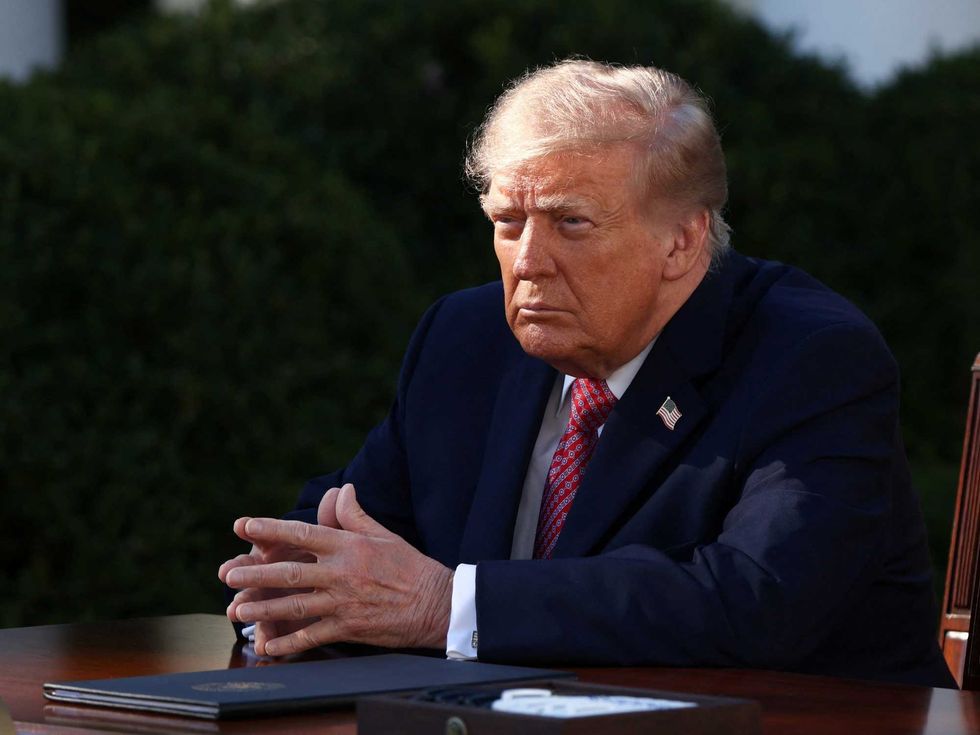
US President Donald Trump attends a signing ceremony of an executive order on women's health, spearheaded by first lady Melania Trump, in the Rose Garden at the White House in Washington, DC, US, October 19, 2026. REUTERS/Kevin Lamarque

President Donald Trump is weighing another major military offensive against Iran, but some members of his own administration are questioning the intelligence behind the push, according to new reports.
Israeli Prime Minister Benjamin Netanyahu sent Mossad chief Roman Gofman to Washington last week, and he showed Trump officials intelligence suggesting Iran is advancing a chemical weapons program, reported the Times of Israel.
That publication cited new reporting from The New York Times and Axios that shows Netanyahu reportedly wants the U.S. to join Israel in a limited airstrike campaign lasting four to seven days, but not everyone is convinced by the claims supporting those actions.
Some in the administration believe the Israeli intelligence is “driven by an agenda,” Axios reported, pointing to Netanyahu’s political worries during Israel’s transition after last month’s election.
The New York Times reported that U.S. intelligence officials have “evidence of stepped-up efforts” by Iran to “bolster its chemical and biological weapon capacities,” but the “prevailing view” is that Tehran wouldn’t use those weapons first and is instead trying to deter large-scale attacks.
Trump seemed to be leaning in anyway, telling Fox News on Wednesday that there’s an “indication that Iran is looking at gas and they’re looking at … the biological weapons.”
That marks a sharp turn from last week, when Trump called another U.S. offensive “quite unlikely.” At the time, he appeared to be heeding Gulf allies, who prefer economic pressure over a renewed war that has made them targets.
Possible targets include Pickaxe Mountain, a suspected underground nuclear site that U.S. and Israeli strikes have not yet hit, Axios reported. Bridges, power plants and Iran’s military and civilian leadership could also be on the list.
“Our economic pressure campaign is devastating Iran to such an extent that the president does not have any need to conduct major combat operations,” a U.S. official told Axios. “However, President Trump has all options at his disposal to ensure that Iran can never have a nuclear weapon.”
The Pentagon and CIA declined to comment.
It’s unclear how more airstrikes would force Iran to fully reopen the Strait of Hormuz or give up its nuclear ambitions, as the Times of Israel noted, since earlier offensives didn’t.
Before the war began Feb. 28, nearly a third of the world’s oil moved through the strait, and the disruption has sent energy prices climbing.
The deliberations come as Republicans reel from steep midterm losses that Vice President JD Vance has blamed on the war. Trump has acknowledged the political cost but insisted that if he had it to do again, “the answer is yes.”
Trump has also privately vented to aides about Vance, The New York Times reported.
Vance had blamed the war for the GOP’s midterm losses, and Trump reportedly said Vance should have added that launching it was still the right call.
Last week, as Vance reportedly tried to restart direct talks with Tehran, Trump reassigned him to give “his complete and total attention” to domestic anti-fraud efforts. Trump has also lavished praise on Secretary of State Marco Rubio, a staunch defender of the war, and floated him as a strong 2028 contender.
Report typos and corrections to corrections@rawstory.com.
For customer support contact support@rawstory.com.