A former senior adviser to President Barack Obama is taking down the logic by President Donald Trump's campaign that having COVID-19 suddenly makes him the best person to handle the virus.
Dan Pfeiffer called the idea absurd, noting it's "like picking your airplane pilot because he has experience crashing."
His followers replied with agreement, saying that it's part of Trump's 2020 reelection campaign philosophy of reelecting him to fix all of the things that he's broken.
Trump has obviously become an expert in contracting COVID-19 by ignoring his own task force rules, while Biden has, thus far, been the expert in not contracting COVID-19 by following CDC guidelines.
McEnany, who has been testing herself since Thursday, finally tested positive Monday upon arriving at the White House. Despite extensive exposure to the virus, McEnany worked at the White House over the weekend, saying that she is considered "essential" and came up "negative" multiple times. So, she was considered "safe."
Experts explain that it's important to self-quarantine for 14 days after exposure because it's unknown at what point in the process the virus takes hold and can continue to infect others.
Virologist K. Taylor explained as much in a thread where she noted, "we do not yet know what the infectious dose (how many virus particles you need to become infected) is so I’m going to use hypothetical numbers for the sake of this explanation."
She said that the most common test is the PCR test, which is the nasal swab. It can detect the virus RNA "up to a certain threshold. The test the White House has been using is the rapid test which detects virus proteins. Both meant to be surrogate [markers] for infection."
"Let’s say PCR requires a minimum of 1,000 particles to be detected and antigen test requires 1.5k," she said, noting that these numbers are arbitrary and only being used to explain how the virus is detected.
"On day 0 when I contract SARS-CoV2 there are 10 particles so I would not test positive," she explained. "Let’s say for every 1 particle it produce[s] 5 more particles every 24 hours that means I wouldn’t be at detectable levels until day 3 for PCR and day 5 for antigen test."
That would mean that McEnany, Hope Hicks, even President Donald Trump could have the virus but still be testing negative. It's also why doctors are testing former Vice President Joe Biden multiple times.
"Let’s also say that I start shedding at 600 virus particles. That means at some point on day 2 I start shedding virus and being able to infect other people," Dr. Taylor continued. "I’m asymptomatic until I have 4K particles (reminder, made up numbers). So I’m walking around asymptotic, shedding virus and not wearing a mask because I tested negative day 1 and day 2. This is why a negative test is only good for one day."
She noted it's also why people need to be wearing masks despite being tested. Her example also doesn't even take into account the antigen test, which can be inaccurate and isn't meant to be used by asymptomatic people.
"In real life, we know the incubation period can be 2-12 days," she closed. "So until you get to the last day with a negative test you can still be infected."
It's also why Biden still isn't in the clear, despite his three negative tests. Indeed, it's also why anyone who attended the Rose Garden super-spreader event at the White House should be tested frequently and why they should all have been wearing masks, she explained.
An astounding 20,000 chairs were set up on the National Mall in Washington, D.C., on Sunday as President Donald Trump remained recovering in his hospital bed with the coronavirus.
Every chair represents ten people who have died from a global pandemic the world has faced for the past eight months. While Trump, Fox News, and many Republicans denied the severity of the virus, and continue to ignore the importance of social distancing and wearing masks, Americans continue to contract the deadly disease and die. The lucky ones survive, only to be forever maimed by the impact it has on the heart, lungs, kidneys, or liver.
The Washingtonian filmed a video of the chairs, which is part of a project by COVIDRemember on a day designated as National COVID-19 Remembrance Day with events streamed throughout the country all day.
The year 2020 is the hottest in the Antarctic Peninsula in the past three decades, a study by the University of Santiago de Chile out Friday found.
Between January and August, temperatures reached between 2 and 3 degrees Celsius (35.6 and 37.4 degrees Fahrenheit) on the peninsula, which is the northernmost part of mainland Antarctica, according to researchers at the Chilean Air Force's Frei Base on King George Island.
Those temperatures are "more than 2 degrees Celsius over typical values," climatologist Raul Cordero said in a statement released by the Chilean Antarctic Institute (INACH).
"In the far northern tip of the Antarctic Peninsula, the average maximum temperature so far this year has been above 0 degrees. This had not happened for 31 years," Cordero added.
He called that fact "alarming," since it could indicate that the rapid rate of ocean warming observed in the area at the end of the 20th century is resuming.
The high Southern Hemisphere winter temperatures are in contrast, however, with those registered between August and September, which reached -16.8 degrees Celsius, the lowest since 1970.
The Antarctic Peninsula is the northernmost part of Antarctica, where there are scientific and military bases from several countries, including Argentina, Chile and Britain.
President Donald Trump’s announcement that he’s tested positive for COVID-19 is especially concerning because of his age. At 74 years old, Trump is solidly within an age group that’s been hit hard during the coronavirus pandemic.
People of all ages can get sick from SARS-CoV-2, the virus that causes COVID-19. But the severity of the illness tends to worsen the older the patient is. Through the end of September, 79% of COVID-19 deaths in the United States had been in patients over 65. These statistics are broadly similarin countries around the world.
What is it that puts older people at increased risk from viruses like SARS-CoV-2? Scientists think it’s primarily due to changes in the human immune system as we age.
Your body’s tools to fight off virus infections
As you go about your life, your body is constantly bombarded by pathogens – the bacteria, fungi and viruses that can make you sick. A human body is a great place for these organisms to grow and thrive, providing a nice warm environment with plenty of nutrients.
That’s where your immune system comes in. It’s your body’s defense system against these kinds of invaders. Before you’re even born, your body starts producing specialized B-cells and T-cells – types of white blood cells that can recognize pathogens and help block their growth.
During an infection, your B-cells can proliferate and produce antibodies that grab onto pathogens and block their ability to spread within your body. T-cells work by recognizing infected cells and killing them. Together they make up what scientists call your “adaptive” immune system.
Maybe your physician has checked your white blood cell levels. That’s a measurement of whether you have more B-cells and T-cells in your blood than usual, presumably because they’re fighting infection.
When you’re very young, you don’t have a lot of these B- or T-cells. It can be a challenge for your body to control infection because it’s simply not used to the job. As you mature, your adaptive immune system learns to recognize pathogens and handle these constant invasions, allowing you to fight off infection quickly and effectively.
While white blood cells are powerful people-protectors, they’re not enough on their own. Luckily, your immune system has another layer, what’s called your “innate” immune response. Every cell has its own little immune system that allows it to directly respond to pathogens quicker than it takes to mobilize the adaptive response.
The innate immune response is tuned to pounce on types of molecules that are commonly found on bacteria and viruses but not in human cells. When a cell detects these invader molecules, it triggers production of an antiviral interferon protein. Interferon triggers the infected cell to die, limiting infection.
Another type of innate immune cell, called a monocyte, acts as a sort of cellular bouncer, getting rid of any infected cells it finds and signaling the adaptive immune response to shift into gear.
The innate and adaptive immune systems can act together as a fine-tuned machine to detect and clear out pathogens.
Older immune systems are weaker
When a pathogen invades, the difference between illness and health is a race between how fast the pathogen can spread within you and how fast your immune response can react without causing too much collateral damage.
As people age, their innate and adaptive immune responses change, shifting this balance.
As you age, the reduced “attention span” of your innate and adaptive immune responses make it harder for the body to respond to viral infection, giving the virus the upper hand. Viruses can take advantage of your immune system’s slow start and quickly overwhelm you, resulting in serious disease and death.
Social distancing is vital
Everyone, no matter their age, needs to protect themselves from infection, not just to keep themselves healthy but also to help protect the most vulnerable. Given the difficulty older individuals have in controlling viral infection, the best option is for these individuals to avoid becoming infected by viruses in the first place.
COVID-19 is caused by a respiratory virus, which can spread via tiny virus-containing droplets. Larger droplets fall to the ground quickly; very small droplets dry up. Mid-range droplets are of most concern because they can float in the air for a few feet before drying. These droplets can be inhaled into the lungs.
Keeping at least 6 feet away from other people helps significantly reduce your chance of being infected by these aerosol droplets. But there’s still the possibility for virus to contaminate surfaces that infected people have touched or coughed on. Therefore, the best way to protect vulnerable older and immunocompromised people is to stay away from them until there is no longer a risk. By stopping the spread of SARS-CoV-2 throughout the whole population, we help protect those who have a harder time fighting infection.
Astronomers have discovered six galaxies ensnared in the cosmic "spider's web" of a supermassive black hole soon after the Big Bang, according to research published Thursday that could help explain the development of these enigmatic monsters.
Black holes that emerged early in the history of the Universe are thought to have formed from the collapse of the first stars, but astronomers have puzzled over how they expanded into giants.
The newly discovered black hole -- which dates from when the Universe was not even a billion years old -- weighs in at one billion times the mass of our Sun and was spotted by the European Southern Observatory (ESO).
Scientists said the finding helps provide an explanation for how supermassive black holes such as the one at the centre of our Milky Way may have developed.
This is because astronomers believe the filaments trapping the cluster of galaxies are carrying enough gas to "feed" the black hole, enabling it to grow.
"The cosmic web filaments are like spider's web threads," said Marco Mignoli, an astronomer at the National Institute for Astrophysics (INAF) in Bologna who led the research, which was published in the journal Astronomy & Astrophysics.
"The galaxies stand and grow where the filaments cross, and streams of gas -- available to fuel both the galaxies and the central supermassive black hole -- can flow along the filaments."
Mignoli said that until now there had been "no good explanation" for the existence of such huge early black holes.
- 'Tip of the iceberg' -
Researchers said the web structure may have formed with the help of dark matter -- thought to attract huge amounts of gas in the early Universe.
"Our finding lends support to the idea that the most distant and massive black holes form and grow within massive dark matter halos in large-scale structures, and that the absence of earlier detections of such structures was likely due to observational limitations," said co-author Colin Norman of Johns Hopkins University.
The entire web is over 300 times the size of the Milky Way, according to a statement from ESO.
But it said the galaxies are also some of the faintest that current telescopes can spot, adding the discovery was only possible using the largest optical telescopes available, including ESO's Very Large Telescope in Chile's Atacama Desert.
"We believe we have just seen the tip of the iceberg, and that the few galaxies discovered so far around this supermassive black hole are only the brightest ones," said co-author Barbara Balmaverde, an astronomer at INAF in Torino, Italy.
The research is the latest to try and illuminate the mysterious formation of these cosmic monsters, which are so dense that not even light can escape their gravitational pull.
In September, two consortiums of some 1,500 scientists reported the discovery of GW190521, formed by the collision of two smaller black holes.
What scientists observed were gravitational waves produced more than seven billion years ago when they smashed together, releasing eight solar masses worth of energy and creating one of the most powerful events in the Universe since the Big Bang.
At 142 solar masses, GW190521 was the first "intermediate mass" black hole ever observed.
Scientists said the finding challenges current theories on the formation of supermassive black holes, suggesting it could be through the repeated merger of these mid-sized bodies.
The Pasteur Institute in the northern French city of Lille has confirmed the discovery of a “very promising” drug in the fight against the coronavirus pandemic, without naming it. FRANCE 24 spoke to the institute's director-general about the potential new cure ahead of the first clinical trials.
Hope in the time of Covid-19. As infection rates climb in many European countries, including France, the Pasteur Institute in Lille recently confirmed the discovery in June of a drug molecule that has shown promise as a therapeutic treatment against the virus.
Like hydroxychloroquine — which was controversially touted as a possible treatment early on in the pandemic — it is not a new medicine, but one that has been used in the past to treat other conditions. It’s name has been kept a closely guarded secret, largely to avoid the same media frenzy that surrounded hydroxychloroquine, before it was largely discredited.
The unnamed drug has already undergone a number of laboratory studies, which found that it demonstrated “considerable power against the virus,” according to Dr. Benoît Deprez, scientific director of the Pasteur Institute in Lille.
The drug is expected to begin early clinical trials — which could cost an estimated €5 million — this winter, before being approved for use in patients with confirmed Covid-19 diagnoses. FRANCE 24 spoke with the director-general of the Pasteur Institute in Lille, Dr. Xavier Nassif, about the research centre’s potential “discovery”.
FRANCE 24: Can you explain a little about the drug discovered by the Pasteur Institute in Lille?
Dr. Xavier Nassif: It was discovered through drug repositioning [or when a laboratory investigates whether an existing medicine can be used for new therapeutic purposes]. We had the opportunity to access a bank of 2,000 drug molecules at the beginning of the pandemic. These 2,000 molecules were then repurposed. Many were identified as active, but at fairly high doses compared with the rates at which they could be used.
The molecule that stood out is not only active, but more importantly capable of blocking the virus from replicating in cells at rates compatible with normal human use. What’s more, this drug, which has been in use for years, has very few side effects and is generally well tolerated. Which makes it a strong candidate. Further laboratory studies have shown that it blocks the virus from replicating in several types of cells — including in primitive human pulmonary cells.
All of these tests were done in vitro — or in a laboratory — so we’re being cautious, because we still have to confirm the medicine’s efficiency in vivo, meaning whether the molecule is capable of blocking replication as efficiently in humans.
Does this discovery represent a serious hope in the fight against coronavirus?
If we show that this molecule can block viral replication in humans, it is ready for immediate use. It’s a drug with several characteristics: it’s already been given to humans without too many side effects, and it can be administered enterally [or through the digestive tract], instead of through subcutaneous or intravenous routes. Clinical trials will tell us what are the best indications for use.
This would prevent subjects from becoming severely ill once infected. It could also prevent those who come into contact with the subject from becoming carriers of the virus. The drug, when given to asymptomatic patients, could also prevent them from secreting the virus over long periods of time, therefore reducing quarantine. The results of these clinical trials will help us to determine the exact uses of the drug and the eventual impact on how the epidemic is managed.
If the clinical trials are a success, will it be possible to mass produce the drug at low cost?
The molecule we’re talking about isn’t very expensive. It will be up to the manufacturer to see what can be done. We’ve already contacted them to let them know about our discovery. They are very helpful, very cooperative, and I think that the maximum will be done to make this medicine available. In the event that this drug is very efficient and needs to be distributed on a mass scale, measures should be taken at the manufacturing level to respond to the demand.
Will you publish the results of your clinical trials in a scientific journal?
Of course we will. First, we’re going to try to demonstrate the drug’s efficacy in vivo using a macaque monkey as a test subject. If successful, we will of course publish the results. We’re impatient to start animal trials. If all goes well, they should begin in November.
Afterwards, we hope to begin human trials this winter, once we have the necessary authorizations. It’s likely that success using monkeys will speed up the possibility of progressing to human trials.
What is needed before you can start clinical trials?
Clinical trials are expensive. We hope that the communication surrounding our discovery will help us to raise funds from both public and/or private donors. Right now, what we need is money.
This article was adapted from the original in French by Rachel Holman.
Robert Murray, former CEO of Murray Energy, filed for Black lung benefits after fighting regulations for the disease.
According to West Virginia Public Broadcasting reported on the filing at the Department of Labor Wednesday, recalling that Murray and his company fought mine safety regulations aimed at protecting those in the field from the disease.
“I founded the company and created 8,000 jobs there until the move to end coal use. I am still chairman of the board,” he wrote on the form, which was obtained by the Ohio Valley ReSource, a regional journalism collaborative with WVPB. “We’re in bankruptcy, and due to my health could not handle the president and CEO job any longer.”
Murray, who uses an oxygen tank, said that he is still in the early stages of the disease and he's consulting with experts "to determine the party potentially responsible for paying out the associated benefits." The Labor Department requires such information to define liability.
The claim says that the 80-year-old Murray is "near death."
“During my 63 years working in underground coal mines, I worked 16 years every day at the mining face underground and went underground every week until I was age 75,” Murray said in the claim.
“It's idiopathic pulmonary fibrosis. IPF, and it is not related to my work in the industry. They've checked for that,” Murray said in an interview with NPR. “And it's not — has anything to do with working in the coal mines, which I did for 17 years underground every day. And until I was 76, I went underground twice a week.”
Murray has been the source of jeers from HBO host John Oliver, who fought a lawsuit against Murray for years, prompting an extensive episode on SLAPP suits and that ended with a fiery musical number, kickline, singing lawyers and squirrel barbershop quartet.
"North American Coal Corporation is named as one potentially liable party in Murray’s claim for the benefits," the sort said, citing the documents from the claim. Murray said that he was employed there from May 1957 to October 1987 "where he ascended through its ranks, first as a miner before taking on the role of president."
Ice loss from Greenland's massive ice sheet will cause sea levels to rise more during the 21st century than they have during any 100-year period in the last 12,000 years, even if global warming is held in check, scientists said Wednesday.
The study -- based on ice core data and models and published in the journal Nature -- is the first to painstakingly reconstruct Greenland's ice loss record over the entire course of the Holocene, the geological epoch that has allowed civilization to flourish.
It found that if greenhouse gas emissions continue unabated, the kilometers-thick ice block will shed some 36 trillion tonnes of mass from 2000 to 2100, enough to lift the global ocean waterline by 10 centimeters.
Until the late 1990s, Greenland's ice sheet was roughly in balance, gaining as much mass through snowfall as it lost in summer from crumbling glaciers and melt-off.
But accelerating climate change has destroyed that balance, with the net loss flowing into the north Atlantic.
The northern hemisphere's only ice sheet ultimately holds enough frozen water to raise seas by seven meters.
If it were to pass a temperature "tipping point" into irreversible decline -- a threshold that could be as low as two degrees Celsius above preindustrial levels -- the ice sheet would likely take thousands of years to melt away, scientists say.
But even in the short term, increases in sea level measured in tens of centimeters will devastate coastal communities around the world.
Areas currently home to 300 million people -- mostly in poorer nations -- will be vulnerable by 2050 to regular flooding from storm surges, earlier research has shown.
- 'Course correction needed -
Last year, Greenland cast off more than 500 billion tonnes of ice and meltwater -- 40 percent of total sea level rise in 2019 and the most in a single year since satellite records began in 1978.
Unless humanity dramatically ratchets down the carbon pollution caused by burning fossil fuels, such levels could become the "new normal", said lead author Jason Briner, a professor of geology at the University of Buffalo in New York.
"No matter what the future carbon emissions are going to be, the Greenland ice sheet will lose more ice this century than even during the warmest of times during the past 12,000 years," he told AFP.
"But it also gives me hope to know that humanity has a say in the future of Greenland and global sea levels."
The first single, continuous record of Greenland's ice sheet loss took five years to assemble and required the combined efforts of ice core scientists, climate modelers, remote sensing experts and palaeoclimate researchers.
The 12,000-year timeline makes it possible to better separate natural fluctuations in the ice block's mass balance with the impact of manmade climate change.
Capping global warming at under two degrees Celsius -- the cornerstone target of the 2015 Paris Agreement -- would limit Greenland's contribution to sea level rise at about two centimeters this century, the study found.
But under any scenario, the ocean waterline will continue to rise in the 22nd century and beyond.
"No doubt we will see impactful sea level rise this century," Briner said. "But without a course correction now, the next century's sea level rise could be life-changing for much of the globe."
Until 2000, the main driver of sea level rise was melting glaciers and the expansion of ocean water as it warms.
But over the last two decades, the world's ice sheets atop Greenland and Antarctica have become the single largest source of sea level rise.
The UN's climate science advisory panel, the IPCC, has forecast sea level rise from all sources of just under a meter by century's end.
A team of US astrophysicists has produced one of the most precise measurements ever made of the total amount of matter in the Universe, a longtime mystery of the cosmos.
The answer, published in The Astrophysical Journal on Monday, is that matter consists of 31.5 percent -- give or take 1.3 percent -- of the total amount of matter and energy that make up the Universe.
The remaining 68.5 percent is dark energy, a mysterious force that is causing the expansion of the Universe to accelerate over time, and was first inferred by observations of distant supernovae in the late 1990s.
Put another way, this means the total amount of matter in the observable Universe is equivalent to 66 billion trillion times the mass of our Sun, Mohamed Abdullah, a University of California, Riverside astrophysicist and the paper's lead author told AFP.
Most of this matter -- 80 percent -- is called dark matter. Its nature is not yet known but it may consist of some as-yet-undiscovered subatomic particle.
The latest measurements correspond well with values previously found by other teams using different cosmological techniques, such as by measuring temperature fluctuations in the low-energy radiation left over from the Big Bang.
"This has been a long process over the course of 100 years where we're gradually getting more and more precise," Gillian Wilson, the study's co-author and a professor at UCR told AFP.
"It's just kind of cool to be able to make such a fundamental measurement about the Universe without leaving planet Earth," she added.
So how exactly do you weigh the Universe?
The team honed a 90-year-old technique that involves observing how galaxies orbit inside galaxy clusters -- massive systems that contain thousands of galaxies.
These observations told them how strong each galaxy cluster's gravitational pull was, from which its total mass could then be calculated.
- Fate of the Universe -
In fact, explained Wilson, their technique was originally developed by the pioneering astronomer Fritz Zwicky, who was the first person to suspect the existence of dark matter in galaxy clusters, in the 1930s.
He noticed that the combined gravitational mass of the galaxies he observed in the nearby Coma galaxy cluster was insufficient to prevent those galaxies from flying away from one another, and realized there must be some other invisible matter at play.
The UCR team refined Zwicky's technique, developing a tool they called GalWeight that determines more accurately which galaxies belong to a given cluster and which do not.
They applied their tool to the Sloan Digital Sky Survey, the most detailed three-dimensional maps of the Universe currently available, measuring the mass of 1,800 galaxy clusters and creating a catalog.
Finally, they compared the number of clusters observed per unit volume in their catalog against a series of computer simulations, each of which was fed a different value for the total matter of the Universe.
Simulations with too little matter had too few clusters, while those with too much matter had too many clusters.
The "Goldilocks" value they found fit the simulations just right.
Wilson explained that having a more precise measure of the total amount of matter of the Universe may take us a step closer to learning the nature of dark matter, because "we know just how much matter we should be looking for" when scientists carry out particle experiments, for example at the Large Hadron Collider.
What's more, "the total amount of dark matter and dark energy tells us the fate of the Universe," she added, with the current scientific consensus being that we are headed for a "Big Freeze" where galaxies move further and further apart, and the stars in those galaxies eventually run out of fuel.
The US biotech firm Regeneron said Tuesday its antibody cocktail against the coronavirus reduced viral load and recovery time in non-hospitalized Covid-19 patients during an early-stage clinical trial.
"We are highly encouraged by the robust and consistent nature of these initial data," said George Yancopoulos, the company's president and chief scientific officer.
"We have begun discussing our findings with regulatory authorities while continuing our ongoing trial," he added.
"We have begun discussing our findings with regulatory authorities while continuing our ongoing trial," he added.
The results related to the first 275 patients recruited into Regeneron's Phase 1 trial. The patients were randomized to receive either a low-dose, high-dose or placebo of the drug, and they were also classed by whether their bodies had mounted their own antibody response or not.
The greatest treatment benefit was seen in patients who had not mounted their own effective immune response, which suggested the drug, called REGN-COV2, could act as a substitute in the absence of naturally occurring antibodies, according to Yancopoulos.
Regeneron said it would recruit 1,300 patients for the next stages of the outpatient trial. It is also concurrently running late-stage trials for hospitalized Covid-19 patients and for the drug's potential use as a prophylaxis.
Antibodies are infection-fighting proteins made by the immune system that can bind to particular structures on the surfaces of pathogens and prevent them from invading cells.
Vaccines work by teaching the body to make its own antibodies, while scientists are also testing ready-made antibodies from the blood of recovered patients, called convalescent plasma.
But it is not possible to make convalescent plasma a mass treatment.
Researchers can also comb through the antibodies produced by recovered patients and select the most effective out of thousands, and then manufacture it at scale.
Regeneron uses a multi-antibody strategy to decrease the chances that the virus will mutate in order to evade the blocking action of a single antibody, an approach the company detailed in a recent study in Science.
Last year, a triple-antibody cocktail developed by Regeneron was shown to be effective against the Ebola virus.
Also on Tuesday, the biotech firm Moderna -- one of the frontrunners in the race to develop a Covid-19 vaccine -- reported results from the Phase 1 portion of its clinical trial that showed its drug was safe and generated a strong immune response among a group of 40 older adults.
Moderna's Phase 3 trial, the final phase before possible approval, is also underway and could report interim results by the end of the year.
Global warming is making the oceans more stable, increasing surface temperatures and reducing the carbon they can absorb, according to research published Monday by climate scientists who warned that the findings have "profound and troubling" implications.
Man-made climate change has increased surface temperatures across the planet, leading to atmospheric instability and amplifying extreme weather events, such as storms.
But in the oceans, higher temperatures have a different effect, slowing the mixing between the warming surface and the cooler, oxygen-rich waters below, researchers said.
This ocean "stratification" means less deep water is rising towards the surface carrying oxygen and nutrients, while the water at the surface absorbs less atmospheric carbon dioxide to bury at depth.
In a report published in the journal Nature Climate Change, the international team of climate scientists said they found that stratification globally had increased by a "substantial" 5.3 percent from 1960 to 2018.
Most of this stabilisation occurred towards the surface, and was attributed largely to temperature rises.
They said this process is also exacerbated by the melting of sea ice, meaning that more fresh water -- which is lighter than salt water -- also accumulates on the surface of the ocean.
Study co-author Michael Mann, a climate science professor at Pennsylvania State University, said in a commentary published in Newsweek that the "seemingly technical finding has profound and troubling implications."
These include potentially driving more "intense, destructive hurricanes" as ocean surfaces warm.
Mann also pointed to a reduction in the amount of CO2 absorbed, which could mean that carbon pollution builds up faster than expected in the atmosphere.
He warned that sophisticated climate models often underestimate ocean stratification and may also be underestimating its impact.
With warmer upper waters receiving less oxygen, there are also implications for marine life.
By absorbing a quarter of man-made CO2 and soaking up more than 90 percent of the heat generated by greenhouse gases, oceans keep the population alive -- but at a terrible cost, according to the Intergovernmental Panel for Climate Change (IPCC).
Seas have grown acidic, potentially undermining their capacity to draw down CO2. Warmer surface water has expanded the force and range of deadly tropical storms. Marine heatwaves are wiping out coral reefs, and accelerating the melt-off of glaciers and ice sheets driving sea level rise.
Last year, research published in the US Proceedings of the National Academy of Sciences calculated that climate change would empty the ocean of nearly a fifth of all living creatures, measured by mass, by the end of the century.
Billions of years ago, life on Earth was mostly just large slimy mats of microbes living in shallow water. Sometimes, these microbial communities made carbonate minerals that over many years cemented together to become layered limestone rocks called stromatolites. They are the oldest evidence of life on Earth. But the fossils don’t tell researchers the details of how they formed.
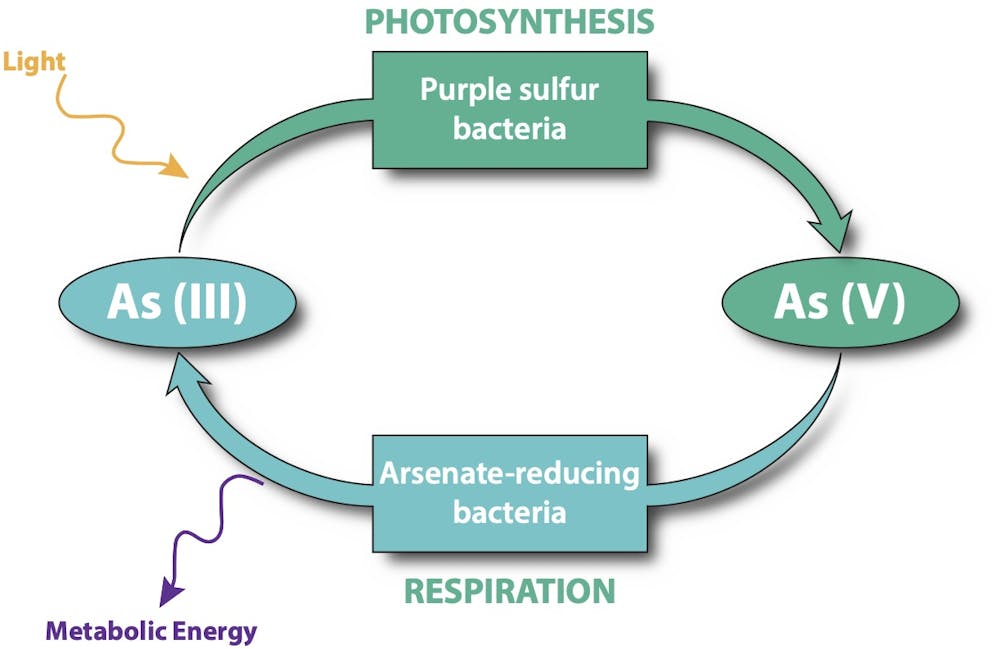
Our team of geologists, physicists and biologists had found hints in fossilized stromatolites that arsenic was the chemical of choice for ancient photosynthesis and respiration. But modern-day versions of these microbial communities still live on Earth today. Perhaps one of these used arsenic and could offer proof for our theory?
So we joined a surveying expedition of Chilean and Argentinian scientists to look for living stromatolites in the extreme conditions of the High Andes. In a small stream deep in the Atacama Desert, we found a big surprise. The bottom of the channel was bright purple and made of stromatolite-building microbial mats that thrive in the complete absence of oxygen. Just as the clues we’d found in ancient fossils suggested, these mats use two different forms of arsenic to perform photosynthesis and respiration. Our discovery offers the strongest evidence yet for how the oldest life on Earth survived in a pre-oxygen world.
Modern organisms make oxygen during photosynthesis and use it in respiration, but other elements, like arsenic, shown here as As, can work too.
For the last 2.4 billion years, photosynthetic organisms like plants and blue-green cyanobacteria have used sunlight, water and carbon dioxide to make oxygen and organic matter. In doing this, they turn energy from the Sun into energy to be used by life. Other organisms breathe in oxygen as they digest organic carbon, gaining energy for their respiration in the process.
Microbes in the ancient world also captured energy from sunlight, but their primitive machinery could not make oxygen from water or use oxygen for respiration. They needed another chemical to do this.
From a biochemical perspective, there are only a few possible candidates: iron, sulfur, hydrogen or arsenic. A lack of evidence in the fossil record and minuscule amounts of some of these chemicals in the primordial soup suggests neither iron, sulfur nor hydrogen would be likely candidates for the earliest form of photosynthesis. That leaves arsenic.
In 2014, our team found the first clue that stromatolites were produced by arsenic-assisted photosynthesis and respiration. We collected pieces of 2.72-billion-year-old stromatolites from the pre-oxygen world by drilling into an ancient reefs in the Outback of Australia. We then took these samples to France and cut them into thin slivers. By measuring the X-rays that came off these samples when we bombarded them with photons, we made a map of the chemical elements in the sample. If two kinds of arsenic are present in the map, then it is a sign that life was using arsenic for photosynthesis and respiration. In these relics of ancient life we found lots of both forms of arsenic, but not iron or sulfur.
This was tantalizing, but we wanted more proof: a modern analog to help prove our arsenic theory. No researchers had ever found a microbial mat community living in a place completely free of oxygen, but if we found one, it could help explain how the first stromatolites formed when our planet’s oceans and atmosphere were lacking oxygen.
Modern microbes, ancient analogs
The Atacama Desert in Chile is the driest place on Earth, flanked by volcanoes and exposed to extremely high UV radiation. It’s not too different from how the Earth looked 3 billion years ago and not exactly supportive of life as we know it. Here – with the help of a team that spanned four continents and seven countries – we found what we were looking for.
Or destination was Laguna La Brava, a very salty shallow lake deep into the harsh desert. A shallow stream, fed by a volcanic groundwater spring, led into the lake. The streambed was a unique, deep purple color. The color came from a microbial mat, thriving quite happily in waters that contained unusually high amounts of arsenic, sulfur and lithium, but missing one important element – oxygen.
Could these slimy purple blobs offer answers to an ancient question?
We cut a piece of the mat and looked for evidence of minerals. A drop of acid made the minerals fizz – carbonates! – this microbe community was forming stromatolites. So our team went to work, camping out at the site for days at a time.
We measured the chemistry of the water and the mat with our field equipment during day and night, summer and winter. Not once did we find oxygen, and back in the laboratory we confirmed that sulfur and arsenic were abundant. Looking through the microscope, we saw purple photosynthetic bacteria, but oxygen-producing cyanobacteria were eerily absent. We had also collected DNA samples from the mat and found genes for arsenic metabolism.
In the lab, we mixed up microbes from the mat, added arsenic and exposed the mix to sunlight. Photosynthesis was happening. The microbes used both arsenic and sulfur, but preferred the arsenic. When we added a minuscule amount of organic matter, a different arsenic compound was used for respiration and preferred over sulfur.
All that was left was to show that the two types of arsenic could be detected in the modern stromatolites. We went back to France, and using an X-ray emission technique made chemical maps from the Chilean samples. Every experiment we performed supported the presence of a vigorous arsenic cycle in the absence of oxygen in this unique modern stromatolite. This validates, beyond doubt, the idea that the fossil Australian samples that we studied in 2014 held evidence of an active arsenic cycle in deep time on our young planet.
Answers on Earth, leads for Mars
The harsh conditions of the Atacama are so similar to Martian and early Earth environments that NASA scientists and astrobiologists turn to the Atacama to answer questions about how life began on our planet, and how it might start elsewhere. The arsenic-cycling mats we discovered at Laguna La Brava offer strong clues to some of the most fundamental questions about life.
On board the Mars 2020 Perseverance rover that is currently hurtling through space is an instrument that can observe elements using the exact same process we used to make our element maps. Perhaps it will discover that arsenic is abundant in layered rocks on Mars, suggesting that life on Mars also used arsenic. For over a billion years, it did so on Earth. Under the harshest conditions life finds a way, and it is that way we are trying to understand.