A team of Spanish and Argentine paleontologists have discovered the remains of a dinosaur that lived 110 million years ago in the center of the country, the National University of La Matanza revealed Friday.
The remains came from three separate dinosaurs from the herbivorous group of sauropods, the best known of which are the Diplodocus and Brontosaurus. This new species has been named Lavocatisaurus agrioensis.
"We found most of the cranial bones: the snout, the jaws, a lot of teeth, also the bones that define the eye sockets for example and, in that way, we were able to create an almost complete reconstruction," said Jose Luis Carballido, a researcher at the Egidio Feruglio museum and the national council of scientific investigations.
Parts of the neck, tail and back were also found.
"Not only is this the discovery of a new species in an area where you wouldn't expect to find fossils, but the skull is almost complete," added Carballido.
The remains belonged to an adult of around 12 meters (39 feet) in length, and two minors of around six to seven meters.
The paleontologists say the dinosaurs moved around in a group and died together.
"This discovery of an adult and two juveniles also signifies the first record of a group displacement among the rebbachisaurus dinosaurs," said study lead author Jose Ignacio Canudo of Zaragoza University.
The area in which the fossils were found is unusual for dinosaurs as it would have been a desert with sporadic lakes in that era.
Agencia CTyS/AFP / HOPaleontologists found the remains of three separate members of the new species: an adult and two juveniles
Sauropods were the biggest creatures ever to walk the planet. It is believed that Supersaurus could reach up 33-34 meters in length and Argentinosaurus might have weighed up to 120 tons.
They were herbivorous quadrupeds with long necks and tails, massive bodies and small heads.
But the discovery in Neuquen, published in the scientific journal Acta Palaeontologica Polonica, remains a huge surprise.
"While one can imagine that this group of sauropods could have adapted to move in more arid environments, with little vegetation, little humidity and little water, it's an area in which you wouldn't be looking for fossils," said Carballido.
Back in November 1988, Robert Tappan Morris, son of the famous cryptographer Robert Morris Sr., was a 20-something graduate student at Cornell who wanted to know how big the internet was – that is, how many devices were connected to it. So he wrote a program that would travel from computer to computer and ask each machine to send a signal back to a control server, which would keep count.
The program worked well – too well, in fact. Morris had known that if it traveled too fast there might be problems, but the limits he built in weren’t enough to keep the program from clogging up large sections of the internet, both copying itself to new machines and sending those pings back. When he realized what was happening, even his messages warning system administrators about the problem couldn’t get through.
His program became the first of a particular type of cyber attack called “distributed denial of service,” in which large numbers of internet-connected devices, including computers, webcams and other smart gadgets, are told to send lots of traffic to one particular address, overloading it with so much activity that either the system shuts down or its network connections are completely blocked.
As the chair of the integrated Indiana University Cybersecurity Program, I can report that these kinds of attacks are increasingly frequent today. In many ways, Morris’s program, known to history as the “Morris worm,” set the stage for the crucial, and potentially devastating, vulnerabilities in what I and others have called the coming “Internet of Everything.”
Unpacking the Morris worm
Worms and viruses are similar, but different in one key way: A virus needs an external command, from a user or a hacker, to run its program. A worm, by contrast, hits the ground running all on its own. For example, even if you never open your email program, a worm that gets onto your computer might email a copy of itself to everyone in your address book.
In an era when few people were concerned about malicious software and nobody had protective software installed, the Morris worm spread quickly. It took 72 hours for researchers at Purdue and Berkeley to halt the worm. In that time, it infected tens of thousands of systems – about 10 percent of the computers then on the internet. Cleaning up the infection cost hundreds or thousands of dollars for each affected machine.
Morris wasn’t trying to destroy the internet, but the worm’s widespread effects resulted in him being prosecuted under the then-new Computer Fraud and Abuse Act. He was sentenced to three years of probation and a roughly US$10,000 fine. In the late 1990s, though, he became a dot-com millionaire – and is now a professor at MIT.
Rising threats
The internet remains subject to much more frequent – and more crippling – DDoS attacks. With more than 20 billion devices of all types, from refrigerators and cars to fitness trackers, connected to the internet, and millions more being connected weekly, the number of security flaws and vulnerabilities is exploding.
In October 2016, a DDoS attack using thousands of hijacked webcams – often used for security or baby monitors – shut down access to a number of important internet services along the eastern U.S. seaboard. That event was the culmination of a series of increasingly damaging attacks using a botnet, or a network of compromised devices, which was controlled by software called Mirai. Today’s internet is much larger, but not much more secure, than the internet of 1988.
Some things have actually gotten worse. Figuring out who is behind particular attacks is not as easy as waiting for that person to get worried and send out apology notes and warnings, as Morris did in 1988. In some cases – the ones big enough to merit full investigations – it’s possible to identify the culprits. A trio of college students was ultimately found to have created Mirai to gain advantages when playing the “Minecraft” computer game.
More organizations are also taking preventative action, adopting best practices in cybersecurity as they build their systems, rather than waiting for a problem to happen and trying to clean up afterward. If more organizations considered cybersecurity as an important element of corporate social responsibility, they – and their staff, customers and business partners – would be safer.
In “3001: The Final Odyssey,” science fiction author Arthur C. Clarke envisioned a future where humanity sealed the worst of its weapons in a vault on the moon – which included room for the most malignant computer viruses ever created. Before the next iteration of the Morris worm or Mirai does untold damage to the modern information society, it is up to everyone – governments, companies and individuals alike – to set up rules and programs that support widespread cybersecurity, without waiting another 30 years.
Scott Shackelford, Associate Professor of Business Law and Ethics; Director, Ostrom Workshop Program on Cybersecurity and Internet Governance; Cybersecurity Program Chair, IU-Bloomington, Indiana University
Dawn, a NASA spacecraft that launched 11 years ago and studied two of the largest objects in the asteroid belt, has ended its mission after running out of fuel, officials said Thursday.
Scientists have known for about a month that Dawn was essentially out of hydrazine, the fuel that kept the spacecraft's antennae oriented toward Earth and helped turn its solar panels to the Sun to recharge.
When the spacecraft missed scheduled communications with NASA's Deep Space Network on Wednesday and Thursday, the space agency formally declared it dead.
"The fact that my car's license plate frame proclaims, 'My other vehicle is in the main asteroid belt,' shows how much pride I take in Dawn," said mission director and chief engineer Marc Rayman at NASA's Jet Propulsion Laboratory.
"The demands we put on Dawn were tremendous, but it met the challenge every time. It's hard to say goodbye to this amazing spaceship, but it's time."
- "Astounding images" -
Thomas Zurbuchen, associate administrator of the NASA science mission directorate in Washington, hailed Dawn's "vital science" and "incredible technical achievements."
Dawn became the only spacecraft ever to orbit a cosmic body in the main asteroid belt between Mars and Jupiter in 2011 when it began circling the asteroid Vesta.
Then it moved on to the dwarf planet Ceres in 2015, becoming the first spacecraft to visit a dwarf planet and the only spacecraft to orbit one, NASA said.
The unmanned spacecraft has traveled 4.3 billion miles (6.9 billion kilometers) since launching in 2007.
It is expected to remain in orbit around Ceres for decades, but will no longer be able to communicate with Earth.
Zurbuchen said the scientific learning from Dawn's mission will go on.
"The astounding images and data that Dawn collected from Vesta and Ceres are critical to understanding the history and evolution of our solar system," he said.
Dawn's demise is the latest in a series of spacecraft troubles for NASA.
The Kepler space telescope ran out of fuel earlier this week, as expected, ending its nine and a half year mission of hunting for planets outside our solar system.
NASA's Opportunity rover is stalled on the surface of Mars following a major dust storm that struck in late May and June.
The Hubble Space Telescope and Chandra X-Ray Observatory experienced technical problems last month that have since been fully repaired.
The world's oceans have absorbed 60 percent more heat than previously thought over the last quarter of a century, scientists said Thursday, leaving Earth more sensitive still to the effects of climate change.
Oceans cover more than two thirds of the planet's surface and play a vital role in sustaining life on Earth.
According to their most recent assessment this month, scientists from the Intergovernmental Panel on Climate Change (IPCC) say the world's oceans have absorbed 90 percent of the temperature rise caused by man-made carbon emissions.
But new research published in the journal Nature used a novel method of measuring ocean temperature.
It found that for each of the last 25 years, oceans had absorbed heat energy equivalent to 150 times the amount of electricity mankind produces annually.
That is 60 percent higher than previous studies showed.
Whereas those studies relied on tallying the excess heat produced by known man-made greenhouse gas emissions, a team of US-based scientists focused on two gases found naturally in the atmosphere: Oxygen and carbon dioxide.
Both gases are soluble in water, but the rate at which water absorbs them decreases as it warms.
By measuring atmospheric oxygen and CO2 for each year, scientists were able to more accurately estimate how much heat oceans had absorbed on a global scale.
"Imagine if the ocean was only 30 feet (10 metres) deep," said Laure Resplandy, assistant professor of geosciences at Princeton and lead study author.
"Our data show that it would have warmed by 6.5 degrees Celsius (11.7 degrees Fahrenheit) every decade since 1991."
That compares with a IPCC estimate of a 4.0 C rise each decade.
Resplandy said the data showed mankind must once again revise down its carbon footprint, with emissions needing to fall 25 precent compared to previous estimates.
"The result significantly increases the confidence we can place in estimates of ocean warming and therefore helps reduce uncertainty," said Ralph Keeling, a geophysicist at the University of California-San Diego and co-author of the study.
The IPCC warns that drastic measures need taking in order to limit global warming to 1.5 Celsius by the end of the century but the world produced a record amount of carbon emissions in 2017.
A breakthrough treatment involving electrical stimulation of the spine has enabled paralysed patients to walk again, apparently reactivating nerve connections and providing hope for people even years after accidents.
A team including neurosurgeons and engineers used targeted electrical pulses to achieve the results, triggering individual muscles in a sequence, the way the brain would.
The pulses are produced by an implant placed over the spine in careful alignment with areas that control the muscles in the lower body.
And so far, the results are promising.
"This clinical trial has given me hope," said Gert-Jan Oskam, 35, who was told he would never walk again after a traffic accident in 2011.
After five months of treatment, he can now walk short distances even without the help of electrical stimulation.
It's the culmination of "more than a decade of careful research," Gregoire Courtine, a neuroscientist at the Swiss Federal Institute of Technology who helped lead the research, told AFP.
Previous trials have used so-called continuous electrical stimulation of the spine, which worked well in rats, but produced less impressive results in humans.
After several months of training with the targeted pulses however, "our three participants were able to activate their previously paralyzed muscles without electrical stimulation," said Courtine.
"The result was completely unexpected," he added, in a video released with the publication of the research in the journal Nature Thursday.
"They could even take a few steps overground without any support, hands-free. For me seeing this recovery was amazing."
- Reconnecting nerve pathways -
Footage from the study shows clearly the way the targeted stimulation differs from the continuous pulses.
With the targeted stimulation, a patient walks in an almost ordinary fashion, his feet rolling down and up as he steps.
The continuous stimulation, by contrast, produces jerkier movement, with his feet dragging and unbalancing him.
And the targeted pulsing, combined with a programme of extensive physiotherapy, was apparently able to reactivate nerve connections that became dormant when patients were injured.
David Mzee, 28, suffered full paralysis of his left leg after an accident in 2010, but after the five-month programme, he can walk for up to two hours with a walker using electrical stimulation, or take steps over shorter distances by himself.
The stimulation begins with a pulse directed at a muscle to prompt the patient to begin movement, for example a step.
Sensors at the feet detect the movement as the initial phase of a step and send additional targeted pulses to trigger the muscle movements required to complete the step, and repeat it.
At the same time, patients think about moving those muscles and stepping.
Because the neurons in the brain fire at almost the exact same time as the electrical pulses stimulate the muscles, the technique appears to eventually "reconnect" the brain and the muscles.
Patients can then command the muscle movement even without the electrical triggers.
- 'A lot of work to do' -
"It was incredible to see all these patients moving their legs without electrical stimulation," said Jocelyne Bloch, a neurosurgeon at the University Hospital of Lausanne, who helped lead the study.
In an independent evaluation, Chet Moritz, an associate professor at the University of Washington's rehabilitation medicine department, praised the work.
"The field of spinal cord injury is poised to take a giant leap forward in the treatment of what was until very recently considered incurable paralysis," he wrote.
Courtine warned however that it remained "very important to calibrate expectations," pointing out that all three patients still rely mostly on their wheelchairs.
The study also focused only on patients who had retained some feeling in their lower body.
Going forward, Courtine said he hoped to see the technique combined with biological treatments involving nerve repair.
He and Bloch have founded a start-up that will refine the treatment and test it on people shortly after spinal cord injuries, when the technique is likely to be more successful.
"There is still a lot of work to do to change the lives of these people," Courtine said.
As a clinical psychologist and educator, I am often asked to recommend a psychotherapist for people in need. These requests come with a sense of urgency to find the best possible therapist. Many people are at a loss over what to look for.
Here I offer an answer, not just to the question of what makes for a great therapist, but what else helps make therapy work. Decades of research on what improves psychotherapy outcomes yields surprising answers.
Of course, five per cent is not nothing and I’ll come back to what makes up these therapist differences. However, it is clear we need to look elsewhere to discover what else makes therapy work.
Understanding how clients make therapy work requires a drastic overhaul of the assumption that they passively respond to the ministrations of guru-like therapists. On the contrary, it is clients’ active participation in therapy through their involvement, learning and application of what they learn that leads to improvement.
For this to occur, it helps if clients are open to exploring their emotions and internal experiences and are willing to endure discomfort and make efforts to achieve change. This requires motivation; enhancing motivation prior to therapy improves outcomes.
Clients undergoing in-person therapy don’t do this work on their own but in collaboration with their therapist. The quality of this collaborative relationship is in itself an enormously important contributor to good therapy outcomes.
In a good collaboration, both therapist and client work at maintaining a positive relationship and need to continuously respond and adjust to the other, much like dance partners working in synchrony do.
Successful therapy involves collaboration and attunement.
(Shutterstock)
As it turns out, good therapists (I said I’d come back to this) are attentive to building just such a positive alliance and repairing it as needed. They are good at being responsive to clients’ evolving needs and wishes in treatment.
Finding a good therapist then becomes a matter of finding someone who listens well, empathizes, is responsive and can empower the client with hope and bravery to do the difficult work ahead.
The climate is changing before our eyes. News articles about imminent species extinctions have become the norm. Images of oceans full of plastic are littering social media. These issues are made even more daunting by the fact that they are literally global in scale.
In the face of these global environmental crises it can be hard to know where to start to help change the state of our planet. But in a paper published in the journal Sustainable Earth, we set out how to translate many of our global environmental issues into action at a more manageable level.
Our approach aims to chop global problems into digestible chunks that you – as an individual, a chief executive, a city councillor, or a national committee member – can tackle.
We call it “planetary accounting”, because it is about creating a series of environmental “budgets” that will stop us overshooting the planet’s natural boundaries. From that, we can then calculate everyone’s fair share, and hopefully in the process make it easier to visualise which individual, corporate or community actions will have a real environmental impact.
The planetary boundaries, developed in 2009, are a set of non-negotiable global limits for factors such as temperature, water use, species extinctions and other environmental variables. These aim to quantify how far we can push the planet before threatening our very survival.
The nine planetary boundaries are listed below; exceeding any of these limits puts us at risk of irreversible global damage. We are currently exceeding four, so it’s fair to say the situation is urgent.
Summary of the planetary boundaries.
Adapted from Steffen et al. 2015, Author provided
Despite providing important information about the health of our planet, the planetary boundaries fail to answer one very important question: what can we do about it?
The problem with the planetary boundaries is that they are limits for the environment, not for people. They cannot be easily related to human activities, nor do they make sense at smaller scales.
A national government would be hard-pressed to determine what a fair share of the world’s species extinctions might be. A commuter deciding whether to take the bus or drive to work doesn’t really know how her decision will affect the amount of carbon dioxide in the atmosphere. The planetary boundaries measure outcomes; they do not prescribe actions.
The ecological footprint – which estimates how many Earths would be required for a given level of human activity – has long been used as a tool for environmental policy and action. But many experts think this measure is too simplistic. How can a single statistic possibly capture the range and complexity of human impacts on our planet?
Planetary accounting
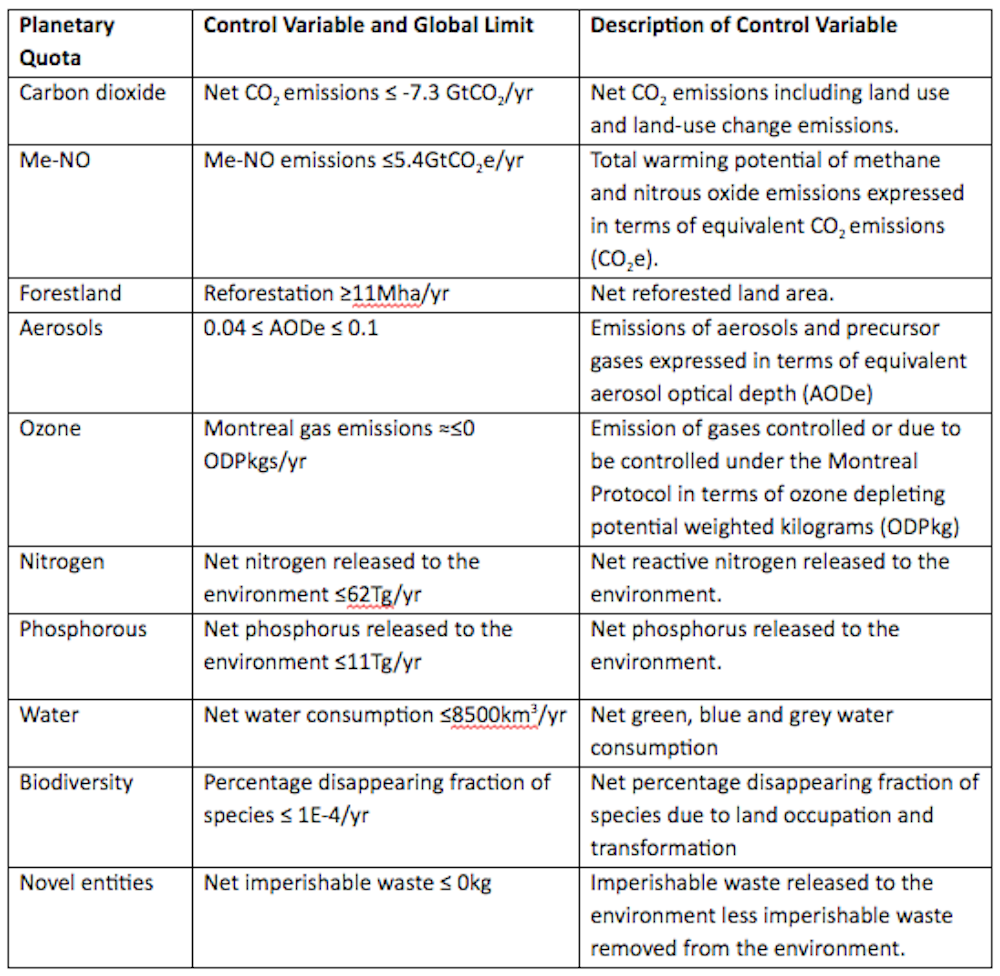
This is where planetary accounting comes in. It offers a new approach to understanding the global impacts of any scale of human activity. It takes the “safe operating space” defined by the planetary boundaries, and then uses these limits to derive a set of quotas that we can act on.
Using this approach, we have drawn up a set of ten global budgets for environmental factors, including carbon dioxide emissions, release of nitrogen to the environment, water consumption, reforestation, and so on.
These budgets can then be divided among the world’s population in easily quantifiable units. That way, nations, cities, businesses and even individuals can begin to understand what their fair share actually looks like.
If the planetary boundaries are a health check for planet Earth, then you can think of these quotas as the prescription for a healthy global environment.
The Planetary Quotas are global budgets for environmental pressures that can be divided and managed at different levels and areas of society.
Peter Newman/Kate Meyer, Author provided
To extend the health analogy, it’s rather like having a general checkup with a doctor, who might measure a range of variables such as your blood pressure, heart rate, weight and liver function. If any of these are outside the healthy range, the doctor might recommend a healthier diet, more exercise, or avoiding smoking or drinking too much.
Similarly, if we find we are exceeding our environmental fair share – say, by taking too much carbon-intensive transport, or eating too much nitrogen-intensive food – then we can begin to take action.
The planetary quotas.
Peter Newman/Kate Meyer, Author provided
Planetary accounting is designed to work at a range of scales. We could use it to inform anything from individual actions, to city planning targets, to corporate sustainability goals, to global environmental negotiations.
It could even be “gamified”, perhaps in the form of apps that let players compete with one another to live within their share of global environmental budgets. Or it could be used to draw up “planetary labels” similar to the nutritional information labels that help keep food companies honest and the public informed.
Planetary Facts labels could be used to disclose the critical environmental impacts of goods and services.
Peter Newman/Kate Meyer, Author provided
Planetary accounting won’t solve all the complex problems our planet faces. But it could make it easier to answer that all-important question: “What can I do to help?”
Perhaps one of the world’s best known fossils is Archaeopteryx. With its beautifully preserved feathers, it has long been regarded as the first bird in the fossil record, and is often called “the icon of evolution”. Only a handful of specimens have ever been found, its elusivity adding to its fascination.
But was it really the first bird – and could it really fly? Given that we now know birds descended from dinosaurs, was Archaeopteryx actually just another small dinosaur with a feathery covering?
My colleagues and I had the rare opportunity to examine an Archaeopteryx skeleton using one of the world’s most powerful synchrotrons, a type of particle accelerator rather like an X-ray machine but ten thousand billion times brighter than those in a hospital. We were able to see inside the rock and uncover fragments of bone that had never been seen before. What we discovered surprised us: this was an entirely new species of Archaeopteryx.
The first Archaeopteryx fossil was uncovered in the Jurassic limestones of Bavaria, in the summer of 1861, just two years after the publication of Darwin’s Origin of Species. It appeared to be one of Darwin’s predicted “missing links”, the link between reptiles and birds, specifically between dinosaurs and birds.
It certainly looked like a bird, with delicately preserved feathers on its wings and a fan-shaped tail. It also had a wishbone or “furcula”, just like you find in a roast chicken. And both of these features were thought at the time only to occur in birds. But Archaeopteryx also had some very reptilian features – a long, bony tail, and a jaw filled with very sharp teeth – and seemed to be part way between the two groups of animals.
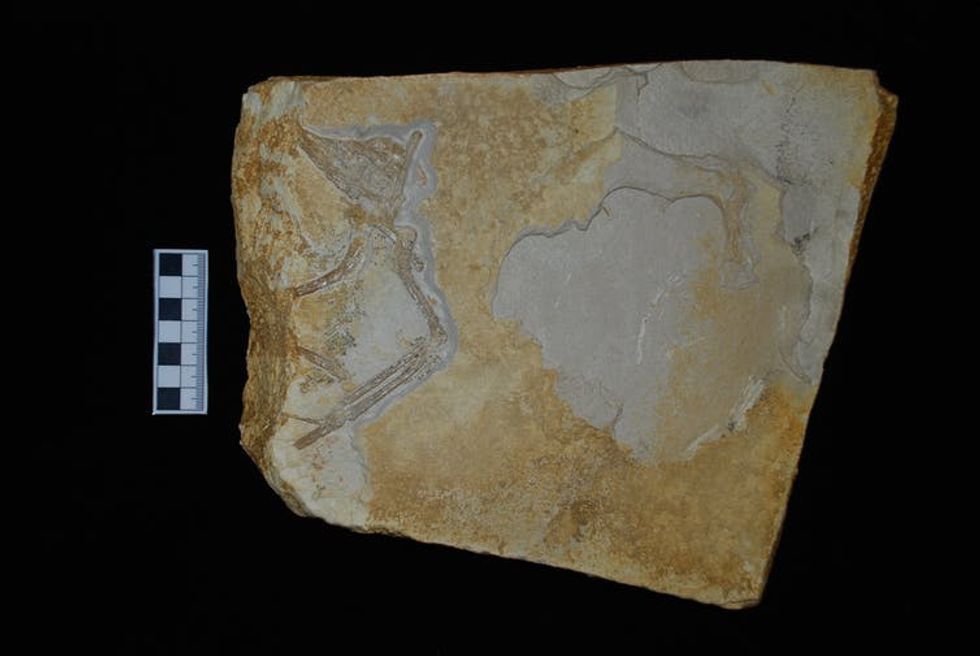
The ‘eighth specimen’.
John Nudds, Author provided
A second specimen was found in 1876 but Archaeopteryx fossils have generally remained elusive and we still have discovered only 12 specimens. One of these has been lost and several others are fragments.
Despite more than 150 years of study, we still have much to discover about this primitive bird. Much of the controversy surrounds the question of whether Archaeopteryx could fly, the consensus being that it was at best a “feeble flapper”.
The eighth specimen to be discovered was one of the least well-known. It was found by a private collector in a quarry near Daiting in Bavaria, Germany, in the early 1990s, and changed hands several times before being sold on cheaply to another private collector in the belief that it was a common pterosaur. It is rumoured that the finder, on realising what he had done, threw himself off the top of the quarry, as these specimens can change hands for millions of dollars.
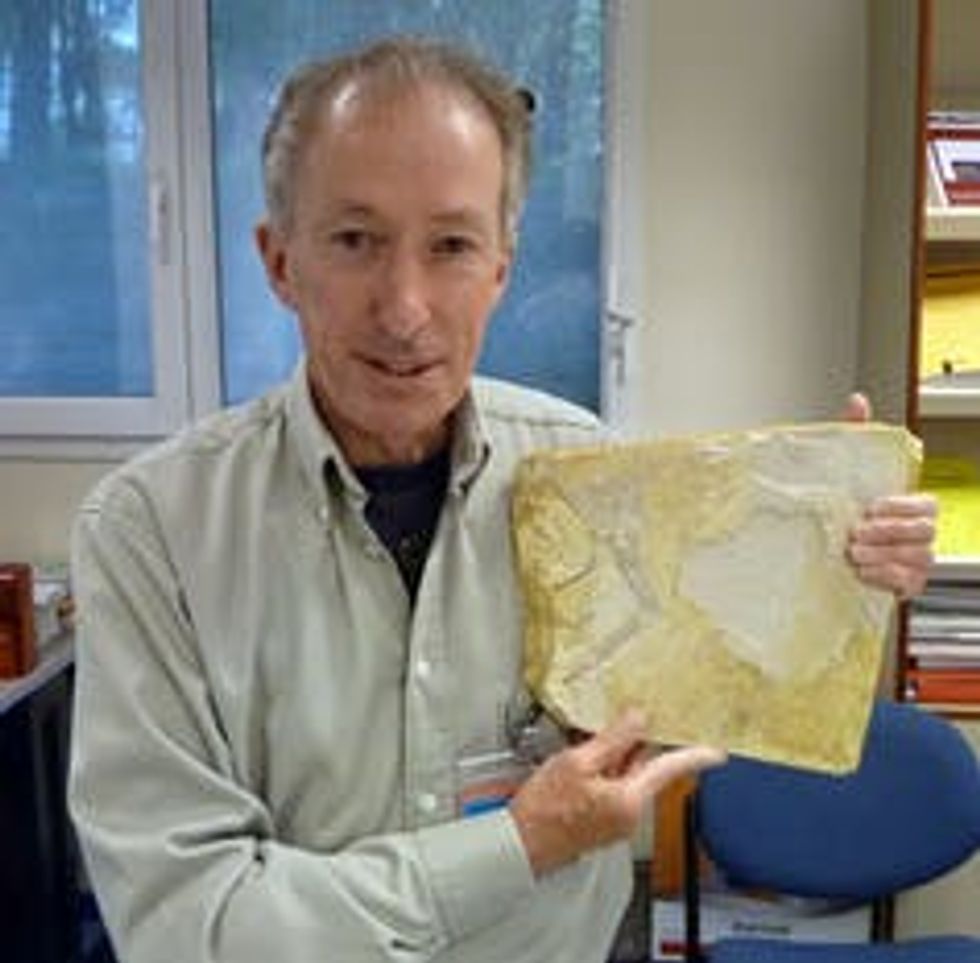
The new owner, perhaps feeling guilty, was very secretive about his purchase, and the scientific community was unaware of this specimen until 1996 (hence its nickname, “the phantom”) when a cast of the specimen was shown briefly at the Naturkundemuseum in Bamberg, Germany. Then, in 2009, dinosaur hunter Raimund Albersdörfer, also from Bavaria, purchased the specimen and in 2011 made it available to our research team for scientific study.
John Nudds with the fossil.
John Nudds, Author provided
It is not well preserved and we nicknamed it “the ugly bird”, for the bones had become disconnected after it died and were jumbled together and crushed. The lower half of the body was missing completely. But we took it to Grenoble, to the European Synchrotron Radiation Facility (ESRF), where we were able to perform a virtual dissection of the skeleton, and piece together fragments of bones that had been broken when the animal died 150m years ago.
All of the specimens of Archaeopteryx had been classified as a single species, Archaeopteryx lithographica, but this one seemed to be different. It had also been collected from a different layer in the rock record than the others, which had all come from the well-known Solnhofen Formation. Our specimen was collected from the Moernsheim Formation, which lies above the Solnhofen Formation and is considered to be around half a million years younger.
Closer to birds
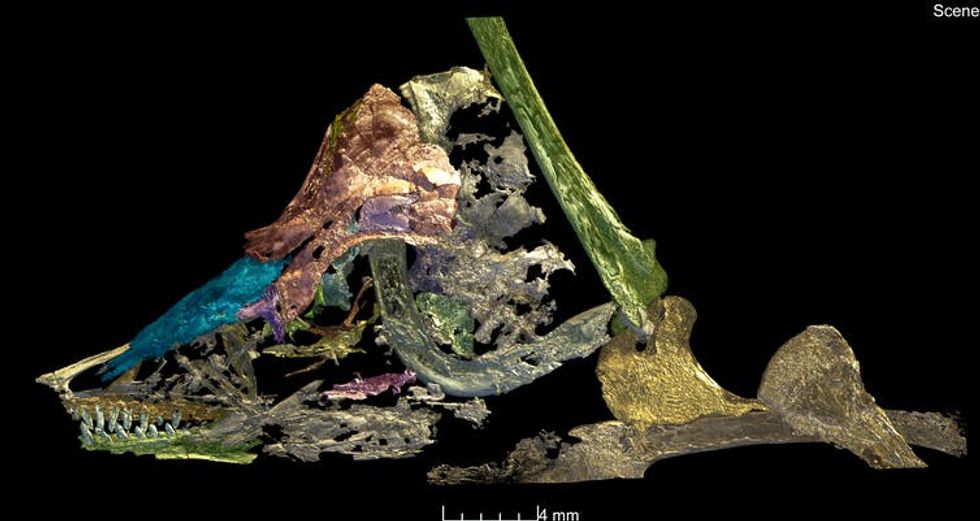
We first noticed that the skull bones were fused together. Then we spotted that the furcula had a knob-like extension, which in modern birds is an attachment for the powerful flight muscles. Neither of these features were seen in Archaeopteryx lithographica. An expanded opening in one of the bones of the shoulder-girdle (called the coracoid) suggested that a large nerve passed through this bone, again suggesting a more powerful wing stroke.
But our biggest surprise was when we noticed that the bones of the wrist were fused together – another feature of modern birds known as the “carpo-metacarpus”. This provided a rigid structure that would have allowed the wings to make a powerful downbeat.
A synchrotron scan helped reveal the fossil’s features.
Paul Tafforeau/ESRF, Author provided
Archaeopteryx lithographica possessed instead the flexible wrist seen in its dinosaur ancestors. It was obvious that our specimen was showing many of the characteristics seen in modern flying birds that were not seen in the “feebly flapping” Archaeopteryx lithographica. We had discovered a species new to science, and we named it Archaeopteryx albersdoerferi after its owner who had rescued it from obscurity.
Whenever a missing link is discovered, this merely creates two further missing links: what came before, and what came after. In this case, what came before Archaeopteryx was discovered in 1996 with the description of feathered dinosaurs in China. Our new species is what came after. It confirms Archaeopteryx as the first bird and not just one of a number of feathered theropod dinosaurs, as some researchers have suggested recently. Our research puts Archaeopteryx back on its perch as the first bird.
Your brain is an inexhaustible source of secure passwords – but you might not have to remember anything. Passwords and PINs with letters and numbers are relatively easily hacked, hard to remember and generally insecure. Biometrics are starting to take their place, with fingerprints, facial recognition and retina scanning becoming common even in routine logins for computers, smartphones and other common devices.
They’re more secure because they’re harder to fake, but biometrics have a crucial vulnerability: A person only has one face, two retinas and 10 fingerprints. They represent passwords that can’t be reset if they’re compromised.
Like usernames and passwords, biometric credentials are vulnerable to data breaches. In 2015, for instance, the database containing the fingerprints of 5.6 million U.S. federal employees was breached. Those people shouldn’t use their fingerprints to secure any devices, whether for personal use or at work. The next breach might steal photographs or retina scan data, rendering those biometrics useless for security.
When a person looks at a photograph or hears a piece of music, her brain responds in ways that researchers or medical professionals can measure with electrical sensors placed on her scalp. We have discovered that every person’s brain responds differently to an external stimulus, so even if two people look at the same photograph, readings of their brain activity will be different.
This process is automatic and unconscious, so a person can’t control what brain response happens. And every time a person sees a photo of a particular celebrity, their brain reacts the same way – though differently from everyone else’s.
We realized that this presents an opportunity for a unique combination that can serve as what we call a “brain password.” It’s not just a physical attribute of their body, like a fingerprint or the pattern of blood vessels in their retina. Instead, it’s a mix of the person’s unique biological brain structure and their involuntary memory that determines how it responds to a particular stimulus.
Making a brain password
A person’s brain password is a digital reading of their brain activity while looking at a series of images. Just as passwords are more secure if they include different kinds of characters – letters, numbers and punctuation – a brain password is more secure if it includes brain wave readings of a person looking at a collection of different kinds of pictures.
A range of visual stimuli generates the best brain password.
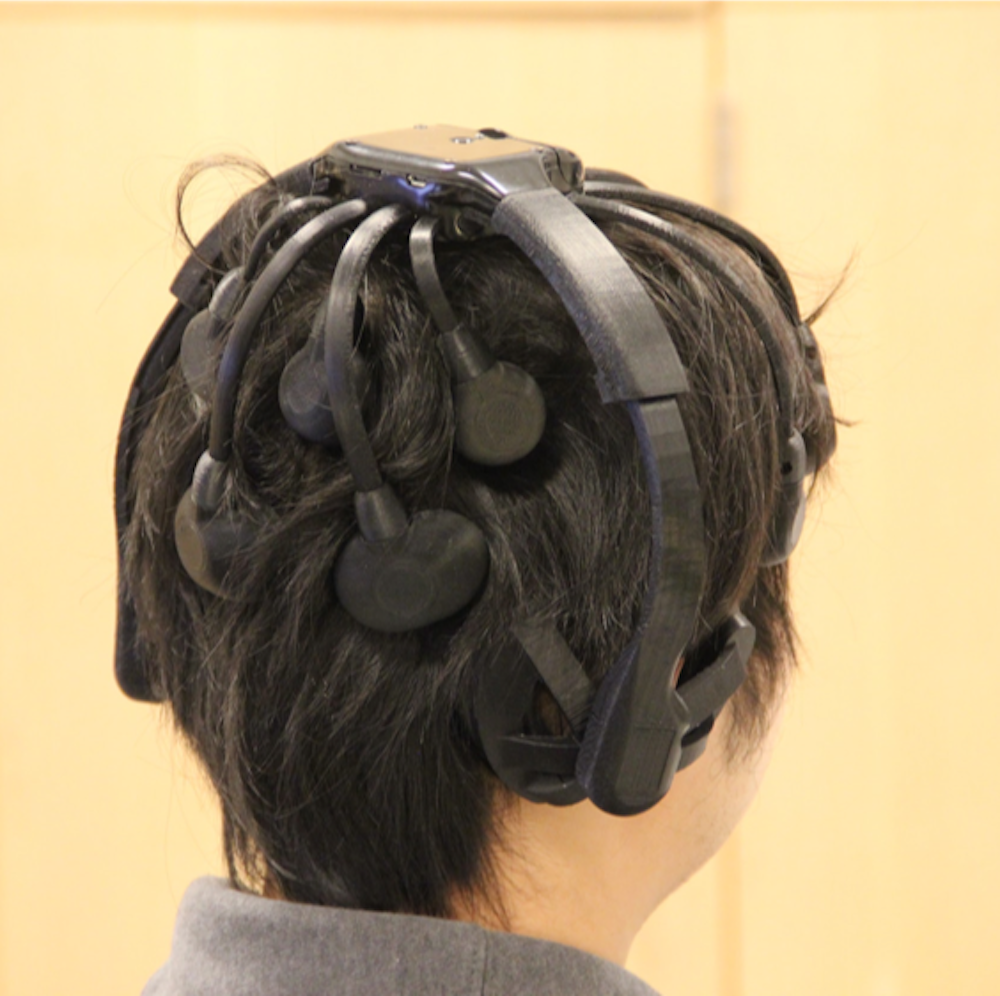
To set the password, the person would be authenticated some other way – such as coming to work with a passport or other identifying paperwork, or having their fingerprints or face checked against existing records. Then the person would put on a soft comfortable hat or padded helmet with electrical sensors inside. A monitor would display, for example, a picture of a pig, Denzel Washington’s face and the text “Call me Ishmael,” the opening sentence of Herman Meville’s classic “Moby-Dick.”
The sensors would record the person’s brain waves. Just as when registering a fingerprint for an iPhone’s Touch ID, multiple readings would be needed to collect a complete initial record. Our research has confirmed that a combination of pictures like this would evoke brain wave readings that are unique to a particular person, and consistent from one login attempt to another.
Later, to login or gain access to a building or secure room, the person would put on the hat and watch the sequence of images. A computer system would compare their brain waves at that moment to what had been stored initially – and either grant access or deny it, depending on the results. It would take about five seconds, not much longer than entering a password or typing a PIN into a number keypad.
After a hack
Brain passwords’ real advantage comes into play after the almost inevitable hack of a login database. If a hacker breaks into the system storing the biometric templates or uses electronics to counterfeit a person’s brain signals, that information is no longer useful for security. A person can’t change their face or their fingerprints – but they can change their brain password.
It’s easy enough to authenticate a person’s identity another way, and have them set a new password by looking at three new images – maybe this time with a photo of a dog, a drawing of George Washington and a Gandhi quote. Because they’re different images from the initial password, the brainwave patterns would be different too. Our research has found that the new brain password would be very hard for attackers to figure out, even if they tried to use the old brainwave readings as an aid.
Brain passwords are endlessly resettable, because there are so many possible photos and a vast array of combinations that can be made from those images. There’s no way to run out of these biometric-enhanced security measures.
Secure – and safe
As researchers, we are aware that it could be worrying or even creepy for an employer or internet service to use authentication that reads people’s brain activity. Part of our research involved figuring out how to take only the minimum amount of readings to ensure reliable results – and proper security – without needing so many measurements that a person might feel violated or concerned that a computer was trying to read their mind.
We initially tried using 32 sensors all over a person’s head, and found the results were reliable. Then we progressively reduced the number of sensors to see how many were really needed – and found that we could get clear and secure results with just three properly located sensors.
Three electrodes high on the back of a user’s head are enough to detect a brain password.
This means our sensor device is so small that it can fit invisibly inside a hat or a virtual-reality headset. That opens the door for many potential uses. A person wearing smart headwear, for example, could easily unlock doors or computers with brain passwords. Our method could also make cars harder to steal – before starting up, the driver would have to put on a hat and look at a few images displayed on a dashboard screen.
Other avenues are opening as new technologies emerge. The Chinese e-commerce giant Alibaba recently unveiled a system for using virtual reality to shop for items – including making purchases online right in the VR environment. If the payment information is stored in the VR headset, anyone who
uses it, or steals it, will be able to buy anything that’s available. A headset that reads its user’s brainwaves would make purchases, logins or physical access to sensitive areas much more secure.
Six young patients died and 12 others became sick following an outbreak of adenovirus at a rehabilitation center in Haskell, New Jersey, the state’s Health Department said on Tuesday.
Adenoviruses frequently cause mild illness, with cold-like symptoms, particularly in young children. But the children affected in this case have compromised immune systems, the health department said.
The 18 patients range in age from a toddler through young adulthood and most are under 18 years old, health department spokeswoman Nicole Kirgan said in an email. The department is not releasing exact ages of any patients because of Health Insurance Portability and Accountability Act (HIPAA) and privacy reasons, Kirgan said.
The Wanaque Center for Nursing and Rehabilitation, which includes a pediatrics center, has been instructed not to admit any new patients until the outbreak ends, the department said.
“This strain of virus tends to cause outbreaks in centers of communal living and has ... unfortunately led to deaths,” Dr. Shereef Elnahal, the state’s health department commissioner, said on Twitter. “We take this very seriously.”
Health department officials were at the center on Tuesday and also on Sunday and found minor hand-washing deficiencies, the department said. Health officials are working with the center on infection control issues.
The health department will continue an active on-site surveillance and has recommended measures to protect against the further spread of infection, New Jersey Governor Phil Murphy said on Twitter.
“Heartbroken that several children have lost their lives in an adenovirus outbreak in Haskell,” Murphy said.
After experiencing cases of adenovirus in its pediatric unit, the center notified government health agencies, including the Centers for Disease Control and Prevention, and is fully cooperating with them and has sought out their guidance, the Wanaque center said in a statement emailed by Rowena Bautista, administrator of the center.
“As a result, facility staff have diligently implemented all available infection control and prevention measures in order to protect the health and safety of the Wanaque Center’s residents,” center officials said.
The facility’s pediatrics center serves newborns to 22-year-olds who are “medically fragile” and provides an individualized program for each child, the center’s website said. From preschool through high school, children learn in classrooms that are handicapped accessible and set up for ventilator use, it said.
Haskell is located about 32 miles northwest of New York.
Reporting by Suzannah Gonzales in Chicago; editing by Bill Berkrot and Phil Berlowitz
Lysergic acid diethylamide was labelled a "problem child" by the man who discovered its hallucinogenic properties in 1943: as it turns 75, the drug known as LSD may now be changing its image.
The late Swiss chemist Albert Hofmann famously learned of LSD's psychedelic effects when he inadvertently took a small dose while doing lab work for pharmaceutical company Sandoz.
He wanted the drug to be medically researched, convinced it could be a valuable psychiatric tool and lead to a deeper understanding of human consciousness.
But through the 1960s, LSD became synonymous with counterculture and anti-authority protests.
By the early 1970s, it had been widely criminalised in the West, prompting Hofmann to publish his 1979 memoir, "LSD: My Problem Child".
The book, in which Hofmann sought to reassert LSD's potential medical benefits, is featured in an exhibition at the Swiss National Library in the capital, Bern, to mark 75 years since the discovery.
Hofmann died in 2008 at the age of 102 but he likely would have been pleased by a series of recent developments.
After decades as a medical outcast, LSD has attracted renewed clinical interest and there has been evidence that it can help treat anxiety and depression.
Such developments were what Hofmann was hoping for at the time of writing "My Problem Child".
"If we can better understand how to use it, in medical practice related to meditation and LSD's ability to promote visionary experiences under certain circumstances, then I think that this 'problem child' could become a prodigy," he wrote.
- Experimental research -
He had discovered LSD while working with a fungus called ergot, which attacks cereal grains like rye and had previously been used for a variety of medical purposes. At the time, Sandoz was using it to make migraine medication.
Hofmann unknowingly created LSD when he combined the main active agent in ergot -- lysergic acid -- with diethylamide. After accidentally ingesting a trace of LSD, he began to feel strange and later on deliberately took larger amounts to better understand the drug's effects.
In a bestselling book published in May entitled "How to Change Your Mind", the renowned American author Michael Pollan notes that LSD was the subject of widespread experimental research through the 1950s and 1960s and attracted the interest of leading psychiatrists.
But the situation changed.
"When Hofmann published his book in 1979, LSD was completely prohibited. There was no research," said Hannes Mangold, curator of the National Library exhibit called "Problem Child LSD turns 75."
"What's interesting is that for the last 10-15 years, research has once again been authorised and LSD as medicine has re-emerged."
- '1950s crowdsourcing' -
A non-profit organisation that has been at the forefront of driving the new wave of research is the California-based Multidisciplinary Association for Psychedelic Studies (MAPS) in Santa Cruz.
MAPS receives mostly private funding from large and small donors to support medical research into controlled substances.
Brad Burge, director of strategic communications at MAPS, told AFP that the organisation had supported a Phase II LSD study that found positive indications that the drug can successfully treat anxiety.
MAPS funded the Swiss psychiatrist Peter Gasser to conduct the Phase II study, which was published in 2014 and was the first controlled study of LSD in more than four decades.
"We kind of brought it full circle, back there (to Switzerland)," Burge said.
He said that in the early years following Hofmann's discovery, Sandoz had sent out batches of LSD to any interested researcher, hoping someone would define a clear, marketable purpose for the drug.
"It was 1950s crowdsourcing," Burge said.
- Richard Nixon -
In 1970, the administration of former US president Richard Nixon listed LSD as a "Schedule 1" narcotic, a classification given to drugs that Washington considers highly dangerous with no medical benefit.
MAPS and others have argued that the decision was more about politics than public health as Nixon was interested in cracking down on various groups with which LSD had -- accurately or not -- become linked, including hippies and opponents of the Vietnam war.
But the effect of the Schedule 1 designation was to bring serious research on LSD to a halt, both in the United States and among foreign laboratories worried about American reprisals, Burge said.
Mangold told AFP that the LSD research landscape was effectively dormant for nearly four decades and only began to change following a 2006 conference in the Swiss city of Basel to mark Hofmann's 100th birthday.
- A 'comeback' ?-
Scientists from numerous countries left the Basel symposium resolved to pursue new research and asked their regulatory authorities for permission to work with LSD, Mangold said.
Burge said that a key finding of the Phase II MAPS trial was that none of the 12 patients who participated had adverse reactions.
Given the risks of taking a powerful psychotropic in an unsupervised context, proving that LSD could be safely administered by medical professionals was essential to advancing further research, he said.
In the study, Gasser focused on patients diagnosed with life-threatening diseases, who participated in LSD-assisted psychotherapy during which they were guided in confronting anxieties and painful experiences while under the influence.
The qualitative results of the study showed participants experienced a reduction in anxiety, but found that further research was needed to define model medical uses for LSD.
"It's still early, but it is now conceivable that LSD could make a comeback as a (therapeutic) drug," Mangold said.
Coastal villages are washing into the Bering Sea, trees are sprouting in the tundra and shipping lanes are opening in an ocean that was once locked in ice. In Alaska, climate change isn’t a distant or abstract concern.
For everyone from the National Park Service to the military, from the oil industry to city managers to traditional hunters, adapting to climate change is the new reality in Alaska.
Almost 12 years ago, we embarked upon a new research effort at our state university. The idea was simple: Meet the needs of those planning for our state’s future by providing information on climate change that was local, relevant and scientifically valid.
First named the Scenarios Network for Alaska Planning (SNAP), we soon had to add the word “Arctic” to our name, because we realized that Canada and other countries from the polar region were as eager for long-term forecasts of climate change trends as Alaska was.
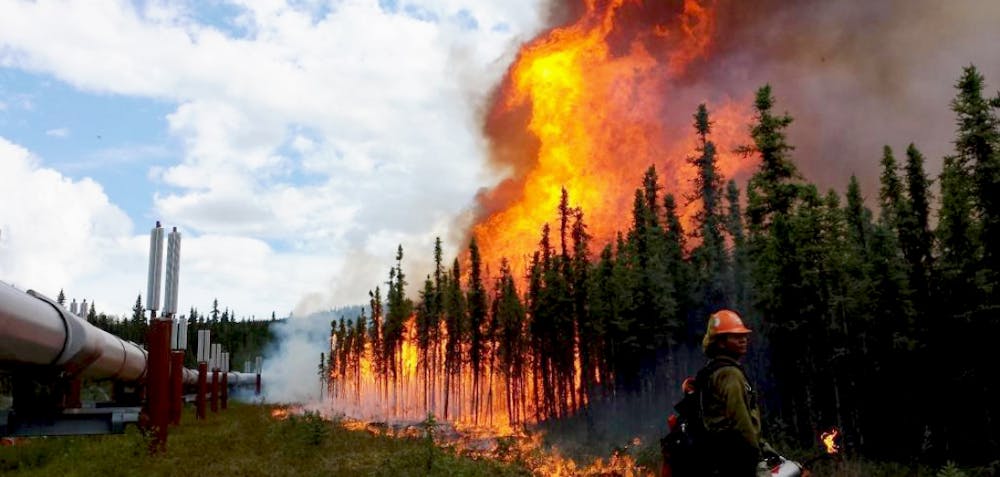
In the Arctic and sub-Arctic, climate change is accelerated and its effects are profound. This is primarily the result of what is known as the “albedo effect”: As we lose reflective ice and snow due to warming, more heat-absorbing dark ground and water are exposed. Thus, local warming gets even more extreme.
Just where climate change effects are extreme, data is often limited. Few weather stations offer long-term reliable histories. Populations are sparse. So we glean information from a variety of sources and combine that with historical data and the accumulated knowledge of people who live on the landscape. All point incontrovertibly to a warming environment.
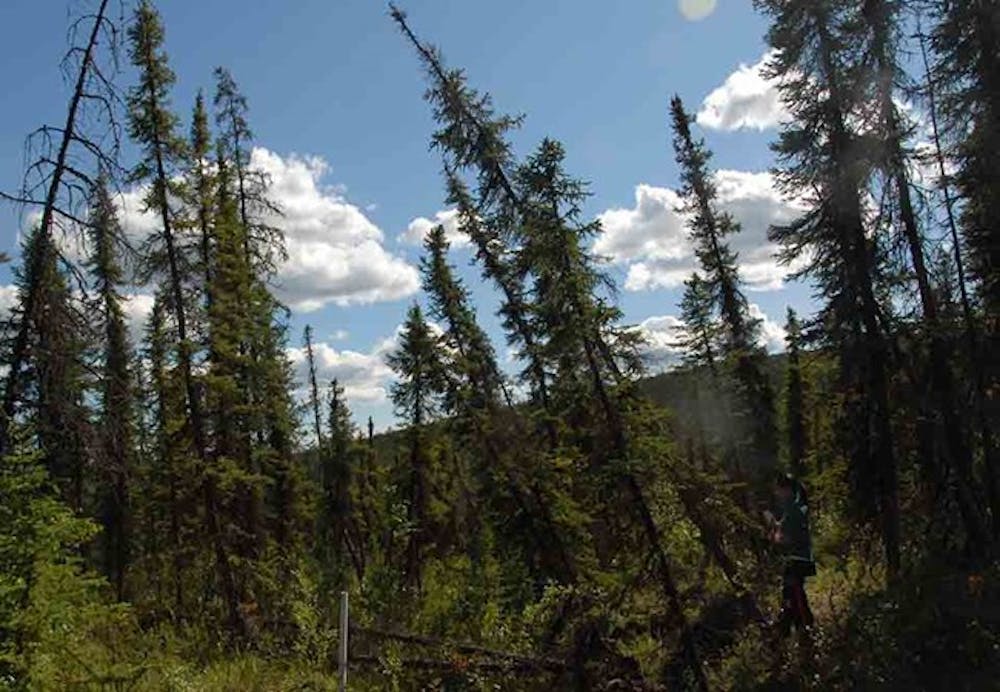
The ‘drunken forest,’ where trees lean and tilt when the permafrost under them thaws.
The ways in which this change plays out are as diverse as the people and landscapes of Alaska.
Our state includes not only Arctic tundra underlain by the permanently frozen ground called “permafrost,” but also vast stretches of spruce, birch, aspen, alder and willow trees: the boreal forest. To the west, the windy Aleutian islands stretch out into the Pacific, and to the southeast, Alaska hugs the coast of British Colombia and boasts dense and towering coastal rainforest.
Meanwhile, the state’s coffers are enriched by money from oil and gas extraction – which are both primary sources of climate change, an irony that has not gone unnoticed by those struggling to craft long-term plans for Alaska.
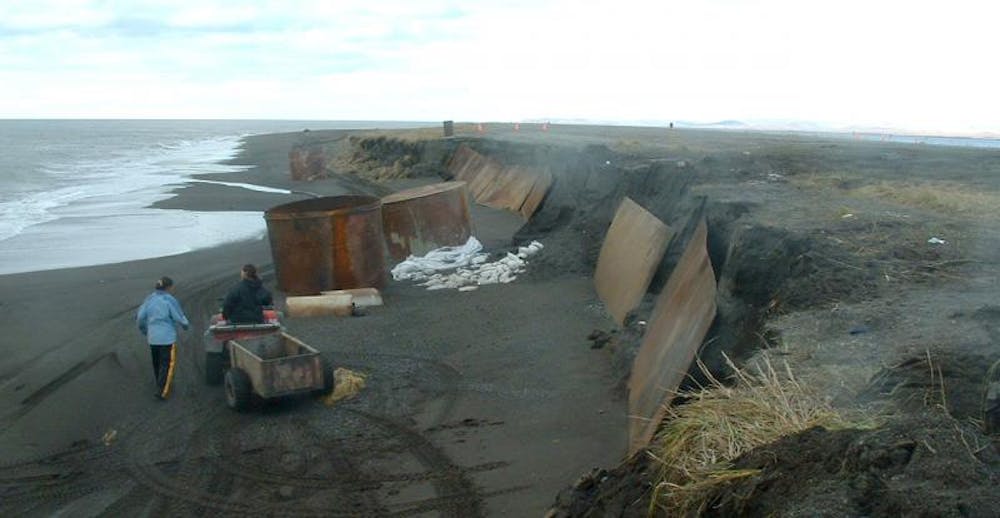
With 6,640 miles of coastline, Alaska is an ocean-dependent state. Due to loss of sea ice that protects soft soils from seasonal storms, huge stretches of this coastline are washing into the Bering Sea. For communities at risk of erosion, all other concerns pale in comparison. At stake are not only structures and money, but also traditions, a sense of place, and even lives.
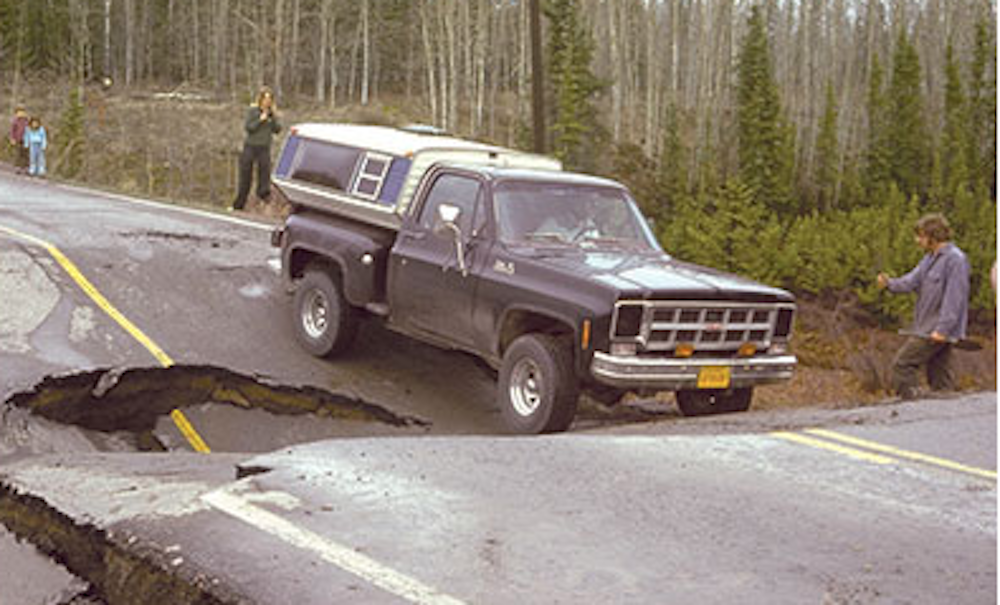
Thawing permafrost caused this buckling on the Alaska Highway.
In Shishmaref, an Inupiat village with about 500 residents, homes have slipped off cliff edges and a hunter fell through thin ice. Relocation is costly and a last-ditch option.
Even for inland residents, the health of the ocean is crucial, because the salmon caught in Alaska’s rivers fatten in the open ocean. Should climate change render the ocean too acidic due to changing atmospheric carbon, the tiny sea snails on which the salmon feed would be at risk because they may no longer be able to form their shells.
The Iditarod sled dog race has had to move its starting line and reroute mushers. Tourism businesses are suffering. The city, like many communities around the state, is working on a climate change adaptation plan.
Meanwhile, around the state capital of Juneau and other Southeast Alaska communities, the mountains are losing their snow caps early and gaining them late. Water is flowing downstream out of season, which may impact everything from salmon stocks to hydroelectric power generation. Iconic yellow cedar trees are dying due to lack of protective snow cover on their roots.
Here, as elsewhere in the north, whole ecosystems are changing, putting some migratory birds such as eiders and some small Arctic mammals such as pikas and marmots at risk. Also threatened are lifestyles and livelihoods linked to Alaska’s caribou herds, which may be losing the lichen they need to survive.
The airstrip in Kivalina, an Alaska Native village, is in danger of being wiped out by erosion.
Although mitigation of climate change via reductions in global greenhouse gas emissions is crucial, even the most optimistic scenarios include substantial shifts in temperature for many decades into the future. While adapting to this change is likely to be costly, failing to adapt will be costlier still.
Recognizing this, Alaska’s communities and land managers are taking action.
For the past year, a statewide plan has been in development. The University of Alaska and the municipality of Anchorage are creating a Climate Action Plan to address issues as diverse as invasive beetles, cultural loss and lack of skiing opportunities. For the village of Newtok, planning meant seeking federal funding for total relocation.
One of the great challenges of tackling climate change is making it real for people without a scientific background. That’s because the threat it poses can be so hard to see or feel.
In the wake of Hurricanes Florence and Michael, for example, one may be compelled to ask, “Was that climate change?” Many politicians and activists have indeed claimed that recent powerful storms are a result of climate change, yet it’s a tough sell.
What those who want to communicate climate risks need to do is rephrase the question around probabilities, not direct cause and effect. And for that, insurance is the proverbial “canary in the coal mine,” sensitive to the trends of climate change impacts and the costly risks they impose.
In other words, where scientists and educators have had limited success in convincing the public and politicians of the urgency of climate change, insurance companies may step into the breach.
Steroids and climate change
Dr. Lubchenco uses steroids in baseball to explain how hurricanes result from climate change.
Dr. Jane Lubchenco, an environmental scientist who oversaw the National Oceanic and Atmospheric Administration from 2009 to 2013, offers a clever analogy to convince people of the connection between the destruction wrought by a single hurricane and climate change. It involves steroids and baseball.
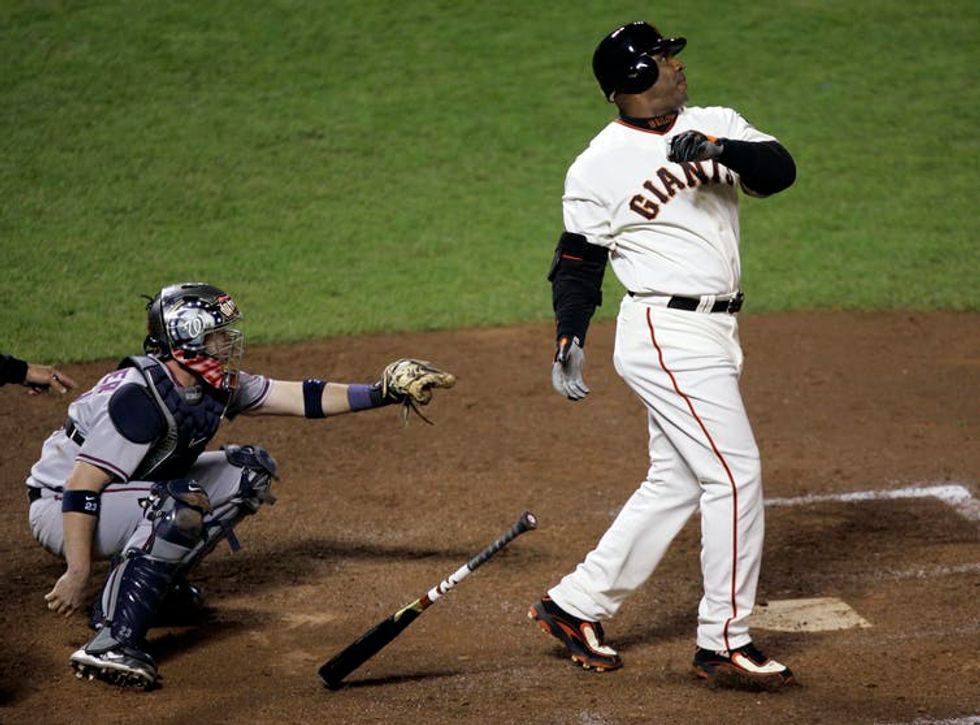
Her analogy goes like this. If a baseball player takes steroids, it’s hard to connect one particular home run to his drug use. But if his total number of home runs and batting averages increase dramatically, the connection becomes apparent.
“In similar fashion, what we are seeing on Earth today is weather on steroids,” Lubchenco explains. “We are seeing more, longer lasting heat waves, more intense storms, more droughts and more floods. Those patterns are what we expect with climate change.”
And those weather patterns come with a cost.
Someone has to pay for these damages
In 2017, for example, Hurricanes Harvey, Irma and Maria and other natural disasters like Mexican earthquakes and California wildfires caused economic losses of US$330 billion, almost double the inflation-adjusted annual average of $170 billion over the prior 10 years.
Estimated costs from Hurricane Florence, which struck the Carolinas in September, range as high as $170 billion, which would make Florence the costliest storm ever to hit the U.S.
More broadly, total economic losses from wildfires in the U.S. in 2017 – the third-hottest year on record, behind 2016 and 2015 – were four times higher than the average of the preceding 16 years and losses from other severe storms were 60 percent higher.
Unfortunately, convincing politicians, business leaders and the public that these costs are the result of increased climate change risk hasn’t been easy, a challenge that has been a major focus of my work for almost 10 years.
While the hope was that they would see the value of such vast amounts of data in managing climate risk, we found limited interest, leaving us to wonder if we were too early and whether our target was too broad.
This led me and others to realize that we should be more focused on insurance companies, society’s first line of defense in absorbing these costs, making their industry arguably the one most directly affected by climate change.
While it’s hard to attribute any single home run to Barry Bonds’ use of performance-enhancing drugs, his record 756 homers over the course of his career make it easier to establish a connection.
For example, the insurance industry paid out a record $135 billion from natural catastrophes in 2017, almost three times higher than the annual average of $49 billion. That’s not to mention the uninsured losses that were also incurred – uninsured losses from 2012’s Hurricane Sandy were 50 percent of the total $65 billion in losses, a staggering tab picked up by individual citizens and the taxpayer.
Insurers will eventually adjust to this emerging reality. And with it will come changes in our economy, including higher costs that will affect everyone’s pocketbook.
Our ability to drive a car, buy a house, build an office building, run a manufacturing plant and enter into contracts are all supported by insurance. Without it, a great deal of these activities would become more expensive or even stop.
And so, as the insurance sector adjusts to factor the growing risks of climate change in coverage and premiums, it will become a powerful lever for pushing society and the economy to become more resilient to the changes that climate change is expected to bring.
Traditional insurers like State Farm haven’t been studying the risks of climate change as much as reinsurance companies.
While reinsurance companies – which basically insure the insurers – have been studying increasing climate-related risks for decades, traditional insurance companies with familiar names like State Farm, Travelers and Liberty Mutual haven’t.
There are two primary reasons for this. The first is that they’ve been able to pass on the most catastrophic or uncertain risks to reinsurers and other investors. The second is that insurers are overconfident that they’ll be able to quickly adjust their policies on a year-to-year basis to manage climate risks. Hence a 2012 study found that only 12 percent of insurance companies had a comprehensive climate change strategy.
This is starting to change. A 2018 study found that 38 percent of insurance companies now consider climate change to be a core business issue, a figure that will likely continue to grow.
In August of this year, the International Association of Insurance Supervisors, a respected international standard-setting body for the insurance sector, published a report outlining climate risk a strategic threat for the insurance sector. It cautioned against relying on annual adjustments to manage climate risks as physical risks can change suddenly and in “non-linear ways.”
Ultimately they are examining if they need to change their coverage and raise their rates. This is where the impact will be felt, compelling citizens, businesses and governments to perk up and pay attention.
When Galileo Galilei upset dominant beliefs in the 16th century by asserting that the Earth revolved around the sun and was forced to recant, he is purported to have replied “Eppur si muove,” meaning “and yet it moves.”
Today, although many dispute that the climate is changing, one might offer a similar retort: “And yet it changes.”
As humans persist in our emission of greenhouse gases, the climate continues to change, weather patterns become more unstable, damages due to hurricanes, wildfires, droughts and floods increase, and insurance payouts grow.
In response, insurances premiums will increase and coverage will decrease. With any luck, that will lead us to build more resiliently, curb our greenhouse gas emissions and ultimately see increased storm severity for what it is: a consequence of climate change.




 Agencia CTyS/AFP / HOPaleontologists found the remains of three separate members of the new species: an adult and two juveniles

 AFP / AFP