According to yet another excerpt from an upcoming book on Melania Trump's relationship Donald Trump -- including the early presidential years -- the Washington Post reports that friends and aides of the president were furious that the first lady held out on joining the president at the White House with one Trump pal reportedly exclaiming, "That woman! She will be the end of him."
It has already been reported that Melania used the need for her to be at her husband's side in Washington to rework her prenuptial agreement noting: "Melania Trump was angry over reports about Trump’s sexual indiscretions and extramarital affairs, and she wanted time to cool off and “amend her financial agreement with Trump,” wrote Post reporter Mary Jordan in her new book, 'The Art of Her Deal: The Untold Story of Melania Trump.'"
On Saturday, the Post reported the first lady was desperately needed -- and aides close to the president were frantic over her absence.
"While in New York, Melania had new leverage. The vacant first lady’s office annoyed him. He wanted her with him. A few of Trump’s pals were upset with Melania, not only because her decision to remain in Trump Tower fanned rumors they were not getting along. They also wanted her in the White House because when she was around, Trump was calmer. They believed that if she were with him, he would not have been tweeting as often and acting as impulsively," the report states, before adding, "The opening weeks of his administration were marked by personnel clashes, embarrassing leaks, and a controversial travel ban that caused major protests at airports. Trump held a 75-minute press conference on Feb. 16, repeatedly denying any chaos and saying, 'this administration is running like a fine-tuned machine,' and adding, 'I’m not ranting and raving'."
According to the report, one of the president's closest friends, Tom Barrack who chaired the president's inaugural, finally exploded in a meeting.
“That woman! She will be the end of him,” Barrack was reportedly overheard exclaiming when talking about Melania's hold-out. “She is stubborn. She should be with her husband. He is the president of the United States.”
The Post goes on to report, "Melania did not like what was being written about her. For years her experience with the media was fielding softball questions from fashion magazines; now, instead of receiving questions about her beauty regime or fashion choices, she was being asked what, as an immigrant, she thought of her husband’s tough border policy. She had little control over the script or photos being published. She told people that no matter what she did, she would be criticized, and that she would do what she wanted. Melania had said that she would stay in New York until the school year ended, and she stood her ground."
"That didn’t sit well with everyone around Trump," the report continued. "Barrack, who was in close touch with Trump, began asking Melania’s friends to get involved in 'domestic issues,' which to them was interpreted as urging her to 'lay off the prenup renegotiations' or, as another put it, 'get down to Washington.' Barrack was seen as closer to Trump’s elder daughter Ivanka than to Melania."
ORLANDO, Fla. — On the fourth anniversary of the Pulse nightclub shooting that killed 49 people and wounded over 50 people, U.S. Rep. Darren Soto announced legislation, along with Rep. Stephanie Murphy and Rep. Val Demings, that would establish the nightclub as a national memorial site.“I am pleased to announce that Majority Leader Steny Hoyer has committed to bringing our bill to the House floor for a vote before the end of June,” Soto said in a statement.The proposed legislation would grant a federal designation to honor the lives taken in the shooting as well as the survivors, first respond...
On Saturday, the New York Post reported that Michael DeBonis, a former NYPD spokesman and detective, published an emotional condemnation of the killing of Eric Garner on Instagram.
“We killed Eric Garner,” wrote DeBonis, acknowledging that, “In writing this post I’m fully aware that some of my cop friends may call me a traitor, a hypocrite or even un follow me.”
The arrest of Garner for selling loose cigarettes “was legal, the initial forced [sic] used to stop him from resisting was fine," wrote DeBonis, "but in the end … WE PUNISHED HIM FOR RESISTING ARREST … WE WATCHED HIM DIE … WE DIDN’T EVEN SIT HIM UP AND RENDER HIM BASIC AID.”
"Garner was subdued by former cop Daniel Pantaleo, who grabbed him by the neck from behind in a chokehold. The death was ruled a homicide and sparked dozens of demonstrations across the country over police brutality, and it helped fuel the Black Lives Matter movement," wrote reporter Dean Balsamini. "Pantaleo was never charged with a crime but got fired last August."
Speaking to a large crowd of protestors on Friday, Wall Police Chief Kenneth Brown tried to win over critics of his department’s treatment of Black residents and even its own employees, who have complained of harassment and in some cases sued the department, sometimes with costly results for taxpayers.But many of the 500 or so black and white protestors attending an anti-police brutality rally at the Wall Township Municipal Complex would not have it.“I want everyone to know that the WTPD condemns racism, profiling and police brutality,” Brown read aloud from a prepared statement.“That’s a lie!...
Wendy Green worries about what will happen if her son, who has been diagnosed with Asperger’s syndrome, gets stopped by police.James Patrick just doesn’t want his children to be targets.“America is speaking," says 18-year-old Derrick Grant, looking out at a crowd that came together on a 90-degree day to make a statement.People have united across New Jersey and the world to protest police brutality after the death of George Floyd, who was killed when a white Minneapolis police officer put a knee on his neck for 8 minutes and 46 seconds. More protests are planned throughout the weekend, across N...
In a column for the Daily Beast, conservative commentator Matt Lewis said that Americans are finally seeing Donald Trump for "abusive deadbeat dad" that he is -- and it will cost him the election.
Lewis -- who renounced the Republican Party after they spent three years of backing the president no matter what he does -- now sees Joe Biden as the antidote to the poisonous rhetoric and actions of the President.
"If you’ve ever tried to cram for the SATs after partying all senior year, you know how desperate Donald Trump’s current situation is. He is running for his political life. He’s running out of gas. And he’s running out of time. Meanwhile, Joe Biden is calm, cool, and collected—and seemingly cruising to victory," he wrote.
Using leadership guru Steven Covey's Seven Habits of Highly Effective People as a guidebook, Lewis said that Trump has failed in his almost four years to build up his "Emotional Bank Account" with goodwill that can be called upon when you make big mistakes.
Quoting Covey writing, "Your trust toward me becomes higher, and I can call upon that trust many times if I need to. I can even make mistakes and that trust level, that emotional reserve, will compensate for it," Lewis adds, "The opposite, Covey warns, results in your emotional bank account being overdrawn. And that is exactly where Trump finds himself in the summer of 2020. Trump has made significant withdrawals against the nation’s emotional (and physical) bank account. He’s like an abusive deadbeat dad who misses years’ worth of birthdays but thinks he can make up for it all with one-weekend road trip."
"While Trump’s campaign coffers might be overflowing, he hasn’t stored up much goodwill in his social rainy-day fund. In fact, he’s in the red," the Daily Beast columnist continued. "OK, Trump’s die-hard base (the people who are, in a sense, “married” to him) frequently have their erogenous zones massaged. But nobody else does, and his base’s 40 percent of the vote isn’t going to be enough."
Lewis then checked off a sampling of the president's sins.
"Trump has put kids in cages, said there are good people on 'both sides' of a racist march and counter-march, attacked a gold star family, mocked a disabled reporter, ordered police to use tear gas to 'clear' protesters for a photo op, and suggested that a former congressman is guilty of murder (just to mention a few of the 'greatest hits'). These are not offenses like forgetting to put the toilet seat back down or wearing black shoes with a brown belt," he elaborated. " In relationship terms, what Trump has done is the equivalent of, I don’t know, paying off a porn star after having sex with her while your wife is pregnant. Trump’s multitude of sins (including an economy that is circling the drain) can’t be absolved by a dozen roses."
"For years, Trump seemed to defy the rules. But during this re-election year, Trump has been slammed with the emergency triple threat of health care, economics, and (now) race/policing. He didn’t have the foresight, or discipline or inclination, to establish the requisite credibility or political capital to handle any of these situations. And now, he’s stuck," he continued. "Trump may have money, but he’s bankrupt—morally. He has squandered the last three years by alienating swing voters instead of growing his base. If Biden holds on to win this election, it will restore the sense that political gravity has reasserted itself. And it will give an old-fashioned notion a new life."
"In the long run, you reap what you sow," he concluded.
The Federal Reserve has vowed to provide up to US$2.3 trillion in lending to support households, employers, financial markets and state and local governments struggling as a result of the coronavirus and corresponding stay-at-home orders.
Let that number sink in: $2,300,000,000,000.
I have a Ph.D. in economics, direct the Sound Money Project at the American Institute for Economic Research and write regularly on Federal Reserve policy. And, yet, it is difficult for me to wrap my head around a number that large. If you were to stack 2.3 trillion $1 bills, it would reach over halfway to the Moon.
Put simply, it is a lot of money. Where does it all come from?
Unlike the trillions of dollars the Treasury is spending to save the economy by bailing out companies or beefing up unemployment checks, very little of the Fed’s money actually comes from taxpayers or sales of government bonds. Most of it, in fact, emerges right out of thin air. And that has costs.
Printing green
It is common to hear people say the Fed prints money.
That’s not technically correct. The Bureau of Engraving and Printing, an agency of the U.S. Treasury, does the printing. The Fed, for its part, purchases cash from the bureau at cost and then puts it in circulation.
Although you may have heard some economists talk about the Fed figuratively dropping cash from helicopters, its method of distribution isn’t quite as colorful. Instead, it gives banks cash in exchange for old, worn-out notes or digital balances held by the banks at the Fed. In this way, the Fed can help banks accommodate changes in demand for banknotes, like those in advance of major holidays or after natural disasters.
These exchanges are dollar-for-dollar swaps. The Fed does not typically increase the monetary base – the total amount of currency in circulation and reserves held by banks at the central bank – when it distributes new banknotes.
Magicking green
To put more money into circulation, the Fed typically purchases financial assets – in much the same way that it plans to spend that $2.3 trillion.
To understand how, one must first recognize that the Fed is a bankers’ bank. That is, banks hold deposits at the Fed much like you or I might hold deposits in a checking account at Chase or Bank of America. That means when the Fed purchases a government bond from a bank or makes a loan to a bank, it does not have to – and usually doesn’t – pay with cash. Instead, the Fed just credits the selling or borrowing bank’s account.
The Fed does not print money to buy assets because it does not have to. It can create money with a mere keystroke.
So as the Fed buys Treasuries, mortgage-backed securities, corporate debt and other assets over the coming weeks and months, money will rarely change hands. It will just move from one account to another.
Costs of magical money
While the Fed can create money out of thin air, that does not mean it does so without cost. Indeed, there are two potential costs of creating money that one should keep in mind.
The first results from inflation, which denotes a general increase in prices and, correspondingly, a fall in the purchasing power of money. Money is a highly liquid – easily exchangeable – asset we use to make purchases. When the Fed creates more money than we want to hold on to, we exchange the excess money for less liquid assets, including goods and services. Prices are driven up in the process. When the Fed does this routinely, expected inflation gets built into long-term contracts, like mortgages and employment agreements. Businesses incur costs from having to change prices more frequently, while consumers have to make more frequent trips to the bank or ATM.
The other cost is a consequence of reallocating credit.
Suppose the Fed makes a loan to the “Bank of Fast and Loose Lending.” If the bank wasn’t able to secure alternative funding, this suggests that other private financial institutions deemed its lending practices too risky. In making the loan, the Fed has only created more money. It has not created more real resources that can be bought with money. And so, by giving the Bank of Fast and Loose Lending a lifeline, the Fed enables it to take scarce real resources away from other productive ventures in the economy.
The cost to society is the difference between the value of those real resources as employed by the Bank of Fast and Loose Lending and the value of those real resources as employed in the productive ventures forgone.
Uncharted waters
In recent years, the Fed has shown itself to be quite adept at keeping inflation low, even when making large-scale asset purchases.
The central bank purchased nearly $3.6 trillion worth of assets from September 2008 to January 2015, yet annual inflation averaged roughly 1.5% over the period – well below its 2% target.
I’m less sanguine about the Fed’s ability to keep the costs of reallocating credit low. Congress has traditionally limited the Fed to making loans to banks and other financial market institutions. But now it is tasking the Fed with providing direct assistance to nonbank businesses and municipalities – areas where the Fed lacks experience.
It is difficult to predict how well the Fed will manage its new lending facilities. But its limited experience making loans to small businesses – in the 1930s, for example – does little to alleviate the concerns of myself and others.
Congress gave the Fed the ability to create money from thin air. The Fed should wield this enormous power wisely.
Advocates argue that moderate reforms like enhanced training and greater community oversight have failed to curb police violence and misconduct.
But there’s a major, and usually insurmountable, obstacle to reform: police unions. Research suggests that these unions play a critical role in thwarting the transformation of police departments.
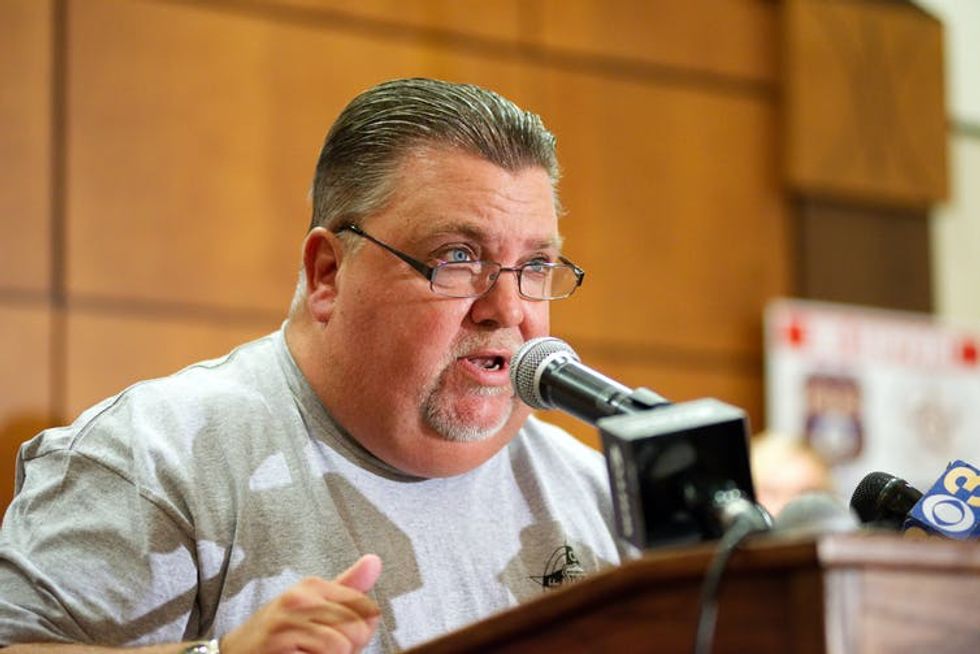
Union officials like John McNesby in Philadelphia, where I live and work as a scholar of law and the criminal justice system, do not deny this. Over the course of his 12-year career as president of the local chapter of the Fraternal Order of Police, he has derided the city’s civilian review board and predicted in 2010 that beefed-up misconduct procedures would wind up “… at the bottom of the litter box.”
He was right. The union has successfully petitioned the Pennsylvania State Labor Relations board to overturn tougher disciplinary measures.
Philadelphia’s police union is not alone in its power to maintain the status quo. In cities and states across the U.S., the benefits and protections afforded police have been provided by public officials who have catered – and caved – to union demands over many decades.
Philadelphia police union head John McNesby addressed the Black Lives Matter protests in 2017.
Across the United States, police are shielded from both public and departmental accountability by multiple layers of contractual and legislative protections. Nearly all of these measures reflect the political will and political might of police unions.
Measures that discourage accountability vary by jurisdiction, but typically include some combination of collective bargaining agreements, civil service protections, a Law Enforcement Officers’ Bill of Rights and discrete legislative statutes.
Taken together, they afford police greater procedural safeguards than citizens suspected of a crime have and offer more employment assurances than are available to other public servants.
They also make efforts to deter brutality and corruption all but impossible.
Commissioners seeking to tighten disciplinary protocols in departments plagued by police violence and misconduct have terminated officers only to see them reinstated in arbitration.
So-called “purge clauses” require departments to remove all records of disciplinary actions against officers after periods of time typically ranging from two to five years. This can stymie the ability of external investigators to discover and analyze patterns of misconduct in a department. Following the police shooting of 12-year-old Tamir Rice in Cleveland, investigators from the Department of Justice had to obtain a consent decree to gain access to disciplinary records that were buried behind purge clauses.
Legislative protections and union contracts erode the ability of civilian review boards to operate as an external check on police power. In Maryland, civilians are not allowed to participate in an investigation of a law enforcement officer. And in Newark, New Jersey, the police union sued and won when the city attempted to give its civilian review board disciplinary powers.
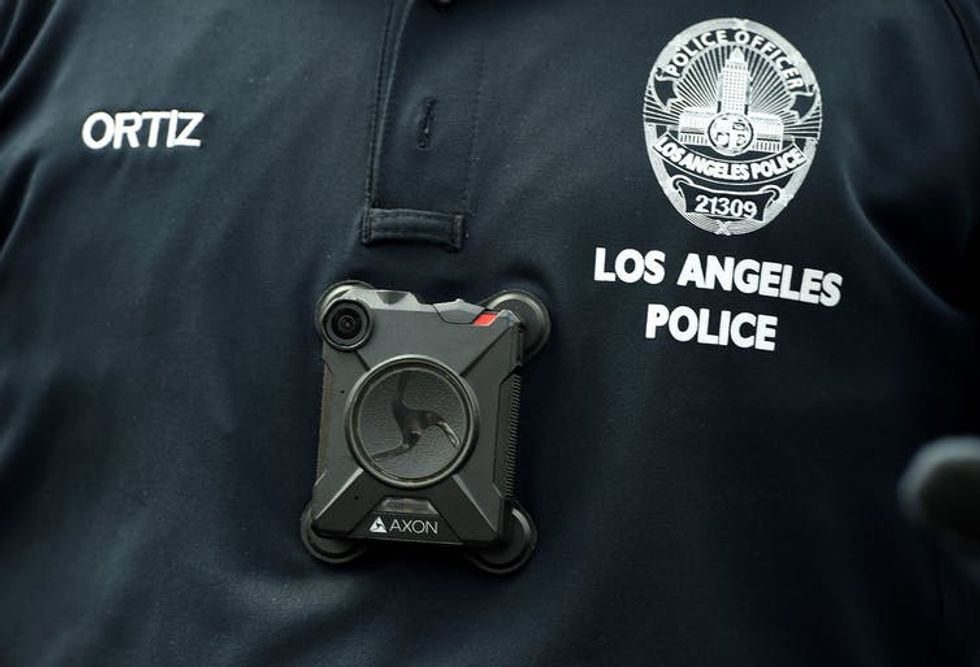
Recent legislation has made it difficult for the public to view body camera footage.
In general, the terms of employment for police officers are dictated by state-level civil service protections that extend to all public employees. State labor laws facilitate the collective bargaining process and provide opportunities for public employees to challenge managerial decisions.
Collective bargaining agreements – union contracts – further refine the terms and conditions of employment for law enforcement officers in thousands of jurisdictions across the country.
These agreements do more than just establish basic parameters governing salaries, raises and overtime pay. They also dictate how investigations into officer misconduct will be carried out, the types of disciplinary measures available to departments and avenues of redress for officers seeking to overturn or evade sanction. In all but eight states, contract negotiations with police unions take place behind closed doors, outside the purview of journalists and the public.
Many agreements declare that officers will not be immediately interrogated following an incident in which the officer’s use of force, including deadly force, is being investigated. They limit the length of interrogations, the time of day they occur and the number of interrogators. They allow officers to have a union representative or attorney present. And, unlike civilians suspected of a crime, officers are entitled to review all the evidence against them prior to submitting to questioning.
Other contracts require that civilians pursuing a complaint provide sworn statements, videotaped testimony or agree to cross-examination by an officer’s representatives. In Austin, Texas, officers under investigation can be present during a complainant’s testimony before an otherwise private hearing of the city’s civilian review board. Research suggests that these requirements can have a chilling effect on the willingness of civilians to file a complaint, or, once filed, see it through the adjudication process.
Even when investigations bear fruit, their impact is blunted. Stephen Rushin, a law professor at Loyola University, recently conducted one of the largest studies to date of police union contracts. Over 70% of collective bargaining agreements allow officers sanctioned for misconduct to appeal to an arbiter. The arbiter’s decision is binding and overrides the decisions and recommendations of supervisors, police officials and civilian review boards.
In jurisdictions like Philadelphia where the Fraternal Order of Police has a hand in selecting the arbiter, the officer appealing sanction prevails at least two-thirds of the time and receives no, or little, punishment.
Extra protection for police
Sixteen states have passed some version of a legislative package known as the Law Enforcement Officers’ Bill of Rights. This legislation incorporates the provisions found in many collective bargaining agreements and extends blanket protections to police officers throughout the state. For example, departments are prevented from publicly identifying officers under investigation and, if an officer is cleared, the department cannot acknowledge that an investigation ever took place.
States that have not passed the Law Enforcement Officers’ Bill of Rights have nonetheless enacted legislation that extends similar kinds of protections. This includes laws that prevent the public from accessing disciplinary records, personnel files and body camera footage.
These laws make it difficult for researchers and journalists to document and analyze misconduct. And they create substantial barriers for communities seeking to address police violence and racial discrimination.
Politicians on both sides of the aisle have been, for most of the last three decades, enthusiastic proponents of legislation that hides collective bargaining agreements from public view and denies citizens access to relevant employment information about the officers who patrol their neighborhoods.
One reason they respond so well to police demands: campaign donations by police unions.
Former D.C. police chief and former Philadelphia police commissioner Charles Ramsey recently told CNN that police and their unions have “become far too powerful. They form political action committees. They donate to district attorneys’ race or state attorneys’ race, state senators and representatives and so forth.”
“And then we wonder why you can’t get anything done.”
President Donald Trump plans to address the new graduating class of the West Point military academy Saturday, as relations with the Pentagon fray over accusations that he has politicized the US military.
Tensions have soared in two weeks since Trump threatened to call out active duty troops to deal with anti-police brutality protests around the country, and then staged a surprise photo op with Defense Secretary Mark Esper and Joint Chiefs Chair General Mark Milley at a site that had been forcefully cleared of protesters.
Esper's job was reportedly in the balance last week after he took the extraordinary step of breaking with the president by declaring he would not support calling up regular troops to stifle protests.
And Trump's actions drew scathing criticisms from former Pentagon chiefs -- including Esper's predecessor James Mattis, who accused Trump of deliberately dividing the country, abusing his power and making "a mockery" of the US constitution.
On Thursday, Milley said he regretted his presence at Trump's side on June 1, when National Guard fired smoke bombs and pepper balls to clear hundreds of peaceful protestors from outside the White House so the president could walk across and pose for pictures at a nearby a church.
Trump's display, with Milley wearing his camouflage battle uniform, drew strong criticism that he had turned the Pentagon into a political tool of repression.
"I should not have been there," Milley told graduates of the elite National Defense University, adding that his presence "created a perception of military involvement in domestic politics."
- Battling for reelection -
The fracture in civil-military relations weighs on Trump's address to the 1,110 graduating cadets at the picturesque West Point campus, north of New York City.
The event is clearly important to Trump, who wants to be seen as a tough leader as he battles for reelection in November against Democrat Joe Biden, who Trump labels "weak."
The academy had been shut and students sent home because of the coronavirus pandemic. But Trump announced in April that he would address the graduates in person.
So cadets were recalled and put through weeks of COVID-19 quarantine and testing. About 1.5 percent have tested positive, Pentagon officials say.
It was not known what Trump plans to say Saturday.
But he has flatly rejected the Pentagon's criticisms, arguing it was crucial to use force against protestors.
He derided Mattis, a retired four-star Marine general who garners deep respect in the US military, as "our country's most overrated General."
"You have to dominate the streets," he said Monday, defending the June 1 action.
Asked in a Fox News interview that aired Friday about Esper and Milley, Trump replied, "If that's the way they feel, I think that's fine."
"I have good relationships with the military," he said. "Now we have the greatest military we've ever had."
- Deeper strains -
The strains with the Pentagon go deeper than the protests.
Trump controversially overrode top Pentagon generals in 2019 to protect a Navy Seal, Eddie Gallagher, accused of war crimes and convicted of misconduct.
The president has also forced the Pentagon to divert billions of dollars from other projects to build a wall along the southern US border with Mexico.
And his precipitous efforts to withdraw US troops from abroad -- including a reported plan to slash troop levels in Afghanistan before the election -- have also upended plans by the defense establishment.
All of that took place in the public eye, ensuring that the graduating cadets are aware of it.
In an open letter this week, several hundred West Point alumni warned the new graduates of being used by politicians.
"Sadly, the government has threatened to use the Army in which you serve as a weapon against fellow Americans engaging in these legitimate protests," they wrote.
"Politicization of the Armed Forces puts at risk the bond of trust between the American military and American society."
When I read about Amy Cooper, the woman in Central Park who called the police on a black birder because he’d asked her to leash her out-of-control dog, I was horrified.
There was no confusion about what this meant: It was a label for a white woman who had used her privilege to threaten and try to intimidate a black man by calling the police.
But this was just one way “Karen” has been deployed in recent months. There was the woman dubbed a Karen who, after being told that a waiter would bring ketchup to her table, ended up helping herself at the server’s station. And then there was the mom who was called a Karen for telling a woman wearing a bikini to cover up. Countless other variations have emerged.
At first glance, a generic name becoming infused with so much meaning seems patently absurd. Imagine if your friend groused that his boss was being “a real David,” or a sibling pointed out that mom was acting like “such a Christina.”
So how, exactly, does a name like Karen become such a powerful form of social commentary? And how does it come to mean so many different things at the same time?
The many shapes of meaning
First names tend to contain a range of social cues. An obvious one is gender. But they can convey other kinds of information too, including age, ethnicity, religion, social class and geography. The first name Karen peaked in popularity in 1965, which means that in 2020, most people named Karen are middle aged. Because roughly 80% of the U.S. population was white in the 1960s, it’s safe to assume that the proportion of people named Karen in 2020 is predominantly white.
So that’s kind of a rough foundation for what the first name Karen might signal to people. But what about the way it evolved to mean much more than simply a first name relatively common among middle-aged white women?
On the one hand, meaning can directly reference something in the world. A kitchen is, well, a kitchen. For this reason, we often assume that meanings are fixed and stable.
But meaning can also be more indirect, indicating characteristics like where a person is from, their age or their ethnicity. Whether you say “soda,” “pop” or “Coke” for a carbonated beverage can indicate where in the United States you likely grew up. In many African American communities, kitchen, in addition to being the place you cook, means “nape of the neck.”
This is how the use and understandings of words change and shift over time. It’s also how they can become vehicles for social commentary.
Karen’s origin story
It’s largely a coincidence that Karen – rather than, say, other popular baby names from the 1960s like Linda or Cynthia – is the name that became the label. Instead, it’s the repeated use of the name on social media and on the street that reinforced its status.
By tracing the origins of Karen up until the Central Park incident, you can see how two separate threads of meaning converged to make Karen the label for an officious, entitled, white woman.
The first comes from African American communities, where certain generic first names have long been a shorthand for "a white woman to be wary of because she won’t hesitate to wield privilege at the expense of others.” Around 2018, people started posting pictures of white women calling the police on the mundane activities of black people. These individuals got labeled with hashtags like #bbqbecky, #permitpatti, #golfcartgail and #cornerstonecaroline.
The goal was to call out the inherent racism and white privilege of these women using a particular kind of alliterative flair. This was the same sort of behavior that Amy Cooper engaged in when she called the police claiming to be threatened.
The second thread emerges from stand-up comedy and Reddit. In 2005, Dane Cook performed a sketch comedy piece in which Karen is “that friend nobody likes.” In the sketch, she’s described as “always a douche.” This portrayal of a “Karen” is less about her racism and contains more gender-based critiques, which might be why some continue to call the Karen meme sexist.
Then, in late 2017, Karen appeared on Reddit as a parody of a Reddit user who had ranted about his ex-wife named Karen who received custody of their children and possession of the family home. That’s likely the point at which Karen became linked to pushy behaviors like “wanting to speak to the manager.” A link that may have occurred first through parody went on to serve as an actual label for self-important, bossy people.
A Karen by many other names
The Central Park incident created the perfect moment for these two strands to come together. There’s the intersection of entitled behavior, racism and demographics.
And then there’s the way it’s being used to push for justice, with protesters of police violence holding signs like “Karens against police brutality” and “I’d like to speak to the manager of systemic racism.”
So is Karen fundamentally about white women using their racial privilege as a weapon? Is it about being an obnoxious rule follower? Or is it about being a no-fun, hysterical mom?
Karen can be and is all of those. That doesn’t weaken the critique; it simply gives it more facets and nuance.
Airbnb and New York City officials announced an agreement Friday settling a long-running dispute over a municipal requirement that the home-sharing platform disclose data on hosts.
The listings data from home-sharing services enables officials to crack down on illegal short-term rentals.
Under the deal, Airbnb will provide the city with information on listings that generate five or more nights of bookings per quarter, so long as the listing offers an entire home or allows three or more guests to stay at one time.
The agreement exempts private or shared room listings with two or fewer guests, and some other bookings.
Mayor Bill de Blasio said the deal allows the city to crack down on "illegal hotel operators who flout the law at the expense of working New Yorkers."
City officials said the law was aimed at illicit short-term rentals by real estate speculators, which reduce housing available to residents and drive up rents.
Christian Klossner, head of the Mayor's Office of Special Enforcement, said the deal gives the city "a powerful tool to detect those who hide behind fake accounts and address those who take housing away from New Yorkers."
Airbnb faces similar legal disputes in other cities including Paris, Berlin and Barcelona.
The company in 2018 sued the city of New York, claiming the ordinance was unconstitutional and "an extraordinary act of government overreach," winning a court order that blocked the law.
New York in 2016 tightened rules applying to home-sharing services, slapping steep fines on those who let out unoccupied apartments for fewer than 30 days -- which is generally against the law.
As part of the agreement, Airbnb agreed to drop its legal action.
Christopher Lehane, head of public policy and communications for Airbnb, said the company had been seeking "an effective regulatory framework" to enable the sharing of certain information.
"As we look toward the recovery of New York's tourism economy, we hope this settlement will represent a continuing relationship and the first step on a path forward for our community citywide," Lehane said.
Airbnb agreed to hand over on a quarterly basis information on the address and host information of the affected listings, as well as other data that can help determine if the listings comply with local laws.
As part of his "New Rules" segment on HBO's Real Time, host N Bill Maher slammed Republican lawmakers who have done nothing to rein in Donald Trump for over three years as he has run roughshod over national policies, political norms and common decency.
Equating the president to someone who doles out rough sex, Maher said the GOP has needed to use their "safe word" to get him to stop since the moment he began running for office and called Mexicans "rapists."
"It was soon evident that no line was going to be drawn in matters of behavior," the HBO host explained. "Mocking the handicapped, bragging about your dick at the debates, grabbing p*ssies -- all good."
"Then, once in office, it became apparent the line would also not be drawn at what we call norms, you know, practices universally agreed upon to be the right thing to do that we never thought we needed to codify into law. Releasing your taxes, not putting family members in your cabinet, having press briefings, siding with Americans instead of Russians -- and then we moved on to breaking actual laws."
As Mahrer noted at the conclusion of his diatribe, "Is that stuff that will Republicans say, I'll do anything for love, but I won't do that. If you've got a safe word, Republicans, you better use it soon. Because Democracy is about to stop breathing."
A new report from NBC News on Friday night about internal White House debates shone a revealing light on the abject leadership failures of President Donald Trump.
The piece documents his dueling camps of advisers, both in the campaign and the administration, who are split over how Trump should react to the ongoing protests over the killing of George Floyd, police abuses, and racism more broadly.
Trump, the report found, is largely dismissive of the protesters themselves, saying: "These aren’t my voters." This reflects a trait of the president's that has repeatedly shown its ugly head throughout his term in office: dismissiveness toward constituents who didn't vote for him. He clearly thinks he owes more to Trump voters than he does to the American people more generally.
This is a deep moral failing on his part. But the NBC News report also just reveals him to be indecisive and floundering, unable to decide on a cogent response to the protests and the moment they have created. (As I reported recently, polling shows the American people are broadly sympathetic to the cause of the protests in a remarkable swing of public opinion.)
“It looks like he’s bewildered right now," NBC reported one anonymous adviser saying. “We’re losing the culture war because we won’t engage directly, because we’re so scared to be called racist.”
On this side of the debate, Trump's aides want him to attack Black Lives Matter as a "front organization for a lot of crazy leftist ideas that are unpopular," the report said.
It continued: "But another political ally said the opposite — that the president appears to be 'spinning wheels' because he’s not setting the agenda on policing and race in the U.S. when he 'should be leading on these issues' by taking steps like banning tactics like chokeholds."
It seems obvious, given the broad popularity of many of demands from the Black Lives Matter movement, that Trump would benefit himself by taking it seriously. A talented politician could have seized this moment, taken whatever he thinks are the best ideas that address the protesters' concerns, and presented them as a win for all Americans. Trump surely has enough credibility with his base that he could sell them on some modest reforms. He could then be hailed as a uniter and champion of bipartisanship. He could even potentially use the bargaining over policy to push for some of his own priorities that have thus far been rejected by the Democrats.
But Trump isn't actually good at this game of politics. Instead, he's picking a fight with Sen. Elizabeth Warren (D-MA) over renaming military bases that honor Confederate generals. This move may please his base, but his base already supports him. He doesn't have to worry about keeping them on his side — polls show that he needs to expand his appeal if he's going to win re-election.
Trump can't even articulate what he would like to see on a narrow police reform issue. Discussing a possible chokehold ban in a Fox News interview, Trump suggested he was sympathetic to the proposal, but also that he could imagine cases in which a police chokehold was necessary. He was, essentially, just thinking out loud. This isn't leadership.
And it's not the only recent event to demonstrate Trump's lack of leadership. In the face of the pandemic and the devastating recession it triggered, Trump needed to demonstrate quick action, bold ideas, and extraordinary persuasion and organizational skills. But the president displayed none of these. We're still paying for the devastation unleashed by his dismal and often counterproductive response to the COVID-19 outbreak, and the good federal policy that has emerged in response to the recession was driven by Congress.
These are three major opportunities for a president to show leadership, in a way that could dramatically improve the lives of Americans and even play a role in shaping a better future. It's easy to imagine how many other presidents could have navigated these events skillfully and turned them into advantages. The country would have been much better off if the person in charge could have pulled off this feat. But Trump simply isn't up to the task.