During an appearance on MSNBC this Wednesday, longtime Democratic strategist James Carville had some harsh words for Republicans, saying that they would literally kill people in order to hold on to power.
"My kind of mission in the short-term is to sound the alarm to say [that] Mitch McConnell and the Supreme Court -- they're going to do everything they can to hold onto power," Carville said.
"This thing in Wisconsin was one of the most awful things I've ever seen in my life," he continued, referring to the dust-up on whether to delay the state's primary elections due to the coronavirus. "The extent that they will go to to hold onto power -- it was all about one Supreme Court seat in Wisconsin -- they will kill people to stay in power, literally."
In a scorching column for the Daily Beast, longtime political observer Margaret Carlson ripped into Donald Trump saying that his desire for self-promotion has reached its nadir as he uses the coronavirus pandemic that has killed over 16,000 Americans as a way to continue marketing himself to the public.
Under a brutal headline stating, "Trump’s Sick Reality Show Is Built on Coronavirus Corpses," Carlson wrote, "Do you remember those innocent days when people said the presidency would change Donald Trump? It didn’t, except to accelerate his mental and moral decline. You only need to watch Trump’s briefings, as long as two hours some days, to realize that a catastrophe of biblical proportions won’t transform him either. In fact, the pandemic he insists no one could have known about but everyone actually did is making him even less presidential."
According to the columnist, Trump is using the respect traditionally afforded the presidency to steamroller the press who have no idea how to handle a president who baits and insults them on a daily basis during the COVID-19 task force press conferences.
"As fine as the White House press corps is, it just doesn’t have the tools to deal with this man. Its members have become props in his long-running effort to destroy us. He revealed it to CBS’ Lesley Stahl in 2016: 'I demean you all so when you write negative stories about me no one will believe you,'" she wrote. "His briefings are a devilishly effective forum for pursuing that goal, much more than the rallies they replaced. Rallies were good for revving up the crowd to boo the press corralled in a pen. How much better it is to tear into them one by one, to hold a show trial of nasty and horrid reporters like NBC’s Peter Alexander, PBS’ Yamiche Alcindor, and ABC’s Jonathan Karl, his latest foil."
"There is so much at these shows, their ratings rising along with our death count, that shouldn’t be seen: Trump grazing shoulders with aides, not wiping the shared microphone, his outrage at the recommendation he wear a mask, as if he’d been asked to don a skirt. His wistful references to those who urged us to ride out this pandemic like cowboys. In that reminiscence, he’s the cowboy," she explained before adding that a large part of what Trump is doing is creating moments for Fox News to broadcast out to his most rabid fans.
Those same clips also allow him to push out misleading information to that same group who not taking the coronavirus pandemic as seriously as they should.
"You can hear Trump giving previews of a special three-hour episode of the Trump Show built around the flattening of the curve for which he will take the credit," Carlson explained. "Promos are already running on Fox. He will ignore that what flattened the curve was what the experts said would flatten the curve. He’ll brazenly re-assert that the cure was worse than the problem, the country didn’t need to be shut down at the cost of his perfect economy, that he, who amazed the medical community with his knowledge, was right. It was no worse than the flu, after all."
"Trump’s act is getting old," she added, before concluding, "Although he lies better than most people tell the truth, the show should be canceled now that he’s lying about matters of life and death. The president can’t stop himself, but to show appropriate respect for the office he occupies, we have to."
L. isn’t the biggest fan of online dating. A burlesque performer who hosts cocktail events, the 31-year-old Orlando resident had some negative experiences when she tried it several years ago and stuck to making connections in person. “I assumed I would meet someone through my events,” said L. (Like several people who were interviewed for this story, she asked not to use her full name.)Then March rolled around and all of L.’s planned social engagements dried up. Looking to make a new connection, L. jumped onto dating app Hinge. And like many other singles have been saying about the world of int...
America’s decades-long war on drugs disproportionately harmed minorities. Now, it seems that decriminalization of marijuana hasn’t leveled the playing field.
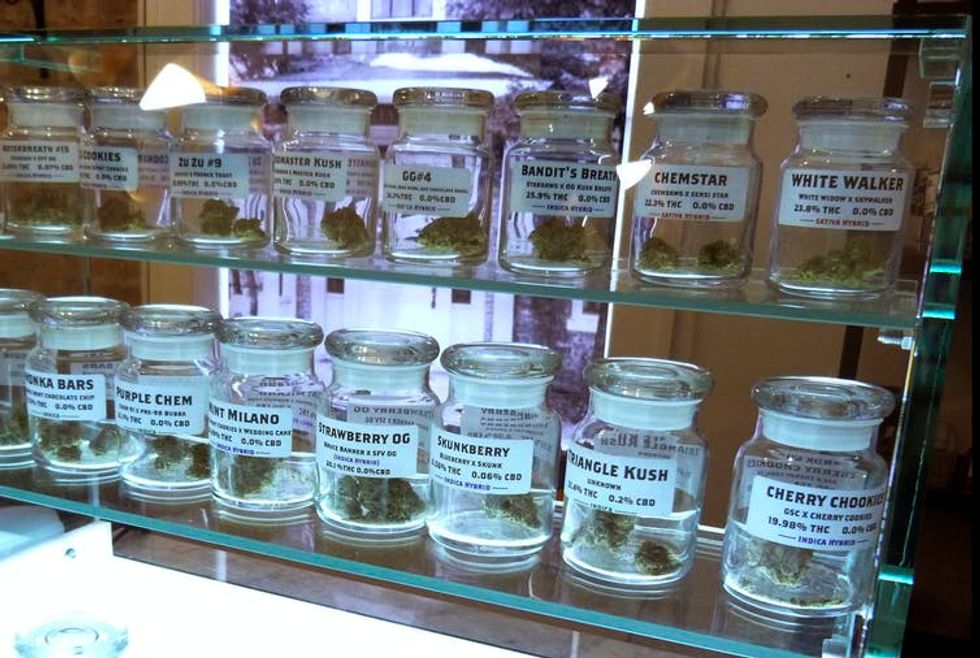
Today, some drug laws related to marijuana are easing. Twenty five states have introduced decriminalization reforms, with 11 states allowing adult recreational use. Such reforms directly impact adults 21 years of age and older, but they also have indirect effect on younger Americans.
As I wrote in my book, young people have always been the main buyers of marijuana. Smoking marijuana has become an important part of growing up for many U.S. teenagers, a fact not acknowledged by any marijuana reform advocacy analysis.
Those who advocate for marijuana reform ignore the fact that looser laws promote more marijuana use, especially by young and marginalized Americans who buy the drug in illegal markets.
For example, arrest data show that in Colorado, legalizing recreational use for anyone 21 and over caused a significant increase in the arrest rates of African Americans and Hispanics under that legal age limit. At the same time, arrests for underage whites decreased.
In Washington state, arrests on all marijuana charges fell by 90% between 2008 and 2014, but “hazard rates” for African Americans remained unchanged. This means they were still twice as likely as whites to be arrested on marijuana charges.
There are three distinctly different categories of marijuana policy reform – decriminalization of possessing a small amount of marijuana, legalizing medical marijuana and decriminalizing recreational use.
The reform diffusion trend picked impetus in 2000, when Hawaii and Nevada legalized medical marijuana through their state legislatures.
This signaled the beginning of the political normalization of marijuana reform. Previously, medical marijuana laws were reformed largely by ballot initiatives in states with constitutions that have a direct democracy measure.
In my book, I analyzed the political, economic and demographic predictors of each type of policy reform from 2000 to 2014. The results indicate that rising marijuana usage rates, a ballot initiative allowing voters a say in the matter and the experience of neighboring states are the main factors driving decriminalization in general.
In all three cases of reform, usage rates were the strongest predictive factor. They had remained largely unchanged until the wave of decriminalization started two decades ago. As state laws reformed, usage rates started to marginally, yet steadily increase. Since 2000 they have doubled nationally.
The strongest spikes are in states that are known as leaders in not just decriminalization, but which are relatively more permissive in terms of possession, access and oversight like Washington and Vermont.
Reports regarding the arrest rates for youths may indicate unintended consequences of decriminalization.
These consequences include increased police discretion, providing incentives for youth consumption in illegal markets and exacerbating racial problems in juvenile justice.
If reform advocates want to address the historical wrongs of the war on drugs, they have to figure out how to tackle the cultural promotion of marijuana use which goes hand in hand with the political promotion of decriminalization.
I was a member of the oil spill commission appointed by President Obama to investigate the causes of the disaster. Later, I served as a courtroom witness for the government on the effects of the spill. While scientists now know more about these effects, risks of deepwater blowouts remain, and the energy industry and government responders still have only very limited ability to control where the oil goes once it’s released from the well.
The spill commission found that multiple identifiable mistakes caused the blowout. Our report cast doubt over how safety was addressed across the offshore oil industry and the government’s ability to regulate it.
As the oil spill commission’s report showed, drilling ever deeper into the Gulf involved risks for which neither industry nor government was adequately prepared. The industry had felt so sure that a blowout would not happen that it lacked the capacity to contain it. Neither BP nor the government could do much to control or clean up the spill.
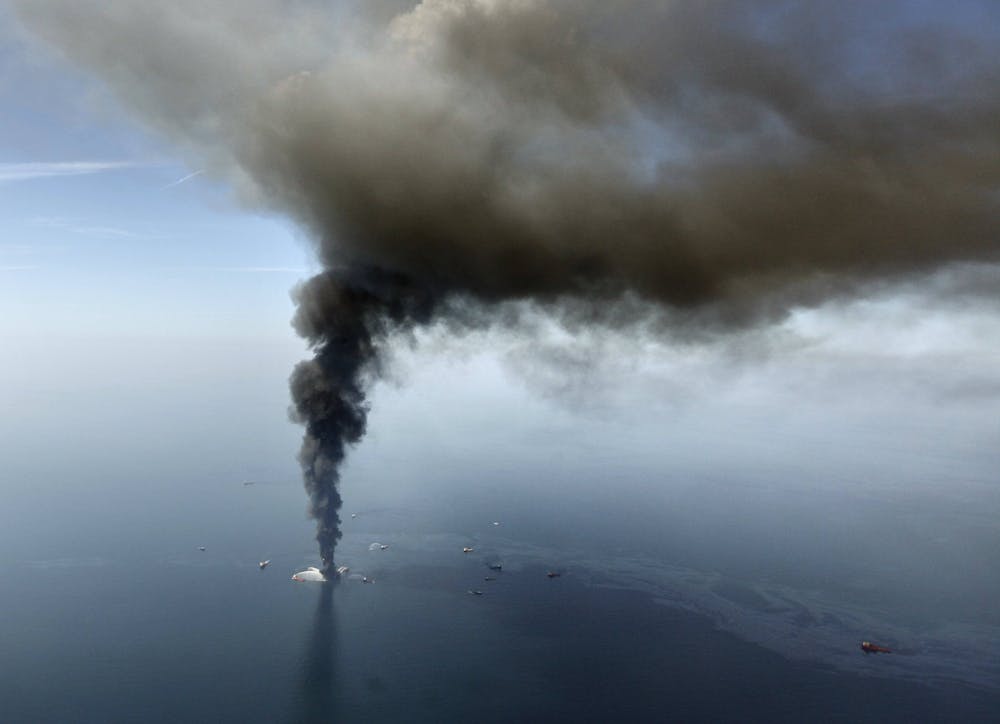
The Deepwater Horizon oil rig burning on April 21, 2010.
The presidential commission recommended numerous reforms to reduce the risks and environmental damages from offshore oil and gas development. The industry developed systems to contain blowouts in deep water and has deployed them worldwide. Improvements in operational safety were made within companies and across the industry.
The Department of the Interior acted quickly to reorganize its units. It created a Bureau of Safety and Environmental Enforcement to avoid conflicts of interests with its leasing, development and revenue collection responsibilities. After four years in development, the bureau issued new well control rules in 2016 governing drilling safety.
But despite progress on a number of fronts, Congress has not enacted legislation to improve safety or even raise energy companies’ ridiculously low liability limits for oil spills – currently just US$134 million for offshore facilities like the Deepwater Horizon. The Trump administration has reversed or relaxed safety reforms. It has loosened the safe pressure margins allowed in a well, dispensed with independent inspections of blowout protectors and removed requirements for continuous onshore monitoring of offshore drilling.
Some of these changes were ordered by political appointees over the recommendations of the safety bureau’s technical experts. While the bureau is charged with focusing singularly on safety and the environment, its director, Scott Angelle, has been a prominent proponent of the administration’s aggressive “energy dominance” strategy, ordering expanded oil production and elimination of costly regulations. Imagine the message this sends about priorities to people in government and industry who are responsible for ensuring safety.
Where contamination lingers
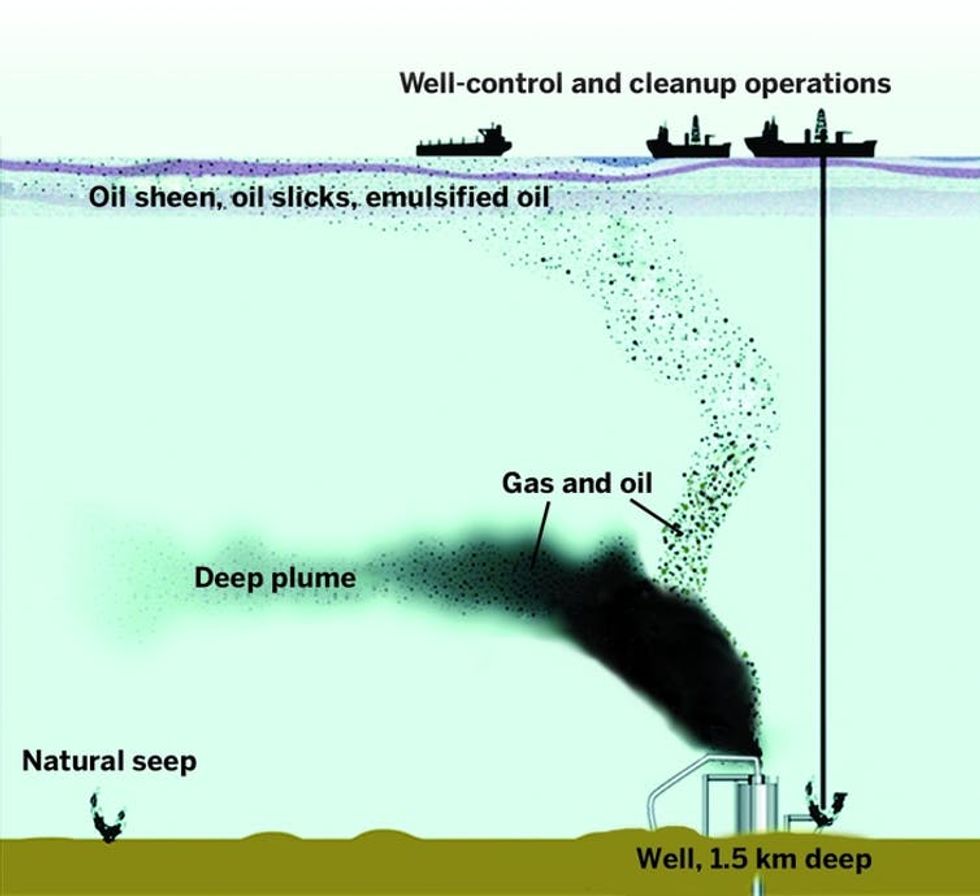
This conception of the deep plume shows how oil rose from the well. At a depth of 1 kilometer, bacteria consumed the oil.
Before the Deepwater Horizon disaster, the deep Gulf of Mexico ecosystem was egregiously understudied in all respects, while a multi-billion-dollar industry.
intruded into it. Now scientists know much more about what happens when large quantities of oil and gas are released in a seafloor blowout.
Scientists learned much about the effects of the spill through monitoring the blowout, assessing damages to natural resources and investigating the fate and effects of escaping oil. More has been spent on these studies and more results published than for any previous oil spill.
A substantial portion of oil released from the mile-deep well was entrained in a plume of droplets spreading out 3,000 feet below the Gulf’s surface. Footprints of contamination and effects extended far beyond the area where oil slicks were observed.
Two NASA satellites recorded day-by-day images of the Gulf after the blowout, from April 20 through May 24, 2010.
Nearly all of the oil released has since degraded. Populations of most affected organisms have recovered. But contamination lingers in sediments in the deep Gulf, and in some marshes and beaches where oil came ashore. Populations of long-lived animals the oil killed might not recover for decades. These include sea turtles, bottlenose dolphins, seabirds and deepwater corals.
And yet, as scientists synthesize results from this 10-year research initiative, very little practical advice is emerging about what can be done to respond more effectively to future blowouts from ever-deeper drilling in the Gulf.
Surely, we can more rapidly contain blowouts. The effectiveness of injecting chemical dispersants into the plume gushing from the well remains in debate. How much oil do dispersants keep from reaching the surface, where it threatens those working to stanch the blowout, as well as birds, sea turtles and coastal ecosystems? But the research has not revealed more effective approaches in controlling released oil.
Safety first is the big lesson
As I see it, the essential lesson from Deepwater Horizon is that industry and government should be putting their greatest energies into preventing operational accidents, blowouts and releases. Yet the Trump administration emphasizes increasing production and reducing regulations. This undermines safety improvements made over the past 10 years.
Furthermore, the price of crude oil – already low because of high fracked oil production in the U.S. – has declined drastically since the beginning of 2020. Saudi and Russian oil had already glutted the market when the coronavirus pandemic reduced oil consumption.
The federal government’s March 2020 oil and gas lease sale for the Gulf of Mexico yielded the lowest response in four years – $93 million in high bids, compared to $159 million in the previous round. To prop up the industry and maintain production, the Trump administration is seeking to lower royalty rates and store excess production in the Strategic Petroleum Reserve.
But as industry acts to cut its expenditures and downsize staff, will safety costs be a priority?
National energy policy was beyond the charge of the 2010 commission, but 10 years later, it is impossible to consider the future of offshore oil and gas without factoring in the need to eliminate net greenhouse gas emission within 30 years to limit climate change. Why would the United States consider expanding offshore exploration and drilling that might yield fossil fuels only 20 years from now?
Even in the historically developed Gulf of Mexico, rather than just “drill, baby, drill,” I believe the U.S. should be developing a realistic transition plan for phasing out offshore fossil fuel production. Such a strategy should encompass not only ensuring high standards for safety and industry responsibility for abandoned infrastructure during the drawdown, but also an economic evolution for the region, including opportunities for carbon sequestration and renewable energy production. We need to ensure that there will be a vibrant and productive Gulf long after we cease removing its oil.
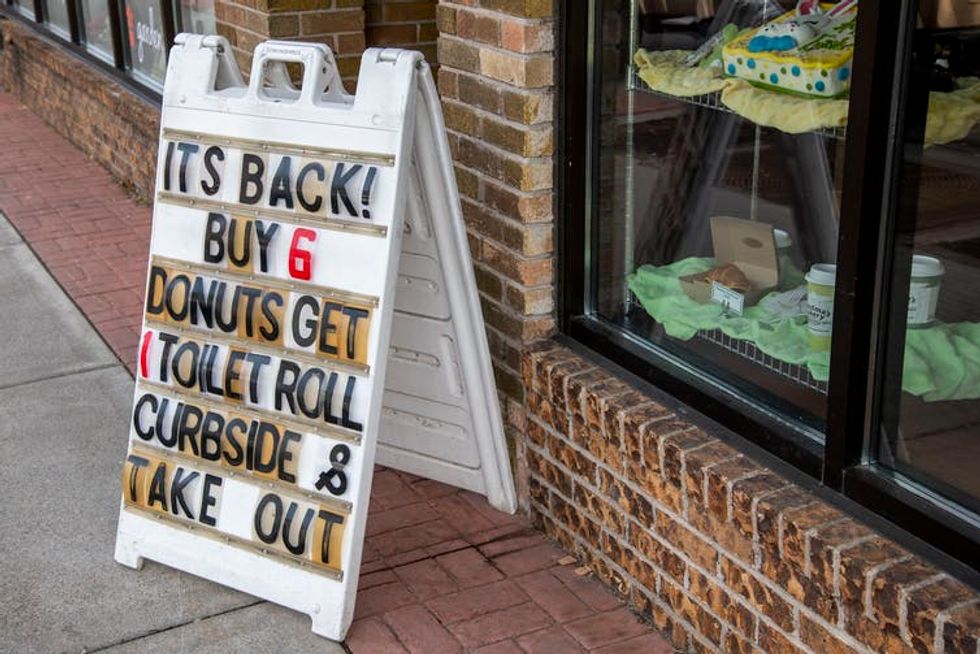
Retailers are frequently running out of everything from flour and fresh meat to toilet paper and pharmaceuticals as supply chains hammered by the coronavirus struggle to keep up with stockpiling consumers.
Although out-of-stock products are usually replenished within a day or two, the sight of bare shelves typically prompts more hoarding as people fear the supply of the goods they need may be cut off. This vicious cycle is a direct result of shortcomings of modern supply chains, which most companies, regardless of industry, now use.
Toilet paper has seen persistent supply shortages.
Michael Siluk/Education Images/Universal Images Group via Getty Images
1. Supply chains have become very complex
Fundamentally, a supply chain links a series of companies that make, transport, refine and deliver the finished product you buy at a retailer, restaurant or anywhere else.
Consider a cup of coffee from Starbucks. Your coffee might begin as a pile of coffee beans grown and picked by a farmer in Guatemala. They’re then shipped to a coffee roaster, say in Seattle, who then sends them on to a distributor near where you live, who sells them to your local Starbucks.
A shutdown anywhere along the supply chain in any of these locations stops this flow and could prevent you from enjoying your morning brew.
While a coffee supply chain may be relatively simple and linear, it can quickly get complicated for products that have many parts, such as an Apple iPhone. Apple actually has suppliers in 43 countries, and tracing the journey of any one component is difficult. For example, one of the chips that run an iPhone is designed in California but made in Taiwan, tested in the Philippines and then added to Apple products in China.
The result is that the vast majority of global companies don’t fully grasp their risk exposure. Few, if any, have complete knowledge of the locations of all the companies that provide parts to their direct suppliers. Even supply chains for foods like bananas are long and complex, as most produce comes from countries across the globe.
Compounding the complexity is the problem of capacity, which is how much of something each company in a supply chain can produce. Rapidly increasing capacity is hard. Just think about the difference in hosting a dinner party for two guests versus 200. That is exactly why there is a shortage of hand sanitizer. Customers are buying huge amounts, but suppliers are not able to increase available amounts of essential ingredients, such as alcohol, glycerol and hydrogen peroxide.
2. A lean machine
What has made these supply chains even more vulnerable are strategies that rely heavily on “just in time” or lean inventory replenishment. That is, companies maintain only enough stock on hand for a short duration and rely on small deliveries made frequently to keeps costs low.
For example, many companies keep just enough inventory to last a few weeks, confident that products will arrive as they are needed. That system works perfectly well provided there are no disruptions.
However, as companies in a wide variety of industries, including food, retail, high-tech and automotive, have increasingly implemented this strategy, they no longer have the extra inventory or excess capacity to make up for production losses caused by a disruption. As a result, these businesses are highly vulnerable to even a short material-flow problem. When an earthquake shook Taiwan on Sept. 21, 1999, it created a huge disruption for the computer-chip industry, delaying shipping times for some products by more than a week.
Similarly, since lean systems removed most excess inventory, many medical supply chains were not able to respond to disruptions during emergence of the avian influenza, or “bird flu,” in 2005.
Yet those were relatively minor, regional disruptions. The coronavirus pandemic has virtually shut down dozens of economies, with movements of over a third of the global population restricted. This means a surge in demand for any product could easily result in shortages for days or weeks.
Having a lean inventory is a strategy with many benefits and is designed to eliminate waste and cut costs. However, many companies may have taken it too far. In an era of global connectivity, a disruption anywhere can trickle down the entire supply chain.
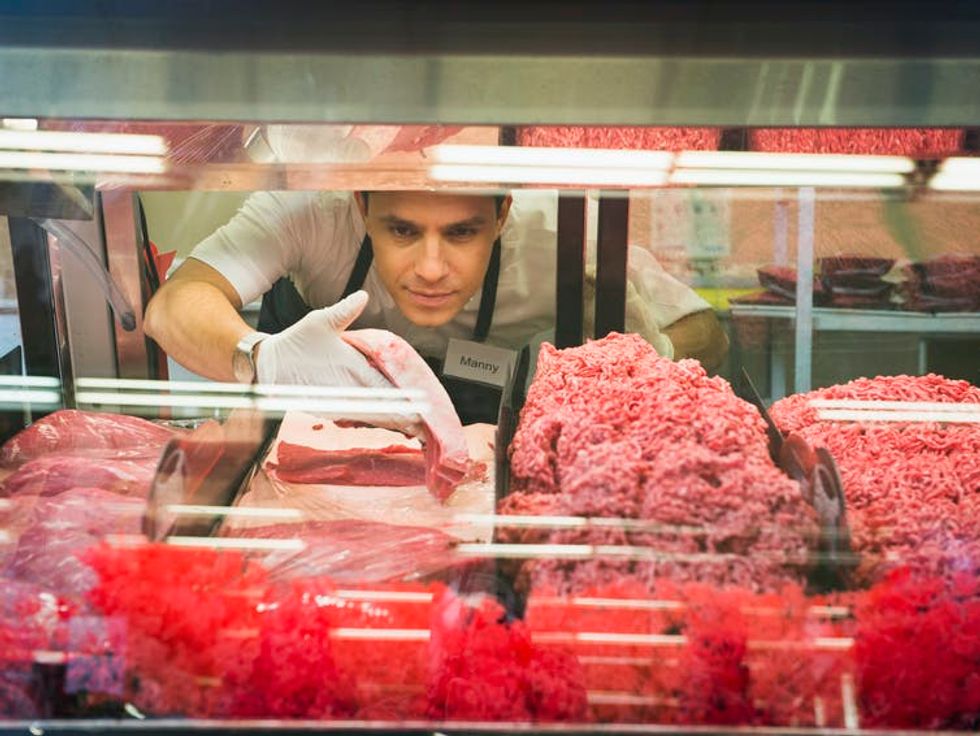
Ground beef is a prime example of a lean supply chain.
Erik Isakson/Getty Images
3. Moving manufacturing offshore
Further exacerbating the problem is the strategy of offshoring, in which companies manufacture their products overseas in countries like China, Vietnam and Malaysia in an effort to cut costs.
On the plus side, this has allowed many companies to reduce the number of links in their supply chains – or at least shrink the distance between them – by relying primarily on a smaller number of sources that are concentrated in a specific geographic area.
But in this quest to lower operating costs, including labor and overhead, more companies have put too many of their “eggs” in one basket. Certain industries have favored certain regions, with the auto, tech and agricultural industries favoring China. India, on the other hand, has become the primary source for generic drugs.
As a result, disruptions in a single country become even more severe. In January, well before the U.S. and countries in Europe had coronavirus outbreaks of their own, Western companies and retailers were already bracing for severe supply chain problems after China’s economy went into lockdown. And the impacts are still being felt several months later on all kinds of products, from toys and TV screens to sponges and ink cartridges, and could even extend into Christmas.
Getting ready for the next crisis
Of course, it makes sense that companies would do all they can to reduce costs and make their supply chains as efficient as possible.
That has made them incredibly vulnerable to disruptions, even minor ones. And the coronavirus pandemic is a disruption like no other, and undoubtedly people will continue to see temporary and longer shortages of essential goods as long as it lasts. My biggest concern is that if COVID-19 continues to spread throughout the U.S., devastating the ranks of large meat packing plants and other factories and farms, Americans will begin to experience severe scarcity of foods and other goods.
While it’s probably too late to do much about the current crisis, I hope companies learn these lessons and adopt better strategies to manage their supply chains risks, such as by putting in place more backup suppliers and building up more inventory.
Maybe then more of them will be ready for the next disruption.
When people fall seriously ill from the new coronavirus, death rates become a highly personal matter. Yet we talk about them in the most impersonal of ways: with numbers.
We are told, for instance, that the case-fatality ratio from COVID-19 is 1%-2% (or is it 0.66%, or 3.28%?). And that there could be 100,000 to 240,000 COVID-19 deaths in the U.S. by mid-June, or perhaps far fewer.
I trained in medicine and now work as a philosopher of science. Over the past several years, I’ve been trying to understand how epidemiological evidence influences thinking in health care. Epidemiological data are critical in deciding public health action, such as when to ease up on social distancing.
But how should we think about the ever-shifting COVID-19 statistics as individuals and as public health decision-makers? Answering this question requires diving deeper into the meaning of the numbers.
Populations, individuals and case-fatality ratios
Epidemiological numbers like infection rates and death counts have been a grim presence in this pandemic, represented by circular tumors growing outward on maps.
The case-fatality ratio is the proportion of deaths from COVID-19 among those infected. In the three weeks leading up to April 7, the U.S. counted 11,014 COVID-19 deaths and 368,909 confirmed cases, for a case-fatality ratio of 11,014/368,909 = 3.0%.
As individuals, we have a psychological and practical need to make sense of population figures for individual lives. However, it is a mistake to conclude that your individual risk of death would be 3.0% if you were to contract COVID-19.
The factors that make one vulnerable to death from COVID-19 are distributed unevenly in the population. They are greatly underrepresented in the very young, for example, and greatly overrepresented in the very old.
The case-fatality ratio – like all epidemiological numbers – is a measure of a population, not an individual. Epidemiological numbers should inform your beliefs about your future but probably don’t reveal your “individual risk.”
Epidemiological numbers are also relative to a particular population at a particular point in time. It was recently reported in the media that a new study showed that the infection-fatality ratio for COVID-19 is 0.66%, not the 2% previously quoted. But 0.66% is the estimate for the population of China. The same study estimated the ratio in China’s population under age 60 to be 0.145%, and 3.28% in China’s population over 60.
The case-fatality ratio, like all epidemiologic figures, is neither a property of the individual nor the virus. It emerges from the interaction among a particular population, pathogen and place.
Hypothetical futures and the effectiveness of social distancing
At a somber press briefing at the end of March, the White House coronavirus team said statistical modeling had projected that there would be between 100,000 and 240,000 COVID-19 deaths in the U.S. through mid-June. That’s with the current mitigation efforts in place through April 30, including policies to promote social distancing.
The estimate was based on the results of several statistical models produced around the world, and it inherits the uncertainty of those results.
In deciding how to slow the spread of the new coronavirus, including when to ease up on social distancing, forecasters must compare hypothetical futures.
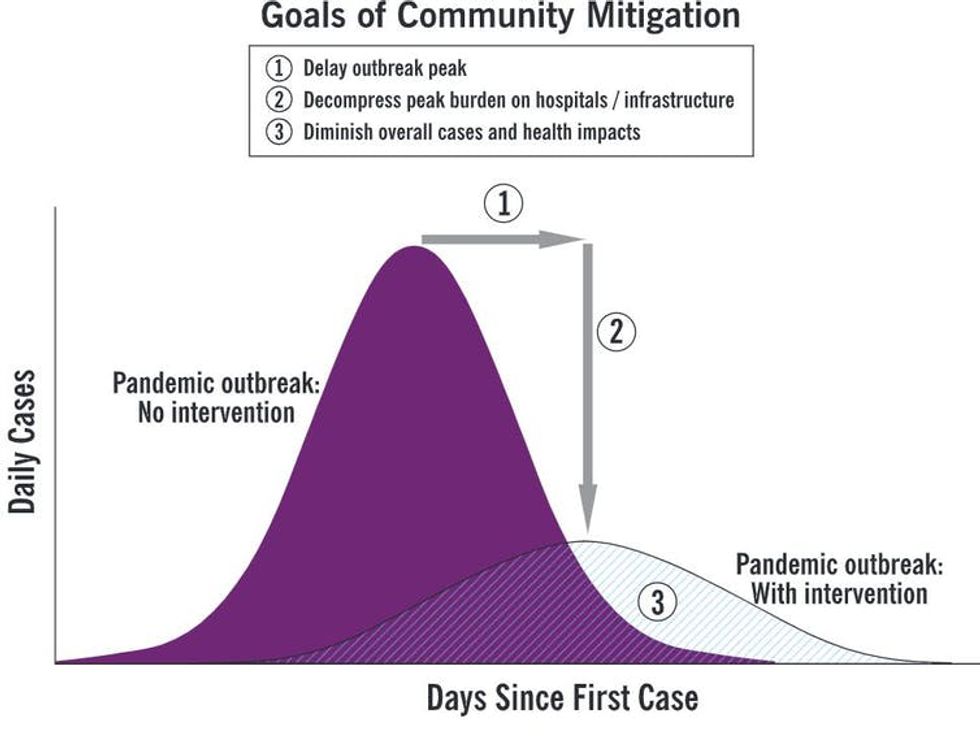
Imagine what would happen in the future if social distancing measures had never been implemented. According to models cited by the White House, 1,500,000-2,200,000 people would die from COVID-19 in the U.S.
The estimate of 100,000-240,000 COVID-19 deaths occurs in a very different hypothetical future, one in which social distancing is maintained for a few more weeks. Another model, which assumes all states use social distancing measures until June, has a lower projection of around 60,000 COVID-19 deaths by August. Dr. Anthony Fauci, who serves on the White House coronavirus task force, said Thursday that he now believes the toll will be closer to that lower number.
Statistical models project how interventions might lower the death toll from pandemics.
CDC
How effective will our current interventions be at saving lives? To answer that question, we compare hypothetical futures and calculate the difference in number of deaths. The answer changes depending on which futures are compared.
For example, if we compare the two futures presented by the White House, between 1,260,000 and 2,100,000 lives will be saved in the U.S. by preventing COVID-19 infections. Those numbers are why we should stay home for now and continue social distancing.
To determine when to let up on social distancing, one must similarly compare hypothetical futures. But we also must consider what else will be going on in these hypothetical worlds.
Will public health surveillance and contact tracing be scaled up? Will everyone be wearing face masks in public? The answers to these further questions will determine what will happen when social distancing measures are relaxed. As the number of modifiable variables rises, so does the number of hypothetical futures to contemplate.
Which number matters most?
In comparing deaths, outbreak modeling typically focuses only on those deaths that result from the direct physiological effects of the pathogen. However, there are other deaths to consider, due to other effects of the virus and our interventions.
A steep, unchecked rise in infections would overwhelm the health system, risking further deaths not only among patients with COVID-19 but also among other sick people who need health care.
Prolonged social distancing has economic implications, as does an uncontrolled outbreak or a secondary outbreak that might occur if social distancing measures are lifted in the wrong circumstances. An economic downturn, including job losses, has far-reaching and sometimes surprising effects on health and survival.
When comparing higher-income countries with lower-income countries, distributions of age and diseases and patterns of social interaction and health care resources often differ substantially, which can influence the effects of COVID-19 interventions like social distancing policies. Their effectiveness can’t be simply extrapolated from one context to another.
Ultimately, deciding which effects of our interventions to measure and how to measure them is not a purely scientific problem; it is also an ethical problem. Summing deaths assigns moral worth to life and treats all lives equally. Counting life-years lost and effects on quality of life assumes that how much life is lived and how it is lived also matters. Some effects are more difficult to quantify or predict but must not be ignored, especially when we have the ability to offset them with further action.
We must think more broadly than an outbreak model thinks.
In a pandemic, numbers can tell us a lot. They speak more to us the more deeply we understand them.
[The Conversation’s newsletter explains what’s going on with the coronavirus pandemic. Subscribe now.]
MSNBC's Mika Brzezinski was left speechless after watching a clip of White House economic adviser Larry Kudlow telling Fox Business that going back to work during a pandemic was "cool."
Kudlow appeared Thursday on Charles Payne's program on Fox Business, where he suggested that Americans were staying home from work during the coronavirus outbreak because they were lazy.
"For a whole bunch of years, you can see it in the labor numbers, people didn't want to work," Kudlow said. "I think, if I may, it's cool to work. Your neighbor, your brother-in-law, you know, the guy down the street, working has become cool again. If you looked, one of my favorites was the millennials, the youngsters. Their participation rates and job increases were phenomenal before this virus came in. You know me, I also think work is a virtue. It is a godly virtue, as well. I believe it's been cool to work, and people are going to want to come back."
Brzezinski sat there for a moment with her mouth agape when the clip ended, and then asked MSNBC's Stephanie Ruhle for some insight because she knows Kudlow.
"I'm absolutely speechless," she said. "What the heck was he saying? Was he sober, I ask with deep honesty. I mean it, was he okay? Was he okay?"
Ruhle admitted she couldn't say, and tried to make sense of the White House adviser's remarks.
"I don't know if he is okay," Ruhle said. "It is unclear to me if he is the arbiter of cool."
"This isn't about whether people want to go back to work or not," Ruhle added, "or if this administration -- when they say, 'We're open for business, we want to get back out there,' that is a sentiment. Remember, the president didn't send everyone home. The first to make these decisions were businesses. It was Adam Silver and the NBA who put health experts in charge and said, 'This isn't safe.' What's really important to remember right now, when the president is saying, 'Why don't people want to go back to work, why are Democrats blocking this,' that's not what it is. This is a health crisis."
Vice President Mike Pence and other senior officials spent the lead-up to Holy Week begging pastors to ignore President Donald Trump's previous directive.
Trump announced last month during a Fox News interview that he wanted to end lockdowns by Easter, which he later walked back, but the vice president, who is ostensibly leading the White House coronavirus task force, and other senior administration officials wanted to make sure religious leaders understood what the president wanted, reported Politico.
“We want to both encourage them to keep the faith and to encourage them to maintain social distancing,” one senior White House official said. “Now is the time to lean into the guidance, not to lean out.”
Pence and his team organized conference calls to their evangelical allies to stress the importance of social distancing, fearing the blowback if Trump allies held Easter services during the coronavirus pandemic.
Administration officials on those calls told pastors the president was calling for national sacrifice to halt the outbreak's spread, after some of Trump's religious allies drew negative attention for holding church services in defiance of stay-at-home orders.
“I’ve been privy firsthand to what the White House and this president are doing," said South Carolina pastor Mark Burns, who took part in one call, "and he is very serious about protecting Americans and slowing the spread."
A public health expert begged President Donald Trump not to reopen the economy too soon, and then explained how the coronavirus lockdowns can safely end.
Dr. Ashish Jha, director of the Harvard Global Health Institute, told MSNBC's "Morning Joe" that prematurely ending stay-at-home orders -- as Trump has signaled he wants to do -- would risk new infections, endanger more lives and waste all the efforts Americans have taken so far.
"We cannot open up our economy without adequate testing," Jha said. "Let's think about what would happen if we did. Let's say May 1 we opened the doors, everybody is back to work. It'd be great for a few weeks. For a few weeks, we wouldn't notice it at all. Then you'd see massive flare-ups of cases across the country. All the hard work that Americans are doing will have been wasted. We will have to shut down again, and we will shut down for much longer."
"To quote Dr. [Anthony] Fauci, we don't make the timeline, the virus makes the timeline," he added. "Wait until the viral levels are really low in our country. Let's have a robust testing system, then let's open up slowly. I think we can stay open, which is what Americans want. We do not want to have to shut down again."
Appearing on MSNBC's "Morning Joe," historian Jon Meacham expressed disgust with Donald Trump's daily press conferences that are ostensibly about the COVID-19 crisis that is ravaging the country but have instead become a showcase for the president's out of control narcissism.
Speaking with hosts Joe Scarborough and Mika Brezinski, Mecham got right to the point after host Scarborough noted that the president does nothing but lie when addressing the public.
"Look, the briefings are now experimental theater in weaponized narcissism, right?" Meacham replied. "It''s just this relentless self-pity. He's let the world see exactly what goes on in his head, he's an open synapse of these things. He cannot, in fact, seem to learn from his mistakes."
"What's so interesting to me, because I've adopted your mantra of -- that he is really a political day trader," He continued. "I don't fully understand why, because this is in his interest as well as the national interest -- for once, they're aligned -- why there would not be a testing plan, right? We have plenty of time to argue about the initial phases of this. Did it come from Europe or Asia? How did it get to New York? Where was the PPE? Where were the respirators? That's for the pandemic commission, right?"
"That doesn't help anybody at this point," he added. "This is a three-prong strategy: you have to take care of the sick people now. You have to keep people from getting sick now. And you have to, as you've been saying, get the testing in order to open, not just businesses, but schools. you have to restore some normalcy to American life."
"A hedge fund that serves a bunch of billionaire family offices? Who cares? They don't get to summer in the Hamptons? Who cares!"
Venture capitalist Chamath Palihapitiya stunned CNBC anchor Scott Wapner and generated widespread applause on social media by declaring in a television interview Thursday that the U.S. government should let hedge funds and billionaire CEOs "get wiped out" by the coronavirus-induced economic collapse and instead focus its attention on rescuing Main Street.
"On Main Street today, people are getting wiped out. And right now, rich CEOs are not, boards that had horrible governance are not, hedge funds are not. People are."
—Chamath Palihapitiya, CEO of Social Capital
When Wapner, seemingly incredulous at what he was hearing, asked Palihapitiya why he would support the collapse of large companies, the Social Capital CEO said "this is a lie that's been purported by Wall Street."
"When a company fails, it does not fire their employees, it goes through a packaged bankruptcy," said Palihapitiya. "If anything what happens is the people who have the pensions inside the companies, the employees of these companies, end up owning more of the company. The people that get wiped out are the speculators that own the unsecured tranches of debt or the folks that own the equity. And by the way, those are the rules of the game. That's right. These are the people that purport to be the most sophisticated investors in the world. They deserve to get wiped out."
"Why does anybody 'deserve,' using your word, to get wiped out from a crisis created like this?" replied Wapner.
"Just be clear, like, who are we talking about?" said Palihapitiya, himself a billionaire. "A hedge fund that serves a bunch of billionaire family offices? Who cares? Let 'em get wiped out. Who cares? They don't get to summer in the Hamptons? Who cares!"
After Wapner suggested it would be "immoral" to let any company get wiped out in the economic crisis, Palihapitiya responded that "on Main Street today, people are getting wiped out."
"And right now, rich CEOs are not, boards that had horrible governance are not, hedge funds are not. People are," said Palihapitiya. "Six million people just this week alone basically saying, 'Holy mackerel, I don't know how I'm going to make my own expenses for the next few weeks, days, months. So it's happening today to individual Americans. And what we've done is disproportionately prop up and protect poor performing CEOs, companies, and boards. And you have to wash these people out."
Palihapitiya's interview quickly went viral on social media.
"This guy is great, hilarious, and right," tweeted Matt Bruenig, founder of the People's Policy Project, "though it is better to wipe them out through equity dilution (bailouts-for-equity) than through bankruptcy restructuring."
"Totally wrong and is setting us up for a second wave of cases. If we hit a peak soon and open up too soon, the next peak will be worse."
Ignoring experts' warnings about the severe public health risks of reopening the economy too quickly, President Donald Trump on Thursday dismissed demands that a nationwide coronavirus testing system be established and fully functional before people are sent back to work, saying it would be a "nice thing to do" but is not needed.
"No," Trump said at a press briefing when asked whether a nationwide testing system is necessary. "We have a great testing system. We have the best, right now, the best testing system in the world... There are certain sections of the country that are in phenomenal shape already. Other sections are coming online, other sections are going down."
"We want to have it, and we're going to see if we have it," Trump continued. "Do you need it? No. Is it a nice thing to do? Yes. We're talking about 325 million people."
Dr. Rob Davidson, an emergency physician and executive director of the Committee to Protect Medicare, called Trump's testing remarks the "most absolutely insane answer in an absolutely insane administration."
"If he tries to open things up without adequate testing we are doomed. Better get vote by mail because he's going to ensure we're locked down until next summer," Davidson tweeted.
"On this, Donald Trump is totally wrong and is setting us up for a second wave of cases," Davidson wrote in a separate tweet Thursday. "If we hit a peak soon and open up too soon, the next peak will be worse."
In his rush to reopen sectors of the U.S. economy that have been shuttered by the coronavirus pandemic, Trump has repeatedly downplayed the public health risks of sending people back to work as quickly as possible. Last month, as Common Dreamsreported, Trump said he would love to see "packed churches all over our country" by Easter, April 12.
The New York Timesreported earlier this week that there is "widespread agreement" among public health experts and economists "that the United States desperately needs more testing for the virus in order to give policymakers the first key piece of evidence they need to determine how fast the virus is spreading and when it might be safe for people to return to work."
Simon Mongey, an economist at the University of Chicago, told the Times that without more COVID-19 testing, "there's no way that you could set a time limit on when you could open up the economy."
In an interview with CNN this week, New York-based emergency physician Dr. Dara Kass said "the lack of widespread testing is probably the single biggest issue regarding us getting back to any sort of normalcy."
"We don't actually know who is infected. We don't know anything about our asymptomatic carriers. And we don't know who is not infectious anymore," said Kass. "We were told we would have unlimited capacity to test in America, but we don't."