





The Supreme Court is poised to overturn a 90-year-old decision protecting the heads of independent federal agencies from firing by the president — a move more significant in the court’s rightward march than the 2022 decision to overturn the right to abortion in Roe v. Wade, alarmed legal experts tell Raw Story.
“This is the most important case of the decade,” said Seth Chandler, professor at the University of Houston Law Center.
Following oral arguments in Trump v. Slaughter last week, most observers predict the Court will side with President Donald Trump in his firing of Federal Trade Commissioner Rebecca Slaughter.
That will “further unleash massive corruption by this executive branch,” said Lisa Graves, co-founder of Court Accountability and author of Without Precedent: How Chief Justice Roberts and His Accomplices Rewrote the Constitution and Dismantled Our Rights.
‘Even more powerful’
Trump v. Slaughter revisits a 1935 case, Humphrey's Executor v. United States, which concerned President Franklin D. Roosevelt’s firing of an FTC commissioner over disagreements about New Deal policies.
The Supreme Court ruled that Congress could enact laws limiting the president’s ability to fire independent agency officials.
Now, Dec. 8 arguments in front of the current, right-wing-dominated Court made it clear there’s likely no “path for Humphrey's Executor to survive,” Chandler said.
“You're really changing the structure of government and a precept of law on which Congress has relied for 90 years and delegated immense power to these so-called independent agencies, and if these independent agencies are no longer independent, but are basically subject to loyalty tests from the president, that really changes the way that our government functions.”
Harold Krent, professor at the Chicago-Kent College of Law at the Illinois Institute of Technology, agreed that “Humphrey’s Executor is mostly dead.”
“For the most part the idea of an independent-expert-type agency will be over,” Krent said. “It's incredibly significant. It gives the president even more powerful control over these agencies.”
Along with the FTC, agencies likely to be affected are the Securities and Exchange Commission (SEC), the National Labor Relations Board (NLRB), the Occupational Safety and Health Administration (OSHA) and the Federal Energy Regulatory Commission (FERC), Krent said.
“It’s just a wide array of agencies which would almost for sure fall in the wake of the Slaughter case,” he said.
“It just means that there's more of a political edge to all agency investigations and policymaking, and so there is less of a check.”
Chandler said Justice Elena Kagan, a liberal appointed by President Barack Obama, questioned whether “Congress would ever have given so much power to the agencies if it knew that they were going to be subject to the political control of the president.”
“In a post-Humphreys Executor world where Congress felt the people who took leadership positions in these agencies were immune from political firings by the president, they were willing to grant enormous powers to these agencies and basically make them a fourth branch of government,” Chandler said.
“But, now we have half of the deal being taken away. We have that the agencies are now subject to the political desires of the president, but they still have all the power that they did originally.”
‘Out of control’
Legal experts predict that the Court will rule 6-3 in Trump’s favor in Slaughter, along ideological lines.
“I think the majority is going to say Humphrey’s Executor was very dubious when it was enacted and that the agencies look quite different from the way they were conceived,” Chandler said.
 Seth Chandler (Photo credit: University of Houston Law Center)
The process of weakening Humphrey’s Executor was already in motion, Chandler said, pointing to a 2020 decision, Seila Law LLC v. Consumer Financial Protection Bureau, which allows the president to remove the leader of a single-headed agency at will.
It’s likely the same logic will apply to a multi-person commission, Chandler said.
“I think they're going to say that in some sense the die has already been cast, that Humphrey's Executor has been on life support for a decade, and that it's now time to pull the plug,” Chandler said.
Humphrey’s Executor was an explicit target of Project 2025, the hard-right leadership plan from the Heritage Foundation, Graves said.
Noting that the Court had already “chipped away” at Humphrey’s Executor, Project 2025 said: “The next conservative Administration should formally take the position that Humphrey's Executor violates the Constitution's separation of powers.”
Trump’s claim on the campaign trail that he had no involvement with Project 2025 “misled the American people grossly,” Graves said, adding that the Court has since matched Trump’s “aggression in trying to destroy long-standing rules.”
“That the Supreme Court is playing along with this and actually eagerly embracing it is a sign of how out of control and arrogant the Roberts Court is, because the easiest thing for this Court to do would be to uphold the lower courts that are following those long-standing precedents,” Graves said.
“Instead, it has sought to combine its counter-constitutional edict, giving Donald Trump immunity from criminal prosecution, which swept him back into the White House.
“It's been seeking to combine that ruling, giving Trump extraordinary, unprecedented and unwise powers, with a whole series of rulings through the shadow docket, and now through the primary docket, that further expand presidential power, and I would say so, expand it recklessly.”
‘Loyalty pledges’
After Trump v. Slaughter, Chandler said, he anticipates Trump will seek to extend his firing power to lower-level agency employees, because if the Supreme Court determines “the Constitution vests all executive power in the president, and you take that literally, then it's hard to see why the decision wouldn't extend all the way down the federal bureaucracy.
“President Trump has not been shy about insisting that loyalty to him, personally and to his ideas, is extraordinarily important in government … even with Humphrey's Executor on life support, so I don't see why he would show any restraint once it's killed off,” he said.
“Could he require, essentially, loyalty pledges from mid-level clerks at the NLRB? Why couldn't he insist that they're part of the executive branch and that they are just acting as his delegates, and if they're unwilling to commit to him, why should they have a job?”
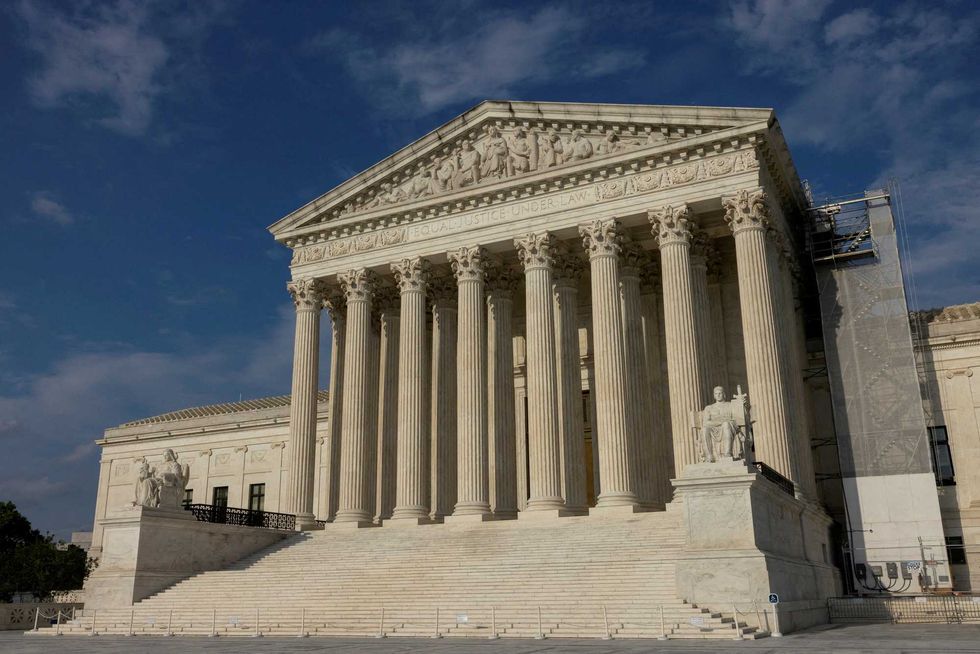 FILE PHOTO: A view of the U.S. Supreme Court in Washington, U.S. June 29, 2024. REUTERS/Kevin Mohatt/File Photo
Krent agreed.
“The Heritage Foundation, that's what they had recommended in terms of giving the president absolute power over all federal employees, and there is the extreme version of the unitary executive.
“I don't think the Court's going to go there in this particular case, but that's certainly within the goals of the Trump administration, and so it's something the Court may have to face at a future date.”
Graves called giving the president the power to fire independent agency heads at will “a recipe for corruption.”
“The corruption that Trump is engaged in is manifesting on a daily or weekly basis,” she said.
“The idea that the president would be controlling the decisions of the FTC, which relate to an array of matters about corporate conglomeration, as he's basically trying to orchestrate who gets control of a major swath of media, including CNN — it’s extraordinary.”
Warner Bros. Discovery, the parent company of CNN, is preparing to undergo a merger with Netflix or Paramount. Trump has called for selling CNN to new owners.
‘Rampant corruption’
Commissions leading federal agencies typically have split-party representation — which could also disappear following a ruling for Trump in Slaughter, Krent said.
“This whole idea of a balanced independent agency thinking about energy policy or labor policy, banking policy, consumer relations policy, that seems to be done,” Krent said.
That would allow Trump to enact his policies, such as tariffs, as he pleases.
“If he wants to just start changing even tax policy or energy policy or labor policy, he'll be able to do it by saying, ‘This is what I want you to do, or I fire you,’” Krent said.
“It would have all sorts of ramifications across the economy.”
Congress could theoretically limit the power of agencies by defunding them, “but not in reality,” Chandler said.
“It's just something that we took for granted, that you could have, in effect, a fourth branch of government in which immense power had been vested, and when you take that away, and you say it's all subject to the president's control, and you don't undo the prior delegations of power, that is a huge deal,” Chandler said.
A ruling in Trump’s favor will give him “far more power than the founders ever anticipated,” Chandler said.
Krent said overturning Humprey’s Executor “cuts against not only history, but precedence.”
“That could lead to the end of the civil service,” he said.
Graves said: “This would be yet another instance of the Roberts Court handing Donald Trump extraordinary powers that no president should have, and the presidents before him did not.
“This would return, in some ways, the United States to a previous era, which was really disreputable, where civil service appointments … were handed out as a part of a political spoils system, which was rampant with corruption.
“That's why the modern civil service system came to be over 100 years ago, to try to make sure that we would have people serving us at all levels of federal agencies who were well-qualified for those positions and not merely supplicants to the president.”
Krent said overturning Humphrey’ Executor would lead to “increasing politicization of policymaking across the government,” to “the detriment of the American people.”
“It may mean that you're going to have less expertise in government, less political party balance in terms of how these agencies work, and ultimately, that's against the congressional design.
“Regulation and policymaking will just be infused with the president's brand of whatever is politically convenient at the moment.”
