





President Donald Trump’s sweeping tariffs policy brought Ohio farmer Chris Gibbs into the national spotlight in Trump's first term, when he sent a message asking Trump to consider how his global trade war hurt American agriculture.
After Trump returned to the White House last year and enacted a stream of even more aggressive — if fluctuating — tariffs on global trade, Gibbs felt the need to speak out again.
“It’s such a déjà vu moment,” Gibbs said, “because we're right back in the same situation, right back there, right now, the same doggone thing as 2018.”
Gibbs was then a Republican but told Raw Story he came out “swinging pretty hard” in Trump’s first term when retaliatory tariffs caused the value of his soybeans to plummet 20 percent overnight.
“The party didn't want to stand behind that. They wanted to stand behind the president. I said, ‘No, I gotta protect my business,’ so I ended up leaving the party,” Gibbs said.
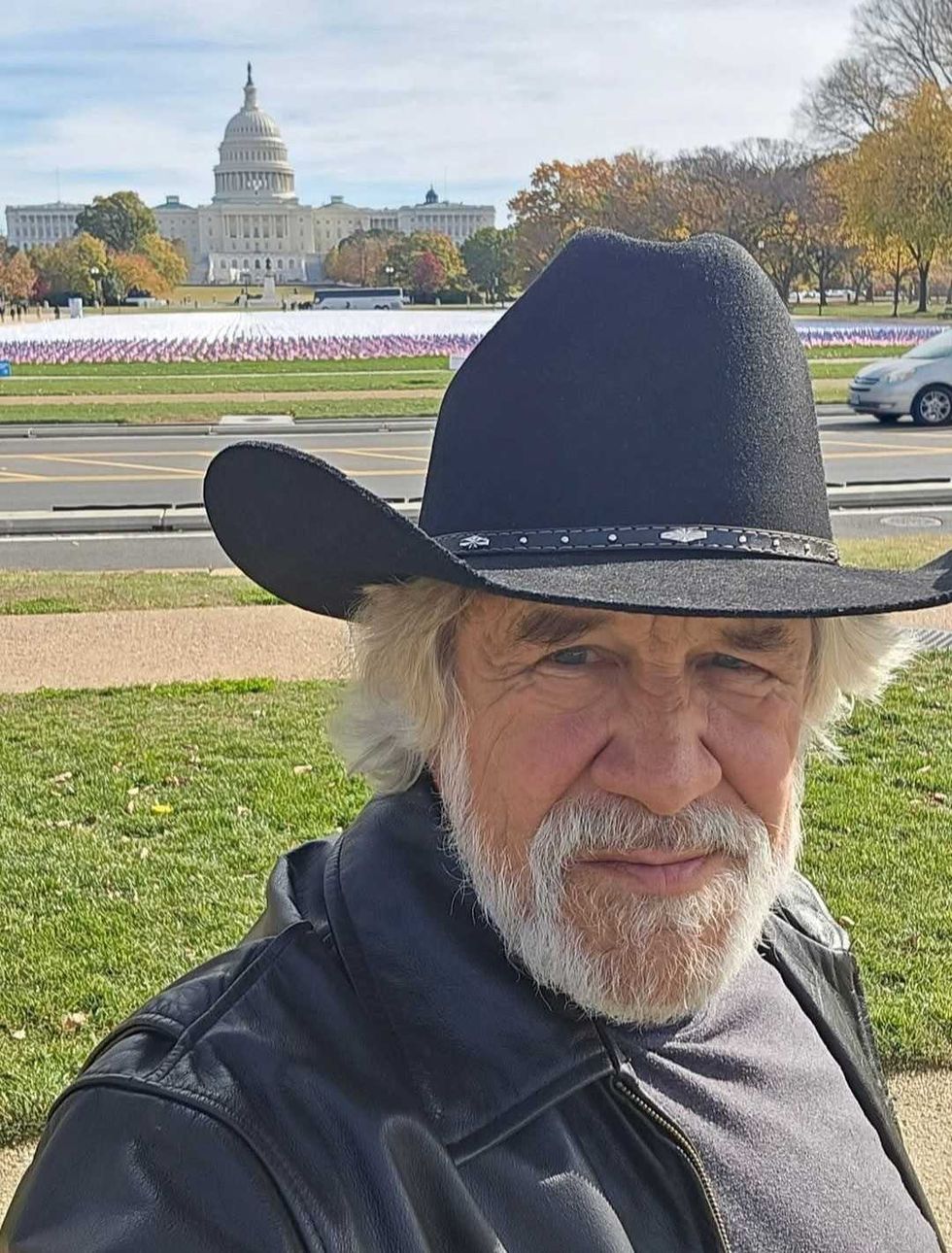 Chris Gibbs (provided photo)
Last Friday, after the U.S. Supreme Court issued a 6-3 decision striking down Trump’s attempt to justify his tariffs under the International Emergency Economic Powers Act, Trump proceeded to announce a new global tariff of 10 percent, then 15 percent, under different legislation.
After blasting the Supreme Court justices who ruled against him in virulent terms, Trump seems certain to focus on the issue again in his State of the Union address, to Congress at the Capitol on Tuesday night.
Gibbs said: “The one thing I agree with Trump, and that is the Supreme Court got it all wrong, and what I mean by that is it should have been 9-0, not 6-3 because the president … never had that authority, and why there were still three Supreme Court justices that couldn't see that is disconcerting to me.”
‘I’m not going back’
Now chair of the Ohio Democratic Party Rural Caucus, Gibbs is continuing to speak out against tariffs, featuring in a new $5 million ad campaign from the Small Businesses Against Tariffs, a project from Defending Democracy Together Institute, an advocacy group formed by anti-Trump conservatives.
“I'm justified,” Gibbs said. “I'm not going back. I am where I'm going to be. I'm in the Democratic Party. I can make a difference here.
“I'm a Democrat because I want to be part of a party that looks for solutions for people, not retribution or revenge against individuals. It's just that simple.”
Gibbs has farmed in Maplewood, Ohio, for nearly 50 years, growing soybeans, corn and wheat and raising cattle. He said tariffs raise the prices of steel, lumber, machinery and other materials used on his farm.
Uncertainty fostered by Trump’s tariffs also strains relations with overseas trading partners, which in turn hurts the grains and agriculture industry in the U.S., Gibbs said.
“We’re on the verge of not becoming the first choice for agricultural supplies. We're now in an agricultural deficit, a trade deficit, which is very odd,” he said.
“The whole time that I've been in farming we were always proud of the trade surplus that agriculture had, and now we’ve moved that back to a trade deficit, so when we have adverse relationships with trading partners, that's how that backs up to me.”
Undeterred by the Supreme Court’s decision, on Monday, Trump said countries who “play games” over U.S. trade deals will face even higher tariffs under different laws.
“This has thrown the whole supply chain, trading sector, trading partners into absolute chaos,” Gibbs said.
Small businesses especially suffer under “ad hoc” and “unpredictable” trade policies, he added.
For the past four years, Gibbs said, his farm’s cost of production has been higher than his income.
“We don't know where we're at, as a farmer, number one for things that we use that come from overseas, but what about the crops that we want to sell into these other countries based on these handshake deals?” Gibbs said.
“It's chaos, and we are in limbo.”
‘Worst thing you can do’
Even as an established farmer with other sources of income such as a federal retirement account from working with the U.S. Department of Agriculture, Gibbs said he is struggling to pay his monthly bills.
Thinking about farmers with less cash flow who might need to rely on government assistance “makes me wake up in the middle of the night in a cold sweat,” he said.
“That's the worst thing you can do for an independent rancher is to put the government in a place where it's their only choice to seek relief is the taxpayer.
“There is nothing more demeaning, nothing more heart-wrenching. I call it the silent killer of the soul. That's what's happened before our eyes, to our nation's farmers.”
