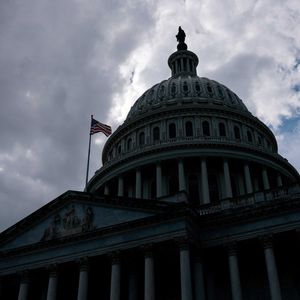
FILE PHOTO: WASHINGTON, DC - JANUARY 20: U.S. Supreme Court Chief Justice John Roberts attends inauguration ceremonies in the Rotunda of the U.S. Capitol on January 20, 2025 in Washington, DC. Donald Trump takes office for his second term as the 47th president of the United States. Chip Somodevilla/Pool via REUTERS/File Photo
Bennito L. Kelty is an award-winning journalist at Raw Story. He covered the U.S.-Mexico borderlands in Arizona and later homelessness, immigration and politics for Denver Westword. A graduate of the University of Missouri Journalism School, he now lives in Aurora, Colorado.
A Supreme Court ruling that let President Donald Trump keep demolishing part of the White House opened a damning loophole, an analyst warned.
In a Tuesday podcast episode, progressive political analyst David Pakman broke down the 5-4 Supreme Court decision that let construction of the East Wing ballroom continue. He noted that the decision refused to declare the project legal, and that Chief Justice John Roberts joined the three liberal justices in dissent.
Pakman called the reasoning of the majority of the court bizarre because it admitted the demolition might be unlawful even as it cleared the way for it to proceed.
"Here is where it gets completely nuts," Pakman said. "The majority explicitly says, 'We are not saying Trump's ballroom is actually legal.'"
The justices ruled only that the challengers, an architectural historian and the National Trust for Historic Preservation, probably lacked standing while leaving the legality of the project untouched, Pakman explained.
"Maybe what Trump's doing is illegal," Pakman said. "These aren't the people who can stop him, though."
Roberts zeroed in on the fact that Congress never explicitly authorized the president to build on what remains public property and warned of the precedent the decision sets, Pakman noted. Roberts wrote that the ruling represented "no victory for the separation of powers," according to Pakman.
"That is an extraordinary sentence coming from the conservative chief justice," Pakman said. "This now creates a much bigger problem than the ballroom specifically."
The Supreme Court's decision created a loophole that could theoretically shield a president who bulldozes any national landmark, Pakman warned.
"If a president says, 'Hey, you know what? I'm going to tear down the Statue of Liberty,' would they be allowed to do that?" Pakman asked, referring to the fact that the hypothetical had already come up in an appeals court.
"Once you demolish a historic building, you can't later issue an injunction and go, 'It must be undemolished,'" Pakman warned. "If you, as a plaintiff, go, 'Well I'm an American. I'm a stakeholder. The tearing down of the Statue of Liberty, the ripping down of part of the White House, aesthetically, it's damaging.' That doesn't give you standing."