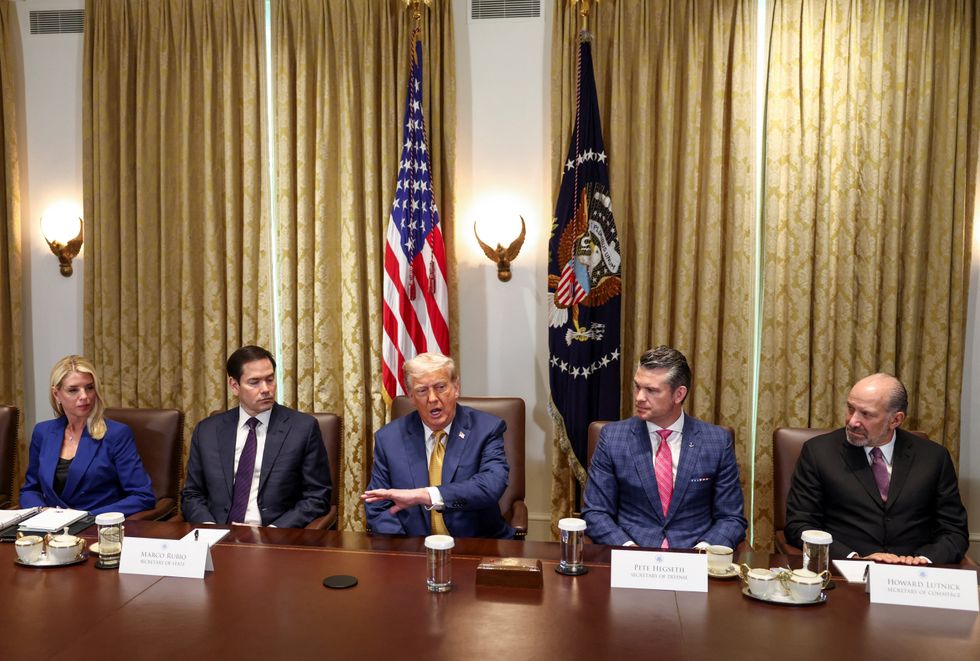
U.S. Attorney General Pam Bondi, Secretary of State Marco Rubio, U.S. President Donald Trump, Defense Secretary Pete Hegseth and Secretary of Commerce Howard Lutnick attend a cabinet meeting at the White House in Washington, D.C., U.S., July 8, 2025. REUTERS/Kevin Lamarque
Journalist with 30 years in news writing for CNN, KLAS-TV, WCMH-TV, Newsweek, Mediaite, and RawStory. Author of the award-nominated non-fiction book, "Stealing Sisi's Star," now a serial podcast for Blanchard House Productions. MSJ from The Medill School of Journalism.
At a cabinet meeting Tuesday, President Donald Trump floated the idea of imposing a 200% tariff rate on pharmaceuticals, which could cause the cost of medications to skyrocket.
"We'll be announcing something very soon on pharmaceuticals," Trump said. "We're gonna give people about a year, a year-and-a-half to come in, and after that, they're gonna be tariffed if they have to bring the pharmaceuticals into the country — the drugs and other things into the country — they're going to be tariffed at a very high rate, like 200 percent. We'll give them a certain period of time to get their act together."
Forbes reported that the enormous tariff rate, "could affect some $200 billion in imports and raise prices on Americans’ medications if it takes effect."
In a Truth Social post, Trump wrote, "I will be instituting a MOST FAVORED NATION’S POLICY whereby the United States will pay the same price as the Nation that pays the lowest price anywhere in the World. Our Country will finally be treated fairly, and our citizens Healthcare Costs will be reduced by numbers never even thought of before. Additionally, on top of everything else, the United States will save TRILLIONS OF DOLLARS."
It wasn't clear how Trump's executive order from May would interact with a 200% tariff rate if it were implemented a year from now.