Legal proceedings have been launched in Switzerland against Britain's Prince Andrew and his ex-wife Sarah, a newspaper reported Thursday, over money they still owe on a luxury chalet.
Queen Elizabeth II's second son and Sarah, who remain close despite their 1996 divorce, bought the plush holiday home in the Verbier ski resort in southwest Switzerland in 2014 for 22 million Swiss francs ($22.5 million, 21 million euros).
The wooden chalet has seven bedrooms, an indoor swimming pool and a sauna, Le Temps newspaper reported.
However, the Duke and Duchess of York did not meet the December 31, 2019 deadline for paying off a chunk of that sum, Le Temps said.
In the deeds of sale, seen by the French-language daily, six million francs were due to be paid at the end of last year -- now eight million francs with interest.
Four months on, the law firm Etude du Ritz has been instructed by the vendor to launch legal proceedings at the local prosecution office, Le Temps reported.
There was no immediate comment from Etude de Ritz, or Buckingham Palace in London, when contacted by AFP.
Le Temps quoted a spokeswoman for the Yorks as saying: "There is a dispute between the two parties in this matter," adding that the contractual details were "subject to a confidentiality agreement".
The legal proceedings add to 60-year-old Andrew's woes.
The prince, who is eighth in line to the British throne, stepped back from all royal duties in November following a public outcry over his friendship with the late US sex offender Jeffrey Epstein.
"I continue to unequivocally regret my ill-judged association with Jeffrey Epstein," he said in a statement.
Andrew emphatically denies any wrongdoing.
The duke was a naval helicopter pilot who saw action in the 1982 Falklands War between Britain and Argentina. After his military career, he spent a decade as Britain's international trade envoy, until 2011.
Andrew and Sarah married in 1986, split amicably in 1992 and divorced four years later.
However, they remained close, often living in the same house as they brought up their daughters Princesses Beatrice and Eugenie.
In April, Sarah, 60, posted pictures on Instagram of her and Andrew packing cupcakes destined for a local hospice. It was a rare glimpse of the prince since he stepped down from royal duties in November.
US lawmakers on Thursday proposed renaming the street in front of China's embassy after the late Wuhan doctor punished after warning about the new coronavirus, a step sure to outrage Beijing.
The measure would rechristen the section of the Washington street in front of the embassy "Li Wenliang Plaza" instead of the innocuous current name of "International Place."
Li was one of a group of doctors who shared posts on social media in December warning that a virus was spreading in Wuhan.
He was reprimanded by police and made to sign a statement promising not to commit any more "law-breaking actions."
He died from the illness in February, triggering a nationwide outpouring of grief and a rare apology by police for his treatment.
"We'll ensure the name Li Wenliang is never forgotten -- by placing it permanently outside the embassy of the nation responsible for the deaths Dr Li tried to prevent," said Senator Tom Cotton, a Republican known for his hawkish views on China.
The measure, also backed by Senator Marco Rubio, was introduced simultaneously in both chambers of Congress.
Lawmakers similarly proposed in 2014 to rename the street after Liu Xiaobo, the Nobel Prize-winning writer who was imprisoned after calling for democratic reforms.
China denounced that effort and the proposal died in the House of Representatives after then president Barack Obama's administration indicated he would veto it for the sake of cooperation with Beijing.
The US relationship with China has sharply deteriorated since then, with lawmakers of both parties backing a tough stance against the Pacific power.
President Donald Trump's administration has repeatedly sought to blame China for the spread of the pandemic, which has since killed more than 250,000 people worldwide.
Critics say Trump is trying to deflect attention from his handling of the crisis in the United States, which has suffered by far the highest number of COVID-19 deaths of any country.
China is not the only nation targeted by such symbolic action.
The City Council in Washington in 2018 named a block outside the Russian embassy after Boris Nemtsov, one of President Vladimir Putin's most vocal critics, who was shot dead in Moscow in 2015.
After the US proposal on Liu Xiaobo, some Chinese proposed naming the street outside the US embassy in Beijing after Edward Snowden, the former intelligence contractor who fled the United States to unveil government snooping on its citizens.
The US consulate in the Indian city of Kolkata, a stronghold of communists, lies on a street named after Vietnamese revolutionary Ho Chi Minh.
Every week, it seems, the list of coronavirus symptoms -- ranging from disagreeable to the deadly -- grows longer.
What began as a familiar flu-like cluster of chills, headaches and fever has rapidly expanded over the last three months into a catalogue of syndromes affecting almost all the body's organs, from the brain to the kidneys.
The new coronavirus can also push the immune system into overdrive, unleashing an indiscriminate assault -- known as a cytokine storm -- on pathogens and their human hosts alike.
"Most viruses can cause disease in two ways," explained Jeremy Rossman, a senior lecturer in virology at the University of Kent.
"They can damage tissue where the virus replicates, or they can cause damage as a side-effect of the immune system fighting off the disease."
Doctors suspect, for example, that COVID-19 is behind the hospitalisation in recent weeks of several dozen children in New York, London and Paris diagnosed with a rare inflammatory disorder similar to toxic shock syndrome.
Affecting mainly young children, the painful disease attacks artery walls and can cause organ failure.
Dozens of medical studies in recent weeks have detailed other potentially lethal impacts including strokes and heart damage.
Researchers from the urology department of Nanjing Medical University, writing this week in Nature Reviews, described patients developing severe urinary complications and acute kidney injury.
They also observed "dramatic changes" in male sex hormones.
- '1-in-10,000 still a lot' -
"After recovery from COVID-19, young men who are interested in having children should receive a consultation regarding their fertility," they concluded.
Does that mean that COVID-19 causes a uniquely broad array of symptoms? Not necessarily, virologists and other experts say.
"If it is a common disease, then even rare complications will happen frequently," Babak Javid, a consultant in infectious diseases at Cambridge University Hospitals, told AFP.
There are nearly 3.8 million confirmed COVID-19 cases around the world, but the true number of infections -- taking into account undetected and asymptomatic infection -- "is going to be in the tens, possibly hundreds of millions," he said.
"So if one-in-1,000, or even one-in-10,000, get complications, that is still thousands of people."
Some of the rarer symptoms associated with COVID-19 are also known to have been triggered by influenza, which kills several hundred thousand people worldwide every year, he noted.
For the new coronavirus, frontline general practitioners across the globe have been the first to look for patterns in the unfolding pandemic.
"At the outset, we were told to watch out for headaches, fever and a light cough," recalls Sylvie Monnoye, a family doctor in central Paris for nearly three decades.
"Then they added a runny nose and a scratchy throat. After that, digestive problems, including stomach aches and severe diarrhoea."
The list kept growing: skin lesions, neurological problems, sharp chest pains, loss of taste and smell.
- A feeling of confusion -
"We started to think that we should suspect everything," Monnoye said, dressed from head-to-toe in protective wear.
Some patients were so terrified, she added, that they cowered in the corner of her office afraid to touch anything or get too close to her.
An internal US Centers for Disease Control (CDC) report with a breakdown of symptoms for 2,591 COVID-10 patients admitted to hospital between March 1 and May 1 chimes with such anecdotal accounts.
Three-quarters of the patients experienced chills, fever and/or coughing, with nearly as many showing shortness of breath.
These are, by far, the most common COVID-19 symptoms.
Nearly a third complained of flu-like muscle aches, while 28 percent experienced diarrhoea and a quarter nausea or vomiting, according to the internal report, leaked to the media.
Some 18 percent had headaches, while 10 to 15 percent were hit by chest or abdominal pain, runny nose, sore throat and/or a feeling of confusion.
Less than one percent of the CDC cohort had other symptoms, including seizures, rashes and conjunctivitis.
Health authorities have been slow in alerting the public to this panoply of possible impacts.
- Loss of smell -
Until the end of April, the CDC itself only listed three on it's website: coughing, fever and shortness of breath. The update included only a few more: chills, muscle pain, headaches and loss of smell or taste. France's health officials made a similar update on May 5.
A loss of smell and taste was found in only 3.5 percent of patients included in the CDC report, but experts suspect these symptoms are -- for reasons unknown -- far more prevalent in less severe cases where people were not hospitalised.
Monnoye said it was among the most common of the symptoms she encountered, and agreed that it was "probably linked to a milder form of the disease".
"I don't have any patients with these symptoms who had serious complications," she said.
The loss of taste and smell, experts note, is extremely rare with other types of virus.
Another cluster of symptoms rarely found with in flu patients appears to arise from blood clots.
Heart problems, liver thrombosis, lung embolisms and brain damage in COVID-19 patients have been traced to such clots in a flurry of recent studies. Others have described kidney failure and even gummed-up dialysis machines.
"When one is very sick with COVID, you can have a problem with blood clots forming, and that seems to be much, much more common than with other viral infections," added Javid.
"Compared to influenza, you are much more likely to become seriously ill, and to die."
Chinese scientists have detected coronavirus in the semen of infected men but further research will be needed to determine whether the virus can be sexually transmitted.
The findings from a study of coronavirus patients at a Chinese hospital were published on Thursday in the JAMA Network Open medical journal.
COVID-19 is spread through respiratory droplets or contact and the virus has also been detected in feces, saliva and urine.
Researchers at the Shangqiu Municipal Hospital in China's Henan Province conducted a study to determine whether the virus was present in semen.
They tested the semen of 38 coronavirus patients aged 15 to their 50s.
Genetic material from the coronavirus was found in the semen of six patients -- four of whom were at the "acute stage of infection" and two of whom were "recovering."
The researchers noted that the study was "limited by the small sample size" and further research would be required to determine whether the virus can be sexually transmitted.
"If it could be proved that SARS-CoV-2 can be transmitted sexually in future studies, sexual transmission might be a critical part of the prevention of transmission," the study said.
"Abstinence or condom use might be considered as preventive means for these patients," it said.
A Norwegian man who admitted to killing his step-sister before opening fire in a mosque near Oslo last year pleaded not guilty as his trial started on Thursday.
Wearing a dark suit, 22-year-old Philip Manshaus appeared before the court outside Oslo, making the "OK" sign with his hand, used by some to signify white supremacy, as he entered.
Manshaus stands accused of murder and committing an act of terror.
He was arrested on August 10, 2019 after opening fire in the Al-Noor mosque in the affluent Oslo suburb of Baerum while wearing a bullet-proof vest and a helmet with a camera strapped to it.
Just three worshippers were in the mosque at the time, and there were no serious injuries as a 65-year-old man overpowered Manshaus.
According to the charge sheet, Manshaus' aim was to "kill as many Muslims as possible".
The body of his 17-year-old step-sister was later found in their home.
Adopted from China by his father's girlfriend, Johanne Zhangjia Ihle-Hansen was killed by four bullets, police said.
Manshaus has admitted to the facts of the case but pleaded not guilty, claiming his actions came out of "necessity".
Norwegian media reported that Manshaus showed no remorse in the courtroom but rather expressed regret that he had "not been able to inflict more damage".
According to the prosecution, Manshaus had a racist motive and was inspired by the attacks in Christchurch in New Zealand in March 2019, when Brenton Tarrant killed 51 people in shootings at two mosques.
Tarrant in turn has said he was inspired by Norwegian Anders Behring Breivik, who in July 2011 killed 77 people in a truck bomb blast near government offices in Oslo and a shooting spree at a Labour Party youth camp on the island of Utoya.
The Manshaus trial is due to last until May 26.
He faces 21 years in prison if convicted, but the prosecutor's office has said they have not ruled asking for a custodial sentence, which would keep Manshaus behind bars until he is no longer deemed a danger to society.
The lucrative annual trek to harvest a caterpillar fungus nicknamed "Himalayan Viagra" that can fetch three times the price of gold in China will be banned amid Nepal's coronavirus lockdown, officials said Thursday.
Yarchagumba, which means "summer plant, winter insect" in Tibetan, is found for a few weeks above 3,500 meters (11,550 feet) and forms when the parasitic fungus lodges itself in a caterpillar, slowly killing it.
Harvesting the cone-shaped Ophiocordyceps sinensis is highly profitable and every spring, houses and schools empty as thousands of villagers make the sometimes perilous journey up into the mountains to collect it.
But officials said the restrictions imposed by Nepal's nationwide lockdown meant harvesting the fungus would be banned this year. Many districts have already prohibited collectors.
"All local units have been asked not to issue permits for collection of yarchagumba this year," Umesh Pandey, chief of Bajhang district in far west Nepal, told AFP.
Many Himalayan communities are financially dependent on collecting and selling the fungus, with some earning most of their yearly income from a few weeks of harvesting that usually begins in early to mid-April.
But with the snowline yet to retreat, the harvest period this year has been delayed.
In Nepal alone, about three metric tonnes of yarchagumba is collected every year, the country's central bank said in a 2016 report.
"I hope they will open and we can still pick. This is my only job, only option to make an earning," said Harak Singh Dhami, 29, from Darchula district, who made 200,000 rupees (US$1,600) last year after collecting 300 pieces.
People in China and Nepal have in the past been killed in clashes over the elusive fungus.
No definitive research has been published proving its beneficial qualities, but Chinese herbalists believe it boosts sexual performance.
Boiled in water to make tea, or added to soups and stews, it is said to cure a variety of ailments from fatigue to cancer.
Researchers say the purported wonder drug can fetch up to three times the price of gold in Beijing.
To grow, it needs a specific climate with winter temperatures below freezing but where the soil is not permanently frozen.
Experts say that over-harvesting and climate change has made it harder to find over the years.
Scientists have been tracking changes to the genetic makeup of the new coronavirus to better understand how best to slow its spread. My research on the link between high blood sugar in patients and severity of illness from the virus could provide insight into the nature of different possible types of virus. Specifically, the presence of sugar on the virus’s spike protein could help differentiate them.
Many physicians noticed that people with high blood sugar, not only those with a history of diabetes but also unexplained new diabetes, were showing up in the hospital with the novel coronavirus. This indicated to me that something could be going on with the addition of sugar molecules to the virus, or the receptor it latches onto to infect cells, that influenced the severity of the disease.
I am a medical oncologist at the University of Pittsburgh who treats women with breast cancer. Colleagues of mine at the University of Pennsylvania have trials where we use the drug hydroxychloroqine to try to keep breast cancer from growing in the bone marrow, only to regrow years later. We call this tumor dormancy.
I was therefore very interested in finding out whether there were mutations in the virus that possibly added or subtracted sugar molecules from the virus proteins, and therefore possibly either increased or decreased the severity of disease.
Sequencing novel coronavirus and scanning for mutation
Unlike prior pandemics, we have a new and very powerful tool in 2020. We are able to obtain the RNA sequence of the virus almost in real time, and track the changes in the virus as it moves from place to place.
These coronaviruses do mutate quite a bit. A group of dedicated scientists who are members of a research organization called GISAID have been doing this, and another group called Nextstrain has created a website to allow the public to see the mutations in real time. It is open source, meaning anyone can use it.
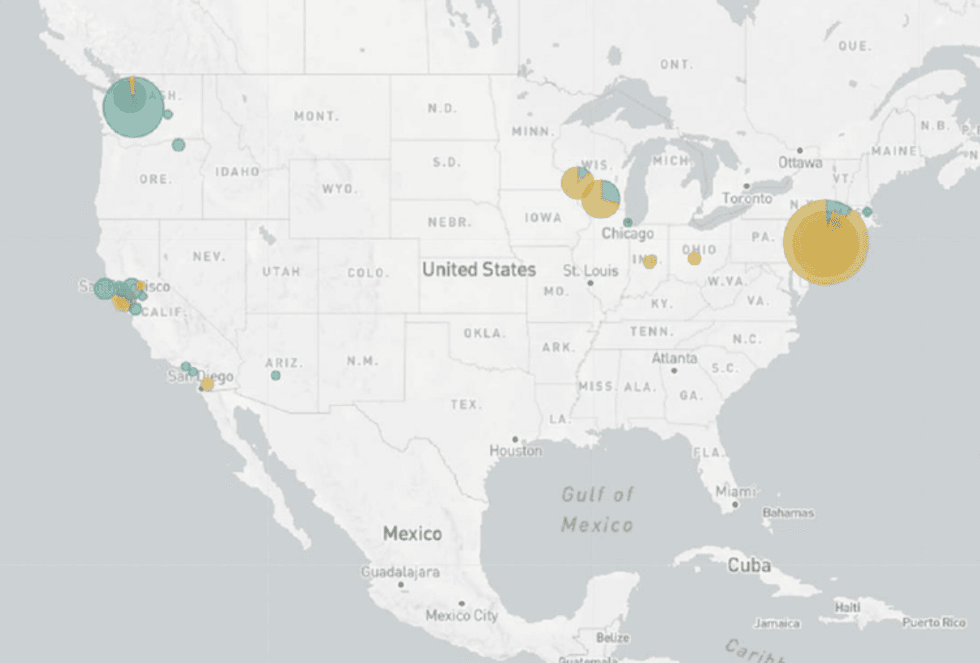
While a causal link between this mutation and more severe disease remains to be proven, this may explain at least part of the difference between the severity of infections on the East and West coasts. A group in China recently found that changes in the spike protein among other mutations of the novel coronavirus taken from various people infected in Wuhan can alter the aggressiveness of the virus in cells grown in the lab. For example, strains of the novel coronavirus in Wuhan that were more similar to those in Washington and California were less aggressive in cell culture than those that were more similar to Europe.
While only a theory, this could mean that the novel coronavirus is trying out various strategies to try to live with us. If a virus is too aggressive, it may burn out too quickly by putting too many people in the hospital so it cannot spread. The milder form of the virus could spread more, and provide more immunity. Therefore, the novel coronavirus could be losing aggressiveness at it continues to move among us. This clearly is crucial to know, and needs to be tested.
Many scientists around the world are trying to figure this out. It’s interesting what a clinical observation can lead to.
Blood tests have begun in the region around Rome to allow authorities to gauge how many people have been exposed to the coronavirus since the epidemic struck Italy.
More data will help to map out how the virus has travelled through the population, as the country begins to emerge from the health crisis that has killed nearly 30,000 of its citizens.
Over the following few days, the region of Lazio -- of which Rome is the capital -- will perform some 150,000 blood tests on health workers and police, those assumed to be most exposed to the virus.
Such tests have already begun in other regions, especially Lombardy in Italy's north which has been hardest hit by the coronavirus.
Sergio Bernardini, a professor in biochemistry and director of the lab at Rome's Tor Vergata hospital, said the large-scale screening efforts will produce a closer estimate of the number of people who have been infected with the virus.
"In reality, they're probably much more numerous, eight to ten times more than the figures we have today," Bernardini told AFP.
The tests, which require just a finger prick of blood, look for the presence of antibodies indicating that the person has been exposed to the virus at some point. The hope is that the person has developed immunity to the virus, although that is not guaranteed.
A positive result "does not mean that you are protected, it is not a license to return to normal daily life," Bernardini cautioned.
"It's absolutely necessary to continue using ... masks, which are still the most important thing, even more important than knowing if you have antibodies," he said.
The blood tests differ from the more common swab tests, which check molecules from nasal secretions to know whether a person currently has the virus.
Although the blood tests can help determine how many people may be immune, and how many have never been exposed to the virus, there are pitfalls, experts warn.
A person who has developed antibodies can still carry traces of the virus and be contagious. Moreover, it is not understood how long immunity to coronavirus lasts, meaning there is a risk those deemed "immune" could be re-infected and pass along the virus to others.
A catastrophic loss in biodiversity, reckless destruction of wildland and warming temperatures have allowed disease to explode. Ignoring the connection between climate change and pandemics would be “dangerous delusion,” one scientist said.
The scientists who study how diseases emerge in a changing environment knew this moment was coming. Climate change is making outbreaks of disease more common and more dangerous.
Over the past few decades, the number of emerging infectious diseases that spread to people — especially coronaviruses and other respiratory illnesses believed to have come from bats and birds — has skyrocketed. A new emerging disease surfaces five times a year. One study estimates that more than 3,200 strains of coronaviruses already exist among bats, awaiting an opportunity to jump to people.
The diseases may have always been there, buried deep in wild and remote places out of reach of people. But until now, the planet’s natural defense systems were better at fighting them off.
Today, climate warming is demolishing those defense systems, driving a catastrophic loss in biodiversity that, when coupled with reckless deforestation and aggressive conversion of wildland for economic development, pushes farms and people closer to the wild and opens the gates for the spread of disease.
Aaron Bernstein, the interim director for the C-Change Center for Climate, Health and the Global Environment at Harvard University’s T.H. Chan School of Public Health, said that ignoring how climate and rapid land development were putting disease-carrying animals in a squeeze was akin to playing Russian roulette.
“Nature is trying to tell us something,” Bernstein said.
Scientists have not suggested that climate played any direct role in causing the current COVID-19 outbreak. Though the virus is believed to have originated with the horseshoe bat, part of a genus that’s been roaming the forests of the planet for 40 million years and thrives in the remote jungles of south China, even that remains uncertain.
Scientists have, however, been studying the coronaviruses of southern China for years and warning that swift climate and environmental change there — in both loss of biodiversity and encroachment by civilization — was going to help new viruses jump to people.
There are three ways climate influences emerging diseases. Roughly 60% of new pathogens come from animals — including those pressured by diversity loss — and roughly one-third of those can be directly attributed to changes in human land use, meaning deforestation, the introduction of farming, development or resource extraction in otherwise natural settings. Vector-borne diseases — those carried by insects like mosquitoes and ticks and transferred in the blood of infected people — are also on the rise as warming weather and erratic precipitation vastly expand the geographic regions vulnerable to contagion. Climate is even bringing old viruses back from the dead, thawing zombie contagions like the anthrax released from a frozen reindeer in 2016, which can come down from the arctic and haunt us from the past.
Thus the COVID-19 pandemic, even as it unfolds in the form of an urgent crisis, is offering a larger lesson. It is demonstrating in real time the enormous and undeniable power that nature has over civilization and even over its politics. That alone may make the pandemic prologue for more far-reaching and disruptive changes to come. But it also makes clear that climate policy today is indivisible from efforts to prevent new infectious outbreaks, or, as Bernstein put it, the notion that climate and health and environmental policy might not be related is “a dangerous delusion.”
The warming of the climate is one of the principal drivers of the greatest — and fastest — loss of species diversity in the history of the planet, as shifting climate patterns force species to change habitats, push them into new regions or threaten their food and water supplies. What’s known as biodiversity is critical because the natural variety of plants and animals lends each species greater resiliency against threat and together offers a delicately balanced safety net for natural systems. As diversity wanes, the balance is upset, and remaining species are both more vulnerable to human influences and, according to a landmark 2010 study in the journal Nature, more likely to pass along powerful pathogens.
The casualties are amplified by civilization’s relentless push into forests and wild areas on the hunt for timber, cropland and other natural resources. Epidemiologists tracking the root of disease in South Asia have learned that even incremental and seemingly manageable injuries to local environments — say, the construction of a livestock farm adjacent to stressed natural forest — can add up to outsized consequences.
Around the world, according to the World Resources Institute, only 15% of the planet’s forests remain intact. The rest have been cut down, degraded or fragmented to the point that they disrupt the natural ecosystems that depend on them. As the forests die, and grasslands and wetlands are also destroyed, biodiversity sharply decreases further. The United Nations warns that the number of species on the planet has already dropped by 20% and that more than a million animal and plant species now face extinction.
Losing species has, in certain cases, translated directly to a rise in infectious disease.
Peatland fires in Indonesia in 2018 used to clear forests for palm oil plantations. Deforestation is one of the largest drivers of the emergence of new infectious diseases. (Wahyudi/AFP via Getty Image)
Americans have been experiencing this phenomenon directly in recent years as migratory birds have become less diverse and the threat posed by West Nile encephalitis has spread. It turns out that the birds that host the disease happen to also be the tough ones that prevail amid a thinned population. Those survivors have supported higher infection rates in mosquitoes and more spread to people.
Similarly, a study published last month in the journal Proceedings of the Royal Society B found that as larger mammals suffer declines at the hands of hunters or loggers or shifting climate patterns, smaller species, including bats, rats and other rodents, are thriving, either because they are more resilient to the degraded environment or they are able to live better among people.
It is these small animals, the ones that manage to find food in garbage cans or build nests in the eaves of buildings, that are proving most adaptable to human interference and also happen to spread disease. Rodents alone accounted for more than 60% of all the diseases transmitted from animals to people, the researchers found.
Warmer temperatures and higher rainfall associated with climate change — coupled with the loss of predators — are bound to make the rodent problem worse, with calamitous implications. In 1999, for example, parts of Panama saw three times as much rainfall as usual. The rat population exploded, researchers found. And so did the viruses rats carry, along with the chances those viruses would jump to people. That same year, a fatal lung disease transmitted through the saliva, feces and urine of rats and mice called hantavirus pulmonary syndrome emerged in Panama for the first time, according to a report in the journal Emerging Infectious Diseases.
As much as weather changes can drive changes in species, so does altering the landscape for new farms and new cities. In fact, researchers attribute a full 30% of emerging contagion to what they call “land use change.” Nothing drives land use shifts more than conversion for farmland and feedstock — a result of the push to feed the planet’s 7.8 billion people. As the global population surges to 10 billion over the next 35 years, and the capacity to farm food is stressed further again by the warming climate, the demand for land will only get more intense. Already, more than one-third of the planet’s land surface, and three-quarters of all of its fresh water, go toward the cultivation of crops and raising of livestock. These are the places where infectious diseases spread most often.
Take, for example, the 1999 Nipah outbreak in Malaysia — the true-life subject matter adapted for the film “Contagion.” Rapid clearcutting of the forests there to make way for palm plantations drove fruit bats to the edge of the trees. (Separate research also suggests that climate changes are shifting fruit bats’ food supply.) They found places to roost, as it happens, alongside a hog farm. As the bats gorged themselves on fruit, they dropped pieces of food from the branches, along with their urine, into the pigsties, where at least one pig is believed to have eaten some. When the pig was slaughtered and brought to market, an outbreak is believed to have been spread by the man who handled the meat. More than 100 people died.
The U.S. Centers for Disease Control and Prevention says that fully three-quarters of all new viruses have emerged from animals. Even the 2014 Ebola outbreak in West Africa is believed to have begun when a boy dug into a tree stump that happened to be the roost of bats carrying the virus.
As Christine Johnson, the associate director of the One Health Institute, an interdisciplinary epidemiological program at the University of California, Davis, puts it, global health policymakers have a responsibility to understand how climate, habitat and land use changes lead to disease. Almost every major epidemic we know of over the past couple of decades — SARS, COVID-19, Ebola and Nipah virus — jumped to people from wildlife enduring extreme climate and habitat strain, and still, “we’re naive to them,” she said. “That puts us in a dangerous place.”
Once new diseases are let loose in our environment, changing temperatures and precipitation are also changing how those diseases spread — and not for the better. Warming climates increase the range within which a disease can find a home, especially those transmitted by “vectors,” mosquitoes and ticks that carry a pathogen from its primary host to its new victim.
A 2008 study in the journal Nature found nearly one-third of emerging infectious diseases over the past 10 years were vector-borne, and that the jumps matched unusual changes in the climate. Especially in cases where insects like infection-bearing mosquitoes are chasing warmer temperatures, the study said, “climate change may drive the emergence of diseases.”
A mosquito in a laboratory of the Friedrich-Loeffler Institute in Germany. Scientists say at least 500 million more people, including 55 million more Americans, will be susceptible to mosquito-borne diseases as the climate warms. (Steffen Kugler/Getty Images)
Ticks and mosquitoes now thrive in places they’d never ventured before. As tropical species move northward, they are bringing dangerous pathogens with them. The Zika virus or Chikungunya, a mosquito-spread virus that manifests in intense joint pain, were once unseen in the United States, but both were transmitted locally, not brought home by travelers, in southern Texas and Florida in recent years.
Soon, they’ll be spreading further northward. According to a 2019 study in the journal PLOS Neglected Tropical Diseases, by 2050, disease-carrying mosquitoes will ultimately reach 500 million more people than they do today, including some 55 million more Americans. In 2013, dengue fever — an affliction affecting nearly 400 million people a year, but normally associated with the poorest regions of Africa — was transmitted locally in New York for the first time.
“The long-term risk from dengue may be much higher than COVID,” said Scott Weaver, the director of the Institute for Human Infections and Immunity at the University of Texas Medical Branch in Galveston. “It’s a disease of poor countries, so it doesn’t get the attention it deserves.”
The chain of events that ultimately leads to a pandemic can be long and subtle, steered by shifts in the ecosystem. The 1999 West Nile outbreak in the U.S., for example, came after climate-driven droughts dried up streams and rivers, leaving pools of stagnant water where mosquitoes bred unhindered. It turns out the loss of water also killed off their predators — dragonflies and frogs that depend on large watering holes were gone.
The next several months could bring hurricanes, floods and fire, on top of the pandemic currently raging through the country. How do you shelter in place during an evacuation?
Coronaviruses like COVID-19 aren’t likely to be carried by insects — they don’t leave enough infected virus cells in the blood. But one in five other viruses transmitted from animals to people are vector-borne, said U.C. Davis’ Johnson, meaning it’s only a matter of time before other exotic animal-driven pathogens are driven from the forests of the global tropics to the United States or Canada or Europe because of the warming climate. “Climate is going to shift vulnerability to that,” Johnson said, “and I think some of these regions are not prepared.”
The changing climate won’t just affect how the diseases move about the planet, it will also shape how easily we get sick. According to a 2013 study in the journal PLOS Currents Influenza, warm winters were predictors of the most severe flu seasons in the following year. The brief respite in year one, it turns out, relaxed people’s natural defenses and reduced “herd immunity,” setting conditions for the virus to rage back with a vengeance.
Even harsh swings from hot to cold, or sudden storms — exactly the kinds of climate-induced patterns we’re already seeing — make people more likely to get sick. A study in the journal Environmental Research Letters linked the brutal 2017-18 flu season — which killed 79,000 people — to erratic temperature swings and extreme weather that winter, the same period in which a spate of floods and hurricanes devastated much of the country. If the climate crisis continues on its current trajectory, the authors wrote, respiratory infections like the flu will sharply increase. The chance of a flu epidemic in America’s most populated cities will increase by as much as 50% this century, and flu-related deaths in Europe could also jump by 50%.
“We’re on a very dangerous path right now,” said the University of Texas’ Weaver. Slow action on climate has made dramatic warming and large-scale environmental changes inevitable, he said, “and I think that increases in disease are going to come along with it.”
Twelve months before the first COVID-19 case was diagnosed, a group of epidemiologists working with a U.S. Agency for International Development project called PREDICT, or Pandemic Influenza and other Emerging Threats, was deep in the remote leafy jungle of southern China’s Yunnan province hunting for what it believed to be one of the greatest dangers to civilization: a wellspring of emerging viruses.
A decade of study there had identified a pattern of obscure illnesses affecting remote villagers who used bat guano as fertilizer and sometimes for medicine. Scientists traced dozens of unnamed, emerging viruses to caves inhabited by horseshoe bats. Any one of them might have triggered a global pandemic killing a million people. But luck — and mostly luck alone — had so far kept the viruses from leaping out of those remote communities and into the mainstream population.
The luck is likely to run out, as Yunnan is undergoing enormous change. Quaint subsistence farm plots were overtaken by hastily erected apartment towers and high-speed rail lines, as the province endured dizzying development fueled by decades of Chinese economic expansion. Cities’ footprints swelled, pushing back the forests. More people moved into rural places and the wildlife trade, common to such frontier regions, thrived. With every new person and every felled tree, the bats’ habitat shrank, putting the viruses they carried on a collision course with humanity. By late 2018, epidemiologists there were bracing for what they call “spillover,” or the failure to keep a virus locally contained as it jumped from the bats and villages of Yunnan into the wider world.
In late 2018, the Trump administration, as part of a sweeping effort to bring U.S. programs in China to a halt, abruptly shut down the research — and its efforts to intercept the spread of a new novel coronavirus along with it. “We got a cease and desist,” said Dennis Carroll, who founded the PREDICT program and has been instrumental in global work to address the risks from emerging viruses. By late 2019, USAID had cut the program’s global funding.
USAID did not respond to a detailed list of questions from ProPublica.
The loss is immense. The researchers believed they were on the cusp of a breakthrough, racing to sequence the genes of the coronaviruses they’d extracted from the horseshoe bat and to begin work on vaccines. They’d campaigned for years for policymakers to fully consider what they’d learned about how land development and climate changes were driving the spread of disease, and they thought their research could literally provide governments a map to the hot spots most likely to spawn the next pandemic. They also hoped the genetic material they’d collected could lead to a vaccine not just for one lethal variation of COVID, but perhaps — like a missile defense shield for the biosphere — to address a whole family of viruses at once. (In fact, the gene work they were able to complete was used to test the efficacy of remdesivir, an experimental drug that early clinical trial data shows can help COVID-19 patients.)
Carroll said knowledge of the virus genomes had the potential “to totally transform how we think about future biomedical interventions before there’s an emergence.” His goal was to not just react to a pandemic, but to change the very definition of preparedness.
If PREDICT’s efforts in China had the remote potential to fend off the current COVID pandemic, though, it also offered an opportunity to study how climate and land development were driving disease.
But there has been little appetite for that inquiry among policymakers. PREDICT’s staff and advisers have pushed the U.S. government to consider how welding public health policy with environmental and climate science could help stem the spread of contagions. Climate change was featured in presentations that PREDICT staff made to Congress, according to U.C. Davis’ Johnson, who is now also the director of PREDICT, which received a temporary funding extension this spring. And until 2016, leadership of New York-based EcoHealth Alliance, the research group working under PREDICT funding in Yunnan, was invited several times to the White House to advise on global health policy.
Since Donald Trump was elected, the group hasn’t been invited back.
“It’s falling on deaf ears,” said Peter Daszak, EcoHealth Alliance’s president.
A White House spokesperson did not respond to an emailed request for comment.
What Daszak really wants — in addition to restored funding to continue his work — is the public and leaders to understand that it’s human behavior driving the rise in disease, just as it drives the climate crisis. In China’s forests, he looks past the destruction of trees and asks why they are being cut in the first place, and who is paying the cost. Metals for iPhones and palm oil for processed foods are among the products that come straight out of South Asian and African emerging disease hot spots.
“We turn a blind eye to the fact that our behavior is driving this,” he said. “We get cheap goods through Walmart, and then we pay for it forever through the rise in pandemics. It’s upside down.”
Israeli lawmakers approved the formation of a unity government between Prime Minister Benjamin Netanyahu and his erstwhile rival Benny Gantz Thursday, paving the way to an end to more than a year of deadlock.
Parliament voted by 71 votes to 37 to back the coalition deal that will see rightwinger Netanyahu and Benny Gantz, a centrist former military leader, share power.
The two men have said they will swear in their new administration on May 13, with Netanyahu remaining leader for 18 months, before handing over to Gantz.
The proposed government had been challenged in the high court, with opponents arguing Netanyahu was ineligible to rule due to a series of corruption indictments.
They also complained that certain provisions in the coalition deal broke the law.
It added that by approving the coalition it "was not seeking to diminish the severity of the charges" against Netanyahu, but concluded that those could be handled in his trial, which is due to begin on May 24.
Netanyahu has been written off by pundits and rivals many times since taking power in 2009, but the man sometimes dubbed "the magician" has invariably found a route to remain in power.
In addition to rebuilding an economy shaken by the coronavirus, the new government will also decide on the possible annexation of large parts of the West Bank, a move successive governments have refrained from ever since its occupation in the Six-Day War of 1967.
Lost year
Israel has been without a stable government since December 2018, with the country seeing three successive elections in which Gantz's centrist Blue and White and Netanyahu's Likud were near neck-and-neck.
During that time Netanyahu has remained in power in a caretaker capacity.
He has also been charged with accepting improper gifts and illegally trading favours in exchange for positive media coverage.
He denies wrongdoing but if the trial goes ahead as planned will become the first serving Israeli leader to be tried.
After the third election in March, Gantz broke with large parts of his Blue and White alliance and agreed to form a unity government.
He said it was necessary to provide political stability as the country seeks to repair the economic damage wrought by a coronavirus outbreak, which has infected more than 16,000 people.
Gantz's critics, including many former allies, accused him of betraying his voters after campaigning for cleaner politics and pledging not to serve under an indicted prime minister.
While Israeli law bars ministers from serving while under indictment, there is no such law for prime ministers.
Lawmakers were expected to vote later Thursday to ask President Reuven Rivlin to grant Netanyahu a mandate to form a government.
He will then have a short period to wrap up weeks of bickering about the allocation of ministerial posts and finalise his cabinet line-up.
Former Gantz ally Yair Lapid, poised to become opposition leader, blasted what he termed an excessive focus on ministerial positions.
"A single mother with two children who lives in a rented apartment and lost her job will be on the street next month," because of the pandemic, Lapid said.
"That's what we should be dealing with, not which politician gets which job."
West Bank annexations?
In its first months the government will focus on the COVID-19 response.
The country took rapid measures to lock down and has succeeded in limiting the death toll so far to just over 200 in a population of some nine million.
In recent days measures have begun to be eased, with shops and businesses partially reopening, as well as primary schools.
From July 1, the government can also decide whether to follow through with the annexation of Israeli settlements in the West Bank, after President Donald Trump gave US blessing for the move which the United Nations says violates international law.
It could also annex the Jordan Valley, another part of the territory Trump says he is ready to recognise as part of Israel.
Either move is liable to trigger Palestinian unrest across the West Bank as well as in the Gaza Strip.
The Palestinians see the West Bank as the mainstay of their future state and the United Nations has warned that annexation would seriously damage any hopes for lasting peace.
China's exports saw a shock 3.5 percent rise in April despite the global impact of the coronavirus pandemic, official figures showed Thursday, partly due to rising medical exports.
But analysts warned of weakness ahead as key markets suffer downturns, as well as the brewing threat of a renewed trade war with the United States.
Imports fell 14.2 percent on-year, a steeper drop than last month, according to the Customs Administration.
A forecast of analysts by Bloomberg had predicted an 11 percent dive in exports and a 10 percent plunge in imports.
Exports of medical instruments and devices rose 11 percent in the first four months from a year ago, according to customs data, while most other categories contracted.
ING chief economist for Greater China Iris Pang told AFP that China's exports of medical supplies provided a boost as the rest of the world grappled with the pandemic.
Pang added that while exports of clothing shrank, sales of textile yarns, fabrics and other products grew, implying they were used to make medical supplies.
Beijing says it has been successful in largely curbing the spread of the virus in the country, and many businesses and factories are now back at work after months of closure.
And Louis Kuijs of Oxford Economics noted that "April shipments may have been boosted by exporters making up for shortfalls in the first quarter due to supply constraints then".
In the January-February period, the height of China's coronavirus outbreak, exports plummeted 17.2 percent.
- US trade threat -
In spite of the bounceback -- the first return to positive territory for exports this year -- analysts do not expect the trend to last as China's key trading partners fall into recession.
And although the US and China signed a phase one trade pact in their bruising trade war in January, Julian Evans-Pritchard of Capital Economics warned that "the threat of additional US tariffs on Chinese goods shouldn't be ignored".
Customs data showed that in April China's trade surplus with the US widened from a year ago by 8.8 percent, to around $22.8 billion.
Over the last few months tensions have ramped up again as the two sides exchanged barbs over the pandemic and its origins, with US President Donald Trump recently threatening new trade tariffs against Beijing.
Nick Marro, global trade lead at The Economist Intelligence Unit, said that it could be hard for both sides to meet earlier commitments.
"Shipments from the US remain well below the levels needed to achieve the purchase pledges under the trade accord... with the deterioration in US-China ties, there's a risk that the US might act brashly," he said.
In China -- already tackling weak overseas demand and a lingering trade war -- virus recovery has been slow.
An independent gauge released Thursday, the Caixin PMI, showed that the services sector is still in contraction and below analyst expectations.
There are still some social distancing rules in places and fears about mounting unemployment are hitting consumer confidence.
The daily average of domestic trips over the Labour Day holiday at the beginning of May was half of last year's total, while daily tourism revenues fell 68 percent.
On Wednesday, Beijing pledged to roll out and improve on policies to keep employment stable, following an earlier series of support measures.
- Falling orders -
The rebound in exports contrasts against the official Purchasing Managers' Index data recently, which showed firms reporting insufficient demand and, last month, a sharp drop in new export orders.
Marro said China's exports data also showed considerable divergence from the rest of the region.
"The government seems committed to publishing positive headline GDP data for the second quarter, with a technical recession likely politically unpalatable," Marro said.
In contrast, the eurozone economy is expected to contract by a staggering 7.7 percent this year, while the US private sector has lost 20.2 million jobs last month alone, according to payrolls firm ADP.
Analysts have warned of an enormous impact on world trade from the pandemic, which has killed more than 260,500 worldwide.
Oxford Economics says global trade in goods and services could be cut by up to 15 percent in 2020, much larger than the decline during the 2009 global financial crisis.
Japan plans to authorise Thursday the antiviral drug remdesivir to treat coronavirus patients, the government said, with an eye to approving another medication Avigan this month.
This would make Japan the second country to approve the drug after US regulators authorized it on Friday for emergency use against severe cases of COVID-19.
"If there is no problem we hope to swiftly approve (the drug) today" at the health ministry's regulatory panel, top government spokesman Yoshihide Suga told reporters.
Prime Minister Shinzo Abe said last week the government was getting ready to give a speedy green light to the experimental drug developed by US firm Gilead Sciences.
The US go-ahead came after a major clinical trial showed remdesivir -- originally developed to treat Ebola -- shortened the time to recovery in some patients by a third.
The difference in mortality rate was not statistically significant.
Remdesivir, which is administered by injection, was already available to some patients who enrolled in clinical trials around the world.
As for Avigan, developed by Japanese firm Fujifilm Toyama Chemical, Suga said the government "aims to approve it this month" if a clinical trial involving 100 patients proves effective.
The drug, whose generic name is favipiravir, was approved for use in Japan in 2014 but only in flu outbreaks that are not being effectively addressed by existing medications.
It is not available on the market and can only be manufactured and distributed at the request of the Japanese government.
Favipiravir, which can be taken orally as a pill, works by blocking the ability of a virus to replicate inside a cell.
Remdesivir incorporates itself into the virus's genome, short-circuiting its replication process.
Avigan has been shown in animal studies to affect foetal development, meaning it is not given to pregnant women.
Bitcoin miners, whose computer processors enable the running of the world's most popular virtual currency, will soon face an event that takes place every four years and alters the profitability of the hi-tech industry.
So-called halving is when cryptocurrency-mining companies and individuals find out the reduced payment that they will receive in return for their contribution to the system's smooth operation.
Bitcoin was created in 2008 by a person or group writing under the pseudonym Satoshi Nakamoto as a peer-to-peer decentralized electronic cash system.
The virtual unit was once the preserve of internet geeks and hobbyists but it has since exploded in popularity, with mining performed by huge banks of computers.
- How does mining work? -
Bitcoins are traded via a decentralized registry system known as a blockchain.
The system requires massive computer processing power in order to manage and implement transactions.
That power is provided by miners, who do so in the hope they will receive new bitcoins for validating transaction data.
The system poses a complex computer puzzle to decide which miner wins the privilege to validate the block and thus receive the reward.
"To understand halving, it is important to remember the role of miners, who are basically responsible for the bitcoin network security," ThinkMarkets analyst Fawad Razaqzada told AFP.
"Each time a block of bitcoin transaction takes place, they need to be verified by miners. The miner that verifies each block gets a reward for its work with more, newly created, bitcoins."
- What is halving? -
This occurs every four years and basically involves the halving of the reward from bitcoin mining.
The cryptocurrency's first "halving" occurred in November 2012, and the second in July 2016. The third is widely expected to take place around next Tuesday.
"Halving will impact profitability of mining bitcoin because work and resources will need to double in order to achieve the same reward as before," added Razaqzada.
"However, if the value of bitcoin appreciates significantly then this will offset some of the costs."
Commercial mining operations often occupy huge hangers or warehouses, and consume large amounts of electricity to power and cool the computers, which is a considerable cost in addition to equipment.
- Why reduce the reward? -
The reward was originally set at 50 bitcoins but it was subsequently reduced to 12.5 and will likely reach just 6.25 next week.
The amount has been trimmed over time in order to implement an overall global limit of 21 million bitcoins.
"With the supply of bitcoins mandated to eventually reach the limit of 21 million, the creator(s) of the digital currency had decided that these rewards must decay exponentially, otherwise supply will not be controlled," added Razaqzada.
"So, the network is programmed to cut the reward every 210,000 blocks, or about every four years," he said, noting that the halving date depended on mining activity.
- What is bitcoin worth? -
Bitcoin stood late Tuesday at $9,200 after a choppy few months linked to coronavirus markets turmoil.
That compares with $7,100 at the start of the year, according to Bloomberg data, but it remains far from the record high $19,511 hit in December 2017.
"February and March were rough months for bitcoin like other risk assets, but the digital currency has staged the most impressive recovery," said Razaqzada.
"This is partly due to the fact some investors consider bitcoin to be a safe-haven asset, while some have undoubtedly bought speculatively ahead of the so-called 'halving' event in anticipation (that) we may see the value of the cryptocurrency appreciate."