In a world filled with chaos, a new “suicide machine” allows people to exit life in an orderly, peaceful manner. The Sarco is a technological marvel, resembling some kind of futuristic sleeping chamber, that aids in voluntary assisted dying.
Australian doctor Philip Nitschke, whom Newsweek identifies as the "Elon Musk of assisted suicide,” unveiled the new apparatus earlier this week, just days after lawmakers in the state of Victoria voted to legalize euthanasia. The device simplifies what Nitschke dubs “rational suicides,” ensuring that the process is painless and easy—an optimal way to go.
The Sarco was developed by Nitschke’s organization, Exit International, which bills itself as an “aid-in-dying” organisation. The machine includes a base topped by a translucent chamber perfectly proportioned to comfortably fit a human which. After settling in the pod, the user will push a button and the chamber will start to “fill up with liquid nitrogen to bring the oxygen level down to about 5 percent.” Around the minute mark, the user will become unconscious, experiencing almost no pain, according to the Newsweek report. (The doctor describes the changes as akin to “an airplane cabin depressurizing.”) After death comes, which is fairly swift, the chamber can be used as a coffin. The base, just fyi, is reusable.
In a press release, Exit International notes the Sarco “was designed so that it can be 3D printed and assembled in any location” and that blueprints “will be free, made open-source, and placed on the Internet.” While accessibility is a major selling point, there is one hurdle would-be users will need to clear: a “mental questionnaire” that’s available online. Once a client has established mental health, they’re given a 4-digit code that opens the capsule door, the first in a series of steps to “a peaceful death...in just a few minutes.”
According to Newsweek, a few suicide clinics in Sweden have expressed interest in licensing the Sarco for use. There are also likely to be takers in other spots around the world. In addition to the new Victoria law, assisted suicide is now legal in Belgium, Canada, Colombia, Luxembourg and the Netherlands, where it’s become an increasingly popular choice. In the U.S., only teminally ill patients can opt for assisted suicide, and in many states, at least two doctors must verify the legitimacy of the request. State-specific legislative nuance governs "death with dignity" laws in California, Colorado, Oregon, Vermont, D.C. and Washington. All that said, support for the right to choose when and how one dies is on the rise. In 2016, 69 percent of Americans said “doctors should be allowed to end a patient's life by painless means.” That number increased to 73 percent this year.
Philip Nitschke, who advocates for euthanasia to be a legal option for anyone over 70, continues to push for assisted suicide as a civil right. He says that the grey wave washing over Baby Boomers has helped create a sea change in thinking.
“These are people who are used to getting their own way, running their own lives,” Nitschke told the Big Smoke earlier this year. “A lot of the women have gone through political battles around abortion rights, feminism, the Pill. They don’t want to be told how to live or how to die. The idea that you can pat these people on the head and say ‘there, there, let the doctors decide’ is frankly ridiculous...People’s lives are people’s lives. Death is a part of that, and so it should be up to them to make the decisions.”
Kali Holloway is a senior writer and the associate editor of media and culture at AlterNet.
For eleven minutes on November 2nd, President Donald Trump's Twitter account was deactivated. Now, Buzzfeed News is reporting the identity of the employee responsible.
Bahtiyar Duysak, a contractor for Silicon Valley staffing company ProUnlimited, worked for Twitter’s Trust and Safety operations team in the San Francisco area and was responsible for the eleven minutes of presidential silence.
Duysak, originally from Germany, has a masters from the University of Birmingham in England and completed a postgraduate program at California State University, East Bay.
Images on his Facebook page showed him as a volunteer security guard at a Bay Area Muslim community center and said he lead the university's Turkish Student Association.
"I cannot believe he had access to deactivate the most important account in the world," one friend of Duysak's told Buzzfeed.
A man named Timothy Carpenter planned and participated in several armed robberies at Radio Shack and T-Mobile stores in Michigan and Ohio between 2010 and 2012. He was caught, convicted and sentenced to 116 years in federal prison. His appeal, which will be heard by the U.S. Supreme Court on Nov. 29, will shape the life of every American for years to come – no matter which way it’s decided.
During its investigation of the robberies, the FBI got records not only of the phone calls made and received by Carpenter’s cellphone, but also its location over 127 days. The information clearly placed Carpenter’s phone nearby at the times and places of each of the robberies, providing strong circumstantial evidence against him. But it also revealed other information unrelated to the investigation, such as which nights Carpenter slept at home and what church he prayed in on Sunday mornings. The FBI didn’t get a search warrant for that information; the agency just asked Carpenter’s cell service provider, MetroPCS, for the data.
Carpenter is appealing his conviction on the grounds that his Fourth Amendment right to be protected from an unreasonable search was violated because his cellphone location was tracked without a search warrant. If you have a cellphone, what the Supreme Court decides will affect you.
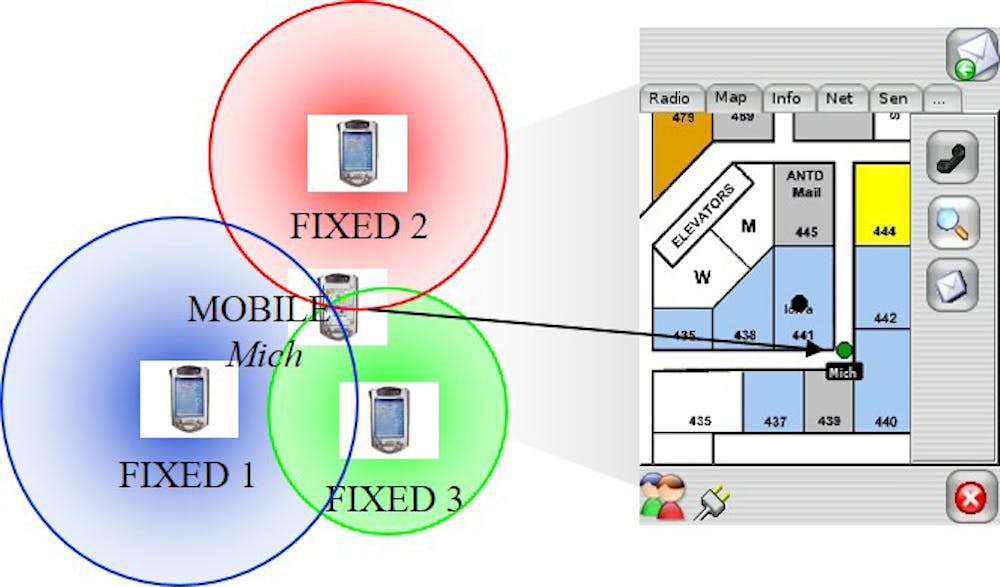
In addition, technological advances are allowing cell towers to serve smaller and smaller areas. That means connected users are in even more specific locations. The FCC actually requires phone companies to be able to locate most cellphones within 50 meters when they call 911, to be able to direct emergency responders to the correct location.
Police want to track suspects’ movements
It is in the public’s interest for police to be able to track, catch and convict criminals. But to protect innocent citizens from harassment, the Bill of Rights established a process requiring investigators to get a judge’s signoff before conducting most searches for evidence.
Early in the 20th century, courts thought phone wiretaps didn’t require a warrant as long as the physical wiretap equipment was placed outside a target’s home. Over time, the importance of the telephone as a communications medium and the rise of the internet led to the increased protections provided by the 1986 Stored Communications Act. That law clarified constitutional procedure for the telephone age.
Under the law, police need a warrant to tap a person’s phone and listen to all his conversations. Without a warrant, officers can see what numbers a phone called, what numbers called that phone and when and how long the conversations lasted – but cannot eavesdrop on what was said.
Those rules have not been updated for the age of the mobile phone. As a result, a legal principle called the “third party doctrine” applies in Carpenter’s case – and in dozens, if not hundreds, of others. It says that if a person gives someone else a piece of information, that knowledge is no longer considered private.
In practice, it seems straightforward: If you tell a friend what you did last night, you can’t later stop your friend from telling the police what you said. And in fact, the Supreme Court has held that your friend could wear a “wire” so that the police can listen in, without a warrant and without informing you.
The way this plays out regarding the location of a cellphone is the assumption that by carrying a cellphone – which communicates on its own with the phone company – you have effectively told the phone company where you are. Therefore, your location isn’t private, and the police can get that information from the cellphone company without a warrant, and without even telling you they’re tracking you. This assumption is what Carpenter’s appeal is challenging.
Technology intrudes on privacy
I have been at the leading edge of data science for over 30 years. Based on my work on the ethics of data science, I believe the assumptions that were safe in 1986 – when almost nobody had cellphones and nearly all telephones were landlines serving fixed locations – are no longer reasonable. Back then, the information a phone user revealed to a phone company was very limited. Today, people disclose their location all the time, for routine, law-abiding activities, by carrying around cellphones.
Cellphone companies can know not only whom you call and for how long you speak, but where you are when you make the call, where you go in between calls and much more. They can deduce even more information, such as individuals’ religious affiliations and any number of personal habits that might be better kept secret – including how often an employee uses the restroom during a workday.
It makes no practical sense to claim a person could protect the privacy of their location and movements by not carrying a cellphone: The social and economic burden that would impose on each person would be too high.
This threat to privacy goes well beyond mobile phones: Automated license plate readers on bridges, roadsides and even police cars can easily record the identity of every vehicle, confirming its presence at a specific location at a particular time. A privacy-conscious person might give up driving, and instead rely on walking and taking public transportation. Cameras on the streets, at bus stops and in transit vehicles – coupled with tremendous recent advances in face recognition technology – can still track every move you make.
Companies that provide internet service can learn a great deal about their customers simply by observing what websites users connect to, even if they don’t read the contents of each web page or email message. As electronic personal assistants (like Siri and Alexa) and home devices (like Nest) become more common and used more heavily, they will soon learn even more intimate details about people’s lives.
Declining to provide information to these “third party” service providers would require people to opt out of normal life – which isn’t really a choice.
Privacy extends to companies too
Most Americans don’t want their mobile phone companies to just hand over to police the enormous amount of information cellphones can reveal – at least not without getting a warrant first. But Americans’ privacy problem goes much deeper. Most people also don’t want their mobile phone companies to sell these data to others.
Many companies may seek that information to try to persuade more customers to buy their products, but nefarious uses are also possible. A person could be blackmailed with a threat of publicizing their (completely lawful) secrets – such as a particular health condition, religious affiliation or sexual preference.
Today, the protection people get goes only as far as the fine print of each service’s privacy policy. When a company goes out of business, its creditors try to make money from its assets – including data collected from and about its users. That is why I have called for companies to take the Data Destruction Pledge, promising that all customer data will be destroyed if the company ceases operation.
The FBI found Timothy Carpenter because one of his accomplices told them about him. I believe the FBI could have obtained a search warrant to track Carpenter, if agents had applied for one.
Instead, federal agents got cellphone location data not just for Carpenter, but for 15 other people, most of whom were not charged with any crime. One of them could be you, and you’d likely never know it.
The more people rely on external devices whose basic functions record and transmit important data about their lives, the more critical it becomes for everyone to have real protection for their private data stored on and communicated by these devices.
Last week, we bought more than a dozen housing ads excluding categories of people explicitly protected by the Fair Housing Act of 1968.
Were these actual ads? No. And as someone who’s spent the past month on a New York City apartment hunt, I’m pretty confident that no one would mistake our “real estate company” for an actual brokerage.
But here’s the question: could they have been real? Yes — and our ability to limit the audience by race, religion, and gender — among other legally protected attributes — points to the same problem my colleagues Terry Parris Jr. and Julia Angwin reported out a year ago, exciting much outrage from people who care about fixing discriminatory housing practices.
Here’s what they tested last year:
Their work put Facebook on the defensive. It put out a statement that “discriminatory advertising has no place on Facebook.” In February, the company announced that it had launched a system to catch problematic housing ads and “strengthen enforcement while increasing opportunity on Facebook.”
Meanwhile, Facebook has amped up its efforts on real estate this year. You can see housing ads all over Marketplace, a slick Craigslist-like section of the site. Facebook recently partnered with real brokers at Zumper and Apartment List, and it has announced it will be rolling out new features over the coming months. With that in mind — and fresh off our other Facebook ad portal investigation into “Jew haters” — we wanted to know whether it had actually fixed the problem.
So we more or less repeated the exercise:
Our ads skated right through the approval process. Again. Approved in under two minutes. It wasn’t just this ad. We also managed to buy ads excluding users based on religion, family status, national origin, sex, race, ability, and more — every group that’s supposed to be protected under major housing laws.
Facebook apologized profusely for what it called “a technical failure,” and promised — again — to strengthen its policies and hire more reviewers.
I want to answer a question that has been posed by quite a few people on social media in response: Why would ProPublica take out discriminatory ads?
It’s a fair question. Let’s be clear: we don’t take the decision to buy a fake ad for non-existent housing lightly, and it is against our newsroom’s policy to impersonate for the sake of newsgathering. But there was no other way for us to test the fairness of Facebook’s ads. And our disturbing findings suggest that, even if Facebook has the best intentions and just overlooked a technical glitch, somebody on the outside has to watch its advertising platform more closely than it seems to do itself.
We had a lot of conversations internally about the best and most ethical ways to do this. Here’s how our editor-in-chief Stephen Engelberg puts it:
“Social networking platforms like Facebook are enormously powerful in shaping the modern world. In this instance, we viewed the public interest in testing its promises about discriminatory advertising as sufficiently important that it outweighed the possibly detrimental effect. Remember, we canceled these ads as soon as they were accepted so that the likelihood they would be seen by anyone was remote. In our judgment, placing this ad was far less deceptive than a reporter posing as someone else, a practice we continue to bar under virtually all imaginable circumstances.”
Meanwhile… if you see any eyebrow-raising ads or advertising categories on your Facebook feed this shopping season, let us know. We’re gathering political ads, and we want to stay on top of ads for housing, employment and credit as well. Clearly, this is a story that requires persistence.
ProPublica is a Pulitzer Prize-winning investigative newsroom. Sign up for their newsletter.
Less than 24 hours after BuzzFeed News alerted Twitter to the existence of yet another network of suspected Russian propaganda accounts, the company suspended 45 more users.
As BuzzFeed reports, the accounts were primarily German language and contained anti-Angela Merkel messaging, though some included bizarre statements supportive of Donald Trump that were in English.
Many of the English-language Trump tweets from the now-suspended accounts included strange memes claiming that although "Trump is a gay," they still "love" him.
As the report notes, journalists at BuzzFeed discovered the existence of the German pro-Trump and anti-Merkel and anti-Brexit accounts through "a very simple form of network analysis" -- by searching through a database of 17 million tweets related to Brexit compiled by the University of Sheffield in the United Kingdom.
According to Damian Collins, a member of the UK's Conservative Party that chairs Parliament's culture, media and sports committee, BuzzFeed's discovery of these accounts "clearly calls into question the evidence that Twitter provided to the US Senate judiciary and intelligence committees and demonstrates that whatever process the company undertook to identify Russian-backed fake accounts was simply not rigorous enough."
"The technology exists to aid the identification of fake accounts based on their shared characteristics and use of language," Collins, who is leading an inquiry into fake news, told BuzzFeed. "Twitter should be deploying this to identify other accounts linked to organisations like the Russian Internet Research Agency."
A University of Sheffield employee called the German-language network identified in their Brexit database "a failed experiment" because the tweets garnered very few interactions and were primarily retweeted by other suspected bots.
Nevertheless, Collins said the information Twitter has handed over so far is "only the tip of a very large iceberg."
When the world's first cloned animal died in 2003 at the age of six, many suspected the cloning process put Dolly into an early grave. A new investigation of the cloned sheep's bones by scientists at the Universities of Glasgow and Nottingham suggests Dolly showed no signs of abnormal aging.
Russia's foreign ministry said on Thursday that moves by Alphabet Inc's Google to place articles from Russian news outlets Sputnik and Russia Today lower in search results would amount to censorship.
Alphabet Executive Chairman Eric Schmidt, speaking on stage at an international forum last Saturday, responded to a question about Sputnik articles appearing on Google by saying the company was working to give less prominence to "those kinds of websites" as opposed to delisting them.
Speaking at a news briefing, Russian Foreign Ministry spokeswoman Maria Zakharova said on Thursday Google was acting under strong political pressure from the U.S. authorities.
(Reporting by Dmitry Solovyov; Editing by Christian Lowe)
The internet was built to work as a level playing field. ... . chairman, Ajit Pai, issued a statement outlining a plan that would overturn Obama-era regulations regarding netneutrality. The FCC commissioners will vote on the issue on December 14th, 2017, where party ...
The German government agency that regulates telecommunications -- "Bundesnetzagentur" aka the Federal Network Agency -- has banned the sale of children's "smartwatches" in the country and urged parents to smash the ones they already own.
According to the BBC, the agency has identified multiple brands of smartwatch aimed at kids between the ages of 5 and 13 that send data back and forth without encryption, making them vulnerable to hacking and spying attempts.
"Via an app, parents can use such children's watches to listen unnoticed to the child's environment and they are to be regarded as an unauthorised transmitting system," said Jochen Homann, president of the Federal Network Agency.
"According to our research, parents' watches are also used to listen to teachers in the classroom," Jochen continued.
"Poorly secured smart devices often allow for privacy invasion," said Pen Test Partners security expert Ken Munro. "That is really concerning when it comes to kids' GPS tracking watches - the very watches that are supposed to help keep them safe."
"There is a shocking lack of regulation of the 'internet of things', which allows lax manufacturers to sell us dangerously insecure smart products," Munro said. "Using privacy regulation to ban such devices is a game-changer, stopping these manufacturers playing fast and loose with our kids' security."
So-called smartwatches contain a SIM card and limited telephonic abilities. The devices are set up and controlled by an app that parents control.
"It meant that strangers, using basic hacking techniques, could track children as they moved or make a child appear to be in a completely different location," the BBC explained.
The German government has also banned a model of talking doll for the same reason.
According to Endgadget, "Devices and apps geared towards kids have become a focus of concern when it comes to protecting children's privacy. In 2015, VTech, a maker of a number of kid's toys, was hacked, exposing some 6.4 million customers' data as well as children's photos and chat logs. The manufacturer of an internet-connected teddy bear also mismanaged its customers' data, making it easily accessible online."
Veteran journalist Carl Bernstein told Bill Maher during Friday's "Real Time," made the argument that Americans are no longer interested in the truth. Rather, he believes voters seek justification for their own thoughts and opinions.
"I don't even know what's real anymore," Maher admitted. He called out Fox News, which has become "state TV" populated with viewers who believe the Russia scandal is completely invented.
"I think we've got a small piece of it with Fox but I think it's much deeper than that," Bernstein began. "We now have a culture in which people, by and large, are increasingly are looking for the best obtainable version of the truth. Too many people are looking for information to underscore what they already believe."
Bernstein noted, however, that far worse is the fact that Americans don't have a culture that is open to the best obtainable version of the truth the way that there was in the era of Watergate.
New York Magazine writer Rebecca Traister explained that during Watergate media consolidation was the reason that a story could become so well known. Today, there aren't simply thousands of television channels but online television, social media and more to compete with what was once a hand full of network shows.
General Motors Co plans to launch a new family of electric vehicles in 2021 with batteries costing about 30 percent less than those used on the current Chevrolet Bolt, Chief Executive Mary Barra told investors on Wednesday.
The No. 1 U.S. automaker is developing an all-new electric vehicle platform that will accommodate multiple sizes and segments, to be sold by different GM brands in the United States and China, Barra said, adding new details to what was known about GM's aggressive electrification strategy.
"We are committed to a future electric vehicle portfolio that will be profitable," Barra said at the Barclays Global Automotive Conference in New York.
GM plans to introduce three new electric vehicles by 2020, including two crossovers, that will share basic components with the Chevrolet Bolt, Barra said.
The company aims to cut the cost of its lithium-ion batteries to less than $100 per kilowatt-hour from $145 per kilowatt-hour by 2021, which would bring the overall cost of electric vehicles much closer to comparable gasoline-engine models.
GM said the new batteries would hold more energy and charge quicker. The company is aiming to boost electric vehicle range to more than 300 miles (483 km) with the new batteries. The current Bolt is rated at 238 miles between charges.
Barra said GM will have the ability to manufacture high volumes of the new batteries at plants in the United States and China. She said GM projects sales of 1 million electric vehicles a year by 2026. So far, the company has sold about 17,000 Bolts.
GM's new electric vehicle platform in 2021 will serve as a base for at least nine derivatives, ranging from a compact crossover to a large seven-passenger luxury sports utility vehicle and a large commercial van. It will also provide the underpinning for a shared autonomous vehicle (AV) that GM plans to put into commercial service in 2021.
Barra described GM as "the only fully integrated developer of AVs with true scale capability."
GM's shares were down 0.6 percent to $42.73 in late-morning trade.
(Additional reporting by Joe White in Detroit; Editing by Chizu Nomiyama and Bill Rigby)
A report to the U.S. Congress released on Wednesday accused Chinese state media entities of involvement in spying and propaganda and said their staff in the United States should be required to register as foreign agents.
The annual report of the U.S. China Economic and Security Review Commission said that while China had tightened restrictions on domestic and foreign media, Chinese state media had rapidly expanded overseas.
The commission, created by Congress in 2000 to monitor national security implications of U.S.-China trade relations, said China's state media expansion was part of a broader effort to exert greater control over how China is depicted globally, as well as to gather information.
The report highlighted the rapid growth of the Xinhua news agency and noted that it had offices at the United Nations in New York, Washington, Chicago, Los Angeles, Houston and San Francisco.
"Xinhua serves some of the functions of an intelligence agency by gathering information and producing classified reports for the Chinese leadership on both domestic and international events," the report said.
It quoted testimony to the commission by the U.S. Government-funded rights organization, Freedom House, as saying it was a "loophole" that individuals working for Xinhua and China's People's Daily newspaper were not covered by the Foreign Agents Registration Act.
FARA, first passed in 1938 in the lead up to World War Two to combat German propaganda efforts, requires foreign governments, political parties and lobbyists they hire in the United States to register with the Department of Justice.
The China Daily, an English-language newspaper owned by China's government and ruling Communist Party, is already registered under FARA but only its top executives are required to individually disclose working for the publication.
A bipartisan group of U.S. lawmakers is working to overhaul FARA after Paul Manafort, former campaign manager for President Donald Trump, and a business associate were indicted for failing to register under the law.
The reform, backed by powerful Senate Judiciary Committee chairman Chuck Grassley, could provide an opportunity for Congress to act on the commission recommendations.
On Monday, the Kremlin-backed television station RT America registered under FARA after U.S. intelligence agencies in a report in January called it a "state-run propaganda machine" that contributed to the Kremlin’s campaign to interfere with last year's U.S. presidential election.
Under the act, RT will be required to disclose financial information. Moscow has said it views the action against RT as an unfriendly act.
(Reporting by David Brunnstrom, additional reporting by Ginger Gibson; Editing by David
Russian Twitter accounts posted almost 45,000 messages about Brexit in the 48 hours around last year's referendum in an attempt to sow discord during the vote on whether to leave the European Union, the Times newspaper reported on Wednesday.
The Times cited research from an upcoming paper by data scientists at Swansea University and the University of California, Berkeley, which it said showed accounts based in Russia had tweeted about Brexit in the days leading up to the June 23 vote.
The Times said most of the tweets seen by the newspaper encouraged people to vote for Brexit, although a number advocated remaining in the EU. It quoted Tho Pham, one of the paper's authors, as saying "the main conclusion is that bots were used on purpose and had influence".
The research tracked 156,252 Russian accounts that mentioned #Brexit, including one, Svetal1972 which posted 92 tweets between June 20 and 24, including one calling for Britain to "make June the 23rd our Independence Day".
It said many of the messages appear to have come from automated accounts known as bots or from cyborg accounts which are heavily automated but have some human involvement.
In the June 23, 2016 referendum, 17.4 million votes, or 51.9 percent of votes cast, backed leaving the EU while 16.1 million votes, or 48.1 percent of votes cast, backed staying.
Russia has repeatedly denied meddling in Brexit. Russian officials say the West is whipping up anti-Russian hysteria around Moscow's alleged involvement in both the U.S. presidential election and Brexit.
In Britain, a parliamentary committee has written to Facebook's Mark Zuckerberg asking for information on any paid-for activity by Russian-linked Facebook accounts around the EU referendum and the 2017 national election.
British Prime Minister Theresa May on Monday accused Russia of meddling in elections and said the government would maintain its commitment to protecting Europe after Brexit.
"We will take the necessary actions to counter Russian activity," she said.
(Reporting by Kate Holton; editing by Guy Faulconbridge)





 The more people rely on external devices whose basic functions record and transmit important data about their lives, the more critical it becomes for everyone to have real protection for their private data stored on and communicated by these devices.