Las Vegas casinos threw open their doors Thursday after 11 weeks closed due to coronavirus, with downtown roulette wheels and slot machines whirring to life minutes after midnight.
Large crowds flocked immediately to casinos such as The D, which had flown in gamblers from across the country on hundreds of free flights to boost the occasion.
"We're fired up... You can see the smiles on everybody's faces," owner Derek Stevens told journalists. "Everybody's just excited."
On the world-famous Strip, which has been almost deserted since mid-March, casinos and resort hotels began reopening more slowly after dawn.
The Bellagio's fountains were switched back on shortly before its sprawling casino floors reopened, as dozens of curious locals and excited tourists lined up to enter at 10 am.
The reopening is a major boost for the badly-hit Las Vegas economy, which depends heavily on tourism and has seen unemployment shoot as high as 33.5 percent in April.
Inside the city's gaming rooms -- capped at half capacity -- strict restrictions were in place, with blackjack tables limited to three players in order to maintain social distancing, and fitted with plexiglass barriers between players and dealers.
Staff were instructed to ensure crowds do not gather around players at craps tables, where a maximum six can stand at once.
"Vegas is still Vegas," MGM Resorts CEO William Hornbuckle told AFP earlier.
"Over time, we'll get fully back," he added.
Guidelines for the company, which operates the Bellagio, MGM Grand, New York-New York and other casinos, require every other slot machine to be switched off.
Guests are "strongly encouraged" to keep face coverings on while gambling, but drinks are once again being served on the casino floor.
At nearby Treasure Island, 29-year-old Alecia Perez had driven up from Los Angeles on Thursday morning with her partner and young child.
"We have a toddler so that's another reason we came now, we figured it'd be a little more empty," she told AFP.
"It's a different type of vacation -- we're not looking to party."
Nightclubs and giant Las Vegas shows remain closed for now. Many casinos are conducting temperature checks on entry.
"It's gonna be a little scary at first of course. I'm not going to make as much money as I usually do," said Luis Rosales, preparing for his first shift back working as a server at the Venetian hotel.
"But it's just going to take a little bit of time."
He added: "I get to go to the bars now, to go gambling. That's what we've all been missing."
As well as recovering from coronavirus, the city has been hit with tense protests over the death of George Floyd, an unarmed black man whose videotaped killing by police in Minnesota went viral and triggered demonstrations across the US.
A Las Vegas officer was in "grave condition" after being shot during protests earlier this week, and an armed Hispanic man was shot and killed by police after raising his gun in a separate, nearby incident.
Three far-right extremists were arrested and charged by anti-terror officials for inciting violence.
Three of the four authors behind a large-scale study in The Lancet that raised safety fears over the use of common anti-malarial drugs to treat COVID-19 retracted their paper on Thursday, blaming a health care company that supplied the dataset.
The study retrospectively analyzed some 96,000 patient records, finding that hydroxychloroquine and chloroquine showed no benefit against the coronavirus and even increased the risk of dying in hospital, with heart arrhythmia a particular concern.
The finding led the World Health Organization to suspend clinical trials into the medicines, but it was soon followed by widespread concern among scientists over a lack of information about the countries and hospitals that contributed data.
Mandeep Mehra, a professor at Harvard University who led the work, along with Frank Ruschitzka of the University Hospital Zurich and Amit Patel of the University of Utah, said in a statement they had tried to launch a third-party peer review into the data.
But Surgisphere, a little-known health care analytics firm based in Chicago that supplied the records, refused to cooperate with the peer reviewers, who had been asked to verify the records and replicate the study's findings.
"Based on this development, we can no longer vouch for the veracity of the primary data sources," the three said.
"Due to this unfortunate development, the authors request that the paper be retracted."
They stressed that they had worked "in good faith and at a time of great need during the COVID-19 pandemic.
"We deeply apologize to you, the editors, and the journal readership for any embarrassment or inconvenience that this may have caused."
Sapan Desai, a vascular surgeon and Surgisphere's chief executive, did not join the retraction.
The public relations firm that represents him told AFP he would not be making a comment at this time.
President Donald Trump intends to hold a July 4th celebration in South Dakota next month, and organizers have decided that they won't enforce social distancing rules, the Associated Press reported.
“There will be no better place to celebrate our independence,” Gov. Kristi Noem (R-SD) said. “We are excited that President Trump will be joining us for this event.”
There are currently over 1,000 cases of COVID-19 in the state and 86 are currently being hospitalized. Aside from the spike in cases as the result of a meatpacking plant, South Dakota has remained largely steady, according to the Health Department.
South Dakota's "Back to Normal Plan" tells citizens to "continue to practice physical distancing, as appropriate." They also encourage remote learning at schools.
Emerson Gorman knows what it's like to face the destruction of his culture: when he was five-years-old he was among thousands of Navajo children taken from their families and sent to Christian schools that tried to erase their belief systems.
Now 66, the traditional healer who lives on the largest Native American reservation in the United States sees it as his duty to pass on his wisdom, at a time when the community elders face an existential threat from the coronavirus pandemic.
"It's very important to talk about our history, our rituals and ceremonies," said Gorman, a tall, well-built man with weathered features, who lives on a large homestead at the center of the Navajo Nation, where he and his family raise livestock and grow corn, fruit, and herbs.
Handing down the medicine he practices is particularly important, he says, because "we know that we're being taken care of and we're connected to the natural energy, to the spirits and the natural world."
A preponderance of poverty linked conditions like diabetes, obesity and heart disease -- combined with the fact that 30 to 40 percent of the Navajo Nation's population of 175,000 have no access to running water -- have made this territory one of the hardest hit zones in the US.
With more than 5,500 confirmed cases and 250 deaths, its per capita fatality rate lies just behind the state of New York, and much like everywhere else, it's the elderly who are the most impacted.
What makes things unique is the position the elderly hold in Native culture, as repositories of the community's knowledge which must be passed down orally to honor tradition.
"The fact that this illness is affecting elders disproportionately is very scary to native peoples. It's a huge source of anxiety," said Allison Barlow, director of the Johns Hopkins Center for American Indian Health (CAIH), which has worked in the territory since the 1990s.
"There was an era when the federal government suppressed the teaching of language, the teaching of culture," she told AFP, referring to Indian boarding schools, which ran from the 1860s to the late 1970s.
Teachers at the school attended by Gorman forced boys to cut their long braids, forbid them from speaking their language, told them that their religion was "evil" and tried to force them to convert to Catholicism.
- Loss of language -
In Monument Valley, one of the Navajo Nation's most iconic regions that is home to colossal sandstone formations , Lanell Mernard-Parrish, a treasurer for the local chapter of the Navajo government, is piling boxes into people's cars at distribution drive for those in need.
Vehicles carrying those aged 60 and above are identified by tape on their windshields -- volunteers cry "Elders!" when they come into view, and give them extra supplies, a sign of the high esteem they are held in.
Mernard-Parrish's voice breaks as she recaps a recent death in the family: that of her mother-in-law, who was 60.
"As soon as we found out she was ill, they took her in. And from the day that she was tested positive, she only stayed another six days, and then we lost her," said Mernard-Parrish, who is in her forties.
She is also sorry for her five children who have now lost a grandparent, a crucial link to their past.
Growing up, she said, "I was fortunate to have been around all four of my grandparents" -- but many of her generation lost their grandfathers early due to the expansive uranium mining that began in the Navajo Nation after World War Two.
According to researchers, the US government effectively carried out a mass human experiment on Navajo miners by failing to disclose the cancer risks of radiation while studying its impact on them.
"We're losing our language, and I think losing a grandparent has a lot to contribute to that," she said.
This is particularly the case for those Navajo who leave the reservation in search of economic opportunities and are no longer educated in Navajo schools or raised among the extended family.
- Revival efforts -
Back at their homestead, Gorman says he's been inundated with calls from people asking that he perform blessings to ward off COVID-19, often by phone.
He and his family follow official advice to wear face masks and wash their hands frequently.
But they also emphasize the use of herbs, pointing out the sage, yucca and juniper he grows to treat various ailments.
Back in 2004, his wife Beverly began a camp for the Nation's children to revive their culture and preserve tradition.
As a grandmother herself in a predominantly matriarchal society, she hands down the teachings of her foremothers.
Lessons include the Navajo language (Dine bizaad), history, herbs, rabbit trapping, making arrowheads and learning how to make fire with bow drills.
She has also set to song the "Blessingway" a prayer performed in the morning facing the rising sun in the east in order to bless and protect the home.
Naiyahnikai Gorman, 21, the youngest of Emerson and Beverly's eight children, wants to carry their legacy forward.
A research assistant at Johns Hopkins' CAIH, she is hoping to go to medical school and then start a center offering both Western and Navajo medicine.
With many U.S. cities having suffered civil unrest following the killing of George Floyd in Minneapolis on May 25, President Donald Trump has called for the use of active-duty military troops in order to put down the unrest — and Sen. Tom Cotton of Arkansas joined him in that recommendation in a widely criticized op-ed published by the New York Times on June 3. But John Allen, president of the Brookings Institution and a retired U.S. Marine Corps general, finds Trump’s recommendation to be incredibly disturbing and slams him in a scathing Foreign Policy article.
“The slide of the United States into illiberalism may well have begun on June 1, 2020,” Allen warns. “Remember the date. It may well signal the beginning of the end of the American experiment.”
Allen continues, “The president of the United States stood in the Rose Garden of the White House on Monday, railed against weak governors and mayors who were not doing enough, in his mind, to control the unrest and the rioters in their cities, and threatened to deploy the U.S. military against American citizens. It was a stunning moment.”
The Marine Corps veteran goes on to lay out some reasons why he finds Trump’s actions so troubling.
“Trump was clear he views those engaged in the unrest and criminal acts in these riots as terrorists, an enemy,” Allen notes. “He said so, ostensibly as justification to deploy the U.S. military to apply federal force — his ‘personal’ force — against the riots. Indeed, the secretary of defense used the military term ‘battlespace’ to describe American cities.”
Allen adds that although Trump briefly mentioned Floyd on June 1, he failed to address the reasons why thousands of nonviolent protestors all over the U.S. are so angry — reasons that include “pervasive injustice, mass incarceration, frequent false arrests, and an institutionalized devaluation of black lives and property.”
Allen also objects to Trump describing antifa as terrorists.
“The president and members of his administration seem bent on ensuring that the so-called antifa — or anti-fascist — movement is fully on display as a principal reason for the violence,” Allen writes. “To deal with antifa, the president even tweeted that he intended to designate the group a terrorist organization — never mind that he has no authority to designate any domestic movement as such.”
Trump’s fear-mongering over antifa, according to Allen, is ridiculous in light of all the white supremacist terrorism that has occurred in the U.S.
“White supremacists have murdered, lynched, tortured, terrorized, oppressed, and discriminated against black Americans from the beginning of the idea of America,” Allen writes. “They have killed black Americans by the thousands, often in the most horrific ways imaginable. Far more damage to the United States has come from these terrorists — fascists, Klansmen, and neo-Nazis, all feeling newly empowered today — than those who have opposed them.”
Trump and Cotton have argued that local police forces and the National Guard are not enough to put down the violence and unrest that is occurring in U.S. cites. Allen, however, stresses that the National Guard is well-equipped.
“The governors have sufficient law enforcement capacity — and, if necessary, the combat power of the National Guard — to handle their respective crises,” Allen asserts. “If not, they can ask for federal assistance. There is no precedent in modern U.S. history for a president to wield federal troops in a state or municipality over the objections of the respective governor. Right now, the last thing the country needs — and, frankly, the U.S. military needs — is the appearance of U.S. soldiers carrying out the president’s intent by descending on American citizens.”
Prime Minister Justin Trudeau declared on Thursday that Canada is winning the fight against the new coronavirus, with the latest data showing new cases in decline.
But he also warned that the battle is not over yet.
"The data shows that we are continuing to make progress in the fight against this virus in many communities, the number of new cases is low, and we can trace where they came from," Trudeau told a daily briefing.
"That's an encouraging sign that the virus is slowing, and in some places, even stopping," he said. "But I want to be very clear: We're not out of the woods."
As of Thursday there were 93,700 coronavirus cases in Canada. More than half of those patients have already recovered.
New COVID-19 modeling for the country showed the epidemic has slowed after peaking mid-April.
And with strong containment measures -- such as social distancing, testing and contact tracing -- Canada could slay the virus by fall.
In the short term, Health Canada projects the total number of cases to rise to between 97,990 and 107,454, -- including 7,700 to 9,400 deaths -- by June 15.
Canada flattened its epidemic curve sooner than a number of countries such as Britain, Italy and the US, but lagged behind South Korea and Japan.
Ninety-four percent of the 7,495 deaths recorded so far have been among people aged 60 years or older; 82 percent were in long-term care homes.
Canada's two largest and most populous provinces continue to struggle. Ontario and Quebec accounted for 90 percent of new cases in last two weeks, Chief Public Health Officer Theresa Tam said.
People have turned to historical experience with influenza pandemics to try to make sense of COVID-19, and for good reason.
Influenza and coronavirus share basic similarities in the way they’re transmitted via respiratory droplets and the surfaces they land on. Descriptions of H1N1 influenza patients in 1918-19 echo the respiratory failure of COVID-19 sufferers a century later. Lessons from efforts to mitigate the spread of flu in 1918-19 have justifiably guided this pandemic’s policies promoting nonpharmaceutical interventions, such as physical distancing and school closures.
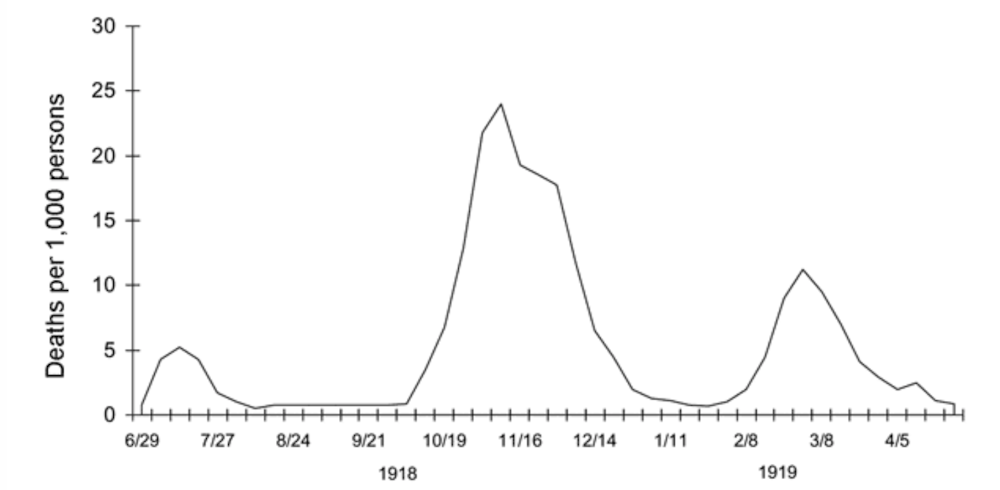
Current discussions about scaling back social distancing measures and “opening up” the country frequently refer to “waves” of disease that characterized the dramatic mortality of H1N1 influenza in three major peaks in 1918-19. As COVID-19 rates begin to steady in some parts of the U.S., people today are nervously eyeing the “second wave” of influenza that came in autumn 1918, that pandemic’s deadliest period.
Three waves of death during the pandemic: weekly combined influenza and pneumonia mortality, United Kingdom, 1918–1919. The waves were broadly the same globally.
Waves evoke predictability, however, and COVID-19 has been hard to predict. Despite the valuable lessons drawn from past influenza outbreaks, how pandemic influenza struck in 1918 isn’t a template for what will happen with COVID-19 in the coming months.
As a historian and a virologist, we believe this comparison of two pandemics has contributed to public confusion about what to expect from “flattening the curve.” Key divergences in the sociopolitical contexts of 1918-19 and now, in addition to clear virologic differences between influenza and SARS-CoV-2, the virus that causes COVID-19, mean their courses are not perfectly matched.
Influenza pandemic a product of that time
Today’s citizens may consider the 2020 world to be dramatically more connected than in the past. But World War I and soldier mobilization created a situation well-suited to influenza dispersal. While the origin of the deadly strain of 1918 H1N1 remains obscure, evidence indicates that soldiers on the move drove circulation.
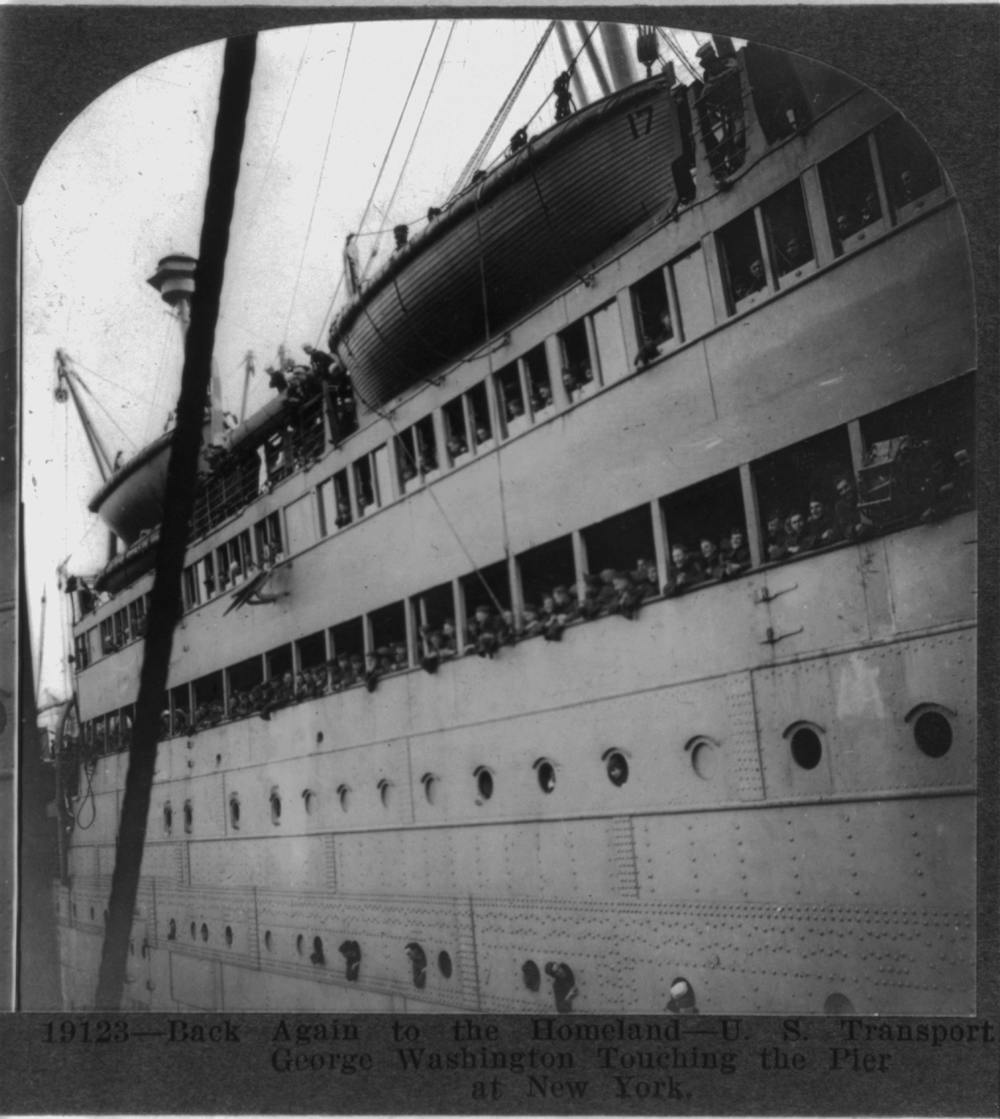
Young American men left their homes – rural farms, small towns, crowded cities – and traveled around the world. They gathered by the thousands in military training camps and on troop ships, and then at the front in Europe. Civilians globally continued to work in crucial areas of economic production that required movement through the same transit hubs soldiers used. The disease’s first wave occurred in spring and early summer 1918 amid these movements.
H1N1 flu stowed away with soldiers returning from World War I.
In theaters of war in Europe, Africa and western Asia, soldiers mingled with their global compatriots. When they demobilized, they passed through major transit hubs back to their homes around the world, interacting with more people.
The extraordinarily deadly second wave of influenza in autumn 1918 diffused linearly along rail and sea routes, then radiated outward to wreak havoc on previously unexposed populations globally. In some areas, this period was followed by a less deadly third winter wave of disease in early 1919.
Medical historians conservatively estimate that influenza killed 50 million people globally, with 675,000 in the United States between 1918 and 1920. After that, this strain of flu receded, likely due to changes in the virus itself and the fact that most people had already been exposed and developed immunity or died.
Because the waves of pandemic flu did recede, it’s tempting to imagine today’s pandemic following a similar trajectory. However, fundamental differences between the biology of SARS-CoV-2 and influenza viruses make it hard to chart the future of COVID-19 based on what happened in the early 20th century.
SARS-CoV-2 and flu are biologically different
Both the new coronavirus and influenza have genetic material in the form of RNA. RNA viruses tend to accumulate a lot of mutations as they multiply – they typically don’t double-check copied genes to correct errors during replication. These mutations can occasionally lead to significant changes: The virus might change the species it infects or cell receptor it uses, or it could become more or less deadly, or spread more or less easily.
Uniquely, influenza’s genetic material is organized in segmented chunks. This idiosyncrasy means the virus can trade entire segments of RNA with other influenza viruses, enabling rapid evolution. Influenza also has a distinct seasonality, circulating much more during the winter months. As virus strains circulate, oscillating seasonally between the Northern and Southern Hemispheres’ wintertimes, they mutate rapidly. This capacity for quick adaptation is why you need to get a new flu vaccination annually to protect against new strains that have emerged in your area since last year.
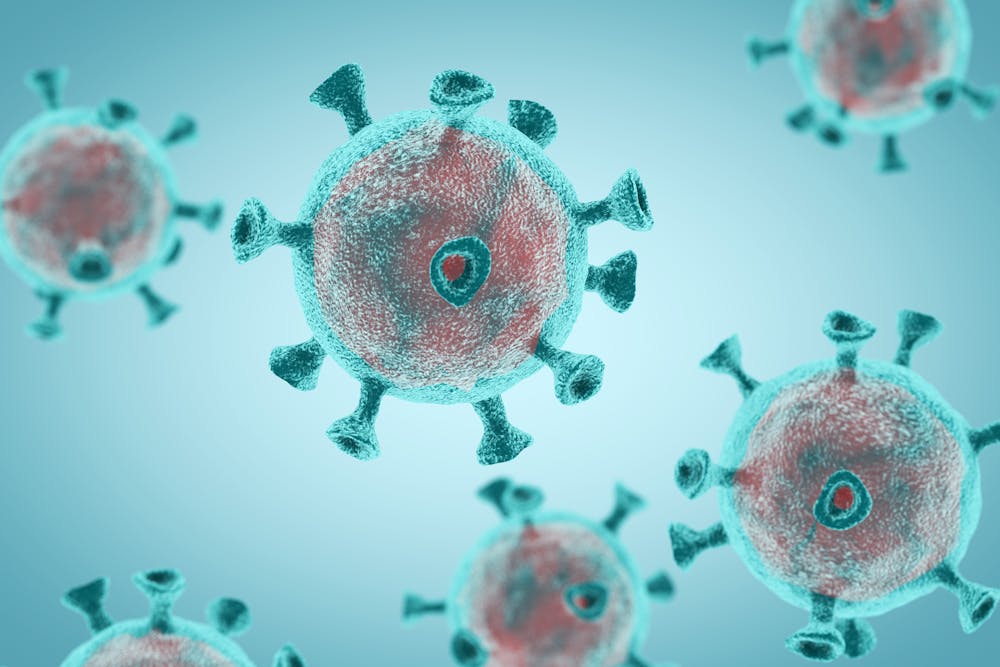
SARS-CoV-2 makes many copies of itself once it successfully infects a human cell.
Coronaviruses actually do proofread their copied RNA to fix inadvertent errors during replication, which decreases their relative mutation rate. From the originally sequenced SARS-CoV-2 in Wuhan, China in December 2019 to recently banked sequences from the U.S., there are fewer than 10 mutations in 30,000 potential locations in its genome, despite the virus having traveled around the world and through multiple generations of human hosts. Influenza makes 6.5 times more errors per replication cycle, independent of entire genome segment swaps.
The relative genetic stability of SARS-CoV-2 means that future peaks of disease are unlikely to be driven by natural changes in virulence due to mutation. Mutation is unlikely to contribute to predictable “waves” of COVID-19.
All this means that oscillations in COVID-19 cases are unlikely to come with the predictability that discussions of influenza “waves” in 1918-19 might suggest. Rather, as SARS-CoV-2 continues to circulate in nonimmune populations globally, physical distancing and mask-wearing will keep its spread in check and, ideally, keep infection and death rates steady.
As states loosen nonpharmaceutical interventions, the U.S. will likely experience a long plateau of continued new infections at a steady rate, punctuated by periodic local flares. These outbreaks will not be driven by SARS-CoV-2 mutation or virulence, but by the further exposure of nonimmune people to the virus. Future spikes in COVID-19 cases and deaths will very likely be driven by what people do.
This scenario will continue until the U.S. population gains herd immunity, ideally accelerated by vaccination. Unfortunately, this process may be measured in years rather than months.
One virus’s pattern is not a prediction
People seek answers from the experiences of influenza in 1918-19 for a fundamental reason: It ended.
History shows the pandemic ebbed after a final, third wave in spring 1919 without the benefit of an influenza vaccine (available only in the mid-1940s) or a molecular or serologic test, or effective antiviral therapy, or even the support of mechanical ventilation.
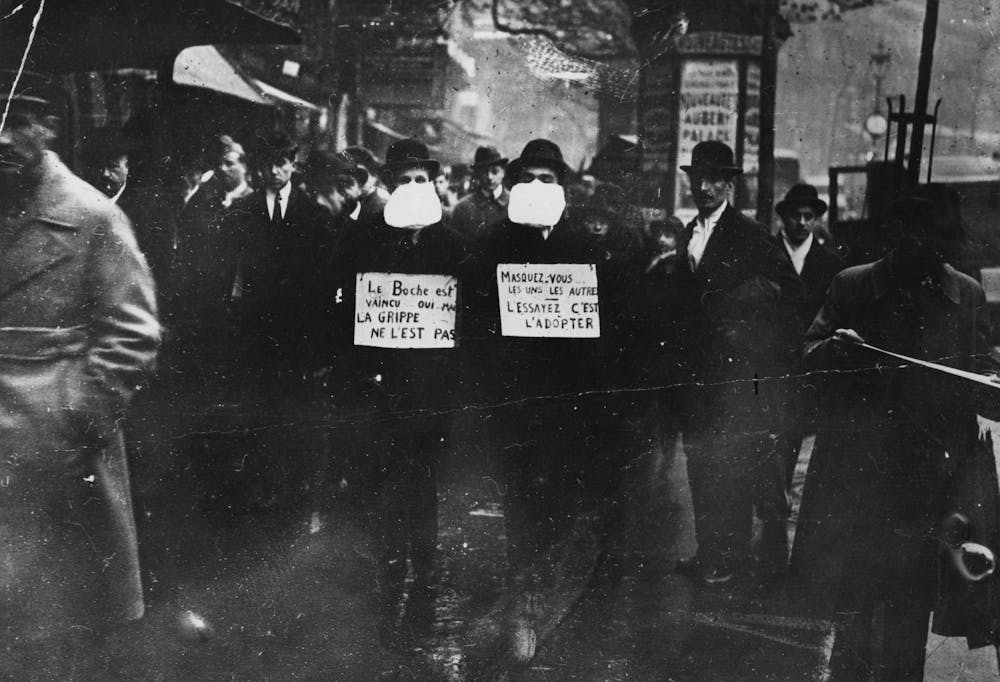
The earlier pandemic does hold lessons for the current one, including the value of wearing masks to stop the virus’s spread.
Today we’re living through a novel pandemic. By and large, people are actively collaborating in unprecedented measures to disrupt transmission of SARS-CoV-2. Scanning the historical record is one way to draw our own lives into focus and perspective. Unfortunately, the end of influenza in summer 1919 does not portend the end of COVID-19 in the summer of 2020.
The pandemic’s scientific complexities are formidable challenges. They’re playing out in a global economy that has ground to a halt, with resultant increasing pressures to reopen communities, and a technologically advanced and interconnected society – all issues that our predecessors a century ago did not have to consider.
Jessica Pickett, Ph.D., a principal consultant with Tomorrow Global, LLC, contributed to this article.
In March 2020, Google searches for phrases like “can’t taste food” or “why can’t I smell” spiked around the world, particularly in areas where COVID-19 hit hardest. Still, many of us have experienced a temporary change in the flavor of our food with a common cold or the flu (influenza). So, is COVID-19 – the disease caused by the SARS-CoV-2 virus – somehow special in the way it affects smell and taste?
We are researchers who study the relationships between human behavior and the sensations people experience from chemicals in daily life. Upon learning that COVID-19 might differentially affect taste and smell, we thought our expertise might be relevant, so we got to work.
The flavor of food is more than just taste
When people “taste” food, they are experiencing input from three different sensory systems that are knitted together to form a singular unified sensation. Strictly speaking, taste describes the five qualities we sense on the tongue, including sweet, salty, bitter, sour and savory/umami. Savory, also known as umami, refers to the meatiness of broth, cheese, fish sauce, or a sundried tomato.
Taste involves more sensory systems than just your mouth.
Other sensations from food occur via our sense of smell, even though we experience them in the mouth. Volatile chemicals are released when we chew. These chemicals travel through the back of the throat to reach smell receptors found at the top of the nasal cavity, right behind the point where your eyeglasses rest on your nose.
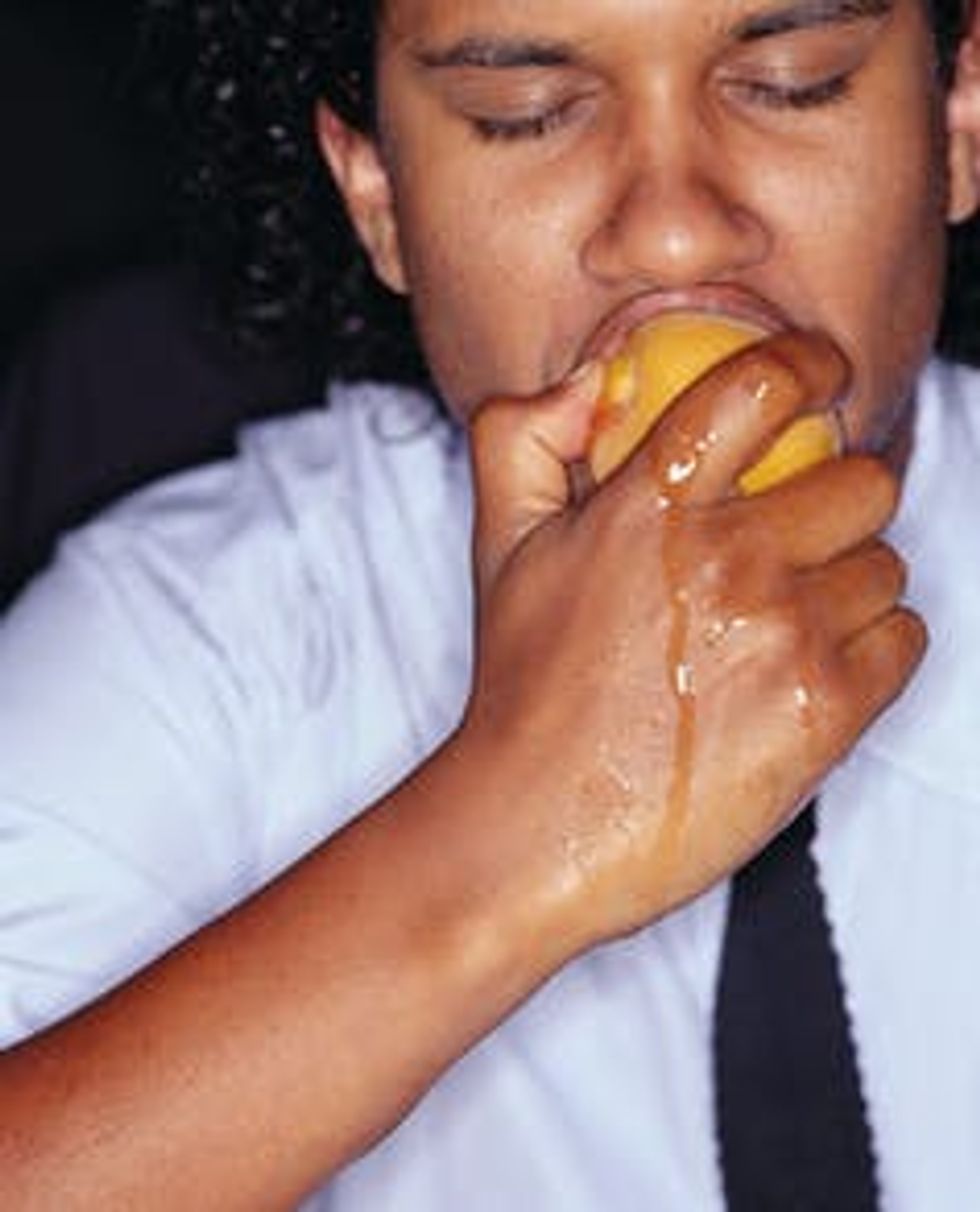
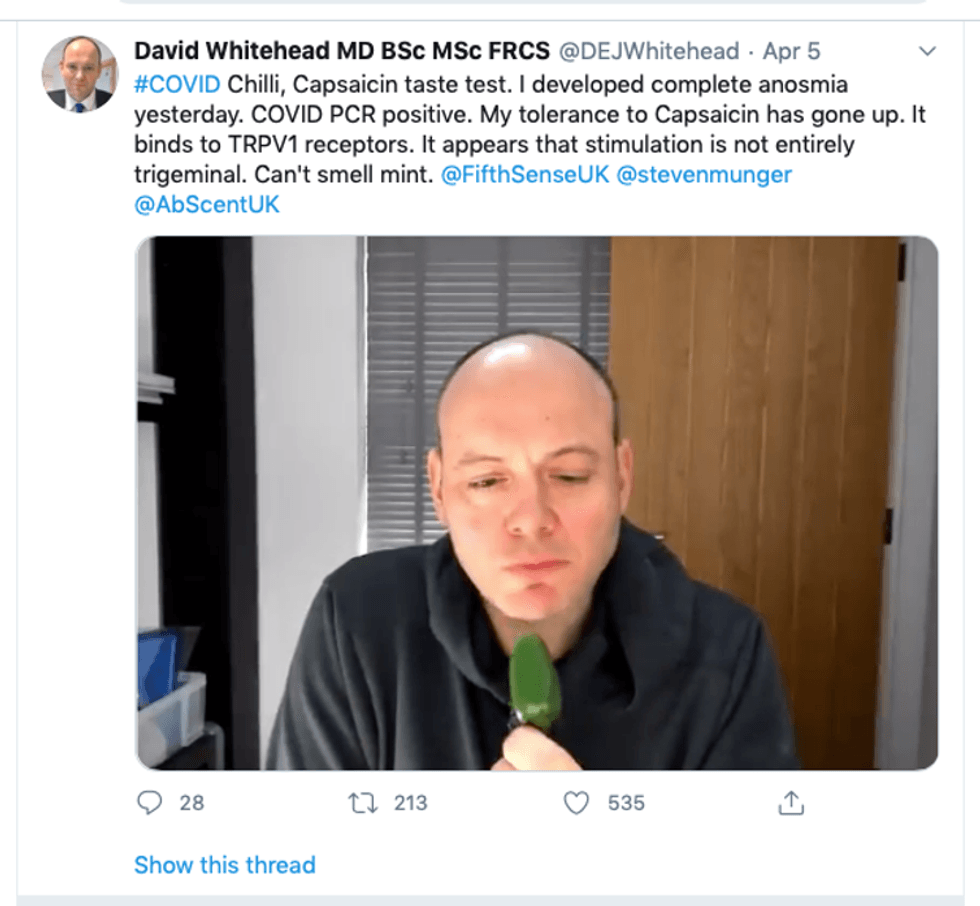
The third sensory system involved in food flavor involves touch and temperature nerves that can also be activated by chemicals. This is known as chemesthesis. In the mouth, these sensations include the burn of chili peppers, the cooling of mouthwash or mints, the tingle of carbonation, or the vibrating buzz of Sichuan peppers. Together, these three chemosensory systems – taste, smell and chemesthesis – work to define our perceptual experiences from food.
Common viral infections attack the nose more than the mouth
If your nose is blocked, it is not surprising you are not able to smell much. Typically, the other two systems – taste and oral chemesthesis – are not affected, as a blocked nose does not alter our ability to taste sugar as sweet or feel the burn from a chili pepper. With time, most patients recover their senses of smell, but occasionally some do not. Causes vary, but in some individuals, inflammation from a viral illness appears to permanently damage key structures located around the smell receptors.
SARS-CoV-2 isn’t like those other viruses
Since early spring 2020, firsthand reports have indicated that the SARS-CoV-2 virus, the novel coronavirus that causes COVID-19, might affect the mouth and nose more severely than the common cold or the flu. Not only were the reports of loss more frequent, but they also differed from what is normally seen.
Based on the spike in Google searches, and these atypical accounts of chemosensory loss, more than 600 researchers, clinicians and patient advocates from 60 countries formed the Global Consortium for Chemosensory Research.
The Global Consortium for Chemosensory Research launched a global survey in 32 different languages to better understand what COVID-19 patients are experiencing. Initial results from our survey support the idea that COVID-19 related losses are not limited to smell, as many patients also report disruption of taste and chemesthesis.
Our understanding of how the SARS-CoV-2 virus can affect multiple sensory systems is still quite limited, but is advancing daily. Initial work suggests that smell disturbances in COVID-19 patients are caused by the disruption of cells that support olfactory neurons. In our noses, we have nerve cells called olfactory sensory neurons, which are covered with odor receptors tuned for certain volatile chemicals. When a chemical binds an odor receptor, the olfactory sensory neuron fires a signal to the brain which we perceive as a smell. Notably, it does not appear that the virus targets olfactory sensory neurons directly.
Instead, the virus seems to target specialized supporting cells that cradle the olfactory sensory neurons. These support cells are covered with a different receptor, the ACE2 receptor, which acts as an entry point for the virus. In contrast, the way SARS-CoV-2 might directly affect taste and chemesthesis remains unknown.
Will COVID-19 patients recover their sensory perception?
We just don’t know yet whether COVID-19 patients will recover their sense of smell, taste and chemesthesis. Many patients have reported recovering completely within two or three weeks, while others report their sensory loss lasts for many weeks. To connect with other individuals who are experiencing smell and taste loss related to COVID-19, consider reaching out to organizations advocating on behalf of those who suffer from smell and taste loss, such as AbScent and FifthSense.
Because more data are needed, we are asking for your help in our research. If you know anyone who is (or recently has been) coughing and sniffling, invite them to complete the Global Consortium for Chemosensory Research survey, which takes about 10 minutes.
We want anyone who has had any upper respiratory illness (COVID-19 or not) recently so we can compare individuals with COVID-19 to individuals with the flu or the common cold. By volunteering for our study, or by spreading the word on this research study, you can contribute to better understand how COVID-19 is special in its ability to affect smell, taste and chemesthesis.
Tokyo 2020 officials are looking at ways to scale back next year's postponed Olympics, the city's governor said Thursday, amid reports the opening ceremony could be streamlined and spectator numbers cut.
Yuriko Koike told reporters that organisers were weighing up what could be "rationalised and simplified" as costs spiral for holding the first postponed Games in history.
The International Olympic Committee announced in March the Games would be delayed due to the coronavirus pandemic that has killed hundreds of thousands and brought international travel to a virtual halt.
The Games are now due to open on July 23, 2021, but organisers face the unprecedented headache of rearranging the event, which requires a costly rejigging of everything from venues to transport.
Local media said streamlining plans could involve cutting the number of spectators and reducing participation in the opening and closing ceremonies.
The Yomiuri Shimbun daily quoted an unnamed source as saying that everyone including athletes, officials and spectators would be required to take a test for the virus.
"The top priority is to avoid the worst scenario of cancelling the Games," an unnamed government source told the daily.
Tokyo 2020 spokesman Masa Takaya declined to offer further details as a press conference later on Thursday, saying only that discussions were ongoing.
"At this stage we do not have any concrete outcome," he said, adding that discussions about coronavirus countermeasures would be held "from this autumn onwards."
"Concerning the spread of the novel coronavirus, particularly the situation next summer and how the world will look like is something very ambiguous," he added.
IOC chief Thomas Bach said last month that 2021 was the "last option" for holding the Tokyo Games, stressing that postponement cannot go on forever.
He declined to say whether a vaccine was a prerequisite for going ahead with the Olympics, but was lukewarm on the idea of holding them behind closed doors.
Japanese Prime Minister Shinzo Abe has said it would be "difficult" to hold the postponed Tokyo Olympics if the coronavirus pandemic is not contained.
And Tokyo 2020 president Yoshiro Mori has said the Olympics would have to be cancelled if the coronavirus pandemic isn't brought under control by next year.
Brazil and Mexico reported record daily coronavirus death tolls as governments in Latin America battled to fortify defenses against the accelerating pandemic with fresh lockdown orders and curfews.
European nations are emerging from months of devastation with some borders re-opening, but South and Central America have become the new hotspots in a crisis that has claimed at least 385,000 lives worldwide.
AFP / ADEK BERRY Indonesian fire fighters spray disinfectant at a business center on the last day of the lockdown amid the COVID-19 coronavirus pandemic in Jakarta
Mexico on Wednesday announced more than 1,000 coronavirus deaths in a day for the first time, while Brazil reported a record 1,349 daily deaths.
Brazilian President Jair Bolsonaro has staunchly opposed lockdowns but many local authorities have defied him and, with the crisis deepening, a vast section of Bahia state was on Wednesday placed under curfew.
AFP / RIJASOLO Madagascar riot police use rubber bullets to disperse protesters who are angry after police officers beat up a Toamasina resident who refused to respect the virus lockdown in Madagascar
There was more cause for concern in Chile, where the government said it was extending a three-week shutdown of the capital Santiago after a new record for daily deaths.
And in more evidence of the scale of the crisis in Latin America, the journalists' union in Peru said at least 20 reporters had died from the coronavirus.
The outbreak in Peru has been so intense that oxygen tanks needed in hospitals have become scarce, with many lining up to buy them for their loved ones.
AFP / Papri BHATTACHARJEE A worker arranges beds at quarantine centre set up in the Hapania International Fair Complex on the outskirts of Agartala, India
"We haven't found oxygen yet," said Lady Savalla in the capital Lima.
"I'm worried about my mom more than anything else, because she's going to need a lot of oxygen and the hospital doesn't have enough."
- Vaccine push -
Experts have warned that travel restrictions will be needed around the world in some form until a vaccine is found -- and efforts to develop one are gathering pace.
AFP / Jure Makovec People in in Nova Gorica/Gorizia chat across the border fence between Slovenia and Italy, erected due to the Covid19 pandemic
Britain is set to host a major meeting on Thursday, with more than 50 countries as well as powerful individuals such as Bill Gates taking part, to raise money for Gavi, the global vaccine alliance.
Gavi and its partners will launch a financing drive to purchase potential COVID-19 vaccines, scale up their production and support delivery to developing nations.
AFP / Simon MAINA Kenya Redcross paramedics assist a COVID-19 patient in Nairobi
Tests on one potential vaccine, being developed by Oxford University, will begin on 2,000 health services volunteers in Brazil next week.
The World Health Organization, meanwhile, said Wednesday that it would resume trials of hydroxychloroquine as a potential treatment after doubts were cast on the study that prompted the suspension over safety fears.
US President Donald Trump and Bolsonaro have touted the drug, with Washington sending Brazil two million doses earlier this week.
But a separate study published in the New England Journal of Medicine on Wednesday, however, suggested taking the drug shortly after exposure to the coronavirus does not help prevent infection in a statistically meaningful way.
Many governments are desperate to revive businesses after the economic destruction unleashed by the lockdowns, despite the lack of a viable treatment.
AFP / Robert ATANASOVSKI A woman wearing a face mask walks past statues in central Skopje ,after the country eased lockdown measures
Italy reopened its borders to European travelers on Wednesday, hoping to revive tourism, but a full recovery appeared a long way off for some.
"I don't think we'll see any foreign tourists really until the end of August or even September," said Mimmo Burgio, a cafe owner near Rome's Colosseum. "Who's going to come?"
- Risk of spread at protests -
AFP / Eric BARADAT Protesters hold up their phones during a demonstration over the death of George Floyd, outside the White House in Washington, DC
The United States remains the hardest-hit nation in the world, with 1.85 million infections and more than 107,000 deaths, and there are fears that the ongoing wave of protests in the country over racism and police brutality could fuel the spread of the virus.
Many have said that while they were aware of the danger of infection at the big rallies, the cause was important enough to take the risk.
Cav Manning, a 52-year-old emcee from New York, was among the tens of thousands across America willing to risk infection as he joined a protest in Brooklyn earlier this week.
"What we saw is so disturbing that we've got to be out here right now," he told AFP. "Despite COVID, despite the fact that you might get infected."
President Donald Trump promised his Twitter followers Wednesday that the economy is definitely coming back, even if no one else agrees with him.
"I feel more and more confident that our economy is in the early stages of coming back very strong," Trump tweeted. "Not everyone agrees with me, but I have little doubt. Watch for September, October, November. Next year will be one of the best ever, and look at the Stock Market NOW!"
In recent interviews, the president has said that he expects the economy to come roaring back to life next year, after the election is over. The stock market fell dramatically as the president refused to act on the coronavirus throughout February and March.
The White House has now decided that the coronavirus is over and there's nothing to worry about, but there has been an increase in cases in many states since the president's "grand reopening." It's unclear if a large uptick in cases occurs if the markets will tumble again.
The Republican Party is determined to have a massive GOP convention where they can have hundreds of its members, delegates and elected officials celebrate President Donald Trump. The only problem is that the coronavirus is still going strong. North Carolina's governor finally had to make a decision and tell the GOP that it was too dangerous to have that many people fly into their state while they're still trying to get the virus under control.
So, mere months before their convention, the Republican Party was forced to look for another location. As MSNBC host Rachel Maddow explained, however, their options aren't great. While New York has managed to flatten their curve and significantly reduce their cases of COVID-19, other states haven't been able to do the same.
"In a normal time, in a normal presidency, the president and his party, having to abandon the site of his party's nominating convention for his re-election effort, less than three months before that convention was due to start, in a normal presidency, even in a normal 'troubled' presidency, that would be a huge story," said Maddow. "They can't have their convention? It's June and they just found out they can't have their convention where they were going to have it in August? I mean today, in this time of multiple crises, that otherwise huge news barely even made a ripple outside of the city that was going to host the Republican convention that's no longer going to host it."
Republicans are now desperately searching for a friendly governor willing to take a huge influx of people who could have COVID-19 or come in contact with someone who has COVID-19 just so the president can have a week of a televised celebration of him.
Maddow pulled up the New York COVID-19 bar graph showing how their cases are going down. She then compared it to North Carolina, which is experiencing an influx of cases.
Another state that the GOP is looking at is Tennessee. The GOP toured Nashville Wednesday, hoping that it could be a possibility. Maddow pulled up the coronavirus cases for Tennessee, showing that it isn't much better than North Carolina right now. Arizona is another consideration, but their cases are going up too. Even in the South where it's almost guaranteed Trump would get a happy reception, things don't look good. Mississippi is having a huge explosion of cases and so is Arkansas.
This, she explained, is all happening at the same time that troops are rolling into Washington, DC and the president is telling people he wasn't rushed to the bunker to hide, he was just "inspecting" the bunker.
"I mean it's all happening at once," Maddow said. "The failed and disastrous epidemic response that gave our country the worst epidemic on Earth. And the highest case number on Earth, and the highest death count by far and still growing. That government response, as bad as it has been, really is just being abandoned now. It really is just being collapsed. Even as the numbers start to climb back up, ominously."
"Alongside that, while the fight against the epidemic is essentially being abandoned, by this president, as bad as he was in mounting that fight, he walked away from it now, and now, we have this totally new crisis, in which the president is ordering armed, in his words, 'heavily-armed active-duty U.S. troops' to be used against the American people on U.S. soil," she continued.
"And as much as this appears to be driven by the president's desire to try to look tough, today, I don't know if you saw this, today, the president literally started saying, that he hadn't actually been rushed to the safety bunker inside the White House because of protests outside the White House, today he said, whatever you heard about that, about him being rushed to the bunker, that was fake news. Today, he decided to explain that by saying he had gone to that bunker himself of his own accord because he wanted to inspect the bunker. The president is a bunker inspector now because he wouldn't want us to think that he needed to be moved somewhere for his own safety. He inspects bunkers. Kind of a hobby."
Bloomberg found a $67 billion gap between the sum of benefits paid out by the Treasury Department and the amount that is owed to jobless Americans.
A Bloomberganalysis released Tuesday estimates that nearly a third of the unemployment benefits owed to jobless Americans have not yet been paid out, a finding critics described as a "scandal" deserving of more media attention as millions of people struggle to afford basic expenses due to the Covid-19 pandemic.
"The Treasury disbursed $146 billion in unemployment benefits in the three months through May," Bloombergreported. "But even that historic figure falls short of a total bill that should have reached about $214 billion for the period, according to Bloomberg calculations based on weekly unemployment filings and the average size of those claims."
That calculation likely understates the total amount of unpaid unemployment benefits, Bloomberg noted, because "it doesn't include the millions of workers around the country still waiting to have claims processed by overloaded systems, or the retroactive benefits owed to some of the 7.8 million people now claiming under the Pandemic Unemployment Assistance program for independent contractors."
HuffPost reporter Arthur Delaney suggested that at least part of the estimated $67 billion in unpaid benefits may be the result of people "getting cut off according to the Trump administration's return-to-work policy."
More than 40 million Americans have filed for unemployment benefits since mid-March, according to the U.S. Department of Labor. The unprecedented wave of jobless claims in such a short period produced enormous backlogs of unpaid benefits as outdated state and federal systems struggled to cope with the surge in benefit applications.
Heidi Shierholz of the Economic Policy Institute noted in a blog post last week that more than one in five U.S. workers are currently either receiving unemployment benefits or waiting for approval. Shierholz said "policymakers need to do more" to provide people with financial relief as the economic fallout of the coronavirus pandemic continues.
To that end, Shierholz urged Congress to extend the $600 weekly boost in unemployment benefits provided under the CARES Act, which is set to expire on July 31.
"We also must provide more funding to state [unemployment insurance] agencies to hire staff to speed up processing and to make improvements to websites and other administrative infrastructure," wrote Shierholz.
A Washington Post/ABC News poll released Monday showed that nearly 60% of Americans support extending the benefits, but President Donald Trump and Senate Majority Leader Mitch McConnell (R-Ky.) have both said they support allowing them to expire at the end of next month.






 AFP / ADEK BERRY
  AFP / RIJASOLO
  AFP / Papri BHATTACHARJEE
  AFP / Jure Makovec
  AFP / Simon MAINA
  AFP / Robert ATANASOVSKI
  AFP / Eric BARADAT