During a press conference on Thursday, a Fresno City Council member railed at one his colleagues for a proposal -- since passed -- that would require members to wear masks during meetings.
According to Councilmember Garry Bredefeld he finds the masks -- used to stem the spread of the deadly COVID-19 virus -- "uncomfortable" and he feels he is being bullied by fellow Councilmember Miguel Arias.
Addressing the resolution to mandate wearing masks, Bredefeld told reporters that Arias, "Put on the agenda was it just the latest example of a pattern for him that includes bullying, abusive, belligerent and bullying behavior."
Brederfeld also added, "I feel uncomfortable with the mask, physically. There’s differing data that shows that wearing a mask, No. 1, doesn’t prevent COVID-19. I think that it’s clear that it’s not definitively true that if you wear a mask it definitively protects you,”
Councilmember Mike Karbassi, who said he wears masks, fired back, "It shows compassion and makes other people feel comfortable around me."
With the Bee reporting that "Bredefeld said multiple times before the meeting that he won’t be intimidated and won’t wear a mask," the councilman added, "For my own personal decision, I just don’t feel the need to wear a mask. People have said very different things, and they’ve been all over the map on masks.”
The report also notes he refused to answer if there was any circumstance when he would agree to wear a mask, dismissing the question as a "hypothetical.
A major British clinical trial has found hydroxychloroquine has "no benefit" for patients hospitalized with COVID-19, scientists said Friday, in the first large-scale study to provide results for a drug at the centre of political and scientific controversy.
Hydroxychloroquine, a decades-old malaria and rheumatoid arthritis drug, has been touted as a possible treatment for the new coronavirus by high profile figures, including US President Donald Trump, and has been included in several randomized clinical trials.
The University of Oxford's Recovery trial, the biggest of these so far to come forward with findings, said that it would now stop recruiting patients to be given hydroxychloroquine "with immediate effect".
"Our conclusion is that this treatment does not reduce the risk of dying from COVID among hospital patients and that clearly has a significant importance for the way patients are treated, not only in the UK, but all around the world," said Martin Landray, an Oxford professor of medicine and epidemiology who co-leads the study.
The randomized clinical trial -- considered the gold standard for clinical investigation -- has recruited a total of 11,000 patients from 175 hospitals in the UK to test a range of potential treatments.
Other drugs continuing to be tested include: the combination of HIV antivirals Lopinavir and Ritonavir; a low dose of the steroid Dexamethasone, typically used to reduce inflammation; antibiotic Azithromycin; and the anti inflammatory drug Tocilizumab.
Researchers are also testing convalescent plasma from the blood of people who have recovered from COVID-19, which contains antibodies to fight the virus.
Researchers said 1,542 patients were randomly assigned to hydroxychloroquine and compared with 3,132 patients given standard hospital care alone.
They found "no significant difference" in mortality after 28 days between the two groups, and no evidence that treatment with the drug shortens the amount of time spent in hospital.
"This is a really important result, at last providing unequivocal evidence that hydroxychloroquine is of no value in treatment of patients hospitalized with COVID-19," said Peter Openshaw, a professor at Imperial College London, in reaction to the results.
He added that the drug was "quite toxic" so halting the trials would be of benefit to patients.
Hydroxychloroquine has been in use for years but it has a number of potentially serious side effects, including heart arrhythmia.
- 'It doesn't work' -
Researchers from the Recovery trial said they would share their data with the World Health Organization (WHO), which on Wednesday restarted its own trials of hydroxychloroquine.
They were temporarily halted last month because of a now-retracted observational study in The Lancet medical journal that had suggested hydroxychloroquine and chloroquine, a related compound, were ineffective against COVID-19 and even increased the risk of death.
Authors of the Lancet research said on Thursday that they could no longer vouch for the integrity of its underlying data, in the face of serious concerns raised by fellow scientists over a lack of clarity about the countries and hospitals that contributed patient information.
The scandal cast a shadow over The Lancet and another top medical journal, but it did nothing to clear up the increasingly politicized question of whether or not hydroxychloroquine works as a treatment for COVID-19.
Openshaw said the Recovery trial should be credited with continuing the research until they could reach a definitive conclusion on hydroxychloroquine.
"Everyone regrets that it doesn't work, but knowing that allows us to focus on finding drugs that actually help recovery from COVID-19," he added.
Oxford professor Peter Horby, the lead investigator on the Recovery Trial, said there was probably a "very large number" of people around the world taking hydroxychloroquine for COVID-19, with countries including the US, China and Brazil authorizing it.
A separate clinical trial on Wednesday in the US and Canada found that taking hydroxychloroquine shortly after being exposed to COVID-19 does not work to prevent infection significantly better than a placebo.
France's sumptuous Palace of Versailles, built in the 17th century by the "Sun King" Louis XIV, throws its doors open to the public again on Saturday but with little certainty over when tourists will return as lockdown curbs are slowly eased.
Workers on Friday dusted the Hall of Mirrors and polished its gilded statues ahead of the reopening, which will see visitors required to wear face masks and follow a one-way route through the opulent 2,300-room complex.
"This financial model has been devastated. We have to start again," Catherine Pegard, who runs the palace, told Reuters. "We're not the only ones."
Louis XIV craved the palace as a symbol of France’s prominence as a European superpower and his perceived divine right to wield absolute power. It remained the principle royal residence until the French Revolution and the overthrow of the monarchy nearly eight decades after his death.
The palace is one of the most visited sites France, itself the world's favorite tourist destination.
But as France emerges cautiously from lockdown - its borders remain closed to most outsiders - the palace anticipates only a fifth of the 20,000 visitors it used to host on peak days. Tickets must be bought in advance.
A roped walkway will guide visitors through the famed Hall of Mirrors, where Germany and the Allied Nations signed the treaty ending World War One, and the ornate King's Grand Apartment.
"We've cleaned the mirrors, dusted the chandeliers and the torches. Conditions are exceptional," Pegard said.
President Donald Trump accused China of purposefully infecting Americans with the coronavirus.
The president boasted about the surprise return of 2.5 million jobs last month -- the largest increase on record -- and claimed that showed the coronavirus pandemic was winding down and the U.S. economy was opening back up.
"We're at 105,000 lives [lost to the virus]," Trump said Friday outside the White House. "We also closed it up to Europe. Europe became very infected from China, a gift from China, not good. They should have stopped it, they should have stopped it at the source. It's a gift from China and a very bad gift, I will tell you that, and you do say, how come at Wuhan where it started and they were very badly -- they were in bad trouble."
"But I didn't go to any other parts, I didn't go to Beijing, other parts of China," he added. "Then you say, how come it came out to Europe, to the world, to the United States? I didn't go to China, they stopped it cold. They knew it was a problem, but they didn't stop it cold from coming to the United States, Europe and the rest of the world. Somebody has to ask these questions, and we'll get down to the answer."
He then suggested the virus might have something to do with trade negotiations with China.
"You know we made great trade deal," Trump said. "They're going to buy $250 million worth of product, and they're online, they're doing okay. But the ink wasn't dry on that deal when the plague floated in. What's going on? A plague is floating in from China. What's going on? So the ink wasn't dry, so I guess I view the trade deal a little bit differently than I did three months ago."
"It's a great deal," he added. "I would say they are buying a lot from us in that way I respect, and getting along with China would be a good thing. I don't know if that's going to happen. We'll let you know."
The coronavirus has traveled the globe, infecting one person at a time. Some sick people might not spread the virus much further, but some people infected with the SARS-CoV-2 are what epidemiologists call “superspreaders.”
As early as January, though, there were reports out of Wuhan, China, of a single patient who infected 14 health care workers. That qualifies him as a super spreader: someone who is responsible for infecting an especially large number of other people.
Since then, epidemiologists have tracked a number of other instances of SARS-CoV-2 superspreading. In South Korea, around 40 people who attended a single church service were infected at the same time. At a choir practice of 61 people in Washington state, 32 attendees contracted confirmed COVID-19 and 20 more came down with probable cases. In Chicago, before social distancing was in place, one person that attended a dinner, a funeral and then a birthday party was responsible for 15 new infections.
During any disease outbreak, epidemiologists want to quickly figure out whether superspreaders are part of the picture. Their existence can accelerate the rate of new infections or substantially expand the geographic distribution of the disease.
A connected world of international travelers sets the stage for geographic superspreading.
A person’s behaviors, travel patterns and degree of contact with others can also contribute to superspreading. An infected shopkeeper might come in contact with a large number of people and goods each day. An international business traveler may crisscross the globe in a short period of time. A sick health care worker might come in contact with large numbers of people who are especially susceptible, given the presence of other underlying illnesses.
Public protests – where it’s challenging to keep social distance and people might be raising their voices or coughing from tear gas – are conducive to superspreading.
How big a part of COVID-19 are superspreaders?
Several recent preprint studies, which haven’t yet been peer-reviewed, have shed light on the role of superspreading in COVID-19’s dispersion around the globe.
Researchers in Hong Kong examined a number of disease clusters by using contact tracing to track down everyone with whom individual COVID-19 patients had interacted. In the process, they identified multiple situations where a single person was responsible for as many as six or eight new infections.
The researchers estimated that only 20% of all those infected with SARS-CoV-2 were responsible for 80% of all local transmission. Importantly, they also showed that these transmission events were associated with people who had more social contacts – beyond just family members – highlighting the need to rapidly isolate people as soon as they test positive or show symptoms.
Another study by researchers in Israel took a different approach. They compared the genetic sequences of coronavirus samples from patients inside the country to those from other places. Based on how different the genomes were, they could identify each time SARS-CoV-2 entered Israel and then follow how it spread domestically.
These scientists estimated that 80% of community transmission events – one person spreading the coronavirus to another – could be tracked back to just 1-10% of sick individuals.
And when another research group modeled the variation in how many other SARS-CoV-2 infections a single infected person tends to cause, they also found there were occasionally individuals who were very infectious. These people accounted for over 80% of transmissions in a population.
When have superspreaders played a key role in an outbreak?
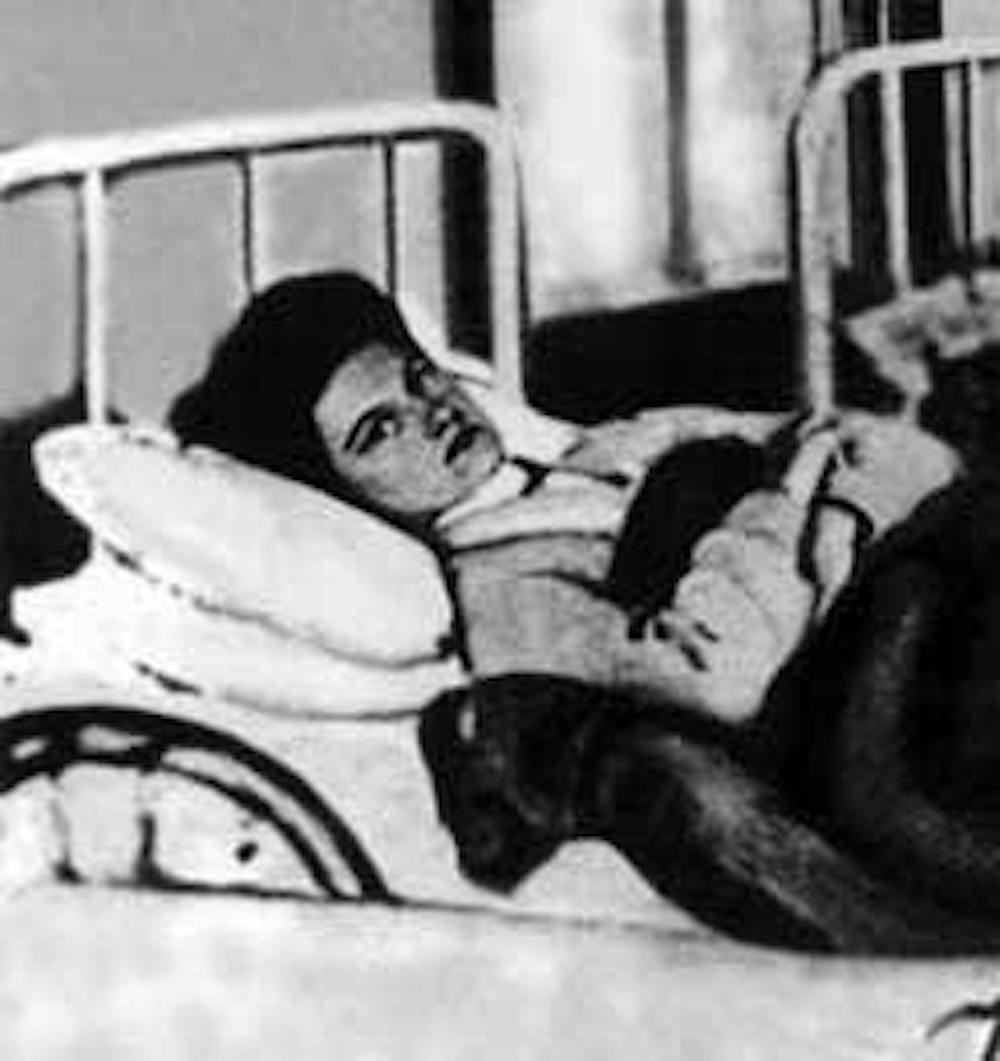
Officials quarantined ‘Typhoid’ Mary Mallon in a hospital.
There are a number of historical examples of superspreaders. The most famous is Typhoid Mary, who in the early 20th century purportedly infected 51 people with typhoid through the food she prepared as a cook.
During the last two decades, superspreaders have started a number of measles outbreaks in the United States. Sick, unvaccinated individuals visited densely crowded places like schools, hospitals, airplanes and theme parks where they infected many others.
Can superspreading occur in all infectious diseases?
Yes. Researchers have identified superspreaders in outbreaks of diseases caused by bacteria, such as tuberculosis, as well as those caused by viruses, including measles and Ebola. Just as appears to be the case with the coronavirus, some scientists estimate that in an outbreak of any given pathogen, 20% of the population is usually responsible for causing over 80% of all cases of the disease.
President Donald Trump is losing support from his evangelical base as he lurches from one crisis into another.
Numerous polls show that religious Americans, like most other Americans, disapprove of the president's performance, and that could imperil his re-election chances, reported the New York Times.
Nearly 80 percent of white evangelicals -- a group that's already shrinking as a share of the electorate -- approved of Trump's performance in March, but his handling of the coronavirus pandemic has bled 15 points from their support, according to a new poll from Public Religion Research Institute.
“He had an opportunity in March when people were looking to him," said Robert Jones, the institute's chief executive, "and then within four weeks he squandered it."
Those losses could be offset by efforts from activist group's such as Ralph Reed's Christian Coalition, which plans to spend tens of millions of dollars to identify and register new religious conservative voters and rallying right-wing Christians.
And another PRRI poll from last year found that 31 percent of white evangelical voters said there was almost nothing Trump could do to lose their support.
"It appears they want to ensure that people who protest are susceptible to the same deadly pandemic that they have failed miserably at stopping."
In an effort to help protect protesters from Covid-19 and prevent the spread of the virus, an advocacy organization sent thousands of cloth masks that read "Defund Police" and "Stop Killing Black People" to major cities across the U.S. as demonstrations over the killing of George Floyd continue to grow nationwide.
"Police have rioted coast to coast, beating, and gassing protesters who have called for an end to police violence, with the explicit approval of President Trump."
—Chelsea Fuller, Movement for Black Lives
But as HuffPost's Ryan Reilly reported late Thursday, law enforcement officials have seized shipments of the masks that were destined for New York City, Minneapolis, St. Louis, and Washington, D.C. without providing any explanation.
"It's not entirely clear what law enforcement entity seized the masks," Reilly reported. "But the Justice Department, led by Attorney General William Barr, has taken an aggressive posture against demonstrations and on Thursday expressed concern about 'extremist agitators' who are 'hijacking the protests to pursue their own separate and violent agenda.'"
In a tweet late Thursday, President Donald Trump touted a letter from his former attorney John Dowd describing protesters as "terrorists."
Movement for Black Lives (M4BL)—which spent tens of thousands of dollars on the masks—shared a U.S. Postal Service tracking alert that says the shipment was "seized by law enforcement."
In a statement to HuffPost, M4BL spokesperson Chelsea Fuller said that "police have rioted coast to coast, beating, and gassing protesters who have called for an end to police violence, with the explicit approval of President Trump."
"Now, it appears they want to ensure that people who protest are susceptible to the same deadly pandemic that they have failed miserably at stopping," said Fuller. "The continued surveillance and disruption of social movements under this administration is as chilling as it is dangerous. It should be roundly condemned."
The seizure of the masks sparked widespread outrage on social media, with activists calling the move unlawful and morally unconscionable. "This is criminal," said NARAL Pro-Choice America president Ilyse Hogue.
"One of the first things M4BL organizers discussed last week was getting masks to protesters," tweeted activist Leslie Mac. "Today they were seized by law enforcement. Imagine. Seizing face masks during a pandemic."
The Covid-19 pandemic is now "under control" in France, the head of the government's scientific advisory council said Friday, as the country cautiously lifts a lockdown imposed in March.
"We can reasonably say the virus is currently under control," Jean-François Delfraissy told France Inter radio.
"The virus is still circulating, in certain regions in particular... but it is circulating slowly," he added.
Delfraissy, an immunologist, and his colleagues were appointed to the coronavirus advisory panel as authorities sought to contain an outbreak that has killed over 29,000 people in France.
The number of daily deaths has fallen off, however, with just 44 reported by the health ministry on Thursday.
Delfraissy said around 1,000 new cases were currently being reported in France per day, down from around 80,000 in early March, before the nationwide stay-at-home orders and business closures were issued.
In its latest summary of findings published Thursday, the Santé Publique France health agency estimated that the country had 151,325 confirmed Covid-19 cases as of June 2, when restaurants across France were allowed to reopen.
But it cautioned that at the height of the outbreak, patients with suspected coronavirus infections were not systematically tested, meaning the actual number of cases exceeds the official estimate.
Its shows canceled due to the COVID-19 pandemic, an already heavily indebted Cirque du Soleil's fight for survival has invited an intense backstage battle to try to save the Canadian cultural icon.
High on a list of potential suitors is former fire eater Guy Laliberte, who founded the acrobatic troupe in 1984 but later sold it.
"Its revival will have to be done at the right price. And not at all costs," said the 60-year-old, determined not to see his creation sold to private interests.
The billionaire clown said after "careful consideration," he decided "with a great team" to pursue a bid, but offered no details.
Under his leadership, the Cirque had set up big tops in more than 300 cities around the world, delighting audiences with enchanting contemporary circus acts set to music but without the usual trappings of lions, elephants and bears.
Then the pandemic hit, forcing the company in March to cancel 44 shows worldwide, from Las Vegas to Tel Aviv, Moscow to Melbourne, and lay off 4,679 acrobats and technicians, or 95 percent of its workforce.
Hurtling toward bankruptcy, the global entertainment giant and pride of Canada commissioned a bank in early May to examine its options, including a possible sale.
Meanwhile, shareholders ponied up $50 million in bridge financing for its "short-term liquidity needs."
- Costly acquisitions -
Laliberte, the first clown to rocket to the International Space Station in 2009, ceded control of the Cirque for $1 billion in 2015.
AFP/File / Alexander NEMENOV Canadian space tourist and Cirque du Soleil founder Guy Laliberte jokes during space suit testing prior to his blast off in 2009
It has since fallen into the hands of American investment firm TPG Capital (55 percent stake) and China's Fosun (25 percent), which also owns Club Med and Thomas Cook travel. The Caisse de depot et placement du Quebec (CDPQ) retains the last 20 percent.
The institutional investor, which manages public pension plans and insurance programs in Quebec, bought Laliberte's last remaining 10 percent stake in the business in February, just before the pandemic.
Since 2015, the Cirque has embarked on costly acquisitions and renovations of permanent performance halls, while its creative spirit waned, according to critics in the Quebec press.
Meanwhile, it piled on more than US$1 billion in debt.
Fearing that the Cirque would be "sold to foreign interests," the Quebec government recently offered it a conditional loan of US$200 million to help relaunch its shows as restrictions on large gatherings start to be eased worldwide.
But the agreement in principle is conditional on the Cirque headquarters remaining in Montreal and the province being allowed to buy US and Chinese stakes in the company at an unspecified time in the future, "at market value" and with "probably a local partner," said Quebec Minister of the Economy Pierre Fitzgibbon.
- 'Too important to Quebec' -
"The state does not want to operate the circus, but the circus is too important to Quebec (to leave it to foreigners)," he said.
In addition to Laliberte, other prospective buyers include Quebecor, the telecoms and media giant of tycoon Pierre Karl Peladeau, whose opening lowball bid was outright rejected.
AFP/File / DOUGLAS MAGNO Artists perform in the Cirque du Soleil's touring circus production "Ovo" ("Egg" in Portuguese), at the Mineirinho Gymnasium, in Belo Horizonte, Brazil in March 2019
"It is essentially the value and reputation of the brand" that has piqued interest in the company, says Michel Magnan, corporate governance chair at Concordia University in Montreal.
But "as long as there are restrictions on gatherings of people, the future is not very rosy" for the Cirque, he said.
Several challenges await, according to Magnan.
"There were a lot of people working in all of these shows. Where are they now? What are they doing? How are they doing? In what shape are they, what state of mind?" he pondered aloud.
"The more time passes, the more this expertise risks evaporating and ... these assets become intangible."
Small consolation: the Cirque resumed its performances on Wednesday in Hangzhou, China, five months after an outbreak in the city some 700 kilometers (435 miles) east of Wuhan, where the virus first appeared at the end of 2019.
Dzanga-Sangha, a wildlife sanctuary in southwest Central African Republic, is a remote place, linked to the rest of the world by a narrow trail that becomes impassable in heavy rain.
But for the region's Pygmies -- outcasts in a country already ranked among the poorest in the world -- Dzanga-Sangha's isolation could be a blessing.
As coronavirus spreads in the CAR, with more than 1,000 cases officially recorded and four deaths, a campaign has been launched to encourage the Bayaka people, who divide their time between the village and the forest, to hole up in the reserve.
"They are being asked to go and live in their hunting camps for three months," said Luis Arranz, in charge of the national park for the World Wildlife Fund (WWF).
"Every week, we're going to drop off cassava and medicines. They have to stay isolated. It's our only solution," he said.
AFP/File / FLORENT VERGNES A group of young Bayaka Pygmies go deep into the forest to stay at a hunting camp
In nearby towns, mayors, priests and police have all been urged to support the scheme, which urges Pygmies to stay away from urban centers to avoid catching the virus.
"Once in the forest, the Pygmies will still come to sell their products, but using a community relay in order to avoid direct contact. The idea is that they don't come to market," said Yvon Martial Amolet, a local lawyer and representative of the NGO House for Pygmy Children and Women based in the nearby town Bayanga.
- Particularly vulnerable -
Pygmies are considered especially at risk from novel diseases because of their poor overall health, their poverty -- the vast majority are too poor to afford a doctor -- and their lifestyle.
"The infant mortality rate is very high among the Bayaka. Those who survive are likely to be more resistant to a virus, but we have no data about any vulnerability or natural immunity to imported diseases," said Emilia Bylicka, a doctor who spent four years caring for Pygmies in the CAR’s southwest.
The Pygmies' collective, semi-nomadic lifestyle could accelerate viral spread, Amolet said.
AFP/File / FLORENT VERGNES A Pygmy shows berries he has picked that are believed to have medicinal properties
"People continue to share cigarettes and coffee and there are five or 10 people per hut," he said.
The life expectancy of Bayaka Pygmies is around 35 years for men and 38 years for women -- less than half of that in the industrialized world.
As an incentive to keep them away, park authorities have provided rations higher than the value of their average salary when they work for the villagers.
But the Pygmies have not all been easy to convince, especially those who have taken to life outside the forest, and the sanctuary itself presents its own dangers.
The dense reserve, a UNESCO-World Heritage site and the last sanctuary for animal life in a poor country ravaged by civil war, offers one of the world's few refuges for species facing extinction.
Illegal hunting could intensify as the epidemic worsens and resources to protect the reserve become more limited, according to Arranz, who is responsible for preserving the forest's biodiversity.
The Pygmies live under constant threat from armed hunters.
"Some poachers may commit violence against them," said Amolet.
- Slave-like conditions -
Some fear a backlash from the ethnic Bantu population -- known locally as Bilo -- who subject the Pygmies to what often appears to be modern slavery.
"At first," Amolet explained, "they (the Pygmies) used to say that coronavirus was a white man's disease. Then they said the disease had come to punish the Bilo."
In the villages around Bayanga, the mud houses along the road belong to the Bantu, while the Pygmies often occupy tiny branch huts in the backyards of their employers.
"The Bilos give a bit of salt or a cigarette for a day's work in the fields or in the bush," said a Bayaka chief who did not want to be named.
AFP/File / FLORENT VERGNES The Bayaka have been encouraged to isolate in the forest to avoid the threat of coronavirus
Violence and sexual assaults are commonplace.
"All Bayaka have these problems," said an elder.
As the Pygmies have been encouraged to isolate, Bilos have discouraged them from going, desperate to keep them working.
"They told the Bayaka that if we took them to the forest, we were going to kill them," said Amolet.
"They're people who live off the Pygmy communities and if you take them (the Pygmies) away, life becomes difficult for them," he added.
Some Bayaka Pygmies, already confined amid the trees, see coronavirus as a genuine threat, but a distant one.
"The spirits of the forest protect us," joked Marc, a white-bearded Pygmy, astonished that the visitor refused to give him a handshake -- the universal greeting that in these times has become risky.
Fiji announced it was COVID-19 free Friday after the island nation's last known infected patient was given the all-clear, continuing the Pacific's remarkable record of success against the virus.
There was panic among Fiji's 930,000 population when the first coronavirus case was announced in mid-March, but strict isolation measures and border controls kept a lid on infections, which peaked at 18 confirmed cases.
Prime Minister Frank Bainimarama attributed the country's virus-free status to "answered prayers, hard work, and affirmation of science".
"Fiji has just cleared the last of our active COVID-19 patients," he tweeted.
"And even with our testing numbers climbing by the day, it's now been 45 days since we recorded our last case. With no deaths, our recovery rate is 100 percent."
The Pacific islands were initially seen as among the world's most vulnerable to the virus because of under-resourced health infrastructure and high rates of health conditions such as diabetes and heart disease.
There were also fears geographic isolation could turn the islands into infection incubators, like when a measles epidemic in Samoa late last year killed 83 people, most of them babies and toddlers.
However, nations in the region acted swiftly and made the costly decision to seal borders and shut down the tourism trade that sustains their economies, in order to protect their populations.
As a result, many have not recorded a single case of the virus, including Palau, Tonga, the Solomons Islands, Samoa, the Marshall Islands, Vanuatu, the Cook Islands and Micronesia.
Fiji has already expressed interest in joining a quarantine-free travel "bubble" with Australia and New Zealand, two nations that have also largely contained the virus and supply the bulk of the tropical idyll's tourists.
The Cooks, which was one of the first countries in the world to declare itself virus-free in mid-April, has reportedly announced measures to cautiously reopen its borders.
Prime Minister Henry Puna said citizens and those with work permits who had been in New Zealand for 30 days would soon be allowed to return home without going into quarantine, the Cook Islands News reported.
The newspaper said the move was "the first step in bringing back the tourists".
Governments around the world on Thursday pledged $8.8 billion for global vaccines alliance Gavi to help immunization programs disrupted by coronavirus, prompting calls for global cooperation to ensure a potential COVID-19 vaccine is available to all.
The online meeting beat a target to raise $7.4 million to provide vaccines at a much reduced cost to 300 million children worldwide over the next five years.
More than 50 countries took part as well as individuals such as billionaire philanthropist Bill Gates, whose foundation pledged $1.6 billion.
Gavi also launched a new initiative to purchase potential COVID-19 vaccines, scale-up production and support delivery to developing nations, which raised $567 million in seed money.
10 Downing Street/AFP / Andrew PARSONS US billionaire philanthropist Bill Gates stumped up $1.6 billion for the vaccine drive
"Together, we rise to fulfill the greatest shared endeavor of our lifetimes -- the triumph of humanity over disease," said British Prime Minister Boris Johnson, who hosted the summit.
"Today we make the choice to unite, to forge a path of global cooperation."
Scientists around the world are racing to develop and test a coronavirus vaccine and United Nations Secretary General Antonio Guterres said it must be available to everyone.
"A vaccine must be seen as a global public good -- a people's vaccine, which a growing number of world leaders are calling for," he said in a video message.
There needs to be "global solidarity to ensure that every person, everywhere, has access".
The pandemic has exposed new ruptures in international cooperation, notably with US President Donald Trump's decision to pull out of the World Health Organization (WHO).
AFP / John SAEKIRace for a COVID-19 vaccine
But Gavi chief executive Seth Berkley insisted there must be a "global perspective".
"At the end of the day, if you have large outbreaks of COIVD anywhere in the world, it threatens the world," he said.
- Doesn't discriminate -
The United States pledged $1.16 billion to Gavi's fundraising drive, and Trump sent a recorded message to the conference.
"As the coronavirus has shown, there are no borders. It doesn't discriminate," he said.
"It's mean, it's nasty. But we can all take care of it together... we will work hard. We will work strong."
10 Downing Street/AFP / Andrew PARSONS Britain's Prime Minister Boris Johnson hosted the Global Vaccine Summit online raising pledges of $8.8 billion
The coronavirus pandemic has infected more than 6.5 million and killed over 385,000 people since emerging in China last December, according to an AFP tally of official sources.
If a vaccine is developed, Microsoft founder Gates said Gavi hoped to be able to buy it for the poorest countries.
He said pharmaceutical companies had been working together to try to secure the required production capacity.
"It's been amazing, the pharmaceutical companies stepping up to say 'yes, even if our vaccine is not the best, we will make our factories available'," he told BBC radio.
- Immunisations disrupted -
Stay-at-home orders have been imposed across the world to stem the spread of coronavirus, causing huge economic disruption and the suspension of routine immunization programs for preventable diseases such as measles and polio.
The WHO, UN children's agency UNICEF and Gavi warned last month that vaccine services were disrupted in nearly 70 countries, affecting some 80 million children under the age of one.
Polio eradication drives were suspended in dozens of countries, while measles vaccination campaigns were also put on hold in 27 countries, UNICEF said.
Recent modeling from the London School of Hygiene and Tropical Medicine estimated that for every coronavirus death prevented by halting vaccination campaigns in Africa, up to 140 people could die from vaccine-preventable diseases.
Since it was formed in 2000, Gavi says it has helped to immunize more than 760 million children.
But Berkley warned: "These historic advances in global health are now at risk of unravelling as COVID-19 causes unprecedented disruption to vaccine programs worldwide."
Ethiopian President Sahle-Work Zewde told the meeting that her nation had seen "how the life of a helpless child is transformed to a better future through immunizations".
She added: "As much as a coordinated and cooperative global response is needed to develop a COVID-19 vaccine, we should not lose sight of the fact that the vaccine's success is strongly linked to maintaining routine immunization.
"Which means the need to maintain the supply chain and the immunization infrastructure as well."
On Thursday, former Secretary of State and 2016 presidential nominee Hillary Clinton joined former Vice President Joe Biden's virtual town hall — and offered a few choice words against President Donald Trump.
Clinton in particular scorned Trump for refusing to wear a mask in public, when his own administration recommends it as a COVID-19 precaution. "He’s such an insecure man," said Clinton. "He thinks it will make him less than he believes he is."
Clinton also slammed Trump and the GOP's crusade against mail-in voting.
"Trump and the Republicans will do everything they can to prevent people from voting," she said. "That’s why they are against vote by mail. That’s why they passed these ridiculous laws to try to limit the electorate."






 AFP/File / Alexander NEMENOV
  AFP/File / DOUGLAS MAGNO
  AFP/File / FLORENT VERGNES
  AFP/File / FLORENT VERGNES
  AFP/File / FLORENT VERGNES
  10 Downing Street/AFP / Andrew PARSONS
  AFP / John SAEKI
 10 Downing Street/AFP / Andrew PARSONS