Dr. Dave Campbell, who is MSNBC's chief medical correspondent, told host Joe Scarborough on Wednesday that he fears what will happen to many older Americans if the president succeeds in getting states to lift their social distancing restrictions too quickly.
"Florida was one of the last states to relatively close down, and now I have this grave concern that it may be one of the first states to start opening back up," he said. "Those scenes of nursing homes where they've become the outbreaks that we are all concerned about, just gives me a chill up my spine to imagine that we will create a situation... with those that are most at risk, the elderly that are in nursing homes who have no control over their environment."
Campbell warned that trying to "stimulate the economy" in the current environment would instead "stimulate outbreaks in nursing homes."
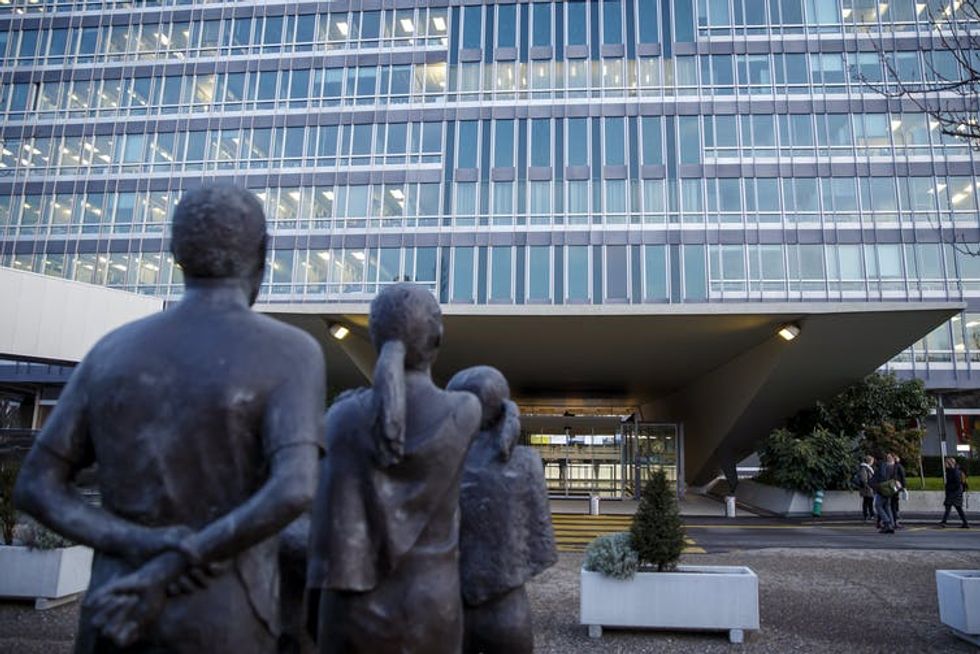
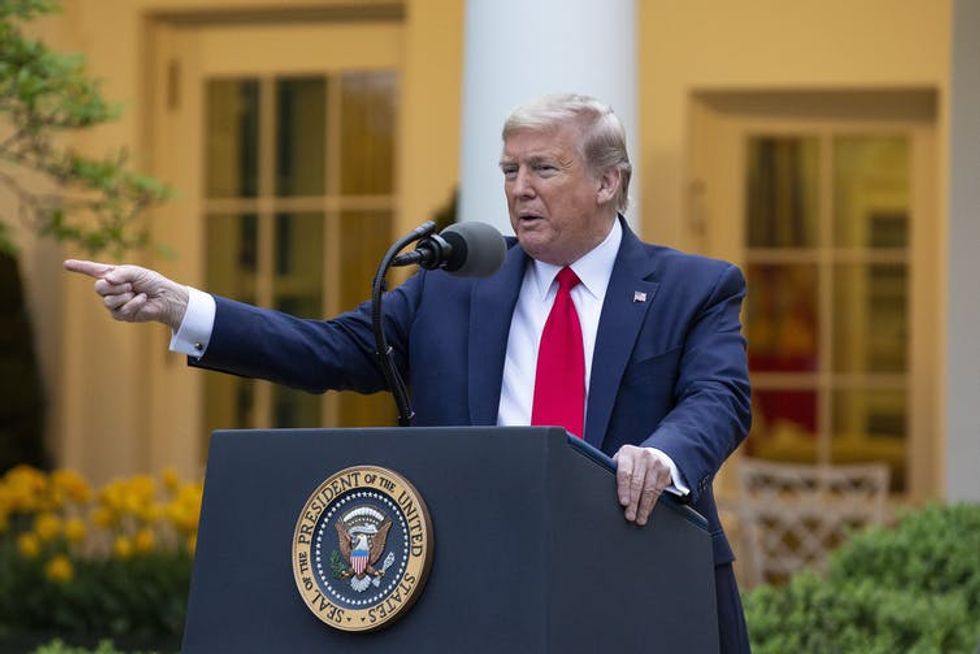
US President Donald Trump has announced the US is cutting its funding to the World Health Organisation (WHO) – a decision that will have major implications for the global health response to the coronavirus pandemic.
The US contributes more than US$400 million to the WHO per year, though it is already US$200 million in arrears. It is the organisation’s largest donor and gives about 10 times what China does per year.
Trump has accused the organisation of mishandling and covering up the initial spread of COVID-19 in China, and of generally failing to take a harsher stance toward China.
What will Trump’s decision to cut funding mean for the organisation?
The WHO was established in 1948 to serve as the directing and coordinating authority in international health. It was created with a mandate to improve the health of the world’s population, and defined health as
a state of complete physical, mental and social well-being, and not merely the absence of disease or infirmity.
While various civil society, industry and faith-based organisations can observe WHO meetings, only countries are allowed to become members. Every May, member states attend the World Health Assembly in Geneva to set the WHO’s policy direction, approve the budget and review the organisation’s work.
The WHO receives the majority of its funding from two primary sources. The first is membership dues from countries, which are described as “assessed contributions”.
Assessed contributions are calculated based on the gross domestic product and size of population, but they have not increased in real terms since the level of payments was frozen in the 1980s.
The second source of funding is voluntary contributions. These contributions, provided by governments, philanthropic organisations and private donations, are usually earmarked for specific projects or initiatives, meaning the WHO has less ability to reallocate them in the event of an emergency such as the COVID-19 pandemic.
Over more than 70 years of operations, a number of countries have failed to pay their membership dues on time.
At one point the former Soviet Union announced it was withdrawing from the WHO and refused to pay its membership fees for several years. When it then rejoined in 1955, it argued for a reduction in its back dues, which was approved.
As a result of nonpayment of assessed contributions, we have seen several instances where the WHO has been on the verge of bankruptcy. Fortunately, governments have usually acted responsibly and eventually paid back their fees.
Has there been political criticism of the WHO before?
Five years later, the organisation was accused of acting too late in declaring the West African Ebola outbreak a public health emergency.
Trump has criticised the WHO for not acting quickly enough in sending its experts to assess China’s efforts to contain COVID-19 and call out China’s lack of transparency over its handling of the initial stage of the crisis.
But these criticisms ignore China’s sovereignty. The WHO does not have the power to force member states to accept a team of WHO experts to conduct an assessment. The country must request WHO assistance.
Nor does the organisation have the power to force a country to share any information. It can only request.
Of course, Trump’s comments also ignore the fact the WHO did eventually send a team of experts to conduct an assessment in mid-February after finally obtaining Chinese approval. The results from this investigation provided important information about the virus and China’s efforts to halt its spread.
Does China have increasing influence over the WHO?
Understandably China has grown in power and economic influence since 2003, when then-Director General Gro Harlem Brundtland publicly criticised it for trying to hide the spread of the SARS virus.
But China is ultimately just one of the WHO’s 194 member states. And one of the great ironies of Trump’s criticism is that the organisation has been criticised by other member states for decades for being influenced too heavily by the United States.
If enacted, these funding cuts may cause the WHO to go bankrupt in the middle of a pandemic. That might mean the WHO has to fire staff, even as they are trying to help low- and middle-income countries save lives.
It will also mean the WHO is less able to coordinate international efforts around issues like vaccine research, procurement of personal protective equipment for health workers and providing technical assistance and experts to help countries fight the pandemic.
Trump has long been disdainful of multilateral organisations.
Stefani Reynolds / POOL /EPA
More broadly, if the US extends these cuts for other global health initiatives coordinated by the WHO, it will likely cause people in low income countries to lose access to vital medicines and health services. Lives will be lost.
There will also be a cost to the United States’ long-term strategic interests.
For decades, the world has looked to the US to provide leadership on global health issues. Due to Trump’s attempt to shift blame from his administration’s failures to prepare the US for the arrival of COVID-19, he has now signalled the US is no longer prepared to provide that leadership role.
And one thing we do know is that if nature abhors a vacuum, politics abhors it even more.
Many Republican lawmakers are antsy to reopen the American economy -- and now one is openly complaining that the media focus on people who are dying from COVID-19 is hindering their plans.
In an interview with Politico, Rep. Ken Buck (R-CO) said that it's time for lawmakers to get together and have frank discussions about just how much death they're willing to tolerate in exchange for relieving the economic pain being felt throughout the country.
"You’re dealing with a lot of hype about fatalities,” he said. "I don’t know anybody that wants to be the person who says, '33,000 deaths is okay, but 100,000 is not acceptable.' But that’s what officials are elected to do."
In the editorial, Buck and Biggs accused the nation's top expert on infectious diseases of using "panic-inducing projections" about COVID-19 to create an "economic calamity" that has led to millions of people losing their jobs.
"It is tragic that thousands of people in the country have died or may yet succumb to the novel coronavirus, COVID-19," they wrote. "But we also must remember that millions of people have had their lives and livelihoods permanently altered because of the government response to this virus."
Some 74 million people in the water-scarce Arab region are at greater risk of catching the novel coronavirus because they lack a sink or soap at home, the United Nations said Wednesday.
This includes 31 million people in Sudan, more than 14 million in war-torn Yemen and 9.9 million in Egypt, a UN report said.
"While it has been agreed worldwide that hand-washing with soap and water is the best prevention against COVID-19 contagion, this simple act proves to be difficult in a region where 74 million people lack access to a basic hand-washing facility," the UN's Economic and Social Commission for Western Asia said.
"Refugees and people living in conflict areas or under occupation bear an additional burden," it added.
An estimated 26 million refugees and displaced people are at greater risk of contracting the illness region-wide, as they lack adequate access to water and hygiene services, ESCWA said.
"It is urgent to ensure access to clean water and sanitation services to everyone everywhere, at no cost for those who cannot afford it, in order to avoid further spread of the coronavirus," ESCWA Executive Secretary Rola Dashti said.
About 87 million people in the region also lack access to drinking water at home, forcing them to collect it from a public source and similarly threatening their health, the UN agency warned.
In a region where 10 out of 22 countries have insufficient piped water supply, more hand-washing was likely to increase household demand by four million to five million cubic meters, it said.
China urged the United States on Wednesday to fulfil its obligations to the World Health Organization (WHO) after President Donald Trump halted funding for the body, while German Foreign Minister Heiko Maas warned against "blaming others" for the coronavirus crisis.
Trump’s decision to freeze WHO funding over its handling of the coronavirus pandemic has drawn condemnation from world leaders infectious disease experts as the global death toll mounts.
The US president, who has reacted angrily to criticism of his administration's response to the worst epidemic in a century, has become increasingly hostile towards the WHO.
The Geneva-based organisation had promoted China's "disinformation" about the virus that likely led to a wider outbreak than otherwise would have occurred, Trump told a White House news conference on Tuesday.
"The WHO failed in this basic duty and must be held accountable," he said.
Nearly 2 million people globally have been infected and more than 124,000 have died since the disease emerged in China late last year, according to a REUTERS tally.
UN Secretary-General Antonio Guterres said it was not the time to reduce resources for the WHO.
"Now is the time for unity and for the international community to work together in solidarity to stop this virus and its shattering consequences," he said in a statement.
The United States is the biggest overall donor to the Geneva-based WHO, contributing more than $400 million in 2019, roughly 15% of its budget.
‘This decision weakens the WHO's capability’
Asked at a regular daily briefing whether China would step in to fill the shortfall, foreign ministry spokesman Zhao Lijian was noncommittal.
"China will look into relevant issues according to the needs of the situation," he said.
Zhao said the pandemic, which has infected nearly 2 million people globally, was at a critical stage and that Washington's decision would affect all countries of the world.
"This decision weakens the WHO's capability and harms international cooperation in guarding against the epidemic. Every country in the world is affected, including the US and especially those with fragile capacities," he said.
"We urge the US to earnestly fulfil its duties and obligations," the spokesman added.
Strengthening the WHO is one of the best investments countries can make at this time, Germany's foreign minister said in response to Trump’s move.
"Apportioning blame doesn't help. The virus knows no borders," Heiko Maas wrote on Twitter.
"We have to work closely together against #COVID19. One of the best investments is to strengthen the @UN, especially the under-funded @WHO, for example for developing and distributing tests and vaccines," he said.
In Russia, Deputy Foreign Minister Sergei Ryabkov said the US announcement was "very alarming".
"This is an example of a very selfish approach by the U.S. authorities to what is happening in the world as regards the pandemic," Ryabkov was quoted by the TASS news agency as saying.
‘Not immune to criticism’
Trump’s WHO funding withdrawal has prompted criticism at home too.
US health advocacy group Protect Our Care said the move was "a transparent attempt ... to distract from his history downplaying the severity of the coronavirus crisis and his administration’s failure to prepare our nation."
"To be sure, the World Health Organization is not without fault but it is beyond irresponsible to cut its funding at the height of a global pandemic," said Leslie Dach, the group's chair.
But there was some support for the US president from Australia’s Prime Minister Scott Morrison, who said he sympathised with Trump's criticisms of the WHO, especially its "unfathomable" support of re-opening China's "wet markets", where freshly slaughtered, and live, animals are sold.
The coronavirus is believed to have emerged from such a market in the city of Wuhan late last year.
"But that said, the WHO also as an organisation does a lot of important work including here in our region in the Pacific and we work closely with them," Morrison told an Australian radio station.
"We are not going to throw the baby out with the bathwater here, but they are also not immune from criticism," he added.
On MSNBC's "Morning Joe," host Joe Scarborough scolded Donald Trump for his abrasive and confrontational daily press conferences -- ostensibly to update the public about the efforts to combat the coronavirus pandemic -- and claimed that his "clownish" behavior has even his close allies in a panic.
Speaking with Morning Joe regular John Heilemann, Scarborough warned the president that his nationally televised meltdowns are crippling what is left of his presidency with Heilemann taking a dig at the president saying "Buddy, it's not helping."
"The politics of this for Donald Trump are so bad," Scarborough began. "And it's not just because of the pandemic and it's not even because of just all of the really stupid things he said from the very beginning. The wishful thinking, the anti-science things that he said, the pro-China, just the kowtowing to President Xi and the next day praising them and then kowtowing again."
"I don't think the media should run the daily briefings, but it's not because I'm afraid they're helping Donald Trump," he continued. "I just -- they're not news, but they're actually hurting Donald Trump day in and day out. People see [New York Governor Andrew] Cuomo, even lifelong Republicans tell me they look at Cuomo and they're like, 'God, there's a leader, why can't Donald Trump stop tweeting? Why can't he shut his mouth? Why can't he just do his job?'"
"He's really damaging his political standing by going out every day and engaging in clownish behavior," he added.
"You know you're on to something in a situation like this in criticizing Donald Trump when [Republican Senator] Lindsey Graham agrees with you," Heilemann offered. "And you got someone like Lindsey Graham who never has, you know, after the years which he used to criticize Trump, once Trump became president Lindsey Graham will never ever, ever say anything to get on the wrong side of Donald Trump. His job, his sole purpose in life is to curry favor with Donald Trump, to pump up Donald Trump, and to inflate Donald Trump's ego and never say a cross word."
"Even Lindsey Graham is on the record now with reporters trying to send that message, you know, the SOS message with the blinking his eyes and the hostage video," he continued. "He's trying to tell Donald Trump over and over again, you are screwing this up, these briefings are not working for you."
Donald Trump ordered a freeze on funding for the World Health Organization for "mismanaging" the coronavirus crisis, as world leaders weighed easing lockdowns that threaten to tip the global economy into a second Great Depression.
The death toll from the pandemic has topped 125,000, with nearly two million people infected by the disease that has upended society and changed lives for billions confined to their homes around the globe.
AFP / Oli SCARFF A man looks at a mural depicting the badge of a superhero under a nurse and doctor's uniform in homage to the efforts of NHS staff in Pontefract, northern England
World leaders are agonising over when to lift lockdown measures to jump-start devastated economies but still avoid a second wave of infections.
And with the world battling to get on top of the pandemic, the US President fired a broadside at the WHO and halted payments that amounted to $400 million last year.
AFP / OSCAR DEL POZO Healthcare workers attend to a COVID-19 patient in an intensive care unit at the Ramon y Cajal Hospital in Madrid, Spain
Funding would be frozen pending a review into the WHO's role in "severely mismanaging and covering up the spread of the coronavirus," said Trump, who accused the Geneva-based body of putting "political correctness above life-saving measures."
The outbreak could have been contained "with very little death" if the WHO had accurately assessed the situation in China, where the disease broke out late last year, charged Trump.
He earned a rebuke from the head of the UN and entrepreneur Bill Gates who tweeted that cutting funding was "as dangerous as it sounds."
AFP / Joseph Prezioso Long lines for food donations formed in Chelsea, Massachusetts
The president's controversial attack came as the US counted a record of 2,228 victims over the past 24 hours, according to Johns Hopkins University.
Nevertheless, Trump vowed to reboot large sections of the world's top economy "very soon," saying the US would reopen "in beautiful little pieces", with the hardest-hit areas such as New York taking slightly longer.
AFP / RODGER BOSCH South African police clash with residents of Tafelsig, an impoverished suburb near Cape Town, after some people did not receive food handouts
The International Monetary Fund laid bare the scale of the economic catastrophe, saying the "Great Lockdown" could wipe $9 trillion from the global economy in its worst downturn since the 1930s Great Depression.
The virus-hit Chinese economy, second only to the US in size, likely contracted for the first time in around three decades in the first quarter, according to an AFP poll of economists on Wednesday.
- 'Open in a desert?' -
With tentative hope the pandemic could be past its peak in some European hotspots, many countries are gradually lifting restrictions -- to mixed reception.
AFP / KARIM SAHIB An employee at the Emirati ministry of health sets up to receive patients at a huge field hospital in Dubai
Italy, one of the hardest-hit nations, allowed bookshops, launderettes, stationers and children's clothing retailers to re-open, but many business owners chose to stay shut.
"Open in a desert? Why? Opening a business where no one walks by is dangerous from every point of view," said Cristina Di Caio, a bookshop owner in Milan.
Spain has allowed work to restart in some factories and construction sites, Denmark opened schools on Wednesday after a month-long closure while Germany was expected to ease some lockdown measures.
Also Wednesday, the European Union is poised to suggest a coordinated "road map" for member states to exit the lockdown.
- 'Unenforceable and unsustainable' -
AFP / YAMIL LAGE A man in a facemask stands on his balcony in Havana, Cuba
Citizens elsewhere, however, braced for several more weeks of restrictions -- including in India, whose 1.3 billion people will remain in lockdown until May 3 despite uproar from millions of unsupported poor.
As the virus appeared to be on the retreat in some parts of richer Europe, it is slowly taking hold in Africa, which has seen 15,000 cases and 800 deaths continent-wide -- with fears over growing hunger and possible social unrest.
"A lockdown is unenforceable and unsustainable across much of Africa," said Jakkie Cilliers at the Pretoria-based Institute for Security Studies (ISS).
AFP / Tiziana FABI Some shops reopened in Italy like this one in Rome, but not all business owners were on board, worrying about the health consequences
"You are trying to do something that is not possible, and you are condemning people to a choice between starving and getting sick," he said.
"It's not possible for 10 people living in a tin shack... to not go outside for three weeks."
A similar crisis is emerging in Ecuador, where hunger trumps fear of the virus for residents in rundown areas of the badly affected city of Guayaquil.
"The police come with a whip to send people running, but how do you say to a poor person 'Stay home' if you don't have enough to eat?" said Carlos Valencia, a 35-year-old teacher.
AFP / FRANCK FIFE A poster in Paris thanks healthcare workers, shopkeepers, police, the post office staff and farmers
However, in parts of the world that saw early outbreaks, things were gradually returning to some semblance of normal -- South Korea headed to the polls Wednesday with a big turnout expected despite the disease.
Examples of human resilience and generosity continued to lift the spirits.
While a 99-year-old British World War II veteran raised millions for health workers by walking lengths of his 25-metre garden using a strolling frame, a man of the same age beat the virus in Brazil.
"It was a tremendous fight for me, greater than in the war. In war, you kill or live. Here, you have to fight in order to live, and you leave this fight a winner," said Ermando Piveta.
Denmark began reopening schools on Wednesday after a month-long closure over the novel coronavirus, becoming the first country in Europe to do so.
Nurseries, kindergartens and primary schools were reopening, according to an AFP correspondent, after they were closed on March 12 in an effort to curb the COVID-19 epidemic.
However classes are only resuming in about half of Denmark's municipalities and in about 35 percent of Copenhagen's schools, as other have requested more time to adjust to health protocols still in place.
All are expected to reopen by April 20.
In early April the country's centre-left government announced that schools would be reopened "on the condition that everyone keeps their distance and washes their hands."
Schools are required to ensure that a distance of two metres (about six feet) is maintained between desks in classrooms and recesses must be organised for small groups.
To adhere to guidelines, many schools favour outdoor classes, presenting a challenge for schools in urban areas.
Some parents have opposed the reopening of schools, citing health concerns. A petition dubbed "My child is not a guinea pig" has garnered some 18,000 signatures.
Henrik Wilhelmsen, principal of a school in the Norrebro district said that they "expect quite a lot of children to be kept at home."
Middle and high school students, will continue remote classes and are only expected to return to classrooms on May 10.
As of Tuesday, Denmark had 6,691 confirmed cases of the new coronavirus and 299 deaths.
The country has banned gatherings of more than 10 people and bars, restaurants, hairdressers, shopping malls and clubs have been closed.
Before Denmark, Austria was the first European country to unveil its roadmap for a return to a "new normal".
On Tuesday, it allowed small non-food shops to open up, while maintaining social distancing rules and requiring masks to be worn in shops and on public transport.
Austria plans to keep schools, cafes and restaurants closed until at least mid-May.
President Donald Trump wants to "re-open" the American economy next month, even though health officials are warning that could lead to a major spike in COVID-19 infections.
Many of the president's allies seem aware of this risk, as the Washington Post reports that they're trying to recruit "prominent" business leaders to endorse the president's plan and then serve as human shields in case it backfires and gets thousands more people killed.
"Trump’s advisers are trying to shield the president from political accountability should his move to reopen the economy prove premature and result in lost lives, and so they are trying to mobilize business executives, economists and other prominent figures to buy into the eventual White House plan, so that if it does not work, the blame can be shared broadly, according to two former administration officials familiar with the efforts," the paper writes.
One former Trump official similarly tells the Post that many inside the White House are wary of suffering massive political damage from trying to push everything to reopen too soon at a time when thousands of Americans are still dying each day.
"There’s a growing realization that you won’t be able to open everything up by May 1," the official explained. "Even [Trump] realizes that’s a bad idea."
The stench of smouldering funeral pyres usually hangs heavy by the Ganges river in Varanasi, the mystical Indian city where Hindus believe being cremated will free them from the cycle of rebirth.
But because of a nationwide coronavirus lockdown, the 200 to 300 bodies from all over India and beyond that are typically cremated here daily cannot be transported to the city.
Now barely 30 to 40 funerals are taking place per day, all of them locals, and the usual teeming crowds of mourners, pilgrims and tourists in one of India's holiest places are eerily absent.
"We still haven't stopped working," Jagdish Chaudhary, 51, told AFP from Manikarnika, the main cremation "ghat" or embankment in Varanasi, reputedly one of the oldest cities on Earth.
"But none of us has experienced this drastic fall (in cremations) and deserted ghats along the river in our lifetimes."
He belongs to the Doms, the special caste who are keepers of the fire and custodians of the cremation grounds where fires burn 24 hours a day, and have done since time immemorial.
The Doms pass flaming torches to the chief mourner -- whose head is freshly shaved -- to ignite the wooden pyres topped by a corpse wrapped in a white shroud and decorated with marigolds.
AFP / Anand SINGH Because of a nationwide coronavirus lockdown, the number of funerals in the mystical Indian city of Varanasi has dropped dramatically
They take turns tending the fires all night to make sure they burn properly, adding more wood or ghee -- clarified butter -- as necessary.
The Doms then present the relatives with the ashes, which are given up to the sacred Ganges, where others scour the shallows for any jewellery that may have survived the flames.
The Doms rely mostly on handouts of money and food, but not only are there fewer cremations now but also just five or so mourners at each, against 50 or even several hundred before.
"Even through some of the worst calamities and violence, the city and its cremation ghats never looked this quiet," said Chaudhary.
But, he said, at least now he can get some sleep, the first in five generations from his family to make it home to his bed at night instead of tending the fires.
"At this point, everyone is just praying to the gods that coronavirus goes away soon," he added.
- Stranded -
It's not just the locals in Varanasi affected by the lockdown -- which has been extended to at least May 3 -- but some of its visitors too.
AFP / Anand SINGH Tens of thousands of pilgrims and those who have come for cremations are confined to Varanasi, according to some estimates
Many like Naga Bhushan Rao, a 64-year-old pilgrim from southern India's Andhra Pradesh state, are now stuck in the holy city indefinitely because all transport has stopped nationwide.
"I came here with my brother's family to pray at Shiva temples. But the lockdown was announced soon after we reached here," Rao, a truck driver, told AFP.
"We never thought our stay would be so long," he said by telephone from the guest house room he has now been sharing with six family members for several weeks.
Tens of thousands of pilgrims who flock to Varanasi's temples from different parts of the country, as well as some who came for cremations, are confined to Varanasi, according to some estimates.
Many have run out of money and locals have been helping them with food handouts, while some hotels have stopped charging.
Some local activists managed to get Rao the medicine he needs for a liver complaint.
"There are so many families," Narsingh Das, deputy chairman of Varanasi municipal council, told AFP.
"Some are from Odisha, Maharashtra and other southern states. We are just trying to ensure all of them stuck in different hotels and accommodations get what they need," Das added.
"These Varanasi ghats and temples never looked this deserted."
As the COVID-19 pandemic spreads, it has become clear that people need to understand basic facts about SARS-CoV-2, the virus that causes COVID-19, to make informed health care and public policy decisions. Two basic virological concepts have gotten a lot of attention recently – the “infectious dose” and the “viral load” of SARS-CoV-2.
As influenza virologists, these are concepts that we often think about when studying respiratory virus infections and transmission.
What is an ‘infectious dose’?
The infectious dose is the amount of virus needed to establish an infection. Depending on the virus, people need to be exposed to as little as 10 virus particles – for example, for influenza viruses – or as many as thousands for other human viruses to get infected.
Scientists do not know how many virus particles of SARS-CoV-2 are needed to trigger infection. COVID-19 is clearly very contagious, but this may be because few particles are needed for infection (the infectious dose is low), or because infected people release a lot of virus in their environment.
What is the ‘viral load’?
The viral load is the amount of a specific virus in a test sample taken from a patient. For COVID-19, that means how many viral genomes are detected in a nasopharyngeal swab from the patient. The viral load reflects how well a virus is replicating in an infected person. A high viral load for SARS-CoV2 detected in a patient swab means a large number of coronavirus particles are present in the patient.
Is a high viral load linked to higher risk of severe pneumonia or death?
Intuitively it might make sense to say the more virus, the worse the disease. But in reality the situation is more complicated.
In the case of the original SARS or influenza, whether a person develops mild symptoms or pneumonia depends not only on how much virus is in their lungs, but also on their immune response and their overall health.
Right now it is unclear whether the SARS-CoV-2 viral load can tell us who will get severe pneumonia. Twostudies in The Lancet reported people who develop more severe pneumonia tend to have, on average, higher viral loads when they are first admitted to the hospital.
These studies also reported that the viral loads remain higher for more days in patients with more severe disease. However, the difference was not dramatic, and people with similar viral loads went on to develop both mild and severe disease.
Complicating the picture further, otherstudies found that some asymptomatic patients had similar viral loads to patients with COVID-19 symptoms. This means that the viral load alone is not a clear predictor of disease outcome.
Another common question is whether getting a higher virus dose upon infection – for example, through prolonged exposure to an infected person, like health care workers’ experience – will result in more severe disease. Right now, we simply do not know whether this is the case.
Does high viral load increase ability to pass the virus to others?
In general, the more virus you have in your airways, the more you will release when you exhale or cough, although there is a lot of person-to-person variation. Multiplestudieshavereported that patients have the highest viral load of the coronavirus at the time they are diagnosed.
This means that patients transmit COVID-19 more effectively at the beginning of their illness, or even before they know they are sick. This is bad news. It means people who look and feel healthy can transmit the virus to others.
Why is it hard to answer basic questions about virus amounts for SARS-CoV-2?
Normally, researchers like us determine the characteristics of a virus from a combination of highly controlled experimental studies in animal models and epidemiological observations from patients.
But since SARS-CoV-2 is a new virus, the research community is only just beginning to do controlled experiments. Therefore, all the information we have comes from observing patients who were all infected in different ways, have different underlying health conditions, and are of different ages and both sexes. This diversity makes it difficult to make strong conclusions that will apply to everyone from only observational data.
Where does the uncertainty on viral loads and infectious dose leave us?
Studying viral loads and the infectious dose will likely be important to make better decisions for health care providers. For the rest of us, regardless of the viral load of patients or the SARS-CoV-2 infectious dose, it is best to reduce exposure to any amount of virus, since it is clear the virus is transmitted efficiently from person to person.
Current social distancing practices and limited contact with groups of people in enclosed spaces will reduce the transmission of SARS-CoV-2. In addition, the use of face masks will reduce the amount of virus released from presymptomatic and asymptomatic individuals. So stay home and stay safe.
Decision by EPA administrator Andrew Wheeler denounced for being "as tone-deaf as it is reckless."
On the heels of a Harvard University study which showed the long-term effects of air pollution can make coronavirus patients more likely to die from the disease, President Donald Trump's EPA flouted its own scientists' guidance Tuesday when it announced it would not tighten regulations on industrial soot emissions.
According to the New York Times, EPA Administrator Andrew Wheeler determined that scientists at Harvard's T.H. Chan School of Public Health seemed "to have a bias" when they published a study last week showing that exposure to tiny industrial particles called PM 2.5 is making some Americans more likely to die of the coronavirus.
"If there ever was a moment for all Americans, regardless of political persuasion, to demand the Trump EPA stop gutting the nation's air quality standards and finally place a premium on public health protection, it's now."
—Ken Cook, EWG
As a result, power plants and vehicle manufacturers will not be required to lower emissions.
"This decision by Andrew Wheeler is as tone-deaf as it is reckless," said Environmental Working Group president Ken Cook in a statement. "Right now, long-term exposure to PM 2.5 is increasing the number of people who are dying from the coronavirus. If there ever was a moment for all Americans, regardless of political persuasion, to demand the Trump EPA stop gutting the nation's air quality standards and finally place a premium on public health protection, it's now."
Even before the new coronavirus, officially called COVID-19, began spreading across the U.S. last month, killing more than 25,000 people in the country so far, scientists warned that PM 2.5 pollution contributes to tens of thousands of premature deaths in the U.S. every year.
As the Times reported, scientists believe reducing emissions by only nine micrograms per cubic meter would save more than 12,000 people per year.
Wheeler's decision "defies logic," the advocacy group Environment America said.
"Even before COVID-19, the data clearly showed that America's existing air quality standards weren't doing enough to protect our health," said Morgan Folger of Environment America. "Instead of foregoing its responsibility and mission to protect our health and the environment, EPA should listen to the scientists and strengthen soot protections."
Wheeler reportedly came to his decision following extensive lobbying by automakers and the fossil fuel industry, particularly after the EPA's scientists released last September a 457-page assessment showing that PM 2.5 pollution helps cause about 45,000 deaths per year.
The administrator's "appalling" adherence to the advice of industry polluters rather than scientists and public experts follows a familiar pattern, the Union of Concerned Scientists (UCS) said.
"Wheeler spent much of his career lobbying on behalf of powerful industries like coal producers, and it's clear he sees his job at the EPA as a continuation of that work," said Dr. Gretchen Goldman, research director for UCS. "Nearly every decision he's made has been aimed at making it easier and cheaper to pollute, in defiance of science, the public interest, and the EPA's public health mission he’s supposed to carry out. In the face of our current crisis, this indifference to our health is inexcusable."
"The facts, again, remain Trump's biggest albatross."
The watchdog group Public Citizen on Tuesday challenged President Donald Trump's repeated claims that casualties in the United States related to the coronavirus are "very low," adding to mounting criticism from across the globe over how his administration has handled the crisis.
"Trump's habitual disregard for the facts and his fantasies about his administration's grossly negligent pandemic response pose an ongoing mortal danger to U.S. citizens," Dr. Michael Carome, director of Public Citizen's Health Research Group, declared in response to the president's Monday night COVID-19 briefing.
After a reporter at the briefing asked whether Trump agreed that putting coronavirus mitigation practices in place earlier would have saved lives, the president rambled on about the spread of the virus in recent months before saying that "by the way, we're doing very well because when you look at all of those flat graphs and you add it all up, the United States is very low, and per capita we're very low. We're doing very well."
Carome pushed back against that comment in his statement Tuesday. "The facts, again, remain Trump's biggest albatross," he said. "The per capita numbers of confirmed COVID-19 cases and deaths in the U.S. compared with other countries are very high."
According to Carmone:
Data compiled by the European Center for Disease Prevention and Control reveal that among 204 countries and territories, the U.S. ranks 17th in the number of confirmed COVID-19 cases and 15th in the number of COVID-19 deaths per capita.
Similarly, among the 36 economically advanced countries comprising the Organization for Economic Co-operation and Development (OECD), the U.S. ranks eighth in the number of confirmed COVID-19 cases and 11th in the number of COVID-19 deaths per capita.
The United States had at least 589,048 confirmed COVID-19 cases and 25,163 related deaths as of press time Tuesday, according to the Johns Hopkins tracker. Globally, there were 1,956,077 cases and 125,123 deaths.
As the U.S. has become the epicenter of the global pandemic—which experts believe began in China late last year—both Trump and congressional leaders have faced intense criticism for responding to the country's outbreak with inadequate measures to limit the spread of the virus and provide health and financial relief to the public.
Trump's "disastrous crisis management" throughout the pandemic has left people within and beyond the United States asking, in the words of German news magazine Der Spiegel: "Are we witnessing the implosion of a superpower?"
Viet Thanh Nguyen, a contributing opinion writer at the New York Times, suggested Friday that "if anything good emerges out of this period, it might be an awakening to the pre-existing conditions of our body politic. We were not as healthy as we thought we were. The biological virus afflicting individuals is also a social virus."
"Its symptoms—inequality, callousness, selfishness , and a profit motive that undervalues human life and overvalues commodities—were for too long masked by the hearty good cheer of American exceptionalism, the ruddiness of someone a few steps away from a heart attack," Nguyen continued. "Even if America as we know it survives the coronavirus, it can hardly emerge unscathed."
"If the illusion of invincibility is shredded for any patient who survives a near-fatal experience," he added, "then what might die after COVID-19 is the myth that we are the best country on earth, a belief common even among the poor, the marginal, the precariat, who must believe in their own Americanness if in nothing else."





 AFP / Oli SCARFF
  AFP / OSCAR DEL POZO
  AFP / Joseph Prezioso
  AFP / RODGER BOSCH
  AFP / KARIM SAHIB
  AFP / YAMIL LAGE
  AFP / Tiziana FABI
  AFP / FRANCK FIFE
  AFP / Anand SINGH
  AFP / Anand SINGH