Top Stories Daily Listen Now
RawStory

Science

How satellites, radar and drones are tracking meteorites and aiding Earth’s asteroid defense

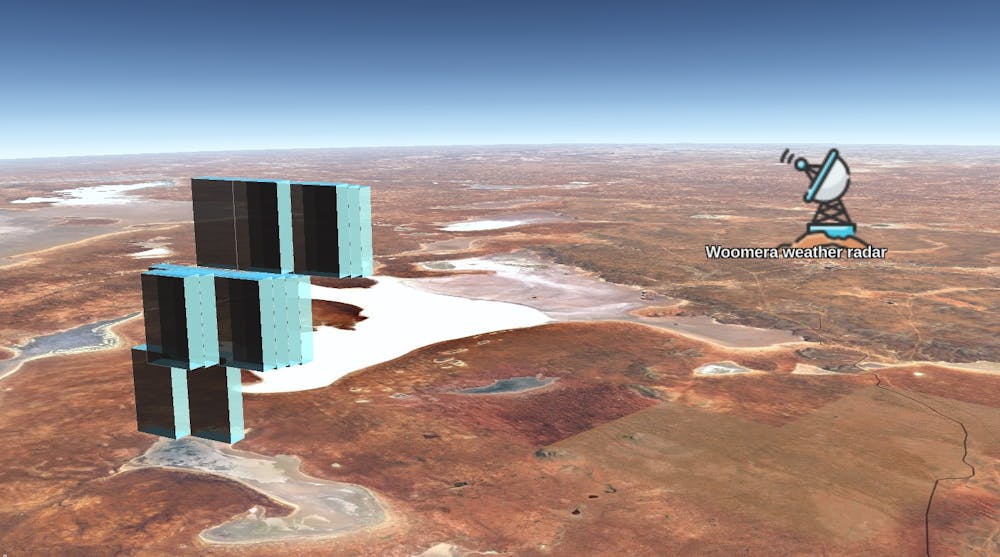
On July 31 2013 a constellation of US defense satellites saw a streak of light over South Australia as a rock from outer space burned through Earth’s atmosphere on its way to crash into the ground below.

The impact created an explosion equivalent to about 220 tonnes of TNT. More than 1,500km away, in Tasmania, the bang was heard by detectors normally used to listen for extremely low-frequency sounds from illegal tests of nuclear weapons.

Keep reading... Show less

Groundbreaking studies of Earth’s churning oceans recognised at Australia’s most prestigious science prizes this year

This year, Australia’s prestigious Prime Minister’s Prize for Science has been awarded to a physical oceanographer whose work has had a “transformative impact” on our understanding of Earth’s oceans.

Professor Trevor McDougall AC from the University of New South Wales has made major contributions to unveiling the fundamental physics of the ocean.

Keep reading... Show less

Who will become history's first 'parastronaut'?

The first astronaut -- or astronauts -- with a physical disability could be announced as soon as Wednesday, according to the European Space Agency.

People with physical disabilities have previously been excluded from one of the most exclusive and demanding jobs on Earth -- and beyond -- due to strict selection requirements.

Keep reading... Show less

With Netflix’s Ancient Apocalypse, Graham Hancock has declared war on archaeologists

Netflix’s enormously popular new show, Ancient Apocalypse, is an all out attack on archaeologists. As an archaeologist committed to public engagement who strongly believes in the relevance of studying ancient people, I feel a full-throated defense is necessary.

Author Graham Hancock is back, defending his well-trodden theory about an advanced global ice age civilisation, which he connects in Ancient Apocalypse to the legend of Atlantis. His argument, as laid out in this show and in several books, is that this advanced civilization was destroyed in a cataclysmic flood.

Keep reading... Show less

UFOs are no laughing matter for us: behind the scenes of France’s real life ‘Ovni’ hunters

In France, the Study and Information Group on Unidentified Aerospace Phenomena (GEIPAN), has been investigating unidentified aerial phenomena (UAPs) – more commonly known as UFOs – for the past 45 years. Attached to the National Centre for Space Studies (CNES), GEIPAN has been invited by NASA to present its activities and working methods before a newly established independent team that will study data and set up methods to analyse unusual phenomena observed in the sky.

Set up in 1977, GEIPAN is a team of four experts tasked with gathering witness accounts, conducting surveys, publishing studies, managing computer systems and overseeing the organisation’s operations. A technical department at CNES, it relies on outside personnel, expertise and talent, liaising with numerous investigators, experts and institutions, including France’s Air Force, National Gendarmerie and Police Force, the Directorate General for Civil Aviation, the National Centre for Scientific Research (CNRS) and the weather service Météo-France.

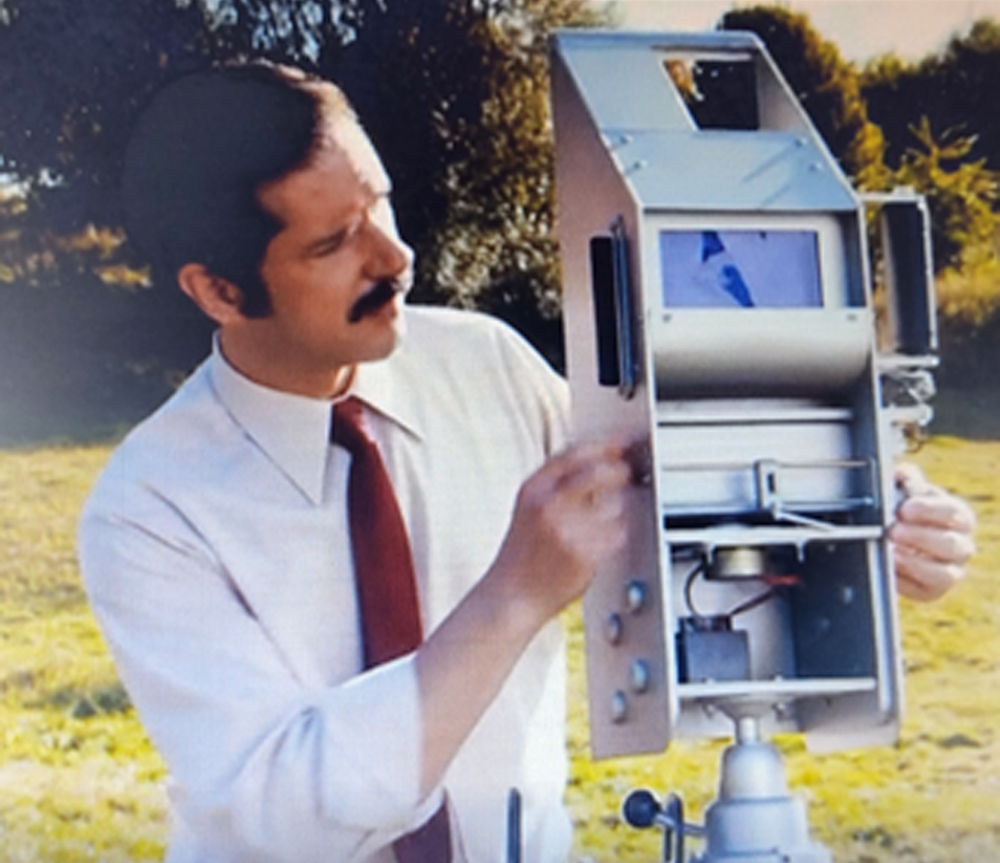
Scene from the Canal+ series Ovni(s) depicting a replica SimOvni device.Canal+

The existence of a “UFO Force” in France has entered the country’s popular imagination in recent years, with the Canal+ comedy drama series Ovni(s) – the French term for UFOs. In its quest for realism, the series depicts equipment used for GEIPAN investigations, including the “SimOvni”, which we use to create simulations of the phenomena described in eyewitness accounts.

What exactly is a UAP?

Unidentified aerial phenomena are unusual events observed by eyewitnesses that are seemingly inexplicable. They most often take the form of a bright light.

Simple explanations can be found for over 60% of UAPs – they are usually paper lanterns, party balloons, hot air balloons, aircraft, satellites, meteorites, stars, planets and so forth. While these occurrences may seem straightforward or banal, it is important to remember that every one of these recorded sightings presents some strange, unique, or noteworthy aspect. GEIPAN gathers 700 eyewitness reports annually, with 150 to 200 remaining as open investigations. Anyone is able to submit a report using the form on the GEIPAN website.

An event’s apparent peculiarity may be dependent on the environment and conditions of the sighting. These might involve low-light conditions, an absence of sound, atmospheric turbulence causing a star to twinkle strangely, or sunlight reflecting off a distant aeroplane.

[Nearly 80,000 readers look to The Conversation France’s newsletter for expert insights into the world’s most pressing issues. Sign up now]

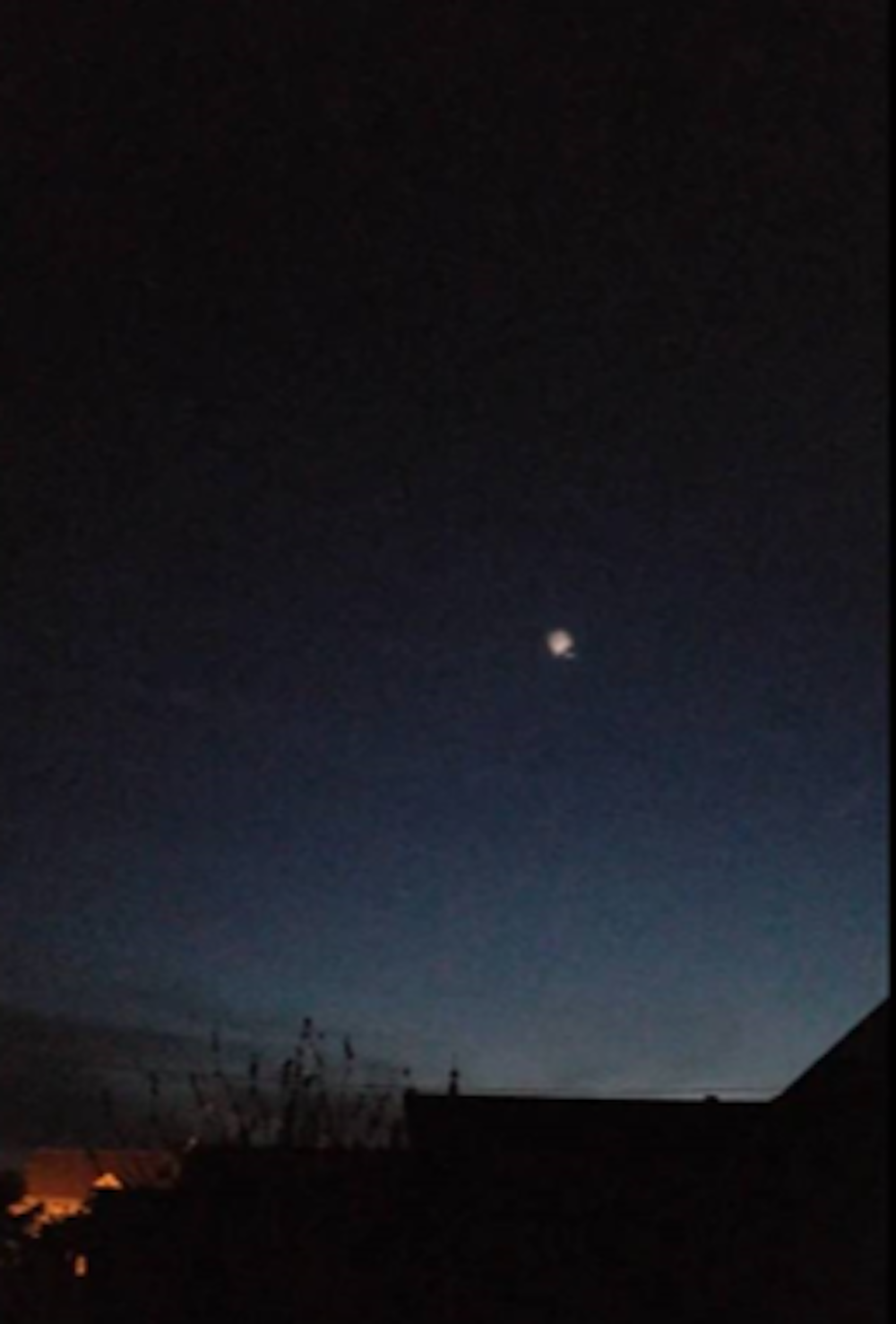
There are also more spectacular sightings, such as the appearance of meteorites breaking up in the atmosphere. One such atypical event was when the Starlink satellite cluster entered into orbit, giving rise to multiple reports of bright spots moving in a row, and others of a “glowing orb”. The series of spots were the 50 to 60 satellites themselves going into orbit, sighted at sunset or sunrise when the sky was darker and the sun was reflecting off the satellites. The orb corresponded to the second stage of the Falcon 9 rocket, which launched the satellites into orbit. Propulsions from this spacecraft every one to two seconds created a bubble of gas, which then appeared as a luminous sphere in the night sky under the light of the setting or rising sun. Alongside this sphere a shining spot, sometimes shaped like a butterfly, caused the removal of the remaining oxygen and kerosene from the rocket’s second stage before it re-entered the atmosphere.

Sighting of the Falcon 9 rocket as documented by GEIPAN.GEIPAN, Author provided

UAP reports can also be the result of a simple misinterpretation. An amateur astronomer might capture a high-quality image of a bright flash in the sky, but popular astronomy apps would not possess enough data to offer an explanation. In this case, only the CNES internal space surveillance department could prove the presence of the stage of a rocket reflecting the sun’s rays. Even the flickering candle of a paper lantern may be perceived as an object whizzing through the sky at extreme speed.

To understand and explain the observations that the GEIPAN receives, we rely on tools and applications across a range of domains, from aeronautics to aerospace (for satellites and debris), astronomy (for stars and meteorites), meteorology, image processing and more.

Reasonable explanations are found for around two thirds of the observed phenomena, but the remaining third remain unresolved due to a lack of information to analyse the report and produce an explanation. Then there are the “D cases”, accounting for around 3%, whereby we have enough information but have not found an explanation. This is when we deem all the hypotheses that we have formulated and analysed to be inconclusive.

The GEIPAN methodology

GEIPAN’s goal is clear: to present or attempt to present a rational answer for the misunderstood, unusual and sometimes spectacular occurrences spotted by witnesses, and to explain the reasons for their presumed irregularity.

There are three main phases involved in achieving this goal. In essence, we collect eyewitness accounts, conduct technical studies and publish analysis reports on the GEIPAN website, while always protecting eyewitness anonymity.

  • Each mission begins with a report, be it submitted via our website or at a local police station. Whether using still photos or video footage, the reports always include specific data as witnessed by a human being. As with other types of scientific measurement, the data contains “measurement interference”, which varies greatly depending on the individual. Sometimes the account is of excellent quality, but factors such as emotions, memories and beliefs can alter or even distort a witness’s perceptions. Our priority is to filter out this interference so as to isolate the factual data.
  • Next, we study the eyewitness account and its consistency. As the quality and quantity of reported information increases, its irregularity tends to decrease. At this stage, we use the GEIPAN computer database along with a host of technical applications and software. These include public-use tools as well as expertise developed by our partners, particularly that of the French Air Force (for reproducing flight paths), Météo-France (for precise weather conditions) and CNES itself (for high-precision tracking of satellites and debris).
  • Finally, we sometimes carry out fieldwork, which allows us to analyse the conditions of the sighting more precisely and conduct a cognitive interview with the eyewitness. Our aim in these interviews is to flesh out the account, revealing the most reliable information possible, while not distorting it. Developed and taught by our expert psychologist, this is an invaluable method at GEIPAN. For the trickiest cases, our multidisciplinary panel of experts is summoned to help advance the study and decide collectively on its conclusion.

Working together with NASA’s body independent experts over the coming months, France’s GEIPAN will detail its methods and share data. This will allow both groups to explore phenomena that resist easy explanation, examine related aerial hazards, and draw up recommendations for future research.

Keep reading... Show less

Even a limited nuclear war could devastate the world’s oceans: here’s what our modeling shows

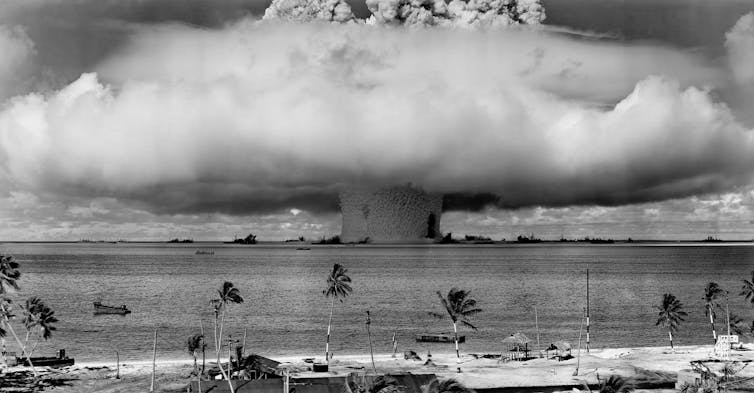
The US and Russia have recently agreed to hold talks on the New START Treaty, the only accord left regulating the two largest nuclear arsenals in the world. While this is undoubtedly good news, we must not allow it to lull us into complacency. Global events this year, most notably in Ukraine, have raised fears of a nuclear conflict to levels not seen since the cold war. There are more than 10,000 nuclear warheads remaining in the world, and the Kremlin’s language regarding weapons of mass destruction has became increasingly threatening in 2022.

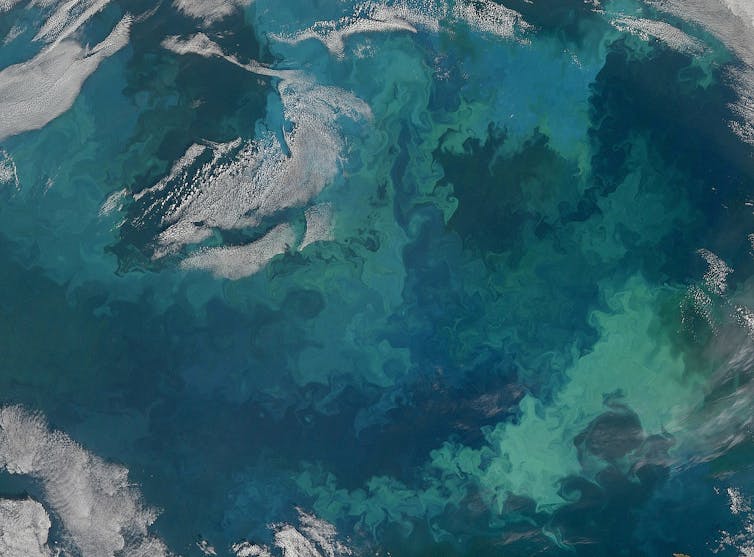
Beyond the horrible fates of victims in the strike zones, a large-scale nuclear exchange would profoundly alter the climate system as we know it, while more limited scenarios could have a devastating impact. An ever-growing body of work has shown that even a local nuclear conflict could usher in a climate catastrophe. As marine scientists, we have considered what this could specifically mean for the world’s oceans.

Keep reading... Show less

UN climate summit adopts 'loss and damage' fund

Sharm el Sheikh (Egypt) (AFP) - The UN's COP27 climate summit approved on Sunday the creation of a special fund to cover the damages suffered by vulnerable nations battered by the impacts of global warming.

The two-week talks have whiplashed between fears the process could collapse, to hopes of a major breakthrough on a fund for climate "loss and damage".

Keep reading... Show less

Experts work to breed struggling species

ST. LOUIS — For spending their 160 million years of existence mostly hiding in rivers and streams under rocks, Eastern and Ozark hellbenders had done pretty well for themselves. But in a matter of just a few decades, they're quickly disappearing. They're tricky to find simply because they like to hide under rocks, but more often than not, they're not hiding there anyway because there are fewer around. "Not only are we catching significantly fewer animals, we're not catching little ones like we had in the past," says Jeff Briggler, the Missouri state herpetologist. Hellbenders are aquatic amphi...

What the world would lose with the demise of Twitter: Valuable eyewitness accounts and raw data on human behavior, as well as a habitat for trolls

What do a cybersecurity researcher building a system to generate alerts for detecting security threats and vulnerabilities, a wildfire watcher who tracks the spread of forest fires, and public health professionals trying to predict enrollment in health insurance exchanges have in common?

They all rely on analyzing data from Twitter.

Keep reading... Show less

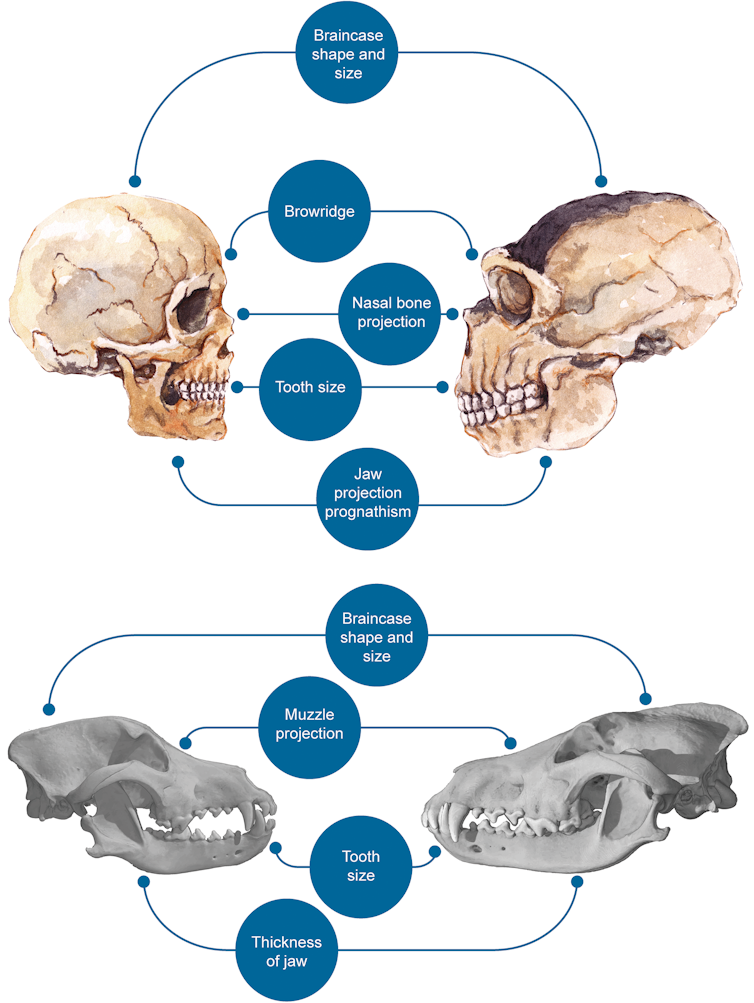
8 billion people: how different the world would look if Neanderthals had prevailed

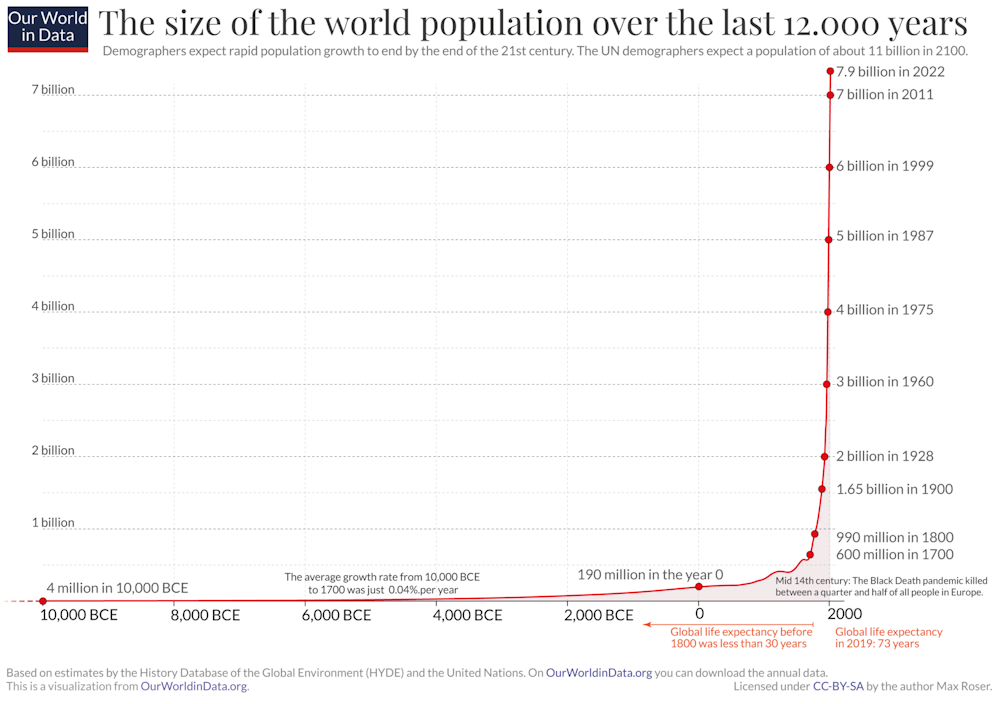
In evolutionary terms, the human population has rocketed in seconds. The news that it has now reached 8 billion seems inexplicable when you think about our history.

For 99% of the last million years of our existence, people rarely came across other humans. There were only around 10,000 Neanderthals living at any one time. Today, there are around 800,000 people in the same space that was occupied by one Neanderthal. What’s more, since humans live in social groups, the next nearest Neanderthal group was probably well over 100km away. Finding a mate outside your own family was a challenge.

Keep reading... Show less

An entire Pacific country will upload itself to the metaverse. It’s a desperate plan – with a hidden message

The Pacific nation of Tuvalu is planning to create a version of itself in the metaverse, as a response to the existential threat of rising sea levels. Tuvalu’s minister for justice, communication and foreign affairs, Simon Kofe, made the announcement via a chilling digital address to leaders at COP27.

He said the plan, which accounts for the “worst case scenario”, involves creating a digital twin of Tuvalu in the metaverse in order to replicate its beautiful islands and preserve its rich culture:

Keep reading... Show less

‘What shall we have for dinner?’ Choice overload is a real problem, but these tips will make your life easier

It’s been a long day. Your partner messages you: “let’s just order in, I don’t feel like cooking”.

With a sense of relief, you open your usual takeaway app and start scrolling through the many restaurants and dishes available. Thai, pizza, burgers, Korean, Lebanese… oooh this one has free delivery! Hmm, but they’re far away and I am famished… Soon that sense of relief is replaced by overwhelm and inability to decide what to order. And your partner is not much help either!

Keep reading... Show less

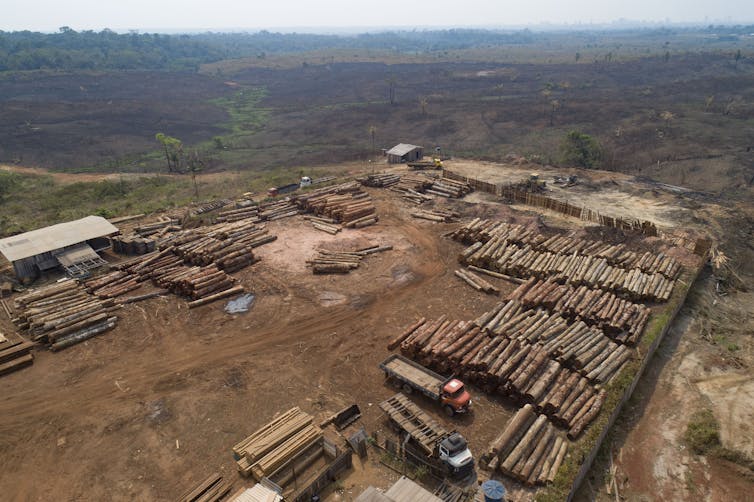
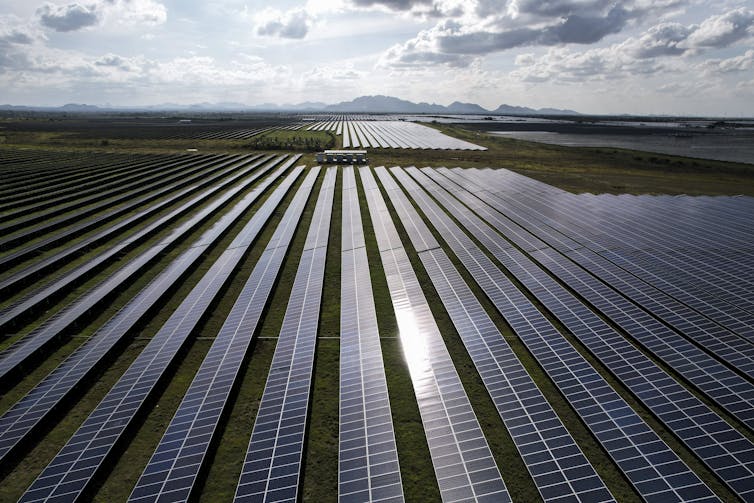
Ending the climate crisis has one simple solution: Stop using fossil fuels

As COP27 unfolds in Egypt, we are hearing about a large array of climate change solutions, ranging from building with carbon-absorbing bamboo and using less plastic to growing more kelp in the oceans to retain its carbon stores and enhance biodiversity.

All of these ideas are important and could lead to positive environmental outcomes if successfully implemented.

Keep reading... Show less