Thunderstorms are common across North America, especially in warm weather months. About 10% of them become severe, meaning they produce hail 1 inch or greater in diameter, winds gusting in excess of 50 knots (57.5 miles per hour), or a tornado.
The U.S. recently has experienced two rarer events: organized lines of thunderstorms with widespread damaging winds, known as derechos.
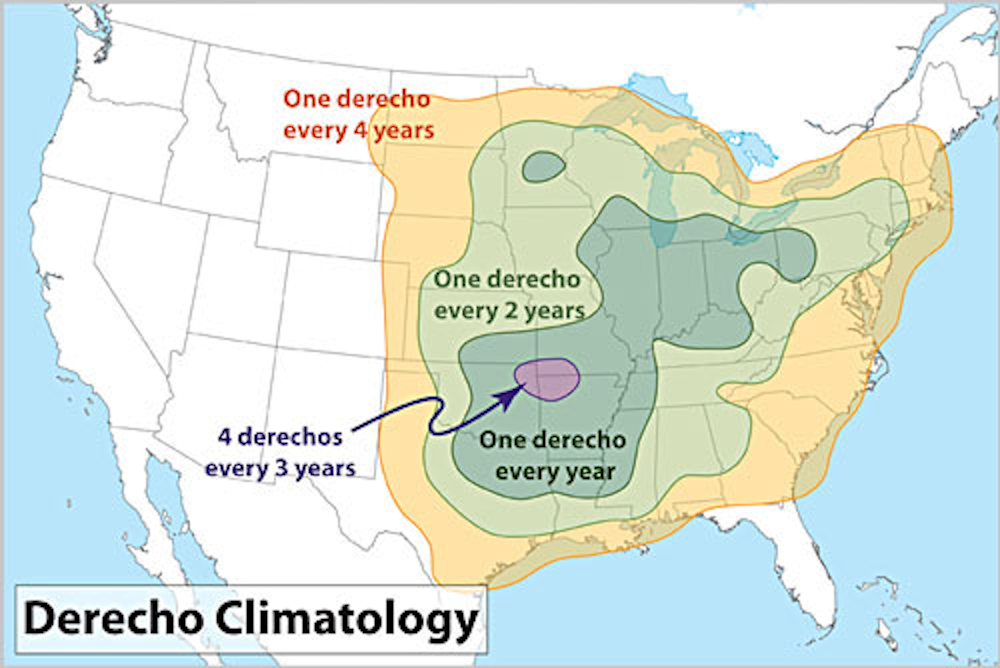
Derechos occur fairly regularly over large parts of the U.S. each year, most commonly from April through August.
Derechos occur mainly across the central and eastern U.S., where many locations are affected one to two times per year on average. They can produce significant damage to structures and sometimes cause “blowdowns” of millions of trees. Pennsylvania and New Jersey received the brunt of a derecho on June 3, 2020, that killed four people and left nearly a million without power across the mid-Atlantic region.
In the West, derechos are less common, but Colorado – where I serve as state climatologist and director of the Colorado Climate Center – experienced a rare and powerful derecho on June 6 that generated winds exceeding 100 miles per hour in some locations. Derechos have also been observed and analyzed in many other parts of the world, including Europe, Asia and South America.
Derechos are an important and active research area in meteorology. I expect that at least one or two more will occur somewhere in the U.S. this summer. Here’s what we know about these unusual storms.
A massive derecho in June 2012 developed in northern Illinois and traveled to the mid-Atlantic coast, killing 22 and causing $4 billion to $5 billion in damages.
Walls of wind
Scientists have long recognized that organized lines of thunderstorms can produce widespread damaging winds. Gustav Hinrichs, a professor at the University of Iowa, analyzed severe winds in the 1870s and 1880s and identified that many destructive storms were produced by straight-line winds rather than by tornadoes, in which winds rotate. Because the word “tornado,” of Spanish origin, was already in common usage, Hinrichs proposed “derecho” – Spanish for “straight ahead” – for damaging windstorms not associated with tornadoes.
In 1987, meteorologists defined what qualified as a derecho. They proposed that for a storm system to be classified as a derecho, it had to produce severe winds – 57.5 mph (26 meters per second) or greater – and those intense winds had to extend over a path at least 250 miles (400 kilometers) long, with no more than three hours separating individual severe wind reports.
Researchers are studying whether and how climate change is affecting weather hazards from thunderstorms. Although some aspects of mesoscale convective systems, such as the amount of rainfall they produce, are very likely to change with continued warming, it’s not yet clear how future climate change may affect the likelihood or intensity of derechos.
Speeding across the landscape
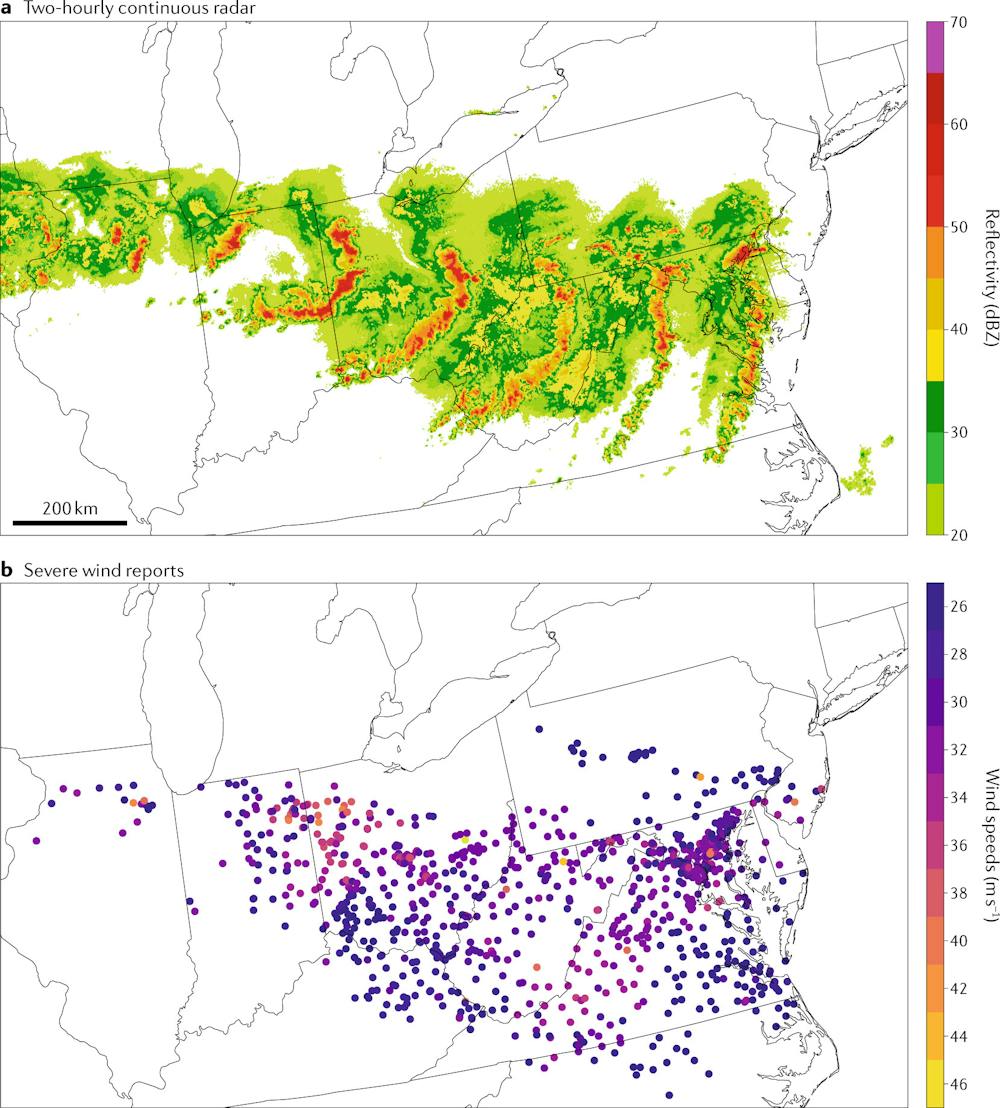
The term “derecho” vaulted into public awareness in June 2012, when one of the most destructive derechos in U.S. history formed in the Midwest and traveled some 700 miles in 12 hours, eventually making a direct impact on the Washington, D.C. area. This event killed 22 people and caused millions of power outages.
Top: Radar imagery every two hours, from 1600 UTC 29 June to 0400 UTC 30 June 2012, combined to show the progression of a derecho-producing bow echo across the central and eastern US. Bottom: Severe wind reports for the 29-30 June 2012 derecho, colored by wind speed.
Only a few recorded derechos had occurred in the western U.S. prior to June 6, 2020. On that day, a line of strong thunderstorms developed in eastern Utah and western Colorado in the late morning. This was unusual in itself, as storms in this region tend to be less organized and occur later in the day.
The thunderstorms continued to organize and moved northeastward across the Rocky Mountains. This was even more unusual: Derecho-producing lines of storms are driven by a pool of cold air near the ground, which would typically be disrupted by a mountain range as tall as the Rockies. In this case, the line remained organized.
As the line of storms emerged to the east of the mountains, it caused widespread wind damage in the Denver metro area and northeastern Colorado. It then strengthened further as it proceeded north-northeastward across eastern Wyoming, western Nebraska and the Dakotas.
In total there were nearly 350 reports of severe winds, including 44 of 75 miles per hour (about 34 meters per second) or greater. The strongest reported gust was 110 mph at Winter Park ski area in the Colorado Rockies. Of these reports, 95 came from Colorado – by far the most severe wind reports ever from a single thunderstorm system.
Animation showing the development and evolution of the 6-7 June 2020 western derecho. Radar reflectivity is shown in the color shading, with National Weather Service warnings shown in the colored outlines (yellow polygons indicate severe thunderstorm warnings). Source: Iowa Environmental Mesonet.
Coloradans are accustomed to big weather, including strong winds in the mountains and foothills. Some of these winds are generated by flow down mountain slopes, localized thunderstorm microbursts, or even “bomb cyclones.” Western thunderstorms more commonly produce hailstorms and tornadoes, so it was very unusual to have a broad swath of the state experience damaging straight-line winds that extended from west of the Rockies all the way to the Dakotas.
Damage comparable to a hurricane
Derechos are challenging to predict. On days when derechos form, it is often uncertain whether any storms will form at all. But if they do, the chance exists for explosive development of intense winds. Forecasters did not anticipate the historic June 2012 derecho until it was already underway.
For the western derecho on June 6, 2020, outlooks showed an enhanced potential for severe storms in Nebraska and the Dakotas two to three days in advance. However, the outlooks didn’t highlight the potential for destructive winds farther south in Colorado until the morning that the derecho formed.
Once a line of storms has begun to develop, however, the National Weather Service routinely issues highly accurate severe thunderstorm warnings 30 to 60 minutes ahead of the arrival of intense winds, alerting the public to take precautions.
Communities, first responders and utilities may have only a few hours to prepare for an oncoming derecho, so it is important to know how to receive severe thunderstorm warnings, such as TV, radio and smartphone alerts, and to take these warnings seriously. Tornadoes and tornado warnings often get the most attention, but lines of severe thunderstorms can also pack a major punch.
The NASA official who managed the inaugural private crewed flight into space last month has been promoted to become the first female head of human spaceflight, the agency said Friday, as it prepares to return people to the Moon in 2024.
"Kathy Lueders has been selected to lead @NASA's Human Exploration & Operations Mission Directorate," NASA head Jim Bridenstine announced on Twitter.
"Kathy has successfully managed both the Commercial Crew & Commercial Cargo programs and is the right person to lead HEO as we prepare to send astronauts to the Moon in 2024," he added.
Lueders, who joined NASA in 1992, oversaw the May 30 launch of two astronauts on a SpaceX rocket to the International Space Station -- the first ever crewed commercial flight into space.
She has for years been in charge of the exhaustive testing program for space capsules developed by SpaceX, Boeing and other companies that are partnering with NASA to build vessels that can safely take humans into space.
"You can never sell this NASA and SpaceX team short, they've accomplished miracles for me," Lueders said in a briefing before last month's launch.
The program to develop commercial space flight programs for NASA was launched a decade ago under the administration of then-president Barack Obama, marking a dramatic change for the space agency, which had previously designed and built its own rockets and space vehicles.
NASA's schedule, set by the administration of President Donald Trump, aims to put two astronauts, including the first woman, on the Moon in 2024 using the heavy SLS rocket and the Orion capsule.
But the program is behind schedule and NASA has not made the final decision as to which company will build the Moon lander.
Ancient crocodiles -- long thought to have walked on all fours like their modern-day cousins -- may have got around on two legs, according to new research published Thursday.
A team of researchers from China, Australia and the US analysed footprints found at the Jinju Formation in modern day South Korea, a rich archaeological dig site that has led to the discovery of ancient species of lizards, spiders and tiny raptors dating back 120 million years.
They believe the footprints may have been made by a three-metre (10-foot) long crocodile ancestor -- called Batrachopus grandis -- that walked around "like a crocodile balancing on a tight-rope," according to Kyung Soo Kim from the Chinju National University of Education.
"They were moving in the same way as many dinosaurs, but the footprints were not made by dinosaurs," Kim said.
While the researchers initially thought the tracks were those of an ancient pterosaur -- a winged dinosaur that roamed Earth until 66 million years ago -- they more likely belonged to a particularly large and previously undiscovered member of the crocodylomorph family.
The 24-centimetre-long (10-inch) track prints give a sense of the size of these croc relatives.
Their legs, according to Anthony Romilio, a paleontologist at the University of Queensland and one of the study's authors, would have been about the same size as those of an adult human. But their bodies were "over three metres in length".
This would have made them about twice as large as relatives from the same time period.
The ancient crocodiles most likely would have walked flat on their feet, digging their heels into the earth much like humans do -- leaving deep, narrow impressions.
Reconstructions of the crocodiles show they had a low centre of gravity.
The lack of handprints and tail-drag marks found at the dig site, as well as the animal's narrow gait, also indicated bipedal movement, Romilio added.
The finding could shed light on how other creatures from the Cretaceous period -- such as pterosaurs -- would have moved about, the authors added.
They noted that footprints from other fossil sites -- such as the Haman Formation, also in South Korea -- may have to be re-examined in light of the new discovery.
The study was published in Nature Scientific Reports.
Israeli scientists say they have produced hydrogen from plants in a development that they hope could eventually lead to using vegetation to produce electricity.
The discovery was made by using microscopic algae, an aquatic plant, in research carried out at a Tel Aviv University laboratory.
"To link a device to electricity, you just have to connect to a power point. In the case of a plant, we didn't know where to connect," said Iftach Yacoby, who heads the university's renewable energy laboratory.
Researchers planted an enzyme into samples of the algae and observed it producing hydrogen, a source of energy already used to fuel vehicles.
"We didn't know if this would work but we believed that it had potential," said Yacoby during a laboratory visit.
Findings of the study, a collaborative project with Kevin Redding at the University of Arizona, were published in April in the Energy & Environmental Science journal.
"From the moment we found how to use plants to produce a source of energy, the options were open," said Yacoby.
The nascent research shows that plants have the potential to produce electricity, he said, while cautioning it will take up to 20 years for the world to benefit from the findings.
"There are lots of things that we can consider doing thanks to the results of our research. The future will tell us what will come of it," he said.
Scientists have developed a human embryo "blueprint" using human stem cells, in a breakthrough that could provide vital insight into the early stages of infant development, new research showed Thursday.
Teams from the University of Cambridge and the Netherlands-based Hubrecht Institute said their model will allow them to observe never-before-seen processes underlying the formation of the human body.
The layout of humans -- known as the body plan -- happens through a process known as gastrulation, where three distinct layers of cells are formed in the embryo that will later give rise to the body's three main systems: nervous, musculoskeletal and digestive.
Gastrulation is known as the "black box" period of human development as legal restrictions prevent scientists from developing embryos in the lab beyond 14 days.
The team behind the study, published in Nature, said their model resembles an embryo between 18 and 21 days old, around the same time as gastrulation occurs.
Many birth defects happen during this period, and a better understanding of gastrulation could aid our understanding of issues such as infertility, miscarriage and genetic disorders, the researchers said.
"Our model produces part of the blueprint of a human," said lead author Alfonso Martinez-Arias, from Cambridge's Department of Genetics.
"It's exciting to witness the developmental processes that until now have been hidden from view -- and from study."
It is the first time, the researchers said, that human stem cells have been used to create a 3D model human embryo, after some trials using stem cells from mice and zebra fish.
The scientists stressed that gastruloids never develop into fully formed embryos because they have no brain cells and lack any of the tissues for implantation in the womb.
Nevertheless they were able to observe around 72 hours of the models' development and identify clear signs of the events that lead to the formation of muscles, bone and cartilage.
Jeremy Green, a professor of developmental biology at King's College London, said the study was a "fantastic window" into the early formation of the human body.
"(It) highlights the amazing power of self-organization of cells and tissues given the right conditions," added Green, who was not involved in the research.
Scientists have observed the fifth state of matter in space for the first time, offering unprecedented insight that could help solve some of the quantum universe's most intractable conundrums, research showed Thursday.
Bose-Einstein condensates (BECs) -- the existence of which was predicted by Albert Einstein and Indian mathematician Satyendra Nath Bose almost a century ago -- are formed when atoms of certain elements are cooled to near absolute zero (0 Kelvin, minus 273.15 Celsius).
At this point, the atoms become a single entity with quantum properties, wherein each particle also functions as a wave of matter.
BECs straddle the line between the macroscopic world governed by forces such as gravity and the microscopic plane, ruled by quantum mechanics.
Scientists believe BECs contain vital clues to mysterious phenomena such as dark energy -- the unknown energy thought to be behind the Universe's accelerating expansion.
But BECs are extremely fragile. The slightest interaction with the external world is enough to warm them past their condensation threshold.
This makes them nearly impossible for scientists to study on Earth, where gravity interferes with the magnetic fields required to hold them in place for observation.
On Thursday a team of NASA scientists unveiled the first results from BEC experiments aboard the International Space Station, where particles can be manipulated free from Earthly constraints.
"Microgravity allows us to confine atoms with much weaker forces, since we don't have to support them against gravity," Robert Thompson of from the California Institute for Technology, Pasadena, told AFP.
The research published in the journal Nature documents several startling differences in the properties of BECs created on Earth and those aboard the ISS.
For one thing, BECs in terrestrial labs typically last a handful of milliseconds before dissipating.
Aboard the ISS the BECs lasted more than a second, offering the team an unprecedented chance to study their properties.
Microgravity also allowed the atoms to be manipulated by weaker magnetic fields, speeding their cooling and allowing clearer imaging.
- 'Remarkable' breakthrough -
Creating the fifth state of matter, especially within the physical confines of a space station, is no mean feat.
First, bosons -- atoms that have an equal number of protons and electrons -- are cooled to absolute zero using lasers to clamp them in place.
The slower the atoms move around, the cooler they become.
The second the magnetic trap is released in order for scientists to study the condensate, however, the atoms begin to repel each other, causing the cloud to fly apart and the BEC to becomes too dilute to detect.
Thompson and the team realised that the microgravity on board the ISS allowed them to create BECs from rubidium -- a soft metal similar to potassium -- on a far shallower trap than on Earth. This accounted for the vastly increased time the condensate could be studied before diffusing.
"Most importantly we can observe the atoms as they float entirely unconfined (and hence unperturbed) by external forces," Thompson said.
Previous studies trying to emulate the effect of weightlessness on BECs used aeroplanes in free fall, rockets and even apparatus dropped from various heights.
Research team leader David Aveline told AFP that studying BECs in microgravity opened up a host of research opportunities.
"Applications range from tests of general relativity and searches for dark energy and gravitational waves to spacecraft navigation and prospecting for subsurface minerals on the moon and other planetary bodies," he said.
President Donald Trump is rebooting his campaign to hold major rallies beginning on Juneteenth and he'll visit the states of Florida, Arizona and North Carolina, among others. The problem, however, is that many of the states are having an increase in COVID-19 cases.
Arizona, in particular, has seen a dramatic increase in coronavirus cases, though it could be attributed to the state actually testing, when before it was difficult to get a test. Texas, where Trump is headed to a fundraiser Wednesday, had its worst week of hospitalizations and an increase in cases.
Politico reported that the GOP governors don't care about the increase in cases and the danger it poses to their state. They're reopening everything, even if it means their own citizens will die.
"In Arizona, where coronavirus patients are landing in the ICU in record numbers and a growing percentage of tests are coming back positive, the state health department over the weekend instructed hospitals to 'fully activate' emergency plans for the first time since March," said the report. "There are no discussions about shutting down parts of the state, state health director Cara Christ told a local Fox station."
In fact, cases are on the rise in 21 states in the U.S.
"In Texas, where total cases have shot up by one-third in the last two weeks, Republican Gov. Greg Abbott is moving ahead with plans to let virtually all businesses keep expanding capacity by the end of this week," said Politico.
In Arkansas, GOP Gov. Asa Hutchinson swears the dramatic increase in infections and hospitalization has nothing to do with lifting restrictions. It's unclear how he thinks people contracted the virus. He'll lift all of his restrictions next week. Infections spiked in Arkansas by one-third and hospitalizations are up by 90 percent since Memorial Day weekend.
North Carolina is now reporting its highest levels of new COVID-19 infections, but it won't stop President Donald Trump from rushing to the state. Gov. Roy Cooper said that he'll keep existing rules in place but will only reinstitute restrictions as a "last resort."
“We want to avoid going backwards if we possibly can,” said Cooper, who barred the GOP's massive convention in the state over the summer.
At one point, COVID-19 was infecting more than 20,000 people each day in the United States and leaders were terrified. As the news has shifted to protests and police brutality, cases of the virus aren't leading the headlines.
“I don’t know that anyone has the appetite for massive shutdowns again,” said Tennessee Health Secretary Lisa Piercey.
Public health experts are concerned that without the news coverage, people will neglect wearing masks, ignore handwashing and other key behaviors that help curb the virus. The recent spikes could mean that a steady burn of the infections will continue throughout the summer. When the fall comes, the expected uptick could be even more significant. That could mean even stricter mitigation restrictions.
“We always knew that once we returned back to the community, we had to do it carefully and that there would have to be a pause when we saw increases,” said American Public Health Association director Georges Benjamin. “That should always have been understood.”
“If people would use their head and follow advice that’s been given to them repeatedly, we would not be having the hot spots and the rise we see here,” said Republican South Carolina Gov. Henry McMaster. The state is still shut down and haven't had a huge spike in cases.
Kentucky Gov. Andy Beshear has said that he is willing to close things down if the number of people in the ICU increases again, but for now he's fine with campgrounds and parks reopening. New cases have doubled in the state.
Chronic obstructive pulmonary disease, a debilitating lung condition, often develops as a result of decades of heavy smoking -- but that does not explain why almost a third of all cases occur among people who have never smoked.
The authors of a new study say they now have an answer, and it's linked to how certain people's lungs developed earlier on in their lives.
The illness -- known as COPD -- is the fourth leading cause of death in the United States, causing airflow blockage and breathing problems that limit people's daily activities.
About one in ten adults over the age of 40 are thought to have the condition.
It was long thought that smoking and air pollution were the main causes -- but as smoking rates and air pollution have declined in the US and the West more generally, COPD has persisted, and roughly 30 percent of people with the disease have never smoked.
The new US government funded research, which appeared in the Journal of the American Medical Association (JAMA) on Tuesday, involved analyzing the computerized tomography (CT) scans of 6,500 older adults' lungs, including both smokers and non-smokers, with and without COPD.
"What was most striking was that people who had smaller than expected airways had a much higher risk of COPD compared to people with normal or larger airways," lead author Benjamin Smith of Columbia University Irving Medical Center told AFP.
The team also looked at people who had smoked heavily for decades but never developed the condition, "and what we found was that these people had much larger than expected airways for their lung size," added Smith.
"It suggests that people at this other end of the spectrum who have larger airway trees may have a reserve to withstand the harmful effects of tobacco smoke."
To be sure, smoking remains an important risk factor. Smoke particles trigger immune responses that inflame and permanently damage airways, as well as destroying the air sacs inside the lungs, leading to emphysema.
But when the team analyzed their data to quantify which factors mattered most, "it turned out that this mismatch between airway and lung size seem to explain more of the variation in COPD risk," said Smith, who is also a pulmonologist.
- Mysterious causes -
The air we breathe passes through the windpipe into smaller airways called bronchi and bronchioles.
As we grow, these airways develop in proportion to the size of the lungs, but in some people they go on to become smaller or larger than expected, a condition called dysanapsis.
The reasons for this aren't clear, but present an avenue for further study, said Smith, who now has a grant to explore if there is a genetic basis for dysanapsis.
Another possibility is it's related to how the lungs develop our childhood, starting from inside the uterus to when we stop growing -- and whether factors ranging from maternal smoking to early exposure to air pollution to respiratory viruses might affect airway growth.
The hope is that by better understanding what the root causes of dysnapsis are, researchers will one day be able to design interventions.
Smith likened it to the development of treatments for rickets -- a rare skeletal disorder that was common until the 20th century, when Vitamin D, calcium and phosphate were identified as being critical to healthy bone development.
In the more near term, said Smith, he hoped to disabuse the wider medical community of the idea that COPD is a single disease, with only one form of treatment.
Doctors have long observed that bronchodilators, inhaled medicines that relax the muscles in the lungs and widen the airways, work much better for some COPD patients than for others, and the new finding may help explain why.
Two Russian cosmonauts aboard the International Space Station played chess against an Earth-bound grandmaster on Tuesday, in a celebration of the first such game half a century ago.
Equipped with an electronic chessboard, cosmonauts Anatoly Ivanishin and Ivan Vagner played in zero gravity against 30-year-old Russian former child prodigy Sergei Karyakin.
The game was broadcast live and ended in a draw after about 15 minutes.
It was organized by the space agency Roscosmos and the Russian Chess Federation to celebrate the 50th anniversary of the first Space-Earth game of chess played on June 9, 1970.
"It's a huge honor for us not to lose to a grandmaster," Ivanishin said, while Vagner added that US astronauts on the ISS watched the game and gave tips.
Karyakin, who played from Moscow's Museum of Cosmonautics, said he was jittery during the game and could not fall asleep until 4 am on the night before the match.
"They played well," he said. "I can say that the human brain functions very well in space, and I have seen this today."
At the age of 12 years and seven months, Karyakin became the world's youngest ever grandmaster.
Ivanishin, Vagner and US astronaut Chris Cassidy arrived on the ISS in April.
On May 31, they were joined by US astronauts Bob Behnken and Doug Hurley on the first manned private flight to the ISS.
SpaceX made history by becoming the world's first commercial company to send humans to the ISS, leading Russia to lose its long-held monopoly on space travel.
When it comes to surviving critical cases of COVID-19, it appears that men draw the short straw.
Initial reports from China revealed the early evidence of increased male mortality associated with COVID. According to the Global Health 50/50 research initiative, nearly every country is now reporting significantly higher COVID-19-related mortality rates in males than in females as of June 4. Yet, current data suggest similar infection rates for men and women. In other words, while men and women are being infected with COVID-19 at similar rates, a significantly higher proportion of men succumb to the disease than women, across groups of similar age. Why is it then that more men are dying from COVID-19? Or rather, should we be asking why are more women surviving?
Some clues to why females have higher survival rates may be found in our current understanding of differences in the immune systems of men versus women.
Could sex differences in immune system play a role?
In general, females have a more robust immune response than men which may help females fight off infections better than males. This could be a result of genetic factors or sex hormones such as estrogen and testosterone.
Biological females have two copies of the X chromosome, which contains more immune genes. While the genes on one X chromosome are mostly inactive, some immune genes can escape this inactivation, leading to double the number of immune-related genes and thus double the quantity of certain immune proteins compared with biological men who have only one X chromosome.
It is, however, interesting that the current data showing that women have better survival rates than men applies to even men and women in the 80-plus age group, when hormone levels in both sexes equalize. This suggests that factors other than adult sex hormone levels are contributing to sex differences in COVID-19 mortality.
Androgens, a group of hormones - including testosterone - that are best known to stimulate the development of male characteristics and can cause hair loss, have also received recent attention as a risk factor for COVID-19 in males. In a study conducted in Italy, prostate cancer diagnosis increased the risk for COVID-19. However, prostate cancer patients who were receiving androgen-deprivation therapy (ADT), a treatment that suppresses the production of androgens which fuels prostate cancer cell growth, had a significantly lower risk for SARS-CoV-2 infection. This suggests that blocking androgens in men was protective against SARS-CoV-2 infection.
It is unknown how ADT works to reduce infection rates in men and whether this has been shown in other countries has yet to be determined. Testosterone, which is an androgen hormone has immune-suppressive effects so one explanation could be that ADT might boost the immune system to combat SARS-CoV-2 infection.
There is also evidence that males and females have different quantities of certain receptors that recognize pathogens or that serve as an invasion point for viruses like SARS-CoV-2. One example is the quantity of angiotensin converting enzyme 2 (ACE2) receptors, which SARS-CoV-2 binds to in order to infect cells. While there is currently no conclusive evidence for a role of ACE2 receptors impacting sex differences and the severity of COVID-19 disease, it remains a potential contributing factor.
Gender, sex and COVID-19 risk
A number of factors can interact with biological sex to increase or decrease one’s susceptibility to COVID-19. Another major factor is gender, which refers to social behaviors or cultural norms that society deems appropriate. Males may be at increased risk for severe disease, because in general, they tend to smoke and drink more, wash their hands less frequently and often delay seeking medical attention. All of these gender specific behaviors may put men at higher risk. While there is no current data yet on how gender plays a role in COVID-19, it will be a critically important factor to account for in order to understand sex differences in mortality.
Age, psychological stress level, coexisting conditions such as obesity, diabetes and cardiovascular disease can also interact with biological sex to increase disease.
While COVID-19 highlights the importance of biological sex in disease risk, sex biases in disease in general is not a new concept. COVID-19 is just another example of a disease that will be added to the growing list of diseases for which males or females are at increased risk.
A history of male-biased research
You might be wondering that if biological sex is so important, then why don’t we know what is causing disparities in disease prevalence between the sexes and why are there no sex-specific therapies?
One major reason is when it comes to being included in scientific research, it is mostly males who have been studied.
This disparity between biological sex differences in research has only recently been remedied. It has only been in the last five years that the National Institutes of Health has required sex difference data to be collected for all newly funded preclinical research grants.
While there may be several reasons for choosing one sex over the other in research, the huge disparity that now exists is likely a major reason why we still know relatively little about sex differences in immunity, including the current COVID-19 pandemic.
This has clearly hindered advancement of women’s health, but also has negative consequences for men’s health. For example, given the biological differences between the sexes, it is very possible that drugs and therapies will have different effects in females than males.
Biological sex is clearly a major factor determining disease outcomes in COVID-19. Precisely how your biological sex makes you more or less resilient to diseases such as COVID-19 remains to be elucidated. Future basic research with animals and clinical trials in people need to consider biological sex as well as interactions with gender as an important variable.
If a two-year-old child living in poverty in India or Bangladesh gets sick with a common bacterial infection, there is more than a 50% chance an antibiotic treatment will fail. Somehow the child has acquired an antibiotic resistant infection – even to drugs to which they may never have been exposed. How?
Unfortunately, this child also lives in a place with limited clean water and less waste management, bringing them into frequent contact with faecal matter. This means they are regularly exposed to millions of resistant genes and bacteria, including potentially untreatable superbugs. This sad story is shockingly common, especially in places where pollution is rampant and clean water is limited.
For many years, people believed antibiotic resistance in bacteria was primarily driven by imprudent use of antibiotics in clinical and veterinary settings. But growing evidence suggests that environmental factors may be of equal or greater importance to the spread of antibiotic resistance, especially in the developing world.
Here we focus on antibiotic resistant bacteria, but drug resistance also occurs in types of other microorganisms – such as resistance in pathogenic viruses, fungi, and protozoa (called antimicrobial resistance or AMR). This means that our ability to treat all sorts of infectious disease is increasingly hampered by resistance, potentially including coronaviruses like SARS-CoV-2, which causes COVID-19.
Overall, use of antibiotics, antivirals, and antifungals clearly must be reduced, but in most of the world, improving water, sanitation, and hygiene practice – a practice known as WASH – is also critically important. If we can ensure cleaner water and safer food everywhere, the spread of antibiotic resistant bacteria will be reduced across the environment, including within and between people and animals.
As recent recommendations on AMR from the Food and Agriculture Organization of the United Nations (FAO), the World Organisation for Animal Health (OIE), and World Health Organization (WHO) suggest, to which David contributed, the “superbug problem” will not be solved by more prudent antibiotic use alone. It also requires global improvements in water quality, sanitation, and hygiene. Otherwise, the next pandemic might be worse than COVID-19.
To understand the problem of resistance, we must go back to basics. What is antibiotic resistance, and why does it develop?
Exposure to antibiotics puts stress on bacteria and, like other living organisms, they defend themselves. Bacteria do this by sharing and acquiring defence genes, often from other bacteria in their environment. This allows them to change quickly, readily obtaining the ability to make proteins and other molecules that block the antibiotic’s effect.
This gene sharing process is natural and is a large part of what drives evolution. However, as we use ever stronger and more diverse antibiotics, new and more powerful bacterial defence options have evolved, rendering some bacteria resistant to almost everything – the ultimate outcome being untreatable superbugs.
This article is part of Conversation Insights
The Insights team generates long-form journalism derived from interdisciplinary research. The team is working with academics from different backgrounds who have been engaged in projects aimed at tackling societal and scientific challenges.
Antibiotic resistance has existed since life began, but has recently accelerated due to human use. When you take an antibiotic, it kills a large majority of the target bacteria at the site of infection – and so you get better. But antibiotics do not kill all the bacteria – some are naturally resistant; others acquire resistance genes from their microbial neighbours, especially in our digestive systems, throat, and on our skin. This means that some resistant bacteria always survive, and can pass to the environment via inadequately treated faecal matter, spreading resistant bacteria and genes wider.
The pharmaceutical industry initially responded to increasing resistance by developing new and stronger antibiotics, but bacteria evolve rapidly, making even new antibiotics lose their effectiveness quickly. As a result, new antibiotic development has almost stopped because it garners limited profit. Meanwhile, resistance to existing antibiotics continues to increase, which especially impacts places with poor water quality and sanitation.
This is because in the developed world you defecate and your poo goes down the toilet, eventually flowing down a sewer to a community wastewater treatment plant. Although treatment plants are not perfect, they typically reduce resistance levels by well over 99%, substantially reducing resistance released to the environment.
Modern sewage treatment plants remove most AMR microbes. But they are currently not affordable in much of the world.
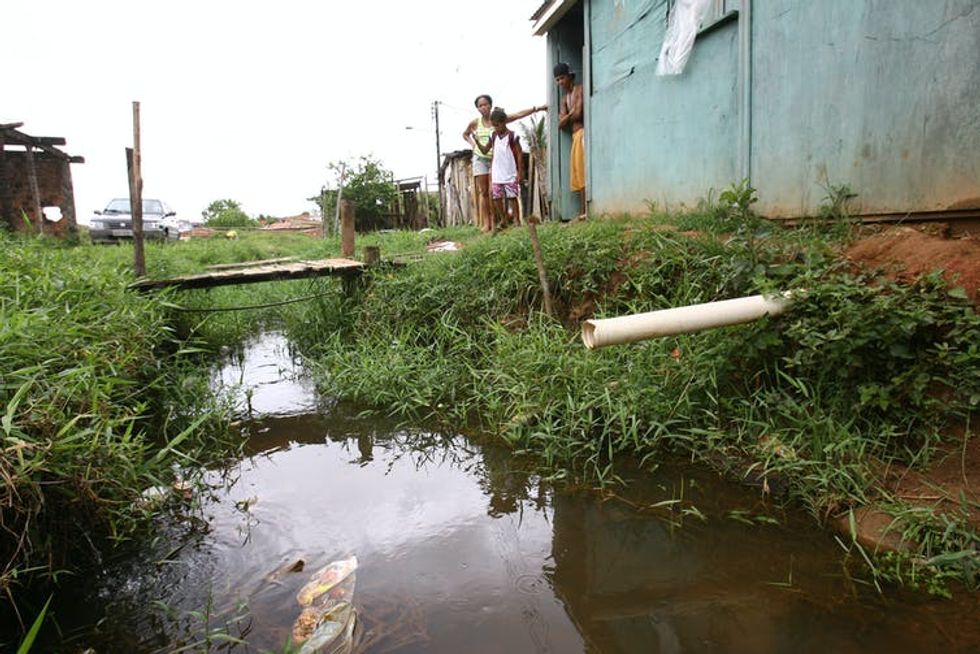
In contrast, over 70% of the world has no community wastewater treatment or even sewers; and most faecal matter, containing resistant genes and bacteria, goes directly into surface and groundwater, often via open drains.
This means that people who live in places without faecal waste management are regularly exposed to antibiotic resistance in many ways. Exposure is even possible of people who may not have taken antibiotics, like our child in South Asia.
Spreading through faeces
Antibiotic resistance is everywhere, but it is not surprising that resistance is greatest in places with poor sanitation because factors other than use are important. For example, a fragmented civil infrastructure, political corruption, and a lack of centralised healthcare also play key roles.
One might cynically argue that “foreign” resistance is a local issue, but antibiotic resistance spread knows no boundaries – superbugs might develop in one place due to pollution, but then become global due to international travel. Researchers from Denmark compared antibiotic resistance genes in long-haul airplane toilets and found major differences in resistance carriage among flight paths, suggesting resistance can jump-spread by travel.
The world’s current experience with the spread of SARS-CoV-2 shows just how fast infectious agents can move with human travel. The impact of increasing antibiotic resistance is no different. There are no reliable antiviral agents for SARS-CoV-2 treatment, which is the way things may become for currently treatable diseases if we allow resistance to continue unchecked.
As an example of antibiotic resistance, the “superbug” gene, blaNDM-1, was first detected in India in 2007 (although it was probably present in other regional countries). But soon thereafter, it was found in a hospital patient in Sweden and then in Germany. It was ultimately detected in 2013 in Svalbard in the High Arctic. In parallel, variants of this gene appeared locally, but have evolved as they move. Similar evolution has occurred as the COVID-19 virus has spread.
Relative to antibiotic resistance, humans are not the only “travellers” that can carry resistance. Wildlife, such as migratory birds, can also acquire resistant bacteria and genes from contaminated water or soils and then fly great distances carrying resistance in their gut from places with poor water quality to places with good water quality. During travel, they defecate along their path, potentially planting resistance almost anywhere. The global trade of foods also facilitates spread of resistance from country to country and across the globe.
What is tricky is that the spread by resistance by travel is often invisible. In fact, the dominant pathways of international resistance spread are largely unknown because many pathways overlap, and the types and drivers of resistance are diverse.
Resistant bacteria are not the only infectious agents that might be spread by environmental contamination. SARS-CoV-2 has been found in faeces and inactive virus debris found in sewage, but all evidence suggests water is not a major route of COVID-19 spread – although there are limited data from places with poor sanitation.
So, each case differs. But there are common roots to disease spread – pollution, poor water quality, and inadequate hygiene. Using fewer antibiotics is critical to reducing resistance. However, without also providing safer sanitation and improved water quality at global scales, resistance will continue to increase, potentially creating the next pandemic. Such a combined approach is central to the new WHO/FAO/OIE recommendations on AMR.
Other types of pollution and hospital waste
Industrial wastes, hospitals, farms, and agriculture are also possible sources or drivers of antibiotic resistance.
For example, about ten years ago, one of us (David) studied metal pollution in a Cuban river and found the highest levels of resistant genes were near a leaky solid waste landfill and below where pharmaceutical factory wastes entered the river. The factory releases clearly impacted resistance levels downstream, but it was metals from the landfill that most strongly correlated with resistance gene levels in the river.
There is a logic to this because toxic metals can stress bacteria, which makes the bacteria stronger, incidentally making them more resistant to anything, including antibiotics. We saw the same thing with metals in Chinese landfills where resistance gene levels in the landfill drains strongly correlated with metals, not antibiotics.
In fact, pollution of almost any sort can promote antibiotic resistance, including metals, biocides, pesticides, and other chemicals entering the environment. Many pollutants can promote resistance in bacteria, so reducing pollution in general will help reduce antibiotic resistance – an example of which is reducing metal pollution.
Hospitals are also important, being both reservoirs and incubators for many varieties of antibiotic resistance, including well known resistant bacteria such as Vancomycin-resistant Enterococcus (VRE) and Methicillin-resistant Staphylococcus aureus (MRSA). While resistant bacteria are not necessarily acquired in hospitals (most are brought in from the community), resistant bacteria can be enriched in hospitals because they are where people are very sick, cared for in close proximity, and often provided “last resort” antibiotics. Such conditions allow the spread of resistant bacteria easier, especially superbug strains because of the types of antibiotics that are used.
Wastewater releases from hospitals also may be a concern. Recent data showed that “typical” bacteria in hospital sewage carry five to ten times more resistant genes per cell than community sources, especially genes more readily shared between bacteria. This is problematic because such bacteria are sometimes superbug strains, such as those resistant to carbapenem antibiotics. Hospital wastes are a particular concern in places without effective community wastewater treatment.
Another critical source of antibiotic resistance is agriculture and aquaculture. Drugs used in veterinary care can be very similar (sometimes identical) to the antibiotics used in human medicine. And so resistant bacteria and genes are found in animal manure, soils, and drainage water. This is potentially significant given that animals produce four times more faeces than humans at a global scale.
Wastes from agricultural activity also can be especially problematic because waste management is usually less sophisticated. Additionally, agricultural operations are often at very large scales and less containable due to greater exposure to wildlife. Finally, antibiotic resistance can spread from farm animals to farmers to food workers, which has been seen in recent European studies, meaning this can be important at local scales.
These examples show that pollution in general increases the spread of resistance. But the examples also show that dominant drivers will differ based on where you are. In one place, resistance spread might be fuelled by human faecal contaminated water; whereas, in another, it might be industrial pollution or agricultural activity. So local conditions are key to reducing the spread of antibiotic resistance, and optimal solutions will differ from place to place – single solutions do not fit all.
Locally driven national action plans are therefore essential – which the new WHO/FAO/OIE guidance strongly recommends. In some places, actions might focus on healthcare systems; whereas, in many places, promoting cleaner water and safer food also is critical.
Simple steps
It is clear we must use a holistic approach (what is now called “One Health”) to reduce the spread of resistance across people, animals, and the environment. But how do we do this in a world that is so unequal? It is now accepted that clean water is a human right embedded in the UN’s 2030 Agenda for Sustainable Development. But how can we achieve affordable “clean water for all” in a world where geopolitics often outweigh local needs and realities?
Global improvements in sanitation and hygiene should bring the world closer to solving the problem of antibiotic resistance. But such improvements should only be the start. Once improved sanitation and hygiene exist at global scales, our reliance on antibiotics will decline due to more equitable access to clean water. In theory, clean water coupled with decreased use of antibiotics will drive a downward spiral in resistance.
This is not impossible. We know of a village in Kenya where they simply moved their water supply up a small hill – above rather than near their latrines. Hand washing with soap and water was also mandated. A year later, antibiotic use in the village was negligible because so few villagers were unwell. This success is partly due to the remote location of the village and very proactive villagers. But it shows that clean water and improved hygiene can directly translate into reduced antibiotic use and resistance.
This story from Kenya further shows how simple actions can be a critical first step in reducing global resistance. But such actions must be done everywhere and at multiple levels to solve the global problem. This is not cost-free and requires international cooperation – including focused apolitical policy, planning, and infrastructure and management practices.
Some well intended groups have attempted to come up with novel solutions, but those solutions are often too technological. And western “off-the-shelf” water and wastewater technologies are rarely optimal for use in developing countries. They are often too complex and costly, but also require maintenance, spare parts, operating skill, and cultural buy-in to be sustainable. For example, building an advanced activated sludge wastewater treatment plant in a place where 90% of the population does not have sewer connections makes no sense.
Simple is more sustainable. As an obvious example, we need to reduce open defecation in a cheap and socially acceptable manner. This is the best immediate solution in places with limited or unused sanitation infrastructure, such as rural India. Innovation is without doubt important, but it needs to be tailored to local realities to stand a chance of being sustained into the future.
Strong leadership and governance is also critical. Antibiotic resistance is much lower in places with less corruption and strong governance. Resistance also is lower in places with greater public health expenditure, which implies social policy, community action, and local leadership can be as important as technical infrastructure.
Why aren’t we solving the problem?
While solutions to antibiotic resistance exist, integrated cooperation between science and engineering, medicine, social action, and governance is lacking. While many international organisations acknowledge the scale of the problem, unified global action is not happening fast enough.
There are various reasons for this. Researchers in healthcare, the sciences, and engineering are rarely on the same page, and experts often disagree over what should be prioritised to prevent antibiotic resistance – this muddles guidance. Unfortunately, many antibiotic resistance researchers also sometimes sensationalise their results, only reporting bad news or exaggerating results.
Science continues to reveal probable causes of antibiotic resistance, which shows no single factor drives resistance evolution and spread. As such, a strategy incorporating medicine, environment, sanitation, and public health is needed to provide the best solutions. Governments throughout the world must act in unison to meet targets for sanitation and hygiene in accordance with the UN Sustainable Development Goals.
Richer countries must work with poorer ones. But, actions against resistance should focus on local needs and plans because each country is different. We need to remember that resistance is everyone’s problem and all countries have a role in solving the problem. This is evident from the COVID-19 pandemic, where some countries have displayed commendable cooperation. Richer countries should invest in helping to provide locally suitable waste management options for poorer ones – ones that can be maintained and sustained. This would have a more immediate impact than any “toilet of the future” technology.
And it’s key to remember that the global antibiotic resistance crisis does not exist in isolation. Other global crises overlap resistance; such as climate change. If the climate becomes warmer and dryer in parts of the world with limited sanitation infrastructure, greater antibiotic resistance might ensue due to higher exposure concentrations. In contrast, if greater flooding occurs in other places, an increased risk of untreated faecal and other wastes spreading across whole landscapes will occur, increasing antibiotic resistance exposures in an unbounded manner.
Antibiotic resistance will also impact on the fight against COVID-19. As an example, secondary bacterial infections are common in seriously ill patients with COVID-19, especially when admitted to an ICU. So if such pathogens are resistant to critical antibiotic therapies, they will not work and result in higher death rates.
Regardless of context, improved water, sanitation, and hygiene must be the backbone of stemming the spread of AMR, including antibiotic resistance, to avoid the next pandemic. Some progress is being made in terms of global cooperation, but efforts are still too fragmented. Some countries are making progress, whereas others are not.
Resistance needs to be seen in a similar light to other global challenges – something that threatens human existence and the planet. As with addressing climate change, protecting biodiversity, or COVID-19, global cooperation is needed to reduce the evolution and spread of resistance. Cleaner water and improved hygiene are the key. If we do not work together now, we all will pay an even greater price in the future.
To hear about new Insights articles, join the hundreds of thousands of people who value The Conversation’s evidence-based news. Subscribe to our newsletter.
A pair of public health experts warned just how easily -- and irresponsibly -- President Donald Trump could pressure government agencies to approve an unproven coronavirus vaccine to boost his election chances.
Vaccines require the completion of large, prospective, placebo-controlled studies of safety and effectiveness before they can safely be used, but Dr. Ezekiel Emanuel and Dr. Paul Offit published a column in the New York Times showing how the president could demand an Emergency Use Authorization for an unproven COVID-19 vaccine.
"These authorizations only require that the F.D.A. finds it 'reasonable to believe' that a vaccine 'may be effective' in preventing a life-threatening disease for it to be put on the market, without being formally licensed," the physicians wrote.
That would allow Trump to hold a news conference declaring victory over the pandemic just days before the election, but Emanuel and Offit said there's not enough time before then to properly develop a vaccine.
"Giving people a false sense of being protected will most likely lead to serious outbreaks of the disease as people reduce their compliance with physical distancing and other public health measures," wrote Emanuel, professor of medical ethics and health policy at the University of Pennsylvania, and Offit, a professor of pediatrics at the University of Pennsylvania and co-inventor of the rotavirus vaccine.
"If only 20,000 participants receive the vaccine, serious but rare side effects might be missed," they added. "If such harms eventually arise, it could further erode a fragile vaccine confidence and threaten the ability to get enough people vaccinated to establish herd immunity. That would be a disaster."
Trump and pharmaceutical companies would be sorely tempted to rush a vaccine to market, but Emanuel and Offit called for more caution to prevent the pandemic from becoming worse.
"Thousands of Americans have already died as Donald Trump has perpetually postponed effective public health interventions and made poor therapeutic recommendations," they wrote. "We must be on alert to prevent him from corrupting the rigorous assessment of safety and effectiveness of Covid-19 vaccines in order to pull an October vaccine surprise to try to win re-election."
The Earth just experienced its hottest May on record, scientists said Friday—just a day after it was announced that atmospheric CO2 levels hit a new high.
Scientists at Europe's Copernicus Climate Change Service (C3S) announced the temperature record Friday. The agency said that globally, last month 0.63°C warmer than the 1981-2020 average for May. That tops the previous warmest May, which occurred in 2016, by 0.05°C.
The last 12-month period, C3S added, was nearly 0.7°C warmer than average.
"The last month has been the warmest May on record globally and this is unquestionably an alarming sign," Freja Vamborg, a scientist at C3S, toldCNBC.
The agency added in its new findings:
Outside Europe, temperatures were most above average over parts of Siberia, where they were up to 10°C above average. They were also much above average over western Alaska, along the Andes bordering Chile and Argentina, and over regions in West and East Antarctica. It was also much warmer than average over western North America, the far north and south of South America, north-western, central and south-western Africa, and south-eastern Asia.
The "highly anomalous" temperatures in parts of Siberia follow a warmer than ever April for the Arctic and evidence of the emergence of so-called "zombie fires"—reignited fires from last year's Arctic wildfires that continued to survive by smoldering underground.
The new data from European scientists follows NOAA's Thursday announcement that atmospheric CO2 levels also hit new highs last month.
The levels recorded at the Mauna Loa Observatory show a seasonal peak of 417.1 parts per million in May, the highest monthly reading ever recorded.
Record high daily averages hit last month had already sparked urgent calls for bold climate action.
The trend of the planet-heating gas in the atmosphere is unmistakable.
"Progress in emissions reductions is not visible in the CO2 record," Pieter Tans, senior scientist with NOAA’s Global Monitoring Laboratory, said in a statement. "We continue to commit our planet—for centuries or longer—to more global heating, sea level rise, and extreme weather events every year."
The record atmospheric CO2 levels come as the global coronavirus pandemic has triggered global economic shutdowns, but the resulting emissions drops and pollution declines were not enough to budge CO2 levels.
Geochemist Ralph Keeling, who runs the Scripps Oceanography program at Mauna Loa, explained why, likening global emissions to "trash in a landfill."
"People may be surprised to hear that the response to the coronavirus outbreak hasn't done more to influence CO2 levels," he said. "But the buildup of CO2 is a bit like trash in a landfill. As we keep emitting, it keeps piling up."
"The crisis has slowed emissions, but not enough to show up perceptibly at Mauna Loa," Keeling continued. "What will matter much more is the trajectory we take coming out of this situation."
The new data comes as global policy makers mark World Environment Day, a moment United Nations Secretary-Gneral António Guterres took to say, "To care for humanity, we MUST care for nature."
"Climate disruption is getting worse," Guterres said in his message, urging all parties to "commit to a green and resilient future."