Fossilized remains of a new species of dinosaur that lived 90 million years ago have been discovered in Patagonia, Argentine paleontologists announced on Thursday.
The winged dinosaur had legs similar to the velociraptor and experts believe it may hold the key to revealing information about the evolution of birds.
The fossil remains, which measure less than a meter and a half in length, were discovered at a dig in the province of Rio Negro in Argentine Patagonia, around 1,100 kilometers (685 miles) from Buenos Aires, the scientific dissemination agency from the La Matanza university said.
It is a new species of carnivorous Paraves theropod that has been named Overoraptor chimentoi, explained Matias Motta, a researcher from the Argentine natural sciences museum.
It is related to another species found more than 10,000 kilometers away in Madagascar.
The first remains were discovered in 2013, with more fossils found in a second dig in 2018.
"This animal had a very sharp claw on its index toe, which certainly was used to attack prey, and it had a long and graceful leg, which indicates it was a running animal," said Motta, the main author of the study published in The Science of Nature magazine.
"It was certainly fast, agile and, like all its relatives, it would have been carnivorous."
Researchers were surprised to find that while its legs were similar to the "raptor" family of dinosaurs, its upper limbs were very long and robust, similar to modern birds.
The second dig uncovered many bones, including an almost complete foot, tail vertebrae and parts of a wing, said paleontologist Federico Brisson Egli.
Previous discoveries in Patagonia of dinosaurs with bird-like features belonged to the Unenlagia genus of dromaeosaurid theropods, which were agile and walked on their hind legs.
"Contrary to what we originally assumed, the Overoraptor is not part of the Unenlagia family, but from another group including a Madagascan species called Rahonavis," said paleontologist Fernando Novas.
Christopher Rapuano, chief of the cornea service at Wills Eye Hospital, got a small dose of tear gas a few years ago as he stood on the fringes of a demonstration in Hong Kong. His eyes started to burn. Then they teared up and his vision blurred. He ran to fresher air. Chris Cramer, a University of Minnesota chemist, got much bigger doses while in the Army, where he was a chemical weapons specialist. To underscore the value of gas masks, soldiers in training would don the masks, wait until tear gas had been fired, then take them off. “It feels as though bees are stinging you in yo...
From the mythical minotaur to the mule, creatures created from merging two or more distinct organisms – hybrids – have played defining roles in human history and culture. However, not all hybrids are as fantastic as the minotaur or as dependable as the mule; in fact, some of them cause human diseases.
We are evolutionary biologists who are trying to understand why certain fungi infect hundreds of thousands of patients each year while others are harmless. We are particularly interested in infections caused by Aspergillus fungi, a group of molds – multicellular fungi that typically grow by forming networks of hairlike filaments – that can cause very serious infections in patients with weak immune systems. While examining Aspergillus strains isolated from patients with lung-related diseases, we unexpectedly discovered an Aspergillus hybrid that infects humans. This finding is significant not only because this is the first known example of a hybrid mold infecting humans but also because accurate identification of the species causing disease is key for managing fungal infections.
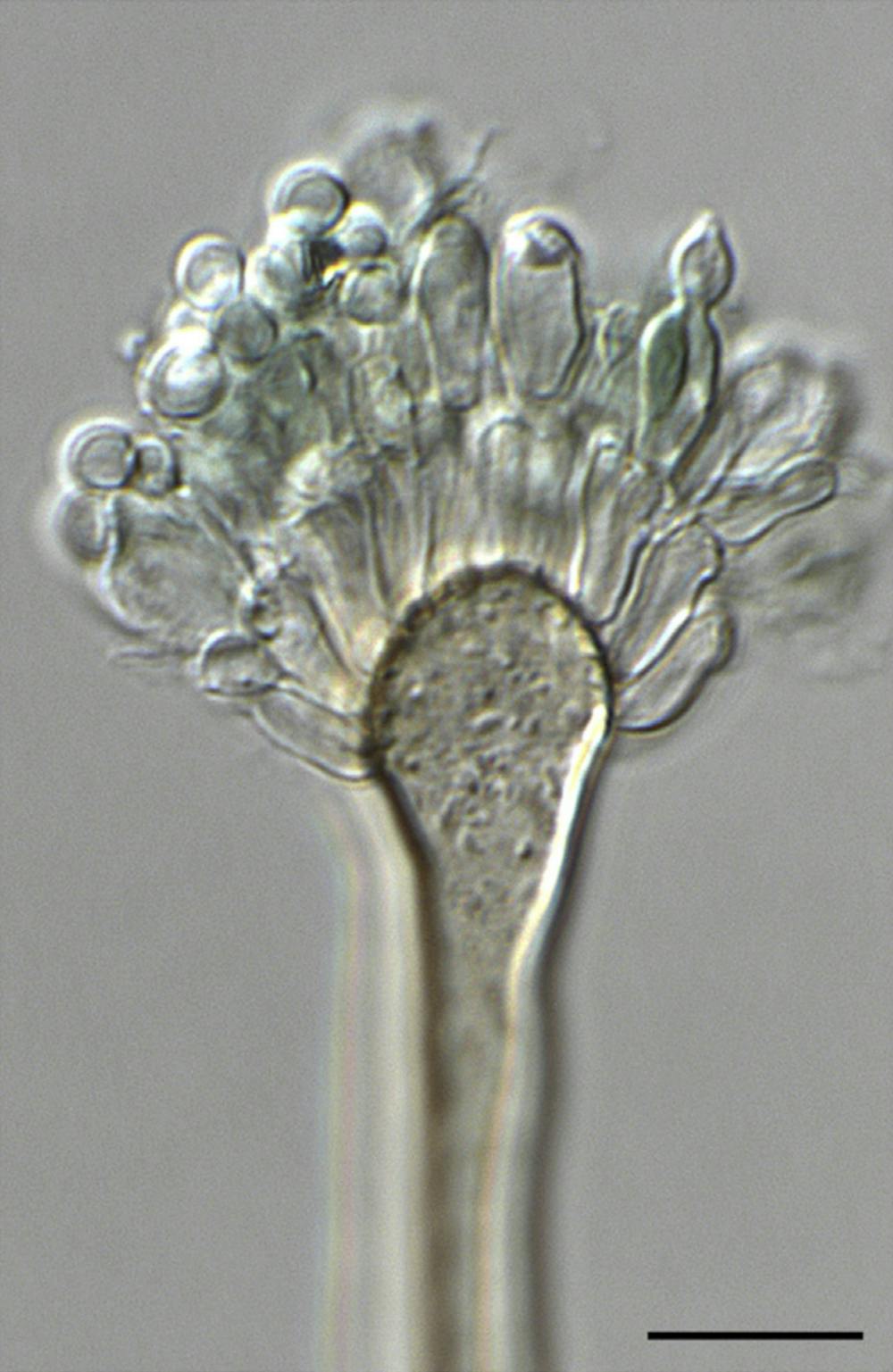
Asexual reproductive structure of A. latus, the first mold hybrid capable of causing human disease. The small spherical structures toward the edge of the structure are the asexual spores. Inhalation of these spores is typically the first step toward Aspergillus infection.
Chen _et al._ 2016, _Studies in Mycology_
When looking through a microscope isn’t close enough
For the last few years, our team at Vanderbilt University, Gustavo Goldman’s team at São Paulo University in Brazil and many other collaborators around the world have been collecting samples of fungi from patients infected with different species of Aspergillus molds. One of the species we are particularly interested in is Aspergillus nidulans, a relatively common and generally harmless fungus. Clinical laboratories typically identify the species of Aspergillus causing the infection by examining cultures of the fungi under the microscope. The problem with this approach is that very closely related species of Aspergillus tend to look very similar in their broad morphology or physical appearance when viewing them through a microscope.
Interested in examining the varying abilities of different A. nidulans strains to cause disease, we decided to analyze their total genetic content, or genomes. What we saw came as a total surprise. We had not collected A. nidulans but Aspergillus latus, a close relative of A. nidulans and, as we were to soon find out, a hybrid species that evolved through the fusion of the genomes of two other Aspergillus species: Aspergillus spinulosporus and an unknown close relative of Aspergillus quadrilineatus. Thus, we realized not only that these patients harbored infections from an entirely different species than we thought they were, but also that this species was the first ever Aspergillus hybrid known to cause human infections.
Several different fungal hybrids cause human disease
Hybrid fungi that can cause infections in humans are well known to occur in several different lineages of single-celled fungi known as yeasts. Notable examples include multiple different species of yeast hybrids that cause the human diseases cryptococcosis and candidiasis. Although pathogenic yeast hybrids are well known, our discovery that the A. latus pathogen is a hybrid is a first for molds that cause disease in humans.
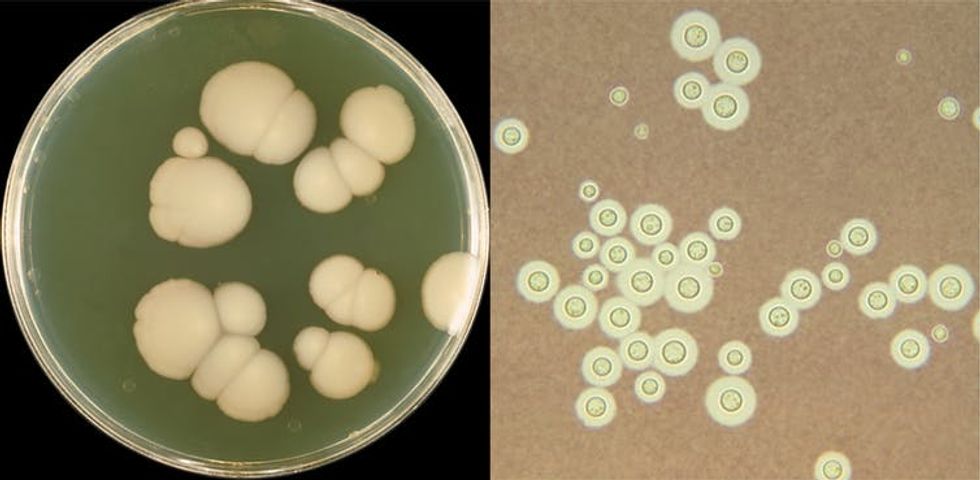
(Left) Candida yeasts live on parts of the human body. Imbalance of microbes on the body can allow these yeasts, some of which are hybrids, to grow and cause infection. (Right) Cryptococcus yeasts, including ones that are hybrids, can cause life-threatening infections in primarily immunocompromised people.
Centers for Disease Control and Prevention
Why certain Aspergillus species are so deadly while others are harmless remains unknown. This may in part be because combinations of traits, rather than individual traits, underlie organisms’ ability to cause disease. So why then are hybrids frequently associated with human disease? Hybrids inherit genetic material from both parents, which may result in new combinations of traits. This may make them more similar to one parent in some of their characteristics, reflect both parents in others or may differ from both in the rest. It is precisely this mix and match of traits that hybrids have inherited from their parental species that facilitates their evolutionary success, including their ability to cause disease.
The evolutionary origin of an Aspergillus hybrid
Multiple evolutionary paths can lead to the emergence of hybrids. One path is through mating, just as the horse and donkey mate to create a mule. Another path is through the merging or fusion of genetic material from cells of different species.
It is this second path that appears to have been taken by our fungus. A. latus appears to have two of almost everything compared to its parental species: twice the genome size, twice the total number of genes and so on. But unlike other hybrids, which are often sterile like the mule, we found that A. latus is capable of reproducing both asexually and sexually.
But how distinct were the parents of A. latus? By comparing the parts contributed by each parent in the A. latus genome, we estimate that its parents are approximately 93% genetically similar, which is about as related as we humans are with lemurs. In other words, A. latus, an agent of infectious disease, is the fungal equivalent of a human-lemur hybrid.
How A. latus differs from its parents
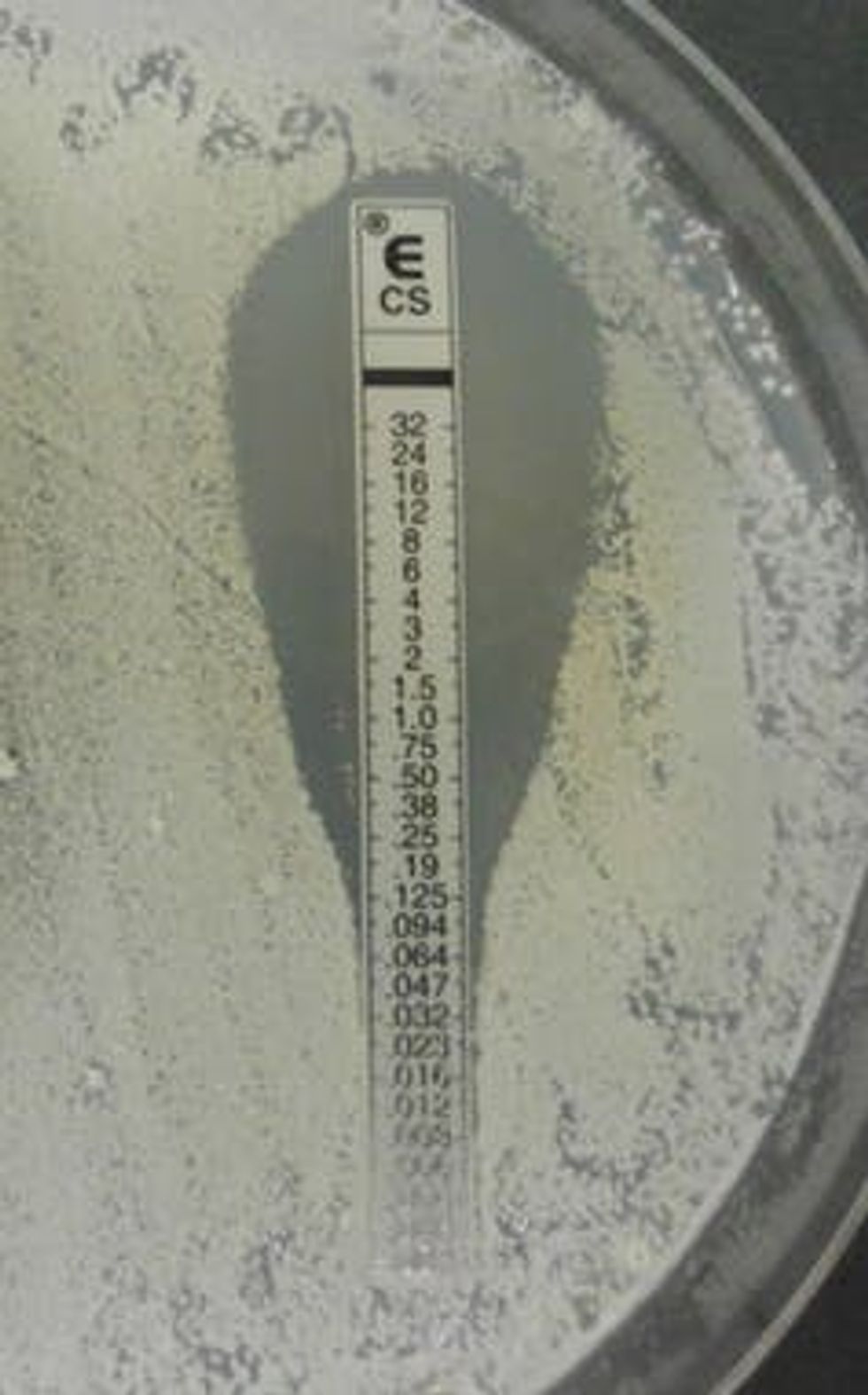
A diagnostic test used to determine the susceptibility of a fungal pathogen to an antifungal drug. These tests are commonly used to determine the amount of antifungal drug necessary to combat an infection.
Garnhami
Elucidating the identity of closely related fungal pathogens and how they differ from each other in infection-relevant characteristics is a key step toward reducing the burden of fungal disease. For example, we found that A. latus was three times more resistant than A. nidulans, the species it was originally identified as using microscopy-based methods, to one of the most common antifungal drugs, caspofungin. This result provides a clear example of the potential importance of accurate identification of the Aspergillus pathogen causing an infection.
We also examined how A. latus and A. nidulans interact with cells from our immune system. We found that immune cells were less efficient at combating A. latus compared to A. nidulans, suggesting the hybrid fungus may be trickier for our immune systems to identify and destroy.
In the midst of the COVID-19 pandemic, our quest to understand Aspergillus pathogens is becoming more urgent. Growing evidence suggests that a fraction of COVID-19 patients are also infected with Aspergillus. More worrying is that these secondary Aspergillus infections can worsen the clinical outcomes for those infected with the novel coronavirus. That being said, we stress that little is known about Aspergillus infections in COVID-19 patients due to a lack of systematic testing, and none of the infections identified so far appear to have been caused by hybrids.
So, when it comes to hybrids, some are fantastic (the minotaur), some are helpful (the mule) and some are dangerous (Aspergillus latus). Understanding more about the biology of Aspergillus latus may help in our understanding of how microbial pathogens arise and how to best prevent and combat their infections.
Jacob L. Steenwyk, Graduate Student of Biological Sciences, Vanderbilt University and Antonis Rokas, Cornelius Vanderbilt Chair in Biological Sciences, Professor of Biological Sciences and Biomedical Informatics, and Director of the Vanderbilt Evolutionary Studies Initiative, Vanderbilt University
People have turned to historical experience with influenza pandemics to try to make sense of COVID-19, and for good reason.
Influenza and coronavirus share basic similarities in the way they’re transmitted via respiratory droplets and the surfaces they land on. Descriptions of H1N1 influenza patients in 1918-19 echo the respiratory failure of COVID-19 sufferers a century later. Lessons from efforts to mitigate the spread of flu in 1918-19 have justifiably guided this pandemic’s policies promoting nonpharmaceutical interventions, such as physical distancing and school closures.
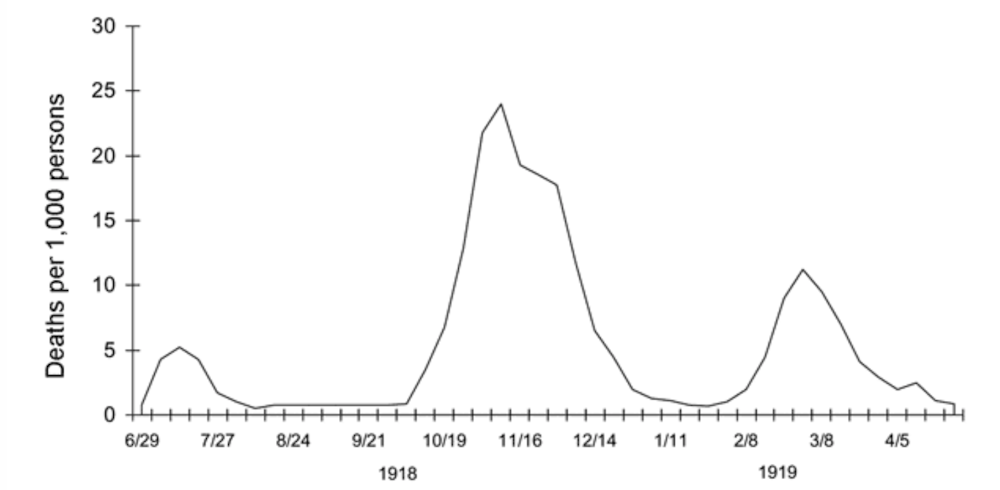
Current discussions about scaling back social distancing measures and “opening up” the country frequently refer to “waves” of disease that characterized the dramatic mortality of H1N1 influenza in three major peaks in 1918-19. As COVID-19 rates begin to steady in some parts of the U.S., people today are nervously eyeing the “second wave” of influenza that came in autumn 1918, that pandemic’s deadliest period.
Three waves of death during the pandemic: weekly combined influenza and pneumonia mortality, United Kingdom, 1918–1919. The waves were broadly the same globally.
Waves evoke predictability, however, and COVID-19 has been hard to predict. Despite the valuable lessons drawn from past influenza outbreaks, how pandemic influenza struck in 1918 isn’t a template for what will happen with COVID-19 in the coming months.
As a historian and a virologist, we believe this comparison of two pandemics has contributed to public confusion about what to expect from “flattening the curve.” Key divergences in the sociopolitical contexts of 1918-19 and now, in addition to clear virologic differences between influenza and SARS-CoV-2, the virus that causes COVID-19, mean their courses are not perfectly matched.
Influenza pandemic a product of that time
Today’s citizens may consider the 2020 world to be dramatically more connected than in the past. But World War I and soldier mobilization created a situation well-suited to influenza dispersal. While the origin of the deadly strain of 1918 H1N1 remains obscure, evidence indicates that soldiers on the move drove circulation.
Young American men left their homes – rural farms, small towns, crowded cities – and traveled around the world. They gathered by the thousands in military training camps and on troop ships, and then at the front in Europe. Civilians globally continued to work in crucial areas of economic production that required movement through the same transit hubs soldiers used. The disease’s first wave occurred in spring and early summer 1918 amid these movements.
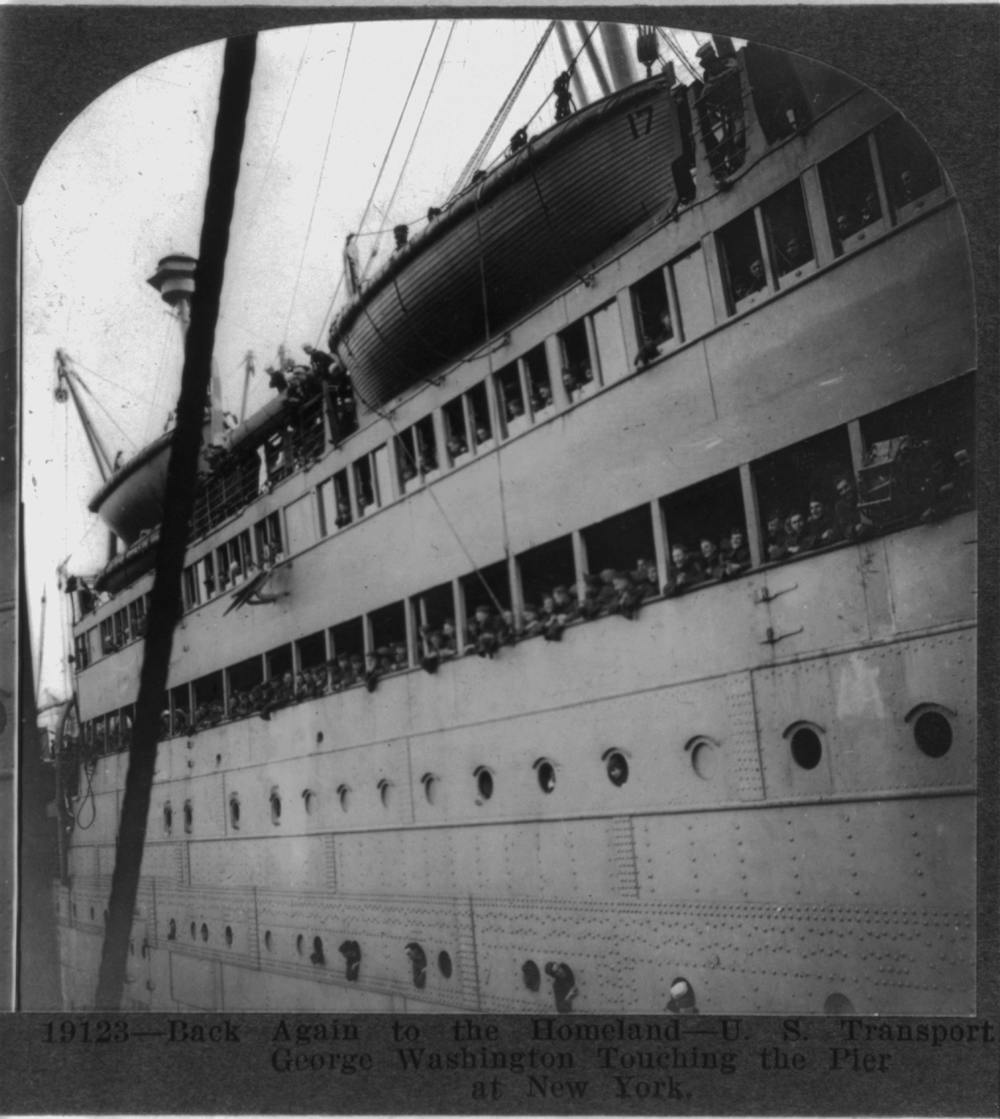
H1N1 flu stowed away with soldiers returning from World War I.
In theaters of war in Europe, Africa and western Asia, soldiers mingled with their global compatriots. When they demobilized, they passed through major transit hubs back to their homes around the world, interacting with more people.
The extraordinarily deadly second wave of influenza in autumn 1918 diffused linearly along rail and sea routes, then radiated outward to wreak havoc on previously unexposed populations globally. In some areas, this period was followed by a less deadly third winter wave of disease in early 1919.
Medical historians conservatively estimate that influenza killed 50 million people globally, with 675,000 in the United States between 1918 and 1920. After that, this strain of flu receded, likely due to changes in the virus itself and the fact that most people had already been exposed and developed immunity or died.
Because the waves of pandemic flu did recede, it’s tempting to imagine today’s pandemic following a similar trajectory. However, fundamental differences between the biology of SARS-CoV-2 and influenza viruses make it hard to chart the future of COVID-19 based on what happened in the early 20th century.
SARS-CoV-2 and flu are biologically different
Both the new coronavirus and influenza have genetic material in the form of RNA. RNA viruses tend to accumulate a lot of mutations as they multiply – they typically don’t double-check copied genes to correct errors during replication. These mutations can occasionally lead to significant changes: The virus might change the species it infects or cell receptor it uses, or it could become more or less deadly, or spread more or less easily.
Uniquely, influenza’s genetic material is organized in segmented chunks. This idiosyncrasy means the virus can trade entire segments of RNA with other influenza viruses, enabling rapid evolution. Influenza also has a distinct seasonality, circulating much more during the winter months. As virus strains circulate, oscillating seasonally between the Northern and Southern Hemispheres’ wintertimes, they mutate rapidly. This capacity for quick adaptation is why you need to get a new flu vaccination annually to protect against new strains that have emerged in your area since last year.
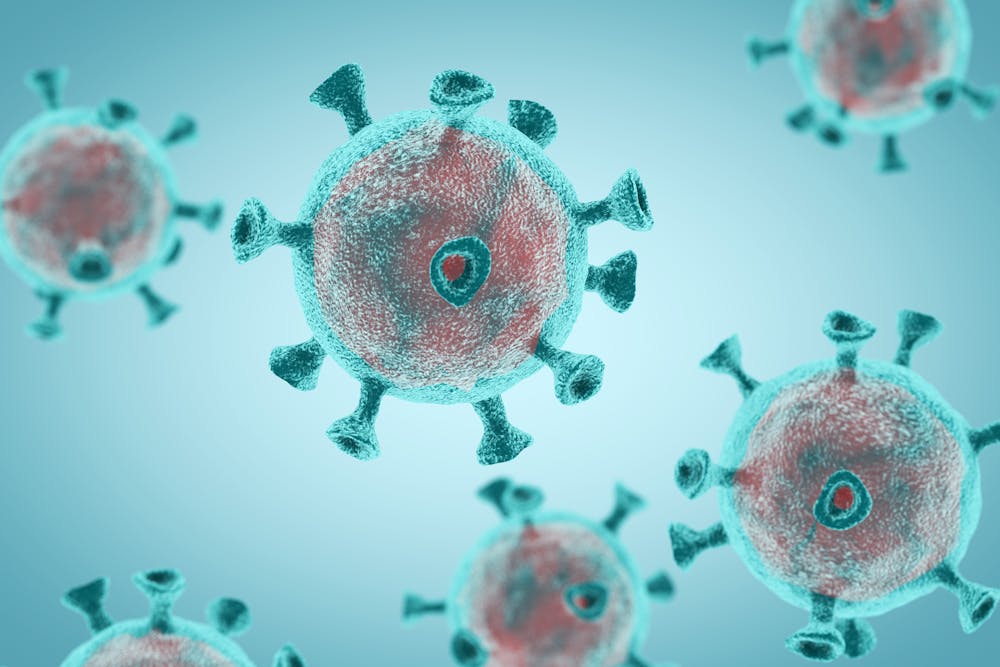
SARS-CoV-2 makes many copies of itself once it successfully infects a human cell.
Coronaviruses actually do proofread their copied RNA to fix inadvertent errors during replication, which decreases their relative mutation rate. From the originally sequenced SARS-CoV-2 in Wuhan, China in December 2019 to recently banked sequences from the U.S., there are fewer than 10 mutations in 30,000 potential locations in its genome, despite the virus having traveled around the world and through multiple generations of human hosts. Influenza makes 6.5 times more errors per replication cycle, independent of entire genome segment swaps.
The relative genetic stability of SARS-CoV-2 means that future peaks of disease are unlikely to be driven by natural changes in virulence due to mutation. Mutation is unlikely to contribute to predictable “waves” of COVID-19.
All this means that oscillations in COVID-19 cases are unlikely to come with the predictability that discussions of influenza “waves” in 1918-19 might suggest. Rather, as SARS-CoV-2 continues to circulate in nonimmune populations globally, physical distancing and mask-wearing will keep its spread in check and, ideally, keep infection and death rates steady.
As states loosen nonpharmaceutical interventions, the U.S. will likely experience a long plateau of continued new infections at a steady rate, punctuated by periodic local flares. These outbreaks will not be driven by SARS-CoV-2 mutation or virulence, but by the further exposure of nonimmune people to the virus. Future spikes in COVID-19 cases and deaths will very likely be driven by what people do.
This scenario will continue until the U.S. population gains herd immunity, ideally accelerated by vaccination. Unfortunately, this process may be measured in years rather than months.
One virus’s pattern is not a prediction
People seek answers from the experiences of influenza in 1918-19 for a fundamental reason: It ended.
History shows the pandemic ebbed after a final, third wave in spring 1919 without the benefit of an influenza vaccine (available only in the mid-1940s) or a molecular or serologic test, or effective antiviral therapy, or even the support of mechanical ventilation.
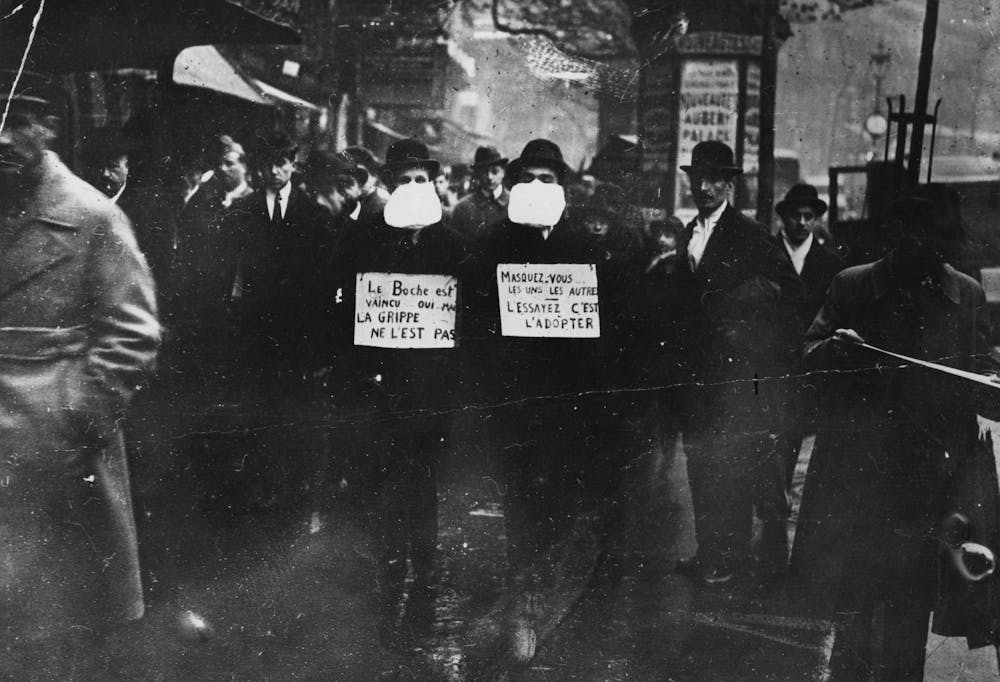
The earlier pandemic does hold lessons for the current one, including the value of wearing masks to stop the virus’s spread.
Today we’re living through a novel pandemic. By and large, people are actively collaborating in unprecedented measures to disrupt transmission of SARS-CoV-2. Scanning the historical record is one way to draw our own lives into focus and perspective. Unfortunately, the end of influenza in summer 1919 does not portend the end of COVID-19 in the summer of 2020.
The pandemic’s scientific complexities are formidable challenges. They’re playing out in a global economy that has ground to a halt, with resultant increasing pressures to reopen communities, and a technologically advanced and interconnected society – all issues that our predecessors a century ago did not have to consider.
Jessica Pickett, Ph.D., a principal consultant with Tomorrow Global, LLC, contributed to this article.
In March 2020, Google searches for phrases like “can’t taste food” or “why can’t I smell” spiked around the world, particularly in areas where COVID-19 hit hardest. Still, many of us have experienced a temporary change in the flavor of our food with a common cold or the flu (influenza). So, is COVID-19 – the disease caused by the SARS-CoV-2 virus – somehow special in the way it affects smell and taste?
We are researchers who study the relationships between human behavior and the sensations people experience from chemicals in daily life. Upon learning that COVID-19 might differentially affect taste and smell, we thought our expertise might be relevant, so we got to work.
The flavor of food is more than just taste
When people “taste” food, they are experiencing input from three different sensory systems that are knitted together to form a singular unified sensation. Strictly speaking, taste describes the five qualities we sense on the tongue, including sweet, salty, bitter, sour and savory/umami. Savory, also known as umami, refers to the meatiness of broth, cheese, fish sauce, or a sundried tomato.
Taste involves more sensory systems than just your mouth.
Other sensations from food occur via our sense of smell, even though we experience them in the mouth. Volatile chemicals are released when we chew. These chemicals travel through the back of the throat to reach smell receptors found at the top of the nasal cavity, right behind the point where your eyeglasses rest on your nose.
The third sensory system involved in food flavor involves touch and temperature nerves that can also be activated by chemicals. This is known as chemesthesis. In the mouth, these sensations include the burn of chili peppers, the cooling of mouthwash or mints, the tingle of carbonation, or the vibrating buzz of Sichuan peppers. Together, these three chemosensory systems – taste, smell and chemesthesis – work to define our perceptual experiences from food.
Common viral infections attack the nose more than the mouth
If your nose is blocked, it is not surprising you are not able to smell much. Typically, the other two systems – taste and oral chemesthesis – are not affected, as a blocked nose does not alter our ability to taste sugar as sweet or feel the burn from a chili pepper. With time, most patients recover their senses of smell, but occasionally some do not. Causes vary, but in some individuals, inflammation from a viral illness appears to permanently damage key structures located around the smell receptors.
SARS-CoV-2 isn’t like those other viruses
Since early spring 2020, firsthand reports have indicated that the SARS-CoV-2 virus, the novel coronavirus that causes COVID-19, might affect the mouth and nose more severely than the common cold or the flu. Not only were the reports of loss more frequent, but they also differed from what is normally seen.
Based on the spike in Google searches, and these atypical accounts of chemosensory loss, more than 600 researchers, clinicians and patient advocates from 60 countries formed the Global Consortium for Chemosensory Research.
The Global Consortium for Chemosensory Research launched a global survey in 32 different languages to better understand what COVID-19 patients are experiencing. Initial results from our survey support the idea that COVID-19 related losses are not limited to smell, as many patients also report disruption of taste and chemesthesis.
Our understanding of how the SARS-CoV-2 virus can affect multiple sensory systems is still quite limited, but is advancing daily. Initial work suggests that smell disturbances in COVID-19 patients are caused by the disruption of cells that support olfactory neurons. In our noses, we have nerve cells called olfactory sensory neurons, which are covered with odor receptors tuned for certain volatile chemicals. When a chemical binds an odor receptor, the olfactory sensory neuron fires a signal to the brain which we perceive as a smell. Notably, it does not appear that the virus targets olfactory sensory neurons directly.
Instead, the virus seems to target specialized supporting cells that cradle the olfactory sensory neurons. These support cells are covered with a different receptor, the ACE2 receptor, which acts as an entry point for the virus. In contrast, the way SARS-CoV-2 might directly affect taste and chemesthesis remains unknown.
Will COVID-19 patients recover their sensory perception?
We just don’t know yet whether COVID-19 patients will recover their sense of smell, taste and chemesthesis. Many patients have reported recovering completely within two or three weeks, while others report their sensory loss lasts for many weeks. To connect with other individuals who are experiencing smell and taste loss related to COVID-19, consider reaching out to organizations advocating on behalf of those who suffer from smell and taste loss, such as AbScent and FifthSense.
Because more data are needed, we are asking for your help in our research. If you know anyone who is (or recently has been) coughing and sniffling, invite them to complete the Global Consortium for Chemosensory Research survey, which takes about 10 minutes.
We want anyone who has had any upper respiratory illness (COVID-19 or not) recently so we can compare individuals with COVID-19 to individuals with the flu or the common cold. By volunteering for our study, or by spreading the word on this research study, you can contribute to better understand how COVID-19 is special in its ability to affect smell, taste and chemesthesis.
Love letters between the ill-fated French queen Marie-Antoinette and her lover, which contain key passages rendered illegible by censor marks, have been deciphered using new techniques, the French National Archives said on Wednesday.
The revealed passages are further confirmation of the steamy relationship between Marie-Antoinette and Count de Fersen, who were writing to each other two years after the 1789 French revolution.
At the time, the queen and King Louis XVI were living under surveillance in the Parisian Tuileries palace and had just failed to escape their house arrest.
Much of the lovers' correspondence had already been brought to light, but redacted lines remained illegible. Until now.
"For the first time we can read Fersen's writing using unambiguous sentences on his feelings for the queen, which had been carefully hidden," said the REX project's leaders in a statement.
"Marie-Antoinette and Fersen express themselves using the terminology of love, even if the majority of the content of the letters is political," the statement added.
The 95-day project used a two-year-old scanning technique –- the x-ray fluorescence system (XRS) –- to analyze the composition of the inks used.
"The principal conclusion of the REX project is less about sensational revelations on the relationship between Marie-Antoinette and Fersen, and more about the expression of feelings of hope, worry, confidence and terror, in a particular context of forced separation and imprisonment," said the statement.
Similarities between the ink used by the count and the ink of redaction suggest Fersen may have censored his own letters.
Out of the 15 redacted letters written by Marie-Antoinette and Fersen, only the content of 8 was brought to light.
For the others, the ink used to write and to censor was the same, rendering the task of revealing the redacted content impossible.
The Austrian-born queen was executed aged just 37 in October 1793 after the overthrow of the monarchy.
Yet the fascination surrounding her life remains undimmed and last month a travel bag belonging to her sold for more than five times its estimate in an auction of royal memorabilia.
This summer, for the first time, genetically modified mosquitoes could be released in the U.S.
On May 1, 2020, the company Oxitec received an experimental use permit from the U.S. Environmental Protection Agency to release millions of GM mosquitoes (labeled by Oxitec as OX5034) every week over the next two years in Florida and Texas. Females of this mosquito species, Aedes aegypti, transmit dengue, chikungunya, yellow fever and Zika viruses. When these lab-bred GM males are released and mate with wild females, their female offspring die. Continual, large-scale releases of these OX5034 GM males should eventually cause the temporary collapse of a wild population.
However, as vector biologists, geneticists, policy experts and bioethicists, we are concerned that current government oversight and scientific evaluation of GM mosquitoes do not ensure their responsible deployment.
Genetic engineering offers an unprecedented opportunity for humans to reshape the fundamental structure of the biological world. Yet, as new advances in genetic decoding and gene editing emerge with speed and enthusiasm, the ecological systems they could alter remain enormously complex and understudied.
Although the EPA approved the permit for Oxitec, state approval is still required. A previously planned release in the Florida Keys of an earlier version of Oxitec’s GM mosquito (OX513) was withdrawn in 2016 after a referendum indicated significant opposition from local residents. Oxitec has field-trialed their GM mosquitoes in Brazil, the Cayman Islands, Malaysia and Panama.
The public forum on Oxitec’s recent permit application garnered 31,174 comments opposing release and 56 in support. The EPA considered these during their review process.
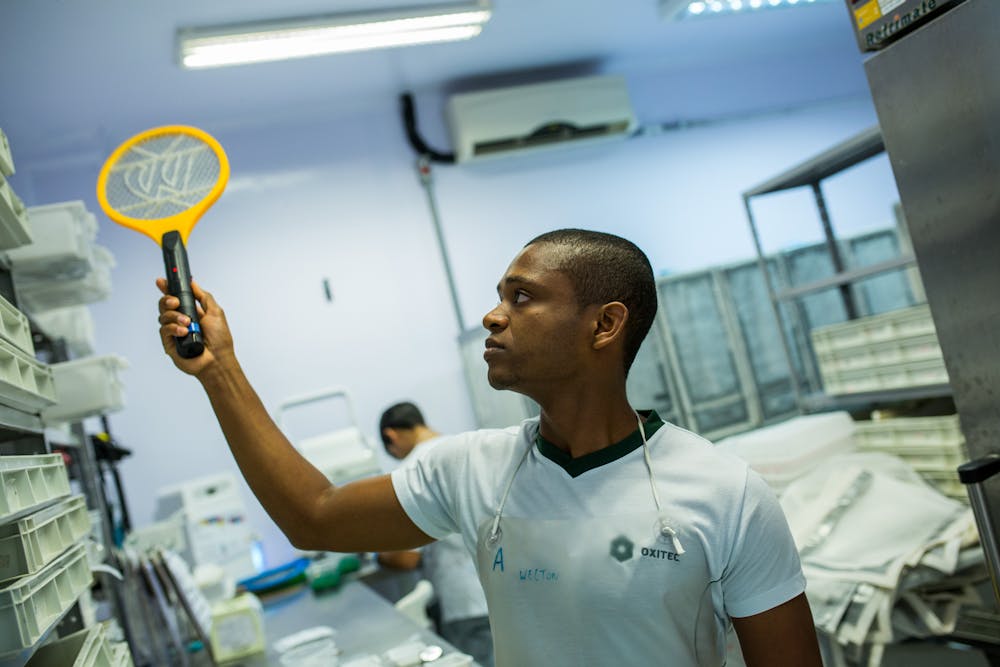
In 2016, technicians from the Oxitec laboratory located in Campinas, Brazil, released genetically modified mosquitoes Aedes egypti to combat the Zika virus.
The closed nature of this risk assessment process is concerning to us.
There is a potential bias and conflict of interest when experimental trials and assessments of ecological risk lack political accountability and are performed by, or in close collaboration with, the technology developers.
Another concern is that risk assessments tend to focus on only a narrow set of biological parameters – such as the potential for the GM mosquito to transmit disease or the potential of the mosquitoes’ new proteins to trigger an allergic response in people – and neglect other important biological, ethical and social considerations.
To address these shortcomings, the Institute for Sustainability, Energy and Environment at University of Illinois Urbana-Champaign convened a “Critical Conversation” on GM mosquitoes. The discussion involved 35 participants from academic, government and nonprofit organizations from around the world with expertise in mosquito biology, community engagement and risk assessment.
A primary takeaway from this conversation was an urgent need to make regulatory procedures more transparent, comprehensive and protected from biases and conflicts of interest. In short, we believe it is time to reassess risk assessment for GM mosquitoes. Here are some of the key elements we recommend.
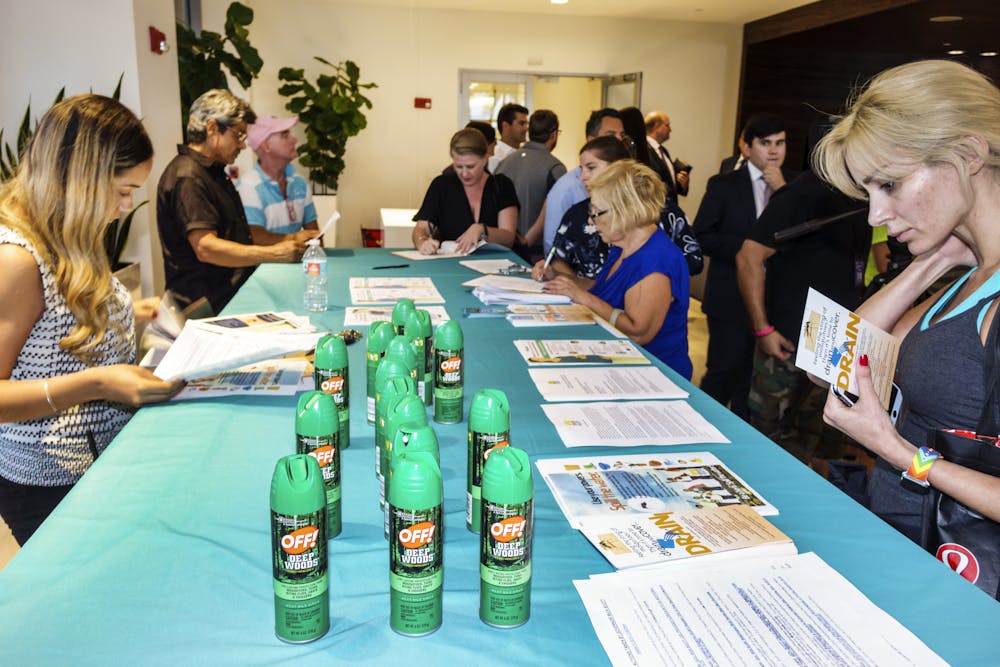
The mosquito spray OFF! was handed out for free at the Zika Virus Town Hall Meeting at Waverly Condominiums in 2016.
Steps to make risk assessment more open and comprehensive
First, an official, government-funded registry for GM organisms specifically designed to reproduce in the wild and intended for release in the U.S. would make risk assessments more transparent and accountable. Similar to the U.S. database that lists all human clinical trials, this field trial registry would require all technology developers to disclose intentions to release, information on their GM strategy, scale and location of release and intentions for data collection.
This registry could be presented in a way that protects intellectual property rights, just as therapies entering clinical trials are patent-protected in their registry. The GM organism registry would be updated in real time and made fully available to the public.
Second, a broader set of risks needs to be assessed and an evidence base needs to be generated by third-party researchers. Because each GM mosquito is released into a unique environment, risk assessments and experiments prior to and during trial releases should address local effects on the ecosystem and food webs. They should also probe the disease transmission potential of the mosquito’s wild counterparts and ecological competitors, examine evolutionary pressures on disease agents in the mosquito community and track the gene flow between GM and wild mosquitoes.
To identify and assess risks, a commitment of funding is necessary. The U.S. EPA’s recent announcement that it would improve general risk assessment analysis for biotechnology products is a good start. But regulatory and funding support for an external advisory committee to review assessments for GM organisms released in the wild is also needed; diverse expertise and local community representation would secure a more fair and comprehensive assessment.
Furthermore, independent researchers and advisers could help guide what data are collected during trials to reduce uncertainty and inform future large-scale releases and risk assessments.
The objective to reduce or even eliminate mosquito-borne disease is laudable. GM mosquitoes could prove to be an important tool in alleviating global health burdens. However, to ensure their success, we believe that regulatory frameworks for open, comprehensive and participatory decision-making are urgently needed.
Waste heat is all around you. On a small scale, if your phone or laptop feels warm, that’s because some of the energy powering the device is being transformed into unwanted heat.
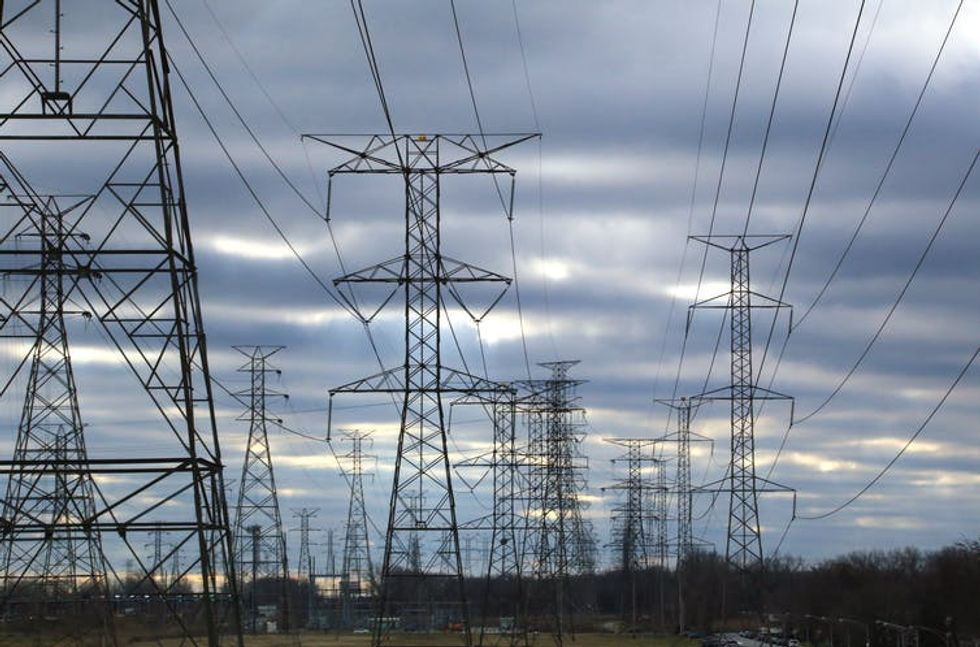
On a larger scale, electric grids, such as high power lines, lose over 5% of their energy in the process of transmission. In an electric power industry that generated more than US$400 billion in 2018, that’s a tremendous amount of wasted money.
Globally, the computer systems of Google, Microsoft, Facebook and others require enormous amounts of energy to power massive cloud servers and data centers. Even more energy, to power water and air cooling systems, is required to offset the heat generated by these computers.
Where does this wasted heat come from? Electrons. These elementary particles of an atom move around and interact with other electrons and atoms. Because they have an electric charge, as they move through a material – like metals, which can easily conduct electricity – they scatter off other atoms and generate heat.
Superconductors are materials that address this problem by allowing energy to flow efficiently through them without generating unwanted heat. They have great potential and many cost-effective applications. They operate magnetically levitated trains, generate magnetic fields for MRI machines and recently have been used to build quantum computers, though a fully operating one does not yet exist.
But superconductors have an essential problem when it comes to other practical applications: They operate at ultra-low temperatures. There are no room-temperature superconductors. That “room-temperature” part is what scientists have been working on for more than a century. Billions of dollars have funded research to solve this problem. Scientists around the world, including me, are trying to understand the physics of superconductors and how they can be enhanced.
The U.S. power grid sheds heat at a loss of billions of dollars each year.
A superconductor is a material, such as a pure metal like aluminum or lead, that when cooled to ultra-low temperatures allows electricity to move through it with absolutely zero resistance. How a material becomes a superconductor at the microscopic level is not a simple question. It took the scientific community 45 years to understand and formulate a successful theory of superconductivity in 1956.
While physicists researched an understanding of the mechanisms of superconductivity, chemists mixed different elements, such as the rare metal niobium and tin, and tried recipes guided by other experiments to discover new and stronger superconductors. There was progress, but mostly incremental.
Simply put, superconductivity occurs when two electrons bind together at low temperatures. They form the building block of superconductors, the Cooper pair. Elementary physics and chemistry tell us that electrons repel each other. This holds true even for a potential superconductor like lead when it is above a certain temperature.
When the temperature falls to a certain point, though, the electrons become more amenable to pairing up. Instead of one electron opposing the other, a kind of “glue” emerges to hold them together.
Keeping matter cool
Discovered in 1911, the first superconductor was mercury (Hg), the basic element of old-fashioned thermometers. In order for mercury to become a superconductor, it had to be cooled to ultra-low temperatures. Kamerlingh Onnes was the first scientist who figured out exactly how to do that – by compressing and liquefying helium gas. During the process, once helium gas becomes a liquid, the temperature drops to -452 degrees Fahrenheit.
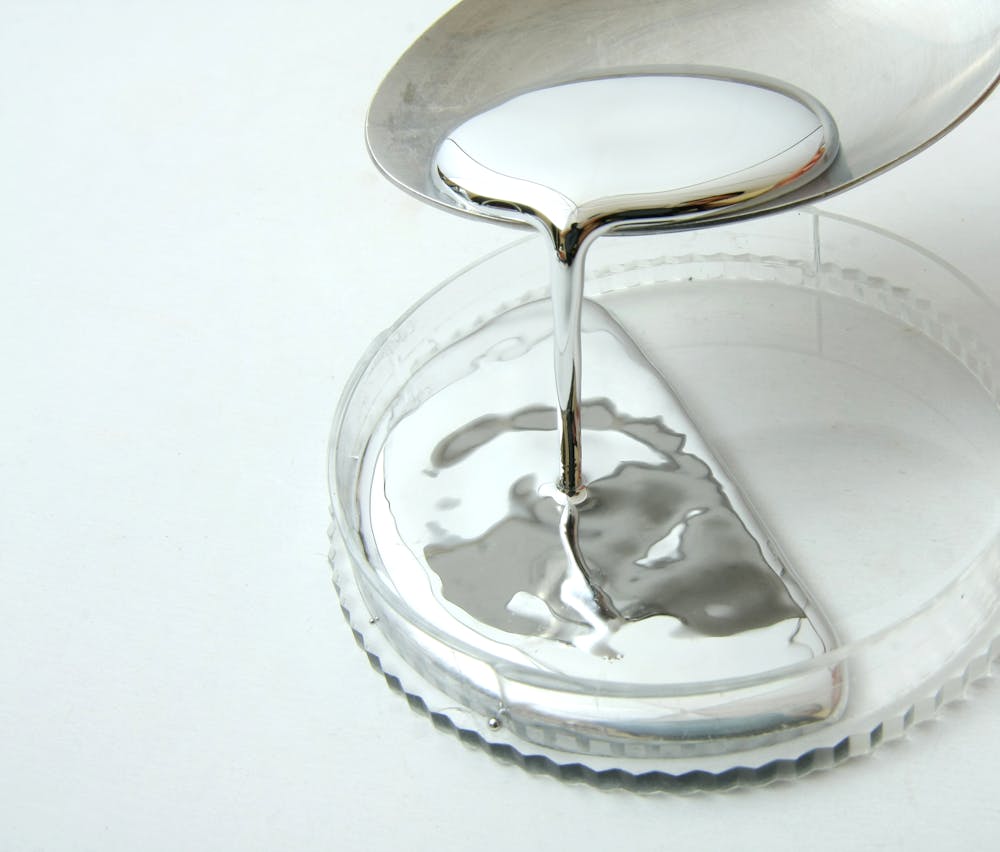
Quicksilver or mercury, the only metal that is liquid at room temperature.
When Onnes was experimenting with mercury, he discovered that when it was placed inside a liquid helium container and cooled to very low temperatures, its electric resistance, the opposition of the electric current in the material, suddenly dropped to zero ohms, a unit of measurement that describes resistance. Not close to zero, but zero exactly. No resistance, no heat waste.
This meant that an electric current, once generated, would flow continuously with nothing to stop it, at least in the lab. Many superconducting materials were soon discovered, but practical applications were another matter.
These superconductors shared one problem – they needed to be cooled down. The amount of energy needed to cool a material down to its superconducting state was too expensive for daily applications. By the early 1980s, the research on superconductors had nearly reached its conclusion.
A surprising discovery
In a dramatic turn of events, a new kind of superconductor material was discovered in 1987 at IBM in Zurich, Switzerland. Within months, superconductors operating at less extreme temperatures were being synthesized globally. The material was a kind of a ceramic.
These new ceramic superconductors were made of copper and oxygen mixed with other elements such as lanthanum, barium and bismuth. They contradicted everything physicists thought they knew about making superconductors. Researchers had been looking for very good conductors, yet these ceramics were nearly insulators, meaning that very little electrical current can flow through. Magnetism destroyed conventional superconductors, yet these were themselves magnets.
Scientists were seeking materials where electrons were free to move around, yet in these materials, the electrons were locked in and confined. The scientists at IBM, Alex Müller and Georg Bednorz, had actually discovered a new kind of superconductor. These were the high-temperature superconductors. And they played by their own rules.
Elusive solutions
Scientists now have a new challenge. Three decades after the high-temperature superconductors were discovered, we are still struggling to understand how they work at the microscopic level. Creative experiments are being conducted every day in universities and research labs around the world.
In my laboratory, we have built a microscope known as a scanning tunneling microscope that helps our research team “see” the electrons at the surface of the material. This allows us to understand how electrons bind and form superconductivity at an atomic scale.
We have come a long way in our research and now know that electrons also pair up in these high-temperature superconductors. There is great value and utility in answering how high-temperature superconductors work because that may be the route to room-temperature superconductivity. If we succeed in making a room-temperature superconductor, then we can address the billions of dollars that it costs in wasted heat to transmit energy from power plants to cities.
More remarkably, solar energy harvested in the vast empty deserts around the world could be stored and transmitted without any loss of energy, which could power cities and dramatically reduce greenhouse gas emissions. The potential is hard to imagine. Finding the glue for room-temperature superconductors is the next million-dollar question.
NASA astronauts entered the International Space Station on Sunday after a landmark 19-hour journey on the first crewed US spacecraft in nearly a decade, a triumph for SpaceX and private enterprise.
The arrival completed the first leg of the trip, designed to test the capabilities of the Crew Dragon capsule. But the mission will only be declared a success when the astronauts return safely to Earth in a few months' time.
The spaceship's hatch opened at 1:02 pm Eastern Time (1702 GMT) as Bob Behnken and Doug Hurley carried out final procedures before crossing the threshold about 20 minutes later.
Wearing black polo shirts and khaki pants, they were greeted by fellow American astronaut Chris Cassidy, as well as Russia cosmonauts Anatoli Ivanishin and Ivan Vagner.
The five men posed for photos and then NASA administrator Jim Bridenstine spoke to the crew from mission control in Houston.
"Welcome to Bob and Doug," said Bridenstine. "I will tell you the whole world saw this mission, and we are so, so proud of everything you have done for our country."
"It's great to get the United States back in the crewed launch business and we're just really glad to be on board this magnificent complex," replied Hurley.
Russian space chief Dmitry Rogozin also offered his congratulations to both NASA and Elon Musk, the boss of the private aerospace company SpaceX that built the Crew Dragon capsule.
The capsule spent 19 hours chasing down the station at speeds of up to 17,500 miles per hour (28,000 kph), before carefully aligning to its target and slowing to a crawl for the delicate docking procedure, which took place over northern China.
- Pandemic and protests -
During their stay Behnken and Hurley will perform more checks on the capsule to certify its readiness as the United States transitions to using the commercial sector for rides to the ISS.
The space agency has had to rely on Russian Soyuz rockets ever since the Space Shuttle program ended in 2011 -- with 2015 the original target for a replacement program.
The United States has paid SpaceX and aerospace giant Boeing a total of about $7 billion for their "space taxi" contracts.
But Boeing's program has floundered badly after a failed test run late last year, which left SpaceX, a company founded only in 2002, as clear frontrunner.
The launch comes as the world grapples with the coronavirus pandemic, and as the US faces nationwide protests after a black man died in Minneapolis while being arrested by a white police officer.
Speaking to Bridenstine, Hurley said he hoped the mission would inspire young Americans.
"This was just one effort that we can show for the ages in this dark time that we've had over the past several months to kind of inspire, especially the young people in the United States, to reach for these lofty goals," he said.
On Twitter, however, some retweeted the song "Whitey On The Moon" which was released by Gil Scott-Heron in 1970, the year after the Apollo 11 lunar landing.
The lyrics juxtaposed the injustice and economic conditions faced by black Americans with the enormous spending required for the space program.
- Rough ride -
SpaceX's two-stage Falcon 9 rocket began its voyage Saturday, blasting off flawlessly in a cloud of bright orange flames and smoke from Florida's Kennedy Space Center.
"I'm really quite overcome with emotion," Musk said. "It's been 18 years working towards this goal." Hurley and Behnken had named their capsule "Endeavour" after the retired Space Shuttle on which they both flew.
Asked by a lawmaker how the Crew Dragon's handling compared to that of the shuttle, Behknen indicated the new ship was a rougher ride.
"Dragon was huffing and puffing all the way into orbit, and we were definitely driving or riding a dragon all the way up," he said. "And so it was not quite the same ride, the smooth ride, as the Space Shuttle was."
- Jabs from Russia -
While Russia saluted the United States, it also stressed Sunday it was puzzled by the frenzy unleashed by what many hailed as the dawn of a new era.
"We don't really understand the hysteria sparked by the successful launch of a Crew Dragon spacecraft," Roscosmos spokesman Vladimir Ustimenko said.
US-Russia cooperation is not expected to end once Crew Dragon goes into service.
NASA still plans to use Soyuz rockets to send some astronauts into space, with each seat costing around $80 million.
The United States, meanwhile, hopes to revive human space exploration, which has not risen to the expectations of the early space era.
The idea of a crewed mission to Mars has been mooted since the 1950s, and NASA has commissioned numerous studies that have never gotten off the ground.
The United States now plans to return to the Moon in 2024 under the Artimis mission, establishing a launching pad to the Red Planet by the 2030s.
Douglas Hurley (R) and Robert Behnken (2ndR) arrive at the International Space Station, to be greeted by other astronauts
NASA's first crewed mission since 2011
In this still image taken from NASA TV, NASA astronauts Bob Behnken (front) and Doug Hurley reach orbit on May 30, 2020, after launching from Kennedy Space Center in Florida
A SpaceX Falcon 9 rocket carrying the Crew Dragon spacecraft takes off from launch complex 39A at the Kennedy Space Center in Florida on May 30, 2020
President Donald Trump flew to Florida to watch the launch and delivered remarks to NASA and SpaceX employees on what he called a "special day"
Pharmaceutical company executives said Thursday that one or several COVID-19 vaccines could begin rolling out before 2021, but warned the challenges would be "daunting" as it was estimated that 15 billion doses would be needed to halt the pandemic.
Well over 100 labs around the world are scrambling to come up with a vaccine against the novel coronavirus, including 10 that have made it to the clinical trial stage.
"The hope of many people is that we will have a vaccine, hopefully several, by the end of this year," Pascal Soriot, head of AstraZeneca, told a virtual briefing.
His company is partnering with the University of Oxford to develop and distribute a vaccine being trialled in Britain.
Albert Bourla, head of Pfizer, meanwhile said that his company, which is conducting clinical trials with German firm Biontech on several possible vaccines in Europe and the United States, also believed one would be ready before the end of the year.
"If things go well, and the stars are aligned, we will have enough evidence of safety and efficacy so that we can... have a vaccine around the end of October," he said.
It can take years for a new vaccine to be licensed for general use, but in the face of the COVID-19 pandemic, experimental vaccines shown to be safe and effective against the novel coronavirus could likely win approval for emergency use.
The International Federation of Pharmaceutical Manufacturers and Associations (IFPMA), which organised Thursday's briefing, highlighted the "daunting" challenges facing the industry in the push for a vaccine.
- 'Running against time' -
One challenge, which may seem counterintuitive, is that transmission rates are rapidly declining in Europe where some of the trials are taking place.
Soon they will be too low to properly conduct clinical vaccine trials in a natural setting, Soriot said, adding that so-called "human challenge" studies in which people are intentionally exposed to the virus to test efficacy, were not considered ethically acceptable with COVID-19.
"We are running against time," he said.
The novel coronavirus has killed more than 355,000 people and infected at least 5.7 million worldwide in a matter of months.
IFPMA director Thomas Cueni pointed to estimates that the world will need some 15 billion doses to stop the virus, posing massive logistical challenges.
He stressed that the industry was committed to ensuring equitable access to a future vaccine, but acknowledged that "we will not have sufficient quantities as from day one, even with the best efforts."
Once a working vaccine is developed, one of the biggest obstacles to putting out the amount needed could surprisingly be that there are not enough glass vials to store the doses in.
"There are not enough vials in the world," Soriot said, adding that AstraZeneca, like a number of other firms, was looking into the possibility of putting multiple doses in each vial.
- IP 'fundamental' -
Paul Stoffels, vice chairman and chief scientific officer at Johnson and Johnson, meanwhile said that if 15 billion doses were needed, a number of different vaccines would be necessary to satisfy the initial demand.
"Not all vaccine candidates could go all over the world depending on features, so somewhere between five and 10 will definitely be needed to serve the whole world," he said.
One challenge could be that some of the vaccines being worked on require storage at very low temperatures, which could be difficult in places lacking the proper infrastructure.
While stressing the need for solidarity and for ensuring fair and equitable distribution of a COVID-19 vaccine, the pharmaceutical chiefs flatly rejected any suggestion that intellectual property rights should be waived on vaccine research.
"IP is absolutely fundamental to our industry," GSK chief Emma Walmsley said.
Soriot meanwhile pointed out that pharmaceutical companies are currently investing billions of dollars with little chance of recuperating the costs.
"If you don't protect IP, then essentially there is no incentive for anybody to innovate," he said.
After weeks of keeping people home to “flatten the curve,” restrictions on U.S. businesses are loosening and the coronavirus pandemic response is moving into a new phase.
Two things will be critical to keep COVID-19 cases from flaring up again: widespread testing to quickly identify anyone who gets the virus, and contact tracing to find everyone those individuals might have passed it to.
It’s a daunting task, but states are working hard to take the necessary steps to reopen safely. When Dr. Anthony Fauci, the head of the National Institute of Allergy and Infectious Disease, explained that task to the U.S. Senate recently, he pointed to South Carolina as a model for the country, one that he would “almost like to clone.”
So, what is South Carolina getting right?
Part of it has to do with contact tracing. Since early March, when South Carolina’s first coronavirus case surfaced, investigators have reached out to every person who tested positive for SARS-CoV-2 in the state, and all of the people they came into close contact with. To help prevent the virus from spreading farther, they hired 1,800 additional workers who will follow up with those contacts each day for 14 days to make sure they haven’t become ill.
Fauci’s compliment didn’t surprise me. I spent the first nine years of my career as a public health microbiologist in South Carolina at the Department of Health and Environmental Control’s State Public Health Laboratory. South Carolina already had disease reporting requirements in place and the cutting-edge laboratory technology needed for testing. Together with skilled epidemiologists, these laid the groundwork for an effective response to a pandemic that, nationwide, has now claimed more than 100,000 U.S. lives.
Knowing where to look
The first step was scaling up testing – fast. To find and contain the virus, officials need to know where to look.
South Carolina is poised to conduct 220,000 tests in May and June, close to the total for the previous three months combined, with a goal of testing 2% of the population. That’s still a low percentage, but it’s only an initial goal in the push to test more people. According to the Safra Center at Harvard University, testing between 2% and 6% of the population, coupled with effective contact tracing afterward, will be required to control the pandemic.
Partnering with private entities is an important part of how South Carolina has been able to ramp up testing and process those tests quickly. Prisma Health, the state’s largest health care system, and the Medical University of South Carolina have facilitated a large portion of the state’s testing, including providing the resources to collect thousands of samples at pop-up testing sites.
These community testing sites are initially focused on providing free screening and testing to underserved and rural communities across the state. The state is also working with partners across the state to provide testing for every nursing home resident by the end of May.
Coronavirus contact tracing in action
What happens after the diagnosis is crucial for changing the course of the COVID-19 pandemic.
Once a positive case is identified, testing labs are required by law to report that patient’s contact information to the state health department. Case investigators then interview every person who tests positive for SARS-CoV-2, as they have been doing since the outbreak began.
These interviews can be lengthy, and they require staff with excellent interpersonal communication skills and training. The interviewers help patients recall their activities in the previous days and identify people they came in close contact with starting 48 hours before the onset of symptoms. Sometimes patients can’t recall specifics, or know only that they’ve been to a certain restaurant or event. In these cases, the investigation can take much longer as the health department tracks down event participants or alerts restaurant patrons that they may have been exposed when visiting during a particular time period.
The investigators also help patients understand what self-isolation means and what they’ll need to do to self-isolate for 10 days from the start of their symptoms.
The contacts who are identified during the case interview then go into a work queue for follow-up by contact tracers. Contact tracers want to reach these contacts before they spread the virus farther.
Tracers next alert these contacts that they may have been exposed to SARS-CoV-2 and advise them to self-quarantine for 14 days. This includes limiting their activities by staying home as much as possible and wearing a mask if they must go out.
Once fully staffed and adequately trained, contact tracers will follow up even more often, performing a “virtual handshake” with each identified contact every day for 14 days to ensure that those individuals are monitoring symptoms and taking precautions not to spread the illness. This could be a phone call or a quick text to check on symptoms.
South Carolina was one of three states to announce on May 20 that they were partnering with Google and Apple to develop ways to use new smartphone technology designed to quickly notify people when they have been exposed to someone who has tested positive for the coronavirus. The technology has drawbacks, but it could provide quick notifications if people widely adopt it.
No matter the method, daily communication is key so state health officials know if that person becomes ill during the 14-day window. Testing can then be arranged and, if positive, the case investigators start the process again with a detailed interview to locate the next ring of contacts.
How many contact tracers are enough?
Contact tracing is an important piece of the puzzle to reopening the economy without triggering a spike in coronavirus cases and overwhelming the medical system.
The CDC and George Washington University recommend states have 30 tracers for every 100,000 residents. South Carolina’s 1,800 contact tracers meet that target. These tracers are a combination of newly hired Department of Health and Environmental Control staff and staff retained through private staffing companies. Members of the public have also expressed an interested in helping with contact tracing, and may be used if future need arises.
Will this workforce, coupled with an increase in test availability, be robust enough to contain a rebound in cases? This answer will depend on the responsiveness of public health authorities and the willingness of the citizens of the state to self-isolate and quarantine. Swift action by both will be needed to save lives.
While the planet has been on lockdown the last two months, a new space telescope called CHEOPS opened its eyes, took its first pictures of the heavens and is now open for business.
The CHEOPS mission adds a unique twist in the science that the public normally associates with planet discovery missions like Kepler and TESS. Kepler and TESS produced many groundbreaking discoveries and brought the number of known exoplanets into the thousands – so many that we’ve only scratched the surface of what we can learn from them. Consequently, rather than simply finding more planets, the primary objective of CHEOPS is to better understand the planets that we’ve already found.
I have been in the exoplanet field for the better part of two decades. For most of that time I had the good fortune to work on NASA’s Kepler mission. Among Kepler’s major discoveries is the baffling array of planets that it found. Two prime examples are the thousands of planets whose sizes fall in the gap between Earth and Neptune. Kepler also found planets with orbits that are only a few hours long. None of these planets has counterparts in the solar system. What these planets are like, how they form and how they arrived at their current state are matters of ongoing research. To better understand these planets, we need to have better measurements of their properties – their sizes, masses, composition and atmospheres. Astronomers will turn to CHEOPS to fill these gaps in our knowledge.
CHEOPS mission overview
A joint Swiss-ESA mission, CHEOPS, the “Characterizing Exoplanet Satellite,” will make key measurements of the size and albedo (reflectivity) of planets that orbit distant stars. CHEOPS launched in December of 2019 from the northern coast of South America, hitching a ride as a secondary passenger on a big Soyuz rocket.
The challenge with most of the planets discovered by the Kepler mission is that they orbit faint stars, making them difficult to observe with any telescope other than Kepler itself (which has finished its work and is no longer operating). CHEOPS, on the other hand, will observe planets orbiting bright stars that haven’t been studied with the level of detail once provided by Kepler, and that CHEOPS is now able to provide. These planets are more amenable to the wide variety of complementary observations from instruments on other telescopes – giving new insights into the nature of these recently discovered planets.
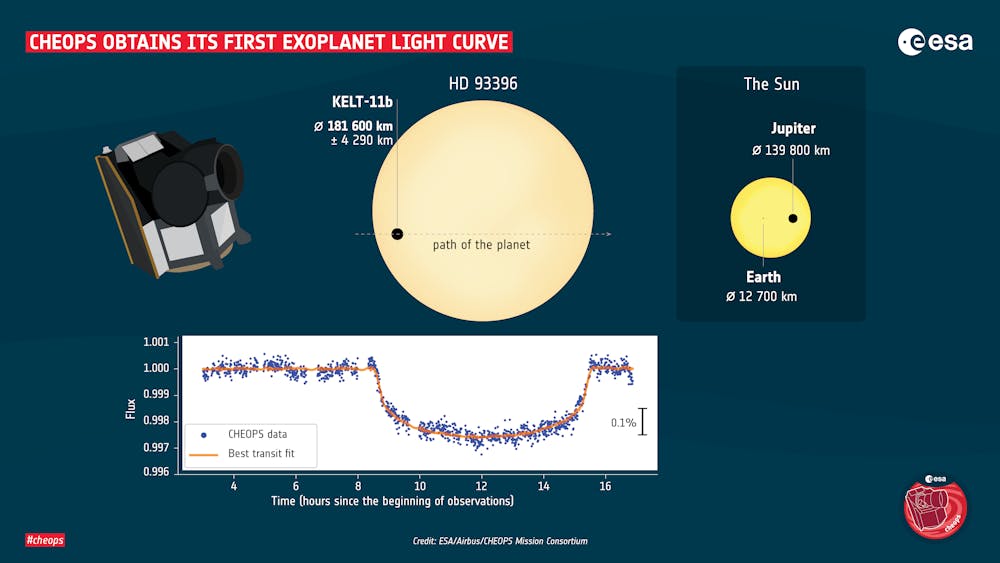
CHEOPS was placed in a “Sun-synchronous” orbit where it stays constantly above the Earth’s terminator – the line on the Earth that separates day from night. The satellite observes planets as they transit in front of their host stars using a 32-centimeter mirror. The telescope is 10 times smaller than Kepler, but since it will observe brighter stars, it can achieve a precision similar to Kepler – a fact demonstrated during its commissioning stage. And instead of continuously (and simultaneously) observing a hundred thousand stars in order to discover new planets, CHEOPS looks at individual targets when and where the planet is known to be there.
For the brightest Sun-like stars, CHEOPS can measure the sizes of planets as small as the Earth by seeing the fraction of the starlight that is blocked by the planet as it passes in front of the star. The improved measurements of planet sizes allow scientists to determine a planet’s density, giving insights into its composition and interior structure. They also establish the key relationship between planetary sizes and their masses, which tells us more about the traits shared by planets across many systems.
In addition to planet sizes, CHEOPS can measure a planet’s “phase curve,” the variation in brightness due to the changing profile of the planet as it orbits its host star (like the changing phases of the Moon). The phase curve tells us how much light is reflected by the planet and, therefore, some of the properties of its surface, atmosphere and clouds. This information, in turn, can tell us more about the conditions that might exist under the cloud tops and at a planet’s surface. Finally, since CHEOPS targets are bright, they are good candidates for detailed observations of their atmospheres using large ground-based and space-based telescopes (like the Extremely Large Telescope and the James Webb Space Telescope).
Ultimately, by better understanding the properties of planets orbiting other stars, astronomers can better understand the nature of the planets in our own solar system. We will better see how our planetary siblings fit into the broader context of planets in the galaxy and how our formation and history is similar to, or different from, these alien worlds.
After a day of suspense, SpaceX's landmark launch to the International Space Station -- the first crewed mission to blast off from US soil in almost a decade -- was scrubbed Wednesday due to fears of a lightning strike.
With NASA astronauts Bob Behnken and Doug Hurley strapped into the Crew Dragon capsule, the launch pad platform retracted and rocket fueling underway, SpaceX made the call to abort.
"Unfortunately, we are not going to launch today," launch director Mike Taylor said, with about 17 minutes to go until takeoff.
"We had just simply too much electricity in the atmosphere," NASA chief Jim Bridenstine said later.
"There wasn't really a lightning storm or anything like that, but there was a concern that if we did launch it could actually trigger lightning," he added.
This was the case for the Apollo 12 mission, which was struck twice shortly after launch -- losing the use of some non-essential instruments but completing its mission nonetheless.
A rocket and its plume ascending through clouds act as conductors and can trigger lightning at lower levels of atmospheric electricity than what is required for natural lighting.
The delay means a wait of at least a few more days for the first crewed launch on an American rocket since the space shuttle program ended in 2011. They will try again on Saturday.
If successful, the launch will be the first time the feat has been performed by a privately owned company.
A live video feed showed Behnken and Hurley -- in their futuristic white uniforms adorned with the US flag and the logos of NASA and SpaceX -- waiting as propellant was unloaded from the reusable Falcon 9 rocket after the launch was postponed.
The emergency ejection system remained armed until the fuel tanks were emptied, in case of an accidental explosion.
The launch had been scheduled for 4:33 pm (2033 GMT) from the Kennedy Space Center's Launch Pad 39A. Neil Armstrong and his Apollo 11 crewmates lifted off from the same spot on their historic journey to the Moon.
AFP / Brendan Smialowski US President Donald Trump has arrived at the Kennedy Space Center for the launch
The mission comes despite shutdowns caused by the coronavirus pandemic, with the crew in quarantine for the past two weeks.
President Donald Trump and First Lady Melania Trump had arrived in Florida to watch, but headed back to the White House once the launch was called off.
- SpaceX win over Boeing -
Founded in 2002, Space Exploration Technologies Corp. has torn up the rules to produce a lower-cost alternative to human spaceflight that has gradually won over skeptics.
NASA/AFP / Bill INGALLS NASA astronauts Douglas Hurley, left, and Robert Behnken, wearing SpaceX spacesuits, are seen as they depart the Neil A. Armstrong Operations and Checkout Building to board the SpaceX Crew Dragon spacecraft -- the mission was eventually scrubbed
By 2012, it had become the first private company to dock a cargo capsule at the ISS, resupplying the station regularly ever since.
Two years later, NASA ordered the next step: to transport its astronauts there by adapting the Dragon capsule.
"SpaceX would not be here without NASA," founder Elon Musk said last year, after a successful dress rehearsal without humans for the trip to the ISS.
The US space agency paid more than $3 billion for SpaceX to design, build, test and operate its reusable capsule for six future space round trips.
The project has experienced delays, explosions, and parachute problems -- but even so, SpaceX has beaten aerospace giant Boeing to the punch.
Boeing's NASA entry, the Starliner, is still not ready.
The move by NASA to invest in privately developed spacecraft -- a more budget-friendly proposition than spending tens of billions of dollars developing such systems itself, as it had done for decades -- was begun under the presidency of George W. Bush for cargo, and then under Barack Obama for human flight.
At the time, there was immense hostility in Congress and NASA to the start-up's claims of what it could achieve.











 AFP / Brendan Smialowski
  NASA/AFP / Bill INGALLS
  AFP / Laurence CHU