Plants in dense tropical forests are able to mask their chemical scents in order to avoid being detected and eaten by insects -- a key advantage in the "information arms race" between themselves and plant-eating herbivores, according to a new study.
International researchers from Europe and North America examined 28 species of insects and 20 plant species in Chamela-Cuixmala, a tropical forest reserve on the western coast of Mexico.
Their research -- published Thursday in the journal Science -- sheds light on how individual members of "complex plant communities" evolve to emit similar odors, a pack mentality that keeps them alive and confuses hungry herbivores.
"Easily distinguished odors are to the herbivores' advantage and plants' disadvantage," said Professor Phil Stevenson, a researcher at Britain's Royal Botanic Gardens, Kew.
"So, we have an information arms race. Plants want to avoid being located and eaten so do their best to smell like other plants."
Thursday's study was the first time scientists were able to analyze the interactions between such a wide variety of plants and insects, lead author Pengjuan Zu at Massachusetts Institute of Technology said.
Previous attempts to understand the cat-and-mouse evolution game between plants and insects relied on the study of only individual plant species in controlled environments.
This is a far cry from the ensemble of plant and insect species that coexist in real-life forests, the authors wrote.
To do this, Zu collected chemical odors emitted by nearly two-dozen plant species in silicon tubes, which were then brought back to Kew to be analyzed.
Through a combination of "information theory" -- a technique for understanding communication patterns in humans -- and existing understandings of evolutionary biology, scientists were able to construct models of these plant-herbivore communication networks.
"We now know that all the chemicals produced by plants carry information which has an important role in chemically camouflaging plants in a complex plant community," Zu said.
The study could also help scientists better understand how information is passed between different species in the food chain, such as carnivores and insect-eating herbivores -- potentially paving the way for future research.
"Herbivores, consequently, have to evolve to be finer tuned with the information for locating specific plant hosts," Zu said. "The information can be further shared by carnivores that hunt insect herbivores, resulting in an information chain along the food chain."
It’s been six months since researchers in China said they had identified a novel coronavirus spreading in the city of Wuhan. Hope and desire for a vaccine to end the global devastation is growing with each passing week.
Almost every day, I hear people making plans around the eventual arrival of a coronavirus vaccine — office reopenings, rescheduled weddings, family reunions and international travel. In recent weeks, colleagues and friends have asked me with growing urgency: “When will we have a vaccine? Will it be any good?”
At the same time, other friends have been telling me, “When I hear that this is going to be the fastest vaccine developed ever, that doesn’t make me feel good — it makes me feel nervous that they’re going to cut corners.”
These questions and concerns resonate with me. I, too, want a vaccine, but I want reassurance that it’s truly safe and effective. So I talked to a dozen people in the vaccine world: scientists, pediatricians, pharmaceutical manufacturers, as well as staff at the National Institutes of Health and the Food and Drug Administration.
Let me tell you this up front: If you’re imagining there’ll be one golden day when a vaccine is approved and the pandemic will be over — Finally! We can all crowd into one another’s living rooms and resume choir practice again — I’m afraid it won’t be quite like that. But it will be the beginning of the end.
There’s much to be hopeful about, and enormous challenges lie ahead. Let’s dig in.
Scientists Are Optimistic About a COVID-19 Vaccine
Everyone I spoke to was optimistic that manufacturers would eventually develop a COVID-19 vaccine. This isn’t just because there are so many scientists and pharmaceutical companies working on the endeavor, and so much money being poured into it, though that also raises the chance of success.
The goal of vaccine developers is to mimic a natural infection as closely as possible without getting a healthy individual sick. There are many ways to do this. You can give a person a weakened virus or a dead virus. You can also show the immune system just part of the virus. Many manufacturers are creating vaccines involving only the “spike protein,” the part on the surface of the coronavirus that attaches to the human cell it is trying to enter. Once the immune system has learned what the spike protein looks like, when it encounters it again, as part of a real coronavirus, it should know how to defend itself.
A transmission electron microscope image shows coronavirus particles. Spike proteins on the outer edge of the virus attach to human cells. (Image Point FR - LPN/BSIP/Universal Images Group via Getty Images)
Dr. John Mascola, director of the Vaccine Research Center at the NIH’s National Institute of Allergy and Infectious Diseases, said he is hopeful because our natural immune system, when healthy, is capable of handling the infection. “Most of the time, people recover from COVID-19, because their immune system eventually clears the virus,” he said. He contrasted the coronavirus to HIV, for which scientists so far have struggled to create an effective vaccine: “In HIV, the natural immune system is not effective and people get AIDS.” In this virus’s case, if we can mimic a natural infection closely enough, it’s likely that a vaccine will work.
The Coronavirus Is Not the Flu. In This Case, That’s Good News.
There are some vaccines that are extremely effective, like the MMR vaccine: One dose is about 93% effective at preventing measles; two doses (which is what’s recommended) are about 97% effective.
Other vaccines aren’t as perfect. The flu shot’s effectiveness varies year to year. During the 2019-20 flu season, it was about 45% effective at preventing infections, according to the CDC. The year before, it was just 29% effective.
The experts I talked to said that the flu shot was an outlier because of the rapidly shifting nature of the influenza virus. Because of its frequent mutations, developers have to make each year’s vaccine based on educated guesses on what strains of the flu virus will be circulating next year. Sometimes, they misjudge, resulting in a vaccine that doesn’t exactly match up with the flu strains that are most prevalent the following season.
“Influenza changes year in, year out, and the people who get it tend to be extremes in age — elderly and children — so you don’t tend to have as good an immune response,” said Dr. Nicholas Kartsonis, infectious disease and vaccines clinical research lead for Merck, which has two COVID-19 vaccine candidates that it plans to start in human trials this year.
One lucky break COVID-19 vaccine developers have had is that this coronavirus hasn’t mutated in any significant way so far, including, crucially, the part that is most visible to the immune system, that spike protein. So long as that remains true, the vaccine they make should match up with the virus that our bodies will encounter in the real world, meaning it’ll likely work as intended. Given the stability seen so far in the coronavirus’s genetic sequence, “I am hopeful that when we do develop a vaccine, it will provide long-term protection,” Kartsonis said.
Even a Vaccine That’s Not 100% Effective Could Be Good Enough
When vaccine manufacturers talk about “effective,” there are two common definitions. One is preventing people from getting sick. The other is preventing people from getting infected at all. In the case of COVID-19, this could be a nontrivial difference.
We know now that many people infected with the coronavirus may be asymptomatic carriers, which means that they never feel sick or get symptoms like a cough or fever, even if they are, in fact, infected with the virus. So you can have a vaccine that is effective in that it prevents symptomatic COVID-19, but that doesn’t mean it’ll stop everyone from being infected.
Vaccine candidates developed by Novavax, an American company. (Andrew Caballero-Reynolds/AFP via Getty Images)
Let’s be clear: A vaccine that can significantly reduce sickness would be fantastic. If a vaccine can reduce the severity of COVID-19 so that it’s far less deadly, decrease hospitalizations and minimize symptoms even for those who catch it, that’s a win.
“In terms of what you’d expect for approval, it should at least be 50% efficacy against symptoms and 70% against moderate to severe disease, to keep you out of the hospital,” said Dr. Paul Offit, director of the vaccine education center at the Children’s Hospital of Philadelphia.
Even so, it’s important not only to measure what the vaccine does, but also for politicians, health officials and journalists to clearly explain to the public exactly what it is that the vaccine is capable of doing. If it ends up that the first vaccine to go to market is “70% effective,” we should be clear on whether it is 70% effective at reducing sickness or infection, so members of the public have the appropriate context and don’t feel let down if they are vaccinated and still get a mild case of COVID-19.
Large Scale Trials Will Tell Us if the Vaccine Works
When experimental vaccines are tested, they usually go through three phases of clinical trials. The first phase is the smallest and focuses on safety, making sure that the product doesn’t have any dangerous health effects. The second is a little larger, continuing to gather safety data while testing if the vaccine can induce an immune response, producing antibodies in participants. The third trial is the largest, and it needs to be big enough to confirm that the vaccine is actually effective in the real world.
Moderna Therapeutics is currently expected to be the first U.S. manufacturer to start a phase 3 trial. Candidates by AstraZeneca and Johnson & Johnson will follow, according to The Wall Street Journal. Moderna’s trial is planned to begin in July and will enroll about 30,000 participants. Half will get the vaccine and half will get a placebo, according to Moderna’s chief medical officer Dr. Tal Zaks. (I should disclose: Paul Sagan, chairman of ProPublica’s board, is also one of Moderna’s board members. That said, ProPublica’s board members have no say in what reporters write about, nor do they know about articles before they are published.)
The participants will be tracked carefully throughout the study. If they have any symptoms related to COVID-19, they’ll get tested to see if they have contracted the virus. The participants will also get blood drawn at regular intervals to get tested for antibodies, which will determine if they got infected but perhaps didn’t know because they didn’t develop symptoms.
A participant receives a shot in the first phase of Moderna Therapeutics’ clinical trial in March. (Ted S. Warren/AP Photo)
“But wait!” you say. “Doesn’t a vaccine also create antibodies? How can you tell by looking in a participant’s blood whether the antibodies come from the vaccine or from an infection that the vaccine failed to prevent?” Excellent question.
At least for Moderna’s vaccine trial, here’s how they’re going to tell the difference: Moderna’s vaccine is what’s known as an mRNA vaccine. Instead of using the actual virus or even a little bit of the virus, it uses a piece of genetic code, kind of like a recipe, that gives instructions for making the spike protein. Once injected into the arm and introduced into human cells, the cell’s protein-making factories read the recipe and manufacture the spike protein, churning out copies for the immune system to check out. The immune system should then create antibodies that correspond to the spike protein, like a matching puzzle piece.
When you get infected by an actual coronavirus, however, there are more parts to it than just the spike protein. Your body will produce other antibodies that match up with other parts of the virus, including what’s called the nucleoprotein, found inside the virus. We can also measure for those antibodies in a trial participant’s blood, the NIH’s Mascola explained. So if we find so-called NP antibodies, that means you’ve been infected for real, because there’s no way you could induce NP antibodies from the vaccine alone.
The Moderna trial is designed to end when a predetermined number of people have gotten sick, according to Zaks. Then, the study investigators will count up the number of people that have gotten sick in the placebo arm and compare it with the vaccine arm. Hopefully, there will be far fewer in the vaccinated cohort.
There’s one more question that a phase 3 trial cannot answer: How long will protection last? Right now, we don’t even know if people who have gotten sick via natural infection have lifelong immunity. The only way to find out how long a vaccine’s protection lasts will be to keep tracking study participants and whether their antibody levels drop over time. We may end up needing periodic booster shots. Truly, only time will tell.
Shortcuts Involve Trade-Offs
To give you a sense of what a blistering pace we are attempting to move at, consider that under normal circumstances, it typically takes 10 to 15 years to develop a vaccine. Creating the HPV vaccine was a 15-year journey from key research findings in 1991 until the vaccine was approved, initially for the prevention of cervical, vulvar and vaginal cancers, in 2006. Merck’s Ebola vaccine, one of the fastest ever to be approved, still took about four years from start to finish, according to Kartsonis.
The speed of the phase 3 trials depends on the rate of infection wherever people are enrolled. If there is a huge outbreak going on, people in the placebo group will get sick at a high rate, and the trial may be over in a matter of a few months. If infection rates are very low, however, the trial could drag on for months on end. Moderna hasn’t announced its trial sites yet, but it will have sites “well dispersed” in the U.S. and is considering international trials as well, according to a spokesman.
Among the many ways to shorten the vaccine development timeline, approving a treatment based on antibody data — without completing a phase 3 trial — could be contentious. This is why.
“There have been some European countries that wanted to be part of our trial, and we said: ‘Look at your epidemiology, you’re a victim of your own success — there’s just not enough cases happening. It would take five years!’” Moderna’s Zaks said. “So speed here is going to be enabled by what we anticipate is ongoing attack rates. We expect there will be infections amongst the participants on our trial.”
Still, there have been discussions of some potential ways to speed up trials even more. One common proposal is to conduct what are known as challenge trials, in which vaccinated participants are deliberately “challenged” with the coronavirus to see if they get sick.
This idea was dismissed as unethical by some experts I interviewed. “We don’t have a treatment — we can’t guarantee to any volunteer that if we gave them a challenge with the actual virus, that it wouldn’t make them very, very sick,” said Dr. William Schaffner, professor of preventive medicine and infectious diseases at Vanderbilt Medicine. “That would make a lot of people very uneasy.”
The other shortcoming of approving a vaccine via a challenge trial is that because of the inherently risky nature of giving participants a live virus, challenge trials are typically very small. “That diminishes the safety database, and you need a large safety database to give us comfort to communicate to the public that we think that this is a safe vaccine,” Schaffner said.
Another potential would be to green light use of a vaccine based on expected benefit, if manufacturers can show it reliably generates levels of antibodies in study participants that are similar to those found in people who have been naturally infected. Not everyone is a fan of that idea — some experts I interviewed told me that immune responses aren’t always predictive of a vaccine’s real-world capabilities. (Read more about this discussion.)
Children and Pregnant Women Won’t Be First in Line
In the phase 3 trials currently being planned, the vaccines will be tested in adults. People over the age of 55 are being specifically recruited, and it’s important to include them because the need for the vaccine in that demographic is particularly high.
One group that won’t be in the initial set of phase 3 trials: children.
This is for two reasons. First, as a safety precaution, the NIH’s Mascola explained. Traditionally, when running trials with an experimental vaccine or drug, developers make sure it’s safe in adults before moving on to children. Second, for the COVID-19 vaccine specifically, the most acute need isn’t in children.
This means that when the vaccine is first approved, it likely won’t be available for those under 18, because it hasn’t yet been studied in that population. However, Mascola said there are already discussions for how to run future trials for children. Moderna will eventually run trials in children, Zaks confirmed.
Another special population is pregnant women. They are also not going to be enrolled in the initial phase 3 trial for the Moderna vaccine, according to Zaks. But Mascola said that it’s essential that that population eventually be studied. “If we’re not able to immunize women of childbearing age, that excludes a large proportion of the population. There’s a strong interest in getting those studies done,” he said. “The FDA is encouraging companies/sponsors to include in their development plans studies that would provide data to support use of COVID-19 vaccines during pregnancy,” the agency said in a statement.
The FDA added that it “strongly encourages the enrollment of populations most affected by COVID-19, specifically racial and ethnic minorities.” African Americans have been disproportionately affected by the pandemic, contracting the virus and dying at higher rates.
Manufacturing “At Risk” Is a Safe Time-Saver
One strategy that everyone agreed was a safe way to save a whole lot of time without any risk to human health is what’s known as “manufacturing at risk.” This is one of the key components of the U.S. government’s Operation Warp Speed, which is supporting five candidates with billions of dollars of federal funding.
Typically, drugmakers will manufacture only enough doses for clinical trials and make sure the trials are successful before starting mass production. Manufacturing at risk means that developers will instead begin mass production at the same time as clinical trials, which means that if a vaccine fails in human trials, they’ll have to throw away all the product they’ve made, wasting money and materials. But if a product is successful, it means that the minute its trial is completed, there’ll be millions of doses ready to go.
Manufacturing at a massive scale is no simple task. “If we’re going to immunize 300 million people in the U.S. — we don’t even do that with the flu vaccine every year — we need a lot of glass vials, we have to make sure we have printing supplies and paper to make the labels and package inserts, we need stoppers for the vials, and they all need to be made to a very high standard. All this in addition to the raw materials to the vaccine itself,” Schaffner said.
Mass production of H1N1 flu vaccines at Sinovac in 2009. (China Photos/Getty Images)
Pfizer and its partner, German company BioNTech, are planning to have a few million doses ready by the end of the year, and hundreds of millions of doses available in 2021, even though the first of their four vaccine candidates just began its first early-stage human trials in May. The companies are currently preparing manufacturing facilities in St. Louis, Andover, Massachusetts, and Kalamazoo, Michigan, as well as in Europe, according to Dr. Philip Dormitzer, Pfizer’s vice president and chief scientific officer for viral vaccines.
Development Is the First Hurdle, Distribution Is the Next Challenge
On the day that a vaccine is approved, you’ll find me jumping up and down in my apartment, cheering loudly enough to startle my neighbors. And then … I’ll keep on washing my hands, wearing a mask and maintaining social distancing.
Why? Because I know that when a vaccine is first approved by the FDA, there won’t be enough available for everyone who wants it. There will need to be a prioritization, with the vaccine given first to those who need it most: essential workers and the elderly. As a healthy adult who is fortunate to be able to work from home, I’ll be nowhere near the front of the inoculation line.
Distribution is going to be a massive challenge. “There’s a need to have in place a mechanism to ensure people who should get the vaccine get it,” Dr. Walter Orenstein, associate director of Emory University’s vaccine center, said. “We won’t have 8 billion vaccines. So who should get priority, and how should it get delivered? We will need to remove barriers to access, including cost and distance.”
In all likelihood, we’ll have several vaccines that come to market and are in use at the same time, because of the unprecedented need to vaccinate so many people around the globe. No one company has the manufacturing capability to make it all.
There may also be differences in what works best for different countries and populations. Some of the vaccines will require cold shipping or storage. Some will require two doses (Moderna’s is a two-dose vaccine, taken a month apart). All these variations will add to the complexity of delivery and distribution.
“Since I have gray hair, I’m trying to remind my colleagues that in previous distribution and prioritization schemes, flexibility is very important,” Schaffner warned me. He has long worked with the Centers for Disease Control and Prevention’s Advisory Committee on Immunization Practice, which reviews data on vaccines and gives recommendations on which populations they should be used for. He is now on the COVID-19 vaccine working group. “Adverse events will come up that have to become investigated. There will be bumps in the road. War plans are great, until the war starts. Then you will have to be flexible.”
Safety Monitoring Doesn’t End After Trials Are Over
Vaccinating 15,000 to 20,000 people before approval should give regulators a large pool of data to help them understand what side effects are to be expected and help ensure that the vaccines that go to market don’t have any major safety issues.
But of course, 20,000 people isn’t 20 million or 200 million or 2 billion people.
“When we have tens of thousands of people being evaluated, we can at least pick up safety signals for serious adverse events for the more frequent adverse events,” Orenstein said. “Now for very rare events, if it’s 1 per million, you’re not going to catch that in clinical trials.”
What everyone wants to avoid is a repeat of the mass immunization program following the swine flu outbreak at Fort Dix in 1976. After 45 million doses were distributed, the vaccine was found to be associated with increased cases of Guillain-Barré syndrome, which can cause paralysis and sometimes death. Even worse, there wasn’t actually a pandemic — the program had been launched in fears that the swine flu virus circulating among recruits at Fort Dix would cause a catastrophic outbreak. In the end, there was no transmission across the U.S., and the vaccination program was canceled.
So there will need to be some sort of mechanism to track and monitor for rare safety events even after the vaccine goes on the market. There is already a program to do so, which is the Vaccine Adverse Event Reporting System, run by the CDC.
While it may be impossible for a phase 3 trial to catch a very rare potential side effect, Offit, of the Children’s Hospital of Philadelphia, points out that “it’s not a risk-free choice to not get the vaccine, if the virus is still circulating.”
He added, “If the data were clear that in 20,000 people it appears to be safe and highly efficacious, then you should get the vaccine, because if you’re choosing not to get a vaccine, you’re choosing to risk getting a natural infection, which could be fatal.”
When Will a Coronavirus Vaccine Be Ready? Let Data Determine the Timeline.
The Trump administration’s Operation Warp Speed has said it “aims to have substantial quantities of a safe and effective vaccine available for Americans by January 2021.”
Experts I’ve spoken to have ranged in their optimism about that timeline. The NIH’s Mascola said, “If a study is started in the summertime, it’s possible that by the end of the year we’ll have an answer.”
Dr. Luciana Borio, former FDA acting chief scientist and current vice president at In-Q-Tel, a nonprofit strategic investment firm, concurred. “Depending on the results of the clinical trials, I think we might see some vaccine become available before the end of the year, but most people will have to wait for 2021.”
Others were more cautious. Orenstein said he thinks there is a “real possibility” that we will have a vaccine by summer next year, “if everything goes well.”
Vanderbilt’s Schaffner said he prefers to avoid timelines altogether. “We’re making the same mistake we made back in 2009 when we developed the H1N1 vaccine. We made the same statements and then it took more time than people anticipated, and when it finally came out, the media all said, ‘It’s a late vaccine!’
“So we overpromised and underdelivered in 2009, and we haven’t learned that lesson. We are overpromising now, and I wish we wouldn’t do that. I wish we would just say, ‘We’re working as hard as we can and we’ll get it to you whenever it’s finished, but we’ve got to do it right.’ And that would be a much more solid message.”
ProPublica deputy managing editor Charles Ornstein wanted to know why experts were wrong when they said U.S. hospitals would be overwhelmed by COVID-19 patients. Here’s what he learned, including what hospitals can do before the next wave.
Many of the experts I talked to stressed that they wanted to see the phase 3 trials run to completion, however long they took.
Dr. Brit Trogen, a pediatrics resident at NYU Langone, said she worries about political pressures on developers. “I consider vaccines to be one of the greatest public health achievements of the past few centuries, and I know the consequences of undervaccinating, because I treat kids who are seriously ill with preventable illness,” she said. “But I worry that at the first hint of something positive, politicians will swoop in and push for an early release beyond what the science allows.”
Some also noted that vaccine hesitancy has been growing in the United States, thanks to a fervent anti-vaccination movement.
Dr. Peter Hotez, a vaccine scientist, professor and dean of the National School of Tropical Medicine at Baylor College of Medicine, said communication that focuses solely on speed “is very tone deaf to the fact that there’s an aggressive anti-vax lobby that says that vaccines are rushed and aren’t adequately tested for safety.”
I brought these concerns to the FDA, as the agency will ultimately be the one to make the call on when there is sufficient data to approve a vaccine.
“We recognize that there are some that are concerned that ‘rapid development’ means that vaccine development steps are being skipped, but the FDA scientists will not cut corners in order to approve a vaccine,” the agency responded. “The FDA will thoroughly evaluate the data submitted in support of a vaccine’s safety and effectiveness, and will approve a vaccine for the prevention of COVID-19 only if the FDA determines that it is safe and effective for its intended use.”
When I pause to really think about it, I am staggered by what an enormous undertaking is underway around the globe — and what lies ahead — to develop and distribute a COVID-19 vaccine to billions of people. There is so much at stake, both to give the world a vaccine as soon as possible, and also to not make any critical mistakes in the process. As I cheer on all of the developers, I hope that every country’s leaders will let science and evidence guide decisions every step of the way.
I asked Zaks, of Moderna, what kind of pressure he felt, and he answered me in two ways. He said: “Every day and every minute counts.” And then he told me this — that normally, when he works on vaccines, he never gets to meet the people that he’s making the vaccine for. But this pandemic has been different. His future daughter-in-law is a second-year internal medicine resident in New York City, where the coronavirus has hit hard. “This one’s personal,” he said. “This one cuts close to home.”
The novel coronavirus is twice as infectious within households than similar diseases such as SARS, with a substantial number of additional infections spreading before a COVID-19 sufferer shows any symptoms, according to modelling released Thursday.
Researchers based in China and the United States said their findings could have profound impacts on reducing the number of new infections as the pandemic progresses.
Using data on 350 COVID-19 patients and nearly 2,000 of their close contacts in the city of Guangzhou, China, the researchers estimated the virus' "secondary attack rate" -- that is, the probability that an infected person transmits the disease to someone else.
They found that while the average patient had just a 2.4 percent chance of infecting someone they did not live with, that figure jumped to 17.1 percent -- around one in six -- among cohabitants.
According to their models, which rely on data collated in January and February but have been updated to reflect the latest developments, the likelihood of household infection was highest among over-60s, and lowest among under-20s.
The overall chances of infecting a family member or live-in partner with COVID-19 are twice as high as with SARS, and three times higher than MERS, another coronavirus, they found.
Significantly, the researchers found that the probability of a COVID-19 carrier infecting a family member or flatmate was significantly higher -- 39 percent -- before they started showing symptoms than afterwards.
This suggests that the virus is easily transmissible within its incubation period and may be passed on by individuals who don't know they are infected.
The team said that isolation within households cut the total number of COVID-19 cases among the study cohort by 20-50 percent compared with no quarantine.
"Although the effect of case isolation seems moderate, the high infectivity of the virus during the incubation period suggests quarantine of asymptomatic contacts could have prevented more onward transmissions," said Qin-Long Jing from the Guangzhou Center for Disease Control and Prevention.
Many European nations, before implementing weeks-long lockdowns, issued public health advice only to stay at home if an individual was sick -- that is, showing symptoms typical to the virus.
The research suggests that may have already been too late to prevent COVID-19 circulating widely.
Writing in a linked comment, Virginia Pitzer from the Yale School of Public Health said that a "key difference" between COVID-19 and other coronaviruses was its "substantially higher" probability of transmission in its incubation period.
She said the research, published in The Lancet, "confirms the relative importance of pre-symptomatic transmission and the relationship between older age and susceptibility, key insights which should inform design of intervention strategies."
Scientists had nicknamed it "The Thing" -- a mysterious football-sized fossil discovered in Antarctica that sat in a Chilean museum awaiting someone who could work out just what it was.
Now, analysis has revealed the mystery fossil to be a soft-shelled egg, the largest ever found, laid some 68 million years ago, possibly by a type of extinct sea snake or lizard.
The revelation ends nearly a decade of speculation and could change thinking about the lives of marine creatures in this era, said Lucas Legendre, lead author of a paper detailing the findings, published Wednesday in the journal Nature.
"It is very rare to find fossil soft-shelled eggs that are that well-preserved," Legendre, a post-doctoral fellow at the University of Texas at Austin, told AFP.
"This new egg is by far the largest soft-shelled egg ever discovered. We did not know that these eggs could reach such an enormous size, and since we hypothesise it was laid by a giant marine reptile, it might also be a unique glimpse into the reproductive strategy of these animals," he said.
The fossil was discovered in 2011 by a group of Chilean scientists working in Antarctica. It looks a bit like a crumpled baked potato but measures a whopping 11 by seven inches -- 28 by 18 centimetres.
For years, visiting scientists examined the fossil in vain, until in 2018 a palaeontologist suggested it might be an egg.
- A mammoth find -
It wasn't the most obvious hypothesis given its size and appearance, and there was no skeleton inside to confirm it.
Analysis of sections of the fossil revealed "a layered structure similar to a soft membrane, and a much thinner hard outer layer, suggesting it was soft-shelled," Legendre said.
Chemical analyses showed "the eggshell is distinct from the sediment around it, and was originally a living tissue."
But that left other mysteries to unravel, including what animal laid such an enormous egg -- only one bigger has been found, produced by the now-extinct elephant bird from Madagascar.
The team believe this egg wasn't from a dinosaur -- the types living in Antarctica at the time were mostly too small to have produced such a mammoth egg, and the ones large enough laid spherical, rather than oval-shaped, ones.
Instead they believe it came from a kind of reptile, possibly a group known as Mosasaurs, which were common in the region.
- Soft-shelled dinosaur eggs -
The paper was published in Nature along a separate study that argues that it wasn't only ancient reptiles that laid soft-shell eggs -- dinosaurs did too.
For years, experts believed dinosaurs only laid hard-shelled eggs, which are all that had been found.
But Mark Norell, curator of palaeontology at the American Museum of Natural History, said the discovery of a group of fossilised embryonic Protoceratops dinosaurs in Mongolia made him revisit the assumption.
"Why do we only find dinosaur eggs relatively late in the Mesozoic and why only in a couple groups of dinosaurs," he said he asked himself.
The answer, he theorised, was that early dinosaurs laid soft-shell eggs that were destroyed and not fossilised.
To test the theory, Norell and a team analysed the material around some of the Protoceratops skeletons in the Mongolia fossil and another fossil of two apparently newborn Mussaurus.
They found chemical signatures showing the dinosaurs would have been surrounded by soft, leathery eggshells.
"The first dinosaur egg was soft-shelled," Norell and his team conclude in the paper.
Norell's findings may have implications for the fossil once named "The Thing" -- which is now known as Antarcticoolithus, according to a review of the studies published in Nature.
They "could implicate some form of dinosaur as the proud parent," wrote Johan Lindgren of Lund University and Benjamin Kear of Uppsala University.
"Let us hope that future discoveries of similarly spectacular fossil eggs with intact embryos will solve this thought-provoking enigma."
"State health officials said 259 more Oklahomans have tested positive for COVID-19 as Oklahoma’s case totals soar far above anything the state has seen so far," said KOCO about the last 24 hours in the state. "The good news is hospitalizations and death rates still remain low."
Oklahoma Gov. Kevin Stitt, a Republican, said that it's a free society and people are free to stay home and not attend the rally. He does not account for whether those people who do attend the rally will then spread the virus to others they come in contact with.
Some have started mocking the rally with their own memes.
Flying robots equipped with bubble guns could one day help save our planet.
That's according to a study published in iScience on Wednesday by a Japanese scientist who successfully demonstrated that soap bubbles can be used to pollinate fruit-bearing plants -- seen as vital to keeping the world fed in the coming decades in the face of vanishing bee populations.
Ejiro Miyako, an associate professor at the Japan Advanced Institute of Science and Technology in Nomi, told AFP he had been working on robotic pollinators for years, but was disheartened when the toy drones he used smashed into flowers, destroying them.
"It was too sad," he said.
The whimsical idea of trying bubbles came to Miyako when he was playing with his son in a park close to their home.
The scientist was inspired when one of the bubbles harmlessly burst on his three-year-old's face.
Miyako and co-author Xi Yang first used microscopes to confirm that soap bubbles could carry pollen grains.
Next, they tested five solutions available in shops, finding one called lauramidopropyl betaine -- used in cosmetic products to boost foam formation -- resulted in better growth of the tube that develops from pollen grains after they are deposited on flowers.
They also added calcium to support the germination process and found the optimum pH balance.
- Drones target flowers -
The pair loaded their solution into a bubble gun and released pollen-bearing bubbles into a pear orchard -- at a rate of about 2,000 grains per bubble -- finding that 95 percent of the targeted flowers bore fruit.
"It sounds somewhat like fantasy, but the... soap bubble allows effective pollination and assures that the quality of fruits is the same as with conventional hand pollination," said Miyako.
Hand pollination is a much more labor intensive process.
Finally, the researchers took their experiment to the skies -- loading a bubble gun onto a small drone programmed to fly on a predetermined route.
Since flowers were no longer in bloom, they targeted a group of fake lilies.
When flown from a height of two meters and at a velocity of two meters per second, the device hit the plastic plants at a 90 percent success rate.
Miyako said he was in talks with a company for future commercialization but more work was needed to improve the robot's precision, and to potentially add autonomous flower targeting.
The study is thought to be the first exploring the properties of soap bubbles as pollen carriers, and to then link the concept to autonomous drones.
The authors wrote they hoped it sparked a renewed interest in artificial pollination to address "the decline in pollinator insects, the heavy labor involved in artificial pollination, and the soaring costs of pollen grains."
Do you speak chimp? They are among our closest relatives in the animal kingdom, and new research published Wednesday shows that humans can tell when a chimpanzee is happy, sad, angry or scared -- simply by listening to their cries.
Proving a hypothesis first posed by Charles Darwin, researchers in the Netherlands found that humans were able to differentiate chimp cries depending on their context -- be that being tickled, threatened by a predator, or eating high-value food.
"We demonstrate for the first time that humans can accurately map other species vocalizations to specific behavioral contexts," Roza Kamiloglu, a researcher at the University of Amsterdam and lead study author, told AFP.
Kamiloglu and the team asked close to 3,500 participants to listen to recordings of 150 chimp sounds, then decide based on what they heard if the animal was in a positive or negative situation, and whether it was excited or relaxed.
Around 300 participants were then asked to match sounds to a list of 10 behaviors, including chimps mating, being separated from their mothers, or being scared by something.
The humans proved surprising adept at understanding the correct context in which the cries were recorded.
They were more successful in identifying situations designated as "negative" -- such as when the animal is in danger or under stress -- something Kamiloglu suggested could be down to our inbuilt survival mechanisms.
"Survival might be facilitated by the ability to infer information from negative vocalizations of other species because negative situations involve danger and they might be more important for survival," she said.
Darwin theorized in the nineteenth century that vocalizations like laughter and screams were linked to emotional states shared among similar species.
Kamiloglu said the study, which was published in the journal Proceedings of the Royal Society B, supports Darwin's idea.
The top infectious disease expert for the federal government revealed on Tuesday that he has not spoken to President Donald Trump in two weeks.
Dr. Anthony Fauci made the admission after NPR asked him about the dwindling number of Coronavirus Task Force meetings at the White House.
"When was the last time you actually spoke with President Trump?" the NPR host wondered.
"Not last week but the week before," Fauci replied. "I spoke with him when we made the presentation to explain to him our vaccine development effort. So, it was two weeks ago."
He went on to explain the spike that some states are seeing in COVID-19 cases are likely the result of failing to follow the CDC's pandemic safety guidelines.
"Congregating together without wearing a mask, that clearly is a risky procedure," Fauci said. "That's troublesome because that clearly is increasing the risk and likely explaining some of the upticks that you're seeing in certain of those states."
The cheap and widely available drug dexamethasone has been shown to help save the most seriously ill COVID-19 patients and dramatically cut the risk of death in a new study by British researchers, reported the BBC.
The low-dose steroid treatment cut the risk of death by a third for patients on ventilators, and by a fifth for patients on oxygen.
Researchers estimated the drug could have saved up to 5,000 lives in the U.K. if it had been available from the start.
"The study is a large, strict test that randomly assigned 2,104 patients to get the drug and compared them with 4,321 patients getting only usual care," reported the Associated Press.
This study, which found the drug had no effect on less sick patients, is the same trial that showed the anti-malarial drug hydroxychloroquine did not work against the coronavirus.
Despite the pandemic, NASA is on track to launch its Mars rover, Perseverance, this July from Cape Canaveral, Florida. Its central mission will be to search for evidence of previous life on Mars.
An exciting component of the rover will be a specialized drill that will collect rock and soil samples to be cached on the surface of Mars. If all goes according to plan, the cache will be retrieved by a future mission in 2031 and, for the first time, material from Mars will be brought back to Earth for analysis.
As someone who studies Martian geology, I’m definitely looking forward to 2031 but am grateful I don’t have to wait 11 years to study rocks from Mars. Martian rock samples are already here on Earth in the form of meteorites.
How rocks from Mars end up on Earth
All Martian meteorites were formed millions of years ago, when asteroids and other space rocks collided into the surface of Mars with enough force to eject pieces of its crust into orbit. Sometimes these rock fragments, floating in outer space, enter Earth’s atmosphere, where gravity pulls them in.
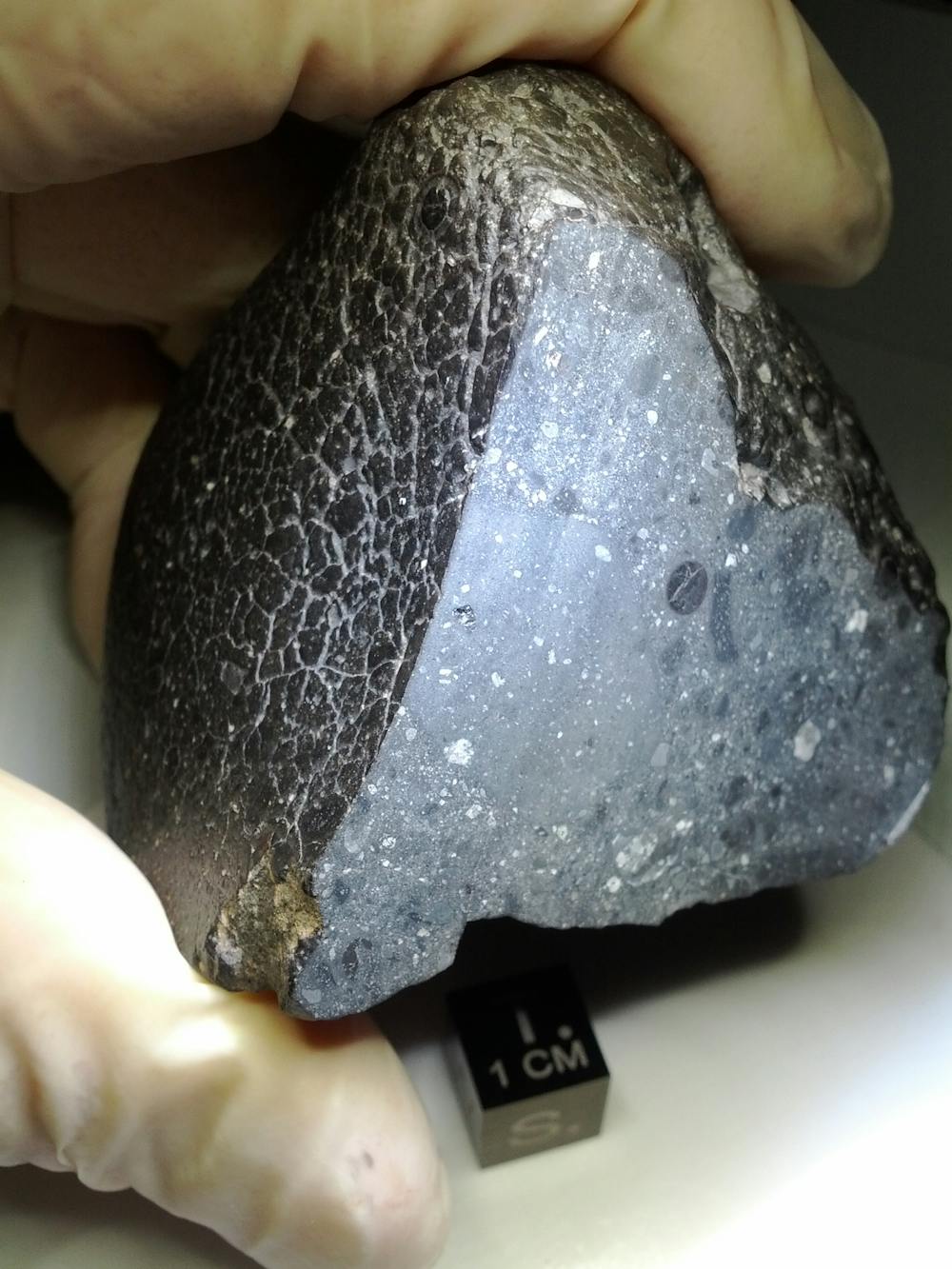
Nicknamed ‘Black Beauty,’ this Martian meteorite was found in the Sahara Desert in 2011. It is believed to be the second oldest yet discovered.
Martian meteorites have been recovered all over the world, including Antarctica, northwest Africa, Chile, the United States, India, Nigeria, Mali, Mauritania, Brazil and Oman. Currently, scientists like me can obtain Martian meteorites for study in two ways: either from private dealers or from the Antarctic Search for Meteorites collection.
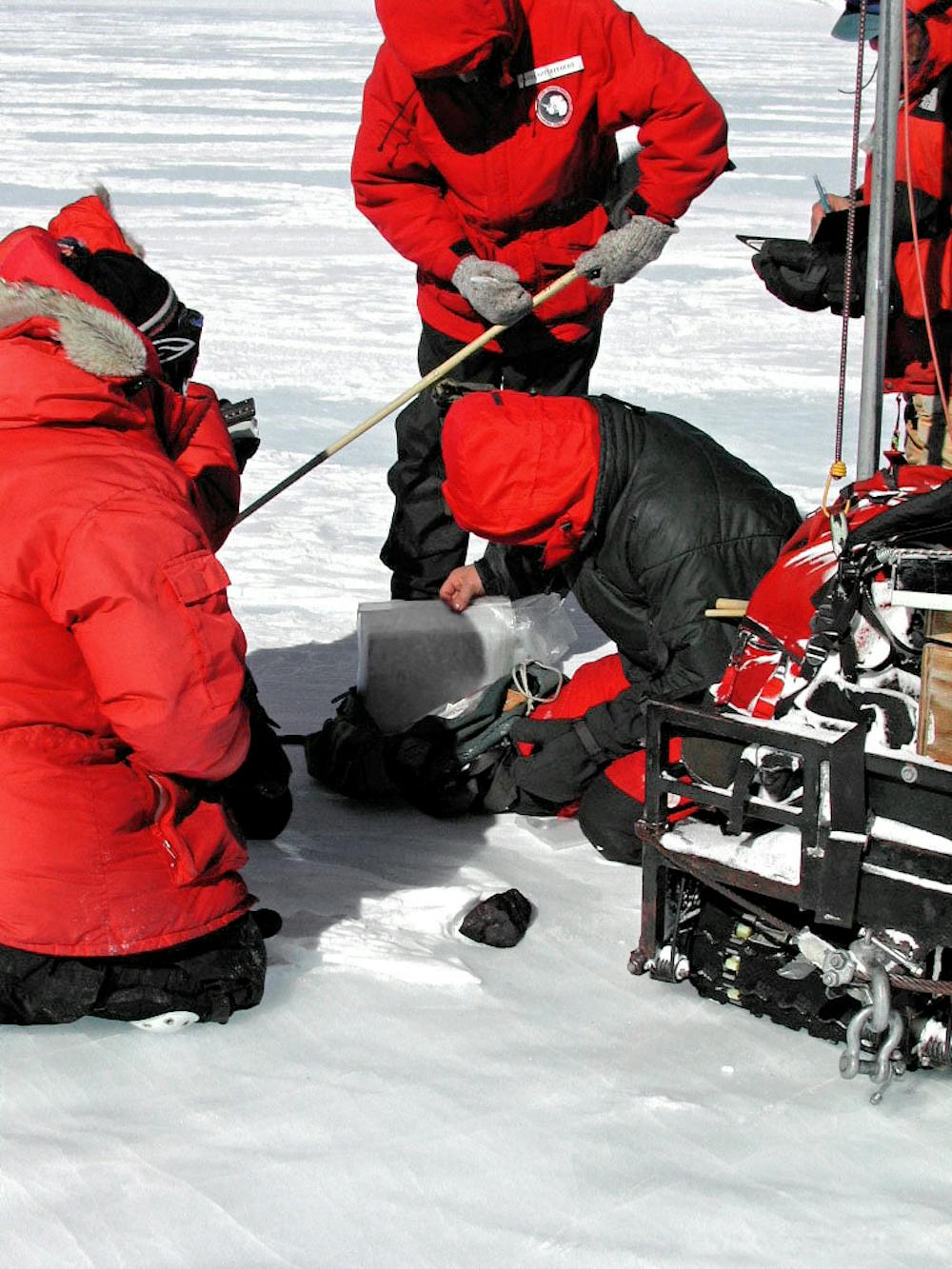
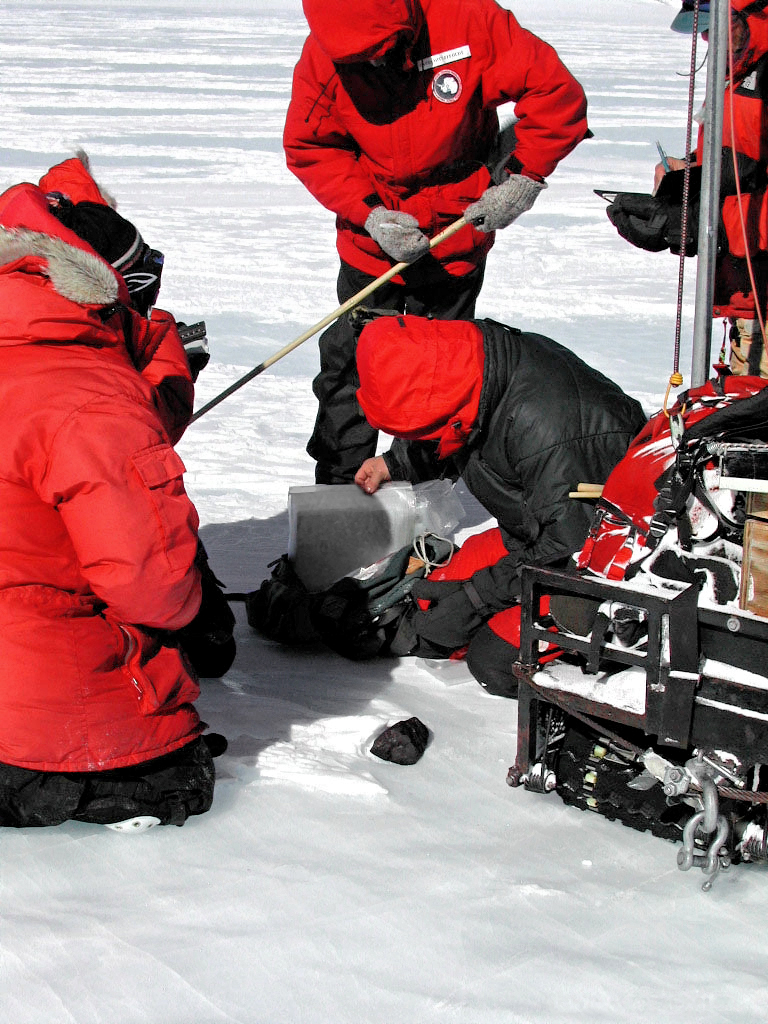
Recovery of a meteorite in Antarctica by members of the Antarctic Search for Meteorites (ANSMET) expedition. A meteorite is picked up with sterile tongs and put into a clean Teflon bag.
The ANSMET program is funded by both NASA and the National Science Foundation. Antarctica is a great place to spot meteorites due to the omnipresence of ice. Even better, meteorites tend to get trapped in moving ice floes which accumulate at the base of mountain ranges, where they often resurface.
Every year since 1976, ANSMET has sent a team of eight volunteer planetary scientists and mountaineers to Antarctica in December and January to hunt for meteorites. The crew combs promising areas by lining up snowmobiles 100 feet apart and slowly creeping through the snow and ice looking for specimens in their path.
Scientists can also buy meteorites from trusted private dealers. Martian meteorites are expensive, however, usually running around US$1,000 a gram on average. The majority of Martian meteorites are found by nomads in the Saharan desert, mainly in Morocco. Locals have been trained to find meteorites by looking for the presence of a fusion crust on a rock, which is formed when the exterior of the meteor melts upon entering the Earth’s atmosphere. I’ve bought 15 samples from dealers who are well known in the meteorite community.
Determining if a meteorite is from Mars
A thin section of a Martian meteorite under a microscope equipped with a polarizer to help distinguish the different minerals.
Starting in the 1990s, however, scientists like me began using cheaper and easier techniques to determine Martian provenance, such as oxygen isotopic compositions, which are like atomic barcodes that are unique for each planet.
All told, the 261 known meteorites from Mars collectively weigh around 440 pounds. Scientists study them using the same instruments and techniques we use to study Earth samples. My colleagues and I are interested in determining how and when these rocks were formed and how they are linked to each other.
Mysterious Mars
Unfortunately, my colleagues and I do not know where on the Martian surface the meteorites come from, but many are working to figure that out. We have been able to determine the different ages of the rocks themselves. We still do not know for sure if the core of Mars is liquid or not, but the meteorites inform us about how and when volcanoes were formed on the planet.
NASA’s Perseverance rover will be exploring an area called the Jezero crater. Igneous rocks, created by volcanic activity, are likely to be present, so it will be really interesting to study the history of the crater, which formed around 4 billion years ago. The Jezero crater also contains two large deltas, where we expect to find sediments that were once transported and deposited by rivers that existed long ago.
For scientists who study Martian geology, having diverse samples from a known field location will greatly boost our understanding of Mars’ core, the history of its climate and the potential life that once may have existed there.
Diego the giant Galapagos tortoise whose tireless efforts are credited with almost single-handedly saving his once-threatened species, was put out to pasture Monday on his native island after decades of breeding in captivity, Ecuador's environment minister said.
Diego was shipped out from the Galapagos National Park's breeding program on Santa Cruz to remote and uninhabited Espanola in recent years, said the minister Paulo Proano.
"We are closing an important chapter" in the management of the park, Proano said on Twitter, adding that 25 tortoises including the prolific Diego, "are going back home after decades of reproducing in captivity and saving their species from extinction."
Espanola welcomed them "with open arms," he said.
Before being taken back by boat to Espanola, the 100-year-old Diego and the other tortoises had to undergo a quarantine period to avoid them carrying seeds from plants that are not native to the island.
Diego weighs about 80 kilograms (175 pounds), is nearly 90 centimeters (35 inches) long and 1.5 meters (five feet) tall, if he really stretches his legs and neck.
Diego's contribution to the program on Santa Cruz Island was particularly noteworthy, with park rangers believing him responsible for being the patriarch of at least 40 percent of the 2,000-tortoise population.
Around 50 years ago, there were only two males and 12 females of Diego's species alive on Espanola, and they were too spread out to reproduce.
Diego was brought in from California's San Diego Zoo to join the breeding program which was set up in the mid-1960s to save his species, Chelonoidis hoodensis.
The National Park believes he was taken from the Galapagos in the first half of the 20th century by a scientific expedition.
Ecuador's Galapagos Islands, located in the Pacific Ocean, were made famous by 19th Century English naturalist Charles Darwin's studies of their breathtaking biodiversity.
White House adviser Kellyanne Conway on Monday announced some of the coronavirus safety measures that will be taken at President Donald Trump's upcoming rally in Tulsa.
Conway told reporters at the White House that the Trump campaign will conduct temperature checks in addition to distributing hand sanitizer and face masks to attendees.
She said that the measures are "recognition that there are guidelines in place that should be followed."
Republican National Committee Chairwoman Ronna McDaniel told Fox News on Monday that face masks would be "optional" at the rally. But White House economic adviser Larry Kudlow has said that attendees should "probably" wear masks.
"America: Do not listen to President Trump on any medical advice."
The FDA on Monday rescinded its emergency authorization of the drug hydroxychloroquine to treat Covid-19, a decision critics saw as a rebuke to President Donald Trump, whose repeated and ill-informed promotion of the drug has flown in the face of safety recommendations, sound science, and public health.
"Do not listen to President Trump on any medical advice," tweeted Senate Minority Leader Chuck Schumer (D-N.Y.) in response to the ruling.
The agency said in a letter (pdf) on hydroxychloroquine and chloroquine phosphate after finding it was not "reasonable to believe that the known and potential benefits of these products outweigh their known and potential risks."
Trump's repeated touting of the drug—and then his claim that he was using it himself as a preventative treatment—has drawn criticism from public health experts, especially as studies have shown the drug's potential harm to Covid-19 patients.
As Politicoreported, Trump's advocacy for the drug presented problems:
The administration's focus on the malaria medicines in the early months of the pandemic deepened a divide between the White House and its health agencies. Several administration officials told POLITICO they felt the drugs got outsized attention while FDA scrambled for solutions in March. Other current and former Health and Human Services officials later said that the emergency authorities and White House demands cast a shadow on FDA as it struggled to remain independent.
HuffPost reporter Melissa Jeltsen noted the disconnect between the agency's promotion of the drug before Mondays reversal and how it treats reproductive medications.
"Pretty insane that the FDA gave emergency authorization for hydroxychloroquine, but declined to change the dispensing rules on abortion medication," tweeted Jeltsen, "which meant women all over the U.S. had to travel 100s of miles to pick up drugs taken at home."
New of the FDA announcement came hours after Republican National Committee chairwoman Ronna McDaniel toldFox News that attendees of the president's first rally in months scheduled for Tulsa Saturday would not be required to wear masks despite the close quarters the 19,000 expected attendees will face at the Bank of Oklahoma Center.
"The American people can make decisions for themselves," said McDaniel, "we're all pretty informed about Covid at this point."