Donald Trump is delaying disclosing his personal finances for a second time this year, meaning Americans will be denied the latest details about the former president's ever-shifting personal finances before he debates President Joe Biden later this week.
Trump's lawyer, Scott Gast, requested a second, 45-day extension for filing his public financial disclosure report, a requirement for all presidential candidates.
"While President Trump has made diligent efforts to prepare his report, due to the complexity of his financial holdings, President Trump needs additional time to complete the report," wrote Gast, of Compass Legal Group, on Tuesday.
Update: 10:55 p.m. ET: "An extension was requested and granted because President Trump's successful businesses, in contrast to the Biden Crime Family, requires additional time to ensure complete compliance," Steven Cheung, a spokesperson for Trump, told Raw Story via email.
Last year, the Federal Election Commission denied Trump's continued requests to delay filing his public financial disclosure, which is intended to provide the public with transparency about the personal finances of executive branch leaders and candidates in order to reveal any potential conflicts of interest.
Trump's financial situation is markedly different from last year in that he has since been found liable for defamation and sexual abuse of writer E. Jean Carroll, requiring him to pay $83.3 million in damages.
In April, Trump also posted $175 million in bond for his liability in a New York civil fraud case that required him to pay more than $450 million in damages, stemming from the Trump Organization's systemic fraud in terms of property valuations and tax breaks.
Trump became the first-ever current or former president convicted of a felony, when a jury found him guilty on 34 felony counts of falsifying business records related to a hush money payment made to adult film star Stormy Daniels during the 2016 election.
Trump and President Joe Biden, the presumptive Republican and Democratic party nominees, are scheduled to conduct their first 2024 campaign debate on CNN on Thursday.
Jacobson’s work was honored on June 22 at the organization’s national conference in St. Louis, Mo. Jacobson won first place in three categories:
Continuing Coverage or Unfolding News for her series with Raw Story Editor-in-Chief Dave Levinthal, “Lawmakers, Law Breakers,” that identified at least 37 congressional violators of a federal conflicts-of-interest and financial disclosure law
In-depth Reporting for “Losing Track,” a three-part series about various failures of the country’s enfeebled national security vetting system
“The NFPW professional communications contest puts a spotlight on outstanding entries from throughout the United States,” said Helen S. Plotkin, National Federation of Press Women professional contest director. “Our judges continue to comment about the high quality of entries they judge in the contest. The entries showcase high quality and exceptional efforts.”
Said Levinthal: “Alex has established herself as an investigative reporter whose journalism must be paid attention. Her work is exhaustive, relentless and fair, and Raw Story is honored that the National Federation of Press Women celebrated her efforts as it has.”
Raw Story investigative reporter Alexandria Jacobson.
The National Federation of Press Women is a nationwide organization of women and men pursuing communications careers, including print and electronic journalism.
Nearly 2,000 contest entries were submitted from Canada and the United States across 36 states and Washington, D.C.
The National Federation of Press Women honors come during a year when Raw Story has been widely recognized for its investigative and explanatory journalism.
Earlier this month, Raw Story won four 2024 Folio Awards from the Fair Media Council for investigative reports on politics, government and extremism.
Levinthal this month also won a 2024 Dateline Award from the Society of Professional Journalists’ Washington, D.C., chapter, for a series that unveiled how South Carolina public military college The Citadel closed ranks to support honorary degree recipient Rudy Giuliani.
Florida is on its fifth try to legalize recreational marijuana with a ballot initiative, and more money is pouring into supporting the measure than any other like it that came before.
If it passes the 60% supermajority required by the state to ratify ballot measures, Florida would join
16 other states and territories that have legalized recreational marijuana by ballot measure.
Smart & Safe Florida, the ballot measure committee behind Florida’s latest push to legalize recreational marijuana, broke new fundraising records, according to June 10 campaign filings. It has raised more than any other marijuana-related ballot measure committee in a single election cycle ever and is the most-funded measure of 2024.
Smart & Safe Florida has raised over $40 million with the election still about five months away. That means the committee has officially surpassed fundraising by California’s Proposition 64, which previously held the record for most-funded recreational marijuana legalization ballot measure. Eight committees supporting the California proposition
raised a combined $36.7 million during the 2016 cycle.
Jeanne Hanna, Director of Research at the Center for Political Accountability, told OpenSecrets medical marijuana companies may be donating to this ballot measure in lieu of other political spending because of potential risks and pitfalls that come with them.
"It's not a terribly common type in the grand scope of corporations getting involved in politics with their money, " Hanna said regarding ballot measure spending. "But when they do attract money, they tend to attract a lot. I think it's an area in which companies may think there aren't extensive negative consequences because they're not supporting a candidate who may support a wide variety of issues."
Smart & Safe Florida raising more than any other ballot measure this year, or of its kind, are not its only historic totals. Another set of records was broken by
Trulieve, a medical cannabis company with 200 locations nationwide, 137 of which are in Florida. The company’s March donation of $8.25 million to Smart & Safe Florida broke records for the largest single donation and surpassed the next largest cumulative donation from a single donor to any recreational marijuana legalization measure in the U.S.
Trulieve’s contributions to Smart & Safe Florida total over $34 million this election cycle as of June 10, nearly five times the next largest cumulative donations for a measure of this kind. The company also put up an additional $20 million prior to the reporting dates of this election cycle, setting its total spend on this measure at over $54 million. Its donations make up over 85% of the funding for the committee.
Both Smart & Safe Florida and Trulieve did not respond to repeated requests from OpenSecrets for comment.
Robin Goldstein, Director of the Cannabis Economics Group at UC Davis, told OpenSecrets that it is hard to see why Trulieve would make such an investment when it has been difficult for recreational retailers in legal states to make money.
"I think a lot of investors or analysts will tell you that there's so much money to be made, 'it's the green rush.' A lot of them are not being realistic," Goldstein said. "The more you have the legal market opening up, the more competition you have and also the more technology, scale and efficiency goes into production and people are able to produce it more and more cheaply."
Medical dispensaries like Trulieve would have a head start on newcomers looking to open recreational-first dispensaries. The measure language
would allow existing Medical Marijuana Treatment Centers (MMTC) to “acquire, cultivate, process, manufacture, sell, and distribute such products and accessories” related to marijuana recreationally without needing to be granted a new license. That is if the measure is adopted and the outcome or mechanics weren’t challenged in court, where two of the first four measure attempts failed before they could get this far.
Not all of Florida’s earlier attempts to legalize recreational marijuana perished in court. In
2018, efforts to get the issue on the ballot were unsuccessful because the supporting committee fell short of the required 766,000 signatures needed at the time for the measure to appear on the ballot. The 2020 try met a similar fate when the committee behind the measure decided to table it because they wouldn’t be able to verify their collected signatures by the state deadline.
The Florida Supreme Court came into play in 2022 when it
struck down two more attempts because the measures’ summary language was deemed “misleading.” But the current measure has the green light to be on the ballot in November after meeting the requisite number of signatures and was approved by the Florida Supreme Court.
Another hurdle to the ballot measure’s passage is that Floridas’ constitution
requires a 60% supermajority of the voters to vote yes for a measure to pass. Only Colorado, Illinois and New Hampshire require a measure to pass with more than essentially a 50% standard majority. This rule has hampered marijuana in the state before.
Florida
failed to pass a measure to legalize full-strength medical marijuana the first time it was on the ballot in 2014 because it only received a 57% yes vote, insufficient to pass under the supermajority rule. That measure would have expanded the limited medical marijuana initially legalized by the state legislature earlier that year, known as the Compassionate Use Act.
Expanded medical marijuana that would allow more conditions to be treated with a wider range of doses and product categories was ultimately passed in Florida by ballot measure in 2016, where it received more than 71% of votes in favor.
A
Fox News poll conducted at the beginning of June indicates the new measure has the support it needs. Of the more than 1,000 participants polled, 66% said they would vote in support of the legalization.
Though no oppositional fundraising
was reported in the most recent June 10 filings, that is likely to change soon with the organization of the Florida Freedom Fund. Created by Florida Governor Ron DeSantis, the Florida Freedom Fund looks to challenge both the measure to legalize marijuana and the measure that would codify the right to an abortion in the state. DeSantis has been publically critical of both measures, calling them too “radical” and “extreme.” The Florida Republican Party has also been vocal about its opposition to both measures.
“Floridians are confident that their legislature has been passing laws that reflect the priorities of our state. Amendments 3 and 4 are unnecessary attempts by an increasingly shrinking minority who know the only way to win support for their radical agenda is to confuse and mislead the electorate,” Florida GOP Chairman Evan Power said
in a statement.
In terms of what this could mean for future ballot measures to legalize recreational marijuana in other states, Goldstein said he thinks the money flowing into supporting the ballot measure in Florida will remain an outlier as the possibility of federal legalization looms.
"Once you legalize federally, then whoever's growing weed or manufacturing vapes or whatever in Florida, they're gonna have to compete against all of the companies that are making weed really cheaply in Wyoming or wherever it can be made the most cheaply in America, and that's probably not Florida," Goldstein said. “Florida is not a particularly cheap place to do business. It’s also not a particularly good climate to grow outdoor weed, which is the cheapest way to grow it at large scale.”
Florida is not the only state in the country after recreational marijuana. South Dakota’s Secretary of State
approved a similar measure by the committee South Dakotans for Better Marijuana Laws on June 3. No fundraising totals have been reported by the committee, and the next reporting deadline isn’t until two weeks prior to the election. Medical marijuana is also on the ballot this November. A measure to legalize it in Nebraska has attracted the nearly 90,000 signatures required to be on the ballot ahead of the state’s July 3 deadline.
Money has continued to flow into the fight over legalization in Florida and the final total may be even greater. In the two months between the last two reporting deadlines, Smart & Safe Florida raised nearly an additional $8 million. With more than four months until voters decide, there’s still time for the measure to raise even more.
OpenSecrets is a nonpartisan, independent and nonprofit research and news organization tracking money in U.S. politics and its effect on elections and public policy.
James Parravani came down with flu-like symptoms the day before his daughter’s wedding reception. He had a fever, a headache, and chills. It was Labor Day weekend 2021, and his family thought he might have COVID-19. But a test at an emergency room near his home in Westchester, New York, came back negative.
The ER doctors quickly transferred Parravani to Yale New Haven Hospital in Connecticut, where he had received a kidney transplant a year prior. The specialists there suspected he might have a kidney or blood infection related to his operation. They gave him a round of antibiotics, but he just kept getting worse.
Parravani, known to friends and family as Jim, took a long, winding road to his daughter’s wedding weekend. He dropped out of high school in Schenectady, New York, before his senior year to focus on other priorities. “Rocktoberfest” — a music festival he and his friends threw in a rented-out motel — occupies a near-mythical place in modern Schenectady history. Parravani eventually earned his GED and attended Syracuse University’s College of Law, where he rose to second in his class.
After marrying his middle school sweetheart in 1986, Parravani graduated from law school, moved to Westchester, and began building a career and a family. But in the ’90s, he learned he had a genetic condition called polycystic kidney disease — an illness that causes cysts to grow on the kidneys and often results in organ failure. After several years of treating his cysts, Parravani’s doctors initiated the laborious process of getting him a transplant. In 2020, about a year before his daughter’s wedding weekend, he finally got one.
Now, his doctors thought this transplanted kidney might be making him sick, though they still didn’t know how. The morning of her reception, Jenny Parravani Davis called her dad at the hospital. She asked him if he wanted her to postpone the festivities. “No, no,” he told her. “Keep going.”
From left: Jim Parravani with his daughter, Jenny, as a toddler. Father and daughter on Jenny’s prom night. (Courtesy of Jenny Parravani Davis)
That was the last lucid conversation Davis ever had with her father. The next day, she got a call from her mother. Parravani was deteriorating — fast.
“He got on the phone and he was really disoriented, he couldn’t form words,” Davis said. “I remember saying ‘Hi, I love you,’ and he just said, ‘Don’t cry,’ and everything after that was incoherent.” Parravani was intubated that same day.
The doctors ran dozens of tests and put Parravani on multiple courses of strong antibiotics to treat the infection. It was only when they conducted a spinal tap — about a week after Parravani’s initial admission — that they discovered the true culprit: West Nile virus was present in his cerebrospinal fluid. The disease had spread to his brain and was making it swell. (Yale New Haven Hospital declined to comment on Parravani’s care.)
For seven months, as Parravani slipped in and out of comas, the doctors tried to beat back the virus with intravenous fluids, pain medication, and oxygen. At one point, it looked like Parravani might pull through. He was nodding and trying to communicate with his family around his breathing tube. The doctors reduced the oxygen flowing through his ventilator, and he breathed on his own. But in March 2022, Parravani began to decline again. On April 13, Parravani died in hospice care. He was 59 years old.
West Nile has been the most common mosquito-borne illness in North America for more than two decades. States in the Great Plains and western U.S. typically report the highest number of cases, though outbreaks have happened in nearly every state in the continental U.S. The disease has killed more than 2,300 people since it first arrived here, and the number of people affected by the virus every year is poised to rise.
As climate change extends warm seasons and spurs heavier rainstorms, the scope and prevalence of West Nile virus is shifting, too. Warmer, wetter conditions allow mosquitoes to develop more quickly, stay active beyond the traditional confines of summer, and breed more times in a given year. Birds, which host West Nile virus and pass it onto mosquitoes that bite them, are adjusting their migration patterns in response to the melding seasons.
The confluence of these two trends could have serious consequences for human beings. West Nile virus, a recent study said, “underlines once again that the health of animals, humans, and the environment is deeply intertwined.” In the past few years, Colorado and Arizona recorded outbreaks of the virus that killed scores of people in each state. Parts of California and Wyoming also reported unusually high cases of the disease. Meanwhile, Nevada, Illinois, and New York registered above-average or record-breaking numbers of West Nile-infected mosquitoes and mosquito activity.
“Overall, the evidence points to higher temperatures resulting in more bird-mosquito transmission and more what we call spillover infections to people,” said Scott Weaver, chair of the department of microbiology and immunology at the University of Texas Medical Branch.
West Nile virus typically leaves young, healthy individuals unscathed. Only 1 in 5 people who contract it develop symptoms, which can include fever, headache, joint pain, diarrhea, and other signs of illness that often resemble the flu.
There is no cure for West Nile virus; the immune system must fight it off on its own. That’s why elderly people and those with preexisting conditions, such as cancer, diabetes, and kidney disease, are at much higher risk of developing the severe form of the disease. So are organ transplant recipients, who take immunosuppressants for their entire lives to ensure the body does not reject the organ.
About 1 in 150 people who get West Nile develop the worst form of the illness, in which the virus attacks the central nervous system. For 10 percent of these patients — including Parravani — encephalitis or meningitis, swelling of the tissues around the brain and spinal cord respectively, leads to death.
Because only a sliver of infected people get seriously sick, the impact of West Nile virus on the public hinges on the number of people who contract the disease. Some years, the number of infections detected in the U.S. approaches 10,000. Other years, there are fewer than 1,000 reported cases. The number depends in large part on environmental conditions — how much rain fell, how warm or cold the spring or fall was — in addition to bird migration patterns and human behavior.
“It’s a rare event that any given mosquito bites a bird and then survives long enough to bite a human” and transmit West Nile virus, said Shannon LaDeau, a disease ecologist at the Cary Institute of Ecosystem Studies. But as with COVID-19, the size of the denominator is crucial. “When you have millions of mosquitoes, that rare event happens more frequently.” LaDeau said.
Parravani’s illness wasn’t the first case of West Nile to stump medical professionals in the U.S. In August 1999, people in the New York City metropolitan area started becoming severely ill with encephalitis. The patients had previously been healthy and reported being outside in the days leading up to their illness. The New York City Department of Public Health suspected a disease spread by mosquitoes was behind the outbreak and immediately launched an investigation.
In the months before the outbreak, researchers in New York had detected an unfamiliar type of single-stranded RNA virus in some of North America’s wild birds. Birds of prey and members of the crow family, in particular, were dying in unusually high numbers. Four weeks after the people in New York got sick, the chief pathologist at the Bronx Zoo connected the dots and sounded the alarm. The birds were infected with West Nile virus, named after the district in northern Uganda where the disease was first isolated in a human more than half a century earlier. And West Nile, public health authorities eventually confirmed, was what was making New Yorkers sick.
By the end of the summer, 59 people had been hospitalized with West Nile virus. Seven died.
West Nile had been known for decades to cause fever, vomiting, headache, and rashes. Epidemics in the Middle East in the early 1950s helped researchers confirm that the Culex genus of mosquito — dawn and dusk biters that prefer to feed on birds — were the primary vector, or carrier, of the disease. Outbreaks of varying severity cropped up all over the world — in France, India, Israel, Italy, Morocco, Romania, Russia, South Africa, Spain, and Tunisia. But it wasn’t until 1999 that researchers understood that migratory birds could spread the virus from one hemisphere to another.
Once public health officials learned what was behind the encephalitis outbreak in New York, they sprayed pesticide and larvicide around the city to kill mosquitoes. But the disease couldn’t be eradicated. Within three years, birds had carried it from coast to coast and throughout much of Canada.
The public health response to West Nile virus in the U.S. since the turn of the century has been punctuated by successes and setbacks. Every few years, when environmental conditions allow Culex populations to boom, cases careen out of control and hundreds of people die. States and cities often belatedly deploy weapons from a limited arsenal — pesticide-spraying and public awareness campaigns — to keep the disease in check. After a boom year, the next one often brings a different cocktail of environmental conditions, and the disease has a much smaller impact on public health.
“There are many things that go into what causes the circulation of West Nile,” said J. Erin Staples, a medical epidemiologist at the Centers for Disease Control and Prevention, or CDC. “And that makes it very difficult for us to predict.”
The unpredictability of the virus is part of what explains the lackluster response by states and the federal government to the threat of West Nile. No vaccine or cure exists, and funding for research on the disease is low, despite the fact that the virus has been claiming lives in North America for a quarter of a century. “Although West Nile virus continues to cause significant morbidity and mortality at great cost, funding and research have declined in recent years,” a 2021 study said. The National Institutes of Health directed $67 million to West Nile research between 2000 and 2019 — less than a tenth of the $900 million it dedicated to research on Zika, a mosquito-borne illness that never gained a foothold in the U.S., in the same period.
Experts warn that climate change is creating more opportunities for West Nile to spread.
Culex mosquitoes thrive in temperate, wet weather. Like other mosquitoes, they lay their eggs in standing pools of water. The eggs can’t survive below about 45 degrees Fahrenheit, but as temperatures get warmer from there, the time between hatching and reproducing gets shorter. The mosquitoes’ ideal temperature for survival ranges from 68 to 82 degrees Fahrenheit, depending on the precise species, but one Culex species can spread West Nile when it’s anywhere between 57 and 94 degrees F outside.
As temperatures rise and make fall, winter, and spring milder, Culex mosquitoes will have more chances to reproduce and spread West Nile in places that didn’t used to see so many mosquitoes. Meanwhile, because a warmer atmosphere holds more water, extreme rain events are getting more common — and that means more standing water for mosquitoes to breed in.
In New York, where winters are warming three times faster than summers, mosquitoes are now active deep into the month of November. A few decades ago, an adult mosquito flying around past the middle of October would have been highly unusual. “We are starting to see and will continue to see shifts in the range” of West Nile virus, said Laura Harrington, an entomology professor at Cornell University, “and shifts in some of the avian hosts that are most important.”
Climate change also pushes birds into new areas, because of weather changes and adjustments in where and when different types of plants and trees grow and bloom. “There are changes to the habitat where birds migrate to breed every year in the Northern Hemisphere,” said Weaver, the University of Texas microbiologist. “And just the temperature itself may have an impact on migration.” As birds enter new habitats, they have the potential to bring West Nile with them.
There’s already evidence that climate change is fueling West Nile outbreaks. In 2021, Maricopa County, Arizona, got an unusual amount of rain — 6.6 inches between June and September, compared to the 2.2 inches it usually gets during that period. That summer, Maricopa County experienced a historic surge of West Nile virus — the worst outbreak in a U.S. county since the disease arrived 25 years ago. Roughly 1,500 people were diagnosed, 1,014 were hospitalized, and 101 people died. The previous year, the number of recorded cases in the region was in the single digits.
A determining factor in the outbreak, Staples said, was the unusual amount of rain. It led to “an unprecedented increase in the mosquitoes and the ability of that virus to then spread to people.” Arizona is projected to get more bouts of extreme rainfall as the planet warms.
To prevent West Nile outbreaks, public health officials must monitor mosquitoes and birds for the virus. But the behavior of mosquitoes makes surveillance complicated — trickier even than tracking other vectors of disease, such as ticks. Unlike ticks, which stay more or less put, mosquitoes can travel a mile or two in any direction. That means public health agencies must launch an expensive and time-consuming hunt for the bugs, using field tests, maps, and guesswork to figure out where mosquitoes are hiding. Birds are mobile, too, and that further complicates efforts to track, map, and control the disease.
Even accounting for these challenges, epidemiologists say too few states are deploying sufficient effort and resources to make sure that they are able to predict and respond to outbreaks of West Nile virus. “We still are using the same vector control and the messaging to use your insect repellant that we were using 25 years ago,” Staples said.
Some states are doing a better job than others. Massachusetts and New York, among the most aggressive states in the nation when it comes to tracking West Nile virus, test mosquito breeding sites and birds regularly and, when positives come back, use that information to inform the public. After Parravani’s spinal tap revealed that he had West Nile, the Westchester County Health Department went to his house and conducted a sweep of the property. County public health officials drained pools of standing water in the backyard where the mosquitoes had likely bred, and they encouraged nearby residents to do the same on their own properties.
“In some places there’s a very clear link that guides when you test and what you test for,” LaDeau said. But “mosquito surveillance is not the norm across all regions, and it’s not standardized among even regions within a state.”
As climate change loads the dice in favor of mosquitoes, West Nile is not the only infectious illness in flux. The number of cases of vector-borne disease in the U.S. have more than doubled since 2001. Some of that increase can be attributed to better disease awareness among physicians and the public, and an uptick in testing as a result. But there are also examples of diseases bursting out of the regions where they have historically been found, which may be an indication that changes in the environment are coaxing carriers of disease into new places.
In 2023, the U.S. saw the first-ever cases of locally transmitted dengue fever in Southern California and unusual cases of locally acquired malaria in Texas, Florida, and Maryland. When a mosquito imparts West Nile virus to a human, the transmission of the virus stops there. An infectious human cannot infect a mosquito with the virus. That’s not the case for dengue and malaria, which makes the spread of those diseases potentially far more dangerous.
Many studies show that infectious diseases will take a larger toll on public health across North America as we make our way deeper into the 21st century. “More Americans are at risk than ever before,” Christopher Braden, the acting director of the CDC’s Center for Emerging and Infectious Zoonotic Diseases, warned in 2022.
If West Nile virus, the nation’s most common mosquito-borne illness, is a test for how the U.S. will weather the coming influx of vector-borne disease, then the country is in bad shape. “We don’t have very good tools to control it and prevent human illness,” Harrington said.
For now, however, those who have been personally impacted by mosquito-borne illnesses are arming themselves with DEET and ringing the alarm. Until recently, Jenny Parravani Davis worked as a communications manager for the Wilderness Society, a land conservation organization that advocates for better protection of the nation’s remaining wild places. The climate change reports that the Wilderness Society puts out generally include top-line findings about the ways in which climate change will erode human health as temperatures rise. But her father’s death, Davis said, drove home just how interconnected these issues really are.
“I started to connect the dots and see the bigger picture,” she said. Her backyard in Virginia collects a lot of water, especially in recent years, as back-to-back record-setting rain events have flooded the state. “I don’t think anyone would blame me, but I’ve developed this neurosis where anytime I scratch a mosquito bite I’m like, ‘Could this be the thing that kills me today?’” she said. “I’ve seen what happens when we don’t pay attention to these things.”
Correction: This story originally misstated Jenny Parravani Davis’ first name.
Grist is a nonprofit, independent media organization dedicated to telling stories of climate solutions and a just future. Learn more at Grist.org
WASHINGTON — Sen. Chris Murphy (D-CT) is raising alarms over the quality of staffers the Republican Party is vetting in preparation for a second Donald Trump administration.
“He's just going to have a bunch of creepy weirdos working in the White House that are intent on destroying government from the inside and pursuing their super creepy, weird political agendas,” Sen. Chris Murphy (D-CT) told Raw Story.
Murphy’s not alone. In response to the far-right Heritage Foundation’s Project 2025 — a sweeping blueprint for a future Republican president to upend the federal workforce as we know it — a handful of House Democrats have formed a working group to combat the sweeping changes for which conservatives are calling.
“I'm not worried about Project 2025. I'm worried about Donald Trump being the president of the United States,” Murphy said. “It’s gonna be a disaster, and Project 2025 is part of the book of evidence.”
Besides policy proposals, Project 2025 also includes a long list of conservatives eager to join a second Trump administration in order to unwind the federal government from within.
In his first administration, some conservatives within his cabinet stood up to Trump — from then-Vice President Mike Pence to former Attorney General Bill Barr.
Democrats such as Murphy are worried that many of those principled conservative voices have been ostracized by Trump in the wake of the Jan. 6, 2021 attack on the Capitol.
“So he's not gonna have anybody to protect the country, and the White House is just going to have a bunch of really off-the-wall radicals working for him,” Murphy said.
Democrats need to wake up, Murphy says. He’s predicting a second Trump administration would be marked by the political vengeance and retribution Trump is promising on the campaign trail.
“One of the first things he would do is clear out anybody who stands in the way of his desire to persecute political opponents,” Murphy said. “So if he wins, it's very possible this could become a banana republic within weeks. So like, I think everyone is vastly under estimating how serious this is going to get very quickly.”
Biden and Trump are scheduled to square off Thursday in their first presidential debate.
The debate comes two weeks ahead of Trump’s scheduled sentencing after a Manhattan jury found him guilty of 34 felony counts of falsifying business records and three weeks ahead of the Republican National Convention in Milwaukee, where Trump is slated to officially become the GOP’s 2024 presidential nominee.
This article first appeared on Wisconsin Watch and is republished here under a Creative Commons license.
Col. Leslie Zyzda Martin’s firing from her job as a commander in the Wisconsin Air National Guard began like this:
“Let me start by saying this is a one-way conversation,” said Gen. David May, her supervisor at the time and now interim head of the Wisconsin National Guard, reading off of a piece of paper.
“Colonel Zyzda Martin, I am removing you from command, effective immediately. Based on information presented to me in two command directed investigations, I have lost confidence in your ability to command.”
Zyzda Martin sat across from May in the air traffic control tower conference room at Volk Field that day, Nov. 8, 2021, flabbergasted and confused. She was not allowed to speak and was escorted to her office to collect her things and led off the base she briefly commanded.
She knew several complaints had been lodged against her, but she said May had never questioned her about them nor showed her any evidence supporting the allegations.
“Some of the things I didn’t even know what he was talking about when he was reading it,” said Zyzda Martin, 56, of May’s script. “It was very surreal.”
Three years later, the one-way conversation continues. According to Zyzda Martin and public records in her case, the Wisconsin National Guard has produced scant evidence of wrongdoing during her time in command of Volk Field.
In addition, records show that four internal military investigations cleared her name, affirming that the allegations against her were unsubstantiated. Yet, a black mark on her record remains.
In 2022, Zyzda Martin got another job in the South Carolina Guard, retaining the rank of colonel. But her termination in Wisconsin prevents her, by policy, from being promoted, putting her at risk for being forced into retirement.
Four internal military investigations did not substantiate three claims against Col. Leslie Zyzda Martin. Before being fired, she had been trying to clean up problems at Volk Field. (Kenny Yoo for Wisconsin Watch)
May, the Guard commander who oversaw her firing and whom Gov. Tony Evers recently appointed to lead the entire Wisconsin National Guard, wasn’t only Zyzda Martin’s supervisor. He was also her predecessor at Volk Field, where she assumed command in 2020 and encountered several instances in which the base had violated Air Force and National Guard protocols, policies and procedures.
Zyzda Martin’s case is the latest in a longstanding pattern of troubling treatment by the National Guard in Wisconsin and other states of its own members, particularly women, where retaliation and retribution for reporting wrongdoing can be swift. In the Guard, commanders make personnel decisions with minimal scrutiny, those accused of misconduct get little due process, and commanders rarely face major consequences for breaking military protocols.
Wisconsin Watch requested an interview and sent written questions about Zyzda Martin’s case to Evers and the Wisconsin National Guard. Evers, as commander-in-chief of the National Guard, declined to be interviewed, deferring questions on the case to the Guard. Evers did not comment on the status of a separate review his legal counsel said the office was pursuing into Zyzda Martin’s case.
May also declined to be interviewed or answer specific questions about the case. Wisconsin Guard spokeswoman Bridget Esser reiterated in a statement that May removed Zyzda Martin from command because he lost confidence in her.
“His loss of confidence in Col. Zyzda Martin stemmed from information learned during investigations into complaints made against Zyzda Martin,” she said. “The complaints were unsubstantiated, but behavior discovered during the investigation formed the basis for letters issued to Col. Zyzda Martin during the same meeting at which she was relieved of command.”
May did not answer specifics about what the behavior was, nor provide any additional evidence that Zyzda Martin displayed such troubling behavior. Guard investigators who reviewed the specific allegations against Zyzda Martin in the four investigations did note, based on interviews with her subordinates and colleagues at Volk, that they believed Zyzda Martin exhibited some problematic behavior. In some cases, investigators believed she did not foster a positive command climate and violated the Guard’s chain of command. But none of the behaviors they cited was confirmed or separately investigated, as is required by federal Air Force protocol.
Zyzda Martin maintains that May never confronted her with any concerns about her behavior that arose from the investigations before abruptly terminating her.
Esser, the Guard spokeswoman, also pointed to the determination in a discrimination complaint that Zyzda Martin filed against the state in June 2022. In the complaint, she alleged the Wisconsin Guard discriminated against her based on her sex when they fired her. The Department of Workforce Development, which handles such complaints, found after a nine-month investigation she was not discriminated against.
“Ultimately, the (Equal Rights Division) determined that there was no probable cause to believe discrimination occurred, concluding that there were legitimate, non-discriminatory reasons for the letters and removal from command,” she said.
Zyzda Martin said she was going to appeal the decision but decided to drop it in order to pursue an investigation through Evers’ office, which is allowed under the Wisconsin Code of Military Justice. She is still waiting on the result of that investigation.
Col. Leslie Zyzda Martin gives a speech during her Assumption of Command ceremony in Hangar 504 at Volk Field Air National Guard Base, Camp Douglas, Wis., on Sept. 10, 2020. She was fired 14 months later, though four internal military investigations found nothing to substantiate the complaints against her. (U.S. Air National Guard photo by Tech. Sgt. Andrea F. Rhode)
In interviews with Wisconsin Watch, five former and current Guard members who worked with Zyzda Martin corroborated her version of events and called Zyzda Martin’s firing and the secrecy surrounding it intimidating, creating a climate of fear and worries that they, too, could be fired with no due process. The five, some of whom are still serving in the Guard, requested anonymity, citing retaliation concerns.
“What was going on, it just didn’t add up,” said one former Guard leader who served with Zyzda Martin.
Zyzda Martin faced three allegations during her command: She mishandled an allegation of sexual harassment, bullied her secretary and violated federal medical privacy laws involving two Guard members. Each was evaluated through four military investigations led by a Wisconsin Guard officer. Zyzda Martin cooperated in every investigation and was exonerated in every one, according to the investigative records of each case.
Her case, records show, had several puzzling twists and turns.
For example, the day after Zyzda Martin was fired, the Guard took the unusual step of announcing her termination in a press release. Although none of the investigations substantiated any of the allegations against her, May said in the press release that Guard investigations “revealed issues concerning climate command and alleged misconduct.”
Zyzda Martin maintains she has no idea why she was fired. But she suspects it relates to how she handled a sexting case at Volk Field.
The case involved a female Guard member who was taking nude, explicit photos of herself and sending them to Guard colleagues. There were so many nude photos, Zyzda Martin said it took her four hours to go through them all.
“The biggest part of that rule breaking was that she did it at work, during work hours, at her work location,” Zyzda Martin said.
Zyzda Martin ultimately chose to fire the female Guard member. She said she later learned that May overruled her, and the woman was reinstated shortly after Zyzda Martin was fired. The Equal Rights Division investigation found someone other than May reviewed the female Guard member's case and recommended she be reinstated.
One Guard member who worked with Zyzda Martin said: “Every time she tried to expose something, they would not back her, and then they would turn it into somehow she was doing something wrong.”
Zyzda Martin’s case offers a glimpse of political and personnel scheming at the Wisconsin Guard’s highest levels. Wisconsin Watch interviewed Zyzda Martin six times over three months and reviewed hundreds of pages of records related to her case, including correspondence and the final investigative reports.
“She has the most well-documented case of anybody I’ve ever seen getting screwed,” said Dan Woodside, a former California National Guard pilot and whistleblower who reviewed the investigative reports in Zyzda Martin’s case at her request. He also has helped Guard leaders nationwide who say they were railroaded by frivolous investigations.
Zyzda Martin said she just wants to know why she was terminated.
“I continue to fight this so no other airman or soldier in the National Guard has to go through this hell,” she said.
Trying to fix problems
Zyzda Martin came to Wisconsin during a time of transition and turmoil.
When the Wisconsin National Guard hired her in May 2020, the COVID-19 pandemic was raging, and a previous scandal had resulted in the firing of the state’s top commander, Maj. Gen. Donald Dunbar. Zyzda Martin took over atVolk Field from May, who had overseen the air field since 2016.
The Wisconsin Guard pledged to change and reform its policies and culture after the 2019 scandal in which federal investigators determined Guard leaders mishandled sexual assault complaints for at least a decade, failed to follow military protocol by tracking cases or providing victims and alleged perpetrators due process, and tried to cover it up.
While Dunbar was fired, others who served under him in leadership positions when violations occurred, including May, remained in their jobs or were promoted.
Evers appointed the now former adjutant general, Maj. Gen. Paul Knapp, to lead the Wisconsin Guard in February 2020. May became his deputy, overseeing the Air Force component of the Guard. Knapp abruptly resigned earlier this month citing “personal and health issues,” making May the new top commander.
Wisconsin Watch requested an interview with May to discuss his tenure at Volk Field, but he declined to be interviewed or answer questions about his time in command there.
Wisconsin Air National Guard Col. Leslie Zyzda Martin, former commander of Volk Field Air National Guard Base, greets Afghans at the base on Aug. 26, 2021. During her time at Volk Field, she implemented changes to address several deficiencies. (U.S. Army photo by Spc. Rhianna Ballenger)
Volk Field, located in Juneau County, just east of Tomah, is a sleepy air base typically used for military training exercises. But when Zyzda Martin took over, commanding 500 Guard members and civilians, it was a hub of several major operations.
Amid the pandemic, Volk served as a processing base for military members to quarantine before being deployed. That made it a whirlwind of people flying in and out from units across the country.
When the U.S. pulled the last troops out of Afghanistan and evacuated Afghans who had supported American forces there during its 20-year war, thousands of them poured into Volk Field. The base served as a landing site for the refugees before they were sent to Fort McCoy 25 miles away to be processed before resettlement.
Soon after she arrived, Zyzda Martin made changes at Volk Field to align with National Guard policy, according to Guard records reviewed by Wisconsin Watch.
She restructured a firearm program for base security personnel that had operated against military policy, with no required psychological assessments or proper training.
She overhauled the airfield’s safety program after one technician died in 2019 while replacing light bulbs on a runway. An independent investigation into the death later found that Volk Field, then under May’s command, was not properly staffed and had “significant voids in safety program management, training, and compliance,” which “all contributed to the employee coming in fatal contact with an energized system” on the runway, according to the investigation.
When Zyzda Martin arrived, documentation for several significant processes for how the base should run was missing, which she said is unusual for a military base. She directed the establishment of those critical processes, she said.
Sexual harassment case leads to complaint
In December 2020, a female Guard member who reported to Zyzda Martin came to her and said she was being sexually harassed by another Guard member.
Zyzda Martin recommended that the female Guard member pursue a restraining order through the local court system in Juneau County, which the female Guard member did. Zyzda Martin also issued a military no-contact order for both Guard members.
Two months after making the sexual harassment complaint, the female Guard member received her latest performance report. It showed she had been downgraded in one area of her job performance.
After receiving her performance report, the female Guard member filed a complaint with the Inspector General in April 2021 against Zyzda Martin, alleging that Zyzda Martin and her staff downgraded her in retaliation for reporting the alleged sexual harassment. Zyzda Martin denied this, and a Guard investigation later confirmed that the performance review was completed before the Guard member made the sexual harassment complaint.
Shortly after filing the complaint in April 2021, the Guard member withdrew it.
But two other officers in the Wisconsin Guard were still assigned to examine the allegations in two separate investigations.
One determined in July 2021 that the allegations against Zyzda Martin were unsubstantiated.
The other was conducted by Brig. Gen. Robyn Blader, who did not interview Zyzda Martin for the investigation until Nov. 9, 2021, the day after Zyzda Martin was fired. Blader ultimately concluded that the allegations were unsubstantiated and gave May a report in January 2022.
But Blader wrote that Zyzda Martin was negligent for not imposing a no-contact order for the Guard member until a month after the initial complaint was made and did not do enough to ensure a safe working environment for the female Guard member.
No substance to complaints against officer
Throughout 2021, as the pandemic continued, dozens of Guard members from units nationwide came through Volk Field, to be tested for COVID before deploying overseas.
Part of Zyzda Martin's job was to coordinate that operation, along with other large-scale training exercises held on the base.
At one point, she had to move people out of the housing at Volk Field in order to prepare for an incoming Guard unit that was arriving for training. She moved two Puerto Rican Guardsmen, one of whom had a back injury, to a hotel. An anonymous complaint was filed against her, saying that by moving them to a hotel and reporting the back issues to the National Guard Bureau, which covered their stay, she violated their privacy.
Zyzda Martin later told a Guard investigator she needed to free up space on the base for her staff to clean and sanitize the rooms to ensure they were safe for the incoming unit.
“I needed to give my staff time to clean the building because of COVID cleaning procedures. I had limited staff to do this. It had nothing to do with the … personnel,” she said in an interview for the investigation conducted by Col. Gary Pelletier, who found the allegation to be unsubstantiated in September 2021.
In March 2021, Zyzda Martin’s secretary, a female state employee who had also worked as a secretary for May, filed a workplace complaint against Zyzda Martin through the state Equal Employment Opportunity Commission. She alleged that Zyzda Martin bullied and ignored her during the three months they worked together. When a Guard investigator reached out to interview the secretary who filed the complaint, she did not respond and ultimately resigned.
According to the investigation, which concluded in June 2021, no one who worked in Zyzda Martin’s office observed her berating or bullying her secretary.
Blader, the investigator in the case, found the complainant “struggled with consistency in her position with (Zyzda Martin) and previous Commander (May,) often requiring prompting and or reminders.”
“The Complainant was defensive and did not take constructive criticism well, often becoming emotional, defensive and argumentative insisting that the way she had been doing things worked well for the previous Commander,” Blader wrote in her report.
Ultimately, Blader found the complaint against Zyzda Martin to be unsubstantiated.
Col. Leslie Zyzda Martin, former commander of Volk Field, meets with Gen. Daniel Hokanson, the chief of the National Guard Bureau and a member of the Joint Chiefs of Staff, in Wisconsin on Aug. 10, 2021. Hokanson visited to observe a training exercise at Volk Field. (National Guard, SSgt Anya Hanson and SFC Katie Theusch)
Despite the earlier allegations leveled against her, Zyzda Martin said she believes the Volk Field sexting case was the nexus for her firing.
Zyzda Martin was supposed to determine appropriate discipline for the female Guard member at the center of that case, who had also worked for May when he was in command at Volk.
Because of the sensitive nature of the allegations, Zyzda Martin wrote detailed memos on Guard letterhead to document the conversations she had about the case at the time.
She found the female Guard member took photos in Volk Field offices, in bathrooms and showers at Volk Field headquarters, where the female Guard member would be at work in a uniform, change into stripper clothes in her office and take the photos. She sent the photos to several Volk employees on the base during work hours.
“The photos show the gravity of the situation that I can’t share with words,” she wrote in 2021 in her case notes.
According to those notes, she spent six months consulting with May, Guard lawyers and state human resources officials about the case.
Both Knapp and May tracked the progress of her thinking and deliberations on the matter, according to Zyzda Martin. About three weeks before she was fired, Knapp called her out of the blue and wanted to know when her report on her discipline decision would be completed, according to a memo Zyzda Martin wrote at the time. Although she had nearly two weeks before it was due, Knapp urged her to make it a priority and finish it as soon as possible.
Ultimately, a week and a half before Zyzda Martin was fired, she decided to terminate the Guard member accused of sexting. She shared that determination with May, who confirmed to Zyzda Martin that he shared it with Knapp.
Days after Zyzda Martin’s termination, May reversed the decision and reinstated the female Guard member, according to Zyzda Martin, who was told of the reinstatement by several Guard colleagues.
Fired despite glowing reviews
The night before Zyzda Martin was fired, May texted her: “I am ready to meet with you about the outcome of the first two investigations in which you were a subject.”
He told her to meet him at the air traffic control conference room at Volk Field at 10:30 a.m.
“Yes, sir,” Zyzda Martin wrote back, according to the texts of their exchange.
When Zyzda Martin showed up, May launched into his script.
“I was not allowed to ask any questions,” Zyzda Martin said, noting that the “one-way conversation” was not typical for military terminations, especially at her rank as colonel.
He read from a statement that lasted about two minutes. There were a few other Guard members also in the room listening.
“He was alluding to the fact that my military career was over but since he made it clear it was a one-way conversation and he was so Machiavellian, I did not respond,” she said. “I have been in the military over 30 years and have never been talked to like that, even as a low-ranking enlisted.”
“I'm a 30-plus-year colonel, with an impeccable career, and he treated me like I’m a naughty little 8-year-old,” she said.
Col. Leslie Zyzda Martin receives a military flag from a fellow commander in 2015 as she takes over an Iowa Intelligence Surveillance Reconnaissance unit. Before she came to Wisconsin to lead Volk Field, much of Zyzda Martin’s military experience was in intelligence operations and integration. (Staff Sgt. Linda K. Burger)
According to records of her job reviews, Zyzda Martin’s performance evaluations from past Guard jobs going back more than a decade are glowing. “World class intel officer/leader/mentor,” “Incisive leader and intel pro with clarity of vision and purpose!” and “Visionary” were all used to describe her leadership as past supervisors recommended promotion.
Even the Wisconsin Guard endorsed her application to attend a prestigious training school, affirming that she was deserving of further professional development, just weeks before her firing.
“Maybe (in Wisconsin) I was supposed to look like reform and change, but not be it,” Zyzda Martin said.
‘They wanted her to have to suffer’
In the months after her firing, Zyzda Martin asked the Guard for her personnel and disciplinary records in the hopes of finding answers.
After several months of no responses from the Guard, Zyzda Martin sued the National Guard Bureau, which handles records requests from Guards in each state. Within a month of filing the lawsuit, the Guard began slowly releasing her records. Zyzda Martin continued to receive them until early 2023 and dropped the lawsuit.
Now, she and her attorney are petitioning a military records board to correct her records. She also wants the Evers administration to investigate her case.
Zyzda Martin’s attorney, Antoinette O’Neill, a retired Air Force lawyer, called it bizarre to be fired “for cause” with no cause specified more than three years later.
“To me, it shows that they knew she hadn't done anything wrong,” she said. “They just wanted her out, and that they wanted her to have to suffer. And I don't understand it.”
In November 2023, O’Neill requested that Evers initiate a specific investigation permitted under Wisconsin’s Code of Military Justice, Article 138, which provides for military members to request an investigation if they believe they’ve been wronged by a commander.
In a letter to Evers, O’Neill argued that Evers should look into the matter as commander in chief because Zyzda Martin already unsuccessfully sought redress with May and Knapp.
In January 2024 Evers’ chief legal counsel Mel Barnes responded, stating she believed O’Neill was requesting a court-martial of Knapp, a completely different type of military justice process. But even so, Barnes wrote, Evers was deferring a decision on whether to look into Zyzda Martin’s case to “allow for the completion of an inquiry by the Governor’s Office.”
O’Neill was baffled by the response.
“We never use the word ‘court-martial’ because that's not at all what we're trying to do. Those are unbelievably different processes,” she said. “I mean, it's almost as if we got an AI answer from a bot.”
O’Neill sent an email in February clarifying her request, but has not received a response from Evers’ staff.
“A complaint under Article 138 is not a request for a court-martial at all,” she wrote. “As you can tell by our filing, it (is) a complaint of wrongs by a commander against a subordinate.”
Editor's note: This story was updated after publication with additional information about the reinstatement of the female Guard member caught sending explicit photos.
Colonel Leslie Zyzda Martin at a glance
Hometown: Sioux City, Iowa
Age: 56
Family: Married to a retired military officer with no children. Zyzda Martin’s father came to the United States as a child, rescued from the concentration camps during World War II. Her grandfather was in the Polish Army.
“My grandpa was very thankful and they were all very thankful to make it to the United States,” she said. “My grandpa, he’d always talk to me about serving.”
Why the Guard: She joined the Guard because she could enlist on her own and stay close to home. She initially served one weekend a month as a traditional Guardsman while working full time as a trauma nurse, then began working for the Guard full time after going through Officer Candidate School where she was trained as an intelligence officer.
Notable Guard roles: She completed more than 15 deployments to the Middle East and Afghanistan from 2006 through 2014 during the U.S. wars there. She has served in major commands, air combat command, joint command, Joint Special Operations Command, and at the National Guard Bureau.
In 2014 she served as the Air National Guard adviser to the Air Combat Command, Director of Intelligence, meaning she represented all Air National Guard intelligence missions at the Pentagon, ensuring they were properly funded, organized, trained, and equipped to complete their missions.
Military awards: Defense Meritorious Service Medal, awarded in June 2021, for her service before coming to Volk Field, from 2017 to 2020.
Current job: South Carolina National Guard, serves as the NGB representative to Air Combat Command Information Warfare Division, stationed at Langley Air Force Base in Virginia.
This article first appeared on Wisconsin Watch and is republished here under a Creative Commons license.
This story was originally published by CalMatters, nonprofit, nonpartisan media venture explaining California policies and politics.
California’s Public Utilities Commission today rejected AT&T’s application to stop providing landlines and other services in areas where there is no other option.
Its 4-0 vote came after a judge determined the application by AT&T California was “fatally flawed.”
AT&T is the “carrier of last resort” for California, an official designation that means it covers most major cities, rural communities, and the land of more than 100 tribal governments. To find out if your home is in that area visit this website. The commission first labeled AT&T a carrier of last resort nearly three decades ago.
More than a dozen speakers during the public comment period at today’s meeting supported keeping AT&T’s carrier-of-last resort designation and landlines. Previously, more than 5,000 public comments were written in response to AT&T’s application and nearly 6,000 people attended eight public forums held earlier this year. Numerous commenters said that, due to inconsistent cell coverage in their area, their landline is their primary means of communication with family, medical providers, and the outside world in the event of an emergency. Those concerns are particularly important for senior citizens, people with disabilities, and people who say they are sensitive to electromagnetic activity.
AT&T has argued that the people its landlines are now serving in the areas in question can turn to voice over internet service offered by cable providers or to mobile phone service offered by wireless providers like Verizon.
Steve Hogle lives in rural Sonoma County and told the commission today that spotty cell phone coverage was a danger to his family during the 2019 Kincade wildfire.
“If we didn’t have a copper landline we would’ve not known about the evacuation and the extremely serious fire that went through here and most of our property,” he said. “I don’t want (voice over internet service) because if there’s no power, there’s no internet, and all these things are of extreme importance to the safety of this community.”
The company has attempted to end carrier-of-last-resort designation obligations in roughly half of U.S. states, but those efforts don’t always stay within the confines of the law, according to federal prosecutors. In 2022, AT&T Illinois agreed to pay a $23 million fine to resolve charges it attempted to influence former Illinois House Speaker Mike Madigan.
“If we didn’t have a copper landline we would’ve not known about the extremely serious fire.” STEVE HOGLE, SONOMA COUNTY
The commission’s decision does not bring an end to the carrier-of-last-resort debates in California. AT&T and roughly a dozen members of the California Legislature have publicly expressed support for Assembly Bill 2797, which would effectively bring an end to some carrier-of-last-resort obligations. The California State Association of Counties, Rural County Representatives of California, and Urban Counties of California said last week that they oppose the bill, adding in a letter to the bill’s author that it would “leave large swaths of the most vulnerable Californians without reliable and affordable access to basic telephone service.”
The Public Utilities Commission also voted 5-0 today to begin proceedings to change rules for companies that are designated a carrier of last resort. It’s time to modernize those rules, said commission president Alice Reynolds, because a lot has changed in the past 30 years, including a shift toward cell phones and away from landlines, and it’s now part of the commission’s mandate to make high-speed internet access universally available.
“I’m hopeful that through this new rulemaking, we can really modernize these programs and move towards the future to meet our broadband for all objectives,” she said ahead of the vote.
WASHINGTON — Senate Majority Leader Chuck Schumer seems to have overcome a major roadblock in his own party who’s holding up legislation designed to protect children from online harm.
“The majority leader and I have exchanged new text that looks like an improvement to me,” Sen. Ron Wyden (D-OR) exclusively told Raw Story at the U.S. Capitol. “I need to make sure that it protects LGBTQ teens, and, at this point, it looks like we're moving in the right direction.”
While some GOP dissension remains, Wyden’s support is seen as a huge step forward, because he’s had a hold on the broadly bipartisan measure for months now.
Since February, the Kids Online Safety Act (KOSA) has enjoyed the support of a rare, filibuster-proof majority in the U.S. Senate, yet it’s gone nowhere, in part, because of opposition from progressives such as Wyden.
The Oregon Democrat — who chairs the Senate Finance Committee — has been the leading voice in the Senate pushing a more law enforcement-centric response to online harms facing children, which is the centerpiece of the Invest in Child Safety Act that allocates $5 billion to help law enforcement officials combat online threats facing the nation’s children.
KOSA, on the other hand, attempts to put the burden for protecting children on tech companies by limiting things like infinite scrolling, auto play and other subliminal features that keep young and old alike glued to our screens.
What’s changed?
People are regularly talking about online harms lurking in the digital shadows, for one.
Surgeon General Dr. Vivek Murthy, for another, turned heads all week after penning an op-ed for the New York Times calling on Congress to slap warning labels on the social media apps America’s children love most — from TikTok to YouTube.
Long road to protecting kids online
An earlier draft of KOSA was panned widely for erecting a new duty of care — a legal obligation — on state attorneys general that many outside groups feared would allow Republican AGs to target vulnerable communities, such as LGBTQ teens.
In KOSA, that duty of care now rests with the Federal Trade Commission, not partisan state AGs.
But Wyden wants to go further. And Schumer seems to agree.
“After weeks of work, we have made real progress in removing objections to this bill,” Leader Schumer said on the Senate floor Thursday afternoon.
Back in 1996, Wyden was a lead author of the Communications Decency Act, which is now infamous for its Section 230 that acts as the shield protecting social media companies from being sued for content people post on their sites.
While the new KOSA bill text is still a work in progress, it makes “changes to better protect users’ speech as opposed to harmful platform design,” according to Wyden and his team.
In other words, Wyden doesn’t want KOSA to trump Section 230 and its digital speech protections.
“Part of what I've tried to do in tech policy is to be fair to everybody. There are serious issues here,” Wyden said. “My wife and I are older parents. We have twins that are 16. We have a little one that's 11. And it's my job to be fair to everyone. And it’s certainly important to be fair to minorities, you know, LGBTQ teens is an example.”
It’s still unclear if these new tweaks go far enough to win over groups such as the American Civil Liberties Union (ACLU), Electronic Frontier Foundation and Fight for the Future, which have opposed KOSA.
Those groups have remained opposed to the measure even after its lead authors — Sen. Richard Bluemnthal (D-CT) and Marsha Blackburn (R-TN) — unveiled an updated version at the start of this year that attempted to address their censorship concerns.
“After pushing and cajoling, we are much closer to ultimate success,” Blumenthal told Schumer in a colloquy on the Senate floor Thursday. “This bill, which has nearly 70 cosponsors, is a set of safeguards and accountability measures to protect kids from the clear and horrific harms created by social media and other online platforms.”
While Schumer won over Wyden from his progressive left flank, there’s still opposition from his conservative right flank on the other side of the proverbial aisle.
“Sadly, objectors remain. I hope that progress can continue over the coming days,” Schumer said. “If the objectors refuse to come to a resolution, we must pursue a different legislative path to get this done.”
‘Let people sue’
The surgeon general’s calls for new social media warning labels is being embraced by lawmakers across the political spectrum.
But critics say the warning label proposal and Wyden’s tweaks to KOSA still fall short.
Republican senator Josh Hawley. (Andrew Caballero-Reynolds/AFP)
“Good,” Sen. Josh Hawley (R-MO) told Raw Story just off the Senate floor Thursday. “Yeah, good. You know what would be even better though? I mean, the warning label’s fine, but let people sue. You want to change the behavior of these companies, let parents sue them. That would drive change.”
The rank-and-file in both parties are itching to deliver online protections for the nation’s children during the current congressional session.
“Watching governors act in California, New York and Utah, it's clear that this is a priority issue for parents, and I just don't think we're doing our job if we don't act on online safety bills by the end of the year,” Sen. Chris Murphy (D-CT) told Raw Story.
While red and blue states alike have acted to protect children online, the broadly bipartisan measures have all withered on the vine in the U.S. Capitol in recent years.
Senate Majority Whip Dick Durbin (D-IL) says he hopes Congress can piggyback on the surgeon general’s new social media warning for the nation’s kids.
“It's a good vehicle for us to take up this issue. The announcement of the surgeon general makes it timely,” Durbin told Raw Story.
“Do you think because there’s so much broad, bipartisan support we might see this before the election?” Raw Story asked of the filibuster-proof support in the Senate for KOSA.
“I certainly hope so,” Durbin replied. “I'd move on this topic as quickly as possible. American families really care.”
Still, Republicans like Hawley are dubious that Democratic leaders like Durbin and Schumer care.
“The corporations don't want it — tech companies don't want it,” Hawley told Raw Story just feet away from the Senate floor. “So as I've said before, you know, just post the ‘owned by big tech’ sign right there on the Senate doors, because that's the truth. They don't want us to move.”
“Listen, we voted out — unanimously — out of this Judiciary Committee a bill to stop child pornography. And Durbin and I are the co-sponsors — it’s ‘Durbin-Hawley,’ you know. Unanimous support,” Hawley complained of his bipartisan measure to end Section 230 protections specifically for child pornography — a measure that’s never the Senate floor.
For now, even as generative artificial intelligence (AI) continues remaking the internet as we knew it, the Senate continues to work at Senate speed.
“We've exchanged new text,” Wyden told Raw Story. “And I believe we're making some progress.”
Marine Corps veteran and avowed neo-Nazi Jordan Duncan plans to plead guilty to a charge of conspiracy to manufacture firearms, Raw Story has learned.
Raymond Tarlton, Duncan’s lawyer, told Raw Story his client anticipates entering a guilty plea during a hearing scheduled in federal court in Wilmington, N.C., on June 24.
Federal prosecutors filed a superseding charge of conspiracy to illegally manufacture firearms — specifically, a rifle with a barrel less than 16 inches long — against Duncan earlier this month. The charge overrode an earlier indictment with more extensive charges, including one related to an alleged scheme to sabotage electrical substations as part of an alleged plot to launch a race war.
LinkedIn photo of Jordan Duncan, a Marine Corps veteran whom the government alleges had classified military materials on his hard drive.
Duncan had been the last remaining holdout among five co-defendants, the rest of whom had already reached plea deals with the government.
Liam Montgomery Collins, the alleged ringleader of the neo-Nazi terror cell known as “BSN,” entered a guilty plea of conspiracy to illegally manufacture a firearm last October. Co-defendants Justin Hermanson and Joseph Maurino earlier pleaded guilty to the same charge.
Only one of the co-defendants, a former porn actor named Paul Kryscuk, pleaded guilty to conspiracy to damage an energy facility.
The government alleges that Collins wrote on Iron March — an online forum for Nazis that was active from 2011 to 2017 — that he was recruiting for “a modern-day SS,” alluding to the paramilitary organization responsible for security surveillance and state terrorism in Nazi Germany.
Collins recruited Duncan, who trained as a Russian linguist and specialized in intelligence and communications during his Marine Corps service, to join BSN while the two were stationed at Camp Lejeune, according to Naval Criminal Investigative Service Special Agent John Christopher Little. The Naval Criminal Investigative Service is the law enforcement arm for the Navy and Marine Corps.
Collins wrote on Iron March that he was “looking for an intelligence/comm guy for his group,” Little testified during Duncan’s detention hearing.
While Collins completed his military service obligation at Camp Lejeune in late 2020, Duncan joined Kryscuk in Idaho, where the group had held a paramilitary training and hoped to establish a base of operations. While staying with Kryscuk, Duncan worked for a Navy contractor outside of Boise.
When the FBI arrested Duncan in October 2020, they found classified Defense Department materials on his external hard drive, as reported by Raw Story.
A federal magistrate also noted during Duncan’s detention hearing that authorities found a fake ID and a Defense Department passport in Duncan’s possession at the time of his arrest.
Court filings by the government disclosed that the FBI investigated Duncan for potentially mishandling classified materials, but the probe did not result in additional criminal charges. Prosecutors had agreed to exclude any mention of Duncan’s possession of classified documents were his case to go to trial.
Raw Story is suing the Department of Defense and the Navy for access to records about the classified materials investigation.
Tarlton declined to comment on what sentence Duncan, his client, might face. But a court filing indicates that Collins, who pleaded guilty to the same conspiracy to manufacture firearms charge, faces a statutory maximum of 10 years in prison.
Collins, Kryscuk and Hermanson are scheduled to be sentenced on July 23. It remains unclear when Maurino is scheduled for sentencing, and his lawyer, Damon Cheston, declined comment when reached by Raw Story.
Last summer, Judge Richard E. Myers II issued an order that tightly controls how Duncan, Collins and their lawyers may share the classified materials — identified by the marking “FOUO,” or “For Official Use Only” — that were found on Duncan’s hard drive at the time of his arrest.
Donald Trump-endorsed Republican congressional candidate Rob Bresnahan Jr., running in one of the nation’s most hotly contested U.S. House races, has a decidedly anti-China message for Pennsylvania voters he’s hoping to win over.
“Here in northeastern Pennsylvania, there used to be hundreds of businesses like ours that made things until DC politicians turned off the lights on American manufacturing and sent those jobs to China,” Bresnahan said in his campaign launch video for Pennsylvania’s 8th Congressional District, noting his family business in electrical contracting.
“We have to prioritize America. We have to think about our own country and our own people right here,” Bresnahan said during a Newsmax interview in May. “And what’s extremely frustrating is when you see billions and billions of dollars being sent to places all across the world when we’re struggling here.”
But a campaign jacket that Bresnahan has worn at numerouscampaignappearances was made in China, according to a Raw Story source who requested anonymity to protect their job.
The source, who won the campaign jacket at a Bresnahan campaign event raffle, shared a photo of the jacket, the label of which indicates it was made in China.
Today was an incredible day in Wayne County! I was privileged to sit down with local business leaders, knock on doors, and meet with voters and grassroots volunteers.
Thank you to my supporters in Wayne County for always having my back, I’ve got yours too. 💪🇺🇸 pic.twitter.com/2JSQQoSWvr — Rob Bresnahan (@Rob4PA) May 14, 2024
The jacket tag indicates that it is a product of Port Authority, a brand that manufactures products in countries such as China, Vietnam and Bangladesh, according to online retailer Full Source. Port Authority is owned by SanMar, a clothing company headquartered in Wisconsin, whose “supply chain partners” include at least 20 firms in China, according to its website.
Bresnahan is challenging six-term Rep. Matt Cartwright (D-PA) for Pennsylvania’s 8th Congressional District in what the nonpartisan Cook Political Report has declared a “toss up” race, where either candidate has an equal chance of winning.
From Scranton to Honesdale, our message of bringing new leadership to Northeast PA is resonating with voters. Thank you to Commissioner Chris Chermak and the Wayne County Republican Committee for hosting me! pic.twitter.com/jaonp7VJbu — Rob Bresnahan (@Rob4PA) December 22, 2023
“Congressman Cartwright and his far-left allies are beyond desperate if they’re seriously trying to use a jacket purchased from a Scranton-based small business that has been serving our community for over 40 years to distract from Congressman Cartwright repeatedly voting to send blue-collar American jobs overseas to Communist China,” Rockey told Raw Story via text message.
“This is a desperately transparent attempt to inoculate Congressman Cartwright for his repeated pro-China votes at the expense of a local small business in his district, and it’s pathetic,” Rockey continued.
Wendy Wilson, a spokesperson for Cartwright’s congressional office, deferred questions to Cartwright’s campaign committee. The Cartwright for Congress campaign committee did not respond to Raw Story’s request for comment.
Bresnahan has raised more than $1.4 million this election cycle through April, where Cartwright has raised nearly $4 million in the same time period, according to the Federal Election Commission.
Bresnahan has loaned his campaign at least $400,000 and provided various in-kind donations from office rent to promotional items such as beanies, baseball caps and jackets, according to the FEC. The filings do not indicate where the merchandise was purchased.
Optics and merchandising
Irina Tsukerman, a foreign policy expert, human rights and national security lawyer and president of communications advisory company, Scarab Rising, said Bresnahan’s merchandising choice raises the question of “optics.”
“If you claim that you’re vigilant against a country's human rights [atrocities], the threat to the United States’ national security and economic interests, that you are opposed to China flooding U.S. markets with cheap goods in violation of principles of free trade … it's kind of self serving and hypocritical, even if it's inadvertent, to utilize merchandise made in that country, particularly for your political campaign purposes,” Tsukerman said.
But optics aren’t the only potential problem with making a merchandise choice contradictory to foreign policy statements, Tsukerman said. Such actions can send a message to China that U.S. politicians aren’t serious about their threats to back away from the country, she said.
“You are encouraging your constituents to do one thing, and while you're doing something entirely different,” Tsukerman said. “It shows that you don't actually care about your message, that you're doing that just to score political points, and you're making a populist message, but you are not necessarily as concerned about the national security and economic implications, as you say.”
Former Republican presidential candidate Vivek Ramaswamy found himself in a similar situation when Raw Story broke the news last year that his campaign’s baseball caps were manufactured in Myanmar, a country rife with human rights atrocities and led by a military junta that has close ties with China — a country with which Ramaswamy campaigned to cut dependence.
“There is a big problem that now a couple of U.S. political candidates claim to be positioning themselves as tough on China but themselves are not observing their own proposed rules,” Tsukerman continued.
Look at her 2020 congressional campaign ad where she fires a semi-automatic rifle into targets symbolizing Democratic policy concerns such as climate change and gun control.
“She comes across sometimes like a girl version of Yosemite Sam, just kind of ‘pew, pew, pew, pew,’” said Wendy Davis, a former city commissioner for Rome, Ga., who ran and lost in the 2022 Democratic primary for the 14th District seat. “Not just because of her seemed love of guns, but just that firing off at the slightest thing.”
But the MTG that Americans see on the national stage isn’t always the same fiery character in person. Sometimes she is, but other times she’s “very nice” and asks “politely worded questions,” her constituents tell Raw Story.
MTG in the wild
Raw Story traveled to Greene’s 14th Congressional District to speak with some of her constituents, both Republicans and Democrats, who’ve had an opportunity to see her in-person.
Together, they paint a picture of what the headline-grabbing congresswoman is really like off camera when engaging with her community.
Mary Bramblett, a member of the Floyd County Republican Women, recalled once seeing Greene while Christmas shopping at a local Hobby Lobby with her cousin. Bramblett’s cousin wanted a photo, so they followed Greene around the store, which “she didn’t seem to mind at all,” Bramblett said.
Bramblett also heard Greene speak in-person at a meeting for the Floyd County Republican Women.
“Her speeches, you know how she can become so, well, like Trump? She’s so down to earth … she was great,” Bramblett said. “Very passionate, even the day she spoke to us, she was just so passionate about everything wanting to be more perfect, which is what she said.”
Maggie Combs, another member of the Floyd County Republican Women, said of meeting Greene at the party event, “She's a very nice person. Very, very out front, and that's what matters.”
Nedra Manners, the owner of Yellow Door Antiques and Art and a member of the Floyd County Democratic Party, said she met Greene at a fundraiser in September 2020. Manners described Greene as “fine in person” and “real nice.”
Nedra Manners at her shop, Yellow Door Antiques and Art. (Photo by Alexandria Jacobson/Raw Story)
But Greene did question the decision to move the fundraiser from its usual spot on a popular pedestrian bridge to a hotel courtyard where more social distancing was possible during the height of the COVID-19 pandemic, Manners said.
“It was smaller, but tables were spread around, and everybody felt real comfortable out there,” Manners said. “So, I was introduced to her, and we had this magazine that showed the event on the bridge, and her question was, ‘why didn't y'all have it out there this year?’ Because she didn't get it.”
Davis was in the same room as Greene when they both were supervising vote recounts for their respective parties in 2020.
Wendy Davis in Rome, Ga (Photo by Alexandria Jacobson/Raw Story)
“She has this capacity to be this flame throwing ‘la, la, la,’ loud, loud, loud, angry, mad, ‘everybody else is bad’ energy when she's trying to be in front of a camera,” Davis said. “When she's in smaller spaces, she's smaller. She's more like a regular person.”
Davis said Greene would make comments on camera about how “this election was probably stolen,” but then “she comes inside, and she's just asking legitimate, nicely, politely worded questions, and just watching, right, not making a spectacle of herself.”
Added Davis: “Why do you have to be two different things? Just be who you are.”
Kelly Thurman, an employee with the Murray County Sheriff’s Office, and his wife, Michelle Thurman, a dental assistant and office manager, said Greene frequently visits Murray County in Greene’s sprawling district.
“She believes in values that a lot of small town people have, I guess, and so that's one reason everybody likes her,” Michlle Thurman said. “She likes to stand behind the people themselves. A lot of people don't want to stand behind the people, just the politics. But she's definitely for the people.”
One of the values that Greene best represents in the community is her belief in “gun laws and the right for us to carry,” Michelle Thurman said.
Kelly Thurman (far left) and Michelle Thurman (far right) at a campaign event for Murray County Sheriff Jimmy Davenport. (Photo by Alexandria Jacobson/Raw Story)
Lamar Wadsworth, chair of the Polk County Democratic Party, said he saw Greene from a distance in the parking lot of a local grocery during her first campaign. He said she spoke from the back of a pickup truck to about 10 people.
“I don't know what attracts people to her except Trumpianity is the dominant religion here, and she’s wholeheartedly in the Trump cult. I don't really remember anything standing out. There’s simply nothing about her that qualifies her,” Wadsworth said. “A lot of people who are just decent people are fed up with her antics. You know, her behavior would get her suspended in middle school.”
Garry Baldwin (left) and Lamar Wadsworth (right), members of the Polk County Democratic Party, at a McDonald's in Rockmart, Ga. (Photo by Alexandria Jacobson/Raw Story)
Numerous other constituents in Greene’s district previously told Raw Story they’ve never had a chance to meet her and find her presence in the district to be lacking, particularly as her district office is not publicly listed and only available to visit by appointment.
Greene’s spokesperson, Nick Dyer, did not respond to Raw Story’s interview request.
The scene is straight from a discount bin spy novel.
A black SUV arrived at Seattle-Tacoma International Airport to collect Sabrina Keliikoa, a QAnon adherent and supervisor at the facility’s FedEx air freight terminal.
Keliikoa was scared out of her wits.
She did not want to go.
But late on this Friday night in early December 2020, Keliikoa felt as if she had no choice: A retired Michigan State Police officer nicknamed “Yoda” had just warned that her life was in danger.
Keliikoa called in another employee to finish her shift. She entered the vehicle driven by a Marine Corps veteran who had provided security for American diplomats in Iraq. They arrived at a hotel where the driver checked her in. There, Keliikoa stayed for the next two days. A rotating set of “guards” occupied the adjacent room in shifts.
What was possibly happening here?
As Keliikoa would later testify in legal deposition, a video of whichRaw Story recently reviewed, a man entered her hotel room and asked her to write an affidavit about election ballots she’d seen — and considered suspicious — at the FedEx facility shortly after the 2020 election.
The man was part of a secretive team of Donald Trump supporters, operating without legal authority but under the leadership of former Trump national security adviser and retired Lt. Gen. Michael Flynn, that aimed to obtain information they believed could be used in lawsuits to change the outcome of the election in Trump’s favor.
More generally, they hoped to undermine public confidence that Joe Biden had won the 2020 election.
Keliikoa described the experience as being “detained” and complained she became a “pawn” of people determined to use her.
“So, I got a phone call that said somebody is coming in from another state with illegal ballots, and they were going to be looking for me, and they were going to try to kill me,” Keliikoa testified. “And I started crying because this turned into the biggest s---show when it shouldn’t have been.”
The escapade showcases the absurd lengths Flynn and his team went to concoct evidence that Trump had the 2020 presidential election “stolen” from him.
These and other baseless allegations of election fraud would instill fury in Trump’s supporters, who by the thousands attacked the U.S. Capitol on Jan. 6, 2021, while attempting to prevent Congress from certifying the election.
These new revelations about Keliikoa’s ordeal also come at a time when Trump, who is expected to again be the Republican nominee for president, relentlessly claims that the multiple criminal prosecutions against him constitute an effort “to rig the presidential election of 2024.”
Trump’s script is familiar and predictable: He similarly made repeated claims well in advance of the 2020 election that the vote would be rigged. It’s an all-but-foregone conclusion that if Trump loses the 2024 election, he will exclaim, as he did then, that he actually won, and that Democrats, communists, the “deep state” and other perceived bogeymen stole it from him.
And if history is a guide, high-profile Trump surrogates can again be expected to again chase phantom evidence and spin wild tales in service of Trump’s I-can’t-lose approach to campaigning.
‘A plane full of ballots’
Until now, Keliikoa — the woman who held the information so feverishly sought by Trump’s supporters following the 2020 election — was known only as “the Seattle whistleblower.”
Keliikoa’s deposition, taken in March, fills in details about the “stop the steal” escapade and are being reported for the first time by Raw Story.
The seeds of Keliikoa's ordeal began germinating in November 2020. An array of high-profile Trump supporters had initiated a frenzied effort to collect affidavits that they hoped would bolster claims of election fraud, which pro-Trump attorney Sidney Powell detailed in a series of lawsuits.
The goal: overturn the presidential election results in tightly contested states such as Arizona, Georgia and Michigan, and more generally, to undermine confidence in the election.
With his charisma and the respect he commanded as a retired lieutenant general, Michael Flynn, who had briefly served as Trump's national security advisor, quickly emerged as a de facto leader among the group of “stop the steal” operatives surrounding Powell.
The 2020 election was “the greatest fraud that our country has ever experienced in our history,” Flynn told far-right broadcaster Brannon Howse during an interview aired on Nov. 28, 2020. “I’m right in the middle of it right now, and I will tell you that, first of all, the president has clear paths to victory.”
Flynn had reason to feel emboldened. Three days earlier, then-President Trump granted Flynn a full pardon, wiping away his guilty plea to charges of lying to the FBI about his contacts with Russian ambassador Sergey Kislyak.
Flynn began to speak at rallies and make media appearances on Trump’s behalf.
Flynn’s interview with Howse was his first interview of any sort since receiving Trump’s pardon. The key to exposing the election fraud, Flynn told the podcaster, was channeling the perceived power of hundreds of Trump supporters who believed they witnessed voting fraud or election irregularities.
“I mean hundreds and hundreds of Americans around the country, not just the swing states, but many, many other states that are coming forward with their stories and putting them down in affidavits,” he said at the time.
Four days later, Powell addressed a “Stop the Steal” rally in the Atlanta suburb of Alpharetta. There, she angrily told the crowd that there had been “flagrant election fraud,” and said her team had “evidence” of all manner of ballot fraud, including “a plane full of ballots that came in.”
Burk was a former school board member and law school student in Arizona who suffers from a medical condition known as pulmonary arterial hypertension.
A man in Burk’s lung condition support group told her about a woman in Seattle who allegedly had information about illegal ballots. That woman was Keliikoa, and Burk’s lung condition buddy arranged to put the two women in touch.
But Burk first attempted to report Keliikoa's information to the FBI and then relayed it to Arizona state Rep. Kelly Townsend, a leading figure in the pro-Trump stop-the-steal effort. The supposed intel eventually filtered up to Sidney Powell’s legal team.
Burk and Keliikoa kept in touch by phone for the next month, but Keliikoa would later say she wouldn’t characterize their relationship as a friendship. Keliikoa didn’t want to give up her anonymity. Burk felt caught in a bind; she didn’t want to associate her own name with information she didn’t know firsthand, but she was feeling pressure from Townsend and others to persuade Keliikoa to come forward.
Sabrina Keliikoa as seen during a legal deposition on March 22, 2024. (Source: Deposition video via Staci Burk)
“I’ve been working on her coming forward for over a month,” Burk told Carissa Keshel, Powell’s assistant, in a Dec. 1, 2020, text message reviewed by Raw Story. “I almost facilitated a call with you, but she just got to work. She will likely let me do a conference call with anyone. But she’s still afraid to come forward.”
“What can we do to make her feel more comfortable?” Keshel asked Burk. “We can facilitate security.”
Attempting to find a way to obtain the information while preserving Keliikoa’s desired anonymity, Keshel suggested that Keliikoa forward her ballot intel to Burk, who, in turn, could include it in her own legal declaration. (Burk never fulfilled the request to provide such a statement.)
“Ok I just spoke with General Flynn,” Keshel told Burk. “He says if nothing else, if she can get us as much evidence as possible: pictures, facts. If she can send that to us (or you) and if she can even just write an email. Then you can do another declaration to cover for that. I hope that makes sense.”
What happened next demonstrates the effort by Flynn, Powell and a gaggle of pro-Trump activists to obtain affidavits supporting claims of election fraud was carefully orchestrated. It stands in stark contrast to the picture painted by Flynn — one of ordinary citizens organically and voluntarily coming forward to tell their stories out of a sense of patriotic duty.
Like Keliikoa, Burk found herself in the middle of conspiratorial talk surrounding supposed illegal ballots transported on planes and various security concerns.
Also — not insignificantly — if Powell's team was going to get access to Keliikoa, they would have to go through Burk, who was the only one who knew Keliikoa’s name or how to get in touch with her.
Flynn’s security team finds the ‘Seattle whistleblower’
On the morning of Dec. 4, 2020, Keshel texted Burk to tell her that she thought they had Burk’s “security issue all ironed out.”
Keshel then texted a photo of a man she identified as “Yoda” and a link to the website for 1st Amendment Praetorian, a volunteer security group linked to Flynn.
“Yoda” was Geoffrey Flohr, the retired Michigan State Police officer.
“Gen Flynn and his brother arranged the security for you, so I trust them,” Keshel told Burk in a text message.
“Yoda” arrived at Burk’s home in Florence, Ariz., later that day.
As previously reported by Raw Story, Burk has said that “Yoda” woke her up in the middle of the night. He told her that he had reliable information that the “Seattle whistleblower” was about to be kidnapped and taken to South Korea. “Yoda” even claimed that Burk’s friend in Seattle could potentially be killed if they didn’t send a security team to protect her, Burk recalled.
Burk called Keliikoa and put her on speaker phone so “Yoda” could speak to her.
Keliikoa would later testify that she was terrified by “Yoda” telling her about threats to her safety because bad actors were supposedly attempting to prevent her from exposing massive election fraud.
Indeed, she was so terrified that she called in another employee to cover for her and complete her work for the shift.
“And then what ended up happening is continuous phone calls back and forth,” Keliikoa testified. “‘Okay, well, somebody’s gonna send somebody to pick you up and take you to a safe place.’ But my name should have never been out there, and that makes me mad.”
At Burk’s insistence, late on that Friday night in early December 2020, “Yoda” provided Burk with a resume and photo of the driver who would pick up Keliikoa at the FedEx facility at the Seattle airport.
At 11:50 p.m., Burk texted the resume to Keliikoa.
Roland Hurrington — described on his resume as a Seattle-area Marine Corps veteran “responsible for the protection of classified material, equipment and U.S. mission personnel” — arrived at the FedEx facility in the black SUV to transport Keliikoa.
Keliikoa testified that Hurrington passed through a security checkpoint at the facility. How he was able to do that remains unclear, but Keliikoa speculated that the security personnel may have let him through based on the assumption that he was a chauffeur.
The pickup took place late at night — roughly 30 minutes after “Yoda” first spoke to her, according to Burk’s account.
“And then I get detained, taken,” Keliikoa recalled in her deposition. “And I don’t know who this person is. I don’t know where I was going. I can’t believe I actually agreed to go with this person, because they could have killed me and threw me on the side of the road, and nobody would have known.”
As it turned out, there never was a plot to kill Keliikoa.
In fact, while the pro-Trump stop-the-stealers involved didn’t know or admit it at the time, their entire ballot fraud enterprise was little more than a house of cards perched on pillars of sand.
And the ground beneath them was about to start quaking.
‘He fabricated everything’
Jim Penrose, a cyber-security expert who had previously worked at the National Security Agency under President Barack Obama, would later acknowledge to Burk that he was the man who showed up at Keliikoa’s hotel room and urged her to write an affidavit. After “Yoda” tracked Keliikoa down, Penrose went to her hotel room to meet her.
Penrose has been identified by the New York Times as being one of three men who joined Flynn and Powell at the South Carolina estate of defamation attorney Lin Wood to “gather and organize election information.” One of the others was Seth Keshel, a former Army military intelligence captain who was married to Carissa Keshel.
Jim Penrose as described on the website of the Institute for World Politics in Washington, D.C. (Institute for World Politics.)
“We had a security team dispatched in Seattle,” Penrose told Burk in a phone call that she recorded on Christmas Day of 2020.
“My worst fear was that the people were moving, you know, like a team of people that might want to, you know, even kidnap your friend in Seattle,” he said. “I didn’t want to let that happen, right, because I thought it was a situation that was dangerous. And we didn’t have enough info at the time to make a better decision.”
The reason why it was necessary for Flohr to wake up Burk involved grave concerns about an Arizona-based security company called Mayhem Solutions Group.
Why would Flohr care so much about this security firm?
Penrose had told Flohr a wild story about two Mayhem Solutions Group employees he believed were planning to fly an airplane to Phoenix to Seattle and potentially “kidnap” Keliikoa and take her to South Korea because of information she might have about election fraud.
The idea that Mayhem Solutions Group would be involved in a plot to harm Sabrina Keliikoa for the purpose of preventing her from exposing anti-Trump election fraud was not only bizarre. It was based on an utter fabrication.
Owner Shawn Wilson and his employee, Kenneth Scott Koch — both far-right operatives — were prone to conspiracy theories. Koch was a member of the far-right group the Oath Keepers and an anti-COVID lockdown crusader. Koch had presented himself to Burk as a shadowy agent for a rogue government operation involved in illegal ballot trafficking.
More than two weeks before the Flynn security team was dispatched to Seattle, Koch had come to Burk’s house in Arizona to advise her on home security. During a discussion about a similar theory concerning illegal ballots being unloaded from a plane at Phoenix Sky Harbor, Koch told Burk that a group of men shown in a photo standing next to the plane were “my guys.”
Koch, who had organized an anti-lockdown group in Arizona in response to COVID-19 measures, went on to suggest to Burk that pro-Trump amateur sleuths attempting to uncover election fraud might learn about more than they bargained.
“A lot of these people want to be the center,” he said. “They wanna have the information. The problem is the information they don’t want.” For reasons that remain unclear, Penrose would hire an investigative team that included two former FBI agents to interview Koch about his claims, but not until after the madcap mission in Seattle to obtain the affidavit from Keliikoa.
“We interviewed Koch at length, and he said he fabricated everything,” Penrose told Burk during the Christmas Day phone call.
A one-time ‘hostile actor’ in Flynn’s camp
Patently ridiculous is the notion that a lie told by an anti-COVID lockdown advocate in Arizona, about illegal ballots on a plane, would trigger a weeks-long wild-goose that reached the highest levels of then-President Donald Trump’s inner sanctum, up to and including his former national security adviser.
In the end, the lead that sent Flynn’s associates to the Seattle airport under the pretext of a manufactured election crisis in December 2020 turned out to be little more than a photo of ballots and unexplained beeping from a package scanner that raised the suspicions of Keliikoa, a woman whose imagination was set alight by QAnon conspiracy theories.
One would not be faulted for thinking that nothing about this fake ballot-hunting story seems real.
Except for the fact that it is real.
It’s unclear whether Koch and his boss, Shawn Wilson, knew Flynn prior to the 2020 election. Regardless, Koch’s admitted deception hasn’t prevented Wilson from associating with the Flynn camp since that time.
The America Project, a nonprofit co-founded by Flynn, published a video in late 2023 that presented Wilson as someone who “knows more about what is going on at the border than probably anybody in America.” (Not mentioned in the interview was the fact that Wilson’s company had subcontracted with the state of Texas to operate buses transporting migrants to Democratic-run cities.)
As Election Day 2024 draws nearer, Wilson has only become more public and overt about his support for Trump.
The messaging in Wilson’s interview for Flynn’s nonprofit was a classic appeal to authoritarianism by invoking fear — part of Trump’s playbook since he launched his first presidential campaign in 2015. Wilson claimed that a military assault similar to the one launched against Israel by Hamas is imminent at the U.S southern border.
The remedy, Wilson suggested, is to ensure that Trump wins the 2024 election, adding, “I’ll be leading the charge with him right behind him.”
‘There was no goldmine’
Keliikoa confirmed her QAnon association, which inspired her ballot skepticism, during her deposition earlier this year.
She allowed that she sent Burk a link to a three-hour documentary video series Fall of the Cabal, which is described by the Anti-Defamation League as “a popular recruitment tool for QAnon followers.”
Keliikoa testified that following the November 2020 presidential election, she became suspicious because “we were moving ballots after places were called.” (That wouldn’t have been unusual, considering that the U.S. Postal Service was under a federal court order to locate and deliver mail-in ballots that hadn’t been received by Election Day.) One package that caused a scanner to triple beep — meaning “that it’s not recognized” — also concerned her.
“I believe that something looked wrong,” Keliikoa testified when asked under oath by Burk whether still believes that she witnessed election fraud at the FedEx facility in November 2020.
But Keliikoa admitted that she had nothing of value to share with the ad-hoc security team that sequestered her in a hotel in December 2020.
“They wanted to know if I knew about a plane coming in with these illegal ballots,” Keliikoa recalled. “I told them, ‘I don’t know what you’re talking about.’ That didn’t come from me. I don’t know what you’re saying.’ They were asking me if I knew about stuff that was going on outside of my workplace. I don’t. I was working. I don’t go out to other places.”
This didn’t stop Powell, who included a “Jane Doe” witness — Keliikoa presumably — on a witness list filed as part of an Arizona ballot lawsuit in support of Trump’s stop-the-steal effort. “Jane Doe,” Powell said at the time, would “testify about illegal ballots being shipped around the United States including to Arizona on or about before Nov. 3, 2020.”
No one was more disappointed by Keliikoa’s statement than Penrose.
“I thought when we exfil-ed her and we got her to write her affidavit, I thought we were going to have a goldmine of information,” he later told Burk, using the spy-craft term “exfiltrate” that means to furtively remove someone from a hostile area.
“There was no goldmine,” Penrose continued. “She had a picture of two ballot bags, and I asked her: ‘Would you know if ballots came across the tarmac from that Korea Air flight?’ And the answer was, ‘I just know what comes in this bay door from the USPS and what goes out these bay doors to get loaded on FedEx planes.’ So, the answer was there was no smoking gun per se with respect to that.”
The band breaks up
These days, few of the people involved want to discuss the Seattle ballot brouhaha, now revealed as a tangle of conspiracy theories, creative fantasies and outright lies — all in service to Trump’s goal of retaining presidential power that he was about to lose.
Reached by Raw Story earlier this month, Penrose’s lawyer John S. Irving said, “We don’t have anything to add.”
Keliikoa declined to comment to Raw Story for this story.
In an email to Raw Story last week, FedEx Media Relations said, “We do not have any comment at this time.”
Hurrington, the Marine Corps veteran who drove Keliikoa in the SUV, could not be reached for comment. Flohr also could not be reached for comment.
Some of the key players involved have also split up.
Keliikoa said in her deposition that one of the men who met her at the hotel told her it would “be in my best interest not to keep in contact” with Burk because she was a “troublemaker.”
Burk told Raw Story this month that Keliikoa had previously told her that it was Penrose who called her a “troublemaker,” but during her deposition, she claimed that she didn’t remember the names of anyone at the hotel.
“That was clearly projection since he was overseeing and directing a group of heavily armed former law enforcement holding my family and me hostage using fear and deception, who then spent months continuing to use that group to manipulate and malign my character to cover for their bad behavior,” Burk told Raw Story.
Flynn and Powell are both defendants in Burk’s lawsuit, along with former Arizona state Rep. Kelly Townsend. Burk accuses the defendants of civil rights violations, false imprisonment, assault, infliction of emotional distress and civil conspiracy.
In a filing seeking to dismiss the lawsuit, Flynn’s lawyers wrote that Burk’s claims are “baseless” and “frivolous,” while denying that their client sent the security team to her house or that he intended that they hold her “hostage.”
But Flynn’s efforts to distance himself from Burk are belied by the fact that Flohr — aka “Yoda,” the ex-law enforcement volunteer dispatched to her home in Arizona — flanked Flynn as part of his security detail when he spoke at a pro-Trump rally in front of the Supreme Court in Washington, D.C., less than a week after he was at Burk’s house in December 2020.
Flynn is currently promoting a documentary movie that portrays him as a victim of political persecution, and Trump has hinted that he may bring his former national security adviser back to public service — and the taxpayer-funded payroll — should he win election to a second term.
Flynn did not respond to repeated requests for comment made by Raw Story through his lawyers.
Last year, Powell pleaded guilty to conspiracy to commit intentional interference with performance of election duties in Georgia.
Burk is suing Koch for fraudulent misrepresentation, invasion of privacy and infliction of emotional distress in the Arizona state courts, separate from her federal claim against Flynn, Powell and Townsend. Representing herself, Burk deposed Keliikoa for her lawsuit against Koch. Last week, Burk filed a motion to consolidate her case against Koch with her federal lawsuit against Powell and Flynn.
Under cross-examination by Koch’s lawyer in March, Keliikoa downplayed her role in giving life to the “ballots on planes” theory.
“The only relevance I have is a lot of people got involved and it turned into, like I said before, a big s---show where a lot of people were involved that should have never even been there, that should have never been involved,” she said. “And I got thrown into the mix like everybody else. I was used as a pawn. That’s what makes me mad.”
Knowing what she knows now, Keliikoa said, she would have never agreed to write the affidavit.
“I thought people really wanted to help,” she said in her deposition. “And now I know otherwise.”
“Nobody really cares,” she added, “because everybody has their own objective.”
* * * * *
Key players
Staci Burk is a former school board member from Arizona who found herself in the middle of a conspiracy theory concerning illegal ballots and airplanes after the 2020 election.
Roland Hurrington is a Marine Corps veteran enlisted to pick up Sabrina Keliikoa at the Seattle-Tacoma International Airport FedEx air freight terminal in December 2020.
Geoffrey Flohr, also known as “Yoda,” is a retired Michigan State Police officer who volunteered for the 1st Amendment Praetorian security group in late 2020 and early 2021. He used Staci Burk to track down Sabrina Keliikoa.
Michael Flynn is a retired lieutenant general who served as national security advisor for President Donald Trump before pleading guilty to lying to the FBI. Trump pardoned Flynn in November 2020, and Flynn emerged alongside Sidney Powell as a key player in the effort to overturn the 2020 election.
Sabrina Keliikoa is a former FedEx supervisor and QAnon adherent who claims to have been detained by a security team linked to Michael Flynn that obtained an affidavit about election ballots observed at her facility shortly around the time of the 2020 election.
Carissa Keshel was a volunteer who served as attorney Sidney Powell’s assistant in late 2020, as Flynn worked with Powell to overturn the 2020 election.
Kenneth Scott Koch is a security contractor formerly employed by Mayhem Solutions Group (now MSG Risk Management & Intelligence) who “fabricated” a story about his involvement in illegal ballot trafficking. Koch organized anti-lockdown protests in Arizona and was a member of the far-right group the Oath Keepers.
Jim Penrose is a cyber-security expert who worked for the National Security Agency under President Barack Obama. He traveled to Washington state to obtain an affidavit from Sabrina Keliikoa.
Sidney Powell is a former federal prosecutor who filed lawsuits in Arizona and other states seeking to overturn the 2020 election based on outlandish claims of voting fraud.
Kelly Townsend is a former Arizona state House member who told Staci Burk it was imperative that the “Seattle whistleblower” (now revealed to be Sabrina Keliikoa) come forward and report her suspicions about illegal ballot trafficking after the 2020 election.
Donald Trump is the former president of the United States who is again running for the presidency in 2024. Many of the actions described in this story were done in Trump’s name.
Shawn Wilson is the president of MSG Risk Management & Intelligence (formerly Mayhem Solutions Group). Jim Penrose told Staci Burk that he was initially concerned that Wilson, along with Kenneth Scott Koch, were “hostile actors” intent on harming Sabrina Keliikoa.
A Republican congressman was as much as five years late reporting his spouse’s stock trades, violating a federal financial disclosure law, according to a Raw Story review of congressional financial records.
Each stock trade was in the $1,001 to $15,000 range involving a variety of companies such as tech conglomerate Alphabet, artificial intelligence company NVIDIA, pharmaceutical giant Eli Lilly and Company and media and entertainment conglomerate Walt Disney and Company.
Members of Congress are required to publicly report — within 45 days — most purchases, sales and exchanges of stocks, bonds, commodity futures, securities and cryptocurrencies as outlined by the Stop Trading on Congressional Knowledge (STOCK) Act, a law passed by Congress in 2012 to defend against conflicts of interest, curb insider trading and enhance public transparency.
Lawmakers only need to disclose the values of their transactions in broad ranges per the financial disclosure law.
Williams’ congressional office did not respond to Raw Story’s request for comment.
This isn’t the first time that Williams has apparently violated that STOCK Act.
Nonpartisan ethics group, the Campaign Legal Center, filed a complaint against Williams and six other members of Congress for failing to properly disclose their stock transactions in 2021, NPR reported. Williams’ 2021 violations involved three undisclosed 2019 stock trades for wife, Patty Williams, totaling up to $45,000.
“In the situation when we filed the complaint, it seems as though the member knew the rule, and therefore, could not say that he didn't understand the rule, and that's why we thought that there needs to be an investigation to see if this was intentional,” Kedric Payne, vice president, general counsel and senior director of ethics for the Campaign Legal Center, told Raw Story in a phone interview.
“If you fast forward now, to a few years after we filed the complaint, it seems to raise questions again, why would you not comply if you know the rule? It’s either you’re trying to hide something, or you just don't care.”
The House Committee on Ethics previously scolded, but decided not to reprimand Williams over concerns about how his auto dealership would financially benefit from an amendment he introduced in 2015, the Center for Public Integrity reported.
'Common error'
Another Republican member of Congress, Rep. Daniel Webster (R-FL), was more than a year late disclosing the purchase of a U.S. Treasury I bond valued up to $15,000.
“We understand this is a common error given that U.S. Treasury Bonds are government securities and wholly distinct from private stock purchase,” Adam Pakledinaz, a spokesperson for Webster, told Raw Story via email. “As soon as the requirement was brought to Rep. Webster’s attention, we worked with the Ethics Committee to immediately file the necessary paperwork. He is in full compliance and has been told no further action is required.”
The standard fine for violating the STOCK Act is $200. Often, the fee is waived by the House Committee on Ethics and Senate Select Committee on Ethics. As for consequences for both Williams and Webster, “there’s no reason to think that there'll be anything other than a $200 late penalty at most,” Payne said.
“The rules are clear that Treasury bonds need to be reported, and it’s because voters need to know whether there are any potential conflicts of interest with the information that members of Congress are getting and the trades they’re making,” Payne said. “Treasury bonds are directly tied to … how the health of the U.S. market is seen. So if members of Congress know something about what to anticipate about the health of the US economy that’s impacting those trades, the public needs to know.”
Williams and Webster join a growing list of legislators — Republicans and Democrats alike — who have violated the STOCK Act.
Raw Story has now identified at least 48 members of the 118th Congress, including Williams and Webster, who have violated the law.
Numerous bills have been introduced over the past two congressional sessions that would at least in part ban stock trading by members of Congress and their spouses or require stricter punishments for violators.
Such bills include the Ban Conflicted Trading Act, the Ban Stock Trading for Government Officials Act, the Bipartisan Restoring Faith in Government Act, the TRUST in Congress Act and the Preventing Elected Leaders from Owning Securities and Investments Act.
None of these bills have yet been voted upon by either the U.S. House or Senate.




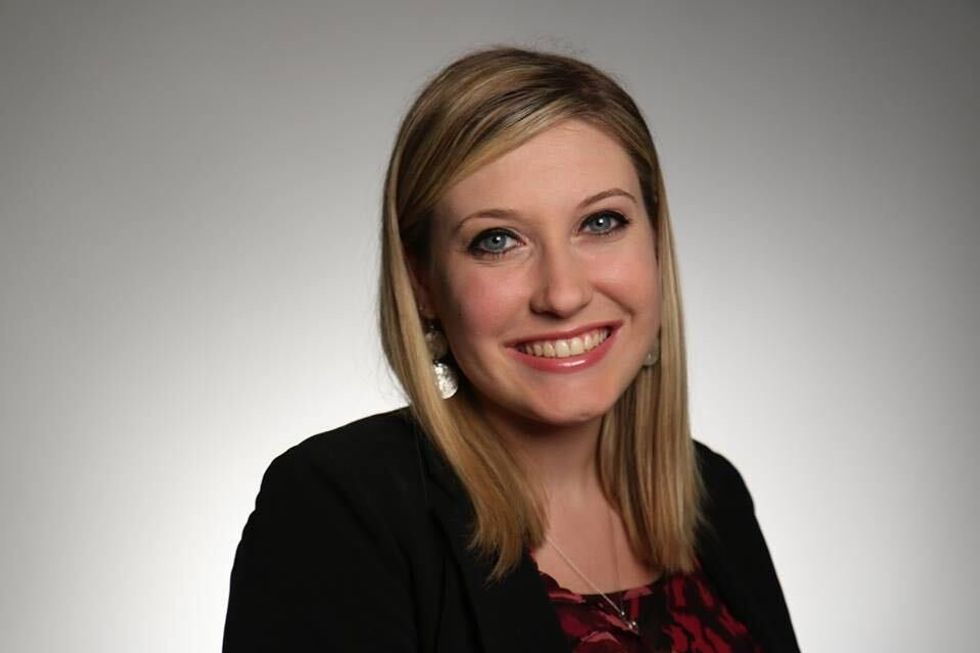 Raw Story investigative reporter Alexandria Jacobson.
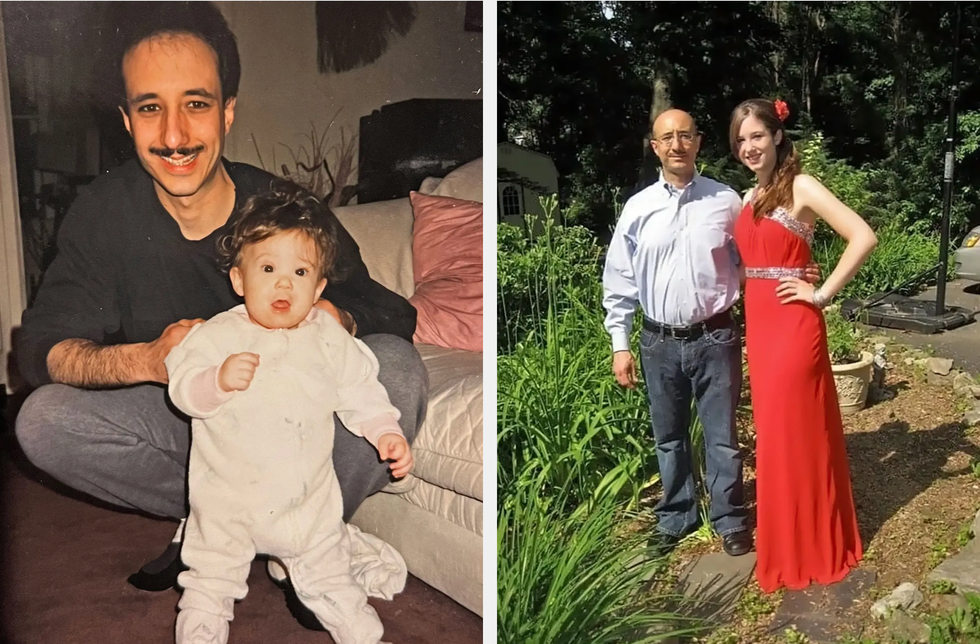 From left: Jim Parravani with his daughter, Jenny, as a toddler. Father and daughter on Jenny’s prom night. (Courtesy of Jenny Parravani Davis)
 Col. Leslie Zyzda Martin gives a speech during her Assumption of Command ceremony in Hangar 504 at Volk Field Air National Guard Base, Camp Douglas, Wis., on Sept. 10, 2020. She was fired 14 months later, though four internal military investigations found nothing to substantiate the complaints against her. (U.S. Air National Guard photo by Tech. Sgt. Andrea F. Rhode)

 Col. Leslie Zyzda Martin receives a military flag from a fellow commander in 2015 as she takes over an Iowa Intelligence Surveillance Reconnaissance unit. Before she came to Wisconsin to lead Volk Field, much of Zyzda Martin’s military experience was in intelligence operations and integration. (Staff Sgt. Linda K. Burger)
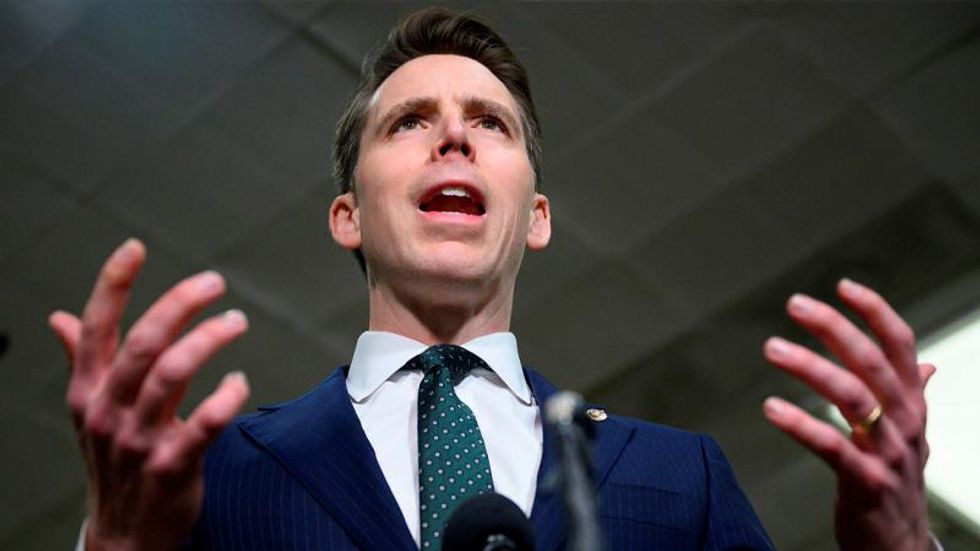 Republican senator Josh Hawley. (Andrew Caballero-Reynolds/AFP)
 LinkedIn photo of Jordan Duncan, a Marine Corps veteran whom the government alleges had classified military materials on his hard drive.
 Nedra Manners at her shop, Yellow Door Antiques and Art. (Photo by Alexandria Jacobson/Raw Story)
 Wendy Davis in Rome, Ga (Photo by Alexandria Jacobson/Raw Story)
 Kelly Thurman (far left) and Michelle Thurman (far right) at a campaign event for Murray County Sheriff Jimmy Davenport. (Photo by Alexandria Jacobson/Raw Story)
 Garry Baldwin (left) and Lamar Wadsworth (right), members of the Polk County Democratic Party, at a McDonald's in Rockmart, Ga. (Photo by Alexandria Jacobson/Raw Story)
 Sabrina Keliikoa as seen during a legal deposition on March 22, 2024. (Source: Deposition
  Jim Penrose as described on the website of the Institute for World Politics in Washington, D.C. (Institute for World Politics.)