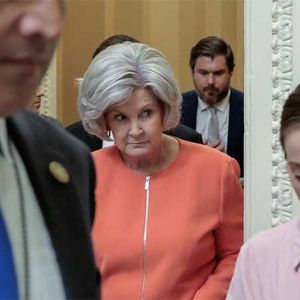
John Cornyn (Shutterstock)

Sen. John Cornyn (R-TX) told Raw Story that he can't believe the new reconciliation package. As Republican House Minority leader Kevin McCarthy put it, he feels lied to.
The bill still has some way to go before becoming law but the multi-billion dollar package finally won crucial support from conservative Democratic Senator Joe Manchin (WV). His previous opposition had essentially killed President Joe Biden's ambitious plans, because in the 50-50 Senate, where Republicans rarely back Biden on anything, Democrats can't afford to lose a single vote.
"It's a complete flip-flop," said Cornyn on Manchin's support. "Everything he said he was against, now he's for. And, uh, I just wonder what the transaction was that got him to 'yes.'"
He went on to say that it "poisons the well" in his relationship with Democrats, though it's unclear how strong that relationship was at all.
IN OTHER NEWS: GOP candidate gets confronted over his arrest warrant and lying about his education
"They work around here — even though we're political adversaries there has to be some modicum of, uh — that when people tell you something, you can believe them," Cornyn said. "That's been pretty well eviscerated."
Sen. Ron Johnson (R-WI) was just as furious, saying that he was opposed to the "chips bill," meaning the legislation for semiconductor manufacturing in the U.S. It's a bill that Republican Rep. Mike McCaul (R-TX) told Raw Story was a GOP suggestion two years ago that got unanimous support among Republicans.
"Sounds like a lot of people got schnookered," Johnson said. When asked what he's heard from party leaders he repeated, "sounds like they got schnookered."
He noted that it "didn't help" the strained relationship between the two parties.
If passed, the reconciliation package will pour some $369 billion into clean energy and climate initiatives and $64 billion into state-funded healthcare, including a popular measure meant to lower ruinously high prescription medicine prices.
It would be paid for by raising $739 billion, with a major chunk coming from a 15 percent corporate tax rate. An extra $300 billion raised under the plan would go to paying off the federal deficit.
Biden said prescription drug prices would drop and healthcare for Americans using the subsidized Affordable Care Act policy would also become $800 a year cheaper.
Funding for clean energy will "create thousands of new jobs and help lower energy costs in the future," he said.
IN OTHER NEWS: Trump pushes court to give him absolute immunity from Jan. 6 lawsuits
"We will pay for all of this by requiring big corporations to pay their fair share of taxes, with no tax increases at all for families making under $400,000 a year."
Biden thanked Manchin, an often unpredictable partner in the Senate, for his "extraordinary effort."
"If enacted, this legislation will be historic, and I urge the Senate to move on this bill as soon as possible, and for the House to follow as well."
With additional reporting by Matt Laslo and AFP
NOW WATCH: Viral video shows police officer punching tackled teen in the face
Viral video shows police officer punching tackled teen in the face www.youtube.com
Report typos and corrections to corrections@rawstory.com.
For customer support contact support@rawstory.com.