London (AFP) - Britain's wealthiest people have lost tens of billions of pounds in the coronavirus pandemic as their combined annual wealth fell for the first time in a decade, the Sunday Times reported in its Rich List 2020.The newspaper, which has produced the respected annual ranking of the country's 1,000 wealthiest people since 1989, found the past two months had resulted in the super-rich losing £54 billion ($65 billion, 60 billion euros).More than half of the billionaires in Britain had seen drops in their worth by as much as £6bn, a decrease in their collective wealth unprecedented sin...
Munich (Germany) (AFP) - Angered by a slew of lockdown measures, purported vaccine plans or alleged state surveillance, thousands took to the streets on Saturday in Germany in a growing wave of demonstrations that has alarmed even Chancellor Angela Merkel.Initially starting as a handful of protesters decrying tough restrictions on public life to halt transmission of the coronavirus, the demonstrations have swelled in recent weeks to gatherings of thousands in major German cities.Huge numbers of anti-lockdown protesters, conspiracy theorists, anti-vaxxers or extremists massed across Germany aga...
Tehran (AFP) - Iran sentenced a French-Iranian academic to five years in prison on national security charges on Saturday, her lawyer told AFP.Fariba Adelkhah was "sentenced to five years for gathering and conspiring against national security, and one year for propaganda against the Islamic republic," Said Dehghan said.He said his client would only be expected to serve the longer, five-year jail term and added that she intended to appeal.Adelkhah, a specialist in Shiite Islam and a research director at Sciences Po university in Paris, was arrested in June last year.She is a citizen of Iran and ...
Spraying disinfectant on the streets, as practised in some countries, does not eliminate the new coronavirus and even poses a health risk, the World Health Organization (WHO) warned on Saturday.
In a document on cleaning and disinfecting surfaces as part of the response to the virus, the WHO says spraying can be ineffective.
"Spraying or fumigation of outdoor spaces, such as streets or marketplaces, is... not recommended to kill the COVID-19 virus or other pathogens because disinfectant is inactivated by dirt and debris," explains the WHO.
"Even in the absence of organic matter, chemical spraying is unlikely to adequately cover all surfaces for the duration of the required contact time needed to inactivate pathogens."
The WHO said that streets and pavements are not considered as "reservoirs of infection" of COVID-19, adding that spraying disinfectants, even outside, can be "dangerous for human health".
The document also stresses that spraying individuals with disinfectants is "not recommended under any circumstances".
"This could be physically and psychologically harmful and would not reduce an infected person’s ability to spread the virus through droplets or contact," said the document.
Spraying chlorine or other toxic chemicals on people can cause eye and skin irritation, bronchospasm and gastrointestinal effects, it adds.
The organisation is also warning against the systematic spraying and fumigating of disinfectants on to surfaces in indoor spaces, citing a study that has shown it to be ineffective outside direct spraying areas.
"If disinfectants are to be applied, this should be done with a cloth or wipe that has been soaked in disinfectant," it says.
The SARS-CoV-2 virus, the cause of the pandemic that has killed more than 300,000 people worldwide since its appearance in late December in China, can attach itself to surfaces and objects.
However, no precise information is currently available for the period during which the viruses remain infectious on the various surfaces.
Studies have shown that the virus can stay on several types of surfaces for several days. However, these maximum durations are only theoretical because they are recorded under laboratory conditions and should be "interpreted with caution" in the real-world environment.
Tributes emerged Saturday for German photographer Astrid Kirchherr, whose striking images of The Beatles in the early 1960s helped turn them into cultural icons, following the announcement of her death this week aged 81.
Kirchherr passed away on Wednesday in Hamburg a few days before her 82nd birthday, Beatles historian Mark Lewisohn confirmed Friday.
"Her gift to the Beatles was immeasurable," he said on Twitter, describing Kirchherr as "intelligent, inspirational, innovative... smart, loving and (an) uplifting friend to many".
Those close to her told several German media outlets, including the weekly Die Zeit and NDR public television, that she had died after a serious illness.
Beatles drummer Ringo Starr took to social media to pay his own tribute.
"God bless Astrid a beautiful human being and she took great photos," he said.
Kirchherr met and befriended the band in 1960 during a tour in Hamburg, before they achieved worldwide fame.
"My whole life changed in a couple of minutes," she is quoted as saying.
At the time, the group was made up of five members: John Lennon, Paul McCartney and George Harrison, as well as bassist Stuart Sutcliffe and drummer Pete Best, who was later replaced by Starr.
- Mop-top hairstyles -
Sutcliffe fell in love with Kirchherr and stayed on in Hamburg, but died from a brain haemorrhage in 1962.
She later married and divorced twice, but had no children, The Guardian reported.
Kirchherr went on to take numerous photos of the group, showing them both as rebels and romantics. She later lived mainly off the reproduction rights of the pictures, NDR said.
She was also said to have worked as a stylist and interior designer and opened a photography shop.
Kirchherr was behind the group's so-called mop-top hairstyles of the early 1960s.
The photographer later kept in touch with The Beatles, Harrison in particular.
Dhani Harrison, his son and himself a musician, posted a message to Kirchherr on Twitter alongside a photograph of her.
"Dearest Astrid, I really wish I could have spent more time with you in this life," he said.
"You were always so kind and loving towards me. May God bless you always."
Last month saw the 50th anniversary of the Beatles' unofficial break-up, with the so-called "Fab Four" still seen as influential pop music pioneers half a century later.
The band remain the best-selling music artists of all time, with enduring hits from "I Want to Hold Your Hand" and "Hey Jude" to "Yesterday" and "Let It Be" familiar to at least four generations of fans.
Iran sentenced French-Iranian academic Fariba Adelkhah to five years in prison on national security charges Saturday, her lawyer said, adding that she plans to appeal.
The case of Adelkhah and her French colleague and partner Roland Marchal, who were arrested together in June last year, has been a thorn in relations between Tehran and Paris for months.
Marchal was released in an apparent prisoner swap in March that drew strong criticism from the United States.
The 61-year-old Adelkhah has remained in custody ever since her arrest.
A research director at Sciences Po university in Paris, she is a dual French-Iranian citizen, a status Iran does not recognise.
The academic was "sentenced to five years for gathering and conspiring against national security, and one year for propaganda against the Islamic republic," her lawyer Said Dehghan told AFP, adding that they were to be served concurrently.
He said his client intended to appeal against her conviction.
Her trial opened on March 3 with the final hearing held on April 19 at branch 15 of Tehran's Revolutionary Court.
Adelkhah has been severely weakened by a 49-day hunger strike she mounted between late December and February, her lawyer said.
Her French colleague Marchal, who was detained while visiting her in Tehran, is also a researcher at the Centre for International Research (CERI) at Sciences Po.
Sciences Po/AFP/File / Gregory CALES Adelkhah's French colleague and partner Roland Marchal, who was detained along with her in June last year, was released in March in an apparent prisoner swap
He is a specialist in sub-Saharan Africa, while she is a specialist in Shiite Islam.
Marchal was freed after France released Iranian engineer Jallal Rohollahnejad, who faced extradition to the United States over accusations he violated US sanctions against Iran.
Washington has said that it "deeply regrets" that decision.
Dehghan said Marchal's release gives grounds for appeal against the charge of "gathering and conspiring against national security".
"At least two people must be involved for this charge to stand," he said.
Adelkhah's defence team also plans to argue that her personal academic opinion regarding the Islamic dress code enforced in Iran cannot amount to "propaganda against a political system."
- 'Kafkaesque' -
Following Adelkhah's hunger strike, her support committee expressed concern over her vulnerability to any outbreak of the coronavirus in the prison where she has been held.
Iran is battling the Middle East's deadliest COVID-19 epidemic, which has claimed more than 6,900 lives.
Dehghan had recently indicated that Adelkhah continued to "suffer from kidney disease as a consequence of her hunger strike."
Arrests of foreign citizens have increased since the United States unilaterally withdrew from a landmark nuclear deal between Iran and major powers in 2018 and reimposed crippling sanctions.
Those detained, who have included a number of dual nationals, have mostly been accused of spying or of acting against Iran's national security.
In early February, French Foreign Minister Jean-Yves Le Drian described the continued detention of Adelkhah and Marchal as "unbearable".
A support committee, which was set up to campaign for their release, condemned Adelkhah's conviction and jail sentence as "Kafkaesque".
"It was not a proper legal process. There was clearly no open debate," said committee member Jean-Francois Bayart.
The Geneva-based academic said Adelkhah had been caught up in wider political issues over which she had no control.
Iran has been increasingly critical of European governments, particularly France, over their failure to do more to save the 2015 nuclear deal by enabling companies to get round renewed US sanctions.
"The intensity of this arm-wrestling contest does not surprise us," Bayart said.
"It's an opaque and arbitrary process and an utterly asymmetric bargaining situation because one of the protagonists is in jail."
But Bayart added that despite the after-effects of her hunger strike, Adelkhah remained "extremely combative, lucid and determined".
Marchal is not the only Western national to have been freed by Iran in a prisoner swap in recent months.
In February, Iran released an unidentified German in exchange for Iranian Ahmad Khalili, who was in custody for circumventing US sanctions.
In December, it freed US academic Xiyue Wang in exchange for scientist Massoud Soleimani and said it was open to further swaps.
From anger over lockdown measures to a purported vaccine plan by Bill Gates: a growing wave of demonstrations in Germany by conspiracy theorists, extremists and anti-vaxxers has alarmed even Chancellor Angela Merkel.
Initially starting as a handful of protesters decrying tough restrictions on public life to halt transmission of the coronavirus, the protests have swelled in recent weeks to gatherings of thousands in major German cities.
Thousands are set to mass again in Stuttgart, Munich and Berlin on Saturday, with police out in force after some protests turned violent.
The growing demonstrations have sparked comparison to the anti-Muslim Pegida marches at the height of Europe's refugee crisis in 2015, raising questions over whether the strong support that Merkel is currently enjoying due to her handling of the virus crisis could evaporate.
Just like it won popularity by fanning anti-migrant sentiment five years back, the far-right AfD party is now openly encouraging protesters and repositioning itself as an anti-lockdown party.
A recent poll commissioned by the Spiegel news magazine found that almost one in four Germans surveyed voiced "understanding" for the demonstrations.
The development has shocked the political establishment, with Merkel reportedly telling top brass of her centre-right CDU party of the "worrying" trend that may bear some hallmarks of Russia's disinformation campaigns.
- 'Vilification' -
Germany in March took unprecedented measures to shut down public life.
While a huge majority of Germans back the action, giving Merkel's government a big boost in approval ratings, dissent is fomenting, particularly online where YouTube videos championing conspiracy theories or quack medical advice are attracting tens of thousands of views.
Seeking to counter absurd claims, President Frank-Walter Steinmeier said that although he wasn't a medical practitioner, he could safely suggest that the "uncomfortable and cumbersome face mask is more to be recommended than a tin-foil hat."
After a public outcry over unruly protests last weekend, the AfD placed itself squarely on the side of the demonstrators.
Party co-chief Alexander Gauland said it was "completely correct that people are exercising their fundamental rights and demonstrating against corona measures."
Any resulting split in society over the demonstrations should not be blamed on the protesters, but on "the sweeping vilification of participants as right-wing extremists, nutcases or conspiracy theorists," he charged.
Sometimes violent in nature, the demonstrations have also been increasingly tinged by anti-Semitism, as participants hold aloft slogans portraying figures like George Soros as the bogeyman in the virus crisis.
- Second populist wave -
"I consider this type of protest to be extremely dangerous," Felix Klein, the government's pointman on tackling anti-Semitism, told the Sueddeutsche Zeitung newspaper.
"It undermines confidence in our democratic state and forms a reservoir in which conspiratorial anti-Semites and Holocaust deniers can be found alongside others with sometimes very obscure attitudes," he added.
Miro Dittrich, an expert at the Amadeu Antonio Foundation, said conspiracy theories could be appealing to people who find it hard to grasp the concept of the virus, and who personally know of no one who has been affected.
"In addition, people are currently isolated from their social environment in a crisis situation and spend an extremely large amount of time online, all factors that promote the belief in conspiracy stories," Dittrich said.
Klein warned that "we must take the emergence of these movements very seriously and cannot hope that with the end of the corona crisis these forces will disappear again."
Spiegel also cited the urgent need for Merkel to get a grip on the situation.
"If she doesn't take counter action now, a second populist wave of anger could break over Germany," it warned.
Time could be pressing.
Hermann Binkert, who heads the polling institute INSA, said the strong support for Merkel's government could quickly melt away when the health imperative recedes.
"When the unifying theme of health fades and the debate focuses on solving the labour market, economic and financial crisis, the consensus ends," he warned.
Italy's government on Saturday approved a decree which will allow travel to and from abroad from June 3, in a major development as it moves to unwind one of the world's most rigid coronavirus lockdowns.
The government will allow free travel across the country from that same day. Some regions had pushed for a swifter rollback, but Prime Minister Giuseppe Conte has insisted on a gradual return to normal to prevent a second wave of infections.
More than 31,600 Italians have died of COVID-19 since the outbreak came to light on Feb. 21, the third-highest death toll in the world after that of the United States and Britain.
In a bid to contain the contagion, Italy was the first European country to impose nationwide restrictions in March, only sanctioning an initial relaxation of the rules on May 4, when it allowed factories and parks to reopen.
Shops are due to open on May 18 and the government decided that all movement within individual regions should be allowed that same day, meaning people will be able to visit friends.
The inter-regional and foreign travel ban will remain in place until after Italy's June 2 Republic Day holiday, preventing any mass travel over that long-holiday weekend.
But all travel curb will be lifted from June 3 - a major milestone on Italy's road to recovery, with the government hoping to salvage the forthcoming vacation season, when Italians traditionally escape the cities for their annual summer breaks.
The regions can reactivate all sectors of the economy that might still be shuttered, so long as safety protocols are followed. National health authorities will monitor the situation to make sure infections are kept in check, the decree said.
Shops and restaurants across the country are preparing to reopen under strict social distancing and hygiene rules, as recommended by health authorities.
"The challenge is huge, so big it is hard to quantify, and most of all there is uncertainty. The sense of uncertainty is dominating everything," said Alberto Volpe, manager of a clothing shop in central Rome.
Beaches in France and Italy were open Saturday for the first weekend since the easing of coronavirus lockdowns while football fans awaited the return of major league action with Germany's Bundesliga set to kick off.
Italy also announced it will reopen to holidaymakers from June 3 and scrap quarantine requirements for arrivals, welcome news for the important tourism industry in one of the nations worst hit by COVID-19.
As some countries start to reopen despite fears of a second wave of the pandemic, President Donald Trump voiced hope that a vaccine would be available by late 2020.
"We are looking to get it by the end of the year if we can, maybe before," Trump told reporters at the White House Friday as he discussed America's "Operation Warp Speed" effort in the global race for a vaccine.
AFP / MANDEL NGAN US President Donald Trump, flanked by senior health officials, launches the high-powered 'Operation Warp Speed' initiative which he says could deliver a vaccine by the end of the year
The timeline -- deemed unrealistic by many experts -- is more aggressive than the one-year scenario put forward by European scientists.
The hunt for a vaccine for a disease that the World Health Organization (WHO) says may never disappear has also threatened to become a source of tension between the globe's haves and have-nots, with trials underway in various countries.
Many governments are not waiting, with borders and beaches reopening around Europe after two traumatic months in which life ground to a halt.
Germany, which this month began its slow emergence from confinement, was ready to kick off its top-flight football league Saturday, although in front of empty stadiums and under draconian health measures.
AFP/File / INA FASSBENDER Germany's Bundesliga returns with the Schalke 04-Borussia Dortmund derby among the six matches scheduled Saturday
"The whole world will be looking at Germany, to see how we get it done," said Bayern Munich boss Hansi Flick.
"If we manage to ensure that the season continues, it will send a signal to all leagues."
Russia pushed ahead with plans to ease restrictions despite reporting more than 10,000 new cases, with its football league set to return next month and thousands of people being tested for antibodies to show whether they have had the virus or not.
World athletics chief Sebastian Coe also said it was crucial to get top events started again and warned that sports leaders may rebel and decide to resume even without the approval of local authorities.
"We will be respectful, but we have to make decisions in the best interest of our sport and our athletes," the British former track legend told Indian television channel WION.
- Beaches reopening -
Slovenia on Friday became the first European country to open its borders, despite new infections still being reported.
In northeast Europe, Latvia, Lithuania and Estonia were creating their own "Baltic bubble" allowing free movement among the three countries.
France called for self-restraint as the country prepared for its first weekend since easing its lockdown, warning that police would break up any large gatherings.
AFP / JOE KLAMAR A mannequin at a bar in Vienna to help customers adhere to social distancing rules
Several nations have eased restrictions to stem the economic damage from lockdowns.
With the European summer fast approaching, the key tourism industry is trying to salvage something from the wreckage.
Parasols and sunloungers are starting to appear on coastlines in Italy.
"It moves me to see these sunshades," said Simone Battistoni, whose family has been running the Bagno Milano beach concession in Cesenatico on Italy's east coast since 1927.
Austria took an important symbolic step Friday by reopening its restaurants and traditional Viennese cafes.
"We missed it and we're going to come back as much as possible," said Fanny and Sophie, 19-year-old students waiting for breakfast at a cafe in the Austrian capital.
Ireland will begin to lift its lockdown in coming days while introducing a 14-day quarantine period for new arrivals.
- US economic woes -
The pressure to ease lockdowns has mounted as the catastrophic economic effects of the virus have become clearer.
In the United States, the world's worst-affected country with more than 87,000 deaths and 1.4 million cases, industrial production plunged 11.2 percent in April, the largest drop in a century.
AFP / FRANCK FIFE France is one of the European countries to ease its coronavirus lockdown, but the government has called for self-restraint
Department store JCPenney, a retail institution which has not turned a profit since 2011, on Friday became the latest US business to file for bankruptcy.
"May will not be a month of celebration. Nor will June. Nor July. Nor probably the rest of this year," warned Neil Saunders, managing director of GlobalData Retail.
With 36.5 million Americans -- more than 10 percent of the population -- now out of work, Trump has been keen to ease lockdown measures as he seeks re-election in November.
Some areas are resisting. Lockdown measures in New York City have been extended until May 28.
AFP / Simon MALFATTO Spread of coronavirus
In the US House of Representatives, Democrats late Friday narrowly pushed through a $3 trillion rescue package to help American families and businesses stay afloat.
But its fate appears uncertain as Republicans have vowed to block it in the Senate which they control.
Europe's top economy Germany meanwhile tipped into recession, suffering its steepest quarterly contraction since the global financial crisis in 2009.
- 'Nightmare scenario' -
The new coronavirus which first emerged in the Chinese city of Wuhan late last year has so far killed more than 306,000 people globally and infected 4.5 million as it continues to spread.
The WHO warned Africa could have 231 million people infected and up to 190,000 could die.
There was also concern over the "nightmare scenario" of the discovery of infections in the world's biggest refugee camp, in Bangladesh, where upwards of a million Rohingya Muslims from neighbouring Myanmar live in squalor.
Besides its health and economic toll, the pandemic has also caused political ructions.
The latest fallout was in Brazil which lost its second health minister in a month as Nelson Teich resigned Friday over what an official said was "incompatibility" with right-wing President Jair Bolsonaro's approach to fighting the country's spiralling COVID-19 crisis.
The investigation into the murder of a Mexican journalist who worked for AFP as a freelancer was blighted by "negligence... and delays," Reporters Without Borders (RSF) said on Friday.
Javier Valdez, who was also the founder of the Riodoce weekly newspaper and worked for the La Jornada daily, was shot dead three years ago in Culiacan.
"The negligence of the authorities and the delays in the process make you worry that once again those responsible for the crime will have impunity," said the France-based RSF in a statement.
"Although there has been some progress, justice is being served drop by drop."
On February 27, Heriberto Picos Barraza was sentenced to 14 and a half years in prison after confessing to his role in the murder, but RSF said Valdez's family were denied their "legitimate right" to question him.
According to prosecutors, Picos Barrazza drove the car for Juan Francisco Picos Berrueta and Luis Idelfonso Sanchez, who shot Valdez dead before fleeing.
In the trial it was revealed that the trio had links to notorious Mexican drug kingpin Joaquin "Chapo" Guzman, who is serving life behind bars in the United States.
RSF hit out at the delay in bringing Picos Berrueta, known as "el Quillo," to trial. He is currently being held in pre-trial detention.
"The progress in the search for justice is not what we, as family, would want," said Valdez's wife Griselda Triana.
"They got rid of him because someone didn't like what he wrote. It was that easy," she added.
Valdez, 50, who freelanced for AFP for a decade, was known for writing articles critical of powerful criminal gangs such as the notorious Sinaloa drug cartel led by Guzman.
One of his final pieces was about the internal struggles within the Sinaloa cartel following Guzman's capture in January 2016, before the drug lord was extradited to the US.
RSF regularly ranks Mexico alongside war-torn Syria and Afghanistan as the world's most dangerous countries for news media. Violence linked to drug trafficking and political corruption is rampant, and many murders go unpunished.
Brazilian Health Minister Nelson Teich resigned Friday after less than a month on the job over what an official said was "incompatibility" with President Jair Bolsonaro's approach to fighting the country's spiraling coronavirus crisis.
Teich, a 62-year-old oncologist, joined the far-right president's cabinet on April 17, the day after Bolsonaro sacked his predecessor, Luiz Henrique Mandetta.
Mandetta had also clashed with the president, a vocal critic of the stay-at-home measures the then-minister recommended to contain the new coronavirus.
Teich took over the post promising "total alignment" with the president, but rifts soon emerged.
Teich and Bolsonaro "were incompatible on certain courses of action," a ministry source told AFP, speaking on condition of anonymity.
Teich was taken by surprise last week when Bolsonaro issued a decree without consulting him that declared beauty salons and gyms "essential services" exempt from business closures.
The final straw for Teich was reportedly a disagreement with Bolsonaro over using chloroquine to treat the virus.
Like US President Donald Trump, to whom he is often compared, Bolsonaro touts the drug as a promising treatment.
He wants it cleared for widespread use in patients, despite studies casting doubt on its effectiveness and raising concerns about its safety.
The health ministry announced Teich's resignation in a brief statement, saying he would hold a press conference later.
The news drew anti-Bolsonaro protests in various cities. Residents banged pots and pans out their windows, shouting "Get out, Bolsonaro!"
- Spiraling death toll -
Brazil has emerged as one of the countries hit hardest in the pandemic, with a sharply rising death toll that has reached nearly 14,000.
The country has more than 200,000 confirmed cases.
Experts say under-testing means the real figures may be 15 times higher or more.
Bolsonaro has found himself increasingly isolated over his response to the pandemic.
He has compared the virus to a "little flu," condemned the "hysteria" surrounding it and repeatedly clashed with state and local authorities over their social distancing measures.
The president insists business closures and stay-at-home measures are unnecessarily wrecking the economy, which is on track to shrink 5.3 percent this year, according to the IMF.
Stymied by the Supreme Court, which ruled that states have the final say in deciding how to fight the pandemic, Bolsonaro called on top business leaders Thursday to "play rough" to win an end to the stay-at-home adopted in the country's industrial hub, Sao Paulo state.
"You have to call the governor (Joao Doria) and play rough, because this is serious, this is war," he told them in a video conference.
Bolsonaro, who took office in January 2019, is also embattled on another front after firing the chief of the federal police last month, leading to a probe into whether the president obstructed justice in a bid to protect himself or his family from ongoing investigations.
With talk of impeachment mounting in Brasilia, the inquiry could prove explosive.
Some 28.4 million planned surgeries could be cancelled or postponed globally due to the new coronavirus pandemic, according to new research warning that huge backlogs risk "potentially devastating" consequences for patients and health systems.
The study, published this week in the British Journal of Surgery, modelled the expected number of elective operations that would be put on hold in 190 countries during a 12-week peak of COVID-19 disruption.
Hospitals in countries grappling with major coronavirus outbreaks have postponed most non-emergency procedures to avoid putting patients at risk, redeploying staff and resources to the virus response.
Researchers from the COVIDSurg Collaborative, an information sharing network of surgeons and anaesthetists in 77 countries, estimated that some 2.4 million operations would be cancelled per week in the period, or 28.4 million in total.
They called on governments to urgently develop recovery plans to clear the backlog of surgeries and prepare for possible further waves of COVID-19 infection.
"Cancelling elective surgery at this scale will have substantial impact on patients and cumulative, potentially devastating consequences for health systems worldwide," the authors said.
"Delaying time-sensitive elective operations, such as cancer or transplant surgery, may lead to deteriorating health, worsening quality of life, and unnecessary deaths."
Globally, around 82 percent of benign surgeries, 38 percent of cancer operations and around a quarter of elective Caesarean sections would be cancelled or postponed, the study found.
It said that it would take an average of 45 weeks to clear the backlog, assuming that countries boost their normal surgical volume by 20 percent.
The researchers used survey data from specialists at 359 hospitals in 71 countries, as well as information on normal surgery rates to model the likely effect across 190 countries.
Their estimate that the peak surge of infections would last around 12 weeks was based on the experience of China's Hubei province, where the virus emerged.
Millions of Buddhists seeking protection and healing from the novel coronavirus are turning to traditional religious rituals.
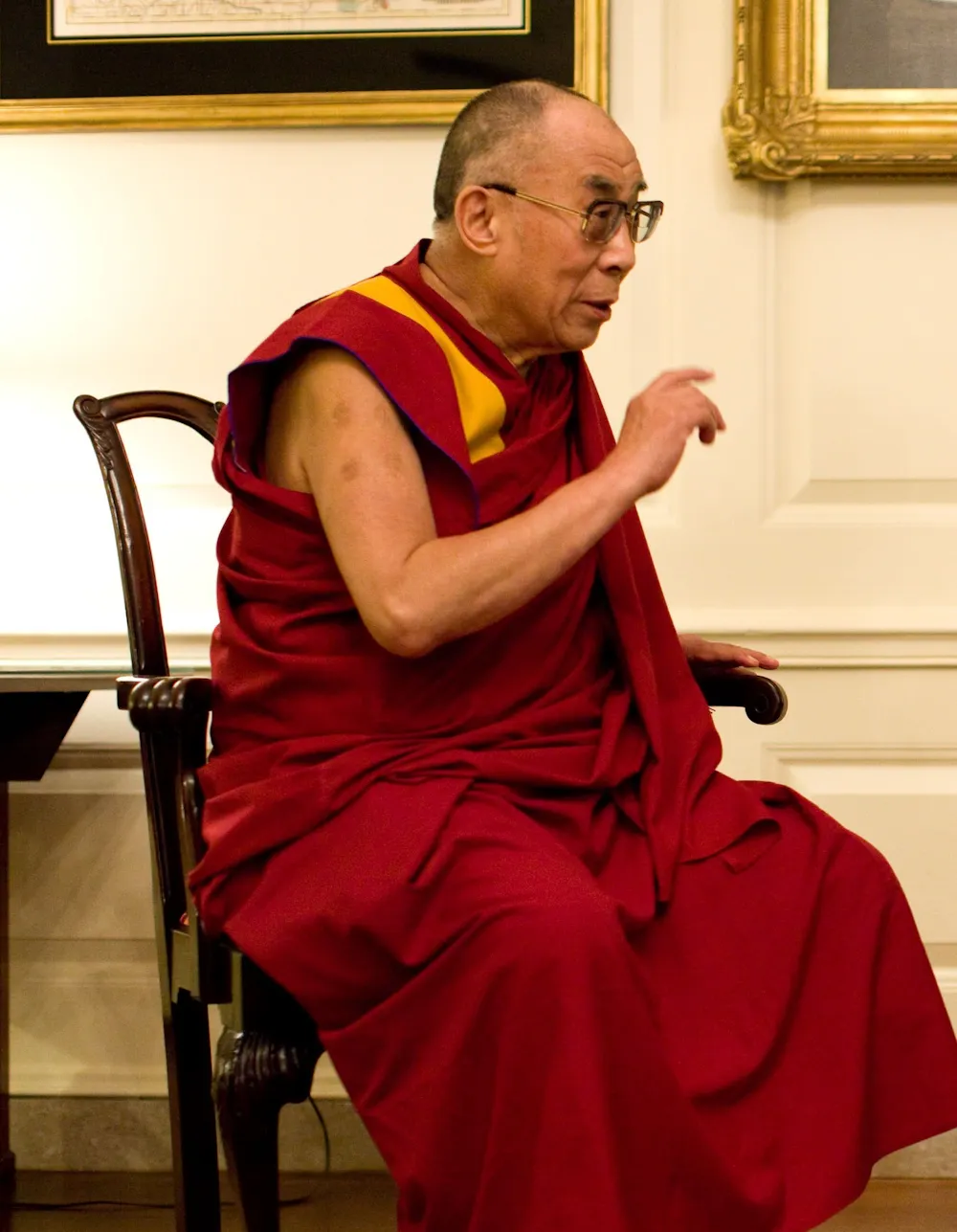
Since the emergence of COVID-19, the Dalai Lama, other senior monks and Buddhist organizations in Asia and worldwide have emphasized that this pandemic calls for meditation, compassion, generosity and gratitude. Such messages reinforce a common view in the West of Buddhism as more philosophy than religion – a spiritual, perhaps, but secular practice associated with mindfulness, happiness and stress reduction.
But for many people around the world Buddhism is a religion – a belief system that includes strong faith in supernatural powers. As such, Buddhism has a large repertoire of healing rituals that go well beyond meditation.
Having studied the interplay between Buddhism and medicine as a historian and ethnographer for the past 25 years, I have been documenting the role these ritual practices play in the coronavirus pandemic.
There are three main schools of traditional Buddhism: Theravāda, practiced in most of Southeast Asia; Mahāyāna, the form most prevalent in East Asia; and Vajrayāna, commonly associated with Tibet and the Himalayan region.
In Buddhist-majority places, the official COVID-19 pandemic response includes conventional emergency health and sanitation measures like recommending face masks, hand-washing and stay-at-home orders. But within religious communities, Buddhist leaders also are using a range of ritual apotropaics – magical protection rites – to protect against disease.
A Nepalese Buddhist monk offering ritual prayer, May 7, 2020.
Theravāda amulets and charms trace their magical powers to repel evil spirits not only to the Buddha but also to beneficial nature spirits, demigods, charismatic monks and wizards.
Now, these blessed objects are being specifically formulated with the intention of protecting people from contracting the coronavirus.
Mahāyāna Buddhists use similar sacred objects, but they also pray to a whole pantheon of buddhas and bodhisattvas – another class of enlightened beings – for protection. In Japan, for example, Buddhist organizations have been conducting expulsion rites that call on Buddhist deities to help rid the land of the coronavirus.
Mahāyāna practitioners have faith that the blessings bestowed by these deities can be transmitted through statues or images. In a modern twist on this ancient belief, a priest affiliated with the Tōdaiji temple in Nara, Japan, in April tweeted a photo of the great Vairocana Buddha. He said the image would protect all who lay eyes upon it.
The Dalai Lama, the Buddhist spiritual leader of the Tibetan people.
The third major form of Buddhism, Vajrayāna, which developed in the medieval period and is widely influential in Tibet, incorporates many rituals of earlier traditions. For example, the Dalai Lama has urged practitioners in Tibet and China to chant mantras to the bodhisattva Tārā, a female goddess associated with compassion and well-being, to gain her protection.
Vajrayāna practitioners also advocate a unique form of visualization where the practitioner generates a vivid mental image of a deity and then interacts with them on the level of subtle energy. Responses to COVID-19 suggested by leading figures in traditional Tibetan medicine frequently involve this kind of visualization practice.
Buddhist modernism
Since the height of the colonial period in the 19th century, “Buddhist modernists” have carefully constructed an international image of Buddhism as a philosophy or a psychology. In emphasizing its compatibility with empiricism and scientific objectivity they have ensured Buddhism’s place in the modern world and paved the way for its popularity outside of Asia.
Many of these secular-minded Buddhists have dismissed rituals and other aspects of traditional Buddhism as “hocus pocus” lurking on the fringes of the tradition.
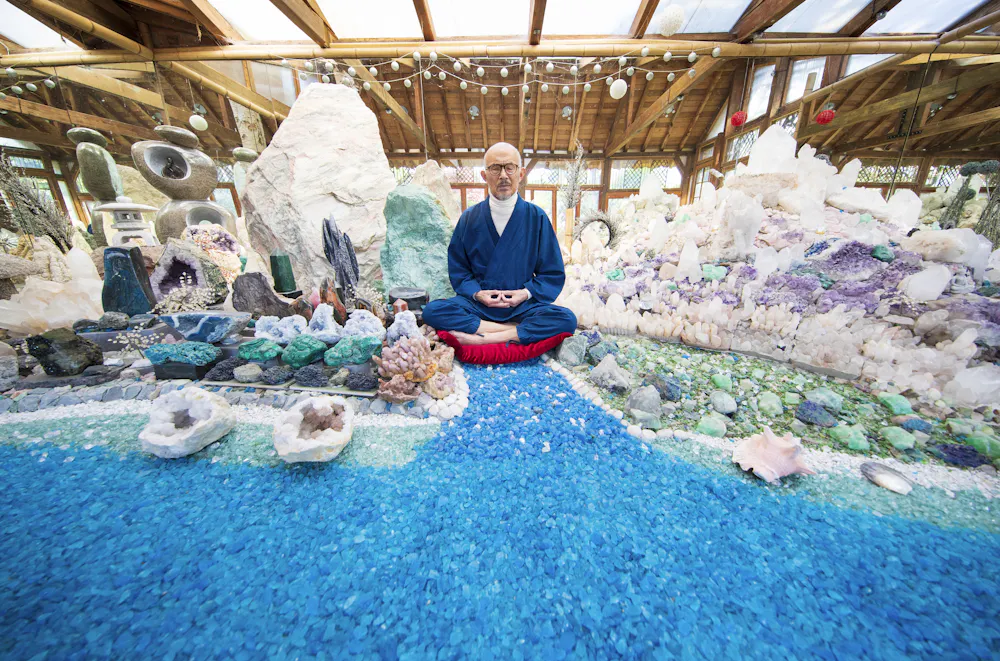
A former Buddhist monk practices visualization meditation during the coronavirus crisis, April 24, 2020.
Having documented the richness of the history and contemporary practice of Buddhist healing and protective rituals, however, I argue that these practices cannot be written off quite so easily.
In most living traditions of Buddhism, protective and healing rituals are taken seriously. They have sophisticated doctrinal justifications that often focus on the healing power of belief.
Increasingly, researchers are agreeing that faith in itself plays a role in promoting health. The anthropologist Daniel Moerman, for example, has identified what he calls the “meaning response.” This model accounts for how cultural and social beliefs and practices lead to “real improvements in human well-being.” Likewise, Harvard Medical School researcher Ted Kaptchuk has studied the neurobiological mechanisms for how rituals work to alleviate illnesses.
To date, there is no known way to prevent COVID-19 other than staying home to avoid contagion, and no miracle cure. But for millions worldwide, Buddhist talismans, prayers and protective rituals offer a meaningful way to confront the anxieties of the global coronavirus pandemic, providing comfort and relief.
And in a difficult time when both are in short supply, that’s nothing to discredit.




 Sciences Po/AFP/File / Gregory CALES
  AFP / MANDEL NGAN
  AFP/File / INA FASSBENDER
  AFP / JOE KLAMAR
  AFP / FRANCK FIFE
  AFP / Simon MALFATTO