The construction over the weekend started after a federal judge blocked the Trump administration’s efforts to build his long-promised wall with funds not appropriated by Congress.
A private organization supported by some of President Donald Trump’s most ardent supporters announced Monday that it constructed a short section of border fence over the weekend.
The group, We Build the Wall, used money raised from a GoFundMe account to construct about a half-mile of barrier on El Paso’s west side that it said will close a gap used by smugglers and undocumented immigrants to sneak across the border. The group has raised more than $20 million so far.
“It is almost done,” former Kansas Secretary of State Kris Kobach said during an interview with Fox News on Monday morning. “We are standing in the gap and building the wall.”
Kobach and former Trump adviser Steve Bannon are listed on the group’s website as part of the leadership team. Air Force veteran Brian Kolfage started the organization.
The barrier is reportedly being construction close to the Mount Cristo Rey statue near the Texas-New Mexico state line across from Mexico. The El Paso Timesreported the land is owned by American Eagle Brick Co., whose owner, Jeff Allen, confirmed the construction. He told the publication that anyone who is against the construction is “against America.”
Kobach said the barrier isn’t made with the “run-of-the-mill” steel the government uses, which needs to be replaced every 25 years. Instead, the group used “all-weathering” steel that lasts three times as long, he said.
The construction started the same day a federal judge blocked the Trump administration’s efforts to build his long-promised wall with funds that were not appropriated by Congress but instead were . shifted from other departments, including the military.
In the Fox News interview, Kobach cited that ruling as a big reason why the group’s efforts are necessary.
“We hear the sad news recently that a liberal federal judge is blocking the federal government from building part of the wall. That’s why it’s all the more important now ... that American citizens step forward like they have already,” he said.
The German government has called on people to wear the Jewish kippa ahead of an anti-Israel protest as a demonstration of solidarity and as Jews face a spike in anti-Semitism, withdrawing an earlier warning against wearing the traditional skullcap.
At the weekend, Felix Klein, the country's commissioner on anti-Semitism sparked uproar when he said in an interview with the Funke regional press group that he could not "advise Jews to wear the kippa everywhere all the time in Germany."
Israeli President Reuven Rivlin voiced shock at Klein's warning and said it was a "capitulation to anti-Semitism" and evidence that Jews are unsafe in Germany.
Late Monday, Klein reversed course after Chancellor Angela Merkel's spokesman intervened.
"The state must see to it that the free exercise of religion is possible for all... and that anyone can go anywhere in our country in full security wearing a kippa," Steffen Seibert told a press conference.
In his latest statement to Funke, Klein said: "I call on all citizens of Berlin and across Germany to wear the kippa next Saturday if there are new, intolerable attacks targeting Israel and Jews on the occasion of al-Quds day in Berlin."
Al-Quds is an annual event against Israeli control of Jerusalem and will take place on Saturday.
Klein also addressed his earlier statements, saying that he "could no longer recommend that Jews wear the kippa everywhere in Germany should be taken as an alarm signal."
Earlier Monday, German daily Bild published a cut-out-and-use kippa in a bid to fight rising anti-Semitism.
Bild, Germany's top-selling daily newspaper, called on readers to "stand in solidarity with (their) Jewish neighbours" by making "their own kippa", bearing the star of David, to "raise the flag against anti-Semitism".
Germany, like other Western countries, has watched with alarm as anti-Semitic and other racist hate speech and violence have increased in recent years while the political climate has coarsened and grown more polarised.
Anti-Semitic crimes rose by 20 percent in Germany last year, according to interior ministry data which blamed nine out of 10 cases on the extreme right.
The arrival in parliament of the far-right AfD party, whose leaders openly question Germany's culture of atonement for World War II atrocities, has also contributed to the change in atmosphere.
Merkel has also deplored "another form of anti-Semitism" stemming from a major asylum-seeker influx, with many coming from Muslim countries like Syria, Afghanistan or Iraq.
The Central Council of Jews in Germany has already issued several warnings about wearing the kippa in public.
In one prominent case last year, a 19-year-old Syrian man was convicted for assault after lashing out with his belt at an Israeli man wearing a Jewish skullcap while shouting "yahudi", Jew in Arabic.
With millions of dollars missing and officials in prison or fleeing the country, Russia's space sector is at the heart of a staggering embezzlement scheme that has dampened ambitions of recovering its Soviet-era greatness.
For years, Moscow has tried to fix the industry that was a source of immense pride in the USSR. While it has bounced back from its post-Soviet collapse and once again become a major world player, the Russian space sector has recently suffered a series of humiliating failures.
And now, massive corruption scandals at state space agency Roscosmos have eclipsed its plans to launch new rockets and lunar stations.
"Billions (of rubles) are being stolen there, billions," Alexander Bastrykin, the powerful head of Russia's Investigative Committee -- Russia's equivalent of the FBI -- said in mid-May.
Investigations into corruption at Roscosmos have been ongoing "for around five years and there is no end in sight," he added.
In the latest controversy, a senior space official appears to have fled Russia during an audit of the research centre he headed.
Yury Yaskin, the director of the Research Institute of Space Instrumentation, left Russia for a European country in April where he announced his resignation, the Kommersant paper reported.
He feared the discovery of malpractice during an inspection of the institute, according to the newspaper's sources.
Roscosmos confirmed to AFP that Yaskin had resigned but did not clarify why. His Moscow institute is involved in developing the Russian satellite navigation system GLONASS designed to compete with the American GPS system.
- Stopping corruption 'primary goal' -
Corruption has particularly affected Russia's two most important space projects of the decade: GLONASS and the construction of the country's showpiece cosmodrome Vostochny, built to relieve Moscow's dependence on Baikonur in ex-Soviet Kazakhstan.
Almost all major companies in the sector, including rocket builders Khrunichev and Progress, have been hit by financial scandals that have sometimes led to prison sentences for large-scale fraud.
Russia's Audit Chamber, a parliamentary body of financial control, said financial violations at Roscosmos in 2017 stood at 760 billion rubles (around $11.7 billion), accounting for nearly 40 percent of the total irregularities in the entire economy that year.
Roscosmos told AFP that "eradicating corruption" is one of its "primary goals", adding that it regularly cooperates with investigations by the authorities.
In mid-April, President Vladimir Putin stressed the need to "progressively resolve the obvious problems that slow down the development of the rocket-space sector."
"The time and financial frameworks to realise space projects are often unjustified," the Russian leader said.
- More money, more corruption -
Rebooting the space sector is a matter of prestige for the Kremlin. It symbolises its renewed pride and ability to be a major global power, especially in the context of increased tensions with the United States.
Almost destroyed in the 1990s, the sector stayed afloat thanks to foreign commercial contracts.
But independent space expert Vitaly Yegorov told AFP there were still "executives of a very high professional level" at that time and fewer accidents during launches.
The first module of the International Space Station (ISS), Zarya, was manufactured in Russia and launched in 1998 despite a major financial crisis at the time.
Paradoxically, the situation deteriorated in the early 2000s, when the Russian economy was growing. The influx of public funds fuelled fraud, and space research stopped advancing, experts say.
"Today, the space sector works like this: give us money and we will launch something -- one day," Yegorov said.
Only the ISS continues to be "an unshakeable ivory tower", he said, since it plays a "political role" aimed at maintaining international cooperation.
Analysts say Roscosmos chief Dmitry Rogozin, a former deputy prime minister known for his anti-Western statements, is struggling to deal with the industry's problems.
Russia's scientific community has criticised Rogozin, who is a journalism graduate, for his lack of knowledge of the space sector.
"He probably would have made an excellent spokesman for Roscosmos," joked Yegorov, adding: "Even Superman could not handle this avalanche of problems."
Our study was the first to assess the carbon footprint of the pharma sector.
More polluting
More than 200 companies represent the global pharmaceutical market, yet only 25 consistently reported their direct and indirect greenhouse gas emissions in the past five years. Of those, only 15 reported their emissions since 2012.
One immediate and striking result is that the pharmaceutical sector is far from green. We assessed the sector’s emissions for each one million dollars of revenue in 2015. Larger businesses will always generate more emissions than smaller ones; in order to do a fair comparison, we evaluated emissions intensity.
We found it was 48.55 tonnes of CO2e (carbon dioxide equivalent) per million dollars. That’s about 55 per cent greater than the automotive sector at 31.4 tonnes of CO2e/$M for that same year. We restricted our analysis to the direct emissions generated by the companies’ operations and to the indirect emissions generated by the electricity purchased by these companies from their respective utilities companies.
The total global emissions of the pharma sector amounts to about 52 megatonnes of CO2e in 2015, more than the 46.4 megatonnes of CO2e generated by the automotive sector in the same year. The value of the pharma market, however, is smaller than the automotive market. By our calculations, the pharma market is 28 per cent smaller yet 13 per cent more polluting than the automotive sector.
Extreme variability
We also found emissions intensity varied greatly within the pharmaceutical sector. For example, the emissions intensity of Eli Lilly (77.3 tonnes of CO2e/$M) was 5.5 times greater than Roche (14 tonnes CO2e/$M) in 2015, and Procter & Gamble’s CO2 emissions were five times greater than Johnson & Johnson even though the two companies generated the same level of revenues and sell similar lines of products.
Energy use, including heating, ventilation and air conditioning, in the manufacturing facilities of pharmaceutical companies produces large amounts of greenhouse gas emissions.
(Shutterstock)
We found outliers too. The German company Bayer AG reported emissions of 9.7 megatonnes of CO2e and revenues of US$51.4 billion, yielding an emission intensity of 189 tonnes CO2e/$M. This intensity level is more than four times greater than the overall pharmaceutical sector.
In trying to explain this incredibly large deviation, we found that Bayer’s revenues derive from pharmaceutical products, medical equipment and agricultural commodities. While Bayer reports its financial revenues separately for each division, it lumps together the emissions from all the divisions. The company also reports and tracks its emission intensity in terms of tonnes of CO2e produced for each tonne of manufactured goods, whether fertilizer or Aspirin, for example.
This level of opacity makes it not only impossible to assess the true environmental performance of these kind of companies. It also raises questions about the sincerity of these companies’ strategies and actions in reducing their contribution to climate change.
We found that by 2025, the overall pharma sector would need to reduce its emissions intensity by about 59 per cent from 2015 levels. While this is clearly a far cry from their current levels, it is interesting to note that some of the 15 largest companies are already operating at that level, namely Amgen Inc., Johnson & Johnson and Roche Holding AG.
If those performance levels are achievable by some, why can’t they be achieved by all?
Three of the most profitable pharmaceutical companies have some of the lowest greenhouse gas emissions.
(Shutterstock)
These three leading companies are also the ones with the highest level of profitability and revenue growth in the whole sector. Indeed Roche, Johnson & Johnson and Amgen showed revenue increases of 27.2 per cent, 25.7 per cent and 7.8 per cent respectively between 2012 and 2015, while managing to reduce their emissions by 18.7 per cent, 8.3 per cent and eight per cent respectively. This supports the premise that environmental and financial performance aren’t mutually exclusive.
The pharmaceutical industry is responsible for some serious environmental impacts beyond greenhouse gas emissions. For example, the waste water from drug manufacturers in Patancheru, India has left river sediment, ground water and drinking water polluted. Researchers estimated that in a single day, 44 kilograms of ciprofloxacin, a broad-spectrum antibiotic, was released — enough to treat everyone in a city of 44,000 inhabitants.
Clearly, there is a dire need for more extensive and sustained research as well as more scrutiny of the pharmaceutical industry’s environmental practices and performance. Healing people is no justification for killing the planet.
In a post-apocalyptic future, what might happen to life if humans left the scene? After all, humans are very likely to disappear long before the sun expands into a red giant and exterminates all living things from the Earth.
Assuming that we don’t extinguish all other life as we disappear (an unlikely feat in spite of our unique propensity for driving extinction), history tells us to expect some pretty fundamental changes when humans are no longer the planet’s dominant animal species.
So if we were given the chance to peek forward in time at the Earth some 50m years after our disappearance, what would we find? Which animal or group of animals would “take over” as the dominant species? Would we have a Planet of the Apes, as imagined in popular fiction? Or would the Earth come to be dominated by dolphins, or rats, or water bears, or cockroaches or pigs, or ants?
The question has inspired a lot of popular speculation and many writers have offered lists of candidate species. Before offering any guesses, however, we need to carefully explain what we mean by a dominant species.
Let’s stick to the animal kingdom
One could argue that the current era is an age of flowering plants. But most people aren’t imagining Audrey Two in Little Shop of Horrors when they envision life in the future (even the fictional triffids had characteristically animal features – predatory behaviour and the ability to move).
So let’s keep the discussion to animals. This is for practical rather than philosophical reasons: by some standards the world is now and always has been dominated by bacteria despite the nominal end of the “age of microbes” some 1.2 billion years ago. This was not because bacteria ceased to be, or declined in prevalence, but rather because in our myopia we tend to place more importance on the large multi-cellular organisms that came after.
By some accounts four out of five animals is a nematode (a roundworm), so from all these examples it’s clear that neither prevalence, abundance nor diversity is the prime requisite for being a “dominant” form of life. Instead our imaginations are captured by large and charismatic organisms.
There’s an undeniable degree of narcissism in the human designation of dominant species and a strong tendency to award the title to close relatives. The Planet of the Apes imagines that our closest primate relatives could develop speech and adopt our technology if we gave them the time and space to do so.
But non-human primate societies are unlikely to inherit our dominance of the earth, because the apes are likely to precede us to extinction. We are already the only living hominid that’s conservation status is not endangered or critically endangered and the kind of global crisis that would extinguish our species is unlikely to spare the fragile remaining populations of the other great apes. In fact, any extinction event that affects humans will probably be most dangerous to organisms that share our basic physiological requirements.
Even if humans succumb to a global pandemic that affects relatively few other mammals, the great apes are precisely the species that are most at risk of contracting any new diseases that drive us from the Earth.
Will another, more distant, relative (primate, mammal, or otherwise) develop intelligence and human-like society? That too seems unlikely. Of all the species that were arguably dominant animals at some stage in the history of the Earth, humans are alone in their remarkable intelligence and manual dexterity. It follows that such traits are neither requirements for being dominant among animals, nor particularly likely traits to evolve. Evolution does not favour intelligence for its own sake, but only if it leads to higher survival and reproductive success. Consequently it’s a profound mistake to imagine that our successors are likely to be especially intelligent or social creatures, or that they will be capable of speech, or adept with human technology.
So what can we safely speculate about the dominant species, some 50m years after humanity? The answer is both dissatisfying and thrilling all at once: while we can be reasonably confident that it won’t be a talking chimpanzee, we otherwise have no idea what it will look like.
The world has seen a number of mass extinction events in the course of its history. The diversification of life following each event was relatively rapid – and the “adaptive radiation” of new species produced new forms including many unlike the ancestral lineages that spawned them after surviving the prior extinction. The small shrew-like creatures that scurried beneath the feet of dinosaurs in the late Cretaceous period looked very different to the cave bears, mastodons and whales which descended from them during the age of mammals. Likewise, the reptiles that survived the late Permian extinction some 250m years ago, which killed off 90% of marine and 70% of terrestrial species did not clearly foreshadow the pterosaurs and dinosaurs and mammals and birds that descended from them.
In Wonderful Life: the Burgess Shale and the Nature of History, the late Stephen J. Gould argued that chance, or contingency, as he called it, played a great role during the major transitions of animal life. There is room to argue about the relative importance of contingency in the history of life, which remains a controversial subject today. However Gould’s insight that we can hardly foreshadow the success of modern lineages beyond a future extinction is a humbling reminder of the complexity of evolutionary transitions.
So while it may be possible that, as many have speculated, the ants will take over the Earth from us, we can only imagine what their dominant ant descendants will look like.
Hundreds of tons of imported plastic waste will be shipped back to where it came from, Malaysia said Tuesday, insisting the country did not want to be a global dumping ground.
Around 300 million tonnes of plastic are produced every year, according to the Worldwide Fund for Nature (WWF), with much of it ending up in landfill or polluting the seas, in what is becoming a growing international crisis.
China had previously taken a large amount of waste for recycling, but abruptly stopped last year, saying it wanted to improve its own environment.
Now Southeast Asian countries that stepped in to plug this gap say they have had enough.
"We urge developed countries to stop shipping garbage to our country," said Yeo Bee Yin, Malaysia's minister of energy, technology, science, environment and climate change, adding it was "unfair and uncivilised".
"We will return it back to the country of origin without any mercy," she said, after an inspection of several waste-filled containers at Port Klang, the country's busiest port.
AFP / JOSEPH EID Hundreds of millions of tonnes of plastic are produced every year, with much of it ending up in landfill or polluting the seas and beaches
Plastic imports to Malaysia have tripled since 2016, to 870,000 tonnes last year, official data showed.
The influx has sparked a rapid increase in the number of recycling plants, many of them operating without a licence and with little regard for environmental standards.
Yeo vowed a crackdown on illegal imports and recycling facilities and called Malaysians involved in importing the scraps "traitors".
"Malaysia will not be a dumping ground to the world," she declared. "We cannot be bullied by the developed countries."
The ministry said 450 tonnes of contaminated plastic waste in 10 containers -- from Australia, Bangladesh, Canada, China, Japan, Saudi Arabia and the United States -- will be shipped back.
Port officials said their contents were misdeclared, but did not give a date for the shipment.
AFP / Mohd RASFAN Around 300 million tonnes of plastic are produced every year, with only a small percentage recycled
"These containers are filled with contaminated, non-homogenous, low-quality, non-recyclable plastic waste, and are routed to processing facilities which do not have the technology to recycle in an environmentally sound manner," the ministry said.
Malaysia last month sent back five containers filled with plastic waste to Spain.
Inspections are being carried out on more than 50 other containers brought in illegally.
Yeo said it will take until the end of the year to fully deal with the problem.
She said 150 illegal waste recycling plants had been shut down.
As little as nine percent of plastic produced between 1950 and 2015 has been recycled.
Pictures of coral reefs smothered in plastic bags and river systems choked with PET bottles have sparked a growing worldwide awareness of the need to deal with the problem.
The European elections in England were a triumph for Nigel Farage’s Brexit Party, which took 32% of the vote. There was real success for the Liberal Democrats and Greens as well, deep disappointment for Labour and the new Change UK party and disaster for the Conservatives.
Survey research we conducted just before the vote shows where the Brexit Party votes came from, offering some vital insight into what the main parties need to do to recover from their losses ahead of any future general election.
In the survey, conducted just before the European elections, we found that the Brexit Party benefited most from disaffected Conservative voters. However, it also took votes from Labour and even the Liberal Democrats as well as soaking up the UK Independence Party (UKIP) vote.
However, the our survey results also show that voters are locked in a dead heat on the question of how they would vote in a second referendum; we found 43% said they’d vote to remain and 43% said they’d vote to leave. Another 6% said they would not vote, while 8% said they didn’t know which way they’d go.
Tory exodus
We worked all this out using an internet survey commissioned from Deltapoll conducted between the May 18 and 22, 2019. This survey is part of a wider project to study the Brexit process and it involved interviewing just over 2,500 people, making it more than twice as large as a standard opinion poll.
We asked respondents which party they voted for in the 2017 general election and then compared their answers to their vote intention in the European elections. The survey showed that 64% of the Brexit Party vote came from Conservatives, 22% came from Labour, 11% from Liberal Democrats, and 3% from other parties, largely UKIP.
Put simply, the Brexit Party took three times as many votes from the Conservatives as it did from Labour and six times as many as it took from the Liberal Democrats.
Bad news for Corbyn and Johnson – but Farage too
We also asked if respondents felt satisfied or dissatisfied with Theresa May as prime minister and only 22% said they were satisfied. A massive 74% were dissatisfied. That said, the public evaluates leaders using a variety of characteristics such as their competence, honesty, caring quality and other attributes. It turns out that these are all summarised rather well by asking people if they like or dislike a particular leader. If the public like a leader they are very likely to think that they are competent, honest and so on.
We measured the likeability of leaders using an 11 point scale, where zero means they dislike them a lot and ten means that they like them a lot. The chart below shows the average scores on this leadership scale for Jeremy Corbyn, Nigel Farage, Theresa May and Vince Cable. Boris Johnson is also included since he is currently the frontrunner in the Conservative leadership race.
Labour’s Jeremy Corbyn did worst, with a likeability score of only 3.8 and Vince Cable did best with a score of 5.9. These scores, in part, may explain why Labour’s performance was poor and the Liberal Democrats did so well in the election.
Interestingly though, Nigel Farage had the same score as May, indicating that there is more to the success of the Brexit Party than his popularity. Among the public as a whole the Brexit leader is not that popular. What’s more, Johnson was only marginally ahead of Theresa May on 4.4. This suggests that if he does succeed her as party leader he is not going to give the Conservatives much of a boost.
An unpopular bunch.
Author provided
Only 9% of the public think the Conservatives have done well in handling the negotiations with the EU compared with 71% who thought they had done badly. This goes a long way to explaining why they received only 9% of the vote in the elections.
The next election
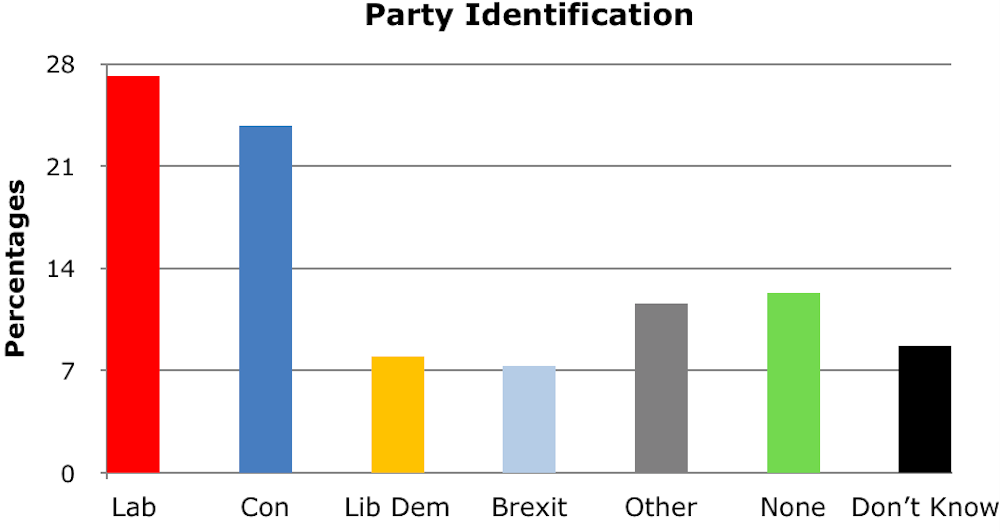
It is nevertheless clear that while the two major parties performed badly in these elections, they both have a reservoir of identifiers or loyalists, many of whom are likely to stick with them when times are difficult. That’s not true for the Liberal Democrats or the Brexit Party. These two parties have only a limited brand loyalty which means that if things go wrong, as they did with UKIP following the 2016 referendum, they could rapidly lose support.
Can party loyalty prevail?
Author provided
So the two major parties have the potential to bounce back in a general election in the future. Needless to say, these results show that Labour is in a much better position to do this than the Conservatives. A new Tory leader is going to have their work cut out to change the perception that the party has really messed up the Brexit negotiations and is therefore unfit to govern.
A US climber has died after descending from Everest, officials said Tuesday, taking this season's toll to 11 including several deaths blamed on overcrowding on the world's highest mountain.
Christopher John Kulish, 61, had already climbed the 8,848-metre (29,029-feet) peak, and was safely back at a camp below the summit on Monday evening.
"All of a sudden he had a heart problem and passed away at South Col, according to his expedition organisers," said Mira Acharya from Nepal's tourism department.
Nepal issued a record 381 Everest permits this season and a short weather window resulted in some teams waiting several hours in the dangerous "dead zone", running out of oxygen supplies and risking exhaustion.
At least four of the deaths this season -- the deadliest since 2015 when massive earthquakes triggered avalanches that swept away climbers' camps -- have been blamed on the delays.
As well as the Everest deaths, nine climbers have died on other 8,000-metre Himalayan peaks, while one person is missing.
In addition to the Nepal permits that cost $11,000 each, at least 140 others were granted permission to climb from the northern flank of Everest in Tibet.
Although final numbers are yet to be released with the season ending this week, together with the accompanying sherpa guides this could take the total past last year's record of 807 people reaching the summit.
Two people, including a child, were feared dead Tuesday in a mass stabbing attack that also injured 17 people in the Japanese city of Kawasaki, the local fire department said.
"One man and one female child are showing no vital signs, said fire department official Yuji Sekizawa, employing a phrase commonly used in Japan to mean the victims have died but the death has not yet been certified by an official medical professional.
Footage broadcast on local TV stations showed multiple police cars, ambulances and fire engines at the scene. Emergency medical tents were put up to treat the wounded.
The fire department said 17 others were injured in the attack, among them more children.
"A man stabbed them," another spokesman for the department, Dai Nagase, earlier told AFP.
"We received an emergency call at 7:44 am, which said four elementary schoolchildren were stabbed."
Police said one suspect, a man, had been detained. NHK said he had stabbed himself, suffering a serious wound. There was no immediate indication of a motive.
The broadcaster said two knives were spotted at the scene, but there was no immediate confirmation from officials.
The attack took place at the time of the morning commute and school run, with one eyewitness saying it occurred by a bus stop.
"I heard the sound of lots of ambulances and I saw a man lying near a bus stop bleeding," the man, who was not identified, told NHK.
"There is another bus stop near the elementary school and I also saw elementary schoolchildren lying on the ground... It's a quiet neighbourhood, it's scary to see this kind of thing happen," he added.
Japan has one of the lowest rates of violent crime in the developed world and mass attacks are extremely rare.
In 2018, a man was arrested in central Japan after stabbing one person to death and injuring two others aboard a bullet train, an attack that prompted new security measures on the famed rail service.
And in 2016, a man stabbed 19 people to death in a disability centre south of Tokyo in what he described as a mission to rid the world of people with mental illness.
French police arrested four people Monday over a package bomb explosion in the heart of the southeastern city of Lyon last week which injured 13 people, authorities said.
A police raid was under way in a building in the Oullins suburb just south of the city, a few hours after the arrest of the suspected bomber, a 24-year-old Algerian IT student.
The man's parents were later arrested and taken in for questioning, as was a second student of Algerian nationality who is a family relation, according the Paris prosecutor's office, which has jurisdiction over terrorism cases in France.
The suspect was previously unknown to police, Lyon's Mayor Gerard Collomb said.
He was arrested as he got off a bus, calmly putting his hands in the air when he spotted officers approaching, Collomb said.
The man's sister has also been questioned but she has not been arrested, prosecutors added.
Police had been searching for a man seen cycling near the scene of the blast wearing a green top and Bermuda shorts and carrying a dark-coloured rucksack.
He has been the target of an extensive manhunt since late Friday when an explosive device filled with screws and ball bearings was placed in front of a bakery near the corner of two crowded pedestrian streets in the historic centre of Lyon.
Police circulated photos of the suspect on Twitter, which they said led to "several dozen" calls from people with information.
- Victims hit with shrapnel -
Sources close to the investigation said the explosive was most likely acetone peroxide, or APEX, a volatile compound used in the deadly Paris terror attacks of November 13, 2015.
Investigators recovered small screws, ball bearings and batteries along with a printed circuit board and a remote-controlled trigger device. Officials later said the charge was relatively weak.
Thirteen people were wounded in the blast -- eight women, four men and a 10-year-old girl -- of whom 11 needed hospital treatment.
FRENCH POLICE/AFP / HandoutFrench police had circulated photos of the suspect on Twitter, leading to "several dozen" calls from people with information
None of their injuries are believed to be life-threatening, though authorities said some needed surgery to remove shrapnel.
France has been on high alert following a wave of deadly jihadist terror attacks since 2015 which have killed more than 250 people.
The Islamic State group has been behind many of the attacks. No one has claimed responsibility for the Lyon blast.
All chimpanzees eat animals at least sometimes, including anything from ants and termites to bushpigs and even baboons. Monkeys, in fact, are typically the most frequent item on the menu, and in some cases chimpanzees can eat so many monkeys they threaten to wipe out entire populations. One group in Senegal even hunts tiny, mouse-like primates known as bushbabies by using spear-like tools to first probe the holes the bushbabies hide in during the day, before reaching in to grab their prey.
So chimpanzees are rightly known as resourceful eaters. But until now scientists had never observed them eating reptiles.
That has all changed, thanks to a group of wild chimpanzees in Loango National Park along the Atlantic coast of Gabon in Central Africa. These chimps have recently become used to the presence of humans, which means scientists can now see them act exactly as they would in nature. And, writing in the journal Scientific Reports, a group of researchers say they have already observed behaviour not previously seen in chimpanzees.
These chimpanzees regularly catch, kill and consume tortoises that have been grabbed from the forest floor. For people like us, who also research chimpanzee behaviour, the discovery is particularly exciting because the animals obtain the tortoise meat by pounding the shell repeatedly onto a tree trunk until it cracks.
Thought pistachio nuts were hard to open? Try eating tortoise.
This sort of “percussive foraging” – the pounding of certain food items until a breaking point – has been seen in chimpanzees elsewhere, but never to obtain meat. For instance chimps in Senegal have been observed pounding baobab shells to extract the softer fruit-covered seeds inside. From Sierra Leone to the Ivory Coast, Western chimpanzees use stone and wooden hammers to crack open encased nuts from protective outer shells.
Broadly, this sort of pounding has been suggested as the first step towards more complex tool use that allowed early human ancestors to flourish. The question of why other chimpanzee communities do not do this too, despite the clear benefits of obtaining otherwise protected nuts, seeds – and now meat – remains unanswered.
The reward is a tasty tortoise, helpfully served in a bowl-shaped shell.
This newly discovered percussive behaviour in chimpanzees leaves a significant damage pattern on the tortoise shell and potentially damages the anvil on which it was cracked. The evidence left behind is therefore of interest to us primate archaeologists who use archaeological techniques to understand the physical remains of non-human primates. Our work in this emerging discipline relies on material artefacts – shattered tortoise shells, for instance – to reconstruct contemporary primate behaviour in the same way we do for early hominins.
We have long assumed that reconstructing hominin meat-eating behaviour was dependent on our finding fossilised stone tools and cut marks left on processed animal bones. To this select list we can now add tortoise shell. Previously, scientists had looked at fractured turtle remains and argued the animals may have been an important part of early human diets, but the Loango chimpanzees provide us a glimpse of the role this meat may have played for our early ancestors.
The new findings also reveal something even more remarkable. Among their observations, the researchers describe another novel behaviour, the storage of one of the tortoise shells in the fork of a tree that is later retrieved and consumed by the same male chimpanzee.
Such “future-oriented cognition” has long been considered uniquely human, but experimental evidence suggests other species, including apes and some birds, may possess it as well. If chimpanzees can indeed anticipate a future state (I will be hungry) as being different than their current one (I am not hungry), then a more nuanced interpretation of their cognition is required. Indeed, a careful study of the species may uncover many more examples of this future planning.
It is now clear that with every new wild chimpanzee community that becomes used to humans, scientists observe new and unexpected behaviour – some of which challenges our understanding of evolution and what it means to be human. Furthermore, the difference in behaviour from group to group highlights the extraordinary cultural diversity among our closest living relatives.
The opportunity for comparisons with our own evolution has become a run against time as the human infestation of the planet threatens wild primate populations worldwide. We know that the presence of humans directly destroys not only the habitat and lives of primates but also leads to the loss of behavioural diversity. Conserving the last remaining populations of wild apes has become urgent, otherwise our fellow primates will disappear forever. With their extinction will disappear a part of their own heritage and a window back to our own evolution.
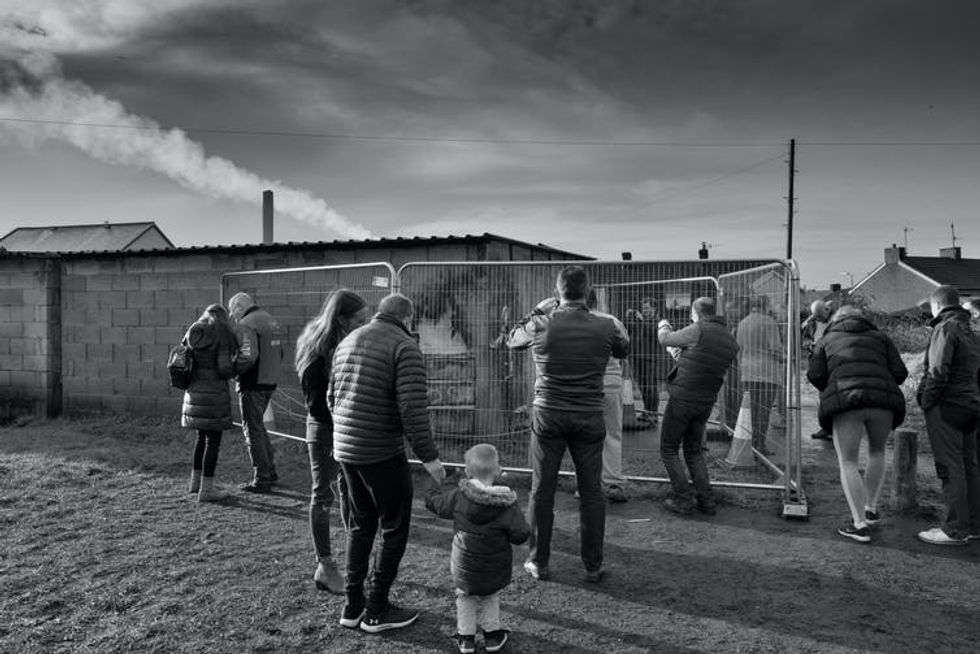
On the side of a garage in Port Talbot, south Wales, a new Banksy artwork appeared. The piece, titled “Season’s Greetings”, very quickly brought thousands of visitors to the town. And by January 2019 there was so much interest in it that art dealer John Brandler paid a “six-figure sum” for the graffiti.
The decision to sell the Banksy sparked some controversy, with the most prominent concern being that Brandler would take the work away from Port Talbot, removing a valuable tourist draw. But Brandler has moved the work to a new Street Art Museum (SAM) in the town, alongside works by other famous street artists such as Blek le Rat and Pure Evil. He has guaranteed its exhibition there for the next three years and even promised locals free entry.
Residents were happy, but a few still wondered if graffiti or street art belongs in a museum at all. Some say that privatising street art is counter to the nature of the form, that graffiti in a museum is like a tiger in a cage.
Sure, street art can still be powerful and beautiful in a gallery, but an essential piece of it is lost by disconnecting it from its natural setting and locking it in a confined and controlled space. But Brandler owned the work, and wanted it as a centrepiece for SAM, which will attract visitors, so in it went.
Season’s Greetings depicts a small boy with a sledge dressed in winter attire looking up sticking his tongue out to catch what appear to be falling snowflakes. The other half of the image – painted around a corner – depicts a dumpster fire emitting smoke and ash. The corner is the key, asserting on the viewer how unaware the boy is of his predicament.
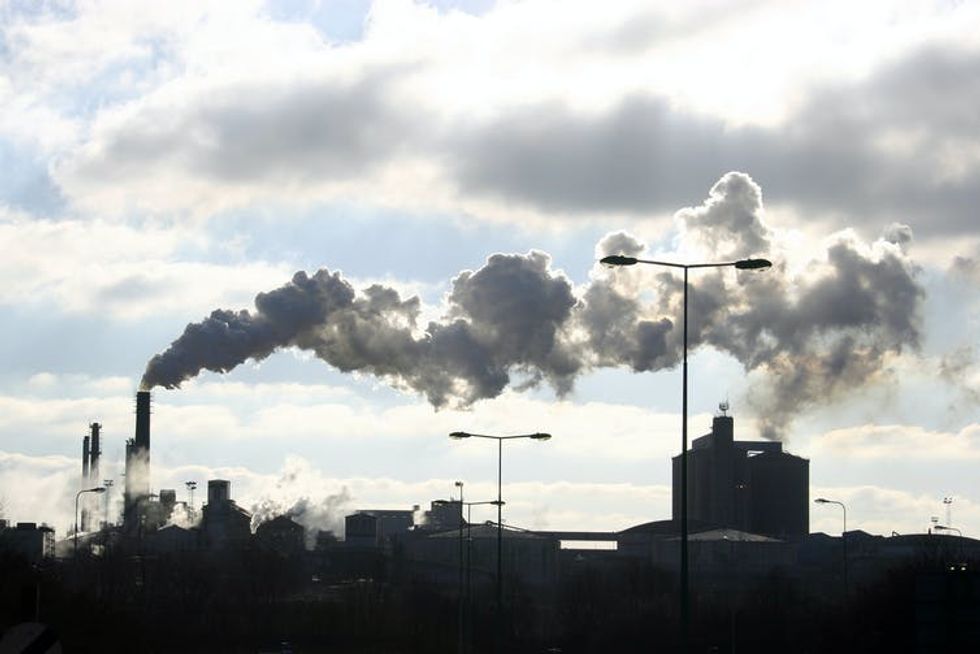
It has been photographed and posted hundreds of times since it was painted, but most tellingly on Banksy’s Instagram feed. There it’s pictured with the local steelworks looming behind, making an allusion that the piece is a commentary on Port Talbot’s air pollution. The town’s levels of one type of particulate matter (PM10) are among the highest in the country, and this has been largely attributed to emissions from the steelworks. Although it must be noted that in recent months owner Tata Steel has pledged to introduce new measures to reduce emissions from the site.
Spectacle value
The debate over whether artworks like this should be moved and placed in museums is overshadowed by the prestige and prosperity that possessing a Banksy can bring to a city, and the associated tourism money that comes with it. But sociologically speaking Banksy’s work is valuable for two reasons. First, because people pay attention to it. French philosopher Guy Debord wrote about the “society of the spectacle” in 1967 but his ideas are very relevant to Banksy today. Debord would say Banksy’s value is achieved through the attention his work receives, and how that collective attention reflects off his art and back onto the audience as evidence that the work is inherently valuable. Simply put, people paying sufficient attention to a Banksy (or indeed any artwork) makes it a spectacle, which grants it legitimate commercial value.
But Banksy’s work also has value because of something essential – what sociologist Howard Becker would call its “maverick” qualities. Mavericks, Becker says, are those who push the boundaries of their forms and expand conventions. Banksy is a maverick in both the graffiti and conventional art worlds, expanding what graffiti can be and say, and pushing the boundaries of what conventional art can look like. As such his work has intrinsic, innovative value as well as commercial value.
The value of Banksy’s work comes in part from people paying attention to it.
While this is valid motivation for privately exhibiting the work, using the Banksy as a tourist draw does little more than commodify it and reduce its value to who produced it. Commodifying it says “this is a Banksy, it is important and valuable because it is a Banksy, and as such it is worth you paying to see it in person”. But this framing of the work imposes itself in a way that obscures the graffiti’s unambiguous and conspicuous message. The commercial value of the Banksy, its privileged place in a museum, and the security protecting it all tell the observer that it is precious for what it is and who produced it, not what it says. Its legitimacy and authority are byproducts of its exchange value and not its social commentary.
The Port Talbot Banksy’s commentary, though open to interpretation, is that the harms of pollution are suffered the most by those who are the least responsible for the conditions, the most vulnerable to them, and the least aware of them – children. If the town’s pollution is not dealt with the town’s children will be the ones who suffer its effects. But promoting this message is not in the town’s financial interests. It is shrewder to promote the fact that there is an exclusive and expensive work by counterculture icon and provocateur Banksy on display; come and pay to see it. But how many visitors will think much about what Banksy may be saying, or about why it showed up specifically in Port Talbot?
That the word “violence” is a powerful piece of political rhetoric has been brought home by the welter of opinion pieces, editorials and tweets that have emerged about a recent spate of “milkshakings” – in which prominent right-wing figures have been doused with dairy-based beverages. Those who have sought to condemn these actions have labelled them “political violence”, taking them to be unjustifiable. Those who have sought to defend and justify these actions have rejected the term “political violence”. It is worth asking two questions: as political violence, could “milkshaking” be justified? And is milkshaking even violence in the first place?
At the outset, it’s worth dealing with the objection that political violence is always wrong. This is almost certainly incorrect. It’s useful to think of a distinction Hannah Arendt made between legitimacy and justification. Violence can never be legitimate – it cannot be intrinsically right – but it can be justified. If we are committed to a present state of affairs – such as the enfranchisement of women – then we cannot completely dismiss the way that that state of affairs was brought about. The difficulty is in determining the “ends” that justify violence and whether those ends can be attained. It’s a near impossible task to weigh the consequences of violence after the fact, let alone beforehand and, as Arendt added, the further the ends recede into the future, the less justified violence becomes.
Are these milkshakings actually violence? Hardly. These are disruptive actions, no doubt, and they sit somewhere on the spectrum between the peaceful and the violent, but, by nearly all accounts, political violence entails intentionally inflicting harm. So far, if their own accounts of their intentions are to be believed, the “milkshakers” have wanted, at most, to inflict humiliation.
Even if we were to accept a more permissive definition of violence as only the infliction of harm (whether intentional or not) it’s still difficult to see how, of all things, a milkshake could be construed as harmful. The instruments of violence really are important here. We associate things like knives, guns and bombs with violence precisely because of what they can do to somebody – both physically and psychologically. That said, public ignominy may be more of a harm to some than to others, particularly when we consider relative positions of privilege, power, and vulnerability, and particularly if want to include a psychological element to our understanding of “violence”.
In the early 1960s, at a time of radical protest in the US, the political theorist Sheldon Wolin claimed that violence should be understood as an “intensification of what we ‘normally’ expect”. Something is “violent” when it exceeds a normal level of controversy.
Such an understanding might be problematic in that we wouldn’t want to say something had ceased being “violent” because we had simply become inured to it, and it raises the broader question of what is “normal”. But this tells us something useful. In the context of political campaigning in Britain, vigorous debate has often been accompanied, not coarsened, by a certain level of theatrics. Small and harmless projectiles like eggs have often been thrown, and just as often met with a good deal of sangfroid. After being egged on the campaign trail in 1970, Harold Wilson quipped that if the Conservatives got into power, nobody would be able to afford eggs to throw. It’s hard to see how “milkshaking” exceeds a typical level of controversy.
The idea of “relative severity” here allows us to recast initially poor justifications for violence in a new light. One does not justify an act by claiming that the far right have already undertaken violence, or that politics has already become imbued with violence – as though two wrongs had ever made a right. Rather, it’s as though commentators on the left are arguing that, if the right, or public opinion more widely, is prepared to call milkshaking “violence”, then it must be prepared to call things like hate speech “violence” too.
The point here is that whether we choose to call something “violence” or not is not a dry philosophical question. The word “violence” has a strong emotive force and is used, when applied to actions, to uphold or denounce a certain moral vision of the world. Those who choose to call this or that act “violence” have already, in a sense, made up their mind about the fact of that action being wrong. In applying that term it paints one’s opponent in a certain light and puts them on the back foot. But in applying the word “violence” to a given action one is also saying that that action should be treated with all the seriousness and gravity that the word “violence” demands. That is something that should not be done without thought.









 AFP / JOSEPH EID
  AFP / Mohd RASFAN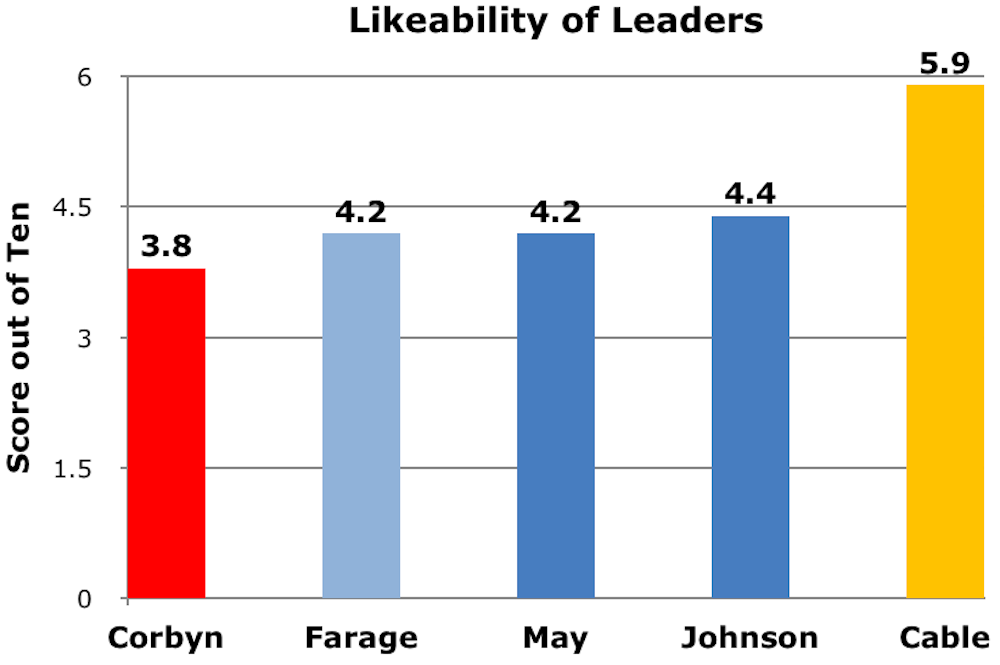

 FRENCH POLICE/AFP / Handout