A legion of pop culture devotees packed up their graphic novels, nursed hangovers and folded away superhero costumes for another year on Saturday as San Diego Comic-Con began winding down.
Here are the key takeaways from the 2018 edition of the four-day fan fest that attracts 130,000 attendees to the southern California coast every July.
- 'Doctor Who' gets girl power -
A British cultural institution that has spread to more than 60 countries, "Doctor Who" unveiled its new cast, including the first extended glimpse of Jodie Whittaker's debut as the first female Time Lord.
A 40-second trailer demonstrated that the 55-year-old show about a time-and-space traveling alien is going for something of a rebirth.
AFP/File / CHRIS DELMASComic-Con got the first extended glimpse of Jodie Whittaker's debut as "Doctor Who"
Fans were treated to exciting new worlds, new companions for The Doctor and an updated version of her trusty weapon of choice, the sonic screwdriver.
- 'Breaking Bad' at 10 -
Yes, it really has been a decade since one of the best-reviewed shows in TV history changed the game, so the cast of "Breaking Bad" got together to reminisce about a show that really was as good as you remember.
The series, which aired across the world from January 2008 through September 2013, told the story of Walter White (Bryan Cranston), a high school science teacher who responds to a terminal cancer diagnosis by turning into a powerful druglord.
Cranston, a quick script-absorber, revealed he frequently used to trick co-star Aaron Paul into believing his character was about to die, while showrunner Vince Gilligan left the door open for a "Breaking Bad" movie.
- The elephant in the room -
AFP/File / CHRIS DELMASAndrew Lincoln, star of the mega-hit zombie apocalypse show "The Walking Dead," confirmed at Comic-Con that he was calling it quits after nine seasons
TV Land's biggest open secret was officially confirmed when Andrew Lincoln, star of AMC's mega-hit zombie apocalypse show "The Walking Dead" informed the Comic-Con faithful that nine seasons of getting harassed by the dead was enough.
"I love this show. It means everything to me. I love the people who make this show. I promise not to cry. I've done enough crying on screen," Lincoln promised.
The star is said to be looking to break into movies, but will presumably be avoiding the genre popularized by the late (and presumably peacefully resting) "Night of the Living Dead" director George A. Romero.
- What about the movies? -
In a reflection of the shift in the balance of power towards television, Hollywood's "Big Six" movie studios didn't cover themselves in glory this year -- except for Warner Bros.
Disney, which owns Comic-Con fan favorite Marvel Studios, didn't show up at all, even though this is an off-year for its own biennial "D23" convention.
AFP/File / CHRIS DELMASA four-day pass to Comic-Con ranks second among the most coveted live entertainment event behind the Superbowl, according to online ticket marketplace Vivid Seats
Between them, Fox, Universal, Paramount and Sony staged presentations for just six live-action movies in the convention's iconic Hall H arena -- three sequels, two spin-offs and a movie that has already had its theatrical run.
Most of these films will generate excitement and a fortune at the box office but they hardly say "innovation."
Warner Bros., on the other hand, pulled out all the stops for "Scare Diego," winning plaudits from critics for its upcoming slate of horror from its New Line Cinema division, and brought the house down at a two-hour presentation of many of its upcoming mainstream releases.
- The numbers -
A four-day pass to Comic-Con ranks second among the most coveted live entertainment event ($1,165) behind the Superbowl (starting at $3,667), according to online ticket marketplace Vivid Seats.
There were more than 820,000 tweets about Comic-Con in the week leading up to the event. "Deadpool" got the most movie mentions, ahead of "Thor," "Aquaman," "Avengers" and "Star Wars."
The most tweeted-about TV show was NBC canceled "Timeless," which wasn't even at Comic-Con, followed by "Supernatural," "The Walking Dead," "Doctor Who" and finally "Riverdale."
Overnight threats by President Donald Trump against Iran amount to “psychological warfare”, and Tehran will continue to resists its enemies, a senior commander of Iran’s elite Revolutionary Guards was quoted as saying on Monday.
“We will never abandon our revolutionary beliefs ... we will resist pressure from enemies... America wants nothing less than (to) destroy Iran ... (but) Trump cannot do a damn thing against Iran,” Iranian Students News Agency ISNA reported. Gholamhossein Gheybparvar as saying.
Trump told President Hassan Rouhani on Sunday to stop threatening the United States or face the consequences, hours after Rouhani told Trump that hostile policies toward Tehran could lead to “the mother of all wars.” (Writing by Parisa Hafezi; editing by John Stonestreet)
British police have arrested three men in London after suspected acid attack on a three-year-old boy in the English city of Worcester.
The boy was taken to hospital with serious burns to his arm and face after an incident at the Home Bargains store in Worcester, central England, on Saturday.
“He has since been discharged but the long-term implications of his injuries are unknown at this time,” West Mercia police said.
Police said they had arrested three men, aged 22, 25 and 26, arrested on suspicion of conspiracy to commit grievous bodily harm. Another 39-year-old man remains in custody.
Britain has seen a steep rise in acid attacks recently and the government is taking action to tighten sales of corrosive substances, particularly to those aged under 18.
Reporting by Guy Faulconbridge; editing by Michael Holden
A world AIDS assembly opens in Amsterdam on Monday hoping to harness the star power of activists Elton John and Prince Harry to bolster the battle against an epidemic experts warn may yet spiral out of control.
Thousands of delegates -- researchers, campaigners, activists and people living with the killer virus -- will attend the 22nd International AIDS Conference amid warnings that "dangerous complacency" may cause an unstoppable resurgence.
In recent days, experts have alerted that new HIV infections, while down overall, have surged in some parts of the world as global attention has waned and funding has levelled off.
And they lamented that too sharp a focus on virus-suppressing treatment may have diverted attention from basic prevention programmes such as condom distribution, with the result that the AIDS-causing virus is still spreading easily among vulnerable groups.
"The encouraging reductions in new HIV infections that occurred for about a decade has emboldened some to declare that we are within reach of ending AIDS," Peter Piot, virus researcher and founder of the UNAIDS agency, said last week.
However, "there is absolutely no evidence to support this conclusion," he insisted, and warned: "The language on ending AIDS has bred a dangerous complacency."
AFP / Cecilia SANCHEZAIDS: unequal access to treatment
A UNAIDS report warned of a long and difficult road ahead even as it reported a drop in new infections and AIDS deaths, and a record number of people on life-saving antiretroviral therapy (ART).
These hard-fought gains could be reversed, experts said Sunday as the finishing touches were put on the venue that will host some 15,000 delegates -- also including celebrities Charlize Theron and Conchita -- for five days.
An alarming rate of new infections coupled with an exploding young population in hard-hit countries could spell "a crisis of epic proportions," said Mark Dybul, a veteran American AIDS researcher and diplomat.
"Bad things will happen if we don't have more money," he told a pre-conference, saying the world was "probably at the highest risk ever of losing control of this epidemic."
- 'No' to war on drugs -
Dybul and colleagues said donor and domestic funding has dropped significantly and would likely continue to decline, from about 20.6 billion euros ($24.1 billion) last year -- most of it financed from the domestic budgets of nations with the heaviest AIDS burden.
According to UNAIDS, the funding gap is almost $7 billion per year.
Under Donald Trump, the US administration has proposed massive spending cuts, though these have so far failed to pass through Congress.
The United States is by far the biggest funder of the global AIDS response.
AFP / Cecilia SANCHEZAIDS epidemic around the world
The immune system-attacking HIV virus has infected nearly 80 million people since the early 1980s. More than 35 million have died.
Today, data show the infection rate is rising in about 50 countries, and has more than doubled in eastern Europe and central Asia.
Experts regret that the focus on prevention has faded.
Last year's 1.8 million new infections showed that "unless we did something completely drastic, we will not get anywhere near" the target of no more than 500,000 in 2020, said Nduku Kilonzo of Kenya's National AIDS Control Council.
"We have a crisis and it is a prevention crisis," she said.
At high risk are sex workers, gay men and people who inject drugs -- many of whom are forced onto society's fringes by repressive laws in their countries.
At the conference, NGOs will launch a liberalisation campaign titled: "Just say no to the war on drugs," a direct challenge to the 1980s Reagan administration's "Just say no" message at the height of America's "war on drugs".
The programme's criminalisation of drug use has compounded the stigma and discrimination experienced by users.
In a late-night Twitter rant, President Donald Trump issued an all-caps threat to Iranian President Hassan Rouhani. The threat came after Rouhani urged Trump not to "play with the lion's tail or else you will regret it."
"You cannot provoke the Iranian people against their own security and interests," Rouhani said later in his speech.
"To Iranian President Rouhani: NEVER, EVER THREATEN THE UNITED STATES AGAIN OR YOU WILL SUFFER CONSEQUENCES THE LIKES OF WHICH FEW THROUGHOUT HISTORY HAVE EVER SUFFERED BEFORE. WE ARE NO LONGER A COUNTRY THAT WILL STAND FOR YOUR DEMENTED WORDS OF VIOLENCE & DEATH. BE CAUTIOUS!" Trump tweeted.
Asian shares dipped on Monday on fears of more protectionist measures from the United States while the dollar declined against major currencies after U.S. President Donald Trump criticized the Federal Reserve’s tightening policy.
Trump, on Friday, lamented the recent strength of the U.S. dollar and accused the European Union and China of manipulating their currencies.
The dollar index .DXY is so far up 2.4 percent this year led largely by Fed rate rises, strong macro-economic data and nervousness about a full-blown tariff war. It was last down 0.2 percent at 94.27, the lowest in more than two weeks.
Trump’s remarks on Friday, coupled with new threats to slap duties on all U.S. imports from China, triggered sell-offs in Wall Street and European stocks on Friday, despite good corporate earnings. [nL1N1UG076]
Asian stocks took Wall Street's cue on Monday with MSCI's broadest index of Asia-Pacific shares outside Japan .MIAPJ0000PUS falling 0.2 percent. Japan's Nikkei .N225 stumbled 1.4 percent, Australian shares and South Korea's KOSPI index .KS11 fell 0.9 percent each.
Chinese shares also opened lower but quickly reversed their losses, with both the blue-chip index .CSI300 and Shanghai's SSE Composite .SSEC up a touch.
“Although U.S. equities edged lower on Friday and the yen strengthened, most cross-asset moves are supportive of APAC equities - particularly dollar weakness, strength in emerging markets FX, and a dramatic bear steepening of global yield curves. Commodities are also mostly trading higher,” analysts at JPMorgan said in a note to clients.
Trump’s comments against Fed rate hikes helped steepen the Treasury yield curve.
Also playing a role in the global tick-up in yields was a Reuters report that the Bank of Japan was in unusually active discussions to modify its massive easing program. [nL4N1UG3OJ]
The BOJ, in turn, offered to buy an unlimited amount of five- to- 10-year Japanese government bonds on Monday. [nL4N1PS23K]
Benchmark 10-year JGB futures 2JGBv1, which had started lower on Monday, pared some of their losses on the announcement.
The Reuters report and the dollar's weakness together added to the yen's strength JPY=, which was last up 0.5 percent at 110.91 per dollar.
“Trade tensions remain a risk, but with an extended period until implementation (of the tariffs) and the next round of escalation, APAC equities are unlikely to respond much to Trump repeating threats already known,” JPMorgan added.
Investors are now looking ahead to an important meeting between Trump and European Commission President Jean-Claude Juncker.
“Trade tensions are likely to remain in the headlines as Juncker meets President Trump in Washington to discuss potential U.S. tariffs on European autos,” asset manager Insight Investment, which is owned by BNY Mellon, said in a note.
“It’s probably a little too early for the indirect impact of the U.S.-China trade issue to be showing up in the data. Nonetheless, the trade numbers that were released for Singapore and Japan were worse than expected.”
In Singapore, for example, exports rose 1.1 percent in the year to June compared with expectations of a 7.6 percent increase, while electronic exports slipped 7.9 percent. [nL4N1U900W]
Elsewhere, the euro EUR=EBS climbed for a third straight day to a two-week top of $1.1746. It was last up 0.1 percent at $1.1741.
In commodities, oil prices were held back by concerns over U.S.-China trade tensions and increased supply. [O/R]
U.S. crude CLcv1 was last off 16 cents at $68.1 a barrel after posting its third straight weekly loss. Brent LCOcv1 eased 17 cents to $72.90.
Spot gold was barely changed at $1,231.8 an ounce XAU=.
Accused Russian agent Maria Butina had wider high-level contacts in Washington than previously known, taking part in 2015 meetings between a visiting Russian official and two senior officials at the U.S. Federal Reserve and Treasury Department.
The meetings, revealed by several people familiar with the sessions and a report from a Washington think tank that arranged them, involved Stanley Fischer, Fed vice chairman at the time, and Nathan Sheets, then Treasury undersecretary for international affairs.
Butina traveled to the United States in April 2015 with Alexander Torshin, then the Russian Central Bank deputy governor, and they took part in separate meetings with Fischer and Sheets to discuss U.S.-Russian economic relations during Democratic former President Barack Obama’s administration.
The two meetings, which have not been previously reported, reveal a wider circle of high-powered connections that Butina sought to cultivate with American political leaders and special interest groups.
Butina’s lawyer, Robert Driscoll, did not have any details about her participation in meetings with Treasury and Federal Reserve officials when asked about them on Friday.
The meetings with Fischer and Sheets were arranged by the Center for the National Interest, a Washington foreign policy think tank that often advocates pro-Russia views.
The meetings were documented in a Center for the National Interest report seen by Reuters that outlined its Russia-related activities from 2013 to 2015. The report described the meetings as helping bring together “leading figures from the financial institutions of the United States and Russia.”
A judge on Wednesday ordered Butina, 29, jailed until her trial after U.S. prosecutors argued she has ties to Russian intelligence and could flee the United States. Butina has pleaded not guilty to charges she acted as a foreign agent for Russia. She is scheduled to appear in court on Wednesday for a status conference in her case.
Butina worked for Torshin, who has close ties to Russian President Vladimir Putin, and served as his interpreter at various Washington events.
Fischer, an in email to Reuters, confirmed he met with Torshin and his interpreter. While he could not recall details, Fischer said the conversation involved “the state of the Russian economy” and Torshin’s new role as deputy central bank governor.
Another person familiar with the meeting, speaking on condition of anonymity, said it occurred on April 7, 2015, and confirmed Butina attended.
Federal prosecutors have accused Butina of conspiring with two American citizens and a top Russian official to influence U.S. policy toward Russia and infiltrate a gun rights group believed to be the National Rifle Association. The NRA is an influential pro-gun lobby with close ties to Republican politicians including President Donald Trump.
Questions relating to Russia have cast a cloud over Trump’s presidency.
‘ADVANCE THE INTERESTS’
The description of the top Russian official mentioned in the indictment matches Torshin. The indictment said that beginning in about 2015 Butina and the official conspired to “advance the interests of the Russian Federation.”
“I recall Mr. Torshin mentioning, as an aside, that he planned to attend a meeting of the National Rifle Association, a fact that I considered irrelevant to our conversation,” Fischer wrote to Reuters.
Sheets declined to comment through Ted Smith, a spokesman for asset management firm PGIM, where Sheets currently works.
Fischer and Sheets met with many international banking officials as part of their official duties.
The Treasury Department in April imposed sanctions on Torshin and a number of other Russian businessmen and government officials in Putin’s inner circle.
The think tank hosted Trump at an event at the Mayflower Hotel in Washington in April 2016 also attended by Sergei Kislyak, Russia’s ambassador to Washington at the time.
The April 2015 visit by Butina and Torshin came about a year after Obama’s administration imposed sanctions on Russia for its annexation of Ukraine’s Crimea region.
Two months earlier, in February 2015, the group’s Russian-born CEO, Dimitri Simes, traveled to Moscow, where he met with Putin and other Russian officials, the organization’s records showed.
During the same April 2015 trip, Torshin and Butina also participated in a private “off the record” discussion at the center about the “Russian financial situation and its impact on Russian politics,” according to people familiar with the meeting and the think tank’s report. That event was moderated by the group’s chairman emeritus, former AIG CEO Maurice “Hank” Greenberg, the report showed. Greenberg did not return calls for comment.
Among the think tank’s board members is David Keene, a former NRA president and former chairman of the American Conservative Union. Keene has previously been photographed alongside Butina at events.
Paul Saunders, the think tank’s executive director, said Torshin spoke at an April 2015 event about the Russian banking system and Butina attended. Saunders said people at the organization cannot recall details of Torshin’s presentation.
“We were unaware of any charges or suspicions of illegal or inappropriate conduct or of any connections to Russian intelligence services,” Saunders said in an email.
Prosecutors said the think tank’s magazine published an article by Butina in June 2015 in which she said “certain U.S. politicians and Russians share many common interests.”
Randy Weber, a Republican U.S. congressman from Texas, also met with Torshin during the April trip, according to the think tank’s documents. A spokeswoman for Weber did not respond to multiple calls or emails seeking comment.
Reporting by Sarah N. Lynch; Editing by Damon Darlin and Will Dunham, Grant McCool
Former American ambassador to Russia Michael McFaul spoke Sunday in Bozeman, Montana about Russian President Vladimir Putin's request to send Americans to him for interrogation. Putin suggested during the meeting with President Donald Trump in Helsinki to allow special counsel Robert Mueller to interview the 12 indicted Russian hackers if McFaul and financier Bill Browder were turned over to Russia.
"Just think about how absurd that is," McFaul told a bookshop audience. "We are U.S. government officials, that Putin is talking about. And President Trump went out to the press conference and said, 'I think this is a great idea.' That is not a Democrat or Republican thing, I'm sorry, that is not an American thing to say. To throw us under the bus."
"A sincere idea?!" exclaimed McFaul. "It was the most cynical, crass, ridiculous thing and our president needs to understand that."
He noted that Trump and Putin also seemed to have discussed the U.S. not protecting NATO allies and the American leader seemed to agree. They also seemed to have discussed a referendum in Ukraine.
"By the way, who hired Trump or Putin to speak on behalf of Ukrainians?" McFaul asked the audience.
"All of those things -- they're in Putin's interest," McFaul continued. "There was not one concrete thing at the end of that meeting that I would say, 'Well, we, America, are better off as a result of that meeting.' And that's his job. He's the commander in chief, he's the president of the United States. His job is to advance our interest. That is what you sign up for when you become president."
McFaul concluded that there are two major explanations for all of this. First, is the idiot defense. The former ambassador explained that Trump obviously didn't read his 100 pages of briefings ahead of the meeting and opted to go golfing instead.
"He hasn't taken the time to think about American interests over his own personal interests," McFaul said. "He just winged it. It reminds me of some really over-confident frat boys at Stanford. 'Oh, I don't need to study for this.'"
Another explanation, he anticipated the audience wanted him to speculate on, is one he said he doesn't know the answer to.
"Here's what I do know," McFaul began. "I know that Putin, with people in his country and in Europe, uses money all the time to create leverage. That's a standard operating procedure for Vladimir Putin. And he'll do things like -- I'll give you an example. When was I an ambassador, he decreed while I was there, that if you are a Russian government official, you're no longer allowed to have assets abroad. You have to sell your assets in London and the French Riviera and New York. He made that decree."
However, in individual conversations, McFaul said, Putin would give allowances to some.
"Well, what did he just do there? He created leverage," he continued. "And you're dependent and beholden to Vladimir Putin. He does that all the time. I don't know if that happened with the Trump Organization and the family, but that's a tactic that I've seen time and time again."
His second thing, he recalled Trump staying in the Ritz Carlton in Moscow when he was there in 2013 for the Miss Universe Pageant. McFaul said that when he was there with former President Barack Obama, the White House had to build a sound-proof room inside the hotel so that they knew they were speaking privately. The make-shift room couldn't have any electronic access or outside access other than a small hole everyone, including Obama, had to crawl through.
"You should assume that everything you do is recorded," he said. "Now, I don't know what happened there, but whatever happened there, they have a record of it.
McFaul's new book, From Cold War to Hot Peace, is on sale now.
Republican congressman and former FBI agent Rep. Brian Fitzpatrick (R-PA) on Sunday warned Donald Trump “was manipulated by Vladimir Putin,” telling NPR’s Michael Martin he was “frankly sickened by the exchange.”
Speaking on All Things Considered, Fitzpatrick—who sits on the House committee on Foreign Affairs and the House committee on Homeland Security—explained that during his time as an FBI special agent, he worked on counterintelligence and collected Russian propaganda reports, according to NPR.
Fitzpatrick called the Russian president “a master manipulator.” He also said it’s clear the White House is lacking in urgency when it comes to addressing the Russia threat.
"It needs to be accepted as fact by everybody in our government because we need to respond to that reality and it's a significant threat,” Fitzpatrick said. “We cannot let that happen again.”
President Donald Trump fumed that a reporter asked the one question on everyone's minds during his joint press conference with Russian President Vladimir Putin, the Washington Postreported Saturday.
Jonathan Lemire, a White House reporter for the Associated Press and NBC News analyst, asked a direct question to Trump during the Helsinki summit.
"A question for each president. President Trump, you first," Lemire began.
"Just now President Putin denied having anything to do with the election interference in 2016. Every US intelligence agency has concluded that Russia did," Lemire noted. "My first question for you, sir, is who do you believe? My second question is would you now with the whole world watching tell President Putin — would you denounce what happened in 2016 and would you warn him to never do it again?"
The Post reported Trump wondered why Lemire had been called on, rather than a reporter expected to ask an easier question. Trump reportedly did not listen when aides attempted to explain any journalist would have answered that question.
“If you don’t like the answer, you don’t like the question," one White House official said of the thinking.
Following asking Trump the question the commander-in-chief reportedly disliked, Lemire questioned President Putin.
Lemire's second of two questions, "does the Russian government have any compromising material on President Trump or his family?"
Nearly 40 years ago, my two sisters, Carolyn Layton and Annie Moore, were among those who planned the mass deaths in Jonestown on Nov. 18, 1978.
Part of a movement called Peoples Temple, which was led by a charismatic pastor named Jim Jones, they had moved with 1,000 other Americans to the South American nation of Guyana in order to create a communal utopia. Under pressure from concerned relatives and the media, however, they implemented a plan of group murder and suicide. Jonestown is remembered in the phrase “drinking the Kool-Aid,” because more than 900 people died after drinking poison-laced punch. My two sisters and nephew were among those who died.
In the wake of this tragedy, you might think that I would be amenable to the idea that they had been brainwashed. It would absolve their heinous actions and offer an easy explanation for their behavior.
Many argue that people join “cults” – or “new religious movements,” the term scholars prefer – because they’ve been brainwashed. The thinking goes that they’ve undergone some sort of programming that allows others to manipulate them against their will.
How else to explain why people become immersed in fringe groups that seem so alien to their previous, more socially acceptable lives? How else to account for the fact that – in some cases – they’ll even commit crimes?
But like the word “cult,” the term brainwashing seems to only be applied to groups we disapprove of. We don’t say that soldiers are brainwashed to kill other people; that’s basic training. We don’t say that fraternity members are brainwashed to haze their members; that’s peer pressure.
I reject the idea of brainwashing for three reasons: It is pseudoscientific, ignores research-based explanations for human behavior and dehumanizes people by denying their free will.
No scientific grounding
Brainwashing is used so frequently to describe religious conversions that it has a certain panache to it, as if it were based in scientific theory.
But brainwashing presents what scientists call an “untestable hypothesis.” In order for a theory to be considered scientifically credible, it must be falsifiable; that is, it must be able to be proven incorrect. For example, as soon as things fall up instead of down, we will know that the theory of gravity is false.
Since we cannot really prove that brainwashing does not exist, it fails to meet the standard criteria of the scientific method.
In addition, there seems to be no way to have a conversation about brainwashing: you either accept it or you don’t. You can’t argue with someone who says “I was brainwashed.” But real science seeks argument and disagreement, as scholars challenge their colleagues’ theories and presuppositions.
Finally, if brainwashing really existed, more people would join and stay in these groups. But studies have shown that members of new religions generally leave the group within a few years of joining.
Even advocates of brainwashing theories are abandoning the term in the face of such criticism, using more scientific-sounding expressions such as “thought reform” and “coercive persuasion” in its stead.
Conversion, conditioning and coercion
Once we move beyond brainwashing as an explanation for people’s behaviors, we can actually learn quite a bit about why individuals are drawn to new ideas and alternative religions or make choices at odds with their previous lifestyles.
There are at least three scientific, neutral and precise terms that can replace brainwashing.
The first is “conversion,” which describes an individual’s striking change in attitude, emotion or viewpoint. It’s typically used in the context of religious transformation, but it can describe other radical changes – from voting for the “wrong” candidate to joining Earth First!
It can be sudden and dramatic, as in the case of St. Paul, who had been persecuting the early church but then stopped after supposedly hearing a voice from heaven. Or it can be a slow and gradual process, similar to the way Mahatma Gandhi came to understand his role and mission as a leader for Indian independence.
We usually think of conversion as a voluntary process. But when we look at accounts of well-respected converts – St. Augustine comes to mind – we find exactly what the philosopher William James said we would: Converts begin by being passive recipients of a transcendent, life-changing event. They don’t plan for it; it just happens. But they cannot go back to the way things were before their experience.
Next, there’s conditioning, which refers to the psychological process of learning to behave in a certain way in response to certain stimuli. As we grow up and experience life, we become conditioned by parents, teachers, friends and society to think and feel in certain predictable ways. We get rewarded for some things we do and punished for others. This influences how we behave. There is nothing evil or nefarious about this process.
Studies have shown that many of the people who seek out new religions may be predisposed or conditioned to finding a group that fosters their worldview.
But what about the nice people who, in rare cases, end up doing terrible things after joining a new religious movement?
Again, the process of conditioning seems to offer some explanation. For example, peer pressure has the powerful ability to condition people to conform to specific roles they are assigned. In the Stanford Prison Experiment, participants were randomly assigned the role of guard and prisoner – with the guards soon becoming abusive and the inmates becoming passive. Meanwhile, deference to authority, which Stanley Milgram studied in his famous 1961 experiment, may encourage people to do what they know is wrong. In the case of Milgram’s experiment, participants applied what they believed were electric shocks to individuals, even as they heard simulated screams of pain.
And finally, coercion can also help explain why people may act against their own values, even committing crimes on occasion.
If someone is told to do something – and threatened with physical, emotional or spiritual harm if they don’t – it’s coercion. Just because someone carries out an order, it doesn’t mean they agree with it. Prisoners of war may publicly denounce their home country or claim allegiance to the enemy just to survive. When they are released from captivity, however, they revert to their true beliefs.
In other words, coercion – or exhaustion, or hunger – can make people do things they might not otherwise do. We don’t need a theory of thought reform to understand the power of fear.
A denial of agency
True believers certainly exist. My sisters fall into that category. They sincerely promoted the cause of the Peoples Temple – no matter how misguided it was under the leadership of Jim Jones – because of their deep commitment to its ideals. This commitment arose from their conversion experiences and their gradual, conditioned acceptance of ethical misbehavior.
I do not consider them brainwashed, however. They made decisions and choices more or less freely. They knew what they were doing. The same is true for members of the Branch Davidians: They accepted and believed the word of God as interpreted by David Koresh.
Bodies of victims of Jonestown mass suicide are loaded from U.S. Army helicopter at Georgetown’s international airport, Nov. 23, 1977.
Nevertheless, people can leave these groups and abandon their beliefs – and do.
Should we consider situational hurdles and peer pressure forms of brainwashing? If that were the case, then everything – and nothing – would constitute mind control.
We have studies that illuminate processes of conversion and conditioning. We have historical examples that demonstrate what people do under compulsion.
The brainwashing explanation ignores this social scientific research. It infantilizes individuals by denying them personal agency and suggesting that they are not responsible for their actions. The courts don’t buy brainwashing.
Iranian Supreme Leader Ayatollah Ali Khamenei said on Saturday it would be an “obvious mistake” to negotiate with the United States as Washington was unreliable.
“The word and even the signature of the Americans cannot be relied upon, so negotiations with America are of no avail,” Khamenei said in a meeting with Foreign Ministry officials, adding that negotiations with Washington would be an “obvious mistake”, according to his official website.
Reporting by Dubai newsroom; Editing by Angus MacSwan
While U.S. President Donald Trump defended his efforts to build a relationship with Russian President Vladimir Putin, aides said on Friday there is some frustration that the U.S. intelligence chief did not know about plans for a second summit and they hope that meeting will follow a more traditional pattern.
Since Monday’s summit and joint news conference in Helsinki, Trump and his aides have been trying to control the damage done when he stunned the world by siding with Putin over U.S. intelligence agencies on the question of Moscow’s meddling in the 2016 U.S. election.
The U.S. director of national intelligence Dan Coats, who on Monday immediately defended intelligence personnel on the election issue, expressed surprise at Trump’s invitation on Thursday to Putin to visit Washington in the autumn.
Coats was on camera while at the Aspen Security Forum in Colorado when news broke of the invitation, clearly taking him aback. He advised against a one-on-one meeting with Putin, saying he “would look for a different way of doing it.”
If Coats had been in Washington instead of the conference, he would have been informed about the plan, one source familiar with the inner workings of the White House said on condition of anonymity.
“That DNI Coats was surprised, and his fanciful reaction, is what is most alarming to people,” the source said.
Some in Trump’s inner circle saw the Helsinki summit as problematic for the president and that he looked weak, another source close to Trump said, as he missed a chance to show strength in dealing with Putin by confronting him about the election interference.
In a CNBC interview broadcast on Friday, Trump said he and Putin had a rapport in Helsinki. U.S. intelligence agencies accuse Putin of directing interference to sway the election against Democratic candidate Hillary Clinton toward Republican Trump.
“Look, the fact is we got along well,” Trump said in the interview, which was taped on Thursday. He added that the two did not agree on everything. “It wasn’t always conciliatory in that meeting,” he said, without elaborating.
Five days after the two-hour Helsinki meeting, attended only by the two leaders and their interpreters, some U.S. officials remained in the dark about what was discussed.
On Twitter, Trump listed topics he and Putin talked about, but gave no details. He said they discussed counterterrorism, Israel’s security, nuclear proliferation, cyber attacks, trade, Ukraine, Middle East peace and North Korea.
There are hopes inside the administration that the next summit will be more traditional, with U.S. and Russian negotiators meeting ahead of time to set up an agenda and try to reach agreement on some issues.
One official, asked if the reaction to Helsinki would be a more organized process, said this is often how the White House operates. Another official said aides thought a proper procedure had been put in place for Helsinki, but it did not work out.
SYRIA, UKRAINE
As Americans groped for information about the meeting, Moscow offered snippets of its version on Friday.
Russia’s Defense Ministry said it sent detailed proposals to Washington on organizing the return of more than 1.7 million refugees to Syria after agreements reached by Putin and Trump, RIA news agency said.
U.S. Secretary of State Mike Pompeo told reporters at the United Nations later that Trump and Putin discussed how to return refugees who fled the civil war in Syria, but offered no details and did not mention any Russian proposals.
Russia’s Interfax news agency reported that Putin also made proposals to Trump involving eastern Ukraine, citing Russia’s ambassador to the United States, Anatoly Antonov. He did not spell out what they were.
A White House National Security Council spokesman said later the United States on Friday rejected a proposal from Russia for a referendum to decide the fate of eastern Ukraine.
The Russian ambassador said Moscow is ready to discuss a proposed new meeting between Putin and Trump, Interfax said.
Putin has rejected accusations that his government meddled in the election won by Trump. A week ago, a federal grand jury indicted 12 Russian intelligence officers for carrying out cyber attacks to undermine Democratic Party networks. A special counsel is also investigating whether Trump campaign aides coordinated with Russian officials, which Trump denies.
U.S. intelligence officials have said Moscow is targeting congressional elections in November, as well.
A Microsoft Corp executive said on Thursday at the Colorado conference that Russian hackers have targeted at least three candidates running in November. The company found evidence of a fake Microsoft site being used for phishing attacks and was able to take down the page and hackers did not get in, said Tom Burt, vice president of customer security. Burt declined to identify the candidates.
Reporting by Doina Chiacu, Steve Holland, Michelle Nichols, Susan Heavey in Washington, Andrey Ostroukh and Vladimir Soldatkinin in Moscow; Writing by Doina Chiacu and Frances Kerry; Editing by Kevin Drawbaugh and Grant McCool




 AFP/File / CHRIS DELMASComic-Con got the first extended glimpse of Jodie Whittaker's debut as "Doctor Who"
  AFP/File / CHRIS DELMASAndrew Lincoln, star of the mega-hit zombie apocalypse show "The Walking Dead," confirmed at Comic-Con that he was calling it quits after nine seasons
 AFP/File / CHRIS DELMASA four-day pass to Comic-Con ranks second among the most coveted live entertainment event behind the Superbowl, according to online ticket marketplace Vivid Seats
 AFP / Cecilia SANCHEZ
 AFP / Cecilia SANCHEZ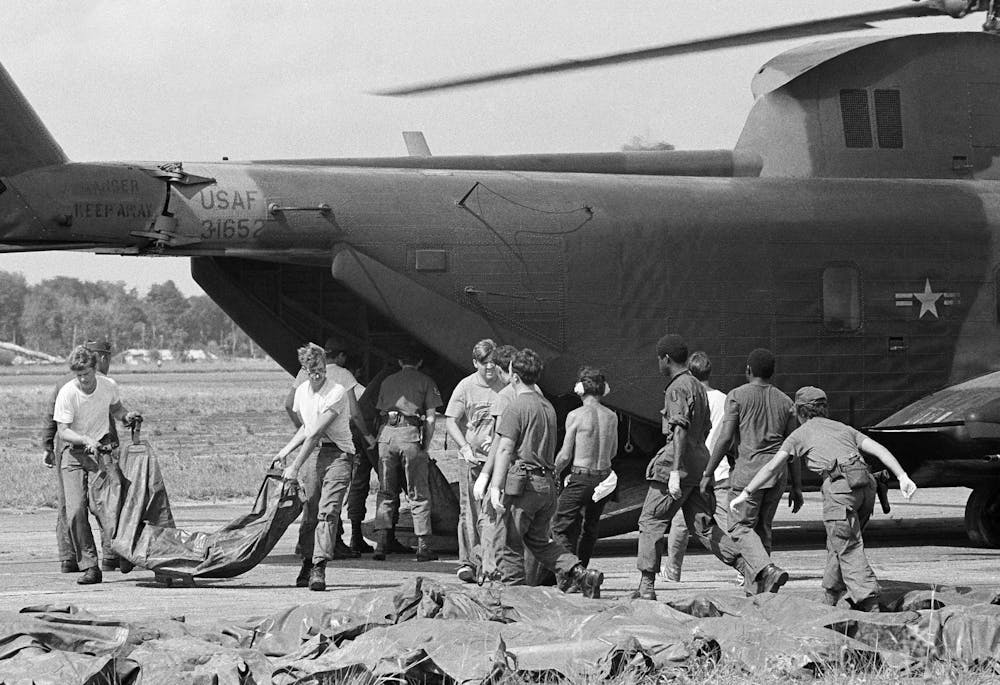
 Why should we?