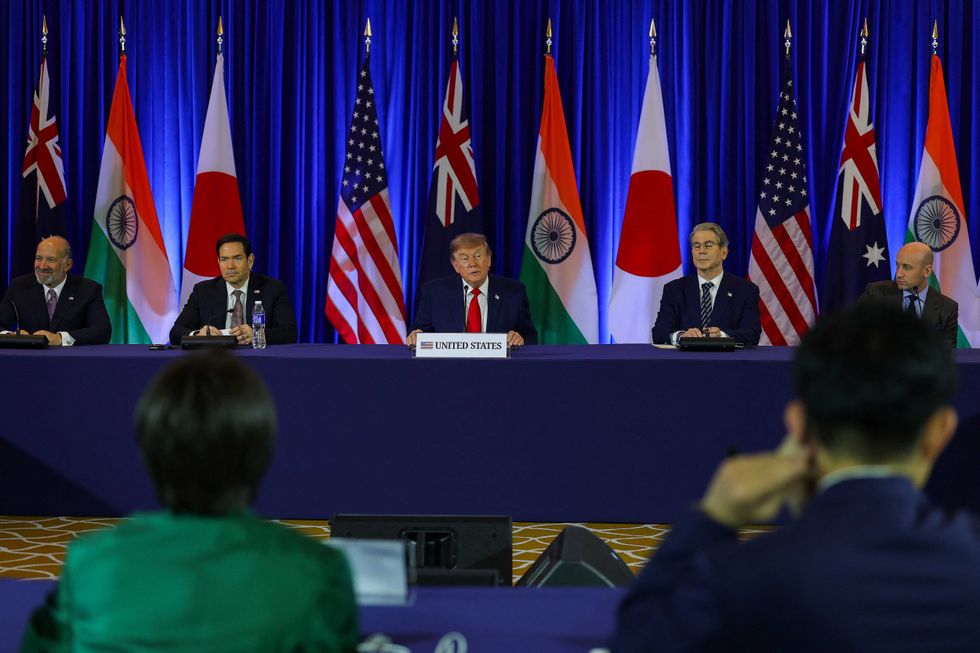
President Donald Trump is heading into his latest meeting with Chinese leader Xi Jinping politically weakened and badly in need of a deal for the U.S. economy, and a cabinet at war over China policy is along for the ride.
The 80-year-old president left Monday on a four-day trip to the Philippines and the Chinese tech hub of Shenzhen, and the Wall Street Journal reported that his top advisers have spent the past week “feuding over China policy and slinging blame at one another for the political fallout from the Nvidia scandal.”
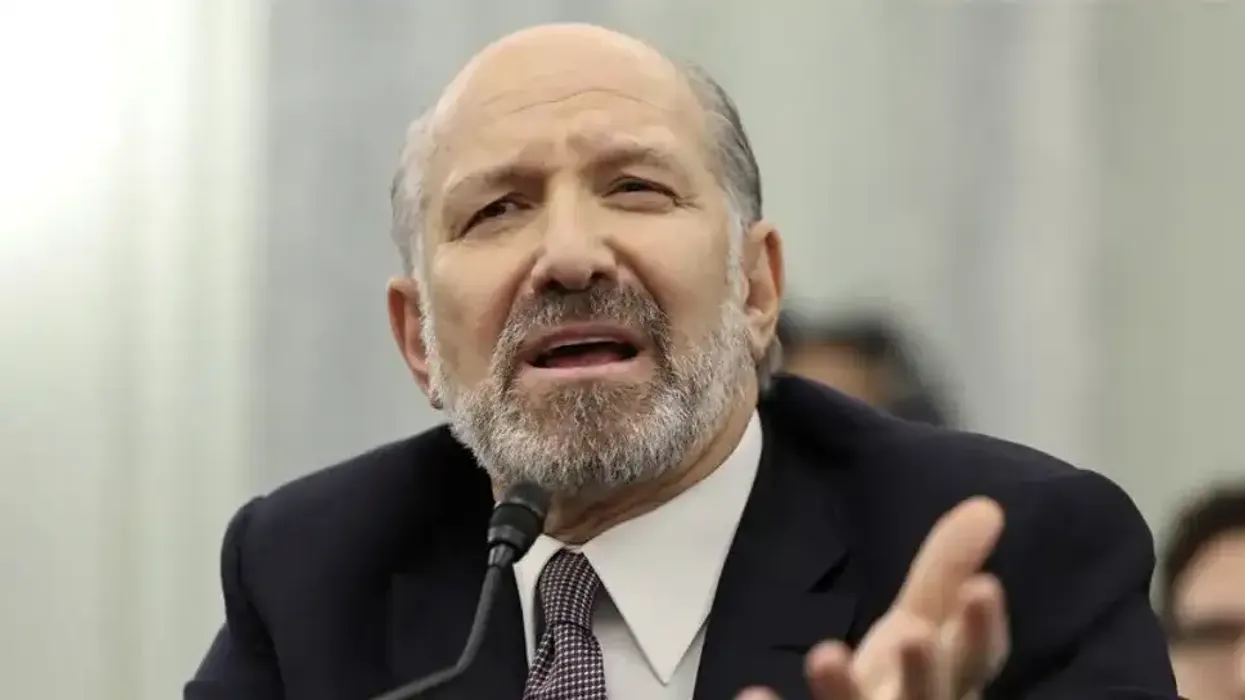
Treasury Secretary Scott Bessent, Commerce Secretary Howard Lutnick and Secretary of State Marco Rubio are all on the trip.
Bessent has accused Lutnick of failing to act against Megaspeed, a Singapore-based company believed to be sneaking advanced Nvidia chips into China even after months of warnings from national-security officials. According to the Journal, the revelations have given hawks like Rubio “new ammunition” to demand a tougher approach.
The Journal reported “little indication” that the trip will deliver it, noting that Trump has been focused on securing another economic agreement before a trade truce with China expires in January.
Beijing holds a powerful card. China’s grip on critical minerals has given it “considerable leverage,” and a senior U.S. official said rare-earth shipments are still trickling in slower than U.S. officials would like.
At one point, the administration was warned that without more Chinese rare-earth magnets, U.S. auto plants could grind to a halt within two or three months, a senior official told the Journal.
The GOP’s midterm drubbing has made things worse, raising fears that Xi could exploit a hobbled president hungry for a win abroad.
“The Republican setback tempers Trump’s negotiating leverage and constrains his room for maneuver,” said Han Shen Lin, China managing director at the Asia Group.
At their September meeting in Washington, Xi urged Trump to adopt the “correct position of opposing Taiwan independence,” according to China’s readout. A pending $14 billion U.S. arms package for Taiwan, which Trump once called a “very good negotiating chip,” remains in limbo.
Other bargaining chips have fallen flat. When Trump approved sales of Nvidia’s powerful H200 chips to China last year in exchange for a 25 percent cut for the U.S., Beijing largely passed on the chips and instead chose to build up its own semiconductor industry.
The White House has tried to play down the turmoil’s impact on the summit, Trump’s fourth meeting with Xi in just over a year. A senior official said Trump isn’t expected to raise Alice Huang, a former Megaspeed executive whom U.S. officials suspect of links to Chinese intelligence.