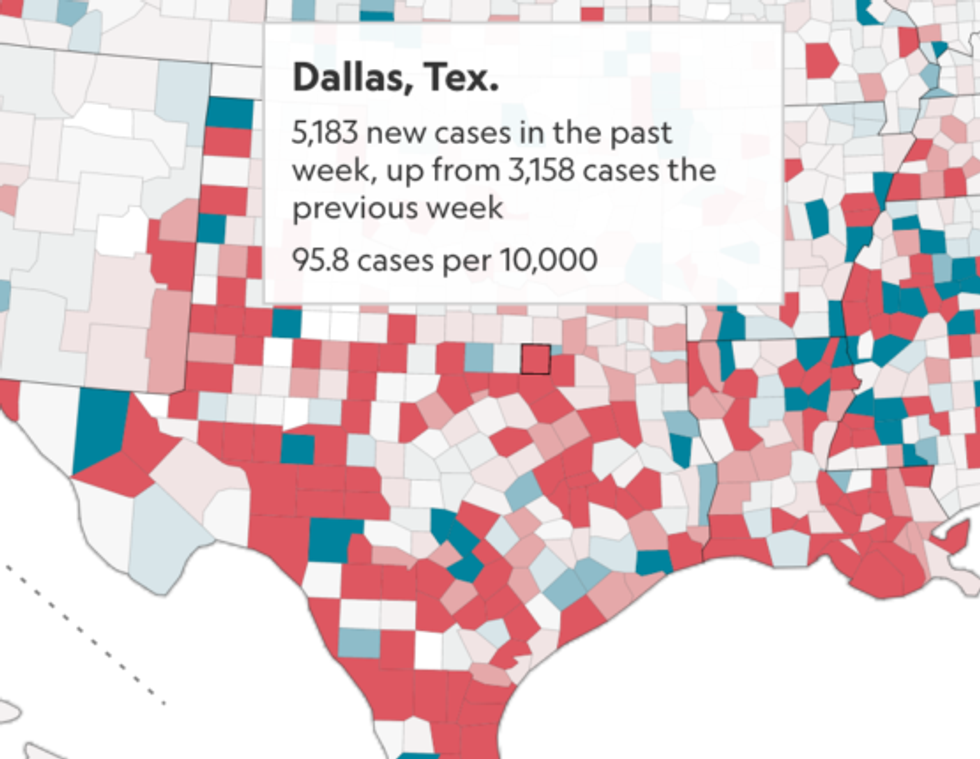
Conservative commentator and radio host Hugh Hewitt blames the increase in COVID-19 cases on protests following the slaying of George Floyd. The evidence shows, however, that he isn't quite accurate.
Speaking Sunday, MSNBC host Rev. Al Sharpton fact-checked Hewitt's claim
"Austin [Texas] had a huge series of demonstrations in the aftermath of George Floyd's death. They had a skyrocketing infection rate. They reopened in Texas."
That's when Rev. Sharpton cut in.
"What does the death of George Floyd have to do with the skyrocketing amounts of coronavirus? What are you talking about?" he asked.
"Oh, the demonstrations, Al, of course, led to spreading the virus," he said as Rev. Sharpton cut in.
"Absolutely not. They've done studies that show that the opposite is true," said Rev. Sharpton. "You're talking about Arizona. You're talking about Texas. You're talking about places in Florida. Where there wasn't a demonstration. You can't blame that on demonstrations."
Indeed, New York City, Washington, D.C., and Minneapolis have been the two largest protests that took place in the country over weeks. The increase in cases are coming from other places, like Dallas and Houston, Texas more than Austin, Texas, National Geographic statistics show.
Similarly, the Florida panhandle and northeast Florida, along with southeastern Georgia, and southwestern Alabama near the Florida panhandle.
Chicago also had large protests, but haven't experienced a spike in cases. Denver, Colorado also had large rallies, but didn't experience an increase in cases.
Hennepin County, MN is where Minneapolis is. There hasn't been a huge increase in cases there either.
CBS host Margaret Brennan revealed on Sunday that President Donald Trump's administration has refused to allow Dr. Anthony Fauci, the federal government's top infectious disease expert, to appear on the network for three months.
Brennan made the remarks during Sunday's Face the Nation program.
"It may be the most sobering morning after the Fourth of July in America's history," Brennan said, noting that there had been more than 50,000 new COVID-19 cases per day in the United States for the past four days.
"We're committed to bringing you facts about the virus," she added, "and the most knowledgable guests that we can."
Brennan continued: "We think that it's important for our viewers to hear from Dr. Anthony Fauci and the Centers for Disease Control but we have not been able to get our request for Dr. Fauci approved by the Trump administration in the last three months. And the CDC, not at all."
President Donald Trump was so incensed that the media learned of his staffers who caught COVID-19 in Tulsa, Oklahoma that he had a kind of inquisition for healthcare workers to investigate if they leaked the story.
The Washington Post reported Wednesday that those familiar to his reaction said that outside of the BOK center, Trump campaign staff were being tested before the event. When the information was released, they scrambled, quizzing who leaked the information about the positive cases.
Healthcare workers were "then given a different list of people to test, according to two people with direct knowledge of the events who, like others in this story, spoke on the condition of anonymity to describe internal conversations," said the Post.
Previous reports said that Trump was so furious about the news being released that when he found out the arena was only half-full, he almost turned the plane around.
Trump campaign spokesperson Tim Murtaugh said the team "performed more tests than originally anticipated" in Tulsa, and that the rally mandated that campaign employees "wore masks during the rally in accordance with [Centers for Disease Control and Prevention] guidelines.” White House spokesperson Kayleigh McEnany said that she wouldn't wear a mask at the COVID-19 hotspot.
To make a bad situation worse, the BOK Center had placed signs on seats, saying “Do Not Sit Here, Please!” to encourage rallygoers to socially distance. The Trump fans removed the signs and did as they saw fit.
Since the rally, Oklahoma has exploded with cases. The incubation period of the virus can be anywhere from 5-14 days, so the increase in cases in the state are likely attributed to the state's reopening that happened weeks prior to the Tulsa rally. Trump's advance team arrived in Tulsa a week prior to the rally, so it's unknown if they contracted it in Oklahoma, on the way to Oklahoma, or in Virginia, where Trump's campaign is located.
Archaeologists have for the first time found Aboriginal artifacts on the seabed off Australia, opening a door to the discovery of ancient settlements flooded since the last ice age, they reported Thursday.
Hundreds of ancient stone tools made by Australia's Indigenous people at least 7,000 years ago were discovered two metres underwater off the remote Western Australia coast, the research published in the PLOS ONE journal said.
A second site nearby revealed traces of human activity 14 meters below sea level dating back at least 8,500 years -- though researchers believe both sites may be even more ancient.
Archaeologists say the finds mark an exciting first step in uncovering more Aboriginal sites thought to have been flooded since the last ice age between 18,000 and 8,000 years ago.
Flinders University associate professor Jonathan Benjamin, who co-authored the study, said sea-level rises covered more than 30 percent of the vast continent in water.
"A huge amount of the archaeological evidence documenting the lives of Aboriginal people is now underwater," Benjamin said.
"Now we finally have the first proof that at least some of this archaeological evidence survived the process of sea level rise."
James Cook University professor Sean Ulm said the archaeological team studied geological charts and sites on land to help decide where to search underwater.
"We then used airborne laser scanners and high-resolution sonar on boats to pinpoint likely areas," he said.
Teams of divers were able to map 269 artifacts at a site about 2.4 meters below sea level off Cape Bruguieres in the Pilbara region, and found an underwater spring at the second site in Flying Foam Passage.
The Murujuga Aboriginal Corporation collaborated in the efforts, with CEO Peter Jeffries saying further exploration could unearth more cultural treasures.
"This will help us better understand the life of the people who were so connected to these areas which are now underwater," he said.
"With this comes a new requirement for the careful management of Aboriginal sea country."
Archeologists have found Aboriginal sites in inland Australia dating back at least 65,000 years.
The first human settlers of the continent are believed to have arrived via Southeast Asia, by sea and over land bridges that were later submerged.
I am a physician and a scientist at the University of Virginia. I care for patients and conduct research to find better ways to diagnose and treat infectious diseases, including COVID-19. Here I’m sharing what is known about which treatments work, and which don’t, for the new coronavirus infection.
Keep in mind that this field of medicine is rapidly evolving as our understanding of the SARS-CoV-2 virus improves. So what I am writing today may change within days or weeks.
Below are the treatments that have been tried and for which we have the best knowledge.
Hydroxychloroquine or chloroquine – no evidence they work
The drug Lopinavir is an inhibitor of an enzyme called HIV protease which is involved in the production of viral particles. Protease inhibitors for HIV were revolutionary, leading to our current ability to effectively treat HIV. Lopinavir also can inhibit enzymes that perform similar functions as the HIV protease in the SARS and MERS coronaviruses. Ritonavir increases the level of Lopinavir in the blood so the lopinavir/ritonavir combination was tested in a randomized controlled clinical trial for COVID-19.
This work was performed in a randomized and controlled clinical trial of over 6,000 patients, and while not replicated in another study or yet peer reviewed, is certainly enough evidence to recommend its use.
Tocilizumab – too early to judge
Tocilizumab is an antibody, that blocks a protein, called IL-6 receptor, from binding IL-6 and triggering inflammation. Levels of IL-6 are higher in many patients with COVID-19, and the immune system in general seems to be hyperactivated in those with the most severe disease. This leads many physicians and physicians to think that inhibiting the IL-6 receptor might protect patients from severe disease.
Tocilizumab is currently FDA approved for the treatment of rheumatoid arthritis and several other collagen-vascular diseases and for “cytokine storm” – a harmful overreaction of the immune system – that can be caused by certain types of cancer therapy and COVID-19.
A retrospective observational study found that COVID-19 patients treated with tocilizumab had a lower risk of mechanical ventilation and death. But we lack a randomized controlled clinical trial so there is no way to ascertain if this apparent improvement was due to tocilizumab or from the imprecise nature of retrospective studies.
Convalescent plasma – too early to judge
Convalescent plasma, the liquid derived from blood after removing the white and red blood cells, contains antibodies from previous infections that the plasma donor had. This plasma has been used to prevent infectious diseases including pneumonia, tetanus, diphtheria, mumps and chickenpox for over a century. It is thought to benefit patients because antibodies from the plasma of survivors bind to and inactivate pathogens or their toxins of patients. Convalescent plasma has now been used in thousands of COVID-19 patients.
However, the only randomized clinical trial was small and included just 103 patients who received convalescent plasma 14 days after they became ill. There was no difference in the time to clinical improvement or mortality between those who did and did not receive treatment. The encouraging news was that there was a significant decrease in virus levels detected by PCR.
It is therefore too early to tell if this will be beneficial and controlled clinical trials are needed.
A nurse is collecting convalescent plasma from a recovered COVID-19 patient to help the healing process of other COVID-19 patients in Indonesia.
There was a concern that drugs called ACE inhibitors or angiotensin receptor blockers (ARBs), which are used to treat high blood pressure and heart failure, could increase levels of the ACE2 proteins, the receptor for SARS-CoV-2, on the surface of cells in the body. This would, physicians hypothesized, allow more entry points for the virus to infect cells and would therefore boost the severity of new coronavirus infections.
However, there is no evidence that this is the case. The American Heart Association, the Heart Failure Society of America and the American College of Cardiology all recommend that patients continue to take these medications during the pandemic as they are beneficial in the treatment of high blood pressure and heart failure.
We have made amazing progress in the treatment of COVID-19. Two therapies – steroids and Remdesivir – have already been shown to help. Those who benefit from these treatments owe thanks to patients who volunteered to participate in controlled clinical trials, and the physicians and pharmaceutical companies that lead them.
The United States' new Space Force military wing revealed Tuesday that one of its units would be named "Space Operations Command" -- or "SpOC" for short, in an echo of pointy-eared "Star Trek" character Spock.
An earnest statement from Space Force unveiled its organizational structure, but made no reference to SpOC's fictional predecessor who was the unflappable science officer on the Starship Enterprise.
"SpOC will be the primary force provider of space forces and capabilities for combatant commanders, coalition partners, the joint force and the nation," the statement said, adding SpOC would be headquartered at Peterson Air Force Base, Colorado.
In the "Star Trek" television series and movies, Spock is a half-Vulcan alien, half-human character known for the catchphrase "highly illogical," who was most famously played by Leonard Nimoy.
President Donald Trump, who has described space as "the world's newest warfighting domain," founded Space Force as the country's sixth military branch after the army, air force, navy, marines and coast guard.
The SpOC unit is not the force's first brush with "Star Trek."
When Trump unveiled Space Force's logo in January, the design was widely compared to the "Star Trek" insignia of the franchise's Starfleet -- a fictional peacekeeping and exploration force of the United Federation of Planets alliance.
The logo has appeared as a pin on the uniforms of Spock and fellow crew member Captain Kirk ever since the sci-fi classic debuted in 1966.
Fans say "Star Trek" has a long history of foreshadowing real innovations from tablet computers to needle-free medicine injectors and real-time translators.
The South Pole has warmed three times faster than the rest of the planet in the last 30 years due to warmer tropical ocean temperatures, new research showed Monday.
Antarctica's temperature varies widely according to season and region, and for years it had been thought that the South Pole had stayed cool even as the continent heated up.
Researchers in New Zealand, Britain and the United States analyzed 60 years of weather station data and used computer modeling to show what was causing the accelerated warming.
They found that warmer ocean temperatures in the western Pacific had over the decades lowered atmospheric pressure over the Weddell Sea in the southern Atlantic.
This in turn had increased the flow of warm air directly over the South Pole -- warming it by more than 1.83C (about 3.3F) since 1989.
Authors of the research said the natural warming trend was likely boosted by manmade greenhouse gas emissions and could be masking the heating effect of carbon pollution over the South Pole.
"While temperatures were known to be warming across West Antarctica and the Antarctic Peninsula during the 20th century, the South Pole was cooling," said Kyle Clem, a researcher at Victoria University of Wellington, and lead study author.
"It was suspected that this part of Antarctica... might be immune to/isolated from warming. We found this is not the case any more," he told AFP.
The data showed that the South Pole -- the most remote spot on Earth -- was now warming at a rate of around 0.6C (1.1F) a decade, compared with around 0.2C (1.4F) for the rest of the planet.
The authors of the study, published in the Nature Climate Change journal, attributed the change to a phenomenon known as the Interdecadal Pacific Oscillation (IPO).
The IPO cycle lasts roughly 15-30 years, and alternates between a "positive" state -- in which the tropical Pacific is hotter and the northern Pacific is colder than average -- and a "negative" state where the temperature anomaly is reversed.
The IPO flipped to a negative cycle at the start of the century, driving greater convection and more pressure extremes at high latitudes, leading to a strong flow of warmer air right over the South Pole.
Clem said that the 1.83C (3.3F) level of warming exceeded 99.99 percent of all modeled 30-year warming trends.
"While the warming was just within the natural variability of climate models, it was highly likely human activity had contributed," he said.
The number of infections could be 10 times the 2.4 million confirmed cases, says the head of the Centers for Disease Control and Prevention.
Some U.S. cities and states have slowed or halted plans to ease restrictions enacted in response to the ongoing coronavirus pandemic as the country continues to shatter records in terms of confirmed Covid-19 cases and public health experts warn of what the future could hold.
"People need to know that wearing masks can reduce transmission of the virus by as much as 50%, and those who refuse are putting their lives, their families, their friends, and their communities at risk."
—Dr. Christopher Murray, IHME
Texas Republican Gov. Greg Abbott announced a temporary pause in the state's reopening process on Thursday amid rising infections, a move that critics called "too little, too late." Austin, Dallas, Houston, and San Antonio are all seeing rising case numbers.
"The big metro areas seem to be rising very quickly and some of the models are on the verge of being apocalyptic," Dr. Peter Hotez, dean of the National School of Tropical Medicine at the Baylor College of Medicine, toldCNN this week, citing models that show Houston could see a four-fold spike in daily cases by July 4.
"That is really worrisome and as those numbers rise, we're seeing commensurate increases in the number of hospitalizations and ICU admissions," added Hotez, who is also working on a potential vaccine for Covid-19. "You get to the point where you overwhelm ICUs and that's when the mortality goes up."
On a national level, there was a record number of about 40,000 new Covid-19 cases on Thursday, according to the Johns Hopkins University global tracker. The last record was set on April 24 at 36,400, though the U.S. saw new infections nearly at that level on Tuesday and Wednesday of this week.
The rise in U.S. cases, as Common Dreamsreported Thursday, comes as countries with socialized healthcare systems are seeing their infection numbers decline.
As of Friday morning, the U.S. death toll had topped 124,500 and the number of total confirmed cases nationwide was over 2.4 million—more than any other country in the world—though public health experts warn the infection rate could be much higher.
"Our best estimate right now is that for every case that's reported, there actually are 10 other infections," Robert Redfield, director of the Centers for Disease Control and Prevention (CDC), said in a call with reporters Thursday—meaning that over 24 million Americans could actually be infected with the virus.
That estimate is based on blood samples tested for the presence of antibodies to the virus, Redfield explained. NBC Newsreported that the samples are from people who have specifically sought antibody testing as well as those who have donated blood or had laboratory testing of blood for other reasons.
"This virus causes so much asymptomatic infection," added Redfield, who reiterated the importance of social distancing, wearing a face mask in public, and hand-washing. "The traditional approach of looking for symptomatic illness and diagnosing it obviously underestimates the total amount of infections."
The New York Times tracking system put the number of new Covid-19 cases in the United States on Thursday above 41,000:
The Times also reported Thursday on the rising number of adults in their 20s, 30s, and 40s with confirmed infections in some places of the country where the case numbers are surging, pointing to Arizona, Florida, and Texas as examples.
"What is clear is that the proportion of people who are younger appears to have dramatically changed," Joseph McCormick, a professor of epidemiology at UTHealth School of Public Health in Brownsville, told the Times. "It's really quite disturbing."
According to the newspaper:
The pattern is drawing notice from mayors, governors, and public health officials, and comes as a worrisome sign for cities and institutions as they look to the fall. The rise in cases among younger people could complicate the plans of leaders who are eager to open schools and universities, resume athletic events, and return to normal life and a fully functioning economy.
The increases could reflect a simple reality: Since many states have reopened bars, restaurants and offices, the coronavirus has been allowed to spread more widely across communities, including to more young people. But people in their 20s and 30s are also more likely to go out socializing, experts say, raising concerns that asymptomatic young people are helping to spread the virus to more vulnerable Americans at a time when cases are surging dangerously in the South and the West.
The University of Washington's Institute for Health Metrics and Evaluation (IHME) on Wednesday released a model showing that nearly 180,000 people in the United States will die because of Covid-19 by October 1. The researchers also projected the U.S. death toll would drop to about 146,000 if at least 95% of people wore masks in public.
"There is no doubt that even as states open up, the United States is still grappling with a large epidemic on a course to increase beginning in late August and intensifying in September," IHME director Dr. Christopher Murray said in a statement. "People need to know that wearing masks can reduce transmission of the virus by as much as 50%, and those who refuse are putting their lives, their families, their friends, and their communities at risk."
New ABC News/Ipsos polling released Friday shows that 87% of Americans have worn a face mask or covering when leaving home in the past week, up from 61% in April. The poll also found that 56% of Americans believe the economy is reopening too quickly and 76% of Americans are now concerned about contracting the virus, which is up from 69% in early June and reverses a two-month declining trend since April.
The survey, which also showed that Americans' willingness to go out in public for various activities has fallen in the past two weeks as cases across the country have surged, was conducted Wednesday and Thursday and its margin of sampling error is plus or minus 4.7 percentage points.
The White House Coronavirus Task Force on Friday afternoon is set to hold its first public briefing in nearly two months. The live-streamed event will be held at the Department of Health and Human Services rather than the White House and reportedly led by Vice President Mike Pence, who heads the task force.
In recent months, even as our attention has been focused on the coronavirus outbreak, there have been a slew of scientific breakthroughs in treating diseases that cause blindness.
Researchers at U.S.-based Editas Medicine and Ireland-based Allergan have administered CRISPR for the first time to a person with a genetic disease. This landmark treatment uses the CRISPR approach to a specific mutation in a gene linked to childhood blindness. The mutation affects the functioning of the light-sensing compartment of the eye, called the retina, and leads to loss of the light-sensing cells.
I am an ophthalmology and visual sciences researcher, and am particularly interested in these advances because my laboratory is focusing on designing new and improved gene therapy approaches to treat inherited forms of blindness.
The eye as a testing ground for CRISPR
Gene therapy involves inserting the correct copy of a gene into cells that have a mistake in the genetic sequence of that gene, recovering the normal function of the protein in the cell. The eye is an ideal organ for testing new therapeutic approaches, including CRISPR. That is because the eye is the most exposed part of our brain and thus is easily accessible.
The second reason is that retinal tissue in the eye is shielded from the body’s defense mechanism, which would otherwise consider the injected material used in gene therapy as foreign and mount a defensive attack response. Such a response would destroy the benefits associated with the treatment.
This form of Leber congenital amaurosis is caused by mutations in a gene that codes for a protein called RPE65. The protein participates in chemical reactions that are needed to detect light. The mutations lessen or eliminate the function of RPE65, which leads to our inability to detect light – blindness.
The treatment method developed simultaneously by groups at University of Pennsylvania and at University College London and Moorefields Eye Hospital involved inserting a healthy copy of the mutated gene directly into the space between the retina and the retinal pigmented epithelium, the tissue located behind the retina where the chemical reactions takes place. This gene helped the retinal pigmented epithelium cell produce the missing protein that is dysfunctional in patients.
Although the treated eyes showed vision improvement, as measured by the patient’s ability to navigate an obstacle course at differing light levels, it is not a permanent fix. This is due to the lack of technologies that can fix the mutated genetic code in the DNA of the cells of the patient.
A new technology to erase the mutation
Lately, scientists have been developing a powerful new tool that is shifting biology and genetic engineering into the next phase. This breakthrough geneediting technology, which is called CRISPR, enables researchers to directly edit the genetic code of cells in the eye and correct the mutation causing the disease.
Children suffering from the disease Leber congenital amaurosis Type 10 endure progressive vision loss beginning as early as one year old. This specific form of Leber congenital amaurosis is caused by a change to the DNA that affects the ability of the gene – called CEP290 – to make the complete protein. The loss of the CEP290 protein affects the survival and function of our light-sensing cells, called photoreceptors.
One treatment strategy is to deliver the full form of the CEP290 gene using a virus as the delivery vehicle. But the CEP290 gene is too big to be cargo for viruses. So another approach was needed. One strategy was to fix the mutation by using CRISPR.
The scientists at Editas Medicine first showed safety and proof of the concept of the CRISPR strategy in cells extracted from patient skin biopsy and in nonhuman primate animals.
These studies led to the formulation of the first ever in human CRISPR gene therapeutic clinical trial. This Phase 1 and Phase 2 trial will eventually assess the safety and efficacy of the CRISPR therapy in 18 Leber congenital amaurosis Type 10 patients. The patients receive a dose of the therapy while under anesthesia when the retina surgeon uses a scope, needle and syringe to inject the CRISPR enzyme and nucleic acids into the back of the eye near the photoreceptors.
To make sure that the experiment is working and safe for the patients, the clinical trial has recruited people with late-stage disease and no hope of recovering their vision. The doctors are also injecting the CRISPR editing tools into only one eye.
A new CEP290 gene therapy strategy
An ongoing project in my laboratory focuses on designing a gene therapy approach for the same gene CEP290. Contrary to the CRISPR approach, which can target only a specific mutation at one time, my team is developing an approach that would work for all CEP290 mutations in Leber congenital amaurosis Type 10.
Gene therapy that involves CRISPR promises a permanent fix and a significantly reduced recovery period. A downside of the CRISPR approach is the possibility of an off-target effect in which another region of the cell’s DNA is edited, which could cause undesirable side effects, such as cancer. However, new and improved strategies have made such likelihood very low.
Although the CRISPR study is for a specific mutation in CEP290, I believe the use of CRISPR technology in the body to be exciting and a giant leap. I know this treatment is in an early phase, but it shows clear promise. In my mind, as well as the minds of many other scientists, CRISPR-mediated therapeutic innovation absolutely holds immense promise.
An infrared image of a man and a dog. German and Swiss researchers have shown that they can endow living mice with this type of vision.
In another study just reported in the journal Science, German and Swiss scientists have developed a revolutionary technology, which enables mice and human retinas to detect infrared radiation. This ability could be useful for patients suffering from loss of photoreceptors and sight.
The researchers demonstrated this approach, inspired by the ability of snakes and bats to see heat, by endowing mice and postmortem human retinas with a protein that becomes active in response to heat. Infrared light is light emitted by warm objects that is beyond the visible spectrum.
The heat warms a specially engineered gold particle that the researchers introduced into the retina. This particle binds to the protein and helps it convert the heat signal into electrical signals that are then sent to the brain.
In the future, more research is needed to tweak the ability of the infrared sensitive proteins to different wave lengths of light that will also enhance the remaining vision.
This approach is still being tested in animals and in retinal tissue in the lab. But all approaches suggest that it might be possible to either restore, enhance or provide patients with forms of vision used by other species.
Those who don't want to wear a mask are now coming up with fraudulent ID cards that claim they are protected by the Americans with Disabilities Act because they don't want to wear a mask.
There is no regulation or rule exempting people from wearing masks under the ADA law.
"I am exempt from any ordinance requiring face mask usage in public," the card says at the top.
"Wearing a face mask possesses a mental and/or physical risk to me. Under the Americans with Disabilities Act (ADA), I am not required to disclose my condition to you," it continues.
It then has a Justice Department seal on it and in the lower-left corner claims to be part of the Freedom To Breathe Agency. While their website isn't a .gov address, nor do they claim to be a government agency, it's clear the goal was to appear to be an official entity. It is not. However, the card claims that it will report any violators to the non-government agency as a threat.
"If found in violation of the ADA you could face steep penalties. Organizations and businesses can be fined up to $75,000 for your first violation and $150,000 for any subsequent violations," the card also claims. It's true, but not wearing a mask doesn't fall under the ADA. Stupidity is also not covered under the ADA.
"We are a movement of proud American citizens who are dedicated to protecting their freedom and liberty," the site says. They aren't selling the card at the site, only hats and coffee mugs. Their Facebook group falsely claims "Wearing a mask is an unhealthy obstruction of oxygen flow that can lead to hypoxemia and hypoxia, can permanently damage the brain, lungs, heart and about any organ. We must protect our birth right (sic) to breathe. This is NOT negotiable. FTBA is an agency designed to stop face mask orders from spreading nationwide and globally."
The County of San Luis Obispo Public Health Department is already warning residents in their county that cards claiming to exempt the holder from California’s face covering ordinance are fraudulent and not endorsed by the state, local, or U.S. government, said the New Times.
“These postings were not issued by the department and are not endorsed by the department,” a press release explained. “The department urges the public not to rely on the information contained in these postings and to visit ada.gov for ADA [Americans with Disabilities Act] information issued by the Department.”
Scientists have found bits of polystyrene in the guts of tiny, soil-dwelling organisms in the Antarctic, raising concern that microplastics pollution has already "deeply" entered the world's most remote land-based food systems.
While the infiltration of microplastics throughout the oceans is well-known, researchers said their findings provided the first evidence of contamination in the Antarctic terrestrial food chain.
"Plastics have therefore entered even some of the most remote soil food webs on the planet, with potential risks for the whole biota and ecosystems," said authors of the study, published Wednesday in the journal Biology Letters.
They warned this could also be a new stressor for fragile polar ecosystems already facing threats from climate change.
Scientists focused on collembolan Cryptopygus antarcticus -- small organisms commonly known as springtails that can jump in a similar way to fleas, although they are not classed as insects.
They are among the few organisms adapted to survive in the harsh Antarctic conditions and are "often the dominant species" in the few areas of the region not covered by ice, the study said. They mainly eat micro-algae and lichens.
Researchers, led by scientists from Italy's University of Siena, collected the creatures from a chunk of polystyrene foam covered in a green layer of micro-algae, moss and lichens on King George Island in the South Shetland Islands.
Human activity in the area including scientific research stations, airport and military facilities, and tourism have acted to make it "one of the most contaminated regions of Antarctica".
By examining the collembola using an imaging technique with infrared and comparing the images to fragments of the polystyrene, the researchers "unequivocally" detected traces of the plastic in their guts.
The authors said they believed the creatures ate the plastic fragments while grazing on their usual food.
- Plastic pollution 'ubiquitous' -
Elisa Bergami of the University of Siena said the study showed that plastic pollution is "ubiquitous" and had reached even remote polar regions.
"Cryptopygus antarcticus has a key role in the simple Antarctic terrestrial food webs," she said.
"The implications of plastic ingestion by this species include the potential redistribution of microplastics through the soil profile and transfer to their common predators, the moss mites."
Bergami said contamination on land had drawn less attention than ocean pollution.
She called for more research into the potential toxicity of exposure to plastic, which is associated with pathogens, contaminants and antibiotic-resistance.
Researchers also raised concerns about styrofoam, because its porous structure could encourage the formation of moss and other growth, thereby attracting organisms.
In separate research, two different groups of scientists from China and the US have reported discovering that manmade mercury pollution has reached the bottom of the deepest part of the ocean, the Marianas Trench in the Pacific.
The studies, reported at the Goldschmidt Geochemistry conference this week, found both manmade and natural methylmercury -- a toxic form of mercury -- in fish and crustaceans in the trench.
Mercury, which can become concentrated in animals towards the top of the marine food chain, is poisonous at high levels and can harm a developing foetus.
It can reach the oceans as a result of human activities like mining, as well as burning coal and petroleum.
A small Siberian town north of the Arctic Circle reached 100.4 degrees Fahrenheit on Saturday, a figure that—if verified—would be the highest temperature reading in the region since record-keeping began in 1885.
"This scares me, I have to say," environmentalist and 350.org co-founder Bill McKibben tweeted in response to news of the record-breaking reading in Verkhoyansk, where the average high temperature in June is 68°F.
"Siberian town tops 100 degrees Fahrenheit, the hottest temperature ever recorded north of the Arctic Circle. This scares me, I have to say."
—Bill McKibben, 350.org
Washington Post climate reporter Andrew Freedman noted Sunday that if the reading is confirmed, it "would be the northernmost 100-degree reading ever observed, and the highest temperature on record in the Arctic, a region that is warming at more than twice the rate of the rest of the globe."
"On Sunday, the same location recorded a high temperature of 95.3 degrees (35.2 Celsius), showing the Saturday reading was not an anomaly," the newspaper reported. "While some questions remain about the accuracy of the Verkhoyansk temperature measurement, data from a Saturday weather balloon launch at that location supports the 100-degree reading. Temperatures in the lower atmosphere, at about 5,000 feet, also were unusually warm at 70 degrees (21 Celsius), a sign of extreme heat at the surface."
The World Meteorological Organization said Sunday that is "preliminarily accepting the observation as a new extreme" as it conducts a more thorough review of the Verkhoyansk reading.
"100°F about 70 miles north of the Arctic Circle today in Siberia. That's a first in all of recorded history," tweeted meteorologist Eric Holthaus. "We are in a climate emergency."
The reading comes as Siberia is in the midst of a prolonged heatwave that has alarmed climate scientists and activists.
"Been watching the Siberian heatwave for months and it's beyond terrifying—already suffering what was expected in 2100 in a worst case scenario," said climate activist and conservationist Charlie Gardner.
As the Guardianreported last week, "the freak temperatures [in Siberia] have been linked to wildfires, a huge oil spill, and a plague of tree-eating moths."
"Russian towns in the Arctic Circle have recorded extraordinary temperatures, with Nizhnyaya Pesha hitting 30°C on 9 June and Khatanga, which usually has daytime temperatures of around 0°C at this time of year, hitting 25°C on 22 May. The previous record was 12°C."
In the past month, the coronavirus task force has been out of view and they aren't briefing President Donald Trump anymore. At one point he tried to disband it, but reinstated it because of an outcry he said made him realize how "popular" it was.
"One of the problems we face in the United States is that unfortunately, there is a combination of an anti-science bias that people are -- for reasons that sometimes are, you know, inconceivable and not understandable -- they just don't believe science and they don't believe authority," Fauci said.
"So when they see someone up in the White House, which has an air of authority to it, who's talking about science, that there are some people who just don't believe that -- and that's unfortunate because, you know, science is truth," Fauci added.
"It's amazing sometimes the denial there is. It's the same thing that gets people who are anti-vaxxers, who don't want people to get vaccinated, even though the data clearly indicate the safety of vaccines," he went on. "That's really a problem."
Trump has faced off against scientists in the past over vaccines and climate change, but the virus brought a whole different level of science skepticism with Trump endorsing untested drugs that proved to cause heart problems in some patients.
Trump has attacked the Chinese, blaming them for the coronavirus, but Fauci said that they have been instrumental in helping. They published the sequence for the virus on an open database on Jan. 10. It was the following day that the U.S. realized the problem, Fauci said. They began to develop a vaccine candidate on Jan. 15 he said. Trump didn't declare a state of emergency until March 13.
"Sixty-two days later, we had a product that we put into clinical trial, in a Phase I to see if it's safe and does it induce an immune response. That is overwhelmingly the quickest that has ever been done," Fauci said.
"What happens is that in the standard way of developing a vaccine, you don't jump to invest in the next step until you're pretty sure that the step you're in is working," Fauci continued. "Given the fact that we needed to do this as quickly as possible without sacrificing safety or scientific integrity, the federal government partnered with multiple of these companies and said, 'Guess what, we're going to move fast and we're going to assume we're going to be successful. And if we are, we've saved several months. And if we're not, the only thing we've lost is money. But better lose money than lose lives by delaying the vaccine.' So, right now, the initial data from the study showed that. It makes me cautiously optimistic that we can induce a response that would be protective."
Fauci also said that he's concerned people are confused about the reopening and what they should and shouldn't be doing.
"When you give advice about what should you be doing -- should you be out there, should you be shutting down earlier versus later? I mean, people get confused. And they say, 'Wow, you know, we shut down and we caused a great disruption in society. We caused great economic pain, loss of jobs,'" Fauci said.
"But if you look at the data, now that papers have come out literally two days ago, the fact that we shut down when we did and the rest of the world did, has saved hundreds of millions of infections and millions of lives," he continued. "And yet, there are those who say, 'You shut down, you did destructive things by disrupting the economy.' And others say, 'Well, if you save so many infections by shutting down, why didn't you shut down two weeks earlier? You could have saved many more lives.'"