Supporters of President Donald Trump on Monday were up in arms after Republican Jacksonville Mayor Lenny Curry mandated that people traveling outside their homes to indoor spaces wear face masks.
According to local news station Action News Jax, the new mask mandate will take effect at 5 p.m. on Monday and will be a "requirement for public and indoor locations, and in other situations where individuals cannot socially distance."
While many public health officials have been calling on Jacksonville to implement this kind of policy for weeks, many of the city's Trump-supporting residents were not happy with their mayor.
The former police officer charged with killing George Floyd and three others accused of abetting the African American's murder were to appear in court Monday, in a case that has touched off a global reckoning over racial inequality.
Derek Chauvin, the 44-year-old white officer who was filmed pressing his knee into Floyd's neck, was scheduled to be the first to appear at 1715 GMT by videolink from the high security prison where he is being held.
Chauvin, whose bail has been set at a million dollars, is charged with second degree murder for the death of 46-year-old Floyd, who was unarmed and handcuffed as Chauvin kneeled on his neck for almost nine minutes.
Alexander Kueng, Thomas Lane and Tou Thao are charged with aiding and abetting second-degree murder, and will appear in person in court.
The first two were released on a bail of $750,000.
The four former police officers, who face up to 40 years behind bars, will have the chance to plead guilty or not guilty at the hearing.
The court could also rule on whether they will stand trial separately or together.
The four men detained Floyd on May 25 in Minneapolis on suspicion of trying to use a fake $20 bill in a store.
"I can't breathe," Floyd said on several occasions before losing consciousness.
Chauvin ignored bystanders who begged him to remove his knee, while one of them filmed the incident on a cell phone. The footage went viral, triggering the largest wave of protests demanding racial equality and police reform in decades.
- Police reforms -
Anger exploded in the streets of major cities across the United States as the justice system was seen as slow to react to the killing.
The police department sacked the four officers but the Minneapolis attorney general's office waited four days before charging Chauvin with manslaughter, and did not initially charge his three colleagues.
The case was then reassigned to the Minnesota state attorney general's office.
An independent autopsy later revealed that Floyd died of suffocation due to the police officer's pressure on his neck and cited the cause of death as "homicide."
The charges against Chauvin were increased to second-degree homicide and his three colleagues were also charged with "aiding and abetting" the murder.
Although Floyd's family welcomed the new charges, protests and clashes with the police continued to rock the country.
The demands of the protesters grew from mere justice for Floyd to calls for sweeping reform of law enforcement, an end to racial inequality and for the US to acknowledge its history of slavery and racial injustice.
The demands bore fruit when some police departments banned "choke hold" restraints during arrests, while others pledged to allow access to records of previous complaints against officers who find themselves accused of abuse of power.
The Minneapolis city council even decided to disband its troubled force and rebuild its law enforcement from scratch.
Progress on the federal level has been far more halting, however.
President Donald Trump, in his campaign for re-election, has focused on the violent fringes of the protests, and on damage caused by demonstrators who have at times torn down statues of Confederate generals who fought for the slave-holding South in America's Civil War.
The president has frequently made calls on social media for "law and order."
Activists in Seattle said on Monday that a Fox News team hit at least one protester with a vehicle.
The incident was said to have occurred inside Seattle's Capitol Hill Organized Protest (CHOP) zone.
"A Fox News reporter shoved a woman in CHOP," one witness wrote on Twitter. "Protestors surround her to protect and demand an apology from the reporter and in response this individual laughed. They have now abandoned their vehicle."
According to the report, "the reporter and camera man actively drove into a black male protestor" while trying to flee the scene.
"I came in front of the car and he kept driving!" a protester explained to Converge Media. "He would not stop his car. This is a crosswalk. I'm pressing charges. Assault with a vehicle. That's a deadly weapon. I'm suing Fox News. You're going to pay this Black man."
Following publication, Fox News released a statement.
"While covering the news just outside of Seattle’s CHOP zone this morning, a protestor confronted FOX News Channel correspondent Dan Springer and his crew after overhearing him cancel a live report due to ‘filthy language’ in the background. The protestor started yelling at him and threw a cup of coffee in his face and on his jacket," VP Nancy Harmeyer claimed. "Attempting to de-escalate the situation, the crew returned to their vehicle, which was then surrounded by protestors. Unable to drive away, the crew turned the car off and walked away from the scene. At no point during the situation did the FOX News crew ever physically instigate or retaliate in any way against the protestors.”
Watch the video and read some of the reports below from Twitter.
Conservatives are criticizing Karen Attiah, an editor for The Washington Post, because of a tweet she sent about the impact white women have had on the lynching of Black people.
In the case of the Tulsa massacre in 1921, the whole incident was caused when a 19-year-old Black shoe shiner named Dick Rowland was accused of assaulting Sarah Page, a 17-year-old white elevator operator. There was a rumor that spread throughout the city that Rowland would be lynched without a trial. Hundreds of white men gathered around the jail but a crowd of Black men wasn't far behind. A shot was fired and the groups of men began a fight where over 300 died and over 800 people were injured.
In the case of Emmett Till, the 14-year-old boy allegedly "offended" a white woman, she said, because he flirted with her. Stories about the incident have been disputed, but the woman, 21-year-old Carolyn Bryant claimed Till made "advances." Bryant's husband and half-brother kidnapped the child, beat him, mutilated him and then finally shot him in the head and tried to hide the body in the river.
She "embraced fairness in the abstract while publicly enunciating bigoted views of African-American men, whom she characterized as 'Sambos' and incipient rapists in the period just after the war," wrote Brent Staples for the New York Times.
And Attiah is correct, 53 percent of white women did vote for President Donald Trump in 2016.
While she has deleted the tweet, the point appears to be being twisted by conservatives to mean that Attiah is calling for a race war.
"White women are lucky that we are just calling them 'Karen’s,'" said Attiah. "and not calling for revenge."
The right-wing site Breitbart listed her tweet along with many others, noting that the Black editor works for the Washington Post. The conservative and often times unreliable and inaccurate site The Federalist quoted conservatives calling Attiah's comments a promotion of violence against white women.
"The dark side to handwringing about how 'Karen' hurts white women’s feelings is that it is a distraction from how everyday white women uphold white supremacy through violence, aggression, and the [weaponizing] of their gender," tweeted Attiah.
"Karen" has become a stand-in for the idea of white entitlement, something that has emerged as part of the conversation around BLM, but also women throwing fits in stores when they're asked to wear a mask. Conservatives are trying to turn "Karen" into a form of anti-white racism and Attiah's comments a war against all whites.
In most countries, wearing a face mask in response to the coronavirus pandemic is viewed as common sense; among the American far right, however, it has been politicized and is seen as an attack on President Donald Trump. Many of Trump’s allies and supporters have failed to take the pandemic seriously, and Dr. Vinita Mehta examines the political divide surrounding coronavirus in the U.S. in a June 28 article for Psychology Today.
“Sadly, even an existential public health crisis like the global pandemic is deeply mired in partisan politics,” Mehta explains. “According to one poll, 35% of conservatives expressed concern about coronavirus, by comparison to 68% of liberals. And only 42% of Republicans feared that they or a family member would be exposed to the virus — but a whopping 73% of Democrats and 64% independents reported feeling scared.”
However, Mehta adds, conservatives typically “fear getting sick more than liberals”— so why aren’t they worried about coronavirus? According to Mehta, a study by Lucian Conway of the University of Montana offers some insights on why Republicans and Democrats are likely to view coronavirus differently.
“Conservatives may be less affected by the pandemic than liberals in the U.S.,” Mehta writes. “After all, liberals and conservatives often reside in different regions of the country, and with varying levels of exposure to the virus. Thus, decreased concern would be based in actual experience.”
Mehta adds that conservatives are “more dismissive of the pandemic than liberals because of their political beliefs.”
“Simply put, since conservatives typically don’t support government restrictions, they are motivated to diminish the seriousness of the threat,” Mehta notes. "If they took the threat more seriously, they would have to consider governmental measures that are incompatible with their beliefs.”
Mehta concludes her article by stressing that COVID-19 doesn’t make a distinction between liberals and conservatives.
“Will the recent outbreaks in the U.S. help us see the threat more clearly?,” Mehta writes. “ Let’s hope so, because in the case of COVID-19 political partisanship could have the power to kill.”
With the United States being rocked by the coronavirus pandemic, double-digit unemployment and huge protests in response to the horrific death of George Floyd in Minneapolis on May 25, President Donald Trump finds himself trailing former Vice President Joe Biden — the presumptive 2020 Democratic presidential nominee — in poll after poll. That isn’t to say that a Biden victory in November is inevitable or that Trump’s performance in polls won’t improve, but according to journalist Bill Scher, history shows that Trump’s chances of turning things around are not good.
In a Real Clear Politics article, Scher (a contributing editor at Politico) explains, “It’s only late June. A lot can happen in four months, right? Let me put it this way: in the history of presidential election polling, no elected incumbent president has ever come back from as big a hole as Trump is now in.”
Scher delves into U.S. history, noting some examples of presidential candidates who were looking bad in polls but were victorious in the end — for example, President Harry Truman in 1948. Three words that live in infamy in American journalism are “Dewey Defeats Truman,” a banner headline in the November 3, 1948 edition of the Chicago Daily Tribune (now the Chicago Tribune). But it was Truman, not GOP nominee, Thomas Dewey, who ended up winning 1948’s presidential election.
“Similar to Trump today, Harry Truman was down 11 percentage points in June and July 1948, according to Gallup,” Scher explains. “But Truman was to many Americans an ‘accidental president,’ having attained the Oval Office not at the ballot box, but by line of succession after Franklin D. Roosevelt’s death. Truman required a furious 31,000-mile whistle-stop train tour, putting him in front of 3 million voters, to repair his image and turn his campaign around.”
Another presidential candidate who turned things around was Republican George H.W. Bush in 1988.
“The elder Bush was losing badly to Michael Dukakis in the late spring and early summer of 1988, sinking to a 17-point deficit in Gallup polling after the Democratic National Convention,” Scher recalls. “But most Americans did not know the governor of Massachusetts very well. Bush was able to define him by launching a ferocious series of negative ads. Dukakis inadvertently abetted Bush’s attacks by errantly believing the best response was no response. Bush grabbed an eight-point lead by September and never looked back.”
Scher notes that when GOP strategist Karl Rove appeared on Fox News on Friday, June 26, he cited Truman and Bush 41 as examples of how presidential candidates can overcome bad poll numbers. But Scher argues that “neither campaign offers a model Trump can follow. Trump is not an ‘accidental’ president like Truman — someone the public just needs to get to know better. He has been in the public eye so much our collective retina is seared. A Truman-style whistle-stop tour won’t show us anything that we haven’t already seen.”
Scher adds, “The Trump campaign has been trying to replicate Bush’s brutal 1988 campaign, albeit with less subtlety. Campaign manager Brad Parscale bragged in May that he had built a ‘death star’ that would train its fire on Joe Biden. But as a former vice president and six-term senator, Biden is a far more well defined figure than Dukakis. It’s no surprise, therefore, that the initial blitz of attacks has fallen flat.”
Scher writes that although “no elected incumbent has ever come back from 10 points down,” that “doesn’t mean Trump can’t become the first.” But he stresses that if Trump does overcome his current poll numbers and is reelected in November, it will be historic.
“We can’t know the future, but we can know the present,” Scher asserts. “At present, a majority of the public has soured on the Trump presidency and is ready to end it. As history shows, that is not a good place to be. For Trump to win, he will have to — some way, somehow — make history.”
Expect more conservative-leaning groups to work toward defeating President Donald Trump
The Lincoln Project, co-founded by Republican lawyer George Conway and other GOP campaign veterans, has already spent $2 million on ads aimed at electing Joe Biden over Trump, and GOP strategists expect more groups to emerge after the Republican National Convention, reported NBC News.
"Nothing was going to get me to vote for Hillary Clinton," said Matt Borges, the former chair of Ohio's Republican Party who feuded with Trump in 2016 but voted for him anyway. "I grew up in this business learning to fight against everything the Clintons were for. I knew her, and in my mind, I knew what a Clinton presidency was going to be like."
This year, Borges helped set up Right Side PAC to identify and reach persuadable Republican voters through mail, phone and online.
"A lot of folks are like me," he said. "They understand that Joe Biden isn't the same kind of candidate."
Republican Voters Against Trump expects to have a $10 million budget to target college-educated Republicans in swing states and working-class women with online videos showing regretful Trump voters.
"If you were for Trump last time and you write in Ronald Reagan this time, that is plus one for Joe Biden," said Tim Miller, a former spokesman for the Republican National Committee who co-founded the group with conservative commentator Bill Kristol.
Political spending by corporations is big business.
As one corporate executive with experience in business-government relations says, “A company that is dependent on government that does not donate to politicians is engaging in corporate malpractice.”
In the 2018 election cycle, for example, private interests spent US$500 million on campaign contributions to U.S. federal election candidates and nearly $7 billion to lobby federal officials.
As shown by campaign finance monitor the Center for Responsive Politics, those firms most affected by government regulation spend more. The operations of Facebook, for example, could be heavily affected by government legislation, whether from laws concerning net neutrality, data privacy, censorship or the company’s classification as a platform or publisher. Facebook spent over $2 million in contributions and $24 million in lobbying during the same period.
This kind of political spending is also common across state governments. From Alaska to Alabama, firms spend huge sums of money to influence policymaking because they depend on their local business environments, resources and regulations.
For example, after Citizens United, a landmark 2010 U.S. Supreme Court decision that freed corporations (as well as nonprofits, unions and other associations) to spend unlimited amounts in elections, political spending skyrocketed. An examination of 16 states that provided pre-Citizens United data revealed that the 2018 election cycle saw over $540 million in independent spending across their state elections. This is compared with the 2007-2008 election cycle prior to the Citizens United ruling, in which independent spending in these states amounted to $106 million. That’s an over five-fold increase.
As the next election approaches, corporate involvement in state politics is vital to understand. Companies’ attempts to manage state regulations have important effects on their operations directly as well as on state revenues and on the lives of state residents. Corporations can affect the air that you breathe, the water that you drink and the taxes that you pay.
External forces spark donations
A new study we conducted with colleagues Trey Sutton and Bruce Lamont provides insight into the details of when and why corporations contribute to state gubernatorial and legislative candidates.
We examined political contributions by publicly traded firms in elections for governor and the legislature across the 50 U.S. states. The companies we studied (e.g., ExxonMobil and 3M) all operate in environmentally intensive industries – oil and gas, chemical, energy and manufacturing industries. Specifically, the companies in these industries have industrial manufacturing processes that create toxic releases. We also interviewed industry insiders, political affairs consultants and lobbyists to complement our empirical findings.
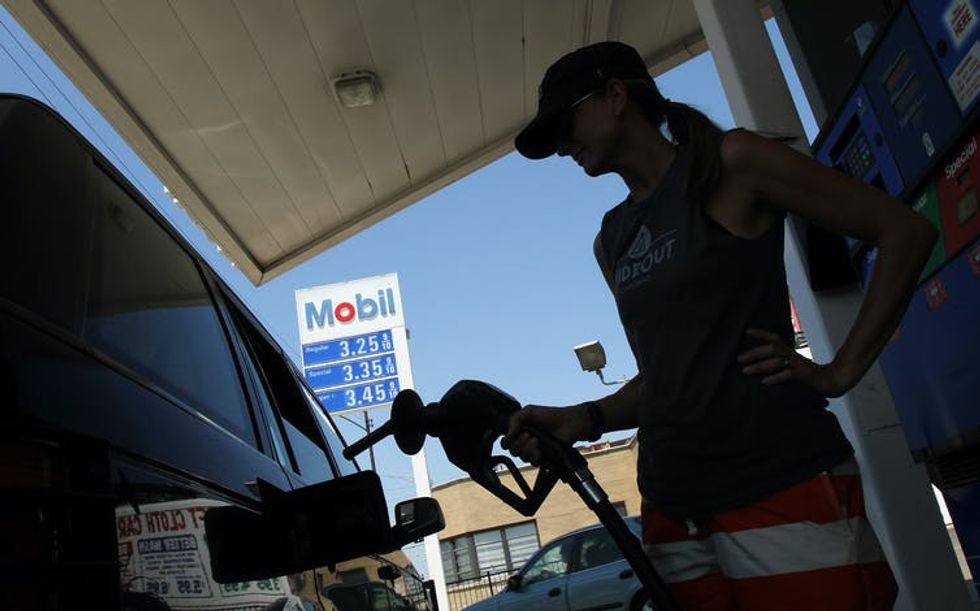
ExxonMobil is one of many companies that will likely spend a lot of money on upcoming elections.
At the core, firms spend when they are dependent on states, meaning that they have vested interests and operations in a state that are subject to regulation. Regulation creates uncertainty for managers – which they don’t like. Spending helps alleviate the uncertainty by influencing what regulation may be imposed.
Our study went beyond this observation, and had four major insights:
1. Companies spend when they are worried about negative media coverage prompting what they perceive to be potentially harmful regulations.
As one executive told us, “We spend a lot of time tracking media and local advocacy groups. We track [them] on a daily basis, and I get a report each week.”
Media coverage can drive public perceptions of corporations and influence politicians’ views. In particular, media coverage can amplify misdeeds of companies across states, which worries managers who do not want to see new regulations. In line with this, we found that the firms spent 70% more in states they operated in when national media coverage of their companies was more negative rather than less negative.
We found that this effect was exclusive to national media coverage as opposed to local media coverage. Specifically, when local media coverage was more negative, it did not appear to affect political spending.
2. Firms spend when there are powerful social movement organizations – for example, environmental protection groups – within a state.
“Public relations firms are routinely engaged to monitor activists and the media, because if you don’t watch them, they can create regulatory change. You have to get ahead of it,” an executive said.
Social movement organizations (e.g., Sierra Club and the Rainforest Action Network) help shape public opinion on important issues, pursue institutional change and can prompt legal reform as well, which is a concern to corporations. Our research indicated that in states where they had operations, firms spent 102% more when facing greater opposition from social movement organizations than they would have on average.
3. Firms spend to gain a seat at the ‘legislative table’ to communicate their interests.
A political affairs consultant and lobbyist said, “Regulations are a negotiation, there is not a logic, no rule of law, lobbyists come in here…” In essence, legislators rely on policy experts and analysts, among others, when crafting new legislation, but often, solutions can be unclear with competing demands and interests.
Our interviewees shared with us that companies spread their contributions around to those politicians who they believe will listen to their causes and concerns – regardless of party.
They described themselves as wanting their voices heard on particular issues and as important players in the states in which they operate due to the employment and tax base they bring to states.
“Companies mostly want certainty, they want to know the bottom line, and engagement can create opportunities,” said one political affairs consultant.
Corporations have a legal and ethical responsibility to their stakeholders. Company leaders often believe they are upholding their responsibilities to shareholders, employees, communities, customers and suppliers by participating in the political process.
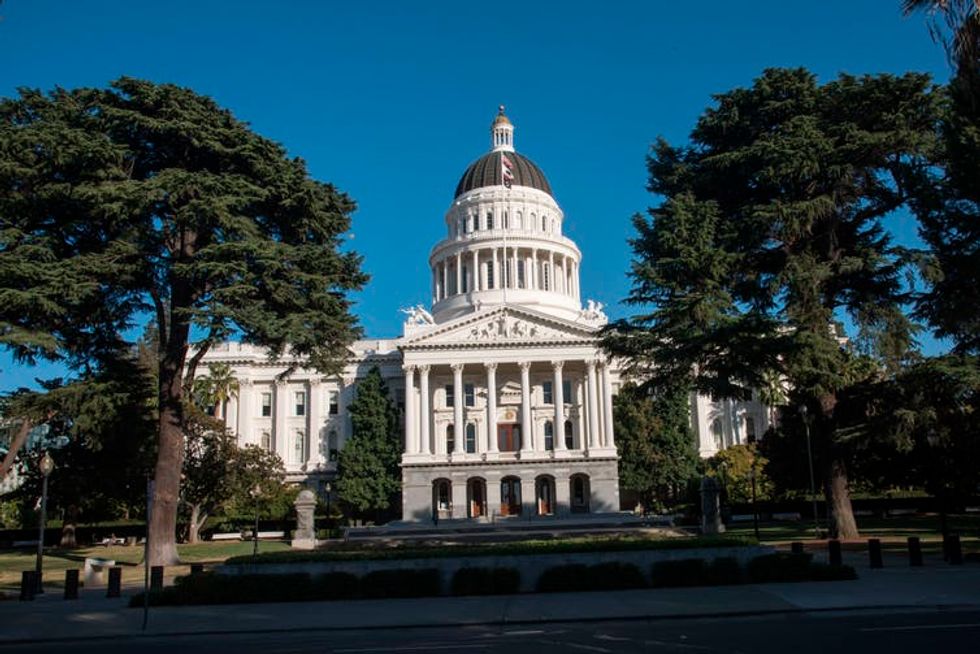
California often sets more stringent environmental policies than most other states.
There can be huge repercussions for companies in state regulation. As one political affairs consultant told us, “[Regulation] is the pot at the end of the rainbow that could create endless possibilities of profit, it’s the only thing that stands between them and unending profits…”
Ride hailing service Uber, for example, has mounted protracted political campaigns aimed at state legislatures and local governments to protect the company’s interests. The result, among others: The ride hailing service has been able to get independent contractor status for their drivers in many states, which means the company does not have to provide unemployment insurance, workers’ compensation and other benefits.
Passage of regulations in large states like California, for example, can have nearly as much impact as a national regulation – making their passage far more significant for companies working nationally.
For example, since California sets more stringent emissions standards for vehicles than most other states, manufacturers designing cars for the U.S. market must make sure their vehicles can pass these standards. In this way, California and other states following its lead pose a larger regulatory hurdle for auto manufacturers.
Where does this leave us?
Taken together, corporate involvement in state politics is an important phenomenon. In addition to providing needed products and services, corporations bring jobs and increased investment to states, which can strengthen communities and state economies. Their operations also can bring health and environmental problems for state residents, however.
Given the changed business landscape – and increased operating costs – caused by the coronavirus pandemic, we expect that businesses across the country will continue to be interested in influencing policies ranging from workplace safety to local and state tax breaks. This interest will likely translate into significant spending in the upcoming election, to both major parties and their candidates.
And that political spending will affect everything from your wallet to your health.
US Speaker Nancy Pelosi on Monday called on the heads of the intelligence services to hold a briefing on reports that Russia paid bounties to Taliban-linked militias to kill US soldiers deployed in Afghanistan.
An explosive New York Times report, citing anonymous officials, said US President Donald Trump had been told about findings, which he has denied.
"The questions that arise are: was the president briefed, and if not, why not, and why was Congress not briefed," said Pelosi in a letter to John Ratcliffe, the Director of National Intelligence, and CIA director Gina Haspel.
According to the report, confirmed by several American and British media outlets, US intelligence concluded that a Russian military intelligence unit offered rewards to Taliban-linked militants to kill troops of the US-led coalition in Afghanistan.
The rewards were purportedly incentives to target US forces as Trump tries to withdraw troops from the conflict-torn country -- one of the militants' key demands -- and end America's longest war.
Pelosi, the top Democrat in Congress, asked them to hold an interagency briefing for all members of the House of Representatives on the reports and "President Trump's inexplicable behavior towards Russia."
"Congress and the country need answers now," Pelosi said, adding that the briefing should also focus on "what options are available to hold Russia accountable."
Trump on Sunday denied having been briefed on the matter, as the explosive report renewed questions about his reluctance to confront Russia over behavior that, if accurate, would represent a serious national security challenge.
"Intel just reported to me that they did not find this info credible, and therefore did not report it to me or @VP," he tweeted.
Appearing on MSNBC's "Morning Joe," longtime political columnist David Ignatius said that his own follow-up on the New York Times' explosive report that Donald Trump's administration was well aware that the Russians were offering a bounty for the death of U.S. military members revealed that Pentagon officials have been "pounding on the door" and trying to get Donald Trump to do something about it.
Speaking with host Joe Scarborough, Ignatius said he was stunned by the report from the Times and started looking into the details himself for confirmation.
"Based on my reporting trying to confirm the New York Times' excellent story it's clear in late March you had senior U.S commanders, senior civilian intelligence officials, in effect pounding on the door of the White House saying we need to do something about this, we need to come to a conclusion about what damage the Russian program is doing, we need to reassess our programs in Afghanistan and they couldn't get an answer," he reported. "To this day there's not an answer, there's not a real response. Was this because the president was briefed and did nothing or because he wasn't briefed because people were afraid to give him bad news and kept it to themselves? I don't know."
"But it almost doesn't matter in terms of the breakdown in terms of the way the government is supposed to work," he continued. "In some ways, it's almost worse the department didn't tell him, 'Mr. President while you're encouraging Russia to rejoin the G8, we should mention Russia is putting bounties on the heads of American soldiers.' If they didn't tell him that, it's a stunner."
"I think people are steamed up about it, there's nothing that would make American commanders angrier other than the idea that their soldiers had targets on their back because of the actions of somebody that the president was still speaking of as a prospective ally," he added.
Former "Daily Show" host Jon Stewart appeared on "The View" to promote his new movie but the conversation quickly turned to President Donald Trump and the problems facing the country.
After an endorsement of former Vice President Joe Biden because he has "empathy," Stewart went off about the irrational ways in which Trump has divided Americans between those who wear masks and those who don't.
"There has been an increased campaign to discredit expertise or to tribalize or to politicize expertise. You know, there's a whole under-current that this whole pandemic is a hoax or a power-grab," said Stewart. "You know, living in the northeast, we don't realize, this is real, and it's brutal. The idea that wearing a mask is somehow government overreach, I would just say, have you been in operating rooms? Surgeons wear masks, not because they listen to NPR and drive Volvos. They wear masks because that's more sanitary."
He went on to tell people who are refusing to wear masks that they should apply that thinking to its logical conclusion and refuse to work with doctors who wear masks.
"The next time you get an operation, just tell the surgeon, 'You take that mask off and you don't wash your hands because that's for liberals, and I want you coughing into my open wounds for America,'" said Stewart. "It just -- and honestly -- we're so dysfunctional. It's beyond maddening how -- this is a time where leadership is so crucial. People are truly suffering. Not just for the illness, but economically, and you need leadership that has the humility to know that we are facing something we haven't faced, who doesn't think they have all the answers. And this isn't just about re-election politics. This is a strategy on their part because they believe the more fear they gin up, the better chance they have to get elected. It's cynical. It's so cynical, and it's going to hurt people."
Looking at the latest polling showing Donald Trump rapidly falling behind presumptive Democratic opponent Joe Biden in the November presidential election, former GOP lawmakers and Republican consultants are admitting that the president has driven away independent voters which is dooming his re-election bid.
According to a report from the New York Times by Adam Nagourney, many of the independent voters who helped propel the president into the White House in 2016 are abandoning him now after viewing his antics over the past three and a half years.
As the report notes, the loss of independents leaves the president with a steep uphill climb to hang onto his job.
The report notes that a Times and Siena College poll of registered voters shows Trump's total of 46 percent who supported him in 2016 declining to 36 percent -- and dropping -- has Republicans worried.
"Whether Mr. Trump can still expand his support at this point, especially in the battleground states that are crucial to his Electoral College calculus, is an enormous challenge that the president, to date, has shown little interest in meeting," Nagourney wrote. "Much of the nation has recoiled from Mr. Trump’s brash conduct and harsh language in office, and at the same time has moved to the left on health care, civil rights, same-sex marriage and other issues."
Appearing on ABC over the weekend, former New Jersey Governor Chris Christie -- who advises the president -- admitted that Trump's re-election hopes are rapidly slipping away.
“He is losing, and if he doesn’t change course, both in terms of the substance of what he is discussing and the way that he approaches the American people, then he will lose,” Christie explained.
Christie's dour outlook is mirrored by former White House political director Sara Fagen who worked for President George W. Bush who referenced Trump's meager 17 percent "strong approval" rating among independents.
“It’s not enough to win re-election,” Fagan lamented. "In this environment, it will be difficult to win an election without expanding the number of people who support you.”
"Trump is facing a decidedly different electoral landscape this time around. The Times/Siena poll found 9 percent of registered voters were undecided, and presumably fall into the category of persuadable voters. They, like much of the country, hold unfavorable views of Mr. Trump’s job performance, and particularly his response to the pandemic and to the demonstrations that followed the killing of George Floyd by the Minneapolis police," Nagourney wrote, with one 2016 Trump voter admitting he's jumping off the president's bandwagon.
“I’m not a huge Biden fan. I think he’s a career politician and a member of the donor class,” said John-Crichton McCutcheon of Florida -- a key state for the president.
“But with Trump, things have gotten so bad, I’m going to have to go with Biden, " he added, with one voter who went for Obama in 2012, and then Trump in '16, also saying she is switching back again.
“I’m definitely not happy with Trump,” Donna Saylor, 67, of Pennsylvania admitted. “Every time he opens his mouth, it causes trouble. He’s not unifying this country as he should be; he’s dividing it.”
According to Dan Hazelwood, a Republican strategist, Trump's collapse with independent voters is self-inflicted.
“Right now, Trump’s coalition needs motivation,” he claimed. “The economy and the pandemic have sucked the enthusiasm away. At least 50 percent of America has deep and serious policy concerns with Biden and the Democrats. A ‘choice’ election between two policy directions is the motivation that Trump’s coalition needs, and it is why Biden is trying to be vanilla.”
A couple held a woman at gunpoint in Washington state after accusing her of shoplifting.
Cell phone video shows the couple confront the woman in the parking lot of a Spokane shopping center and accuse her of stealing shoes, reported KREM-TV.
"Get your ass in the car," the man says, as he tries to shut the woman's door while the armed woman points a gun at her. "I can f*cking shoot you, I'm a Democrat."
The woman denies stealing and tells the couple they're not allowed to hold her at gunpoint.
"You can't do that," she says. "That is illegal."
The gun-toting woman barks that stealing is illegal, as well, and keeps her pistol trained on the woman in her car as the video ends.
Police said at least one person was cited for theft in the incident, but said the couple should have put down their weapons.
“In a case like this where you have people with firearms, if you’re told to put the firearms down and it’s not putting your life in more danger to do so, you’re going to want to comply with that request," said Sgt. Terry Preuniger, of Spokane police. "You don’t want to have a gun pointed at somebody when the police show up unless it is your last option and it is absolutely necessary."
The police spokesman said the public may intervene if they see a potential crime underway, but he said firearms should be used only when necessary.
“We don’t tell people that you should or shouldn’t intervene," Preuniger said, "but you got to be reasonable and you got to measure what are you doing against what are the facts and circumstances that you’re looking at at that time."