A Colorado Democrat called out President Donald Trump for apparently directing 100 ventilators to her state as a political favor to a vulnerable Republican senator.
Rep. Diana DeGette told CNN that she believes the badly needed medical equipment was sent to Colorado and announced on Twitter by the president was intended as a political gift to Sen. Cory Gardner (R-CO), who is facing a tough re-election battle.
"It seems that way to me," DeGette said. "I was totally outraged."
DeGette said the decision came after Democratic Gov. Jared Polis asked for 10,000 ventilators to handle the coronavirus outbreak, and the governor eventually reached a deal with a private company for 500 ventilators while waiting for Federal Emergency Management Agency to make a decision.
FEMA stopped that contract from going through after learning of the deal, and Trump announced Wednesday that Colorado would get 100 ventilators from the national stockpile after Gardner called him the night before.
DeGette called some House Democrats after Trump's tweet, according to two sources on the call, and she accused Vice President Mike Pence of "lying" about the process for sending out ventilators.
A sailor from the USS Theodore Roosevelt who had previously tested positive for coronavirus was found unresponsive and admitted to intensive care, according to a report from CNN.
The Theodore Roosevelt recently made headlines thanks to a controversy that led to the resignation of Acting Navy Secretary Thomas Modly this Tuesday. The aircraft carrier's captain, Brett Crozier, was dismissed after the leak of a memo in which he begged Navy officials to evacuate the ship to protect the health of its sailors.
As CNN points out, Modly then flew to Guam and slamming Crozier during a speech to sailors, calling him "stupid" for not expecting the memo to leak to the media and even suggesting the captain had leaked the memo himself.
According to a statement from the Navy on Thursday, the sailor was found unconscious on March 30 and has been admitted to the intensive care unit of the US Navy Hospital on Guam. CNN reports that 97% of the Theodore Roosevelt's crew have been tested for coronavirus and 416 sailors have tested positive.
Right-wing economist Art Laffer, the creator of the infamous "Laffer curve" that incorrectly claims that tax cuts inevitably lead to increases in revenue for the government, says he's in contact with officials in President Donald Trump's White House and is pitching them on ideas for ways to "restart" the economy later this year.
In an interview with Reuters, Laffer gave a preview of potential coming attractions from the Trump administration as it seeks to reopen the American economy in the midst of the COVID-19 pandemic.
"Tax non-profits. Cut the pay of public officials and professors. Give businesses and workers who manage to hold on to their jobs a payroll tax holiday to the end of the year," Reuters writes in summarizing Laffer's proposals.
In addition to this, Laffer tells Reuters that he would like to slash unemployment benefits so that the millions of people who lost their jobs over the past three weeks don't lose the incentive to find work.
“If you tax people who work and you pay people who don’t work, you will get less people working,” Laffer said. “If you make it more unattractive to be unemployed, then there’s an incentive to go look for another job faster.”
The coronavirus outbreak has disrupted supply chains and wasted billions of dollars of food.
Farmers from California to Florida have a surplus of highly perishable food that would normally go to restaurants, schools, stadiums, theme parks and cruise ships -- but those have been closed or restricted by social distancing guidelines, reported The Guardian.
“What’s really weird right now in the supply chain is the grocery stores seem to be pretty heavy on product, farmers are throwing away stuff, and food banks are full,” said Brent Erenwert, CEO of the Houston-based Brothers Produce. "We don’t know where the demand lies."
Farmers could lose up to $1.32 billion from March to May, according to National Sustainable Agriculture Coalition.
“Retail cannot absorb it,” said Florida farmer Paul Allen. “Whatever else you’ve got just goes unharvested and you’ve got to mulch it back into the ground.”
That surplus is going wasted as food banks are facing record demand and grocery stores struggle to keep shelves stocked, but the outbreak has scrambled supply chains and forced farmers to find new ways to get their goods to market.
Preparing and packaging food for retail is much different than wholesale, and packaging and shipping food on trucks is a costly new problem for farmers.
“This is really having a disproportionate effect on warm weather states and smaller farms,” said Kara Heckert, a regional director for the American Farmland Trust. “It was kind of an overnight shift to at least a significant portion of the food system.”
Farmers who ship food directly to consumers have seen their business thrive, and some farm delivery programs have waiting lists hundreds of names long.
“Some consumers don’t feel safe going to the grocery store, unfortunately, because of too many people being there," said Erenwert, whose company started shipping food directly to customers after the pandemic hit. "I know how to get that product safely to a consumer’s hand. The biggest thing was to keep my employees’ jobs and keep the supply chain moving – because if people see the supply chain stop, they go into even more of a panic.”
Farmers would like to get their surplus produce to food banks and charities, but they aren't set up to warehouse large amounts of perishable food.
“We’re working with the state to try to get it to charities," Allen said, 'but quite frankly, a lot of those avenues are full. They can’t absorb it all, no way.”
The Rev. William Barber told CNN's Alisyn Camerota on Thursday that the COVID-19 pandemic has shown a light on racial and economic inequality in the United States, as statistics are showing a disproportionate number of people of color are dying from the disease.
After citing statistics from New York City showing that COVID-19 is killing black and Latino residents at twice the rate it's killing white residents, Camerota asked Barber to explain why he thinks the pandemic has been more lethal to communities of color.
"Pandemics expose the fissures of our society," he said. "They expose all of the things we haven't fixed prior to the pandemic. So we had less health care, we had less wages in poor communities."
Camerota then asked Barber what he thought of the $2 trillion stimulus package recently passed by Congress, and he warned that the money was not being distributed to help the people who need it the most.
"Corporations immediately got $1.5 trillion early and then $500 billion -- think about that!" he said. "Two weeks earlier we couldn't afford health care, couldn't do living wages. Now we have people working on the front line, many low-income jobs, we say they're 'essential,' not being treated like essential workers. Don't have health care, paid sick leave. So what happens? People end up not going to get treated, they can't stay home."
A handful of hospitals have started clinical trials to test a new treatment for the coronavirus.
Hospitals in Boston, Alabama, Louisiana, Sweden and Austria are testing nitric oxide, a gas that relaxes blood vessels and could improve breathing, on patients with mild to moderate symptoms of COVID-19.
“It’s a gas that typically is used in babies with high lung pressure,” said Dr. Pankaj Arora, who is helping to administer the trial at the University of Alabama at Birmingham. “It’s FDA-approved for use in babies with high lung pressure, and we use it in some of our adult patients. In cardiology, we use it in our adult patients when the pulmonary pressures, pressures in the lungs, are very high.”
The molecule, which is not the same as nitrous oxide or laughing gas, is already used to treat heart disease, erectile dysfunction and respiratory illness.
“We have tremendous confidence this therapy will alter the devastating effects of COVID-19 but we must test it," Dr. Keith Scott, principal investigator at Louisiana State University Health in Shreveport. "If results show promise, and since this gas is already FDA approved, widespread use could begin immediately.”
The treatment has shown promise on COVID-19 patients in Italy, and a second trial at Massachusetts General Hospital examines whether the gas can mitigate the onset of the virus for health care workers constantly exposed to coronavirus patients.
UAB's trial builds on research conducted during the SARS epidemic in 2002-2003, when doctors found the gas improved lung function and also showed some anti-virus properties.
“The current [coronavirus] is quite similar to the one which was there in 2002-2003, and back then they tested this gas in patients of SARS and found that they were doing exceptionally well,” Dr. Vibhu Parcha, who is also administering UAB's trial, “and they further tested it and they found that this gas was also causing prevention of the growth of the virus.”
As the COVID-19 epidemic continues to ravage the American public, an unsurprising story emerges: Poor communities are hot spots for COVID transmission. The death rate from COVID-19 appears to be staggeringly high among African Americans compared to whites. The Washington Post reports, for example, that while 14% of the Michigan population is black, 40% of COVID-19 deaths are among blacks.
This is a familiar pattern to a social and infectious disease epidemiologist like myself. It is evidence of centuries of segregation and discrimination that have disproportionately placed people of color in communities without access to health care, with degraded and crowded living conditions and a lack of basic opportunities for health and wellness.
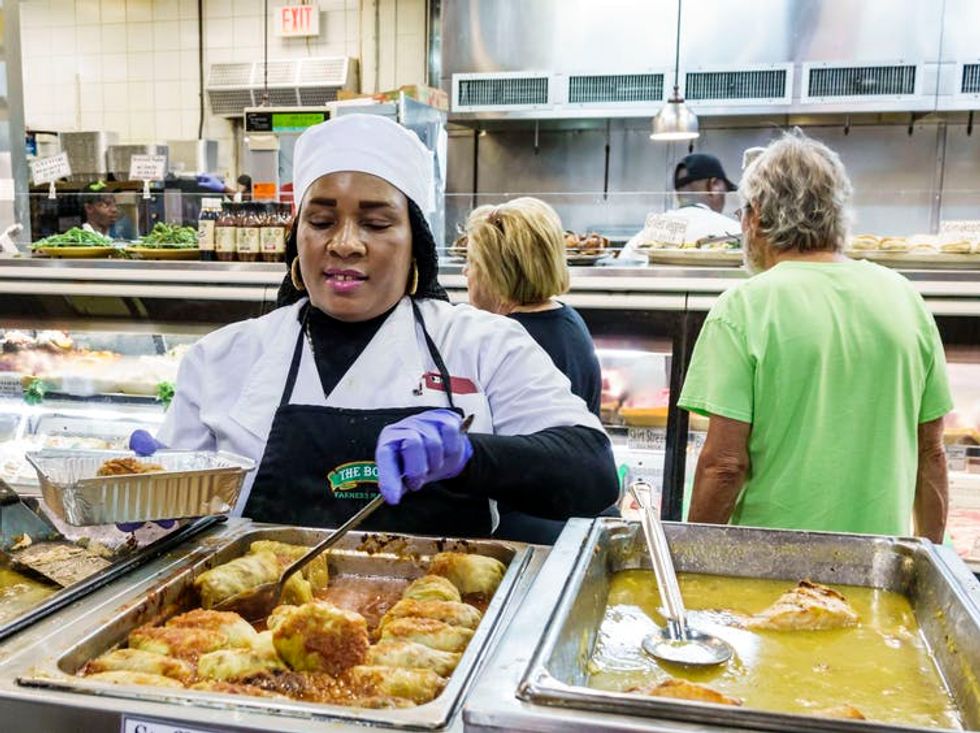
Blacks are more likely to work in low-paying jobs, such as custodial work and food service, that cannot be done remotely. Here, a server adds stuffed cabbage to an order at The Boys Farmers Market in Delray Beach, Fla.
TB, in particular, has long been tied to socioeconomic status. Even in the face of a widespread TB epidemic in the U.S. in the early 1900s, there was a noticeable pattern in which people of color, immigrants and those living in poor environments were more likely to be infected with TB and less likely to receive care.
The case of TB offers a unique vantage point to understand how these inequities emerge. Processes that operate at a societal level, such as residential segregation, have been at work since the early 20th century. Such processes have systematically placed racial and ethnic minority populations in low-income communities with fewer resources and more exposure to environmental hazards.
Urban renewal and development efforts of the 1900s systematically benefited whites, further displacing communities of color. This resulted in minority communities with greater proportions of dilapidated low-quality housing and poverty with direct implications for the subsequent risk of infectious diseases. Thus, non-white populations are unduly placed in settings that both increase exposure to infectious pathogens, such as Mycobacterium tuberculosis(the pathogen causing TB), and limit individuals’ ability to access health care to mitigate the effects of the subsequent disease.
The lack of resources also means that low-income communities have a higher prevalence of chronic conditions. For example, low-income neighborhoods with reduced access to healthy food and fewer opportunities for physical activity have higher rates of high blood pressure, obesity and diabetes. Such chronic conditions often result in compromised immunity, making individuals more vulnerable to infectious diseases.
One of the most insidious effects of living in a low-income community is the chronic toll of stress on the body, particularly the immune system. Socioeconomic disadvantage, via discrimination, job and housing instability, and food insecurity result in increased stress. This stress exposure is biological costly to the body.
Infectious diseases, like TB or COVID-19, can then thrive among populations that are living in low-income communities both because of increased exposure to infectious pathogens and a reduced ability of individuals to fight infections.
Blacks are dying of COVID-19 at higher rates than Caucasians in many cities across the country.
Now is the time for action
COVID-19 seems to be following a similar, albeit amplified, trajectory as TB. If we take no action, the inequities we see will only increase in the coming months and years.
People of color continue to face discrimination in housing and labor markets. For example, redlining practices still exist, though in subtler ways, as evidenced by increased predatory lending practices and diminished access to goods and services in minority neighborhoods. Disinvestment in these communities has created spaces and places where everyone’s life does not count equally, where it is allowable for some people to not have access to the resources to live healthy lives.
While infectious disease epidemics like TB, or now COVID-19, can undoubtedly create health disparities, they will almost certainly exacerbate existing ones, pulling back the curtain on the consequences of the inequality to which we have all become accustomed.
COVID-19 offers us a moment in time to pay attention to these inequities. Pockets of COVID-19 transmission in any community keep the risk of an enduring epidemic alive for every community.
I believe it should be a high priority for policymakers to partner with local health care practitioners and community organizations to provide low-income communities with resources to deal with this epidemic. These interventions should reduce or eliminate the cost of testing and treatment, and offer social and economic support for families that may need time from work for medical treatment, or have lost jobs because of COVID-19. Finally, as the possibility of treatments and vaccines develop, plans need be put in place that deliver the interventions to low-income communities first, not last.
The new coronavirus’s ability to wreak havoc in the lungs is raising a lot of concerns and questions from my asthma patients. They already know how it feels to have trouble breathing. Now, they are wondering what risks they face amid this new pandemic.
Some worry that their asthma inhalers could increase their risk of COVID-19 infection. Others are asking if nebulizers are safe, and if they can use expired inhalers.
Here are answers to some of the common questions I’m hearing as an allergist.
Do people with asthma face a higher risk of severe illness if they get COVID-19?
There’s a lot we still don’t know about COVID-19 and how it affects asthma patients.
Based on the data we have so far, asthma does not appear to increase the risk of acquiring COVID-19. However, the Centers for Disease Control and Prevention does list “chronic lung disease or moderate to severe asthma” under groups at higher risk for severe illness if they get COVID-19.
It’s important to understand what “severe illness” means.
One complication from COVID-19 is acute respiratory distress syndrome, a severe lung disease that results from damage to the alveoli, the air sacs of the lungs. When COVID-19 patients require ventilators, it’s often for acute respiratory distress syndrome. We don’t know very much about the risk factors for developing acute respiratory distress syndrome or how to treat the specific type of inflammation that drives this condition, but there is no evidence that asthma is a risk factor for developing acute respiratory distress syndrome if infected with COVID-19.
In contrast to acute respiratory distress syndrome, asthma is a chronic condition that we know a lot about. It is characterized by airway inflammation, mucous production and airway spasm. Respiratory viruses, including strains of coronavirus that cause the common cold, can trigger asthma symptoms, and it’s likely that COVID-19 could do the same. Even though asthma is also an inflammatory condition, in contrast to acute respiratory distress syndrome, we have very effective treatments for asthma.
At the first onset of respiratory symptoms, asthma patients should follow their individualized asthma action plan and contact their health care provider to see if additional treatments are necessary to prevent symptoms from worsening.
Can I keep using steroid medications?
A few patients have told me they stopped their inhaled corticosteroid medication because they were concerned that the steroids would suppress their immune systems. That’s exactly what asthma doctors don’t want to hear.
Asthma controller therapies reduce the frequency and severity of everyday asthma symptoms as well as asthma attacks. Stopping asthma controllers can increase the likelihood of a severe asthma attack when exposed to a trigger, such as a virus or allergen. An asthma attack, even if unrelated to COVID-19, may result in an emergency room visit, which can then increase risk of exposure to COVID-19.
For patients with COVID-19, the messages about corticosteroids can be confusing. In SARS and MERS, as well as emerging studies on COVID-19, corticosteroids have not been shown to have a survival benefit. The World Health Organization and the CDC recommend that corticosteroids not be used routinely to treat viral pneumonia or ARDS due to COVID-19.
However, if a patient has an asthma attack, regardless of whether the trigger is COVID-19, corticosteroids are usually effective and should be used.
Are nebulizers OK to use at home?
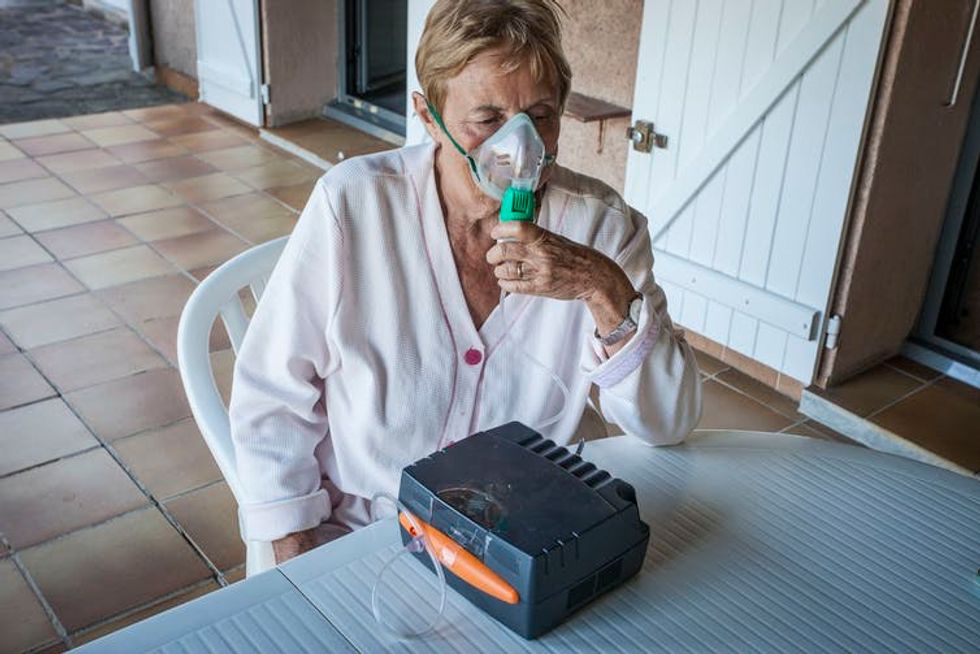
Sometimes patients have difficulty using handheld inhalers and instead use nebulizers, which turn liquid medicine into a mist. Particularly when the patient is experiencing severe asthma symptoms, nebulizers can be more effective at delivering medication slowly into the airways.
The current concern about nebulizers is that if they are used by a patient with a respiratory infection, the nebulizer could aerosolize droplets containing virus, allowing the virus to stay in the air longer. Hospitals and other facilities are being advised to reduce their use of nebulizers to reduce spread of the new coronavirus.
Nebulizers turn liquid medication into a mist that the asthma patient inhales. The way they work has raised concerns that nebulizers could spread coronavirus.
If an asthma patient finds that nebulized therapy is more effective than inhalers, the nebulizer should be used in a room that is isolated from other household members.
What can I do if my pharmacy runs out of albuterol rescue inhalers?
Some parts of the country are experiencing shortages of albuterol inhalers, in part because hospitals are using them more for COVID-19 patients. If the pharmacy is out of stock, patients have some options:
Albuterol handheld inhalers are marketed under various names, and not all are in short supply. It’s worth asking the pharmacist if another formulation is available.
Nebulized albuterol is widely available and may be an alternative if the user takes the recommended precautions.
Check with mail order or other local pharmacies.
Ask your physician whether other rescue inhalers, such as levalbuterol or ipratropium, would be appropriate. Your physician may also suggest other alternatives.
If necessary, patients can use albuterol that has expired. In general, medications are thought to be safe one year after their expiration date, but they are not guaranteed to have the same potency.
What else should I do to stay healthy?
Asthma care is individualized, and I recommend that asthma patients check in with their health care providers to make sure they are using daily controller medications correctly have a plan in place in case asthma symptoms worsen. Keep a 30-day supply of your usual medications, but don’t stockpile medications, which can lead to shortages.
At this point, most people are aware of the CDC’s recommendations on how to protect yourself, including social isolation, hand hygiene and disinfecting surfaces. I would add one more – pay attention to your mental health, too.
When I asked one patient whether she had experienced asthma symptoms recently, her response was that she was hyperventilating at times just sitting and watching the news. She knew it was time to turn off the TV.
It’s a stressful time. Getting good sleep and being kind to yourself and others is more important than ever.
The conservative Wall Street Journal urged readers to tune out President Donald Trump's daily coronavirus briefings.
The newspaper's editorial board published a column Wednesday evening lamenting that Trump had turned those news conferences into an airing of grievances instead of useful updates on the public health crisis.
"The briefings began as a good idea to educate the public about the dangers of the virus, how Americans should change their behavior, and what the government is doing to combat it," the column began. "They showed seriousness of purpose, action to mobilize public and private resources, and a sense of optimism. Mr. Trump benefitted in the polls not because he was the center of attention but because he showed he had put together a team of experts working to overcome a national health crisis."
Eventually the president concluded the briefings put the spotlight on him, and he began using them as a substitute for the freewheeling campaign rallies he can't hold during the COVID-19 outbreak.
"Perhaps he resented the media adulation that New York Gov. Andrew Cuomo has been receiving for his daily show," the column says. "Whatever the reason, the briefings are now all about the President."
The Journal stopped short of calling out the president for spreading misinformation about the virus or his administration's handling of the outbreak, as many media outlets have done, but the newspaper complained that Trump was unable to resist petty attacks on his critics.
"On Tuesday Mr. Trump was asked, in a typically tendentious question, why he had compared the coronavirus to the flu," the column says. "Instead of saying he had been hoping for the best but was wrong when he'd said that, he got into a fight over the severity of the flu. This sort of exchange usually devolves into a useless squabble that helps Mr. Trump’s critics and contributes little to public understanding."
"The President’s outbursts against his political critics are also notably off key at this moment," the column adds. "This isn’t impeachment, and COVID-19 isn’t shifty Schiff. It’s a once-a-century threat to American life and livelihood."
A last-minute provision tucked into the coronavirus recovery bill allows the Federal Reserve to set up a $450 billion bailout plan with almost no oversight.
The previously unreported provision -- which makes the bailout funds exempt from the federal open meetings law -- was inserted into the 880-page bill during the rush to get it passed, Politico revealed.
The central bank won't be required to announce its meetings or keep most records about discussions about which firms might benefit from the bailout, although the board would have to record its votes -- which could remain out of public view until after the crisis is over.
“We may never know what terms are being given to banks, what collateral is being offered, what repayment methods and duties banks and other financial institutions may have, and those are important questions,” said Charles Glasser, a media attorney who sued the Federal Reserve over public records related to the 2008 financial crisis. “This is written too broadly and allows the Federal Reserve to avoid its responsibilities of public disclosure as the courts have described them."
Right wing talk show host Rush Limbaugh baselessly accused Dr. Anthony Fauci, the director of the National Institute of Allergy and Infectious Diseases, of being a "Hillary Clinton sympathizer" who wants "to get rid of Donald Trump" during a Tuesday broadcast.
"We've got all of these Hillary Clinton sympathizers still in the medical expert team here, and we know that one thing has not changed," Limbaugh added. "And that is these people's desire — above everything else — to get rid of Donald Trump."
"Can you believe these people don't care about the economy being shut down? It is stunning to me. People are being ruined," he continued. "I talked to a number of friends of mine. These are people that own their own business. A guy — a good friend of mine in South Carolina — told me he's losing a million dollars a day. Another friend's business is totally shut down — he's ruined. And there's no end in sight to this."
Limbaugh concluded his monologue by falsely claiming that "there is an all-out subtle effort for the status quo because it's going to hurt Donald Trump. That is the objective. That is the only thing at the forefront of some of these people's minds while they portray themselves as being primarily concerned with public health."
Trump lashed out at Karl during the Tuesday press briefing after the ABC News reporter asked about an inspector general report which found that the federal government had failed hospitals in a number of ways, including not providing them with sufficient medical supplies from the Strategic National Stockpile and offering them inconsistent guidance (which the report also blamed on state and local authorities).
Trump berated Karl for not mentioning in his question that the official who issued the report, Christi Grimm, had been appointed principal deputy inspector general by former President Barack Obama. However, Trump never appointed a replacement inspector general when Grimm's predecessor resigned in June 2019.
"Whenever he sees the words or hears the words 'inspector general,' he thinks these are the people who forced me to go through impeachment," Karl told Mediaite's Dan Abrams on Tuesday.
He also questioned the sincerity of Trump's attacks on the press, observing that "he praises me to his friends, and then he'll come out right after and blast me in front of the cameras. I know for a fact he does this with Maggie Haberman."
There are many recipes for chicken Parmesan. One evening I was in a hurry for dinner. I had boneless, skinless chicken thighs and Parmesan cheese in the refrigerator and canned crushed tomatoes in the cabinet. I put together this easy dinner.Frozen peas and whole wheat spaghetti completed the meal. I keep frozen vegetables on hand for when I don’t have time to go to the market. The peas cook in the same pot with the spaghetti.The Parmesan cheese is cut into thin slices instead of grated and melts on top of the chicken and sauce.Helpful Hints:— Any type of low-sodium tomato-based sauce can be u...
Don Darby's crop bloomed perfectly this year. But with many churches closed to slow the spread of the new coronavirus, most will never leave his greenhouses.
A proper Easter lily is a long time in creation. The regal white flowers now in Don Darby’s New Summerfield greenhouses spent their first three years in the ground on the west coast, the bulbs planted, then dug up; planted, then dug up; planted, then dug up one last time when they'd grown big enough to sell.
After the bulbs arrived in East Texas, Darby planted this crop, his 42nd, in mid-October, as he always does. The 34,000 bulbs in 34,000 little pots spent their first six weeks stacked on shelves in refrigerators, 40 days at 40 degrees.
Now the flowers are many times the height of their pots, their necks heavy with blossoms, elegantly curved like swans. They sit clustered in humid, sprawling industrial greenhouses, tens of thousands of blooms with nowhere to go, marking the end of Lent under a clear domed sky.
Darby, now 68, was 10 when his dad built his first greenhouse. Darby planted his first Easter lily crop in 1977, after he graduated from Texas A&M and joined the family business. He specializes in holiday plants; at a different time of year, he’d be anxiously minding his poinsettias.
This year’s Easter lilies are a good crop. Darby makes his living growing things, so he takes note of the weather. It was warm in December, and when the plants emerged from the refrigerators shortly before Christmas, the lilies started to really jump; they just came roaring out of their pots. He plied each with chemicals to keep the flowers from rising prematurely. Normally he wouldn’t use growth regulators so early, but after four decades, Darby sees a sprout and knows what to do.
Darby carefully considers his lilies and how they grow. He puts them in his best greenhouses with the tightest temperature controls, keeps them in the 70s during the day and the 60s at night. He maintains an internal shade system that can block out the sun. By Ash Wednesday, Darby should see a bud. He has a specialized tape measure that tells him, based on bud length, what temperature will get the lilies ready in time for Easter.
A greenhouse is not a cornfield. Darby is used to having control over his conditions.
Darby has readied his lilies for Easters as early as March 23 and as late as April 23. In years when Easter comes early and the plants prove slow, he knows he might have to warm the lilies a little more. If Easter falls late, he knows to consider lowering the temperature at night.
But even Darby doesn’t know what to do when there is no Easter at all.
Church doors across the state are closed this week as the godly prepare to celebrate what many consider the most important day of the Christian calendar at home via livestream. Texas churches are permitted to remain open if congregants take precautions to avoid spreading the deadly new coronavirus, but few are taking the risk.
By Easter this Sunday, Darby’s lilies would have been just where he wanted them, their carefully timed blooms gracing sanctuaries and altars across Texas, and perched on porches overseeing spirited egg hunts. But he’s stopped tending many of them.
A couple of weeks ago, when the lilies reached the right height, he would usually have consigned them to the cooler so they’d emerge, perfect and graceful, at just the right time. But that’s when he started hearing that churches would close as the state shelters in place. Darby sells his lilies wholesale, and he figures as much as 90% of this year’s crop would have been headed to churches. The cancellations grew in number.
“I knew that I wasn’t gonna sell them all,” he said. “There wasn’t a point in wasting resources to try to save a crop that wasn’t gonna be sold.”
He left thousands out of the cooler, letting the heat wilt them. Many he’s not even watering.
A bulb costs $1 or $1.50, and a soiling pot might cost a quarter. When Darby gets his lilies how he likes them, six or seven blooms per pot, he sells them wholesale for about $6 each.
Factoring in labor, greenhouse time, chemicals, he figures he’d have to sell at least half the crop to break even. This year, he may sell more than a third, some at a discount.
This spring, after their three-year journey across hundreds of miles of U.S. terrain and up through inches of fertilized soil, most of Darby’s Easter lilies will pass without observing the resurrection. Darby is letting thousands die.
“They’re sitting now — we’ll throw them away, put ’em in a pasture,” he said. “They’ll be good for the grass.”
Disclosure: Texas A&M University has been a financial supporter of The Texas Tribune, a nonprofit, nonpartisan news organization that is funded in part by donations from members, foundations and corporate sponsors. Financial supporters play no role in the Tribune's journalism. Find a complete list of them here.