WASHINGTON — Raw Story's Matt Laslo discovered a House resolution regarding the future of House Speaker Kevin McCarthy discarded in the men's restroom under the House floor on Tuesday.
Posting a photo of it to X, the social media site formerly known as Twitter, Laslo explained that it was resting on the baby changing area in the restroom.
"House Resolution: Declaring the office of the Speaker of the House of Representatives to be vacant," it reads.
The upper left corner shows the source of the document is G:M\18\GAETZ\GAETZ_194.XML.
It shows a date in the lower left, September 15, 2023 (11:22 a.m.), as Laslo observed.
“No comment,” is the response Gaetz office has given reporters who called to verify the motion-to-vacate copies Laslo found.
Gaetz often exits House votes out of the Capitol’s east front steps where a throng of network camera crews await. But after today’s lone House vote series — where his fellow House Republicans peppered him with questions about the motion to vacate stamped with his name — Gaetz took the underground tunnel back to his office.
The congressman could not personally be reached for comment.
Gaetz has become one of the key players in the ongoing drama over funding the government, which is set to run out of money — and shut down at least in part — when it does at the end of September.
Gaetz has openly battled with McCarthy this year. Last week, speaking from the House floor, Gaetz accused McCarthy of going back on agreement struck with far-right Republicans who, earlier this year, blocked his path to the speakership for days. Among the points of that agreement: to aggressively pursue the impeachment of President Joe Biden.
Gaetz argued that McCarthy had only taken "baby steps" and "move much faster."
"Do these things or face a motion to vacate the chair and let me alert the country," Gaetz warned. "And if Democrats bail out McCarthy, as they may do, then I will lead the resistance to this uniparty and the Biden-McCarthy-Jeffries government that they are attempting to build."
The Conservative Partnership Institute says on its website that it exists to help conservatives uphold principles and values that have made America the greatest nation in history” and stay strong in the face of “cultural Marxism”.
“It’s not easy to stick to your principles when you come to Washington,” the website says.
But as the world now knows, it wasn’t easy for Rep. Lauren Boebert (R-CO) to stick to her stated conservative principles when she attended a recent performance in Denver of “Beetlejuice.” Boebert is accused of vaping despite a pregnant woman asking her to stop; singing; taking photos; and, as security video showed, mutually groping a man who is not her estranged husband, Jayson Boebert.
Boebert’s episode in Denver, for which the combative congresswoman has apologized, represents a significant departure from her appearance at a CPI event earlier this year in Orlando, Fla.
Federal gift travel documents reviewed by Raw Story indicate that Boebert traveled with Jayson Boebert to CPI’s Conservative Members Retreat and Winter Leadership Conference from Feb. 9 to Feb. 12.
A schedule showed that the congresswoman spoke on a panel titled “Communicating with Constituents, the Media, and the Public.”
A description of the talk states: “Communications experts share practices for effectively communicating with your constituents, the media, and others, including lessons that can be learned from previous conservative policy victories.”
CPI paid $3,025 for the Boeberts to attend, covering their travel, lodging and meals. Other conservative lawmakers, including Rep. Jim Jordan (R-OH), Paul Gosar (R-AZ) and Scott Perry (R-PA), also appeared on the invite list.
In a video called “CPI Staff Testimonial” about how people are vetted by the organization, a man says, “I want to know, what are your views on trade, what are your views on life, on marriage ...”
Neither CPI nor Boebert responded to Raw Story’s requests for comment.
“Whether you’re a member of Congress, a congressional staffer, or an activist working with a conservative policy organization, you will not be rewarded for being a patriot,” CPI says on its website. “Odds are, you’ll be isolated, ostracized, and made to feel alone.”
Boebert might qualify as an example of the last sentence. But it wasn’t for being a patriot.
The Capitol Hill Club in Washington, D.C, oozes exclusivity and Republicanism — a place where conservative lawmakers, lobbyists, bureaucrats and the like may relax in a private and decidedly “press free zone” just steps from Congress.
Three former GOP members of Congress — John Shimkus of Illinois, Jeff Denham of California and Frank LoBiondo of New Jersey — liked it so much that they used excess campaign money to pay for bills at the club, including dues, a Raw Story review of federal records indicates.
Attorney Brett Kappel, an expert in election law, said the spending violates a federal prohibition against the personal use of campaign funds.
“The concern with former members using excess campaign funds to pay their dues at the Capitol Hill Club is that they are deriving a private benefit from donor funds that were never intended to be used for that purpose,” Kappel said. “That concern is greatly magnified if the former member is now a lobbyist and is using excess campaign funds to benefit his or her lobbying firm and its clients.”
The Federal Election Commission’s definition of “personal use” of campaign cash includes “dues, fees or gratuities at a country club, health club, recreational facility or other nonpolitical organization, unless they are part of the costs of a specific fundraising event that takes place on the organization's premises.”
The Federal Election Commission stated its position about payments to the Capitol Hill Club in a 2019 agreement with former congressman Cliff Stearns, who left office in 2013.
Stearns admitted that more than $4,100 he had spent at the Capitol Hill Club from 2014 to 2017 for "membership fees and club expenses" was improper. He agreed to personally repay his campaign committee, and Stearns and his committee agreed to pay a $6,900 federal fine, according to FEC records. Stearns was a registered lobbyist during that time.
“Stearns was neither a candidate nor a Federal officeholder at the time the disbursements were made, and the expenses would have existed irrespective of Stearns's position as a former officeholder,” the agreement between Stearns and the FEC stated. “Therefore, these disbursements made to the Capitol Hill Club were made for Stearns's personal use.”
Shimkus, Denham and LoBiondo each registered as lobbyists after leaving office.
Volunteers for Shimkus, the ex-congressman’s campaign committee when he served in the U.S. House of Representatives from 1997 to 2021, has this year paid $2,000 to the Capitol Hill Club this year for what it labeled a “501c7 Donation.” The club is indeed what the IRS calls a nonprofit “social and recreational club,” as organized under section 501(c)(7) of the federal tax code.
It’s uncertain, though, if the “donation” amounted to paying dues, which would apparently be a violation of campaign law, or if Shimkus received anything else of value from the transaction. Raw Story’s repeated messages to Shimkus for comment were not answered.
Shimkus is listed as a lobbyist on the KBS website and is also listed in the company’s July filing with Congress disclosing its lobbying activity. The former congressman has this year represented the interests of Ameren Corp., a power generation company.
Denham, who served in Congress from 2011 to 2019, spent $900 of leftover campaign cash at the Capitol Hill Club in 2021 and 2023. His FEC filing listed the purpose as “dues.”
Denham also became a lobbyist, now working for Dentons. His clients include the social media giant TikTok, Inc., according to federal records.
LoBiondo, who served from 1995 to 2019, spent $500 in 2021 for “membership dues” at the Capitol Hill Club. After leaving office, he started LoBo Strategies. Although he said in a 2019 story in The Press of Atlantic City that he would be a consultant, not a lobbyist, LoBiondo filed lobbying disclosures from 2020 to 2022. He terminated his registration in October of last year.
Neither Denham nor LoBiondo responded to Raw Story’s request for an interview. The Capitol Hill Club also did not respond to a request for comment.
The Capitol Hill Club has long been popular with Republican politicians. A Raw Story analysis of Federal Election Commission records showed that in the first half of 2023 alone, campaign money paid for almost $1 million worth of meals, meeting space, and catering for politicians and political action committees at this redoubt of the right wing.
Then-Rep. Frank LoBiondo (R-NJ) speaks before the U.S. House of Representatives in November 2018. Courtesy: C-SPAN
Election law experts said these kinds of Capitol Hill Club expenses do not run afoul of the law because the expenses can be seen as part of the job for sitting members of Congress or someone actively seeking elected office through fundraisers and other campaign activities.
It becomes a potential problem, however, when a former member continues to dip into excess campaign money to pay the club, which also means access to the powerful people inside.
Members of the Capitol Hill Club have included presidents, vice presidents, congressmen and governors, and, as the club’s website notes, “The Eisenhower Lounge alone boasts 458 elephants of the Club’s collection as well as an 1887 Steinway.”
It’s also the ultimate conservative safe space, too, as pictures, video and audio recordings are strictly forboden.
WASHINGTON – Who runs Washington, elected officials or the wealthy donor class?
It seems up for debate after Silicon Valley billionaires were given the dais, mics and taxpayer-funded security details, even as upwards of 60 U.S. senators were forbidden from speaking as they sat like pupils in the audience, scribbling notes during the Senate’s first ever Artificial Intelligence [AI] Innovation Forum.
While Senate Majority Leader Chuck Schumer (D-NY) gushed over the “historic” gathering of upwards of 20 tech CEOs, consumer advocates and ethicists, the bipartisan frustration from some of his Senate colleagues was palpable.
“I’m a U.S. senator and I don't get to ask questions,” Sen. Elizabeth Warren (D-MA) complained to Raw Story upon leaving the closed-door forums. “The people of Massachusetts did not send me here not to ask questions.”
It sets a “terrible precedent,” Warren contended. While they’re usually worlds apart, some Republicans agree with the progressive on that.
“The whole idea that we'd have like this big show and invite all these folks and close it to press and throw all these limits around it, I just think it's ridiculous,” Sen. Josh Hawley (R-MO) told Raw Story outside the forum he boycotted. “It also suggests that their opinion is somehow privileged, and we ought to really all be learning from them. What's really going on is they're talking about how to have us help them make money.”
The privilege was unmistakable.
While, say, AFL-CIO labor federation President Liz Shuler was only flanked by a couple staffers, Capitol Police officers shut down three-stories of public hallways in the Russell Senate Office Building – a public building – when Tesla CEO Elon Musk exited.
Senators walk through Senate Office Buildings alone or with a staffer or two. Musk was escorted through the highly secure building flanked by four Capitol Police officers – on top of his three, black suit and tie-donning private security detail – and then upward of 10 stood guard outside as he paused to talk to reporters before taking a Tesla to a meeting he said he had at the FAA.
Raw Story asked Schumer about Musk’s taxpayer-funded escort.
“Did you know Capitol Police were shutting down public hallways for these CEOs?”
“I did not,” Schumer said.
“And is it a good use of taxpayer dollars to have 10 Capitol Police officers escort Elon Musk out?”
“I leave safety issues up to Capitol Police,” Schumer replied.
Schumer quickly moved on to other questions, and requests for comment from the Capitol Police were not returned. But when Raw Story described the scene to Schumer’s fellow New Yorker, Rep. Jamaal Bowman (D-NY), there was no hesitation.
“America is also an oligarchy. We talk about oligarchy from the perspective of Russia — America has an oligarchy,” Bowman told Raw Story. “What you just described is a clear example of that. Citizens United is a clear example of that. And that's why our H.R. 1, getting big money out of politics and dark money out of politics, is such a priority for us.”
Other senators were surprised to learn they wouldn’t be able to question the assembled witnesses – including the likes of Meta’s Mark Zuckerberg, OpenAI founder Sam Altman, former Microsoft CEO Bill Gates – but once informed, they just assumed Schumer gave deference to all the big-name speakers he assembled.
“Oh, well, that might have been a nod to some of the people who are here, so that they would not get challenged,” Sen. Cynthia Lummis (R-WY) told Raw Story.
Still, Lummis was pleasantly surprised by how informative the closed-door AI meeting was, including Musk’s warning to the Senate of the “civilization risk” AI poses.
“Which I was a term that I hadn't heard before,” Lummis said as she flipped through her notebook brimming with her studiously scribbled notes of the private forum. “He said, ‘AI is a double-edged sword and that we have to make sure we nurture the good side of that sword and find ways to address the bad side of that double-edged sword.’”
Lummis, like others, reported being introduced to many new concepts in the forum, like the need for AI audits (“I would have thought, as long as it’s open-source AI, that there's almost a natural audit function”) or that algorithms can reinforce discrimination (“how could an algorithm do that?”).
After missing all three all-Senate AI briefings that Schumer hosted over the summer, Lummis was “really glad” she went.
“I was worried about that, that it wasn’t gonna be worth the time because, you know, there's so many big names and so maybe it was going to be much ado about nothing because people wouldn't say things that were helpful to policymakers. They did,” Lummis said. “It was surprisingly, at least from my perspective, it was surprisingly helpful.”
Many Democratic attendees praised the private forum as well.
“It was pretty cordial. I thought there'd be a lot of sniping, and it really wasn't,” Sen. John Hickenlooper (D-CO) told Raw Story as he left the the forum after listening to more than two hours of three-minute opening speeches from all those assembled on the dais.
While Schumer hosted the event, one of Senate Minority Leader Mitch McConnell’s top lieutenants, Sen. John Cornyn (R-TX), was also pleased with how it went.
“I think rather than what’s said, I think the fact that that meeting’s occurred at all is probably the most significant,” Sen. John Cornyn (R-TX) told Raw Story. “Just because those people don't sit down and talk to each other. They're competitors, and so knowing of the interest of policymakers that, I think, will cause some additional conversations and that hopefully will be helpful.”
“But the problem is Congress is slow as a glacier at actually passing legislation,” Cornyn said. “And I don't think the technology is going to wait.”
AI surely won’t wait, and Senate critics say today they lost precious time in assessing where they agree and disagree with their own colleagues – an essential information gathering tool if a compromise is ever to be forged in these hyper-partisan times.
“There's no feeling in the room. Everything just passed by. There’s no interaction. No bumping against each other on any of these issues,” Warren of Massachusetts complained.
The other thing is, senators – some unwittingly – surrendered one of their biggest powers at the feet of these titans of Silicon Valley, because not a single tech CEO can commit perjury if they’re never sworn in.
“I'd prefer them all being under oath and testifying. That’s how you do it. We have a mechanism to gather information in Congress, we have hearings,” Sen. Hawley of Missouri lamented. “But if we're not going to do that, at least it should be open to the public.”
Vivek Ramaswamy’s campaign hats that were made in a repressive country still found their way out on the campaign trail last week even after the Republican presidential candidate said he’d stop distributing them.
According to a Raw Story source who requested anonymity to protect their job, “Truth. Vote Vivek.” hats were handed out as recently as last Wednesday at a campaign event in Iowa. And Ramaswamy posted a video on X on Saturday showing him personally putting the black baseball cap on a supporter.
Each was several days after Raw Story broke the news that Ramaswamy’s black baseball caps were manufactured in Myanmar, a country rife with human rights atrocities and led by a military junta that has close ties with China — a country with which Ramaswamy is campaigning to cut dependence.
In the video Ramaswamy posted he asks a staffer for a "truth hat" and then asks a man who's wearing a camouflage Donald Trump cap, "May I personally put this on you?"
When the man agrees, Ramaswamy ends the video saying, "Speak the truth," before thanking the man again.
Ramaswamy's campaign had pledged to ditch the made-in-Myanmar caps after Raw Story asked about them.
“When this was brought to Vivek’s attention, he said we were changing it. He was not aware at all of the source, and it has been changed,” Stefan Mychajliw, deputy communications director for Ramaswamy’s campaign, told Raw Story on Sept. 8.
But that change did not come to pass, and now, Mychajliw says he has “no idea” what happened to the remaining “Made in Myanmar” hats and “no knowledge” of them being distributed in Iowa last week.
“This is brought to our attention from you and others in the field,” Mychajliw told Raw Story on Monday. “Mr. Ramaswamy encouraged all of our teams to use the products made in the USA, and his focus is cutting a million federal jobs, the government bombing cartels to protect the southern border, declaring independence in China. His sole focuses are domestic and foreign policy and his America first agenda."
Raw Story also learned that some of the Ramaswamy campaign hats and T-shirts distributed in Orange City, Iowa, on Sept. 8, and Bettendorf, Iowa, on Sept. 13, had their tags removed, but Mychajliw told Raw Story he had “zero knowledge of that.”
“Our teams were notified considering the fact that it was a one time quick rush order, our policy is to use products made in the USA, and nothing's changed on that,” Mychajliw said.
A tag inside a "Truth. Vote Vivek." hat distributed in Iowa by the Vivek Ramaswamy presidential campaign shows that the cap comes from a company called Otto and was made in Myanmar. The photo taken on the right shows the hat with the tag removed.
Why does a hat matter?
While Mychajliw said Ramaswamy has “much bigger issues to be concerned about running for the president of the United States,” human rights experts tell Raw Story that merchandising is an important part of a candidate’s public policy as it normalizes his positions with the public — especially a candidate such as Ramaswamy who has pushed an anti-China and “America first” foreign policy.
“It's hypocritical on his part to claim that he wants to move away from China but nevertheless is supporting products in places where China is very dominant, where it basically is behind many of these manufacturing companies,” Irina Tsukerman, a foreign policy expert, human rights and national security lawyer and president of communications advisory company, Scarab Rising, told Raw Story earlier this month.
Ramaswamy, who’s favorability has been declining slightly in polls but continues to run third behind former President Donald Trump and Florida Gov. Ron DeSantis in some recent national polls, has merchandise for sale on his website boasting “Made in USA” as a selling point.
Writing August 28 in The American Conservative, Ramaswamy said “it is unacceptably dangerous that so much of our way of life is dependent upon Chinese manufacturing and Taiwanese semiconductors.”
Ramaswamy continued his criticism of China, which has a close relationship with Myanmar, saying he’d “incentivize American companies to move supply chains away from China and rebase them in allied markets.”
When asked about “Made in America” stickers on The Fifth Column podcast, Ramaswamy said, “I’ve actually called for total decoupling from China, total economic independence from China, not on protectionist grounds at all but on grounds of long run national security … I think it is not good for the long run security interests of the United States when we are dependent economically on our enemy for our modern way of life.”
But factories in Myanmar, which shares a border with China, often are operated by Chinese factory owners, human rights experts told Raw Story, and China is a strong supporter of Myanmar’s military government, Tsukerman said, with the Council on Foreign Relations writing that China has “gone all in with the Myanmar regime”
“It's really rather astonishing to me that he would stoop so low to have a piece of merchandise coming from a country that is one of the worst rights abusing situations in the world,” Phil Robertson, deputy director of the Asia division for Human Rights Watch, told Raw Story earlier this month. “It boggles the mind, frankly, that somehow they think it's alright to source something like a hat from Myanmar when any sort of brief Google search can come up with a full page of atrocities that have been committed by that military government.”
This article has been updated to include details about Ramaswamy giving a made-in-Myanmar campaign cap to a supporter.
The flagging presidential campaign of Ron DeSantis thought it was a good idea to pay for an ad on X, formerly known as Twitter, encouraging people to wish the Florida governor a happy birthday next Thursday.
The ad comes in the form of a tweet from Casey DeSantis, Ron DeSantis’ wife, and says, “Wish Ron DeSantis Happy Birthday!”
There’s a photo of a smiling DeSantis and his family.
Well, users had wishes for DeSantis, all right, and they weren’t shy about expressing them.
A sampling:
“This card is brought to you by the letters G F & Y” above a Sesame Street gif.
Six puke emojis.
“This is soo lame.”
“Right after I sign the one for Benito Mussolini.”
A gif of thick brown sludge coming out of a pipe.
“Two words, one finger.”
“I doubt you would want him to read what the overwhelming majority of us would write.”
“I’ll go as far as to say I hope he has a SAD birthday!”
“I would rather saw my arm off with a rusty saw.”
“I’m here for the ratio” with two crying laughing emojis. (Comments — 1,385 in all, as of Friday afternoon — were indeed overwhelmingly negative.)
The DeSantis campaign’s birthday card ad is the latest variation on what’s become one of the most clichéd come-ons in digital political advertising, used by prominent Republicans and Democrats alike to collect supporters' personal information and prod them for money.
Those who click on the DeSantis ad, which does not appear publicly on Casey DeSantis’ X feed, receive a form to fill in their name, email and phone number — along with a countdown clock showing (down to the second!) how long it is until DeSantis’ birthday.
A Ron DeSantis presidential campaign fundraising advertisement on X, formerly known as Twitter. (Screenshot)
If you provide a phone number and click the “Sign His Card” button, the fine print says you consent to his robocalls and texts.
Whoever goes that far received a thank-you message for signing the card — and a pitch for a campaign donation, with suggested contributions ranging from $20.24 to $6,600.
“Thanks for signing his card!” it says. “We can’t wait to show him how many Americans are standing beside him.”
In the meantime, six days before DeSantis’ birthday, many Americans have used this opportunity to laugh at him.
Former President Donald Trump continues to laugh, too, as he remains at least 35 percentage points ahead of DeSantis in most recent national polls for the 2024 Republican presidential primary.
WASHINGTON — Each afternoon since last week, former President Donald Trump’s 2024 campaign has fired off an email titled "ICYMI: Important Articles and Posts from President Trump".
Most of these missives contain predictably Trumpian fare from decidedly far-right outlets peddling MAGA propaganda and culture war outrage.
“Trump is the greatest defender of the Constitution alive today,” declares the headline of a column from the Washington Times’ Charles Hurt.
“Energy sector sees 88% increase in ‘nonbinary’ workers from last year,” reads one story from John Solomon’s Just the News.
But Trump’s daily brag sheets are also peppered with articles from news organizations that — taking Trump at his own word — are straight-up terrible, filled with lying, no-good agents of “fake news” who are hell-bent on harming him.
Among them is “disgusting,” “bad,” “totally biased” and “truly unprofessional” NBC News, which Trump in March called “one of the worst” as he ordered reporter Vaughn Hillyard off his private Boeing 757 jet following a campaign rally in Waco, Texas.
On Wednesday, Trump used his daily email to highlight the reporting of NBC News’ Monica Alba and Carol E. Lee, who wrote that “attorneys for President Joe Biden and the special counsel appointed to investigate his handling of classified documents have been negotiating for about a month over the terms under which he would be interviewed.”
In 2020, Trump issued a blanket Twitter declaration that “WSJ is Fake News!” after the Wall Street Journal chided the then-president for the quality of his daily White House press briefings.
Even the ultimate “enemy of the people” — the “failing,” “inaccurate,” “corrupt,” “sick,” "discredited” and “totally dishonest” New York Times — earned not one, but two slots in Trump’s sizzle reel.
The top of a daily "Important Articles and Posts from President Trump" email that Donald Trump's 2024 campaign began sending out last week. Screengrab
One was a nearly 23-year-old New York Times story about a plan in Florida to appoint George W. Bush electors “with no Jeb Bush signature” — a not-so-subtle tie-in to Trump’s own 2020 fake elector scheme that has landed him and many of his associates in vat of legal magma.
The other, in Trump’s Sept. 6 email, is a piece from 2015 by Michael Barbaro about a 1987 letter to Trump from former President Richard Nixon. In it, Nixon says that his wife, Pat Nixon, saw Trump on the Donohue show and finished the program convinced that “whenever you decide to run for office you will be a winner!”
The “ultra liberal” and “failing” Des Moines Register and perennial “total joke” frenemy Fox News — “Fox has become fake news, too,” Trump said in 2020 — also got Trump email shout-outs in recent days.
So, has Trump, who is facing 91 felony counts across four separate criminal cases while maintaining a commanding lead for the 2024 Republican nomination, warmed to the coverage of his sworn media enemies?
The Trump campaign didn’t directly answer Raw Story questions about whether Trump still considers the New York Times, NBC and the rest to be "fake news". Nor did it explain why the campaign decided to highlight news articles from outlets Trump had previously deemed untrustworthy.
But in an email to Raw Story, Trump campaign spokesperson Steven Cheung wrote: “When Fake News is forced to print the truth, you know it's dire for Crooked Joe Biden.”
For Kathy Kiely, the Lee Hills chair in free-press studies at the University of Missouri's Missouri School of Journalism, Trump’s desire to have it both ways is a potential teaching moment. She challenged Trump supporters to think critically about when Trump cites mainstream news organizations to his advantage.
“Look at the record. Are they really fake if Donald Trump quotes these outlets?” Kiely said, while acknowledging that Trump’s “contradictions and hypocrisies don’t seem to bother his most hardcore supporters.”
Trump’s hypocrisy is, at least, transparent, Kiely added.
“He bludgeons the media when it’s convenient. He uses the media when it’s convenient. He’s happy to cite the media organizations he hates when they publish something that is helpful to him,” she said.
True to form, Trump’s email on Thursday featured the republication of an Associated Press story about conservative Christians’ attraction to Trump.
The article to which Trump linked appeared in the Milwaukee Independent, a small, nonprofit news organization in Wisconsin that features this quotation in its “about us” page: “As we let our own light shine, we unconsciously give other people permission to do the same. As we are liberated from our own fear, our presence automatically liberates others.”
While senators’ health ailments are dominating cable shows and social media, the debate has barely penetrated the marble walls of one of the nation’s oldest Senates ever.
That’s by design.
“It is an institution that honors old age. Seniority is everything,” Sen. Kevin Cramer (R-ND) told Raw Story after voting at the Capitol on Wednesday. “The Senate is also a place where one person on the first day can do some really big things, mostly based on their ability to obstruct, but that's the way it's built. It does reward longevity, and, consequently, you end up with a lot of older members.”
Indeed, the position of Senate president pro tempore — third in line to the presidency — is traditionally reserved for the majority party senator who’s served the longest, continuously. Committee chairpersons are often, if not exclusively, given to a majority party senator with the longest service on a given committee.
You also end up with a lot of secrets in an already secretive body. There’s a seemingly impenetrable veil of silence at the Capitol when it comes to lawmakers with failing health.
Seemingly, one of the most enduring bipartisan principles in the “World’s Greatest Deliberative Body” seems to be that you let your political friends and foes alike die as they please — even if you find them diminishing right next to you as you consider some of the nation’s most critical decisions and cast consequential votes.
When Senate insiders do talk — staffers, in particular — it’s generally in whispers about the lengths some must go to prop up their aged bosses. And it’s not pretty.
‘Out of respect for colleagues’
Six years ago — or one term, according to Senate time — in her piece, “An old-school pharmacy hand-delivers drugs to Congress,”Erin Mershon of STAT News reported that Capitol Hill pharmacist Mike Kim fills Alzheimer’s prescriptions for at least one member of Congress.
That terrifyingly tantalizing admission is news to freshmen senators — “That's pretty wild. I'm gonna look that up and read it,” Sen. J.D. Vance (R-OH) told Raw Story — but it’s simply the ways of Washington to senior senators who seem in on the not-so-secret-secret.
“I actually don't want to comment on that out of respect for colleagues,” Sen. Debbie Stabenow (D-MI) told Raw Story after exiting a Senate elevator.
Others shrug off reports of their congressional colleagues being afflicted with debilitating diseases like Alzheimer’s.
“We're a representative body reflective of the country. There's probably a lot of people in the workforce that are engaged in all kinds of different medications, whether they're for Alzheimer's, mental health, whatever. That doesn't surprise me,” Sen. Shelley Moore Capito (R-WV) told Raw Story on Wednesday while walking next to the underground Senate tram.
Capito serves as a part of McConnell’s leadership team. She was in his office Tuesday night for their regular start of the week meeting.
“He was sharp as ever,” Capito said.
How the ravages of age affect the human body is a congressional drama that’s as old as Congress.
In 1846, former President John Quincy Adams suffered a stroke that left him partially paralyzed. Voters didn’t care. The former U.S. senator from Massachusetts overcame its debilitating effects and was then sent back to Washington, only this time as a member of the House.
That’s where, in 1848, Adams collapsed as he rose in his seat on the House floor only to later die in the Speaker’s Room of the Capitol.
More recently, Sen. Strom Thurmond (R-SC) remained in office until his 100th birthday.
Sen. Ted Kennedy (D-MA) died in office in 2009 at 77.
Sen. Robert Byrd (D-WV) died in office in 2010 at 92.
Sen. John McCain (R-AZ) died in office in 2018 at 81.
Such situations can leave millions of constituents without the active representation of a key, duly elected federal lawmaker — or, in the case of those who die in office, no elected representation at all. Governors work to quickly fill their seat, but they don’t consult voters and often tap one of their political allies, some of whom never seem to leave the seat.
‘Medicine shouldn't be politicized’
These days, the nation’s aged politicians are protected by their aides and most of their colleagues whoplay senatorially-supportive roles.
But every now and again, a lawmaker breaks Congress’ unofficially-official code of silence.
We saw that rarity this spring when Rep. Ro Khanna (D-CA) had enough ofthe congressional veil of silence after his state’s senior stateswoman, Feinstein, told Raw Story, “I’m not announcing anything” — hours after her office had literally announced she wasn’t seeking re-election in 2024.
As Khanna took to social media to call for Feinstein’s resignation, he showed the public what’s common knowledge in Washington: Feinstein stopped making some of her own decisions long ago.
“It’s time for@SenFeinstein to resign. We need to put the country ahead of personal loyalty. While she has had a lifetime of public service, it is obvious she can no longer fulfill her duties,” Khanna wrote. “Not speaking out undermines our credibility as elected representatives of the people.”
Of course, it would be unethical, immoral and idiotic for a doctor to divulge their patient’s diagnosis without consent. Consent, however, is not the problem when Washington physicians go out of their way to politically protect politicians.
Glowing physical examinations can transform a physician into a politician. Just ask Rep. Ronny Jackson (R-TX). He catapulted himself into the U.S. House Representatives after garnering headlines while serving as former President Donald Trump’s White House physician. Politicized medicine is a disease all its own, at least according to Sen. Rand Paul (R-KY). The Duke-trained ophthalmologist is one of four physicians currently serving in the Senate. He’s openly questioning Dr. Brian Monahan, the attending physician of U.S. Congress, for reporting McConnell’s showing no signs of a seizure or stroke.
“Medicine shouldn't be politicized, and if you're giving advice on, you know, what someone's potential diagnosis is, really, it ought to be based on the facts. And what I can tell you is that having vacant spells of 30 seconds or more where you’re unresponsive, is not a sign or a symptom of a concussion,” Paul told reporters Wednesday.
Bolstered by the Capitol physician’s report, the 81-year-old Senate minority leader brushed aside health questions Wednesday.
“I’m going to finish my term as leader and I’m going to finish my Senate term,” McConnell told the congressional press corps.
Everything’s … fine?
To many members of the Senate, everything’s fine, even if many read more into McConnell’s health episodes than the congressional physician reported.
“I think people need to actually read his book to understand the guy had polio and polio’s coming back and he's having some serious pain issues,” Sen. Markwayne Mullin (R-OK) told Raw Story just off the Senate floor. “The first time it happened, he was on the floor at 10 o’clock that night having conversations with us. Sharp as a tack.”
At the start of this Congress, Sen. Rick Scott (R-FL) challenged McConnell’s leadership position, but, like most all others, he’s backing McConnell now.
Support McConnell continuing as leader?
“Absolutely,” Scott told reporters at the Capitol. “Mine was all about how you manage the Congress.”
As for Feinstein?
“Every time I’ve talked to her she’s been really nice to me,” Scott told Raw Story.
In your five years serving next to Feinstein, ever had a good policy conversation with her?
In a building built on seniority, members of both parties have already gamed out what the eventual exits of Feinstein and McConnell — and their combined 70 years in Washington — mean for their respective party’s rank and file.
But those whispers are kept far away from the cameras, secure within the bipartisan veil of silence.
While Feinstein checked outlong ago, McConnell, who isn’t up for re-election until 2026, seems bent on staying put for at least the next three-plus years.
His colleagues seem fine with that, because, most argue, Kentuckians decided to give him a seventh six-year term back in 2020 — even if voters nationally overwhelmingly support congressional term limits and age limits. Many frustrated voters even support cognitive tests for older lawmakers — something Republican presidential candidate Nikki Haley has vocally pushed for lawmakers over the age of 75.
In New Hampshire on Tuesday, Haley even suggested 80-year-old President Joe Biden, if elected for a second term, would die before his term was up in 2029.
"There's no way Joe Biden is going to be 86. We all see it. This is about the fact that — you think it it's bad now? This could get so much more worse," Haley said.
Meanwhile, Republican frontrunner Donald Trump would become the oldest person elected president — 78 in November 2024 — were he to win the White House next year.
As for McConnell, many lawmakers just wish he'd get his eyes checked. Because, even as most senators reject proposals like term limits or mental fitness tests, they say Washington’s broken. They just wish those at the top of Washington’s power pyramid could see the ruins they’ve left in their storied wakes.
“It barely functions at all, as far as I can tell,” Cramer of North Dakota told Raw Story. “I think we should get back to some better guardrails.”
A government agency best known for hunting down federal fugitives has become wildly successful at capturing another kind of target — money from political campaigns.
More than 150 political campaigns and committees — including well-known politicians such as House Speaker Emerita Rep. Nancy Pelosi (D-CA) and Republican presidential candidate Sen. Tim Scott (R-S.C.) — have together surrendered to U.S. Marshals upward of $1.35 million in donations from executives of bankrupt cryptocurrency exchange FTX, according to a Raw Story analysis of Federal Election Commission data.
That’s a nearly 10-fold increase in FTX-related campaign contribution forfeitures since mid-May.
And it represents a striking change in operations for the U.S. Marshals who, until this year, had only once collected money from a political campaign during the past decade.
That changed after federal prosecutors late last year charged former FTX CEO Sam Bankman-Fried — who along with several FTX associates were prolific political donors — with severalfinancial crimes.
Raw Storyfirst reported in April that the Department of Justice sent a letter about Bankman-Fried allegedly making fraudulent political donations to members of Congress’ campaign committees.
“Based on our office's investigation, we have cause to believe these donations represent the proceeds of Bankman-Fried's crimes and accordingly are forfeitable under applicable provisions of the federal asset forfeiture statutes,” the letter said.
The letter continued, “It is the intent of this office to request any funds forfeited be made available to compensate the victims of Bankman-Fried's crimes pursuant to the Department of Justice's restoration and/or remission regulations."
More than 30 federal political candidates and party committees had together surrendered at least $160,000 worth of FTX-related contributions as of mid-May, Raw Story reported.
Since then, two prominent Democratic political committees sent six-figure contributions to the U.S. Marshals. Priorities USA Action forwarded $500,000. The super PAC spent nearly $111 million to advocate for Joe Biden or against Donald Trump during the 2020 presidential election, and millions of dollars more on behalf of several Democratic U.S. Senate candidates, according to nonpartisan research organization OpenSecrets.
The Democratic Congressional Campaign Committee, meanwhile, forwarded a $250,000 contribution to the U.S. Marshals.
Dave Oney, a spokesman for the U.S. Marshals, declined to comment, telling Raw Story via email that the political committees’ disgorgements are “still being handled” by the United States Attorney’s Office for the Southern District of New York.
When Raw Story reached the United States Attorney’s Office for the Southern District of New York, spokesman Nicholas Biase wrote via email, “I cannot comment at this time.”
Raw Story reached out to various campaigns who received contributions from FTX executives for comment.
The campaigns for Pelosi, Scott, Rep. Hakeem Jeffries (D-NY), Rep. Josh Harder (D-CA) and Rep. Trent Kelly (R-MS) did not respond to requests for comment, nor did the New Jersey Democratic State Committee, the Democratic Party of Oregon and the Democratic Congressional Campaign Committee.
Rep. Nancy Pelosi (D-CA) is among the more than 150 political candidates and committees to surrender FTX-related campaign cash to federal authorities, according to a Raw Story analysis of federal records. (MSNBC)
Bankman-Fried faces 13 charges in federal court, including fraud, campaign finance violations and violating the Foreign Corrupt Business Practices Act with an alleged $40 million bribe to Chinese authorities.
Bankman-Fried will still face charges related to alleged illegal campaign donations at trial in October — charges that were previously thought to be dropped as they were not part of the extradition agreement between the United States and the Bahamas, New York Magazine reported.
Ryan Salame, FTX’s co-CEO is reportedly in talks for a plea deal, including campaign finance charges, Bloomberg reported. Nishad Singh, FTX’s director of engineering, pleaded guilty in February to charges of wire fraud, securities fraud, money laundering and campaign finance violations, the New York Times reported.
Bankman-Fried reportedly made more than $100 million in political campaign contributions before the 2022 U.S. midterm elections, Salame donated more than $24 million to Republican candidates and causes in 2022, and Singh contributed more than $9.7 million to Democratic politicians and causes, Reuters reported.
Donald Trump is being ordered to come into court as soon as possible in a lawsuit that he had launched against his former lawyer, Michael Cohen.
In an unusual move, the judge updated the legal filing of Donald Trump's counter-suit late on Friday afternoon (below) demanding that his lawyers appear in court on the next business day.
According to the filing, Cohen violated their employee agreement by going public with information about Trump and "enriched himself" on the back of Trump. It goes on to claim that Cohen both lied about Trump and revealed his secrets despite their attorney-client privilege. Trump also alleges a breach of contract.
The lawsuit demands the $74,000 Trump claims he paid Cohen for a "business expenditure" that he said was "fraudulently misrepresented" and then demands $500 million in damages.
While Trump announced the suit in April, little has happened since then, according to the legal updates. Typically, when a lawsuit is filed there are several appearances in court and updates on the online docket. This has been largely silent, with nothing other than a deposition scheduled for Sept. 6 "at a law office in Miami," NBC News reported in July.
Cohen's attorney, Ben Brodsky, told NBC at the time that Trump's deposition notice "functions like a subpoena."
"He can’t avoid it, though he could dismiss the case," Brodsky explained.
“I look forward to Donald’s deposition under oath and proving the frivolous nature of the lawsuit,” Cohen said in a July statement.
But by Friday, the judge demanded an in-person hearing for the next business day, which is the day before the deposition was scheduled. Such appearances don't generally happen without warning, much less a late Friday afternoon before a holiday weekend.
Trump is facing a number of mounting legal issues that are quickly filling up his calendar for the next year when he is supposed to be running for president. Trump has alleged that these suits take him away from campaigning and are intended to harm him politically, therefore they are "election interference."
"Trump just opened a pathway to discover — and information for the public — that Cohen had sought in a different lawsuit which a judge reluctantly felt compelled to dismiss last November because of Supreme Court law limiting personal actions against government officials," the attorney wrote before adding, "In December 2021, Cohen sued Trump for orchestrating the [Cohen's] reincarceration. In November 2022, federal Judge Lewis Liman lamented that Trump’s status as a government official in 2020, when the reincarceration occurred, blocked courts from providing any relief against Trump."
Trump could face financial backlash as well. His recent lawsuit against Hillary Clinton, former FBI officials, and a slew of other defendants was not only thrown out of court in Florida, but Trump was also penalized.
U.S. District Judge Donald Middlebrooks said in a strongly worded ruling that Trump’s 2022 lawsuit was filled with “glaring structural deficiencies” and that many of the “characterizations of events are implausible.” The judge took additional steps, ruling that Trump's suit was frivolous, and as such he and his attorney, Alina Habba, would be sanctioned nearly $1 million.
That could happen again in this case if the judge similarly feels the Cohen suit is frivolous.
See the screen capture from the court update below or at the link here.
A prominent Washington state business owner with a history of discrimination against Muslims and unmarried people has donated to billionaire Republican presidential candidate Vivek Ramaswamy’s 2024 campaign.
Peter Zieve, CEO and founder of aerospace company Electroimpact, gave $250 to Ramaswamy’s Vivek 2024 campaign committee on May 28, according to Federal Election Commission records reviewed by Raw Story.
“It's no one's business. I don't discuss my donations,” Zieve said before hanging up when reached by Raw Story.
The presidential campaign of Ramaswamy, who is running third behind former President Donald Trump and Florida Gov. Ron DeSantis in most recent national polls, did not respond to Raw Story’s requests for comment as to whether the campaign would keep the donation.
Zieve’s company was required to pay $485,000 in 2017 as part of a consent decree with the Washington state attorney general’s office after a yearlong investigation found Electroimpact violated state law with discrimination based on religion and marital status, Seattle Times reported. The funds were to benefit victims of the company's discrimination, and the consent decree barred Zieve from most hiring decisions and required the company to train its employees about discrimination laws, update its nondiscrimination and harassment policies and diversify its workforce.
Zieve reportedly expressed hatred of Muslims in emails to employees, used photographs to screen out potential employees who appeared as if they might be Muslim and organized efforts to stop the construction of a mosque, the Seattle Times reported. He replied to jokes about killing Muslims with a smiley face, too, USA Today reported.
“I can send you two Iraq refugees immediately,” Zieve wrote to an employee requesting more engineers, the Seattle Times reported. “They will be a bit sleepy since they are up all night making bombs.”
Zieve also gave financial incentives to workers who married and had children, which had a “sort of eugenics aspect,” Marsha Chien, assistant attorney general, told the Seattle Times.
In an email cited in the complaint, Zieve said, “I note that 381,000 terrorist savages have gotten into Europe so far this year and if we don’t make more babies the light will go out on civilization,” the Seattle Times reported.
Electroimpact denied wrongdoing, but Washington state Attorney General Bob Ferguson called the company's behavior “shocking,” the Seattle Times wrote.
“Employees in businesses in our state should not be subject to the type of atmosphere that this gentleman created and fostered,” Ferguson said in an interview with the Seattle Times.
In 2020, Zieve launched a direct mail campaign called "Preserve Mukilteo," proclaiming that low-income housing in the small Washington state city “could bring in crime and drugs” and “crush the value of your home,” HeraldNet in Everett, Wash., reported.
Ramaswamy, a 38-year-old biotech entrepreneur, has risen from political obscurity this year to become an unexpected star in the Republican presidential field, fueled by his uncompromising conservativeviews on social issues and non-stop media appearances. It's also made him a target of his rivals — and even prominent right-wing media personalities such as Fox News' Sean Hannity.
Ramaswamy’s campaign raised nearly $19.2 million between January 1 and June 30, according to the FEC. Ramaswamy has self-funded nearly $1 million of his campaign throughout the election cycle through June 30, according to the campaign’s July FEC quarterly report.
“I’m an ardent defender of religious liberty,” Ramaswamy, who practices Hinduism, said in an interview with The Associated Press. “I will be an even more vocal and unapologetic defender of it precisely because no one is going to accuse me of being a Christian nationalist.”
At the first Republican presidential debate in Milwaukee on Aug. 23, Ramaswamy called out the other Republican presidential candidates during a question about climate change, saying, “I'm the only person on this stage who isn't bought and paid for.”
A big-money player
Presidential campaigns of competitive candidates may receive tens of thousands of individual campaign contributions each month, making it difficult to vet the histories of every donor, particularly if the donor isn’t already known to the campaign.
But “an ethical campaign is one in which the candidates would not accept funds from someone with a known pattern of bias or prejudice or discrimination against any type of individual or group,” said John P. Pelissero, senior scholar at the Markkula Center for Applied Ethics at Santa Clara University.
Pelissero said campaigns should have research staffers who process donors’ information, such as their employers and occupations, affiliations with political action committees and their history of donations to other organizations and candidates. Additionally, campaign staff “should know” easily accessible publicly available information about a donor’s behavior, Pelissero said.
“He's new to this political realm, but maybe he is less concerned than other candidates are about taking money from those who have discriminated,” Pelissero said.
This year, Zieve — himself a former candidate for the Mukilteo, Wash. City Council — also donated $1,000 to the campaign for Rep. Claudia Tenney (R-NY). He gave her campaign an additional $11,400 between 2020 and 2022, according to federal records.
A former spokesperson for the Claudia for Congress team, Sean Kennedy, told Raw Story he no longer worked with the campaign and directed inquiries to Tenney’s congressional office, which he said likely wouldn’t respond. Tenney’s congressional office did not respond to Raw Story’s request for comment.
Since 2004, Zieve has made hundreds of donations to Republicans in the four- to six-figure range, including contributions in past election cycles to Sen. Tim Scott (R-S.C.), Sen. Marco Rubio (R-FL), Rep. Lauren Boebert (R-CO) and the Republican National Committee.
His money isn't universally welcomed, however. In 2018, for example, now-Sen. Cindy Hyde-Smith (R-MS) returned a donation from Zieve after Popular Information drew attention to it.
According to FEC records reviewed by Raw Story, during Trump's first two runs for president, Zieve gave generously to Trump-related political entities, including $13,800 directly to Trump's presidential campaign and $1 million to the Rebuilding America Now PAC, a super PAC that supported Trump in 2016, according to the PAC’s website.
Zieve has not contributed money to a Trump-linked political committee during the 2024 election cycle, according to federal records.
INDIANAPOLIS — Members of The Satanic Temple won’t be sacrificing animals or drinking blood inside Indiana’s capitol building on Sept. 28.
They are, however, bringing a band.
And this particular band should be plenty to outrage multitudes of Hoosiers in this deep-red state.
Lucien Greaves, co-founder of The Satanic Temple, said this week he has permission from the state and hasn’t heard about any obstacles to the performance of his band Satanic Planet — whose logo for the “Let Us Burn” tour features an upside down cross.
His group was recognized by the Internal Revenue Service in 2019 as a religion, at least for tax purposes.
“It’s this or allowing government to pick and choose religions,” Greaves told Raw Story.
Said journalist and political commentator Abdul-Hakim Shabazz, who earlier this year finished second in the Republican primary for mayor of Indianapolis: “It will be something to watch, to say the least.”
Initially, the state of Indiana wouldn’t allow Satanic Planet to play the Indiana capitol until The Satanic Temple’s lawyer reminded government officials about a Christian event led by Sean Feucht.
Lasting more than an hour, the May event inside the capitol included Feucht praying over Indiana Lt. Gov. Suzanne Crouch, who’s now running for Indiana governor.
Critics of Feucht (pronounced Foyt) and his “Let Us Worship” tour of the country say he’s a Christian nationalist working to turn America into a theocracy. Feucht visited the Oval Office during Donald Trump’s presidency.
He did not respond to Raw Story’s request for an interview.
“It was amazing to see Sean Feucht just walk in and do a full-on revival in the (Indiana) capitol,” Greaves said.
The Feucht event was originally supposed to be outdoors on the capitol grounds. But Crouch allowed the event to be moved inside the capitol, her spokesperson has said, because of anticipated bad weather.
Asked about the Satanic Planet event and Feucht having inspired it, Crouch said through a spokesperson Wednesday, “As a person of faith, I’m not supportive of this event.”
Indiana Lt. Gov. Suzanne Crouch. Courtesy: C-SPAN
Greaves said that after seeing video of the Indianapolis event, he thought to himself, “I’m also a religious leader with a band.”
So the building where devout Christian and former Vice President Mike Pence served as governor will also now become the venue for Satanic Planet.
The last four digits of The Satanic Temple’s phone number are “6660”. The group’s website uses imagery that includes a pentagram and the Sabbatic Goat, an occult symbol.
But no, members don't sacrifice animals or drink blood. The Satanic Temple says it practices “non-theistic Satanism.” Members don’t worship Satan. Their motto: “Empathy. Reason. Advocacy.”
“We do not believe in either God or the Devil as supernatural forces,” says an introduction to the group. “We bow to no god or gods and celebrate our outsider status. To embrace the name Satan is to embrace rational inquiry removed from supernaturalism and archaic tradition-based superstitions.”
The group asserts itself in situations where it believes church-state separation has been breached. Such situations include abortion bans and displays of the Ten Commandments on public property
Indianapolis has been here before.
After Pence signed the Religious Freedom Restoration Act in 2015, which gave extremely wide latitude for the practice of religion, a local man started the First Church of Cannabis. Its inaugural service received national media coverage but didn’t include marijuana — at least not officially. The church eventually fizzled and RFRA, as it was known, was amended.
The Indiana Department of Administration did not respond to a request for comment on any special accommodations, restrictions or security for the Satanic Planet.
Greaves said the group does not have to pay to perform but can’t charge for tickets, either.
Even with the legislature out of session, it seems unlikely a Satanic Planet event in Indiana’s capitol building will pass without protest.
“It’s really hard to say,” Greaves said. “We’ll be prepared for anything.”
From donations of nine cents to $3,300, the Federal Election Commission has again flagged hundreds of apparently excessive contributions from MAGA nation to former President Donald Trump’s 2024 presidential campaign.
In a letter sent Monday, the FEC flagged 27 donors with excessive contributions to the Donald J. Trump For President 2024 Inc. campaign committee in a letter sent on Monday, It asked the campaign to reply by October 2.
By law, individual donors may donate up to $3,330 to a political candidate per election.
But many of the Trump donors flagged by the FEC seem to have a Trump donation addiction, of sorts. For example, a man identified in federal records as John Duerst made a dozen small-dollar donations to Trump’s campaign on a single day. Coupled with other contributions, Duerst eventually exceeded the federal contribution threshold.
Accepting some level of excessive contributions — and having the FEC call them into question — isn’t unusual for a big-dollar presidential campaign, be it Republican or Democrat.
But this isn’t the first time Trump’s campaign has gotten a warning from the FEC for contribution overages. Last month, the campaign received a letter about hundreds of excessive contributions — with one donor making 361 separate contributions to the campaign, Raw Story reported.
The Trump campaign could not be reached for comment Wednesday.
The New York Times previously reported that Trump’s campaign has used aggressive fundraising techniques that have led to donors giving more to his campaign than planned, requiring the committee to return millions in campaign contributions due to recurring payments.
Despite facing 91 felony counts across four criminal cases, Trump’s fundraising has continued at full speed with the former president using the legal troubles as fundraising fodder, Raw Story reported. And he continues to easily lead his Republican rivals for the 2024 Republican presidential nomination.
Trump was indicted twice this month, most recently on Aug. 14 in Georgia following an investigation into his attempts to interfere with the results of the 2020 presidential election in the state. He was also federally indicted on four offenses on August 1: conspiracy to defraud the United States, two counts of witness tampering and conspiracy against rights.
He currently faces two other legal cases: federal charges for the mishandling of classified documents and state-level charges in New York for a “hush money” scheme.




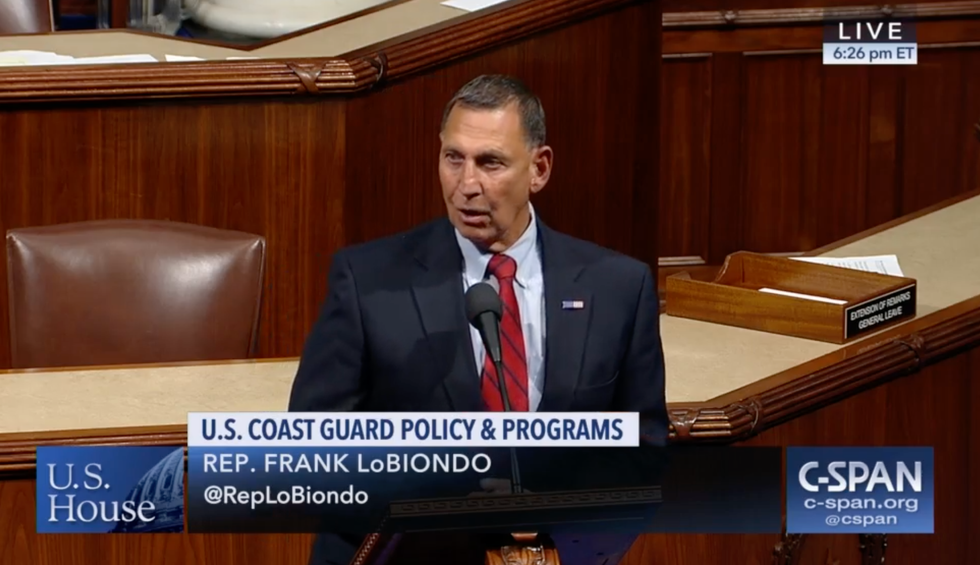 Then-Rep. Frank LoBiondo (R-NJ) speaks before the U.S. House of Representatives in November 2018. Courtesy: C-SPAN
 A tag inside a "Truth. Vote Vivek." hat distributed in Iowa by the Vivek Ramaswamy presidential campaign shows that the cap comes from a company called Otto and was made in Myanmar. The photo taken on the right shows the hat with the tag removed.
 A Ron DeSantis presidential campaign fundraising advertisement on X, formerly known as Twitter. (Screenshot)
 The top of a daily "Important Articles and Posts from President Trump" email that Donald Trump's 2024 campaign began sending out last week. Screengrab
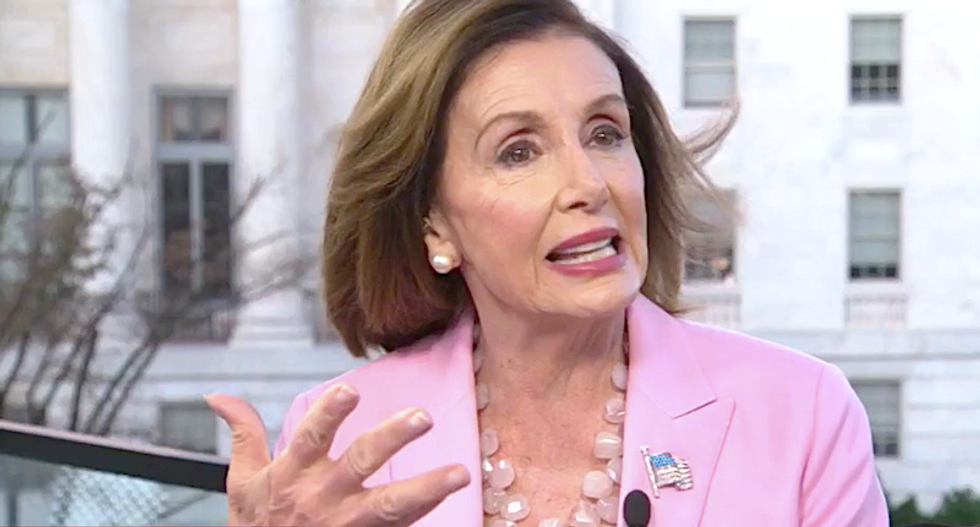 Rep. Nancy Pelosi (D-CA) is among the more than 150 political candidates and committees to surrender FTX-related campaign cash to federal authorities, according to a Raw Story analysis of federal records. (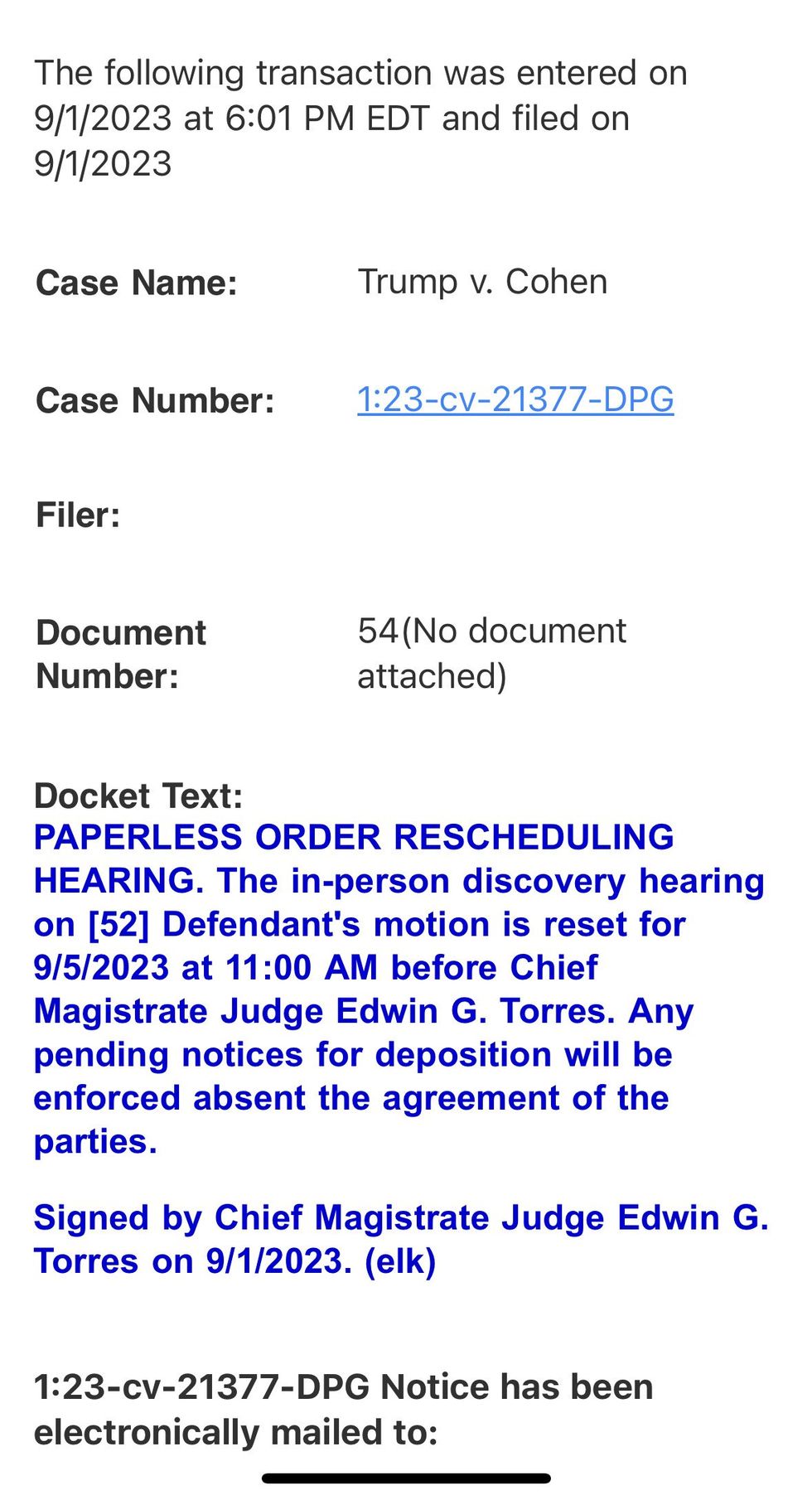
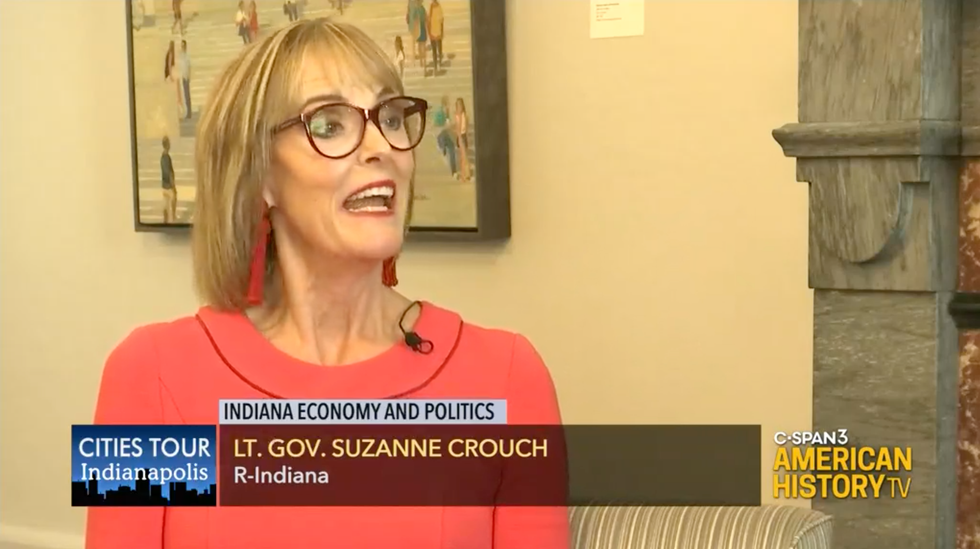 Indiana Lt. Gov. Suzanne Crouch. Courtesy: C-SPAN