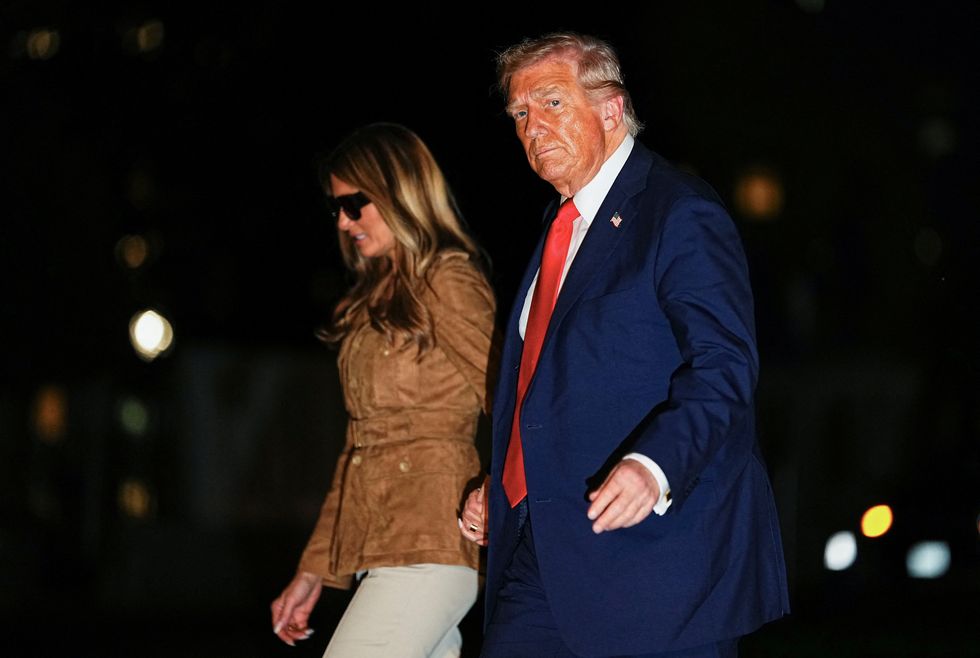
Donald Trump and Melania Trump arrive at the White House. REUTERS/Aaron Schwartz

According to excerpts from the forthcoming book "Regime Change: Inside the Imperial Presidency of Donald Trump" by New York Times reporters Maggie Haberman and Jonathan Swan, Vice President JD Vance and senior White House officials engaged in an extraordinary debate over whether to publicly release an uncorroborated allegation of sexual assault involving the president.
The White House converted the secure Situation Room—"the same facility where President Obama's team monitored the raid that killed Osama bin Laden"—into an Epstein "war room" to manage fallout from a DOJ memo claiming no "client list" of Epstein's associates existed. The memo "backfired spectacularly," triggering loud backlash among the MAGA base and prompting the Wall Street Journal to prepare a damaging article about Trump's relationship with Epstein.
Trump's senior officials gathered repeatedly in the Situation Room without the president, attempting to manage public fury over the administration's refusal to release Epstein files. The secure space, traditionally used to assess foreign threats, became instead a political bunker for managing a domestic crisis involving Trump's long friendship with Epstein who died while in custody under suspicious circumstances, the report notes.
According to the report, at an August meeting, the administration's desperation boiled over after a senior aide raised an uncorroborated, secondhand allegation from nearly a decade earlier—a claim that Trump had aggressively flicked and sucked a young woman's n-----s until they "looked incredibly painful."
The allegation had surfaced in 2024 in unsealed court filings from a civil suit unrelated to Trump. When another official raised the matter, Vance argued strenuously for including this and numerous other accusations on the Justice Department's website, framing it as an exercise in "maximum transparency." Vance contended Trump wouldn't object, having been accused of worse.
Haberman and Swan are reporting that White House Chief of Staff Susie Wiles shut down the proposal immediately, telling Vance that the president would emphatically not be fine with releasing the allegation. One official later described the moment as "surreal"—debating explicit sexual assault allegations in the nation's most secure meeting space.
Report typos and corrections to corrections@rawstory.com.
For customer support contact support@rawstory.com.