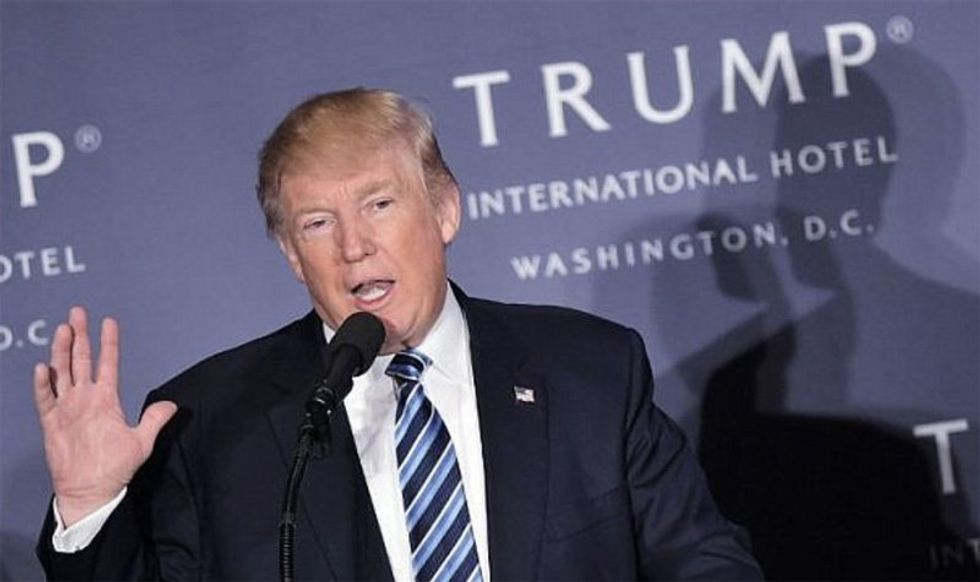
Republican presidential candidate Donald Trump during the grand opening of the Trump International Hotel in Washington, DC, October 26, 2016. (AFP Photo/Mandel Ngan)

One of Donald Trump's biographers sees the profits he scored through his hotels while president as cause for concern about blackmail or other forms of national security threats.
Speaking to MSNBC on Thursday, Tim O'Brien explained that from the very beginning there were concerns about how Trump would conduct his business while also serving as president. While he claimed to be prepared to put his companies into a blind trust, he never did, and the profits rolled in.
When doing business in Washington, foreign leaders stayed at the Trump Hotel, according to a House Oversight and Reform Committee report by Democrats who sifted through at least $8 million he made in a few years. When asked to conduct more investigations, Democrats said that chairman James Comer (R-KY) obstructed the investigation.
"I think we've known since Trump came into the White House that he offered an unprecedented set of problems because no other president had entered the Oval Office with this huge yarn of business dealings at home and abroad like Trump had, and that was clearly beyond the initial expectations," said O'Brien.
ALSO READ: ‘Official’ Trump calendar omits a critical detail
He noted that the framers of the Constitution were well aware at the time that presidents could be bribed. It's the reason they added the Emoluments Clause to the Constitution.
"It precludes presidents from accepting money, gifts or any other financially rewarding material from a foreign power without consulting Congress first," he explained. Trump never consulted with Congress.
"And that made him a national security threat and while the report is backward-looking in terms of pegging dollar amounts to Trump and his activities while he was in the White House, this remains a problem for him if he goes to the White House for a second time," said O'Brien. "He's a national security threat and he's also a threat to the foundations of good government because it's a non-partisan issue and we shouldn't have any public official who is beholden to a foreign power in any way financially because inevitably that will shape their decisions against public policy."
Trump, he said, is the example of why it's a problem, but also why the laws aren't strong enough to accommodate someone like Trump who is willing to challenge the law.
See the clip of the conversation below or click here.
Ex-House Republican aide not shocked to see Trump proffiting off presidency youtu.be
Report typos and corrections to corrections@rawstory.com.
For customer support contact support@rawstory.com.