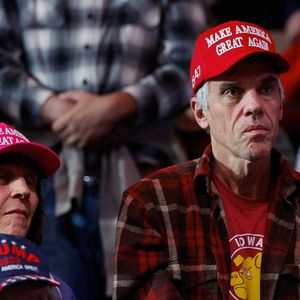
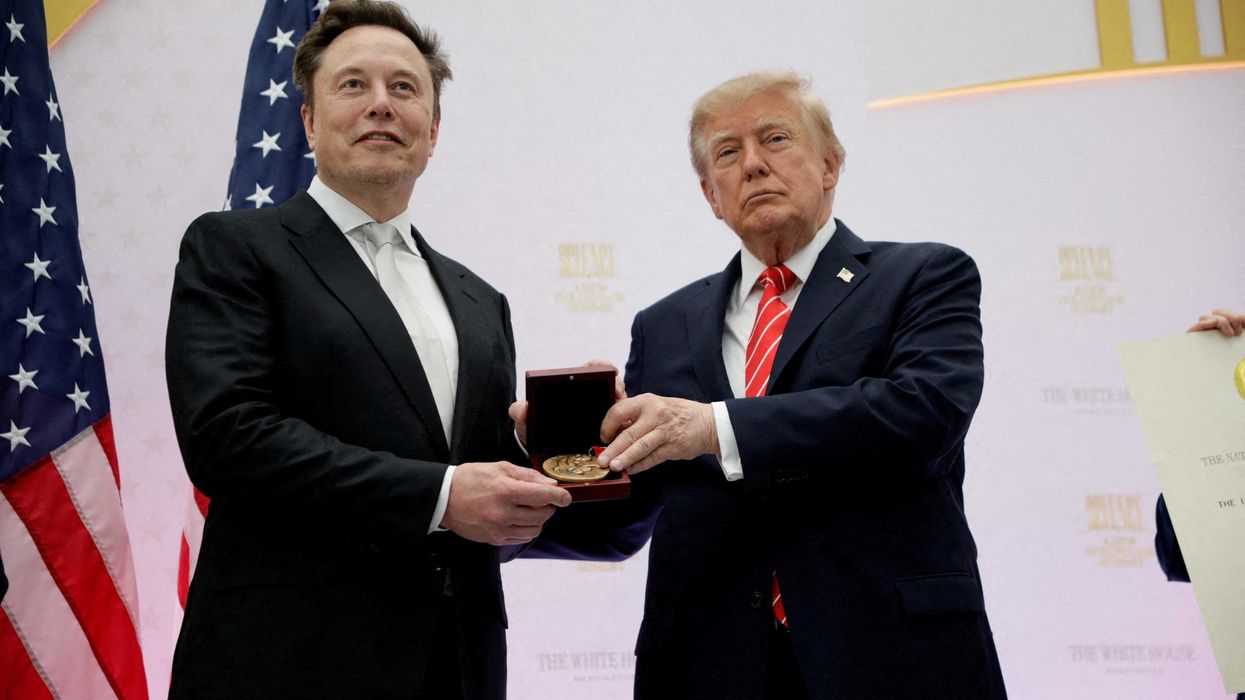
President Donald J. Trump speaking at his campaign rally in Des Moines, Iowa at Drake University's Knapp Center. (Aspects and Angles / Shutterstock.com)

During his Arizona rally, former President Donald Trump falsely accused Democrats of putting a "trigger warning" on the Constitution. He then went off on a rant against Democrats claiming they are the ones who destroy documents and "they plant documents," he continued.
"They plant documents. Let's see, is there a book on nuclear destruction or the building of nuclear weapon cheaply?" he said, sweating in the Arizona heat. "Let's put that box — let's put that in with Trump. Nah, they plant documents. They have a terrible reputation. Look at the kinda things — this is just the small part that I've read. And who would want to be with them? We're safer in that Chinese restaurant."
Immediately after stolen government documents were seized at Mar-a-Lago, Trump began claiming that documents were planted. When reports surfaced that there was nuclear information in there, Trump flew off the handle on his personal social media website. He categorically denied that he had such a document.
Trump then found a supportive judge in Florida that he went to, asking for the documents to be returned or to block the DOJ from an investigation. In their response to Trump's filing, the Justice Department showed a photo of the folders of the documents showing that they read "TOP SECRET" or "CLASSIFIED" as well as a slew of abbreviations under which their classification fell. One of those abbreviations was about nuclear programs under the Pentagon.
Former assistant director of counterintelligence at the FBI, Frank Figliuzzi, explained that among the folders were references to "special access programs" that were formerly under the Atomic Energy Act but moved to the Pentagon for defense.
"I'm not trying to be overly dramatic," Figliuzzi explained. "Even a discussion of the nature of special access programs becomes problematic. That's how sensitive they are. It's project-oriented. It could be long-term research that the government's doing on some incredibly sensitive technology. It could be the next iteration of a nuclear program or submarine. It could be a new weapons plan that's being worked on. It could be a new effort to insert people into a certain terrorist organization. We just don't know. But we know it's time sensitive. It's the most limited access you can get, and you get briefed in and out."
It was then that Trump began losing support among at least one Fox host.
During the rally, Trump also falsely said that the documents "are mine." In fact, every document created for government business by a government employee belongs to the government. Trump even went on to falsely characterize the documents as being "mine" under the Presidential Records Act. The exact opposite is the case, as the Presidential Records Act is why they do not belong to Trump.
Watch the video of Trump's rally in the video below or at the link here:
Trump claims fbi planted guide to how to build a nuclear device in boxes www.youtube.com
NOW WATCH: 'They never want to show how massive the crowd is' Trump continues to boast about Jan 6.
'They never want to show how massive the crowd is' Trump continues to boast about Jan 6 www.youtube.com
Report typos and corrections to corrections@rawstory.com.
For customer support contact support@rawstory.com.