Prime Minister Jacinda Ardern declared on Monday New Zealand "beat the virus again" and announced restrictions in the country's largest city would be eased, after a second Covid-19 wave was contained.
The virus was believed to have been eradicated in late May after a strict national lockdown led to New Zealanders enjoying 102 days without community transmission.
But a new cluster emerged in Auckland in August, forcing the city of 1.5 million into lockdown for almost three weeks.
With no new confirmed cases in Auckland for 12 days, Ardern said Monday the virus was now under control and congratulated residents for enduring the second lockdown.
"It felt longer and dragged on in what was already starting to feel like a very long year," she said.
"But despite this, Aucklanders and New Zealanders stuck to the plan that has worked twice now, and beat the virus again."
Ardern said from late Wednesday Auckland would join the rest of New Zealand on level one, the lowest rating on the government's four-tier virus alert system.
Under the change, there are no restrictions on social gatherings, allowing the second Bledisloe Cup Test in Auckland on October 18 to be played in front of a full stadium at Eden Park.
"This is positive news that (Auckland fans) will be able to enjoy Test match rugby," New Zealand Rugby said in a statement.
New Zealand has recorded just 25 Covid-19 deaths in a population of five million, with 40 active cases in the country on Monday.
But Ardern, who faces a general election on October 17, warned success could not be taken for granted.
She pointed to a decline in the use of the official Covid-19 tracing app and falling virus test numbers.
"A resurgence of the virus is not our only worry, resurgence of complacency is right up there too," Ardern said.
Beersheba may have been the true birthplace of Start Up Nation, since according to a new study by Tel Aviv University and the Israel Antiquities Authority, the capital of the Negev could have been the home of the world’s first furnace 6,500 years ago.The results of the study have just been published in the prestigious Journal of Archaeological Science: Reports.It details how a 6,500-year-old workshop for smelting copper ore once operated in the Neveh Noy neighborhood of Beersheba.This study sheds light both on the level of technical advancement in that era and region and the hierarchy in the s...
Entre Rios (Guatemala) (AFP) - More than 2,000 migrants on Saturday dropped their bid to reach the United States after Guatemala threatened to expel them out of concern they might spread Covid-19.The group, mostly made up of Hondurans who set out last Thursday from San Pedro Sula, asked local authorities to help them return home, the Guatemalan president's office told news media. An AFP journalist saw some being loaded into army trucks for the return trip.But some small groups said they remained determined to reach the US to escape the poverty and violence in their home country.Late Thursday, ...
Washington (AFP) - Artful photos of sunsets and ice cream are being challenged by more activist content on Instagram as it turns 10 years old in a time of social justice protests, climate crisis, and the pandemic.Founded in 2010 by Kevin Systrom and Mike Krieger, the app had one billion users two years and has grown fast since then, after first capturing the public's attention with its image filters, and easy photo editing and sharing tools.But playful pictures, once a hallmark of Instagram, are increasingly seen as off-key when people are "losing jobs, being sick, isolated and depressed, then...
British Prime Minister Boris Johnson said on Sunday that he felt "fitter than several butchers' dogs" after being infected with Covid-19 earlier this year and was sure coronavirus-stricken US President Donald Trump will be "fine."In his interview with the BBC, Johnson, who was moved to intensive care in April due to the coronavirus, said that he was not feeling any lingering effects. According to the BBC, Johnson has lost weight since in efforts to fight the virus.Also Sunday, Johnson pointed out that obesity can be a problem when it comes to fighting the coronavirus but did not specifically a...
Archaeologists in Egypt said Saturday they had found 59 well-preserved and sealed wooden coffins over recent weeks that were buried more than 2,500 years ago.
Opening one of the ornately decorated sarcophagi before assembled media, the team revealed mummified remains wrapped in burial cloth that bore hieroglyphic inscriptions in bright colours.
The dramatic find was unearthed south of Cairo in the sprawling burial ground of Saqqara, the necropolis of the ancient Egyptian capital of Memphis, a UNESCO World Heritage site.
"We are very happy about this discovery," said Mostafa Waziri, secretary general of the Supreme Council of Antiquities.
Since the find of the first 13 coffins was announced almost three weeks ago, more have been discovered in shafts at depths of up to 12 metres (40 feet).
An unknown number of additional coffins may still lie buried there, the tourism and antiquities minister, Khaled al-Anani, said at the site, near the 4,700-year-old pyramid of Djoser.
"So today is not the end of the discovery, I consider it the beginning of the big discovery," he said.
The coffins, sealed more than 2,500 years ago, date back to the Late Period of ancient Egypt, from about the sixth or seventh century BC, the minister added.
Excavations in Saqqara have in recent years unearthed troves of artefacts as well as mummified snakes, birds, scarab beetles and other animals.
- Major discovery -
The discovery of the coffins is the first major announcement since the outbreak of Covid-19 in Egypt, which led to the closure of museums and archaeological sites for around three months from late March.
Dozens of statues were also found in the area including a bronze figurine depicting Nefertem, an ancient god of the lotus blossom.
Preliminary studies indicated the sarcophagi likely belonged to priests, senior statesman, and prominent figures in the ancient Egyptian society of the 26th dynasty, Anani said.
All the coffins would be taken to the soon-to-be-opened Grand Egyptian Museum on the Giza plateau, he added.
They would be placed opposite a hall hosting 32 other sealed sarcophagi for priests from the 22nd dynasty, which were found last year in the southern city of Luxor.
The opening of the Grand Egyptian Museum, which has been delayed several times, is planned for 2021.
The museum will host thousands of artefacts, spanning multiple eras of Egypt's history, from the pre-dynastic to the Greco-Roman period.
Egypt hopes a flurry of archaeological finds in recent years and the Grand Egyptian Museum will boost its vital tourism sector, which has suffered multiple shocks since the 2011 Arab Spring uprisings, most recently the pandemic.
The year 2020 is the hottest in the Antarctic Peninsula in the past three decades, a study by the University of Santiago de Chile out Friday found.
Between January and August, temperatures reached between 2 and 3 degrees Celsius (35.6 and 37.4 degrees Fahrenheit) on the peninsula, which is the northernmost part of mainland Antarctica, according to researchers at the Chilean Air Force's Frei Base on King George Island.
Those temperatures are "more than 2 degrees Celsius over typical values," climatologist Raul Cordero said in a statement released by the Chilean Antarctic Institute (INACH).
"In the far northern tip of the Antarctic Peninsula, the average maximum temperature so far this year has been above 0 degrees. This had not happened for 31 years," Cordero added.
He called that fact "alarming," since it could indicate that the rapid rate of ocean warming observed in the area at the end of the 20th century is resuming.
The high Southern Hemisphere winter temperatures are in contrast, however, with those registered between August and September, which reached -16.8 degrees Celsius, the lowest since 1970.
The Antarctic Peninsula is the northernmost part of Antarctica, where there are scientific and military bases from several countries, including Argentina, Chile and Britain.
President Donald Trump was treated Friday for Covid-19 with a high-dose of the experimental antibody drug developed by the US biotech firm Regeneron.
What is it, how far along are its clinical trials, and why do some experts disagree with using a medicine before it's been approved?
Here's what you need to know.
Regeneron's treatment, called REGN-COV2, is a combination or "cocktail" of two antibodies: infection-fighting proteins that were developed to bind to the part of the new coronavirus that it uses to invade human cells.
The antibodies attach themselves to different parts of the virus' "spike protein," distorting its structure -- similar in a way to knocking a key out of shape so it no longer fits its lock.
Vaccines work by teaching the body to make its own antibodies, but scientists are also testing ready-made antibodies from convalescent plasma, taken from the blood of recovered patients.
But it is not possible to make convalescent plasma a mass treatment.
Researchers can also comb through antibodies produced by recovered patients and select the most effective out of thousands, and then manufacture them at scale.
In a paper published in Science in June, Regeneron scientists described how they selected the two best antibodies from both recovered human patients and infected mice that were genetically modified to give them human-like immune systems.
In another paper in the same journal, scientists argued that by using two antibodies, they had guarded against the possibility that SARS-CoV-2 might randomly mutate to evade the blocking action of one, and then go on to become the dominant strain of the virus.
The company used the same "humanized mouse" technology to develop a triple-antibody cocktail which was shown to be effective against Ebola last year.
"That's part of what's giving us confidence, the platform has been tried and has been shown to be to work very, very well," Christos Kyratsous, Regeneron's lead infectious disease scientist told AFP in March.
The treatments are given by an intravenous drip.
Clinical trials are being carried out to test the drug's safety and efficacy at different dose levels and to compare it against a placebo, to answer this question.
On Tuesday, the firm announced some results from an early stage clinical trial, saying that its treatment reduced the viral load and recovery time in non-hospitalized Covid-19 patients.
The results related to 275 patients, and Regeneron's president George Yancopoulos said the company had begun talks with regulatory authorities -- presumably for temporary approval before full licensure.
But the detailed data hasn't yet been made public or peer-reviewed.
In terms of safety, it said "infusion reactions" were seen in four patients -- two on placebo and two on the drug, while "serious adverse events" occurred in two placebo patients and one on the drug. No one died.
The company did not detail what these side-effects were, but Arun Swaminath, a doctor at New York's Lenox Hill Hospital, said that in general, mild reactions to IV-therapies include fevers, chills and fatigue.
More serious symptoms include chest pain and shortness of breath.
The outpatient trial has now moved to late-stage.
Regeneron is also running late-stage trials for hospitalized Covid-19 patients in the UK and for the drug's potential use to prevent household contacts of Covid-19 patients from being infected.
The decision to give Trump the treatment before the trials have even produced enough data for emergency use authorization has puzzled some scientists.
Carla Perissinotto, a geriatrician and professor at the University of California, San Francisco, told AFP that using unapproved treatments on a "compassionate use" basis normally happens when everything else has failed.
"The risk of having side effects is so much greater, that I usually am very cautious about anything that's experimental and not proven," she said.
Jeremy Faust, a public health expert at Harvard, said it raised uncomfortable possibilities: Either the president's team had not understood the scientific process, or they had understood but were overridden by Trump on someone else's advice.
"People will see this and they'll think that this is the treatment you should have -- and if you don't give it to other people who have coronavirus that we're denying them special treatment.
"In reality that's not the case... we shouldn't be treating the president as a guinea pig."
North Korean leader Kim Jong Un sent a message to Donald Trump after the US president's diagnosis with coronavirus, wishing him a quick recovery, state media said Saturday.
"He offered his sympathy to the president and the first lady," the official Korean Central News Agency (KCNA) reported.
"He sincerely hoped that they would be recovered as soon as possible. He hoped they will surely overcome it. He sent warm greetings to them."
South Korea's Yonhap news agency said it was the first time Kim had sent well wishes to a world leader who tested positive for the novel coronavirus.
Trump announced in the early hours of Friday that he had tested positive for Covid-19. Later in the day, he headed to a military hospital for further observation and treatment.
Trump and Kim held three high-profile meetings starting in June 2018, after an uptick in tensions between Washington and Pyongyang at the start of Trump's term.
But nothing concrete emerged in terms of Pyongyang's denuclearization, and talks have been officially at a standstill for months.
US Secretary of State Mike Pompeo said in mid-September that talks were ongoing behind the scenes.
Trump has consistently portrayed his close relationship with Kim as one of his foreign policy achievements.
Chancellor Angela Merkel said Friday that the drastic limits placed on people's freedoms to curb the coronavirus earlier this year had weighed heavily on her, bringing back memories of life in surveillance-riddled East Germany.
Speaking on the eve of the 30th anniversary of German reunification, Merkel told the RND newspaper group she was acutely aware of the sacrifices she was asking of Germans when the country went into lockdown in March.
"That I had to tell people they could only be out in the street in a single household or just two persons at a time, that no events could take place, that children could not visit their parents in care homes -- these were serious restrictions."
A pastor's daughter who grew up behind the Iron Curtain in the communist German Democratic Republic (GDR), Merkel, 66, said she reflected a lot on her childhood and youth when making those tough calls in the early days of the pandemic.
"My background has shaped me," she said, recalling "the longing for freedom during life in the GDR".
But the veteran leader, who as a young woman rejected an offer to inform for the Stasi secret police, said her experiences in former East Germany also prepared her for difficult times.
"We learned to improvise and we always managed well despite many shortages. These are skills that are useful today too."
Three decades on, Germany is planning muted celebrations to remember the historic unification of the communist East with the capitalist West, as the nation battles an uptick in coronavirus infections.
The Berlin Wall fell in a peaceful revolution on November 9, 1989, paving the way for the formal reunification of Germany on October 3, 1990.
"Until the fall of the Wall, I never thought that German reunification would happen in my lifetime," said Merkel, who plans to step down next year.
"When it did become reality, it was a wonderful experience that taught me that change can be good, and change for the better is possible."
Before March of this year, few probably thought disease could be a significant driver of human history.
Not so anymore. People are beginning to understand that the little changes COVID-19 has already ushered in or accelerated – telemedicine, remote work, social distancing, the death of the handshake, online shopping, the virtual disappearance of cash and so on – have begun to change their way of life. They may not be sure whether these changes will outlive the pandemic. And they may be uncertain whether these changes are for good or ill.
Three previous plagues could yield some clues about the way COVID-19 might bend the arc of history. As I teach in my course “Plagues, Pandemics and Politics,” pandemics tend to shape human affairs in three ways.
First, they can profoundly alter a society’s fundamental worldview. Second, they can upend core economic structures. And, finally, they can sway power struggles among nations.
While staggering, the number of deaths tells only part of the story. This also triggered a profound transformation in the religious culture of the Roman Empire.
On the eve of the Antonine plague, the empire was pagan. The vast majority of the population worshipped multiple gods and spirits and believed that rivers, trees, fields and buildings each had their own spirit.
Christianity, a monotheistic religion that had little in common with paganism, had only 40,000 adherents, no more than 0.07% of the empire’s population.
Yet within a generation of the end of the Cyprian plague, Christianity had become the dominant religion in the empire.
How did these twin pandemics effect this profound religious transformation?
Rodney Stark, in his seminal work “The Rise of Christianity,” argues that these two pandemics made Christianity a much more attractive belief system.
While the disease was effectively incurable, rudimentary palliative care – the provision of food and water, for example – could spur recovery of those too weak to care for themselves. Motivated by Christian charity and an ethic of care for the sick – and enabled by the thick social and charitable networks around which the early church was organized – the empire’s Christian communities were willing and able to provide this sort of care.
Pagan Romans, on the other hand, opted instead either to flee outbreaks of the plague or to self-isolate in the hope of being spared infection.
This had two effects.
First, Christians survived the ravages of these plagues at higher rates than their pagan neighbors and developed higher levels of immunity more quickly. Seeing that many more of their Christian compatriots were surviving the plague – and attributing this either to divine favor or the benefits of the care being provided by Christians – many pagans were drawn to the Christian community and the belief system that underpinned it. At the same time, tending to sick pagans afforded Christians unprecedented opportunities to evangelize.
Second, Stark argues that, because these two plagues disproportionately affected young and pregnant women, the lower mortality rate among Christians translated into a higher birth rate.
The net effect of all this was that, in roughly the span of a century, an essentially pagan empire found itself well on its way to becoming a majority Christian one.
The plague of Justinian and the fall of Rome
The plague of Justinian, named after the Roman emperor who reigned from A.S. 527 to 565, arrived in the Roman Empire in A.D. 542 and didn’t disappear until A.D. 755. During its two centuries of recurrence, it killed an estimated 25% to 50% of the population – anywhere from 25 million to 100 million people.
This massive loss of lives crippled the economy, triggering a financial crisis that exhausted the state’s coffers and hobbled the empire’s once mighty military.
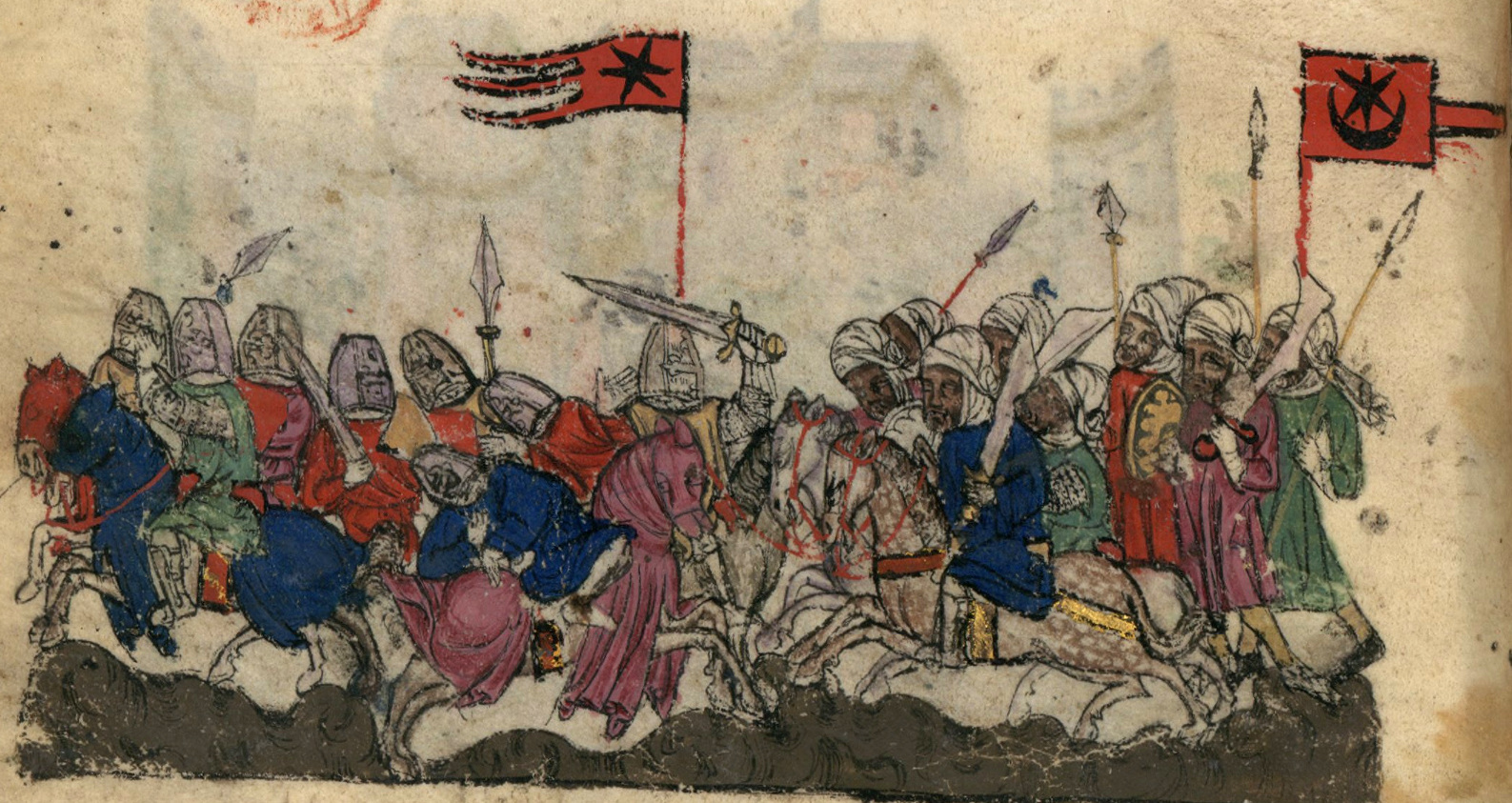
In the east, Rome’s principal geopolitical rival, Sassanid Persia, was also devastated by the plague and was therefore in no position to exploit the Roman Empire’s weakness. But the forces of the Islamic Rashidun Caliphate in Arabia – which had long been contained by the Romans and Sasanians – were largely unaffected by the plague. The reasons for this are not well understood, but they probably have to do with the caliphate’s relative isolation from major urban centers.
Caliph Abu Bakr didn’t let the opportunity go to waste. Seizing the moment, his forces swiftly conquered the entire Sasanian Empire while stripping the weakened Roman Empire of its territories in the Levant, the Caucasus, Egypt and North Africa.
Muslim forces of the Rashidun Caliphate captured the Levant – a region of the Middle East – from the Byzantine Empire in A.D. 636.
Pre-pandemic, the Mediterranean world had been relatively unified by commerce, politics, religion and culture. What emerged was a fractured trio of civilizations jockeying for power and influence: an Islamic one in the eastern and southern Mediterranean basin; a Greek one in the northeastern Mediterranean; and a European one between the western Mediterranean and the North Sea.
This last civilization – what we now call medieval Europe – was defined by a new, distinctive economic system.
Before the plague, the European economy had been based on slavery. After the plague, the significantly diminished supply of slaves forced landowners to begin granting plots to nominally “free” laborers – serfs who worked the lord’s fields and, in return, received military protection and certain legal rights from the lord.
The seeds of feudalism were planted.
The Black Death of the Middle Ages
The Black Death broke out in Europe in 1347 and subsequently killed between one-third and one-half of the total European population of 80 million people. But it killed more than people. By the time the pandemic had burned out by the early 1350s, a distinctly modern world emerged – one defined by free labor, technological innovation and a growing middle class.
But the loss of so much life shook up an ossified society.
Labor shortages gave peasants more bargaining power. In the agrarian economy, they also encouraged the widespread adoption of new and existing technologies – the iron plow, the three-field crop rotation system and fertilization with manure, all of which significantly increased productivity. Beyond the countryside, it resulted in the invention of time and labor-saving devices such as the printing press, water pumps for draining mines and gunpowder weapons.
In turn, freedom from feudal obligations and a desire to move up the social ladder encouraged many peasants to move to towns and engage in crafts and trades. The more successful ones became wealthier and constituted a new middle class. They could now afford more of the luxury goods that could be obtained only from beyond Europe’s frontiers, and this stimulated both long-distance trade and the more efficient three-masted ships needed to engage in that trade.
The new middle class’s increasing wealth also stimulated patronage of the arts, science, literature and philosophy. The result was an explosion of cultural and intellectual creativity – what we now call the Renaissance.
Our present future
None of this is to argue that the still-ongoing COVID-19 pandemic will have similarly earth-shattering outcomes. The mortality rate of COVID-19 is nothing like that of the plagues discussed above, and therefore the consequences may not be as seismic.
But there are some indications that they could be.
Will the bumbling efforts of the open societies of the West to come to grips with the virus shattering already-wavering faith in liberal democracy, creating a space for other ideologies to evolve and metastasize?
In a similar fashion, COVID-19 may be accelerating an already ongoing geopolitical shift in the balance of power between the U.S. and China. During the pandemic, China has taken the global lead in providing medical assistance to other countries as part of its “Health Silk Road” initiative. Some argue that the combination of America’s failure to lead and China’s relative success at picking up the slack may well be turbocharging China’s rise to a position of global leadership.
Finally, COVID-19 seems to be accelerating the unraveling of long-established patterns and practices of work, with repercussions that could affet the future of office towers, big cities and mass transit, to name just a few. The implications of this and related economic developments may prove as profoundly transformative as those triggered by the Black Death in 1347.
Ultimately, the longer-term consequences of this pandemic – like all previous pandemics – are simply unknowable to those who must endure them. But just as past plagues made the world we currently inhabit, so too will this plague likely remake the one populated by our grandchildren and great-grandchildren.
Thousands of mostly Honduran migrants bound for the United States surged across the border into Guatemala on Thursday.
Carrying backpacks and plastic bags, the migrants pushed past two lines of Guatemalan soldiers at the Entre Rios border crossing and continued northwards -- defying the risks and restrictions linked to the coronavirus pandemic.
The soldiers handed out water to passing migrants, some of whom applauded the troops for allowing them to pass.
Guatemalan Migration Institute officials said some 3,000 people had crossed the border without submitting to a Covid-19 test, required for foreigners entering the country.
Many were not wearing masks against the spread of infection.
Guatemala opened its borders last week after a six-month closure to prevent the spread of the virus, which has hit Central American countries hard.
The migrants had set off on Wednesday night from Honduras' second city San Pedro Sula.
Honduran Red Cross officials said 1,200 people left in a first group, joined a few hours later by around 2,000 more, walking north to the border with Guatemala.
Some of the migrants said they recognized the risks of catching the coronavirus while on the move, but were prepared to take the risk to escape from high levels of poverty and violence in Honduras.
"We're not thinking about the pandemic, it's the last thing on our minds," 20-year-old Jefrey Amaya told AFP, part of a group of young people from El Negrito, in Honduras' Yoro department.
Amaya said he had joined the caravan after seeing a message on social media.
"We are going in search of the American dream, no one will stop us. Either we die here from Covid-19 or we die of hunger. Governments are doing nothing to create jobs," another migrant, 27-year-old Miguel Artiga, told AFP.
The vast majority of the migrants on the move are young men. Few women and children were seen.
Astronomers have discovered six galaxies ensnared in the cosmic "spider's web" of a supermassive black hole soon after the Big Bang, according to research published Thursday that could help explain the development of these enigmatic monsters.
Black holes that emerged early in the history of the Universe are thought to have formed from the collapse of the first stars, but astronomers have puzzled over how they expanded into giants.
The newly discovered black hole -- which dates from when the Universe was not even a billion years old -- weighs in at one billion times the mass of our Sun and was spotted by the European Southern Observatory (ESO).
Scientists said the finding helps provide an explanation for how supermassive black holes such as the one at the centre of our Milky Way may have developed.
This is because astronomers believe the filaments trapping the cluster of galaxies are carrying enough gas to "feed" the black hole, enabling it to grow.
"The cosmic web filaments are like spider's web threads," said Marco Mignoli, an astronomer at the National Institute for Astrophysics (INAF) in Bologna who led the research, which was published in the journal Astronomy & Astrophysics.
"The galaxies stand and grow where the filaments cross, and streams of gas -- available to fuel both the galaxies and the central supermassive black hole -- can flow along the filaments."
Mignoli said that until now there had been "no good explanation" for the existence of such huge early black holes.
- 'Tip of the iceberg' -
Researchers said the web structure may have formed with the help of dark matter -- thought to attract huge amounts of gas in the early Universe.
"Our finding lends support to the idea that the most distant and massive black holes form and grow within massive dark matter halos in large-scale structures, and that the absence of earlier detections of such structures was likely due to observational limitations," said co-author Colin Norman of Johns Hopkins University.
The entire web is over 300 times the size of the Milky Way, according to a statement from ESO.
But it said the galaxies are also some of the faintest that current telescopes can spot, adding the discovery was only possible using the largest optical telescopes available, including ESO's Very Large Telescope in Chile's Atacama Desert.
"We believe we have just seen the tip of the iceberg, and that the few galaxies discovered so far around this supermassive black hole are only the brightest ones," said co-author Barbara Balmaverde, an astronomer at INAF in Torino, Italy.
The research is the latest to try and illuminate the mysterious formation of these cosmic monsters, which are so dense that not even light can escape their gravitational pull.
In September, two consortiums of some 1,500 scientists reported the discovery of GW190521, formed by the collision of two smaller black holes.
What scientists observed were gravitational waves produced more than seven billion years ago when they smashed together, releasing eight solar masses worth of energy and creating one of the most powerful events in the Universe since the Big Bang.
At 142 solar masses, GW190521 was the first "intermediate mass" black hole ever observed.
Scientists said the finding challenges current theories on the formation of supermassive black holes, suggesting it could be through the repeated merger of these mid-sized bodies.