On Thursday, Bloomberg News reporter Jennifer Jacobs revealed that Hope Hicks, a longtime close aide to President Donald Trump, has tested positive for coronavirus.
Hicks traveled directly with the president aboard Air Force One this week, both to the debate and to his rally in Minnesota, making it one of the closest-proximity cases of the virus to him. However, Jacobs reports that there is no sign that Trump himself has been infected.
On Thursday, Politico reported that several GOP senators facing a tough re-election bid in November are growing frustrated over Congress' failure to get a new round of COVID-19 relief passed.
“There’s no reason we shouldn’t all be here until the election if that’s what it takes to pass a follow up to the CARES Act,” said Sen. Thom Tillis (R-NC), who has mostly trailed or tied Democratic challenger Cal Cunningham. Sen. Susan Collins (R-ME), trailing in most polls against Maine House Speaker Sara Gideon, agreed, saying “I do not think we should recess without a coronavirus package,” and Sen. David Perdue (R-GA), whose race is also close, said "This should’ve been done three weeks ago ... I'm very frustrated by that."
All of this comes as the economic rebound from early summer has slowed, with the previous round of stimulus tapering off.
"The Senate appears to be sticking around for at least another week, if not more, to keep the Supreme Court nomination of Amy Coney Barrett moving forward," reported Burgess Everett and John Bresnahan."Judiciary Committee confirmation hearings on Barret are set to begin Oct. 12. And the House can always reconvene to process a bill if there’s any deal. But it might take a push from those most at risk of losing their jobs in a month to get any deal over the finish line."
Senate Majority Leader Mitch McConnell (R-KY) has tried to hold the line on keeping the stimulus package spending low, fearful that another multi-trillion-dollar package would fracture his caucus. The Trump administration has proposed a package of $1.6 trillion, and many Senate Republicans have suggested they are open to this.
As of Thursday evening, there is still no sign of an agreement, with House Speaker Nancy Pelosi (D-CA) saying no deal is in sight.
Before March of this year, few probably thought disease could be a significant driver of human history.
Not so anymore. People are beginning to understand that the little changes COVID-19 has already ushered in or accelerated – telemedicine, remote work, social distancing, the death of the handshake, online shopping, the virtual disappearance of cash and so on – have begun to change their way of life. They may not be sure whether these changes will outlive the pandemic. And they may be uncertain whether these changes are for good or ill.
Three previous plagues could yield some clues about the way COVID-19 might bend the arc of history. As I teach in my course “Plagues, Pandemics and Politics,” pandemics tend to shape human affairs in three ways.
First, they can profoundly alter a society’s fundamental worldview. Second, they can upend core economic structures. And, finally, they can sway power struggles among nations.
While staggering, the number of deaths tells only part of the story. This also triggered a profound transformation in the religious culture of the Roman Empire.
On the eve of the Antonine plague, the empire was pagan. The vast majority of the population worshipped multiple gods and spirits and believed that rivers, trees, fields and buildings each had their own spirit.
Christianity, a monotheistic religion that had little in common with paganism, had only 40,000 adherents, no more than 0.07% of the empire’s population.
Yet within a generation of the end of the Cyprian plague, Christianity had become the dominant religion in the empire.
How did these twin pandemics effect this profound religious transformation?
Rodney Stark, in his seminal work “The Rise of Christianity,” argues that these two pandemics made Christianity a much more attractive belief system.
While the disease was effectively incurable, rudimentary palliative care – the provision of food and water, for example – could spur recovery of those too weak to care for themselves. Motivated by Christian charity and an ethic of care for the sick – and enabled by the thick social and charitable networks around which the early church was organized – the empire’s Christian communities were willing and able to provide this sort of care.
Pagan Romans, on the other hand, opted instead either to flee outbreaks of the plague or to self-isolate in the hope of being spared infection.
This had two effects.
First, Christians survived the ravages of these plagues at higher rates than their pagan neighbors and developed higher levels of immunity more quickly. Seeing that many more of their Christian compatriots were surviving the plague – and attributing this either to divine favor or the benefits of the care being provided by Christians – many pagans were drawn to the Christian community and the belief system that underpinned it. At the same time, tending to sick pagans afforded Christians unprecedented opportunities to evangelize.
Second, Stark argues that, because these two plagues disproportionately affected young and pregnant women, the lower mortality rate among Christians translated into a higher birth rate.
The net effect of all this was that, in roughly the span of a century, an essentially pagan empire found itself well on its way to becoming a majority Christian one.
The plague of Justinian and the fall of Rome
The plague of Justinian, named after the Roman emperor who reigned from A.S. 527 to 565, arrived in the Roman Empire in A.D. 542 and didn’t disappear until A.D. 755. During its two centuries of recurrence, it killed an estimated 25% to 50% of the population – anywhere from 25 million to 100 million people.
This massive loss of lives crippled the economy, triggering a financial crisis that exhausted the state’s coffers and hobbled the empire’s once mighty military.
In the east, Rome’s principal geopolitical rival, Sassanid Persia, was also devastated by the plague and was therefore in no position to exploit the Roman Empire’s weakness. But the forces of the Islamic Rashidun Caliphate in Arabia – which had long been contained by the Romans and Sasanians – were largely unaffected by the plague. The reasons for this are not well understood, but they probably have to do with the caliphate’s relative isolation from major urban centers.
Caliph Abu Bakr didn’t let the opportunity go to waste. Seizing the moment, his forces swiftly conquered the entire Sasanian Empire while stripping the weakened Roman Empire of its territories in the Levant, the Caucasus, Egypt and North Africa.
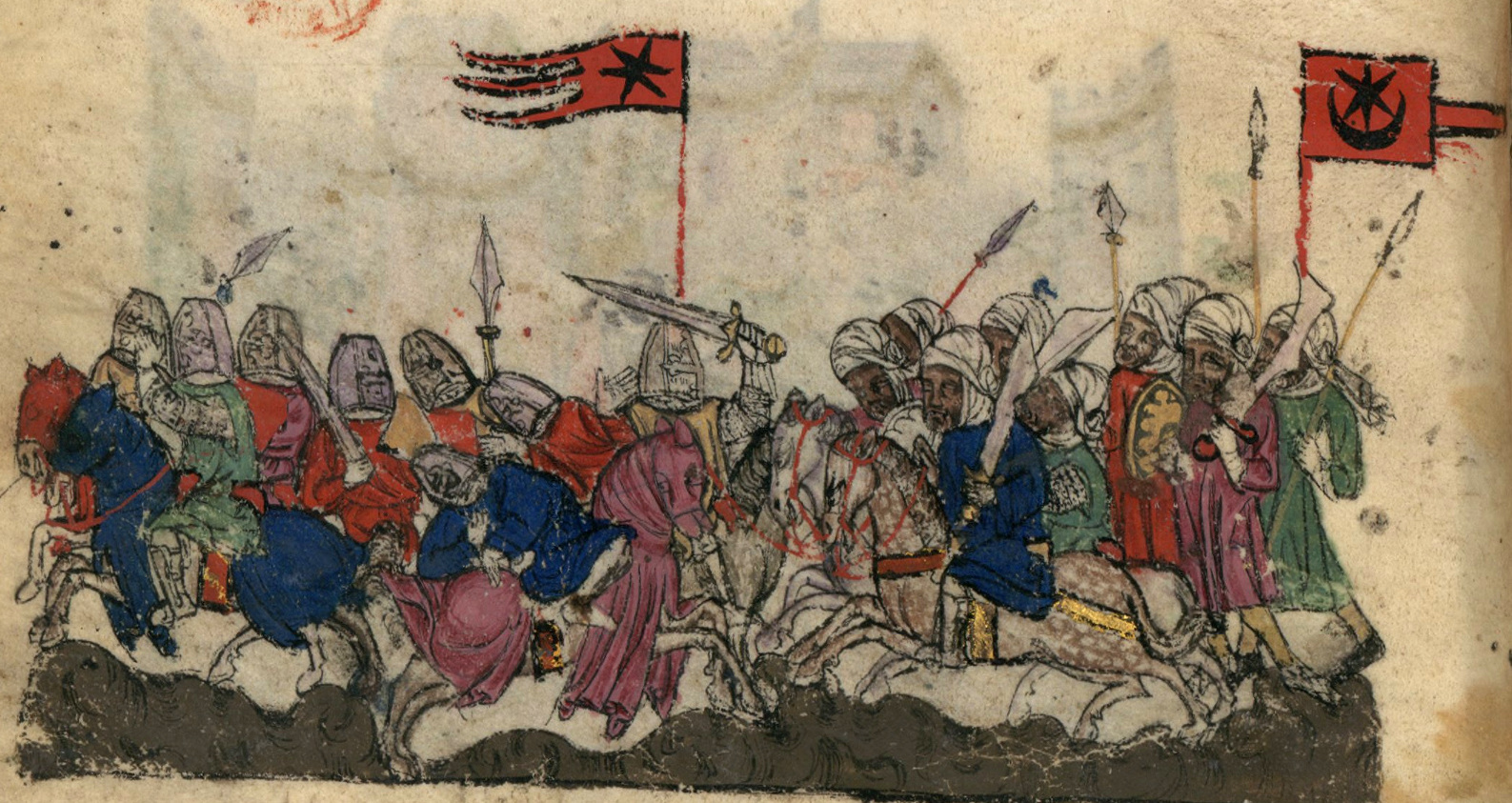
Muslim forces of the Rashidun Caliphate captured the Levant – a region of the Middle East – from the Byzantine Empire in A.D. 636.
Pre-pandemic, the Mediterranean world had been relatively unified by commerce, politics, religion and culture. What emerged was a fractured trio of civilizations jockeying for power and influence: an Islamic one in the eastern and southern Mediterranean basin; a Greek one in the northeastern Mediterranean; and a European one between the western Mediterranean and the North Sea.
This last civilization – what we now call medieval Europe – was defined by a new, distinctive economic system.
Before the plague, the European economy had been based on slavery. After the plague, the significantly diminished supply of slaves forced landowners to begin granting plots to nominally “free” laborers – serfs who worked the lord’s fields and, in return, received military protection and certain legal rights from the lord.
The seeds of feudalism were planted.
The Black Death of the Middle Ages
The Black Death broke out in Europe in 1347 and subsequently killed between one-third and one-half of the total European population of 80 million people. But it killed more than people. By the time the pandemic had burned out by the early 1350s, a distinctly modern world emerged – one defined by free labor, technological innovation and a growing middle class.
But the loss of so much life shook up an ossified society.
Labor shortages gave peasants more bargaining power. In the agrarian economy, they also encouraged the widespread adoption of new and existing technologies – the iron plow, the three-field crop rotation system and fertilization with manure, all of which significantly increased productivity. Beyond the countryside, it resulted in the invention of time and labor-saving devices such as the printing press, water pumps for draining mines and gunpowder weapons.
In turn, freedom from feudal obligations and a desire to move up the social ladder encouraged many peasants to move to towns and engage in crafts and trades. The more successful ones became wealthier and constituted a new middle class. They could now afford more of the luxury goods that could be obtained only from beyond Europe’s frontiers, and this stimulated both long-distance trade and the more efficient three-masted ships needed to engage in that trade.
The new middle class’s increasing wealth also stimulated patronage of the arts, science, literature and philosophy. The result was an explosion of cultural and intellectual creativity – what we now call the Renaissance.
Our present future
None of this is to argue that the still-ongoing COVID-19 pandemic will have similarly earth-shattering outcomes. The mortality rate of COVID-19 is nothing like that of the plagues discussed above, and therefore the consequences may not be as seismic.
But there are some indications that they could be.
Will the bumbling efforts of the open societies of the West to come to grips with the virus shattering already-wavering faith in liberal democracy, creating a space for other ideologies to evolve and metastasize?
In a similar fashion, COVID-19 may be accelerating an already ongoing geopolitical shift in the balance of power between the U.S. and China. During the pandemic, China has taken the global lead in providing medical assistance to other countries as part of its “Health Silk Road” initiative. Some argue that the combination of America’s failure to lead and China’s relative success at picking up the slack may well be turbocharging China’s rise to a position of global leadership.
Finally, COVID-19 seems to be accelerating the unraveling of long-established patterns and practices of work, with repercussions that could affet the future of office towers, big cities and mass transit, to name just a few. The implications of this and related economic developments may prove as profoundly transformative as those triggered by the Black Death in 1347.
Ultimately, the longer-term consequences of this pandemic – like all previous pandemics – are simply unknowable to those who must endure them. But just as past plagues made the world we currently inhabit, so too will this plague likely remake the one populated by our grandchildren and great-grandchildren.
A Covid-19 nasal swab test ruptured the lining at the base of a US woman's skull, causing cerebrospinal fluid to leak from her nose and putting her at risk of brain infection, doctors reported in a medical journal Thursday.
The patient, who is in her 40s, had an undiagnosed rare condition and the test she received may have been carried out improperly, a sequence of improbable events that means the risk from nasal tests remains very low.
But health care professionals should take care to follow testing protocols closely, Jarrett Walsh, senior author of the paper that appeared in JAMA Otolaryngology–Head & Neck Surgery, told AFP.
People who've had extensive sinus or skull base surgery should consider requesting oral testing if available, he said.
"It underscores the necessity of adequate training of those performing the test and the need for vigilance after the test has been performed," added ear, nose and throat specialist Dennis Kraus of, Lenox Hill Hospital in New York, who wasn't involved in the paper.
Walsh, who practices at the University of Iowa Hospital, said the woman had gone for a nasal test ahead of an elective hernia surgery, and afterward noticed clear fluid coming out of one side of her nose.
She subsequently developed headache, vomiting, neck stiffness, and aversion to light, and was transferred to Walsh's care.
"She had been swabbed previously for another procedure, same side, no problems at all. She feels like maybe the second swab was not using the best technique, and that the entry was a little bit high," he said.
In fact, the woman had been treated years earlier for intracranial hypertension -- meaning that the pressure from cerebrospinal fluid that protects and nourishes the brain was too high.
Doctors at the time used a shunt to drain some of the fluid and the condition resolved.
But it caused her to develop what's called an encephalocele, or a defect at the base of the skull which made the brain's lining protrude into the nose where it was susceptible to rupture.
This went unnoticed until old scans were reviewed by her new doctors, who carried out surgery to repair the defect in July.
She has since fully recovered.
Walsh said he believes the symptoms she developed were a result of irritation to the lining of the brain.
If the problem hadn't been treated, she could have developed a life-threatening brain infection from bacteria that traveled up the nose.
Most testing protocols call for clinicians to follow the path of the floor of the nose, which lies above the roof of the mouth, rather than pointing the swab up -- or if they point it up, to do so with great care.
Walsh said that though this was likely a very rare occurrence, it was a reminder of the need for high-quality training, given that hundreds of millions more tests will be performed before the pandemic is over.
US President Donald Trump has been the world's biggest driver of Covid-19 misinformation during the pandemic, a study from Cornell University said Thursday.
A team from the Cornell Alliance for Science evaluated 38 million articles published by English-language, traditional media worldwide between January 1 and May 26 of this year.
The database they used aggregates coverage from countries such as the United States, Britain, India, Ireland, Australia, New Zealand and other African and Asian nations.
They identified 522,472 news articles that reproduced or amplified misinformation related to the coronavirus pandemic, or what the World Health Organization has called the "infodemic."
These were categorized into 11 main sub-topics, ranging from conspiracy theories to attacks on top scientist Anthony Fauci to the idea that the virus is a bioweapon unleashed by China.
But the most popular topic by far was what the study authors termed "miracle cures," which appeared in 295,351 articles -- more than the other 10 topics combined.
The authors found that comments by President Trump drove major spikes in the "miracle cures" topic, led by his April 24 press briefing where he mused on the possibility of using disinfectants inside the body to cure the coronavirus.
Similar spikes were seen when he promoted unproven treatments like hydroxychloroquine.
"We conclude therefore that the president of the United States was likely the largest driver of the COVID-19 misinformation 'infodemic,'" the team wrote.
Sara Evanega, who led the study and is director of the Cornell Alliance for Science, said: "If people are misled by unscientific and unsubstantiated claims about the disease, they may be less likely to observe official guidance and thus risk spreading the virus."
Co-author Jordan Adams, a data analyst at Cision Insights that provided the database, added: "One of the more interesting aspects of the data collection process was discovering the staggering amount of misinformation coverage directly linked to the public comments of a small number of individuals."
After miracle cures, the second-most prevalent misinformation topic was that the pandemic was created to advance a "new world order."
Next came the claim that the pandemic was a hoax for political gain by the US Democratic Party, followed by conspiracies alleging the virus was a bioweapon released by a laboratory in Wuhan, China.
Conspiracy theories linking the pandemic to philanthropist Bill Gates came next, then the hoax that Covid-19 symptoms are caused by 5G phone networks, anti-Semitic conspiracy theories and the notion that the virus is a form of population control.
Attacks on US government scientist Fauci, references to the debunked "Plandemic" video, and blaming the virus on Chinese people consuming bat soup rounded off the list.
The study authors also tracked how the stories were shared on social media, finding that the posts elicited 36 million engagements, three-quarters of them on Facebook.
The research was partly funded by the Bill and Melinda Gates Foundation.
When the reality of the coronavirus first hit U.S. headlines, President Trump’s son-in-law and top adviser, Jared Kushner, put together a secretive "shadow task force" drawn from the private sector and handed out government contracts for medical equipment -- acting on his belief that "free markets" would solve the pandemic, not government. But according to a report from Mother Jones, "Kushner owns a large stake in a real estate company now poised to make money off the economic distress caused by the pandemic that Trump has been unable to tame."
"As part of the $200–$783 million fortune he shares with his wife, Ivanka Trump, Kushner holds an ownership stake worth between $25 million and $50 million in Cadre, a real estate investment firm that he helped start in 2014 with his brother, Joshua Kushner, and Ryan Williams, a college buddy of Joshua," the report states.
Cadre, which is owned by the Kushner real estate company, "obviously has a sharp interest in the ups and downs of the real estate market, and the company has been looking to exploit the current economic misery by investing in distressed properties, particularly hotels," according to Mother Jones.
Cadre's president, Alan Smith, said in September that the pandemic could create "opportunity" in hotels -- an industry that's been hard-hit by the pandemic. The hotel industry has turned to Washington for help, asking for an extension of the Paycheck Protection Program and other specific lifelines.
"According to Cadre, further dislocation in the hotel sector—'forced selling,' as Rosenbloom put it—could be a golden opportunity for Cadre and its owners, including Kushner," Mother Jones reports. "Which raises the question of whether Kushner’s stake in Cadre poses a conflict of interest. After all, he might well be involved in White House discussions regarding coronavirus relief packages."
The Pasteur Institute in the northern French city of Lille has confirmed the discovery of a “very promising” drug in the fight against the coronavirus pandemic, without naming it. FRANCE 24 spoke to the institute's director-general about the potential new cure ahead of the first clinical trials.
Hope in the time of Covid-19. As infection rates climb in many European countries, including France, the Pasteur Institute in Lille recently confirmed the discovery in June of a drug molecule that has shown promise as a therapeutic treatment against the virus.
Like hydroxychloroquine — which was controversially touted as a possible treatment early on in the pandemic — it is not a new medicine, but one that has been used in the past to treat other conditions. It’s name has been kept a closely guarded secret, largely to avoid the same media frenzy that surrounded hydroxychloroquine, before it was largely discredited.
The unnamed drug has already undergone a number of laboratory studies, which found that it demonstrated “considerable power against the virus,” according to Dr. Benoît Deprez, scientific director of the Pasteur Institute in Lille.
The drug is expected to begin early clinical trials — which could cost an estimated €5 million — this winter, before being approved for use in patients with confirmed Covid-19 diagnoses. FRANCE 24 spoke with the director-general of the Pasteur Institute in Lille, Dr. Xavier Nassif, about the research centre’s potential “discovery”.
FRANCE 24: Can you explain a little about the drug discovered by the Pasteur Institute in Lille?
Dr. Xavier Nassif: It was discovered through drug repositioning [or when a laboratory investigates whether an existing medicine can be used for new therapeutic purposes]. We had the opportunity to access a bank of 2,000 drug molecules at the beginning of the pandemic. These 2,000 molecules were then repurposed. Many were identified as active, but at fairly high doses compared with the rates at which they could be used.
The molecule that stood out is not only active, but more importantly capable of blocking the virus from replicating in cells at rates compatible with normal human use. What’s more, this drug, which has been in use for years, has very few side effects and is generally well tolerated. Which makes it a strong candidate. Further laboratory studies have shown that it blocks the virus from replicating in several types of cells — including in primitive human pulmonary cells.
All of these tests were done in vitro — or in a laboratory — so we’re being cautious, because we still have to confirm the medicine’s efficiency in vivo, meaning whether the molecule is capable of blocking replication as efficiently in humans.
Does this discovery represent a serious hope in the fight against coronavirus?
If we show that this molecule can block viral replication in humans, it is ready for immediate use. It’s a drug with several characteristics: it’s already been given to humans without too many side effects, and it can be administered enterally [or through the digestive tract], instead of through subcutaneous or intravenous routes. Clinical trials will tell us what are the best indications for use.
This would prevent subjects from becoming severely ill once infected. It could also prevent those who come into contact with the subject from becoming carriers of the virus. The drug, when given to asymptomatic patients, could also prevent them from secreting the virus over long periods of time, therefore reducing quarantine. The results of these clinical trials will help us to determine the exact uses of the drug and the eventual impact on how the epidemic is managed.
If the clinical trials are a success, will it be possible to mass produce the drug at low cost?
The molecule we’re talking about isn’t very expensive. It will be up to the manufacturer to see what can be done. We’ve already contacted them to let them know about our discovery. They are very helpful, very cooperative, and I think that the maximum will be done to make this medicine available. In the event that this drug is very efficient and needs to be distributed on a mass scale, measures should be taken at the manufacturing level to respond to the demand.
Will you publish the results of your clinical trials in a scientific journal?
Of course we will. First, we’re going to try to demonstrate the drug’s efficacy in vivo using a macaque monkey as a test subject. If successful, we will of course publish the results. We’re impatient to start animal trials. If all goes well, they should begin in November.
Afterwards, we hope to begin human trials this winter, once we have the necessary authorizations. It’s likely that success using monkeys will speed up the possibility of progressing to human trials.
What is needed before you can start clinical trials?
Clinical trials are expensive. We hope that the communication surrounding our discovery will help us to raise funds from both public and/or private donors. Right now, what we need is money.
This article was adapted from the original in French by Rachel Holman.
During a discussion about the surge in cases and hospitalizations in Wisconsin, Berman quoted from a new coronavirus task force report that warned in stark terms about the dangers facing the state.
"During the intense period of viral surge, large numbers of acutely infected individuals caused exponential growth in infections," the report states of the situation in Wisconsin. "Although young adults are the most affected group currently, spread to other age groups is inevitable. To the maximal degree possible, increase social distancing mitigation measures until cases decline."
Berman then said it sounded like the task force sounds like it's "begging" him to cancel the rally given the dire circumstances on the ground.
Data from the New York Times show that COVID cases in Wisconsin have surged by 71 percent in the last two weeks, while deaths from the disease have increased by more than 50 percent.
A meeting between US Treasury Secretary Steven Mnuchin and Democratic House Speaker Nancy Pelosi on Wednesday failed to resolve a deadlock on additional aid to the US economy, but the two sides agreed to keep talking.
The failure to reach a compromise sets the stage for potentially thousands of job cuts in the airline industry as a deal expires Thursday under which US carriers that received billions in aid promised not to lay off workers.
President Donald Trump's administration and Democratic leaders have been at a stalemate for months on a follow-up to the $2.2 trillion CARES Act passed as the coronavirus pandemic intensified in March.
The legislation included extra support to the unemployed, small businesses and the assistance for the aviation sector.
Hopes were raised this week when Mnuchin and Pelosi resumed speaking and then met in-person on Wednesday, but the latest negotiations did not result in a compromise that could clear the Republican-controlled Senate and win Trump's approval.
The Treasury secretary "and I had an extensive conversation and we found areas where we are seeking further clarification," Pelosi tweeted after the meeting. "Our conversation will continue."
Senate Majority Leader Mitch McConnell gave a comparatively dire assessment of the talks, saying "Secretary Mnuchin and the speaker are continuing to speak, but we're very, very far apart."
How much to spend?
Provisions in the CARES Act like the extra $600 weekly payments to jobless people and the loans and grants to small businesses have been credited with boosting the US economy's recovery from the coronavirus downturn.
However those provisions expired in recent weeks, while unions have said 100,000 airline workers or more could be laid off without additional federal aid, though analysts expect the actual number to be less.
The main issue dividing Democrats and Republicans in Congress is how much to spend in the new stimulus bill.
Earlier this week, Democrats unveiled a new aid proposal costing $2.2 trillion, $1 trillion less than they initially wanted to spend, and Pelosi said they would be putting the bill to a vote in the House later on Wednesday.
The new measure was aimed at satisfying Trump and Republicans, who have said they don't want to spend more than $1 trillion to further aid the economy.
Democrats in the Senate earlier this month blocked a Republican proposal costing $500 billion, and talks between the two sides petered out in recent weeks as Trump battles Democratic challenger Joe Biden ahead of November's election.
But this week, Mnuchin and Pelosi began speaking again, and the Treasury secretary told CNBC that he was feeling "hopeful" about the talks' prospects, saying that, "We're going to give it one more serious try to get this done."
"I think there is a reasonable compromise here. It's something that the president very much wants to get done," he said.
The latest failure in the talks didn't dim the apparently upbeat mood on Wall Street, where the Dow gained 1.2 percent at the close.
US biotech firm Moderna won't seek an emergency use authorization for its coronavirus vaccine before November 25, its CEO told the Financial Times on Wednesday.
The news deals a blow to President Donald Trump's hopes of having an injection ready before the election to give his campaign a much-needed boost.
Stephane Bancel told the newspaper: "November 25 is the time we will have enough safety data to be able to put into an EUA file that we would send to the FDA (Food and Drug Administration) — assuming that the safety data is good, i.e. a vaccine is deemed to be safe."
Trump, whose approval has taken a hit over his handling of the Covid-19 crisis, has frequently hinted a vaccine could be ready before the November 3 vote.
This has raised concern among experts that his administration may attempt to interfere with the regulatory process for political reasons.
The Republican repeated his claim on Tuesday night, during a debate with his Democratic rival, former vice president Joe Biden.
"It's a possibility that we'll have the answer before November 1," he said.
Moderna's vaccine is one of 11 experimental vaccines in final stage trials.
Another is being developed by Pfizer, whose CEO Albert Bourla has taken the position that his company may have a clear answer about whether their shot works by October.
Most experts are skeptical of the claim, believing that the ongoing trials will not have sufficient statistical data to prove the drug's safety and effectiveness by that time.
Speaking to the Washington Post on Tuesday, Bourla denied he was attempting to curry favor with the president by making his October claim.
"For me, the election day is an artificial day. The end of October is an artificial day. This is how we operate. If we can bring it earlier, we will," he said.
Workers from the beleaguered US airline industry are making a last-ditch public appeal this week to coax more money from Capitol Hill power brokers to save their jobs.
The first day of October concludes the period when US carriers that received billions in aid from Congress promised to refrain from laying off workers.
A package of loans totaling up to $25 billion to seven US carriers announced Tuesday night by the Treasury Department provides funds for airlines to ride out a prolonged downturn amid the coronavirus, but won't affect plans for furloughs, airline sources said.
Treasury Secretary Steven Mnuchin said Wednesday on CNBC he was hopeful airlines would postpone layoffs if congressional leaders can reach a framework for a deal, saying it was "critical" for Congress to act.
Meanwhile, flight attendants have taken to social media with tearful photos of what could be their last flight on the job and anxious appeals for lawmakers to act.
"I cannot afford to be jobless (for) over a year," wrote one flight attendant on Twitter, saying she was a single mother who spent 14 years as a flight attendant. "American families need relief too!"
While the stalemate in Washington over stimulus has pinched unemployed workers and put public sector employees on notice, vulnerable airline workers have in some ways been the poster children for the impasse.
House Speaker Nancy Pelosi and Mnuchin held talks again Tuesday and agreed to keep negotiating. But a deal is still far from assured.
Voluntary exit
Since the coronavirus intensified in March, US airlines have been grounding planes and delaying jet deliveries to limit their cash-burn as air travel remains at about only one-third of its level a year ago.
Carriers have struck agreements with unions to spread out work among employees. Tens of thousands of employees have also accepted unpaid leave or early retirement packages to avert the need for involuntary terminations.
Still, the decisions will not be enough to avert all job cuts. Airlines have said they do not expect a full recovery until a vaccine is widely available, which company executives have said may not be until late 2021.
Unions have said 100,000 people or more could be laid off without additional federal aid, but analysts expect a smaller number than that as airlines and unions seek ways to avoid layoffs.
In the latest such deal, United Airlines on Monday reached an agreement with its pilots union to avert furloughs of 2,850 employees.
However, United is still on track to furlough as many as 13,000 other workers as soon as October 1. These include flight attendants and staff in other airport operations.
American Airlines has also said it expects to cut as many as 19,000 jobs.
Southwest Airlines has said it does not plan involuntary job cuts.
The Delta Air Lines pilot union last week said it reached an agreement with the company to avoid furloughs until at least November 1 to give congressional talks more time.
Delta has said earlier voluntary staff departures and union agreements averted the need for involuntary job cuts for flight attendants and other frontline employees.
Peter McNally, an analyst at research firm Third Bridge, predicted there would be significant downsizing throughout the industry.
"The businesses can not support the cost structure as it is," McNally said in an interview. "They worked around it through furloughs and early retirement and voluntary departures, but there are still going to be a lot of layoffs.
"The recovery has just not come as quickly as people had hoped," he said.
Public sector faces crunch
Airline workers are hardly the only losers from Washington's inability to enact fiscal stimulus.
Laid-off workers had been receiving $600 in weekly supplemental unemployment benefits under a provision of the CARES Act that expired at the end of July.
President Donald Trump authorized an additional $300 in weekly spending by tapping federal emergency funds, but those funds are also running out and expected to be gone in October, said Nancy Vanden Houten of Oxford Economics.
"Households got quite a boost from these benefits, so we're going to see a pretty big drop-off," she said in an interview.
Another vulnerable group is public sector workers, who face an uncertain future as governments struggle with lower tax revenues and, in many cases, balanced budget rules.
The most recent version of House Democrats' "Heroes Act" includes more than $400 billion in funding for state and local governments, a provision Republicans oppose.
The Economic Policy Institute has estimated that failure to provide support to local government could cost 5.3 million jobs through 2021.
Without the funding, "they'll have no choice but to do layoffs and cut social services," said Heidi Shierholz, director of policy at the institute, a think tank that advocates for low- and middle-income workers.