Two of President Donald Trump's economic advisers are leaving in June. The news came just after the National Bureau of Economic Research, which identifies economic downturns, announced earlier this month that February is the moment the recession began.
It has been a key month in the coronavirus crisis that Democrats criticize President Donald Trump on because he didn't act after it became clear that the coronavirus pandemic was quickly spreading. The stock market began to stumble, erasing all of the gains Trump had made since taking office in 2017. While the market has continued to slowly climb back up, unemployment numbers continue to spike and more and more companies are filing for bankruptcy.
Writing for the Washington Post on Thursday, political columnist Greg Sargent explained that the recent polls show one strange thing that Trump still has going for him. People still think he's a competent businessman. The opinion has managed to protect Trump from losing approval for his job on the economy.
The New York Times and Siena College poll "finds that across these six battlegrounds, 56 percent of voters approve of Trump’s handling of the economy. This is glaring, given Trump’s terrible ratings on other epic challenges such as the coronavirus (41 percent) and race relations (34 percent)," Sargent explained.
Trump has had to file for bankruptcy six times for five different companies over the course of his business career. During the coronavirus crisis, Trump is desperately forcing people to reopen their businesses even if it means they could die.
A Democratic strategist he spoke to said that they're taking it seriously since it is the only thing Trump has left.
“Voters have always been more willing to give him the benefit of the doubt on the economy because of their false belief in his business acumen,” Democratic pollster Jefrey Pollock told Sargent. “Combine it with three years of relatively positive economic news, and bringing those two together has made dislodging the positive feelings difficult.”
Sargent noted that it was Trump's failure to deal with the coronavirus crisis that caused the economic downturn, though it's hard for people to understand the link. Because Trump didn't deal with the crisis early enough, the markets got spooked and tumbled. Lockdowns had to be swift and severe because Trump couldn't figure out how to get supplies to people or held back ventilators to keep for the federal government.
When Trump had a meltdown over a Lincoln Project ad, it was because it punched him where it hurts most: how his inability to deal with COVID-19 led to an albatross of epic failures hanging around his neck.
"Another possibility: A sizable chunk of voters approves of Trump on the economy but still disapproves of his overall performance, showing (as several strategists noted) that other conditions are weighing more heavily amid the pandemic and mass civil unrest.
Trump has decided that his campaign will be about the country overcoming adversity to survive the worst economic crisis in 100 years and the most deadly pandemic since the 1917 flu. It ignores how Americans got into that pickle to begin with. But as Sargent explains, it hinges on Trump killing the coronavirus. If the virus spikes beyond where the U.S. was in the first half of the year, Trump can't get the Lazarus moment he wants. If there's a second wave in the fall, after the summer resurgence, it will be even harder for Trump to convince people he knows what he's doing.
"Given that Trump’s central message that the 'American comeback' is already underway depends on pretending that the coronavirus has been solved —even as it’s now all but certain to continue spiking, potentially requiring new lockdowns — this is probably what will happen," Sargent closed.
European countries have their liberals and progressives as well as their right-wing conservatives and libertarians, and one thing all of them can agree on — for all their differences and heated debates — is that wearing face masks in public is a very good idea during the coronavirus pandemic, which has killed over 483,600 people worldwide (according to Johns Hopkins University in Baltimore). But mask wearing, much to the dismay of physicians, has been seriously politicized in the United States.
Javier E. David, in an article published by Yahoo Finance on June 25, describes the assertions of U.S.-based physicians who realize that wearing a face mask should be viewed from a health standpoint rather than a political standpoint.
“Social distancing and the use of masks in public have become a source of contention among those who feel it violates their personal freedoms,” David reports. “In a series of interviews, doctors on the front lines in states where COVID-19 infections are exploding lamented the controversy in stark terms. They argue that mixed messages from mayors, governors and President Donald Trump are making it harder for people to appreciate the need for masking — especially as infections among younger citizens jump sharply.”
One of the physicians Yahoo Finance interviewed is Dr. Hilary Fairbrother, who practices emergency medicine in Houston. Fairbrother told Yahoo Finance, “Honestly, the politicization of science is one of our incredible societal downfalls. Science should not be politics.”
Fairbrother expressed her frustration with those who fail to realize that there is a middle ground between people who want to “close down the entire world for at least three years until there is no coronavirus left in any corner of the planet” and those who sound like they aren’t worried about rising death and infection rates.
“There’s no common sense or application of good science,” Fairbrother asserted. “I beg people to start listening to scientists and stop listening to politicians on all things coronavirus.”
Dr. Murtaza Akhter, an assistant professor for the University of Arizona’s Department of Emergency Medicine, stressed that mask wearing is not even an issue in other countries.
Akhter told Yahoo Finance, “We have a very different culture here. There’s no other country I know of in the world that debates masks. People don’t even debate seatbelts anymore…. but to debate masks during a pandemic is so utterly ironic that it’s hard to comprehend.”
Akhter warned that COVID-19 “doesn’t know state, city borders or national borders. It transcends all borders and all people. So, the problem with having some people wearing masks and others not wearing them is that the threat (of spreading) is still going to be there.”
House Minority Leader Kevin McCarthy (R-CA) on Thursday angrily lashed out at a reporter for asking him what he thought of President Donald Trump calling the novel coronavirus the "kung flu."
"Do you think that's the most pressing issue you have about the coronavirus?" McCarthy angrily replied. "What I'm thinking about is why that is your most pressing issue as a question. When we see a spike in coronavirus, you're concerned about somebody and the way they name it!"
To emphasize his point, McCarthy then told the reporter, "That's appalling to me!"
Several Trump campaign staffers are reportedly quarantining themselves after coming into contact with colleagues at a rally who later tested positive for COVID-19.
The news was first reportedly by CNN's Kaitlan Collins.
" CNN has learned several Trump campaign staffers are quarantining, after attending his rally in Tulsa last Saturday and interacting with several colleagues who later tested positive for #coronavirus," CNN's Lisa Mirando explained in a tweet.
The campaign declined to comment, according to CNN.
The Washington Postreported on Thursday that "dozens" of Secret Service officers have also been told to self-quarantine after attending the Tulsa rally.
"The order came in the wake of the discovery — hours before the president’s Saturday evening rally — that at least six advance staffers who helped organize the trip had tested positive for the virus, including two Secret Service employees," the report stated. "Another two advance staffers tested positive after Trump returned to Washington on Sunday."
Republican Texas Gov. Greg Abbott tried to follow President Donald Trump's suggestions for reopening and the result has left the state in a catastrophe.
As Houston's ICU beds fill up, Abbott finally decided to pause the reopening plans he'd been implementing since the middle of May when Texas' stay-at-home order ended.
"As we experience an increase in both positive COVID-19 cases and hospitalizations, we are focused on strategies that slow the spread of the virus while also allowing Texans to continue earning a paycheck to support their families," said Abbott in a written statement. "The last thing we want to do as a state is go backward and close down businesses. This temporary pause will help our state corral the spread until we can safely enter the next phase of opening our state for business. I ask all Texans to do their part to slow the spread of COVID-19 by wearing a mask, washing their hands regularly, and socially distancing from others. The more that we all follow these guidelines, the safer our state will be and the more we can open up Texas for business."
Last month, Abbott said that wearing a mask was just a suggestion.
“We strongly recommend that everyone wear a mask,” Abbott said. “However, it’s not a mandate. And we’ll make clear that no jurisdiction can impose any type of penalty or fine for anyone not wearing a mask.”
Abbott also made the move to block Texas cities from making their own rules about masks and shutdowns.
Texas is in Phase 3 of reopening, which reopens the state to 50 percent capacity.
"By way of Executive Order (GA-18), all retail stores, restaurants, movie theaters, and malls are permitted to reopen on Friday, May 1," the governor announced in April. "These services must limit their capacity to 25 percent of their listed occupancy. Within shopping malls, the food-court dining areas, play areas, and interactive displays and settings must remain closed."
On June 1, Phase 2 reopening allowed water parks and zoos to reopen along with in-person summer school classes may begin. Public Safety offices reopened June 3 and on June 15, "games and competitions for recreational sports programs, including for youth sports, can begin," the governor said.
Rather than rolling back all of the reopenings that led to the huge number of cases in the state, Abbott is simply pausing any future reopening.
President Donald Trump spent at least a portion of the late morning watching Fox News and tweeting his discontent, leaving many Americans to express their anger over the President's priorities.
Today Trump will spend most of his day traveling to participate "in a Town Hall with Sean Hannity, FOX News," in Green Bay, Wisconsin this afternoon, according to his official schedule, after spending 30 minutes at the Korean War Veterans Memorial.
For a second time since the start of the pandemic, Abbott bans elective surgeries to preserve bed space for coronavirus patients. But this time the hold on the nonessential procedures is only in effect for Bexar, Dallas, Harris, and Travis counties.
Gov. Greg Abbott announced Thursday morning he is once again putting a stop to elective surgeries to preserve bed space for coronavirus patients — but this time the prohibition only applies to Bexar, Dallas, Harris and Travis counties, four areas where the number of patients hospitalized with virus is quickly progressing.
Just Tuesday, Abbott stressed that hospital capacity in Texas was “abundant.”
Statewide, the number of hospitalizations has reached record highs for a full two weeks, soaring to 4,739 on Thursday morning and tripling since Memorial Day.
In hard-hit regions, some hospitals have begun moving coronavirus patients from crowded ICUs to other facilities and local leaders have warned that hospitals could get overwhelmed if the number of infections keeps climbing. In the greater Houston area, the Texas Medical Center warns that the intensive care units are 30 beds away from filling up to their normal capacity. Hospitals and care facilities will then employ their surge plans.
Some counties could be added to the list if hospitalizations surge in other areas of Texas.
Abbott had previously directed hospitals paused elective procedures, as the outbreak started in March. By late April he lifted the ban on nonessential surgeries and procedures, as long as 15% of beds were reserved for coronavirus patients.
An independent watchdog has revealed that the IRS sent stimulus checks to over 1 million dead people because the agency initially believed it did not have the authority to withhold them, POLITICO reports.
When the agency decided to reverse that decision, it attempted to the block the payments to deceased recipients, even asking relatives to return the payments that went through. The agency hasn't said why it reversed course. As of April 30, almost 1.1 million payments totaling $1.4 billion had been paid out.
"Though they represented a tiny share of the more than 160 million payments made, they received outsized attention, with critics calling them evidence of government mismanagement. In mid-April, President Trump said publicly he wanted that money returned," POLITICO reports.
"Government veterans have said it is all-but-inevitable the dead would get paid when the IRS is under pressure to distribute payments as quickly as possible, even as the coronavirus was killing tens of thousands of people," the report continued. "Some outside experts had questioned whether the legislation approved by Congress gave the executive branch the power to stop the payments."
New York Times columnist Charles Blow authored a reality-check about President Donald Trump's decision to pretend like the coronavirus is gone.
In his Thursday column, Blow noted that things must be bad if the European Union is banning Americans from coming into their countries because they will likely spread COVID-19.
“Looks like by April, you know, in theory, when it gets a little warmer, it miraculously goes away," Trump said in February. As the U.S. enters a hot summer, the virus has grown to reach new records.
"Trump has consistently been resistant to testing, falsely claiming that an increase in testing is somehow linked to an increase in cases. But in fact, the more you test, the more you are able to control the virus by identifying, isolating and treating the infected, thereby reducing the spread of the virus. Testing is how you reduce your cases. It is also how you save lives," Blow wrote.
Still, Trump has convinced himself that if he can reduce the number of tests in the country then numbers will decrease. In fact, it will make things worse, with people being forced into hospitals if they can't get tested.
"What Trump is truly saying here is, let people get sick without proper surveillance," Blow explained. "He is saying, let them suffer out of sight. He is saying, some will die, but so what. He is saying vulnerable Americans are collateral damage in his image-making and re-election bid."
If there was to be a testing slowdown, more would get the virus, spread the virus and more would die. Taking medical advice from Trump isn't exactly the best idea, anyway. It was just months ago that he suggested people inject disinfectant into their bodies to fight the virus or somehow insert a disinfecting light source in their body to kill the virus. Cases of poisoning then increased around the U.S.
Then the president decided he was a pharmacist and was prescribing hydroxychloroquine without it being researched or sending it through clinical trials. The drug was ultimately found to have no effect and those who took it were discovered to develop an irregular heart rhythm, putting them in greater danger while fighting COVID-19.
Trump then lied about the stockpile of ventilators, claiming former President Barack Obama hadn't left any ventilators. In fact, 16,660 ventilators were available for use when Trump took office and when states started begging for help in March. Thus far, Trump has only distributed 10,760 of the ventilators, and states have had to figure out their own solutions.
Blow said that this doesn't even begin to explain away Trump being seemingly too afraid of using the Defense Production Act to quickly garner the necessary supplies while creating jobs at the same time.
"Trump then pressured states to reopen economically even before those states met the administration’s own guidelines for reopening. Now, many of the states that quickly reopened, no doubt in part to please the president, are the same ones in which cases are rising and more people than necessary are dying," wrote Blow. "Trump has even mocked the wearing of masks, which experts say is a proven way to reduce virus transmission."
The president held his first mask-free rally in Tulsa, Oklahoma last weekend, giving eight staffers the coronavirus. Dozens of Secret Service agents have been pulled out of rotation from work because of their exposure. Oklahoma experienced the largest number of COVID-19 cases in the two days leading up to the rally. Tuesday he held another mask-option event with screaming fans in Arizona, which is one of the worst places in the country suffering from the virus.
"It seems that in every possible way, Trump has willfully and arrogantly put more Americans at risk of getting sick and dying, and the results have been inevitable: More Americans got sick and died," wrote Blow. "There is no way to remove Trump’s culpability in this. If your feeble effort saves two lives when an earnest, robust, science-driven effort would have saved four, are you not responsible for the two deaths?"
It all made Blow wonder why Trump isn't being labeled a killer of American citizens from his "negligence, ignorance and incompetence?"
The coronavirus pandemic, suspected of originating in bats and pangolins, has brought the risk of viruses that jump from wildlife to humans into stark focus.
These leaps often happens at the edges of the world’s tropical forests, where deforestation is increasingly bringing people into contact with animals’ natural habitats. Yellow fever, malaria, Venezuelan equine encephalitis, Ebola – all of these pathogens have spilled over from one species to another at the margins of forests.
More than half of the world’s tropical deforestation is driven by four commodities: beef, soy, palm oil and wood products. They replace mature, biodiverse tropical forests with monocrop fields and pastures. As the forest is degraded piecemeal, animals still living in isolated fragments of natural vegetation struggle to exist. When human settlements encroach on these forests, human-wildlife contact can increase, and new opportunistic animals may also migrate in.
The resulting disease spread shows the interconnectedness of natural habitats, the animals that dwell within it, and humans.
Yellow fever: Monkeys, humans and hungry mosquitoes
Yellow fever, a viral infection transmitted by mosquitoes, famously halted progress on the Panama Canal in the 1900s and shaped the history of Atlantic coast cities from Philadelphia to Rio de Janeiro. Although a yellow fever vaccine has been available since the 1930s, the disease continues to afflict 200,000 people a year, a third of whom die, mostly in West Africa.
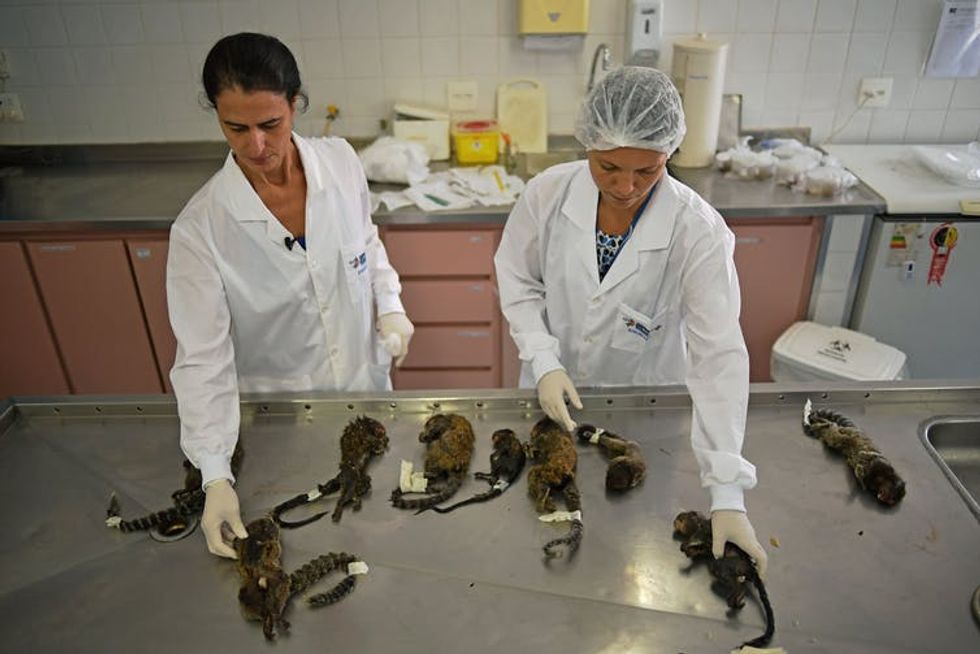
The virus that causes it lives in primates and is spread by mosquitoes that tend to dwell high in the canopy where these primates live.
Deforestation resulted in patches of forest that both concentrated the primate hosts and favored the mosquitoes that could transmit the virus to humans.
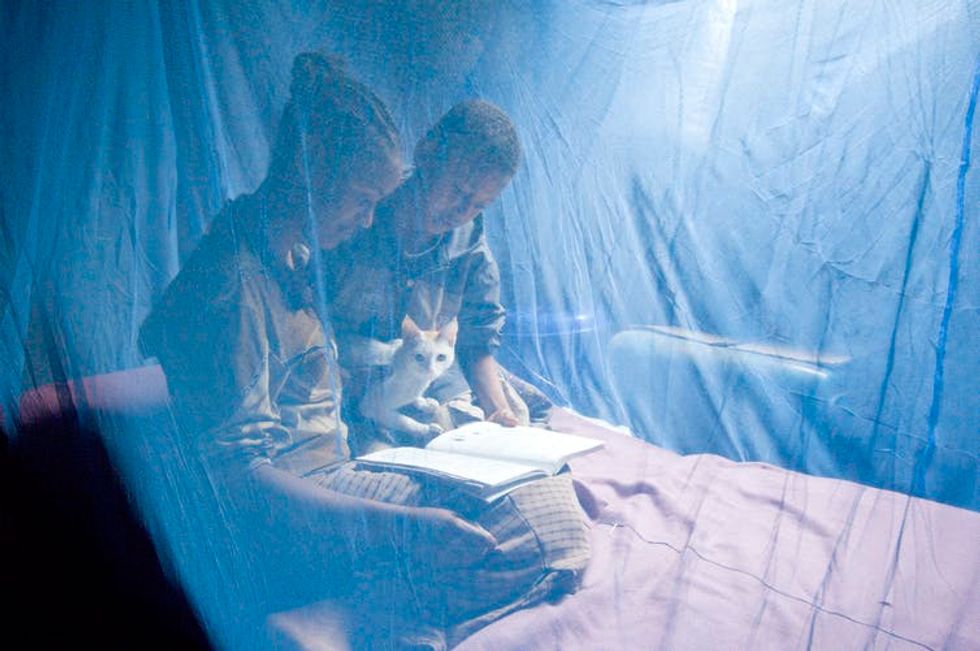
Malaria: Humans can also infect wildlife
Just as wildlife pathogens can jump to humans, humans can cross-infect wildlife.
Falciparum malaria kills hundreds of thousands of people yearly, especially in Africa. But in the Atlantic tropical forest of Brazil, we have also found a surprisingly high rate of Plasmodium falciparum (the malaria parasite responsible for severe malaria) circulating in the absence of humans. That raises the possibility that this parasite may be infecting new world monkeys. Elsewhere in the Amazon, monkey species have become naturally infected. In both cases, deforestation could have facilitated cross-infection.
Another type of malaria, Plasmodium knowlesi, known to circulate among monkeys, became a concern to human health over a decade ago in Southeast Asia. Several studies have shown that areas sustaining higher rates of forest loss also had higher rates of human infections, and that the mosquito vectors and monkey hosts spanned a wide range of habitats including disturbed forest.
Venezuelan equine encephalitis: Rodents move in
Venezuelan equine encephalitis is another mosquito-borne virus that is estimated to cause tens to hundreds of thousands of humans to develop febrile illnesses every year. Severe infections can lead to encephalitis and even death.
In the Darien province of Panama, we found that two rodent species had particularly high rates of infection with Venezuelan equine encephalitis virus, leading us to suspect that these species may be the wildlife hosts.
One of the species, Tome’s spiny rat, has also been implicated in other studies. The other, the short-tailed cane mouse, is also involved in the transmission of zoonotic diseases such as hantavirus and possibly Madariaga virus, an emergent encephalitis virus.
As deforestation in this region progresses, these two rodents can occupy forest fragments, cattle pastures and the regrowth that arises when fields lie fallow. Mosquitoes also occupy these areas and can bring the virus to humans and livestock.
Ebola: Disease at the forest’s edge
Vector-borne diseases are not the only zoonoses sensitive to deforestation. Ebola was first described in 1976, but outbreaks have become more common. The 2014-2016 outbreak killed more than 11,000 people in West Africa and drew attention to diseases that can spread from wildlife to humans.
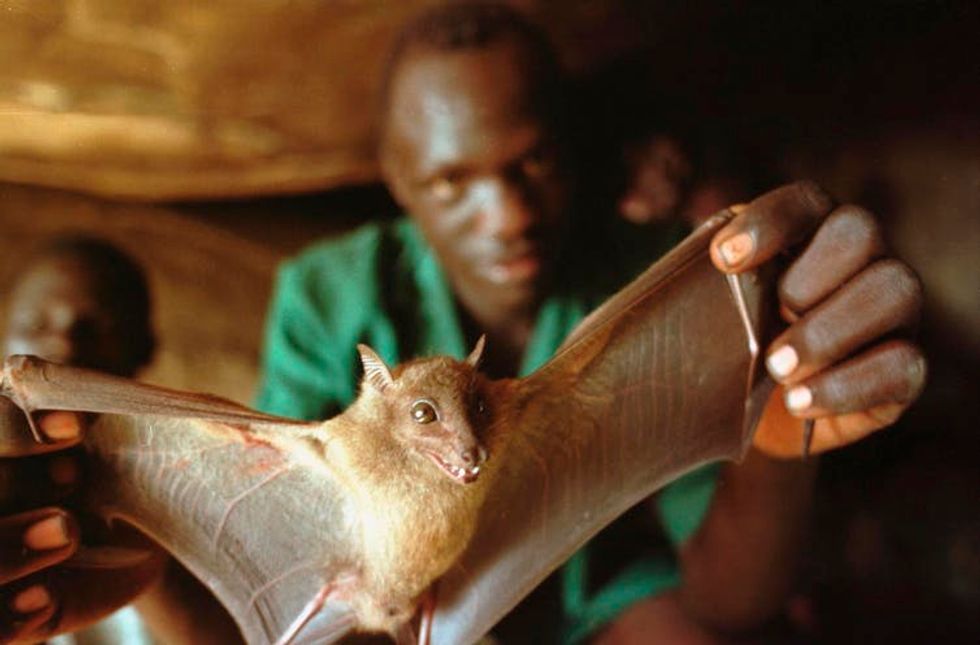
The natural transmission cycle of the Ebola virus remains elusive. Bats have been implicated, with possible additional ground-dwelling animals maintaining “silent” transmission between human outbreaks.
Bats, sometimes eaten as food, have been suspected of spreading Ebola.
While the exact nature of transmission is not yet known, several studies have shown that deforestation and forest fragmentation were associated with outbreaksbetween 2004 and 2014. In addition to possibly concentrating Ebola wildlife hosts, fragmentation may serve as a corridor for pathogen-carrying animals to spread the virus over large areas, and it may increase human contact with these animals along the forest edge.
The range of the Sunda pangolin – which is critically endangered – overlaps with the intermediate horseshoe bat in the forests of Southeast Asia, where it lives in mature tree hollows. As forest habitat shrinks, could pangolins also experience increased density and susceptibility to pathogens?
In fact, in small urban forest fragments in Malaysia, the Sunda pangolin was detected even though overall mammal diversity was much lower than a comparison tract of contiguous forest. This shows that this animal is able to persist in fragmented forests where it could increase contact with humans or other animals that can harbor potentially zoonotic viruses, such as bats. The Sunda pangolin is poached for its meat, skin and scales and imported illegally from Malaysia and Vietnam into China. A wet market in Wuhan that sells such animals has been suspected as a source of the current pandemic.
Preventing zoonotic spillover
There is still a lot that we don’t know about how viruses jump from wildlife to humans and what might drive that contact.
Forest fragments and their associated landscapes encompassing forest edge, agricultural fields and pastures have been a repeated theme in tropical zoonoses. While many species disappear as forests are cleared, others have been able to adapt. Those that adapt may become more concentrated, increasing the rate of infections.
Given the evidence, it is clear humans need to balance the production of food, forest commodities and other goods with the protection of tropical forests. Conservation of wildlife may keep their pathogens in check, preventing zoonotic spillover, and ultimately benefiting humans, too.
"I cannot believe that we are in the predicament that we are in right now," he said. "With all that we have known, with all of the alarms that have been made across the world, I cannot believe we're in the position we're in in right now."
Gupta pointed out how other countries who were hit hard by the disease initially have gotten it under control, even as the United States has started heading in the opposite direction.
"We should have been able to figure this out early and now we're having arguments about putting the band-aids on the problem like masks," he said. "We have a patient bleeding out in front of us, we know what to do, and we are not doing it. And it is, yeah, it's frustrating, for sure."
During a discussion about the economic impact of the COVID-19 pandemic, Romer argued that there was simply no way to get the economy back on track without containing the disease, as most people will not feel comfortable going back to their old routines until then.
"We have to cure this disease," he said. "We have to treat the health crisis, if we want to resolve the economic crisis. And the usual stimulus measures, the trillions of dollars we're spending, they will not get our economy back to normal unless we're sure to, you know, address the underlying cause. And unfortunately, we have completely failed to do that so far."
Romer went on to excoriate President Donald Trump and other officials for dismissing the possibility of creating a nationwide contact-tracing program that could be used to isolate people who have had exposure to the disease.
"Look at Wuhan, where they tested 10 million people in two weeks," he said. "It was about $13 per person to run all of those tests, and they wiped out the virus in that city. So we can do that in major cities."
"The pandemic is clearly getting worse in states nationwide—and instead of trying harder to stop it, President Trump is apparently trying harder to hide it."
As Covid-19 cases continue to spike across the U.S.—the nation on Wednesday saw its largest daily increase in confirmed new infections since the pandemic began—the Trump administration is reportedly planning to cut off federal funding for 13 coronavirus testing sites in five states at the end of the month, a move that is in keeping with president's vow to slow screenings for the virus.
"This is unacceptable—and Congress must act immediately to counter this reckless and inhumane measure."
—Sen. Elizabeth Warren
Politicoreported Wednesday that "the federal government is ending its support for 13 drive-thru coronavirus testing sites on June 30, urging states to take over their operations—even as cases spike in several parts of the country."
Seven of the sites set to lose federal funding and support are located in Texas, which has seen new Covid-19 cases and hospitalizations skyrocket during the reopening process—a spike that Texas Gov. Greg Abbott predicted last month in a private call that leaked to reporters. Texas was one of six states that saw a record increase in new infections on Wednesday.
The other testing sites that will lose federal support next week are located in Colorado, Pennsylvania, Illinois, and New Jersey.
Texas lawmakers reacted with alarm to the administration's plan, which was reported days after President Donald Trump said during a weekend rally in Oklahoma that he ordered a slowdown in coronavirus testing. White House officials claimed Trump's comments were made "in jest," but the president on Tuesday doubled down and told reporters that he was not joking.
"Texas continues to set records for the number of new cases and hospitalizations and Harris County leads the state in number of confirmed cases," Texas Democratic Reps. Sylvia Garcia, Al Green, Lizzie Pannill Fletcher, and Sheila Jackson Lee wrote in letters this week to U.S. Surgeon General Jerome Adams and to Federal Emergency Management Agency (FEMA) administrator Pete Gaynor.
"It's completely unacceptable that while billions in federal dollars Congress passed to support testing sit unspent, this administration is closing testing sites in states where new Covid-19 cases are rapidly on the rise."
—Sen. Patty Murray
"Without FEMA's supplies, fiscal aid, and personnel, these sites may no longer be able to serve our communities," the lawmakers warned. "FEMA's removal in this moment would be harmful and irresponsible. We urgently ask you to extend FEMA's presence at these testing sites through August 30, 2020."
Rocky Vaz, the director of emergency management for Dallas, toldTalking Points Memo that the city asked for an extension of federal support for two testing sites in Dallas County but was denied by the Trump administration.
"They told us very clearly that they are not going to extend it," Vaz said. "We are not expecting it to continue beyond June 30, but things change."
On several occasions in recent weeks, Trump and Vice President Mike Pence have falsely claimed that the recent surge in Covid-19 cases is the result of an expansion of testing rather than an actual spread of the virus. In an interview with the Wall Street Journal last week, Trump said coronavirus testing is "overrated" and "makes us look bad."
Sen. Patty Murray (D-Wash.), ranking member of the Senate Health, Education, Labor, and Pensions Committee, demanded in a statement Wednesday that Trump immediately reverse the plan to end federal support for testing sites. On Sunday, as Common Dreamsreported, Murray slammed the Trump administration for failing to spend $14 billion appropriated by Congress to expand coronavirus testing and tracing.
"The pandemic is clearly getting worse in states nationwide—and instead of trying harder to stop it, President Trump is apparently trying harder to hide it," said Murray. "It's completely unacceptable that while billions in federal dollars Congress passed to support testing sit unspent, this administration is closing testing sites in states where new Covid-19 cases are rapidly on the rise."
Sen. Elizabeth Warren (D-Mass.) echoed Murray and urged Congress to intervene to ensure that the testing sites remain open and at full capacity.
"Donald Trump can't run from the facts: Covid-19 cases are still increasing and Americans are still dying," Warren tweeted. "This is unacceptable—and Congress must act immediately to counter this reckless and inhumane measure."