Politico reported Tuesday that global regulators and U.S. researchers have expressed concerns about the risks the drug has for a long time. According to past tests, the drug can cause birth defects and research on it is insufficient.
Trump has already run into trouble endorsing drugs that aren't proven to be effective against the virus. When he touted an anti-malaria drug, hydroxychloroquine, people desperately searched for it, discovering a toxic version used to clean fish tanks. When a couple used it the husband died and the woman took to the airwaves begging Americans not to listen to anything Trump says and consult doctors instead.
Politico noted that the president asked the FDA to fast-track making hydroxychloroquine, which still hasn't actually been tested as a treatment for the coronavirus.
"Trump also has repeatedly discussed his efforts to encourage FDA approvals of drugs and devices this month, challenging FDA's long-held stance as an apolitical, science-driven agency," Politico reported.
The National Security Council has asked the government to accept a donation of Avigan from Japan so they can begin using it in emergency cases of coronavirus.
"The FDA remains actively engaged with partners across the U.S. government, academia and regulated industry to expedite the development and availability of critical medical products to prevent and treat this novel virus ," a spokesperson at Health and Human Services said in a statement.
"Health officials have repeatedly rejected Avigan in the United States, despite years of advocacy from Japan and Fujifilm," Politico reported. "South Korea officials this month also declined to use the drug in that nation's coronavirus response, warning of insufficient evidence and the risk of 'serious side effects.'"
"Avigan has not only not shown efficacy during test studies but also there is not data on clinical trials conducted on patients," said Oh Myoung-don, a South Korean infectious disease expert.
The head of Moscow's main coronavirus hospital who met with President Vladimir Putin a week ago has tested positive, he said Tuesday, as the Kremlin announced the Russian leader's health was fine.
Last Tuesday Denis Protsenko met with the Russian leader who inspected the Kommunarka hospital while wearing a bright yellow hazmat suit. But the 67-year-old Putin was also seen talking to Protsenko without any protective gear.
Kremlin spokesman Dmitry Peskov swiftly told Russian news agencies that Putin took regular tests and there was no reason to worry about his health.
"Everything is fine," Peskov said.
Protsenko said he tested positive but "felt quite well".
Posting a picture of himself wearing a mask and green scrubs on Facebook, he said he self-isolated in his office and would continue to work.
Protsenko has become a high-profile figure on the frontlines of Russia's fight against COVID-19, posting daily on Facebook to inform Russians about his hospital's work and patients.
Over the past 24 hours Russian authorities have reported 500 new cases -- the biggest daily increase so far --- bringing the total tally to 2,337 cases and 17 fatalities.
Most have been registered in Moscow, which has become the epicentre of the outbreak in Russia.
Since the start of the pandemic, the Kremlin has started measuring temperatures of people attending events with the president, asking journalists feeling unwell to stay home.
Observers say the Russian strongman appears to be exceptionally conscious of risks to his health.
Former US president Barack Obama took a veiled swipe Tuesday at his successor Donald Trump, chastising those who have "denied warnings" of a deadly coronavirus pandemic and cautioning against ignoring the consequences of climate change.
The popular two-term Democrat took to social media as the Trump administration finalized a controversial rollback of Obama-era vehicle fuel economy and greenhouse gas emissions standards that were aimed at slowing global warming.
"We've seen all too terribly the consequences of those who denied warnings of a pandemic," Obama posted on Twitter.
"We can't afford any more consequences of climate denial. All of us, especially young people, have to demand better of our government at every level and vote this fall."
The Republican leader's government has faced stark criticism for failing to heed early global alarms about the virus outbreak, after death tolls began to spike in places like China and Italy.
The United States now has more than 165,000 confirmed coronavirus cases, the most worldwide, and the US death toll has surged past 3,400 -- exceeding China's official toll.
Obama's tweet included a link to a story about the Trump administration's new rules.
In a statement, Transportation Secretary Elaine Chao said the Environmental Protection Agency and the Department of Transportation were rolling back "costly, increasingly unachievable fuel economy and vehicle CO2 emissions standards."
The stringency of those so-called CAFE standards will now be increased by 1.5 percent annually through 2026, substantially less than the roughly 5.0 percent annual increases issued in 2012, the EPA said.
So far, Obama has only rarely engaged in the 2020 presidential race, which features his former vice president Joe Biden as the Democrat likely to face Trump in November's election.
The former commander-in-chief has not publicly endorsed any candidate in the Democratic nomination race, which has boiled down to Biden and leftist rival Bernie Sanders.
A man giving an Herbalife demonstration to a dozen people in a Bridgeton business on Sunday night has been cited under the state order barring large gatherings during the coronavirus pandemic, police reported.The disorderly conduct citation issued to Eduardo Montero, 32, of Bridgeton, came after he had received a warning days earlier.Police first responded to his fitness and nutrition business on the 100 block of Irving Avenue on March 25 because people were working out in the gym area of the establishment in violation of Gov. Phil Murphy’s order closing several types of businesses, including ...
In the wake of his arrest for holding packed services at his church in Tampa, Florida, Pastor Rodney Howard-Brown says he's now the target of death threats.
During a Facebook Live broadcast, Howard-Brown blamed the threats on “religious bigotry and hatred" in the media, also claiming that someone fired gun shots at his church's sign.
"The media are stirring up every kind of religious bigotry and hatred right now," he said. "People firing shots last night at the church sign from the highway. We went this morning there was no bullet holes. We did report it but the police say unless you can show where the bullet landed, but I mean the guys, security were there. They could hear the gun going off and then the death threats, to the ministry and to the staff. It’s beyond the pale. So people have basically, literally lost their ever-loving minds."
As The Christian Post points out, the Hillsborough County Sheriff’s Office arrested Howard-Brown at his home Monday afternoon for "intentionally and repeatedly" hosting packed church services in defiance of stay-at-home orders set in place by President Trump, the Gov. of Florida, the CDC and the Hillsborough County Emergency Policy Group.
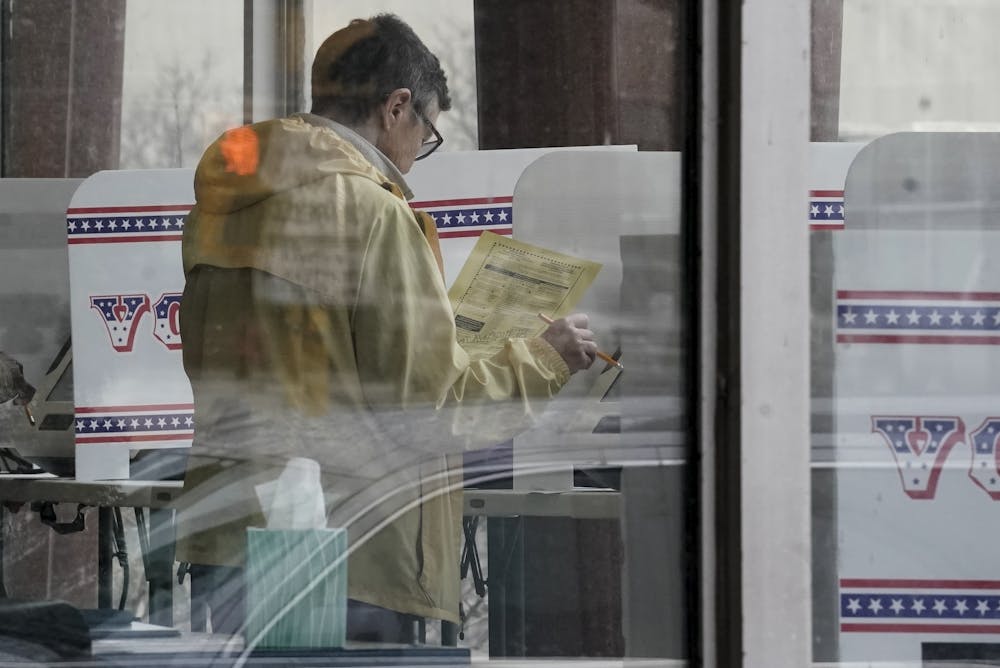
The main concern, in terms of the pandemic, is that elections cause people to congregate at the polling places on Election Day. If it’s not safe to be within six feet of someone outside your immediate family, it’s seems ill-advised to line up with all your neighbors to check in, or to visit a small voting booth someone else was just in, or to pick up the same pen or touch the same touchscreen they used just moments ago.
The solution so far has been to postpone elections until some future time when it’s safe to gather again. But it’s not clear how long that will be.
To hold elections without delays, the obvious solution is to let people vote elsewhere, at other times.
As an election law scholar and author, I have good news: Many people already can – and more people could easily be allowed to – vote before Election Day, or even vote from home, by casting their ballots on paper and mailing them in or dropping them off at a municipal office.
One way to spread out the Election Day crowds would be to let people vote early, in advance of the day itself. As of this writing, 39 statesacross the politicalspectrum let voters show up at municipal offices or other community centers to cast their ballots in the week or two before Election Day.
The remaining 11 states could do the same, again making voting more convenient and accessible.
Skip the touchscreen
For physical safety, it’s probably best that voters use paper ballots, not electronic ones. Computerized touchscreens are exactly the kind of hands-on surface that health experts have warned can spread the coronavirus easily. Voting on one of them is like shaking 300 – or more – strangers’ hands in a single day.
Advocates of touchscreens argue that the screens can be wiped down periodically, but doing so after every voter (or every other voter) would be time- and labor-intensive, risking long lines. Worse, at least some brands of touchscreen machines have to be turned off to be cleaned, exacerbating the potential for delays.
There might be some people whose physical disabilities prevent them from using a paper ballot – but having everyone else do so would free up the machines for those who most need them, and ease the burden of cleaning them between users.
No formal studies have compared whether paper ballots carry or spread fewer germs than touchscreens – it’s a relatively new research question. But it’s useful to note that the government has not shut down the paper-handling postal system, even as officials have warned the public to be careful around ATMs and computer cash registers.
If nearly everyone is voting on paper, they could easily cast their ballots by mail. Ohio has already converted its Democratic primary to all mail-in ballots.
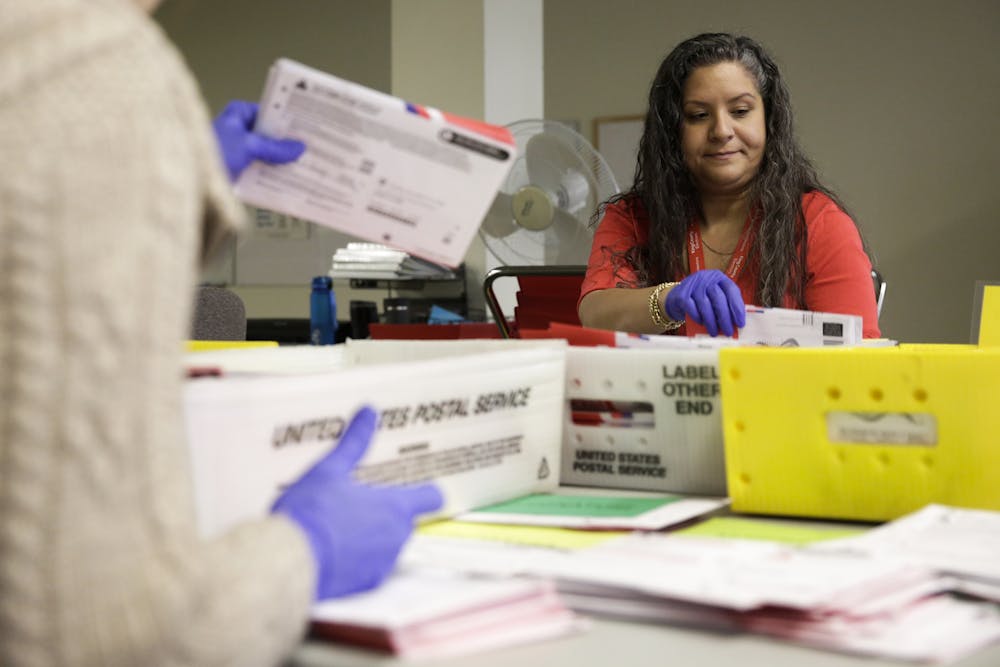
All states let people vote by absentee ballot if they won’t be in their voting district on Election Day, for instance if they are traveling. About two-thirds of the states let anyone who wants to do the same, whether they’ll be home on Election Day or not. They simply call up their local election office and ask for a paper ballot to be mailed to them. When they get it, they fill it out and mail it back or drop it off at a municipal office before Election Day.
The remaining states require voters to certify that they’re sick, elderly, out of town, or otherwise unable to vote on Election Day before being allowed to vote absentee. Those states could loosen their rules, opening absentee voting to anyone who wants to do it.
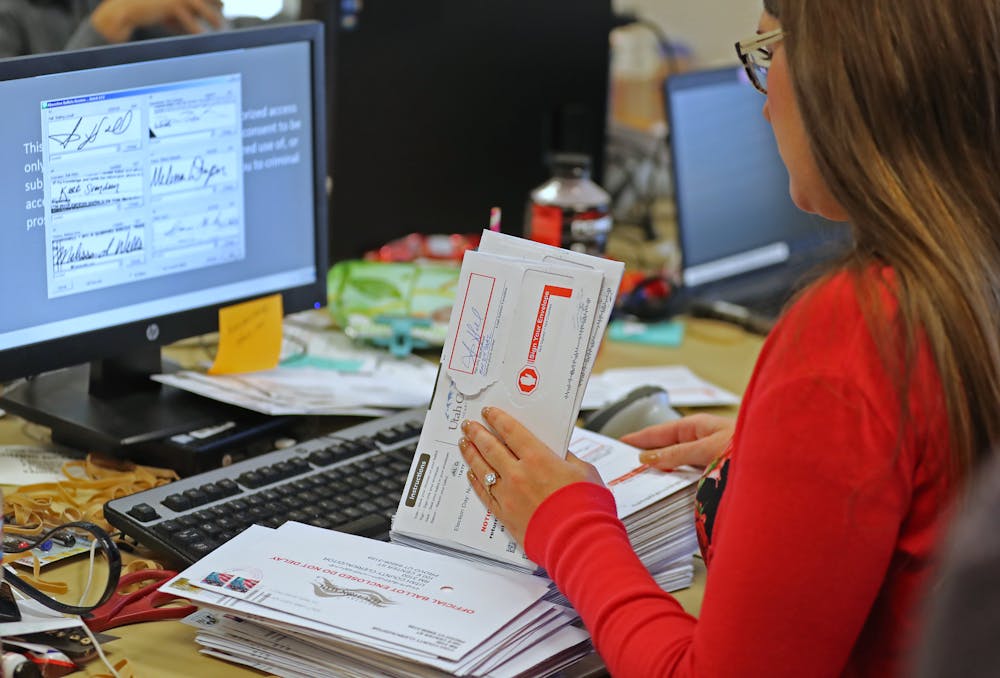
Even more effective at social distancing for voters would be a complete system for everyone to vote by mail. Five states – again, withvaryingalignments – automatically mail all registered voters a ballot. Like with absentee ballots, voters can mail them back or drop them off at secure locations.
These methods are obviously excellent for keeping people from flocking to the polls in person on the same day. They also are more convenient for voters, who would no longer have to get to a particular polling place on one particular day, and take their chances on traffic and lines to vote – not to mention shifting work and child-care schedules to make time.
A bill promoting all these changes for federal elections is under consideration in the Senate right now. State and local election officials prefer to have – and voters find it easier to understand – similar practices across all the elections they conduct. A set of federal rules would encourage the states that haven’t done so already to adopt them too.
Politico reported that the China hawk has long had issues with the WHO's relationship with Beijing. China stopped counting cases of coronavirus weeks ago and removed American reporters from their country.
“The mission of the WHO is to get public health information to the world so every country can make the best decisions to keep their citizens safe. When it comes to coronavirus, the WHO failed,” said the Florida senator, claiming the WHO is intentionally spreading misinformation. “We know Communist China is lying about how many cases and deaths they have, what they knew and when they knew it — and the WHO never bothered to investigate further. Their inaction cost lives.”
While the number of coronavirus cases in China is inconsequential and confusion over the start of the virus hardly matters to the United States, any possible developments in treatment or virus control can be helpful to other countries.
"Scott and other lawmakers have raised questions about the WHO’s refusal to grant membership to Taiwan, which the Chinese government has tried to alienate from the global community," Politico reported.
The public timeline of the virus cited China's learning of an outbreak of pneumonia in mid-November 2019. Weeks later, when it became clear that the "pneumonia" was actually contagious and spreading, China informed the WHO. It's unknown if that timeline is truthful, but Scott did not give any indication that had had alternative information to refute it.
Scott wrote a New York Times op-ed earlier in March, attacking "Communist China" for the way they've responded to the coronavirus.
Having an accurate count of people in China doesn't do anything to heal the sick people in the United States, though it does make President Donald Trump look better if the United States was not the top country in the world with the most coronavirus cases, as it is currently.
Scott also didn't indicate whether he would be raising questions about Trump's slow action on early on in the coronavirus crisis.
Pandemic expert Theresa MacPhail of the Stevens Institute of Technology said this week that she "couldn't have been more wrong" about the way the Centers for Disease Control (CDC) handled the novel coronavirus outbreak.
MacPhail told Vice that she expected the CDC to have a more "robust" response to the virus than China had.
"I just assumed that the U.S. system would be a little bit better, would be a little bit more robust and do more testing and containment than China was able to do, and I just couldn't have been more wrong," she lamented.
According to MacPhail, something changed at the CDC after President Barack Obama left office.
"One thing that's super different is that the CDC in 2009 provided central leadership," she said of the H1N1 outbreak. "They were proactively reaching out to state, regional, and local health officials saying, ‘Here's what you need to be doing. Here's what this should look like.’ And people did it."
"I am scared and enraged because there's no central authority here," MacPhail added. "I don't understand what's going on.The CDC isn't giving press briefings. They're just absent. And that could be because the administration is muzzling them. Or it could mean that there's disarray inside the CDC. And I guess all of that will come out."
The Italian mob has been stirring up trouble and looting stores as the country endures its coronavirus crisis.
Guards stand outside grocery stores after people started refusing to pay, and clerks were too afraid of catching the virus to stop them -- and authorities believe the Mafia has been stoking the unrest before stepping in to bring order and increase their power in the southern regions, reported The Daily Beast.
Closed Facebook groups with thousands of members have been calling for riots and civil disobedience in southern Italy, which so far has escaped the grim coronavirus fate as northern regions for reasons that aren't entirely clear.
Authorities fear the Mafia will be able to offer up loans and black market jobs as the government is distracted by the COVID-19 outbreak that has claimed thousands of lives, and Italians start missing paychecks and payments on their housing.
“We need to act fast, more than fast,” said Palermo Mayor Leoluca Orlando this week. “Distress could turn into violence.”
Italy has been locked down for four weeks, and that country-wide order has been extended until at least Easter.
Orlando fears the Sicilian Mafia or Cosa Nostra is behind closed Facebook groups calling for unrest if the lockdown is not lifted in areas where the virus has not been as devastating, but officials fear less consistent testing in the south has given rise to a false sense of security.
Organized crime has gutted the south's infrastructure and medical system, which would be wholly unprepared for the type of large-scale outbreak that overwhelmed even the wealthier north's hospitals -- and officials fear unrest in the south would spread to the north.
“The situation is very heavy," Orlando said, "because behind the threats of unrest echoed via social networks is a den of Mafia jackals ready to exploit the desperation of the new poor from coronavirus. We cannot underestimate the risk of an alliance cemented by despair. In the north the risk is speculative, but here, where there is greater poverty, the danger is that desperate subjects may fall into the hands of criminals, Mafia members.”
Liberty University president Jerry Falwell Jr. has reopened the school's campus in the midst of the coronavirus pandemic. Now, according to a report from the New York Times, “nearly a dozen” students at the evangelical school have developed symptoms similar to those of COVID-19 as of this Friday, with at least one student testing positive for the virus.
Falwell, an avid Trump supporter, has consistently downplayed the severity of the pandemic, even insisting at one point that attempts to control its spread are nothing more than a plot to undermine Donald Trump’s presidency. Writing in the Washington Post this Monday, Michael Gerson contends Falwell Jr's response to the crisis "indicates the staggering level of ignorance" that informs his leadership skills, as evidenced by the "constant churn of mixed messages that Falwell has contributed to our national debate."
"Who is Falwell serving instead of students, parents, staff, his board and the Lynchburg, Va., community?" Gerson writes. "Let’s see. Falwell has contempt for the weak. He is dismissive of experts. He traffics in conspiracy theories. He attacks his critics with infantile putdowns and demeaning names. And he refuses to admit when he is dangerously wrong."
"Falwell has laid down the cross to follow Trump," he concludes.
After getting picked apart by New Yorker journalist Isaac Chotiner recently, Epstein also granted an interview to Vox's Jane Coaston in which he once again made factually incorrect statements about COVID-19's lethality and its contagiousness.
During the interview, Epstein followed in President Donald Trump's footsteps by making a specious comparison between COVID-19 and the season flu, and then asked, "Has anybody decided to shut down the economy for six months every year for flu season?"
Coaston replied that the issue is that COVID-19 is much more contagious than the flu, to which Epstein replied, "It is not more contagious."
Epstein also spent a good chunk of the interview railing against government stimulus programs typically used to combat recessions, even though such programs have been shown to lessen the harmful financial impacts on ordinary people.
"Stimulus programs, by the way, it doesn’t matter whether you have a financial meltdown or a biological meltdown, it’s the same basic logic," he said. "The case for them rests strictly on the notion that short-term benefits of money, in utility terms, are much higher so that the normal relationship between utility and wealth is completely distorted."
According to a report from the Washington Post, efforts by Donald Trump's family to get out from under their lease of the government property that became the Trump International Hotel in Washington, D.C. has come to a screeching halt as the coronavirus pandemic that has American's hunkering down in their homes has buyers and investors also sitting and waiting to see what happens next.
Last October the Trump Organization announced plans to sell off the lease after complaining that their refusal to solicit foreign business cost them "more than $9 million," in a glossy brochure issued in November that noted they had turned down bookings for "17,100 room nights in 2019, resulting in $5.3 million in lost room revenue and $3.9 million in lost food and beverage revenue," reported Politico at the time.
The Washington Post is now reporting those plans have been put on hold.
"Trump’s firm, which he still owns, has had to press pause on the proposed sale of its D.C. hotel lease due to the market’s collapse as potential buyers wait for banks and investors to return normal operations," the report states, adding, "The company’s sales representative, Jeffrey Davis of JLL, confirmed to The Washington Post that the proposed sale of Trump’s lease to the federally owned Old Post Office Pavilion has been set aside as the industry recovers."
According to Davis, “We have toured only the most discerning buyers and are proud to be representing such an iconic asset. Trump International Hotel, Washington D.C. is one of the finest hotels anywhere in the world and we look forward to working with the Trump Organization on finding the right fit once the industry is back up and running.”
The inability to dump the lease comes at a bad time for the Trump family with the report pointing out that seven of the Trump Organization’s ten most profitable properties are currently sitting idle due to coronavirus concerns and an attendant drop in traffic.
Republicans on Tuesday were called out for a new talking point that blames impeachment for President Donald Trump's lack of early action on the novel coronavirus outbreak.
According to former Republican strategist Rick Wilson, GOP sources said that there is en effort to deflect the criticism of Trump by citing impeachment.
McConnell claimed that impeachment had "diverted" the government from dealing with the virus.
Commenters on Twitter pointed out that impeachment was caused by the president's lawless behavior. Others noted that Trump continued to play golf during the impeachment and Senate trial, which ended in early February.
Read some of the tweets from verified accounts below.