Tropical forests reclaiming land cleared for agriculture or livestock not only grow quickly, but absorb far more CO2 from the atmosphere than old-growth trees, according to a study released.
The research, published in the journal Nature, challenges long-standing assumptions that virgin tropical forests untouched by logging or industry do a better job of sopping up carbon dioxide and, in so doing, slowing the pace of global warming.
It is also good news because it means regenerating tropic forests could play a even greater role in fighting climate change than previously suspected.
"Carbon uptake is surprisingly fast in these young forests that regrow on abandoned pastures or abandoned agricultural fields," said Lourens Poorter, lead author of the study and a professor at Wageningen University in the Netherlands.
After only two decades, recovering tropical forests in Latin America built up, on average, more than 120 tonnes of biomass per hectare (2.5 acres), and were able to remove three tonnes of carbon per hectare per year from the atmosphere.
"That is 11 times the uptake rate of old-growth forests," Poorter said in a statement.
Forests are a major bulkhead against climate change because plants –- mostly in the tropics -– soak up nearly 30 percent of the heat-trapping carbon dioxide humans pour into the air.
Oceans are another so-called "sink" for CO2, with the rest remaining in the atmosphere.
Deforestation is a double threat: Trees release stored-up CO2 when cut down, and reducing the surface area covered by forests means fewer plants are left to absorb it in the first place.
The planet's largest rainforest, the Amazon, has shrunk by nearly a fifth in the last 50 years, while the Indonesian island of Sumatra has lost about 85 percent of its tree cover.
For the study, a large team of scientists led by Poorter analysed the recovery of 1,500 forest plots and 45 sites across Latin America.
Trees grew most quickly in areas with high rainfall and water availability throughout the year. Soil fertility and the amount of forest cover in the surrounding landscape were less important.
"We also used these data to produce a potential biomass recovery map for Latin America," noted co-author Danae Rozendaal, also of Wageningen University.
"Regional and national policymakers can use this information to identify areas that should be conserved."
Over half of the world's tropical forests are not old-growth, but naturally regenerating after trees had been cleared to make way for crops or cattle.
The three largest tropical forest zones are in the Amazon basin, Indonesia, and central Africa.
The first known case of Zika virus transmission in the United States was reported in Texas on Tuesday by local health officials, who said it likely was contracted through sex and not a mosquito bite, a day after the World Health Organization declared an international public health emergency.
The virus, linked to severe birth defects in thousands of babies in Brazil, is spreading rapidly in the Americas, and WHO officials on Tuesday expressed concern that it could hit Africa and Asia as well. Zika had been thought to be spread by the bite of mosquitoes of the Aedes genus, so sexual contact as a mode of transmission would be a potentially alarming development.
The U.S. Centers for Disease Control and Prevention confirmed it was the first U.S. Zika case in someone who had not traveled abroad in the current outbreak, said CDC Director Dr. Tom Frieden on Twitter.
However, the CDC has not investigated how the virus was transmitted.
After this case, the CDC advised men to consider using condoms after traveling to areas with the Zika virus. Pregnant women should avoid contact with semen from men exposed to the virus.
The Dallas County Department of health said on Twitter that the person was infected through sexual contact with someone who had traveled to Venezuela. The person infected did not travel to the South American country, county health officials said.
The Texas Department of State Health Services was slightly more cautious in its assessment, saying in a statement: "Case details are being evaluated, but the possibility of sexual transmission from an infected person to a non-infected person is likely in this case."
County authorities said there were no reports of the virus being transmitted by mosquitoes in the Texas county.
Previously, international health officials had noted one U.S. case of possible person-to-person sexual transmission. But the Pan American Health Organization said more evidence was needed to confirm sexual contact as a means of Zika transmission. The medical literature also has one case in which the virus was detected in semen.
The virus has been reported in more than 30 countries and linked to microcephaly, in which babies have abnormally small heads and improperly developed brains.
The American Red Cross on Tuesday asked blood donors who have traveled to Zika virus outbreak areas such as Mexico, the Caribbean, or Central or South America to wait at least 28 days before donating. However, the risk of transmitting the virus through blood donations remained "extremely" low in the continental United States, the disaster relief agency said.
The Dow Jones transportation average ended 2.9 percent lower following news of the first U.S. transmission of the Zika virus.
Monitoring needed
The WHO has said the virus could infect 4 million people in the Americas. It said on Tuesday it launched a global response unit to fight the mosquito-borne virus.
"Most important, we need to set up surveillance sites in low- and middle-income countries so that we can detect any change in the reporting patterns of microcephaly at an early stage," Dr. Anthony Costello said in Geneva. Costello is WHO's director for maternal, child and adolescent health.
Twenty to 30 sites could be established worldwide, mainly in poor countries without robust healthcare systems, Costello said.
Brazil is the country hardest hit by Zika. In an address to a joint session of Brazil's Congress, President Dilma Rousseff said her government will spare no resources in mobilizing to combat the mosquito that transmits the virus. With no vaccine or treatment for Zika, efforts to curb its spread have focused on eradicating mosquito breeding sites.
Brazil, which has more than 4,000 suspected cases of microcephaly that may be linked to Zika, is scheduled to host the Olympics in Rio de Janeiro in August.
Rousseff also said Brazil and the United States will enter a partnership to develop a Zika vaccine as soon as possible to stem the spread of the virus.
Vaccine efforts
French drugmaker Sanofi SA on Tuesday announced that it has launched a project to develop a vaccine against the virus, the most decisive commitment yet by a major vaccine maker. The company said its Sanofi Pasteur vaccines division would use its expertise in developing vaccines for similar viruses such as yellow fever, Japanese encephalitis and dengue.
Other companies also joined the race on Tuesday to develop a vaccine. The University of South Australia said it was working on a Zika vaccine with Australian biotech Sementis Ltd.
U.S. drug developer NewLink Genetics Corp said it has started a project to develop Zika treatment options.
Experts have said a Zika vaccine for widespread use is months if not years away.
Costello said the Aedes mosquitoes that carry the Zika virus "are present ... through Africa, parts of southern Europe and many parts of Asia, particularly South Asia." Africa and Asia have the world's highest birth rates.
WHO Director-General Margaret Chan said on Monday it was "strongly suspected but not yet scientifically proven" that Zika causes microcephaly.
The first Irish cases of Zika virus have been detected in two people with a history of traveling to a country affected by the mosquito-borne infection, the Health Service Executive of Ireland said.
Chilean health officials said they have confirmed three cases in Chile of people infected with the Zika virus, all of whom were infected while traveling elsewhere in Latin America.
An Australian state health service said two Australians were diagnosed with the virus after returning from the Caribbean, confirming the first cases of the virus in the country this year.
(Reporting by Jon Herskovitz; Additional reporting by Dominique Vidalon in Paris, Stephanie Nebehay in Geneva, Shadia Nasralla in Vienna, Ben Hirschler in London, Anthony Boadle in Brasilia, Jane Wardell in Sydney, Amy Sawitta Lefevre in Bangkok, Pedro Fonseca in Rio, Rosalba O'Brien in Santiago, Padraic Halpin in Dublin, Ankur Banerjee and Amrutha Penumudi in Bengaluru; Writing by Will Dunham and Lisa Shumaker; Editing by Toni Reinhold, Jonathan Oatis, Andrew Hay and Bernard Orr)
They emerge from their hiding places at night, driven to slake their thirst for human blood. Vampires? No. Bedbugs!
These tiny insects have staged a global resurgence in the past two decades after being nearly eradicated in many regions, but scientists on Tuesday unveiled a complete genetic map of the bedbug that could guide efforts to foil the resilient parasite.
"This is an enormous new tool for researchers interested in controlling this pest," said George Amato, director of the Sackler Institute for Comparative Genomics at the American Museum of Natural History in New York.
"Bed bugs are now very widespread in most major cities around the world, and they have increasingly become resistant to insecticides, making them harder to control," American Museum of Natural History entomologist Louis Sorkin said.
The scientists identified genes responsible for their insecticide resistance, genes involved in mitigating the traumatic effects of their brand of copulation and anti-coagulant genes useful for an insect that makes blood its exclusive source of nutrients and water.
These genetic traits may present vulnerabilities that could be exploited with future insecticides. The genome also harbors numerous genes that originated in bacteria, including one that helps bedbugs metabolize vitamin B. This indicates antibiotics that target bacteria beneficial to bedbugs could be used to control the insects.
During mating, male bedbugs stab a V-shaped area of a female's abdomen with their sickle-shaped genitalia. Females possess genes that control a protein that makes that part of their anatomy stronger and better able to withstand this rough sex.
Adult bed bugs measure roughly a quarter inch (5 mm) and are reddish-brown. Their bites are not known to transmit disease but some people have very strong allergic reactions, Weill Cornell Medicine geneticist Christopher Mason said.
"Bed bugs will hide in a variety of places throughout a home. Commonly, they will be on the seams of couches and beds or hidden within the frames of furniture. They have been found in electrical sockets, in drawers or where floors and walls meet," University of Cincinnati entomologist Joshua Benoit added.
Bedbugs, found on every continent except Antarctica, have been biting people for thousands of years. Widespread insecticide use in homes after World War Two eliminated them from many regions but bedbugs rebounded by developing pesticide resistance, thriving in heated homes and hitching rides in luggage in international travel.
The research was published in the journal Nature Communications.
(Reporting by Will Dunham; Editing by Sandra Maler)
Crashing into a planet is seldom a good idea. If you’re trying to travel to another world, you’re likely to land at tens of kilometres per second unless you do something serious to slow down. When Neil Armstrong famously became the first man on the moon in 1969, he piloted a lunar module onto the surface using thrusters that slowed the craft’s descent.
But far less remembered is that the Soviet Union had managed the same journey three years earlier with an unmanned craft. Now 50 years ago, the Russian spacecraft Luna 9 made the first controlled “soft” landing on another body in the solar system on February 3 1966. It was a technological triumph at the time and of lasting importance.
In 1966 the Cold War and the space race were in full swing. Both the Soviet Union and the US had successfully fired probes at the moon that impacted with hard landings. Both had also made several failed attempts at a soft landing, which is really another way of saying a landing in which the on-board equipment survives in working order.
America was behind the USSR in most space affairs at the time, much to the distaste of the US government. President Kennedy’s announcement that America would put men on the moon and bring them back safely before the end of the decade indicated the seriousness of the situation.
But no amount of political posturing from the US could answer the question: “Will astronauts sink in the thick lunar dust?” Before they could send a man to the moon, they had to survey what the surface was like and ensure they could safely land delicate equipment. Without this know-how, all the plans for manned moon visits would have been in chaos.
The technological complexity of achieving a soft landing was (and is) considerable. You have to know your orbit or trajectory extremely accurately and you have to carry on-board height-sensing equipment to determine when you are close enough to the surface to start the landing. You also need a re-startable rocket engine to slow you down with enormous precision and either parachutes or inflation bags to cushion the final bump.
Ensuring that all this equipment works correctly together is not trivial either. The speed of the spacecraft and planetary surface have to be matched to an accuracy of metres per second. It was already clear in 1966 that landing humans on the moon would require all these systems, but at least there was going to be astronauts on board to look out of the window and throw the switches. Doing it all automatically on Luna 9 was almost as astonishing as the event itself.
The successful landing meant the cameras and necessary communication equipment still worked after touch down, allowing Luna 9 to send back the first ever pictures from the surface of the moon. The photos were black and white, very grainy and intercepted first by Jodrell Bank in the UK, much to the annoyance of the Russians who saw them some hours later. However, none of this detracted from the immense psychological impact of the first pictures from the moon’s surface.
Over the last 50 years we have become accustomed to landing safely on other planets, at least on most occasions. We have visited the moon, Mars, Venus and Saturn’s moon Titan. But it is still a tricky game to play when the surface is poorly mapped beforehand. Hitting an unexpected rock at even one or two metres per second is more than enough to destroy an unsuspecting spacecraft.
Soft landings have recently become a technological target again 50 years on. A number of commercial companies are competing to provide cheaper launch services to NASA and to also to develop a “space tourism” industry. Not surprisingly, tourists prefer to return home in one piece and, preferably, the right way up. This requires a craft that can journey into space and then return to Earth with a soft landing.
The companies Blue Origin and Space-X both recently celebrated the soft landing of their rockets in an upright stance. Returning a vehicle to Earth without damage ready for the next flight will be a major element in reducing launch costs. So the soft-landing technology has to be mastered reliably for the enterprise to be economic.
Each and every soft landing demands the same degree of precision and attention to detail. The story of Luna 9 reminds us that the theory is easy but delivering it every time is far from trivial.
Prehistoric cave-dwellers enjoyed munching on tortoises roasted in their shells as an appetizer or side dish, Ran Barkai, an archaeologist at Tel Aviv University, said on Tuesday.
Barkai helped lead a research team who found 400,000-year-old tortoise shells and bones in a cave in Israel that showed hunter-gatherers butchered and cooked tortoises as part of a diet dominated by large animals and vegetation.
Burn marks were found on the shells discovered in the Qessem cave, as well as signs they were cracked open and cut marks indicating the animal was butchered using flint knives.
"Now we know they ate tortoises in a rather sophisticated way," Barkai said. "It would have been a supplement -- an appetizer, dessert or a side dish -- to the meat and fat from large animals."
Qessem cave was uncovered during road work in 2000 and was believed to be inhabited for about 200,000 years. The site has offered scientists a rare insight into human evolution and accounted for many research papers.
Bones scattered throughout the cave have already suggested a calorie-rich prehistoric menu of horses, fallow deer and wild ox. A study last year, based on plaque found on teeth, showed the cave's inhabitants also ate plant-based material.
The latest findings by Barkai's team, which included members from Spain and Germany, were published this week in the journal Quaternary Science Reviews.
(Reporting by Ari Rabinovitch; Editing by Jeffrey Heller and Raissa Kasolowsky)
They have bloviated about carpet bombing, bickered about walls, and waxed anti-Muslim and -migrant, but over more than 16 hours of debate, the Republican candidates for president have almost entirely ignored what most of the world fears most: the rising tides and temperatures of climate change .
Last week, Fox News moderators asked only one question relevant to climate change, about whether Florida senator Marco Rubio would support regulation to lower emissions. Rubio said he would not: “I do not believe that we have to destroy our economy in order to protect our environment.”
On the trail, former Florida governor Jeb Bush interjected to say the free market would resolve climate change before government could.
“There’s someone in a garage somewhere,” he said, “parochially I hope it’s in Miami, that’s going to have a clue, to have an answer to this.”
Miami will settle for anyone doing something – so long as it’s before environmental changes driven by humans destroy the city’s economy. Late last week, Mayor Tomás Regalado joined 14 other south Florida mayors in signing an open letter to Rubio, asking him to give up his opposition to climate change action.
The low-lying city and its nearby resorts and islands suffer near-yearly floods from rising sea levels , costing the city hundreds of millions . The mayors warned that a 1ft increase in sea level could “wipe out as much as $4bn” in real estate, and 3ft could cost $31bn and swallow large sections of the Florida Keys and greater Miami area.
“We need a realistic national plan to slow global warming emissions and avoid the worst impacts of climate change,” the mayors wrote. “The science is well established: protecting the long-term future of our cities must include preventing global temperatures from rising.”
Rubio is an idiot. He says he is not a scientist so he doesn’t have a view about climate change and sea-level rise
Philip Stoddard, mayor of South Miami, speaking in 2014
One of the signatories, South Miami mayor Philip Stoddard, was more blunt a few years before Rubio’s presidential bid.
“Rubio is an idiot,” he told the Guardian at the time. “He says he is not a scientist so he doesn’t have a view about climate change and sea-level rise and so won’t do anything about it.”
Rubio’s professed ignorance has shifted to skepticism – a sign that many Republicans have reluctantly accepted that the issue exists for voters, if not that the issue matters. Last year, Rubio and two of his rivals, senators Ted Cruz and Rand Paul, agreed in a symbolic vote that climate change is “is real and not a hoax”. Of the three, only Paul voted to agree that human activity causes global warming.
The candidates might be playing simple politics – no one wants to be seen agreeing with Barack Obama or Bernie Sanders or Hillary Clinton, who called climate denial a “charade” on Sunday night – but they have also tried out several arguments to discredit the dangers and science of climate change.
What ‘global warming alarmists don’t want to talk about’
That not all data indicates constant warming is one of the preferred arguments of Ted Cruz, who held a Senate hearing last month titled “data or dogma”.
With the help of his witnesses and RSS satellite data since 1998, Cruz argued: “There has been no significant global warming for the past 18 years.”
But the senator chose a very specific set of data: an extraordinary El Niño set record temperatures in 1998, and by the RSS metric global warming has slowed in the 18 years since. The result was a chart that began with a peak and spanned not quite two decades of slow warming.
Carl Mears, the senior research scientist whose data Cruz used, told the Guardian Cruz was guilty of the crime with which he charges scientists: presenting a very partial argument.
“He ignores other time periods, and other types of data”, Mears said, stressing surface temperatures, “that do not support his hypothesis. He asserts that the satellite temperatures are more accurate than the surface temperature without providing any supporting evidence.”
Despite his own work with satellite data sets, Mears said he suspects surface data sets are more accurate.
“I agree with Mr Cruz that policy should follow science and data,” he said. “But it is important to follow all the data, not just the part that supports one side of the argument.”
A partial picture
Rubio has also spoken of the “hiatus”, which Mears and others are studying and which remains only part of the picture. Last year was the hottest on record by far , smashing a record set only a year earlier.
A witness called by Democrats to Cruz’s Senate hearing, David Titley, a Penn State meteorologist and former navy admiral, rebuffed Cruz. Titley noted that science by definition contains error and revision – demonstrated, for instance, by the corrections made to satellite data produced by his fellow witnesses.
“There are plenty of other signs that are far less equivocal, and perhaps even more relevant to those of us who live on the Earth’s surface,” he said. “Land and ocean surface temperatures are increasing, sea ice is declining, glaciers are shrinking, oceans are rising, the list goes on.”
Cruz mentioned a ship that got stuck in ice around Antarctica, arguing that the polar ice caps are not melting.
Charles Bentley, an expert on Antarctica at the University of Wisconsin-Madison, told the Guardian that sea ice floats.
“If someone says sea ice in the same sentence as related to sea level change, a red flag goes up.”
Bentley called the argument “a little bit misleading”, because sea ice, although an indirect sign of change around the poles, “doesn’t directly indicate anything”. Cruz’s argument also ignores the clear melting of ice and glaciers on and around the north pole, where Russia, Canada and the US are competing over newly open ocean.
Rubio and Cruz have both said they would pull the US out of the historic Paris climate accords , and with Bush and New Jersey governor Chris Christie said they oppose any measures that would “destroy” the economy or stifle business. Donald Trump, Bush and John Kasich have mocked the Paris summit as an unnecessary diversion.
If the US withdrew from the Paris deal, it would join North Korea, Syria, Libya and Venezuela among the handful of nations who refuse to sign.
But the candidates have largely agreed with Rubio, who in a debate said : “We are not going to destroy our economy, make America a harder place to create jobs, in order to pursue a policy that will do nothing, nothing to change our climate.”
How climate change action might affect the economy depends on the measures involved; most of those proposed affect the worst emissions producers, such as coal – an industry in decline in the US for decades.
In 2014, about 67% of electricity generated in the US was from fossil fuels, according to the EIA , though oil only accounted for 1%. The US natural gas industry faces more pressure from cheap Opec oil than investment in renewable energy.
But in 2011, before the industry was rocked by low oil prices, the five main fossil fuel industries still accounted for less than 2% of all US non-agricultural employment.
Doing nothing also has its consequences, as south Florida businesses have tried to remind Republicans. By exacerbating flooding, water and energy crises and mass migration, climate change threatens to devastate the world economy – US gas industry included – according to a survey of 750 economists, conducted last year.
Economists at Stanford and UC Berkeley also published a study last year that found rising temperatures will likely exacerbate inequality.
Scientists in Britain have been give the go-ahead to edit the genes of human embryos for research, using a technique that some say could eventually be used to create "designer babies."
Less than a year after Chinese scientists caused an international furor by saying they had genetically modified human embryos, Kathy Niakan, a stem cell scientist from London's Francis Crick Institute, was granted a license to carry out similar experiments.
"The Human Fertilisation and Embryology Authority (HFEA) has approved a research application from the Francis Crick Institute to use new 'gene editing' techniques on human embryos," Niakan's lab said on Monday.
It said the work carried out "will be for research purposes and will look at the first seven days of a fertilized egg's development, from a single cell to around 250 cells".
Niakan plans to carry out her experiments using CRISPR-Cas9, a technology that is already the subject of fierce international debate because of fears that it could be used to create babies to order.
CRISPR can enable scientists to find and modify or replace genetic defects, and many of them have described it as "game-changing."
David King, director of the UK campaign group Human Genetics Alert, has called Niakan's plans "the first step on a path ... toward the legalization of GM babies."
Niakan says she has no intention of genetically altering embryos for use in human reproduction, but wants to deepen scientific understanding of how a healthy human embryo develops, something that could, in the long term, help to improve infertility treatments.
At a briefing for reporters in London last month, she said the first gene she planned to target was one called Oct4, which she believes may have a crucial role in the earliest stages of human fetal development.
Bruce Whitelaw, a professor of animal biotechnology at Edinburgh University's Roslin Institute on Scotland, said the HFEA's decision had been reached "after robust assessment."
"This project, by increasing our understanding of how the early human embryo develops and grows, will add to the basic scientific knowledge needed for devising strategies to assist infertile couples and reduce the anguish of miscarriage," he said in an emailed comment.
(Reporting by Kate Kelland; Editing by Kevin Liffey)
In a post-apocalyptic future, what might happen to life if humans left the scene? After all, humans are very likely to disappear long before the sun expands into a red giant and exterminates all living things from the Earth.
Assuming that we don’t extinguish all other life as we disappear (an unlikely feat in spite of our unique propensity for driving extinction), history tells us to expect some pretty fundamental changes when humans are no longer the planet’s dominant animal species.
So if we were given the chance to peek forward in time at the Earth some 50m years after our disappearance, what would we find? Which animal or group of animals would “take over” as the dominant species? Would we have a Planet of the Apes, as imagined in popular fiction? Or would the Earth come to be dominated by dolphins, or rats, or water bears, or cockroaches or pigs, or ants?
The question has inspired a lot of popular speculation and many writers have offered lists of candidate species. Before offering any guesses, however, we need to carefully explain what we mean by a dominant species.
Let’s stick to the animal kingdom
One could argue that the current era is an age of flowering plants. But most people aren’t imagining Audrey Two in Little Shop of Horrors when they envision life in the future (even the fictional triffids had characteristically animal features – predatory behaviour and the ability to move).
So let’s keep the discussion to animals. This is for practical rather than philosophical reasons: by some standards the world is now and always has been dominated by bacteria despite the nominal end of the “age of microbes” some 1.2 billion years ago. This was not because bacteria ceased to be, or declined in prevalence, but rather because in our myopia we tend to place more importance on the large multi-cellular organisms that came after.
By some accounts four out of five animals is a nematode (a roundworm), so from all these examples it’s clear that neither prevalence, abundance nor diversity is the prime requisite for being a “dominant” form of life. Instead our imaginations are captured by large and charismatic organisms.
There’s an undeniable degree of narcissism in the human designation of dominant species and a strong tendency to award the title to close relatives. The Planet of the Apes imagines that our closest primate relatives could develop speech and adopt our technology if we gave them the time and space to do so.
But non-human primate societies are unlikely to inherit our dominance of the earth, because the apes are likely to precede us to extinction. We are already the only living hominid that’s conservation status is not endangered or critically endangered and the kind of global crisis that would extinguish our species is unlikely to spare the fragile remaining populations of the other great apes. In fact, any extinction event that affects humans will probably be most dangerous to organisms that share our basic physiological requirements.
Even if humans succumb to a global pandemic that affects relatively few other mammals, the great apes are precisely the species that are most at risk of contracting any new diseases that drive us from the Earth.
Will another, more distant, relative (primate, mammal, or otherwise) develop intelligence and human-like society? That too seems unlikely. Of all the species that were arguably dominant animals at some stage in the history of the Earth, humans are alone in their remarkable intelligence and manual dexterity. It follows that such traits are neither requirements for being dominant among animals, nor particularly likely traits to evolve. Evolution does not favour intelligence for its own sake, but only if it leads to higher survival and reproductive success. Consequently it’s a profound mistake to imagine that our successors are likely to be especially intelligent or social creatures, or that they will be capable of speech, or adept with human technology.
So what can we safely speculate about the dominant species, some 50m years after humanity? The answer is both dissatisfying and thrilling all at once: while we can be reasonably confident that it won’t be a talking chimpanzee, we otherwise have no idea what it will look like.
The world has seen a number of mass extinction events in the course of its history. The diversification of life following each event was relatively rapid – and the “adaptive radiation” of new species produced new forms including many unlike the ancestral lineages that spawned them after surviving the prior extinction. The small shrew-like creatures that scurried beneath the feet of dinosaurs in the late Cretaceous period looked very different to the cave bears, mastodons and whales which descended from them during the age of mammals. Likewise, the reptiles that survived the late Permian extinction some 250m years ago, which killed off 90% of marine and 70% of terrestrial species did not clearly foreshadow the pterosaurs and dinosaurs and mammals and birds that descended from them.
In Wonderful Life: the Burgess Shale and the Nature of History, the late Stephen J. Gould argued that chance, or contingency, as he called it, played a great role during the major transitions of animal life. There is room to argue about the relative importance of contingency in the history of life, which remains a controversial subject today. However Gould’s insight that we can hardly foreshadow the success of modern lineages beyond a future extinction is a humbling reminder of the complexity of evolutionary transitions.
So while it may be possible that, as many have speculated, the ants will take over the Earth from us, we can only imagine what their dominant ant descendants will look like.
Tom Skeyhill was an acclaimed Australian war hero, known as “the blind solider-poet.” During the monumental World War I battle of Gallipoli, he was a flag signaler, among the most dangerous of all positions. After being blinded when a bomb shell detonated at his feet, he was transferred out.
After the war he penned a popular book of poetry about his combat experience. He toured Australia and the United States, reciting his poetry to rapt audiences. President Theodore Roosevelt appeared on stage with him and said, “I am prouder to be on the stage with Tom Skeyhill than with any other man I know.” His blindness suddenly disappeared following a medical procedure in America.
But, according to biographer Jeff Brownrigg, Skeyhill wasn’t what he seemed. The poet had, in fact, faked his blindness to escape danger.
That’s not all. After a drunken performance, he blamed his slurred speech on an unverifiable war injury. He claimed to have met Lenin and Mussolini (there is no evidence that he did), and spoke of his extensive battle experience at Gallipoli, when he had been there for only eight days.
You have to be pretty bold to spin those kinds of self-aggrandizing lies and to carry it off as long as Skeyhill did. Although he never received a formal psychological examination (at least to our knowledge), we suspect that most contemporary researchers would have little trouble recognizing him as a classic case of psychopathic personality, or psychopathy.
What’s more, Skeyhill embodied many elements of a controversial condition sometimes called successful psychopathy.
Despite the popular perception, most psychopaths aren’t coldblooded or psychotic killers. Many of them live successfully among the rest of us, using their personality traits to get what they want in life, often at the expense of others.
A cell row is seen at the Security Housing Unit (SHU) during a media tour at the Corcoran State Prison in Corcoran, California.
Robert Galbraith/Reuters
All psychopaths are criminals if you look for them only behind bars
Psychopathy is not easily defined, but most psychologists view it as a personality disorder characterized by superficial charm conjoined with profound dishonesty, callousness, guiltlessness and poor impulse control. According to some estimates, psychopathy is found in about one percent of the general population, and for reasons that are poorly understood, most psychopaths are male.
That number probably doesn’t capture the full number of people with some degree of psychopathy. Data suggest that psychopathic traits lie on a continuum, so some individuals possess marked psychopathic traits but don’t fulfill the criteria for full-blown psychopathy.
Not surprisingly, psychopathic individuals are more likely than other people to commit crimes. They almost always understand that their actions are morally wrong – it just doesn’t bother them. Contrary to popular belief, only a minority are violent.
Because researchers tend to seek out psychopaths where they can locate them in plentiful numbers, much research on the condition has taken place in prisons and jails. That’s why until fairly recently, the lion’s share of theory and research on psychopathy focused on decidedly unsuccessful individuals – such as convicted criminals.
But a lot of people on the psychopathic continuum aren’t in jail or prison. In fact, some individuals may be able to use psychopathic traits, like boldness, to achieve professional success.
A profoundly disturbed core
The very existence of successful psychopathy has been controversial, perhaps in part because many scholars insist they have never seen it. Some say the concept is illogical, with others going so far as to term it an oxymoron.
Successful psychopathy is a controversial idea, but it’s not a new one. In 1941, American psychiatrist Hervey Cleckley was among the first to highlight this paradoxical condition in his classic book “The Mask of Sanity.” According to Cleckley, the psychopath is a hybrid creature, donning an engaging veil of normalcy that conceals an emotionally impoverished and profoundly disturbed core.
In Cleckley’s eyes, psychopaths are charming, self-centered, dishonest, guiltless and callous people who lead aimless lives devoid of deep interpersonal attachments. But Cleckley also alluded to the possibility that some psychopathic individuals are successful interpersonally and occupationally, at least in the short term.
In a 1946 article, he wrote that the typical psychopath will have often:
outstripped 20 rival salesmen over a period of 6 months, or married the most desirable girl in town, or, in a first venture into politics, got himself elected into the state legislature.
Charming, aggressive and looking out for number one
In 1977, Catherine Widom published a study about “noninstitutionalized psychopaths.” To find these individuals, she placed an advertisement in underground Boston newspapers calling for “charming, aggressive, carefree people who are impulsively irresponsible but are good at handling people and looking out for number one.”
The individuals she recruited exhibited a personality profile similar to those of incarcerated psychopaths, and about two-thirds of them had been arrested.
What’s the difference between the psychopaths who get arrested and the ones who don’t? Research from Adrian Raine, now at the University of Pennsylvania, conducted in the 1990s sheds some light.
Raine and his colleagues recruited men from temporary employment agencies in the Los Angeles area. After first identifying those who met the criteria for psychopathy, they compared the 13 participants who had been convicted of one or more crimes with the 26 who had not. Raine provisionally regarded these 26 men as successful psychopaths.
Each man gave a videotaped speech about his personal flaws. Raine and his colleagues found that the men they considered successful psychopaths displayed significantly greater heart rate increases, suggesting an increase in social anxiety. These men also performed better on a task requiring them to modulate their impulses.
The bottom line: having a modicum of social anxiety and impulse control may explain why some psychopathic people manage to stay out of trouble.
Some psychopathic traits might aid success.
Carlo Allegri/Reuters
The psychopath at the stock exchange
More recently, some researchers, ourselves included, have speculated that people with pronounced psychopathic traits may be found disproportionately in certain professional niches, such as politics, business, law enforcement, firefighting, special operations military services and high-risk sports. Most of those with psychopathic traits probably aren’t classic “psychopaths,” but nonetheless exhibit many features of the condition.
Perhaps their social poise, charisma, audacity, adventurousness and emotional resilience lends them a performance edge over the rest of us when it comes to high-stakes settings. As Canadian psychologist Robert Hare, the world’s premier psychopathy expert, quipped, “If I weren’t studying psychopaths in prison, I’d do it at the stock exchange.”
Our lab at Emory University, and that of our collaborators at Florida State University, are investigating whether some psychopathic traits, such as boldness, predispose to certain successful behaviors.
What do we mean by boldness? It encompasses poise and charm, physical risk-taking and emotional resilience, and it is a trait that is well-represented in many widely used psychopathy measures.
For instance, in studies on college students and people in the general community, we have found that boldness is modestly tied to impulsive heroic behaviors, such as intervening in emergencies. It’s also linked to a higher likelihood of assuming leadership and management positions, and to certain professions, such as law enforcement, firefighting and dangerous sports.
Want to be president? Having some psychopathic traits could help
There’s one job in particular in which boldness may make a difference: president of the United States.
In a study of the 42 American presidents up to and including George W. Bush, we asked biographers and other experts to complete a detailed set of personality items – including items assessing boldness – about the president of their expertise. Then, we connected these data with independent surveys of presidential performance by prominent historians.
We found that boldness was positively, although modestly, associated with better overall presidential performance. And several specific facets of such performance, such as crisis management, agenda setting and public persuasiveness, were associated with boldness too. This may be something to keep in mind the next time you see presidential candidates talk about how bold they’ll be in the White House.
In an interesting coincidence, the boldest president in our study was the one who said he was proud to share a stage with Tom Skeyhill. Theodore Roosevelt was described by a recent biographer as possessing a “robust, forceful, naturalistic, bombastic, teeth-clapping, animal-skinning, keen-eyed, avalanche-like persona.”
The boldest presidents were not necessarily extreme or pathological on this dimension, but boldness was markedly elevated relative to the average person.
Although boldness was tied to some successful actions, we generally found that other psychopathic features, such as callousness and poor impulse control, were unrelated or negatively related to professional success.
Boldness may be associated with certain positive life outcomes, but full-fledged psychopathy generally is not.
Where’s the line between success and criminality?
Could psychopathic traits be adaptive? Few investigators have explored this “Goldilocks" hypothesis. Moreover, we know surprisingly little about how psychopathic traits forecast real-world behavior over extended stretches of time.
The charm of the psychopath is shallow and superficial. With that in mind, we would argue that boldness and allied traits may be linked to successful behaviors in the short term, but that their effectiveness almost always fizzles out in the long term. After all, Tom Skeyhill was able to fool people for only so long.
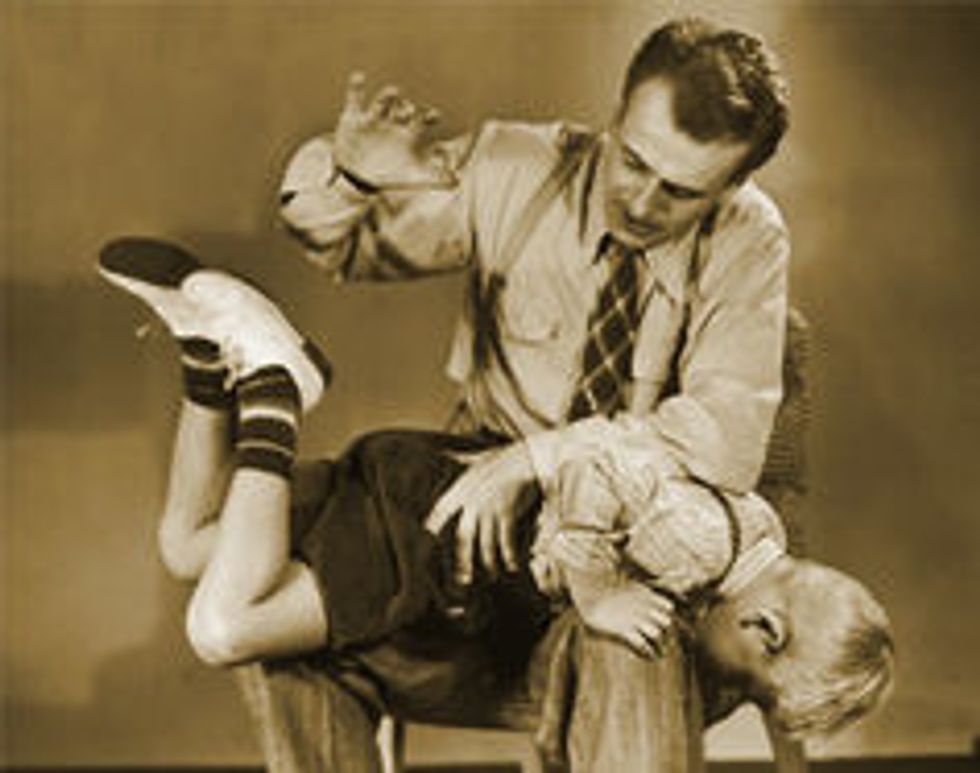
Spanking, or, as it’s formally known, “corporal punishment,” has been much in the news of late.
Out on the presidential campaign trail there was Senator Ted Cruz’s revelation that
If my daughter Catherine, the five-year-old, says something she knows to be false, she gets a spanking.
And recently, in Canada, following a call by the Truth and Reconciliation Commission to prohibit spanking, the Liberal government has promised to abolish a parent’s right to physically discipline children. Along similar legal lines, in June 2015, the Supreme Judicial Court of Massachusetts ruled that the state was justified in denying foster parenting privileges to a couple who practiced corporal punishment and supported spanking or paddling children. The couple in the case had argued, unsuccessfully, that physical discipline was an integral aspect of their Christian faith.
America is slowly growing less supportive of spanking children. But a majority of Americans still support it.
So, is it okay to spank a misbehaving child, every once in a while?
By way of personal disclosure, my wife and I don’t have children, and I try not to sit in lofty judgment of couples whose kids present very difficult behavioral problems. But as a psychiatrist, I can’t ignore the overwhelming evidence that corporal punishment, including spanking (which is usually defined as hitting a child with an open hand without causing physical injury), takes a serious toll on the mental health of children.
Why parents spank children
In a review of corporal punishment in the United States, Professor of Psychiatry at the University of Toledo Michelle Knox noted a striking irony in the American attitude toward corporal punishment.
In the United States, it is against the law to hit prisoners, criminals or other adults. Ironically, the only humans it is still legal to hit are the most vulnerable members of our society – those we are charged to protect – children.
Knox, like many mental health professionals, cites a strong correlation between corporal punishment and child abuse, noting that “…spanking is often the first step in the cycle of child abuse.”
What may begin as the parent’s well-intentioned wish to discipline a child often ends with the parent’s mounting anger and worsening blows.
It isn’t that the parent is “evil” by nature or is a “child abuser.” Often, the parent has been stressed to breaking point, and is not aware of alternative methods of discipline – for example, the use of “time-outs,” removal of privileges and positive reinforcement of the child’s appropriate behaviors.
Impact of spanking on children
The psychological toll on children subjected to corporal punishment is well-documented.
Corporal punishment (CP) is an important risk factor for children developing a pattern of impulsive and antisocial behavior…[and] children who experience frequent CP… are more likely to engage in violent behaviors in adulthood.
…although corporal punishment may have a high rate of immediate behavior modification, it is ineffective over time, and is associated with increased aggression and decreased moral internalization of appropriate behavior.
In short, spanking a child may seem helpful in the short term, but is ineffective and probably harmful in the long term. The child who is often spanked learns that physical force is an acceptable method of problem solving.
Parents vs. researchers
But wait: aren’t there exceptions to these general findings? Aren’t there times when a light rap on the backside can do a misbehaving child some good – or at least, not cause any significant harm?
Many parents think so, but most specialists would say there is little evidence to support such claims. That said, Dr Marjorie Gunnoe, a professor of psychology at Calvin College, and her colleague, Carrie Lea Marinerpublished a study in 1997 that concluded that, “for most children, claims that spanking teaches aggression seem unfounded.”
Gunnoe and Mariner argued that the effects of spanking may depend on the “meaning” children ascribe to it. For example, spanking perceived by the child as parental aggression (as opposed to nonaggressive limit setting) may be associated with subsequent aggressive behavior by the child.
Parents who believe they have no alternative except to spank their misbehaving children do not need finger-wagging lectures from clinicians.
But they do need professional support and education, aimed at reducing their level of stress and increasing their use of alternatives to corporal punishment.
A parade of El Niño-fueled storms has marched over California in the last few weeks, bringing bouts of much needed rain and snow to the parched state. But maps of drought conditions there have barely budged, with nearly two-thirds of the state still in the worst two categories of drought.
So what gives?
The short answer, experts say, is that the drought built up over several years (with help from hotter temperatures fueled in part by global warming) and it will take many more storms and almost assuredly more than a single winter — even one with a strong El Niño — to erase it.
The issue for California comes down to this: there are short-term drought impacts and long-term ones.
With the former, the signs are encouraging: Soil moisture is increasing and some areas are greening up thanks to repeated rains. Temperatures have also been cold enough that snow is building up in the mountains. The snowpack in the Sierra Nevada, a major water resource come spring and summer, is up to an average of 113 percent of normal for this time of year, according to California’s Department of Water Resources (DWR). Compare that to the record low 6 percent of normal at the end of winter last year.
“The good news is we are seeing the benefits of El Niño, but they are trying to climb out of a 4-year drought,” Mark Svoboda, a climatologist with the National Drought Mitigation Center at the University of Nebraska-Lincoln, said in an email.
Long-term impacts like depleted groundwater, low reservoir levels and pitiful stream flows, “they’re not responding much at all yet,” Brian Fuchs, another NDMC climatologist, said. “The reservoir levels have hardly moved.”
To name just a few examples (all in Northern California): Trinity Lake is at 27 percent of capacity and 38 percent of its historical average, Shasta Reservoir is at 49 percent of capacity and 73 percent of the historical average, and Lake Oroville is at 40 and 61 percent, respectively, according to DWR records.
Those reservoirs are crucial to agriculture and supplying water to many areas. A report released in June by scientists from the University of California, Davis, estimated that the drought had cost the state’s agricultural industry some $2.7 billion. With levels still low, it’s unclear how much will be available to farmers come spring.
To get reservoirs and groundwater back to pre-drought levels will simply take more time and more precipitation.
Such issues “are the last to emerge going into drought and they will be the last to recover coming out,” Svoboda wrote in the most recent Drought Monitor report, which the NDMC puts out on a weekly basis.
That reality has led Fuchs, Svoboda and the other Drought Monitor authors to keep the map of drought in California largely unchanged since late fall, when the storms began blowing through.
If the precipitation continues, there may be some slight easing in the coming weeks, but Fuchs warned that “it’s going to be slow.”
The situation has been very different in Oregon and Washington, which were similarly smothered by drought earlier in the year, but have made huge strides thanks to the spate of storms. Three months ago, Washington was entirely in drought; now just 25 percent is. Oregon has more drought conditions remaining, but the worst-off areas have gone from taking up two thirds of the state to only about 4 percent of it in the same period of time.
The difference in those states, Svoboda said, was that their drought was not as deeply entrenched, having largely developed over only the last year.
[caption id="attachment_759384" align="aligncenter" width="600"] Drought levels across California as of Jan. 28, 2015. (US Drought Monitor)[/caption]
Drought conditions in California, in contrast, have been building up since 2012. Over that time, the state has missed out on nearly a year’s worth of rain, according to a study published in July. That means they need the equivalent of two full years’ worth of rain to catch up. Even if this winter brings above-average precipitation to the state, it won’t be on that level.
Unexpectedly for a strong El Niño, most of the storms so far have hit Northern California, while Southern California has lagged behind in rain and snow totals. El Niño typically shifts the jet stream to a position where it funnels incoming storms over the southern tier of the U.S., and as we are reaching the time of year when El Niño’s impacts typically peak, we could see a shift to that classic setup, Fuchs said.
All the snow in the Sierras is still beneficial to the state as a whole, though, as some of the water that will fill reservoirs when the snow melts is funneled to the southern portions of the state.
Overall, with the precipitation that has fallen in the last few weeks and the expectation that that pattern will hold, “the momentum is there” to make some headway in alleviating the drought, Fuchs said.
“The first of the dominoes has fallen in that they needed to wet up the soils in the short-term so that they release water into streams and groundwater,” Svoboda said. “But we’re a long ways away yet for seeing California in an all-clear situation.”
The mystery behind the extinction of a huge flightless bird called Genyornis that flourished in the grasslands and woodlands of prehistoric Australia may have been solved, with burned eggshells as the clue and people as the culprits.
Scientists said on Friday burn patterns detected on eggshell fragments indicate that the humans who first arrived in Australia roughly 50,000 years ago gathered and cooked the big bird's eggs, playing havoc with its reproductive success.
The study is the first to provide direct evidence that these early human inhabitants preyed on the remarkable large animals that once thrived in Australia but disappeared after people got there, University of Colorado geological sciences professor Gifford Miller said.
Genyornis, at almost 7 feet tall (2 meters) and perhaps 500 pounds (225 kg), was much bigger than today's large flightless birds like the ostrich or emu. It possessed powerful legs, small wings, large claws and a big beak for eating fruit, nuts and maybe small prey.
It was a member of a family of giant birds called dromornithids, some reaching 10 feet (3 meters) tall and 1,100 pounds (500 kg), that was related to ducks, geese and swans. Genyornis vanished around 47,500 years ago, Miller said.
The researchers analyzed burned Genyornis eggshell fragments, some only partially blackened, discovered at more than 200 sites. The eggs were the size of a cantaloupe, weighing about 3-1/2 pounds (1.5 kg).
"We conclude that the only explanation is that humans harvested the giant eggs, built a fire and cooked them, which would not blacken them, then discarded the fragments in and around their fire as they ate the contents," Miller said.
"Wild or natural fires could not produce such patterns. We have no direct evidence that humans hunted the adults, but loss of eggs certainly reduced reproductive success."
There has been a long-running debate over whether people caused the extinction of Australia's unique collection of large animals, also including a 25-feet-long (7.5 meters) monitor lizard called Megalania, a nearly rhinoceros-sized wombat called Diprotodon, large marsupial predators and 1,000-pound (450-kg) kangaroos.
More than 85 percent of Australia's large mammals, birds and reptiles disappeared after people arrived.
Some experts blame human hunting, while others blame climate shifts, in particular continental drying from about 60,000 to 40,000 years ago. With the new study, published in the journal Nature Communications, the case for a human role becomes stronger, Miller said.
(Reporting by Will Dunham; Editing by Sandra Maler)
Prior to the relaunch of Fox's supernatural and conspiracy series The X Files, the normally secretive Central Intelligence Agency became less publicity shy, releasing documents and photos detailing their own top secret investigations into UFO sightings.
On their blog, -- yes, the CIA has a blog -- the agency invited the world to "take a peek into our X Files," providing photos and links to documents dating back to the early 50's.
"We’ve decided to highlight a few documents both skeptics and believers will find interesting. Below you will find five documents we think X-Files character Agent Fox Mulder would love to use to try and persuade others of the existence of extraterrestrial activity," the post reads. "We also pulled five documents we think his skeptical partner, Agent Dana Scully, could use to prove there is a scientific explanation for UFO sightings."
For Mulder, there are reports of UFO sighting over England, Spain, and the Belgian Congo.
The more skeptical Agent Scully is given more detailed memorandums describing the investigations, including memoranda from Project Bluebook given to then CIA Director Walter Bedell Smith that eventually led to the establishment of the Robertson Panel.
The Roberston Panel concluded that 90 percent of sighting could be attributed to meteorological conditions and recommended creating an "an integrated program designed to reassure the public of the total lack of evidence of Inimical forces behind the phenomenon, to train personnel to recognize and reject false indications quickly and effectively, and to strengthen regular channels for the evaluation of and prompt reaction to true indications of hostile measures."
The CIA later tweeted tips for reporting UFO's to the agency: