When Peter Navarro — one of President Donald Trump’s top economic advisers — was interviewed on Fox Business on Friday, June 12, he offered some proposals on what the next economic stimulus package coming from Congress should look like. Navarro called for a package that would cost more than $2 trillion and include programs to increase manufacturing in the United States. But journalist Jeff Stein, in a Washington Post article published on June 18, reports that Navarro’s ideas are by no means universally loved in Trumpworld.
One Trump Administration senior official, who spoke on condition of anonymity, told the Post, “Peter went rogue” — and another one asserted, “Navarro speaks for Navarro.” But Navarro is defending his proposal.
“If there is anybody in this administration who is opposed to ‘buy American’ or strengthening the domestic manufacturing base, they are in the wrong administration,” Navarro told the Post.
“Navarro speaks for Navarro.”
As much of Washington is consumed by Bolton and White House infighting over foreign policy, a messy situation is emerging on the economic policy team, by @JStein_WaPohttps://t.co/sYjwRCO8rx
It’s no secret that Democrats and Republicans in Congress have been butting heads over stimulus ideas. House Speaker Nancy Pelosi and Senate Majority Leader Mitch McConnell have expressed very different views on how the U.S., economically, should respond to the coronavirus pandemic. But as Stein points out, there are also conflicting ideas among Republicans and Trump allies.
“The differing White House agendas have increasingly spilled into public as administration officials have contradicted each other on how to deal with new economic stimulus bills,” Stein explains. “At this point, there is not a concrete White House proposal, in part because different economic advisers keep floating different — and at times contrasting — ideas.”
Some Republicans, Stein notes, have criticized Treasury Secretary Steven Mnuchin for being, as they see it, “too generous to Democrats” — including Speaker Pelosi.
Douglas Holtz-Eakin, who formerly served as director of the Congressional Budget Office and was an adviser to the late Arizona Sen. John McCain, told the Post, “It is very hard for Congress to figure out this administration’s priorities. Is today about Mnuchin’s agenda? Navarro’s? The president’s? Somebody else’s? The way they’re doing this is completely different than any way it’s been done before.”
White House Press Secretary Kayleigh McEnany on Thursday labeled former National Security Adviser John Bolton as "the most disliked man in America."
During an interview on Fox News, McEnany was asked about the White House's objection to Bolton's new book, which claims that President Donald Trump repeatedly abused his power in hopes of bolstering his reelection campaign.
"My reaction is that John Bolton has discredited himself," McEnany said before reminding the Fox News audience that the former national security adviser is on record repeatedly praising Trump.
"John Bolton's book is debunked by none other than John Bolton," she continued. "He's discredited on both sides of the aisle. And if you thought [former FBI Director James Comey] was the most disliked man in America, I think John Bolton has now taken that title."
CNN senior medical correspondent Elizabeth Cohen, however, warned that the president's happy spin on the state of the COVID-19 pandemic in the United States does not match reality.
"Hundreds of Americans are dying every day because of coronavirus!" she said. "Can you imagine if this was happening under President Obama, President Trump would be saying this is a national travesty and he'd be right."
CNN correspondent Rosa Flores then explained how Florida, which is once again shaping up to be a key swing state in the 2020 presidential election, could soon become a new epicenter in the United States.
"This is a model out of the University of Pennsylvania that says... that Florida has all of the ingredients for disaster," she said. "Really, all you have to do is really look at the numbers. Last week we were talking about a thousand cases a day. That changed over the weekend to more than 2,000, and the latest number that we have is 2,600 in one day with a 10.3 percent positivity rate. That is the biggest positivity rate in the past two weeks."
WASHINGTON — U.S. Sen. John Cornyn has faced a barrage of criticism from Texas and national Democrats in recent days for his comments and questions about racism made during a hearing over how to overhaul the country's criminal justice system in the wake of Minneapolis resident George Floyd's death at the hands of police.
Cornyn, a Republican who is up for reelection in the fall, seemed to question in the hearing whether isolated acts of police misconduct ought to be characterized as signs of systemic racism within all police departments and among police officers. The two Democrats who are locked in a battle for their party's nomination released highly critical statements on the state's senior senator, saying Cornyn didn't understand the idea of broader systemic issues in policing and other public institutions harming black people.
“There are a lot of differences between John Cornyn and myself," said state Sen. Royce West of Dallas. "One is that I know systemic racism exists and that it hurts black and brown people disproportionately."
“If Senator Cornyn can’t even grasp the concept of systemic racism, there’s a 0% chance he’s equipped to legislate solutions to address racial injustice in America," said Air Force veteran M.J. Hegar.
At issue was a Tuesday U.S. Senate Judiciary Committee hearing that featured as witnesses several advocates who favor dramatic change to law enforcement, including S. Lee Merritt, an attorney for Floyd's family. Several of Cornyn's questions were framed around the notion the phrase "systemic racism" — a term that means that practices within a system can have a disproportionately bad effect on people of color — mean that all people within that system are racist.
Cornyn's most heated exchange was with Vanita Gupta, a former Department of Justice official for during the Obama administration.
"Do you believe that, basically, all Americans are racist?" he asked Gupta.
"We all have implicit bias and racial bias, yes I do," she said, to which Cornyn responded with "Wow."
"And I think that we are an amazing country that strives to be better every single day," she added. "It's why I went into government to make a more perfect union."
"You lost me when you ... took the acts of a few misguided, perhaps malicious individuals, and ascribed that to all Americans, not just our 800,000 police officers, our 18,000 police departments," Cornyn said.
"I was disheartened to hear our colleagues suggest that when we discuss the fact of systemic racism, we are accusing people within the system and all people within the system of being racist," she said. "That kills the conversation, and it actually insults the intelligence of the American people. It is an extreme and simplistic attempt to reject the seriousness of this issue."
"Let's not fall in a trap of simplifying this in a way that then we don't address the real issue," she added. "And so I encourage our colleagues to not fall into these simplistic traps that are really about suggesting ... if we have to reform the system it's because we're calling everyone racist."
Presumably to reinforce where her remarks were directed, Harris rattled off Texas law enforcement statistics that showed black people are disproportionately harmed in police shootings and arrested for drug possession.
Despite widespread political paralysis on Capitol Hill, there is an urgency in both parties in addressing how criminal justice is administered in light of a video of an officer leaning on Floyd's neck for nearly nine minutes before he died.
Cornyn is likely to be a key player in how Congress addresses policing issues over the summer. On Wednesday morning, he appeared with the leader of the GOP effort, U.S. Sen. Tim Scott of South Carolina, in laying out the Republican plans going forward. That proposal would mandate police departments to better track disciplinary issues with police officers and provides money for police training and de-escalation programs.
One of the points of contention between the Senate and the Democratic-controlled House is whether to have an outright ban on chokeholds. The Senate proposal withholds money from departments that do not ban the practice.
Cornyn, a senior member of the committee that handles judicial matters, is a former Senate GOP whip and former Texas attorney general. In 2018, Cornyn was a force in moving a criminal justice bill through the Senate. That bill primarily addressed the treatment and rights of individuals once they are incarcerated.
His challengers, West and Hegar, are in a summer runoff for the Democratic nomination to take on Cornyn in the fall. Both released lengthy statements on the exchange.
"As he tries for his fourth term in the senate, let’s look at our records," West also said in his statement. "John Cornyn has still not awoken to the fact that systemic racism exists in this country. His press conference with other Republicans today shows how far behind the curve he is. I started working on criminal justice reform in the Texas Legislature decades ago."
"I’m proactive. Not reactive," he added. "This is the case on many issues, not just criminal justice reform. I don’t believe I’ve ever heard John Cornyn say the phrase 'black lives matter.' Millions of Texans believe this to be true. Why can’t John Cornyn say it?"
"It’s unacceptable that after 18 years in the Senate, Cornyn still refuses to acknowledge the reality of these obvious, deadly problems that systemically target Black communities," Hegar said. "Texans deserve better than a failed senator who hides behind a veil of ignorance as innocent lives are lost,”
Asked Wednesday about his comments at the hearing, Cornyn told Texas reporters that he was "trying to understand what people mean when they use the term." Some witness said all police are systemically racist, Cornyn said.
"I just simply don't agree with that, but I was glad to hear the witnesses say that because I think what that shows is they're painting with a broad brush," Cornyn said. Cornyn said that approach avoids "individual responsibility" because in his view, if everyone is considered a racist, then no single person can take responsibility.
Republican leaders aim to bring the matter to the floor next week. It is unclear if that chamber can square away differences with the Democratic-controlled House proposal.
Writing in the Washington Post this Thursday, columnist Jennifer Rubin argues Republicans are clueless as to the problem gripping the nation.
"What don’t Republicans understand?" she writes. "Hundreds of thousands of Americans have taken to the streets. Within weeks, two police officers — one in Minnesota and another in Georgia — have been charged with murdering African American men who posed no threat to them. And still Republicans serve up crumbs."
"It is no different on the coronavirus front — another example of grave racial inequality in America as people of color are hospitalized and dying at much higher rates than whites. Republicans don’t seem to care," she adds.
According to Rubin, the lights are on at the White House and in the office of Senate Majority Leader Mitch McConnell, but "no one is home."
"More African Americans will be killed by police, and more covid-19 hot spots will develop. But do not expect Republicans to do much about either."
The Research Brief is a short take about interesting academic work.
The big idea
In a California study, we found that pregnant women living near active high-production oil and gas wells have an elevated chance of having low birth-weight babies. This finding adds to a growing body of research on potential public health impacts from oil and gas operations.
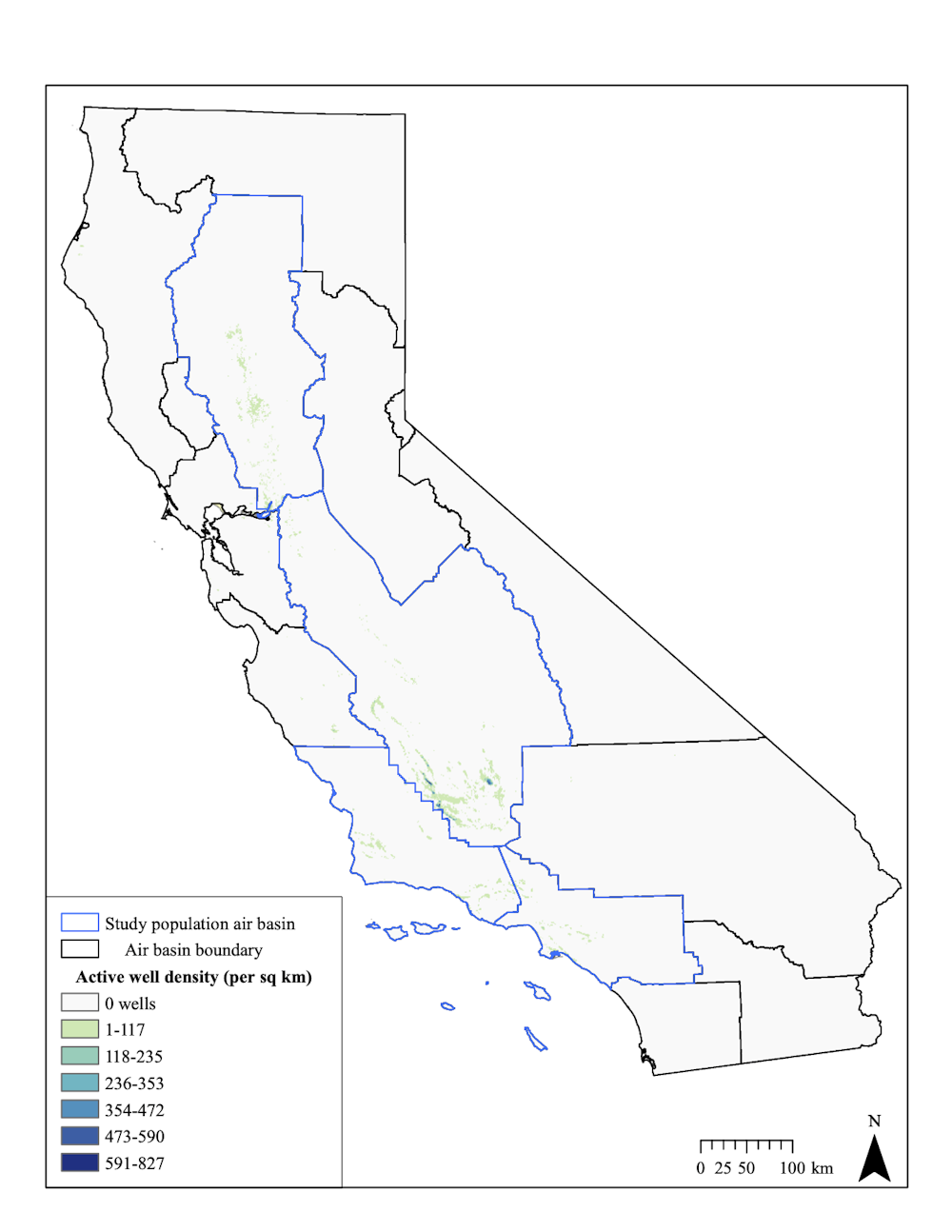
We analyzed the birth records of nearly 3 million babies born to people living within 6.2 miles (10 kilometers) of at least one oil or gas well in California’s Sacramento, San Joaquin Valley, South Central Coast and South Coast regions – the state’s oil production epicenters – between 2006 and 2015.
Our analysis found that in rural areas, pregnant women who lived within 0.62 miles (1 kilometer) of the highest-producing wells were 40% more likely to have low birth-weight babies compared to pregnant women living farther away from wells or near inactive wells only. We also found that rural women living near the highest-producing wells were 20% more likely to have babies who were small for their gestational age, which is an indication of reduced fetal growth.
Among full-term births, babies born to rural women living within 0.62 miles of a well were 1.3 ounces (36 grams) smaller, on average, than those of their counterparts. This decrease in birth weight may seem minor from an individual clinical perspective, but such a downward shift at the population level can have significant implications for overall neonatal and infant health.
Finally, in urban areas, we found that pregnant women living close to high-production wells had a 4% higher risk of having a small-for-gestational-age baby.
Overall, these patterns persisted even after we took into account known risk factors for poor birth outcomes, such as maternal age, educational attainment, access to prenatal care, race/ethnicity, neighborhood-level socioeconomic status and other sources of air pollution.
Los Angeles is home to the largest urban oil fields in the U.S., with many wells just feet away from homes and parks.
Why it matters
Oil and gas production has been a major U.S. industry for over a century. Today the United States is the largest petroleum producer in the world. Over the past several decades, new extraction technologies such as hydraulic fracturing (“fracking”) have significantly increased the scale of production in states including Pennsylvania, Colorado and Texas.
California’s unique oil and gas infrastructure dates back to the early 1900s. As of 2017, the state was one of the top five producers of crude oil in the country, although production levels are declining.
Active oil and gas well density by air basin across California (2005–2015).
Oil and gas production in California occurs in both rural and urban settings. Operators primarily use conventional drilling and enhancement methods and, to a much lesser degree, hydraulic fracturing.
A 2017 study estimated that 2.1 million Californians live within one mile of an actively producing oil and gas well. But until now, no epidemiological studies had examined potential health risks in California.
What still isn’t known
There may be factors that we could not account for in our analysis that may enhance the vulnerability of rural pregnant women to adverse health effects of oil and gas development. Such factors could include chemical exposures related to maternal occupation, housing quality or dependence upon untreated groundwater sources for drinking water.
A 2019 Colorado study observed similar rural/urban differences, with an increased likelihood of babies being born with congenital heart defects among women living near high production oil and gas wells in rural, but not urban, areas.
What’s next
Our study adds to mounting evidence of a link between living near actively producing oil and gas wells and adverse birth outcomes. Another California study in the San Joaquin Valley, released shortly after ours, found elevated risks of spontaneous preterm birth among women living closer to producing oil and gas wells.
While the number of studies on oil and gas is increasing, it remains unclear what aspects of oil and gas development pose potential harm to human health. Several hazards associated with intensive oil production, including air toxics, water pollutants, noise and excessive lighting, may each affect health differently. Better understanding of these different exposures and pathways would inform regulation and help prioritize pollution monitoring, emissions reduction requirements and exposure reduction strategies.
As Californians debate whether their state should expand oil and gas production, including issuing new drilling permits, results from health studies such as ours can inform current efforts to establish buffer zones between active well sites and the places where people – particularly vulnerable populations – live, go to school and play.
In our view, future studies should better characterize specific health threats posed by oil and gas production. Most importantly, we believe that research and regulatory efforts need to more fully engage people who live in fence-line communities near oil and gas production facilities, and to collaboratively identify and implement effective exposure reduction strategies that protect vulnerable groups.
Following several deaths of unarmed black men at the hands of police, President Donald J. Trump issued an executive order on June 16 that calls for increased training and credentialing to reduce the use of excessive force by police.
The order did not mention the need for police to get a college education, even though higher education was identified in the 2015 President’s Task Force on 21st Century Policing as one of six effective ways to reduce crime and build better relations between police and the communities they serve.
As researchers who specialize in crime and punishment, we see five reasons why police officers should be encouraged to pursue a college degree.
1. Less likely to use violence
Research shows that, overall, college-educated officers generate fewer citizen complaints. They are also terminated less frequently for misconduct and less likely to use force.
Regarding the use of force, officers who’ve graduated from college are almost 40% less likely to use force. Use of force is defined as actions that range from verbal threats to use force to actually using force that could cause physical harm.
College-educated officers are also less likely to shoot their guns. A study of officer-involved shootings from 1990 to 2004 found that college-educated police officers were almost 30% less likely to fire their weapons in the line of duty. Additionally, one study found that police departments that required at least a two-year degree for officers had a lower rate of officers assaulted by civilians compared to departments that did not require college degrees.
Studies have found that a small proportion of police officers – about 5% – produce most citizen complaints, and officers with a two-year degree are about half as likely to be in the high-rate complaint group. Similarly, researchers have found that officers with at least a two-year degree were 40% less likely to lose their jobs due to misconduct.
2. More problem-oriented
The 2015 task force recommended community and problem-oriented policing strategies as ways to strengthen police-community relations and better respond to crime and other social problems. Problem-oriented policing is a proactive strategy to identify crime problems in communities. The strategy also calls for officers to analyze the underlying causes of crime, develop appropriate responses, and assess whether those responses are working. Similarly, community-oriented policing emphasizes building relationships with citizens to identify and respond to community crime problems. Research has found that when police departments use community-policing strategies, people are more satisfied with how police serve their community and view them as more legitimate.
Community policing and problem-oriented policing require problem solving and creative thinking – skills that the college experience helps develop.
For example, internships and service-learning opportunities in college provide future police officers a chance to develop civic engagement skills. It also gives them the chance to get to know the communities they will police. Among students who participated in a criminal justice service-learning course working with young people in the community, 80% reported a change from stereotypical assumptions that all of them would be criminals to a better understanding of them as individuals with goals and potential - some not so different from the students’ own dreams. Almost 90% said they had come to understand the community, which they believed would serve them in their criminal justice careers.
Among street-level officers who have the most interaction with the public, having a bachelor’s degree significantly increases commitment to community policing. These officers tend to work more proactively with community members to resolve issues and prevent problems rather than only reacting to incidents when called.
3. Enables officers to better relate to the community
Higher education has been shown to enhance the technical training that police get in the academy or on the job.
Research has also shown that police officers themselves recognize the value of a college degree. Among other things, they say a college education improves ethical decision-making skills, knowledge and understanding of the law and the courts, openness to diversity, and communication skills. In one study, officers with criminal justice degrees said their education helped them gain managerial skills.
For example, many departments employ de-escalation tactics that aim to reduce use of force. A critical step in knowing whether an approach is achieving its intended goal is evaluating its impact. Officers who have an understanding of scientific methods, as taught in college, are better positioned to adjust their department’s policies.
5. Builds better leaders
Bringing about meaningful police reform requires transformational leadership. Higher education, including graduate degrees, can enhance the leadership potential of criminal justice professionals and support their promotion through the ranks.
Police officers with at least some college experience are more focused on promotion and expect to retire at a higher rank compared to officers with no college. It should come as little surprise, then, that police administrators, including police chiefs, are more likely to hold college and post-graduate degrees. Leaders with a graduate degree are twice as likely to be familiar with evidence-based policing, which uses research to guide effective policy and practice.
Higher education and police reform efforts are at a critical juncture.
Educated law enforcement professionals will be better equipped to lead much-needed reform efforts. State and local agencies and governments can do more to encourage officers to seek a college degree, including through incentives, like the Nebraska Law Enforcement Education Act, which allows for a partial tuition waiver or the Quinn Bill in Massachusetts, which provides scaled bonuses depending on the degree an officer holds or tuition reimbursement scholarships like those offered by the Fraternal Order of Police. Colleges and universities can help officers acquire the skills needed to help to reestablish trust between our communities and those who are sworn to protect and serve.
MSNBC's Joe Scarborough wondered whether Kellyanne Conway or Vice President Mike Pence would be the first to write a book claiming they wanted to invoke the 25th Amendment against President Donald Trump.
The "Morning Joe" host shamed John Bolton for writing a book about Trump's "overtly bad" behavior instead of testifying about it during the impeachment inquiry, and he called out Pence and Conway for staying silent about the president's incompetence and wrongdoing.
"I wonder, when Mike Pence writes his book and starts pitching his book six months from now, will Mike Pence lie and say, well, at this point I started thinking about the 25th Amendment and I went and talked to A or talked to B?" Scarborough said. "Will Kellyanne Conway be the one who lies and says, 'Yes, I was very concerned, and I let people know that I was so concerned.'"
"Will Kellyanne Conway be the one who says, 'Yes, I was so concerned, I furiously worked around the White House corridors to try to get someone to push forward the 25th Amendment to take this man out of office?" he added. "Who's going to say it, then? You know they're going to lie, they're all liars. You know they're going to lie. Who's going to say it? Nobody in real time, I can tell you, nobody in real time. Nobody, nobody will do it when we need it most, just like John Bolton didn't do it when America needed to hear the truth the most."
That plan was put on pause just four days later when a state judge issued an injunction based on the petition of a man whose ancestor, Otway Allen, gave Virginia the land the the sculpture sits on.
In his petition to the court, William C. Gregory claimed that removal of the statue would violate the conditions of his great-grandfather’s 1890 land deed, which says Virginia “will hold said Statue and pedestal and Circle of ground perpetually sacred to the Monumental purpose … and that she will faithfully guard it and affectionately protect it.”
On June 19, a judge will decide whether to let the 10-day injunction expire, enabling Richmond to dismantle its Lee monument, or to obey the donor’s wishes – at least temporarily.
Richmond isn’t the only Virginia city where a centuries-old land deed is a legal hurdle in removing Confederate monuments many see as a symbol of white supremacy. Nearby Charlottesville has faced similar questions about the intentions of the philanthropist who donated its controversial Robert E. Lee statue.
‘Irreparable harm’
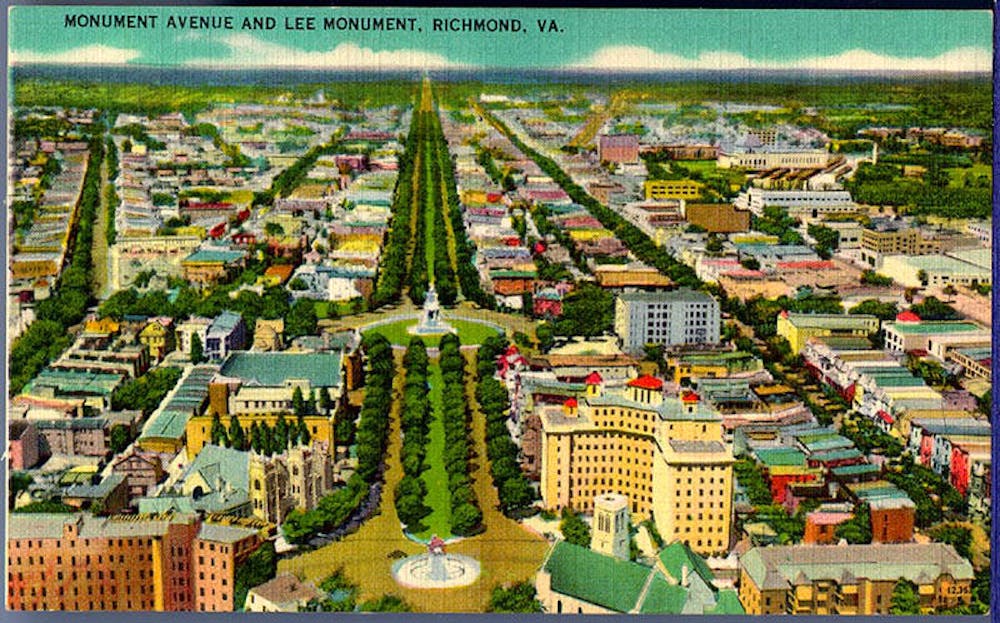
Richmond’s Lee sculpture sits atop a pedestal on a traffic circle at the gateway to Monument Avenue, an architectural paean to white Richmonders’ long tradition of gracious, segregated living.
The land was a gift to the state from real estate investor Otway S. Allen and his sisters, Bettie F. Allen Gregory and Martha Allen Wilson. The donors hoped that putting the monument on the tree-lined boulevard would hasten development of the prestigious, whites-only residential neighborhood planned for the area.
Back in the 19th century, the Lee monument was on the outskirts of the city. Over the next 40 years, four more Confederate monuments were erected along the avenue, which traverses what is now central Richmond.
In his injunction request, Gregory claimed that removing the statue would cause “irreparable harm” because his family “has taken pride for 130 years in this statue resting upon land belonging to his family.”
To many locals, especially black Richmond residents, the sculptures have always been colossal reminders of the South’s history of enslavement and the violence wrought on black lives. The governor and city leaders now seemingly agree, saying that monuments glorifying the region’s white supremacist history should not displayed on public land.
Nevertheless, the Lee statue still has its defenders in Richmond. On June 15, six Monument Avenue homeowners filed their own separate lawsuit to block its removal, claiming that dismantling the “priceless work of art” would lead to the “degradation of the internationally recognized avenue on which they reside.”
Charlottesville’s ‘princely giver’
An hour away in Charlottesville, another Robert E. Lee statue has been embroiled in legal challenges since 2017, when a city council vote for its removal triggered a deadly white supremacist rally.
Charlottesville’s statue was a gift of a prominent local philanthropist, Paul Goodloe McIntire. McIntire, born during the Civil War, was the son of the Charlottesville’s mayor when the city surrendered to General Custer’s Union troops in 1865.
In 1918 McIntire donated land to the city for use as a public park, to be called Lee Park. The deed stipulated that a sculpture of the Confederate general, commissioned and paid for by McIntire, would be installed and maintained.
Among other objections to the statue’s removal, the Sons of Confederate Veterans, the Monument Fund and a small group of local citizens cited this land deed in their successful March 2017 legal complaint. They claimed that removing the statue would violate the terms and conditions of McIntire’s gift.
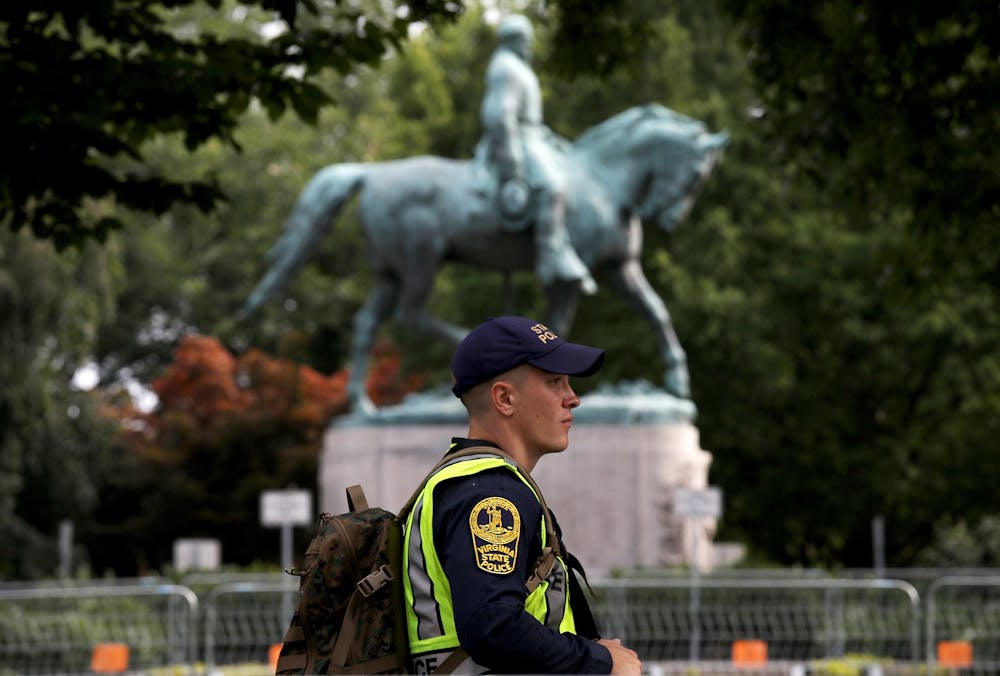
Since 2017 Charlottesville’s contested Lee statue has been alternately shrouded in black, barricaded and given police protection.
Both Virginia lawsuits argue that the land donors’ original wishes are inviolable.
But my legal research on charitable gifts shows that donor wishes are not always set in stone, so to speak. Under state law, Virginia’s included, courts can modify gift conditions when fulfilling them is no longer possible or practicable.
In such cases, judges have declined to preserve the outdated wishes of long-dead donors. Instead, they’ve allowed discriminatory gift conditions to be eliminated, rendering the gifts usable in the modern era.
Rice University, for example, was founded in 1912 with a charitable bequest on the condition that the school educate only “the white inhabitants of Houston, and the state of Texas.” In 1963, seeking to integrate the university, Rice trustees filed a motion to modify the racial restrictions.
Despite opposition by a group of alumni who sought to keep the school segregated, the court concluded that strict adherence to the donor’s racial restrictions was no longer practicable and that the terms of Rice’s charter could be modified to admit black students.
Now, a Richmond court must tackle a similar issue. The ruling will determine whether land given to Richmond by a private citizen making a very public statement about the South’s legacy of racial inequality can be used to celebrate new and different histories.
What happens in this former capital of the Confederacy may influence similar cases in Charlottesville and beyond.
Recent polls have indicated that former Vice President Joe Biden, the presumptive Democratic presidential nominee, has a variety of possible paths to winning at least 270 electoral votes in November and defeating President Donald Trump. If Biden won every state that Hillary Clinton carried in 2016 and flipped a handful of Trump states, he would be sworn in as president in January 2021.
But journalist Brian Klaas, in an op-ed for the Washington Post, stresses that although a narrow victory over Trump would put Biden in the White House next year, it wouldn’t be enough to eradicate Trumpism.
“Thankfully, poll after poll shows Americans abandoning President Trump,” Klaas writes. “In some battleground states, former Vice President Joe Biden has racked up double-digit leads. Of course, a few months is an eternity in a presidential campaign; so much could still change. But at the moment, Trump’s ship is sinking. He is currently on track to lose in November. Unfortunately, Trump losing is not enough.”
Trumpism, according to Klaas, is about more than President Trump; it is a toxic ideology that has infected the GOP in general — and a Biden landslide, Klaas writes, will be needed to adequately repudiate it.
“For the United States and the world, a narrow victory for Biden would be exponentially better than a narrow victory for Trump,” Klaas explains. “But we don’t need a narrow victory. We need a landslide that sends Trumpism to the dustbin of history — and forces the Republican Party to change.”
Klaas outlines what a narrow Biden win might look like in November — for example, Biden carrying the states that Clinton won in 2016 but performing better in the Rust Belt.
“Consider two scenarios,” Klaas writes. “The first is a mirror image of the 2016 electoral college: Biden wins by recapturing Michigan, Wisconsin and Pennsylvania, or loses one of those swing states but picks up Arizona instead. Biden scrapes together 278 or 279 electoral votes and heads to the White House.”
Such a scenario, according to Klaas, wouldn’t be a true repudiation of Trumpism.
“The Republican Party would likely attribute a narrow Trump defeat to tactical errors,” Klaas warns. “Trump had the winning formula right, they might say, but just botched it a bit. Conclusion: tinker with Trumpism, don’t replace it.”
Klaas goes on to describe the type of Biden victory he would much rather see.
According to Klaas, “What we decide won’t just determine who is in the White House next year, it will determine what the Republican Party looks like for at least a decade…. If we assume that the latest battleground state polling averages from FiveThirtyEight are correct — yes, a big assumption — then Biden would win 367 electoral votes, picking up Georgia, Ohio, North Carolina, Arizona, Pennsylvania, Florida, Wisconsin and Michigan compared with 2016. Right now, Trump is still leading in Texas and Iowa, but only by about a point. If he lost those, which is still unlikely, it wouldn’t be just defeat for the Republicans — it would wipe them out electorally.”
Klaas concludes, “America desperately needs two functioning political parties that are rooted in reality and firmly believe in an inclusive democracy. The only way to force the Republican Party to exorcise its demons of racism, authoritarianism and conspiracism is wholesale destruction at the ballot box.”
Former national security adviser John Bolton is making a number of bombshell claims in his soon-to-be published book, including that President Donald Trump told Chinese President Xi Jinping that he approved of his plan to build concentration camps for Muslims.
However, Washington Post reporter Josh Dawsey told CNN's Jim Sciutto on Thursday that the Trump White House isn't going to take Bolton's damning tell-all book about the president lying down.
"We have been told to expect an onslaught of attacks against John Bolton," Dawsey said. "You saw the president's tweets after midnight calling him a wacko and a dope, and they're both curiously saying that the book is classified and that he could be subject to criminal charges, but the president is also saying it's false."
Sciutto said that the problem for the White House is that Bolton's account of Trump's behavior is consistent with other stories that have been told by former Trump officials including former Secretary of State Rex Tillerson, former Defense Secretary James Mattis, and former chief of staff John Kelly.
Dawsey then told Sciutto that many Republican lawmakers will confide in off-the-record conversations that they agree with Bolton's assessment.
"Of course in private they say it's a problem, Jim," he said. "I mean, if you talk to senators or Republican congressmen on the Hill who have been watching for a long time they see the erraticism of this... but the president remains broadly popular in his party."
MSNBC's Joe Scarborough and Mika Brzezinski ripped John Bolton and other senior Trump administration officials who revealed "overtly bad" behavior -- but only after leaving the White House.
The former national security adviser refused to testify during President Donald Trump's impeachment, but he published a new book revealing ignorance, incompetence and unconstitutional actions by the president -- and the "Morning Joe" co-hosts were appalled.
"Bolton details how the president's closest advisers had an unfavorable opinion about his abilities, such as chief of staff John Kelly, who asked what if we have a real crisis like 9/11 with the way he makes decisions?" Brzezinski said. "This book illustrates potentially how bad, how overtly bad things were inside the White House."
Brzezinski asked whether senior administration officials -- such as former Defense Secretary James Mattis or former Secretary of State Rex Tillerson -- had to notify the public of their grave concerns about the president's capabilities.
"These aren't just nuances that might be troubling," she said. "This is unpatriotic behavior. These are actions that endanger our national security, that endanger the American people."
Scarborough agreed the concerns were too important to keep quiet.
"When he's commander in chief and he's in charge of the nuclear codes, he's got the nuclear codes, and he's in charge of the United States government's executive branch, they have a duty, immediately, to go to Capitol Hill, if they don't want to talk in the press, to testify behind closed doors, and to intel committees behind closed doors, to armed services committees, to foreign affairs committees, and let them know that the ship of state is in the hands of a mad man," Scarborough said. "Or at least in the hands of an ignorant man who doesn't have the temperament or intellect to effectively run the country. James Mattis didn't do that. Rex Tillerson didn't do that. John Bolton, most glaringly, did not do that."
Dr. Jeanne Marrazzo, the director of the Division of Infectious Diseases at the University of Alabama at Birmingham, said that she's been watching with alarm as Florida's confirmed COVID-19 infections keep growing at a record-setting pace.
"Florida has already made the stuff of nightmares for me and many infectious disease people when it comes to COVID-19," she said. "Part of the reason I'm really concerned is that Florida has a lot of older people, right? And we know very, very well that age and coexisting conditions -- like cardiovascular disease, like lung disease, like diabetes -- are the prime predictors for hospitalization and for mortality with this virus."
She also said that the large number of nursing homes in Florida would leave the state highly vulnerable to a large-scale outbreak that could quickly spiral out of control.
"The potential for the virus to take off there is very, very nerve-racking and could have catastrophic consequences," she said.