Former NBA and University of Kentucky player Rex Chapman appeared on MSNBC Tuesday, dropping a truth bomb on the two senators in his state.
Speaking to Stephanie Ruhle, the outstanding former outside shooter said that he thinks Sens. Mitch McConnell and Rand Paul prioritize their own pocketbook over the voters in Kentucky. After addressing Paul standing in the way of the anti-lynching bill, Chapman said that McConnell is "out of touch with the people of Kentucky."
"So I'm just -- I'm just sort of fed up and I want to be here as an ally to all my friends and family over the years that I've been speaking up, privately, but that time is over," he said, noting that he has long been frustrated and felt a call to join a movement publicly.
Ruhle noted that she has appreciated Chapman's positive videos and happy stories he posts on Twitter to remind the world of the humanity that still exists. He attributes the rise of meanness to siloed anger fighting it out online.
"You know, I think a lot of what we're seeing is just divisiveness," Chapman said. "A lot of it is Twitter driven, which cracks me up. The president was saying he wanted to get off of Twitter that's his only jam, though. A lot of us are being divided by social media and what we see and hear. I think people if they read more, found reputable sources to read, we probably would be in a little bit better space."
That's when he went after the senators in his state.
"Our leadership is really lacking and I want to say one thing here, real quick, Steph, if you don't mind, I spent about 15 years in drug addiction from painkillers," Chapman confessed. "We had a senator here in my home state, he was elected my junior year in high school, 35 years ago, I was 16, and we didn't have an opioid epidemic then and nor was this man a rich man at the time. Fast-forward about 15 years, and it is 2000, I became addicted to Oxycontin. This senator expected more money from big pharma than any politician in American history. He's failed to hold Perdue pharma, or big pharma, accountable for anything in congress."
He went on to say that Kentucky has been overwhelmed by the epidemic and McConnell has done nothing to help the state.
"This epidemic has come into this state and it is wrecking the state," Chapman explained. "I've managed to make it through, but a lot of people don't. And, what I do know is that this senator's been here when epidemic came in and he's done nothing for Kentuckians. I know medical marijuana works, and that he's deprived this state of having any chance of coming back and getting out of rehab, and finding something that might help is just sort of criminal to me. OK, if we don't want to allow medical marijuana here, fine. Let's take care of our farmers, grow the marijuana, sell it to the other states, we don't like money? I'm just sort of fed up, biting my tongue."
He went on to note that when McConnell fell last year he didn't get addicted to painkillers as Chapman did.
"I just want to say you're welcome, Mitch. You're welcome," he closed.
A Trump-loving woman who is an incoming freshman at Arizona Christian University got her scholarship revoked last week after she said that George Floyd had no one but himself to blame for dying at the hands of police.
AZFamily.com reports that an incoming ACU freshman caused outrage when she said that Floyd would never have been killed by police had he just obeyed the law.
"Follow the law and there wouldn't be issues," she wrote in an Instagram post where she referred to Floyd as "this guy who died."
The woman went on to preemptively hit back at critics whom she assumed would accuse her of being insensitive.
"If you don't agree with me I don't give a [expletive] because whatever you say won't change my mind," she wrote. "He's (sic) wasn't innocent he was doing something ILLEGAL."
According to AZfamily.com, it took ACU just one day to rescind its scholarship offer.
"By Tuesday afternoon, the university, which is in Glendale and has about 750 students, rescinded its offer, stating that the university is a 'racially diverse community' and they would be 'praying for her,'" the website reports.
Buffalo police have been widely criticized for a disturbing incident in which a 75-year-old George Floyd protestor, Martin Gugino, was violently shoved to the ground. And now — based on reporting by the right-wing cable news outlet One America News President Donald Trump — is smearing the man as an “Antifa provocateur.”
OANN or OAN prides itself on being more pro-Trump than Fox News, which Trump has criticized at times for not being consistently supportive of him. Here's the segment the network aired on Gugino.
Trump tweeted, “Buffalo protester shoved by Police could be an ANTIFA provocateur. 75 year old Martin Gugino was pushed away after appearing to scan police communications in order to black out the equipment. @OANN I watched, he fell harder than was pushed. Was aiming scanner. Could be a set up?”
Gugino is still hospitalized because of the injuries he suffered. Two Buffalo police officers, Aaron Torgalski and Robert McCabe, have been charged with assault.
In recent weeks, some retired U.S. military commanders have been vehemently critical of President Donald Trump — from Gen. Colin Powell to Marine Gen. John Allen to Marine Gen. James Mattis (former secretary of defense in the Trump Administration). Another who is speaking out is Adm. Bill McRaven, the retired NAVY Seal who oversaw the raid in which al-Qaeda leader Osama bin Laden was killed in Pakistan nine years ago.
On orders from President Barack Obama, that raid was conducted on May 2, 2011— resulting in the death of the mastermind of the 9/11 terrorist attacks on the World Trade Center and the Pentagon. McRaven has been a frequent Trump critic, and according to a June 8 article by MSNBC reporter Steve Benen, McRaven believes that Trump is failing the U.S. miserably.
McRaven told MSNBC, “As we have struggled with the COVID pandemic and horrible acts of racism and injustice, this president has shown none of (the) qualities (of great leaders). The country needs to move forward without him at the helm.”
The retired NAVY Seal is clearly hoping that Trump will be voted out of office in November. Benen quotes McRaven as saying, “This fall, it's time for new leadership in this country: Republican, Democrat or independent. President Trump has shown he doesn’t have the qualities necessary to be a good commander in chief.”
Benen stresses in his article that McRaven is by no means the only retired U.S. military commander who is speaking out against Trump. The MSNBC reporter notes that others who have been critical of Trump “over the last week” include “Gen. Tony Thomas, retired four-star Marine Gen. John Allen, retired three-star Lt. Gen. Russel Honore, retired four-star Gen. Michael Hayden, retired Maj. Gen. Steven Lepper, retired four-star Gen. Barry McCaffrey — and to a certain extent, even retired four-star Gen. John Kelly, who served as Trump's White House chief of staff.”
Benen also points out that the Washington Post recently published an anti-Trump op-ed that was “co-authored by 78 former Defense Department officials, including four former Pentagon chiefs — two Democrats and two Republicans. It coincided with a statement, calling on the president not to use the U.S. military for political ends, co-signed by more than 280 retired diplomats, generals, and senior national security officials. Among the 280 signatories were more than 20 retired generals.”
President Donald Trumpsmeared a 75-year-old Buffalo activist seriously injured by police, in a tweet based on a conspiracy theory spread by a Kremlin-linked broadcaster.
The president identified the protester, Martin Gugino, as an "ANTIFA provocateur," a claim that has bounced around right-wing media circles and then broadcast on the rabidly pro-Trump One America News Network by Russian propagandist Kristian Rouz.
"A new report finds the latest tensions in the Buffalo Police Department could be the result of a false-flag provocation by far-left group Antifa," Rouz reported for OANN.
"Gugino was attempting to capture the radio communications signature of Buffalo police officers," claimed the right-wing news blog. "CTH noted what he was attempting on Thursday night as soon as the now viral video was being used by media to sell a police brutality narrative. [Thread Here] Today, a more clear video has emerged that shows exactly what he was attempting."
The website claims a slow-motion video shows Gugino was attempting to hack into the police radio signal by waving his cell phone across the officer's communications belt.
"The practice, known as 'skimming,' is an old trick used by Antifa to locate police officers and plan violent activities bypassing the police response," Rouz reported for OANN. "In addition, the 75-year-old, who's been referred to as an agitator, was supposedly using the technology to black out police communications. That, however, didn't quite work, and many Buffalo police officers support their embattled colleagues."
Two Buffalo police officers -- Aaron Torgalski and Robert McCabe — were charged with assault in the incident, and Gugino remains hospitalized in stable condition after bleeding from his head.
In a tweet posted early in the morning, Trump suggested that the 75-year-old Gugino, who is still in the hospital after being shoved to the ground by police and hitting his skull on the pavement, could be an "ANTIFA provocateur" who intentionally injured himself to make the police look bad.
"I watched, he fell harder than was pushed," the president wrote. "Could be a set up?"
The reaction to Trump's tweet was fierce and harsh, as many people called out Trump for attacking an elderly man who was shown on video bleeding from his ear after his head hit the ground.
Multiple videos posted this week show a man kneeling on a mannequin to mockingly reenact George Floyd's death while yelling at peaceful Black Lives Matter protesters.
The videos were taken in New Jersey on Monday afternoon and they show a man kneeling on the mannequin in front of a pickup truck that's adorned with a "Trump" flag on the back. Additionally, an "All Lives Matter" sign can be see hanging on a nearby fence.
As the protesters walk by, the man shouts at them that Floyd died because he failed to comply with officers' commands.
"You don't comply, that's what happens!" he yells.
The protesters, who were being escorted on their march by the Franklin Township Police Department, continued chanting "Black Lives Matter!" as the man yelled at them.
President Donald Trump smeared a 75-year-old protester by name who suffered a serious head injury after Buffalo police shoved him to the ground.
Longtime activist Martin Gugino was shown on video approaching officers with his hands out to the side, holding a phone in one hand and a police helmet in the other, when two officers rushed him and shoved him to the ground -- knocking him backwards onto the concrete.
"Buffalo protester shoved by Police could be an ANTIFA provocateur," Trump tweeted, citing no evidence. "75 year old Martin Gugino was pushed away after appearing to scan police communications in order to black out the equipment. @OANN I watched, he fell harder than was pushed. Was aiming scanner. Could be a set up?"
Two officers -- Aaron Torgalski and Robert McCabe -- were charged with assault in the incident, and Gugino remains hospitalized in stable condition after bleeding from his head.
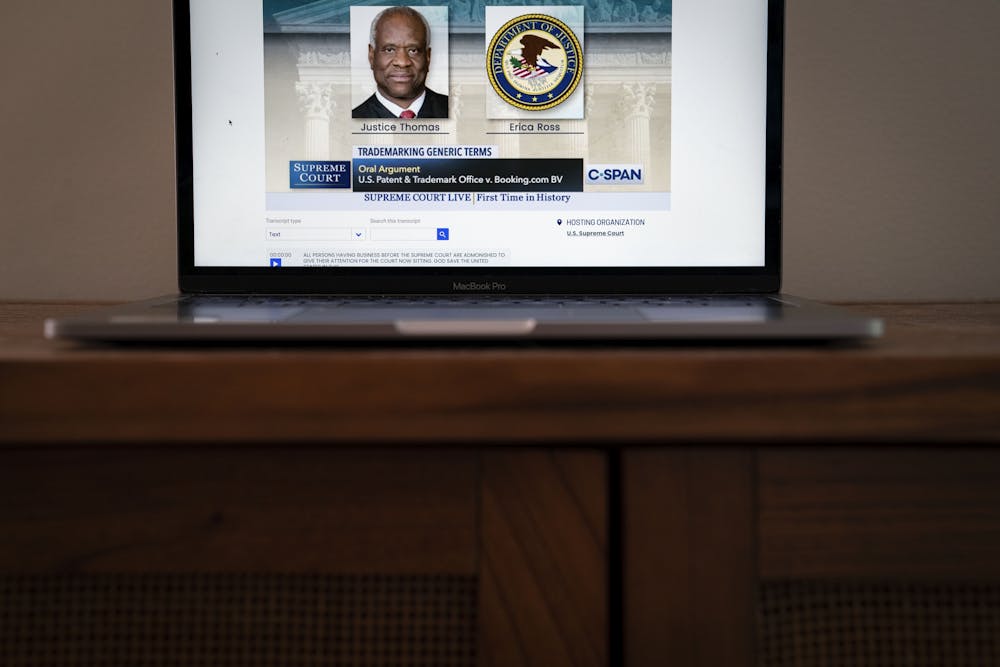
Not every effect of the pandemic has been negative: The public has been able to hear live arguments of the Supreme Court in a new format that raised the level of discussion.
The court’s oral arguments are some of our nation’s most important public debates. But they used to be conducted in a way that made them chaotic and hard to follow. Now, under the new format, the arguments are organized in a way that, as a scholar of the Supreme Court, I believe makes them better and more accessible.
I fear, however, that these accidental reforms may last only for the pandemic’s duration.
The bad old days
Constitutional politics are the public discussion of the meaning of our basic law and how it is applied in a free society. Constitutional law may be for specialists, but constitutional politics are for all of us, shaping the consensus and conflict about our national ideals.
But the inaccessibility of the Supreme Court has not fostered constitutional politics.
During the last 50 years, arguments in front of the court have been mostly on paper in long legal briefs, with advocates for each side given only a half-hour each (one hour total for each case) to present an argument and field questions. An ordinary citizen could look up the written transcripts on the court’s website a few days later or wait for an audiotape in about a week.
Surprisingly, those arguments used to be quite bad. There were constant interruptions of the lawyers by the justices, and of the justices by other justices. Questions were formed poorly on the fly as justices verbally elbowed each other out of the way to have their concerns addressed. It was often a kind of verbal melee that flailed at each side’s armor but rarely penetrated to the flesh of the argument.
Flushing the old system
When the pandemic forced the Supreme Court to shut down face-to-face proceedings, they chose to hold arguments over the phone for the last 10 cases of this year’s session.
In the new format, Chief Justice John Roberts calls on the other eight justices in sequence to ask a question. Rather than being forced to interject and compete with each other, every justice could pose a quietly planned and devastatingly calm question to a focused audience.
There have been a few hiccups in the new system. Justice Sonia Sotomayor forgot to unmute her phone before speaking (“I’m sorry, Chief. Did it again.”).
Agency for Int’l Development v. Alliance for Open Society Int’l, Inc.
The justices now ask prepared questions, rather than attempting to shoehorn something into the discussion. Instead of participating like conversational vultures picking at the sides of the argument, now their questions seem to go to the heart of the issue at hand.
For example, in the faithless electors case about the Electoral College, Justice Brett Kavanaugh posed a simple and clear question: “What is the purpose of having electors?” That is the fundamental question posed by the case, which may or may not have come out in the free-for-all atmosphere of the previous format.
In the same set of arguments, Justice Elena Kagan asked another piercing question: “Suppose that I read the Constitution and I find that it just doesn’t say anything about this subject … What should I then do and why?”
That is a core question of constitutional theory – what does it mean if the Constitution is silent on an issue? – which is rarely posed so clearly in the oral arguments.
Better answers, more participation
Not only are the questions better, but so are the answers: quick, direct and to the point. From the perspective of an ordinary listener, a good question and a brief answer are more informative than a meandering walk.
A third advantage is that all of the justices now participate. Even Clarence Thomas.
Justice Thomas almost never asked questions in the combative format that preceded the pandemic. As he phrased it in 2012, “I think that when somebody’s talking, somebody ought to listen.”
Justice Clarence Thomas almost never asked questions in the combative format that preceded the pandemic. Now he does.
But when given a chance to ask a question without fighting for space, Thomas brings clarity to the issues at hand. In the Trump subpoena cases, Thomas posed one of the most revealing questions: What is the source of the claimed congressional power to issue such a subpoena? The lawyer for the House of Representatives floundered in providing an example of a similar implied power.
The telephone reforms dovetailed with another recent change introduced in October, before the pandemic: The lawyers for each side can speak for two minutes without interruption. The previous practice had been for justices to interrupt at will, and speakers rarely made their opening point before being derailed.
For example, last year when the court considered the controversial question of whether a citizenship question could be included on the 2020 census, the solicitor general of the U.S. – the nation’s chief litigator before the Supreme Court – lasted 23 seconds before the first interruption.
One of the troubling parts of the old system is that the interruptions seem to be gendered, with the female justices being interrupted more often by the lawyers and by the other justices.
Frodo lives
In a once rare, but now normal, question from Justice Thomas, he invoked Frodo Baggins from “The Lord of the Rings.”
Perhaps the most influential of the pandemic reforms is that anyone can listen live for the first time to the highest court in the land. The audio is also readily available later on podcasts.
Each session of the Supreme Court opens with the traditional marshal’s cry: “All persons having business before the Honorable, the Supreme Court of the United States, are admonished to draw near and give their attention.”
Thanks to the recent reforms, we no longer need to draw near to give our attention and to understand what our constitutional court is doing.
Not everyone agrees that the new system is better. But as one small voice in the republic, I hope that the inclusive reforms are maintained even after the pandemic fades.
The coronavirus has devastated nursing homes across the country, killing tens of thousands of vulnerable older Americans. Nursing homes did not cause the pandemic, but poor infection control, inadequate staffing and sluggish mitigation allowed the virus to spread.
Rather than hold these facilities accountable, however, states increasingly are protecting them from lawsuits.
At least 21 states have taken actions within the last four months to limit the liability of health care providers, with nine states expressly including nursing homes. The industry is calling for similar protection in other states, and at the federal level, nursing homes are connecting with other trade groups to push for expansive, national immunity from lawsuits.
Essentially, these states are protecting nursing homes from aggrieved residents and their loved ones who may have suffered harm, injuries or death due to their actions – or inactions – during COVID-19.
The result leaves residents with little recourse to hold nursing homes to account.
As lawprofessors in the area of health care law and policy, we view the industry’s demands for additional protections against lawsuits as a dangerous overreach at a time when high numbers of health violations show nursing homes need more oversight, not less.
The risks were clear before COVID-19
It was clear long before the pandemic began that U.S. nursing homes were vulnerable to an infectious disease outbreak.
A Government Accountability Office report released in 2019 found that 82% of nursing homes, over 13,000 facilities, had been cited for problems related to infection control. The industry’s longstanding staffing and infection problems have been well-documented.
Yet, when the pandemic reached the U.S., many of these facilities failed to implement basic protocols to slow the spread of infection, with devastating consequences.
Most nursing homes are designed for communal living, where residents can eat together and interact throughout the day. That creates opportunities for the coronavirus to spread.
The communal nature of nursing homes and frequent movement among rooms by staff create risks when diseases spread easily, but those risks can be reduced. Nursing homes should follow guidance from the Centers for Medicare and Medicaid Services and the CDC which includes isolating residents with symptoms. Across the country, however, nursing home staff warned government regulators about conditions in facilities and how management brushed them off.
How states are creating immunity
Despite these deficiencies, the industry says it should have exceptional immunity from liability. Nursing homes say there are too many factors out of their control, including personal protective equipment and testing, which impacts their ability to control the spread of COVID-19 in their facilities.
Most governors reacted to COVID-19 with emergency orders. These triggered preexisting provisions of state law that protect health care providers who are called on by the state to assist during an emergency. The orders grant immunity for good faith efforts under the notion that these acts are in the public interest.
Several states have expressly granted immunity for nursing homes, from Connecticut to Hawaii. Other states, including Wisconsin, may not specifically state “nursing homes,” but they define health care facilities broadly. As a result, nursing homes may be able to argue that they are protected. New York has the broadest liability shield, and one that nursing home lobbyists reportedly helped draft.
These are not perfect liability shields. Residents or their families will argue these new laws protect only against lawsuits involving emergency triage decisions, mitigation or treatment efforts, not the acts or omissions that led to the virus taking root in nursing homes in the first place. There is also uncertainly about the time frame these shields apply to. Do they extend backward to the early days of the virus or forward to after emergency orders expire?
A larger trend to avoid liability
This latest effort by the nursing home industry to reduce liability exposure is part of a larger legislative trend.
State malpractice reform laws sometimes include nursing homes, and either limit damages or force the plaintiff to jump through additional hoops.
Nursing homes also often include arbitration clauses in their admissions contracts. These prevent injured residents or their families from filing a lawsuit. The federal government prohibited these clauses, but nursing home lobbyists succeeded in overturning that policy in 2019. Some states still ban arbitration clauses.
Holding ‘systemic failures’ to account
Life Care Center of Kirkland, Washington, one of the first nursing homes that failed to control an outbreak, has been tied to over 129 COVID-19 infections and 40 deaths.
Regulators found the facility demonstrated “systemic failure,” including failure to report and continued intake of new residents. However, regulators imposed penalties of just US$611,000 in fines and allowed months to “correct” the errors. This level of minimal enforcement is insufficient to deter misconduct. Therefore, it is important to maintain the additional threat of lawsuits to guard against substandard care for older Americans.
Federal legislation proposed in the U.S. House of Representatives in May aims to improve quality care in long-term care. It targets the spread of infection by increasing inspections and imposing stricter protocols for testing and reporting.
Meanwhile, we believe nursing homes should not be allowed to escape lawsuits brought by families who trusted them to take care of their loved ones. These are not “frivolous” lawsuits. The standards they impose are not overly burdensome. All that is asked is for nursing homes take reasonable care of those entrusted to them.
The conservative anti-Trump group The Lincoln Project released a new attack ad against President Donald Trump highlighting the massive protests against police brutality.
The ad, released Tuesday, ties the president's policies to the protests, which have raged across the United States -- and even overseas -- in response to the police killing of George Floyd and other Black men and women.
"It took almost four years for Trump to get the crowds he wanted," the narrator says, after showing the relatively paltry attendance for his January 2017 inauguration.
"Imagine how big the crowds will be when he’s gone," the ad concludes.
Over 40 weeks ago, the son of Donald Trump posted a picture from his trip on Instagram, writing, "Some more pics from my incredible adventure in Mongolia last week! I have a lot more to come from this incredibly pristine land stay tuned. #mongolia#adventure."
In December HuffPo reported, "The rocky highlands of Central Asia, in a remote region of Western Mongolia, are home to a plummeting population of the largest sheep in the world, the argali. The endangered species is beloved for its giant curving horns, which can run over 6 feet in length. On a hunting trip this August, Donald Trump Jr. shot and killed one," before adding, "His adventure was supported by government resources from both the U.S. and Mongolia, which each sent security services to accompany the president’s eldest son and grandson on the multiday trip. It also thrust Trump Jr. directly into the controversial world of Mongolian trophy hunting — a polarizing practice in a country that views the big-horned rams as a national treasure. The right to kill an argali is controlled by an opaque permitting system that experts say is mostly based on money, connections and politics."
In the latest report, HuffPo's Mary Papenfuss revealed that watchdog group Citizens for Responsibility and Ethics in Washington reported on Monday that the trip to kill the endangered animal was on the taxpayer's dime.
"The Secret Service provided documents in March revealing that the agency’s cost for Trump’s trip to bag a rare argali sheep was more than $17,000. But after additional Freedom of Information Act requests, officials turned over other documents that disclosed an additional $60,000 in spending," Papenfuss wrote.
The report adds, "The trip was arranged through a tourism company owned by a politically connected member of the Mongolian president’s party, according to the watchdog group. The company helped Trump obtain a special permit to hunt the argali after he killed the animal."
According to a report from Politico, a very nervous Donald Trump is reaching out to associates who were a part of his surprising 2016 presidential run for help as his 2020 re-election bid falters and his opponent, Joe Biden, surges ahead in the polls.
"President Donald Trump, increasingly nervous about the direction of his campaign as he struggles in general election polls, is considering bringing back more loyal aides from his successful campaign in 2016, according to five Republicans who speak to the president," reports Politico's Anita Kumar.
With one associate of the president stating, "Recent internal polling painted uneasy seas ahead and President Trump wanted some of his warriors back,” Kumar added, "Trump is increasingly concerned that his reelection prospects could be slipping away and wants to bring in staffers he trusts from his original scrappy campaign."
The desire to beef up his 2020 team has put campaign manager Brad Pascale under the microscope, with memories of Trump making major and constant changes to his 2016 team.
"Trump remains frustrated about the leadership of campaign manager Brad Parscale, himself a 2016 loyalist who served as digital strategist and is now running his first presidential campaign, the five Republicans say. Specifically, the president has continued to complain that Parscale is burning through too much money too quickly," Kumar wrote.
According to another Trump insider, "Brad worked when they needed someone to jump in but they don’t need him anymore," adding Trump's moribund campaign is now in need of a professional with more experience.
Writing, "With less than five months left before the election, polls show Trump lagging behind presumptive Democratic nominee Joe Biden in most national polls. And his standing has fallen in many key states, such as Ohio and Iowa, and even in traditionally red states, such as Arizona and Georgia, in both public and campaign polls," Kumar added, "It’s unlikely that hiring a handful of 2016 staffers will fundamentally change the campaign unless they take on top-level jobs at headquarters, but they could help the president's prospects in pivotal states. The campaign, with staff spread out across the country, already is nearing 1,000 people."
"Parscale and Jared Kushner, the president’s son-in-law and White House senior adviser who plays a leading role at the campaign, have been making staff changes over the last few months but the intensity has grown in the last couple of weeks, the Republicans say," Kumar reports. "At the White House, Hope Hicks, one of Trump’s most trusted confidants, returned as a senior adviser while Johnny McEntee, who helped organize trips in 2016, rejoined the administration as director of the office responsible for filling hundreds of top political jobs. Dan Scavino, the director of social media who sometimes tweets from Trump’s account, was promoted to deputy chief of staff for communications in April. Kellyanne Conway, who was Trump’s campaign manager, has been senior White House counselor for his entire first term."
However, according to one Republican, it is not the campaign that is the problem --it's what they are selling with the explanation: "The president thinks he should be winning in a huge way. He refuses to acknowledge his own weaknesses.”