CNN commentator Dr. Sanjay Gupta said on Friday morning that he is becoming increasingly nervous about the rush to re-open the country and return to normalcy at a time when the coronavirus is still running rampant across the country.
Speaking with hosts John Berman and Alisyn Camerota gave an impassioned plea for more testing for the coronavirus before possibly causing another surge in infections.
Responding to the president's comments that COVID-19 tests are "overrated" Gupta appeared exasperated with the president's message.
"What have we seen work in the past in the history of the world and around right now?" Gupta asked. "It's all predicated on testing and I know you sound like a broken record after a while saying that."
"We have gotten better at testing," he continued. "We started way late and it spread out into the community -- period. We need to do more testing. Again, going back to other states, they're opening up, but go talk to people and say how comfortable do you feel? We show images of people crowding bars and stuff like that but how about moms and dads at home with their kids thinking 'do I go out? How safe is it? Could I bring that virus home?' that's still a concern."
"If they could get tested and have some degree of confidence then that would make their lives a lot easier," he continued. "We're not there yet. We released guidelines yesterday that say we want to promote hand hygiene in schools. We want to wear masks as feasible-- we're not taking this seriously anymore and we're still in the middle of it. People are declaring victory."
"I know that I'm going to get a lot of hate mail about it but we're not out of this by any means," he later concluded.
Burr took the action the day after the FBI seized his cellphone as part of its investigation into whether lawmakers who had sold stocks before the coronavirus pandemic tanked the stock market engaged in illegal “insider trading.”
But successfully prosecuting such cases will be very difficult. Even federal judges struggle with writing clear instructions to lay jurors in insider trading cases. Often, verdicts are reversed on appeal due to errors in explaining complicated legal terms.
There are two different provisions of law that could apply to the trading activity of senators and congressional staff.
Members of Congress and staff could run afoul of either or both of these laws. But proving a violation and convicting them is not likely.
Stock Act and securities law
The first provision is a rule known as Rule 10(b)(5) after the section of the securities law under which it was issued by the SEC.
The rule makes it illegal for anyone who has nonpublic information about a company – including corporate officers, employees, brokers or security analysts, but also including members of Congress – to use that information to trade in the company’s stock before that information is available to the public. This provision applies to members of Congress because it applies to everyone.
The other provision applies only to members of Congress and staff. That’s the STOCK Act, passed in 2012, which bars Congress members and staff from taking advantage of nonpublic information, gained from their positions in the performance of their duties, by trading on that information before it is public.
His crime: trading in a pharmacy company stock on whose board he served after receiving inside information regarding failed drug trials. He passed on that information to his son and his son’s father-in-law, who were also charged as “tippees,” or people who got insider tips.
This case was not difficult to prosecute under the first provision as the U.S. Attorney’s office had evidence – the defendants’ incriminating telephone call records. The activity had nothing to do with Rep. Collins’ official duties.
In the current cases involving trading by senators, successful prosecution under either provision will likely be substantially more complicated than the Collins case.
Then there’s the problem that there’s lots of talking by, and information flowing from, multiple sources within Congress. How can it be proven that the lawmakers used only information they got in a confidential briefing to inform their decision to sell stocks?
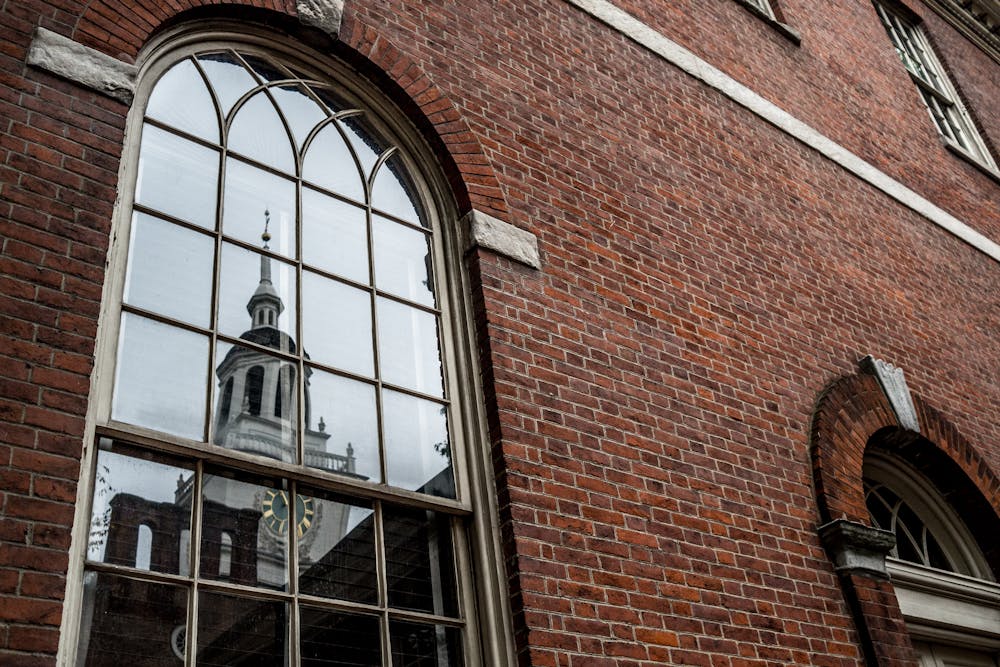
When the Founders signed the U.S. Constitution in Independence Hall (reflected here), they included a provision for immunity for Congress members.
The clause says that “for any speech or debate the [Senators and Representatives] shall not be questioned in any other place.” It may make prosecution impossible for certain types of information received officially in committee or other legislative settings.
The clause has been interpreted by the Supreme Court to cover more than literal speech or debate and include anything “generally done in a session of the House by one of its members in relation to the business before it” including voting, holding hearings, writing reports or gathering information from outsiders.
When it comes to information that could affect a company’s stock price coming from Congress, Canellos said, “The lines aren’t quite as bright and the opportunities for arguments by the defense are greater.”
Is it public?
An example of this problem occurred in a 2014 case involving Height Securities, a stock brokerage.
A confidential decision by Medicare to raise certain reimbursement rates in 2013 was leaked by a congressional staff member to a Height lobbyist. The lobbyist then passed it on to his clients, setting off a flurry of trading in health care stock before the Medicare decision was known to the general public.
During the insider trading investigation into these transactions, the FBI discovered that dozens of officials – potentially as many as 400 – at the Medicare agency knew about the decision before it was made public. That so many people within the government knew about the change made it difficult to determine whether the lobbyist based his conclusion on his own analysis, or on publicly available information.
“While Senators and staff are prohibited from using non-public information for making a trade, a great deal of Congressional work is conducted on the public record or in the public realm during committee hearings, and markups, floor activity, and speeches.” Whether a lawmaker gets information in a nonpublic briefing or in public proceedings is hard to determine.
Burr – one of the four senators allegedly involved in trading – heard from intelligence officials about how foreign nations were responding to the World Health Organization’s declaration of a global health emergency.
The session was not classified, but drawn instead from diplomatic wires and publicly reported sources. The senators in the briefing could have gotten the same information elsewhere.
So proving that the information received by senators constituted “insider” information – which in a criminal case would require proof beyond a reasonable doubt – could be very difficult for the government.
When the case ultimately got to the Supreme Court, the court – relying on the Speech or Debate Clause – said Gravel was absolutely immune for anything done at the hearing or communications with his staff before the hearing.
In the Height Securities case, when the Security and Exchange Commission subpoenaed records from the House Ways and Means Committee to determine how the confidential information leaked, the court upheld the Speech or Debate Clause protection for committee documents. That made prosecution for insider trading impossible.
These same problems would make prosecuting the insider trading cases difficult.
And while the Speech or Debate Clause would not bar the Senate Ethics Committee from getting at the evidence – because it is “the place” where members may be questioned – senators would still be able to defend by showing that the information was based on publicly available nonconfidential sources.
Editor’s note: This story is an update to the original story published on April 2, 2020.
The Arizona attorney general's office is actively pursuing collection efforts against right-wing social media provocateur Jacob Wohl, who has not made any payments toward nearly $38,000 in fines from a 2016 investment fraud ruling against him, Salon has learned.
A spokesperson for the Arizona Corporation Commission notified Salon about Wohl's delinquency in response to a Salon article last week.
"The Commission, through the Arizona Attorney General's Office, is actively pursuing collection efforts against Mr. Wohl," the spokesperson told Salon in an email.
"Mr. Wohl has not paid anything since the matter was sent to the Attorney General's Office for collections," the spokesperson wrote in an email. "Given his indictment last year, I would venture that any available funds are going to pay his criminal defense counsel."
The Commission said it retains the right to take further action against Wohl "if he violates any part of the order or if he commits additional actions that violate the Arizona Securities Act or the Investment Management Act."
According to the court order, the commission said, Wohl accrues interest on any unpaid amount.
"Between penalty and restitution, Mr. Wohl owes approximately $43,000," the commission spokesperson said. "The Attorney General's office has engaged California counsel to assist in collections efforts. Those lawyers are utilizing all statutorily allowed collection methods to obtain the funds owed to the state."
The 22-year-old Wohl, who as achieved a modest measure of media infamy with a series of hapless attempts to fabricate smears of sexual impropriety against Democratic elected officials and other public figures — including Sen. Elizabeth Warren, former special counsel Robert Mueller, and, most recently, Dr. Anthony Fauci — apparently cut his teeth on investment fraud beginning in his late teens.
In 2017 the Arizona Corporation Commission filed a cease-and-desist order against Wohl, at the time 20 years old, alleging that he and his business partner broke the law in 2015 and 2016 when they misled clients about how much of their money would be at risk and exaggerated the size of their company.
The commission ordered Wohl to pay his victims $32,919 in restitution, plus $5,000 in penalties. Wohl asked for a continuance.
"I'm wondering why we're going through this exercise, and why you think your client is going to make payment on a later date if he's not able to make payment today," Commissioner Boyd Dunn said to Wohl's counsel at a hearing.
"This is a relatively small amount," the attorney replied. "I know you guys have seen hundreds of thousands of dollars for these types of cases."
"It's not a small amount to the investor. So don't belittle it," Dunn said.
The xommission accommodated Wohl with a four-week continuance, after which he was required to pay his fine in monthly installments of $1,371.61. Arizona Central reported in 2018 that Wohl had not paid any of it, and that balance remains unchanged today.
The scams earned Wohl a lifetime ban by the National Futures Association, and led directly to felony charges currently facing him in California. (Wohl has denied wrongdoing.)
In 2016 an Arizona man tipped off the Riverside County district attorney's fffice that Wohl and his business partner, Matt Johnson, 30, had swindled him out of $75,000 he invested through Wohl Capital Investment Group. The man killed himself shortly afterward, according to Wohl's arrest warrant.
The tip led the Riverside County DA to open an investigation into a separate matter, which led the office to indict Wohl, who lives in Corona, California, as well as Johnson, on two counts of selling unregistered securities. The Daily Beast first reported those charges last September.
In February, Wohl and Johnson pleaded not guilty, but their hearing, set for April 24, was postponed due to concerns about the coronavirus pandemic and has not been rescheduled.
"Far too often, people commit financial fraud, cause damages, and never actually make the victims whole," Ben Edwards, professor of securities law and director of the investor protection clinic at the University of Nevada, Las Vegas, told Salon.
"Failure to make restitution to his victims certainly weighs in favor of seeking a stiffer penalty," Edwards added, in reference to the California case. "Assuming he has the assets, a failure to pay signals general disrespect for his legal obligations. States should not have to burn limited enforcement resources to force him to comply with his obligations. A period of incarceration may help drive that point home," he said.
It's less clear whether Wohl's defamation spree has also drawn the attention of law enforcement.
A document from January 2019 shows that Wohl formed a group called the Arlington Center for Political Intelligence, whose raison d'être, he said, would be to "make shit up" about candidates and other public figures in order to manipulate political betting markets and seek to suppress Democratic turnout in 2020.
"It would appear that the premise of this company amounts to wire fraud," Anne Champion, a First Amendment and media law attorney at Gibson Dunn, told Salon.
Another First Amendment and media law expert, Nashwa Gewaily, pointed out that the fake death threats Wohl apparently reported to Minnesota police last year — seemingly in an attempt to impugn Rep. Ilhan Omar, D-Minn., and her supporters — do not fall under protected speech, and could be considered a criminal offense in that state.
"Wohl appears to intentionally falsify the report, which is what makes him vulnerable to charges," Gewaily said. "So in theory the poor man's Roy Cohn could regret faking death threats to paint Omar and her constituents as terrorists. In theory."
"Ultimately, some time behind bars may be good for him," said Edwards, the securities law expert. "Wohl may be caught up in the thrill of being elevated and amplified by the president of the United States. His apparent efforts to concoct false claims about Robert Mueller, Sen. Warren, and others may be driven by some dopamine-chasing urge to remain in the spotlight. An appropriate sentence may disconnect him from this chicanery and give him time and space to reflect. Hopefully, he'll emerge a better person for it."
Questions directed to a phone number associated with a number of Wohl's ventures and email addresses were met with derision.
White House counselor Kellyanne Conway on Friday attacked former FBI Director James Comey for not personally traveling to Trump Tower in late 2016.
While appearing on "Fox & Friends," Conway accused Comey of somehow failing in his duty as FBI director when he didn't visit Trump during the first two months of the transition period after the 2016 election.
"Jim Comey, the FBI director who was in the midpoint of his term as FBI director and wanted to keep his job through the Trump administration, had not made his way to Trump Tower!" she scoffed. "I mean, Steve Harvey had been there. Shinzo Abe flew from Japan. I think Kanye West had popped by. The whole world was coming to Trump Tower to see the president-elect, all the tech companies, and Jim Comey, the FBI director, didn't come for two months?"
She then said Comey should be ashamed for bringing up the Steele dossier when he finally did come to meet Trump to deliver an intelligence briefing.
"He was tasked to... pull aside President Trump and mention this ridiculous dossier," she said. "Let me remind everybody that 'dossier' is a fancy French word for 'load of crap!'"
In a nation with more than 90,000 governments, responses to the coronavirus pandemic have highlighted the challenges posed by the United States’ system of federalism, where significant power rests with states and local governments. Wisconsin’s Supreme Court just overturned their governor’s order for residents to stay at home – and then several cities and counties imposed their own restrictions, very similar to the governor’s rules.
So who’s running the show?
I am a scholar of how different levels of government interact and work together to deliver public services, and my answer is: It depends.
In the absence of nationwide coordination and leadership, governors have made their own decisions about how to contain the spread of the virus. Their decisions apply only to their own states, making the country a patchwork of varying efforts.
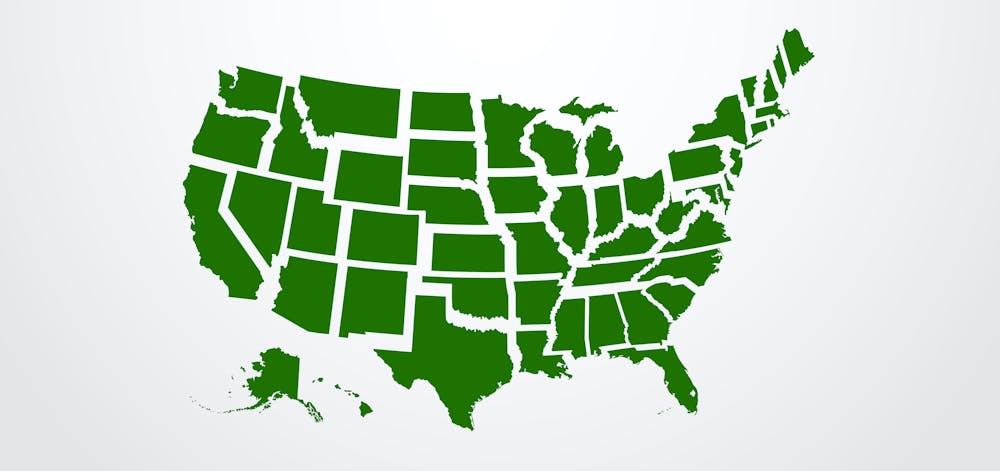
And as state governments start to lift their lockdown restrictions to varying degrees, the patchwork gets even more complicated. Then factor in the powers and responsibilities of more than 3,000 counties, nearly 20,000 municipalities and almost 13,000 public school districts around the country, and it becomes clear that the answer to “Who’s in charge?” is not so simple.
Who actually has the power to make binding decisions mostly depends on two factors. First, there’s what’s being decided: Is it about public health, police, hospitals, schools, barbershops or other businesses? Second: It depends on the state.
All 50 states, and lots more local governments within each of them, have voices in how the country reopens after the coronavirus lockdown.
Historically, the U.S. has divided responsibilities for different services and functions across levels of government, so they could be tailored to regional preferences where possible.
For instance, jails are run locally or by counties; businesses get municipal and state licenses. Similarly, animal control laws, zoning and pothole repairs are typically handled by local governments, not at state or federal levels. States typically regulate businesses and industries, oversee welfare programs and manage major highways.
The national government handles things where widespread coordination and standards are important, like national defense, Social Security, space exploration and trade between states.
Before the Great Depression, state and national government duties were more clearly differentiated. But since the 1930s, this system has evolved, and the distinctions between which levels do what have blurred and blended.
For instance, states are in charge of public K-12 schools and public universities, but the federal government ensures school districts comply with rules about equal access for all students, and provides grants to support needy children and university research.
Likewise, state governments build and maintain the interstate highways, but the federal government pays many of the costs.
Today, this mixing of responsibilities has made difficult a nationally coordinated response to a pandemic whose effects are mostly local. State and local officials have tried to respond as best as possible, but they do not have the information or buying power of the federal government.
The federal government may claim to be able to shut down the economy, but the truth is that states are the ones responsible for regulating the businesses that operate within their boundaries. So the federal government can’t order states to close down or reopen their businesses.
On the other hand, the president or Congress can decide to give more money to states that go along with federal requests, and potentially cut funding to states that don’t.
States depend on federal money for a wide range of programs related to criminal justice, education and highways, so this type of influence can be very effective.
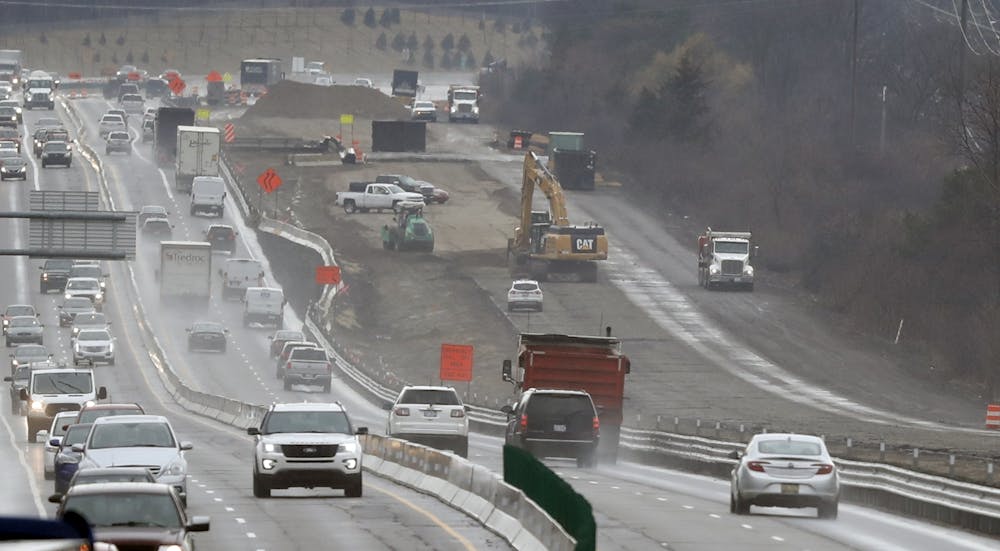
State highway departments do the construction, but much of the money comes from the federal government.
The second important element comes from another aspect of American federalism: The Constitution ensures that states not only retain powers beyond the federal government’s; they are also very independent from each other. Each state can develop its own policies and systems for delivering the services its residents need.
That means there could be 50 different approaches to combating a pandemic that does not stop at state boundaries. And therefore, the state with the most lax standards may be the one setting the protection level for the whole nation. For instance, the state of Arizona is rapidly relaxing its stay-at-home rules, even allowing restaurant customers to dine inside. Hair salons and theaters are also reopening. Neighboring California is remaining mostly closed, though people can travel freely across the state lines.
As if that weren’t muddy enough, each state relates differently to its local governments. Constitutionally speaking, there are only two levels of government in the U.S.: the national level and the states. Courts and lawmakers have determined that local governments are extensions of states, with varying levels of independence.
In most states, local governments must seek permission from their state legislature before making new regulations, like governing drone flights, or creating a new tax, such as on short-term home rentals. Other states take a different approach and allow municipal governments to take on whatever responsibilities are not expressly reserved to the state government by that state’s constitution.
All this means that responses to the pandemic vary not just from state to state, but also within states.
The way these overlapping authorities play out is relatively easy to see when looking at how school districts, one of several types of local governments, responded to the coronavirus outbreak. In most states, local districts acted on their own. In general, it took a week or two before state departments of education ordered statewide school closures, which affected those local districts that hadn’t already shut their doors.
It took as much as three weeks for states to issue general orders or recommendations for residents to shelter in place – though in some states those instructions never came, even though all the nation’s schools were closed.
Georgia Gov. Brian Kemp greets President Donald Trump in early March.
As states begin to reopen, similarly confusing processes are happening in reverse.
While many state governments have now begun to loosen restrictions, some communities within those states have wanted to keep their local shelter-in-place orders in effect because they remain concerned about public health. In Georgia, local efforts to maintain restrictions have been overruled by the governor’s office. The Texas Republican governor has relaxed the statewide rules and explicitly said his reopen orders override any local restrictions.
Utah never established a shelter-in-place order and relied only on recommendations. Urban communities in the state set their own restrictions, and the legislature responded with efforts to limit the ability of local governments to put such measures in place.
Colorado is taking a different approach as the state relaxes its restrictions by explicitly allowing local governments to determine if they want their restrictions to differ from the state standard.
This diversity of precautions and actions can also be seen as one of the strengths of federalism, because it allows the public to see how different responses may affect how quickly the virus spreads. The local and state decisions are creating experimental laboratories for finding different ways to move back into a fully operational economy.
And that’s why your barbershop is still closed while the one in the next town or next state over is already open again.
A supercut video produced by the staff of The Atlantic draws an unflattering contrast between the leadership style of President Donald Trump and those of other world leaders who are also dealing with the COVID-19 pandemic.
As the video shows, leaders such as Canadian Prime Minister Justin Trudeau, German Chancellor Angela Merkel, and New Zealand Prime Minister Jacinda Ardern try to set a sober, comforting tone during the crisis.
"I need every New Zealander to help me," Ardern says at one point in the video. "We won't achieve that outcome of looking after everyone unless people follow the rules."
"Take care of yourself," says French President Emmanuel Macron. "Take care of each other."
The video also shows the leaders emphasizing the importance of science in making decisions.
"Basing our decisions on evidence, on facts, on the best science available is going to be extremely important in keeping Canadians safe," Trudeau says.
"We will reinforce our epidemic prevention and quarantine systems to become the undisputed number-one epidemic response country leading the world," says South Korean President Moon Jae.
In between these clips, Trump is shown blowing off dire warnings about the disease, musing about treating it by injecting disinfectant, and insulting reporters who ask him basic questions such as what they'd say to Americans who are fearful for their health.
President Barack Obama's former "ebola czar" debunked claims that the previous administration left the U.S. unprepared for the coronavirus pandemic that has left more than 86,000 Americans dead.
Ron Klain, who coordinated Obama's response to the ebola outbreak, appeared Friday on MSNBC's "Morning Joe," where he pushed back against accusations by President Donald Trump and Senate Majority Leader Mitch McConnell -- who say Obama's administration failed to create a pandemic response.
"We left behind a document that said, in big red letters on the front, 'Playbook,'" Klain said. "No doubt it was there -- 69 pages long, included on Page 9 a reference to the threat of new, emerging respiratory diseases, including coronavirus. So the plan was there. The plan was detailed, the plan included this particular threat. More important perhaps even than the plan, we left behind an office on pandemic preparedness in the National Security Council, with pandemic preparedness experts that John Bolton disassembled in 2018."
"We had a plan and a team," he added. "The White House ignored the first and disassembled the second."
Trump should have been aware of the threat from a global pandemic, Klain said, because previous administrations have been sounding the alarm and developing strategies since the beginning of this century.
"Look, this is a threat," Klain said. "I mean, experts have been warning about this. We know in addition to what President Obama and our team warned President Trump of, he had an Oval Office meeting with Bill Gates in 2017, where Bill Gates said, face-to-face, 'Hey, this is the No. 1 thing that could kill millions of people around the world in an extra way that you need to be prepared for.'"
"The warning lights have been flashing on this for a long time," Klain added. "The White House, for the first few months, said, 'No one could have seen this coming,' yet every expert saw this coming. Dr. [Ashish] Jha, who you had on in the last segment, I've been at a number of conferences with him, where he and I warned this was coming. The president was on notice, his team was on notice. The decision to ignore the Obama playbook and disband the pandemic prevention team has had ramifications for the slowness of the response, the disorganization of the response, for the ignoring science in the response. All of these things were predictable mistakes, that ignoring the plan and preparations have led to."
Klain said the president still hasn't learned any lessons from this pandemic, because he's still ignoring science and failing to take the most basic steps to ensure public health.
"Public health and the economy aren't at odds with one another," Klain said. "They work hand in hand. The more you do things to make me feel safer, the more I'm going to go back to work, the more I'm going to go back to stores, the more I'll go back to restaurants. Trying to tell me that there's nothing to worry about, that's not a strategy. It's not going to work. The American people are going to see through that. So we have to do these basic, simple things, that the president seems to want to reject. Every expert says they're the things to do."
A group of hackers claim that they've obtained a pile of "dirty laundry" on President Donald Trump and are threatening to release it unless the law firm they stole it from forks over $42 million.
The New York Post reports that hacker group REvil launched a successful attack against celebrity law firm Grubman Shire Meiselas & Sacks in which they swiped 756GB of data from the firm's servers.
Hackers initially asked the law firm, which represents high-profile clients including Lady Gaga and Madonna, for $21 million, but they doubled their request on Thursday after claiming that they'd also obtained information on Trump.
"Mr Trump, if you want to stay president, poke a sharp stick at the guys, otherwise you may forget this ambition forever," the hackers wrote in a threat posted online. "And to you voters, we can let you know that after such a publication, you certainly don’t want to see him as president... The deadline is one week."
A source close to Grubman Shire Meiselas & Sacks founder Allen Grubman tells the Post that the firm is in no mood to negotiate.
"His view is, if he paid, the hackers might release the documents anyway," the source said. "Plus the FBI has stated this hack is considered an act of international terrorism, and we don’t negotiate with terrorists."
A Yale psychiatrist who has sounded the alarm on President Donald Trump's mental health for the last several years is urging Congress to heed the warnings of mental health experts — as the president's coronavirus response goes off the rails with new conspiracy theories about former President Barack Obama and attacks on female reporters.
Lee told Salon that Trump's baseless "Obamagate" conspiracy theory and his attacks on women reporters were further examples of his incapacity to lead. Lee also criticized Congress for ignoring earlier warnings from mental health professionals about the president's actions.
Lee, the president of the World Mental Health Coalition, held a panel last year following the release of former special counsel Robert Mueller's report, during which her group performed a mental capacity evaluation of the president. Their conclusions suggested that Trump's bungled response to the pandemic was inevitable, she says. Lee warned earlier this year that we would see the "worst-case scenario."
"The president's goal is the same as 'How to inflict the maximum damage possible,'" Lee said in an interview with Salon this week. "His psychopathology makes him avoid all the right decisions, while driving him to make all the wrong decisions, He has been visibly deteriorating, and his sheer desire to deny his failures may get us back to the U.K. group's projections of 2.2 million deaths after all — and then there will be even more failures to deny."
Lee spoke to Salon about Trump's renewed attacks on Obama, his response to the health crisis, and what is really behind his attacks on women journalists. Lee stressed that her views represent only those of the World Mental Health Coalition and not Yale.
What we know is that Donald Trump lacks the mental capacity to fulfill his job — not just the presidency, but almost any job. How do we know? An independent and non-governmental panel of top mental health experts performed a standard mental capacity evaluation on the president, as a public service, when special counsel Robert Mueller's report came out. The abundant, high-quality reports on the president's performance at work, by close associates and co-workers under sworn testimony, were material we could only dream of having for mental capacity evaluations in our ordinary practice.
Astonishingly, the president failed every criterion. One of the criteria is the ability to be reality-based and not be drawn into conspiracy theories, as well as to consider consequences before making decisions. He was unable to do this, and this is apparently why he gravitates toward conspiracy theories like "Obamagate," above all, to distract himself from his own failures. His disastrous pandemic response is exactly what we expect of someone who lacks mental capacity.
People believe mental health professionals only diagnose mental illness, but mental capacity and dangerousness are different evaluations that do not require a personal exam and have everything to do with fitness and public safety. The classroom teaching I did at Yale Law School for 15 years was mainly aimed at showing students when to consult — in other words, when they would reach the limits of their expertise as lawyers and need to ask for other input. The U.S. Congress is full of lawyers, and yet no committee has consulted us about a president who totally lacks mental capacity.
We know that whatever he accuses others of is a confession about himself. So he is telling us he is "nasty." He has also called Barack Obama and others "human scum." Attributing others with one's own faults can become dangerous. He may project his sense of inferiority and defectiveness onto weak and vulnerable groups, even more vehemently if they are capable women and minorities, and seek to destroy them in lieu of dealing with his feelings. I recently answered questions about whether his willful inactions count as genocide. While I believe they do, they are possibly worse, since one would potentially do anything not to face feelings of self-hatred, including destroy the whole nation if simply attacking his critics does not work.
We should know by now that this has little to do with principles, conventions or the law. Mental health is a basic requirement for the functioning of rational systems, and it is unclear we have that. The replacement of competent individuals with sycophants, and the cooptation of institutions, is part of what we warned would happen in "The Dangerous Case of Donald Trump," following our conference at Yale in April 2017. We know that 90% of deaths from COVID-19 could have been prevented if the president had heeded the advice of medical experts just two weeks earlier. We feel our nation would be in an entirely different place today if it had heeded the warnings of mental health experts three years, a year or even four months earlier when we were petitioning the Congress.
Do you think mainstream journalists are missing a key factor in Trump's response to the coronavirus by ignoring warnings about his mental health?
No one is connecting the dots to the greatest calamity in the nation's history, which is the president's mental incapacity. This should be our biggest focus — even more so than the pandemic — since it is making the pandemic much worse, and even greater calamities are likely awaiting as the stress from the pandemic grows. Excluding mental health experts and replacing them with political pundits has been catastrophic, in my view, resulting in the gross underestimation and normalization of severe psychopathology. And, as we have seen, mental symptoms are even more contagious than ordinary infectious disease, since they transmit through emotional bonds alone.
Early in the presidency, the media and the public were very attentive, and the president's mental impairment became the No. 1 topic of national conversation. Then the American Psychiatric Association stepped in with a new interpretation of the "Goldwater rule," abruptly putting an end to the discussion in a way that puzzled me. Working at the interface of psychiatry and the law, I scrutinized its arguments, but the new ethics just didn't pass ethical, scientific or even constitutional muster. A recent investigative article explains it all: Essentially, the APA distorted professional ethics the same way Bill Barr distorted the law to support power.
A past APA president who spearheaded this campaign became awash with federal funding, and we know, just as it attempted to do with Ukraine and the state governors, the Trump administration uses its purse to try to control science. We know because it froze funding for the World Health Organization to cover up its failures and recently ended funding for a team of disease ecologists that has already helped fight this pandemic, headed by Dr. Peter Daszak, one week after he said there was no evidence the novel coronavirus came from a Wuhan lab — one of the president's favored conspiracy theories.
This interview was lightly edited for length and clarity.
In a very rare commentary on political matters, the editors of the esteemed medical journal The Lancet called for a new president in 2021 who can competently deal with a major health crisis by letting health care professionals do their jobs.
The editors called out President Donald Trump and some of his top aides for undercutting the Centers for Disease Control (CDC) at a time when the U.S. and the world at large are being ravaged by the coronavirus.
"The COVID-19 pandemic continues to worsen in the USA with 1.3 million cases and an estimated death toll of 80,684 as of May 12. States that were initially the hardest hit, such as New York and New Jersey, have decelerated the rate of infections and deaths after the implementation of 2 months of lockdown. However, the emergence of new outbreaks in Minnesota, where the stay-at-home order is set to lift in mid-May, and Iowa, which did not enact any restrictions on movement or commerce, has prompted pointed new questions about the inconsistent and incoherent national response to the COVID-19 crisis," the editorial began, before adding, "The US Centers for Disease Control and Prevention (CDC), the flagship agency for the nation's public health, has seen its role minimized and become an ineffective and nominal adviser in the response to contain the spread of the virus."
The piece was highly critical of Dr. Deborah Birx for her comment, "There is nothing from the CDC that I can trust.”
"This is an unhelpful statement, but also a shocking indictment of an agency that was once regarded as the gold standard for global disease detection and control," the editorial stated. "How did an agency that was the first point of contact for many national health authorities facing a public health threat become so ill-prepared to protect the public's health?"
"The Trump administration further chipped away at the CDC's capacity to combat infectious diseases. CDC staff in China were cut back with the last remaining CDC officer recalled home from the China CDC in July, 2019, leaving an intelligence vacuum when COVID-19 began to emerge," the piece continued." In a press conference on Feb 25, Nancy Messonnier, director of the CDC's National Center for Immunization and Respiratory Diseases, warned US citizens to prepare for major disruptions to movement and everyday life. Messonnier subsequently no longer appeared at White House briefings on COVID-19. More recently, the Trump administration has questioned guidelines that the CDC has provided. These actions have undermined the CDC's leadership and its work during the COVID-19 pandemic."
Noting the long and distinguished history of the CDC -- while also admitting mistakes have been made by the CDC in its handing of the coronavirus pandemic -- the editorial continued, "But punishing the agency by marginalizing and hobbling it is not the solution. The Administration is obsessed with magic bullets—vaccines, new medicines, or a hope that the virus will simply disappear."
The editorial concluded, "The Trump administration's further erosion of the CDC will harm global cooperation in science and public health, as it is trying to do by defunding WHO. A strong CDC is needed to respond to public health threats, both domestic and international, and to help prevent the next inevitable pandemic. Americans must put a president in the White House come January, 2021, who will understand that public health should not be guided by partisan politics."
A public health expert gave President Donald Trump a failing grade on the most basic test of the coronavirus pandemic.
The president questioned the need for testing, which he called "overrated," and MSNBC's Mika Brzezinski apologized before asking Dr. Ashish Jha to comment on Trump's remarks.
"Gosh, I feel silly to ask you to comment on this, but there is sense among the president, that if you have testing, then you have more cases," said the "Morning Joe" co-host. "Why would that be a bad thing, doctor?"
Jha, dean of the Brown University School of Public Health and director of the Harvard Global Health Institute, started off by explaining that tests don't cause cases.
"We're going to have cases either way," Jha said. "Testing doesn't give you cases, the virus gives you cases. What testing does, it lets you identify who is infected. Then if you trace their contacts and isolate people who are infected, it lets you slow down the outbreak. This is Outbreak 101, Disease Outbreak 101. Testing doesn't cause cases, the virus is doing that. Testing is helpful in identifying and isolating the cases so other people don't get infected."
Some Republican lawmakers called Jha partisan after he stressed the importance of testing during a congressional hearing, and the physician said he was mystified.
"I was a little puzzled by it," he said. "Again, I don't know any public health person, any physician, anybody who is at all knowledgeable about this, who thinks testing is not important. The White House thinks it is important, right? They're testing their folks every day, so I was a little puzzled. I think they saw it as a critique of the White House. I was saying that we have not had the kind of testing response we need to keep the American people safe. It has contributed to shutting down the American economy. I think that's common sense. My sense is that pretty much everybody agrees with that. I was puzzled that it was somehow partisan."
Jha also explained his views on wearing a mask, which he said had changed in recent weeks in light of new scientific evidence.
"I have changed my views in the last six weeks, as the science has changed," he said. "The science really is changing on this. More and more, every day, we're seeing evidence that masking is very important. If there was universal masking, if all people when they were outside wore masks, it could substantially decrease the transmission of the disease. It could potentially substantially decrease the severity of the disease people get. The size of the kind of inoculum, the droplets you inhale, can make a difference in how sick you get. I have really now come to believe that the evidence is pointing pretty clearly toward universal masking."
He encouraged elected officials -- including the president, who refuses to wear a mask in public -- to set a good example.
"It'd be great if our political leaders followed that and modeled that behavior," Jha said. "When they model it, other people feel more comfortable doing it. I'd like to see all our political leaders do that much more often."
US health authorities issued an alert Thursday over a rare but sometimes deadly autoimmune condition among children that is believed to be linked to COVID-19.
The illness, which the Centers for Disease Control and Prevention (CDC) called multisystem inflammatory syndrome in children (MIS-C), was first reported in Britain in late April.
"Healthcare providers who have cared or are caring for patients younger than 21 years of age meeting MIS-C criteria should report suspected cases to their local, state, or territorial health department," said the CDC.
The criteria include fever, multiple inflamed organs that cause severe illness requiring hospitalization, a confirmed active or recent coronavirus infection and no other plausible causes.
The condition had previously been referred to as Pediatric Multisystem Inflammatory Syndrome (PMIS) by the state of New York, where there have been more than a hundred reported cases, including at least three deaths.
Doctors who have treated the illness say patients sometimes have symptoms similar to a rare condition called Kawasaki disease, which causes blood vessels throughout the body to swell, leading to extreme pain.
The CDC said that physicians should "consider MIS-C in any pediatric death with evidence of SARS-CoV-2 infection," referring to the virus that causes COVID-19.
But it is not yet known if the condition is limited to children, the CDC added.
Sunil Sood, a pediatrician at Cohen Children's Medical Center in New York, told AFP that some children had very mild forms of illness, but about half of the patients that he and colleagues had seen had to be treated in intensive care for heart inflammation.
The treatment involves injecting antibodies as well as administering steroids and aspirin in case patients experienced a sudden loss of blood pressure, called "shock."
He added that the cases mainly seemed to emerge four to six weeks after a child had been infected and had already developed antibodies.
"They had the virus, the body fought it off earlier. But now there's this delayed exaggerated immune response," he said.
Adding to the mystery, the cases were first reported in Europe and then in North America, but not in Asian countries such as China, Taiwan and South Korea where the virus first emerged.
There has been speculation that certain populations may be more genetically susceptible and others less so, said Sood, though that theory is not confirmed.
Six out of eight patients in a recent Lancet study from Britain were of Afro-Caribbean descent.
"Frozen" -- based on Disney's blockbuster hit movie -- will not reopen on Broadway, the production said Thursday, marking the first musical to announce permanent cancellation due to the coronavirus pandemic.
The show had been performed 851 times since its May 2018 opening at New York's St. James Theatre.
The musical's staff is "heartbroken" over the closure, the production said on Twitter.
"Some people are worth melting for, and today our hearts melt with you," the post said, in reference to the show's snowy plot.
According to Broadway World, "Frozen" brought in some $155 million at the box office and was seen by more than 1.35 million viewers.
"Beetlejuice," another big-budget production, has already announced that it will not return to the stage, though the show was already slated to end in June, even before the coronavirus struck.
The plays "Hangmen" -- which had not yet opened -- and "Who's Afraid of Virginia Woolf?" also announced their closures, though they were both more limited productions than a musical.
The Broadway League professional association announced Tuesday that New York's famous theaters will remain shuttered until at least September 6, and local authorities have not yet offered a potential timeline for reopening.
On Tuesday the revival of New York theater power couple Matthew Broderick and Sarah Jessica Parker's much-anticipated show "Plaza Suite" -- originally set to open in March -- was postponed until March 2021.
And on Wednesday the musical "MJ" announced it would also open in March 2021 instead of July 2020.
"Frozen" could still tour in North America or maintain performances in London, Sydney, Hamburg and Tokyo, the production said.
The first performances are currently set for the end of October in London and early December in Sydney.
The North American tour is set to begin in Boston on September 9.