German Chancellor Angela Merkel said Thursday she is "absolutely not" planning to stand for reelection to a fifth term despite her overwhelming popularity.
"No, absolutely not," Merkel told reporters from public broadcaster ZDF, saying her decision was "very firm".
The 65-year-old chancellor enjoys unparallelled popularity in her home country, with 71 percent of people saying they were satisfied with her performance in a poll for public broadcaster ARD also published Thursday.
Her ratings have climbed as Germany has suffered comparatively less than some European neighbours through the coronavirus crisis.
Merkel's conservative CDU party is set to elect a new leader at the end of 2020 who would then become presumptive candidate to succeed her in the chancellery at federal elections in autumn next year.
Without a political office to keep him in the public eye, the star of her historic rival Friedrich Merz has lost some of its shine.
Other candidates include Armin Laschet, premier of Germany's most populous state North Rhine-Westphalia.
Meanwhile some observers have highlighted the strongman performance of Bavarian premier Markus Soeder through the pandemic, who as chief of the CDU's regional CSU allies could also throw his hat into the federal ring come next year.
From the mythical minotaur to the mule, creatures created from merging two or more distinct organisms – hybrids – have played defining roles in human history and culture. However, not all hybrids are as fantastic as the minotaur or as dependable as the mule; in fact, some of them cause human diseases.
We are evolutionary biologists who are trying to understand why certain fungi infect hundreds of thousands of patients each year while others are harmless. We are particularly interested in infections caused by Aspergillus fungi, a group of molds – multicellular fungi that typically grow by forming networks of hairlike filaments – that can cause very serious infections in patients with weak immune systems. While examining Aspergillus strains isolated from patients with lung-related diseases, we unexpectedly discovered an Aspergillus hybrid that infects humans. This finding is significant not only because this is the first known example of a hybrid mold infecting humans but also because accurate identification of the species causing disease is key for managing fungal infections.
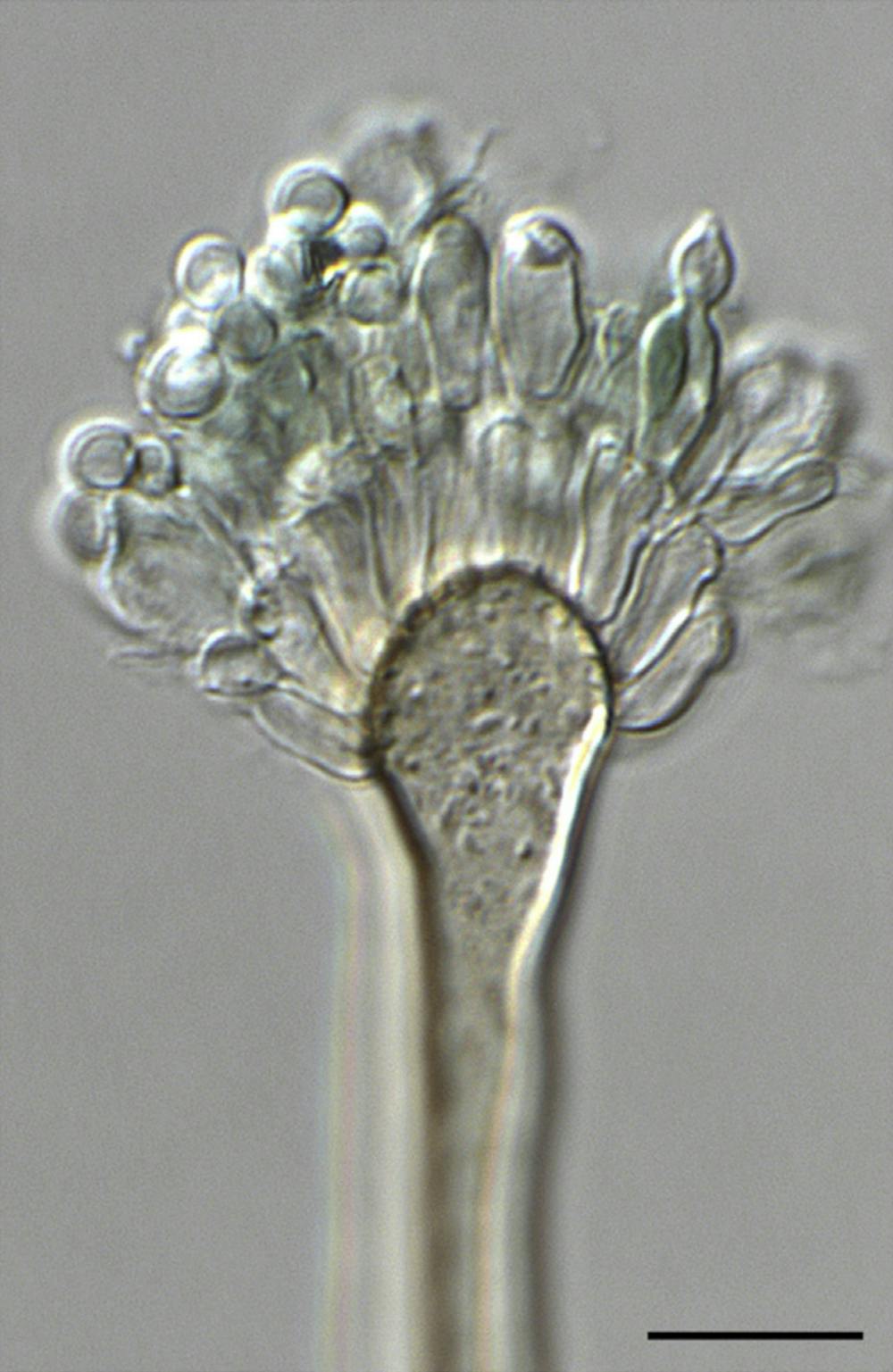
Asexual reproductive structure of A. latus, the first mold hybrid capable of causing human disease. The small spherical structures toward the edge of the structure are the asexual spores. Inhalation of these spores is typically the first step toward Aspergillus infection.
Chen _et al._ 2016, _Studies in Mycology_
When looking through a microscope isn’t close enough
For the last few years, our team at Vanderbilt University, Gustavo Goldman’s team at São Paulo University in Brazil and many other collaborators around the world have been collecting samples of fungi from patients infected with different species of Aspergillus molds. One of the species we are particularly interested in is Aspergillus nidulans, a relatively common and generally harmless fungus. Clinical laboratories typically identify the species of Aspergillus causing the infection by examining cultures of the fungi under the microscope. The problem with this approach is that very closely related species of Aspergillus tend to look very similar in their broad morphology or physical appearance when viewing them through a microscope.
Interested in examining the varying abilities of different A. nidulans strains to cause disease, we decided to analyze their total genetic content, or genomes. What we saw came as a total surprise. We had not collected A. nidulans but Aspergillus latus, a close relative of A. nidulans and, as we were to soon find out, a hybrid species that evolved through the fusion of the genomes of two other Aspergillus species: Aspergillus spinulosporus and an unknown close relative of Aspergillus quadrilineatus. Thus, we realized not only that these patients harbored infections from an entirely different species than we thought they were, but also that this species was the first ever Aspergillus hybrid known to cause human infections.
Several different fungal hybrids cause human disease
Hybrid fungi that can cause infections in humans are well known to occur in several different lineages of single-celled fungi known as yeasts. Notable examples include multiple different species of yeast hybrids that cause the human diseases cryptococcosis and candidiasis. Although pathogenic yeast hybrids are well known, our discovery that the A. latus pathogen is a hybrid is a first for molds that cause disease in humans.
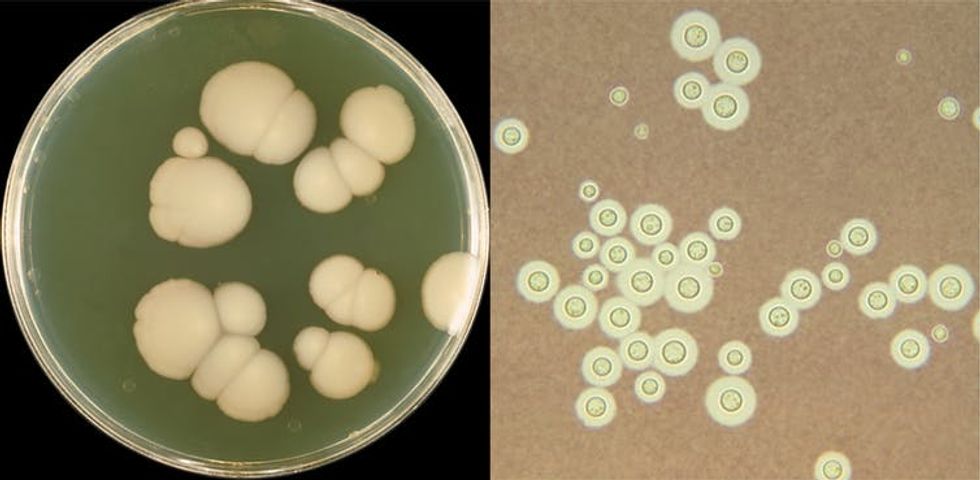
(Left) Candida yeasts live on parts of the human body. Imbalance of microbes on the body can allow these yeasts, some of which are hybrids, to grow and cause infection. (Right) Cryptococcus yeasts, including ones that are hybrids, can cause life-threatening infections in primarily immunocompromised people.
Centers for Disease Control and Prevention
Why certain Aspergillus species are so deadly while others are harmless remains unknown. This may in part be because combinations of traits, rather than individual traits, underlie organisms’ ability to cause disease. So why then are hybrids frequently associated with human disease? Hybrids inherit genetic material from both parents, which may result in new combinations of traits. This may make them more similar to one parent in some of their characteristics, reflect both parents in others or may differ from both in the rest. It is precisely this mix and match of traits that hybrids have inherited from their parental species that facilitates their evolutionary success, including their ability to cause disease.
The evolutionary origin of an Aspergillus hybrid
Multiple evolutionary paths can lead to the emergence of hybrids. One path is through mating, just as the horse and donkey mate to create a mule. Another path is through the merging or fusion of genetic material from cells of different species.
It is this second path that appears to have been taken by our fungus. A. latus appears to have two of almost everything compared to its parental species: twice the genome size, twice the total number of genes and so on. But unlike other hybrids, which are often sterile like the mule, we found that A. latus is capable of reproducing both asexually and sexually.
But how distinct were the parents of A. latus? By comparing the parts contributed by each parent in the A. latus genome, we estimate that its parents are approximately 93% genetically similar, which is about as related as we humans are with lemurs. In other words, A. latus, an agent of infectious disease, is the fungal equivalent of a human-lemur hybrid.
How A. latus differs from its parents
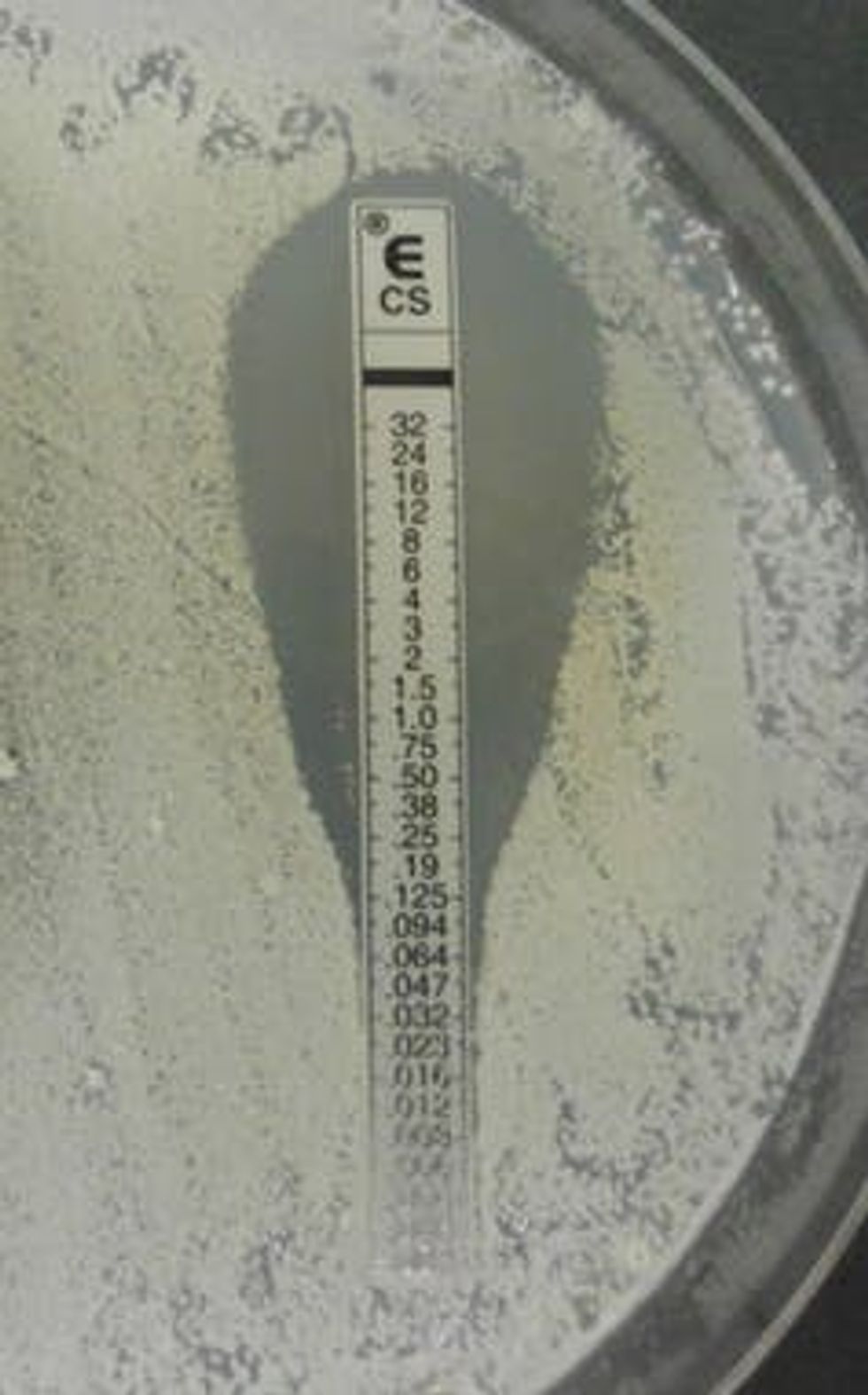
A diagnostic test used to determine the susceptibility of a fungal pathogen to an antifungal drug. These tests are commonly used to determine the amount of antifungal drug necessary to combat an infection.
Garnhami
Elucidating the identity of closely related fungal pathogens and how they differ from each other in infection-relevant characteristics is a key step toward reducing the burden of fungal disease. For example, we found that A. latus was three times more resistant than A. nidulans, the species it was originally identified as using microscopy-based methods, to one of the most common antifungal drugs, caspofungin. This result provides a clear example of the potential importance of accurate identification of the Aspergillus pathogen causing an infection.
We also examined how A. latus and A. nidulans interact with cells from our immune system. We found that immune cells were less efficient at combating A. latus compared to A. nidulans, suggesting the hybrid fungus may be trickier for our immune systems to identify and destroy.
In the midst of the COVID-19 pandemic, our quest to understand Aspergillus pathogens is becoming more urgent. Growing evidence suggests that a fraction of COVID-19 patients are also infected with Aspergillus. More worrying is that these secondary Aspergillus infections can worsen the clinical outcomes for those infected with the novel coronavirus. That being said, we stress that little is known about Aspergillus infections in COVID-19 patients due to a lack of systematic testing, and none of the infections identified so far appear to have been caused by hybrids.
So, when it comes to hybrids, some are fantastic (the minotaur), some are helpful (the mule) and some are dangerous (Aspergillus latus). Understanding more about the biology of Aspergillus latus may help in our understanding of how microbial pathogens arise and how to best prevent and combat their infections.
Jacob L. Steenwyk, Graduate Student of Biological Sciences, Vanderbilt University and Antonis Rokas, Cornelius Vanderbilt Chair in Biological Sciences, Professor of Biological Sciences and Biomedical Informatics, and Director of the Vanderbilt Evolutionary Studies Initiative, Vanderbilt University
The killing of George Floyd, an unarmed black man, at the hands of Minneapolis police on May 25 has sparked global criticism not only from America’s allies but also its many political adversaries, for whom American police brutality and racial injustice could be a valuable propaganda tool.
“They want to suffocate us as they suffocated this young African American,” said Nicolas Maduro, president of Venezuela, on Monday. “They want to suffocate us here in the jugular,” he added in a national televised address as he pointed to his neck.
The same day, Iranian Foreign Ministry spokesman Abbas Mousavi joined the chorus of condemnation, pointedly making his remarks in English.
“To the American people, the world has heard your outcry over this state oppression, the world is standing with you. The American regime is pursuing violence and bullying at home and abroad,” he said.
Both countries have fractious relations with the US and Donald Trump’s administration in particular while also having been the subject of American criticism because of their own human rights records.
“America’s adversaries are having a field day with developments in the United States. I think they have taken advantage of this and the Trump administration is vulnerable to the criticism,” Peter Trubowitz, director of the United States Centre at the London School of Economics, told FRANCE 24.
“Clearly the focus is not on a domestic audience but rather this is an opportunity to score points internationally to highlight what they believe is hypocrisy in the American position.”
On Monday China, which has been criticized by the US and others over the violent crackdown on pro-democracy protesters in Hong Kong, accused the US and Trump of double standards.
"Why is the US depicting the so-called Hong Kong independence movement and violence as beautiful and heroic while calling its own people who are protesting against racial discrimination 'rioters'?” Said China’s Foreign Ministry spokesman Zhao Lijian.
“Why is the US making groundless accusations against the Hong Kong police, who exercise restraint and civilised law enforcement, while threatening to shoot and even use the national guard against protesters in the US? This action by the US is the most typical example of double standards."
But are such statements merely political point scoring or could they have a real impact on US foreign policy goals in China and elsewhere?
“I think the administration is going to find itself in a very difficult position. It is the anniversary of the massacre at Tiananmen Square and normally the US is in a position to really make… and I think it will, it will remind international audiences of what happened then, especially in light of what’s going on in Hong Kong right now,” said Trubowitz.
“But the problem is that given Trump’s own language and responses at home in the United States, they don’t ring true, for many people they won’t have the same kind of credibility.
“Can Trump lead in a very kind of commanding way on these issues? Let’s just put it this way: he can’t lead as forcefully today as he could have say maybe a week ago.”
Prime Minister Justin Trudeau declared on Thursday that Canada is winning the fight against the new coronavirus, with the latest data showing new cases in decline.
But he also warned that the battle is not over yet.
"The data shows that we are continuing to make progress in the fight against this virus in many communities, the number of new cases is low, and we can trace where they came from," Trudeau told a daily briefing.
"That's an encouraging sign that the virus is slowing, and in some places, even stopping," he said. "But I want to be very clear: We're not out of the woods."
As of Thursday there were 93,700 coronavirus cases in Canada. More than half of those patients have already recovered.
New COVID-19 modeling for the country showed the epidemic has slowed after peaking mid-April.
And with strong containment measures -- such as social distancing, testing and contact tracing -- Canada could slay the virus by fall.
In the short term, Health Canada projects the total number of cases to rise to between 97,990 and 107,454, -- including 7,700 to 9,400 deaths -- by June 15.
Canada flattened its epidemic curve sooner than a number of countries such as Britain, Italy and the US, but lagged behind South Korea and Japan.
Ninety-four percent of the 7,495 deaths recorded so far have been among people aged 60 years or older; 82 percent were in long-term care homes.
Canada's two largest and most populous provinces continue to struggle. Ontario and Quebec accounted for 90 percent of new cases in last two weeks, Chief Public Health Officer Theresa Tam said.
People have turned to historical experience with influenza pandemics to try to make sense of COVID-19, and for good reason.
Influenza and coronavirus share basic similarities in the way they’re transmitted via respiratory droplets and the surfaces they land on. Descriptions of H1N1 influenza patients in 1918-19 echo the respiratory failure of COVID-19 sufferers a century later. Lessons from efforts to mitigate the spread of flu in 1918-19 have justifiably guided this pandemic’s policies promoting nonpharmaceutical interventions, such as physical distancing and school closures.
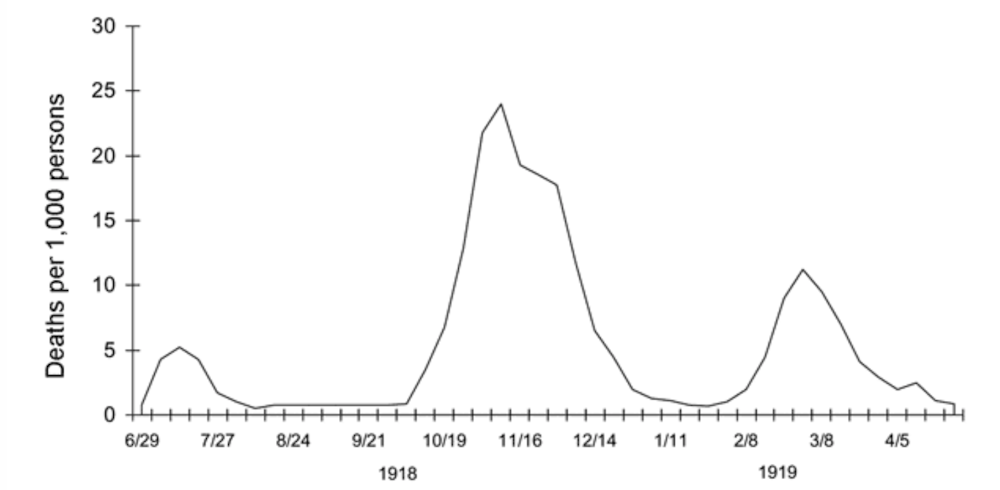
Current discussions about scaling back social distancing measures and “opening up” the country frequently refer to “waves” of disease that characterized the dramatic mortality of H1N1 influenza in three major peaks in 1918-19. As COVID-19 rates begin to steady in some parts of the U.S., people today are nervously eyeing the “second wave” of influenza that came in autumn 1918, that pandemic’s deadliest period.
Three waves of death during the pandemic: weekly combined influenza and pneumonia mortality, United Kingdom, 1918–1919. The waves were broadly the same globally.
Waves evoke predictability, however, and COVID-19 has been hard to predict. Despite the valuable lessons drawn from past influenza outbreaks, how pandemic influenza struck in 1918 isn’t a template for what will happen with COVID-19 in the coming months.
As a historian and a virologist, we believe this comparison of two pandemics has contributed to public confusion about what to expect from “flattening the curve.” Key divergences in the sociopolitical contexts of 1918-19 and now, in addition to clear virologic differences between influenza and SARS-CoV-2, the virus that causes COVID-19, mean their courses are not perfectly matched.
Influenza pandemic a product of that time
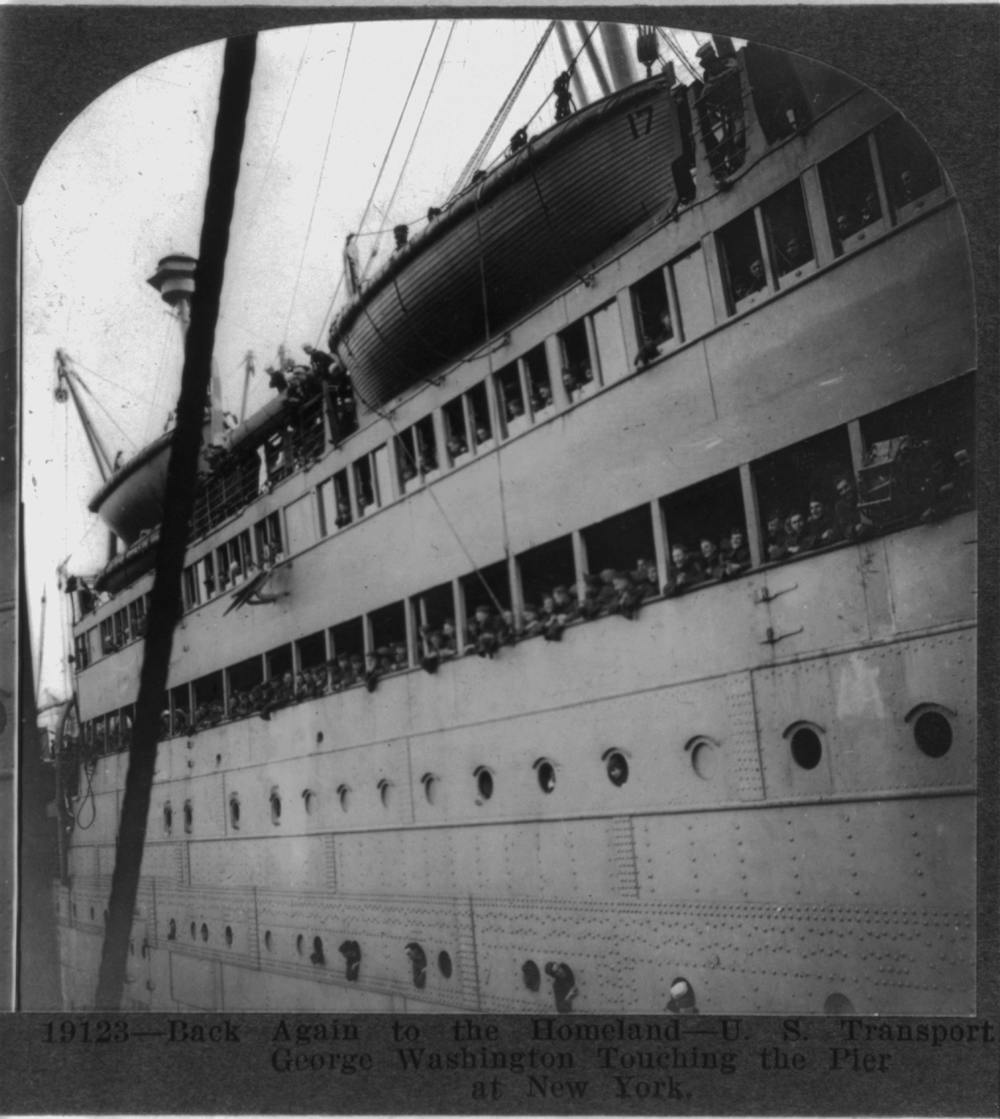
Today’s citizens may consider the 2020 world to be dramatically more connected than in the past. But World War I and soldier mobilization created a situation well-suited to influenza dispersal. While the origin of the deadly strain of 1918 H1N1 remains obscure, evidence indicates that soldiers on the move drove circulation.
Young American men left their homes – rural farms, small towns, crowded cities – and traveled around the world. They gathered by the thousands in military training camps and on troop ships, and then at the front in Europe. Civilians globally continued to work in crucial areas of economic production that required movement through the same transit hubs soldiers used. The disease’s first wave occurred in spring and early summer 1918 amid these movements.
H1N1 flu stowed away with soldiers returning from World War I.
In theaters of war in Europe, Africa and western Asia, soldiers mingled with their global compatriots. When they demobilized, they passed through major transit hubs back to their homes around the world, interacting with more people.
The extraordinarily deadly second wave of influenza in autumn 1918 diffused linearly along rail and sea routes, then radiated outward to wreak havoc on previously unexposed populations globally. In some areas, this period was followed by a less deadly third winter wave of disease in early 1919.
Medical historians conservatively estimate that influenza killed 50 million people globally, with 675,000 in the United States between 1918 and 1920. After that, this strain of flu receded, likely due to changes in the virus itself and the fact that most people had already been exposed and developed immunity or died.
Because the waves of pandemic flu did recede, it’s tempting to imagine today’s pandemic following a similar trajectory. However, fundamental differences between the biology of SARS-CoV-2 and influenza viruses make it hard to chart the future of COVID-19 based on what happened in the early 20th century.
SARS-CoV-2 and flu are biologically different
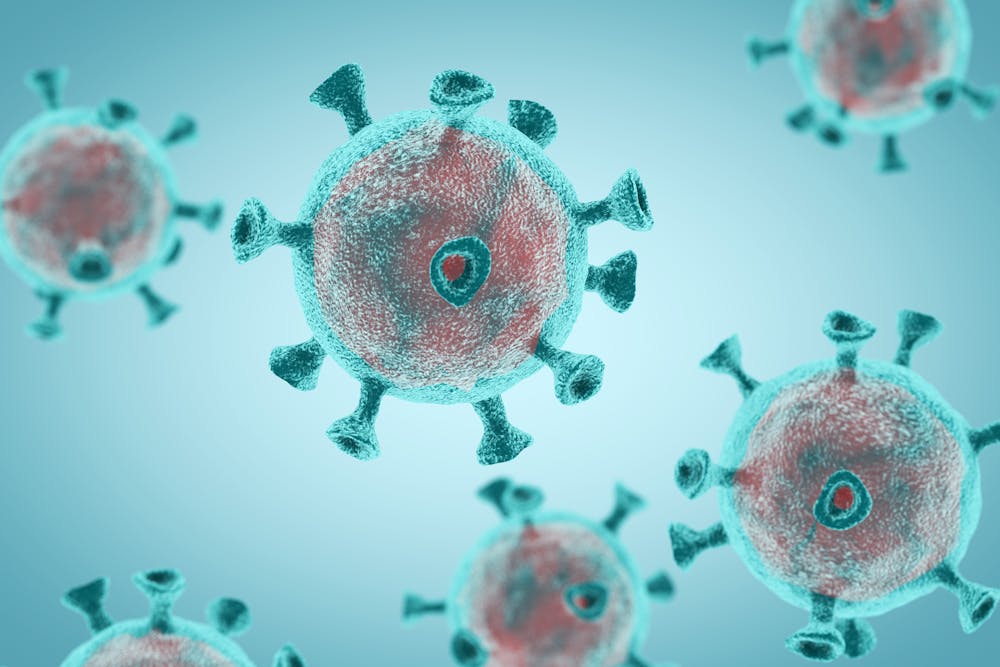
Both the new coronavirus and influenza have genetic material in the form of RNA. RNA viruses tend to accumulate a lot of mutations as they multiply – they typically don’t double-check copied genes to correct errors during replication. These mutations can occasionally lead to significant changes: The virus might change the species it infects or cell receptor it uses, or it could become more or less deadly, or spread more or less easily.
Uniquely, influenza’s genetic material is organized in segmented chunks. This idiosyncrasy means the virus can trade entire segments of RNA with other influenza viruses, enabling rapid evolution. Influenza also has a distinct seasonality, circulating much more during the winter months. As virus strains circulate, oscillating seasonally between the Northern and Southern Hemispheres’ wintertimes, they mutate rapidly. This capacity for quick adaptation is why you need to get a new flu vaccination annually to protect against new strains that have emerged in your area since last year.
SARS-CoV-2 makes many copies of itself once it successfully infects a human cell.
Coronaviruses actually do proofread their copied RNA to fix inadvertent errors during replication, which decreases their relative mutation rate. From the originally sequenced SARS-CoV-2 in Wuhan, China in December 2019 to recently banked sequences from the U.S., there are fewer than 10 mutations in 30,000 potential locations in its genome, despite the virus having traveled around the world and through multiple generations of human hosts. Influenza makes 6.5 times more errors per replication cycle, independent of entire genome segment swaps.
The relative genetic stability of SARS-CoV-2 means that future peaks of disease are unlikely to be driven by natural changes in virulence due to mutation. Mutation is unlikely to contribute to predictable “waves” of COVID-19.
All this means that oscillations in COVID-19 cases are unlikely to come with the predictability that discussions of influenza “waves” in 1918-19 might suggest. Rather, as SARS-CoV-2 continues to circulate in nonimmune populations globally, physical distancing and mask-wearing will keep its spread in check and, ideally, keep infection and death rates steady.
As states loosen nonpharmaceutical interventions, the U.S. will likely experience a long plateau of continued new infections at a steady rate, punctuated by periodic local flares. These outbreaks will not be driven by SARS-CoV-2 mutation or virulence, but by the further exposure of nonimmune people to the virus. Future spikes in COVID-19 cases and deaths will very likely be driven by what people do.
This scenario will continue until the U.S. population gains herd immunity, ideally accelerated by vaccination. Unfortunately, this process may be measured in years rather than months.
One virus’s pattern is not a prediction
People seek answers from the experiences of influenza in 1918-19 for a fundamental reason: It ended.
History shows the pandemic ebbed after a final, third wave in spring 1919 without the benefit of an influenza vaccine (available only in the mid-1940s) or a molecular or serologic test, or effective antiviral therapy, or even the support of mechanical ventilation.
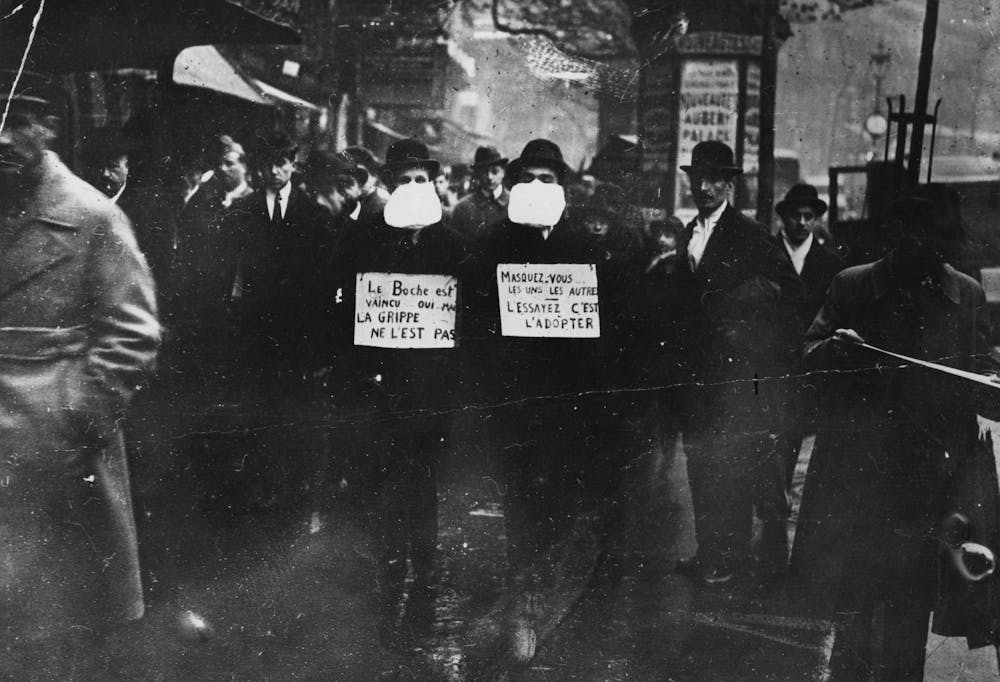
The earlier pandemic does hold lessons for the current one, including the value of wearing masks to stop the virus’s spread.
Today we’re living through a novel pandemic. By and large, people are actively collaborating in unprecedented measures to disrupt transmission of SARS-CoV-2. Scanning the historical record is one way to draw our own lives into focus and perspective. Unfortunately, the end of influenza in summer 1919 does not portend the end of COVID-19 in the summer of 2020.
The pandemic’s scientific complexities are formidable challenges. They’re playing out in a global economy that has ground to a halt, with resultant increasing pressures to reopen communities, and a technologically advanced and interconnected society – all issues that our predecessors a century ago did not have to consider.
Jessica Pickett, Ph.D., a principal consultant with Tomorrow Global, LLC, contributed to this article.
Hong Kong pro-democracy protesters defied a ban against gathering at a park to commemorate Thursday's anniversary of China's deadly Tiananmen crackdown, with tensions seething in the financial hub over a planned new security law.
The semi-autonomous city had for three decades seen huge vigils to remember those killed when China's communist leaders deployed its military into Beijing's Tiananmen Square to crush a student-led movement for democratic reforms.
This year's vigil was banned, with authorities citing coronavirus restrictions on group gatherings.
But pro-democracy campaigners in Hong Kong, who have been waging a long struggle against what they see as China's tightening grip on the city, were determined to make their voices heard.
Hundreds of people, including some prominent democracy leaders, broke through barriers at Victoria Park where the vigil is held each year just as night fell.
"I’ve come here for the vigil for 30 years in memory of the victims of the June 4 crackdown, but this year it is more significant to me," a 74-year-old man who gave his surname as Yip told AFP inside the park.
AFP / Anthony WALLACE Hong Kong pro-democracy protesters defied a ban against gathering at a park to commemorate Thursday's anniversary of China's deadly Tiananmen crackdown
"Because Hong Kong is experiencing the same kind of repression from the same regime, just like what happened in Beijing."
Some of the people in the park wore black t-shirts with the word "Truth" emblazoned in white. Others shouted pro-democracy slogans including: "Stand with Hong Kong".
Police maintained a presence near the park but did not move to disperse the protesters.
The defiant gathering came hours after pro-Beijing lawmakers in Hong Kong's legislature succeeded in passing a bill criminalising insults to China's national anthem.
- Neighbourhood, church vigils -
China's communist rulers forbid discussion on the mainland of the Tiananmen crackdown, during which hundreds -- by some estimates more than a thousand -- people were killed.
Hong Kong, which has been allowed liberties unseen on the mainland as part of its 1997 handover agreement with the British, had been the only part of China where such mass displays of remembrance were possible.
AFP / ISAAC LAWRENCE Protesting Hong Kong pro-democracy lawmakers (facing) are blocked by security (bottom) during debate on a law banning insulting China's national anthem
Organisers of commemoration events also called for residents to light candles of remembrance at 8pm (1200 GMT) wherever they were. Booths sprung up across the city to hand out candles as commuters made their way home on Thursday evening.
On the campus of Hong Kong University, students spent the afternoon cleaning a memorial to the Tiananmen dead known as "The Pillar of Shame".
Seven Catholic churches have also announced plans to host a commemorative mass on Thursday evening.
- Security and anthem laws -
Crowds have swelled at Hong Kong's Tiananmen vigils whenever fears have spiked that Beijing is prematurely stamping out the city's own cherished freedoms, an issue that has dominated the finance hub for the past 12 months.
AFP / DALE DE LA REY Students clean the Pillar of Shame, a statue by Danish artist Jens Galschiot to remember the victims of the 1989 Tiananmen crackdown
The city was engulfed by seven straight months of huge and often violent pro-democracy protests last year -- rallies that kicked off five days after the last annual vigil.
In response to those demonstrations last month Beijing announced plans to impose the security law, which would cover secession, subversion of state power, terrorism and foreign interference.
The city was engulfed by seven straight months of huge and often violent pro-democracy protests last year -- rallies that kicked off five days after the last annual vigil.
AFP / John SAEKI Hong Kong security law in the hands of China
In response to those demonstrations last month Beijing announced plans to impose the security law, which would cover secession, subversion of state power, terrorism and foreign interference.
China says the law -- which will bypass Hong Kong's legislature -- is needed to tackle "terrorism" and "separatism" in a restless city it now regards as a direct national security threat.
Opponents, including many Western nations, fear it will bring mainland-style political oppression to a business hub.
- Blackout on mainland -
But in mainland China, the crackdown is greeted by an information blackout, with censors scrubbing mentions of protests and dissidents often visited by police ahead of June 4.
Police in Beijing prevented an AFP photographer from entering Tiananmen Square to record the regular pre-dawn flag-raising ceremony on Thursday and ordered him to delete some photos.
AFP/File / Philip FONG People in 2019 attend a candlelight vigil at Victoria Park in Hong Kong to mark the Tiananmen crackdown anniversary
The candle emoji has been unavailable in recent days on China's Twitter-like Weibo platform.
The United States and Taiwan issued statements calling on China to atone for the deadly crackdown.
"Around the world, there are 365 days in a year. Yet in China, one of those days is purposely forgotten each year," Taiwan's President Tsai Ing-wen tweeted.
Secretary of State Mike Pompeo tweeted a photo of him meeting prominent Tiananmen survivors as US racial justice protests continue.
China's foreign ministry described calls for Beijing to apologise for the crackdown as "complete nonsense".
"The great achievements since the founding of new China over the past 70 or so years fully demonstrates that the developmental path China has chosen is completely correct," spokesman Zhao Lijian told reporters.
Hong Kong marked China's deadly Tiananmen crackdown on Thursday, with candle-light ceremonies planned across the city after authorities banned a mass vigil at a time of seething anger over a planned new security law.
The commemorations fell on another febrile day of political tension in the semi-autonomous city as lawmakers approved a Beijing-backed bill criminalizing insults to China's national anthem.
Pro-democracy politicians refused to cast their ballots with one throwing a foul-smelling liquid on the floor in a bid to halt proceedings and others shouting slogans as the votes were cast.
Opponents say the law is the latest move by Beijing to snuff out the city's cherished freedoms and have rallied around the symbolism of the law being passed on the anniversary of Tiananmen.
Open discussion of the brutal suppression is forbidden in mainland China where hundreds -- by some estimates more than a thousand -- died when the Communist Party sent tanks into Beijing's Tiananmen Square on June 4, 1989 to crush a student-led demonstration calling for democratic reforms.
AFP / Laurence CHU Hong Kong's annual Tiananmen vigil
Hong Kongers have kept memories alive for the past three decades by holding a huge annual vigil, the only part of China where such mass displays of remembrance are possible.
But this year's service was banned on public health grounds because of the coronavirus pandemic with barricades surrounding Victoria Park, the traditional ceremony venue, and police patrolling nearby.
Organizers have called for residents to instead light candles of remembrance at 8pm (1200 GMT) wherever they are.
"I don't believe it's because of the pandemic. I think it's political suppression," a 53-year-old man surnamed Wong, told AFP after kneeling by the park barricades to pay respects to the dead.
"I do worry that we may lose this vigil forever."
On the campus of Hong Kong University, students spent the afternoon cleaning a memorial to the Tiananmen dead known as "The Pillar of Shame".
- Security and anthem laws -
AFP / John SAEKIHong Kong security law in the hands of China
Crowds have swelled at Hong Kong's Tiananmen vigils whenever fears have spiked that Beijing is prematurely stamping out the city's own cherished freedoms, an issue that has dominated the finance hub for the past 12 months.
The city was engulfed by seven straight months of huge and often violent pro-democracy protests last year -- rallies that kicked off five days after the last annual vigil.
In response to those demonstrations last month Beijing announced plans to impose the security law, which would cover secession, subversion of state power, terrorism and foreign interference.
AFP / ISAAC LAWRENCE Hong Kong's huge annual Tiananmen vigil has been banned this year because of the coronavirus
China says the law -- which will bypass Hong Kong's legislature -- is needed to tackle "terrorism" and "separatism" in a restless city it now regards as a direct national security threat.
Opponents, including many Western nations, fear it will bring mainland-style political oppression to a business hub supposedly guaranteed freedoms and autonomy for 50 years after the 1997 handover from Britain.
- Blackout on mainland -
With the Victoria Park vigil banned, Hong Kongers are organizing locally and getting creative, chiefly with the scattered candle-light ceremonies.
Seven Catholic churches have also announced plans to host a commemorative mass on Thursday evening.
But in mainland China, the crackdown is greeted by an information blackout, with censors scrubbing mentions of protests and dissidents often visited by police ahead of June 4.
AFP/File / Philip FONG People in 2019 attend a candlelight vigil at Victoria Park in Hong Kong to mark the Tiananmen crackdown anniversary
Police in Beijing prevented an AFP photographer from entering Tiananmen Square to record the regular pre-dawn flag-raising ceremony on Thursday and ordered him to delete some photos.
The candle emoji has been unavailable in recent days on China's Twitter-like Weibo platform.
The United States and Taiwan issued statements calling on China to atone for the deadly crackdown.
"Around the world, there are 365 days in a year. Yet in China, one of those days is purposely forgotten each year," Taiwan's President Tsai Ing-wen tweeted.
Secretary of State Mike Pompeo tweeted a photo of him meeting prominent Tiananmen survivors as US racial justice protests continue.
On Wednesday, China's foreign ministry described calls for Beijing to apologize for the crackdown as "complete nonsense".
"The great achievements since the founding of new China over the past 70 or so years fully demonstrates that the developmental path China has chosen is completely correct," spokesman Zhao Lijian told reporters.
A Pakistan couple have been arrested for allegedly murdering their seven-year-old maid after she was blamed for letting a pet bird escape, police said, the latest case of violence against child domestic workers in the country.
Hassan Siddiqui and his wife employed Zohra Bibi at their home in a middle-class suburb of Rawalpindi, near the capital Islamabad, to care for their son of a similar same age.
"The poor girl was subjected to torture by Siddiqui and his wife who accused her of freeing one of the four pet Macao parrots," investigating officer Mukhtar Ahmad told AFP on Thursday.
"Siddiqui kicked her in the lower abdomen which proved fatal."
Some 8.5 million people -- including many children -- are employed as domestic workers in Pakistan, according to the International Labour Organization.
Theoretically it is illegal to employ anyone under the age of 15, but it remains common practice.
Zohra was taken to hospital by the couple on Sunday, but died the following day. The incident was reported to the police by staff at the hospital.
The young girl's body was handed over to her parents, who live in Muzaffargarh, near the city of Multan, more than 500 kilometres (300 miles) away from where she was working.
Human rights minister Shireen Mazari confirmed the arrests in a tweet and said the ministry was in touch with police.
"Violence and physical torture against children will not be tolerated and all those involved in such incidents will be dealt with," city police chief Muhammad Ahsan Younus added.
Domestic workers frequently face exploitation, violence and sexual abuse, with Pakistan's patriarchal and rigid social-class structure leaving them without a voice.
Children are particularly vulnerable, and Bibi's case is the latest in a growing number of incidents involving minors.
In December 2018, the rising number of abuse cases led the provincial legislature in Punjab to set regulations for the employment of domestic workers, which theoretically grants them rights such as sick leave and holidays.
Tokyo 2020 officials are looking at ways to scale back next year's postponed Olympics, the city's governor said Thursday, amid reports the opening ceremony could be streamlined and spectator numbers cut.
Yuriko Koike told reporters that organisers were weighing up what could be "rationalised and simplified" as costs spiral for holding the first postponed Games in history.
The International Olympic Committee announced in March the Games would be delayed due to the coronavirus pandemic that has killed hundreds of thousands and brought international travel to a virtual halt.
The Games are now due to open on July 23, 2021, but organisers face the unprecedented headache of rearranging the event, which requires a costly rejigging of everything from venues to transport.
Local media said streamlining plans could involve cutting the number of spectators and reducing participation in the opening and closing ceremonies.
The Yomiuri Shimbun daily quoted an unnamed source as saying that everyone including athletes, officials and spectators would be required to take a test for the virus.
"The top priority is to avoid the worst scenario of cancelling the Games," an unnamed government source told the daily.
Tokyo 2020 spokesman Masa Takaya declined to offer further details as a press conference later on Thursday, saying only that discussions were ongoing.
"At this stage we do not have any concrete outcome," he said, adding that discussions about coronavirus countermeasures would be held "from this autumn onwards."
"Concerning the spread of the novel coronavirus, particularly the situation next summer and how the world will look like is something very ambiguous," he added.
IOC chief Thomas Bach said last month that 2021 was the "last option" for holding the Tokyo Games, stressing that postponement cannot go on forever.
He declined to say whether a vaccine was a prerequisite for going ahead with the Olympics, but was lukewarm on the idea of holding them behind closed doors.
Japanese Prime Minister Shinzo Abe has said it would be "difficult" to hold the postponed Tokyo Olympics if the coronavirus pandemic is not contained.
And Tokyo 2020 president Yoshiro Mori has said the Olympics would have to be cancelled if the coronavirus pandemic isn't brought under control by next year.
Brazil and Mexico reported record daily coronavirus death tolls as governments in Latin America battled to fortify defenses against the accelerating pandemic with fresh lockdown orders and curfews.
European nations are emerging from months of devastation with some borders re-opening, but South and Central America have become the new hotspots in a crisis that has claimed at least 385,000 lives worldwide.
AFP / ADEK BERRY Indonesian fire fighters spray disinfectant at a business center on the last day of the lockdown amid the COVID-19 coronavirus pandemic in Jakarta
Mexico on Wednesday announced more than 1,000 coronavirus deaths in a day for the first time, while Brazil reported a record 1,349 daily deaths.
Brazilian President Jair Bolsonaro has staunchly opposed lockdowns but many local authorities have defied him and, with the crisis deepening, a vast section of Bahia state was on Wednesday placed under curfew.
AFP / RIJASOLO Madagascar riot police use rubber bullets to disperse protesters who are angry after police officers beat up a Toamasina resident who refused to respect the virus lockdown in Madagascar
There was more cause for concern in Chile, where the government said it was extending a three-week shutdown of the capital Santiago after a new record for daily deaths.
And in more evidence of the scale of the crisis in Latin America, the journalists' union in Peru said at least 20 reporters had died from the coronavirus.
The outbreak in Peru has been so intense that oxygen tanks needed in hospitals have become scarce, with many lining up to buy them for their loved ones.
AFP / Papri BHATTACHARJEE A worker arranges beds at quarantine centre set up in the Hapania International Fair Complex on the outskirts of Agartala, India
"We haven't found oxygen yet," said Lady Savalla in the capital Lima.
"I'm worried about my mom more than anything else, because she's going to need a lot of oxygen and the hospital doesn't have enough."
- Vaccine push -
Experts have warned that travel restrictions will be needed around the world in some form until a vaccine is found -- and efforts to develop one are gathering pace.
AFP / Jure Makovec People in in Nova Gorica/Gorizia chat across the border fence between Slovenia and Italy, erected due to the Covid19 pandemic
Britain is set to host a major meeting on Thursday, with more than 50 countries as well as powerful individuals such as Bill Gates taking part, to raise money for Gavi, the global vaccine alliance.
Gavi and its partners will launch a financing drive to purchase potential COVID-19 vaccines, scale up their production and support delivery to developing nations.
AFP / Simon MAINA Kenya Redcross paramedics assist a COVID-19 patient in Nairobi
Tests on one potential vaccine, being developed by Oxford University, will begin on 2,000 health services volunteers in Brazil next week.
The World Health Organization, meanwhile, said Wednesday that it would resume trials of hydroxychloroquine as a potential treatment after doubts were cast on the study that prompted the suspension over safety fears.
US President Donald Trump and Bolsonaro have touted the drug, with Washington sending Brazil two million doses earlier this week.
But a separate study published in the New England Journal of Medicine on Wednesday, however, suggested taking the drug shortly after exposure to the coronavirus does not help prevent infection in a statistically meaningful way.
Many governments are desperate to revive businesses after the economic destruction unleashed by the lockdowns, despite the lack of a viable treatment.
AFP / Robert ATANASOVSKI A woman wearing a face mask walks past statues in central Skopje ,after the country eased lockdown measures
Italy reopened its borders to European travelers on Wednesday, hoping to revive tourism, but a full recovery appeared a long way off for some.
"I don't think we'll see any foreign tourists really until the end of August or even September," said Mimmo Burgio, a cafe owner near Rome's Colosseum. "Who's going to come?"
- Risk of spread at protests -
AFP / Eric BARADAT Protesters hold up their phones during a demonstration over the death of George Floyd, outside the White House in Washington, DC
The United States remains the hardest-hit nation in the world, with 1.85 million infections and more than 107,000 deaths, and there are fears that the ongoing wave of protests in the country over racism and police brutality could fuel the spread of the virus.
Many have said that while they were aware of the danger of infection at the big rallies, the cause was important enough to take the risk.
Cav Manning, a 52-year-old emcee from New York, was among the tens of thousands across America willing to risk infection as he joined a protest in Brooklyn earlier this week.
"What we saw is so disturbing that we've got to be out here right now," he told AFP. "Despite COVID, despite the fact that you might get infected."
China said Thursday foreign airlines blocked from operating in the country over virus fears would be allowed to resume limited flights, apparently de-escalating a row with Washington following US plans to ban Chinese carriers.
Beijing's announcement comes as tensions between the world's two superpowers are sent soaring by a series of issues including Donald Trump's accusations over China's handling of the pandemic, Hong Kong and Huawei.
The latest spat was rooted in the Civil Aviation Authority of China (CAAC) deciding to impose a limit on foreign airlines based on their activity as of March 12. Because US carriers had suspended all flights by that date their cap was set at zero, while Chinese carriers' flights to the US continued.
On Wednesday the US said it would block Chinese passenger flights from June 16, raising concerns of another front being opened up in the economic titans' standoff.
But the CAAC on Thursday said all foreign airlines not listed in the March 12 schedule would now be able to operate one international route into China each week.
Chinese foreign ministry spokesman Zhao Lijian expressed regret over the US decision, adding that the CAAC is making "solemn representations" over the matter.
Asked if the latest CAAC notice means the US will be able to file applications for flight resumption, Zhao said the Chinese aviation authority and US Department of Transportation have maintained close communication over flight arrangements between the two countries.
"Originally, both sides had made some progress," he said at a regular briefing, adding that China hopes the US will not "create obstacles" for both parties' work to solve the problem.
- Spats on many fronts -
Relations between Washington and Beijing have become increasingly strained in recent months after Trump accused China of causing the virus intentionally, while a plan to impose a strict security law on Hong Kong has increased tensions substantially.
The US has also imposed restrictions on Chinese telecom giant Huawei and ordered a probe into the actions of Chinese companies listed on American financial markets.
For its part, Beijing has mocked the US stance on Hong Kong in light of civil rights protests across the US following the police killing in Minneapolis of George Floyd, an unarmed African-American man.
At the same time, China has gradually relaxed strict air travel caps on some foreign firms as the coronavirus outbreak in the country appears to be under control.
China has set up fast-track entry procedures for business travellers from several other countries, including Singapore and South Korea. Hundreds of Germans have also been able to return.
Beijing said last week it would almost triple the number of permitted flights to and from China in June following an outcry from Chinese stranded abroad.
Passengers must be tested for COVID-19 upon arrival in the country.
The CAAC said Thursday that routes whose passengers all test negative for three consecutive weeks will be allowed to operate an additional flight each week.
Routes with five or more passengers testing positive will be suspended for at least one week, CAAC said.
"Should we disregard the peaceful mass protests against the oppression of black people and focus, as Trump would have us do, exclusively on the lawlessness and looting that the self-styled 'law & order' President claims to be cleaning up?" Glasser asked. "Is this an authoritarian crackdown by Trump or merely another politicized spectacle from a leader who craves them? Just as he did this spring, during the pandemic, when he declared war against an 'Invisible Enemy' but denied 'any responsibility at all' for its outcome, the President has talked tough but seems most interested in being seen to 'dominate,' as he has put it repeatedly, rather than actually doing so."
She went on to call Washington a tragic combination of "menacing" and "absurd." The men with big guns and combat fatigues are reminiscent of the city after Sept. 11, not after a typical D.C. protest.
"What struck me, though, wasn't that the President and his Pentagon chief were lying so shamelessly to the public, nor even the embarrassing lameness of their lies," Glasser wrote. "This is, in fact, a farce with consequences. There are checkpoints being patrolled by combat units, and images of armed thugs targeting and beating students and journalists on live T.V. in the name of protecting the President...Trump may be a clown, but he has managed, in the week since [George] Floyd's killing, to present the world with dystopian images of America as Egypt or Russia or Turkey or any of the other unfree places that we Americans are used to smugly lecturing about freedom."
The chaos she said Trump is so "adept" at creating has come amid two major international decisions. From his "inspection of the bunker," Trump said he was pulling out of the World Health Organization, and he was inviting Putin to the G-7 summit that Putin was exiled from after invading Ukraine.
"Inviting Putin to the United States just weeks before the American Presidential election and torching the G-7 alliance at a moment of international economic crisis are no less malevolent acts because they are being carried out by a clown," wrote Glasser. "These past few days have shown, once again, that Trump is in permanent burn-it-down mode. It's just that he is smashing windows in the way that rich, entitled types do, and the damage will be much harder to fix than broken glass and looted sneaker stores."
She noted the irony of the moment as she was walking back to her car before D.C.'s curfew on Tuesday night. She saw protesters on 16th street asking if it was really necessary to drag someone from their car after they pulled them over.
"The police officer ignored them. A helicopter buzzed overhead, and, less than a block away, soldiers were blocking traffic. I could not help but notice that this surreal scene, so redolent of every display of police-state might that I covered as a foreign correspondent in the former Soviet Union, was unfolding in front of the Russian Ambassador's ornate Beaux-Arts residence. Vladimir Putin would have loved it," she closed.
On Wednesday, Politico's Natasha Bertrand reported that during his testimony to Congress, fired State Department Inspector General Steve Linick told lawmakers that a senior aide and close friend of Secretary of State Mike Pompeo tried to "bully" him into not pursuing the investigation into a controversial Saudi arms deal.
According to the readout from Democratic lawmakers at the hearing, Brian Bulatao, the Under Secretary of State for Management, reportedly "pressured [Linick] to act in ways that [he] felt were inappropriate — including Bulatao telling LInick that the investigation into weapons sales to Saudi Arabia was not a matter for the IG to investigate, and Bulatao telling Linick that he wanted to oversee the independent investigation into allegations of a State OIG draft report leak to the media."
The Saudi arms deal raised red flags because Pompeo had ordered State Department officials to find a "justification" to approve the deal under an emergency order, which would bypass Congress and shield the deal from oversight.






 AFP / Anthony WALLACE
  AFP / ISAAC LAWRENCE
  AFP / DALE DE LA REY
  AFP / John SAEKI
  AFP/File / Philip FONG
  AFP / Laurence CHU
  AFP / ISAAC LAWRENCE
  AFP / ADEK BERRY
  AFP / RIJASOLO
  AFP / Papri BHATTACHARJEE
  AFP / Jure Makovec
  AFP / Simon MAINA
  AFP / Robert ATANASOVSKI
  AFP / Eric BARADAT