Speaking Tuesday during the House Judiciary Committee's, "Facebook, Google and Twitter: Examining the Content Filtering Practices of Social Media Giants," Rep. King demanded to know why a right wing site is losing traffic. King specifically mentioned a pro-Trump conspiracy theory and "fake news" website known as Gateway Pundit, run by Jim Hoft, a man whose name has become synonymous with "the stupidest man on the Internet," according to a Google search.
In the House hearing, King challenged Facebook's head of global policy management, Monika Bickert, to explain why Gateway Pundit supposedly "saw its traffic cut by 54%." Facebook, contrary to King's assumptions, does not guarantee traffic to any website.
Congressman King also suggested Facebook uses the Southern Poverty Law Center as an ethics "advisory group" to determine how much traffic a Facebook page or website would receive.
King, again under the false assumption that Facebook is specifically targeting conservative websites to deliver less traffic for them, threatened to support those who want to turn Facebook into a public utility. That's all but impossible under U.S. law.
"Steve King," ShareBlue's Tommy Christopher noted, "suddenly favors big government when it might help fringe right-wingers like Gateway Pundit."
Christopher adds that "King also mentioned Trump backers 'Diamond and Silk,' who lied to Congress by claiming that a Facebook algorithm cut their traffic when an independent analysis showed the opposite."
King is perhaps best known for falsely claiming in 2014 that for every undocumented immigrant in America who is, for example, a "valedictorian," there are 100 who are running drugs across the Mexican border -- and they have "calves the size of cantaloupes."
Iran has built a factory that can produce rotors for up to 60 centrifuges a day, the head of its atomic agency said on Wednesday, upping the stakes in a confrontation with Washington over the Islamic Republic’s nuclear work.
The announcement came a month after Supreme Leader Ayatollah Ali Khamenei said he had ordered agencies to prepare to increase uranium enrichment capacity if a nuclear deal with world powers falls apart after Washington’s withdrawal from the pact.
Under the terms of the 2015 agreement, which was also signed by Russia, China, Britain, France and Germany, Iran agreed to curb its nuclear program in exchange for sanctions relief.
The other signatories have been scrambling to save the accord, arguing it offers the best way to stop Iran developing a nuclear bomb.
Iran has said it will wait to see what the other powers can do, but has signaled it is ready to get its enrichment activities back on track. It has regularly said its nuclear work is just for electricity generation and other peaceful projects.
Ali Akbar Salehi, the head of the Atomic Energy Organization of Iran, said the new factory did not in itself break the terms of the agreement.
A spokesman for the International Atomic Energy Agency (IAEA) said the organization is aware of the announcement but has “no comment.”
“Instead of building this factory in the next seven or eight years, we built it during the negotiations but have not started it,” Salehi, said, according to state media.
“Of course, the [Supreme Leader] was completely informed and we gave him the necessary information at the time. And now that he has given the order this factory has started all its work.”
The factory would have the capacity to build rotors for up to 60 IR-6 centrifuges per day, he added.
Separately, Salehi said that Iran now had a stockpile of up to 950 tons of uranium. He said Iran had imported 550 tons of uranium before the nuclear agreement and had acquired approximately another 400 tons after the agreement was finalized, bringing the total stockpile to between 900 and 950 tons.
Salehi did not specify where the additional 400 tons of uranium had come from.
Last month, Salehi announced that Iran has begun working on infrastructure for building advanced centrifuges at its Natanz facility.
Reporting By Babak Dehghanpisheh; additional reporting by Kirsti Knolle in Vienna; Editing by Andrew Heavens, Richard Balmforth
In a county that only barely swung for Donald Trump in 2016, voters are increasingly ambivalent about the president's policies — especially when it comes to Russia.
A Kenosha, Wisconsin woman named Pam Anderson, interviewed by CNN's Kyung Lah, said the press conference between Trump and Russian President Vladimir Putin represented a turning point in her thinking on him.
During that appearance in Helsinki, Trump "pushed aside" the Russians' election interference in 2016 and made it seem like he's "mocking the whole system," the woman told CNN.
"I had voted for [Barack] Obama and this time around I went ahead and voted for Donald Trump and I really regret that decision," Anderson told Lah.
When asked who she would vote for in 2020, the woman was unequivocal in her response.
U.S President Donald Trump said Wednesday he got on well with Russian President Vladimir Putin at their summit in Finland and “big results will come”.
“So many people at the higher ends of intelligence loved my press conference performance in Helsinki. Putin and I discussed many important subjects at our earlier meeting. We got along well which truly bothered many haters who wanted to see a boxing match. Big results will come!” he said on Twitter.
“While the NATO meeting in Brussels was an acknowledged triumph, with billions of dollars more being put up by member countries at a faster pace, the meeting with Russia may prove to be, in the long run, an even greater success. Many positive things will come out of that meeting,” he tweeted.
Trump sought on Tuesday to calm the storm over what critics said was his failure to hold Putin accountable for what U.S intelligence agencies said was meddling in the 2016 U.S. election, saying he misspoke in the joint news conference in Helsinki.
Trump on Monday shied away from criticizing the Russian leader for Moscow’s actions to undermine the election and cast doubt on U.S. intelligence agencies, prompting calls by some U.S. lawmakers for tougher sanctions and other actions to punish Russia. Putin denies any Russian interference in the vote.
“I said the word ‘would’ instead of ‘wouldn’t,’” Trump told reporters at the White House, more than 24 hours after his appearance with Putin. “The sentence should have been, ‘I don’t see any reason why it wouldn’t be Russia.’”
Trump hailed last week’s NATO summit in Europe as victory for his tough stance of demanding the United States’ European allies make big new defense spending pledges.
Writing by Alison Williams in London; Editing by Jon Boyle
The 12 boys and their soccer coach rescued from a flooded cave in Thailand waved, smiled and offered traditional “wai” greetings in their first public appearance on Wednesday at a national broadcast in the northern province of Chiang Rai.
Doctors, relatives and friends, some in yellow traditional garb, greeted the boys, aged 11 to 16, and their 25-year-old coach, who wore T-shirts emblazoned with a red graphic of a wild boar and carried in footballs they kicked gently on the set.
“Bringing the Wild Boars Home,” read a banner in Thai on the set, designed to resemble a soccer field, complete with goalposts and nets, where the boys arrayed themselves on a dais, beside five members of the rescue team.
A crowd of media and onlookers was penned behind barricades as the group arrived in vans from the hospital where it has stayed since last week’s international effort to extricate it from a flooded cave complex where it had been trapped.
“Today we will get the answers to the questions we have been wondering, from the boys themselves,” said Suthichai Yoon, presenter of the 45-minute program being televised live on dozens of channels.
The boys, who sported crisp haircuts, had gained an average of 3 kg (6.6 lb) each since the rescue, and rain through confidence-building exercises ahead of Wednesday’s event, the hospital director said.
The boys, their coach and some rescuers will answer a series of questions journalists submitted in advance, officials said.
“We don’t know what wounds the kids are carrying in their hearts,” said justice ministry official Tawatchai Thaikaew, who asked for the boys’ privacy to be respected after the discharge, for fear that media attention could affect their mental health.
“The media know the children are in a difficult situation, they have overcome peril and if you ask risky questions then it could break the law,” he told reporters.
The group had planned to explore the Tham Luang cave complex for about an hour after soccer practice on June 23. But a rainy season downpour flooded the tunnels, trapping them.
Two British divers found them on July 2, squatting on a mound in a chamber several kilometers inside the complex. All were brought to safety during the three-day rescue, organized by Thai navy SEALs and a global team of cave-diving experts.
The rescue effort drew global media attention and hundreds of journalists, many of whom left after it wrapped up, but excitement picked up again in the usually sleepy town of Chiang Rai ahead of the much-anticipated appearance.
King Maha Vajiralongkorn has granted permission for a party in the Royal Plaza, a public square in Bangkok’s old town, to thank the Thai and foreign participants in the rescue, the government said.
Earlier, Prime Minister Prayuth Chan-ocha told reporters the celebration would feature a banquet and entertainment, but gave no further details.
Additional reporting by Pracha Hariraksapitak, Vorasit Satienlerk, Chayut Setboonsarng and Panarat Thepgumpanat in BANGKOK; Editing by Clarence Fernandez and Darren Schuettler
A revolutionary gene editing technique hailed as the future of disease eradication and mooted for a Nobel prize may be less precise and cause more cell damage than previously thought, researchers said Monday.
Lab experiments using mouse and human cells revealed that the CRISPR-Cas9 technique "frequently" caused "extensive" gene mutations, a study team reported.
"This is the first systematic assessment of unexpected events resulting from CRISPR-Cas9 editing," said Allan Bradley of the Wellcome Sanger Institute in England, where the team conducts research.
The research showed that "changes in the DNA have been seriously underestimated before now," said Bradley, who co-authored a study published in the journal Nature Biotechnology.
The mutations have not been shown to be harmful, nor benign.
"It is important that anyone thinking of using this technology for gene therapy proceeds with caution and looks very carefully to check for harmful effects," Bradley said in a statement issued by the institute.
First unveiled about six years ago, CRISPR-Cas9 allows scientists to insert, remove and correct a faulty sequence on a strand of DNA in a cell with pinpoint precision.
It has raised hopes that one day disease-causing genes could be removed or altered before a baby is even born.
In recent years, CRISPR-Cas9 has repeatedly been predicted to win the Nobel chemistry prize.
CRISPRs -- clustered regularly interspaced short palindromic repeats -- are part of the immune defence system in bacteria, used to hone in on the exact spot on the genome where the cut should be made.
Cas9 is a protein used as "scissors" to snip through the faulty gene, which is then replaced or fixed by the cell's own DNA repair mechanism.
- 'Safety implications' -
The technique's safety has not yet been proven, and it is not approved for use in human therapy.
So far, researchers have used it to improve hearing in mice going deaf and to fix a disease-causing mutation in cloned, early-stage human embryos.
But the new finding raises "safety implications," the team said.
They found "large genetic rearrangements such as DNA deletions and insertions" in cells, which could lead to important genes being switched on or off and causing dangerous changes.
The research also showed that standard tests do not pick up damage to DNA caused by CRISPR-Cas9.
Experts not involved in the study said it was unclear how such large, unintended changes were not noticed before.
But, "the results give no reason to panic or to lose faith in the methods when they are carried out by those who know what they are doing," said Robin Lovell-Badge of The Francis Crick Institute, a biomedical research centre in London.
For Francesca Forzano, a consultant in clinical genetics and genomics with the Guy's and St Thomas' NHS Foundation Trust, the work showed that CRISPR-Cas9 "is much less safe than previously thought" and that safety-monitoring techniques were "not entirely adequate".
More research is needed before any clinical application of the method is considered, said Forzano.
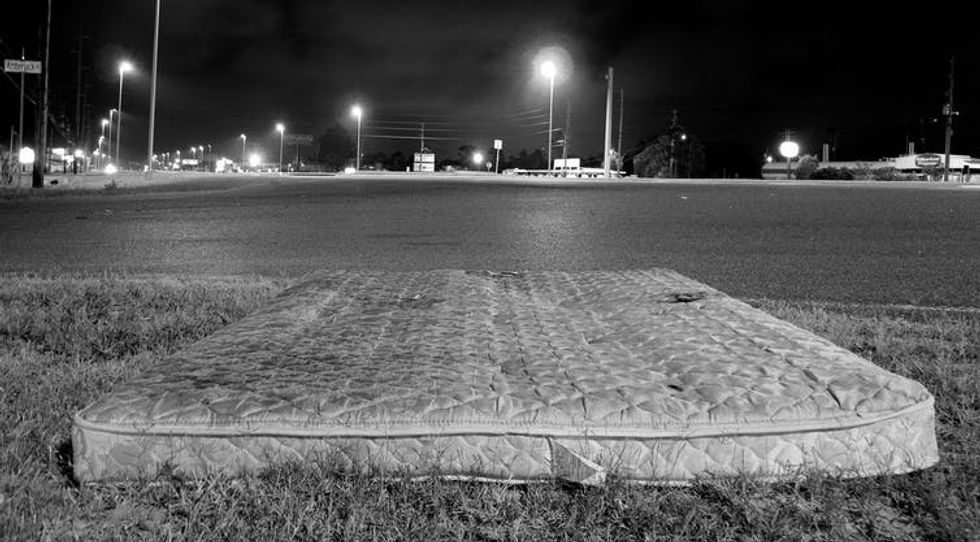
Imagine you’re speeding along on a highway. Suddenly, the traffic ahead of you slows, forcing you to hit the breaks. Eventually you arrive at the source of the bottleneck: a mattress lying in the right lane. One by one, your fellow motorists simply crept around it. No one stopped to move it off the road to relieve the congestion.
Why would so many people fail to take action and (easily) fix the problem that slowed traffic to a crawl?
People – whether motorists, business leaders or lawmakers – are simply not very proactive. By that we mean humans have a tendency to keep doing what they’ve been doing, maintaining the status quo rather than breaking the flow and creating a better future. In the mattress example, it means driving around the obstruction rather than removing it, allowing the problem to continue indefinitely.
As researchers of organization behavior and leadership, we have long studied the nature of proactive behavior and how it helps people perform better at their jobs. Failing to behave proactively can be consequential as well, often negatively.
A perfect example is the U.S. Congress and its unwillingness to rein in President Donald Trump over Russia. By failing to act sooner over growing evidence that Russia hacked the 2016 elections and related matters, Republican lawmakers have now witnessed what was once unthinkable: an American president standing next to a leader of a hostile power and criticizing his own intelligence agencies.
People commonly think being proactive means simply starting sooner rather than later, not procrastinating, or taking initiative to get work done.
But it is far more than that. Your behavior is proactive when:
you choose it yourself rather than comply with external demands
you execute strategically more than mindlessly
you are future-focused rather than anchored in the present or past
your intention is to change something for the better, thus to create a better future.
Proactivity begins with recognizing that a current trajectory – your own, your team’s, your company’s, your country’s – is not good enough, or downright bad, and deciding to make a course correction. More concretely, proactivity means solving or preventing problems and identifying and capturing opportunities, en route to a future that is better than if you had not changed course.
Our research suggests that truly proactive leadership is a rare bird. In one study, for example, we interviewed 75 chief executive officers in several countries including the U.S. and asked them to tell us their work goals. Of the over 2,000 goals they mentioned, the vast majority were business-as-usual, maintenance goals such as “keeping customers,” “surviving” and “holding onto good employees.” Only a very few, such as “building a new factory,” “finding a new international partner” and “being a leader in changing how the marketplace works” were notably proactive in ways that could dramatically change their companies’ trajectories.
Congress hasn’t been proactive where Trump and Russia are concerned.
We conducted several studies to better understand the connection between being proactive and performing successfully.
In the first one, we asked 148 business grad students at a single school with significant full-time work experience to fill out a survey intended to measure their behavioral tendencies. The survey listed 17 different behaviors, such as “If I see something I don’t like, I fix it,” “I am always looking for better ways to do things,” “I love to challenge the status quo” and “If I believe in an idea, no obstacle will prevent me from making it happen,” and we asked the students to mark how strongly they agreed with each statement in terms of how they work, from 1 to 7.
We then compared scores with actual achievements based on participants’ application material, including resumes and essays. Those who scored higher on the proactivity scale had more impactful accomplishments in their work and personal lives. Moreover, we asked them to list four to eight peers among their classmates whom they predicted would become transformational leaders in their future careers. Proactivity rankings correlated with the number of peer nominations.
Our second study involved a sample of 131 real estate agents who completed our proactivity survey. Using archival records, we found that agents that scored higher on the scale sold more houses, earned greater commission income and brought in more listings than their peers.
In a third study, we asked 156 managers at a Puerto Rican financial services firm to fill out our survey. Their bosses then completed a separate survey rating those managers’ leadership behaviors, such as charisma and inspirational speaking. Those ranked most proactive received higher ratings from their bosses, while low-scorers were near the bottom.
Other studies have linked proaction to better job performance, a tendency to exceed expectations, effective stress management and more entrepreneurial behavior.
A caveat to all this is that being proactive – like starting a new business – can be risky and even backfire. But the evidence shows clearly that the likely gains over time far outweigh the potential costs.
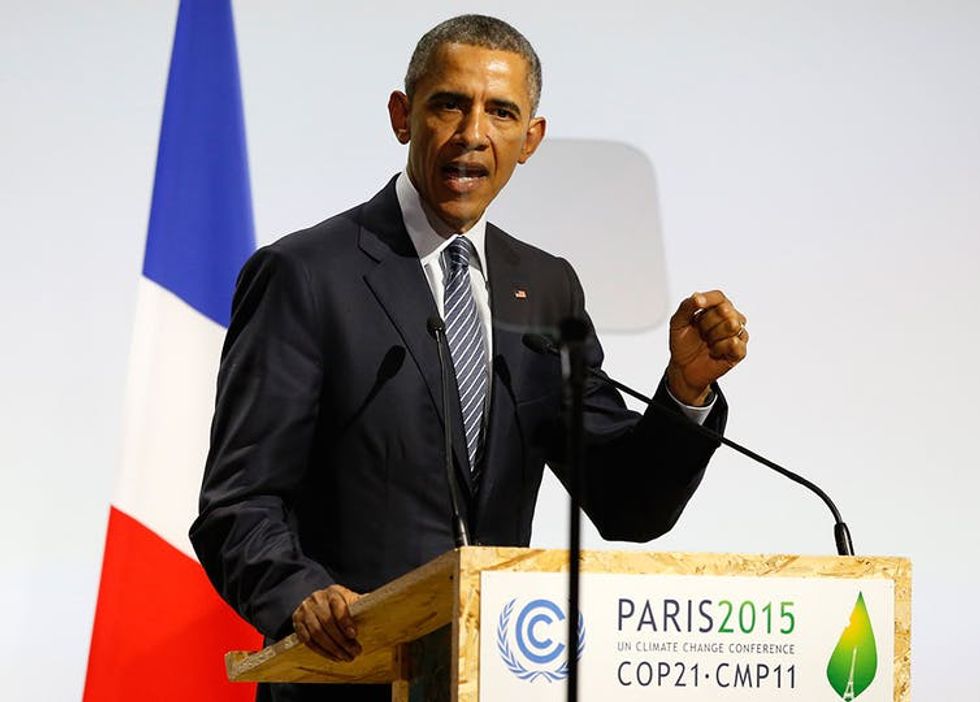
President Barack Obama, seen speaking at COP21 in France in 2015, acted proactively on the threat of climate change, while his successor has not.
AP Photo/Francois Mori
Not behaving proactively has costs too
The president’s words and actions in Helsinki – in which he stood next to Russian President Vladimir Putin and said he believed his “powerful” denials over accusations of election hacking rather than the consensus of his own government – may never have happened had the Republican leaders of Congress been more proactive.
For a start, it could have taken the investigation of Russian meddling more seriously as early as 2016. Or, after the Justice Department appointed Robert Mueller as special prosecutor, it could have passed a law to ensure the president can’t fire him – as Trump has threatened to do. Or even as recently as last week, Republican members of Congress could have urged Trump not to go ahead with the meeting with Putin.
Surveys of Americans across the political spectrum have shown that they respect leaders who engage in proactive ways on the problems facing their country. Perhaps that could help convince lawmakers and presidents that it’s in their own self-interest to do so.
Sadly, neglecting the future is our default. Proactivity requires all-too-rare strategic forethought and sustained, constructive action to avoid the worst and create the best possible futures.
As Irish playwright George Bernard Shaw perhaps put it best, “We are made wise not by a recollection of our past but by a responsibility for our future.” Imagine the benefits if more of our leaders would think and act through such a forward-looking lens.
This is an updated version of an article originally published on Jan. 24, 2018.
More than half of Americans disapprove of the way U.S. President Donald Trump is handling relations with Russia, according to a Reuters/Ipsos poll conducted after his controversial summit and joint news conference with Russian President Vladimir Putin.
However, Trump’s performance at the Helsinki summit, where Trump refused to blame the Russian leader for meddling in the 2016 U.S. election and cast doubt on the findings of U.S. intelligence agencies, did not seem to have an impact on his overall approval rating.
Forty-two percent of registered voters said they approved of Trump’s performance in office in the latest opinion poll, compared with a daily average of between 40 and 44 percent so far in July.
The poll found that 55 percent of registered voters disapproved while 37 percent approved of his handling of relations with Russia.
Among Republicans, 71 percent approved of his handling of Russia compared to 14 percent of Democrats.
Trump still enjoys broad support among Republican voters despite criticism from party leaders about his words and actions while standing alongside the Russian leader answering questions from reporters, the poll results showed.
Trump surprised even his supporters when he praised the Russian leader during the news conference for his “strong and powerful” denial of meddling.
On Tuesday, Trump attempted to calm the political storm following his remarks, saying he misspoke at the news conference and had full confidence in U.S. agencies. But he appeared to veer from his script to add: “It could be other people also - there’s a lot of people out there,” he said.
A majority of registered voters, 59 percent, agree with the conclusions of U.S. intelligence agencies that Russia attempted to influence the U.S. election, the Reuters/Ipsos poll found. But only 32 percent of Republicans think that is true compared to 84 percent of Democrats.
The Reuters/Ipsos poll also revealed a distinct split among Republican and Democratic voters over whether Russia should be considered an adversary of the United States.
Overall, 38 percent of registered voters agreed that Russia is an enemy of the United States. About the same percent considered Russia “a competitor” while 8 percent said it was “a friend.”
However, half the Democrats said it was an enemy while only about one in three Republicans considered it so.
Forty percent of Democrats described Russia as an imminent threat while only 14 percent of Republicans agreed.
Overall, 27 percent of registered voters considered Russia an imminent threat. Only North Korea got a higher response on that question, 31 percent.
The poll also asked Americans whether they think authorities will find evidence of an illegal relationship between the Trump administration and Russia. A slim majority, 51 percent, said it was likely, while 77 percent of Democrats and 19 percent of Republicans did.
The same general split was true when asked if Trump or someone from his campaign worked with Russia to influence the 2016 election. Overall, 52 percent of registered voters agreed. But 81 percent of Democrats said that was true versus 19 percent of Republicans.
The Reuters/Ipsos poll gathered responses from 1,011 registered voters throughout the United States, including 453 Republicans and 399 Democrats. The poll has a credibility interval, a measure of precision, of 4 percentage points.
Written by Damon Darlin; Editing by Mary Milliken and Grant McCool
Tesla Inc founder Elon Musk apologized to British caver Vern Unsworth for insulting comments he made about him following the rescue of a dozen Thai schoolboys and their football coach from a cave in northern Thailand.
“His actions against me do not justify my actions against him, and for that I apologize to Mr. Unsworth and to the companies I represent as leader,” Musk said in a tweet. “The fault is mine and mine alone.”
Unsworth, who played a leading role in the rescue, said on Tuesday that he had been approached by British and American lawyers and would seek legal advice after Musk directed abuse at him on Twitter.
“I am aware of his apology, and no further comment,” Unsworth told Reuters by phone on Wednesday after Musk’s latest tweets.
Asked if there would be a financial settlement over the matter or if he was still considering legal action, Unsworth said he would make no further comment.
Also asked how he had heard of the apology, he repeated he had no further comment.
Musk, chief executive of the electric car maker Tesla Inc, offered a mini-submarine created by his rocket company SpaceX to help extract the youth soccer team and the coach from the labyrinth of partly flooded passages.
However, the rescue team of elite divers and others rejected his proposal, and a war of words erupted when CNN quoted Unsworth as saying the submarine “had absolutely no chance of working” and was “just a PR stunt”.
Musk responded on Twitter, saying: “We will make one (video) of the mini-sub/pod going all the way to Cave 5 no problem. Sorry pedo guy, you really did ask for it.”
The Tweet was later deleted.
Musk said in his tweet on Wednesday that his words were “spoken in anger after Mr. Unsworth said several untruths & suggested I engage in a sexual act with the mini-sub, which had been built as an act of kindness & according to specifications from the dive team leader.”
The boys, aged between 11 and 16, are expected to leave hospital in Chiang Rai on Wednesday and hold a news conference in the evening.
Reporting by Rishika Chatterjee in Bengaluru and by John Chalmers; Editing by Raju Gopalakrishnan
A fierce California wildfire crept toward the boundary of Yosemite National Park on Tuesday as crews fought through steep, often inaccessible terrain and thick smoke to protect a string of small mountain communities in the path of the flames.
The so-called Ferguson Fire, which started on Friday night and killed a firefighter the following day, had charred nearly 19 square miles (49 square kilometers) by Tuesday afternoon and was burning just a few miles (km) outside the park.
“The fire continues to grow,” fire spokeswoman Adrienne Freeman said. “There’s a lot of vegetation and it’s very, very dry, there’s a significant amount of beetle kill (in the trees).”
“The story is, this is steep terrain,” Freeman said. “You would have a difficult time walking on some of these slopes or getting people into these canyons. There are a lot of places where we simply cannot put people because it’s not safe.”
Making the job more difficult was an inversion layer of thick black smoke pouring off the flames and visible for miles (km) that prevented water-dropping helicopters and fixed-wing aircraft from flying low into narrow canyons, she said.
State Route 140, a western entry point into Yosemite, remained closed by the flames. Investigators have not yet determined the cause of the conflagration.
As the blaze marched slowly east and south from its starting point at Savage Trading Post, 20 miles (32 km) southwest of the park’s boundary in the Sierra Nevada mountains, fire managers warned that the communities of Jerseydale, Mariposa Pines, Clearing House and Incline could be in danger.
A mandatory evacuation was ordered over the weekend for more than 100 homes deemed most threatened in Jerseydale, Freeman said.
Firefighter Braden Varney was killed on Saturday when a bulldozer he was using to cut a fire break overturned, according to the California Department of Forestry and Fire Protection.
Varney is the 10th U.S. wildland firefighter to die in the line of duty this year, according to National Interagency Fire Center data.
California has had its worst start to the fire season in a decade, with more than 220,421 acres (89,201 hectares) blackened and six major wildfires burning statewide as of Tuesday, according to the agency.
Wildfires have already burned more than 3.3 million acres (1.3 million hectares) across the United States this year, more than the year-to-date average of about 3 million acres (1.2 million hectares) over the past 10 years.
The risk of large wildfires is set to ease in much of the Southwest and Rocky Mountains due to expected summer rains, but risk levels will remain high in California through at least October, according to the agency.
Reporting by Dan Whitcomb; Editing by Sandra Maler and Tom Hogue
The U.S.-driven trade war has become the biggest “confidence killer” for the global economy, China’s foreign ministry warned on Wednesday, saying the whole world would fight back if the United States continued to be “willful”.
Foreign ministry spokeswoman Hua Chunying told reporters at a regular press briefing that the United States is fabricating all kinds of justifications for its trade actions, including that of national security.
Earlier this month the United States and China slapped tariffs on $34 billion of each other’s imports in an escalating trade tussle that has roiled financial markets.
U.S. President Donald Trump has threatened further tariffs unless Beijing agrees to change its intellectual property practices and high-technology industrial subsidy plans.
Trump has also hit European metal imports with tariffs and has threatened to curb car imports from Europe with a 20 percent duty.
“The U.S. trade war is not just with China but with the rest of the world. By regarding the rest of the world as adversaries, the U.S. has dragged the entire global economy into a place of danger,” Hua said.
The European Commission last week cut its forecasts for the euro zone’s economic growth this year, saying the main causes for the revision were trade tensions with the United States as well as higher oil prices.
China’s economy grew at a slower pace in the second quarter, data on Monday showed, with Beijing’s trade dispute with Washington challenging the growth outlook for the world’s second-biggest economy.
“If the U.S. continues to be willful, countries around the world will only harden their resolve to hit back,” Hua said.
Reporting by Michael Martina; Writing by Ryan Woo; Editing by Sam Holmes & Shri Navaratnam
A federal judge in Virginia on Tuesday denied a motion by former Trump campaign manager Paul Manafort to move a trial set to start next week from the Washington suburb of Alexandria to the city of Roanoke, Virginia.
Manafort had requested a change of venue on the grounds that local publicity about the case would make it hard to get a fair trial. But U.S. District Judge T.S. Ellis denied the request, saying a questionnaire would ensure that a panel of impartial jurors could be selected.
The trial is one of two at which Manafort must defend himself against a number of charges ranging from bank fraud to failing to register as a foreign agent for lobbying work for pro-Russia politicians in Ukraine.
Reporting by Sarah Lynch; Writing by Eric Walsh; Editing by David Alexander
The Watergate newsman said that there was "nothing credible" in what the president has said for the last two days. One thing, however, that Trump pointed out twice, was that he's a "very stable genius."
"What happened today that's so extraordinary is that, finally, leaders of the Republican Party on Capitol Hill who have marched lock step with this president finally said today that the president of the United States, leader of their party, that he cannot be entrusted with the national security of the United States," Bernstein recalled.
He described it as a unique moment in American history where the American president's loyalties are in question by "serious people of both parties." He went on to note that the written statement Trump read said that he accepts the idea that Russia meddled in the 2016 election. But then he appeared to ad-lib his signature "no collusion" remarks.
"Everybody doesn't agree there's no collusion," refuted Bernstein. "That's what [special counsel Robert] Mueller is trying to find out, and one of the things that we know very well is that there was a meeting in Trump Tower attended by his son in which an attempt at collusion occurred."
He said that in the last few days Trump has thrown the last 75 years of mutual security in the west out the window so that he can have his own relationship with Putin. That relationship was on full display yesterday, Bernstein noted.
"So, we now have a real national security emergency in this country in which it is clear to members of both parties and, indeed, the Republican Party leadership is terrified of Trump's base and going after them, but they are also terrified as [CNN's] Dana [Bash] and others have spoken with them, as have I, they are terrified of this president and his conduct of national security business."
Host Brooke Baldwin asked what the GOP intends to do about it, but Bernstein said he didn't know and that Trump's presidency and behavior might define the Republican Party in the United States for generations. That is "if they cannot figure out what to do about a rogue president who has no regard for the rule of law, who has no comprehension, it would seem, of our history."
He remarked that Trump has "such spectacular ignorance of our history in this country and of the west and what happened after World War II." Recalling Putin's actions over the past few years with his armies on the borders in Europe, Bernstein explained that Trump refused to call the Russian president on it.
"So, we are in an extraordinary moment in which we will see how the wounds in the past couple of days that Trump has inflicted on himself, whether they may be somewhat mortal, be hard to imagine given what he's survived and thrived on so far, but he is bleeding badly in front of all of us," Bernstein said. "And we are watching a horrible spectacle play out in which we don't know exactly whether we can trust the loyalty of the president of the United States whether through incompetence, whether through incoherence or whether through nefarious relationships. We just don't know the answer."
He noted that it's impossible to know what occured in the body language and the winks between the two men.
"Can you imagine that here we are talking about whether or not the president of the United States can be trusted with a despot, a tyrannical murder rogue thug and the president of the United States we're unsure of perhaps whose side he's on or whether he's ambiguous whose side he's on," he closed.





 This is an updated version of an article originally published on Jan. 24, 2018.