Private College With Website Debunking It Is a Cult Gets Nearly Half a Million Dollars
Secretary of Education Betsy DeVos has re-directed at least $180 million in coronavirus relief funds designated by Congress for low-income students and families to wealthy religious and private schools.
The New York Times reports the billionaire “school choice” advocate “has nearly depleted the funding set aside for struggling colleges to bolster small colleges — many of them private, religious or on the margins of higher education — regardless of need.”
In a stunning example, the Times reports “Wright Graduate University for the Realization of Human Potential, a private college that has a website debunking claims that it is a cult, received about $495,000.”
The Times adds that “DeVos has used $180 million to encourage states to create ‘microgrants’ that parents of elementary and secondary school students can use to pay for educational services, including private school tuition. She has directed school districts to share millions of dollars designated for low-income students with wealthy private schools.”
Ben Miller, a Center for American Progress vice president, says DeVos has given almost all of a nearly $350 million fund Congress appropriated to help colleges most impacted by the coronavirus pandemic to private religious schools.
“Almost 90% of the country’s special faith focused schools got extra money” from the fund, says Miller, who served as senior policy advisor at the U.S. Department of Education.
A 2001 interview exposed DeVos’s religious obsession.
“Our desire is to confront the culture in ways that will continue to advance God’s kingdom,” she said, according to Mother Jones.
One of President Donald Trump's supporters who gained viral infamy for refusing to wear a mask at Trader Joe's now fears she has the coronavirus.
Genevieve Peters last week was asked to leave the California grocery, and employees called police, after she pulled a borrowed mask down below her chin, and Thursday she revealed on her Facebook page that she was experiencing some symptoms of coronavirus infection.
"Yesterday I let you guys know that I had a sore throat and it was feeling like it was going into my lymph nodes," Peters said, "and the reason I posted it is because I knew I had zero fear that I will be a statistic on the COVID-19. I'm not saying I might not get it, I might get it. I mean, anyone could get it, right? I mean, it's like the flu. I mean, I've had the flu many times in my life, but I've survived it."
"The reason I put it out there is to show, if you start feeling symptoms -- there was zero panic," she added. "Zero panic. Why? Because I'm healthy. Healthy people can get sick, they can have a little bit of a cold or a little bit of a sore throat, and it doesn't mean the end. But here's what could happen: When you feel a little bit of a sickness and you panic, your body will respond to the additional stress."
Stress can weaken the immune system, Peters said, and she then listed some natural remedies -- such as vitamin C, apple cider vinegar and oregano oil -- that she's planning to take to boost her immune system to fight a possible COVID-19 infection.
"When I was feeling a little bit sick yesterday," Peters said, "I knew all I had to do was boost my immune system."
Some 28.4 million planned surgeries could be cancelled or postponed globally due to the new coronavirus pandemic, according to new research warning that huge backlogs risk "potentially devastating" consequences for patients and health systems.
The study, published this week in the British Journal of Surgery, modelled the expected number of elective operations that would be put on hold in 190 countries during a 12-week peak of COVID-19 disruption.
Hospitals in countries grappling with major coronavirus outbreaks have postponed most non-emergency procedures to avoid putting patients at risk, redeploying staff and resources to the virus response.
Researchers from the COVIDSurg Collaborative, an information sharing network of surgeons and anaesthetists in 77 countries, estimated that some 2.4 million operations would be cancelled per week in the period, or 28.4 million in total.
They called on governments to urgently develop recovery plans to clear the backlog of surgeries and prepare for possible further waves of COVID-19 infection.
"Cancelling elective surgery at this scale will have substantial impact on patients and cumulative, potentially devastating consequences for health systems worldwide," the authors said.
"Delaying time-sensitive elective operations, such as cancer or transplant surgery, may lead to deteriorating health, worsening quality of life, and unnecessary deaths."
Globally, around 82 percent of benign surgeries, 38 percent of cancer operations and around a quarter of elective Caesarean sections would be cancelled or postponed, the study found.
It said that it would take an average of 45 weeks to clear the backlog, assuming that countries boost their normal surgical volume by 20 percent.
The researchers used survey data from specialists at 359 hospitals in 71 countries, as well as information on normal surgery rates to model the likely effect across 190 countries.
Their estimate that the peak surge of infections would last around 12 weeks was based on the experience of China's Hubei province, where the virus emerged.
A Florida resident who at one time blew off the novel coronavirus as "hysteria" now says he regrets not taking it seriously.
In an interview with local news station WPTV, ride share driver Brian Hitchens said that he initially downplayed the threat of the virus when it first hit, and he avoided wearing a mask in public even though his job involved driving around multiple strangers every day.
"I thought it was maybe the government trying something, and it was kind of like they threw it out there to kinda distract us," he says. "I'd get up in the morning and pray and trust in God for his protection, and I’d just leave it at that. There were all these masks and gloves. I thought it looks like a hysteria."
His feelings about the virus changed, however, when both he and his wife contracted it and were treated in an intensive care unit. While Hitchens has started recovering, he says that his wife is still on a ventilator at the ICU.
In a Facebook post written this week, Hitchens admitted that he got COVID-19 wrong and encouraged everyone to listen to public health experts.
"This thing is nothing to be messed with please listen to the authorities and heed the advice of the experts," he wrote. "Looking back I should have wore a mask in the beginning but I didn't and perhaps I'm paying the price for it now but I know that if it was me that gave it to my wife I know that she forgives me and I know that God forgives me."
In the wake of the FBI raiding the Washington-area residence of Sen. Richard Burr (R-NC), it's not likely that Republicans will be rushing to his defense since many don't particularly like him, but they want President Trump to withhold any criticism of the embattled senator since the state he represents is crucial to Trump's reelection.
“He’ll stay out of it,” a former Trump adviser told POLITICO. “Getting involved could hurt him politically.”
Burr has reportedly never been popular among Trump's allies.
"Trump allies are angry that Burr, as Senate Intelligence Committee chair, oversaw his panel's investigation into Russian interference in the 2016 election," POLITICO's Anita Kumar reports. "Last year, he issued a subpoena to the president’s oldest son, Donald Trump Jr., even after special counsel Robert Mueller completed his own Russian election meddling report. Later, Burr also authorized the release of a committee report that affirmed the intelligence community's findings that Russia intended to help Trump win with its meddling."
A former adviser to Trump told POLITICO that Trump will stay mum on Burr's case for a while but will eventually speak up when he hears allies complaining about him.
“It’s only a matter of time,” the former adviser said.
Economist Jeffrey Sachs unloaded on President Donald Trump for purposefully blocking measures that could alleviate suffering during the coronavirus pandemic.
The Columbia University professor appeared Friday on MSNBC's "Morning Joe," where he lamented that the president had abdicated his leadership during the public health crisis that has already cost more than 86,000 American lives.
"It's hard with the death of the federal government," Sachs said. "We have turned everything over to local action in a country where people move around, where the infections spread, where state and local governments don't have [Centers for Disease Control], so we really have the death of the federal government right now."
Sachs blasted the president for making thing worse by whipping up fear and division, instead of rallying Americans behind a common cause.
"As a president, we basically, the only analogy I can think of is if Joe McCarthy from the McCarthy era had become president," Sachs said. "This man in his venom and paranoia makes claims, waves papers, says 'worst crimes.' He's such a despicable human being, but he's actually blocking the capacity for national action."
Governors and mayors are left to handle the crisis on their own instead of relying on the president's leadership, he said.
"What I would say to governors and mayors is, you've got to trace every case, every day," Sachs said. People who are confirmed should be called. Are they safe at home or do they need to be moved to quarantine? The number of mistakes, by the way, being made at the state and local level is also shocking. Putting infected people from hospitals into nursing homes in my own state, it makes you cry because thousands of people are dying unnecessarily."
"We're so unequipped, and we have this vulgar fool who is blocking all the action at the national level," he added. "We can't really do this without a national government. Trump has to stand aside and let there be a serious response so that this country doesn't have a great depression and this calamitous death toll. They go together. There's no economic health trade-off. That's the biggest lie. Unless this epidemic is controlled, our economy will stay in depression."
CNN commentator Dr. Sanjay Gupta said on Friday morning that he is becoming increasingly nervous about the rush to re-open the country and return to normalcy at a time when the coronavirus is still running rampant across the country.
Speaking with hosts John Berman and Alisyn Camerota gave an impassioned plea for more testing for the coronavirus before possibly causing another surge in infections.
Responding to the president's comments that COVID-19 tests are "overrated" Gupta appeared exasperated with the president's message.
"What have we seen work in the past in the history of the world and around right now?" Gupta asked. "It's all predicated on testing and I know you sound like a broken record after a while saying that."
"We have gotten better at testing," he continued. "We started way late and it spread out into the community -- period. We need to do more testing. Again, going back to other states, they're opening up, but go talk to people and say how comfortable do you feel? We show images of people crowding bars and stuff like that but how about moms and dads at home with their kids thinking 'do I go out? How safe is it? Could I bring that virus home?' that's still a concern."
"If they could get tested and have some degree of confidence then that would make their lives a lot easier," he continued. "We're not there yet. We released guidelines yesterday that say we want to promote hand hygiene in schools. We want to wear masks as feasible-- we're not taking this seriously anymore and we're still in the middle of it. People are declaring victory."
"I know that I'm going to get a lot of hate mail about it but we're not out of this by any means," he later concluded.
Burr took the action the day after the FBI seized his cellphone as part of its investigation into whether lawmakers who had sold stocks before the coronavirus pandemic tanked the stock market engaged in illegal “insider trading.”
But successfully prosecuting such cases will be very difficult. Even federal judges struggle with writing clear instructions to lay jurors in insider trading cases. Often, verdicts are reversed on appeal due to errors in explaining complicated legal terms.
There are two different provisions of law that could apply to the trading activity of senators and congressional staff.
Members of Congress and staff could run afoul of either or both of these laws. But proving a violation and convicting them is not likely.
Stock Act and securities law
The first provision is a rule known as Rule 10(b)(5) after the section of the securities law under which it was issued by the SEC.
The rule makes it illegal for anyone who has nonpublic information about a company – including corporate officers, employees, brokers or security analysts, but also including members of Congress – to use that information to trade in the company’s stock before that information is available to the public. This provision applies to members of Congress because it applies to everyone.
The other provision applies only to members of Congress and staff. That’s the STOCK Act, passed in 2012, which bars Congress members and staff from taking advantage of nonpublic information, gained from their positions in the performance of their duties, by trading on that information before it is public.
His crime: trading in a pharmacy company stock on whose board he served after receiving inside information regarding failed drug trials. He passed on that information to his son and his son’s father-in-law, who were also charged as “tippees,” or people who got insider tips.
This case was not difficult to prosecute under the first provision as the U.S. Attorney’s office had evidence – the defendants’ incriminating telephone call records. The activity had nothing to do with Rep. Collins’ official duties.
In the current cases involving trading by senators, successful prosecution under either provision will likely be substantially more complicated than the Collins case.
Then there’s the problem that there’s lots of talking by, and information flowing from, multiple sources within Congress. How can it be proven that the lawmakers used only information they got in a confidential briefing to inform their decision to sell stocks?
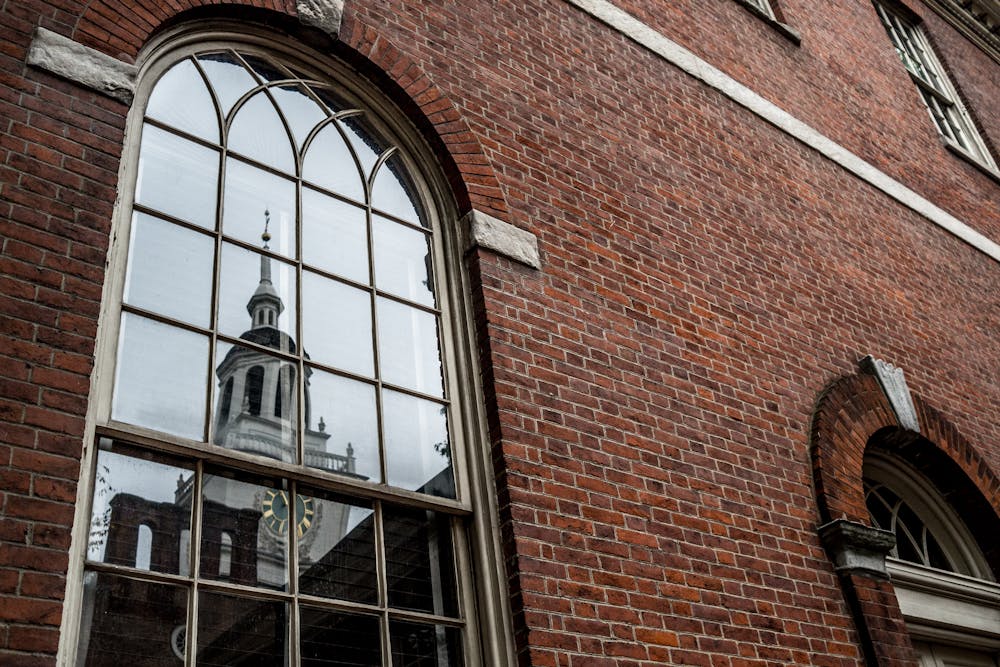
When the Founders signed the U.S. Constitution in Independence Hall (reflected here), they included a provision for immunity for Congress members.
The clause says that “for any speech or debate the [Senators and Representatives] shall not be questioned in any other place.” It may make prosecution impossible for certain types of information received officially in committee or other legislative settings.
The clause has been interpreted by the Supreme Court to cover more than literal speech or debate and include anything “generally done in a session of the House by one of its members in relation to the business before it” including voting, holding hearings, writing reports or gathering information from outsiders.
When it comes to information that could affect a company’s stock price coming from Congress, Canellos said, “The lines aren’t quite as bright and the opportunities for arguments by the defense are greater.”
Is it public?
An example of this problem occurred in a 2014 case involving Height Securities, a stock brokerage.
A confidential decision by Medicare to raise certain reimbursement rates in 2013 was leaked by a congressional staff member to a Height lobbyist. The lobbyist then passed it on to his clients, setting off a flurry of trading in health care stock before the Medicare decision was known to the general public.
During the insider trading investigation into these transactions, the FBI discovered that dozens of officials – potentially as many as 400 – at the Medicare agency knew about the decision before it was made public. That so many people within the government knew about the change made it difficult to determine whether the lobbyist based his conclusion on his own analysis, or on publicly available information.
“While Senators and staff are prohibited from using non-public information for making a trade, a great deal of Congressional work is conducted on the public record or in the public realm during committee hearings, and markups, floor activity, and speeches.” Whether a lawmaker gets information in a nonpublic briefing or in public proceedings is hard to determine.
Burr – one of the four senators allegedly involved in trading – heard from intelligence officials about how foreign nations were responding to the World Health Organization’s declaration of a global health emergency.
The session was not classified, but drawn instead from diplomatic wires and publicly reported sources. The senators in the briefing could have gotten the same information elsewhere.
So proving that the information received by senators constituted “insider” information – which in a criminal case would require proof beyond a reasonable doubt – could be very difficult for the government.
When the case ultimately got to the Supreme Court, the court – relying on the Speech or Debate Clause – said Gravel was absolutely immune for anything done at the hearing or communications with his staff before the hearing.
In the Height Securities case, when the Security and Exchange Commission subpoenaed records from the House Ways and Means Committee to determine how the confidential information leaked, the court upheld the Speech or Debate Clause protection for committee documents. That made prosecution for insider trading impossible.
These same problems would make prosecuting the insider trading cases difficult.
And while the Speech or Debate Clause would not bar the Senate Ethics Committee from getting at the evidence – because it is “the place” where members may be questioned – senators would still be able to defend by showing that the information was based on publicly available nonconfidential sources.
Editor’s note: This story is an update to the original story published on April 2, 2020.
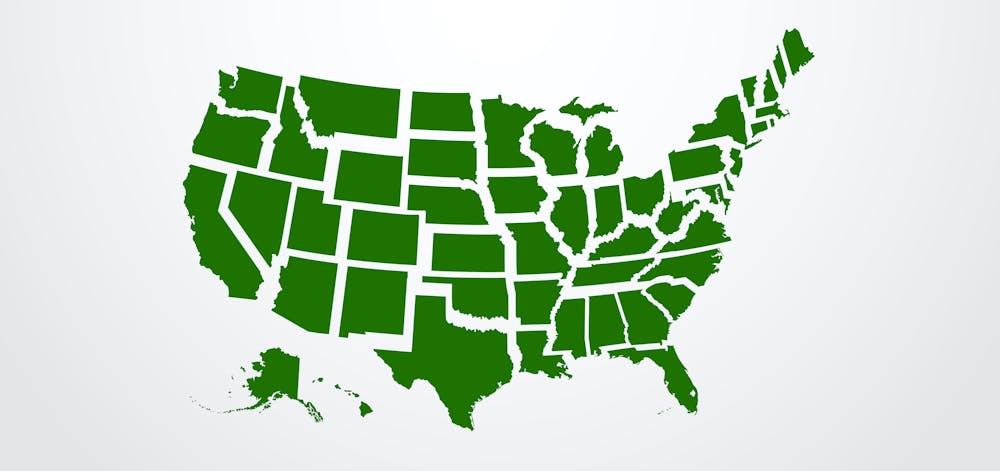
In a nation with more than 90,000 governments, responses to the coronavirus pandemic have highlighted the challenges posed by the United States’ system of federalism, where significant power rests with states and local governments. Wisconsin’s Supreme Court just overturned their governor’s order for residents to stay at home – and then several cities and counties imposed their own restrictions, very similar to the governor’s rules.
So who’s running the show?
I am a scholar of how different levels of government interact and work together to deliver public services, and my answer is: It depends.
In the absence of nationwide coordination and leadership, governors have made their own decisions about how to contain the spread of the virus. Their decisions apply only to their own states, making the country a patchwork of varying efforts.
And as state governments start to lift their lockdown restrictions to varying degrees, the patchwork gets even more complicated. Then factor in the powers and responsibilities of more than 3,000 counties, nearly 20,000 municipalities and almost 13,000 public school districts around the country, and it becomes clear that the answer to “Who’s in charge?” is not so simple.
Who actually has the power to make binding decisions mostly depends on two factors. First, there’s what’s being decided: Is it about public health, police, hospitals, schools, barbershops or other businesses? Second: It depends on the state.
All 50 states, and lots more local governments within each of them, have voices in how the country reopens after the coronavirus lockdown.
Historically, the U.S. has divided responsibilities for different services and functions across levels of government, so they could be tailored to regional preferences where possible.
For instance, jails are run locally or by counties; businesses get municipal and state licenses. Similarly, animal control laws, zoning and pothole repairs are typically handled by local governments, not at state or federal levels. States typically regulate businesses and industries, oversee welfare programs and manage major highways.
The national government handles things where widespread coordination and standards are important, like national defense, Social Security, space exploration and trade between states.
Before the Great Depression, state and national government duties were more clearly differentiated. But since the 1930s, this system has evolved, and the distinctions between which levels do what have blurred and blended.
For instance, states are in charge of public K-12 schools and public universities, but the federal government ensures school districts comply with rules about equal access for all students, and provides grants to support needy children and university research.
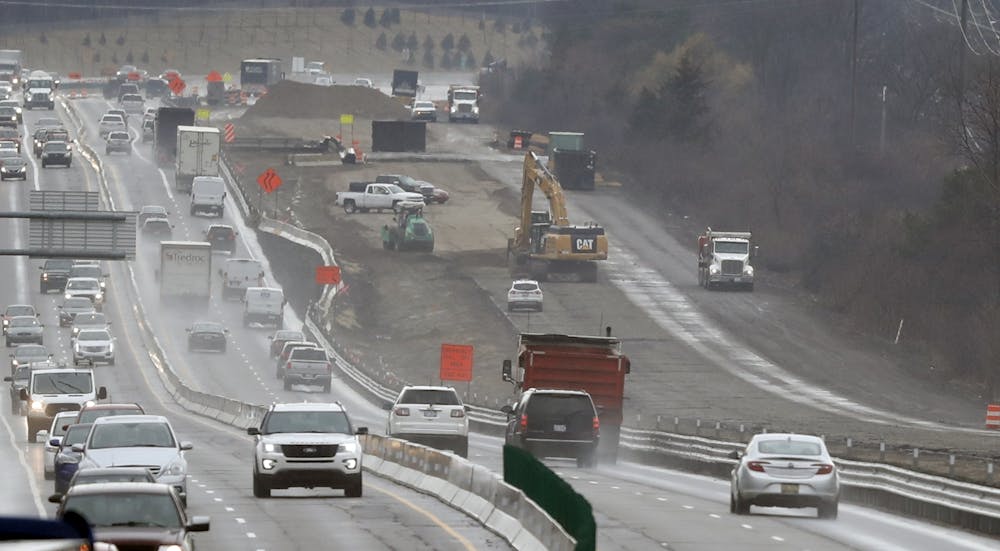
Likewise, state governments build and maintain the interstate highways, but the federal government pays many of the costs.
Today, this mixing of responsibilities has made difficult a nationally coordinated response to a pandemic whose effects are mostly local. State and local officials have tried to respond as best as possible, but they do not have the information or buying power of the federal government.
The federal government may claim to be able to shut down the economy, but the truth is that states are the ones responsible for regulating the businesses that operate within their boundaries. So the federal government can’t order states to close down or reopen their businesses.
On the other hand, the president or Congress can decide to give more money to states that go along with federal requests, and potentially cut funding to states that don’t.
States depend on federal money for a wide range of programs related to criminal justice, education and highways, so this type of influence can be very effective.
State highway departments do the construction, but much of the money comes from the federal government.
The second important element comes from another aspect of American federalism: The Constitution ensures that states not only retain powers beyond the federal government’s; they are also very independent from each other. Each state can develop its own policies and systems for delivering the services its residents need.
That means there could be 50 different approaches to combating a pandemic that does not stop at state boundaries. And therefore, the state with the most lax standards may be the one setting the protection level for the whole nation. For instance, the state of Arizona is rapidly relaxing its stay-at-home rules, even allowing restaurant customers to dine inside. Hair salons and theaters are also reopening. Neighboring California is remaining mostly closed, though people can travel freely across the state lines.
As if that weren’t muddy enough, each state relates differently to its local governments. Constitutionally speaking, there are only two levels of government in the U.S.: the national level and the states. Courts and lawmakers have determined that local governments are extensions of states, with varying levels of independence.
In most states, local governments must seek permission from their state legislature before making new regulations, like governing drone flights, or creating a new tax, such as on short-term home rentals. Other states take a different approach and allow municipal governments to take on whatever responsibilities are not expressly reserved to the state government by that state’s constitution.
All this means that responses to the pandemic vary not just from state to state, but also within states.
The way these overlapping authorities play out is relatively easy to see when looking at how school districts, one of several types of local governments, responded to the coronavirus outbreak. In most states, local districts acted on their own. In general, it took a week or two before state departments of education ordered statewide school closures, which affected those local districts that hadn’t already shut their doors.
It took as much as three weeks for states to issue general orders or recommendations for residents to shelter in place – though in some states those instructions never came, even though all the nation’s schools were closed.
Georgia Gov. Brian Kemp greets President Donald Trump in early March.
As states begin to reopen, similarly confusing processes are happening in reverse.
While many state governments have now begun to loosen restrictions, some communities within those states have wanted to keep their local shelter-in-place orders in effect because they remain concerned about public health. In Georgia, local efforts to maintain restrictions have been overruled by the governor’s office. The Texas Republican governor has relaxed the statewide rules and explicitly said his reopen orders override any local restrictions.
Utah never established a shelter-in-place order and relied only on recommendations. Urban communities in the state set their own restrictions, and the legislature responded with efforts to limit the ability of local governments to put such measures in place.
Colorado is taking a different approach as the state relaxes its restrictions by explicitly allowing local governments to determine if they want their restrictions to differ from the state standard.
This diversity of precautions and actions can also be seen as one of the strengths of federalism, because it allows the public to see how different responses may affect how quickly the virus spreads. The local and state decisions are creating experimental laboratories for finding different ways to move back into a fully operational economy.
And that’s why your barbershop is still closed while the one in the next town or next state over is already open again.
Millions of Buddhists seeking protection and healing from the novel coronavirus are turning to traditional religious rituals.
Since the emergence of COVID-19, the Dalai Lama, other senior monks and Buddhist organizations in Asia and worldwide have emphasized that this pandemic calls for meditation, compassion, generosity and gratitude. Such messages reinforce a common view in the West of Buddhism as more philosophy than religion – a spiritual, perhaps, but secular practice associated with mindfulness, happiness and stress reduction.
But for many people around the world Buddhism is a religion – a belief system that includes strong faith in supernatural powers. As such, Buddhism has a large repertoire of healing rituals that go well beyond meditation.
Having studied the interplay between Buddhism and medicine as a historian and ethnographer for the past 25 years, I have been documenting the role these ritual practices play in the coronavirus pandemic.
There are three main schools of traditional Buddhism: Theravāda, practiced in most of Southeast Asia; Mahāyāna, the form most prevalent in East Asia; and Vajrayāna, commonly associated with Tibet and the Himalayan region.
In Buddhist-majority places, the official COVID-19 pandemic response includes conventional emergency health and sanitation measures like recommending face masks, hand-washing and stay-at-home orders. But within religious communities, Buddhist leaders also are using a range of ritual apotropaics – magical protection rites – to protect against disease.
A Nepalese Buddhist monk offering ritual prayer, May 7, 2020.
Theravāda amulets and charms trace their magical powers to repel evil spirits not only to the Buddha but also to beneficial nature spirits, demigods, charismatic monks and wizards.
Now, these blessed objects are being specifically formulated with the intention of protecting people from contracting the coronavirus.
Mahāyāna Buddhists use similar sacred objects, but they also pray to a whole pantheon of buddhas and bodhisattvas – another class of enlightened beings – for protection. In Japan, for example, Buddhist organizations have been conducting expulsion rites that call on Buddhist deities to help rid the land of the coronavirus.
Mahāyāna practitioners have faith that the blessings bestowed by these deities can be transmitted through statues or images. In a modern twist on this ancient belief, a priest affiliated with the Tōdaiji temple in Nara, Japan, in April tweeted a photo of the great Vairocana Buddha. He said the image would protect all who lay eyes upon it.
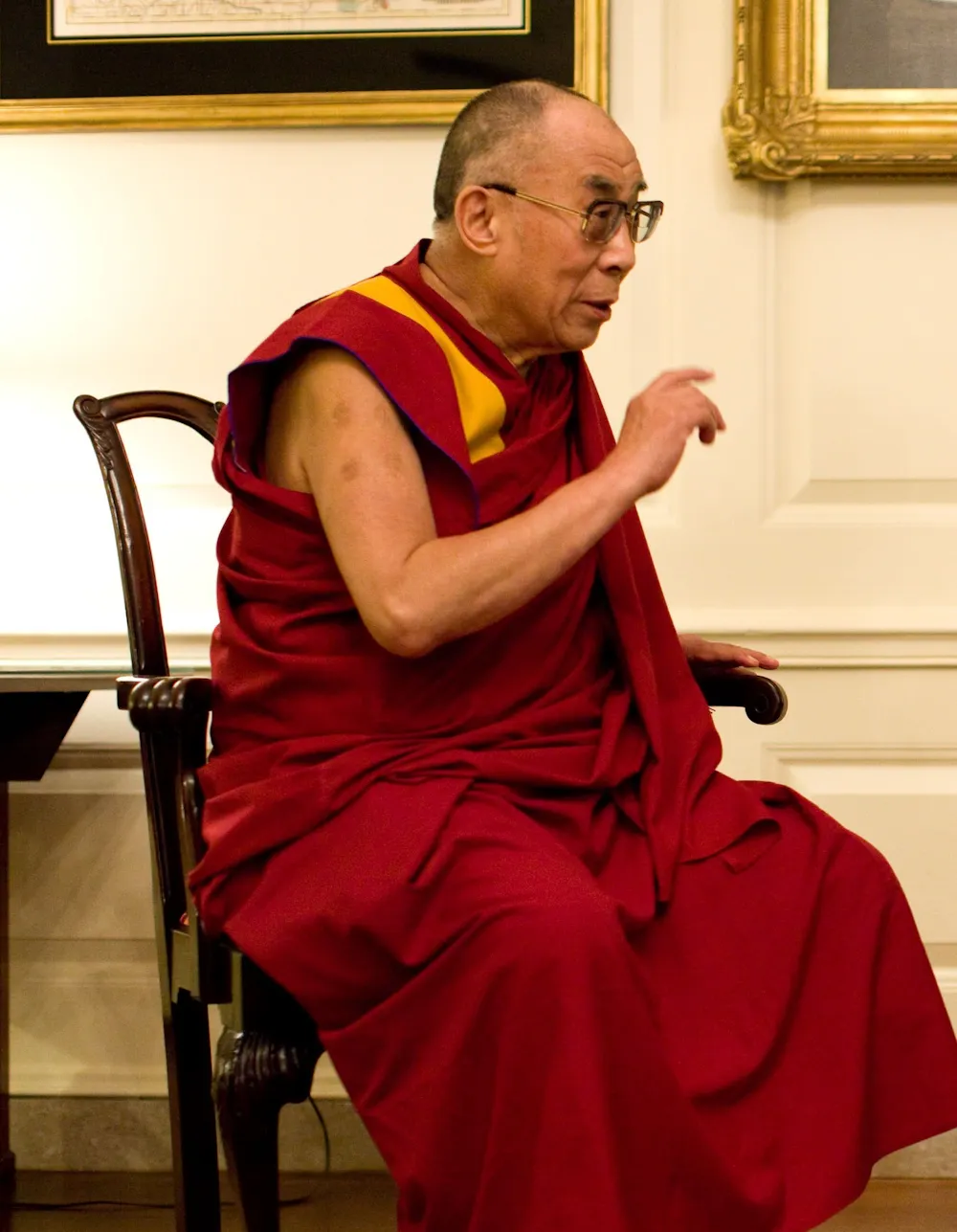
The Dalai Lama, the Buddhist spiritual leader of the Tibetan people.
The third major form of Buddhism, Vajrayāna, which developed in the medieval period and is widely influential in Tibet, incorporates many rituals of earlier traditions. For example, the Dalai Lama has urged practitioners in Tibet and China to chant mantras to the bodhisattva Tārā, a female goddess associated with compassion and well-being, to gain her protection.
Vajrayāna practitioners also advocate a unique form of visualization where the practitioner generates a vivid mental image of a deity and then interacts with them on the level of subtle energy. Responses to COVID-19 suggested by leading figures in traditional Tibetan medicine frequently involve this kind of visualization practice.
Buddhist modernism
Since the height of the colonial period in the 19th century, “Buddhist modernists” have carefully constructed an international image of Buddhism as a philosophy or a psychology. In emphasizing its compatibility with empiricism and scientific objectivity they have ensured Buddhism’s place in the modern world and paved the way for its popularity outside of Asia.
Many of these secular-minded Buddhists have dismissed rituals and other aspects of traditional Buddhism as “hocus pocus” lurking on the fringes of the tradition.
A former Buddhist monk practices visualization meditation during the coronavirus crisis, April 24, 2020.
Having documented the richness of the history and contemporary practice of Buddhist healing and protective rituals, however, I argue that these practices cannot be written off quite so easily.
In most living traditions of Buddhism, protective and healing rituals are taken seriously. They have sophisticated doctrinal justifications that often focus on the healing power of belief.
Increasingly, researchers are agreeing that faith in itself plays a role in promoting health. The anthropologist Daniel Moerman, for example, has identified what he calls the “meaning response.” This model accounts for how cultural and social beliefs and practices lead to “real improvements in human well-being.” Likewise, Harvard Medical School researcher Ted Kaptchuk has studied the neurobiological mechanisms for how rituals work to alleviate illnesses.
To date, there is no known way to prevent COVID-19 other than staying home to avoid contagion, and no miracle cure. But for millions worldwide, Buddhist talismans, prayers and protective rituals offer a meaningful way to confront the anxieties of the global coronavirus pandemic, providing comfort and relief.
And in a difficult time when both are in short supply, that’s nothing to discredit.
A supercut video produced by the staff of The Atlantic draws an unflattering contrast between the leadership style of President Donald Trump and those of other world leaders who are also dealing with the COVID-19 pandemic.
As the video shows, leaders such as Canadian Prime Minister Justin Trudeau, German Chancellor Angela Merkel, and New Zealand Prime Minister Jacinda Ardern try to set a sober, comforting tone during the crisis.
"I need every New Zealander to help me," Ardern says at one point in the video. "We won't achieve that outcome of looking after everyone unless people follow the rules."
"Take care of yourself," says French President Emmanuel Macron. "Take care of each other."
The video also shows the leaders emphasizing the importance of science in making decisions.
"Basing our decisions on evidence, on facts, on the best science available is going to be extremely important in keeping Canadians safe," Trudeau says.
"We will reinforce our epidemic prevention and quarantine systems to become the undisputed number-one epidemic response country leading the world," says South Korean President Moon Jae.
In between these clips, Trump is shown blowing off dire warnings about the disease, musing about treating it by injecting disinfectant, and insulting reporters who ask him basic questions such as what they'd say to Americans who are fearful for their health.
President Barack Obama's former "ebola czar" debunked claims that the previous administration left the U.S. unprepared for the coronavirus pandemic that has left more than 86,000 Americans dead.
Ron Klain, who coordinated Obama's response to the ebola outbreak, appeared Friday on MSNBC's "Morning Joe," where he pushed back against accusations by President Donald Trump and Senate Majority Leader Mitch McConnell -- who say Obama's administration failed to create a pandemic response.
"We left behind a document that said, in big red letters on the front, 'Playbook,'" Klain said. "No doubt it was there -- 69 pages long, included on Page 9 a reference to the threat of new, emerging respiratory diseases, including coronavirus. So the plan was there. The plan was detailed, the plan included this particular threat. More important perhaps even than the plan, we left behind an office on pandemic preparedness in the National Security Council, with pandemic preparedness experts that John Bolton disassembled in 2018."
"We had a plan and a team," he added. "The White House ignored the first and disassembled the second."
Trump should have been aware of the threat from a global pandemic, Klain said, because previous administrations have been sounding the alarm and developing strategies since the beginning of this century.
"Look, this is a threat," Klain said. "I mean, experts have been warning about this. We know in addition to what President Obama and our team warned President Trump of, he had an Oval Office meeting with Bill Gates in 2017, where Bill Gates said, face-to-face, 'Hey, this is the No. 1 thing that could kill millions of people around the world in an extra way that you need to be prepared for.'"
"The warning lights have been flashing on this for a long time," Klain added. "The White House, for the first few months, said, 'No one could have seen this coming,' yet every expert saw this coming. Dr. [Ashish] Jha, who you had on in the last segment, I've been at a number of conferences with him, where he and I warned this was coming. The president was on notice, his team was on notice. The decision to ignore the Obama playbook and disband the pandemic prevention team has had ramifications for the slowness of the response, the disorganization of the response, for the ignoring science in the response. All of these things were predictable mistakes, that ignoring the plan and preparations have led to."
Klain said the president still hasn't learned any lessons from this pandemic, because he's still ignoring science and failing to take the most basic steps to ensure public health.
"Public health and the economy aren't at odds with one another," Klain said. "They work hand in hand. The more you do things to make me feel safer, the more I'm going to go back to work, the more I'm going to go back to stores, the more I'll go back to restaurants. Trying to tell me that there's nothing to worry about, that's not a strategy. It's not going to work. The American people are going to see through that. So we have to do these basic, simple things, that the president seems to want to reject. Every expert says they're the things to do."
In a very rare commentary on political matters, the editors of the esteemed medical journal The Lancet called for a new president in 2021 who can competently deal with a major health crisis by letting health care professionals do their jobs.
The editors called out President Donald Trump and some of his top aides for undercutting the Centers for Disease Control (CDC) at a time when the U.S. and the world at large are being ravaged by the coronavirus.
"The COVID-19 pandemic continues to worsen in the USA with 1.3 million cases and an estimated death toll of 80,684 as of May 12. States that were initially the hardest hit, such as New York and New Jersey, have decelerated the rate of infections and deaths after the implementation of 2 months of lockdown. However, the emergence of new outbreaks in Minnesota, where the stay-at-home order is set to lift in mid-May, and Iowa, which did not enact any restrictions on movement or commerce, has prompted pointed new questions about the inconsistent and incoherent national response to the COVID-19 crisis," the editorial began, before adding, "The US Centers for Disease Control and Prevention (CDC), the flagship agency for the nation's public health, has seen its role minimized and become an ineffective and nominal adviser in the response to contain the spread of the virus."
The piece was highly critical of Dr. Deborah Birx for her comment, "There is nothing from the CDC that I can trust.”
"This is an unhelpful statement, but also a shocking indictment of an agency that was once regarded as the gold standard for global disease detection and control," the editorial stated. "How did an agency that was the first point of contact for many national health authorities facing a public health threat become so ill-prepared to protect the public's health?"
"The Trump administration further chipped away at the CDC's capacity to combat infectious diseases. CDC staff in China were cut back with the last remaining CDC officer recalled home from the China CDC in July, 2019, leaving an intelligence vacuum when COVID-19 began to emerge," the piece continued." In a press conference on Feb 25, Nancy Messonnier, director of the CDC's National Center for Immunization and Respiratory Diseases, warned US citizens to prepare for major disruptions to movement and everyday life. Messonnier subsequently no longer appeared at White House briefings on COVID-19. More recently, the Trump administration has questioned guidelines that the CDC has provided. These actions have undermined the CDC's leadership and its work during the COVID-19 pandemic."
Noting the long and distinguished history of the CDC -- while also admitting mistakes have been made by the CDC in its handing of the coronavirus pandemic -- the editorial continued, "But punishing the agency by marginalizing and hobbling it is not the solution. The Administration is obsessed with magic bullets—vaccines, new medicines, or a hope that the virus will simply disappear."
The editorial concluded, "The Trump administration's further erosion of the CDC will harm global cooperation in science and public health, as it is trying to do by defunding WHO. A strong CDC is needed to respond to public health threats, both domestic and international, and to help prevent the next inevitable pandemic. Americans must put a president in the White House come January, 2021, who will understand that public health should not be guided by partisan politics."