President Donald Trump once again brought back his conspiracy theory about MSNBC host Joe Scarborough on Wednesday morning during a Fox News Radio interview with Brian Kilmeade.
Kilmeade asked Trump why he has spent so much time pushing baseless conspiracy theories about Scarborough, especially during a time of recessions, pandemics and civil unrest.
"I just do it, I hit back," the president explained. "I always felt Scarborough got away with murder. That's not an uncommon story, so we don't have to spend a lot of time on it, but I always felt that."
Trump for weeks has been demanding that police reopen an investigation into the death of Lori Klausutis, a former staffer at Scarborough's congressional office who died in 2001.
An AP fact check of Trump’s claims shows a coroner’s report found that Klausutis, who suffered from an undiagnosed heart condition, fainted and fatally hit her head while working in Scarborough’s Florida office. The fact check also noted that Scarborough was in Washington, D.C. at the time of Klausutis’s death.
Trump’s latest promotion of this baseless conspiracy theory came less than two weeks after Timothy Klausutis, who is Lori Klausutis’s former husband, wrote a letter to Twitter CEO Jack Dorsey begging him to take down Trump’s tweets mentioning his late wife, while also detailing the personal pain the family has felt in having the president make false claims about her death.
This summer, for the first time, genetically modified mosquitoes could be released in the U.S.
On May 1, 2020, the company Oxitec received an experimental use permit from the U.S. Environmental Protection Agency to release millions of GM mosquitoes (labeled by Oxitec as OX5034) every week over the next two years in Florida and Texas. Females of this mosquito species, Aedes aegypti, transmit dengue, chikungunya, yellow fever and Zika viruses. When these lab-bred GM males are released and mate with wild females, their female offspring die. Continual, large-scale releases of these OX5034 GM males should eventually cause the temporary collapse of a wild population.
However, as vector biologists, geneticists, policy experts and bioethicists, we are concerned that current government oversight and scientific evaluation of GM mosquitoes do not ensure their responsible deployment.
Genetic engineering offers an unprecedented opportunity for humans to reshape the fundamental structure of the biological world. Yet, as new advances in genetic decoding and gene editing emerge with speed and enthusiasm, the ecological systems they could alter remain enormously complex and understudied.
Although the EPA approved the permit for Oxitec, state approval is still required. A previously planned release in the Florida Keys of an earlier version of Oxitec’s GM mosquito (OX513) was withdrawn in 2016 after a referendum indicated significant opposition from local residents. Oxitec has field-trialed their GM mosquitoes in Brazil, the Cayman Islands, Malaysia and Panama.
The public forum on Oxitec’s recent permit application garnered 31,174 comments opposing release and 56 in support. The EPA considered these during their review process.
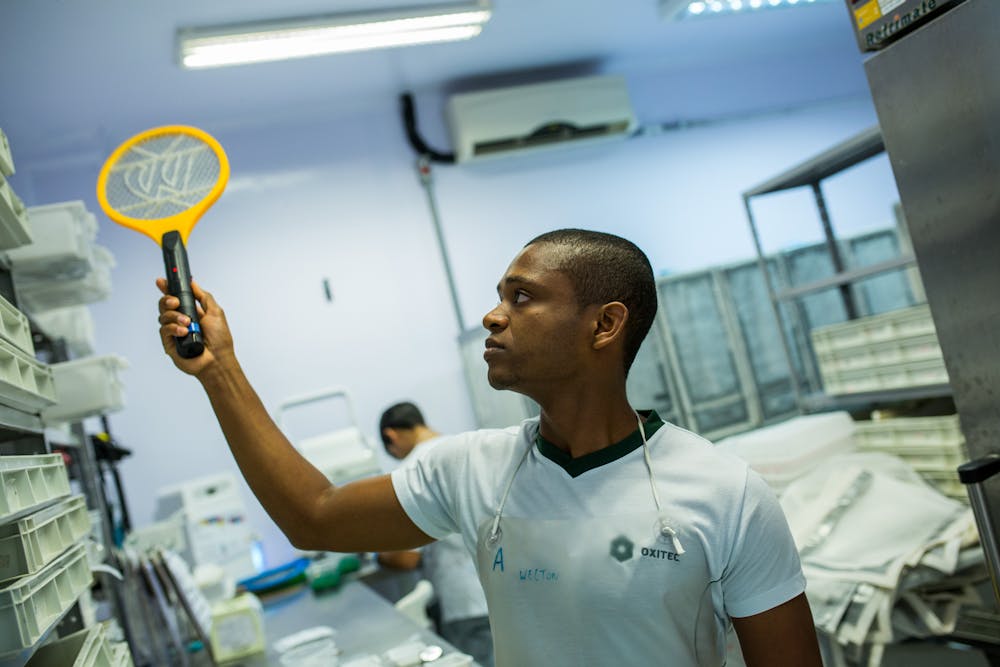
In 2016, technicians from the Oxitec laboratory located in Campinas, Brazil, released genetically modified mosquitoes Aedes egypti to combat the Zika virus.
The closed nature of this risk assessment process is concerning to us.
There is a potential bias and conflict of interest when experimental trials and assessments of ecological risk lack political accountability and are performed by, or in close collaboration with, the technology developers.
Another concern is that risk assessments tend to focus on only a narrow set of biological parameters – such as the potential for the GM mosquito to transmit disease or the potential of the mosquitoes’ new proteins to trigger an allergic response in people – and neglect other important biological, ethical and social considerations.
To address these shortcomings, the Institute for Sustainability, Energy and Environment at University of Illinois Urbana-Champaign convened a “Critical Conversation” on GM mosquitoes. The discussion involved 35 participants from academic, government and nonprofit organizations from around the world with expertise in mosquito biology, community engagement and risk assessment.
A primary takeaway from this conversation was an urgent need to make regulatory procedures more transparent, comprehensive and protected from biases and conflicts of interest. In short, we believe it is time to reassess risk assessment for GM mosquitoes. Here are some of the key elements we recommend.
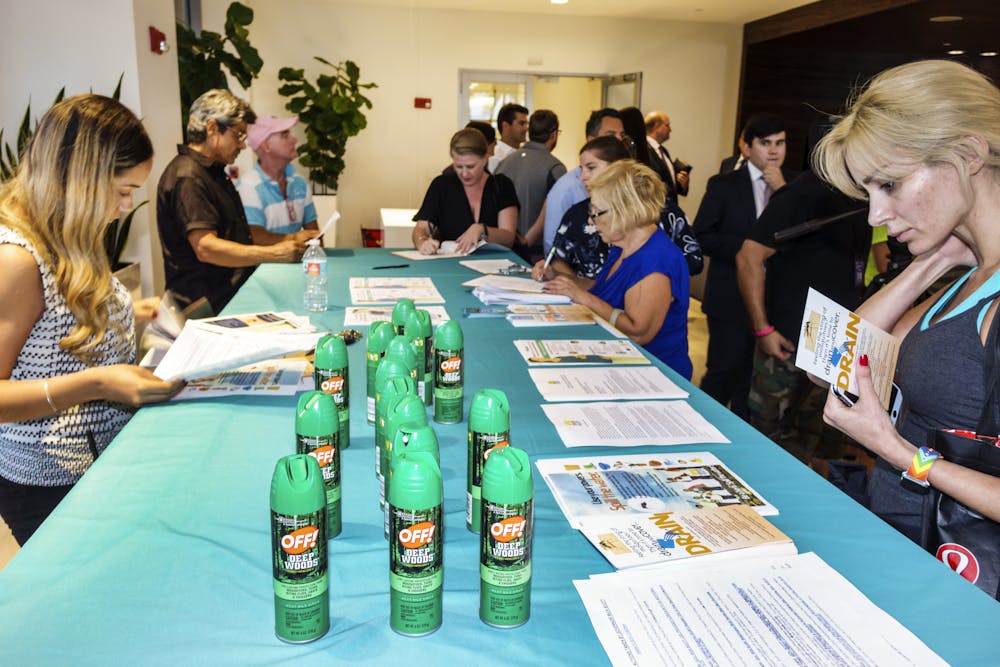
The mosquito spray OFF! was handed out for free at the Zika Virus Town Hall Meeting at Waverly Condominiums in 2016.
Steps to make risk assessment more open and comprehensive
First, an official, government-funded registry for GM organisms specifically designed to reproduce in the wild and intended for release in the U.S. would make risk assessments more transparent and accountable. Similar to the U.S. database that lists all human clinical trials, this field trial registry would require all technology developers to disclose intentions to release, information on their GM strategy, scale and location of release and intentions for data collection.
This registry could be presented in a way that protects intellectual property rights, just as therapies entering clinical trials are patent-protected in their registry. The GM organism registry would be updated in real time and made fully available to the public.
Second, a broader set of risks needs to be assessed and an evidence base needs to be generated by third-party researchers. Because each GM mosquito is released into a unique environment, risk assessments and experiments prior to and during trial releases should address local effects on the ecosystem and food webs. They should also probe the disease transmission potential of the mosquito’s wild counterparts and ecological competitors, examine evolutionary pressures on disease agents in the mosquito community and track the gene flow between GM and wild mosquitoes.
To identify and assess risks, a commitment of funding is necessary. The U.S. EPA’s recent announcement that it would improve general risk assessment analysis for biotechnology products is a good start. But regulatory and funding support for an external advisory committee to review assessments for GM organisms released in the wild is also needed; diverse expertise and local community representation would secure a more fair and comprehensive assessment.
Furthermore, independent researchers and advisers could help guide what data are collected during trials to reduce uncertainty and inform future large-scale releases and risk assessments.
The objective to reduce or even eliminate mosquito-borne disease is laudable. GM mosquitoes could prove to be an important tool in alleviating global health burdens. However, to ensure their success, we believe that regulatory frameworks for open, comprehensive and participatory decision-making are urgently needed.
Waste heat is all around you. On a small scale, if your phone or laptop feels warm, that’s because some of the energy powering the device is being transformed into unwanted heat.
On a larger scale, electric grids, such as high power lines, lose over 5% of their energy in the process of transmission. In an electric power industry that generated more than US$400 billion in 2018, that’s a tremendous amount of wasted money.
Globally, the computer systems of Google, Microsoft, Facebook and others require enormous amounts of energy to power massive cloud servers and data centers. Even more energy, to power water and air cooling systems, is required to offset the heat generated by these computers.
Where does this wasted heat come from? Electrons. These elementary particles of an atom move around and interact with other electrons and atoms. Because they have an electric charge, as they move through a material – like metals, which can easily conduct electricity – they scatter off other atoms and generate heat.
Superconductors are materials that address this problem by allowing energy to flow efficiently through them without generating unwanted heat. They have great potential and many cost-effective applications. They operate magnetically levitated trains, generate magnetic fields for MRI machines and recently have been used to build quantum computers, though a fully operating one does not yet exist.
But superconductors have an essential problem when it comes to other practical applications: They operate at ultra-low temperatures. There are no room-temperature superconductors. That “room-temperature” part is what scientists have been working on for more than a century. Billions of dollars have funded research to solve this problem. Scientists around the world, including me, are trying to understand the physics of superconductors and how they can be enhanced.
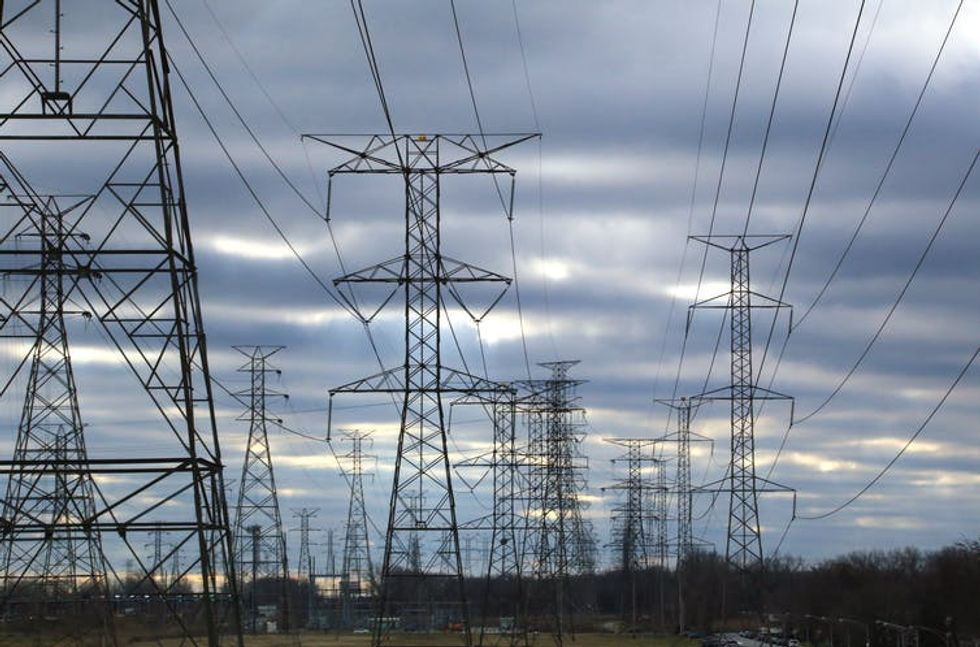
The U.S. power grid sheds heat at a loss of billions of dollars each year.
A superconductor is a material, such as a pure metal like aluminum or lead, that when cooled to ultra-low temperatures allows electricity to move through it with absolutely zero resistance. How a material becomes a superconductor at the microscopic level is not a simple question. It took the scientific community 45 years to understand and formulate a successful theory of superconductivity in 1956.
While physicists researched an understanding of the mechanisms of superconductivity, chemists mixed different elements, such as the rare metal niobium and tin, and tried recipes guided by other experiments to discover new and stronger superconductors. There was progress, but mostly incremental.
Simply put, superconductivity occurs when two electrons bind together at low temperatures. They form the building block of superconductors, the Cooper pair. Elementary physics and chemistry tell us that electrons repel each other. This holds true even for a potential superconductor like lead when it is above a certain temperature.
When the temperature falls to a certain point, though, the electrons become more amenable to pairing up. Instead of one electron opposing the other, a kind of “glue” emerges to hold them together.
Keeping matter cool
Discovered in 1911, the first superconductor was mercury (Hg), the basic element of old-fashioned thermometers. In order for mercury to become a superconductor, it had to be cooled to ultra-low temperatures. Kamerlingh Onnes was the first scientist who figured out exactly how to do that – by compressing and liquefying helium gas. During the process, once helium gas becomes a liquid, the temperature drops to -452 degrees Fahrenheit.
Quicksilver or mercury, the only metal that is liquid at room temperature.
When Onnes was experimenting with mercury, he discovered that when it was placed inside a liquid helium container and cooled to very low temperatures, its electric resistance, the opposition of the electric current in the material, suddenly dropped to zero ohms, a unit of measurement that describes resistance. Not close to zero, but zero exactly. No resistance, no heat waste.
This meant that an electric current, once generated, would flow continuously with nothing to stop it, at least in the lab. Many superconducting materials were soon discovered, but practical applications were another matter.
These superconductors shared one problem – they needed to be cooled down. The amount of energy needed to cool a material down to its superconducting state was too expensive for daily applications. By the early 1980s, the research on superconductors had nearly reached its conclusion.
A surprising discovery
In a dramatic turn of events, a new kind of superconductor material was discovered in 1987 at IBM in Zurich, Switzerland. Within months, superconductors operating at less extreme temperatures were being synthesized globally. The material was a kind of a ceramic.
These new ceramic superconductors were made of copper and oxygen mixed with other elements such as lanthanum, barium and bismuth. They contradicted everything physicists thought they knew about making superconductors. Researchers had been looking for very good conductors, yet these ceramics were nearly insulators, meaning that very little electrical current can flow through. Magnetism destroyed conventional superconductors, yet these were themselves magnets.
Scientists were seeking materials where electrons were free to move around, yet in these materials, the electrons were locked in and confined. The scientists at IBM, Alex Müller and Georg Bednorz, had actually discovered a new kind of superconductor. These were the high-temperature superconductors. And they played by their own rules.
Elusive solutions
Scientists now have a new challenge. Three decades after the high-temperature superconductors were discovered, we are still struggling to understand how they work at the microscopic level. Creative experiments are being conducted every day in universities and research labs around the world.
In my laboratory, we have built a microscope known as a scanning tunneling microscope that helps our research team “see” the electrons at the surface of the material. This allows us to understand how electrons bind and form superconductivity at an atomic scale.
We have come a long way in our research and now know that electrons also pair up in these high-temperature superconductors. There is great value and utility in answering how high-temperature superconductors work because that may be the route to room-temperature superconductivity. If we succeed in making a room-temperature superconductor, then we can address the billions of dollars that it costs in wasted heat to transmit energy from power plants to cities.
More remarkably, solar energy harvested in the vast empty deserts around the world could be stored and transmitted without any loss of energy, which could power cities and dramatically reduce greenhouse gas emissions. The potential is hard to imagine. Finding the glue for room-temperature superconductors is the next million-dollar question.
The highest court in the land has given states some leeway in determining when and how to safely reopen places of worship during the COVID-19 pandemic. The move lends support to state officials making science-informed decisions that may inhibit church congregants from fully engaging in their faith.
The decision is the latest turn in the debate over what places of worship may do during the lockdown and as the U.S. comes out of it. During the pandemic there have been frequent clashes as federal, state and local officials try to balance protecting the public’s health with the rights of individuals and groups to gather and practice their faith.
The debate over church attendance began as soon the current crisis took hold and communities began to lockdown.
One of the earliest high-profile clashes involved the arrest and jailing of a Tampa Bay, Florida-area pastor. Pastor Rodney Howard-Browne, a controversial figure who has dismissed coroanvirus as a “phantom plague” held two large services in defiance of the county’s stay-at-home order and at a time when local COVID-19 cases were soaring. He was detained on May 30. But just two days after the arrest, Florida Gov. Ron DeSantisissued an executive order declaring that “attending religious services conducted in churches, synagogues and houses of worship” were to be protected as “essential activities.” He added that the state order would override any contradictory local restrictions.
But this characterization of live, in-person church services as “essential” blurs the distinct way that term was originally applied to businesses, services and employees in the crisis. “Essential” in this context referred to critical contributors to our nation’s infrastructure and workforce. They are the people involved with keeping our hospitals, food supplies, transport and utilities running, as well as law enforcement and our national defense.
This is especially true when examining the mix of states’ approaches to in-person church gatherings.
States and SCOTUS
By late May, even the states hit hardest by the virus had begun to loosen their restrictions on gatherings. But when the first “stay-at-home” orders were issued, California was just one of nine states to ban live religious gatherings altogether. Meanwhile, around 20 other states initially limited live gatherings to 10 people or less. Doing so placed restrictions on church services akin to those on concerts, movie theaters or sporting events.
But other states followed a similar approach to Florida, labeling religious gatherings as “essential,” or at least declaring that they should be exempt from restrictions in place for other types of gatherings.
Indiana and Kansas both initially tried a political and scientific middle ground: characterizing church gatherings as “essential,” but still requiring that religious organizations follow the rules set out by the Centers for Disease Control and Prevention for in-person social gatherings, minimizing and discouraging live meetings until the public health threat was reduced.
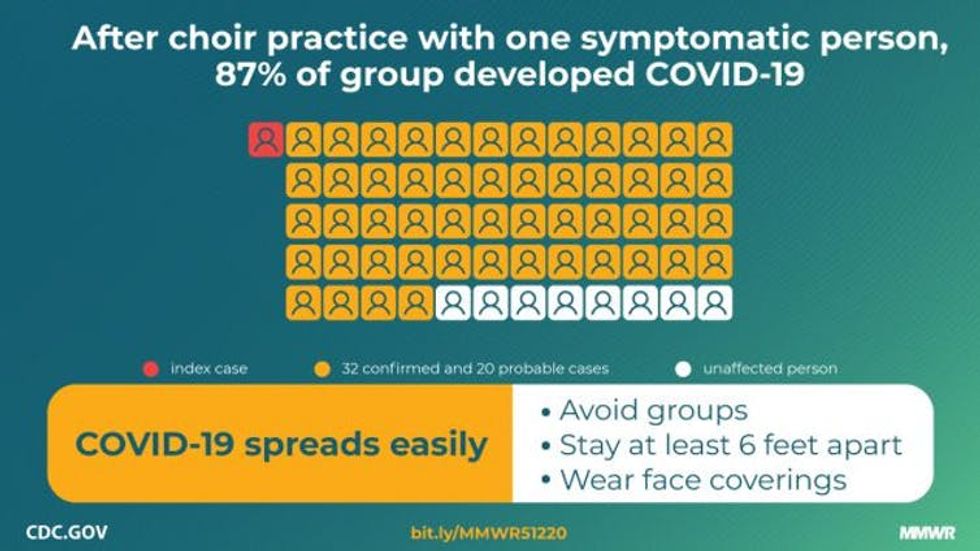
From a public health perspective, restricting in-person religious gatherings makes sense. COVID-19 is most easily spread as an aerosol, such as when people are talking or singing. The risk of spread is also higher in closed spaces when in close proximity to someone infected and increases the longer you are near them.
Defiant churches tried different tactics to remain open. Some simply ignored the restrictions and continued to hold services. And California isn’t the only state to see state rules challenged in court. Kansas, Kentucky, Mississippi, New Mexico, Texas and Virginia have all seen similar legal action.
In many cases, the organizations fighting restrictions have cited the First Amendment and argued that it is unconstitutional to restrict church gatherings, especially when other secular so-called “essential” or “life-sustaining” entities – such as grocery stores, liquor stores and laundromats – are allowed to stay open. This line of argument was echoed in the Supreme Court decision’s dissenting opinion written by Justice Brent Kavanaugh in the Supreme Court case.
The Supreme Court, looking at the latest version of California’s restrictions – which limits churches to 25% capacity, or a maximum of 100 attendees – declined to second guess the state’s elected officials in their assessment of the best way to protect the public’s health. In his concurring opinion, Chief Justice John Roberts, the pivotal vote in the church case, seemed swayed by how officials endeavored to follow the science during a time “fraught with medical and scientific uncertainties.” He noted that religious services were more like social gatherings than “grocery stores, banks, and laundromats, in which people neither congregate in large groups nor remain in close proximity for extended periods.”
But should infection numbers spike in the near future, state officials have the knowledge that a majority on the Supreme Court – for now at least – appear willing to follow the science and support their good-faith efforts to manage public health emergencies.
[The Conversation’s newsletter explains what’s going on with the coronavirus pandemic. Subscribe now.]
CIA analysts who monitor societal collapse abroad recognize some disturbing parallels between those unraveling governments and President Donald Trump's staged displays of strength.
Several current and former U.S. intelligence officials expressed alarm over Trump's awkward attempts to project power over massed protesters resembled clashes between authorities and citizens in autocratic states, reported the Washington Post.
“I’ve seen this kind of violence,” said Gail Helt, a former CIA analyst who monitored China and Southeast Asia. “This is what autocrats do. This is what happens in countries before a collapse. It really does unnerve me.”
Other CIA analysts and national security officials expressed alarm over Trump's Bible stunt at St. John’s Episcopal Church after U.S. Park Police and National Guard troops fired tear gas and rubber bullets at peaceful demonstrators.
“It reminded me of what I reported on for years in the third world,” Marc Polymeropoulos, who ran CIA operations in Europe and Asia. “Saddam, Bashar, Qaddafi -- they all did this.”
Former intelligence officials said they would flag the administration's militaristic response to the protests as a sign of societal decay, if they were writing an analysis of another country.
“The imagery of a head of state in a call with other governing officials saying, ‘Dominate the streets, dominate the battlespace’ — these are iconic images that will define America for some time,” said Brett McGurk, a former envoy to the Middle East who spent two years in the Trump administration. “It makes it much more difficult for us to distinguish ourselves from other countries we are trying to contest."
President Donald Trump on Wednesday insisted that fear of protesters did not prompt him to be ushered into a White House bunker. Instead, the president said that he visited the facility for an "inspection."
During a Fox News radio interview with host Brian Kilmeade, Trump again threatened to use military forces against protesters.
“If they don’t get their act straightened out I will solve it. I’ll solve it fast,” he said.
The president also pushed back against the narrative that he was "hiding in a White House bunker" as protesters demonstrated outside.
"They said it would be a good time to go down and take a look because maybe sometime you’re going to need it," the president said, adding that the visit was more of an "inspection."
According to reports, Secret Service "rushed" the president into a bunker on Friday as protests over the death of George Floyd grew.
Read some of the reports from Trump's interview below.
President Donald Trump no longer has a strong economy to run on for his reelection campaign -- and the president now reportedly thinks he has no option other than to rip apart former Vice President Joe Biden.
The Daily Beast reports that Trump "is plotting to go even more scorched earth than usual, ginning up national turmoil and painting his opponent, former Vice President Joe Biden, as sympathetic to left-wing violence."
GOP sources tell the publication that Trump's latest election ploy is "born from a place of desperation," as most Americans think the country is on the wrong track during a COVID-19 pandemic that so far has killed 100,000 Americans and left millions more unemployed.
Even though Trump was always planning to go nuclear against Biden, the multiple crises dominating the current news cycle have left him with far less time to make attacks that stick, which is why the campaign is going to go with what The Daily Beast describes as a "throw-it-all-against-the-wall approach."
However, GOP operative Dave Carney tells the publication that current events have taken away Trump's control of the campaign.
"A lot of this is totally out of his hands," he said. "On the economy, for instance, he can be a cheerleader for it. But it’s really up to the states."
While there was plenty of destruction and looting for news cameras to film this past week, there were also plenty of peaceful, unifying moments as well. A local news outlet in Houston, Texas, chose to focus on those peaceful moments, and compiled a few examples that were captured on video.
One of the most covered moments featured Houston Police Chief Art Acevedo, whose emotional speech to protesters was shared widely.
But there were other moments in the city as well. One incident captured on video shows what happened when two different protest groups happened to link up on a city street.
In Washington, D.C., “Justice for George Floyd” protestors have been patrolled not only by the Washington Police, but also, by the District of Columbia National Guard — which, according to the Army Times, is investigating the use of an unarmed helicopter that was used in what appeared to be an attempt to disperse a crowd.
In an official statement released on Tuesday night, June 2, the D.C. National Guard announced, “DCNG Commanding General has directed an investigation into the actions of our rotary aviation assets June 1. Our priority is the safety of our Guardsmen who support civil authorities. We are dedicated to ensuring the safety of citizens and their right to protest.”
A helicopter, the Army Times’ Kyle Rempfer reports, “was recorded hovering over protestors” and allegedly tried to disperse protestors with its rotor wash. After complaints were made, Maj. Gen. William J. Walker — commander for the D.C. National Guard — ordered an investigation.
Protestors returned to Washington, D.C.’s Lafayette Square on June 2 following a disturbing incident on Monday, June 1 that has drawn condemnation all around the world. On June 1, nonviolent protestors in Lafayette Square were violently removed and bombarded with teargas and rubber bullets in order to clear the way for President Donald Trump to walk to nearby St. John’s Episcopal Church for a speech and a photo-op.
On June 1, journalist Katie Hill discussed the use of a D.C. National Guard helicopter during protests and tweeted, “Helicopter isn’t moving and neither is the crowd. The show of military force on US streets is like nothing I would have believed if I weren’t here.”
Although “Justice for George Floyd” protests in the nation’s capital have been mostly nonviolent, a minority of extremists have resorted to violence and looting — and the tense atmosphere continued in D.C. on Wednesday morning, June 3.
“Demonstrations were mostly peaceful but tensions rose early Wednesday morning with bottles being thrown across the fence and law enforcement briefly shooting pepper spray at some protesters who still lingered in the early hours,” Rempfer reports.
Secret recordings reveal New York police officers admitting to framing and beating residents and collaborating with drug dealers
A whistleblower officer turned over the tapes to Gothamist and WNYC-FM, and the recordings capture hours of conversations between Mount Vernon police officers discussing shocking acts of misconduct.
“I need to have something tangible,” said Murashea Bovell, a 12-year department veteran who has blown the whistle for years on fellow officers. “Something to prove that what I was saying is true, and wouldn’t fall on deaf ears if the time came.”
The police department has gone through at least five different commissioners since 2015, after Bovell filed a lawsuit that was later dismissed on procedural grounds, but he sued the city again last year complaining of retaliation.
Bovell turned the tapes over last year to Westchester District Attorney Anthony Scarpino, but it's not clear where that investigation has led.
“I’ve taken the proper steps, protocols, to let city leaders, police department leaders know what was happening," Bovell said. "Nothing happened. Even brought it to the District Attorney, so now, [the] only option left is to let the public know.”
President Donald Trump on Wednesday attacked CNN and MSNBC for their coverage of the protests that have been taking place to demand justice for George Floyd.
"If you watch Fake News CNN or MSDNC, you would think that the killers, terrorists, arsonists, anarchists, thugs, hoodlums, looters, ANTIFA & others, would be the nicest, kindest most wonderful people in the Whole Wide World," he wrote. "No, they are what they are -- very bad for our Country!"
Trump in recent days has ratcheted up his rhetoric against protesters.
Even though the president has claimed that he supports peaceful demonstrators, his administration had police launch pepper balls and rubber bullets at peaceful protesters on Monday so that he could have his photograph taken at the St. John's Church in Washington D.C.
The president has also said he would send the American military into cities to put down violent protests.
Talk radio hosts Kimberly Ray and Barry Beck on Wednesday were fired from their jobs in New York after going on a racist rant about George Floyd protesters whom they said "acted N-word-ish."
On Tuesday, the two hosts complained that black anti-police brutality protesters got angry at a white woman for saying the N-word when they never would have reacted that way if a black woman had said that.
"Let me ask you a question," Ray said. "Were they acting N-word-ish?"
"They were acting thuggerly," Beck replied.
"Were they acting N-word-ly?" Ray repeated.
Later in the segment, Ray complained about the "double standard" about black people being allowed to say the N-word.
"If she had been a black woman, the N-word wouldn't have been that big a deal," agreed Beck. "But a white woman calling three black guys the N-word? Bam!"
"We made the decision to terminate Kimberly and Beck yesterday as soon as we learned of their comments and informed them early this morning," the company said. "We will not tolerate this kind of behavior, which is antithetical to our core values and beliefs and to our commitment to our community and everyone in it."
President Donald Trump is betting that his law-and-order scare tactics will energize white suburban voters -- but that demographic may no longer exist as it once did.
The president remains popular in rural areas, and he won over suburban voters by 4 percent in 2016, and Trump and his Republican allies are betting he can turn out non-college educated whites who may be disgusted by police violence but don't support protests, reported Politico.
“There’s a lot of concern about the way the Minneapolis police acted,” said former Rep. Tom Davis, a seven-term Republican from the northern Virginia suburbs. “But whenever you start looting — and now the stuff’s spread out to Leesburg, it’s in Manassas … the politics takes a different turn.”
Trump's banking that voters agree.
Minnesota, where police killed George Floyd and protests first broke out, has about 250,000 white, non-college educated men who are eligible to vote but aren't registered, and that's more than five times the number of votes Trump would have needed to beat Hillary Clinton there.
“It’s what keeps me awake at night,” said Pete Giangreco, a veteran Democratic strategist. “I think there are a lot more people who support this president who didn’t vote last time than opposed this president and didn’t vote last time. That is how they win.”
Trump's incitements to violence and threats to crack down are aimed at those voters, Giangreco said, and "fanning the flames of division" instead of acting like a normal president.
But that's not guaranteed to work, because the suburbs are also home to the voters who flipped the House to Democrats in the 2018 midterms.
“You can’t do what Nixon called for what ‘law and order’ meant in the 1960s and ever have it succeed in America in 2020,” said Democratic pollster Paul Maslin.
The suburbs are less white and more educated than they once were, and younger voters are more sympathetic to the demonstrators' concerns.
“I think if people were frozen from 1968 to the present, they would be susceptible,” said Ed Bruley, chairman of the Democratic Party in Michigan's Macomb County. “But I think we’ve all had a number of years to know not to listen to one disgraced president when another disgraced president wants to follow suit.”
The Trump campaign has identified 1.4 million potential voters, and thousands more who haven't voted recently, and has data to help craft individual messages to those voters.
But the video of Floyd's death, and the resulting police violence at protests around the country, has resonated with suburban voters who see the evidence on their children's social media accounts, said former New York Rep. Steve Israel, a former Democratic Congressional Campaign Committee chairman from suburban Long Island.
“The issue is, how does it play out in 20 to 30 moderate counties in seven to eight battleground states?” Israel said. “That’s the crux of this, and the point I guess I’m trying to make is that normally it might not influence those voters. But when their kids are bringing these issues to the dining room tables in these places, I think it potentially backfires badly on Trump with that group of voters.”